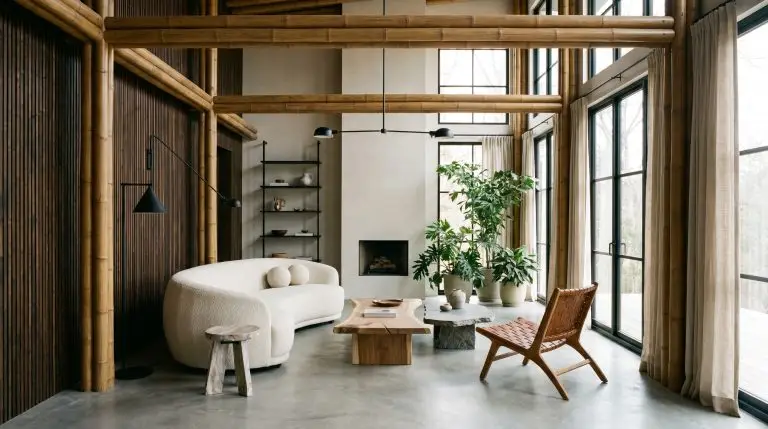
Bamboo interior design has finally shed its outdated, patio-furniture reputation. Today’s top architectural firms treat this rapidly renewable grass as a premium, high-performance structural finish rather than a disposable novelty. By focusing on rigid linear geometry and carbonized finishes, we can harness its immense tensile strength to anchor Japandi and Modern Organic spaces with serious, grounded sophistication.
Forget the hollow, yellowed poles of the past; the modern application of this material relies on engineered veneers, acoustic slatted paneling, and tactile material contrasts. When paired correctly with cold concrete or matte black steel, it introduces an unparalleled biophilic warmth to stark environments.
Here are 24 precise ways to integrate structural bamboo into your home for a masterclass in sustainable, architectural elegance.
Architectural Bamboo: Cladding, Ceilings & Floors
Treating bamboo as a permanent, built-in architectural feature instantly establishes a high-end, bespoke atmosphere. The distinction lies in moving past raw, untreated stalks and embracing engineered, carbonized variations that offer structural integrity and striking visual weight.
1. Install Carbonized Bamboo Flooring for Deep Richness
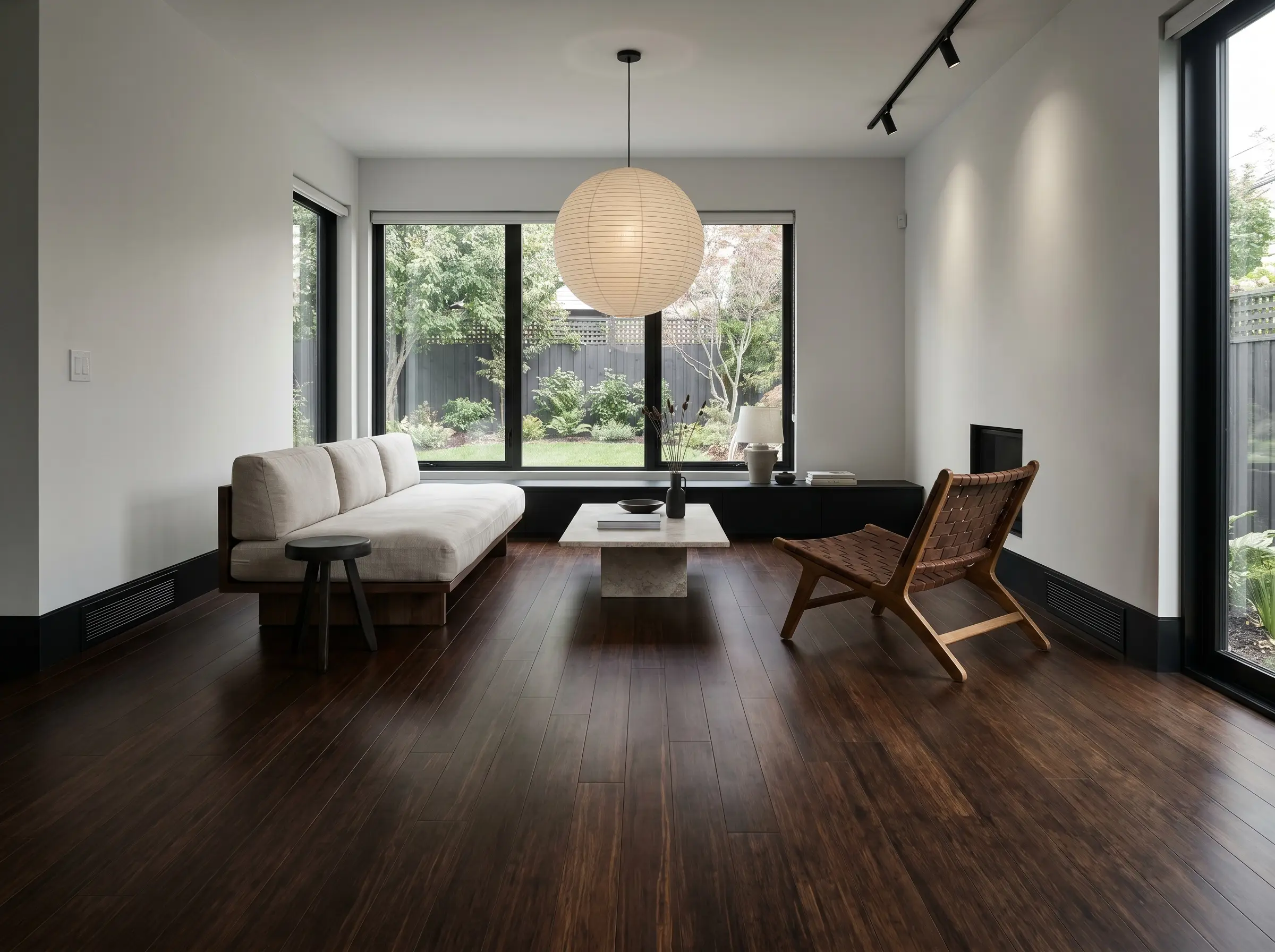
The carbonization process applies intense heat to the natural sugars in the wood, darkening the material from within to create a deeply rich, walnut-like tone. Specifying a vertical grain pattern rather than horizontal nodes creates a seamless, continuous visual plane that visually expands the room.
- Vibe: Grounded, moody, and seamlessly modern.
- Material Pairing Rule: Contrast this dark, rich flooring with stark, cool-toned walls to prevent the room from feeling heavy.
- Paint Recommendation: Benjamin Moore Chantilly Lace.
- Hardware Match: Brushed brass or matte black baseboard registers.
Carbonized Bamboo vs. Traditional Hardwood:
- Pros: Exceptionally sustainable, high tensile strength, uniform modern grain, and highly resistant to warping.
- Cons: The carbonization heating process slightly softens the material compared to natural blonde bamboo, requiring extra care against heavy furniture gouges.
2. Soften Brutalist Concrete with Vertical Bamboo Wall Slats
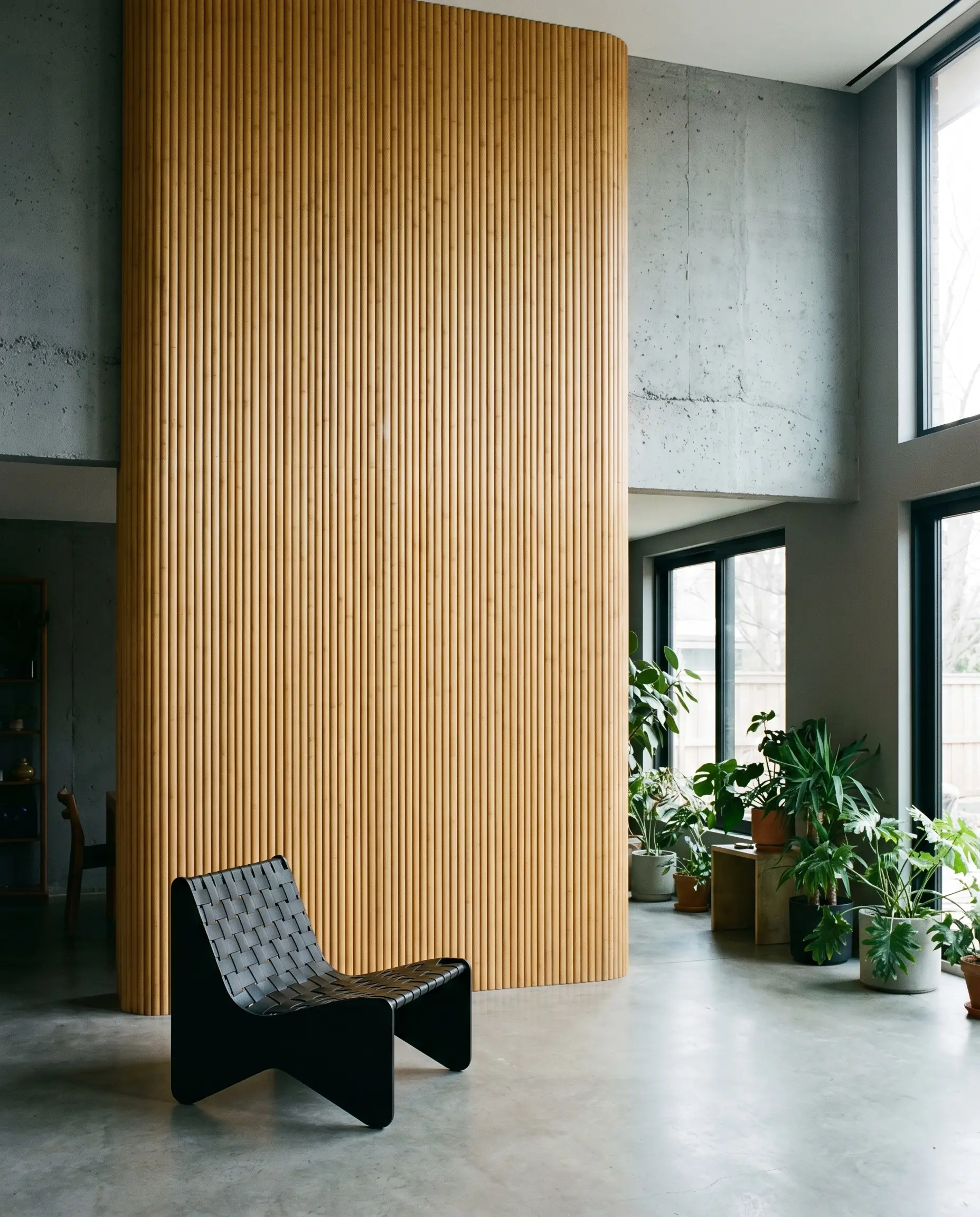
Cold, poured concrete walls or gray industrial plaster inherently command a space, but they desperately require a tactile intervention to prevent a sterile atmosphere. Applying floor-to-ceiling, half-round bamboo slats to a single focal wall introduces essential biophilic warmth and a rigid, linear geometry that perfectly balances the brutalist stone.
- Vibe: High-end architectural brutalism meets organic warmth.
- Key Materials: Raw concrete, half-round blonde bamboo paneling, and matte black steel accents.
- Paint Recommendation: Farrow & Ball Plummett (for adjacent walls to mimic concrete depth).
Always run the slats completely from the floor to the ceiling without a baseboard break. This unbroken vertical line forces the eye upward, maximizing the perceived height of the room.
Architectural Note
3. Use Engineered Bamboo Veneers on Flat-Panel Kitchen Cabinets
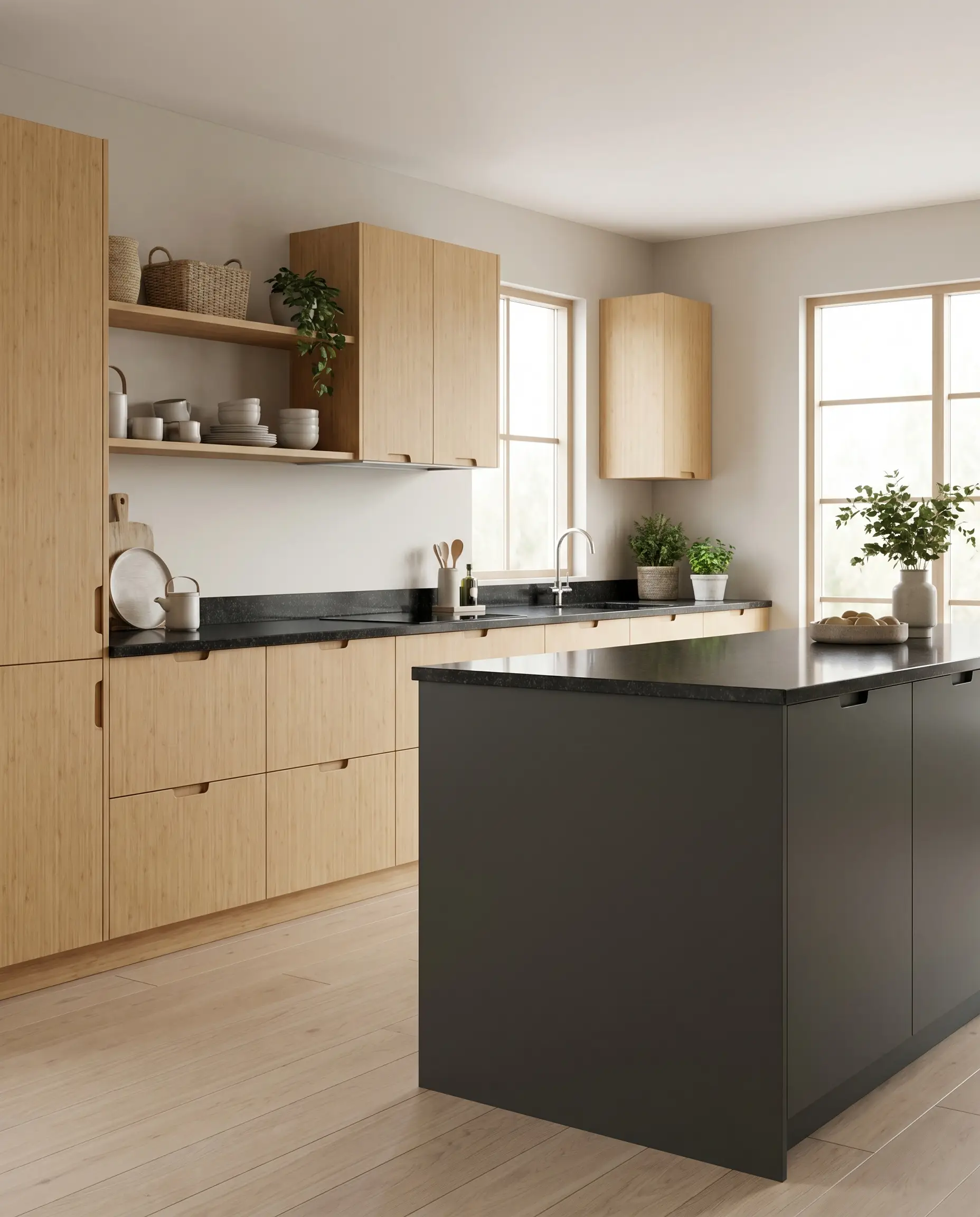
Swap traditional shaker profiles for flat-panel slab doors faced with engineered bamboo veneer to achieve an incredibly streamlined, minimalist kitchen. The continuous, straight grain of the veneer visually elongates the cabinetry, making it the definitive choice for a Japandi culinary space.
- Vibe: Sleek, uninterrupted, and effortlessly clean.
- Key Materials: Engineered bamboo veneer, integrated finger-pulls, and honed black granite countertops.
- Material Pairing Rule: Anchor the blonde wood tones with a deeply saturated, matte cabinet interior or adjacent island base.
- Paint Recommendation: Sherwin-Williams Iron Ore.
4. Design a Floating Staircase with Solid Bamboo Treads
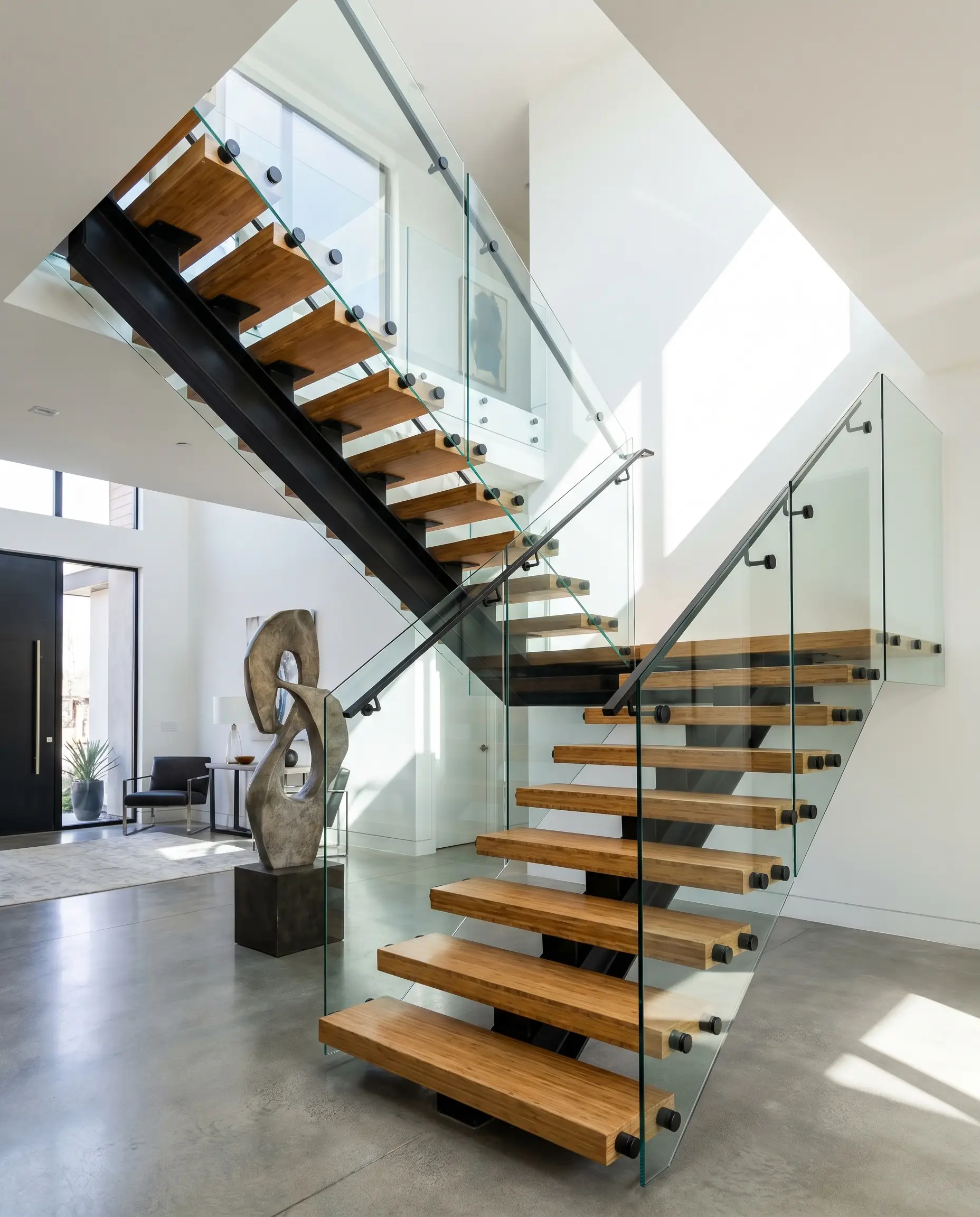
Strand-woven bamboo possesses extraordinary tensile strength, making it a brilliant, high-traffic material for open-riser floating staircases. When the solid treads are suspended between structural stringers, the staircase transforms from a basic transitional zone into a breathtaking architectural centerpiece.
- Vibe: Gravity-defying, structural, and airy.
- Key Materials: Strand-woven solid bamboo treads, half-inch tempered glass balustrades.
- Hardware Match: Heavy-duty matte black steel stringers and standoffs.
5. Mount Acoustic Bamboo Baffles on High Ceilings
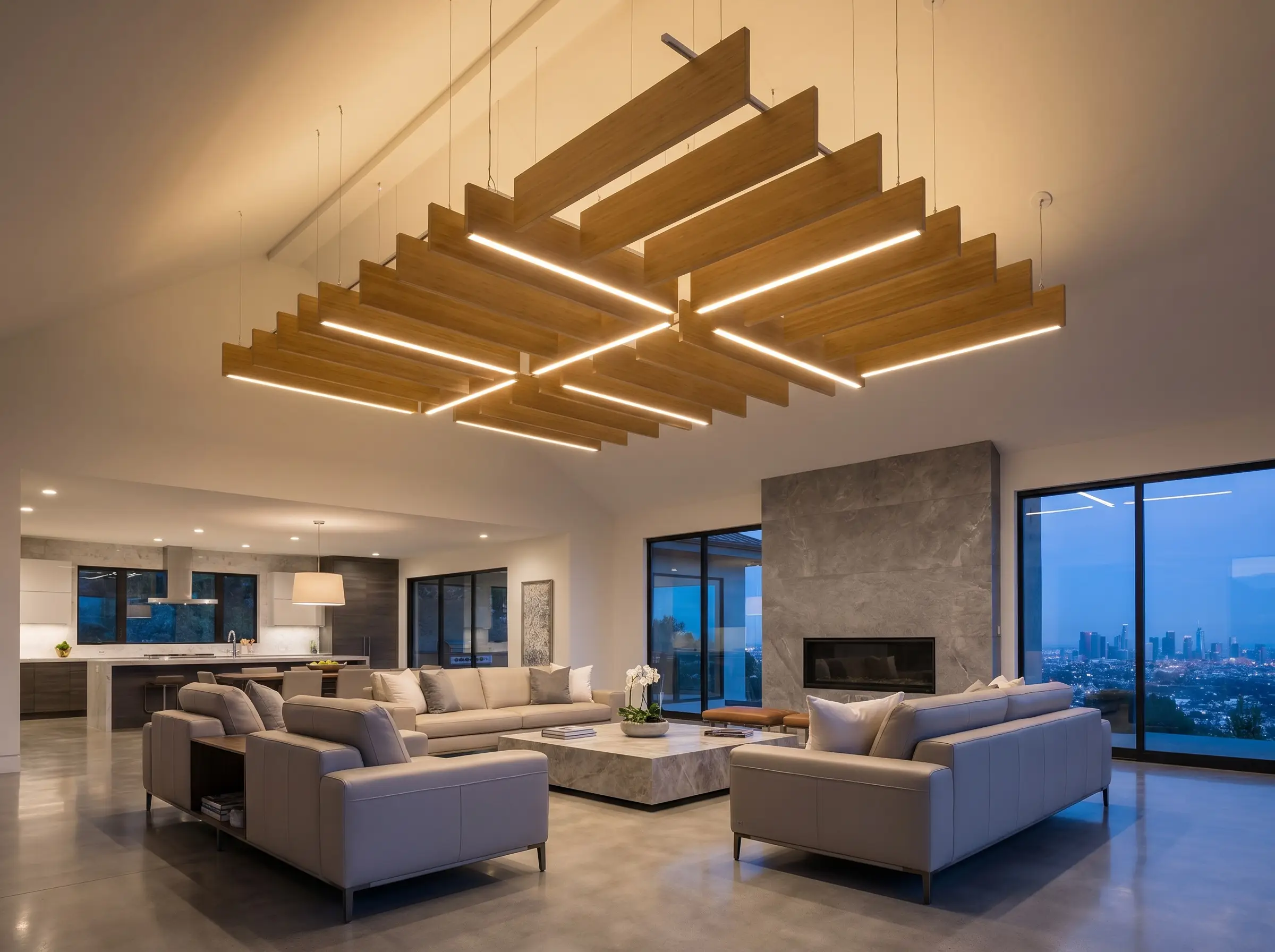
Vaulted ceilings and open-concept living areas frequently suffer from severe acoustic bouncing, creating a noisy, chaotic environment. Suspending acoustic baffles clad in engineered bamboo directly absorbs sound frequencies while adding a striking, architectural grid to the ceiling plane.
- Vibe: Commercial-grade luxury adapted for residential comfort.
- Key Materials: Sound-absorbing PET felt core wrapped in bamboo veneer.
- Styling Pro-Tip: Integrate recessed linear LED channel lighting directly between the baffles to cast a clean, downward glow without interrupting the ceiling grid.
Spatial Zoning: Modern Bamboo Partitions & Screens
Open-concept homes require thoughtful “broken-plan” zoning to feel intimate and functional. Bamboo’s inherently linear structure makes it the premier material for defining spatial boundaries without sacrificing the flow of natural light or fresh air.
6. Divide an Open Concept Layout with Tension-Mounted Bamboo Poles
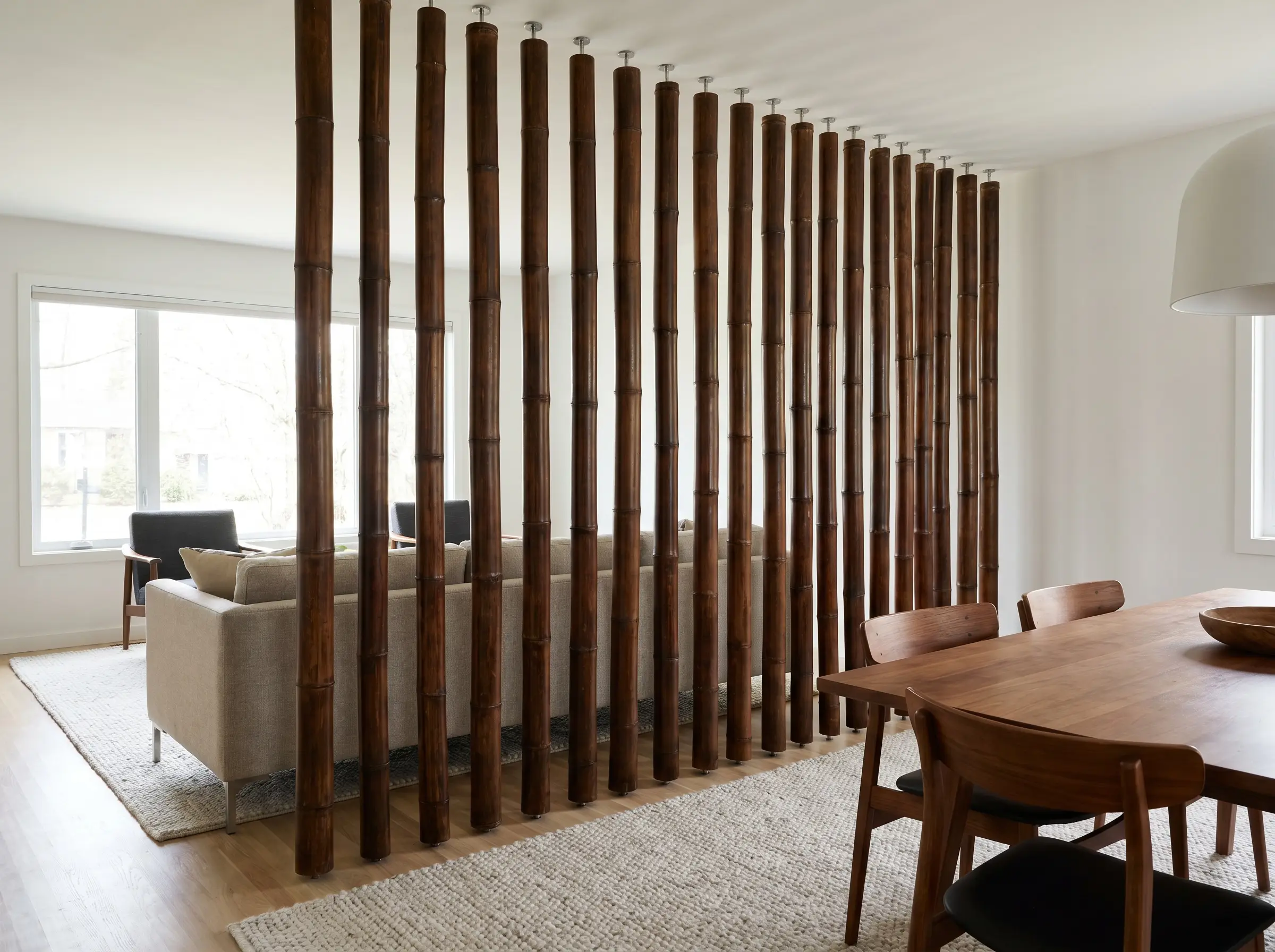
Rather than framing a solid, light-blocking drywall partition, secure thick, tension-mounted bamboo poles between the floor and ceiling to separate a living and dining area. Spacing the poles exactly two inches apart establishes a clear visual boundary while preserving the line of sight and natural light flow across the entire room.
- Vibe: Earthy, permeable, and highly structural.
- Key Materials: 3-inch diameter carbonized bamboo poles, adjustable tension hardware.
- Material Pairing Rule: Ground the base of the poles by installing them directly over a highly textured, low-pile wool rug to contrast the smooth, hard wood.
7. Frame a Japandi Bedroom with Shoji-Inspired Bamboo Screens
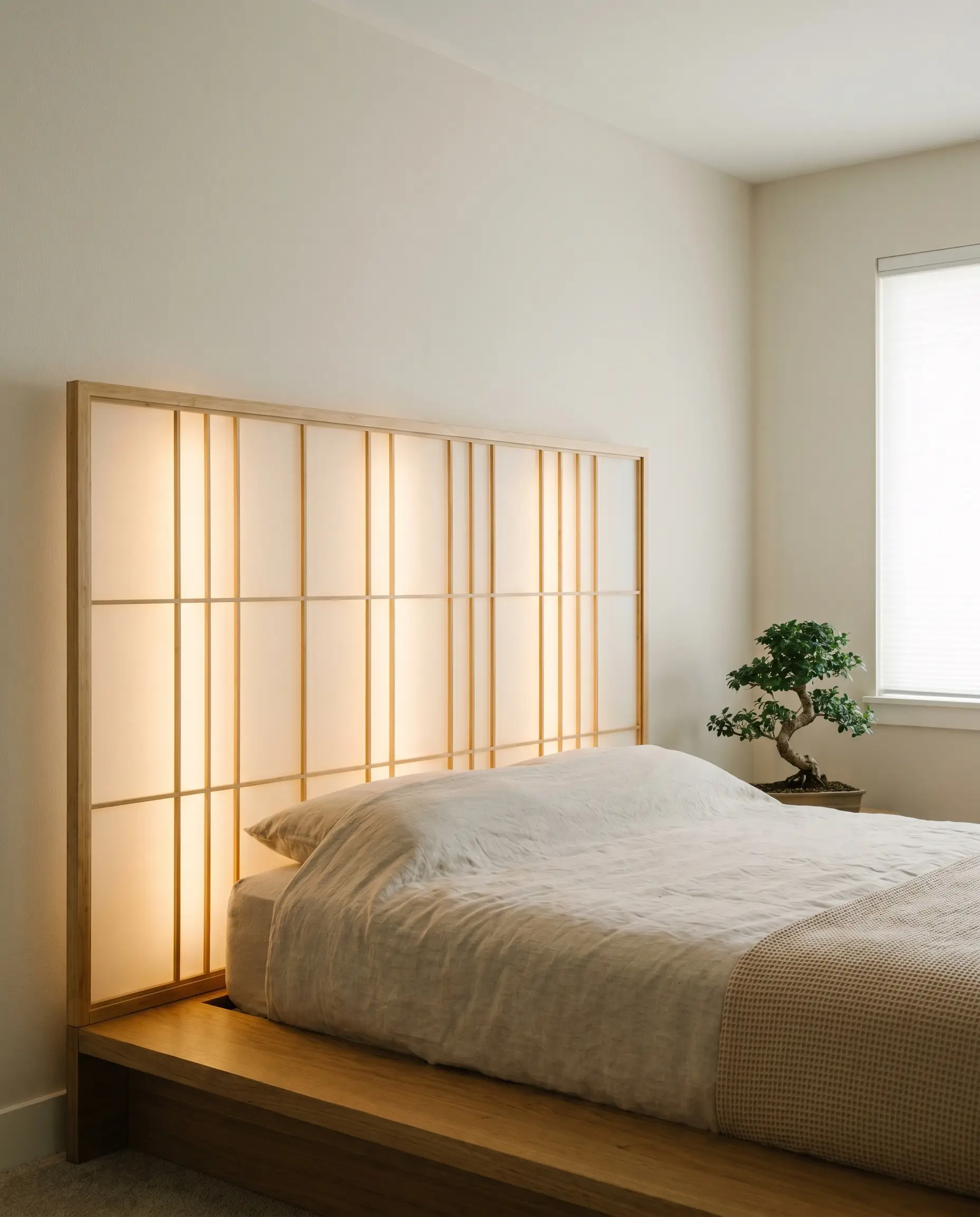
The Japandi aesthetic thrives on diffused light and soft, clean lines. Utilizing bamboo framing paired with translucent rice paper—or frosted glass for higher durability—to build sliding wardrobe doors or a freestanding headboard screen creates a deeply calming, restorative atmosphere.
- Vibe: Restful, diffused, and culturally reverent.
- Key Materials: Thin-profile blonde bamboo framing, frosted tempered glass or authentic Washi paper.
- Paint Recommendation: Sherwin-Williams Alabaster.
If utilizing a Shoji-inspired screen as a headboard, place a warm, low-wattage light source directly behind it to turn the entire wall into a glowing, ambient lightbox at night.
Hackrea Styling Tip
8. Install Sliding Bamboo Pocket Doors for a Zen Transition
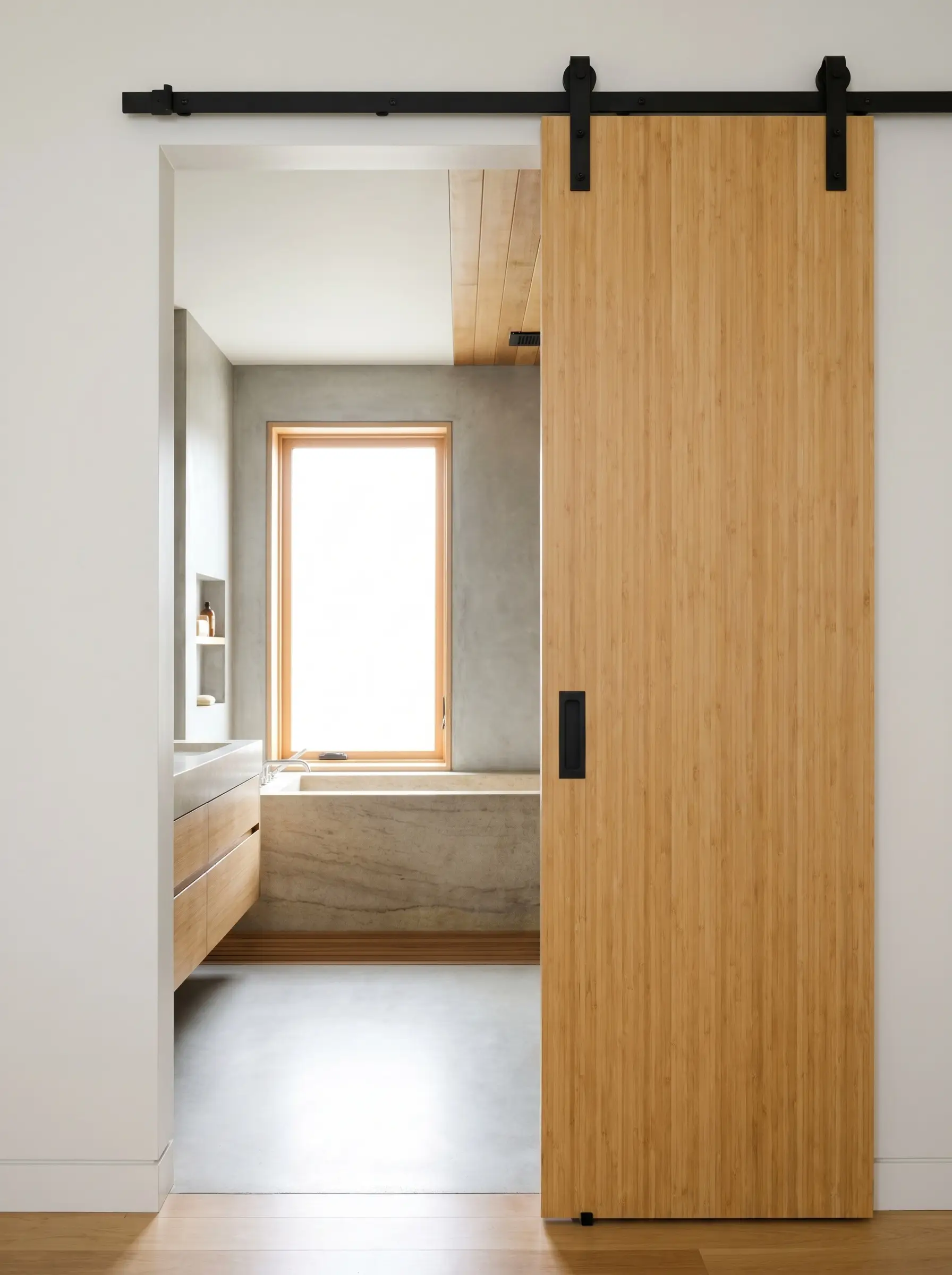
Replace standard swing doors in en-suite bathrooms or home offices with solid, vertical-grain bamboo pocket doors. This permanent architectural upgrade frees up vital floor space while providing a grounding, spa-like transition between high-traffic zones and private sanctuaries.
- Vibe: Seamless, concealed, and intentionally quiet.
- Key Materials: Solid core bamboo slab door, heavy-duty soft-close pocket track hardware.
- Hardware Match: Flush-mounted brushed nickel or matte black edge pulls.
9. Create a Faux Entryway with Half-Height Bamboo Slats
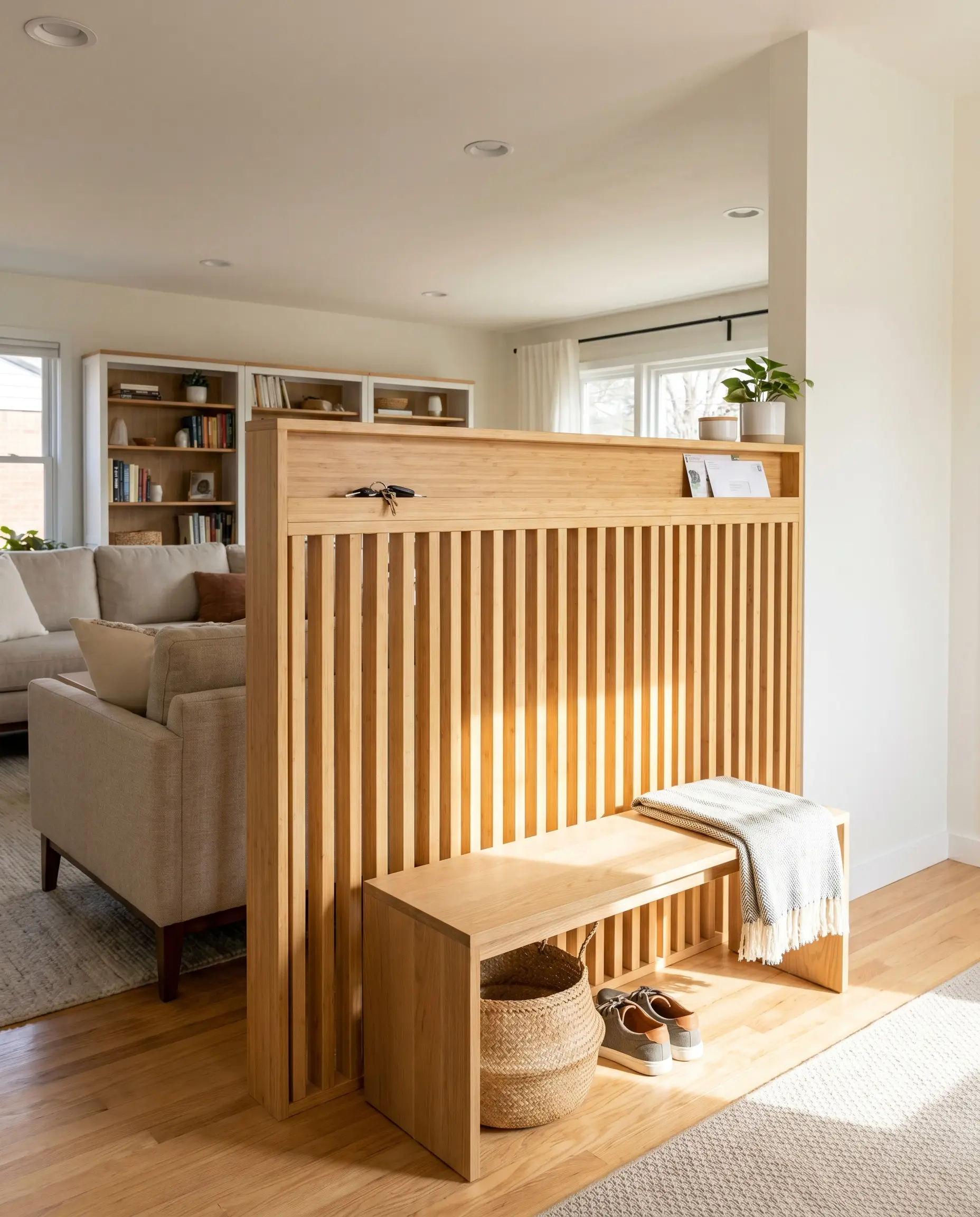
Homes that open directly into the main living space lack a psychological transition zone for arriving guests. Building a half-height slatted wall beside the front door instantly defines a drop-zone for daily essentials while maintaining the open, airy feel of the room.
- Vibe: Welcoming, organized, and structurally clever.
- Key Materials: 1×2 inch bamboo slats, a solid bamboo top cap for key storage.
- Styling Pro-Tip: Place a low-profile, minimalist bench directly in front of the slat wall to anchor the newly created entryway.
Front doors that open directly into a living room destroy the home’s sense of privacy and leave no dedicated space for shoes or keys.
The Design Problem
The Bamboo Solution: A half-height bamboo slat wall acts as a permeable barrier, shielding the back of a sofa from the door while offering a structural ledge to collect entryway clutter out of sight.
Bamboo Furniture: Sculptural & Minimalist Pairings
High-end bamboo furniture has decisively evolved far beyond flimsy, folding patio chairs. Today’s premier pieces are heavy, sculptural, and designed with a strict intentionality that anchors a room’s aesthetic layout.
10. Anchor the Bedroom with a Low-Profile Bamboo Platform Bed
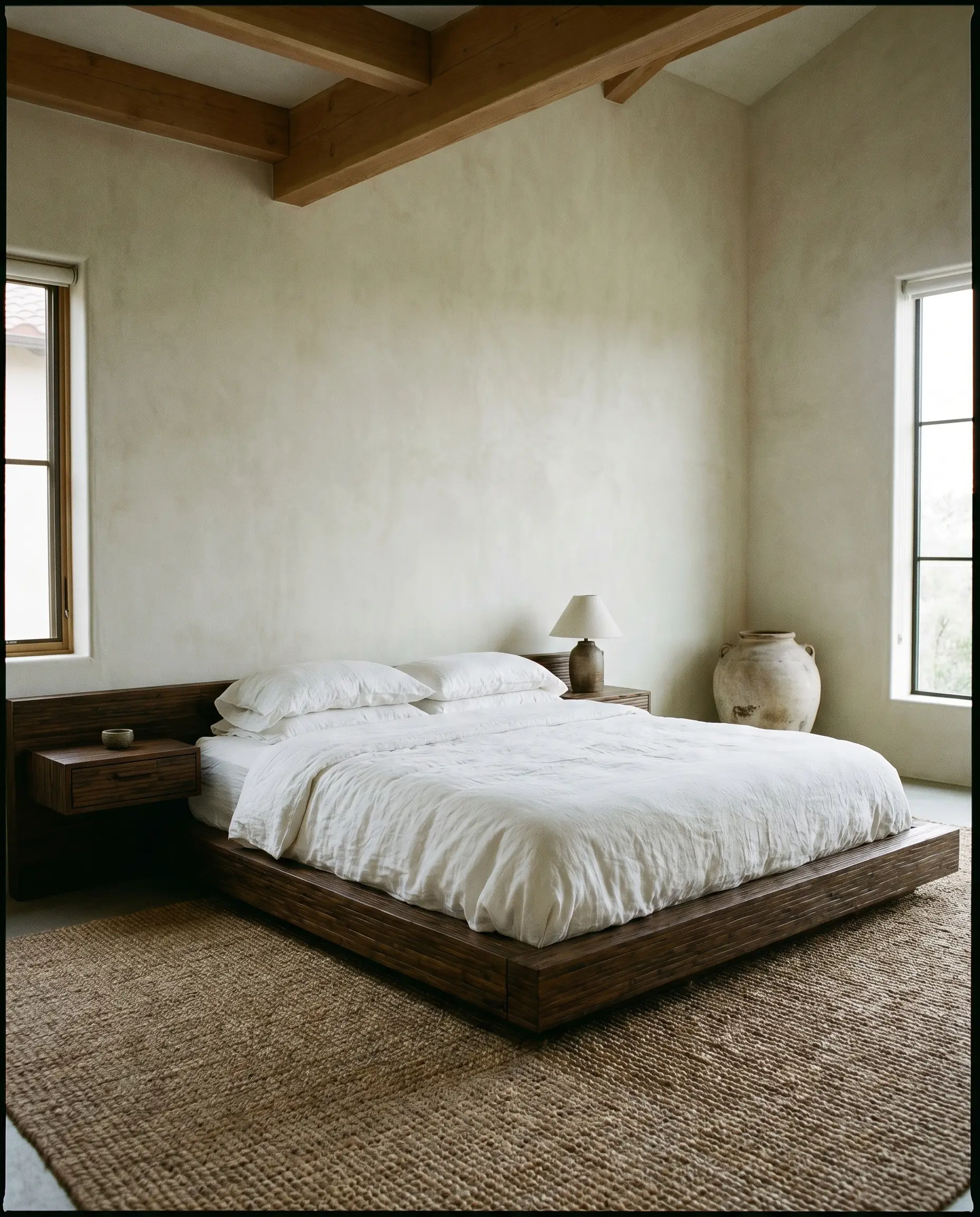
Embrace Wabi-Sabi principles by selecting a solid bamboo platform bed that sits incredibly low to the ground. Keeping the visual weight of the furniture near the floor creates a deeply restful, grounded environment that visually expands the ceiling height.
- Vibe: Grounded, expansive, and deeply restful.
- Key Materials: Solid blonde or carbonized bamboo platform frame with integrated, floating nightstands.
- Material Pairing Rule: Dress the bed exclusively in heavy, rumpled European flax linen to contrast the rigid, hard lines of the bamboo platform.
11. Contrast a Matte Black Dining Table with Woven Bamboo Chairs
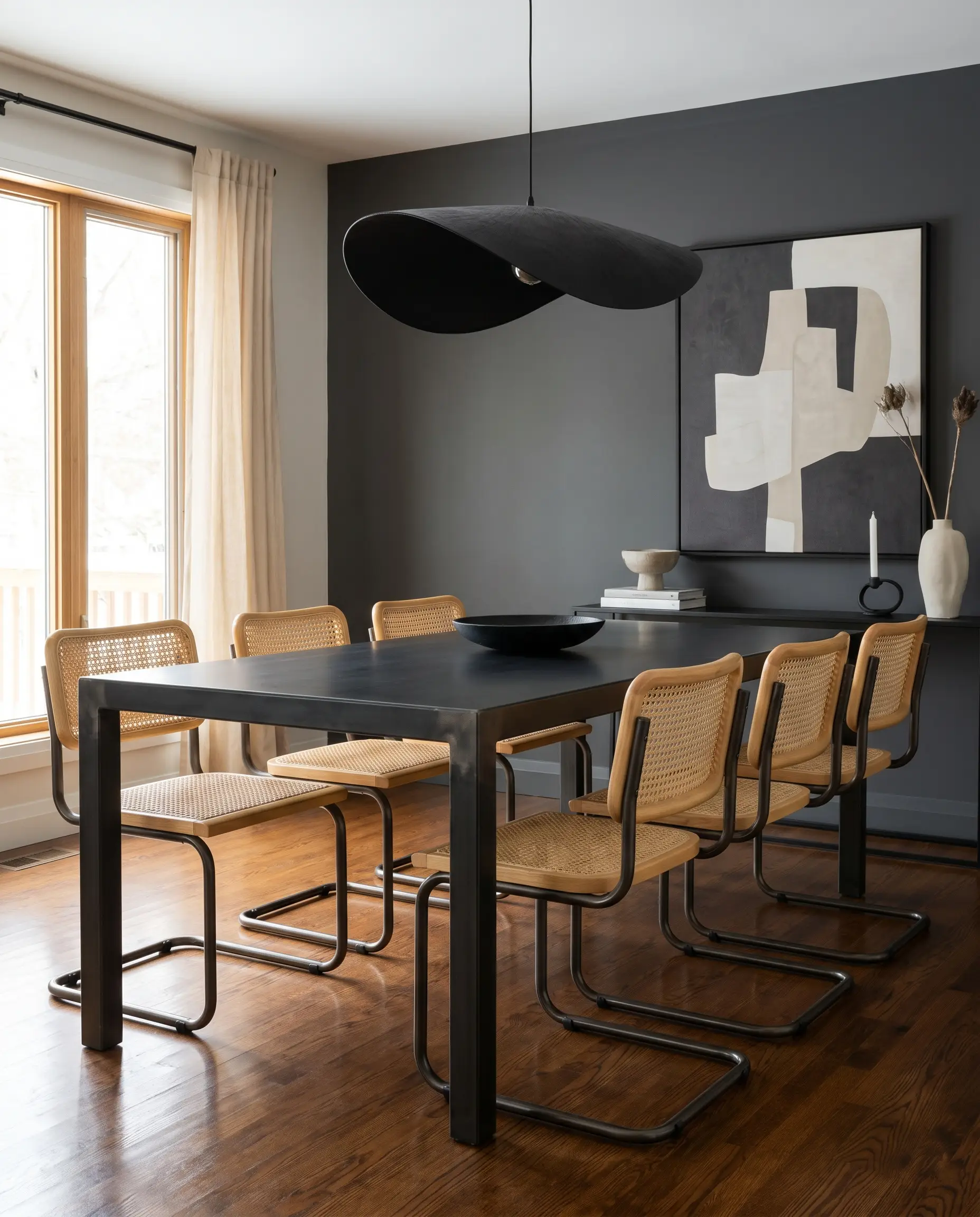
Matching a bamboo table with bamboo chairs is a critical design failure that instantly ruins a curated space. Instead, surround a heavy, dark walnut or matte black dining table with natural, woven blonde bamboo chairs—like a modern Cesca variation—to achieve brilliant, high-contrast sophistication.
- Vibe: Bold, high-contrast, and curated.
- Key Materials: Ebonized oak or matte black steel dining table, woven bamboo cane seating.
- Paint Recommendation: Farrow & Ball Off-Black (for a dramatic dining room accent wall that ties into the table).
12. Float a Wall-Mounted Bamboo Console in a Narrow Hallway
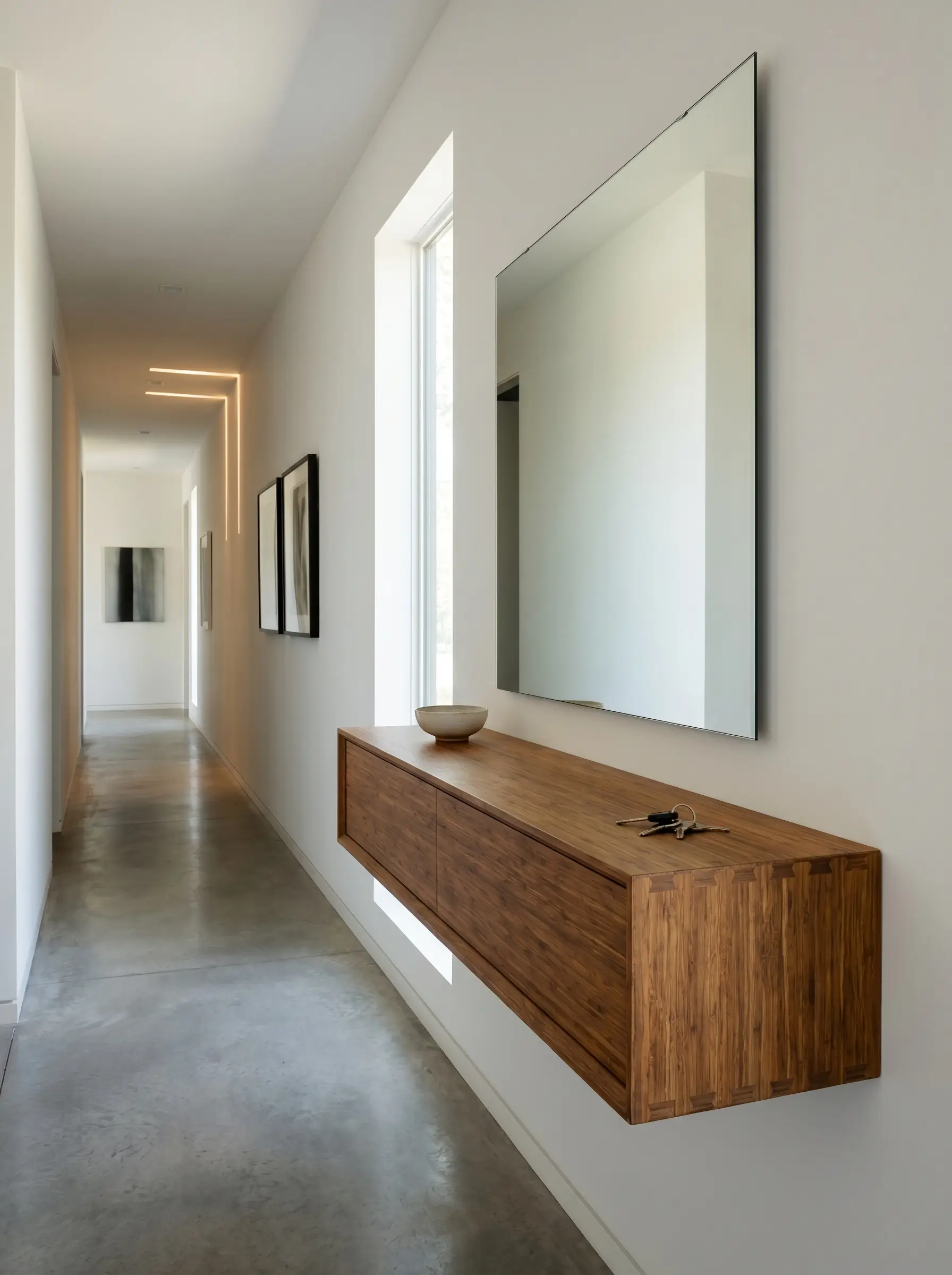
Tight entryways demand furniture that provides storage without consuming precious floor space. A wall-mounted bamboo drawer console keeps the floor entirely visible, tricking the eye into perceiving a wider hallway while injecting necessary organic texture into a purely functional transition zone.
- Vibe: Uncluttered, floating, and hyper-functional.
- Key Materials: Wall-cleated bamboo drawer box, push-to-open latch hardware.
- Styling Pro-Tip: Suspend a large, frameless mirror vertically above the console to bounce light down the narrow corridor.
13. Style a Bathroom with a Moisture-Resistant Bamboo Ladder
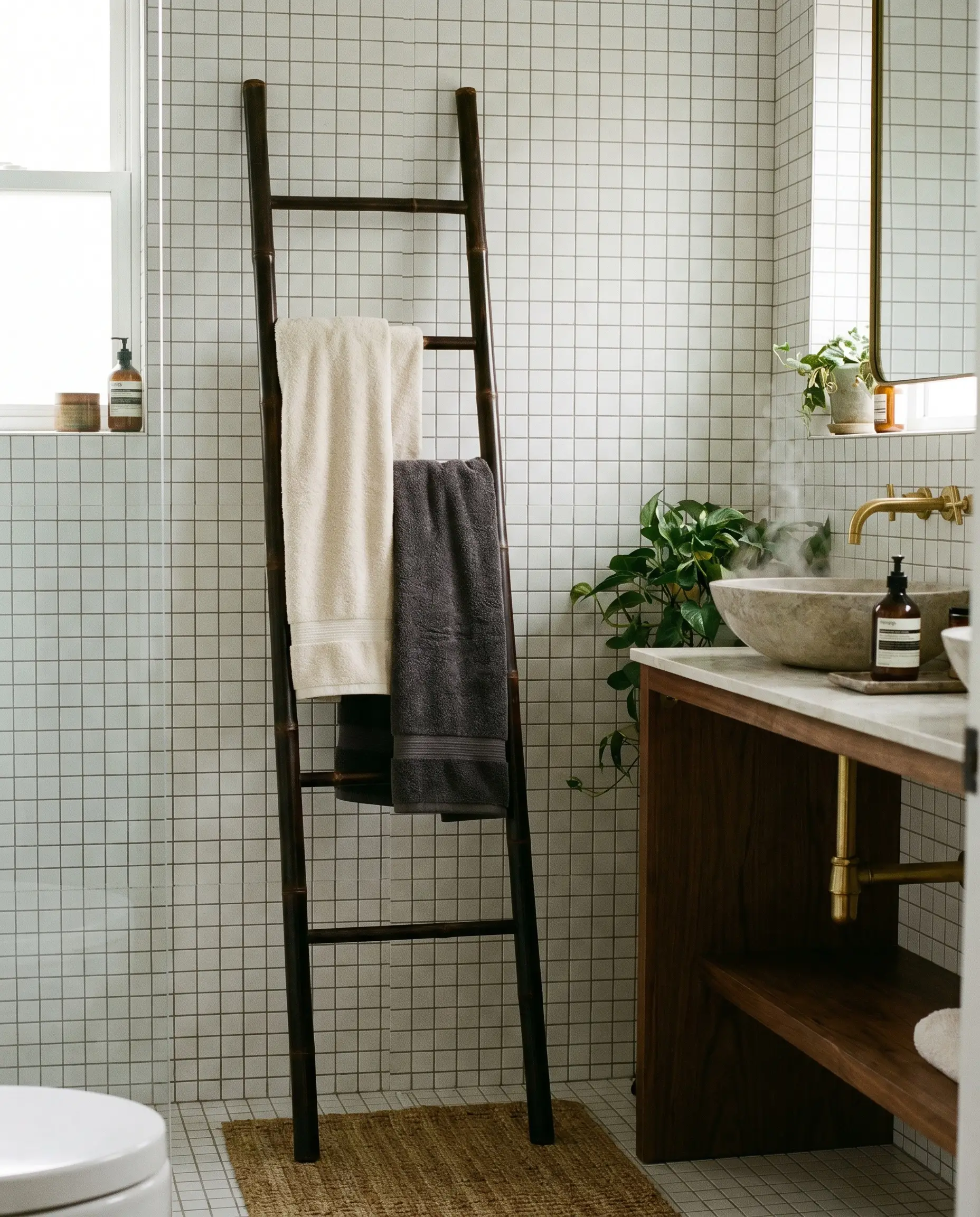
Because it is naturally highly resistant to moisture and warping, this material performs flawlessly in damp bathroom environments. Leaning a sleek bamboo ladder against the wall provides a minimalist, vertical towel rack that breaks up the sterile, cold grid of white porcelain tiles.
- Vibe: Spa-like, practical, and vertically engaging.
- Key Materials: Sealed, solid bamboo styling ladder, Turkish cotton bath sheets.
- Material Pairing Rule: Pair the warm wood tones with unlacquered brass plumbing fixtures to create a rich, living finish palette.
14. Use a Bent-Bamboo Coffee Table as a Sculptural Centerpiece
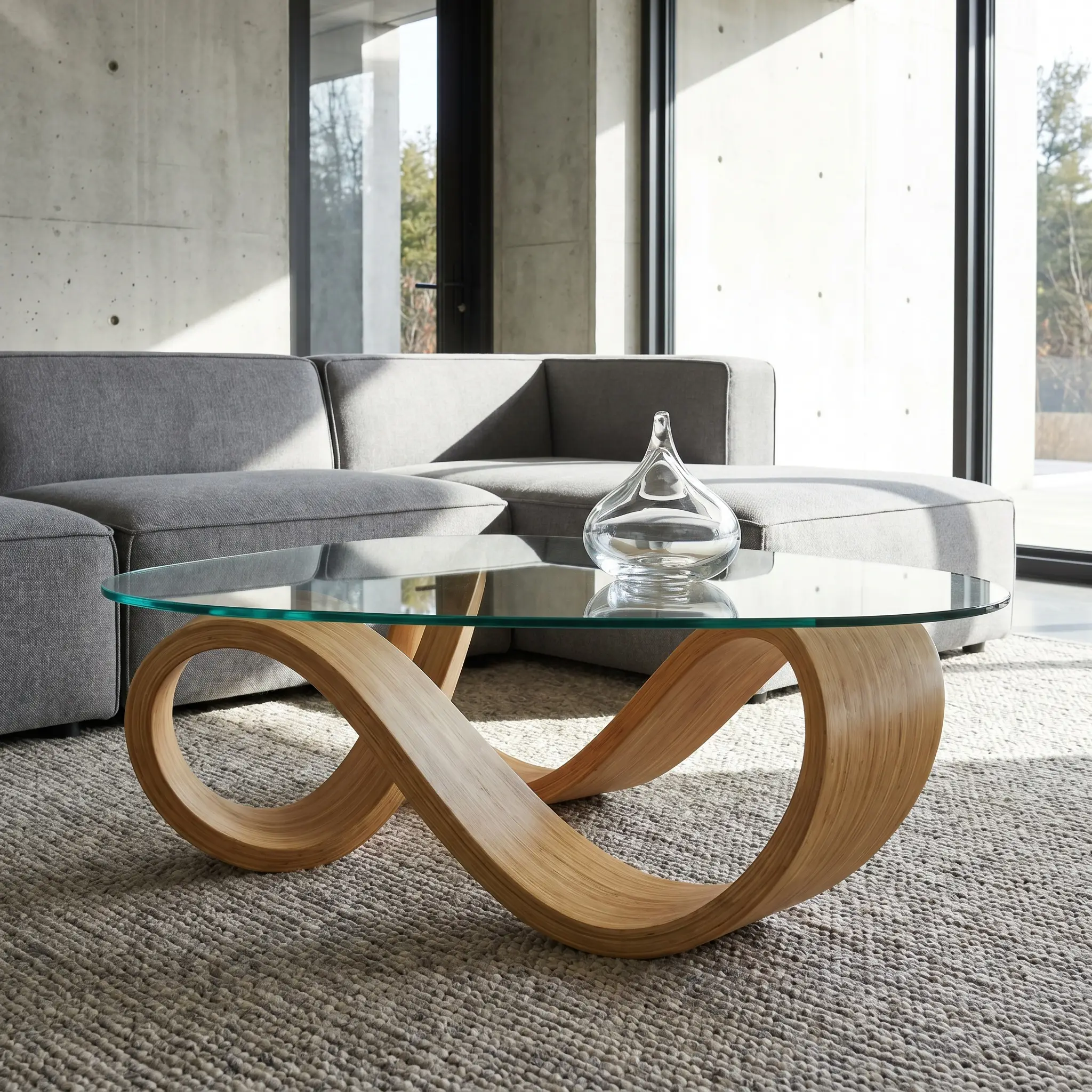
While we typically rely on this wood for its rigid linear qualities, steam-bent applications offer breathtaking organic curves. A low, sculptural bent-bamboo coffee table topped with heavy tempered glass introduces a fluid, dynamic shape that perfectly offsets the hard, right angles of a modern modular sofa.
- Vibe: Fluid, artistic, and visually light.
- Key Materials: Thick-gauge steam-bent bamboo base, half-inch polished edge glass top.
- Styling Pro-Tip: Keep the glass top completely clear of heavy styling objects; allow the sculptural curves of the wood base to act as the primary art piece.
Ambient Lighting: Diffusing Light with Bamboo
Artificial lighting is where this biophilic material truly excels. The woven and slatted nature of the wood manipulates light to create unparalleled shadow play, transforming harsh bulbs into warm, diffused ambient atmosphere.
15. Suspend an Oversized Woven Bamboo Pendant Over the Kitchen Island
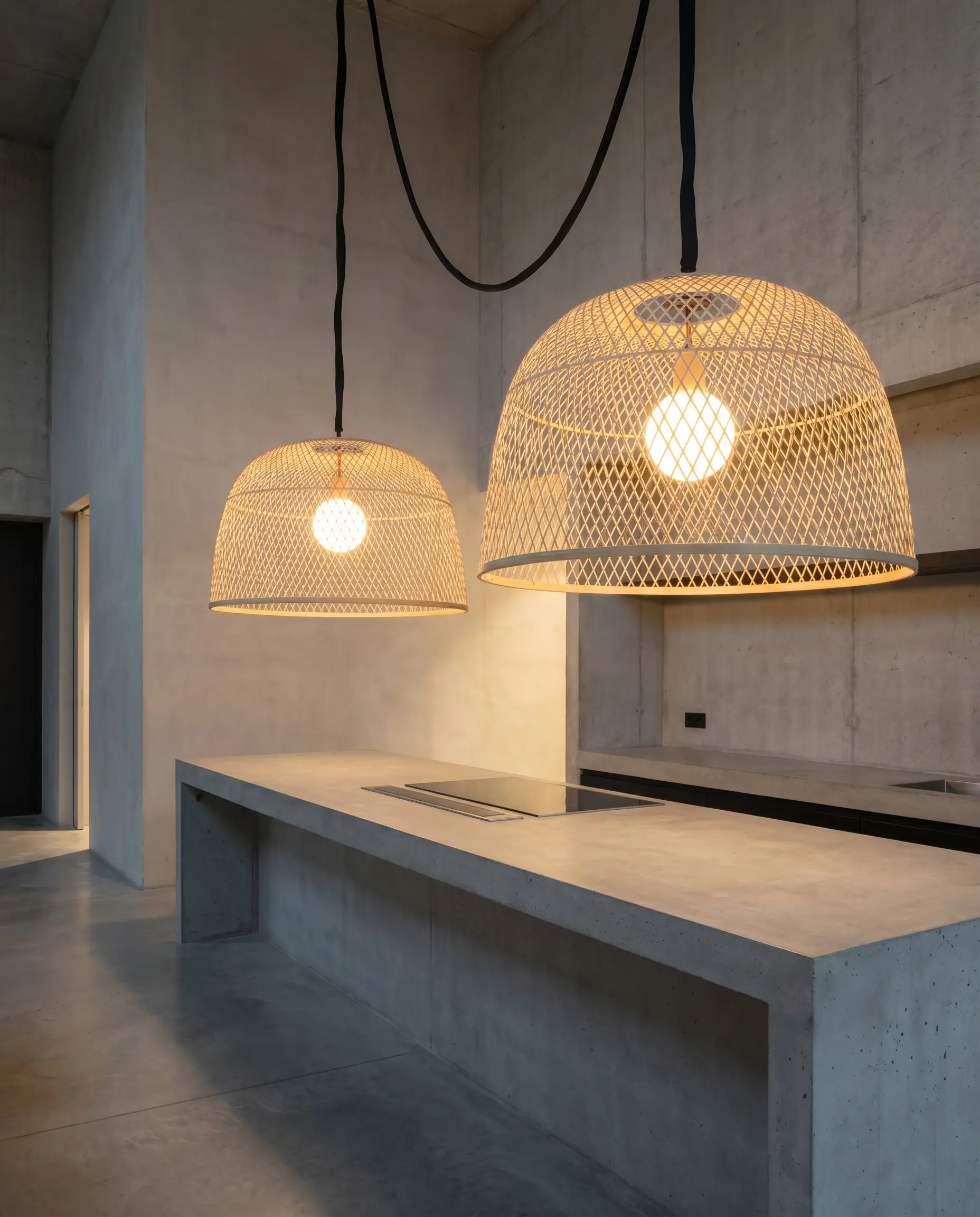
Forego tiny, visually insignificant glass pendants in favor of two massive, open-weave bamboo dome lights suspended over a stark kitchen island. The immense scale adds instant architectural drama, while the airy weave ensures the fixtures never feel visually heavy or oppressive.
- Vibe: Dramatic, airy, and perfectly scaled.
- Key Materials: Oversized woven dome pendants, matte black suspension cords.
- Lighting Spec: Use frosted LED globe bulbs (2700K) to prevent harsh glare from peeking through the open weave.
16. Flank the Bed with Asymmetrical Bamboo Sconces
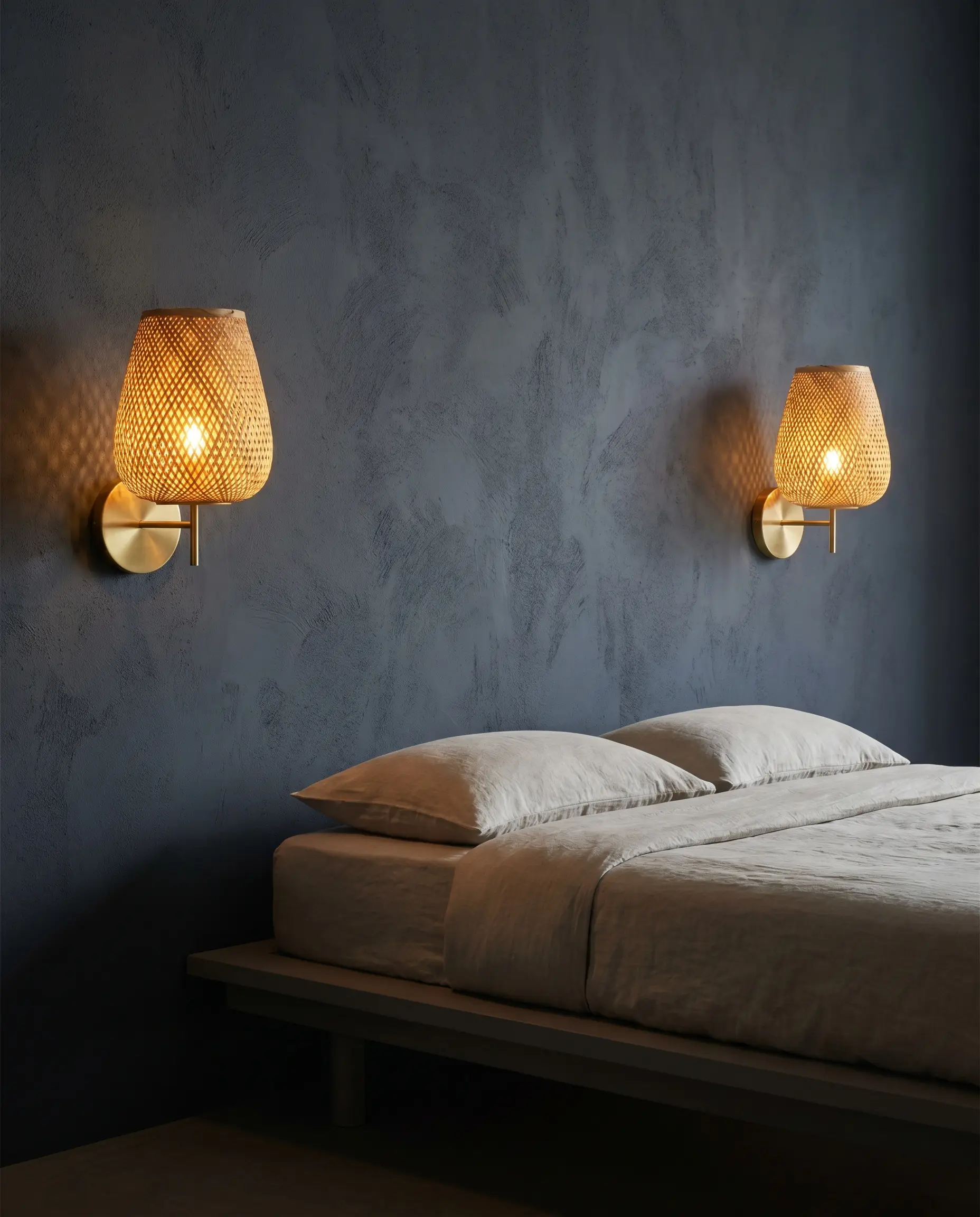
Hardwiring bamboo sconces on either side of the bed introduces a highly textured, tactile element right at eye level. The natural cane or woven slats brilliantly filter and soften the color temperature of modern LED bulbs, producing a restful, golden glow optimized for evening reading.
- Vibe: Intimate, asymmetrical, and glowing.
- Key Materials: Woven bamboo sconce shades, brass or bronze backplates.
- Paint Recommendation: Benjamin Moore Hale Navy.
17. Cast Patterned Shadows with a Slatted Bamboo Floor Lamp
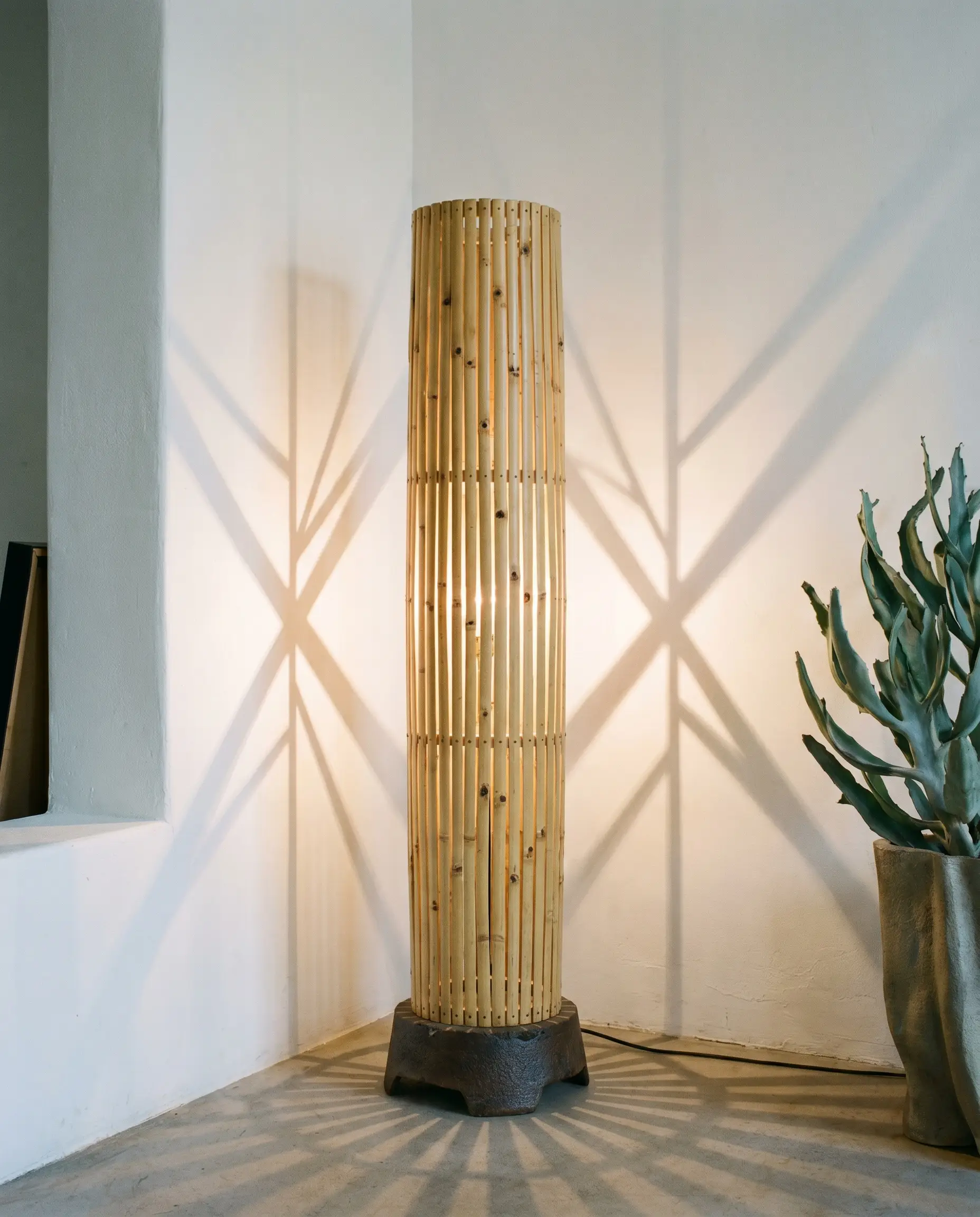
A tall, cylindrical floor lamp constructed entirely of vertical bamboo slats serves a dual purpose in a minimalist living room. By day, it stands as a quiet, biophilic sculpture; by night, it transforms into a dynamic shadow-caster, projecting sharp, geometric lines across the surrounding walls.
- Vibe: Dynamic, sculptural, and atmospheric.
- Key Materials: Slatted bamboo cylinder, heavy cast-iron base for stability.
- Styling Pro-Tip: Place the lamp in a bare corner at least 6 inches from the walls to maximize the spread and sharpness of the shadow projection.
18. Integrate LED Strips Behind a Bamboo Slat Wall
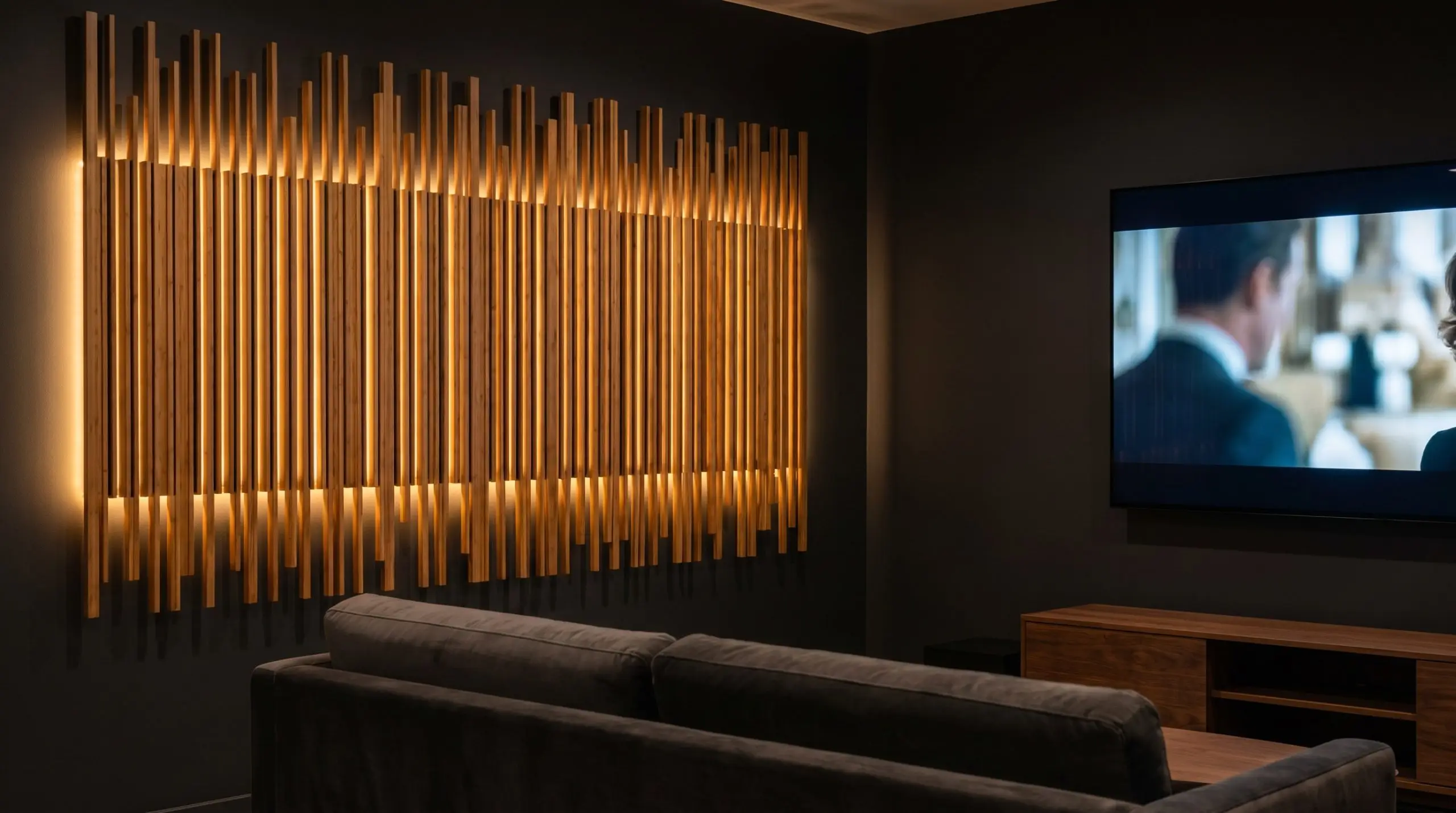
Fusing ancient organic materials with modern lighting technology yields a breathtaking, custom architectural finish. Installing warm LED strip lighting directly behind a floating bamboo slat wall in a media room highlights the immense depth and texture of the wood while providing perfect, indirect ambient viewing light.
- Vibe: Bespoke, cinematic, and deeply textured.
- Key Materials: Prefabricated bamboo acoustic panels, 2700K COB LED tape light, aluminum diffuser channels.
- Material Pairing Rule: Ensure the wall behind the slats is painted in a flat, dark finish to hide the wiring and accentuate the glowing wood.
Architectural Note: Flawless LED Slat Integration
- Step 1: Paint the bare drywall behind your intended installation area in a matte black or deep charcoal to create a shadow gap effect.
- Step 2: Mount standard aluminum LED channels vertically between your wall battens before applying the bamboo slats, ensuring the light will cast sideways rather than directly outward.
- Step 3: Snap the diffusers into the channels and wire the 2700K LED strips to a dimmable wall switch for complete atmospheric control.
Tactile Accents: Styling the Details
If a full-scale renovation is not currently feasible, highly targeted accents provide the perfect finishing touch. By focusing on refined textiles, upgraded hardware, and curated styling moments, you can seamlessly weave this organic texture into any space.
19. Soften Sunlight with Woven Bamboo Roman Shades
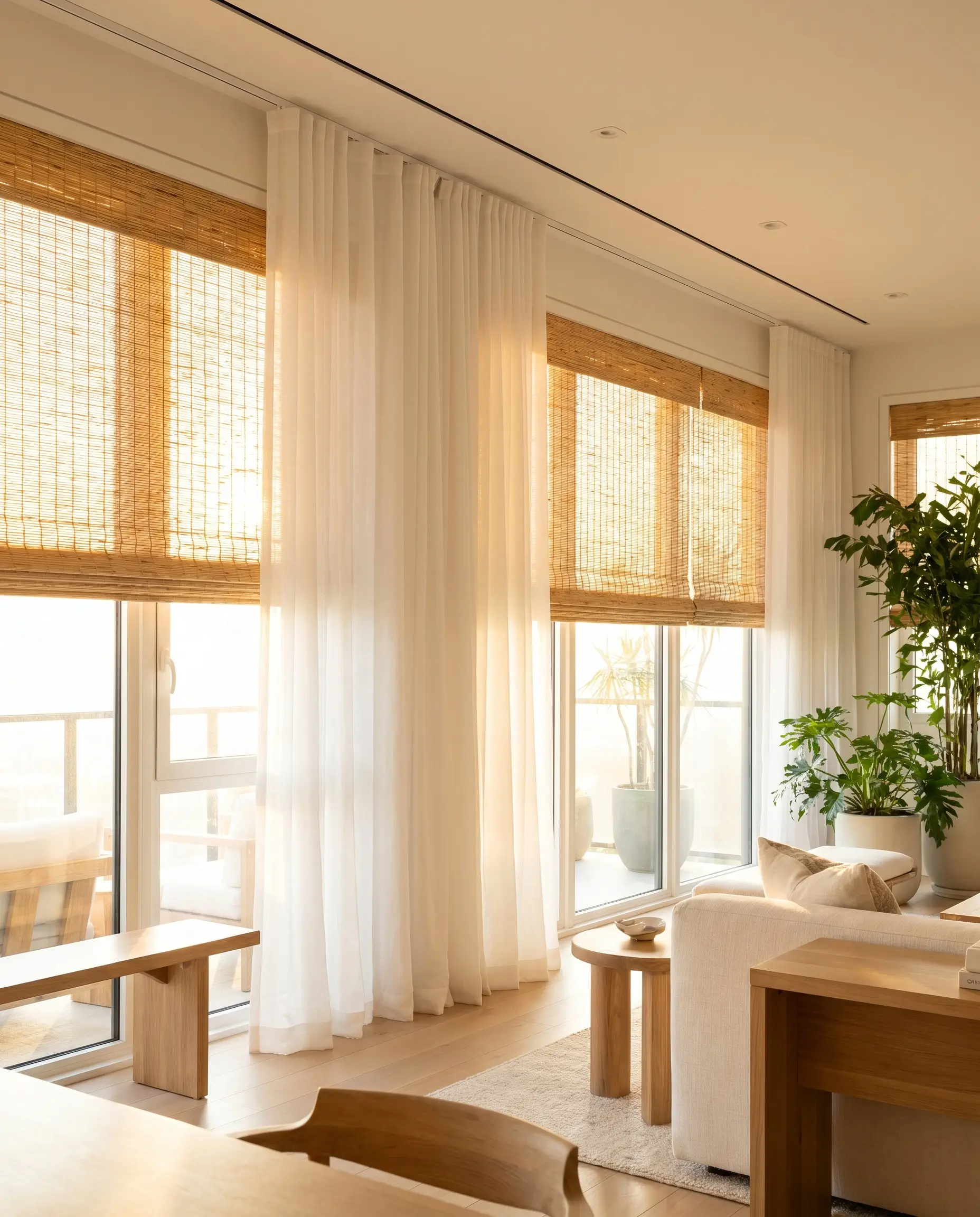
Heavy, opaque curtains often suffocate a room’s natural energy. Structured, tightly woven bamboo Roman shades expertly filter harsh, direct UV rays into a soft, golden glow while maintaining absolute privacy, especially when layered behind sheer white linen drapes for a bespoke, high-end window treatment.
- Vibe: Layered, sun-drenched, and sophisticated.
- Key Materials: Motorized woven bamboo Roman shades, ceiling-mounted track hardware.
- Material Pairing Rule: Always pair textured wood shades with flowing, unlined white linen to balance the rigid horizontal lines with soft vertical drapery.
20. Layer a Bamboo Silk Rug Over Hardwood Floors
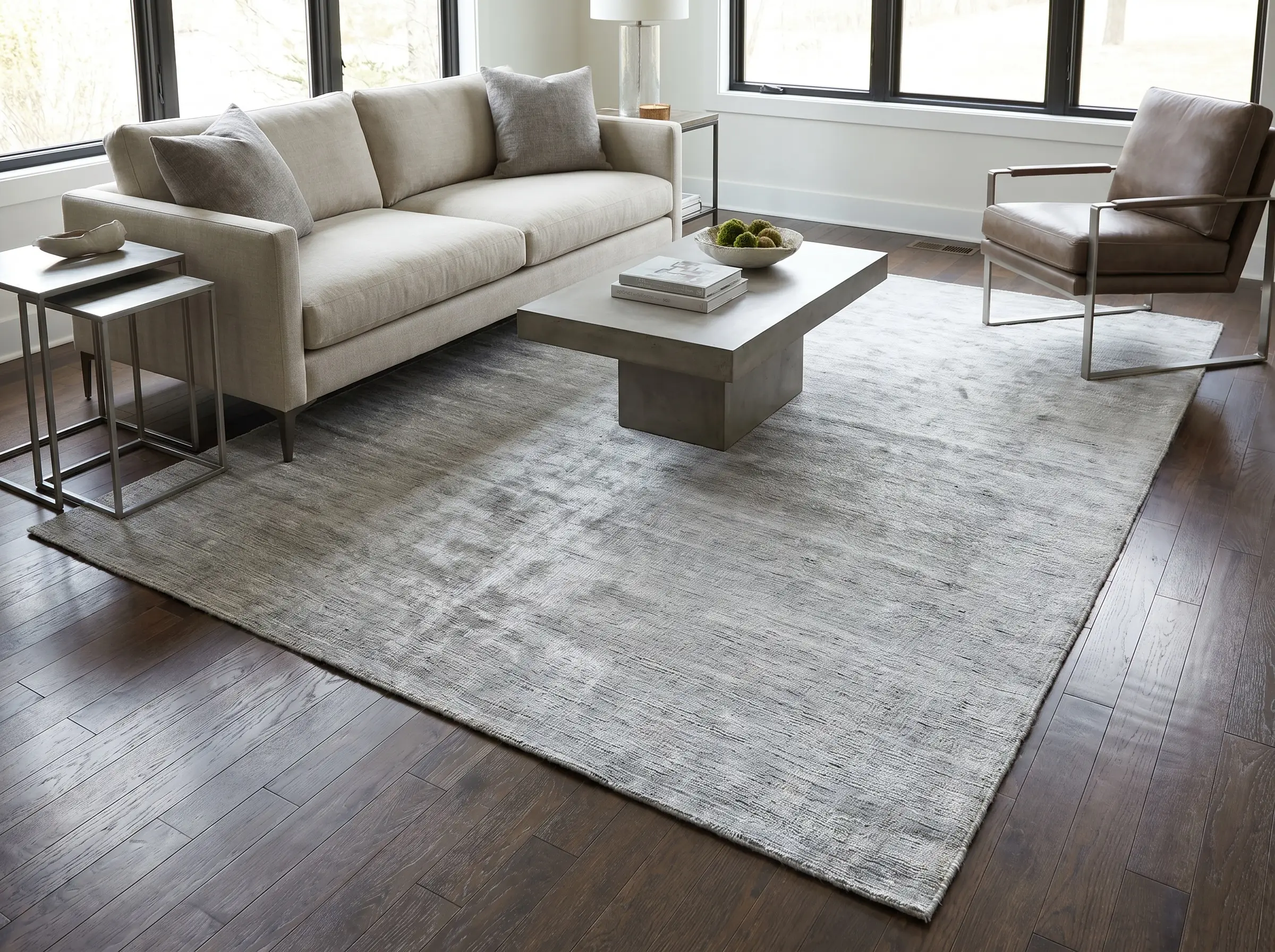
This remarkable plant is not strictly a hard, rigid material; its fibers can be spun into incredibly luxurious, sustainable silk. Anchoring a living room seating arrangement with a hand-loomed bamboo silk rug introduces a subtle, reflective sheen and a surprisingly soft texture underfoot.
- Vibe: Luxurious, reflective, and unexpectedly soft.
- Key Materials: Hand-loomed bamboo silk area rug, heavy-duty felt rug pad.
- Color Recommendation: A cool, silvery gray or muted taupe to highlight the silk’s natural sheen.
21. Display Minimalist Ceramics on Floating Bamboo Shelves
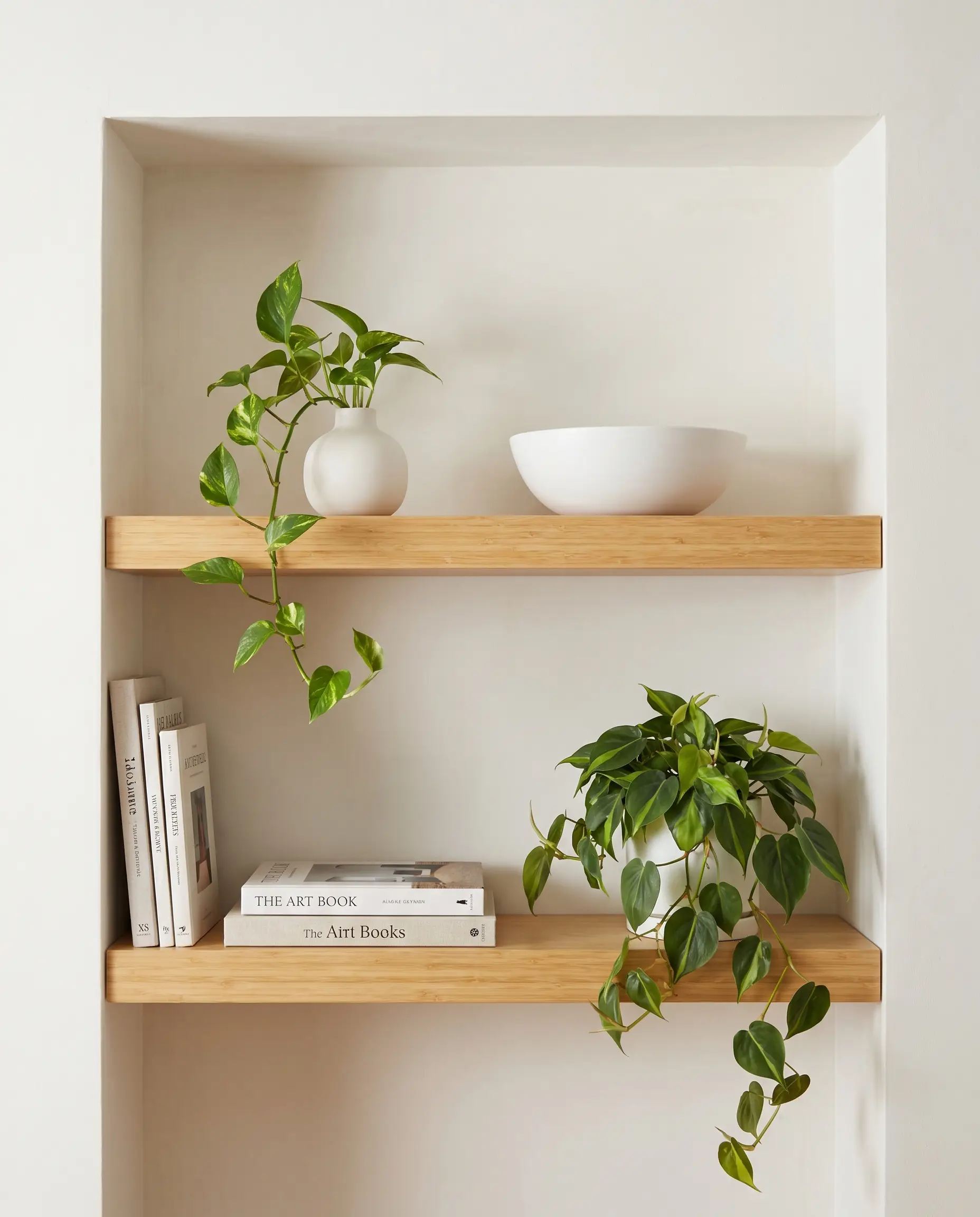
Thick, floating shelves crafted from solid bamboo provide a warm, sturdy ledge for curated kitchen alcoves or living room niches. To maintain a strict minimalist aesthetic, style these shelves incredibly sparingly with matte ceramics, trailing greenery, and generous amounts of negative space.
- Vibe: Curated, airy, and gallery-like.
- Key Materials: 2-inch thick solid bamboo floating shelves, concealed heavy-duty bracket hardware.
- Styling Pro-Tip: Group objects in odd numbers and leave at least 40% of the shelf surface entirely empty to let the wood grain breathe.
22. Swap Standard Hardware for Bamboo-Wrapped Drawer Pulls
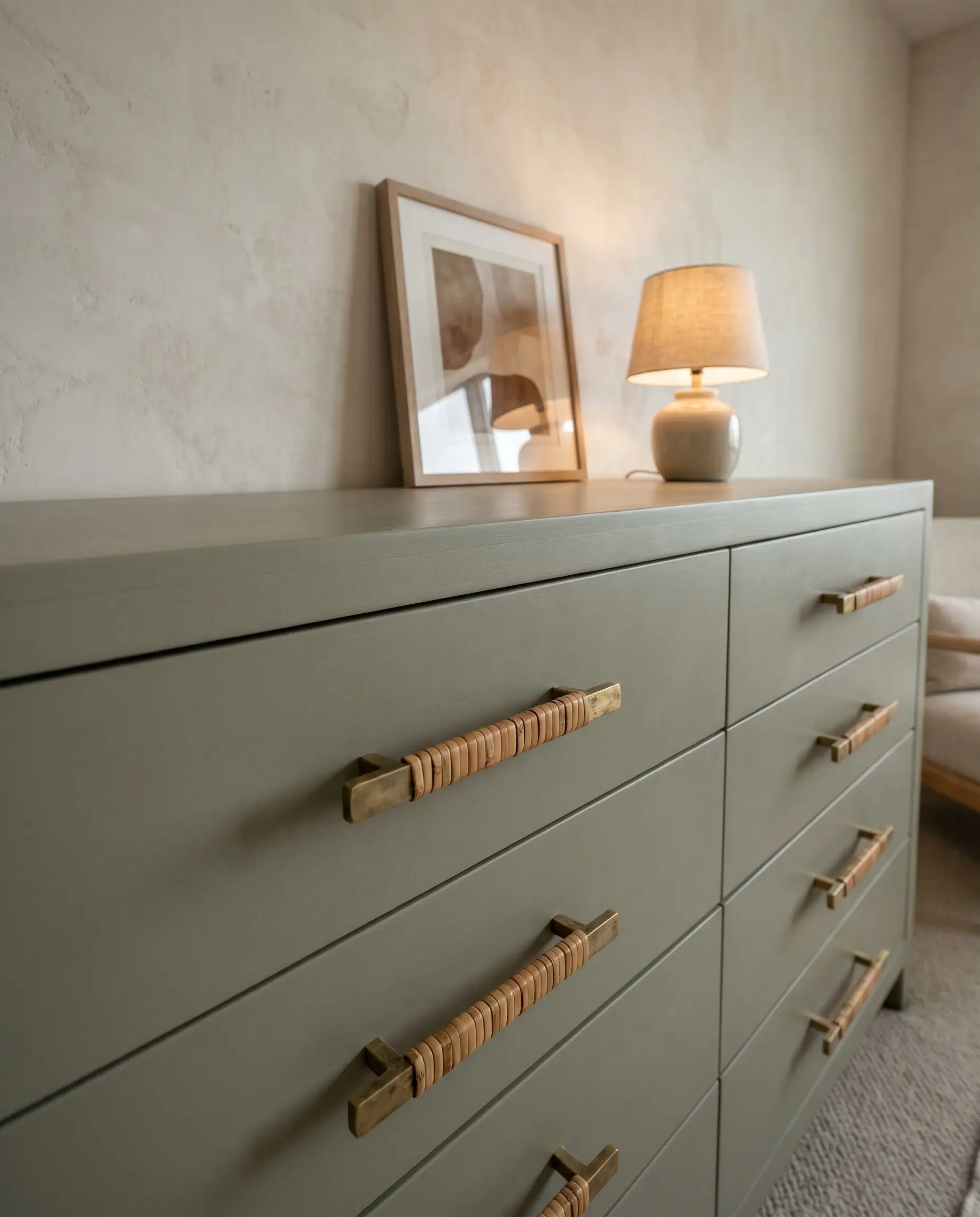
Standard builder-grade vanity knobs or generic dresser hardware instantly date a piece of furniture. Upgrading to solid brass pulls wrapped in tightly bent bamboo or rattan is a brilliant, micro-detail hack that completely customizes and refines the entire unit.
- Vibe: Bespoke, tactile, and detail-obsessed.
- Key Materials: Unlacquered brass cabinet pulls, bent bamboo wrapping.
- Paint Recommendation: Sherwin-Williams Evergreen Fog.
23. Anchor a Minimalist Corner with an Oversized Bamboo Ribbed Planter
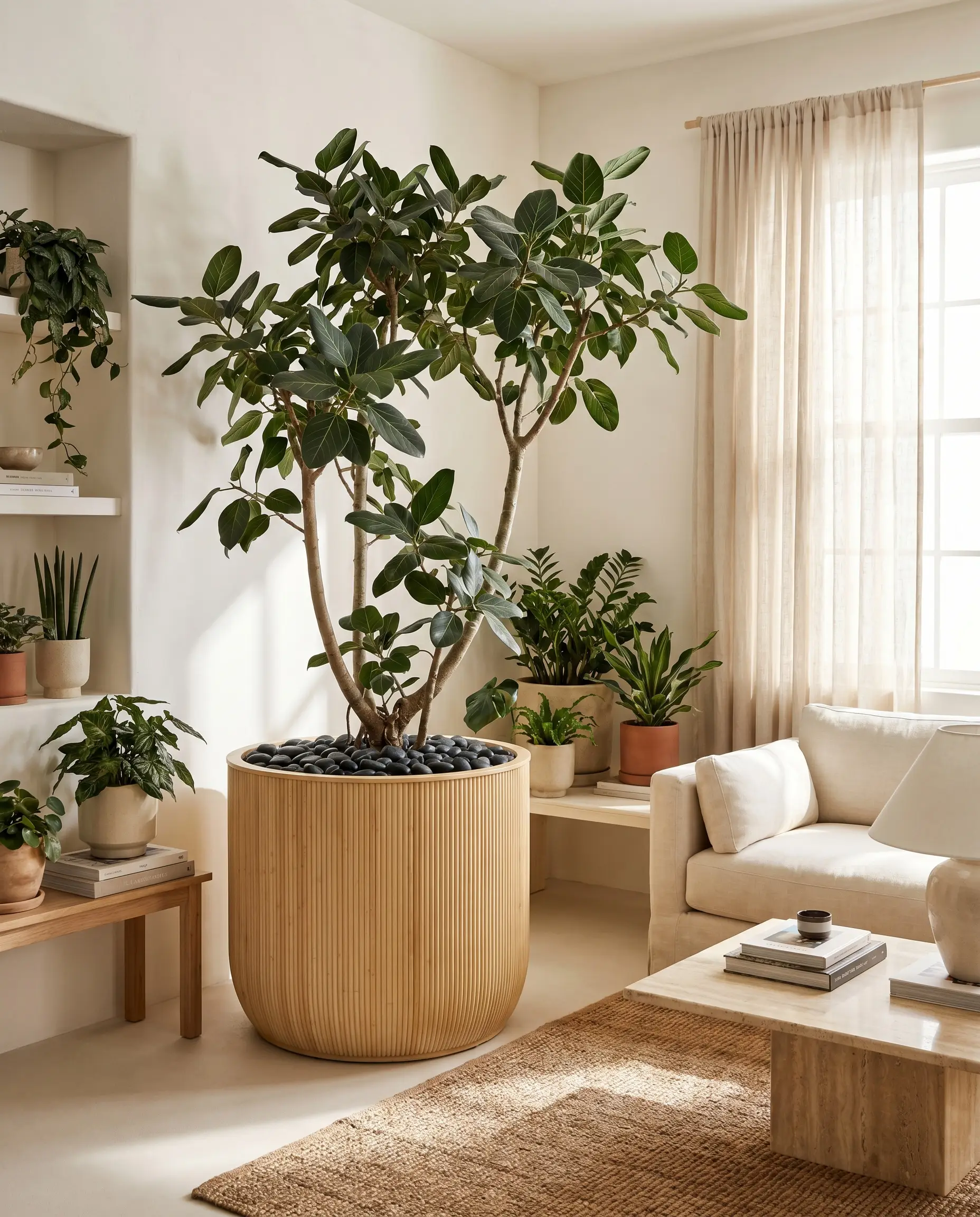
True biophilic design requires living elements, and the vessel is just as important as the plant itself. Housing a large, architectural indoor tree like a Ficus Audrey in a massive, vertically ribbed bamboo planter grounds the corner while the rigid ribs perfectly complement the tree’s organic canopy.
- Vibe: Lush, structured, and vibrant.
- Key Materials: Spun or ribbed bamboo floor planter, waterproof interior liner.
- Styling Pro-Tip: Top-dress the soil inside the planter with black river stones to hide the dirt and maintain a clean, high-end aesthetic.
24. Frame Organic Bathroom Mirrors with Bent Bamboo Wood
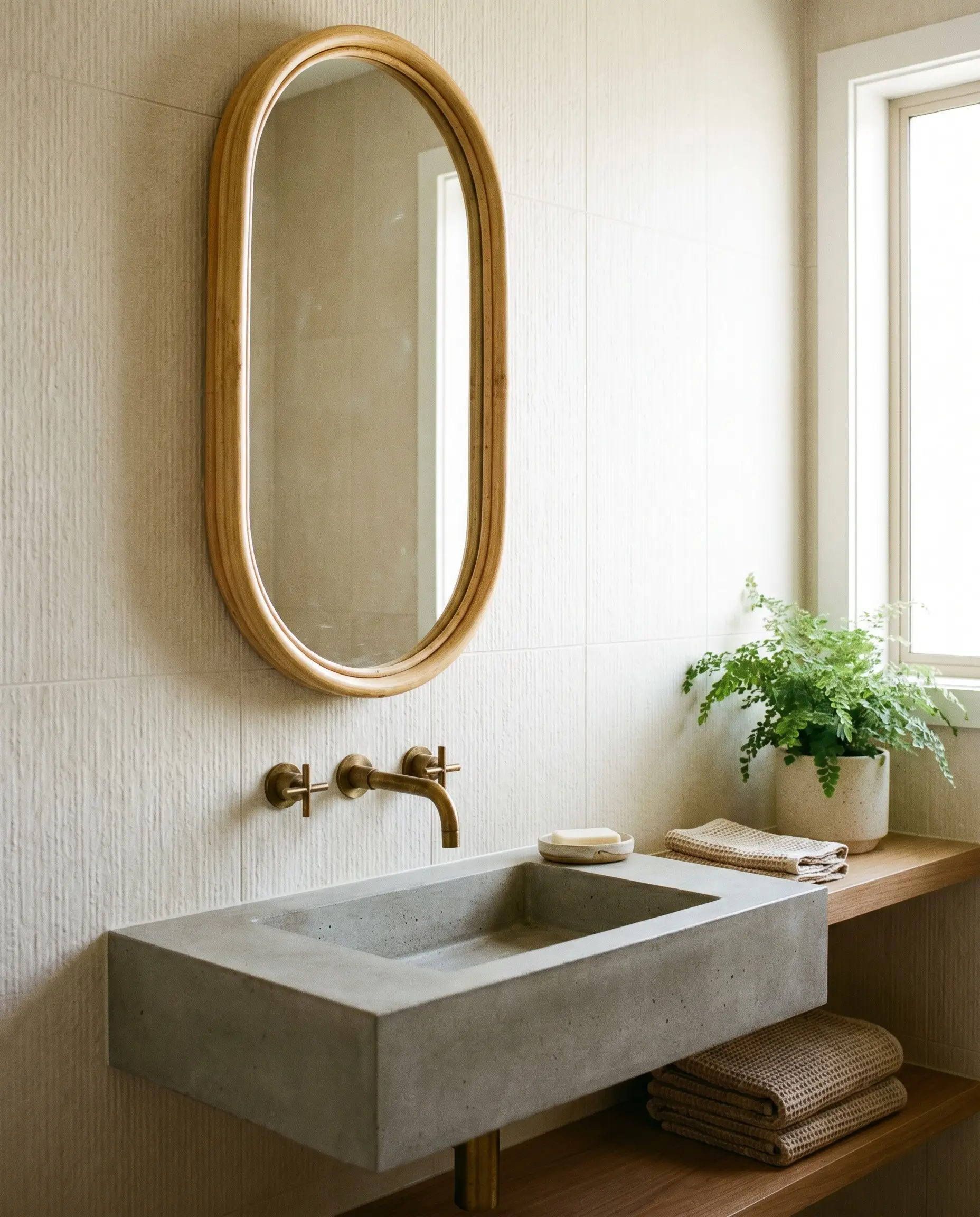
Sharp, frameless mirrors leave a bathroom vanity feeling cold and unfinished. Selecting an asymmetrical or pill-shaped mirror framed in steam-bent blonde bamboo immediately introduces much-needed warmth, softening the hard lines of the surrounding tile and plumbing fixtures.
- Vibe: Softened, organic, and highly current.
- Key Materials: Steam-bent bamboo mirror frame, pill-shaped or asymmetrical mirror glass.
- Hardware Match: Wall-mounted brass faucet fixtures to echo the warmth of the frame.
Cultivating Your Modern Organic Retreat
Bamboo’s absolute greatest strength is its immense architectural versatility—it possesses the unique ability to bridge the gap between rigid, structural geometry and inviting, organic warmth. You do not need to overhaul your entire house to feel its impact; integrating just two or three of these precise, structural elements can completely shift the energy and acoustics of a room. Which of these high-end, biophilic executions are you planning to integrate into your space first?

The Hackrea Style Desk treats interior decoration as an exact visual science. Rather than focusing on demolition or floor plans, this desk masters the art of color theory, undertone matching, material pairings, and spatial proportion. From balancing the visual weight of mixed metals to finding the perfect bridging tone between disparate wood species, this desk provides the rigorous aesthetic rules needed to achieve high-end, editorial-quality harmony in any space.