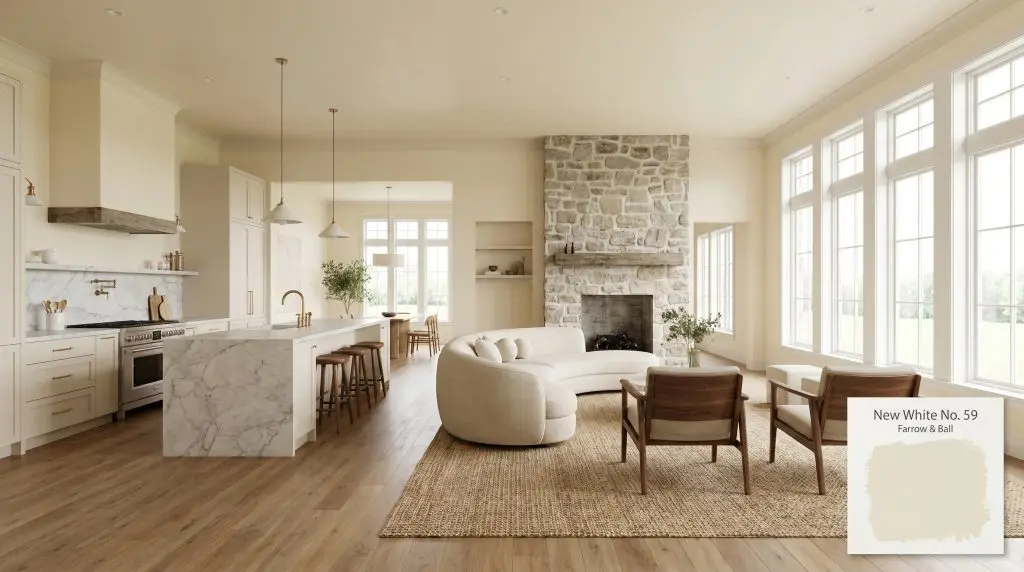
Farrow & Ball's New White No. 59 is a classic, warm off-white with a distinct yellow-gold base. Lighter and warmer than traditional off-whites, it brings a welcoming, creamy glow to traditional spaces and historic homes without feeling overly stark or clinical.
Will New White clash with your room?
Paint Technical Profile
| Color ID / SKU | No. 59 |
| HEX Code | #efe6cf |
| Light Reflectance (LRV) | 81.55 |
| Temperature | Warm |
| Primary Undertone | Yellow-Gold |
| Hidden Undertones | Subtle Green Or Peach Depending On The Lighting |
| Use | Interior, Exterior |
| Best Exposures | North-facing or East-facing |
| Best For | Kitchen cabinets, traditional living rooms, historic home exteriors, wainscoting, cozy bedrooms |
New White Digital Design Concept Boards
Kitchen Cabinets
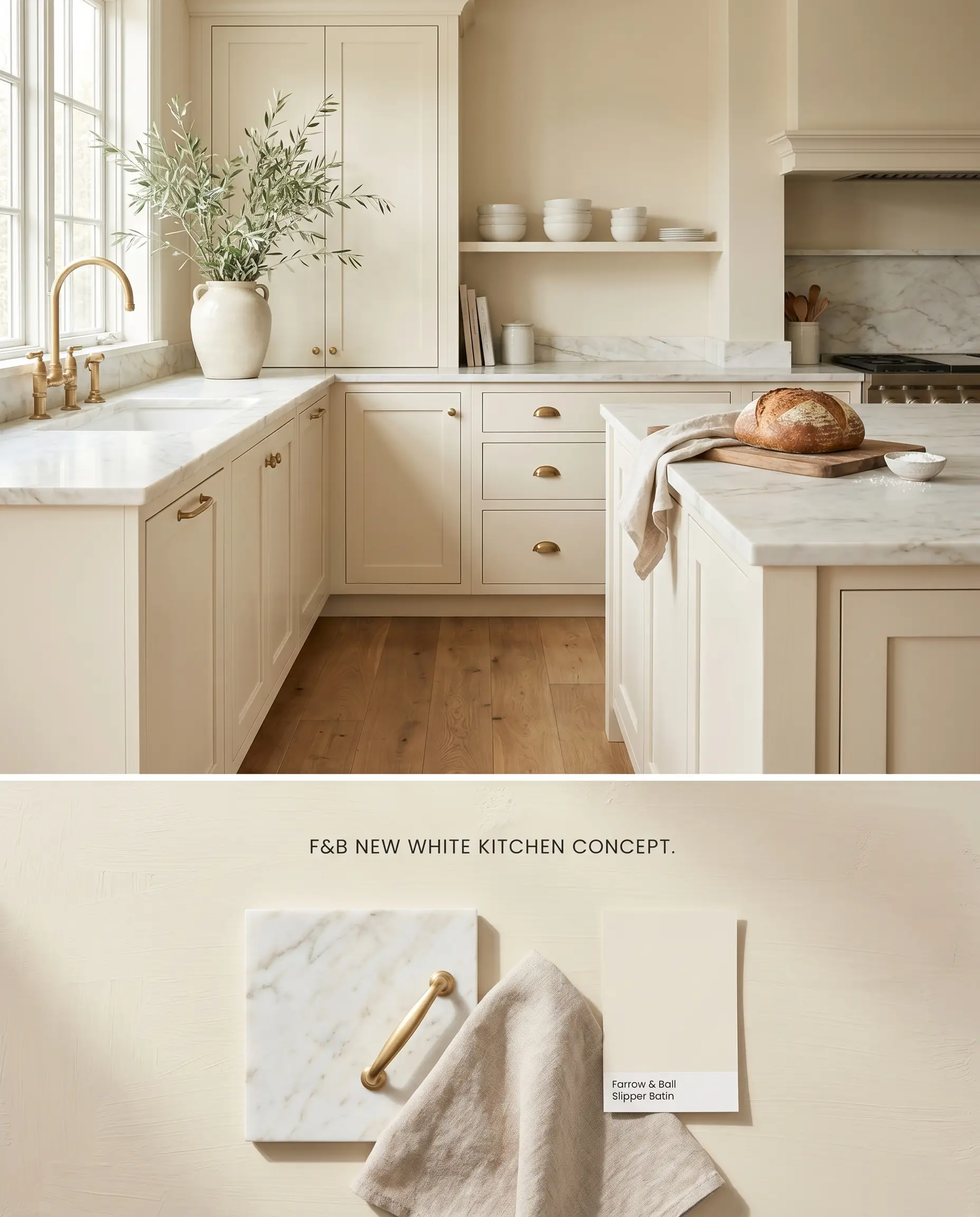
New White No. 59 acts as a grounding, warm off-white on cabinetry, absorbing ambient light without reading overly sterile. Because it clashes with cool-toned gray countertops, pairing these cabinets with warm soapstone or honed Danby marble ensures the yellow-based neutral remains physically balanced. A tinted undercoat is strictly required to achieve the necessary color structure and prevent patchiness across large millwork runs.
Modern Eggshell ($$$$ (Boutique/Luxury Tier)). An exceptionally durable, mid-sheen waterborne finish designed to withstand the daily wear of cabinetry and millwork, ensuring a flawless, long-lasting surface that resists kitchen moisture.
The Consultant’s Finish
Traditional Living Rooms
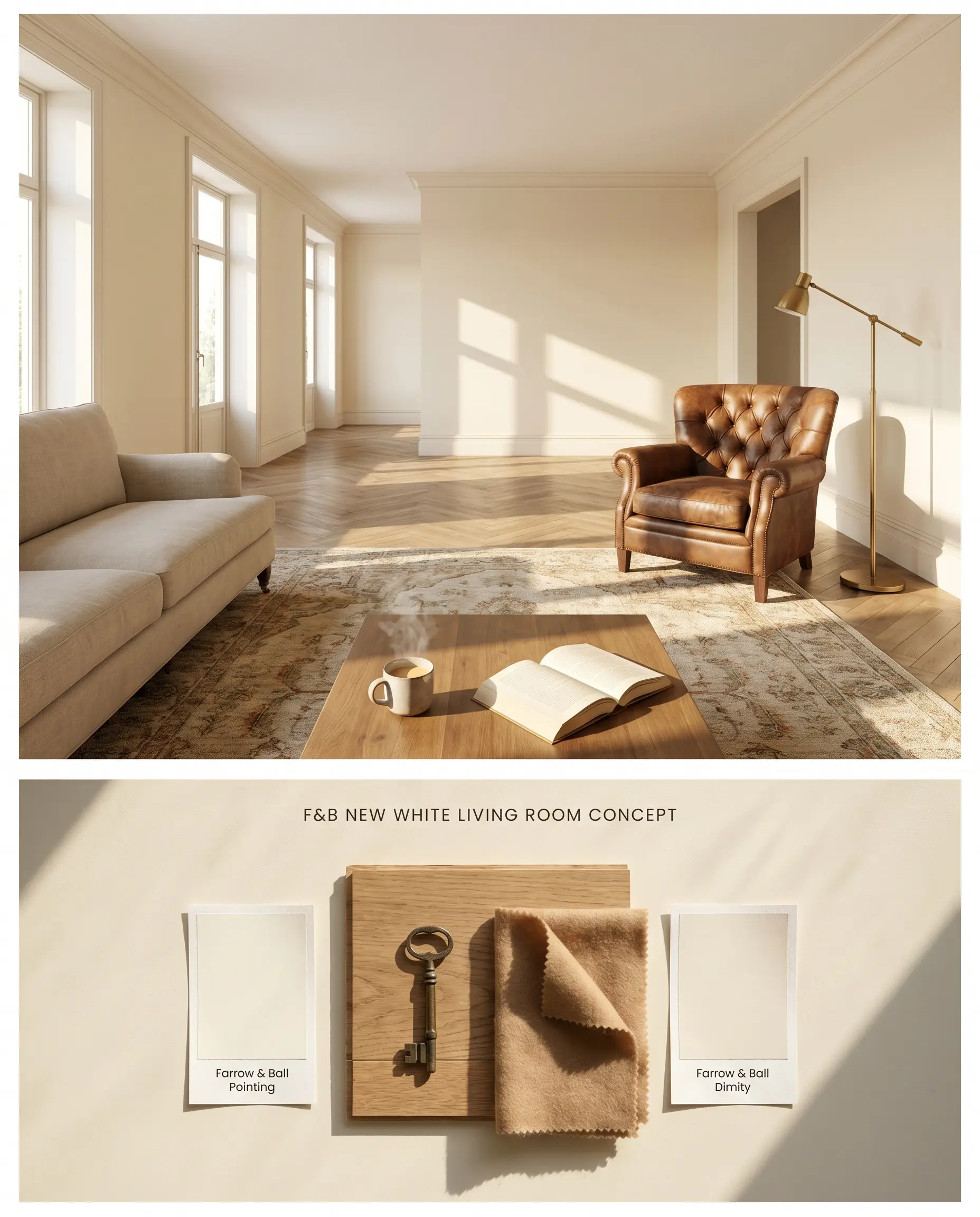
In expansive spaces, this heritage color palette staple leverages its 81.55 light reflectance value to illuminate walls while retaining distinct thermal warmth. To mitigate the bounce effect that amplifies yellow in smaller confines, deploying this shade in a broad, well-ventilated layout disperses the pigment evenly. Banish standard ceiling white; instead, carry a tonal cream overhead to maintain the envelope and prevent the walls from looking dirty.
Dead Flat ($$$$ (Boutique/Luxury Tier)). Because standard matte finishes flash when touched up, this multi-surface, ultra-matte finish offers exceptional scuff resistance and washability, making it the premier choice for continuous color-drenching in active living spaces.
The Consultant’s Finish
Historic Home Exteriors
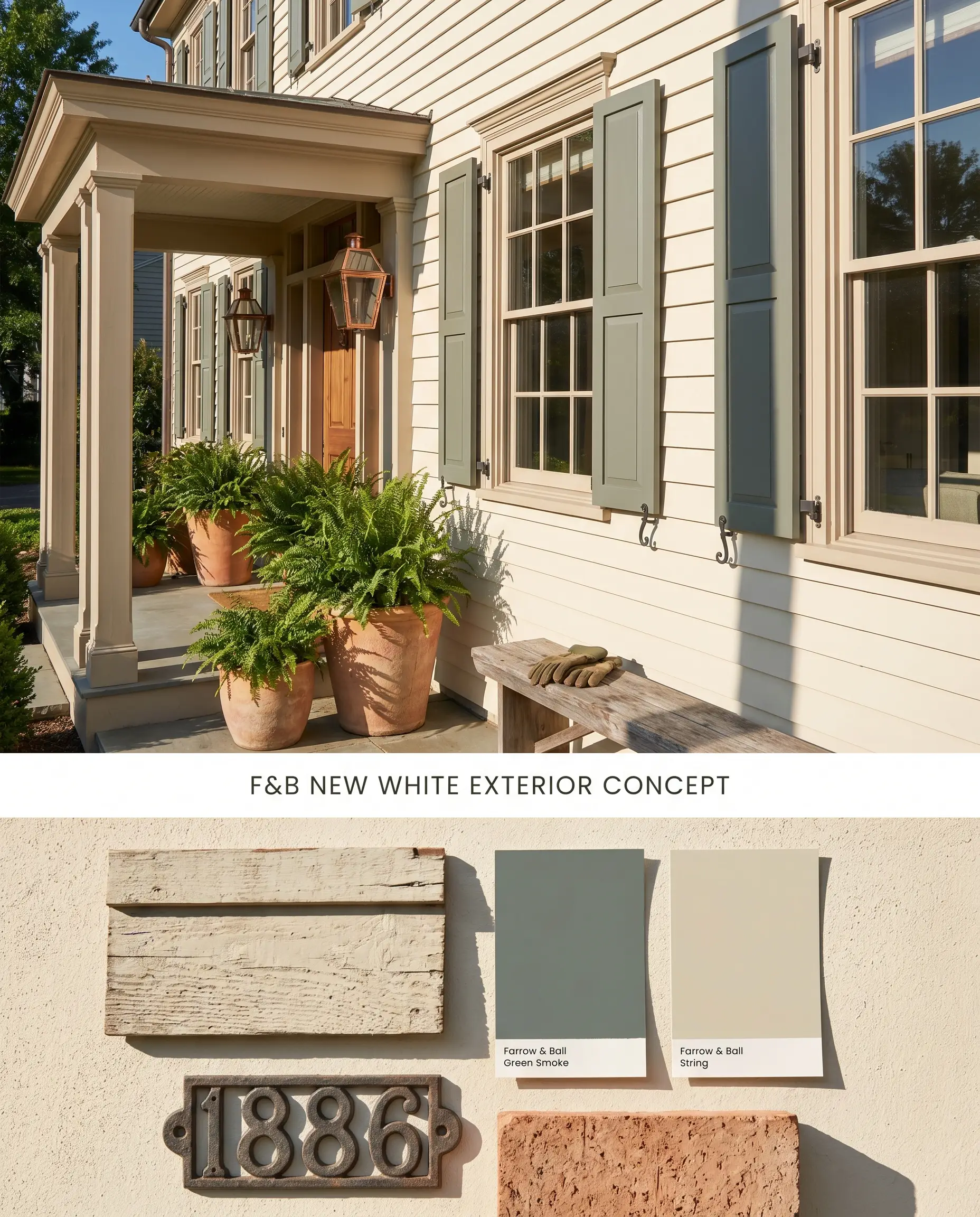
When exposed to direct, unshielded sunlight, the yellow undertones of New White No. 59 flatten out, presenting as a substantial, historically accurate cream rather than a blinding white. This makes it a premier choice for historic home restoration, particularly on stucco or clapboard where stark whites look glaringly modern. The pigment structure requires a dedicated primer to ensure full opacity against weathered, porous substrates.
Exterior Eggshell & Masonry ($$$$ (Boutique/Luxury Tier)). This highly breathable, fungal-resistant formula provides a flexible, durable shield against the elements, ensuring heritage colors remain vibrant outdoors without trapping substrate moisture.
The Consultant’s Finish
Wainscoting
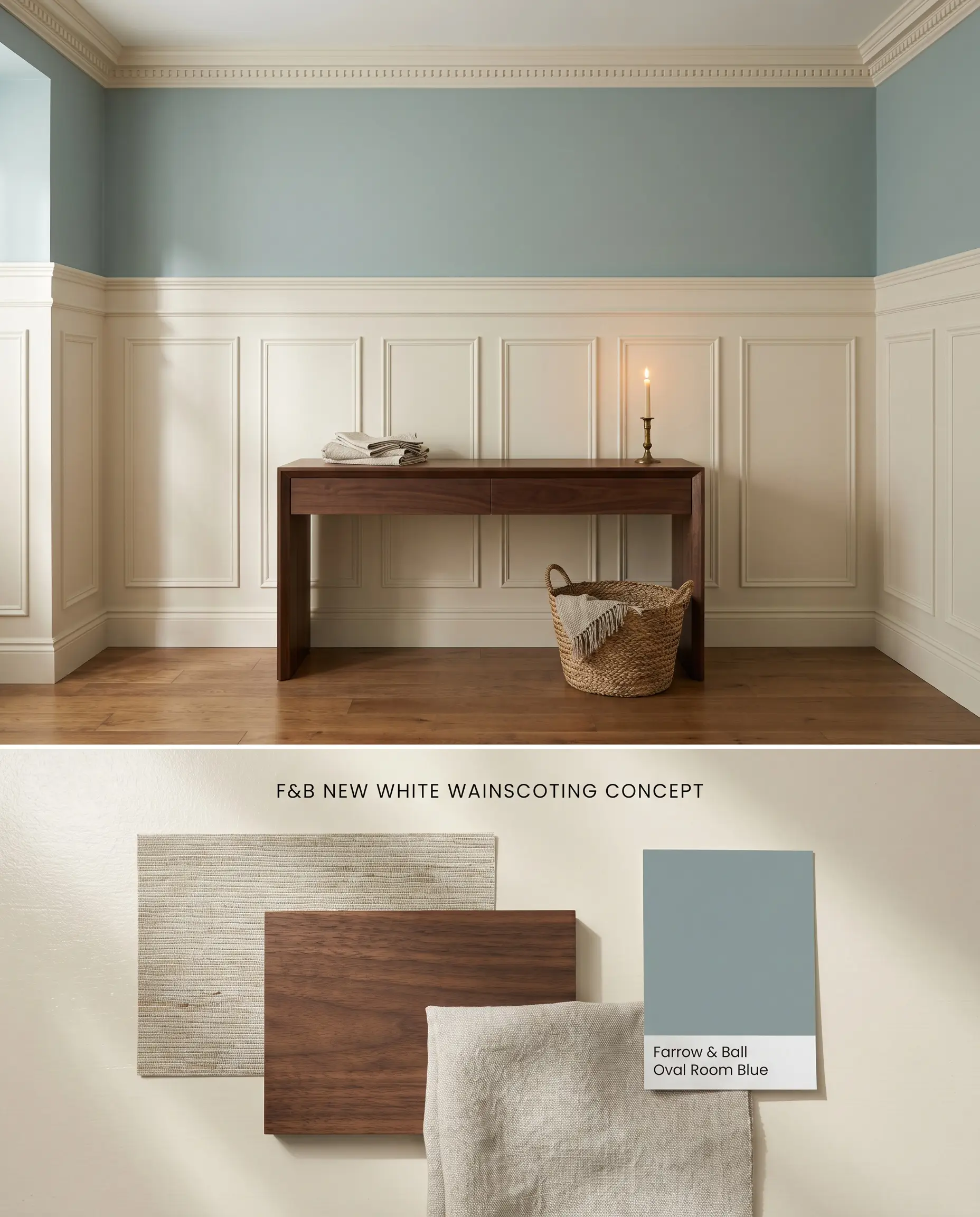
Applying this warm off-white to traditional wainscoting anchors the lower half of a room with substantial, creamy weight. By confining the color to the lower third of the wall, you completely bypass the bounce effect that plagues full-room applications in tight, naturally lit spaces. This strategic architectural placement allows for the introduction of textured wallcoverings or darker, contrasting upper walls without overwhelming the eye.
Modern Eggshell ($$$$ (Boutique/Luxury Tier)). This waterborne finish provides the necessary structural rigidity to withstand scuffs from shoes and furniture along the lower wall profile.
The Consultant’s Finish
Cozy Bedrooms
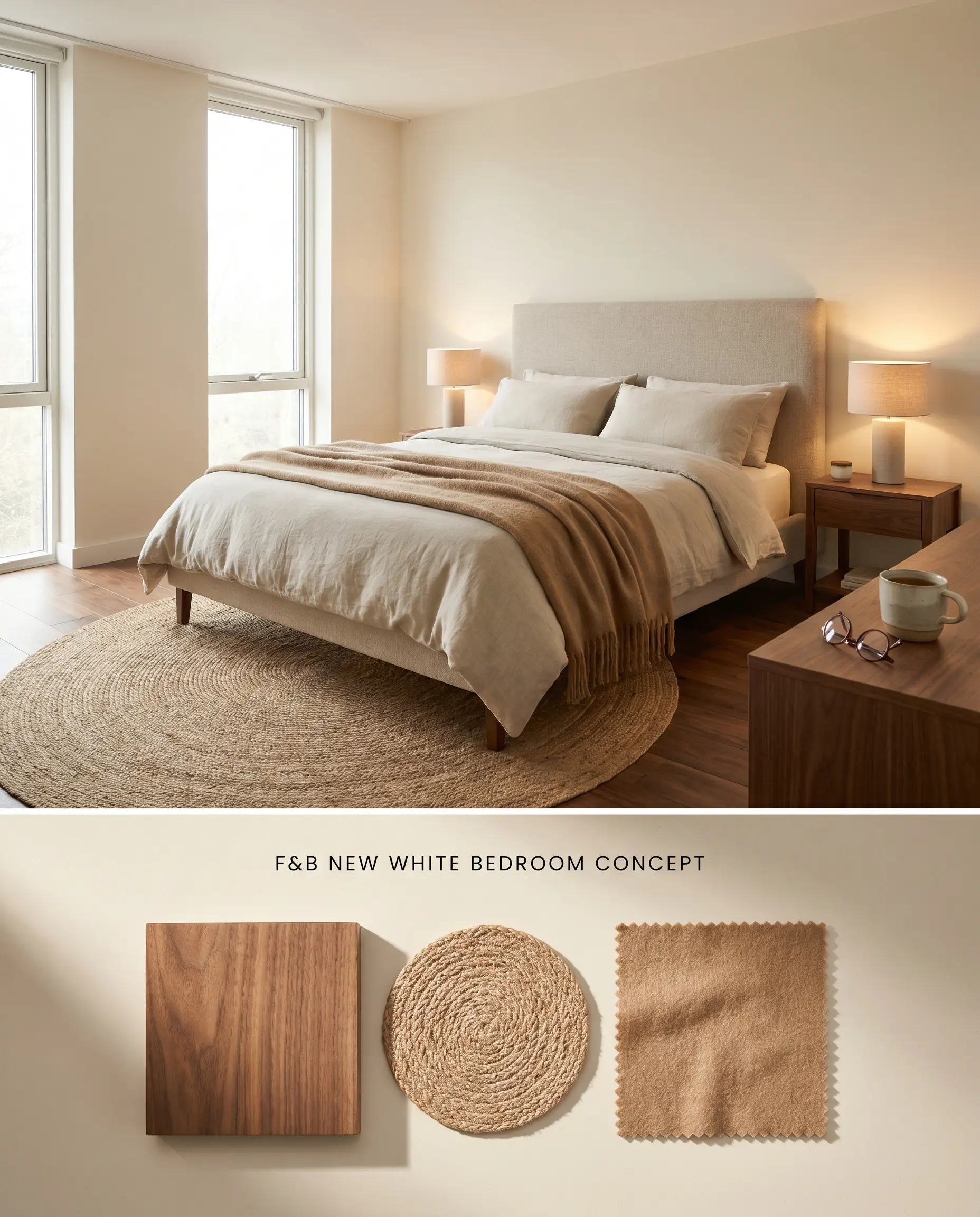
This shade wraps a sleeping space in a soft, luminescent glow, provided it is kept out of intense Southern exposures that turn the walls aggressively yellow. To avoid a low light trap, ensure the bedroom has adequate natural windows rather than relying solely on cool LED fixtures, which will strip the paint of its vitality and render it muddy. Layering natural linens and woven wools physically absorbs the light, softening the overall architectural finish.
Estate Emulsion ($$$$ (Boutique/Luxury Tier)). Delivers Farrow & Ball’s signature, chalky matte finish with unparalleled depth of color, perfect for master bedrooms where aesthetic impact is prioritized over heavy scrubbing.
The Consultant’s Finish
Comparative Color Theory: Warm Off-Whites
Farrow & Ball New White No. 59 vs. Benjamin Moore Chatsworth Cream 225
New White No. 59 relies on a distinctly earthy, almost historic yellow base, whereas Chatsworth Cream leans slightly more peach-toned under warm light. Chatsworth Cream reflects slightly less light, giving it a denser presence on the drywall. Specify New White for cooler, North-facing rooms where its yellow base neutralizes the chill, and reserve Chatsworth Cream for spaces where you want a softer, more flesh-toned warmth without the historic rigidity.
Farrow & Ball New White No. 59 vs. Sherwin-Williams Restoration Ivory SW 6413
Restoration Ivory carries a much stronger, undeniable yellow-gold undertone compared to the muted, creamy architectural finish of New White No. 59. In a room with high natural bounce effect, Restoration Ivory will rapidly escalate into a distinct pastel yellow. Deploy New White No. 59 when you need a nuanced, shifting off-white, and select Restoration Ivory only when the architectural goal is a deliberate, saturated yellow-cream.
Farrow & Ball New White No. 59 vs. Farrow & Ball White Tie No. 2002
White Tie No. 2002 is significantly cleaner and brighter, operating closer to a true warm white, while New White No. 59 drops deeper into the cream category with a more pronounced tint. White Tie is the superior choice for spaces with limited natural light to avoid the low light trap that makes New White read flat or muddy. Conversely, use New White No. 59 in sun-drenched, North-facing rooms where White Tie might wash out and lose its structural definition.
Technical Specifications and Application FAQs
Yes, the intense, warm light of a South-facing exposure significantly amplifies the yellow base of New White No. 59. In these environments, the color shifts from a balanced cream to a pronounced, saturated yellow.
Standard, cool-toned brilliant white ceilings starkly contrast with the warm undertones of New White No. 59, making the walls appear dirty or aged. Always pair it with a complementary warm white, such as Pointing No. 2003, to maintain a cohesive thermal envelope.
Farrow & Ball’s proprietary White & Light Tones Primer is strictly required to establish the necessary color structure and depth. Using standard trade primers often results in a coverage catch, necessitating additional topcoats to eliminate flashing.
In direct, unshielded exterior sunlight, the high light reflectance value washes out the yellow intensity, allowing the paint to read as a substantial, historically accurate cream. This prevents the blinding glare often associated with stark exterior whites.
Paint Aesthetic & Practical Analysis
| Profile | Analysis | |
|---|---|---|
| Aesthetic | New White is a brilliant testament to heritage design. It avoids the sterile feel of modern whites, offering a lived-in, buttery richness that instantly makes a room feel like it has been gracefully aging for decades. It is an absolute staple for historic renovations. | |
| The Coverage Catch | Like many Farrow & Ball colors, New White requires their specific White & Light Tones Primer to achieve its signature depth. It may need an extra coat compared to standard trade paints to avoid patchiness. | |
| The Lighting Shift | In cool, North-facing light, it acts as a balanced, warm neutral that bounces light beautifully. However, in intense South-facing or afternoon Western light, the yellow base intensifies significantly, making it look much creamier or even slightly yellow. | |
| The Clash Warning | Avoid pairing New White with stark, brilliant cool whites (like standard ceiling white), which will make New White look dirty or overly yellow. It also clashes with cool-toned gray floors or countertops. | |
| The Bounce Effect | In smaller rooms with lots of natural light, the yellow undertones can reflect off each other, amplifying the warmth and making the space feel more yellow than a neutral cream. | |
| The Low Light Trap | In windowless rooms or under cool LED lighting, the chromatic profile can lose its glowing warmth and read a bit flat or muddy. | |
| The Touch Up | Farrow & Ball's Estate Emulsion finish is notoriously difficult to touch up without 'flashing' (showing the touched-up spot). If a wall gets scuffed, you will likely need to repaint the entire wall from corner to corner. |
Real-World Inspiration Be the first to upload a real photo of New White!
No Photos Yet
Includes +20 First Upload Bonus!
Real Experiences
Insights from people who have used New White.No reviews yet
Be the first to share your experience with New White.
Earn 15 points instantly!
Closest Cross-Brand Equivalents
The absolute closest scientific color matches for New White across top paint brands.