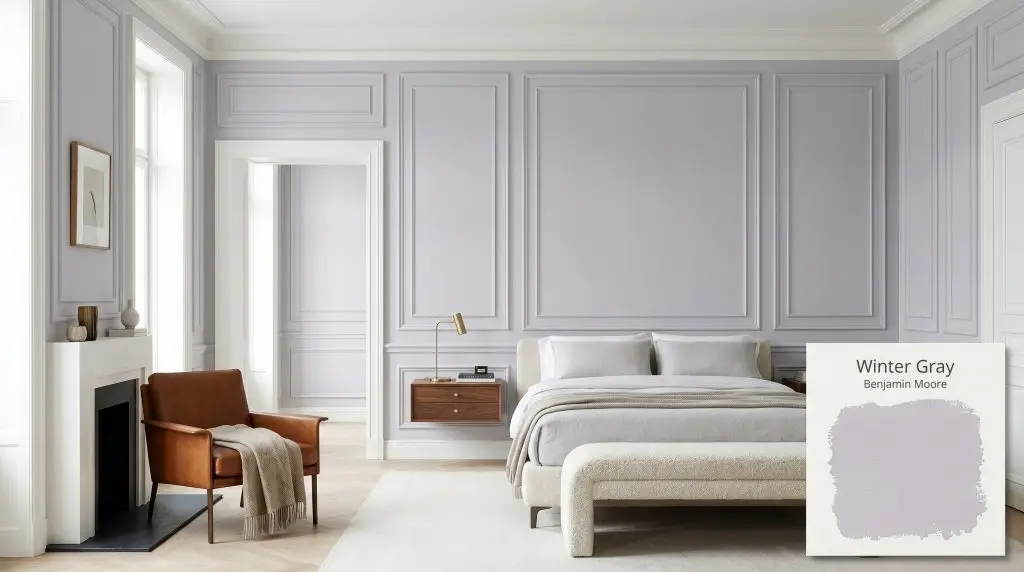
Benjamin Moore Winter Gray 2117-60 is a cool, gentle gray with definitive violet and lavender undertones. Boasting an LRV of 61.69, it acts as a sophisticated, medium-light neutral that shifts dynamically between a crisp silver-gray and a soft, muted lilac depending on the room's lighting.
Will Winter Gray clash with your room?
Paint Technical Profile
| Color ID / SKU | 2117-60 |
| HEX Code | #D0CDD6 |
| Light Reflectance (LRV) | 61.69 |
| Use | Interior |
| Best Exposures | South-Facing or West-Facing |
| Best For | Bedrooms, Bathrooms, Nurseries |
Unlocking Benjamin Moore Winter Gray: The Cool Neutral with a Hidden Violet Pulse
Some paint colors wear their personality right on the label, but others require a bit of patience to fully reveal their true nature. Benjamin Moore Winter Gray 2117-60 initially presents as a standard, crisp architectural neutral, yet it carries a distinct, atmospheric secret.
Once applied to your walls, this shade gently releases a soft lavender pulse that completely transforms the energy of a room. It is the perfect choice for homeowners who want the sophistication of a gray palette but crave an unexpected, highly tailored layer of complexity.
Undertones & LRV of Winter Gray
When homeowners ask if this shade leans warm or cool, the answer is definitively cool. However, this is not a sterile, flat chill. The underlying chromatic profile reveals a fascinating structure where the blue and red pigments are nearly balanced, creating a highly specific visual weight.
At an LRV of 61.69, this architectural finish sits comfortably in the medium-light category. It absorbs just enough natural light to feel substantial on the walls, preventing the room from feeling washed out. This specific light reflectance value allows the paint to stabilize a space while maintaining an incredibly bright, airy spatial perception.
Ambient Lighting Effects & The Color Temperature Shift
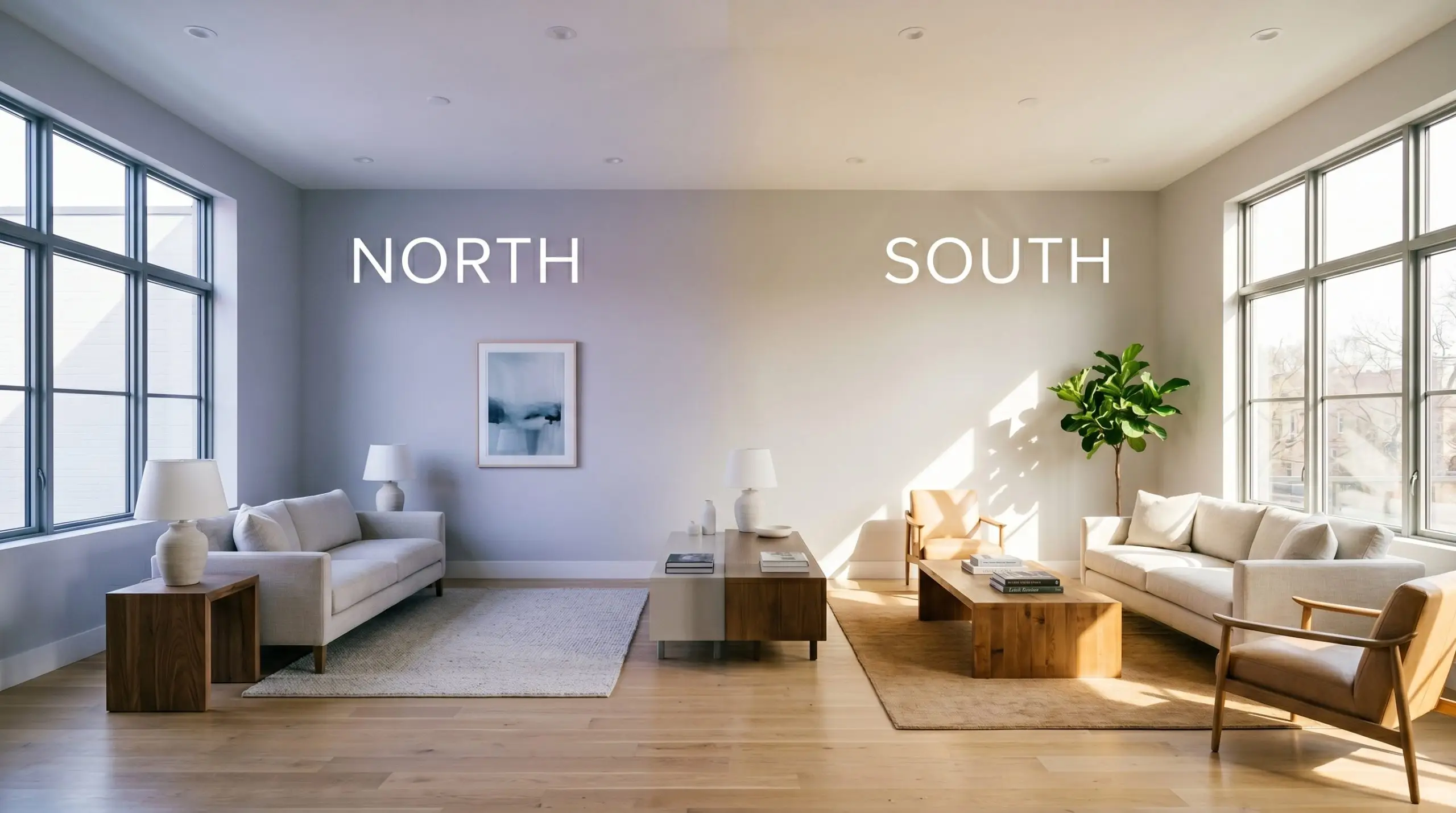
Because of its complex color structure, Benjamin Moore 2117-60 shifts dramatically depending on the specific light filtering through your windows.
Popular Applications for This Cool-Toned Neutral
The beauty of this cool-toned neutral lies in its ability to adapt to entirely different architectural features and styling choices. Here is how to harness its unique energy across various spaces in your home.
Layering Textiles in Primary Bedrooms
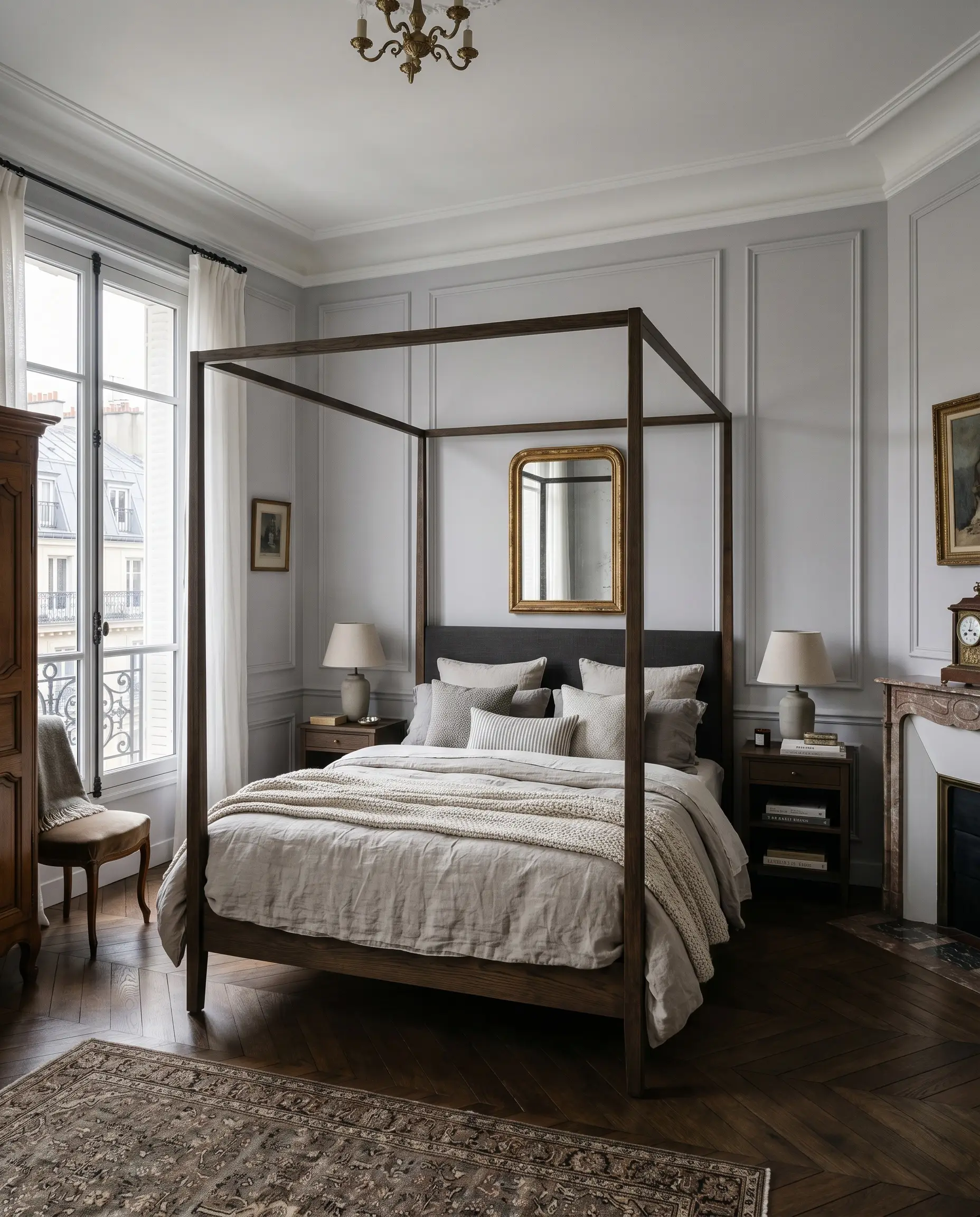
To create a serene, sophisticated retreat, treat this color as the foundation for a Parisian-inspired aesthetic. Apply it across walls detailed with picture frame molding to instantly elevate the room’s architectural presence. The subtle violet cast pairs beautifully with a statement canopy bed and layered stonewashed linen bedding.
To balance the cool temperature of the walls, introduce tactile, visually rich textiles. Think mustard yellow velvet throw pillows or a plush bouclé bench at the foot of the bed.
Hackrea Pro-Tip (The Fabric Pairings)
Material Pairings for Spa-Inspired Bathrooms
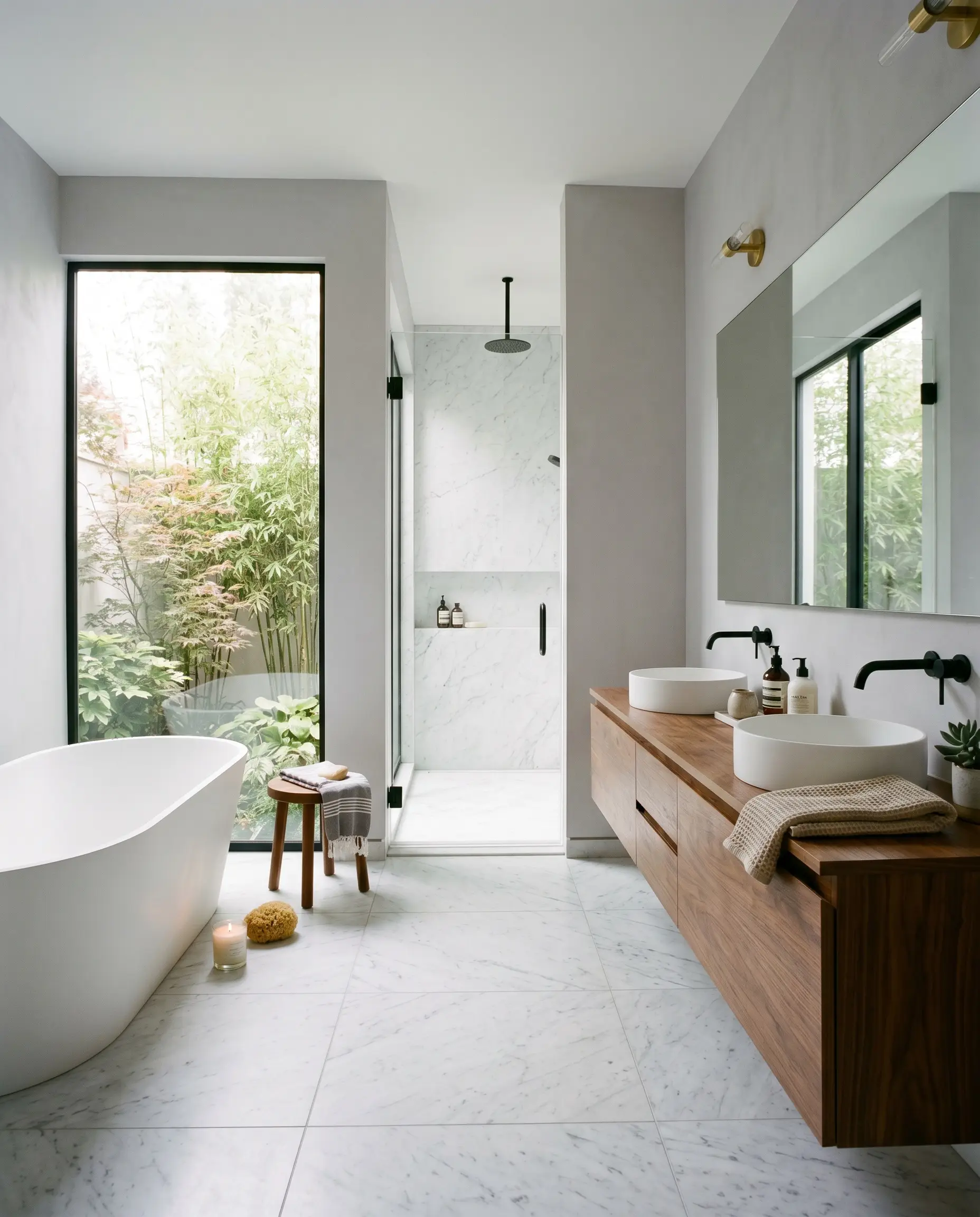
This shade is incredibly effective in bathrooms where you want to cultivate a clean, restorative atmosphere without defaulting to stark white. Pair it with a floating walnut vanity to introduce a necessary layer of organic warmth against the cool walls. For a premium, custom feel, install unlacquered brass plumbing fixtures, which will pop beautifully against the muted purple undertones.
If you are using honed Carrara marble on the floors or shower walls, this paint acts as the perfect transitional bridge. The gray base respects the veining in the stone, while the lilac energy prevents the hard surfaces from feeling overly clinical.
Color-Drenched Contemporary Nurseries
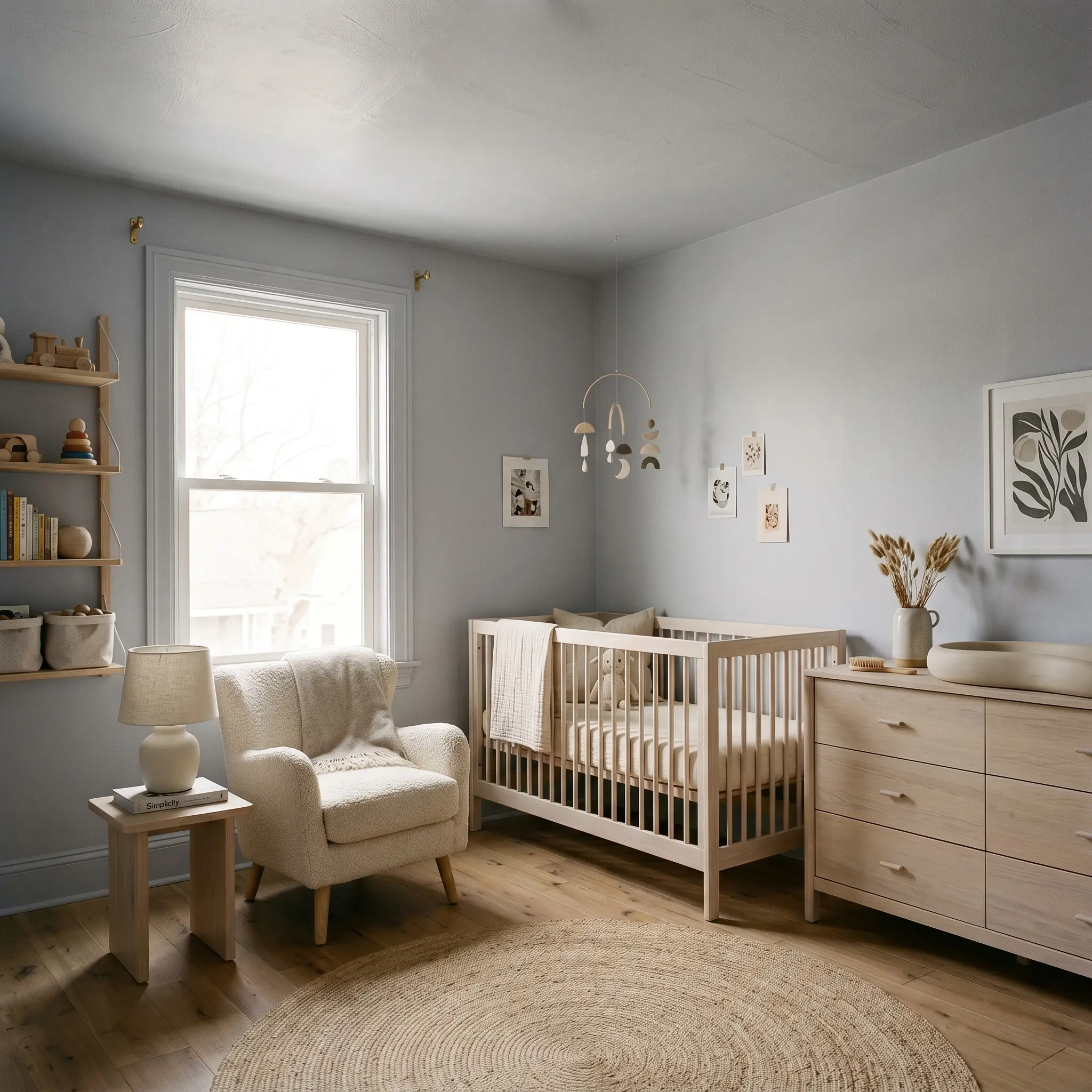
Move away from predictable pastel pinks and baby blues by utilizing this sophisticated neutral for a contemporary nursery. Consider a color-drenching approach—painting the walls, baseboards, and ceiling in the same finish—to create a soft, immersive environment. It establishes a calming backdrop that easily transitions as a child grows.
Contrast the soft walls with bleached white oak furniture and a woven cane rocking chair. To keep the room feeling playful but curated, introduce an oversized botanical branch in a simple ceramic vase and layer a vintage Turkish runner over the floor.
Wainscoting & Wallpaper in Dining Rooms
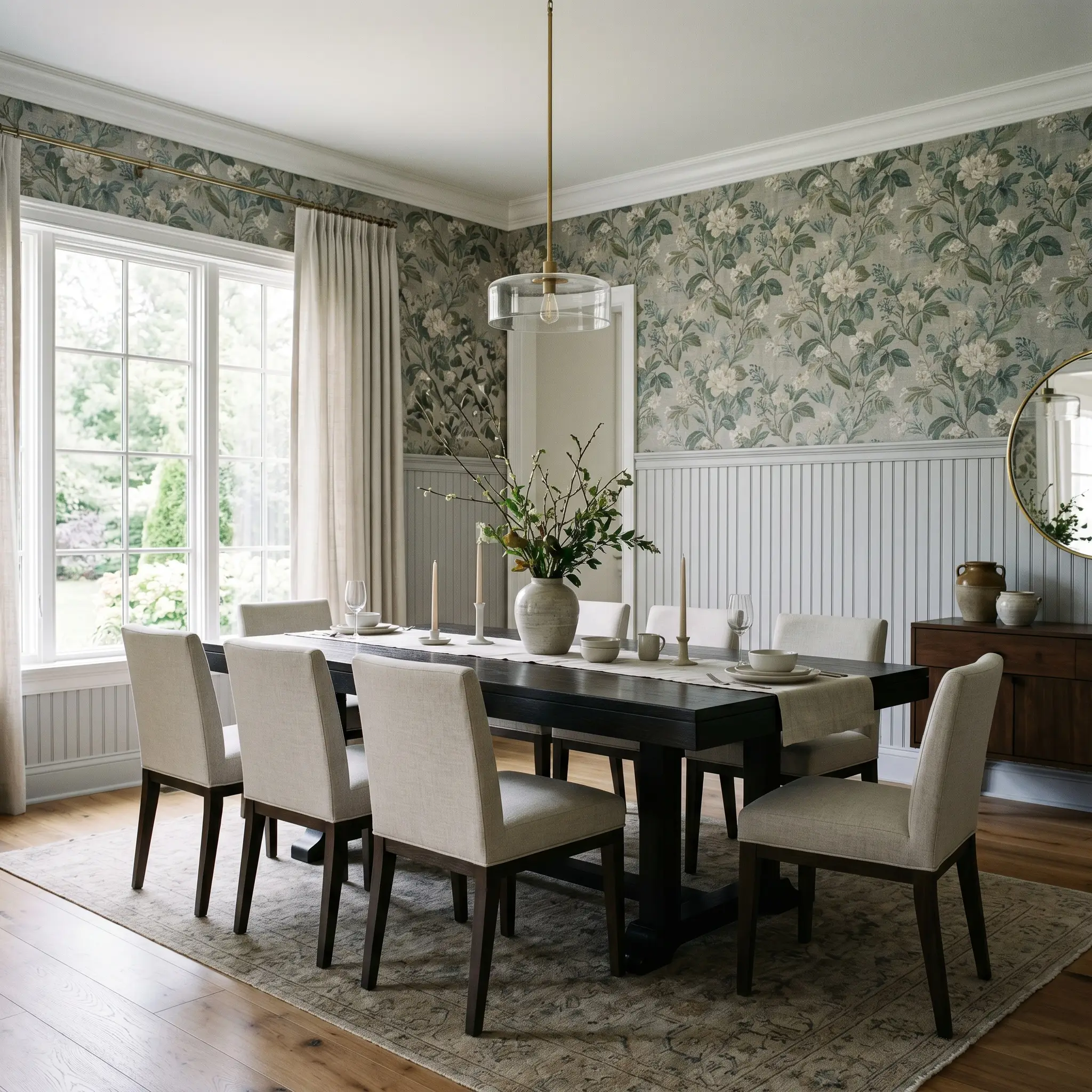
In a dining space, this color can shift from airy to intimate depending on how you apply it. Use it on classic beadboard wainscoting on the lower half of the walls, paired with a large-scale botanical wallpaper above. This application establishes the room’s elegant foundation while drawing the eye upward.
Be incredibly careful when pairing this specific gray with intensely orange or red-toned woods like cherry or mahogany. The warm orange and the cool violet will actively fight each other, creating a visually jarring environment. Stick to neutral, ashy, or very dark ebonized woods instead.
Clash Warning (The Wood Tone Rule)
High-Gloss Finishes on Accent Furniture
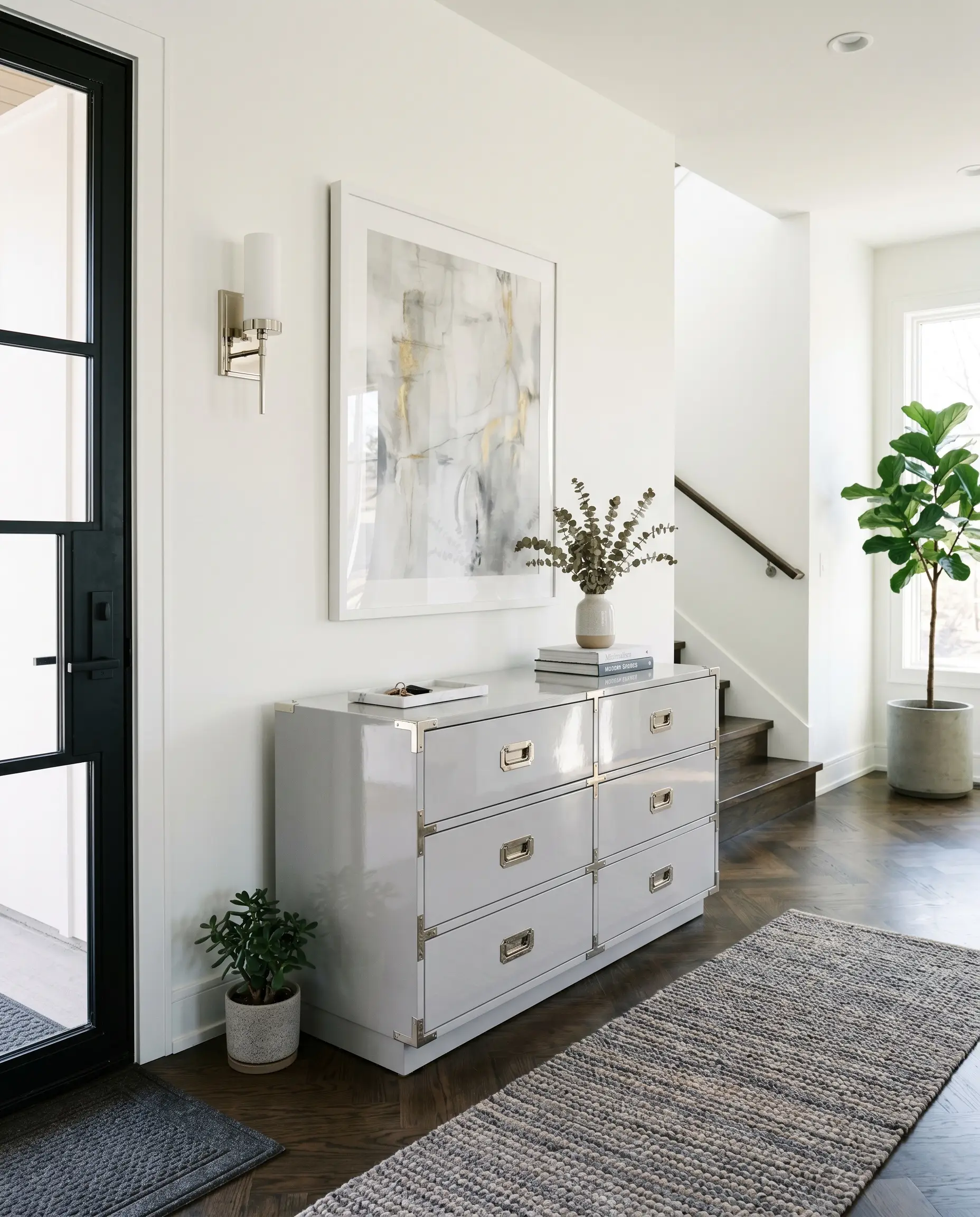
If you are hesitant to commit to an entire room, this shade is brilliant for reviving tired furniture. A vintage campaign dresser or a tired wooden console table takes on a completely new life when coated in this color. Opt for a high-gloss or satin finish to give the piece a durable, modern edge.
Swap out the old hardware for polished nickel pulls to complement the cool gray base. Placed in an entryway against a crisp white wall, the painted piece becomes an immediate, sophisticated focal point that sets the tone for the rest of the house.
Coordinating Colors & Best Pairings for Winter Gray
This muted lilac-gray requires intentional boundaries to hold its shape, thriving when placed against crisp contrasts rather than bleeding into muddy, similar tones. Instead of letting the color drift aimlessly, you must use surrounding elements to either pull forward its hidden violet warmth or push it back into a stony, architectural chill.
Establishing Clean Architectural Boundaries
To prevent this nuanced color from looking like a mistake, your trim must provide a definitive, sharp border. Sherwin-Williams High Reflective White SW 7757 is an excellent choice for a stark, icy frame that amplifies the wall’s violet energy.
If you prefer a slightly softer transition, Benjamin Moore Chantilly Lace OC-65 offers a brilliantly clean canvas without feeling stark. For homes with historical character, Farrow & Ball All White No. 2005 acts as a purely neutral boundary that gently contains the color without injecting any competing warm or cool undertones.
Tactile Elements and Hardware Finishes
The materials you introduce will dictate whether this paint feels like a delicate floral or a tailored, high-end neutral. Anchor the room with honed black slate flooring or hearths to absorb excess light and give the airy walls a definitive, grounding counterweight. This dark, matte stone provides a necessary visual anchor.
For your hardware and lighting fixtures, polished nickel is the ultimate companion. The highly reflective, slightly warm silver finish acts like a mirror, lifting the gray while respecting its cool-toned profile.
To keep the space from feeling like a sterile laboratory, introduce generous amounts of saddle leather through accent chairs or bench cushions. The rich, organic warmth of the leather creates a beautiful, intentional tension against the frosty walls.
Curated Accent Palette
Signature Aesthetic Mood Boards
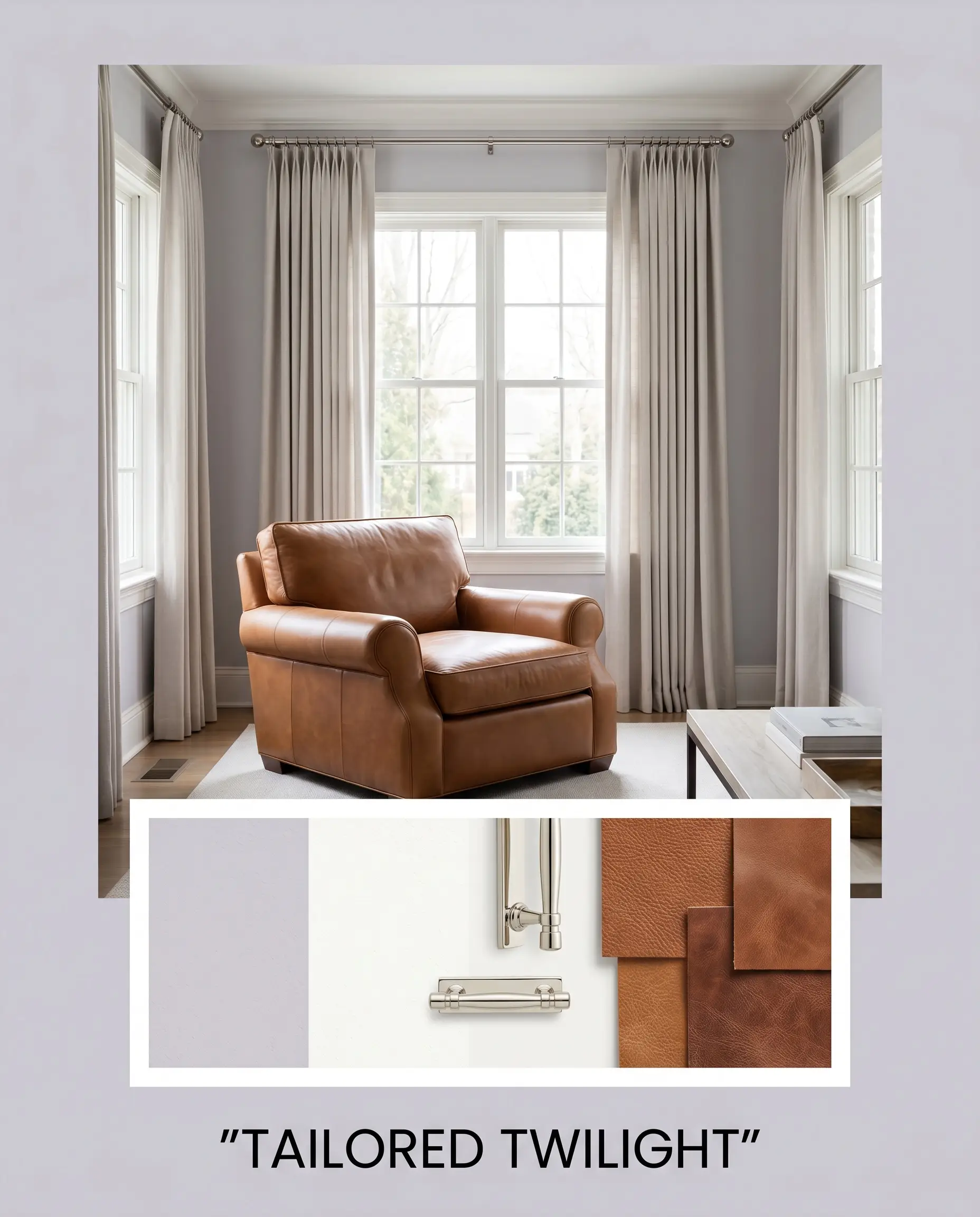
Tailored Twilight This palette feels crisp, transitional, and effortlessly elegant. The airy walls are framed by tailored linen drapery and punctuated by gleaming polished nickel hardware. An oversized saddle leather armchair sits in the corner, providing a crucial touch of organic warmth that keeps the cool atmosphere feeling deeply inviting.
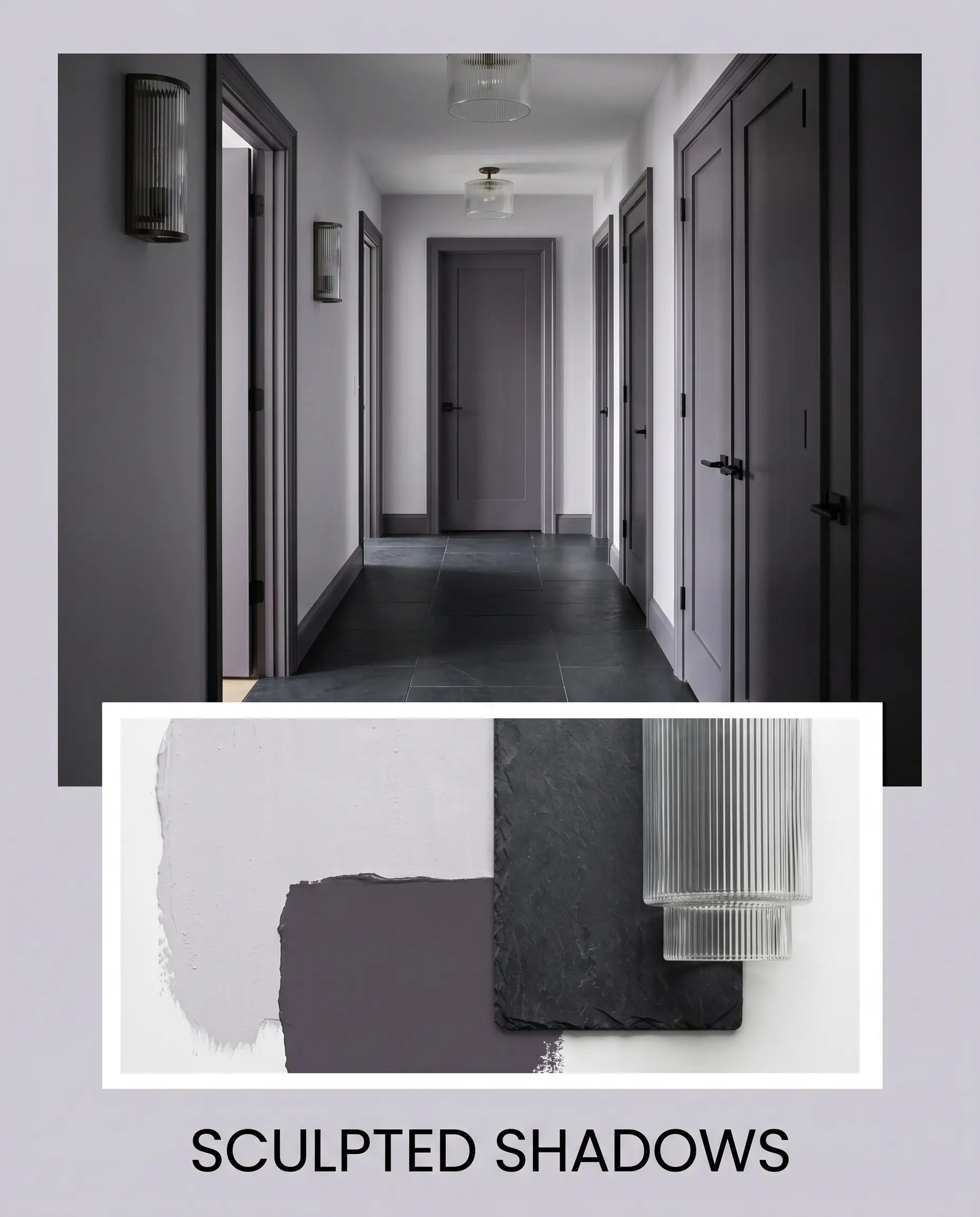
Sculpted Shadows Designed for those who crave a moody, highly curated environment, this aesthetic leans into the paint’s darker potential. The primary color is paired with bold accents of Benjamin Moore Shadow on the interior doors. Honed black slate surfaces and fluted glass lighting fixtures complete the look, resulting in a deeply grounding, sophisticated energy.
Comparing Winter Gray to Rival Neutrals
When selecting a foundational color, it is crucial to test how it behaves under your specific lighting conditions and exterior exposures. Sometimes, a subtle shift in the undertone makes all the difference between a room that feels serene and one that feels surprisingly cold. Here is how this specific shade stacks up against its closest competitors.
Benjamin Moore Winter Gray vs. Sherwin-Williams Lazy Gray SW 6254
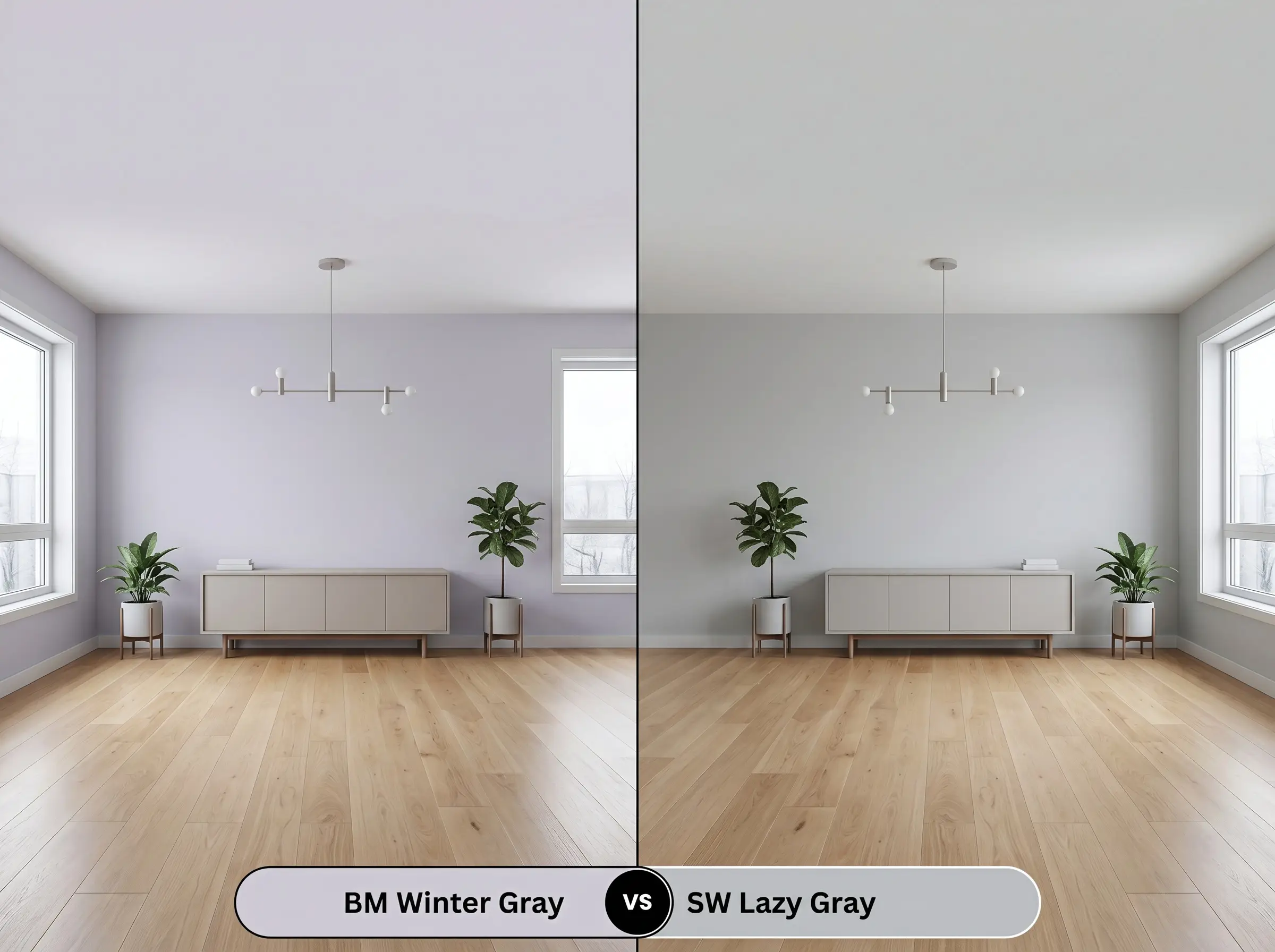
Lazy Gray is a true blue-gray that completely lacks the distinct violet cast of its rival. If your room faces north and you want to avoid any hint of purple, Lazy Gray is the safer, more traditional architectural choice. Choose Winter Gray only when you specifically want that soft, shifting lilac energy to warm up a cool space.
Benjamin Moore Winter Gray vs. Benjamin Moore French Lilac 1403
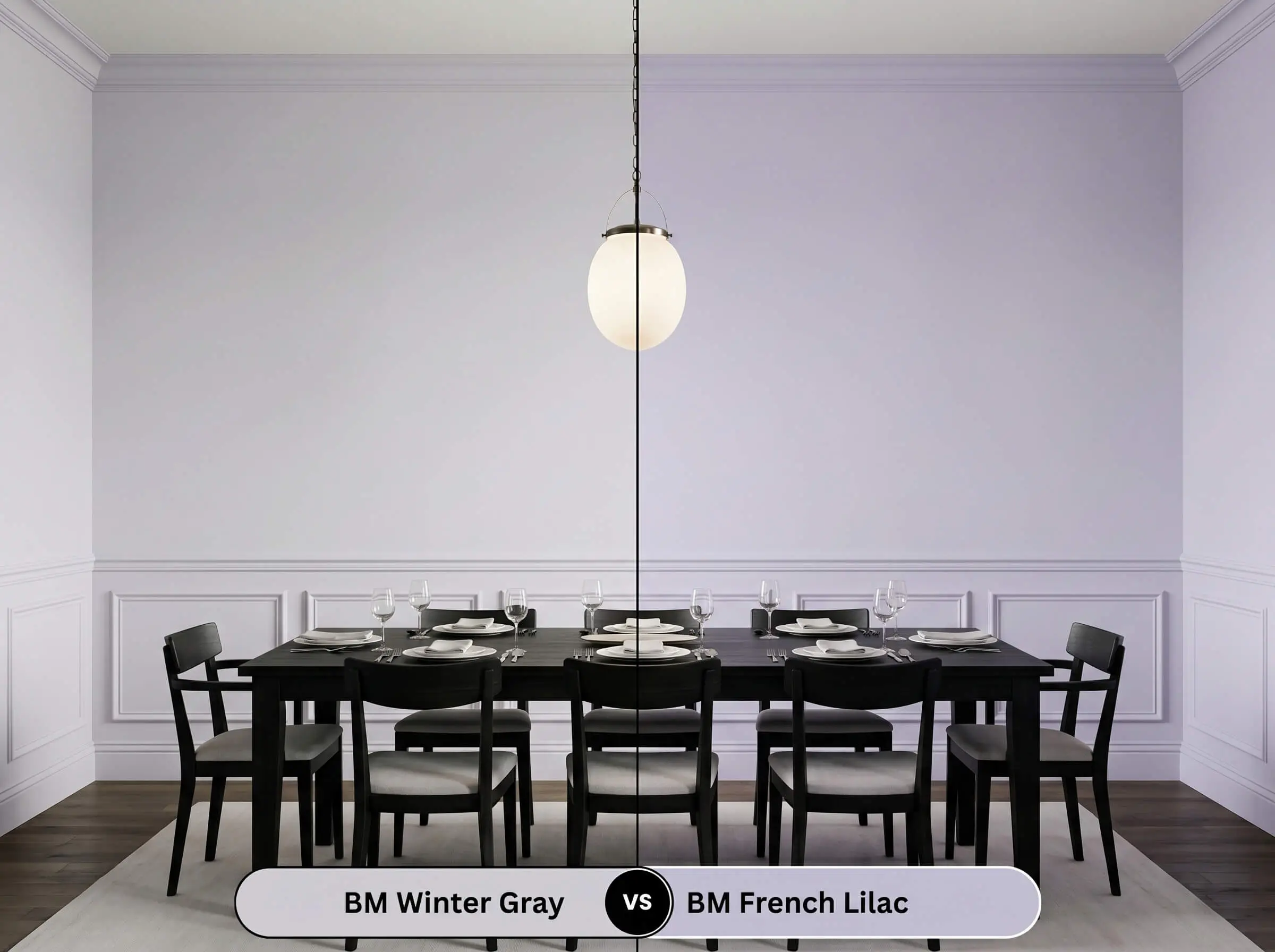
French Lilac fully commits to being a purple paint rather than a gray neutral. It carries significantly more red pigment, resulting in an undeniable, saturated floral presence. If you are looking for a subtle, shifting atmosphere, stick with the gray base; if you want a bold, colorful statement, French Lilac is the clear winner.
Exploring Alternatives to Winter Gray 2117-60
Even when you love a color’s overall profile, your home’s unique lighting might require a slight adjustment in depth or tone. You might need something just a touch more luminous for a dark hallway, or perhaps a crisper alternative to suit a modern renovation.
Same-Brand Variations
Rival Brand Color Matches
Application Strategy and Finish Guide
Transitioning from design theory to the physical act of painting requires a firm understanding of how finishes alter perception. The way light hits the surface of this specific color will dramatically change how prominent the violet undertones appear.
Optimizing Sheen Levels
Foundational Primer Requirements
Because of the complex balance between blue and red pigments, this shade requires a high-quality, opaque white primer. Ask your paint retailer to tint the primer slightly gray. This ensures the delicate violet notes do not become translucent or muddy over existing dark walls.
Cool-toned grays are notorious for “flashing,” which means you will see uneven streaks or roller marks if you apply the paint too thin. Always load your roller generously and maintain a wet edge across the entire wall to ensure a flawless, professional cure.
Hackrea Design Secret (The Roller Rule)
Coat Coverage and Touch-Up Warnings
To achieve the true color structure represented on the swatch, you must commit to a minimum of two full coats. A single coat will often pull too much of the underlying drywall color, making the finish look bruised or incomplete. Be aware that touching up this specific hue months later can be tricky, as the violet pigment fades slightly differently than the gray base over time.
Frequently Asked Questions
Without natural light to balance its undertones, the artificial lighting will completely dictate its behavior. If you use cool-toned LED bulbs, the violet cast will become highly pronounced, so lean toward warm 2700K lighting if you prefer it to read as a soft, sophisticated gray.
The intense red and orange tones in cherry wood will actively fight the cool violet base of this paint. This creates an uncomfortable visual tension, making this color much better suited for ashy, bleached, or ebonized wood finishes.
Because of its distinct lavender energy, it will not mimic a traditional crisp blue sky. Instead, it creates a beautiful, moody twilight effect overhead, which feels incredibly tailored and unexpected when paired with stark white walls.
The Final Verdict on Benjamin Moore Winter Gray
Benjamin Moore 2117-60 is a masterclass in nuanced, atmospheric color design, perfectly suited for homeowners who want an elegant neutral with a distinct point of view. It performs beautifully in light-filled, sophisticated spaces like primary suites, spa-inspired bathrooms, and contemporary nurseries. By acting as a shifting, responsive backdrop, it elevates accessible furnishings and premium tactile materials alike, creating a deeply tailored environment.
However, you must respect its inherent cool-toned DNA to avoid a discordant home. If your design style leans heavily into earthy, Tuscan-inspired warmth, rustic brown leathers, or heavy terracotta tiles, this paint will actively clash with your decor. The icy violet base will reject strong yellow and orange tones, creating a muddy, visually confusing atmosphere rather than the crisp elegance it was designed to deliver.
Real-World Inspiration Be the first to upload a real photo of Winter Gray!
No Photos Yet
Includes +20 First Upload Bonus!
Real Experiences
Insights from people who have used Winter Gray.No reviews yet
Be the first to share your experience with Winter Gray.
Earn 15 points instantly!