Bathroom Wall Covering Trends 2026: The Ultimate Guide to Texture & Warmth
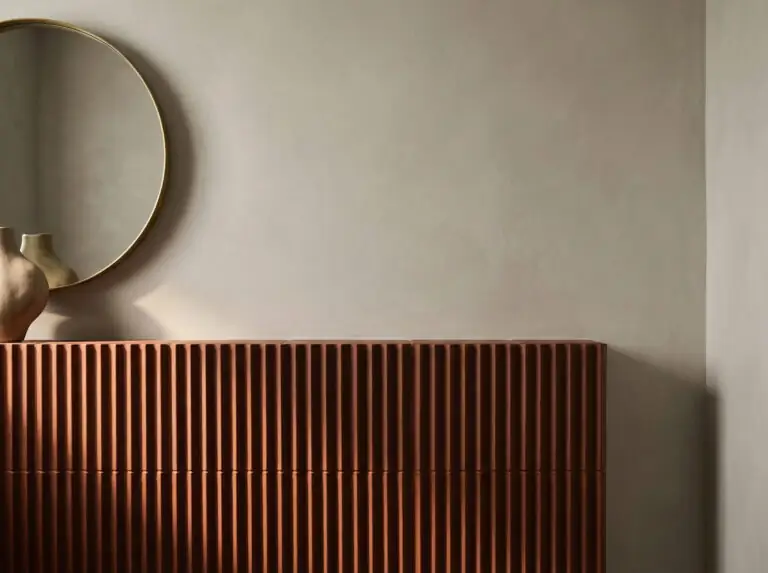
If you’ve been scrolling through design feeds or wandering through showrooms lately, you might have noticed a palpable shift. The era of the “sterile laboratory” bathroom—defined by clinical white subway tiles, high-gloss finishes, and cold chrome—is officially behind us. As we step into 2026, the bathroom is no longer just a utility room for a quick shower; it has evolved into the home’s primary sanctuary. The keyword for 2026 is “Tactile Wellness.”
What does that mean for your walls? It means we are trading flat, shiny surfaces for materials that beg to be touched. We’re talking about velvety microcement, hand-molded clay, architectural curves, and wallpapers that look like Renaissance frescoes. The walls of 2026 are designed to wrap you in a “warm hug” rather than wake you up with a cold glare.
Whether you are planning a full-gut renovation or a weekend refresh, this comprehensive guide covers the biggest bathroom wall covering trends for 2026. Beyond just the aesthetics, we’ll dive into the practical advice most designers forget to tell you—like installation realities, budget breakdowns, and how to mix these materials without it looking like a showroom explosion.
At a Glance: Key Trends for 2026
Short on time? Here is the quick summary of what defines bathroom walls in 2026:
1. The Psychology of the 2026 Bathroom
Before we talk about materials, we have to talk about mood. In 2026, interior design is heavily influenced by the need for emotional regulation. The world is fast and digital; our bathrooms need to be slow and physical.
This desire drives the “Soft Minimalist” movement. It’s not about empty spaces (which can feel cold), but about clutter-free spaces filled with rich textures. The walls play the biggest role here because they occupy the most visual real estate.
2. The “Seamless” Revolution: Grout-Free Bliss
If there is one headline for 2026, it’s this: Grout is out. (Well, mostly).
Homeowners are tired of scrubbing moldy grout lines. The industry has responded with a massive surge in seamless wall finishes that create a calm, monolithic look. This is the foundation of the “Spa Sanctuary” aesthetic.
Microcement & Béton Ciré
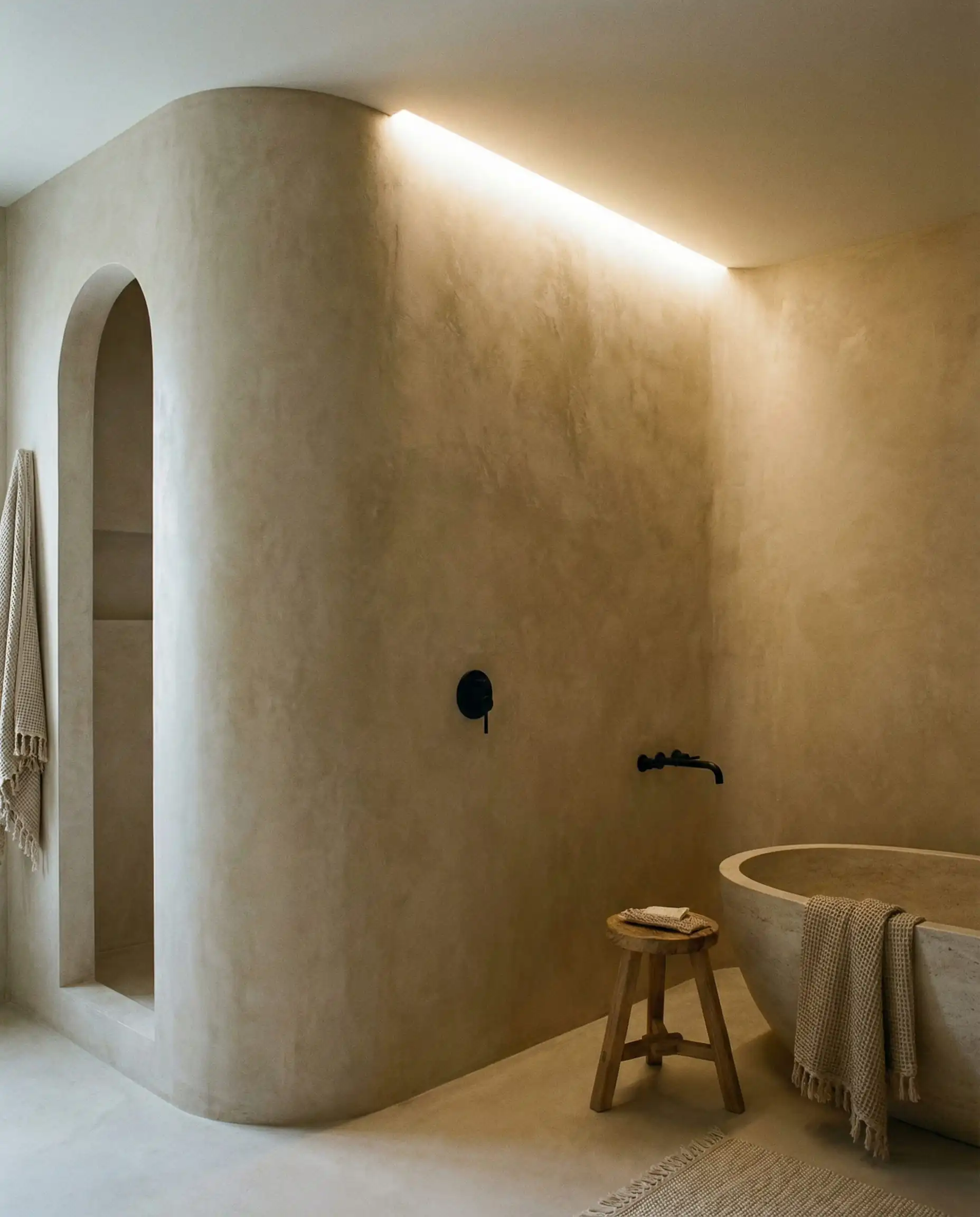
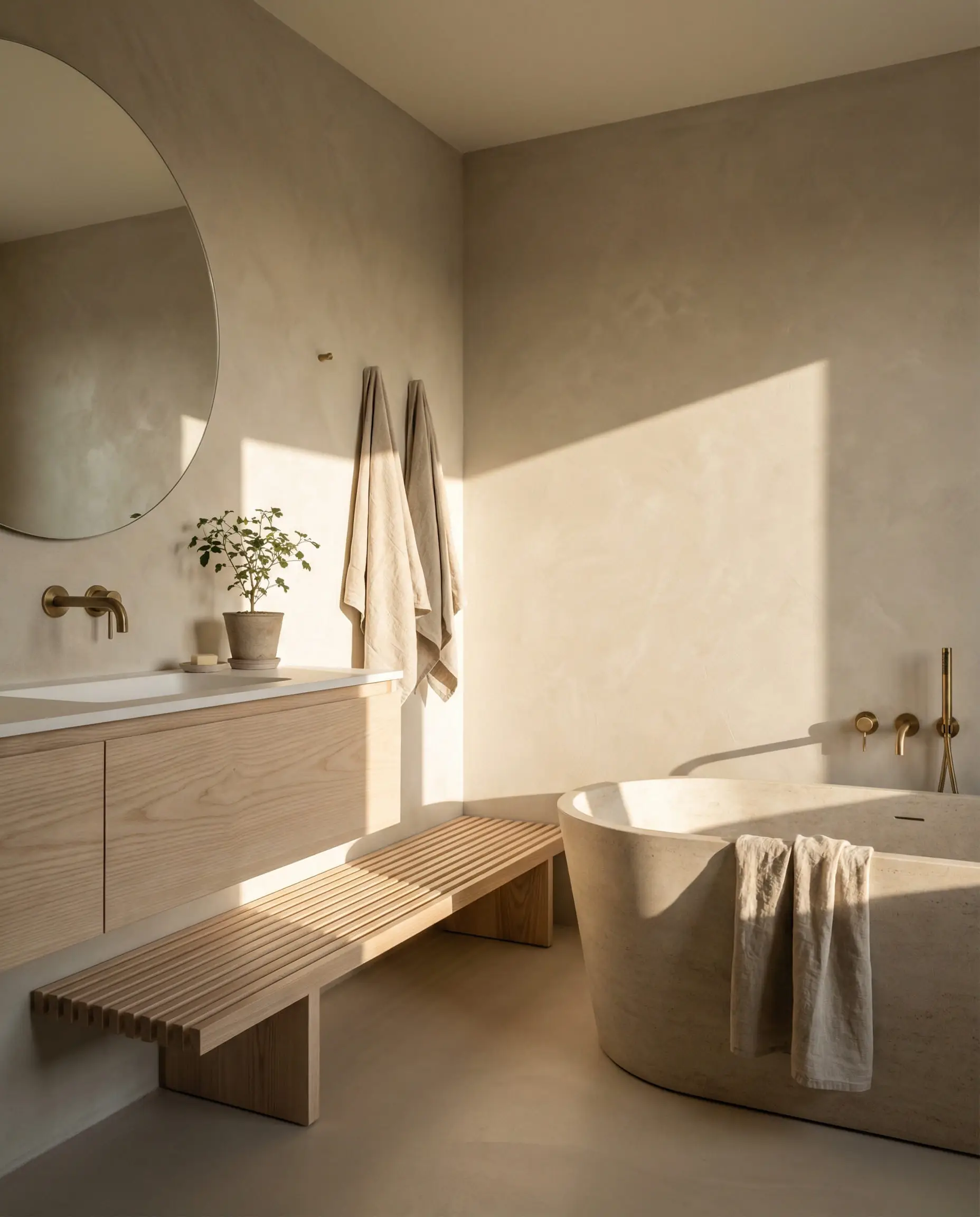
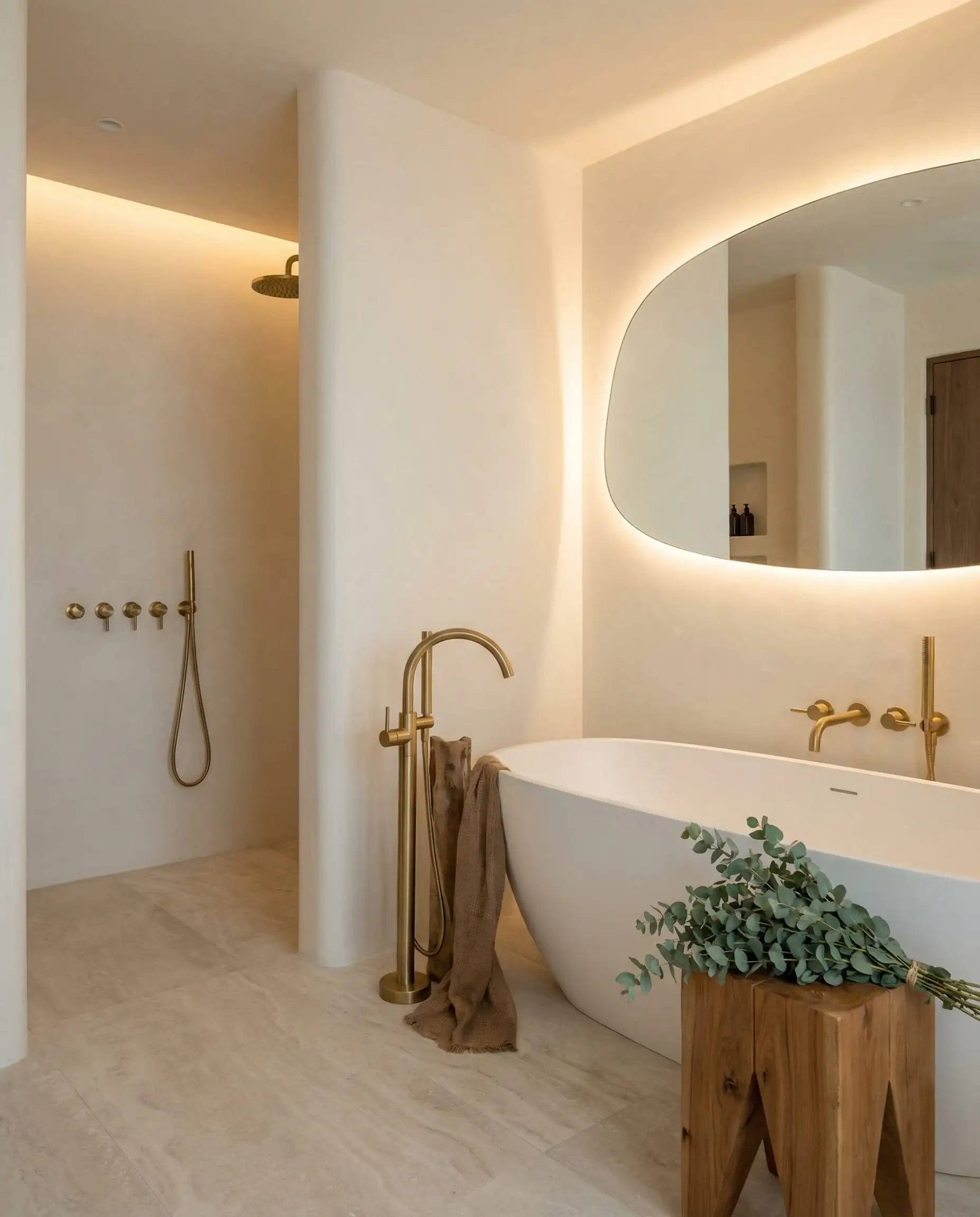
Once reserved for industrial lofts, microcement has softened up. In 2026, we are seeing it in warmer, creamier tones—think oatmeal, sand, and cashmere greys rather than cold concrete.
Tadelakt & Lime Plasters
For those who find concrete too harsh, traditional Moroccan Tadelakt and lime-based plasters are the romantic alternatives. These natural materials breathe, regulating humidity in the bathroom (goodbye, steamy mirrors) and naturally resisting mold due to their high pH.
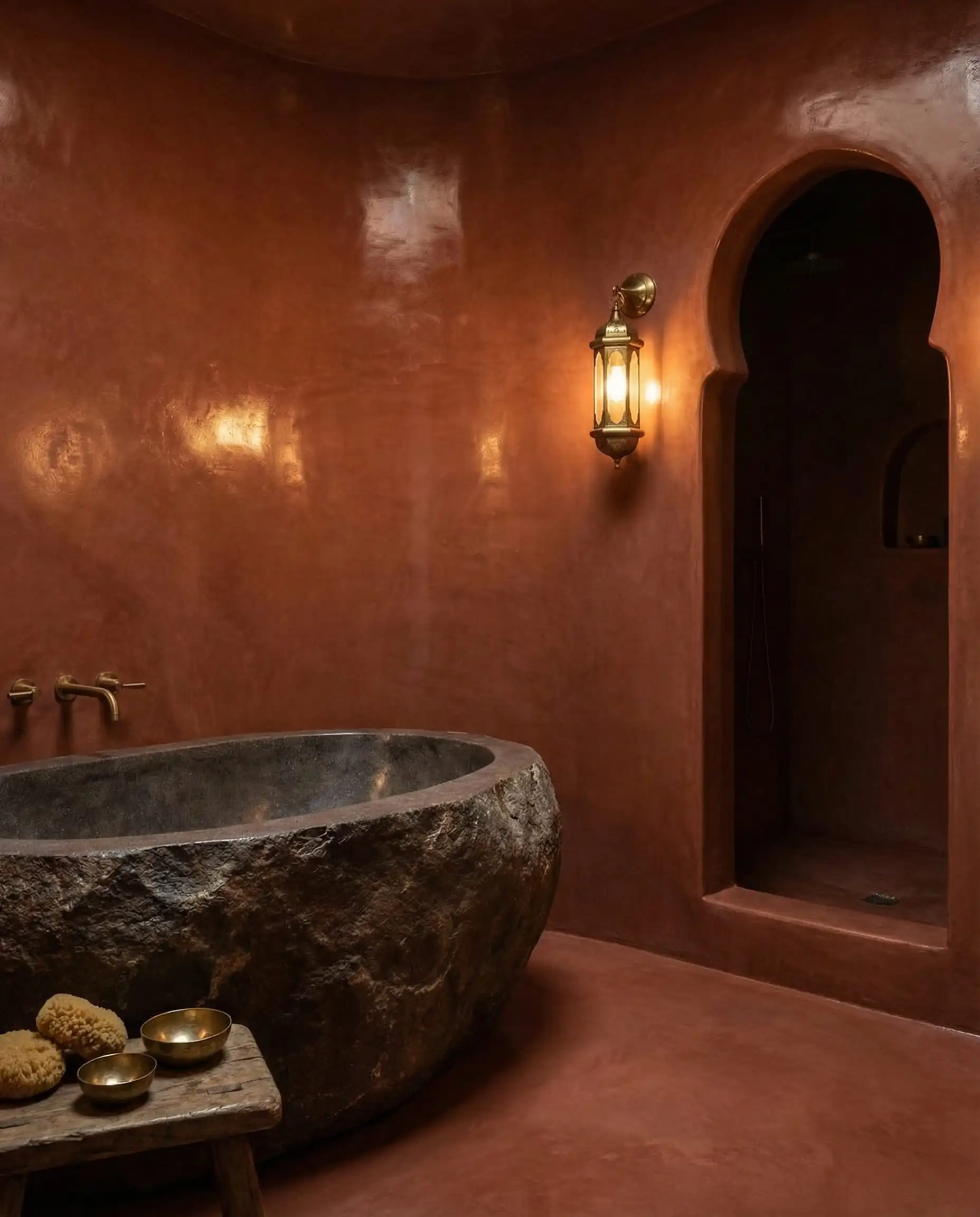
Don’t just stop at the walls. In 2026, we are seeing these plasters carried over the ceiling and even into the vanity unit for a sculpted, “carved from stone” effect.
Designer Tip
Comparison: Seamless Options
| Material | Best For | Water Resistance | Cost |
| Microcement | Showers & Floors | High (if sealed properly) | High |
| Tadelakt | Wet Areas/Tubs | Very High (Natural soap seal) | Very High |
| Limewash Paint | Vanity Walls (Dry) | Low (Breathable, not waterproof) | Low |
| Venetian Plaster | Powder Rooms | Medium (Waxed) | Medium-High |
Read more: For a broader look at how these materials fit into the whole room, check our guide on 2026 Bathroom Trends.
3. Trending Tile Styles: Depth Over Shine
Tiles aren’t disappearing, but they are evolving. The flat, printed porcelain tile is taking a backseat to tiles that have physical depth and imperfection.
“Tile Drenching” (The Immersion Technique)
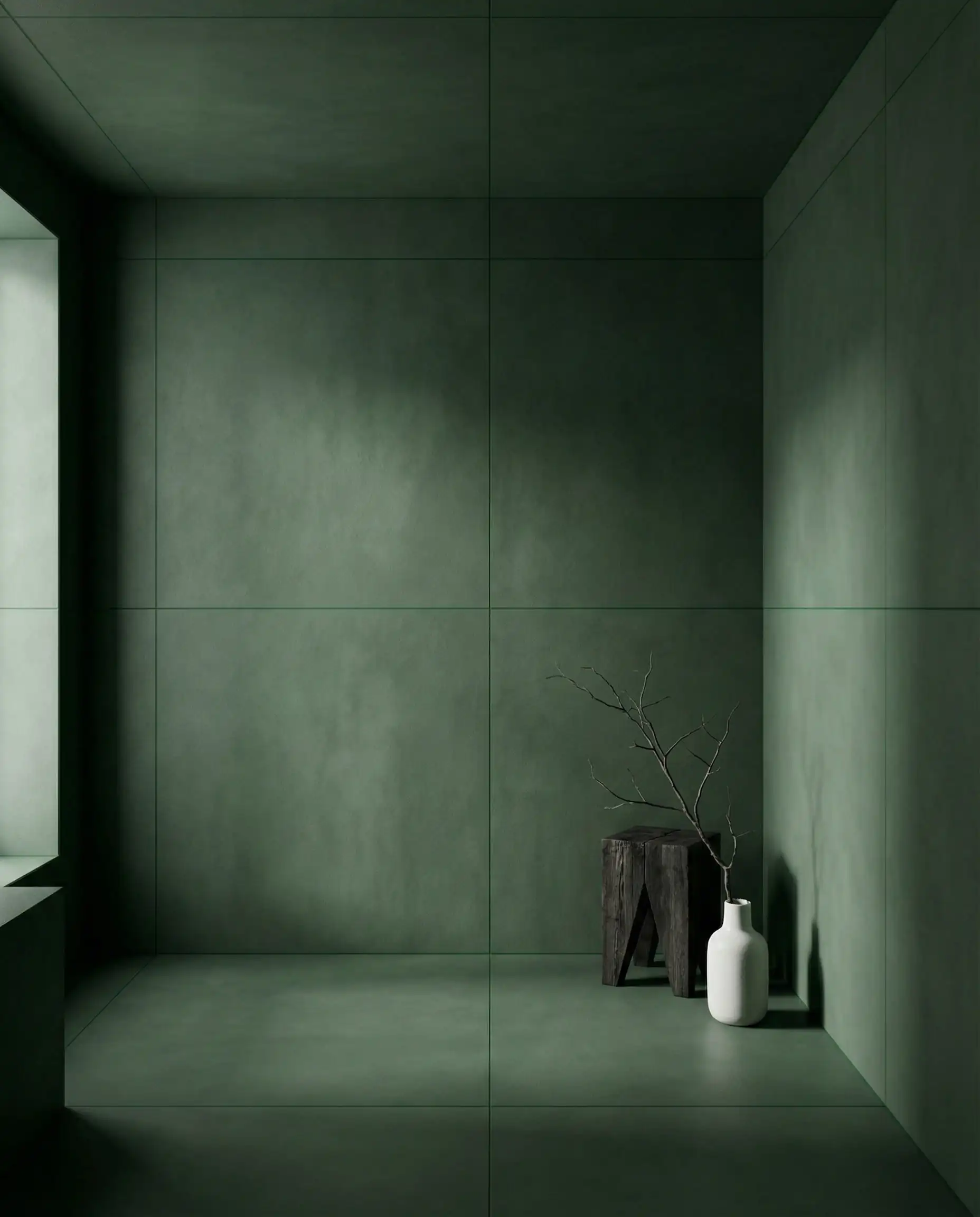
Forget the single “feature wall.” The boldest trend for 2026 is using a single material for the entire room—floor, walls, and shower. This “drenching” technique blurs the boundaries of the room, making small bathrooms feel larger and large bathrooms feel like luxury hammams.
The Shift: Instead of white, we are seeing deep, moody drenching in terracotta, sage, or slate blue. This monochromatic look calms the eye and simplifies the design process.
3D & Fluted Surfaces
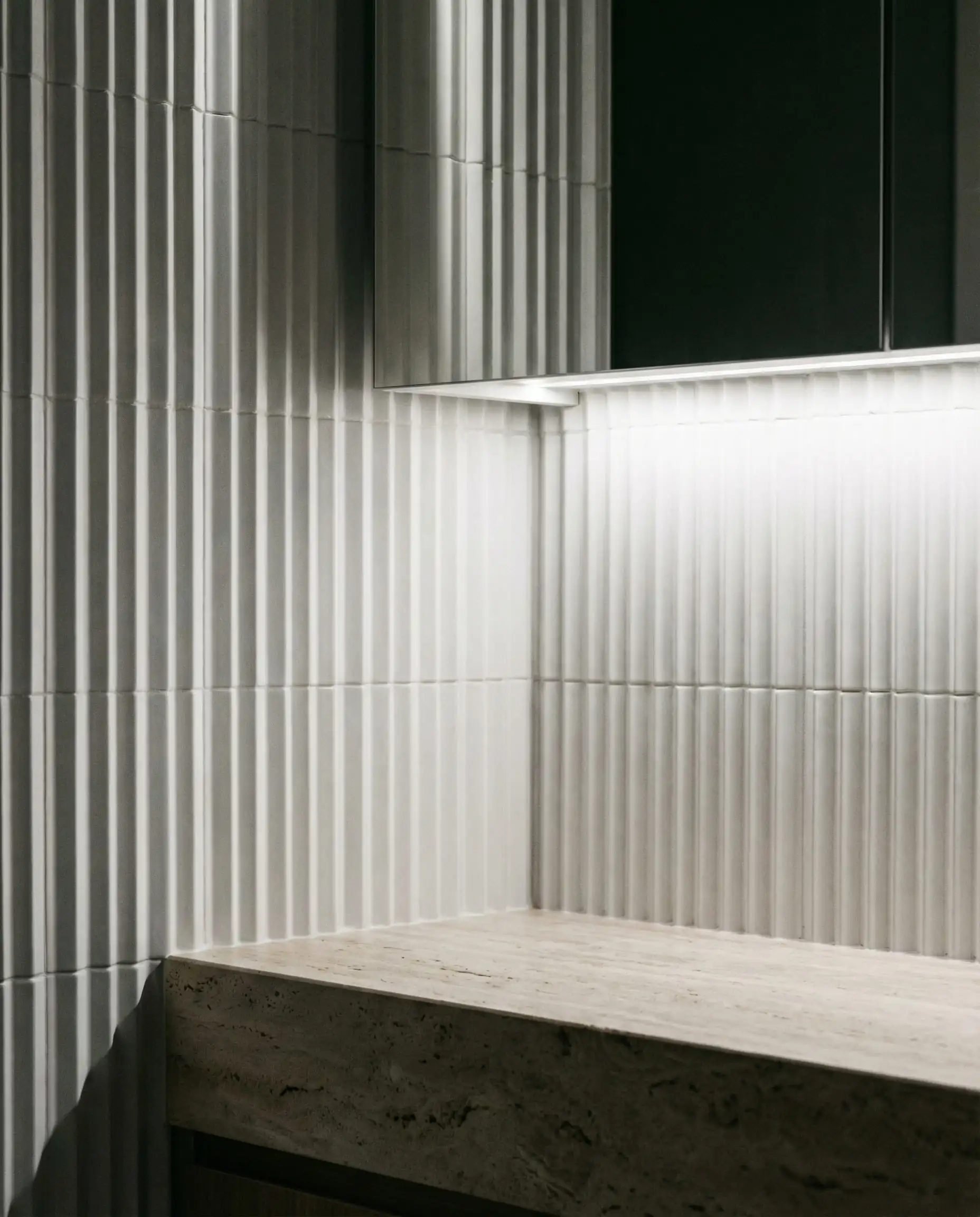
Texture is the new color. Fluted (ribbed), scalloped, and relief tiles are exploding in popularity. They play with light and shadow, adding visual interest without needing busy patterns.
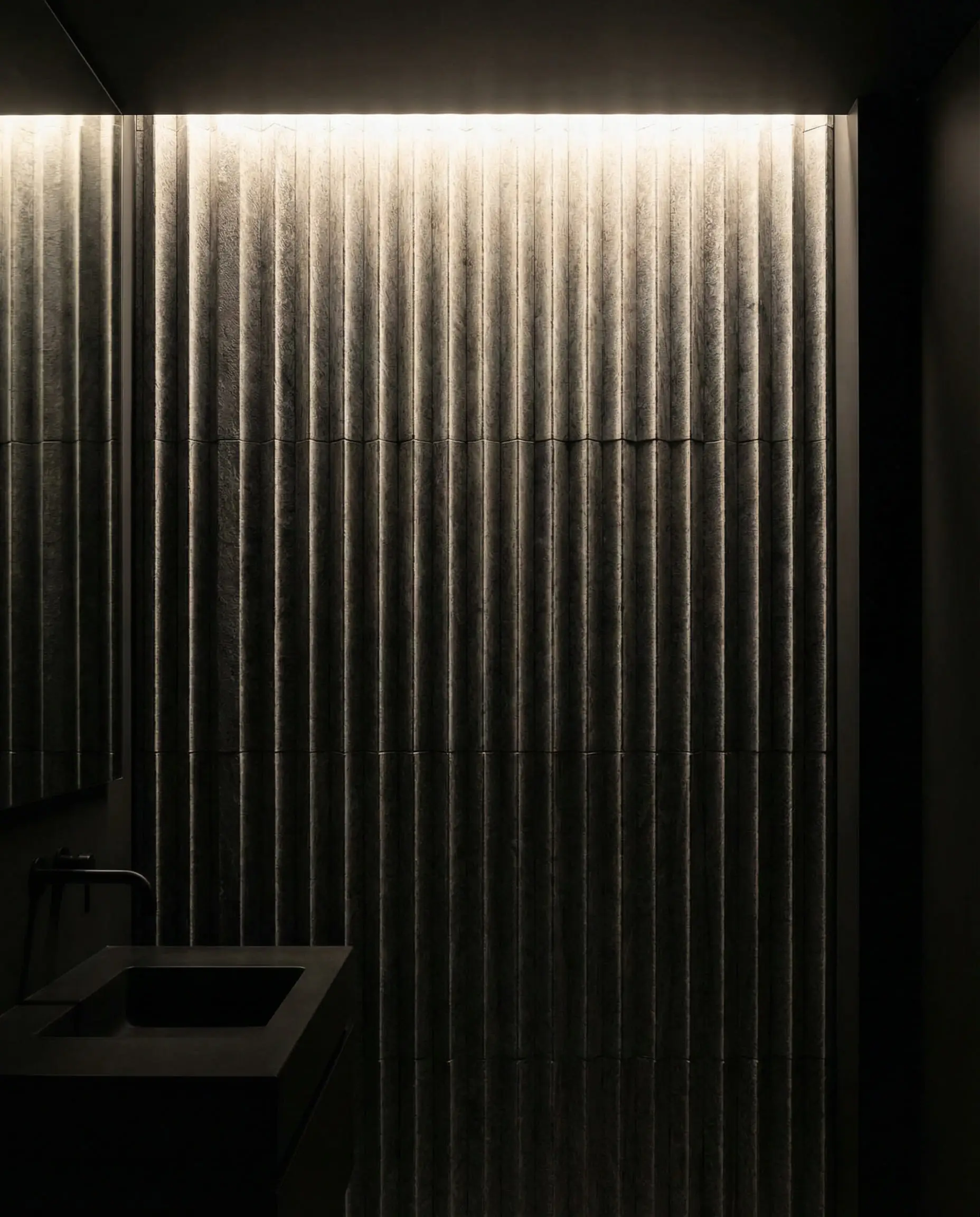
Where to use them: These are perfect for vanity backsplashes or shower niches where accent lighting can graze the surface, highlighting the ridges.
Kit Kat (Finger) Tiles 2.0
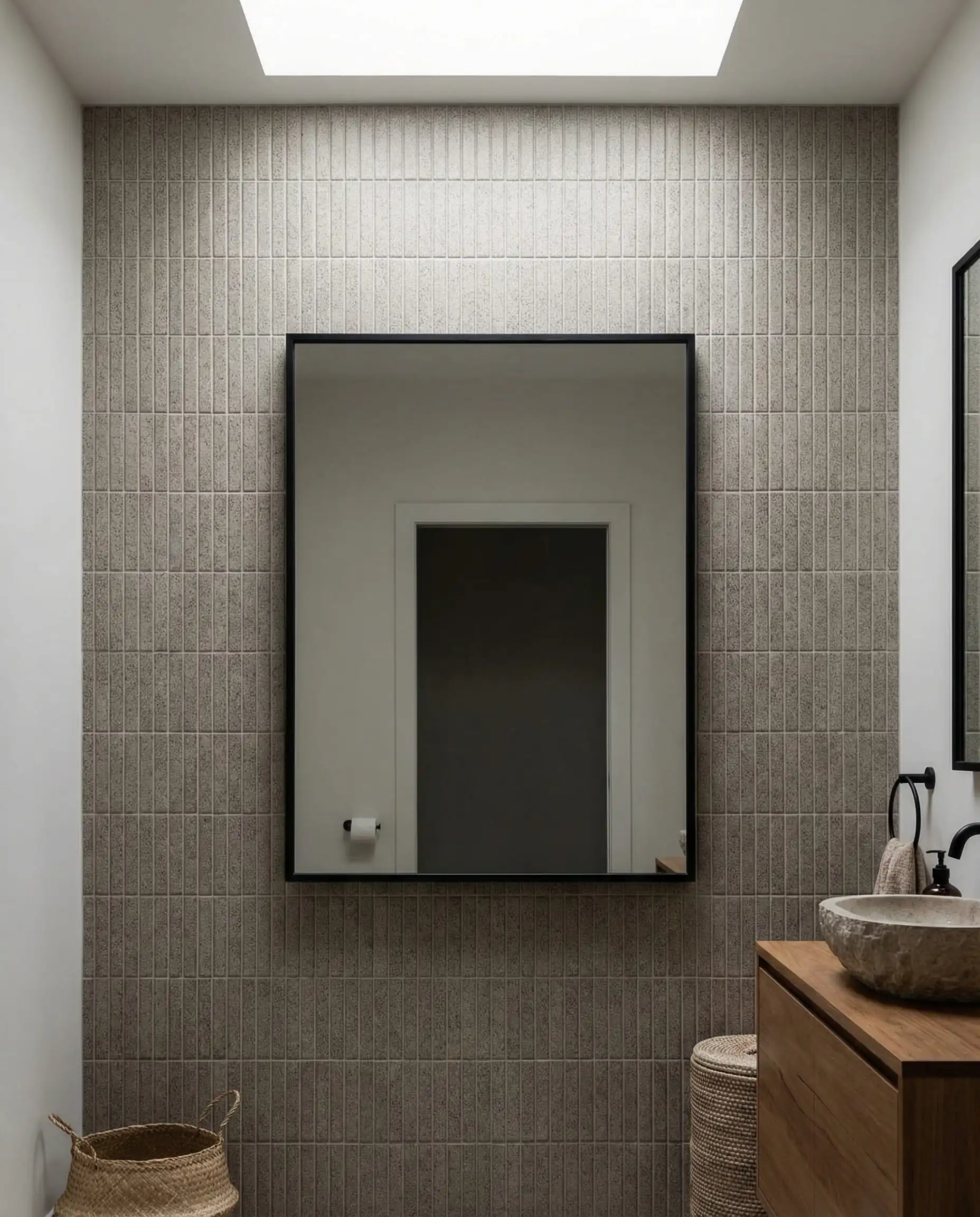
The skinny, vertical Japanese-style mosaics known as “Kit Kat” tiles are evolving. In 2026, we are moving away from the standard glazed white.
The New Look: Look for “finger tiles” made of natural stone (like travertine or slate) or speckled ceramics. Installed vertically, they draw the eye up, making low ceilings feel higher.
The Return of “Perfectly Imperfect”
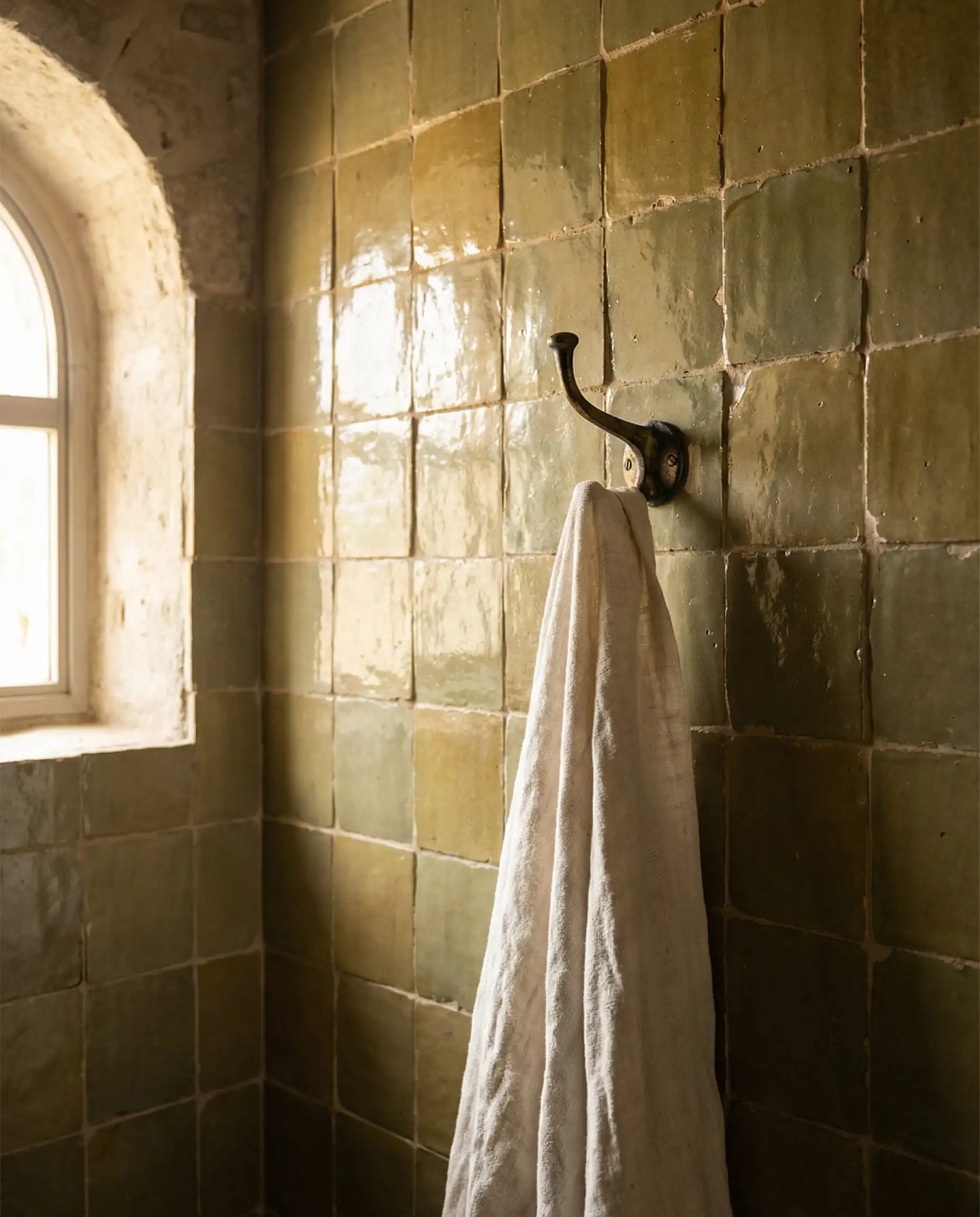
Hand-painted Zellige tiles, Delft-inspired motifs, and artisanal clay tiles are the antithesis of the AI-generated perfection we see on screens.
The Grout Renaissance
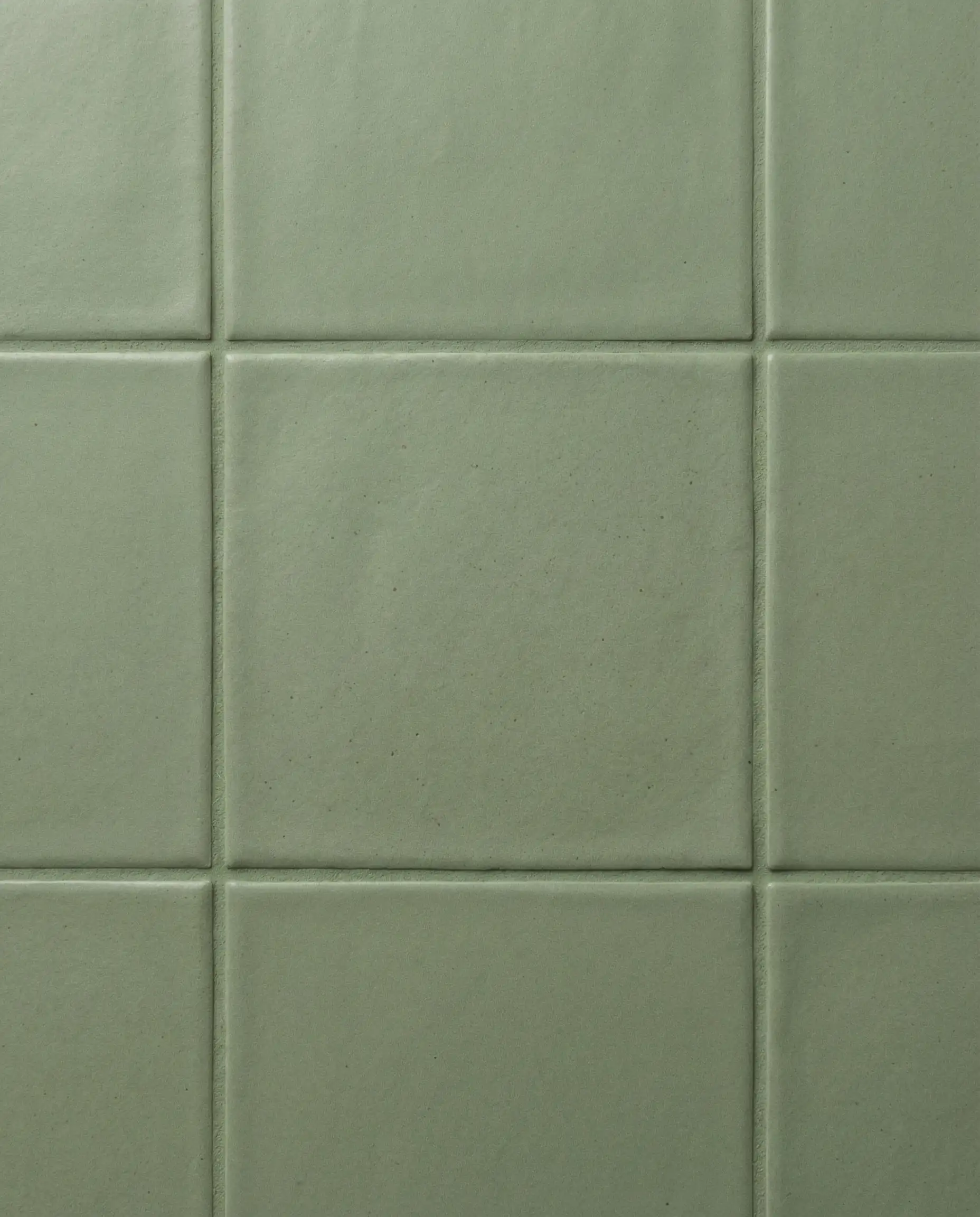
If you do use tile, the grout is no longer an afterthought.
Deep Dive: Unsure which tile shape suits your space? Explore our dedicated article on Bathroom Tile Trends.
4. Architectural Walls: Curves & Niches
In 2026, the wall covering isn’t just about what you paste on the wall, but how you shape the wall itself.
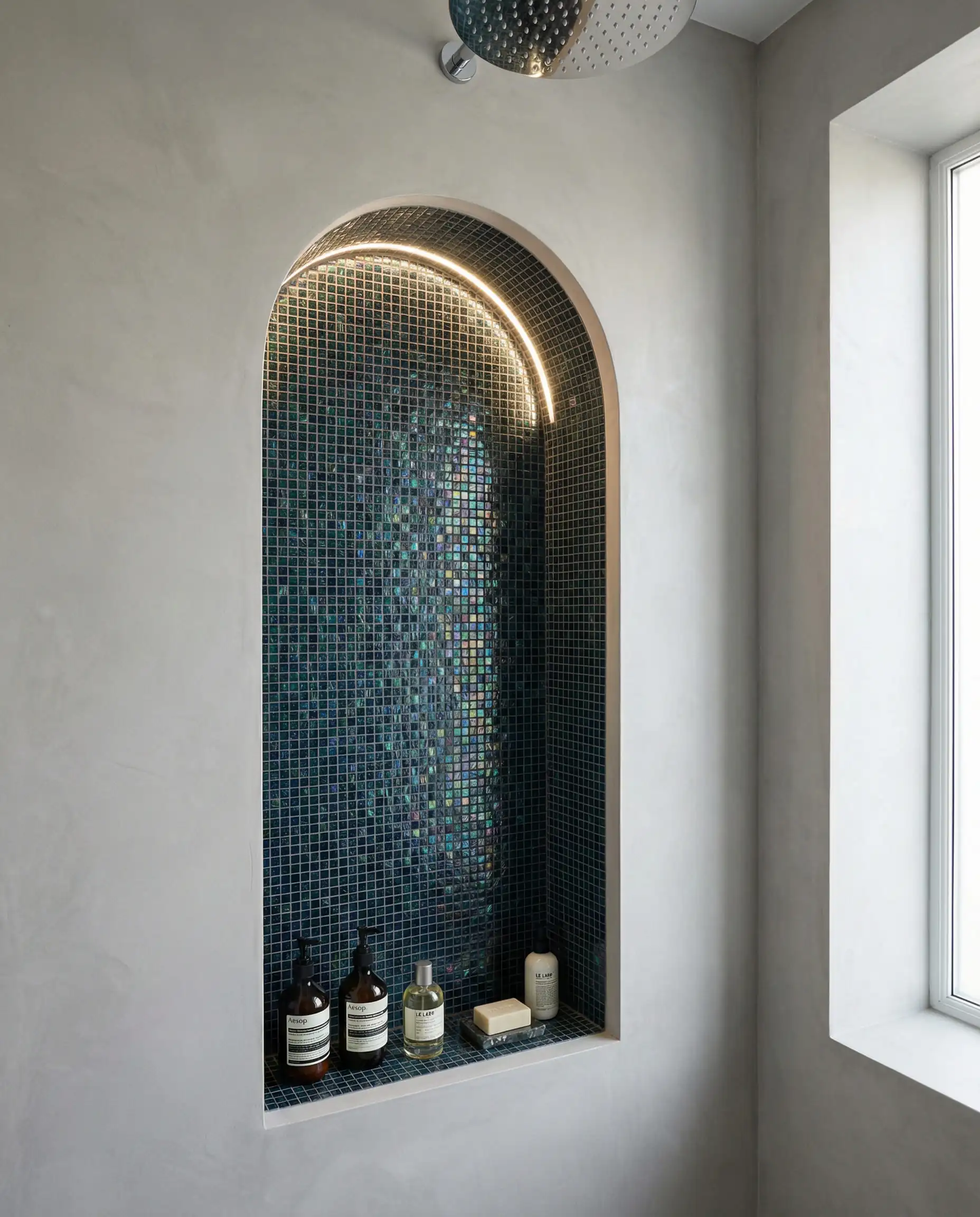
The Arched Niche
Storage is becoming a design feature. Instead of hanging metal racks, homeowners are building recessed niches into the shower and vanity walls.
The Trend: Arch-topped niches are replacing square ones. Tiling the inside of a niche with a contrasting texture (like a mosaic) creates a beautiful focal point.
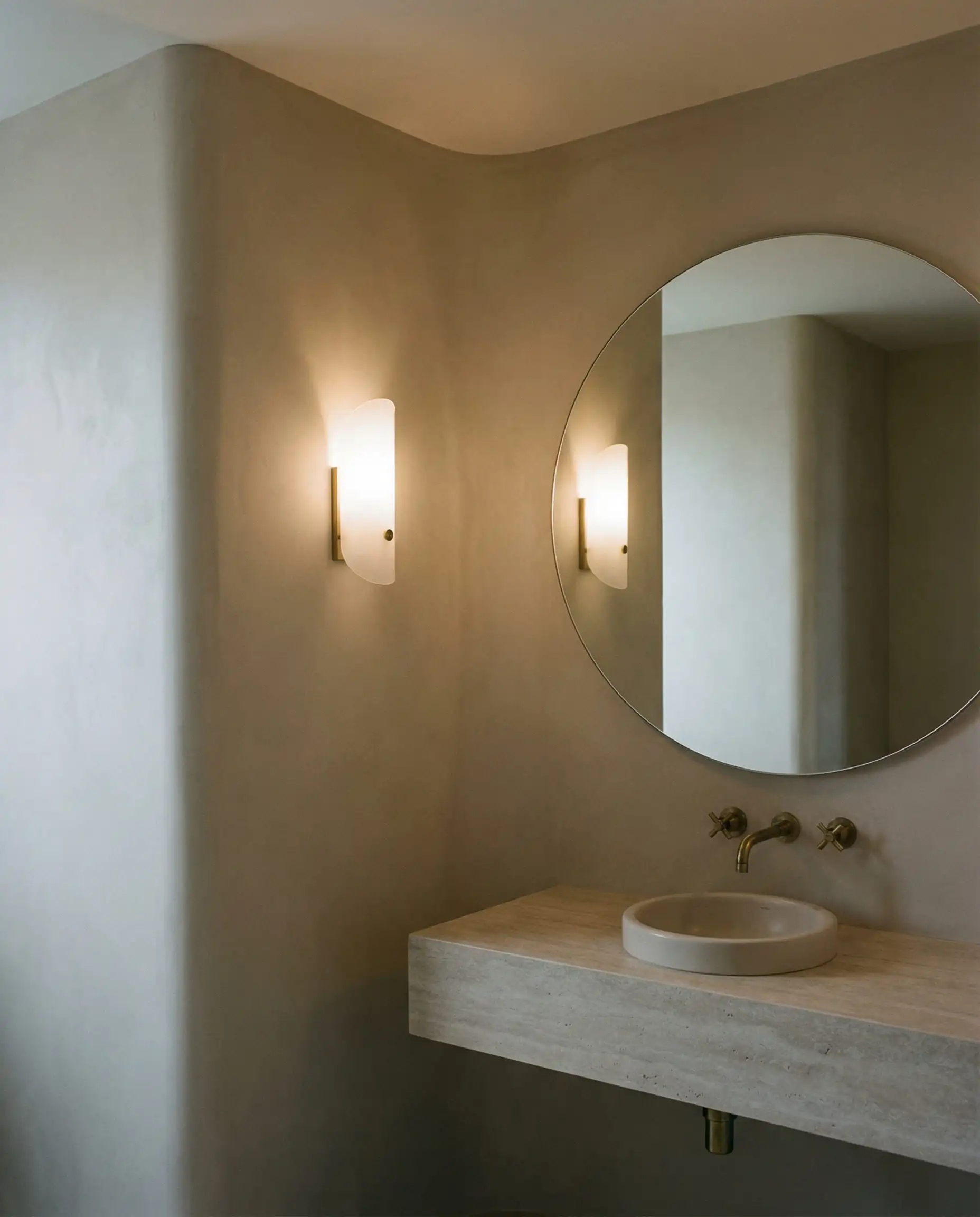
Rounded Corners
Sharp drywall corners are being softened. Bullnose edges or fully curved walls (often finished in plaster) help the energy flow through the room and reduce painful bumps in tight spaces.
5. Wallpaper & Murals: The Bathroom as Art
“Can I really put wallpaper in a bathroom?” In 2026, the answer is a resounding yes. Innovations in materials mean you are no longer limited to paint or tile.
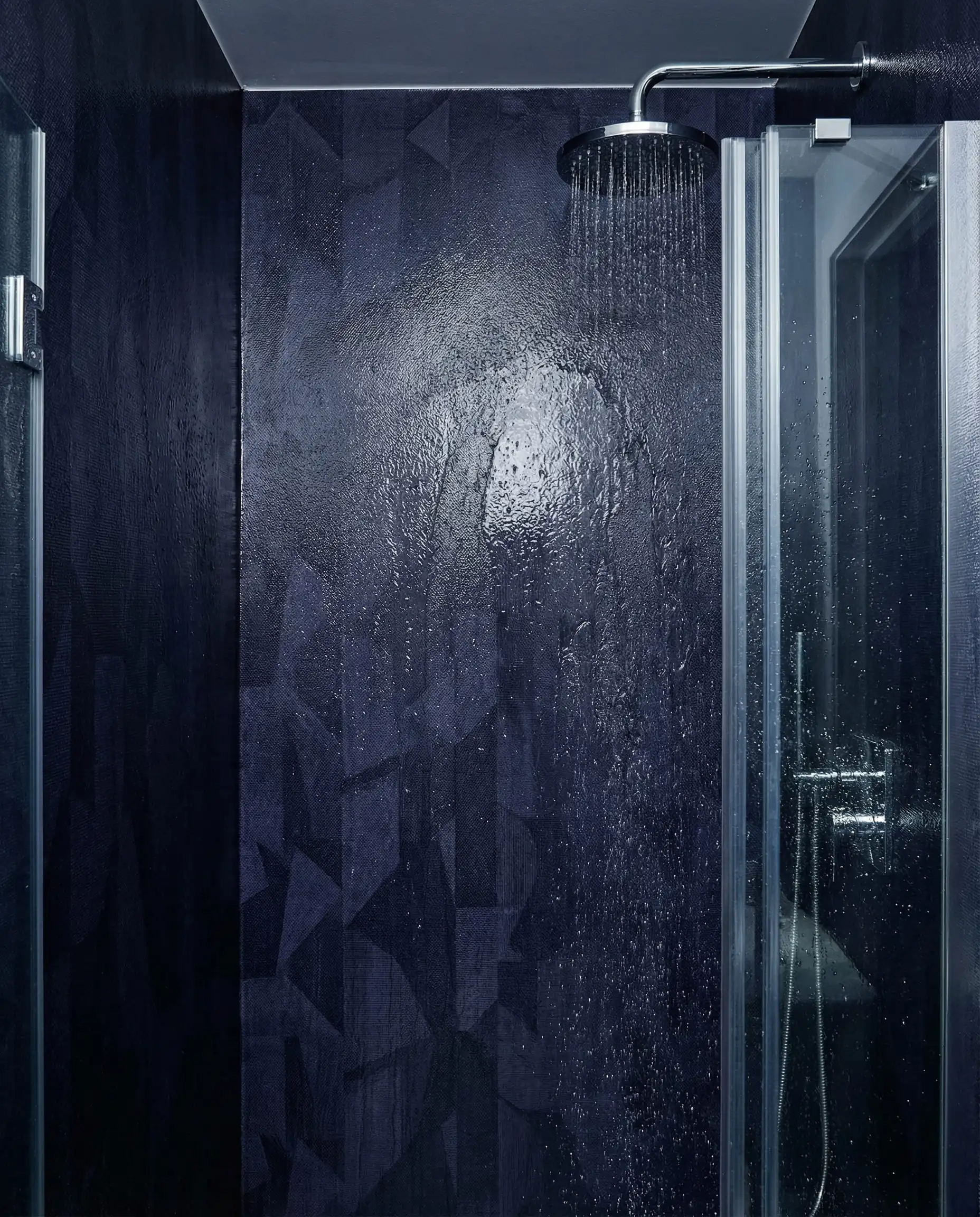
The Rise of “Wet System” Wallpaper
New technologies (often fiberglass-based systems sealed with waterproof resin) allow you to apply wallpaper inside the shower cubicle. This is a game-changer for renovations, allowing you to cover ugly shower tiles without demolition.
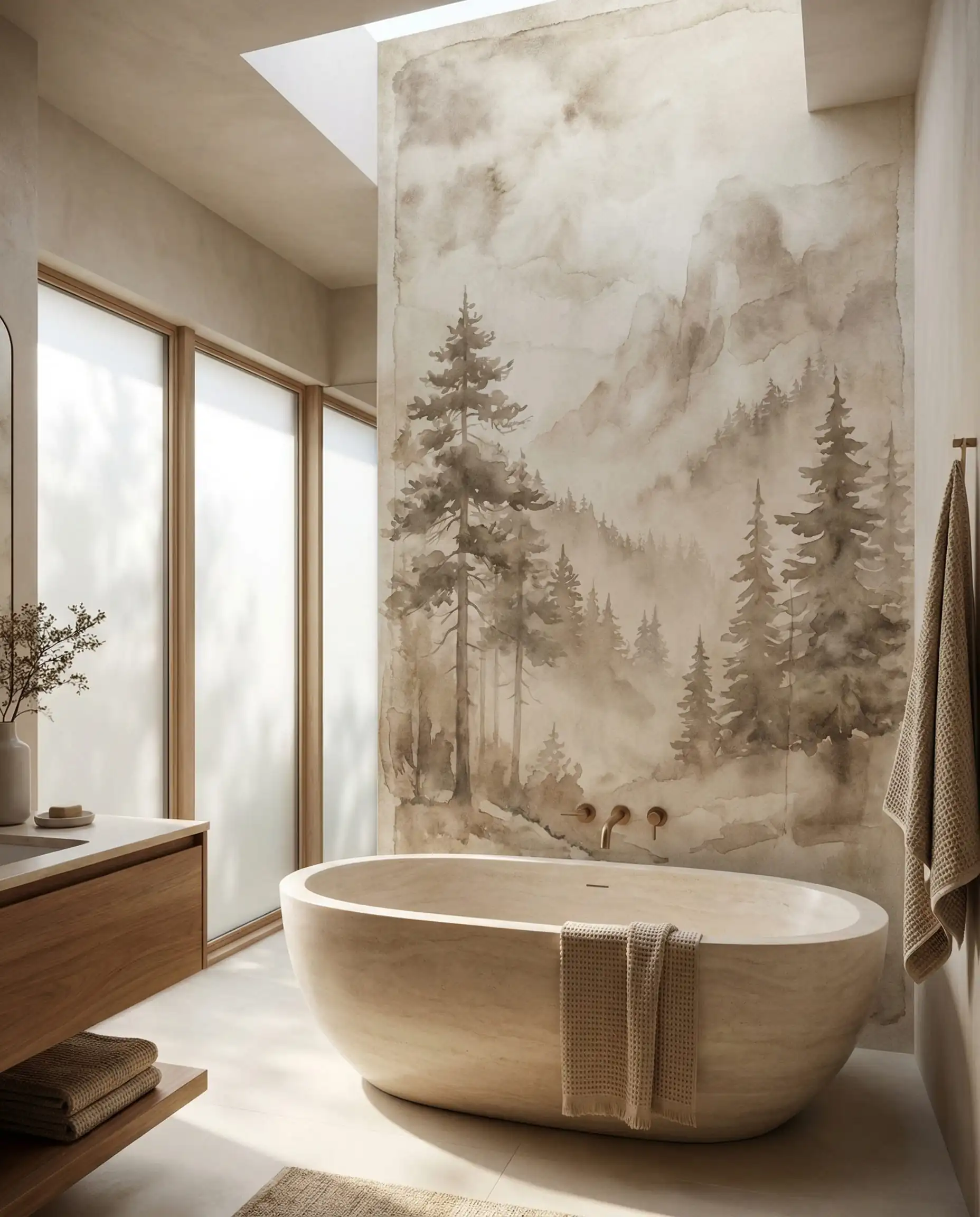
Biophilic “Frescoes”
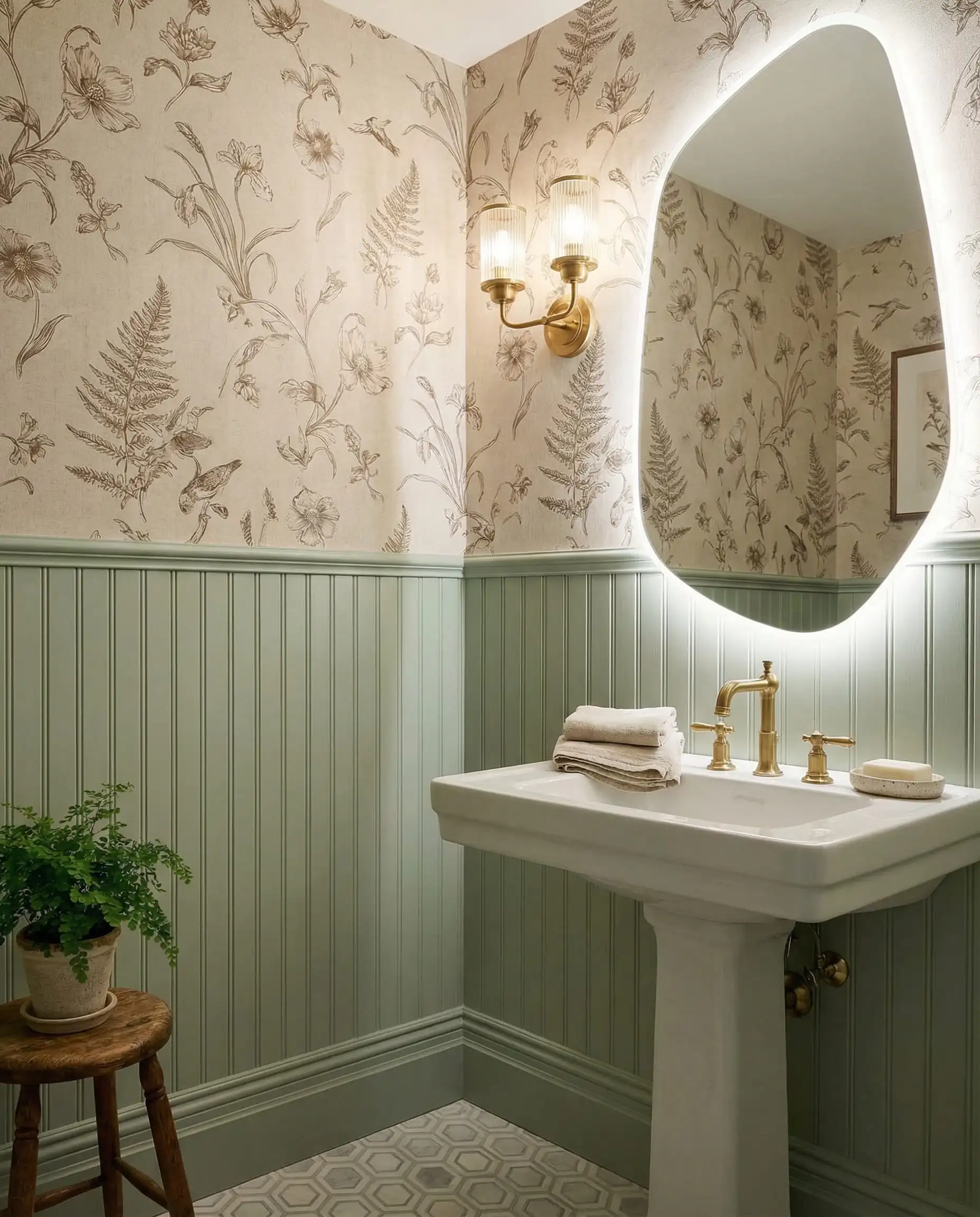
We aren’t talking about small floral repeat patterns. The trend is oversized, panoramic murals that turn your wall into a window.
Trompe-l’œil Textures
Vinyl wallpapers that mimic expensive materials—like woven grasscloth, linen, raw silk, or even wood—are huge. They add that necessary warmth and softness to offset the cold surfaces of toilets and tubs, but with the durability of vinyl.
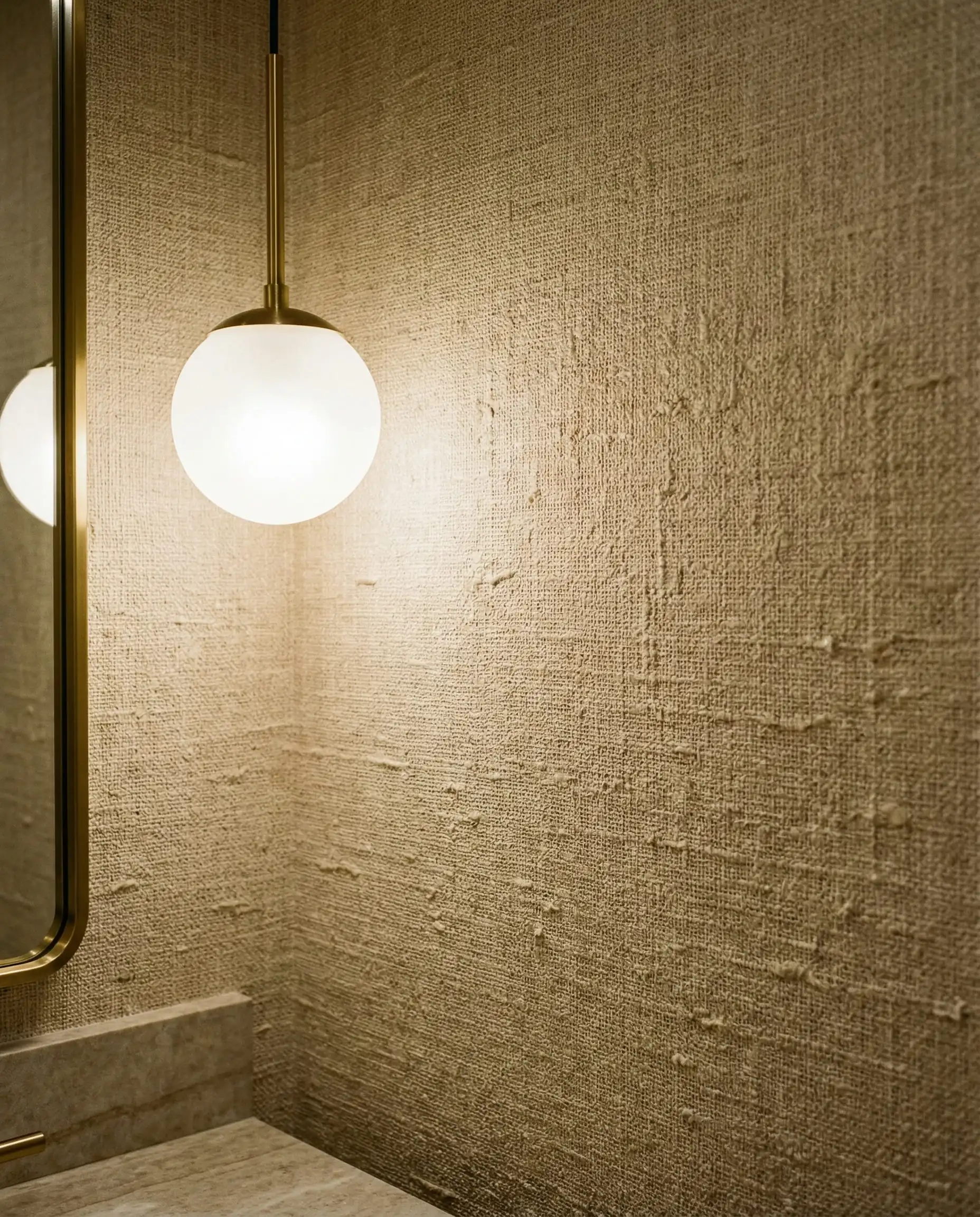
Inspiration: See how to execute this look in our piece on Modern Bathroom Wallpaper Ideas.
6. The 2026 Color Palette: Earthy & Edible
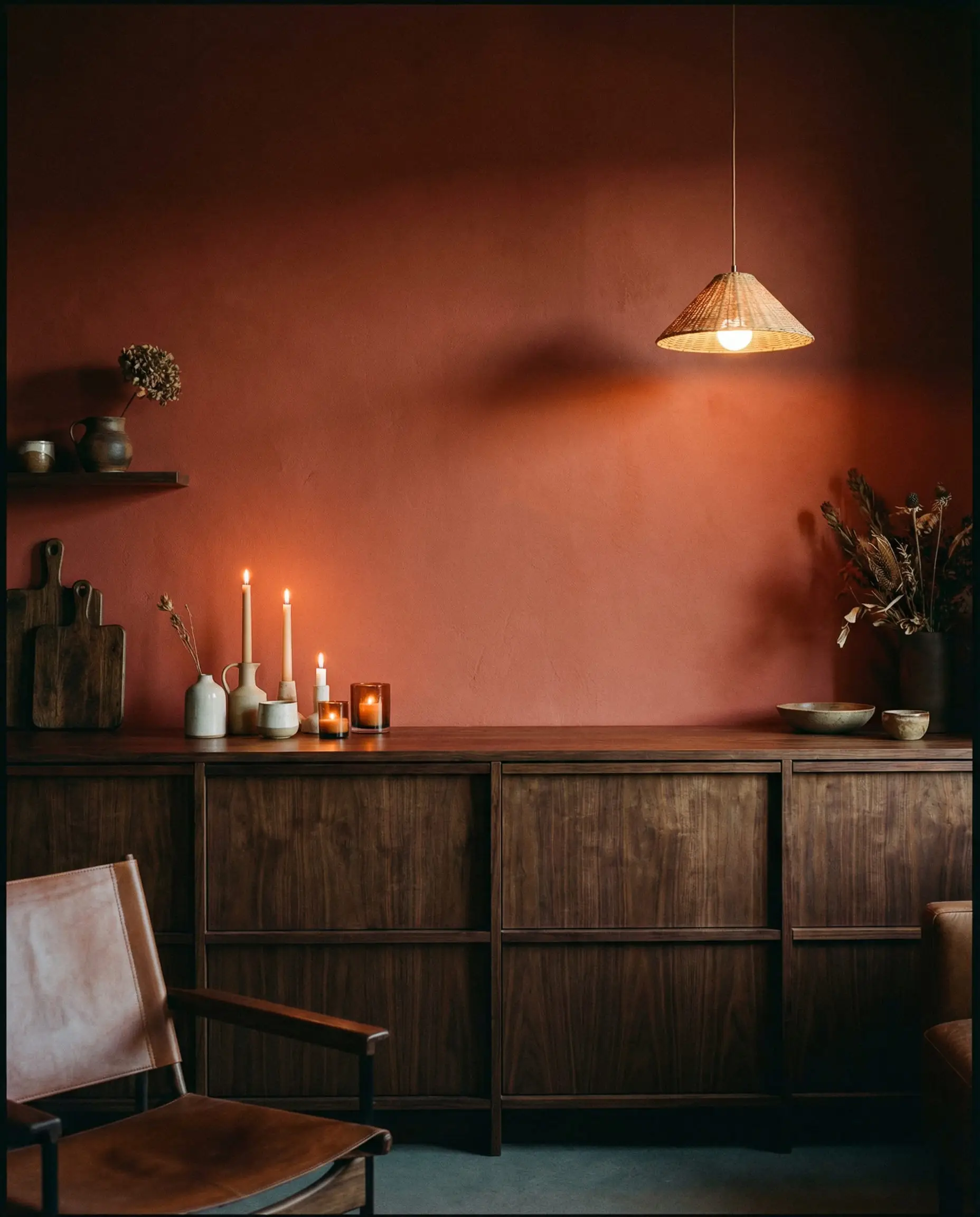
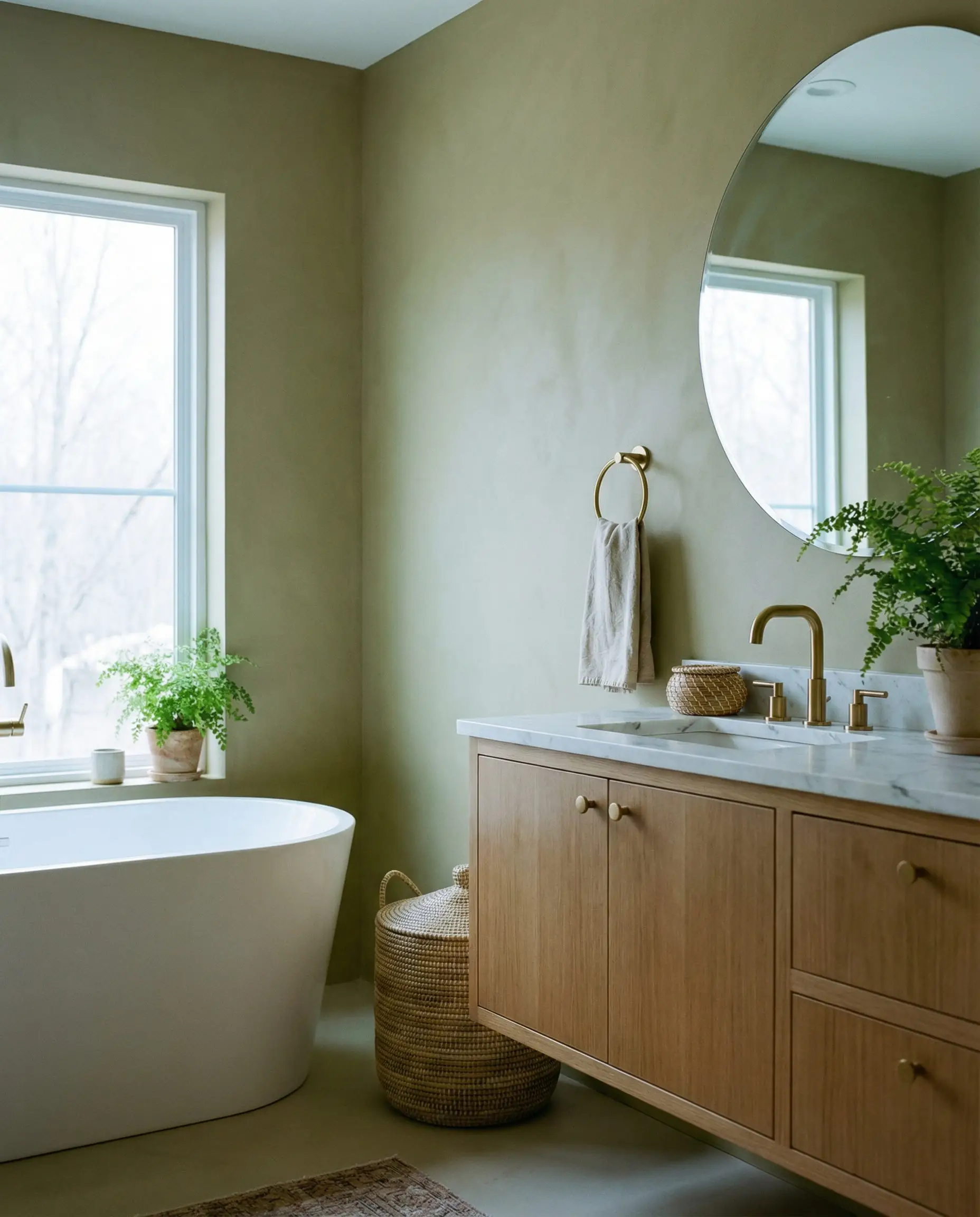
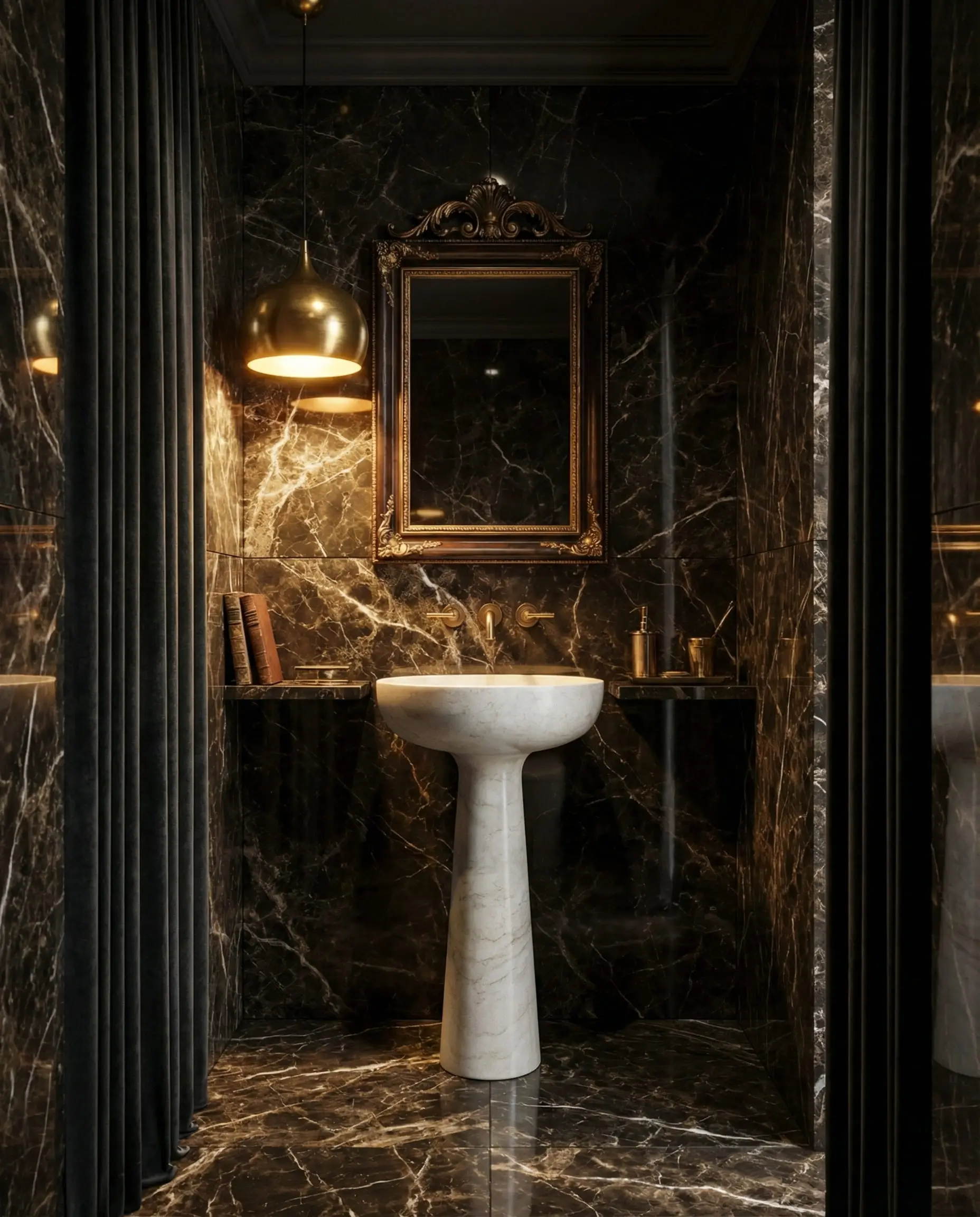
Say goodbye to “Clinical White” and the “Millennial Grey” of the 2010s. The 2026 palette is baked, grown, and harvested. It draws directly from the earth.
Metallic Accents
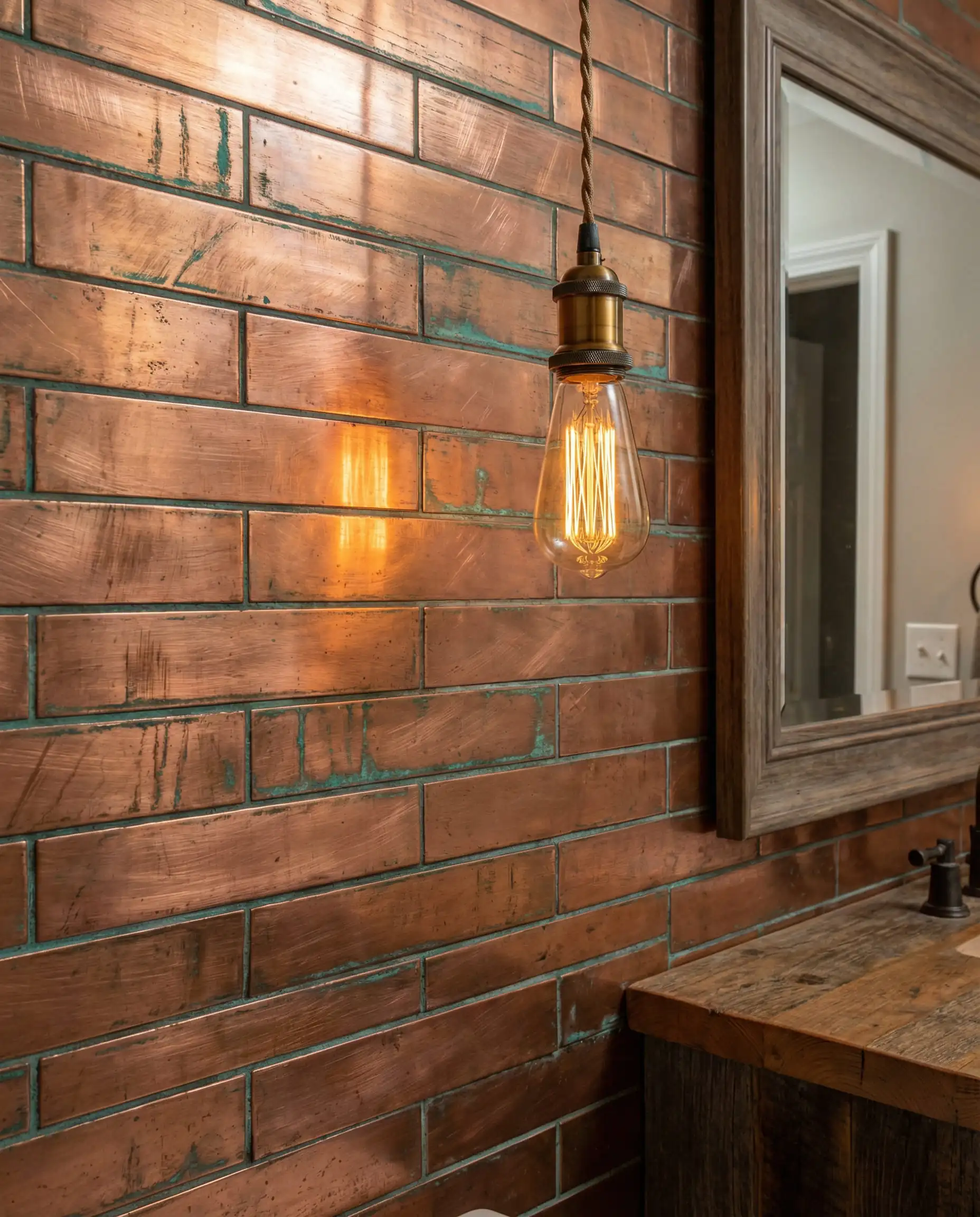
We aren’t just talking about faucets. Metallic wall coverings are gaining traction. Brushed copper sheets used as a backsplash or gold-leaf effect tiles add a warm glow that reflects candlelight beautifully during a soaking session.
7. Sustainable & Natural Materials
As eco-consciousness becomes standard, we are seeing some surprising materials enter the dampest room in the house.
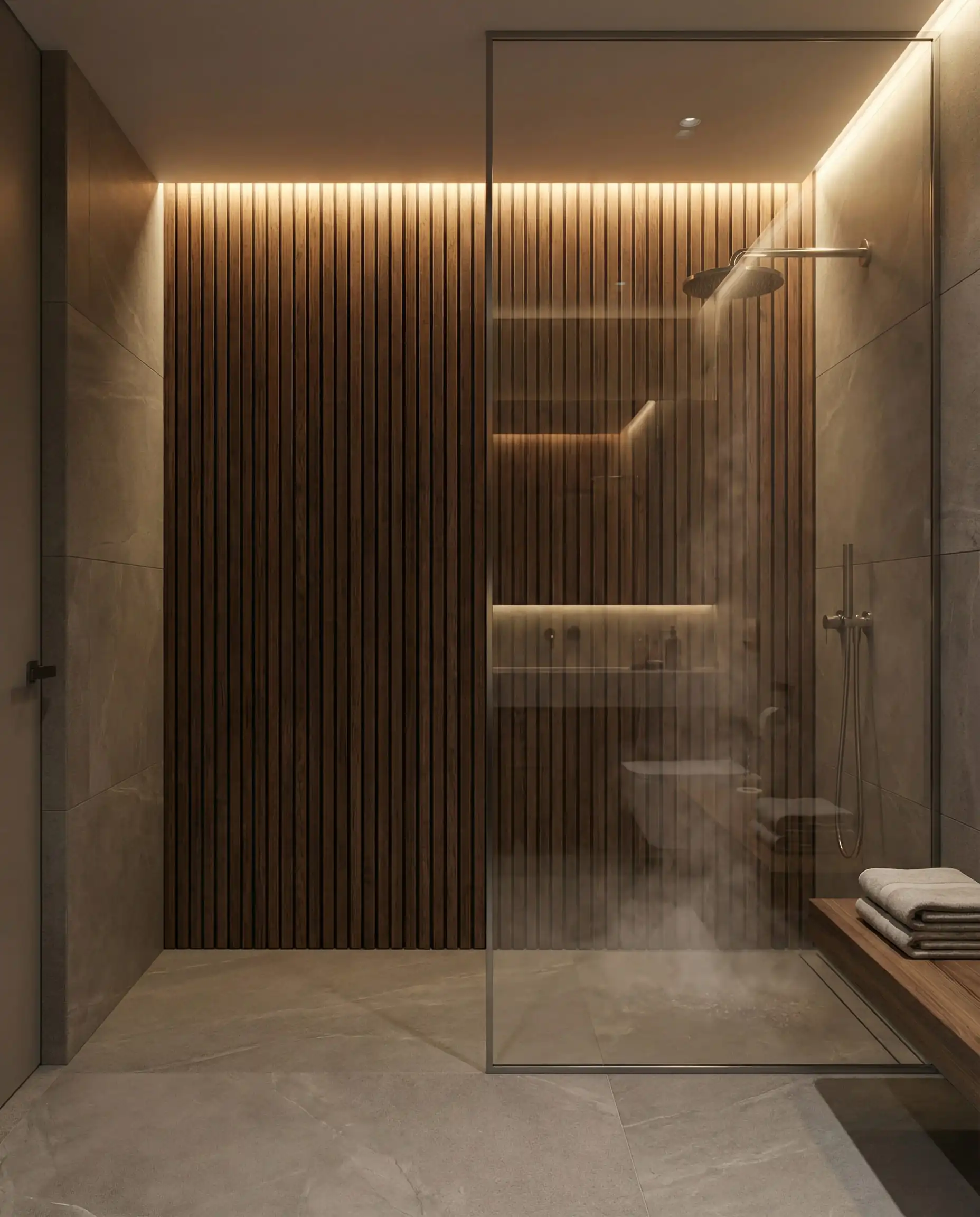
Waterproof Wood Paneling
Wood in a bathroom used to be a recipe for rot. Now, we have solutions.
Bamboo Cladding
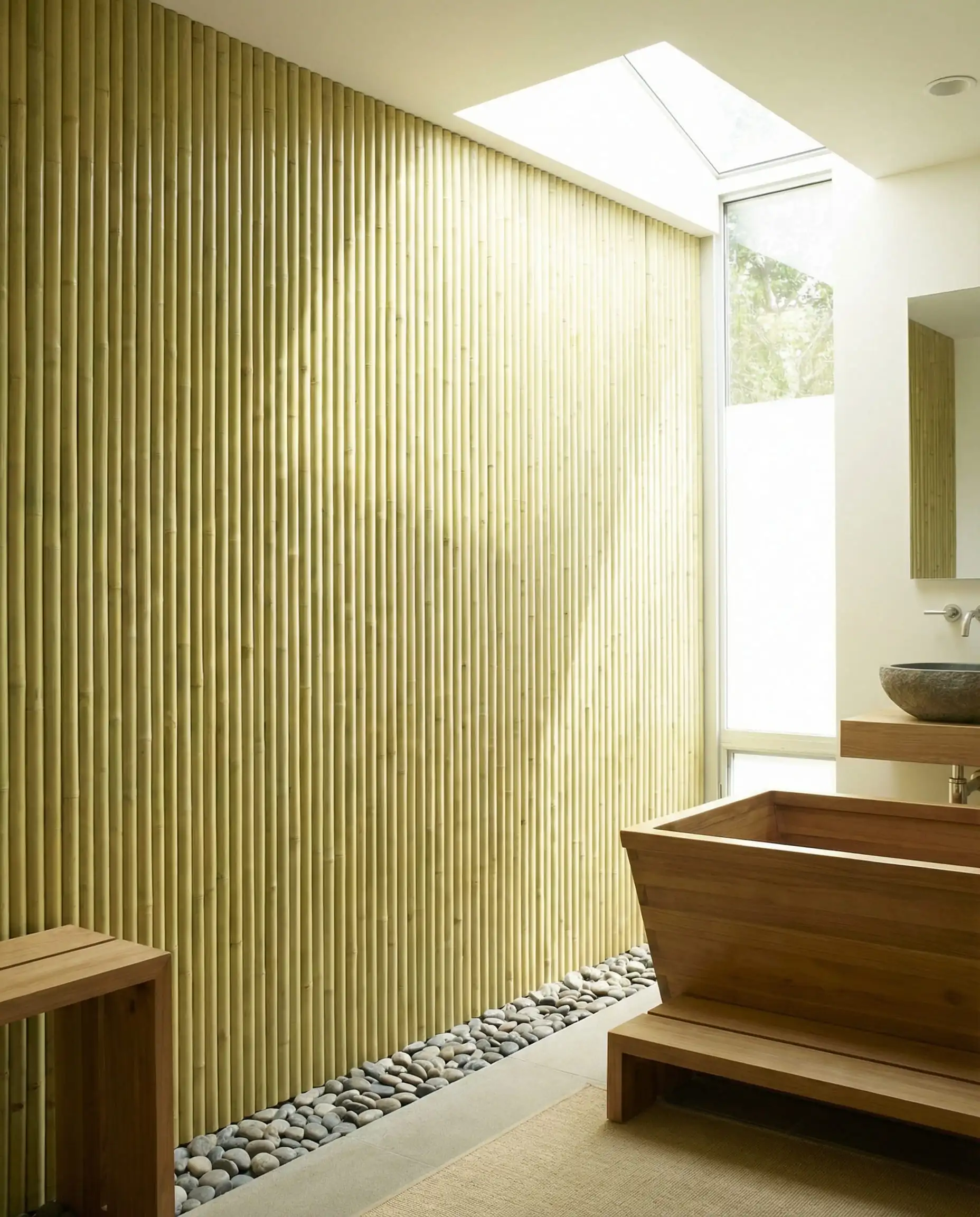
Bamboo is making a massive comeback for 2026 as the ultimate renewable resource. Unlike the flat styling of the early 2000s, the new bamboo is being used in dimensional, fluted panels or combined with river stones for a high-end “Zen Spa” aesthetic.
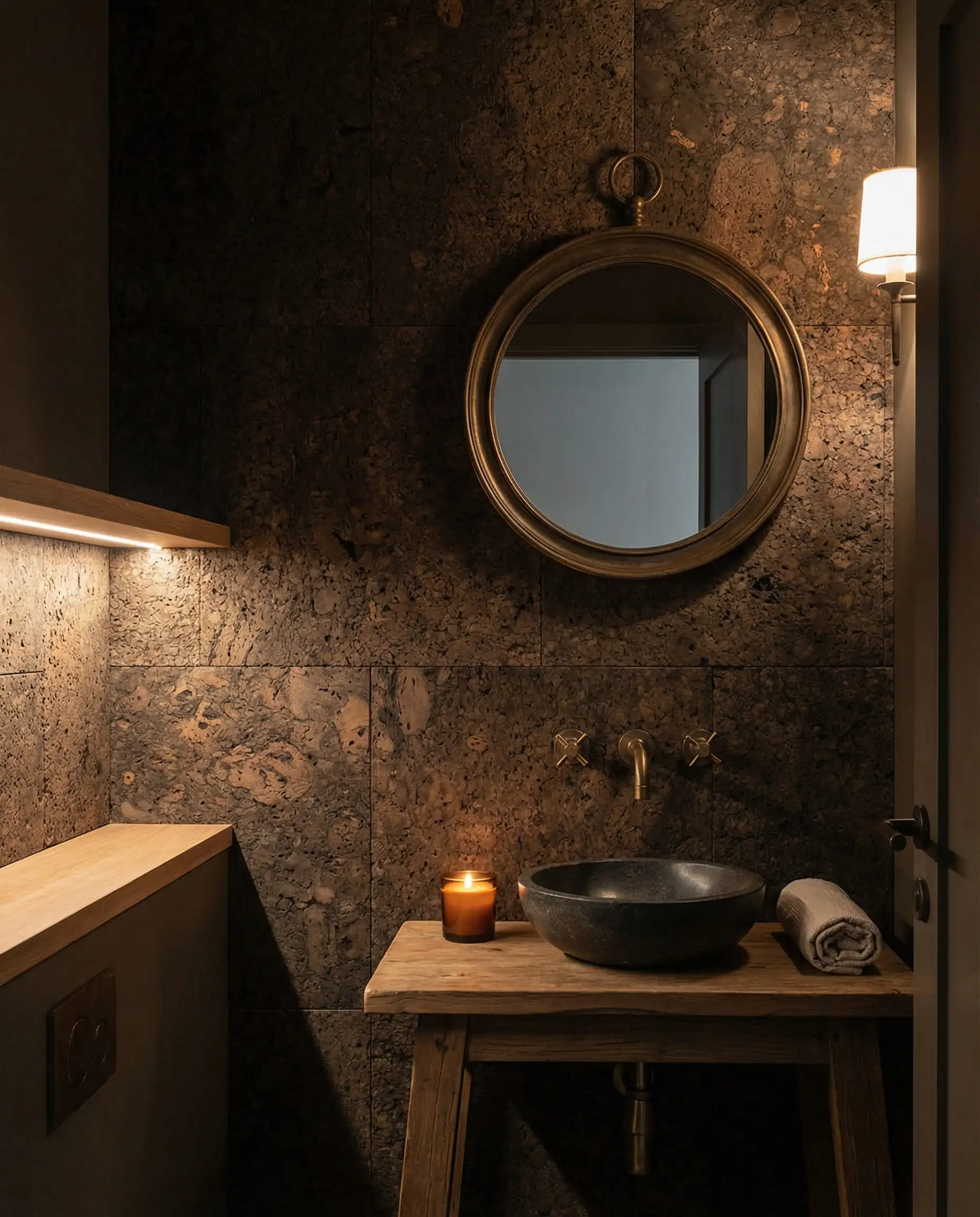
Cork Cladding
Cork is the underdog trend of 2026.
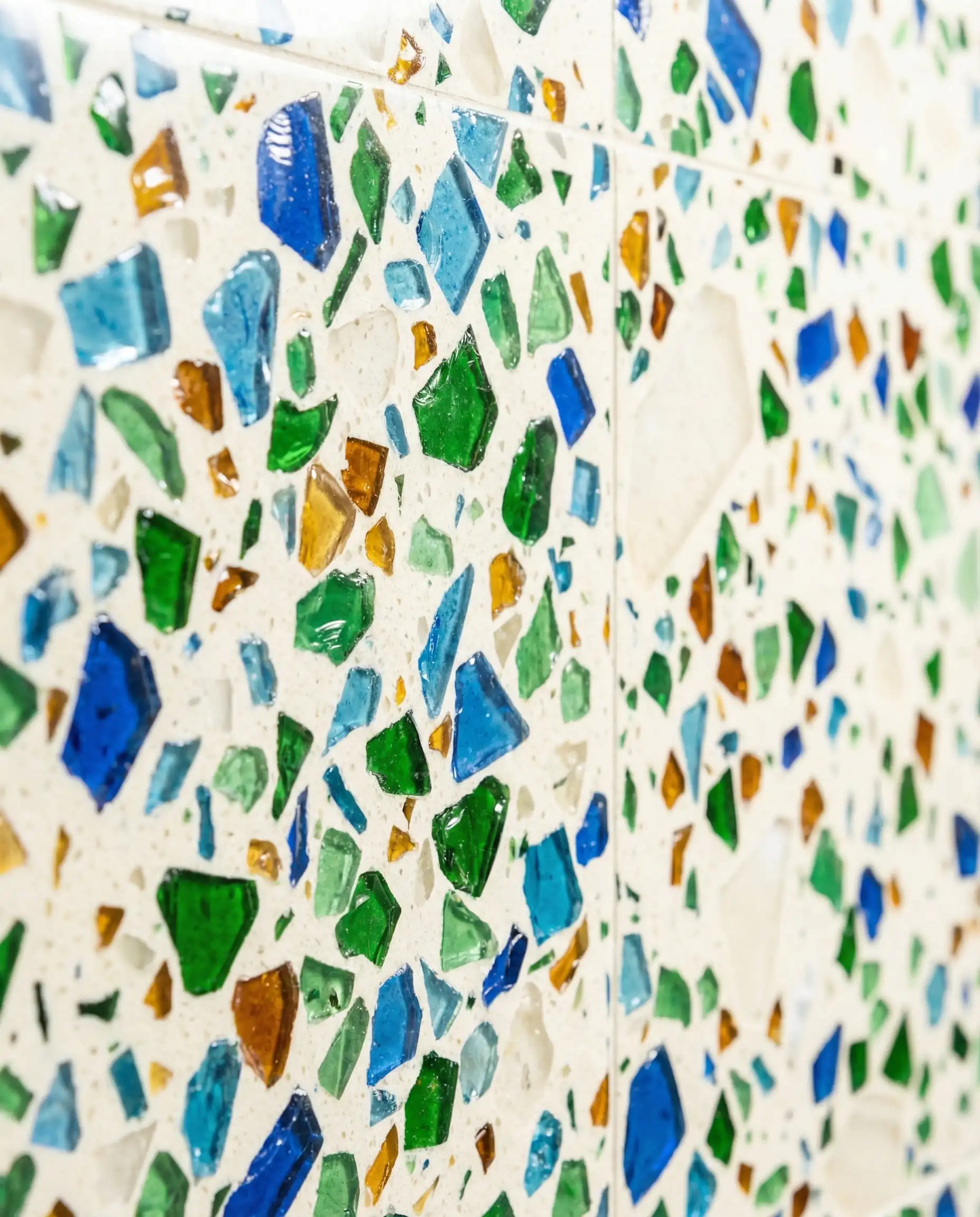
Recycled Glass & Terrazzo
Big, chunky terrazzo made from recycled glass chips offers a playful, confetti-like aesthetic. It’s incredibly durable and hides water spots and hair better than almost any other surface.
Go Green: Interested in eco-friendly choices? Read our full guide on Eco-Sustainable Interior Design Trends.
8. Practical Guide: Mixing Materials & Budgeting
This is where most people get stuck. You love microcement, but you also love Zellige tiles. Can you have both?
Yes, but you need a hierarchy.
The “60-30-10” Texture Rule
To avoid visual chaos, follow this ratio:
- 60% Base Material: Choose a calm backdrop (e.g., Cream Microcement or Large Format Matte Tile). This should cover the majority of the walls.
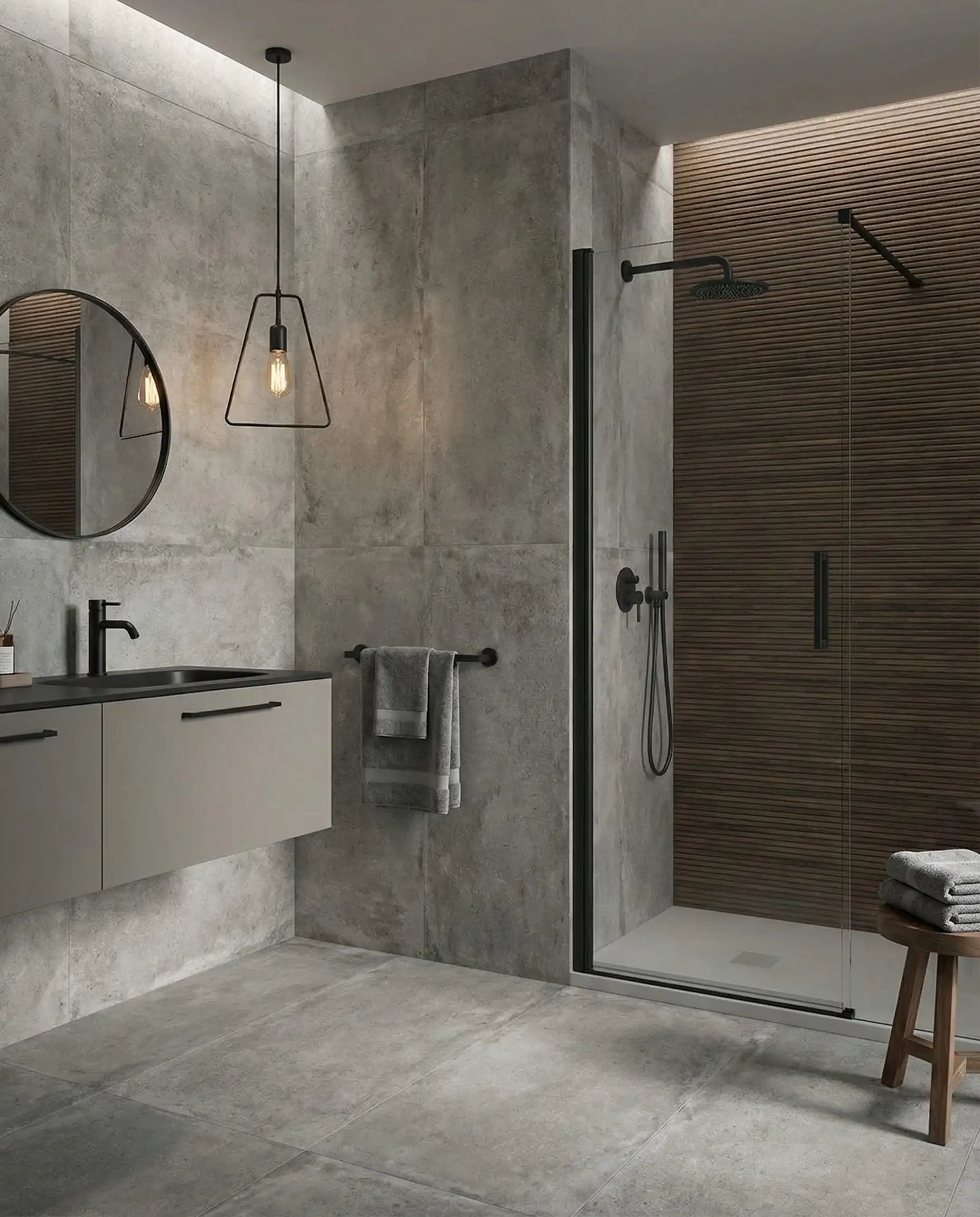
- 30% Secondary Material: This adds contrast (e.g., A fluted wood vanity wall or a half-height wall of vertical subway tiles).
- 10% Accent: The “jewelry.” This is your splashback in glossy Zellige, or a wallpapered ceiling.
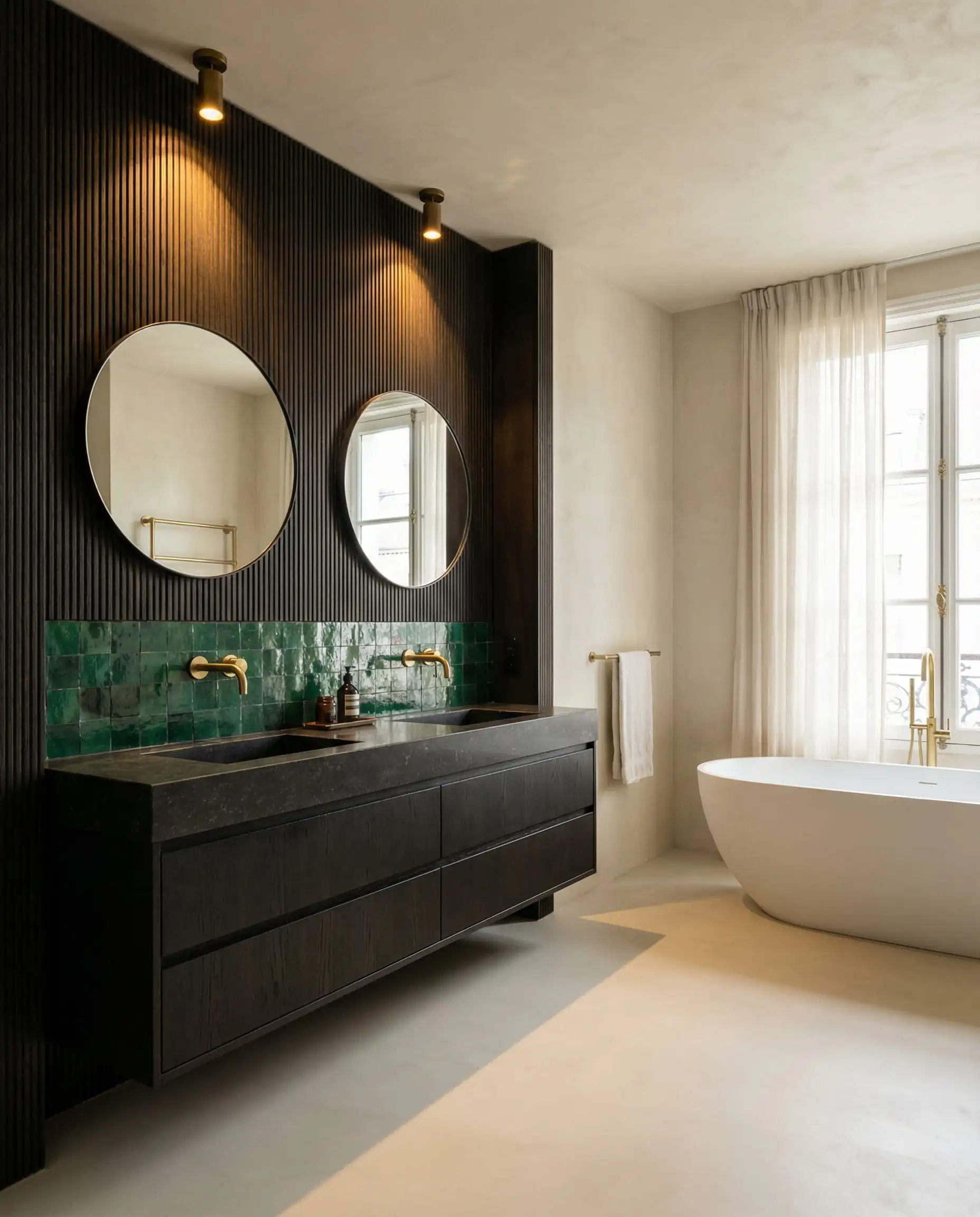
Combination Cheat Sheet
Budget Breakdown (Material Only)
Understanding the cost is crucial for planning:
9. Don’t Forget the Lighting
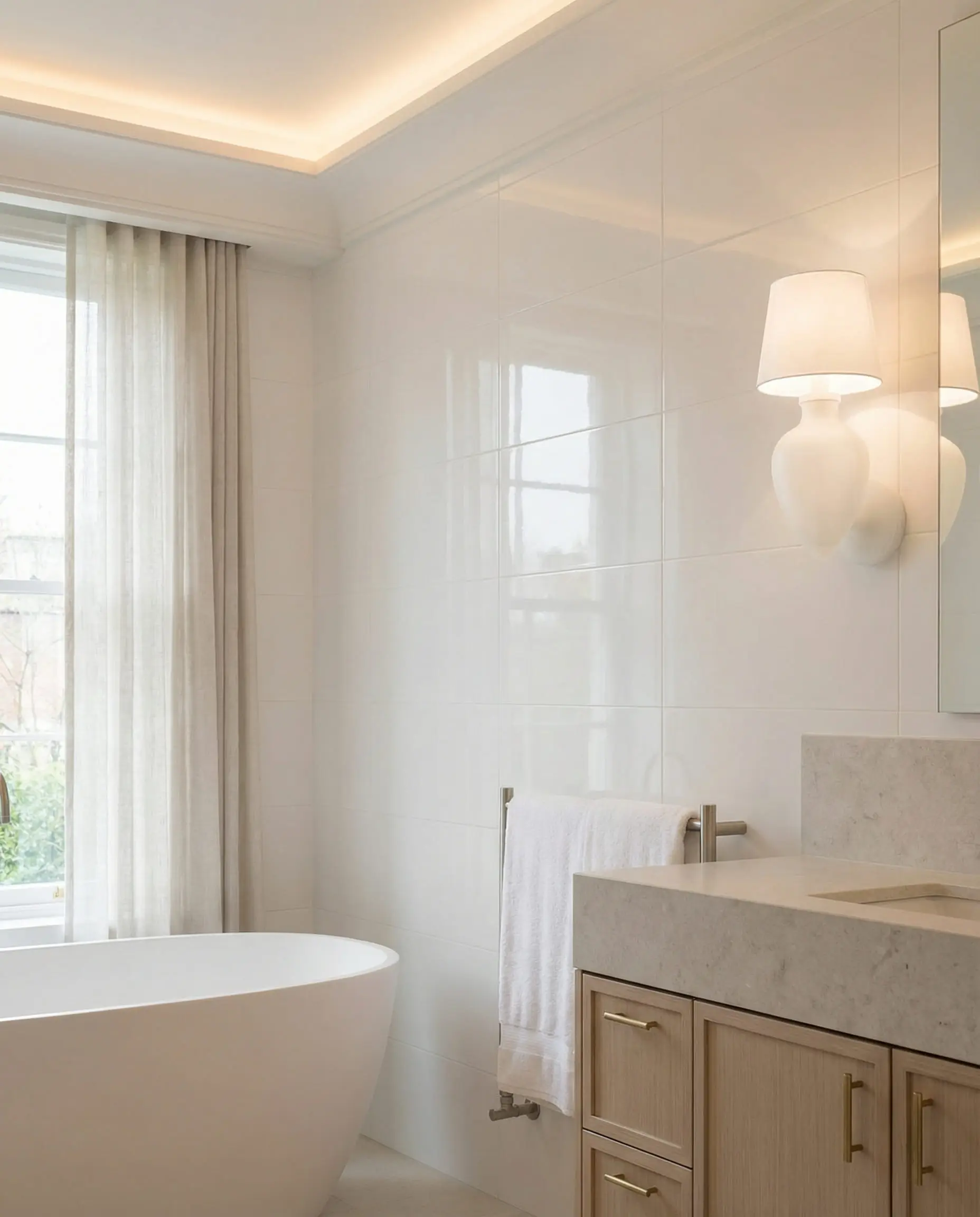
The wall covering you choose will look completely different depending on your light. In 2026, lighting design is integral to wall covering design.
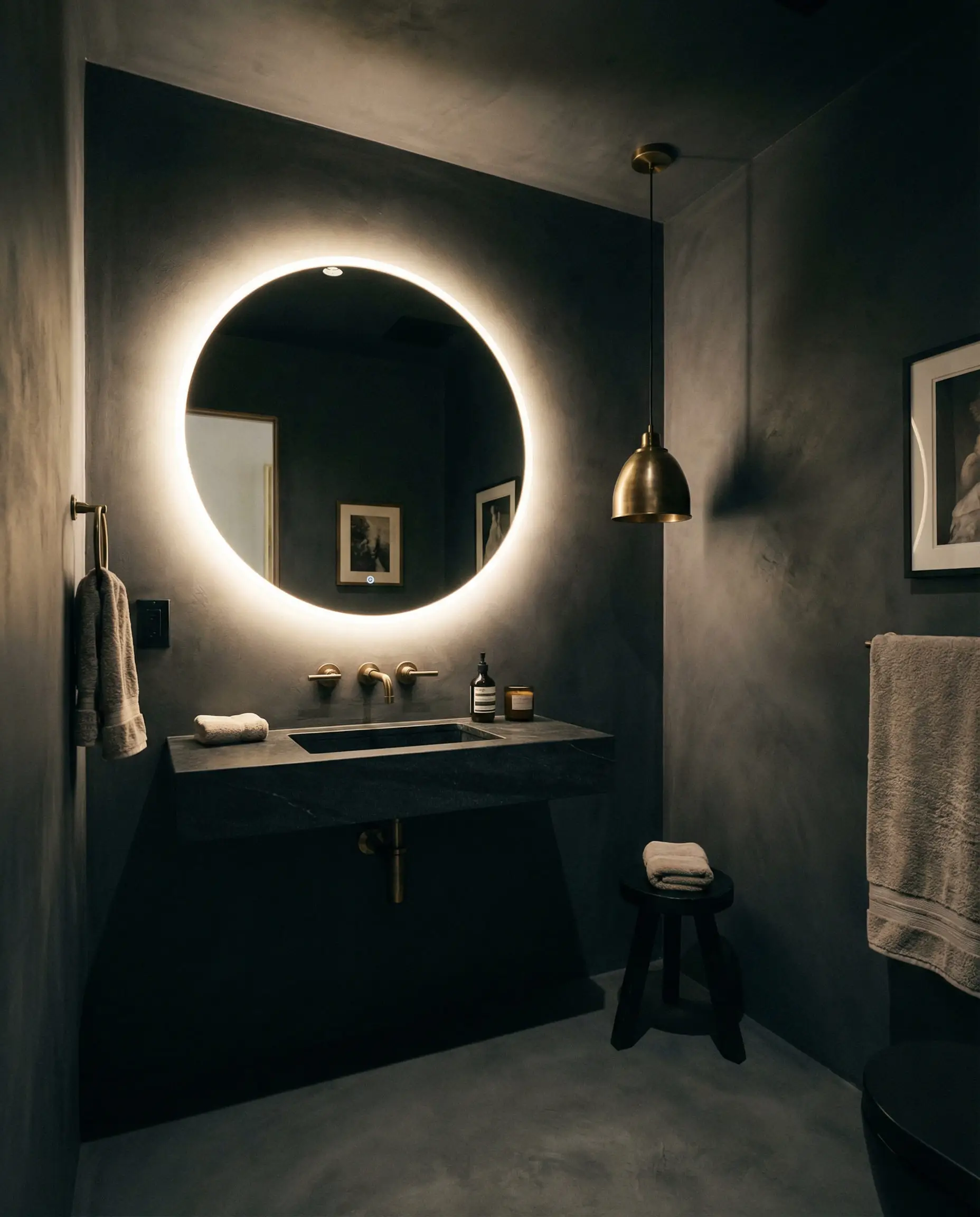
Light it up: Check out the latest in Lighting Trends to make your walls pop.
FAQ: Your Burning Questions
A: Standard paper? No. Vinyl or “non-woven” wallpaper? Yes, for powder rooms or well-ventilated bathrooms. For inside the shower or direct splash zones, you must use a specific “Wet System” fiberglass wallpaper sealed with resin.
A: Counter-intuitively, large-format tiles (or seamless microcement) make a small room look bigger. Fewer grout lines mean less visual clutter, which “expands” the walls. Small tiles can make a small room feel busy and gridlocked.
A: Natural stone (or stone-effect porcelain) in warm neutral tones. Marble, Travertine, and Limestone have been used for thousands of years—they aren’t going anywhere.
A: Generally, yes! This is a huge advantage. As long as the tiles are secure and the surface is prepared correctly with a bonding primer and mesh, you can save the mess and cost of ripping them out.
A: The standard 3×6 white subway tile in a brick pattern is looking a bit dated. However, subway tiles are evolving. Look for longer, thinner dimensions, handmade textures, and install them vertically or in a stacked bond pattern to keep them fresh.
Final Thoughts
The bathroom wall covering trends of 2026 invite you to be bold with texture and gentle with color. Whether you choose the seamless luxury of microcement, the immersive hug of a dark, drenched tile, or the artistic flair of a mural, the goal is the same: to create a space that feels good to be in.
The best wall covering for you is one that balances your budget with your need for sanctuary. So, go ahead—touch the samples. If it doesn’t feel like a treat for your fingertips, leave it on the shelf.