The Ultimate Guide to Board and Batten Accent Walls: Modern Ideas, Trends & DIY Tips
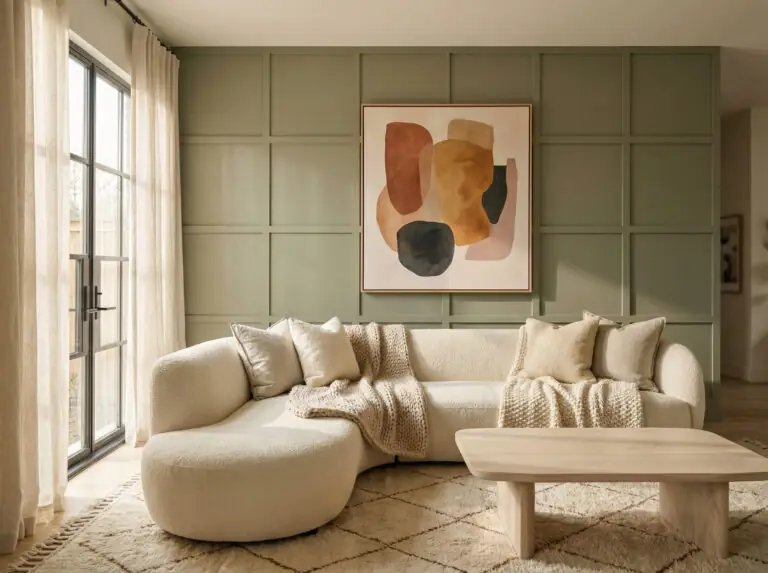
There is a reason why the board and batten accent wall has graduated from a fleeting “Pinterest trend” to a staple of modern interior design. It is, without a doubt, the highest-impact DIY project you can undertake for the lowest cost.
Historically, board and batten was a practical siding style for barns and cottages—wide planks (boards) sealed with narrow strips (battens) to keep out the weather. Today, it has moved indoors, evolved, and taken on a new life. It is no longer just for rustic farmhouses. With the right spacing, geometry, and color, it can look undeniably modern, mid-century, or even industrial.
Whether you are looking to hide uneven drywall texture, add architectural character to a bland new-build, or simply create a stunning focal point, this guide covers everything. We are diving deep into the latest trends for 2026, the specific math you need to get the spacing right, and the pro tips that separate a “DIY job” from a “Designer finish.”
The New Wave: Top Modern Board and Batten Trends
If you think board and batten only means white vertical stripes, think again. The design world has pushed the boundaries of this technique. Here is what is dominating interior design right now.
1. The Modern Grid (Square & Rectangular)
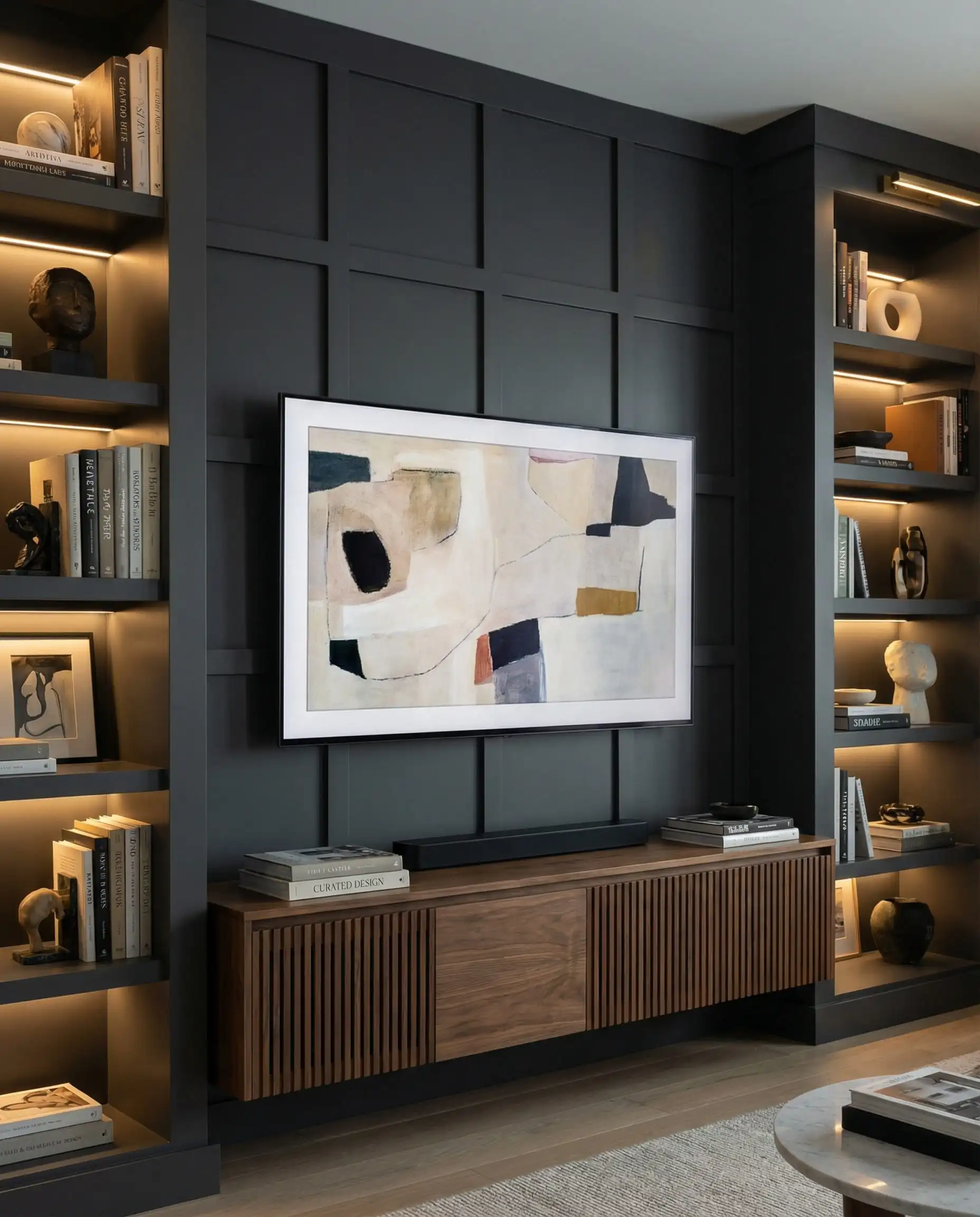
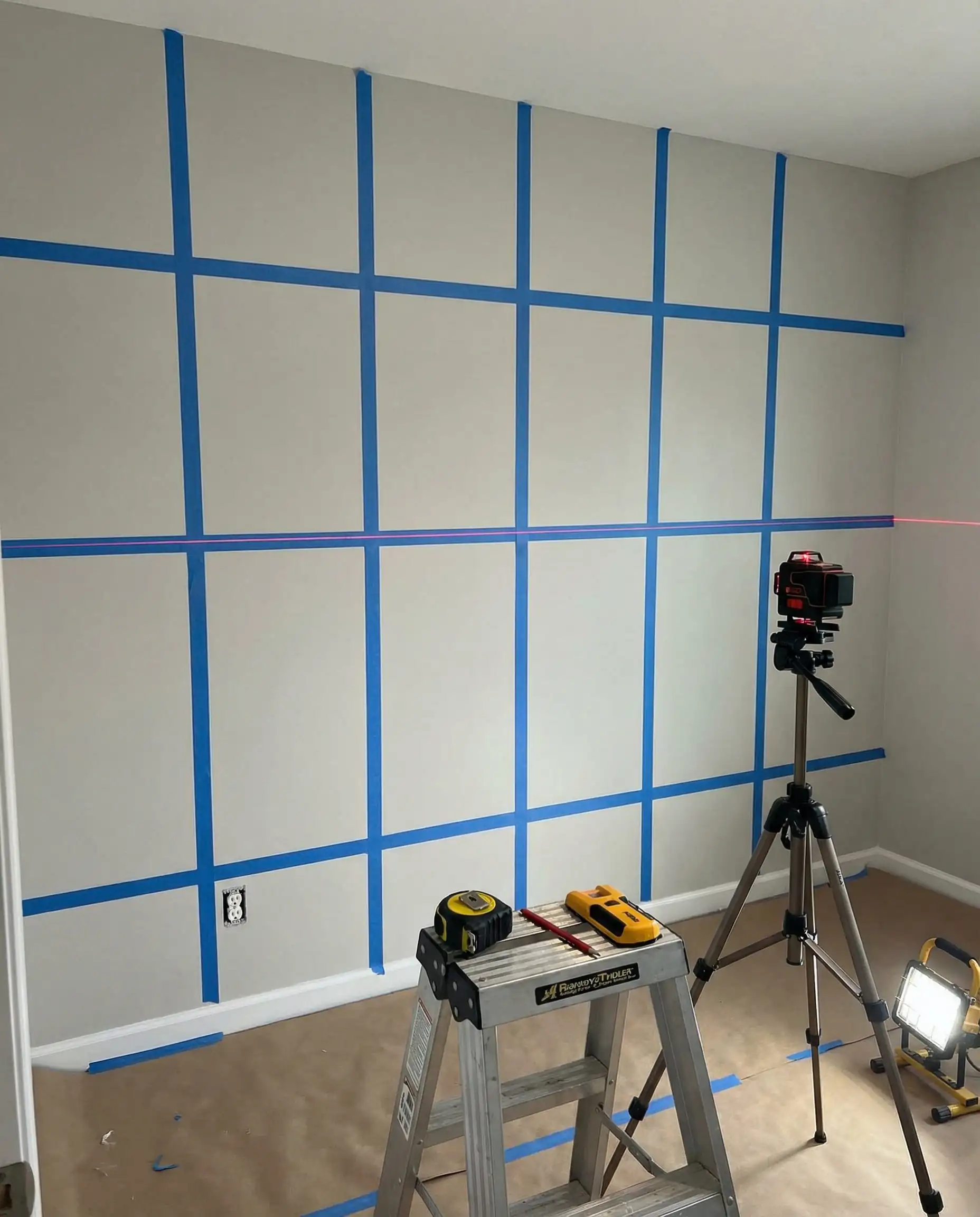
While traditional styles use vertical battens spaced evenly apart, the “Grid” look introduces horizontal rails to create boxes. This brings a sense of order and symmetry to a room.
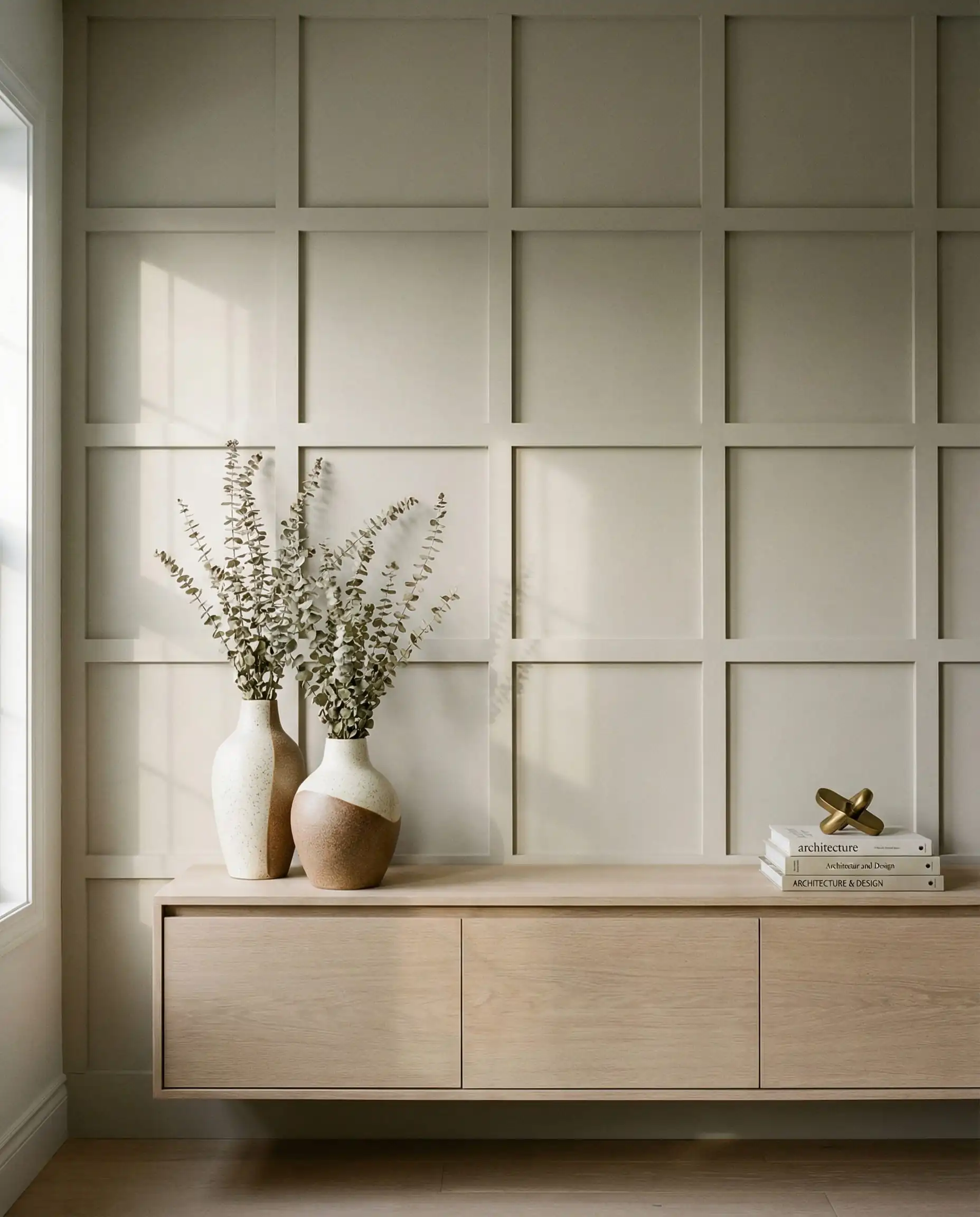
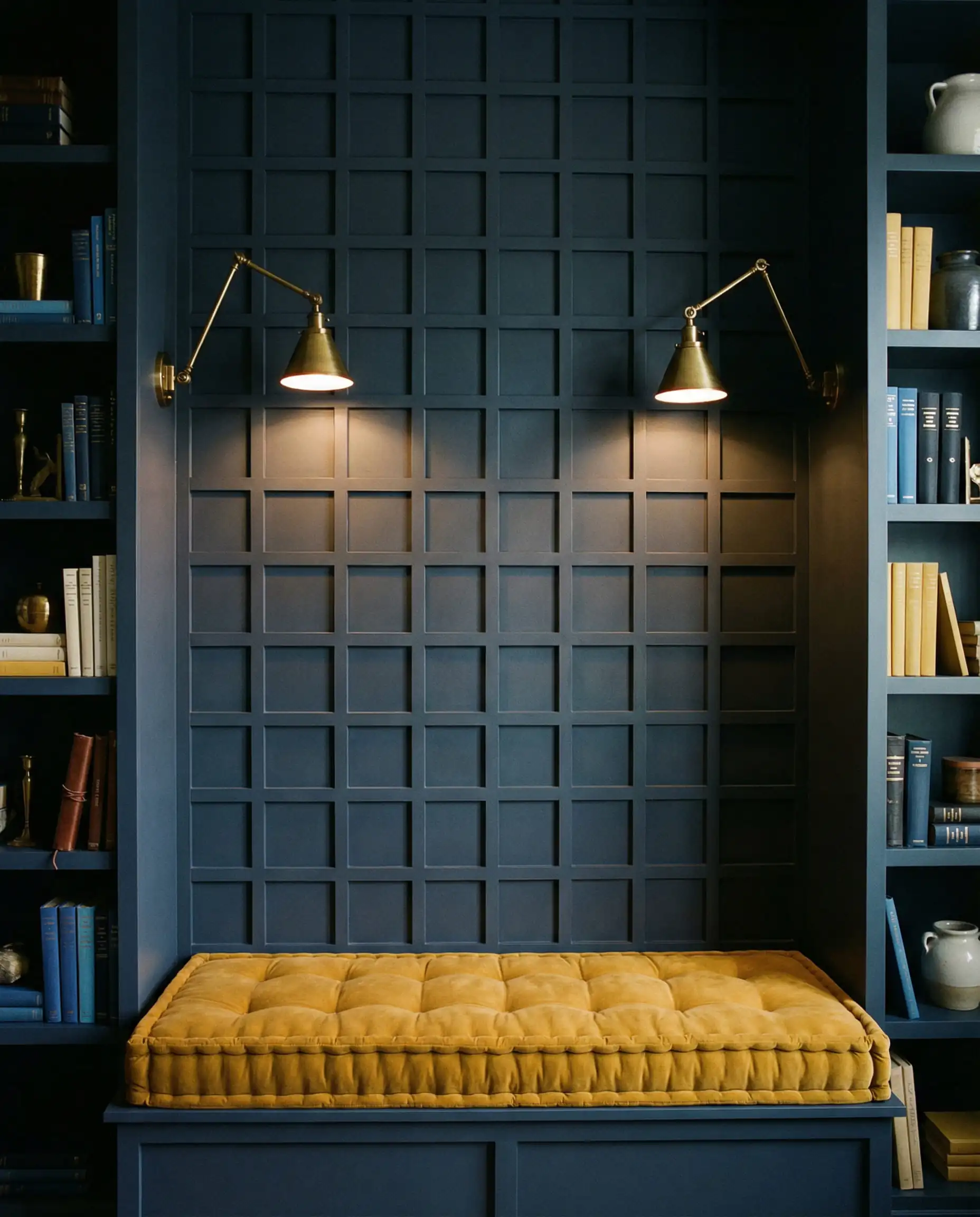
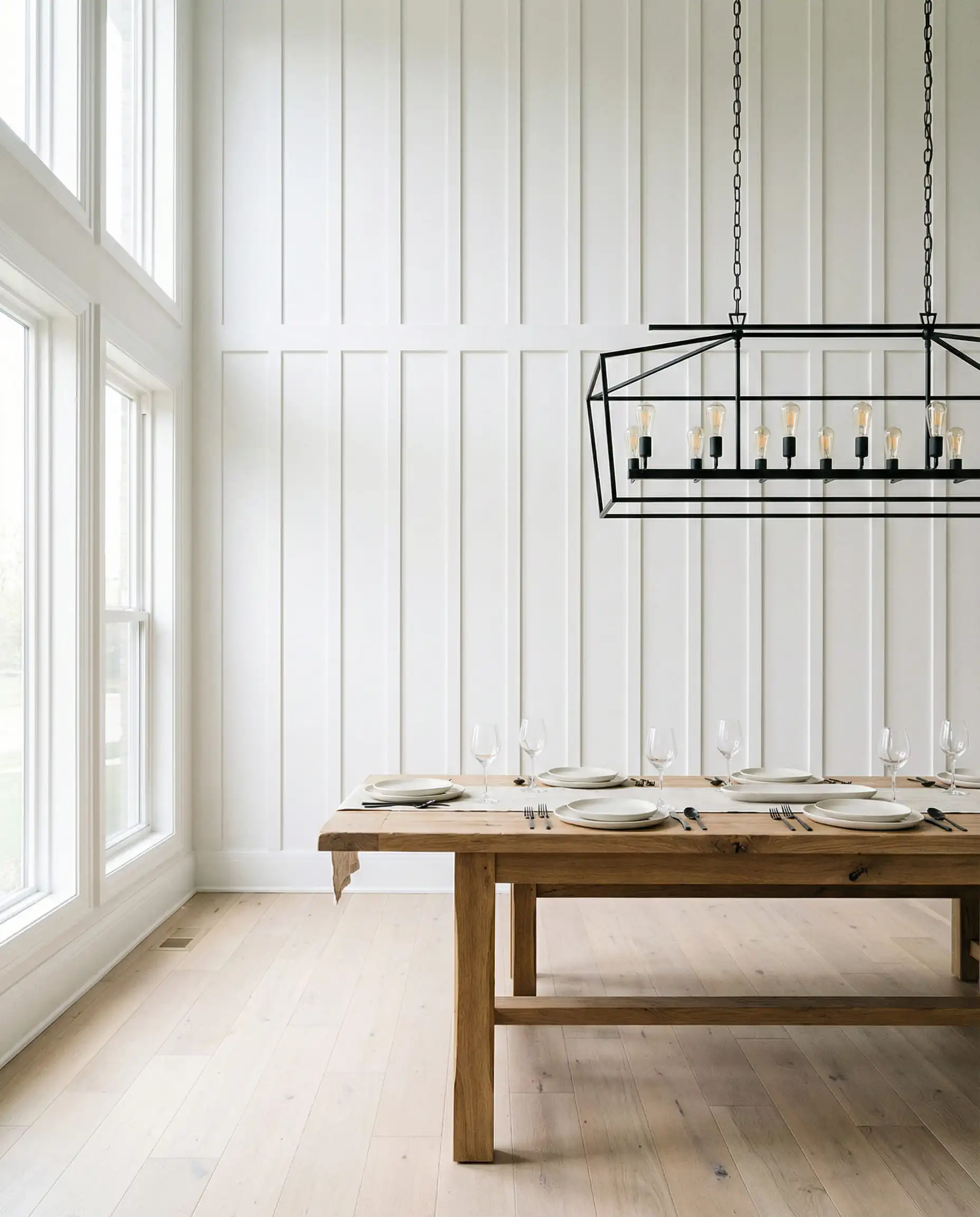
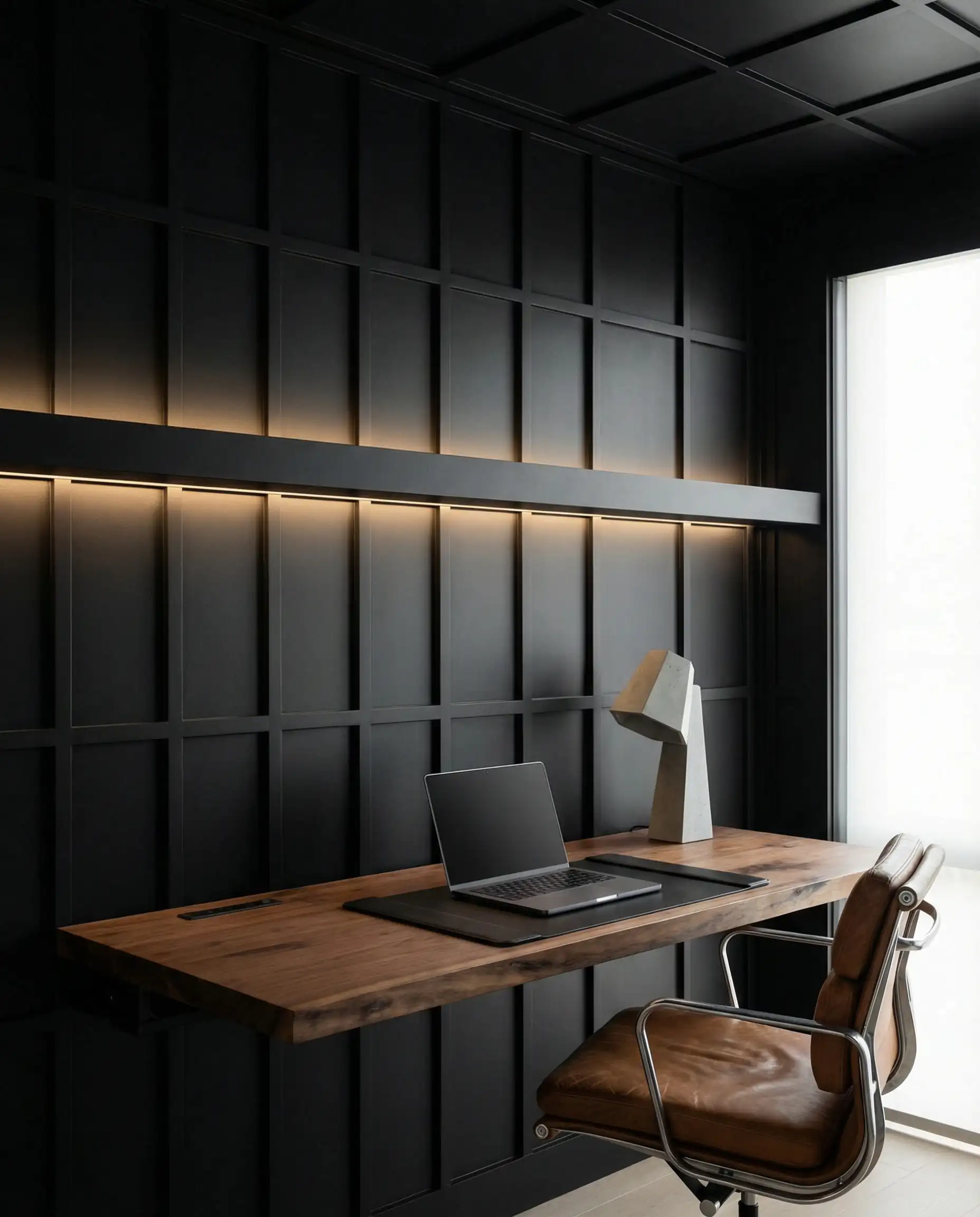
If your ceilings are low (8 feet or under), opt for vertical rectangular grids rather than perfect squares. The vertical elongation tricks the eye into thinking the ceiling is higher than it is!
🎨 Hackrea Designer Tip
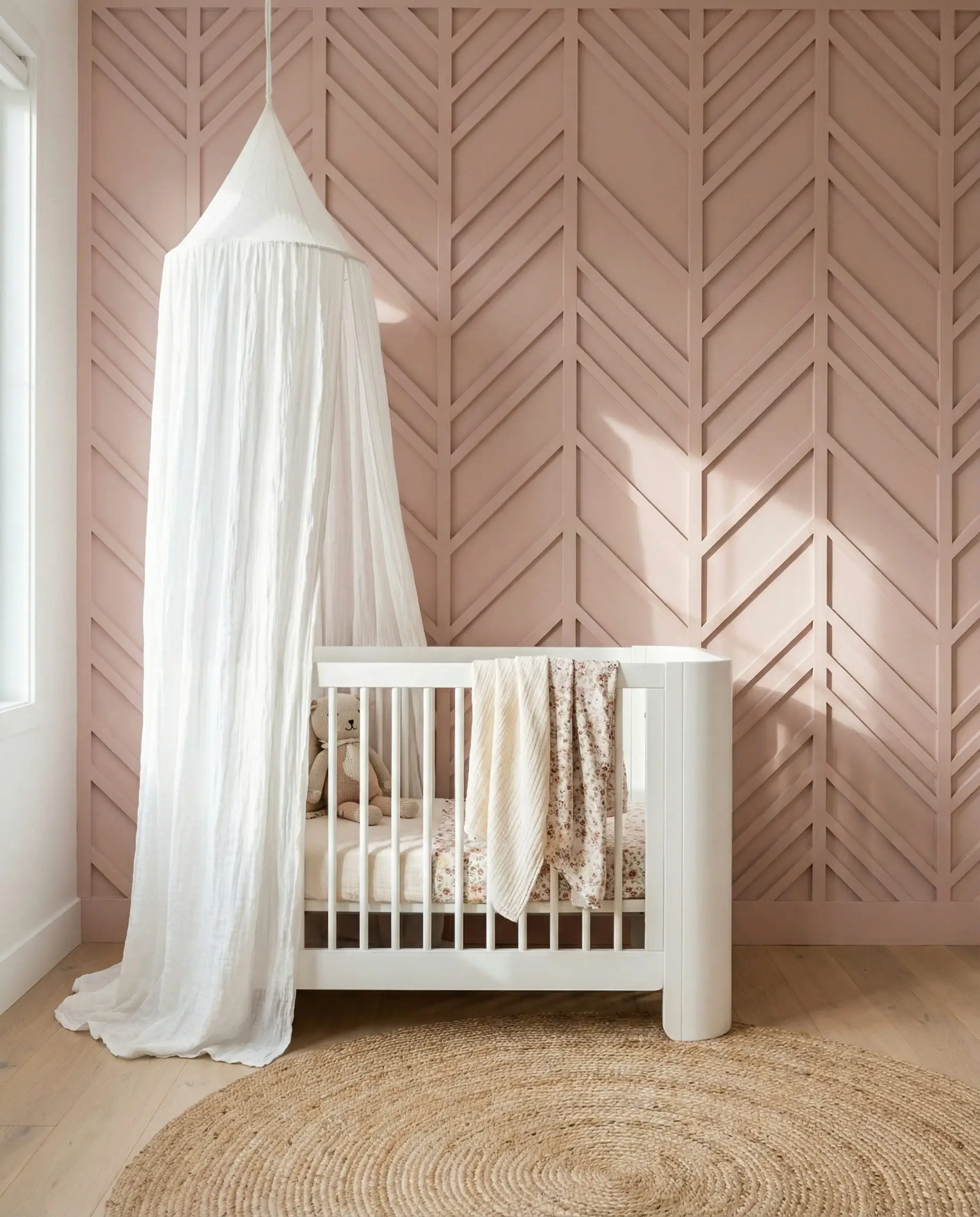
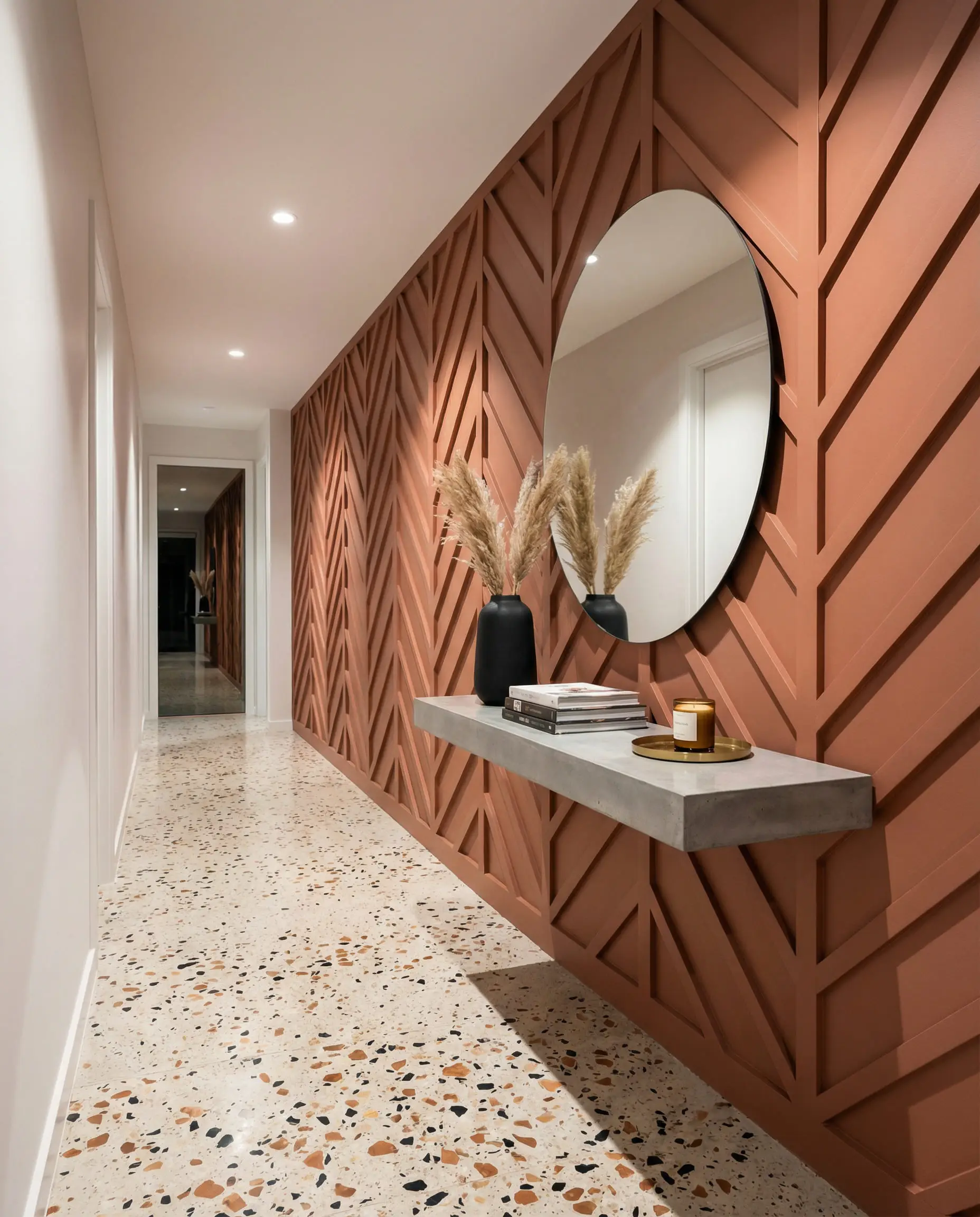
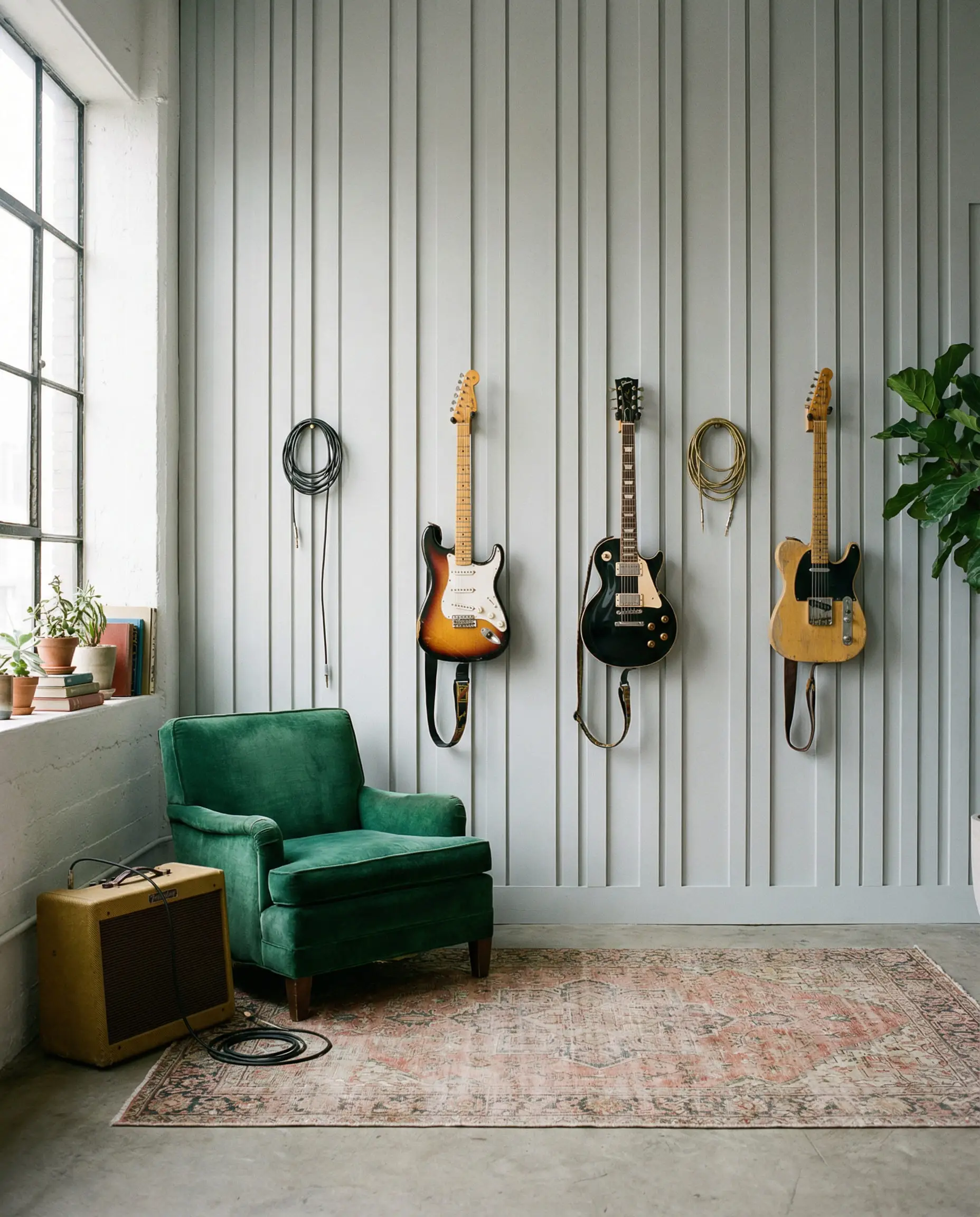
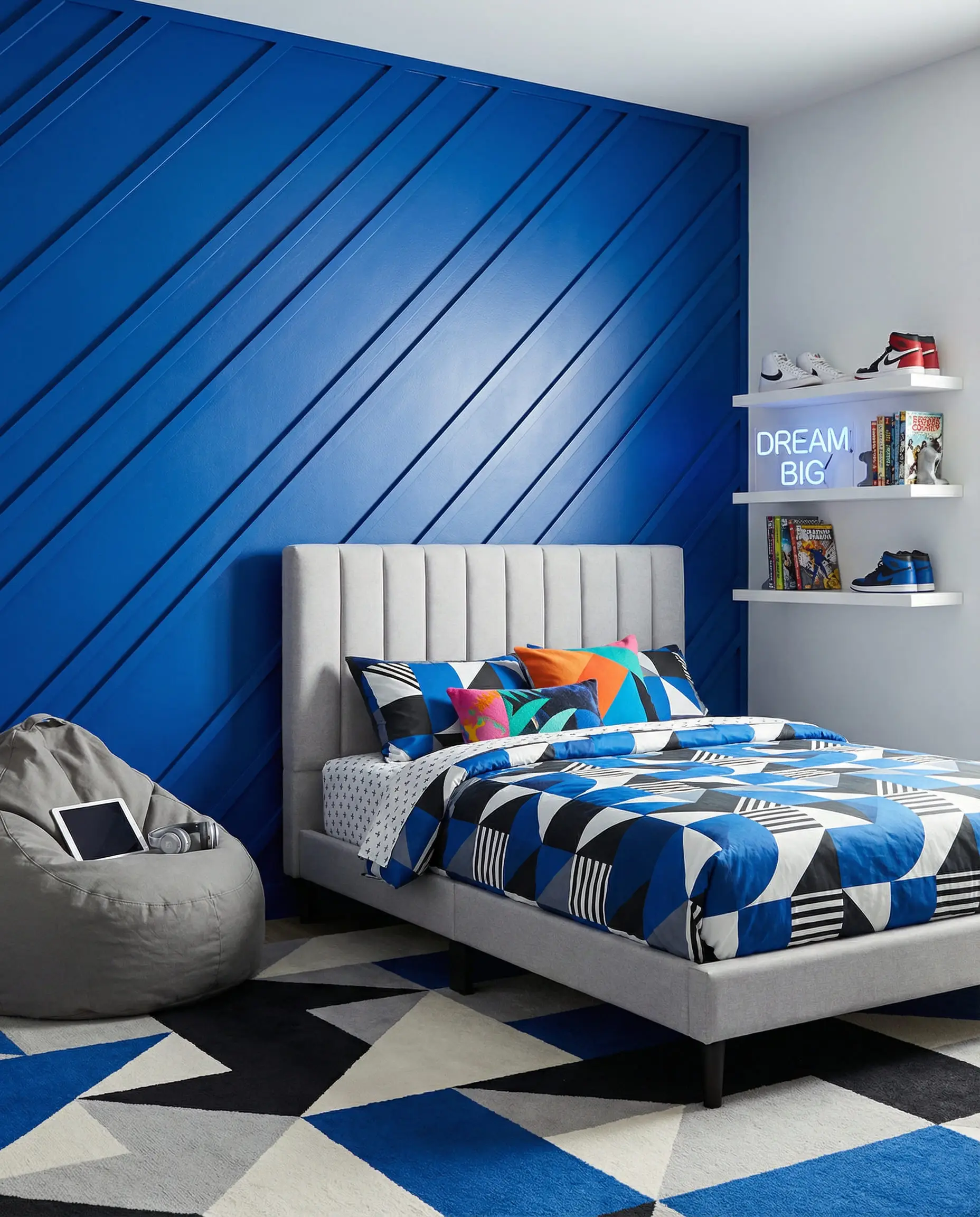
2. Geometric & Asymmetrical Designs
For those who want their wall to double as art, asymmetry is key. This involves placing battens at diagonal angles (chevron or herringbone patterns) or varying the spacing of vertical slats to create a “barcode” effect. This style is particularly popular in creative spaces like home offices, teen bedrooms, or game rooms.
3. Half-Wall & Mixed Materials
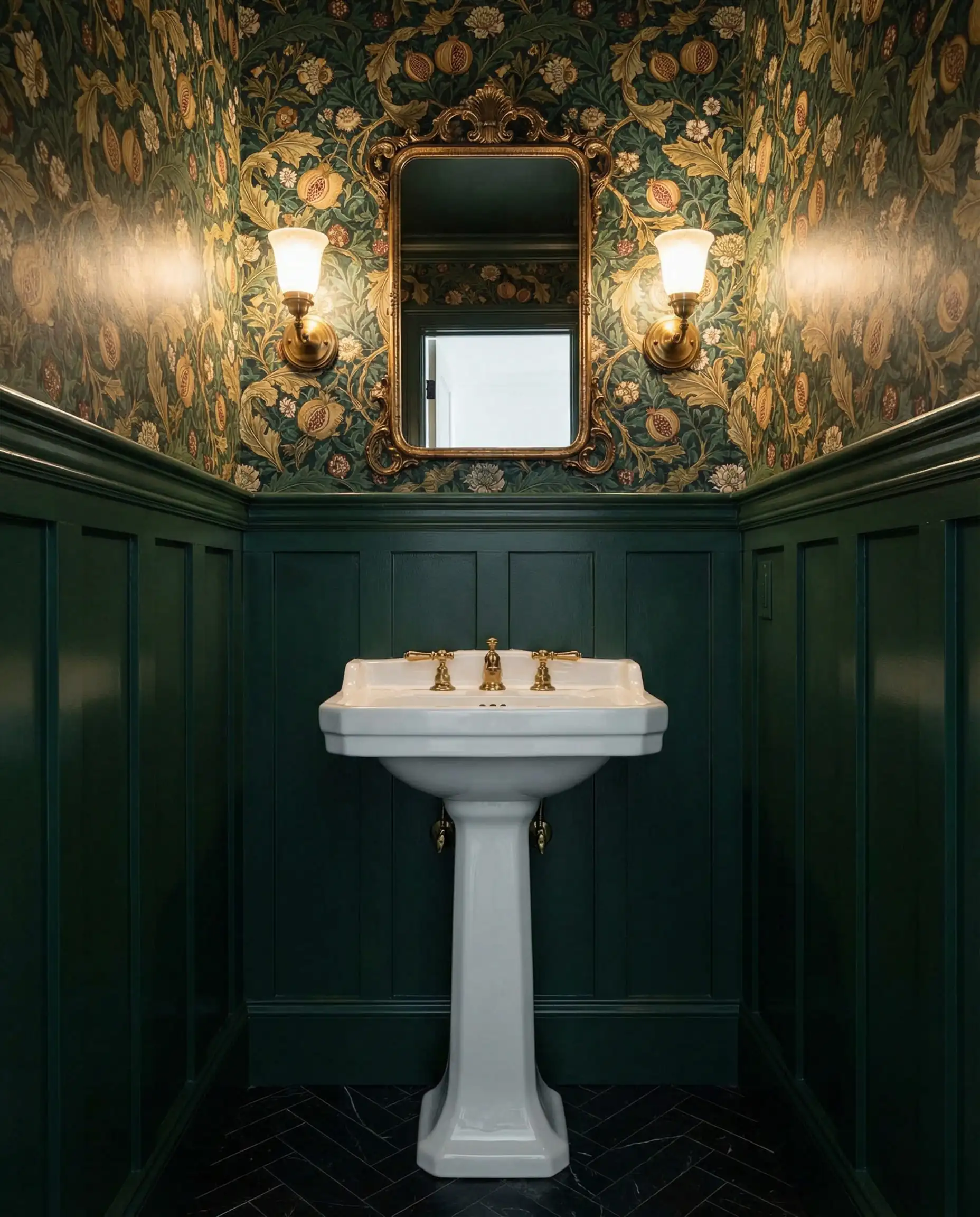
You don’t have to cover the entire wall. The “three-quarter” or half-wall board and batten is surging in popularity, brut with a twist: Wallpaper.
Instead of painting the wall above the battens a solid color, designers are pairing a moody, dark board and batten lower half with a bold, floral, or textured wallpaper on the top half. This juxtaposition of rigid woodwork and organic wallpaper patterns creates incredible visual tension.
4. The “Fifth Wall” Extension
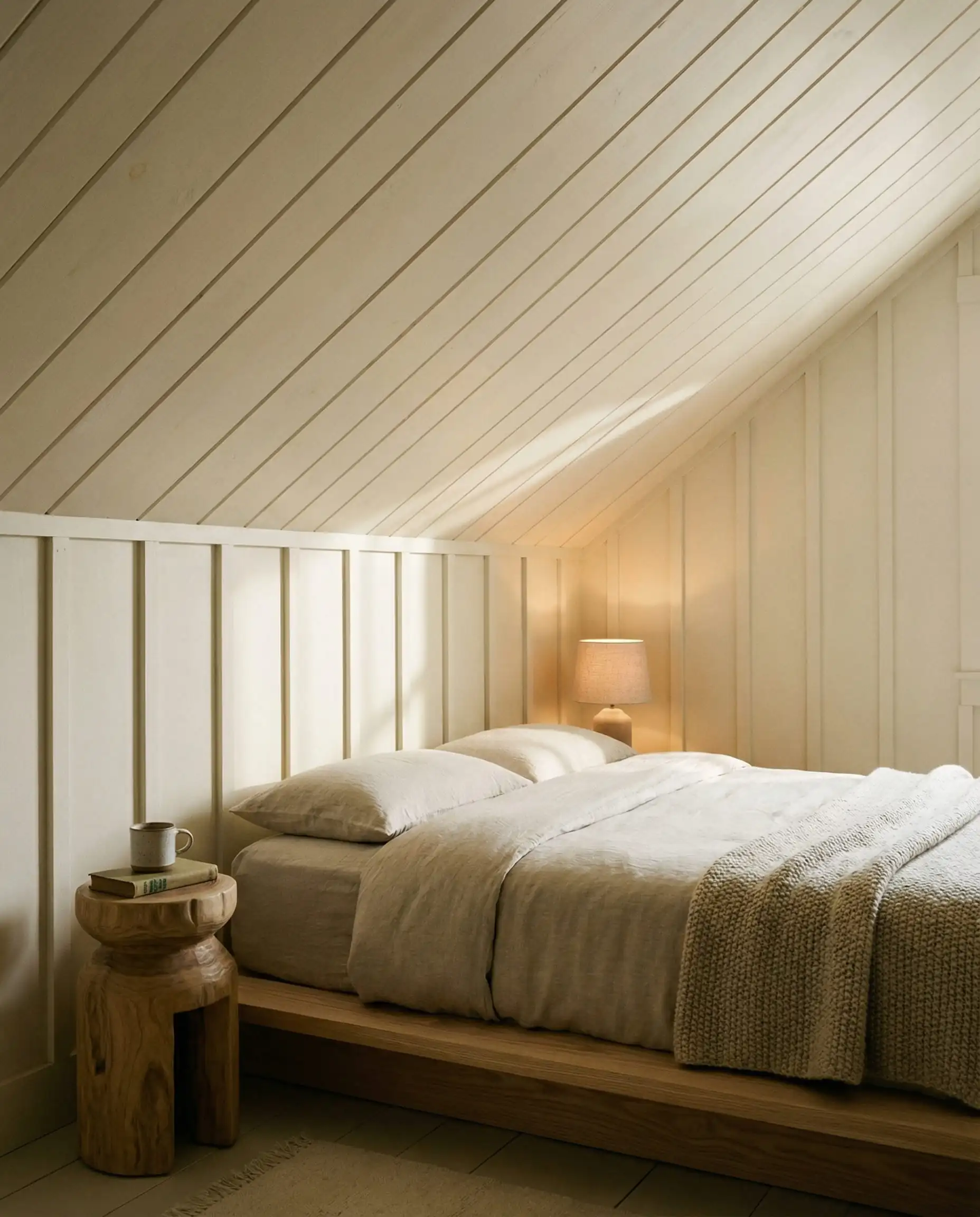
Why stop at the crown molding? A bold trend we are seeing in 2026 is continuing the battens up the wall and straight across the ceiling. This creates a canopy effect that feels incredibly cozy and architectural. It is an excellent strategy for bedrooms or dining nooks where you want to create an intimate “zone” within a larger open-plan space.
Best Room Applications: Where to Install It
Board and batten is versatile, but it performs specific functions depending on the room.
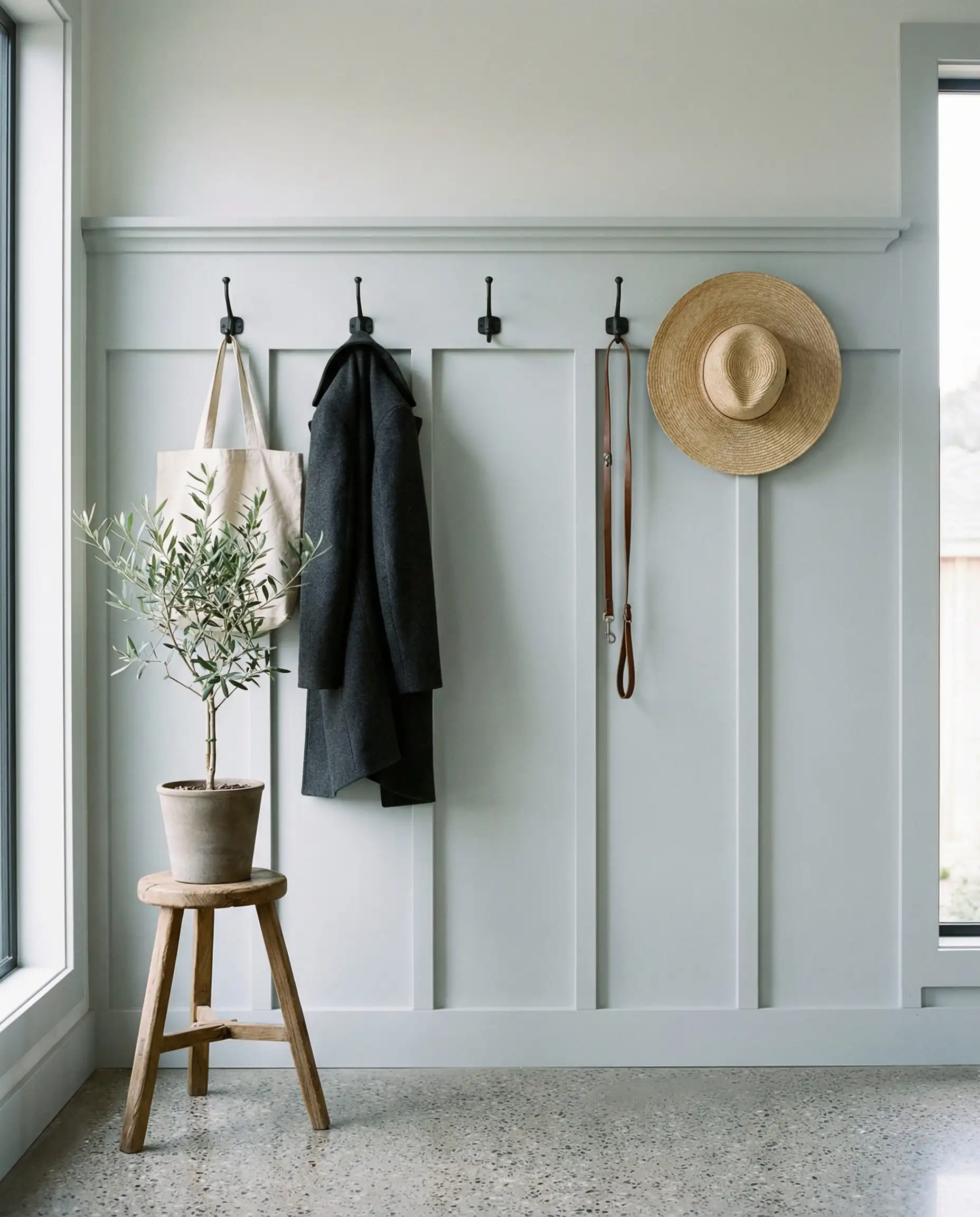
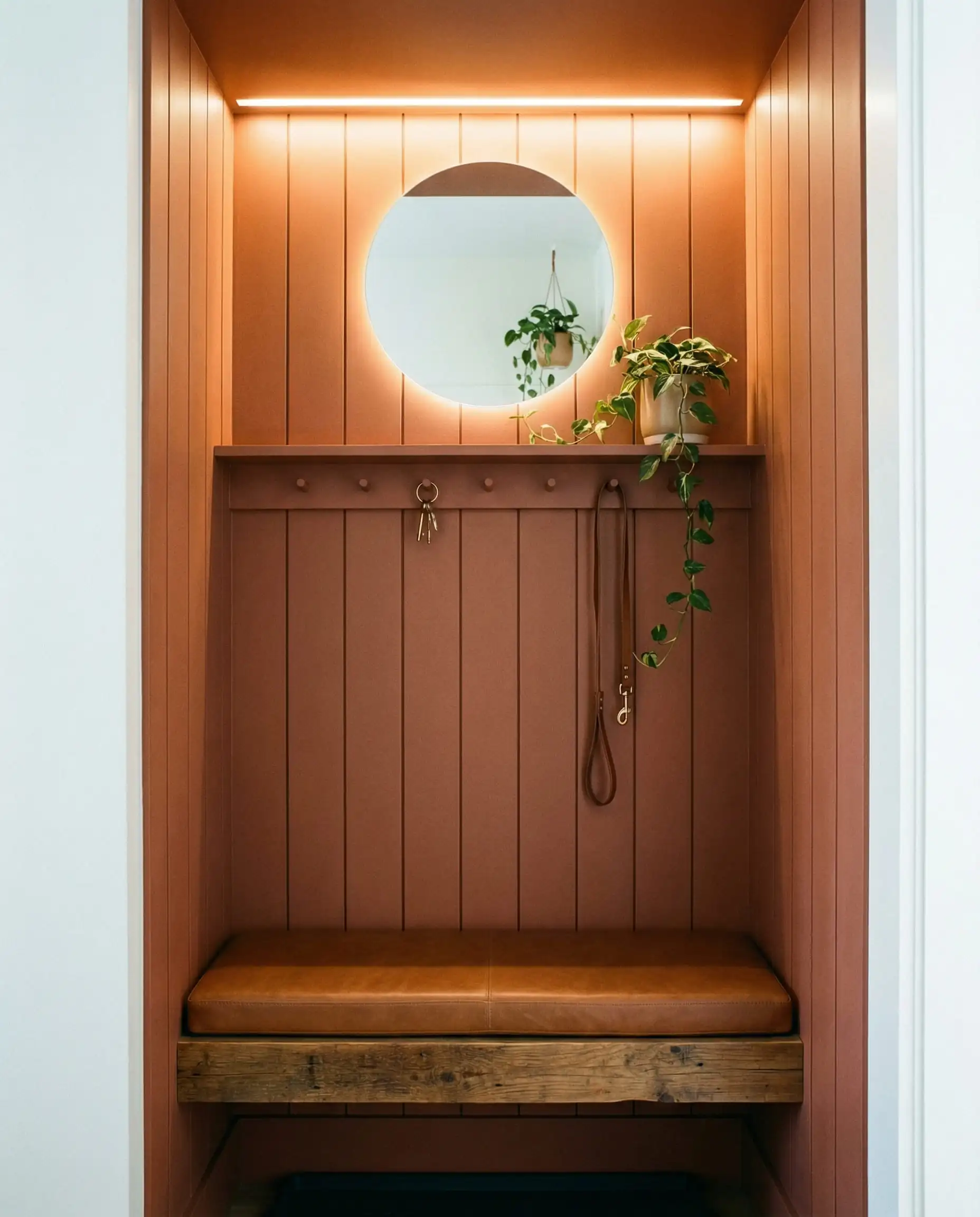
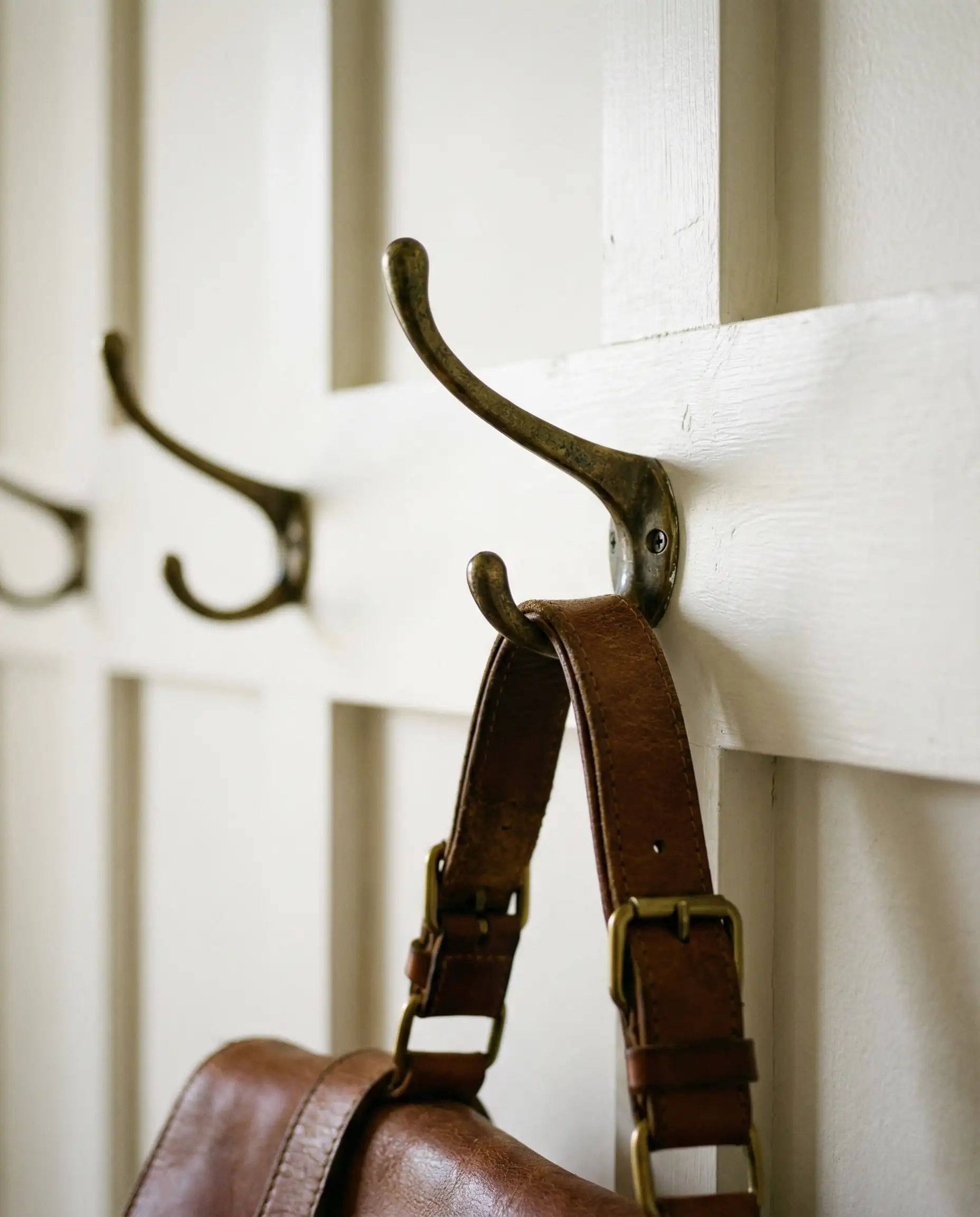
The Functional Entryway (The Drop Zone)
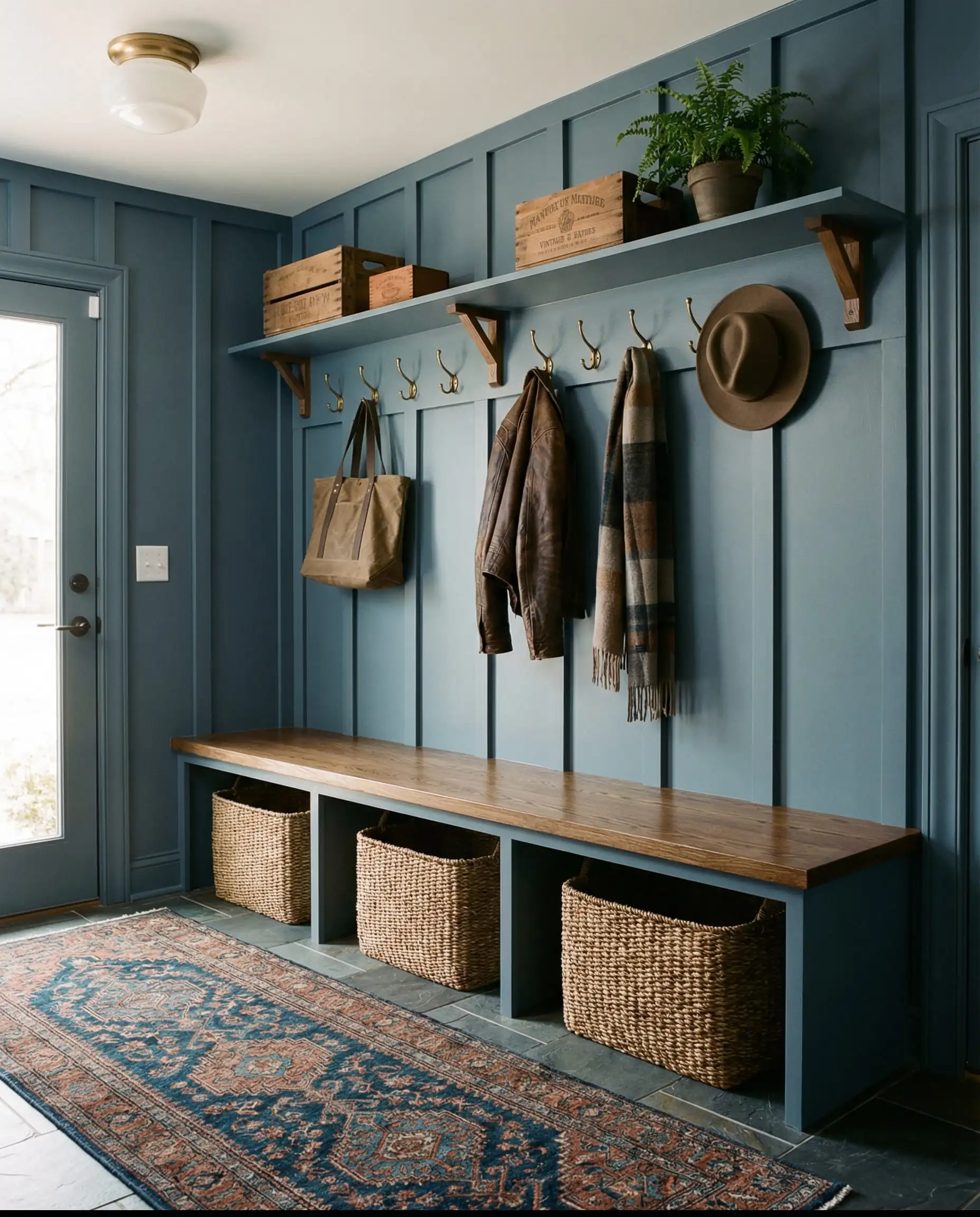
In the entryway or mudroom, board and batten is rarely just decorative—it’s a workhorse. By installing a horizontal top rail at about 60-70 inches high, you create the perfect anchor point for heavy-duty hooks.
Bedroom: The Headboard Alternative
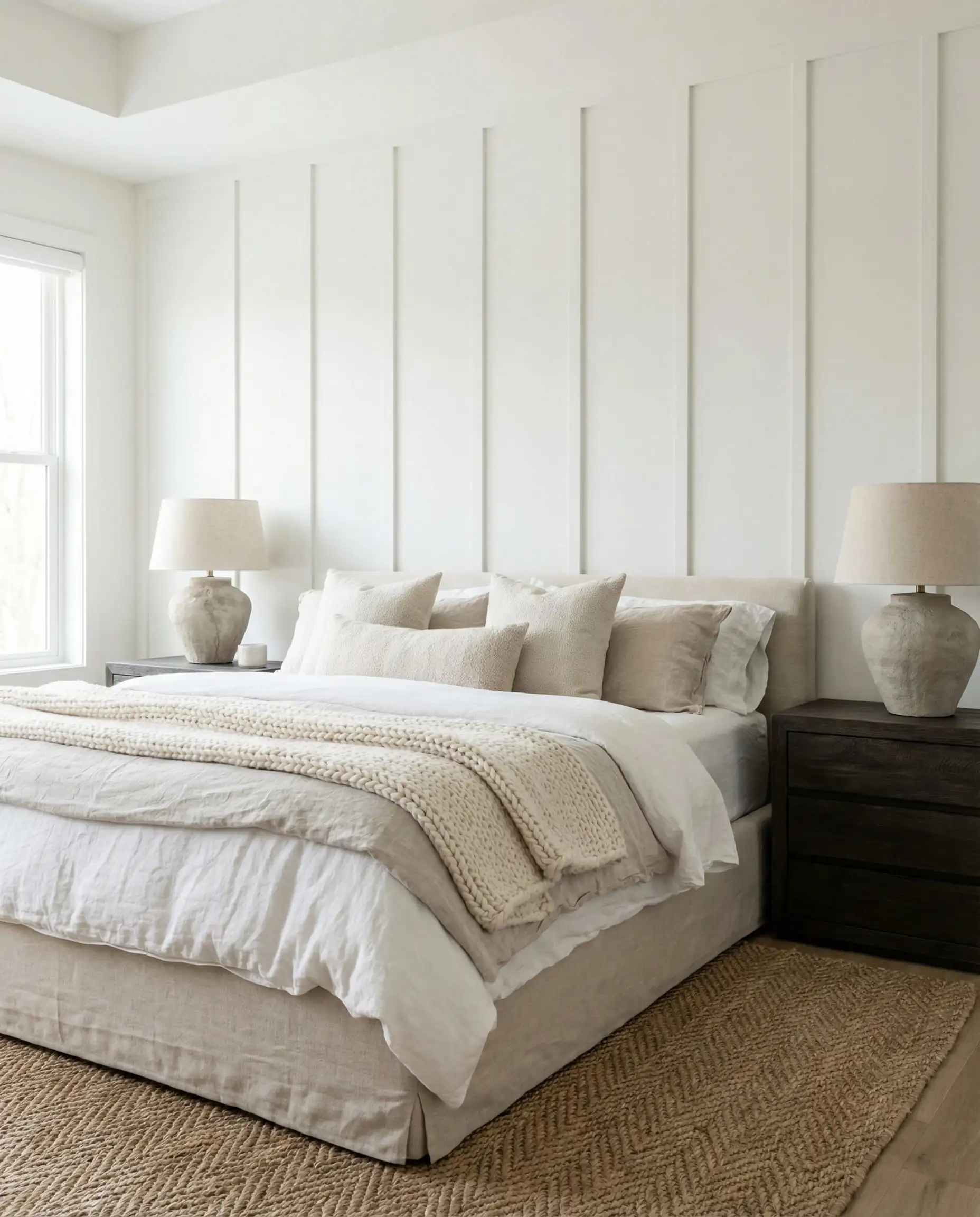
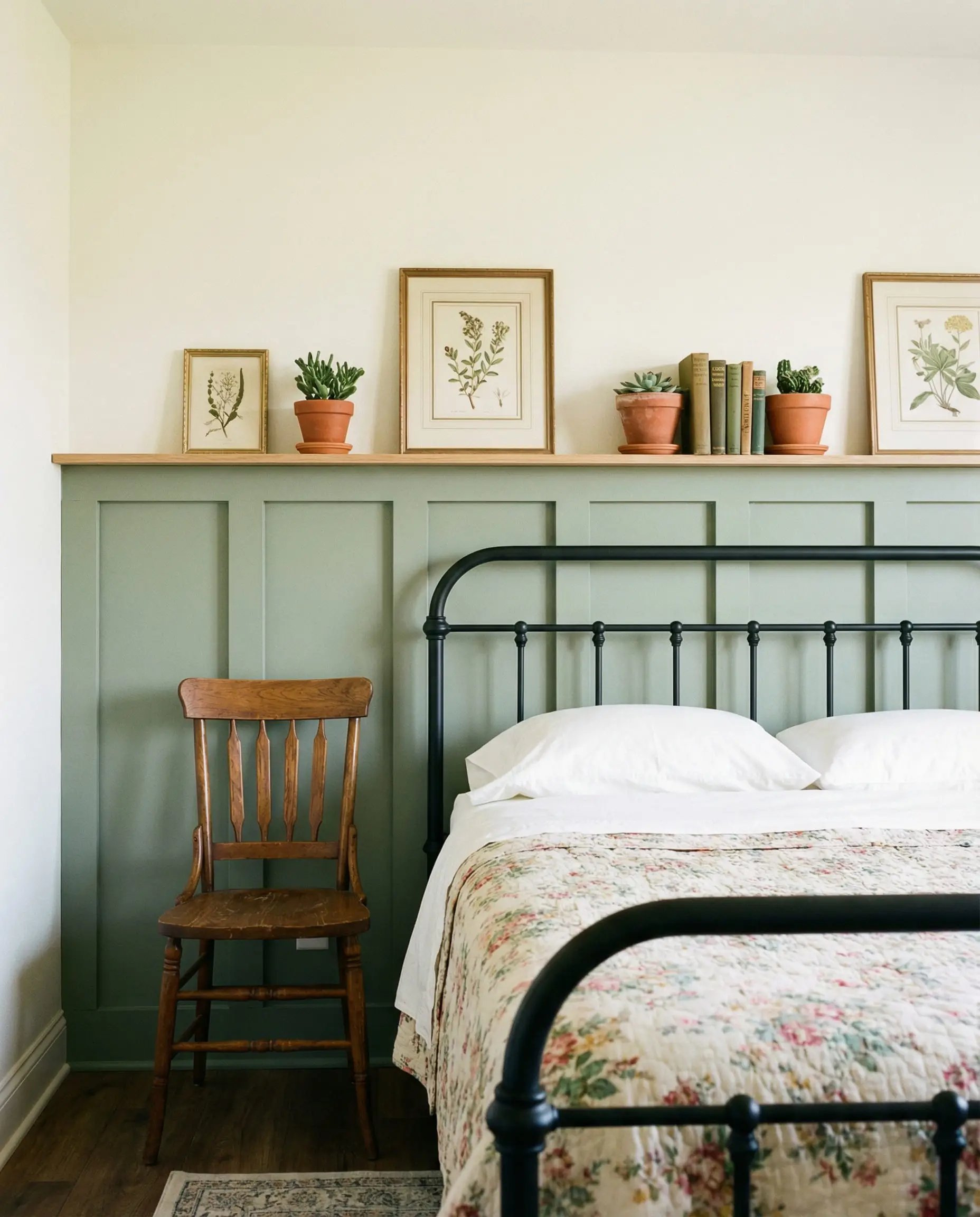
In the bedroom, a board and batten wall behind the bed serves as a massive, integrated headboard. This is a fantastic solution for small rooms where a bulky upholstered headboard might take up too much floor space. By running the texture floor-to-ceiling, you draw the eye up, making the room feel airier.
Bathroom & Powder Room Impact
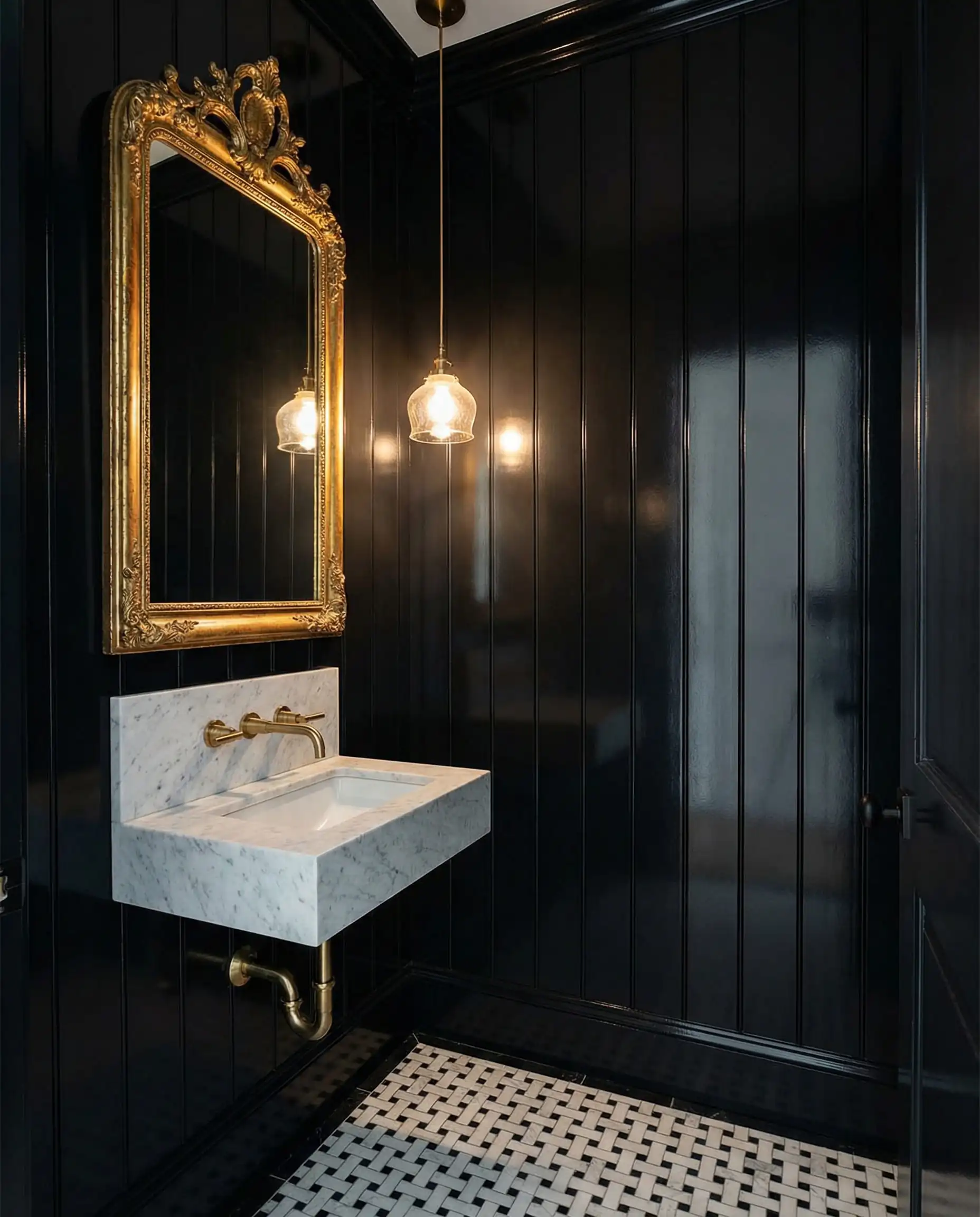
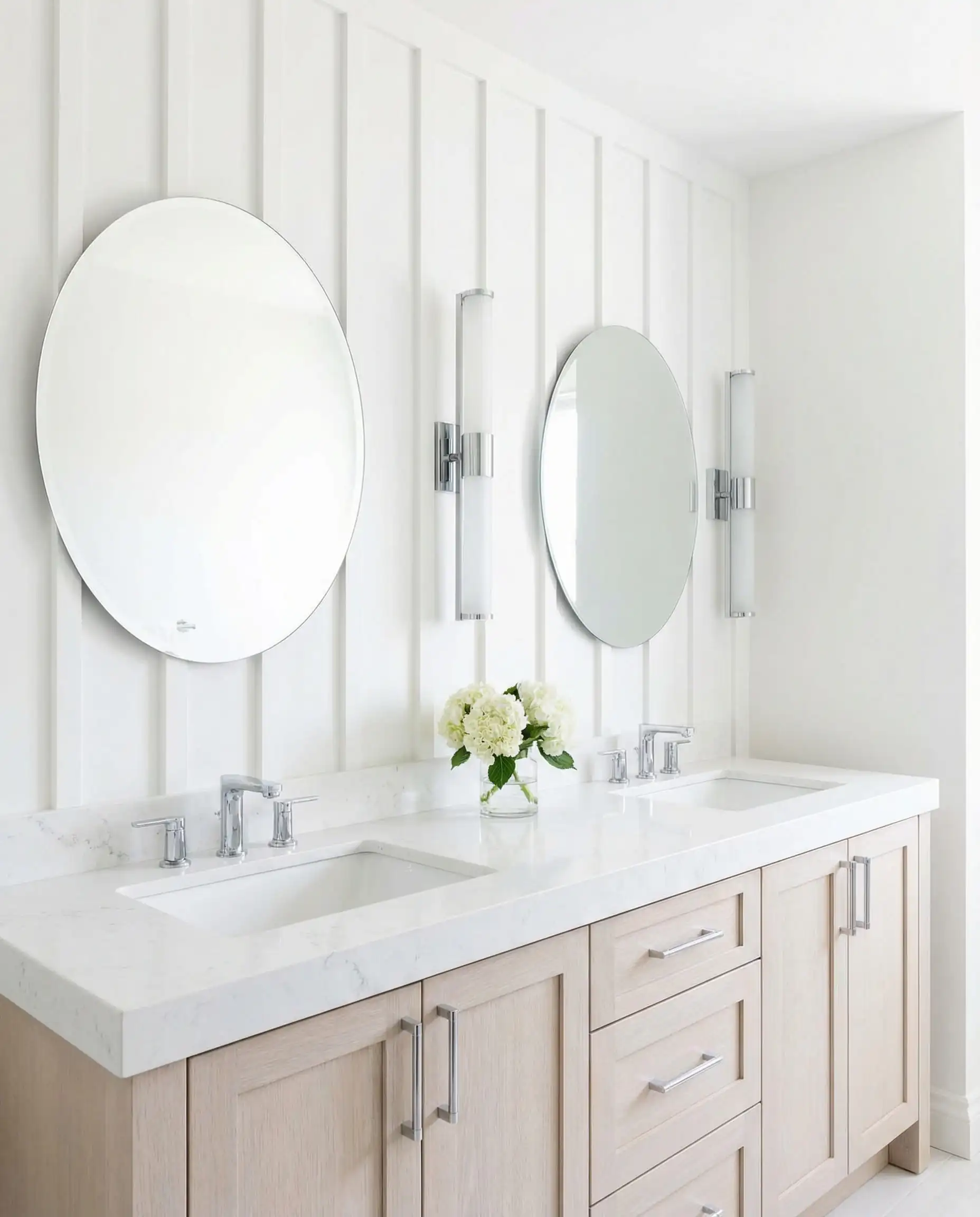
Powder rooms are often small, windowless boxes. Adding texture is the best way to make them feel high-end rather than claustrophobic.
Living Room: Anchoring the Focal Point
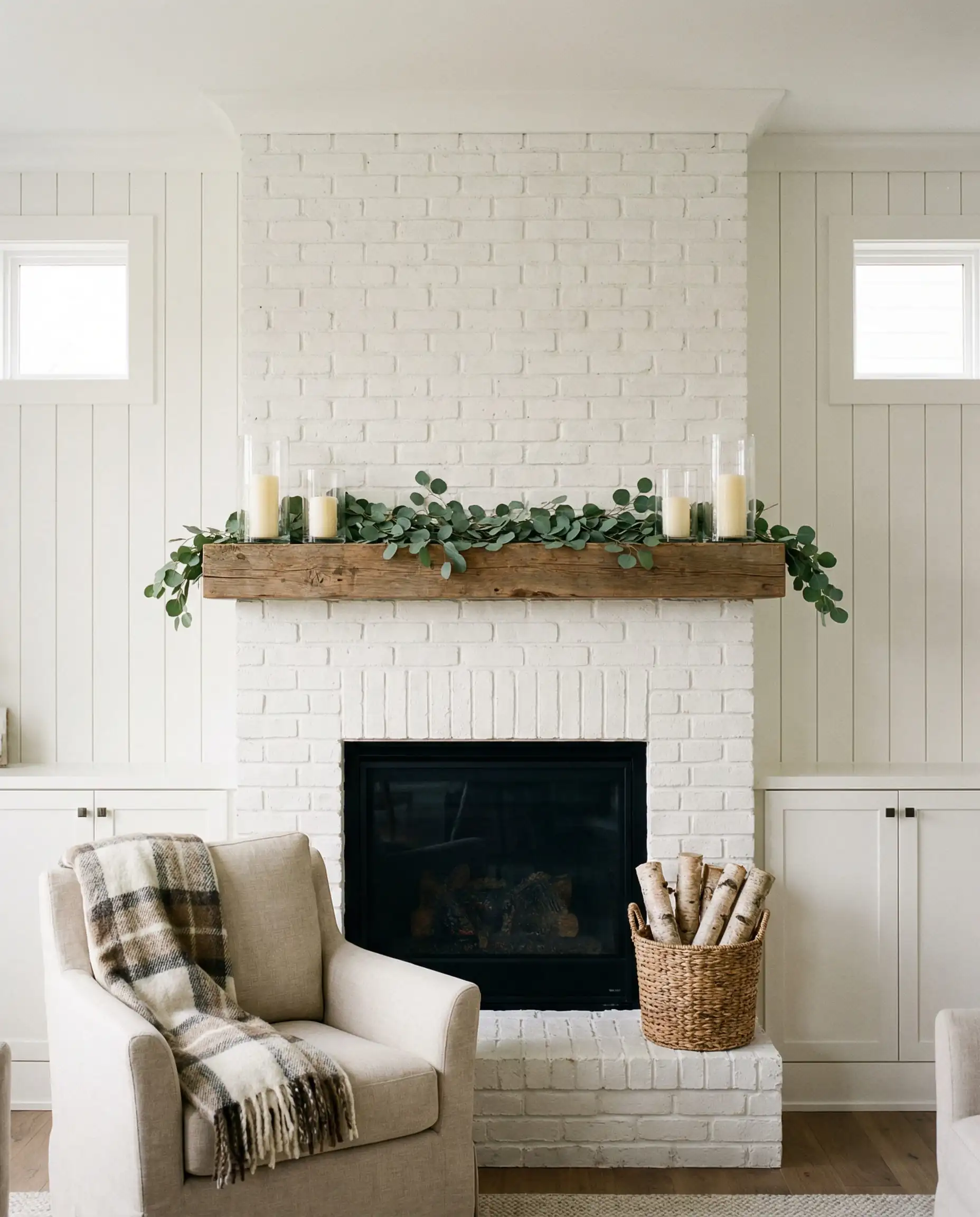
In open-concept homes, the living room can sometimes feel like it’s “floating.” An accent wall anchors the room. The most common application is framing the TV or fireplace.
Color Strategies: Beyond the White Farmhouse Look
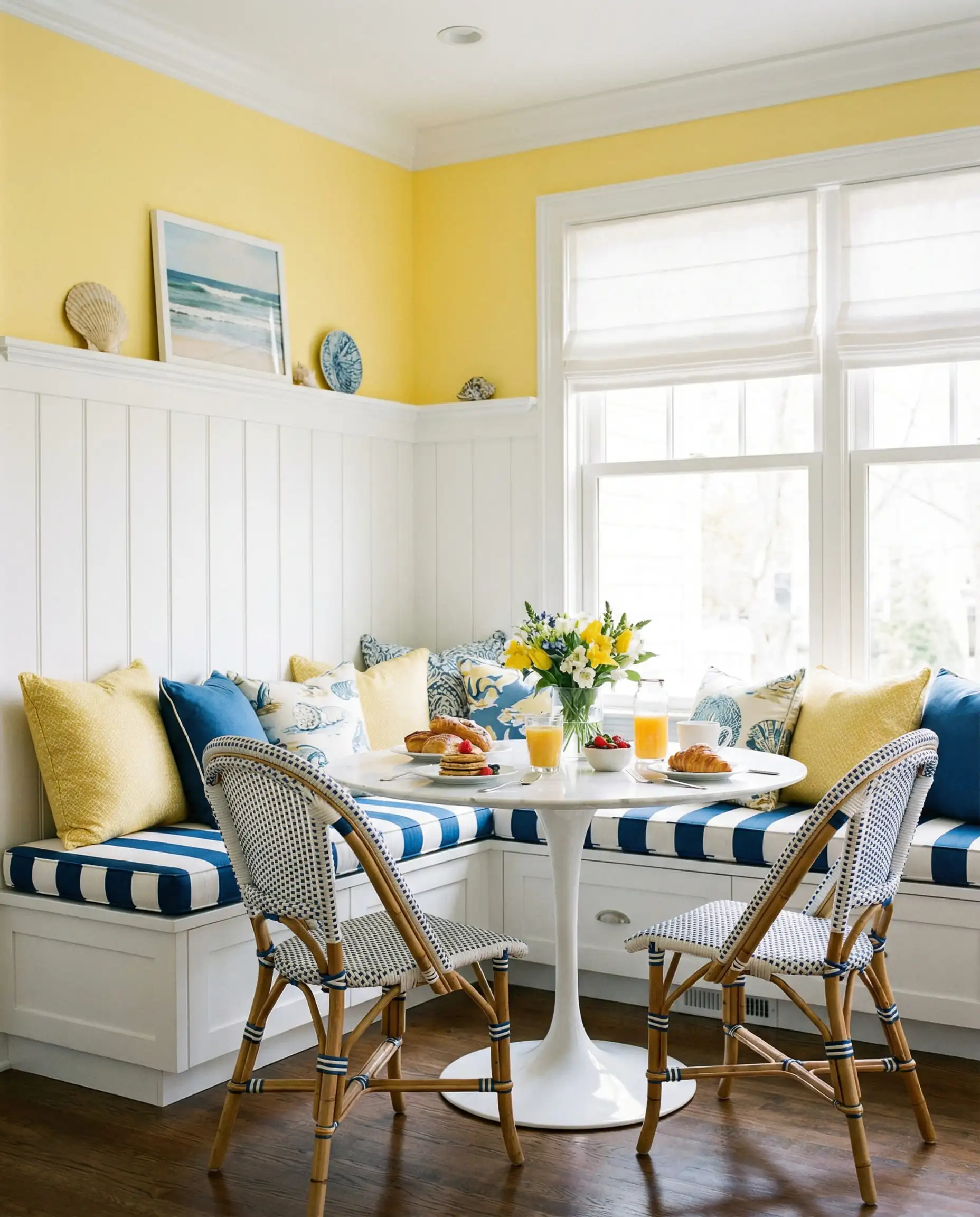
The color you choose dictates the vibe entirely. We are seeing a massive shift away from the stark “white battens on a grey wall” contrast.
Trend Alert: “Color Drenching”
This is the most significant paint trend of the last few years.
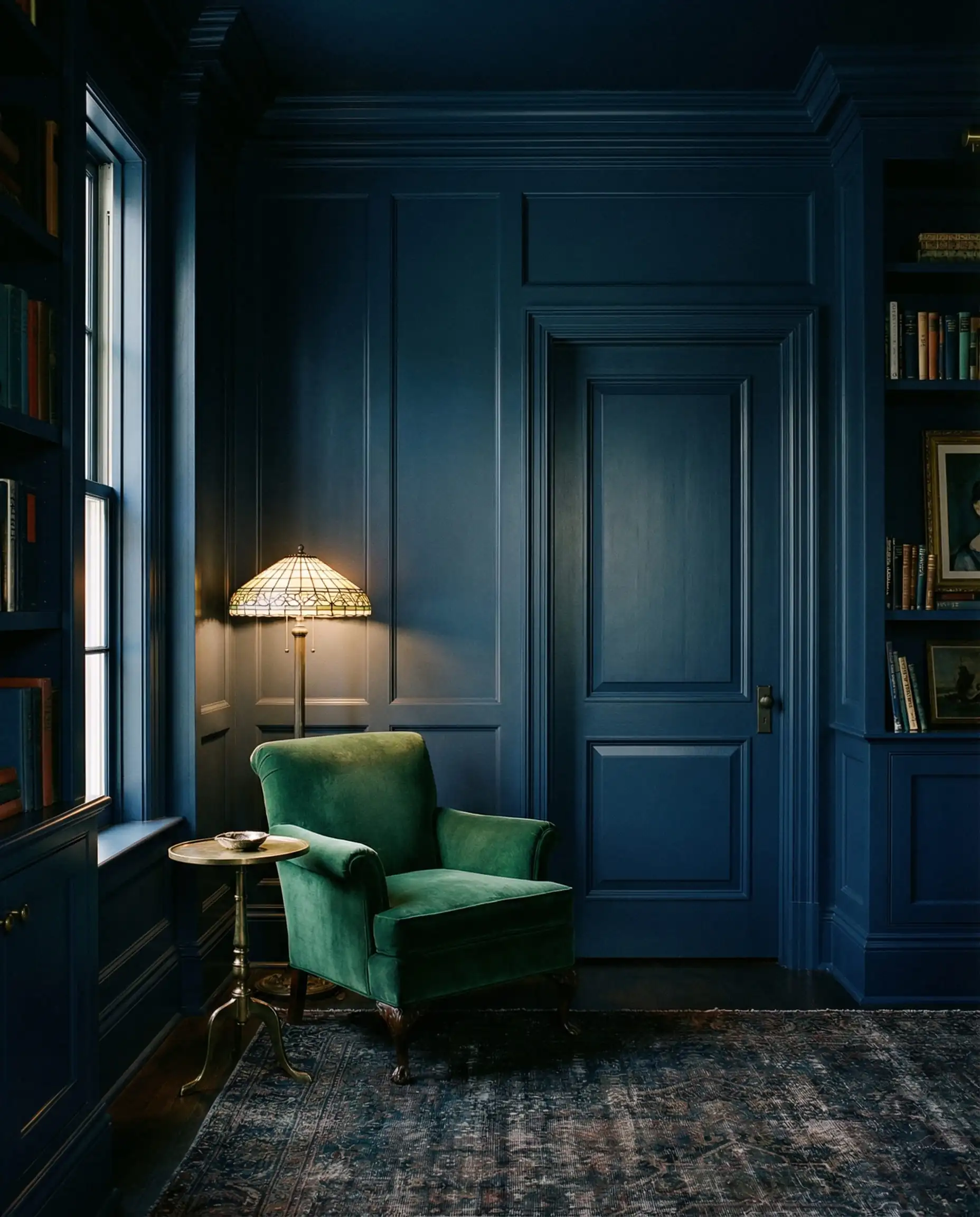
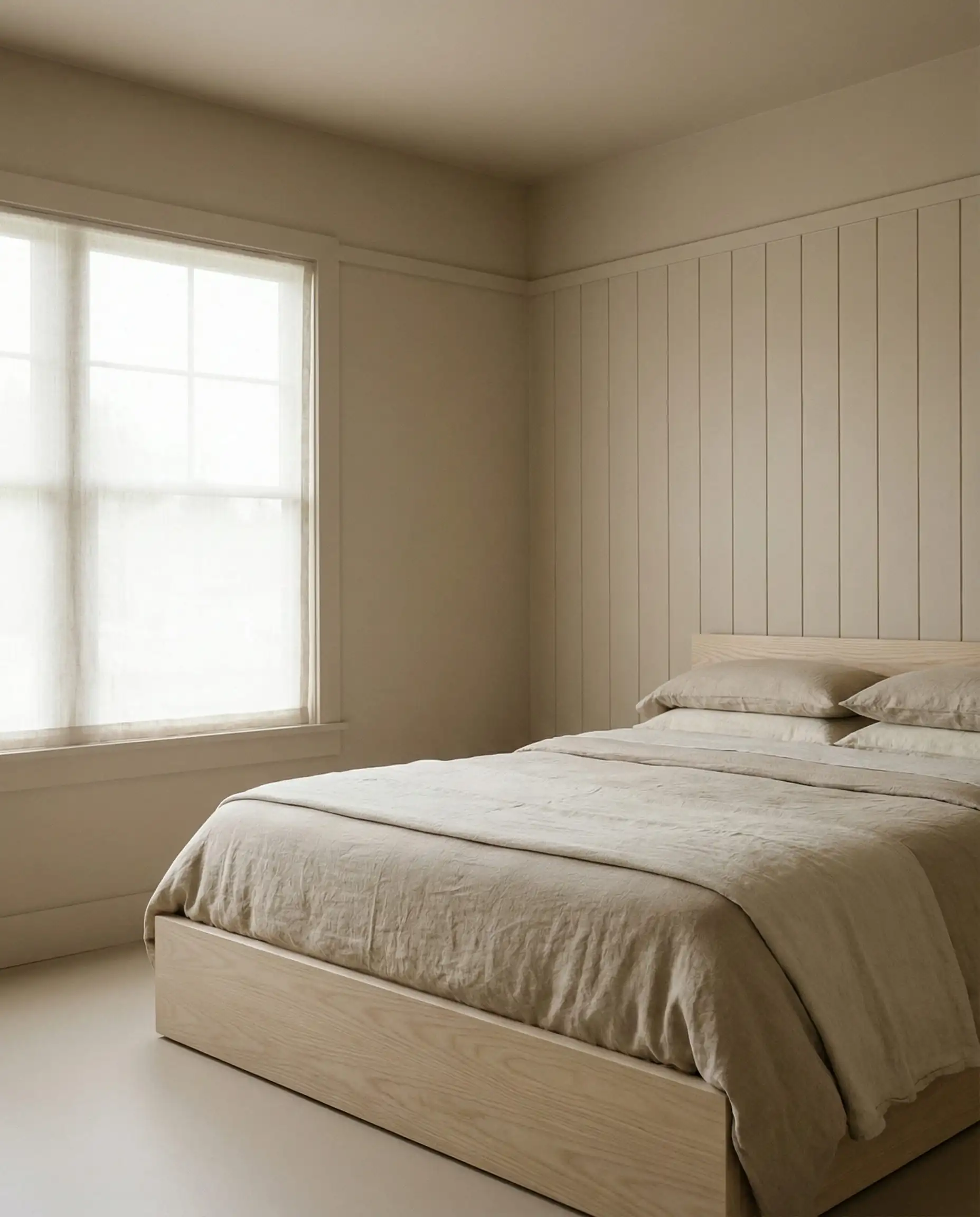
Color Drenching means painting the baseboards, the wall, the battens, the window trim, and the crown molding the exact same color.
Dark & Moody Tones
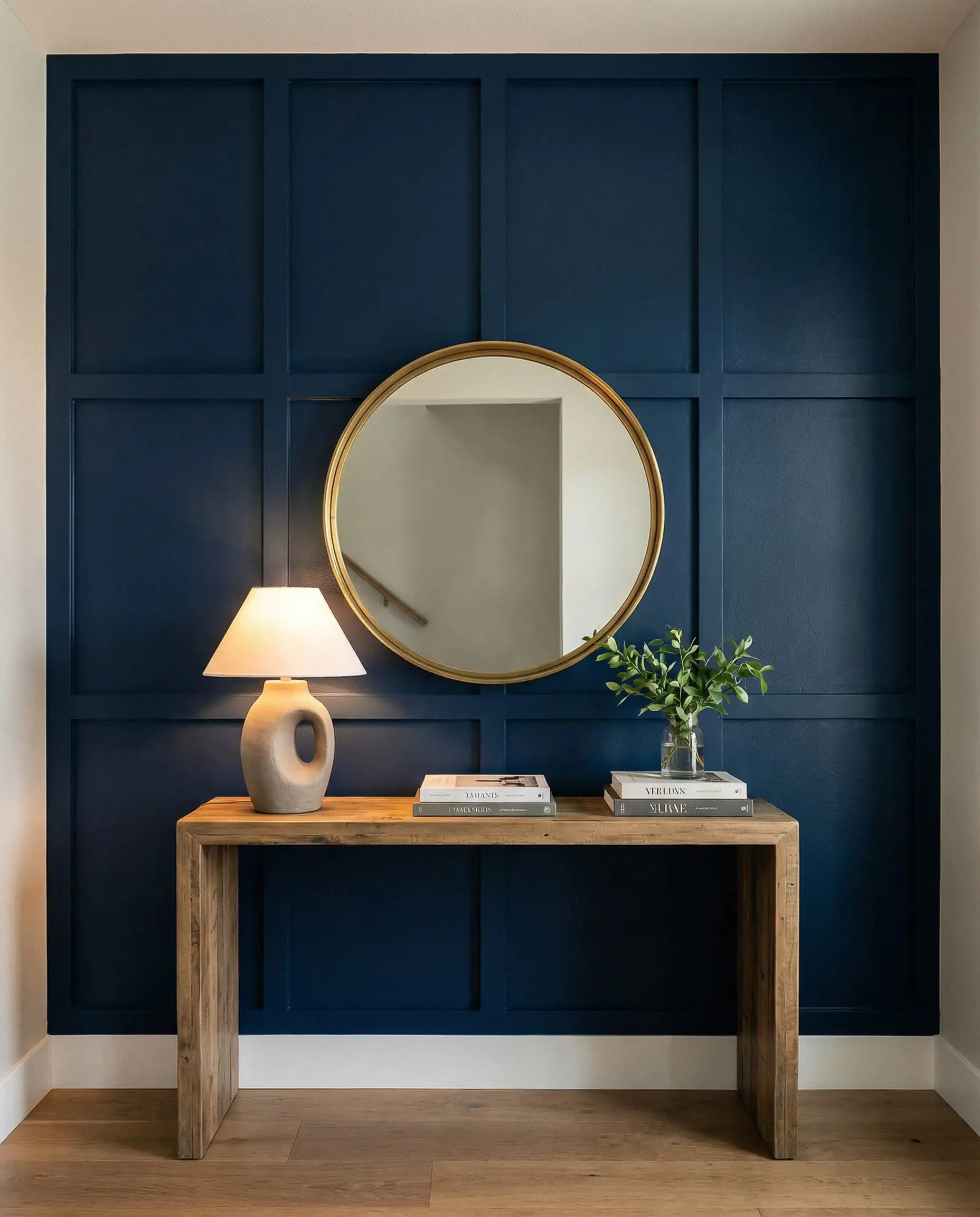
Deep greens, charcoals, navies, and even blacks are the new neutrals for accent walls.
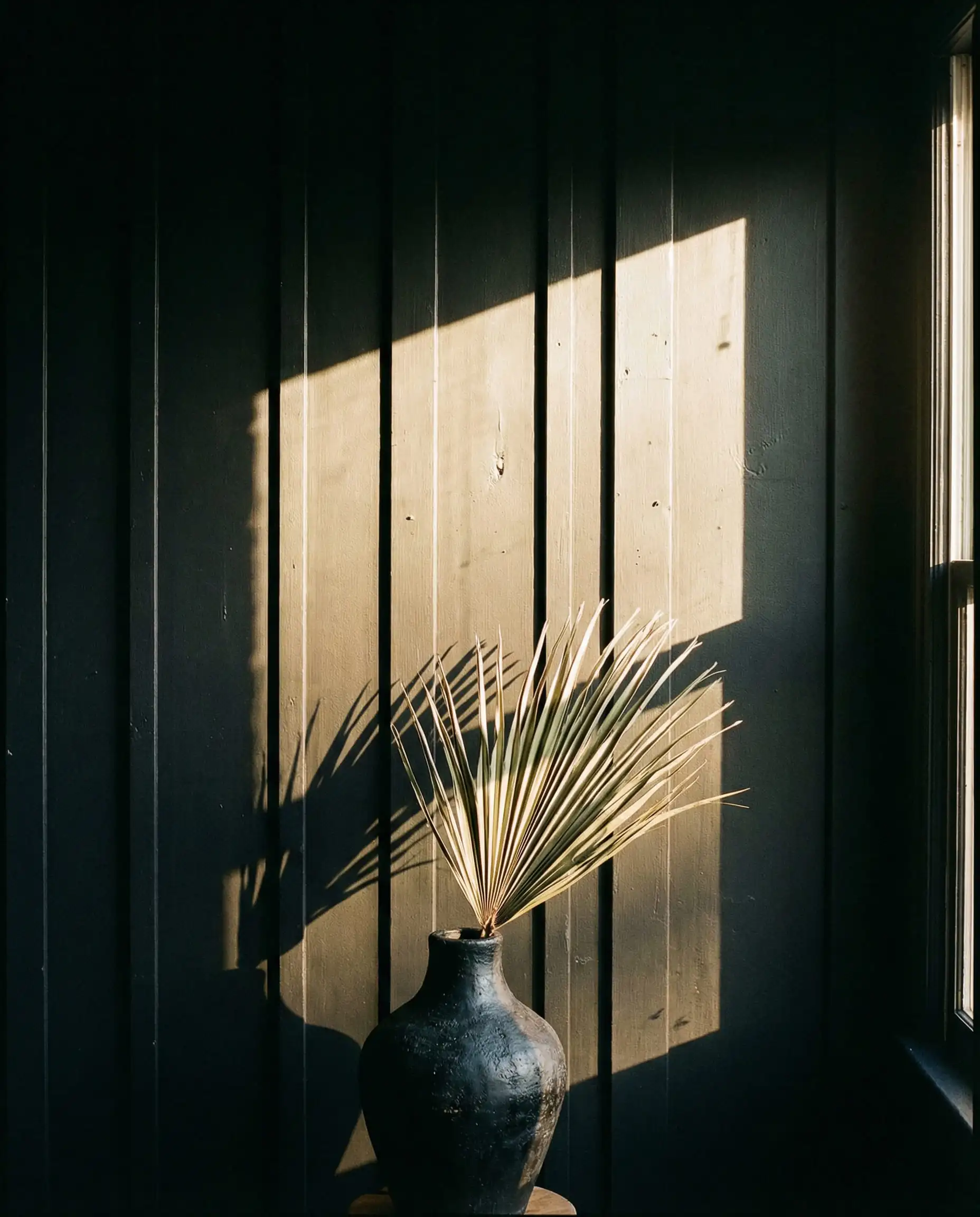
When going dark, choose a Satin or Eggshell finish, not Matte. Dark matte paint shows every scuff mark and fingerprint. Satin is durable and reflects just enough light to highlight the architectural ridges of the battens.
🎨 Hackrea Pro Tip
Classic White & Neutral
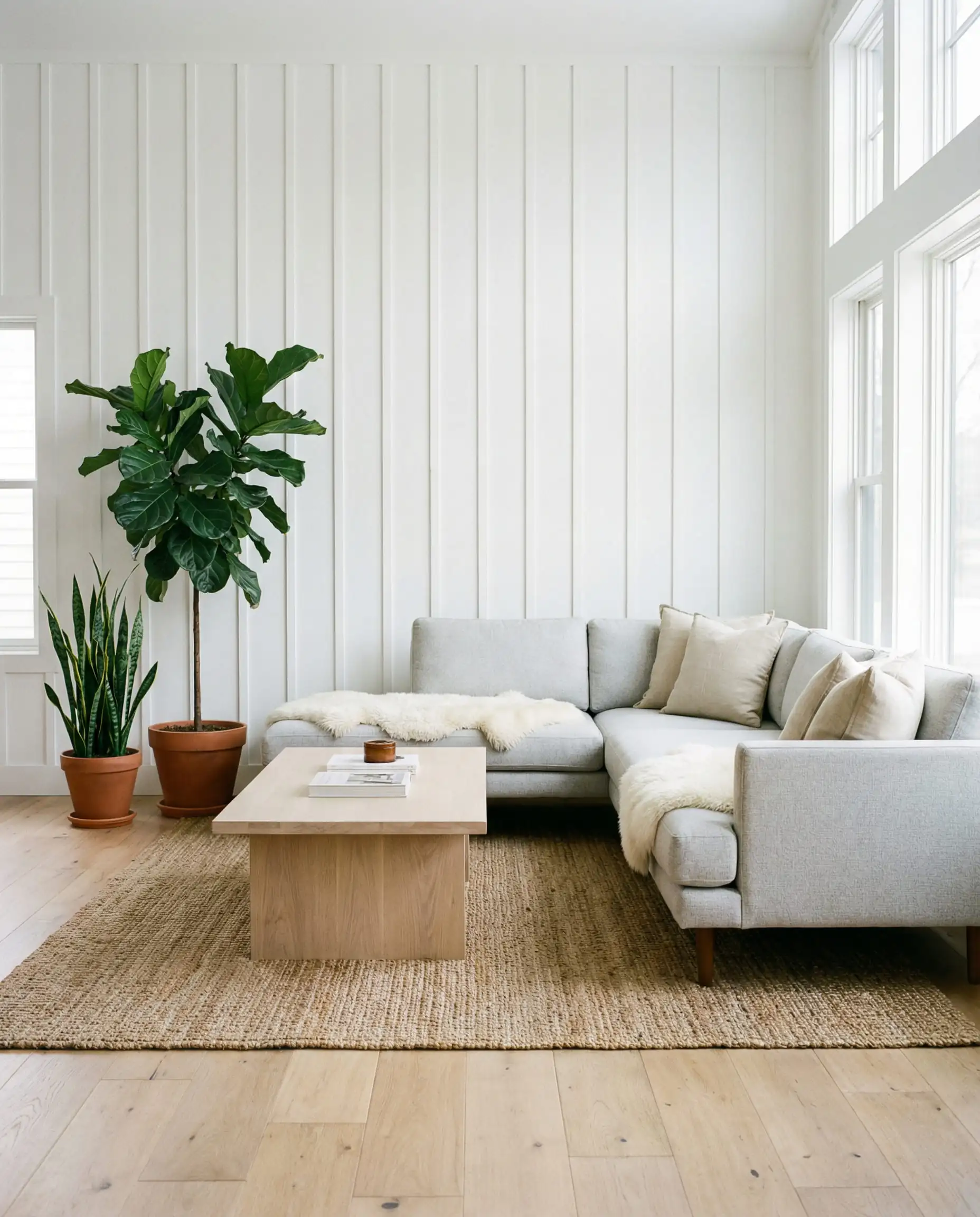
There is still a place for the classic look, especially in coastal or Scandinavian interiors. If you go white, look for warm whites (like Benjamin Moore White Dove) rather than sterile, blue-tinted whites. This keeps the room feeling inviting, not hospital-like.
Planning Your Project: Materials & The Critical Math
This is where the “Doers” separate themselves from the “Dreamers.” Planning is 80% of the work.
Wood Selection: MDF vs. Pine vs. Poplar
What wood should you buy?
| Material | Best For… | Pros | Cons |
| MDF (Pre-primed) | Painted Walls (Best Value) | Perfectly smooth, no knots, stable, cheap. | Cannot be stained. Swells if it gets wet. |
| Common Pine | Rustic/Budget | Very cheap. | Lots of knots, often warped/crooked. Requires heavy sanding. |
| Select Pine/Poplar | Stained Walls | Beautiful grain, straighter boards. | More expensive. |
| PVC / Vinyl | Bathrooms | 100% waterproof. | Expensive, can feel “plastic” if not painted. |
For 90% of interior accent walls, Pre-primed MDF is the winner. It saves you hours of priming time, and because it has no grain, it looks like high-end millwork once painted.
🔨 Hackrea Builder Tip
Texture: Smooth vs. Wood Grain
Do you want the wall to look like drywall with trim (smooth) or like a wood wall (textured)?
The Math: How to Calculate Spacing
This is the part that scares most people, but it’s just a simple formula. You want your “bays” (the empty spaces between boards) to be even.
The Formula:
- Measure Wall Width: (e.g., 120 inches).
- Choose Batten Width: (e.g., 2.5 inches).
- Guess Number of Battens: Let’s say you want 7 battens (don’t forget the ones in the corners!).
- Calculate Total Batten Width: 7 battens x 2.5 inches = 17.5 inches of wood.
- Calculate Remaining Space: 120 (Wall) – 17.5 (Wood) = 102.5 inches of empty space.
- Calculate Gap Size: Divide the empty space by the number of “bays” (Note: usually the number of battens minus 1, depending on your corner setup).
- 102.5 / 6 spaces = 17.08 inches apart.
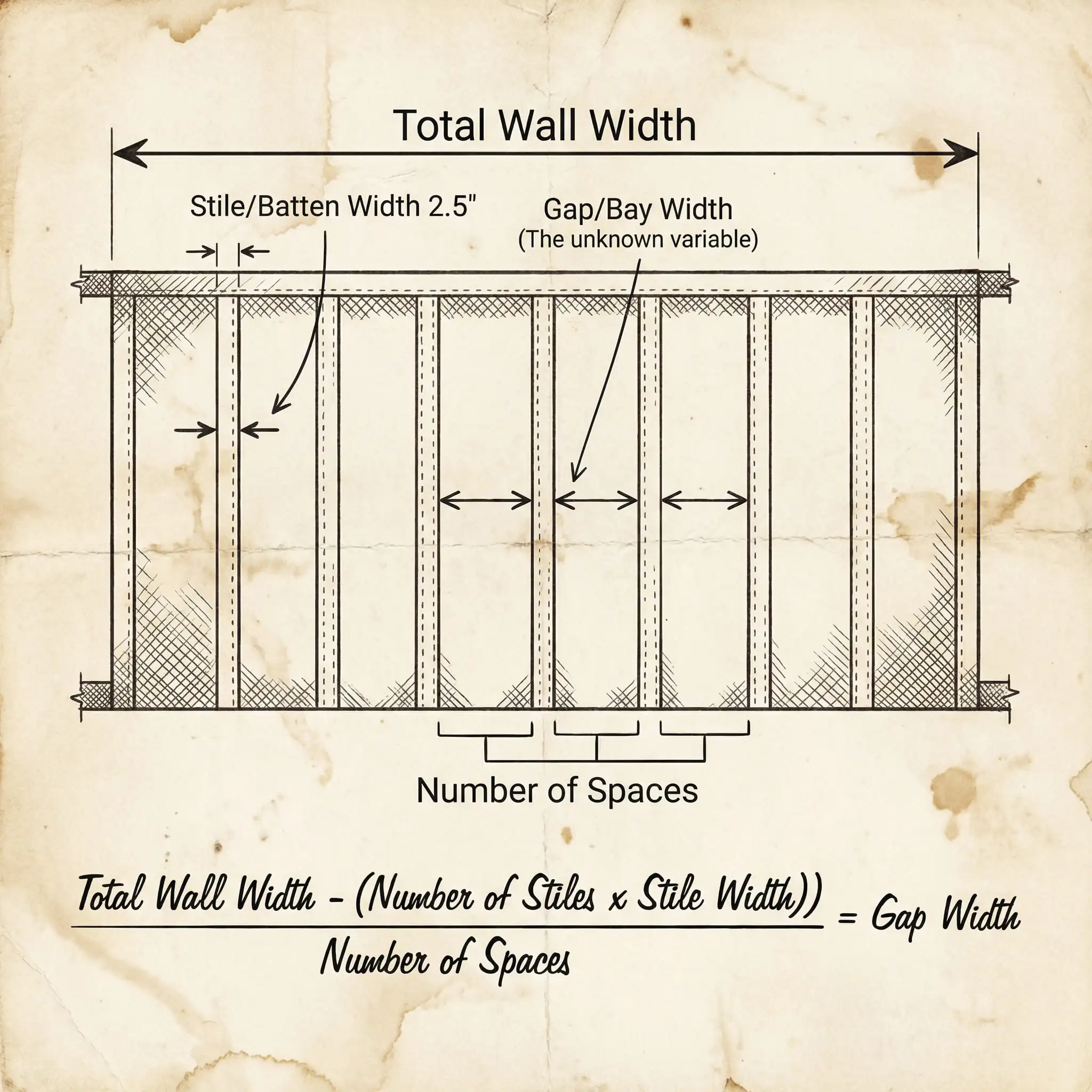
If the number feels too wide or too narrow, adjust the number of battens and recalculate. Ideally, spacing for a standard wall is between 12 and 18 inches.
Important
DIY Installation Overview: The Roadmap to Success
We have a dedicated deep-dive tutorial on installation, but here is the high-level roadmap to ensure you understand the scope of work.
Step 1: Prep and Prime
Remove existing baseboards (or plan to rest your battens on top of them for a “wainscoting” look). Locate your studs. If you are painting the wall a new color, roll two coats of paint on the flat wall now. It is much harder to roll paint once the battens are up.
Step 2: The Horizontal Frame
Install your top horizontal board (if doing a half-wall) and your bottom board (baseboard). Use a level. If your floor is uneven, your baseboard should follow the floor, but your top rail must be perfectly level.
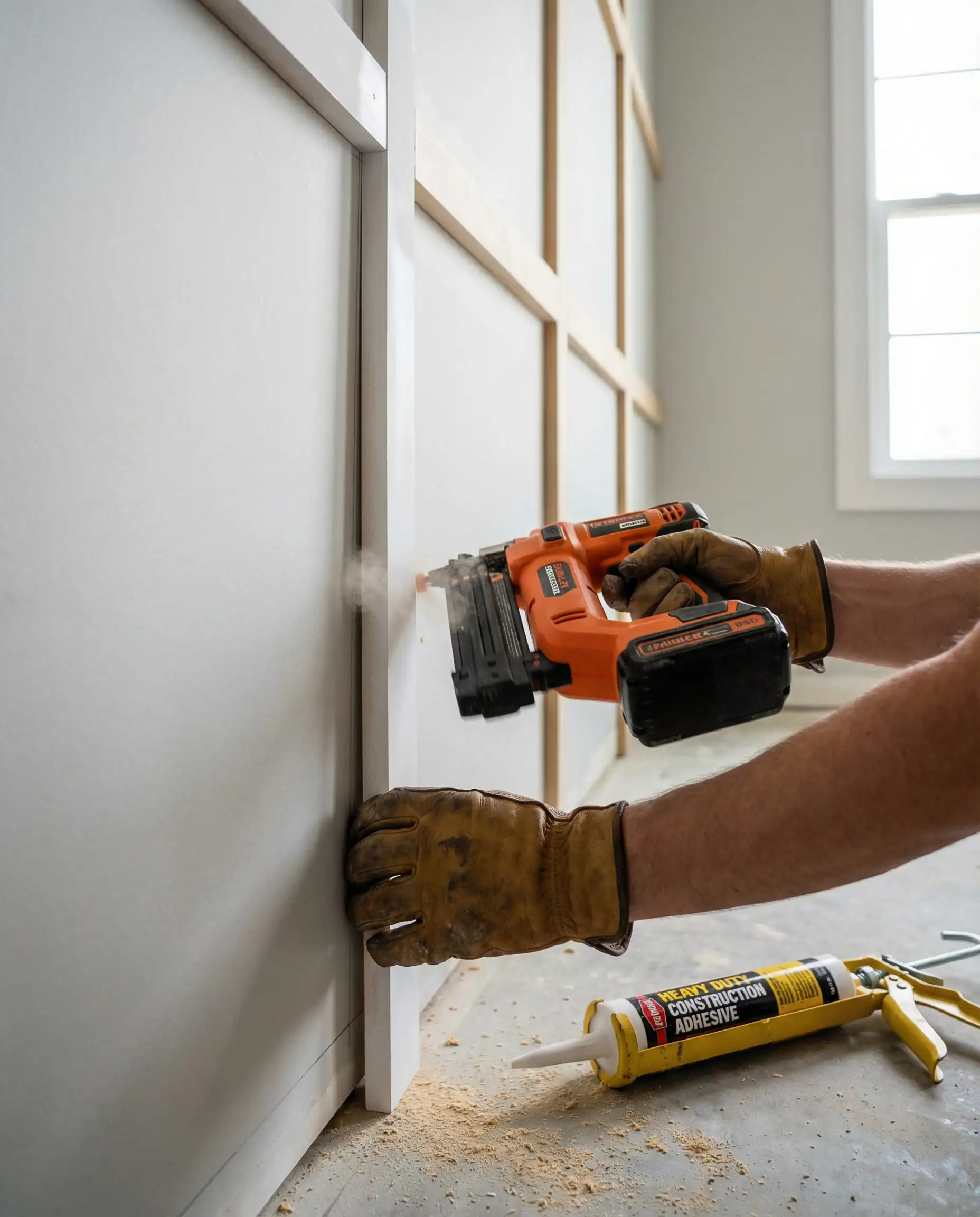
Step 3: Vertical Installation
Cut your vertical battens to size.
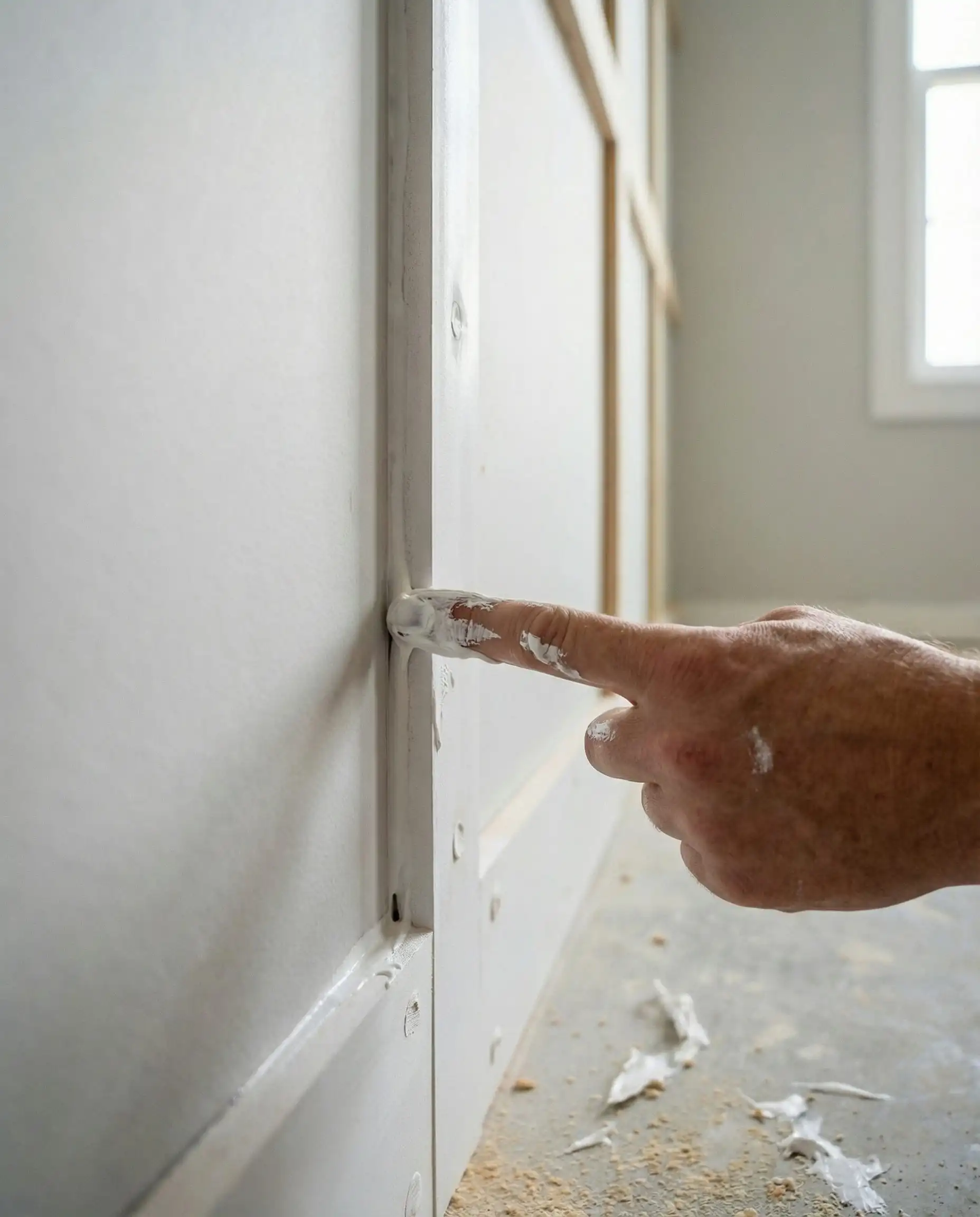
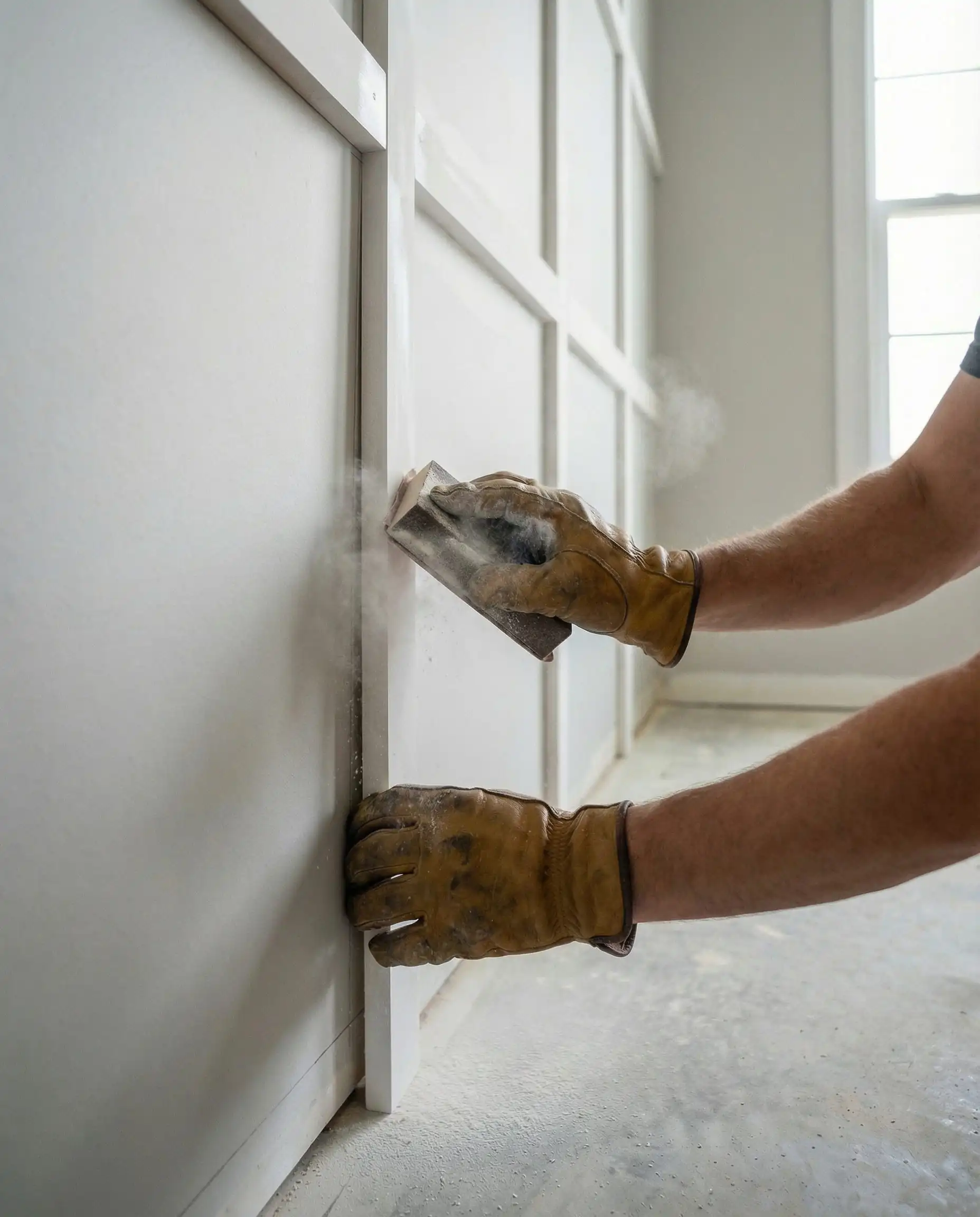
Step 4: The Secret Sauce (Finishing)
This is the step beginners skip, and it ruins the look.
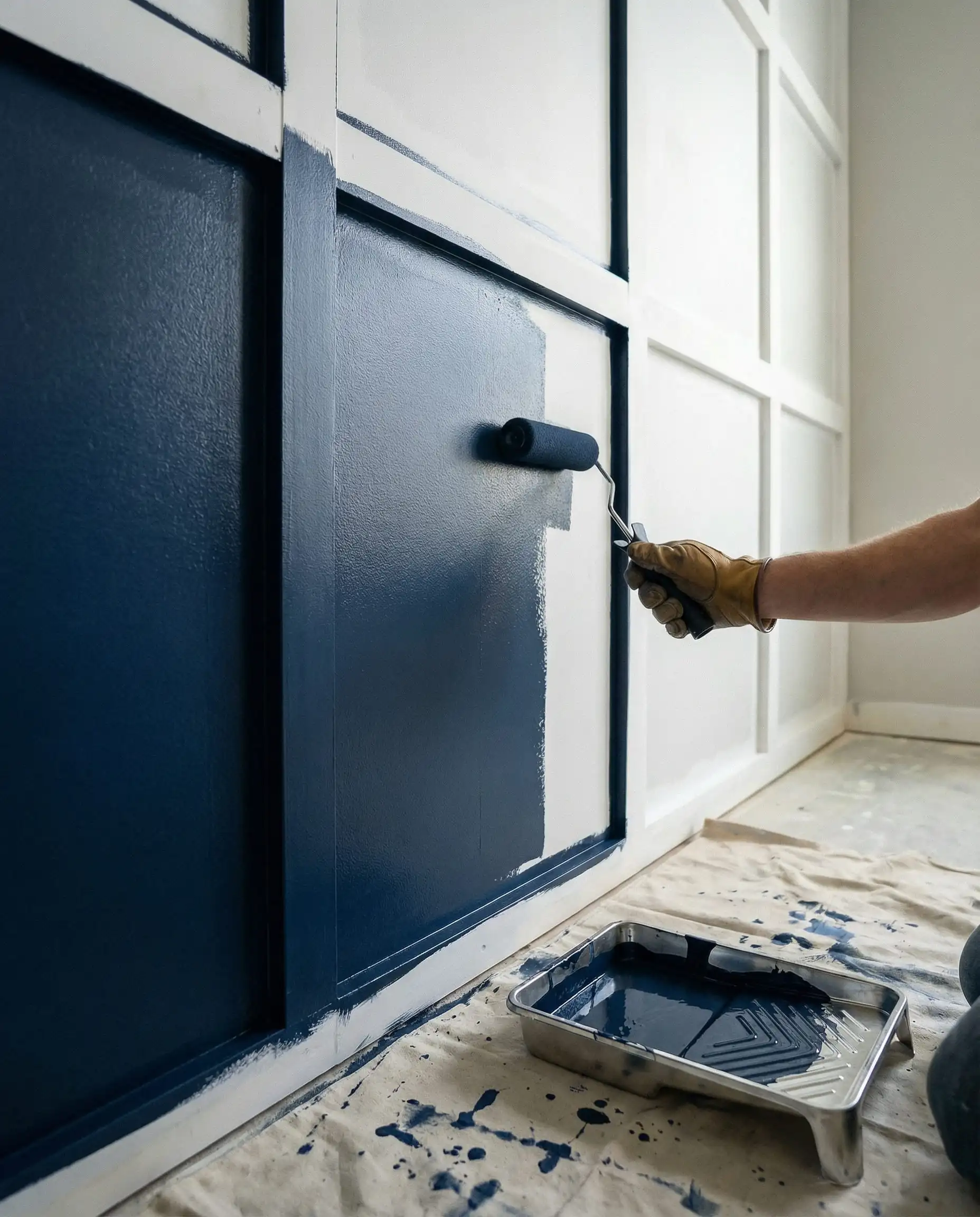
Step 5: Final Paint
Brush paint the trim and roll the spaces between.
You are done!
Frequently Asked Questions (FAQ)
A: For the cleanest look, yes. You should remove the old baseboard and replace it with a 1×4 or 1×6 board that matches the depth of your new vertical battens. However, if your existing baseboard is flat (square edge), you can stack the battens right on top.
A: Yes, but the texture will be visible in the “bays.” If your texture is subtle, the paint will hide a lot of it. If it is heavy texture, consider skim-coating the wall or covering it with thin hardboard first.
A: The standard is usually 1×2 (actual 1.5″ wide), 1×3 (actual 2.5″ wide), or 1×4 (actual 3.5″ wide). For a modern grid look, thinner 1×2 strips are popular. For a chunky farmhouse look, go with 1×4.
A: It is surprisingly affordable. For a standard 10×8 foot wall, using MDF strips and paint, the materials usually cost between $150 and $250. Using premium solid wood will double or triple that price.
Final Thoughts: Just Start!
The board and batten accent wall is the ultimate confidence builder for DIYers. It requires minimal tools (a saw, a level, and a nail gun), it’s forgiving of mistakes (caulk hides everything), and the visual payoff is massive.
Whether you go for a moody, color-drenched library look or a bright, functional entryway with hooks, you are adding tangible value and character to your home.
Ready to get started? Grab a tape measure, sketch out your grid, and head to the lumber yard. Your boring wall is begging for a makeover.