A successful zen garden is not an exercise in emptiness; it is a masterclass in deliberate spatial tension. The modern adaptation of the karesansui (dry landscape) relies on the architectural principle of ma—the physical harnessing of negative space to create visual weight and flow. When you strip away the chaotic underbrush of a traditional yard, every remaining boulder, raked line, and shadow becomes a highly calculated focal point.
Whether you are dealing with a sprawling brutalist courtyard or a tight urban footprint, mastering this aesthetic requires strict material discipline. Here are 24 tangible ways to execute this low-maintenance, high-impact landscape architecture in your own space.
The Material Science of “Sand” The fastest way to ruin a dry landscape is using standard play sand or beach sand. It blows away in a mild breeze, attracts neighborhood cats, and immediately loses its raked lines after a light rain. Professional hardscaping demands 2mm to 3mm crushed granite, often referred to as Shirakawa-suna. The angular edges of crushed stone lock together under the weight of a rake, providing the structural integrity required to hold crisp, geometric shadows.
Hackrea Designer Callout
Groundwork and Aggregate Surfaces
The aggregate base serves as the “water” in a dry landscape, establishing the foundation of the space. Achieving this fluid illusion requires highly specific hardscape textures and rigid boundaries to ensure the spatial flow reads correctly.
1. Swap Traditional Sand for Crushed Granite
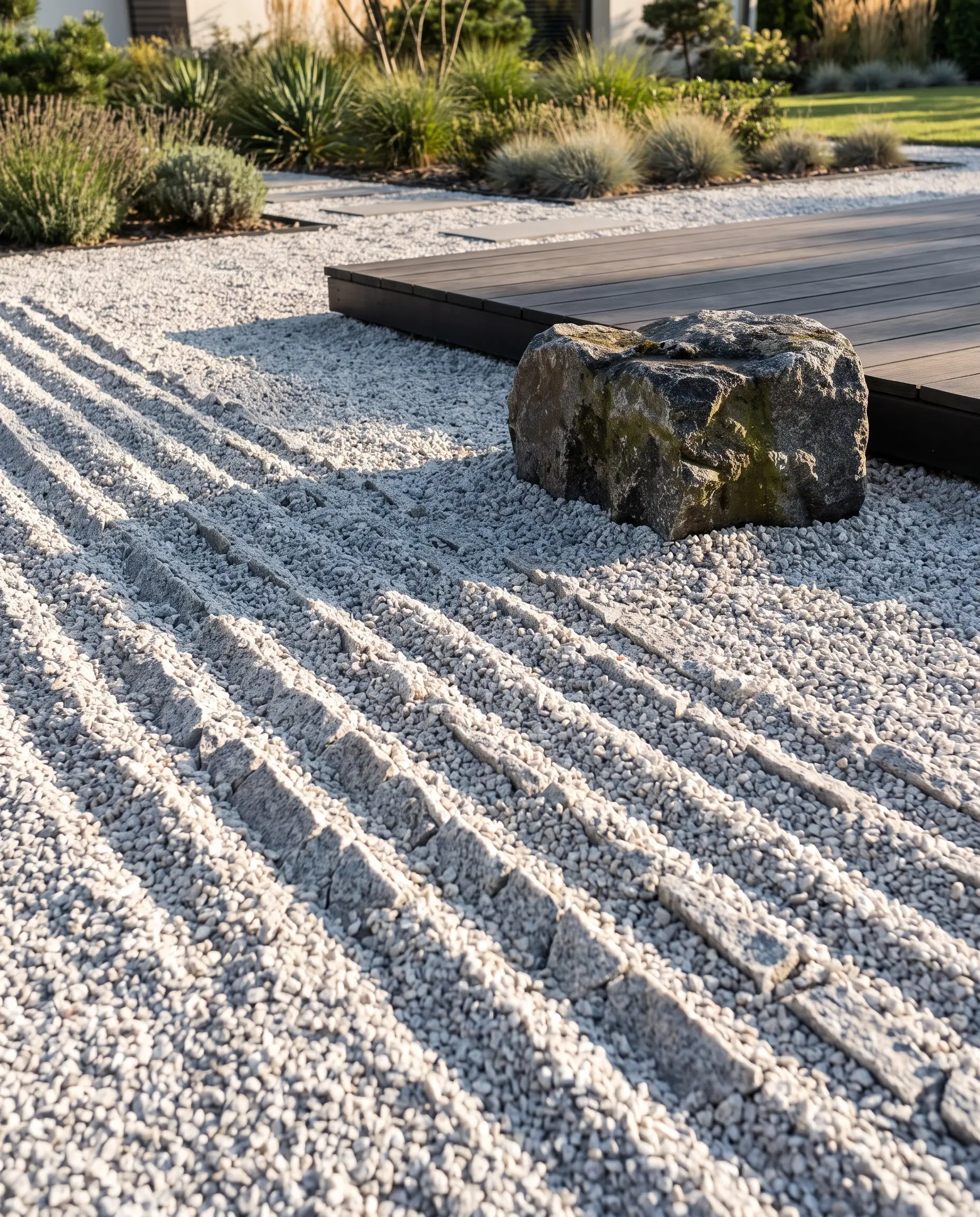
The tactile nature of your ground cover dictates the entire sensory experience of the yard. Angular crushed stone absorbs light and creates high-contrast shadows when raked, providing a rigid, architectural texture that soft sand simply cannot achieve.
- Vibe: Grounded, structural, and visually heavy.
- Architectural Spec: Source 2mm to 3mm crushed white or gray granite.
- Styling Pro-Tip: Always lay a commercial-grade, permeable weed barrier directly beneath the gravel to prevent organic contamination of the pristine surface.
2. Define Borders with Clean Steel Edging
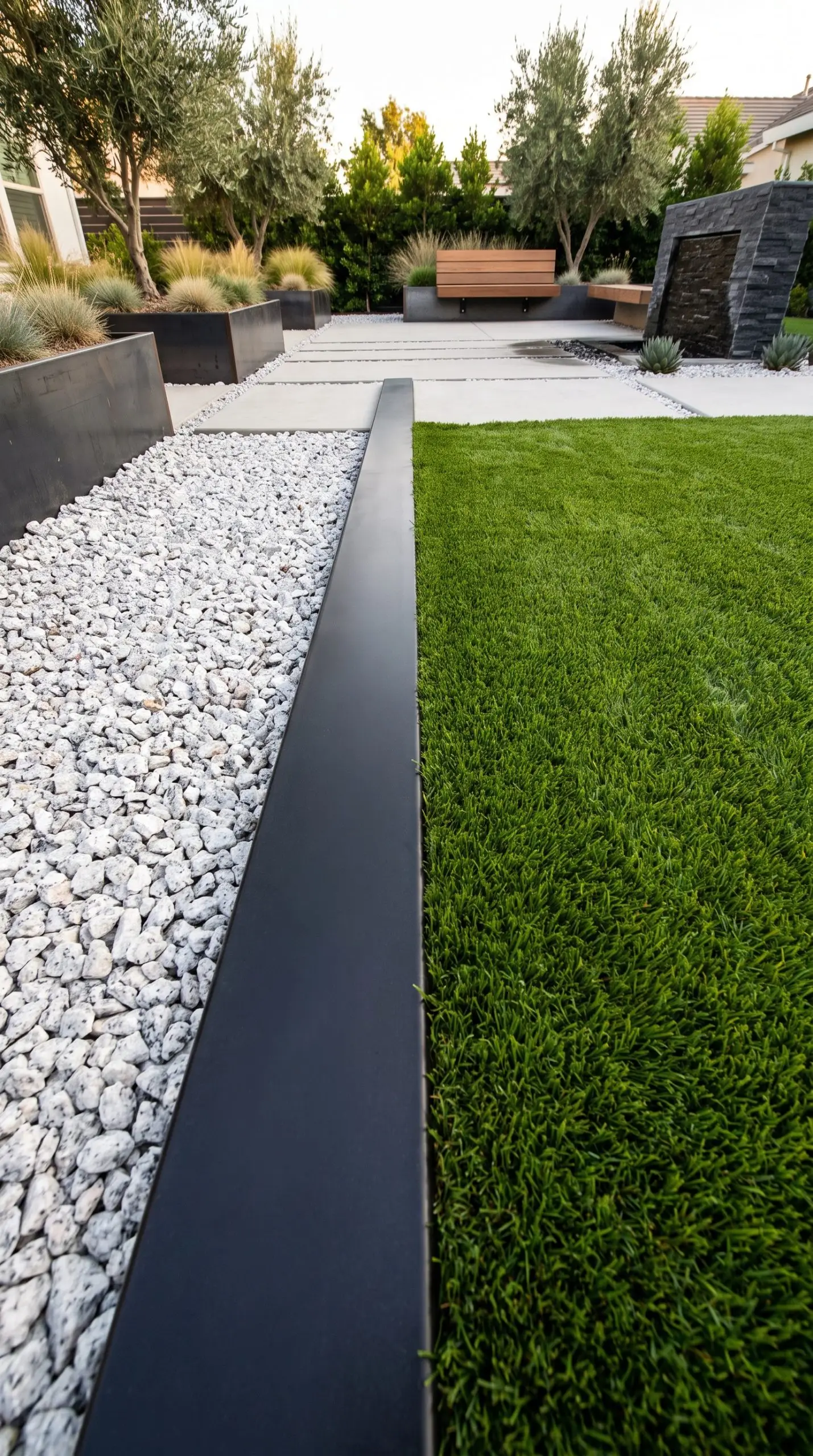
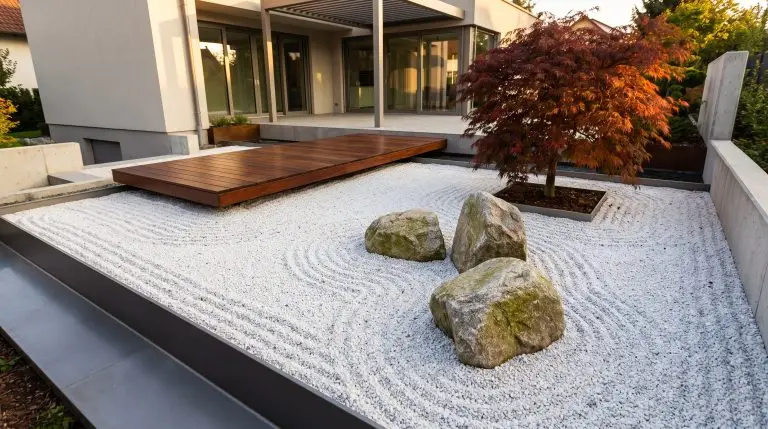
Minimalist design relies on razor-sharp transitions between materials. Flimsy plastic edging warps over time, destroying the calculated geometry of your hardscape.
- Vibe: Industrial precision meets organic flow.
- Key Materials: Corten steel or heavy-gauge matte black aluminum.
- Styling Pro-Tip: Sink the edging so only the top quarter-inch is visible, creating a flush, invisible barrier that keeps the aggregate perfectly contained.
3. Rake Linear Patterns to Elongate Narrow Yards
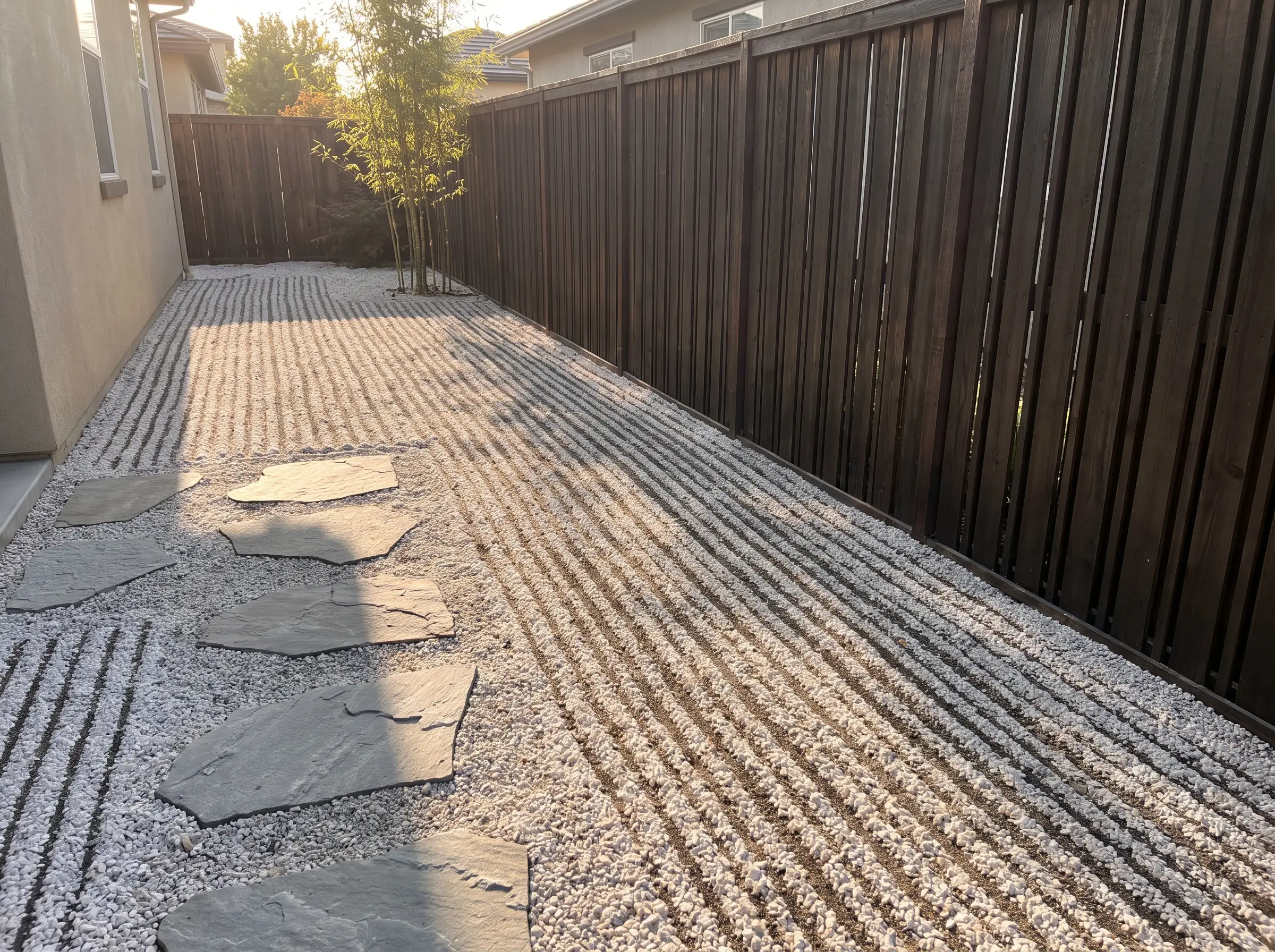
The physical act of raking samon (patterns) is a powerful spatial tool. Running long, unbroken linear lines parallel to your property boundary forces the eye outward, making a cramped yard feel significantly deeper.
- Vibe: Expansive, linear, and deeply rhythmic.
- Key Materials: A specialized, wide-toothed wooden landscaping rake.
- Styling Pro-Tip: Pull the rake from your shoulder rather than your wrists to ensure perfectly straight, uninterrupted channels.
4. Introduce Circular Samon Ripples Around Anchor Stones
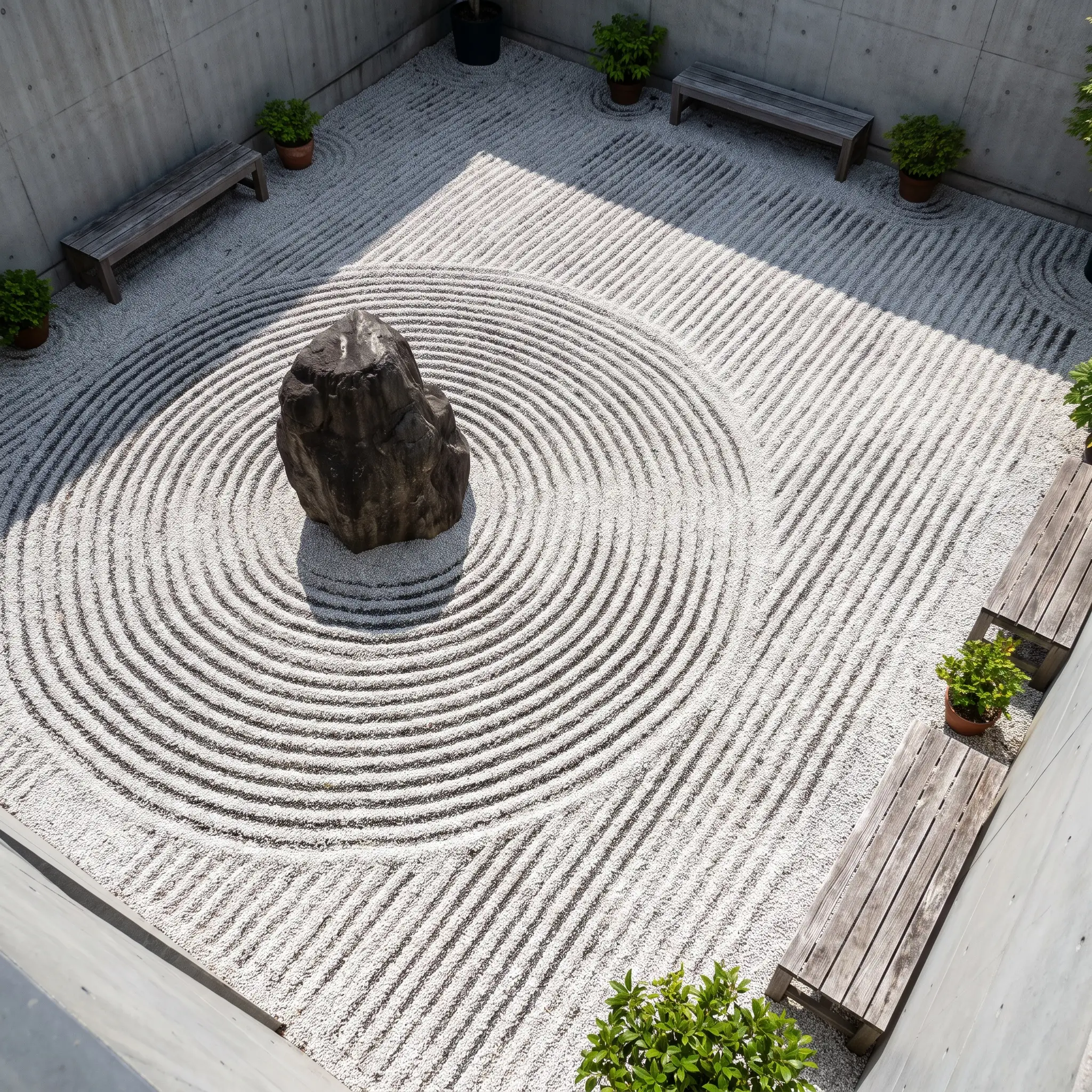
Contrast is the lifeblood of restraint. By disrupting linear raked lines with tight, concentric circles around your boulders, you simulate the visual kinetic energy of water droplets hitting a still pond.
- Vibe: Kinetic, focused, and meditative.
- Architectural Spec: Maintain a consistent 2-inch gap between the teeth of your rake to ensure the ripples cast uniform shadows.
- Styling Pro-Tip: Start the circular rake tight against the base of the stone and work outward, seamlessly blending the final ring into the surrounding linear pattern.
5. Construct Raised Wooden Walkways over Gravel Beds
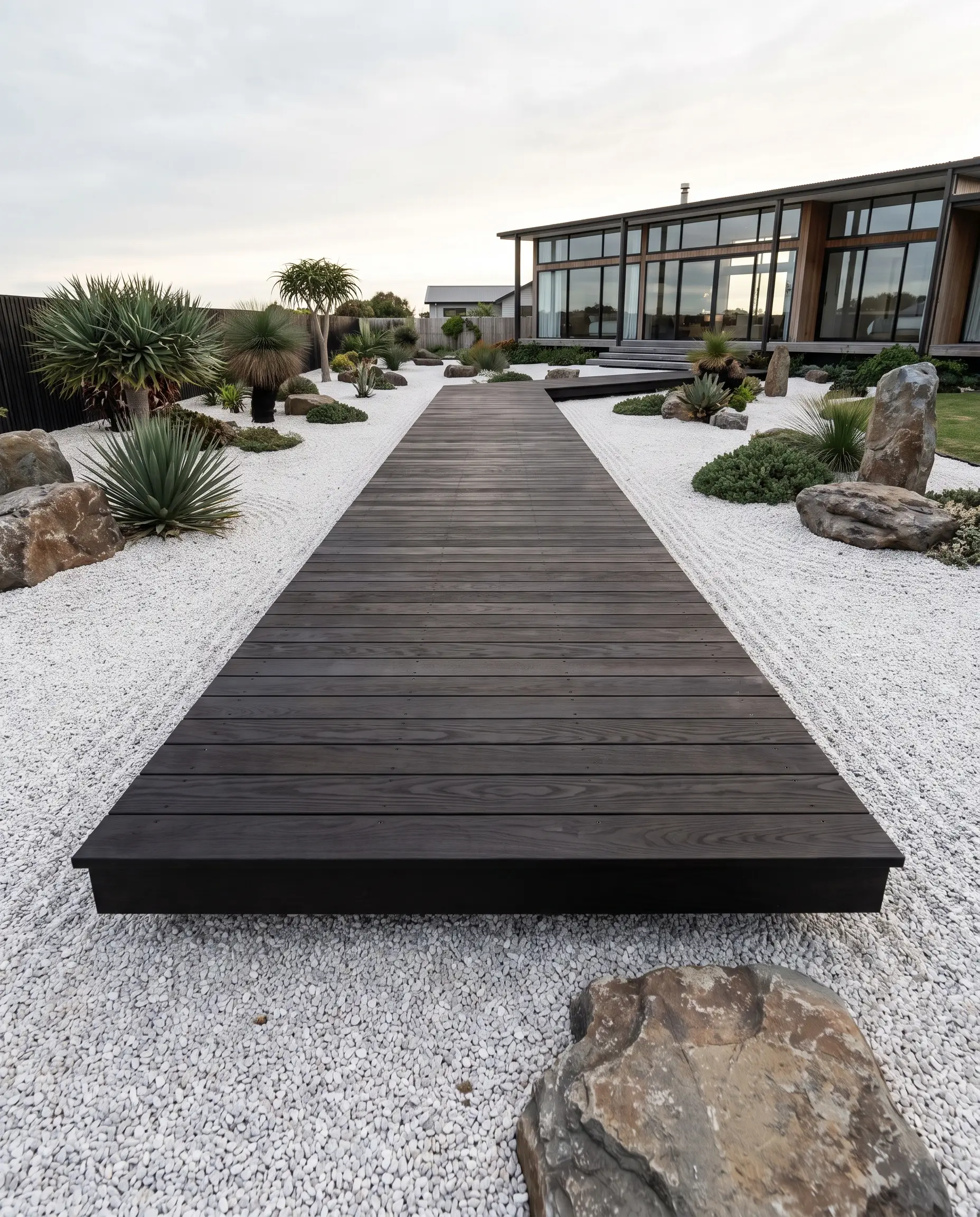
Suspending a rigid, linear path just inches above the aggregate introduces a striking tactile contrast. This floating architecture protects your raked patterns while dictating exactly how guests navigate the negative space.
- Vibe: Bespoke, structural, and modern.
- Key Materials: Rot-resistant decking timbers like Ipe, teak, or thermally modified ash.
- Exterior Stain Match: Sherwin-Williams WoodScapes in “Black Oak”.
- Styling Pro-Tip: Hide the structural footings entirely beneath the gravel line so the planks appear to hover weightlessly.
The Architecture of Stone: Rock Placements and Formations
If the aggregate is the water, the rocks are the structural bones and mountain peaks of the garden. Throwing stones randomly across a yard creates visual clutter; employing precise geometric ratios establishes profound spatial calm.
The Golden Ratio of Hardscaping Before committing to heavy lifting, map out your boulder groupings. Drive a wooden stake into your proposed center point and use a length of rope to mark out an asymmetrical, scalene triangle. This ensures your rock placements follow natural geometric proportions rather than rigid, artificial grids.
Hackrea Spatial Tip
6. Anchor the Space with a Triadic Sanzon-seki Arrangement
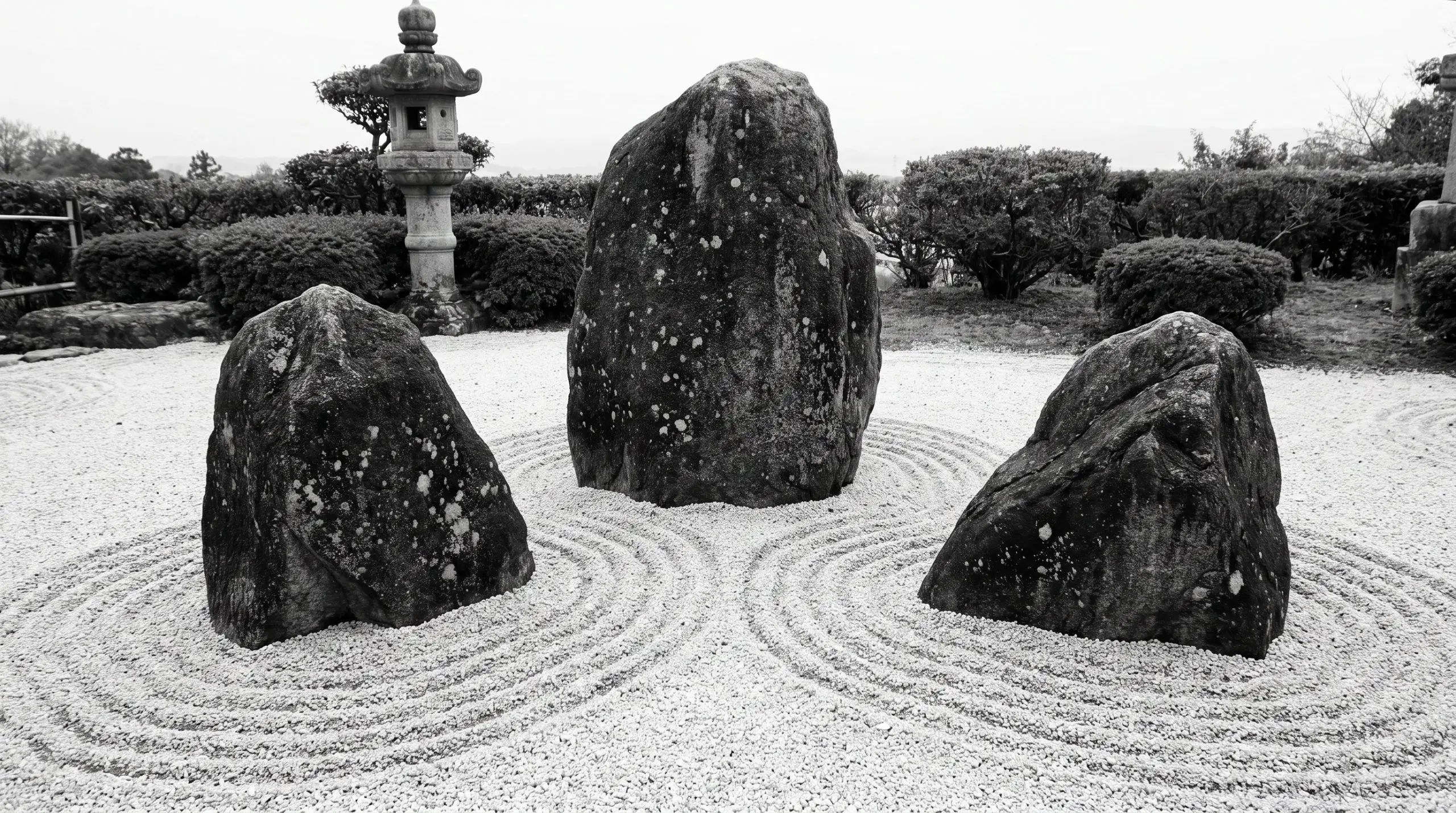
The most authoritative layout in Japanese landscape design is the Sanzon-seki. This asymmetrical grouping relies on one tall, dominant central stone flanked by two shorter, subordinate stones to create a perfectly balanced focal point.
- Vibe: Monumental, grounded, and historically precise.
- Key Materials: Three distinctly sized boulders of the same geological family.
- Styling Pro-Tip: Angle the two subordinate stones slightly inward toward the dominant stone to create a sense of gravitational pull.
7. Sink Boulders Partially to Mimic Natural Mountain Peaks
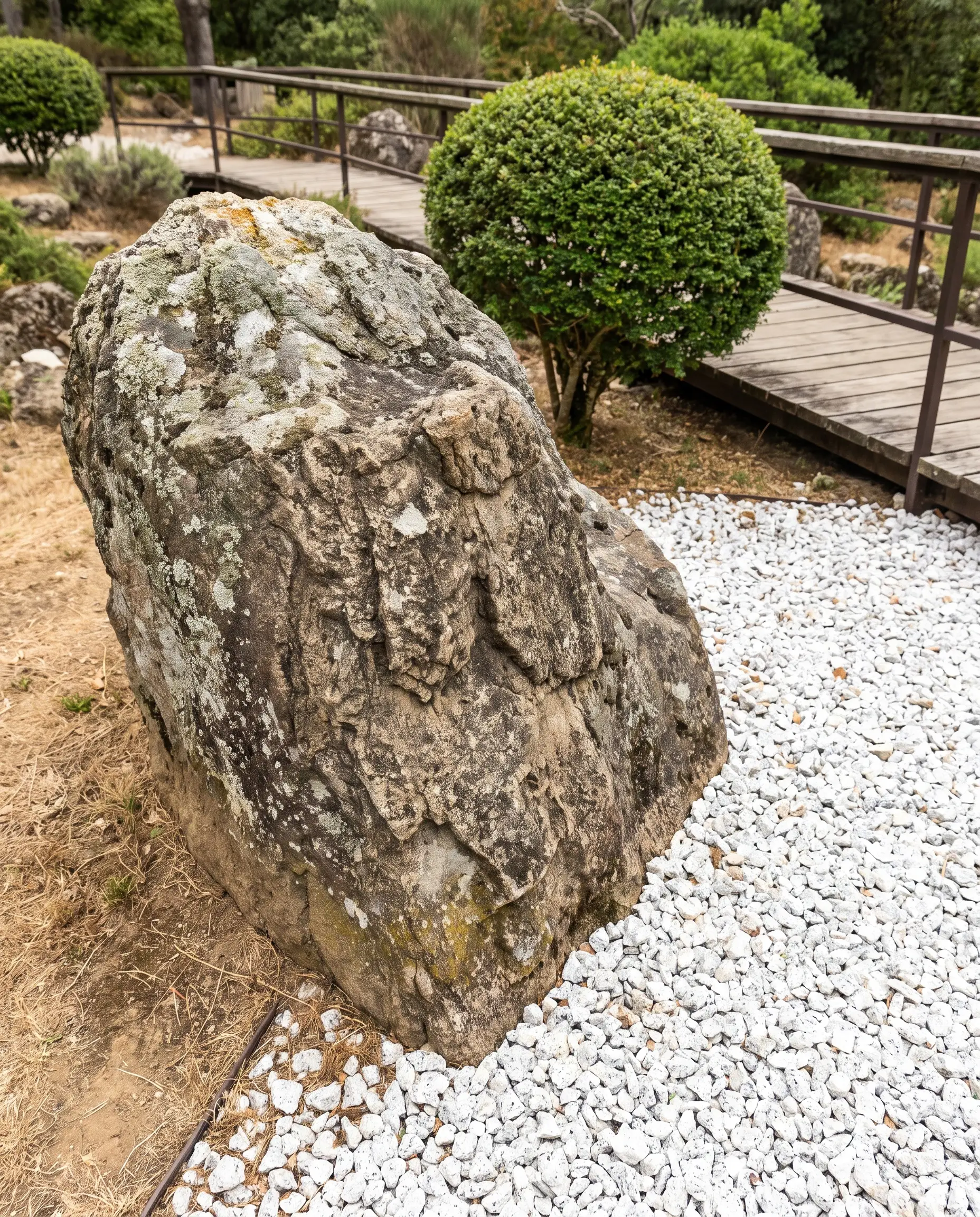
A boulder resting flat on top of gravel looks like it was carelessly dropped off a delivery truck. To give the stone a sense of permanence and age, it must appear rooted in the earth.
- Vibe: Ancient, organic, and integrated.
- Architectural Spec: Excavate the sub-base to bury the bottom third of the boulder beneath the soil line.
- Styling Pro-Tip: Identify the widest, most weathered face of the stone and position it as the “front,” facing the primary viewing angle of the yard.
8. Lay Stepping Stones with Asymmetrical Spacing
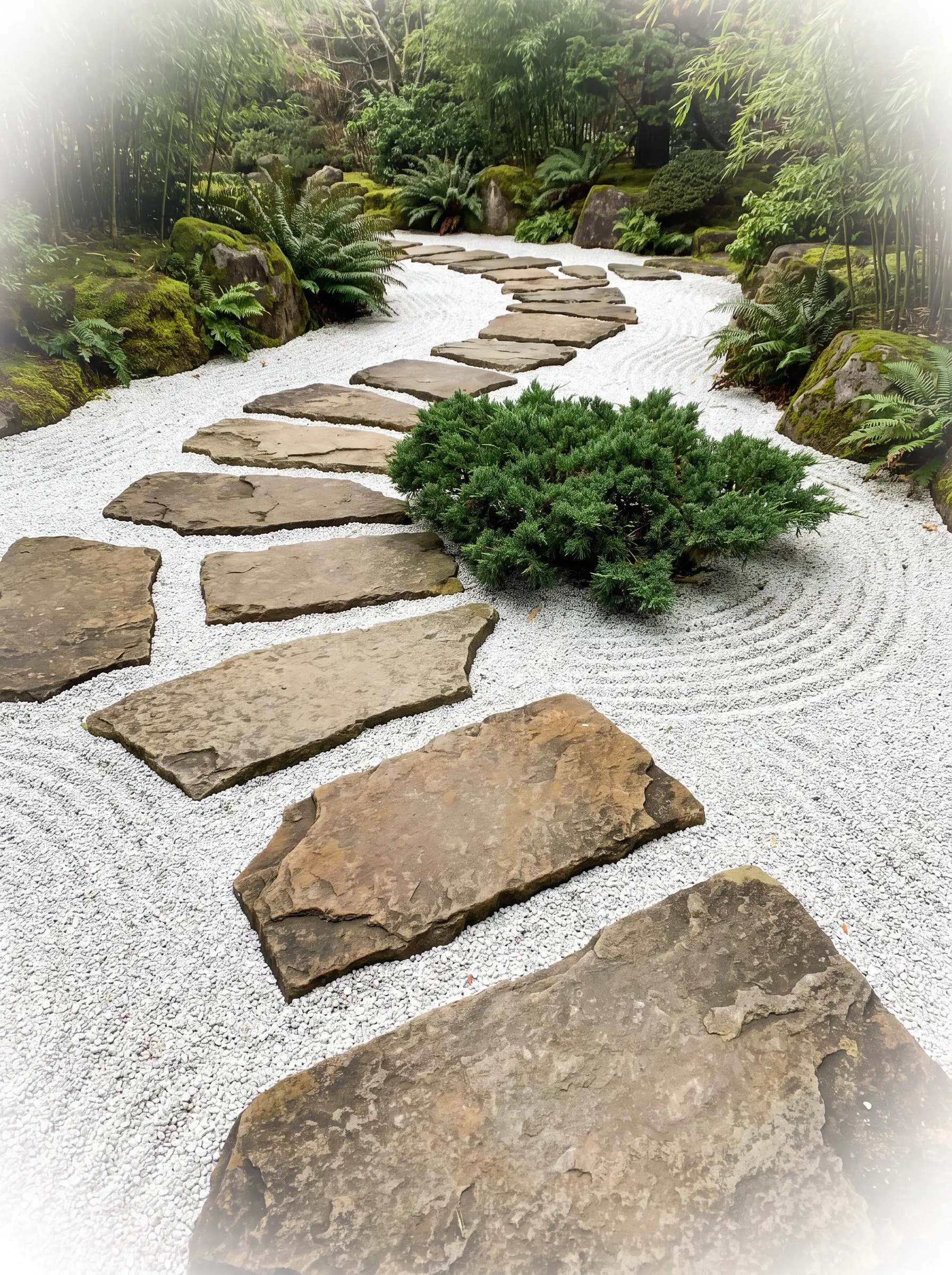
A perfectly uniform walkway encourages a rushed, thoughtless stride. By varying the spacing and orientation of your stepping stones, you force the walker to look down, slow their pace, and become acutely present in the environment.
- Vibe: Deliberate, mindful, and kinetic.
- Key Materials: Large, irregular flagstones or precision-cut rectangular pavers.
- Styling Pro-Tip: Stagger the stones so the path gently meanders, avoiding straight, predictable lines.
9. Contrast Dark Basalt Rocks Against White Aggregate
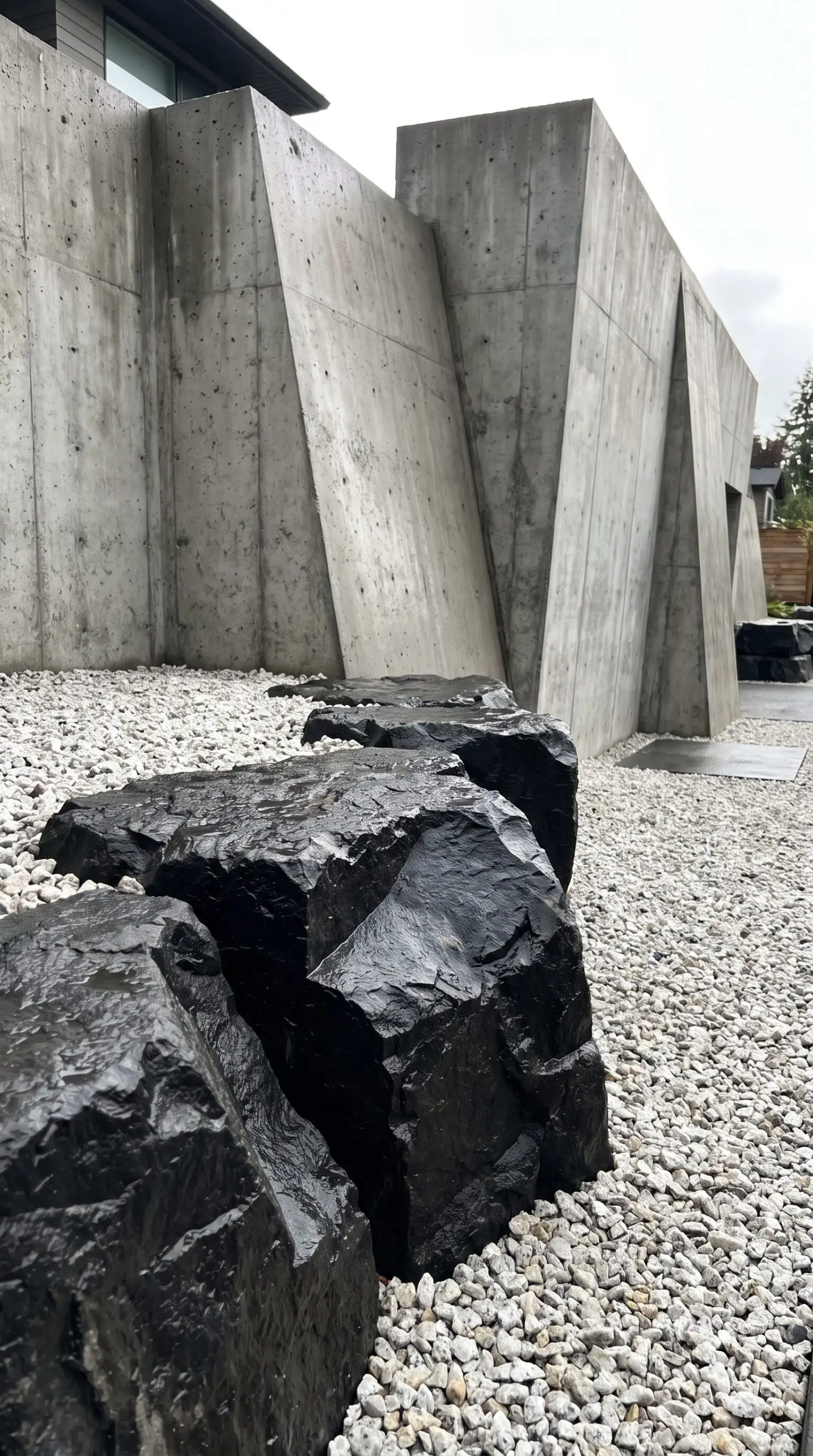
High-end modern hardscaping thrives on severe color contrast. Placing deep, charcoal-toned rocks against bright, pale granite creates a striking visual tension that instantly modernizes the traditional landscape.
- Vibe: Bold, brutalist, and highly architectural.
- Sourcing Tip: Skip the big-box hardware store and visit a local masonry yard to hand-select raw, unpolished basalt boulders.
- Styling Pro-Tip: Mist the basalt lightly with water before guests arrive; the moisture turns the stone pitch black, amplifying the contrast.
10. Stack Flat Slate for a Minimalist Topography
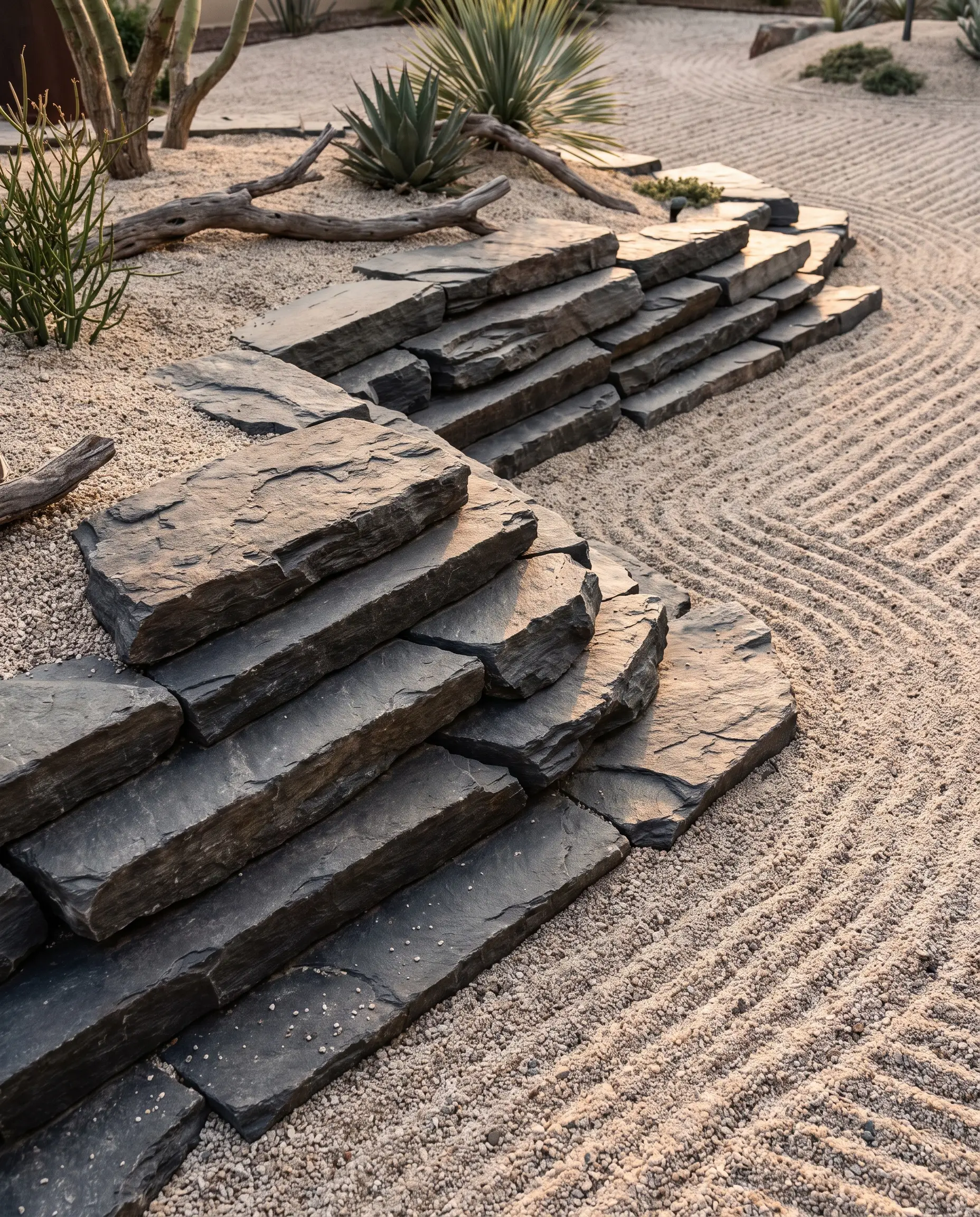
Instead of relying solely on massive round boulders, introduce horizontal planes. Stacking flat slabs of slate creates a low-profile, tiered topography that mimics sedimentary rock formations.
- Vibe: Layered, subtle, and highly textured.
- Key Materials: Natural cleft slate slabs.
- Styling Pro-Tip: Leave small, intentional gaps between the stacked slabs to allow shadow lines to define the horizontal geometry.
Living Elements: Plants, Moss, and Pruning Techniques
Introducing organic life into a minimalist landscape requires extreme restraint. By severely limiting the color palette to deep greens, bark tones, and whites, the flora you do select becomes highly focal and structural.
11. Cultivate Irish Moss as a Groundcover Alternative
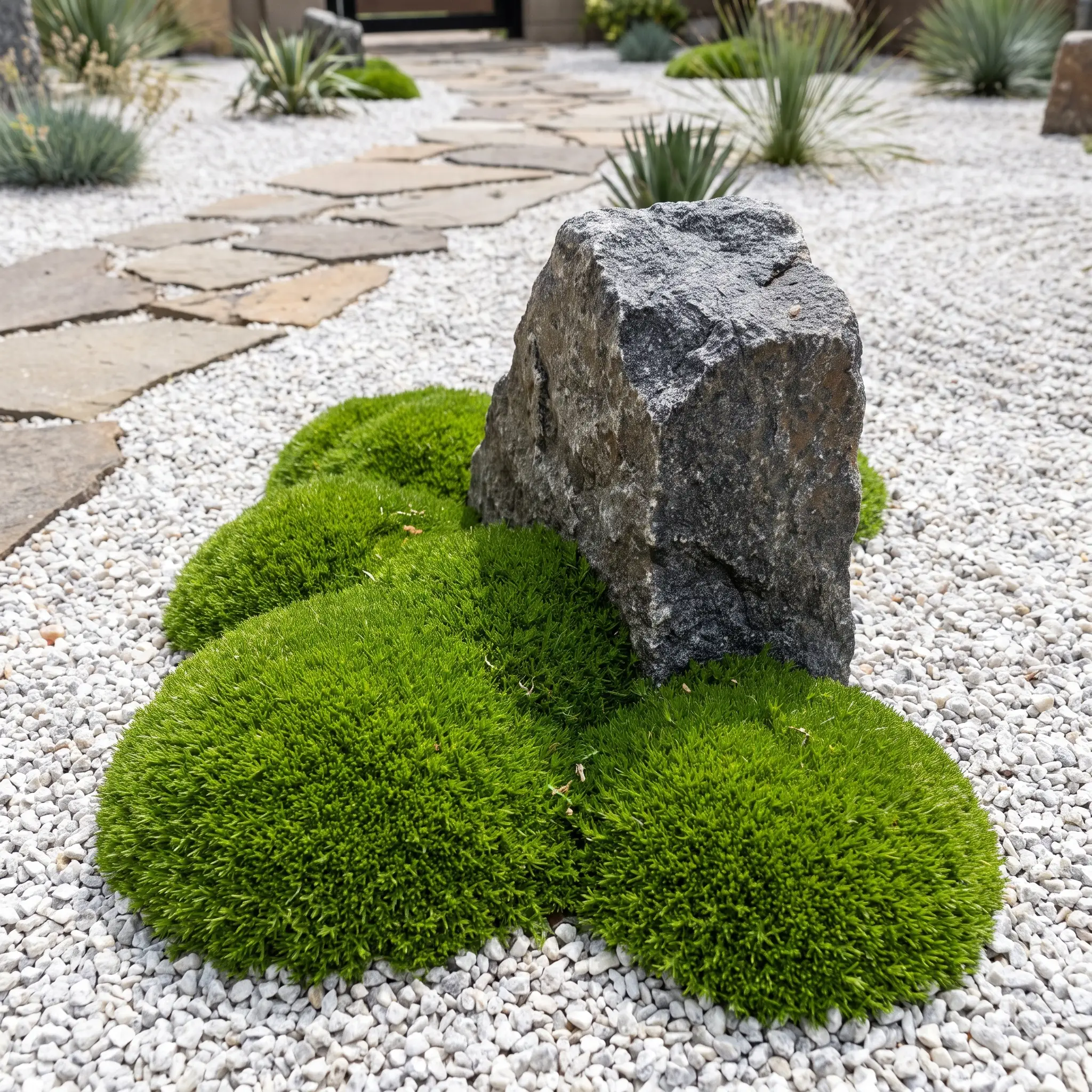
True moss demands a highly specific, humid microclimate that is nearly impossible to maintain in standard residential zones. Irish moss provides the exact same dense, velvet-like texture while remaining incredibly resilient in full sun.
- Vibe: Lush, tactile, and vivid.
- Architectural Spec: Plant Sagina subulata (Irish Moss) or Corsican Mint as a drought-tolerant alternative.
- Styling Pro-Tip: Plant the moss in tight clusters around the base of your anchor stones to soften the transition between rock and gravel.
While Irish moss is hardier than forest moss, it still requires consistent, shallow watering during the first six weeks of root establishment. Do not let the topsoil dry out completely during this phase.
Hackrea Maintenance Note
12. Frame the Perimeter with Sculpted Japanese Maples
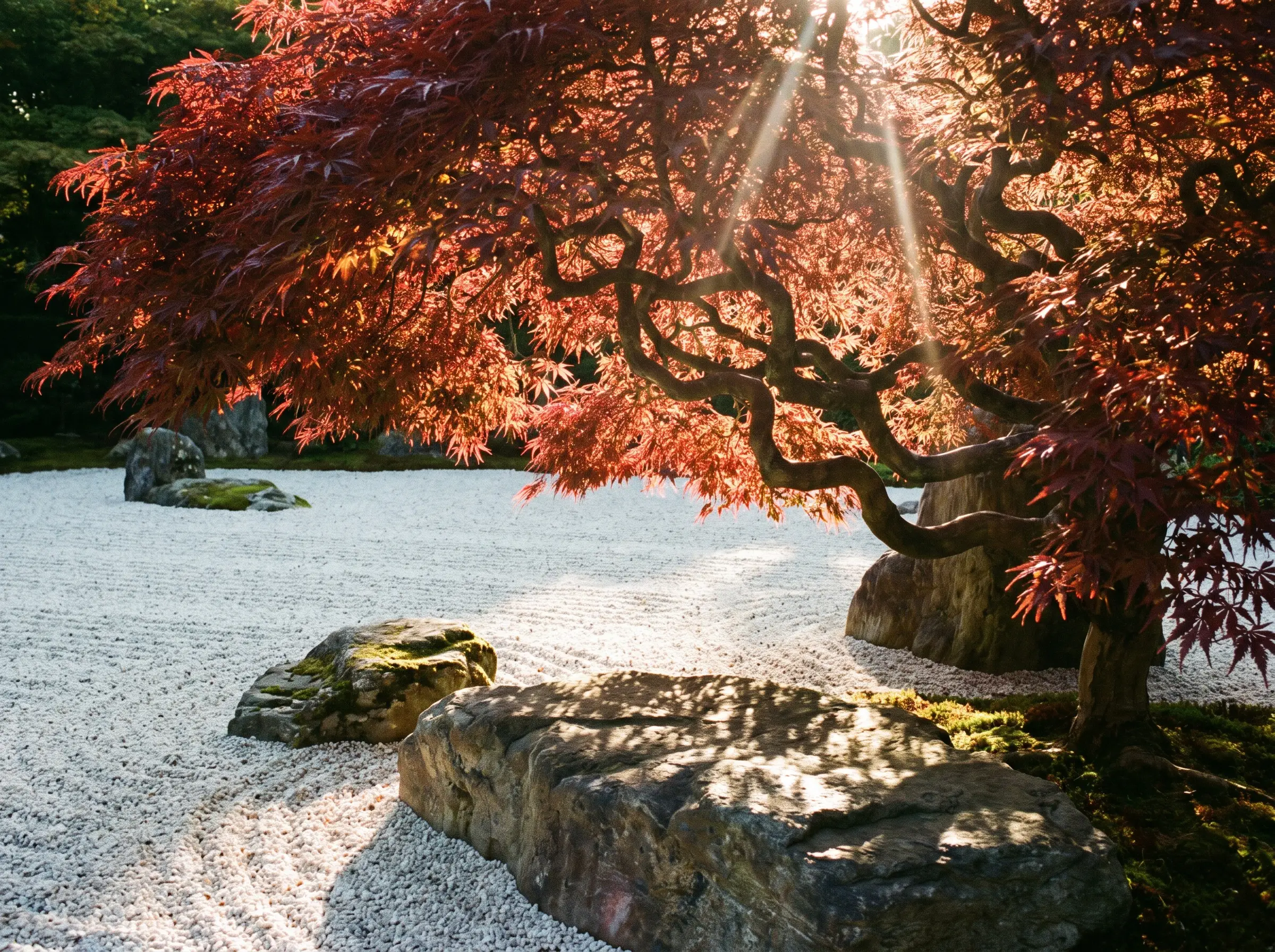
The delicate, star-shaped foliage of a maple introduces seasonal rhythm and vertical scale to an otherwise static hardscape. Their sprawling branch structure creates brilliant, dappled shadows across the white aggregate.
- Vibe: Elegant, sweeping, and dynamic.
- Key Materials: Acer palmatum (specifically dwarf or weeping cultivars for tight spaces).
- Styling Pro-Tip: Position the tree where the late afternoon sun will backlight the leaves, turning the canopy into a glowing structural feature of deep reds or bright greens.
13. Install Clumping Bamboo for Acoustic Privacy
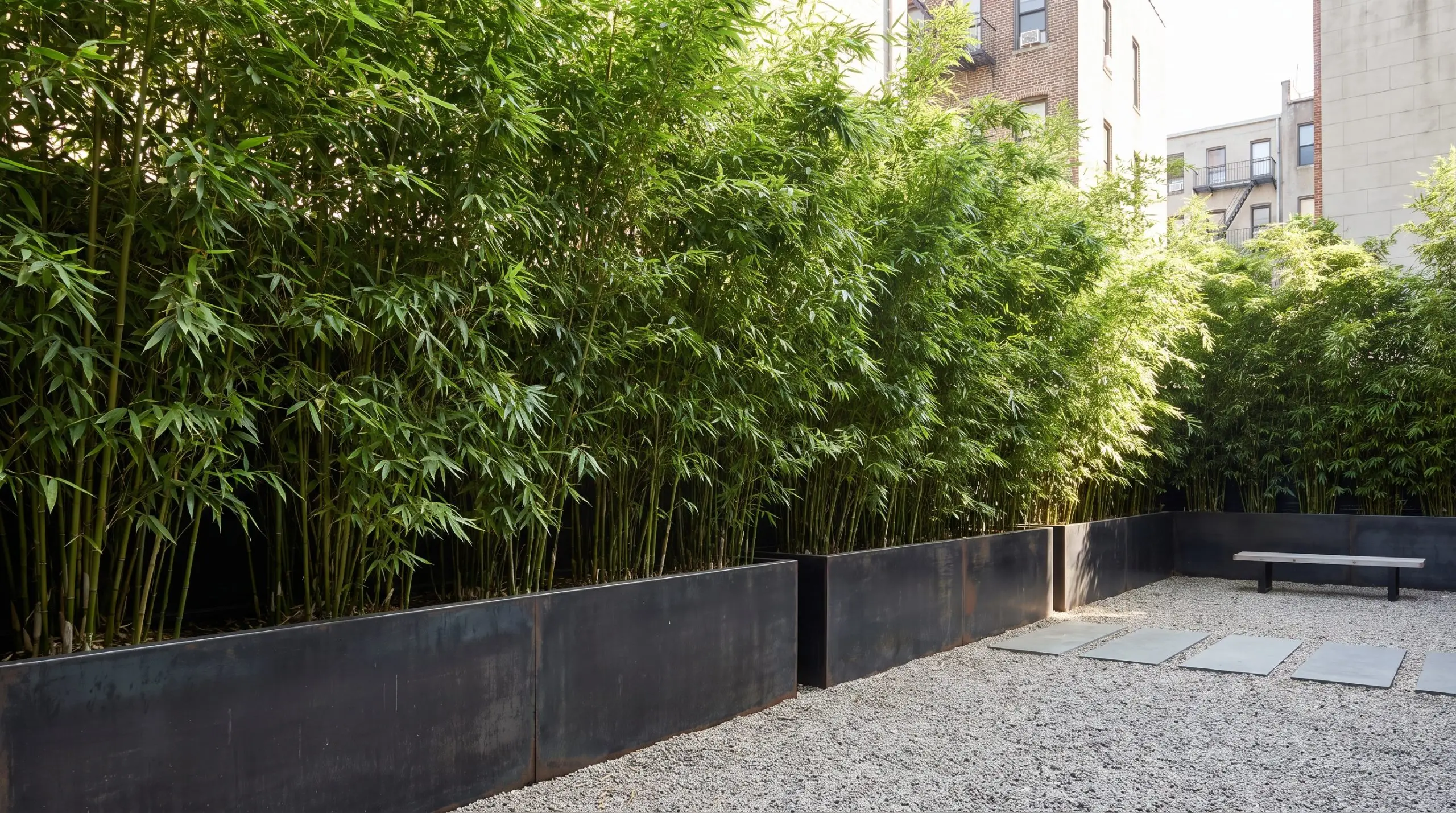
Bamboo acts as a living architectural screen, introducing a rustling acoustic texture while blocking out neighboring properties. However, selecting the wrong species will destroy your yard’s foundation.
- Vibe: Vertical, dense, and auditory.
- Architectural Spec: Strictly command the use of Fargesia (clumping bamboo), never the highly invasive running varieties.
- Styling Pro-Tip: House the bamboo in deep, matte black Corten steel planters to reinforce the minimalist aesthetic while completely containing the root systems.
14. Practice Niwaki Cloud Pruning on Evergreen Shrubs
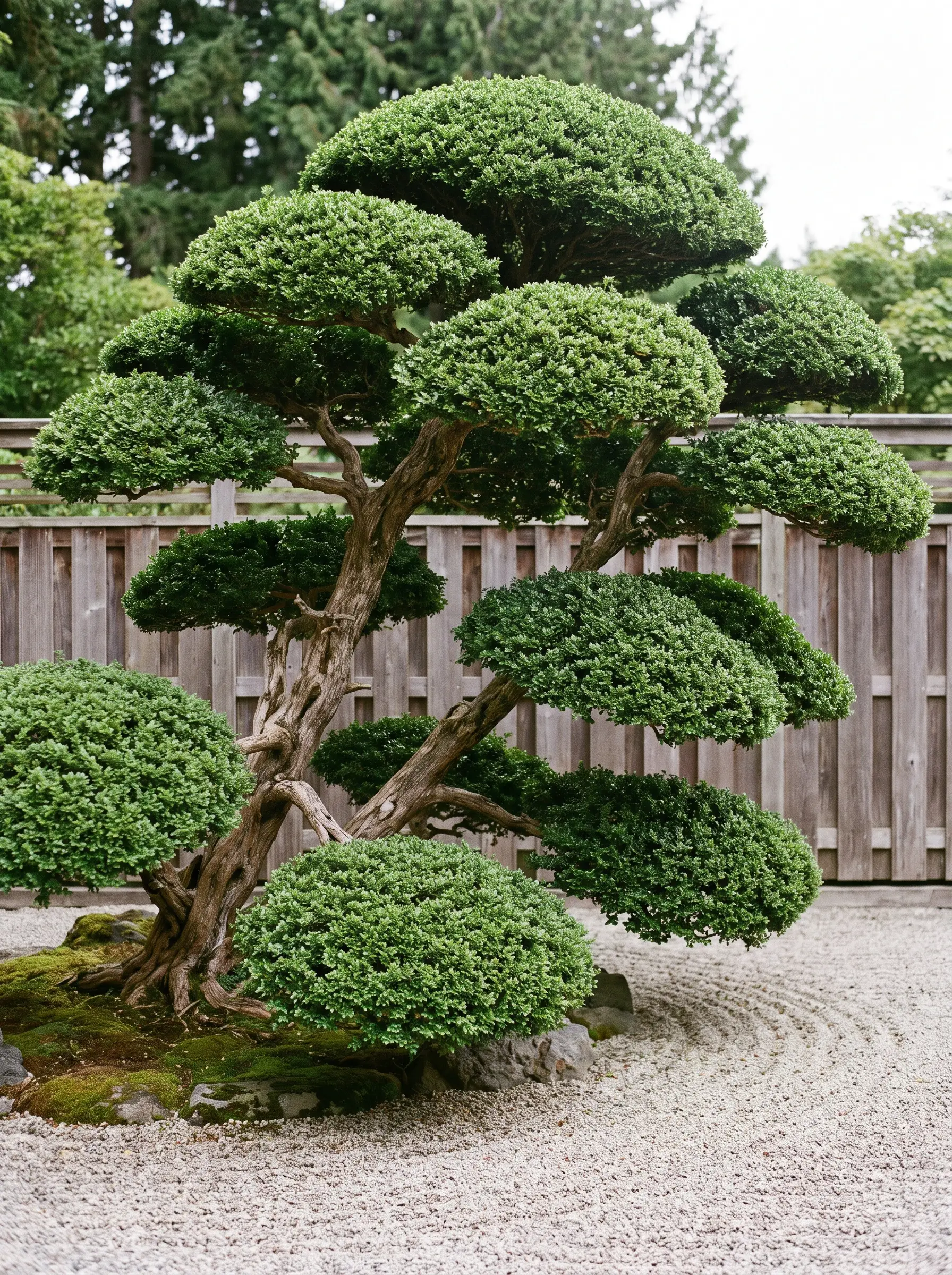
Untamed bushes disrupt the calculated geometry of the space. Niwaki—the deliberate shaping of trees to mimic the dramatic effects of age and extreme weather—turns standard evergreens into living sculptures.
- Vibe: Sculptural, disciplined, and bespoke.
- Key Materials: Boxwood, Japanese Holly, or Juniper shrubs.
- Styling Pro-Tip: Expose the woody lower trunks by stripping away bottom foliage, pushing the visual weight into asymmetrical “clouds” at the end of the branches.
15. Soften Hardscape Edges with Creeping Thyme
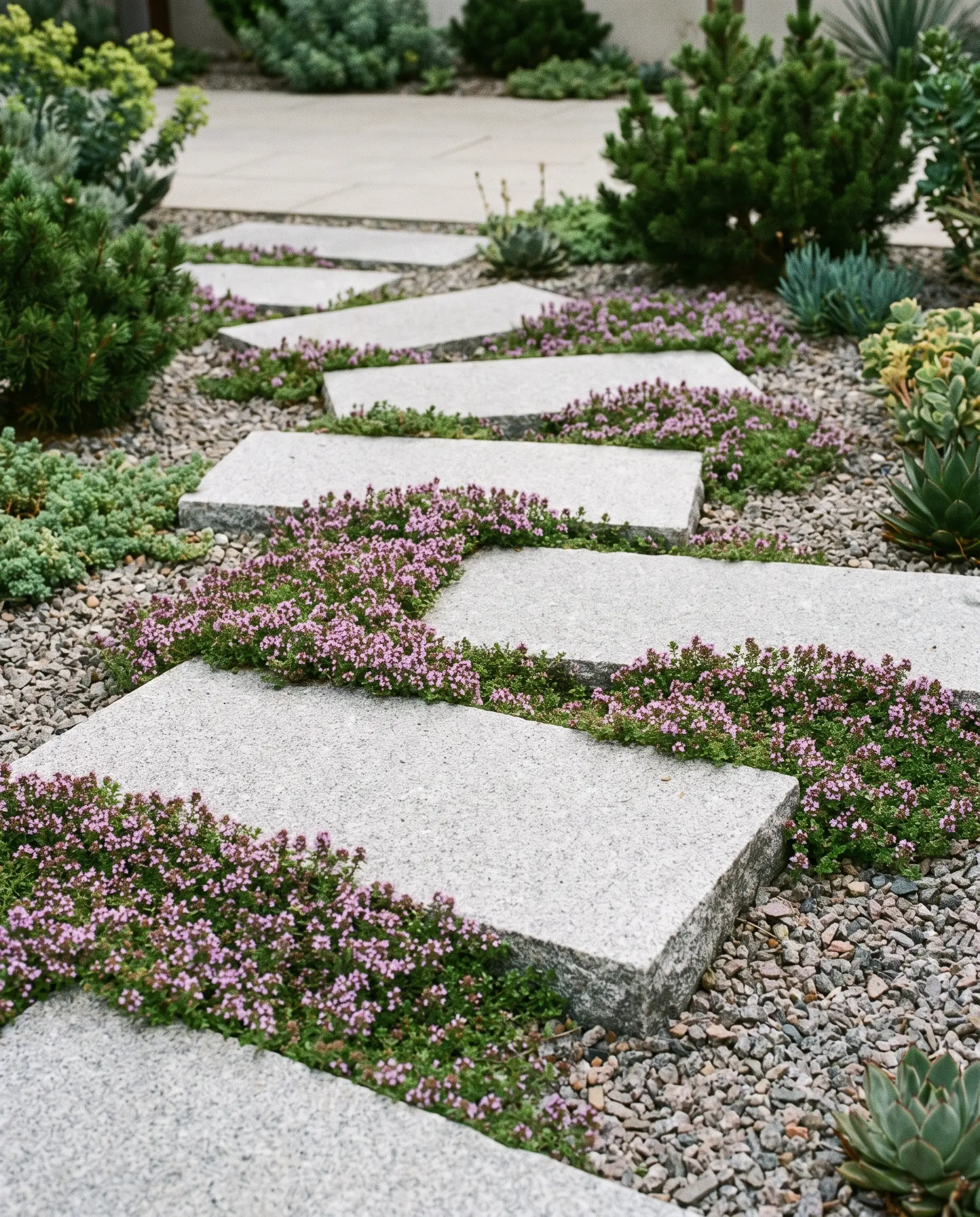
Rigid steel edging and sharp stones occasionally need a subtle organic interruption. Creeping thyme spills over boundaries with a rugged texture, breaking up harsh lines without sacrificing the low-maintenance directive.
- Vibe: Rugged, aromatic, and cascading.
- Key Materials: Thymus serpyllum (Elfin Thyme).
- Styling Pro-Tip: Wedge small plugs of thyme between your stepping stones; it tolerates light foot traffic and releases a sharp, earthy scent when crushed.
16. Limit the Color Palette to Deep Greens and Whites
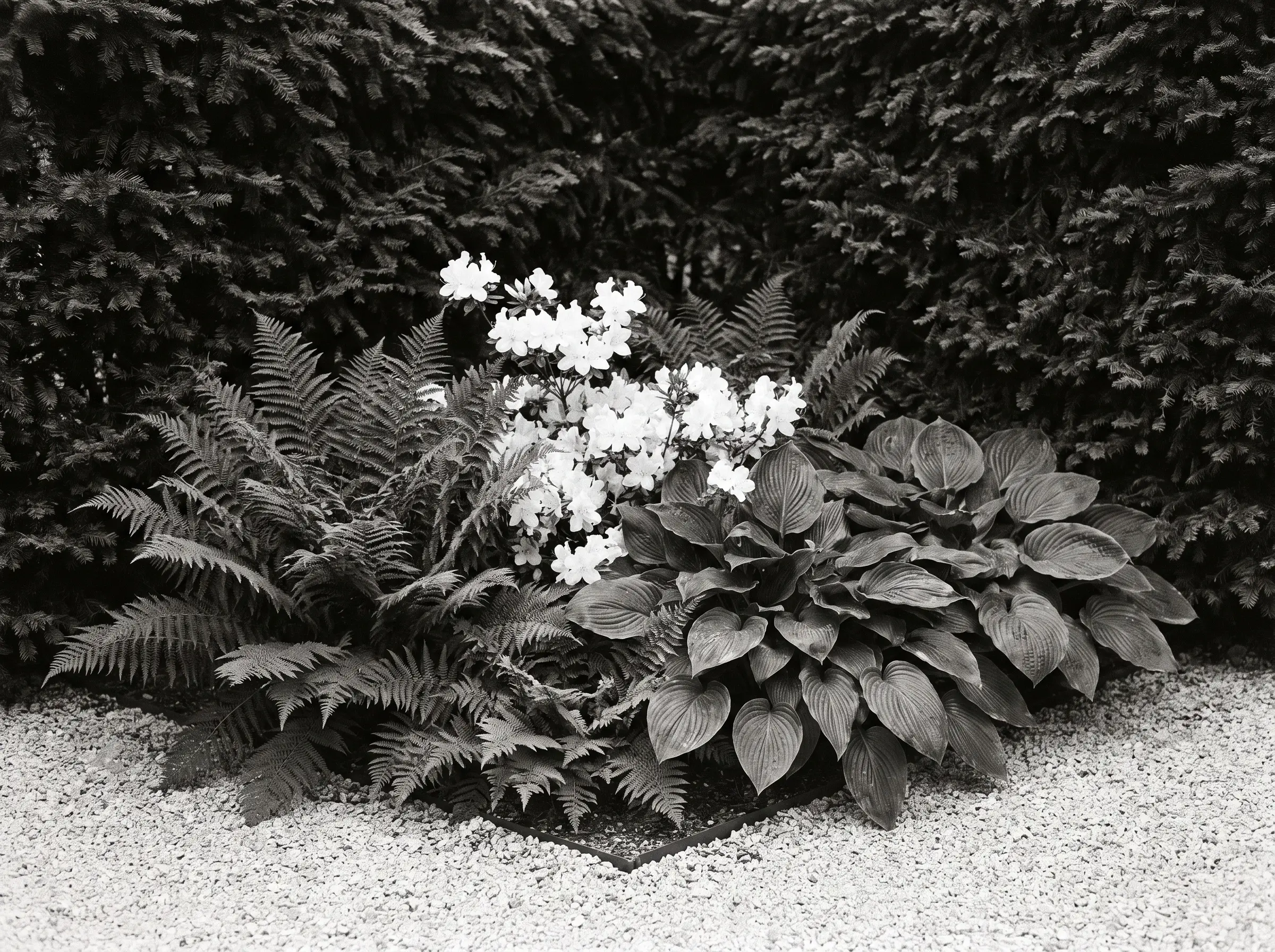
Visual calm is achieved through rigorous color discipline. Stripping away loud, blooming flowers forces the eye to appreciate the subtle variations in leaf texture, bark grain, and stone patina.
- Vibe: Monochromatic, serene, and highly controlled.
- Key Materials: Ferns, hostas, white azaleas, and dark evergreen needles.
- Styling Pro-Tip: Group plants with contrasting foliage textures—like the feathery fronds of a fern next to the broad, glossy leaf of a hosta—to create interest without breaking the disciplined green palette.
Sensory Architecture: Water, Sound, and Light
A high-end landscape engages far more than just the visual cortex. Mastering acoustic masking and shadow play transforms a sterile rock arrangement into an immersive, atmospheric retreat.
17. Direct Rainwater with a Patinated Copper Rain Chain
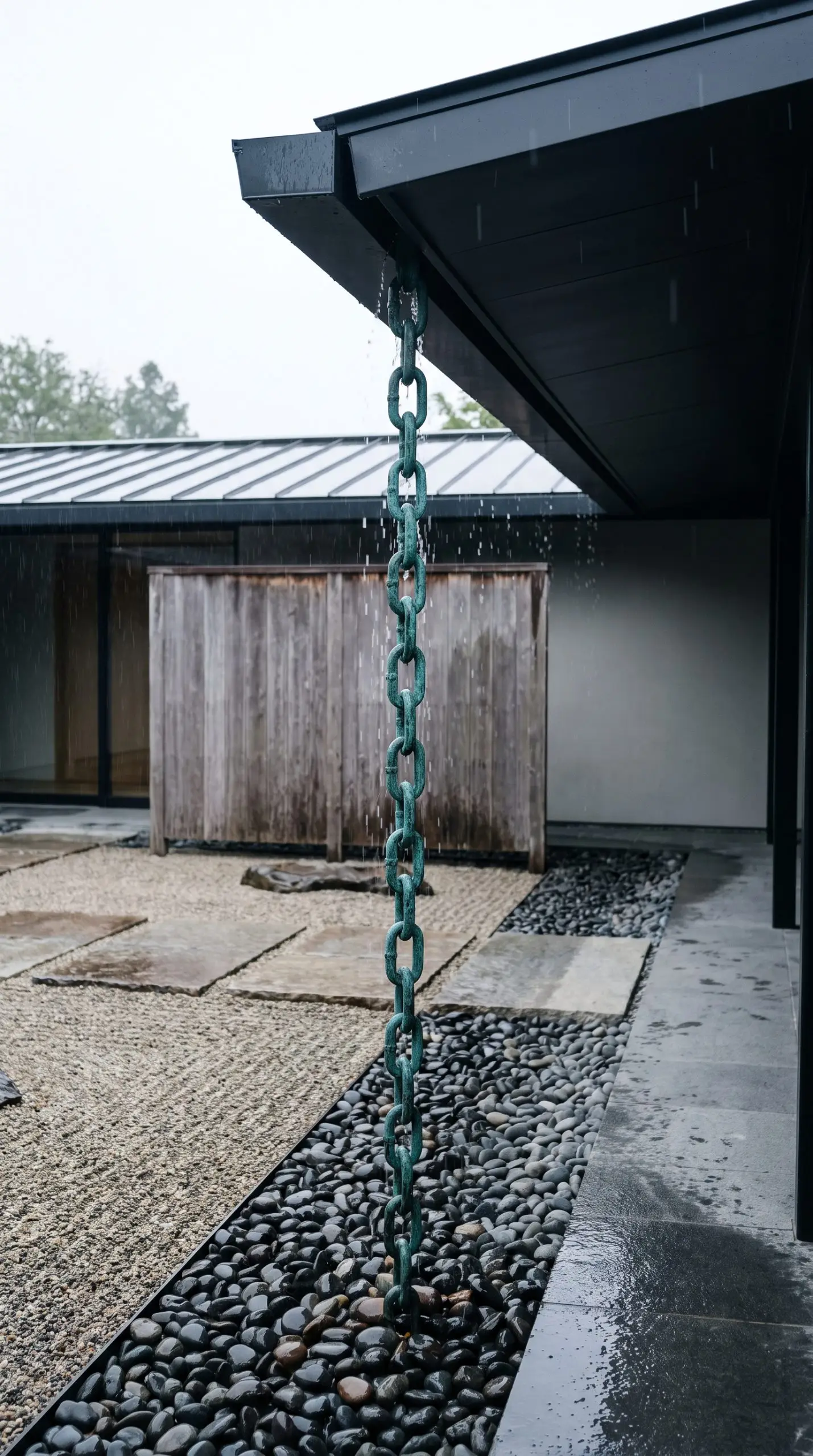
Standard aluminum downspouts are an architectural eyesore. Replacing them with a heavy copper rain chain turns a functional drainage requirement into a mesmerizing vertical water feature.
- Vibe: Wabi-sabi, kinetic, and weathered.
- Key Materials: Heavy-gauge, link-style copper rain chains.
- Styling Pro-Tip: Allow the copper to oxidize naturally over time. The resulting green-blue patina adds incredible depth and organic age to the exterior styling.
18. Mask Street Noise with a Bamboo Shishi-odoshi Feature
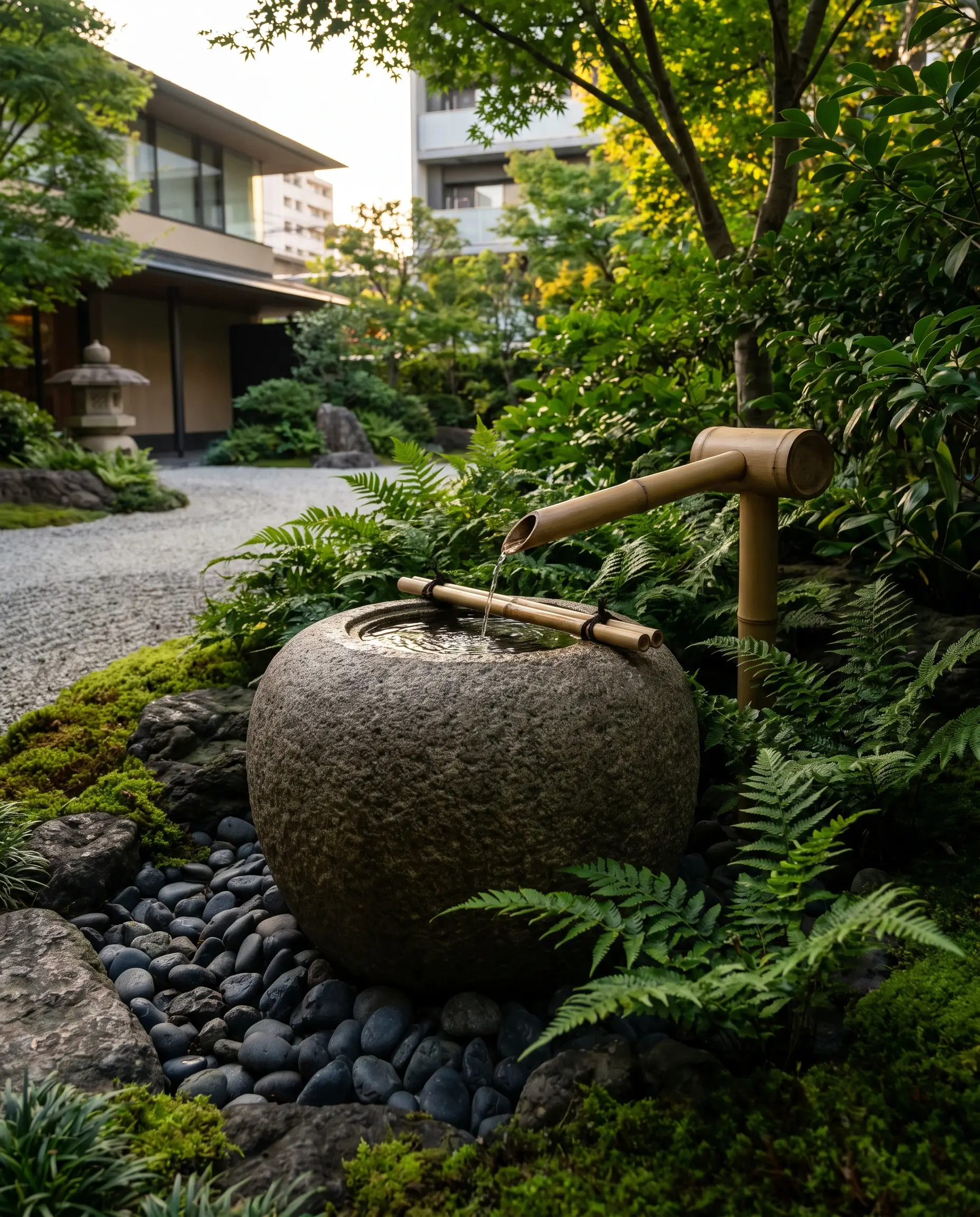
Urban outdoor spaces suffer from the constant drone of traffic. The rhythmic, hollow clack of a Shishi-odoshi (deer chaser) provides a sharp acoustic reset, effectively masking distant urban noise with a deliberate, percussive soundscape.
- Vibe: Percussive, traditional, and functional.
- Architectural Spec: Ensure the bamboo spout strikes a solid, dense stone rather than a hollow basin to achieve the correct acoustic resonance.
- Sourcing Tip: Source a self-contained, recirculating pump system to avoid the need for complex, buried plumbing lines.
19. Carve a Traditional Tsukubai Stone Water Basin
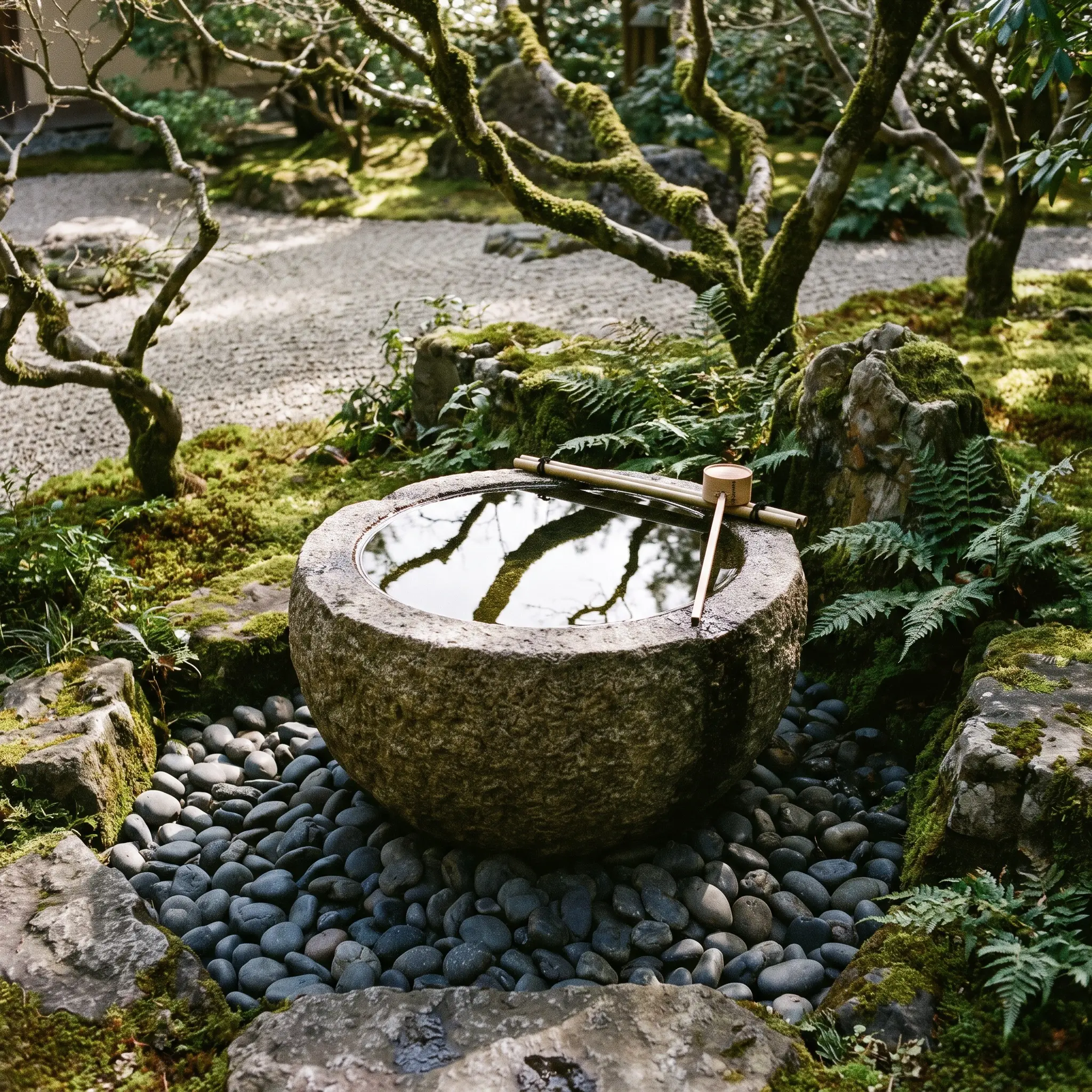
Integrating standing water introduces a reflective surface that bounces light into shaded corners. A low Tsukubai basin requires the viewer to crouch, forcing a physical posture of humility and stillness.
- Vibe: Reflective, intimate, and grounding.
- Key Materials: A hand-carved granite or basalt basin.
- Styling Pro-Tip: Surround the base of the basin with a bed of smooth, dark river rocks to catch the overflow and prevent mud from splashing onto the aggregate.
20. Uplight Anchor Boulders with Low-Voltage LED Spots
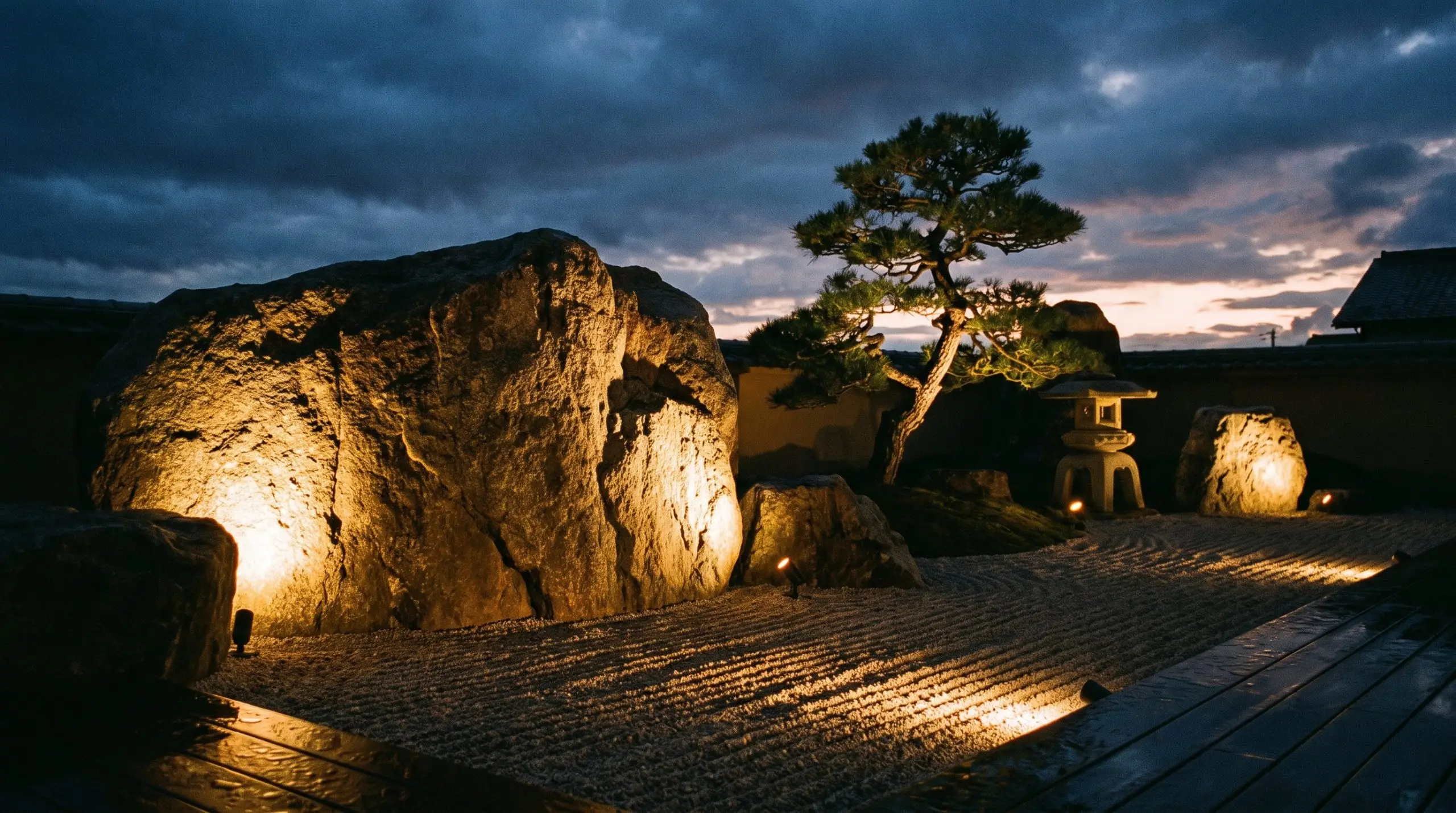
As the sun sets, the flat light of a standard porch bulb will wash out your raked patterns entirely. Directional uplighting catches the aggressive texture of the stone and casts long, dramatic shadows across the gravel bed.
- Vibe: Dramatic, theatrical, and moody.
- Architectural Spec: Dictate the use of warm 2700K temperature LED bulbs to simulate natural firelight or the setting sun.
- Styling Pro-Tip: Position the fixtures tightly against the base of the boulder and angle them upward at 45 degrees to graze the textured face of the stone.
21. Place Cast-Iron Lanterns to Mark Pathway Intersections
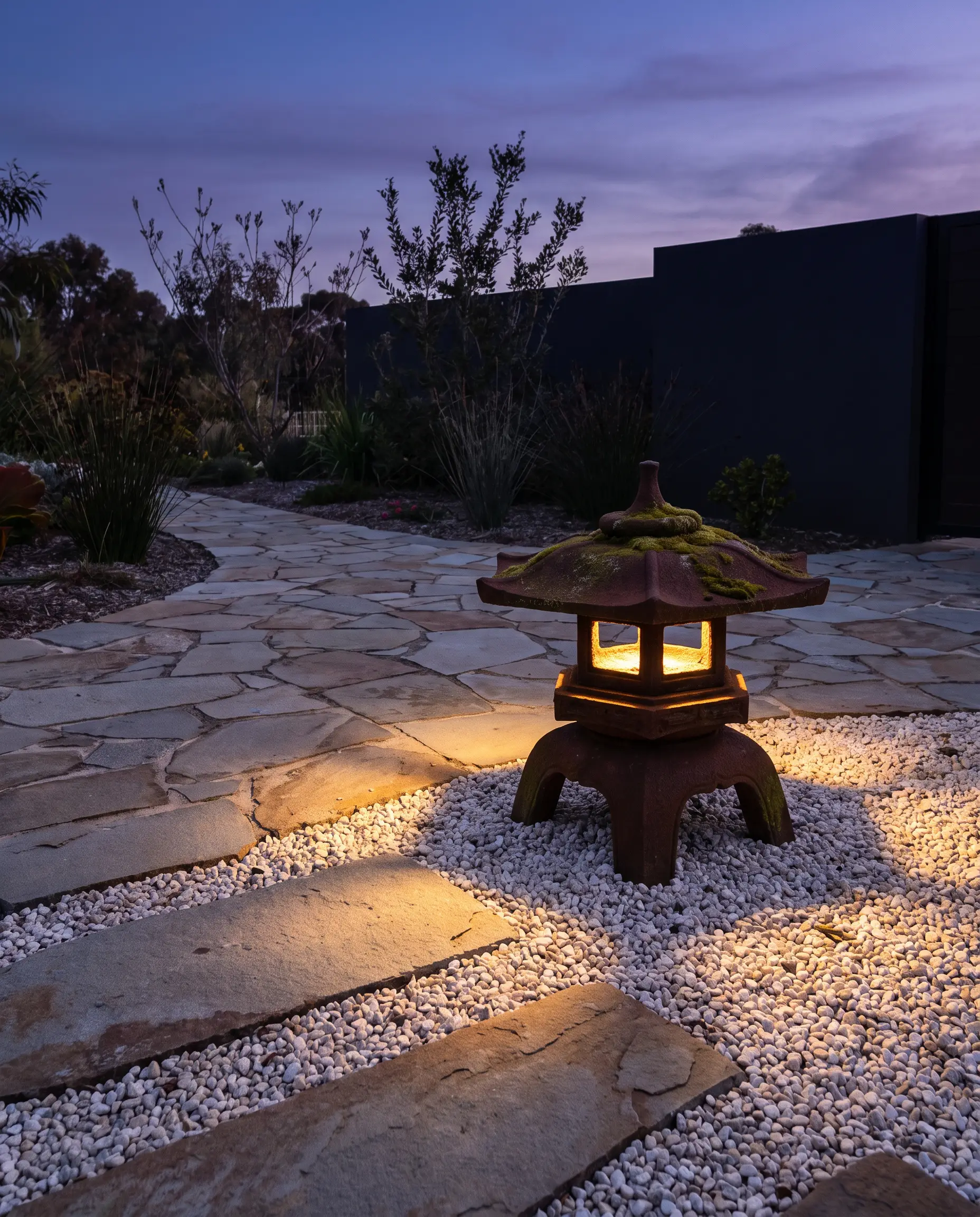
Pathway lighting should guide the foot, not blind the eye. Heavy, low-profile cast-iron lanterns provide soft, localized pools of illumination exactly where the spatial flow shifts direction.
- Vibe: Weighted, historical, and restrained.
- Key Materials: Oxidized cast iron or blackened steel pagoda-style lanterns.
- Styling Pro-Tip: Stagger the lanterns asymmetrically along the path; placing them in perfectly matched pairs creates a rigid runway effect that ruins the organic flow.
Spatial Adaptations for Small and Urban Footprints
Massive acreage is not a prerequisite for this level of design. Strict geometry and material restraint prove that scale does not dictate impact, making these concepts highly adaptable for renters or those with limited square footage.
22. Convert a Balcony Corner into a Contained Karesansui Tray
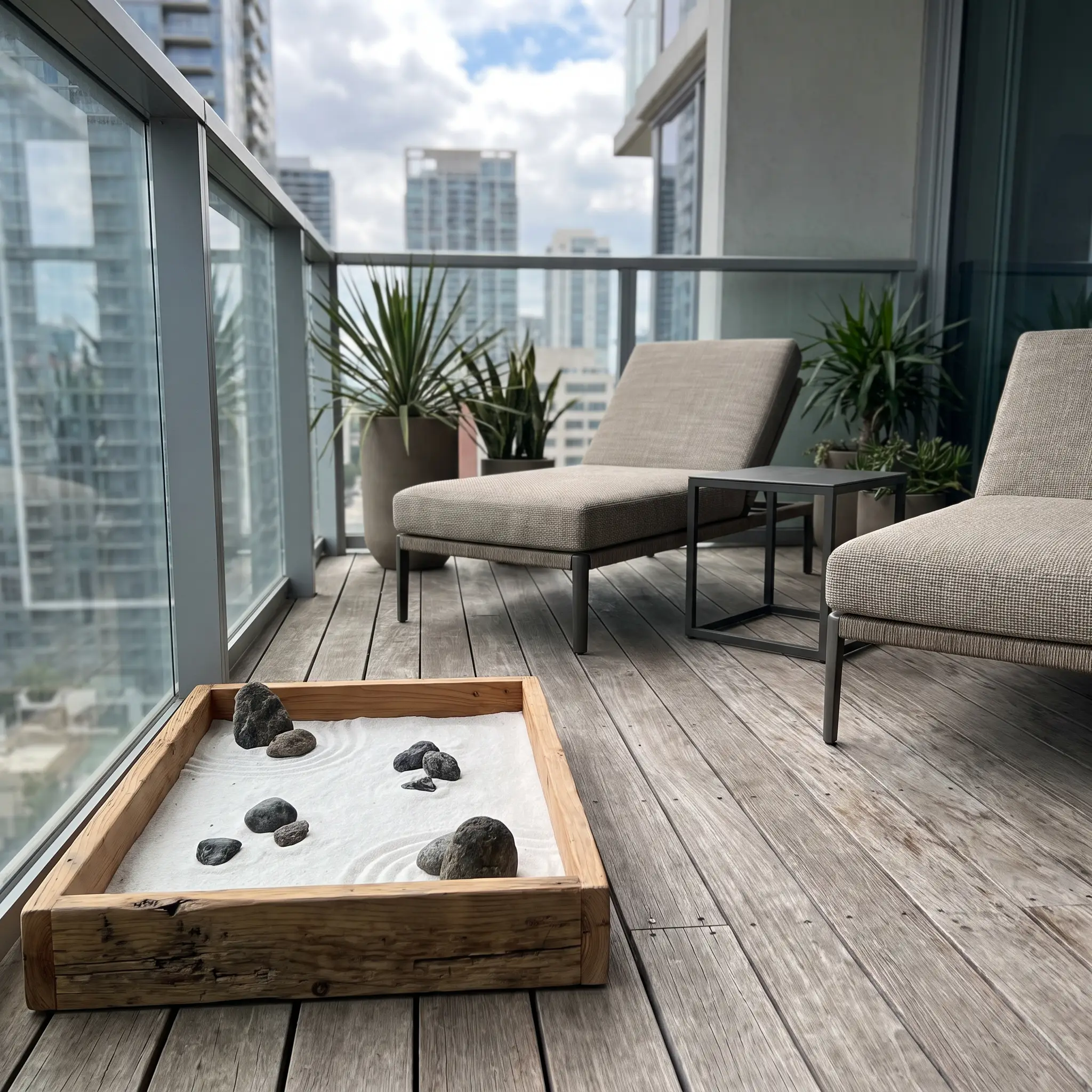
If you lack a yard entirely, construct a shallow, bespoke containment box to house a micro-landscape. This tabletop execution delivers the exact same tactile satisfaction of raking gravel without requiring a shovel.
- Vibe: Micro-architectural, intimate, and highly accessible.
- Key Materials: A custom 3-inch deep cedar or teak tray, waterproofed on the interior.
- Styling Pro-Tip: Scale down your materials proportionately; use fine 1mm sand instead of crushed granite, and select fist-sized, highly textured stones as your anchors.
23. Frame a Viewing Garden Outside a Ground-Floor Window
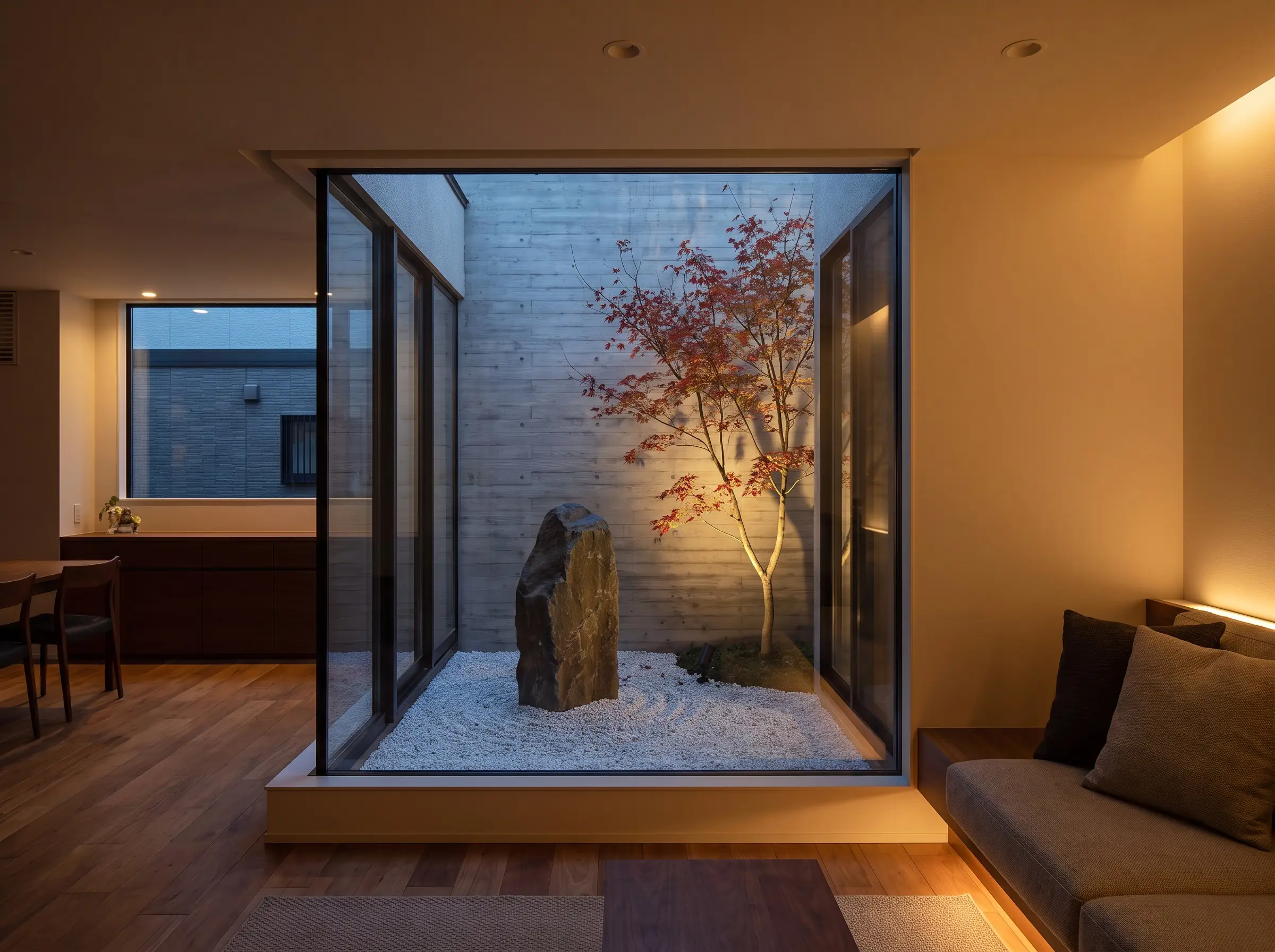
The tsubo-niwa (tiny courtyard garden) is designed solely to be viewed from inside through a pane of glass. By treating a narrow side yard or lightwell as a living painting, you drastically expand the perceived square footage of your interior.
- Vibe: Framed, gallery-like, and boundary-blurring.
- Architectural Spec: Use a single, striking Japanese maple or an upright boulder as the sole focal point in a 4×4 foot footprint.
- Styling Pro-Tip: Light the feature from the outside so that at night, the window acts as a backlit architectural showcase rather than a black mirror.
24. Integrate Zen Elements into an Organic Modern Courtyard
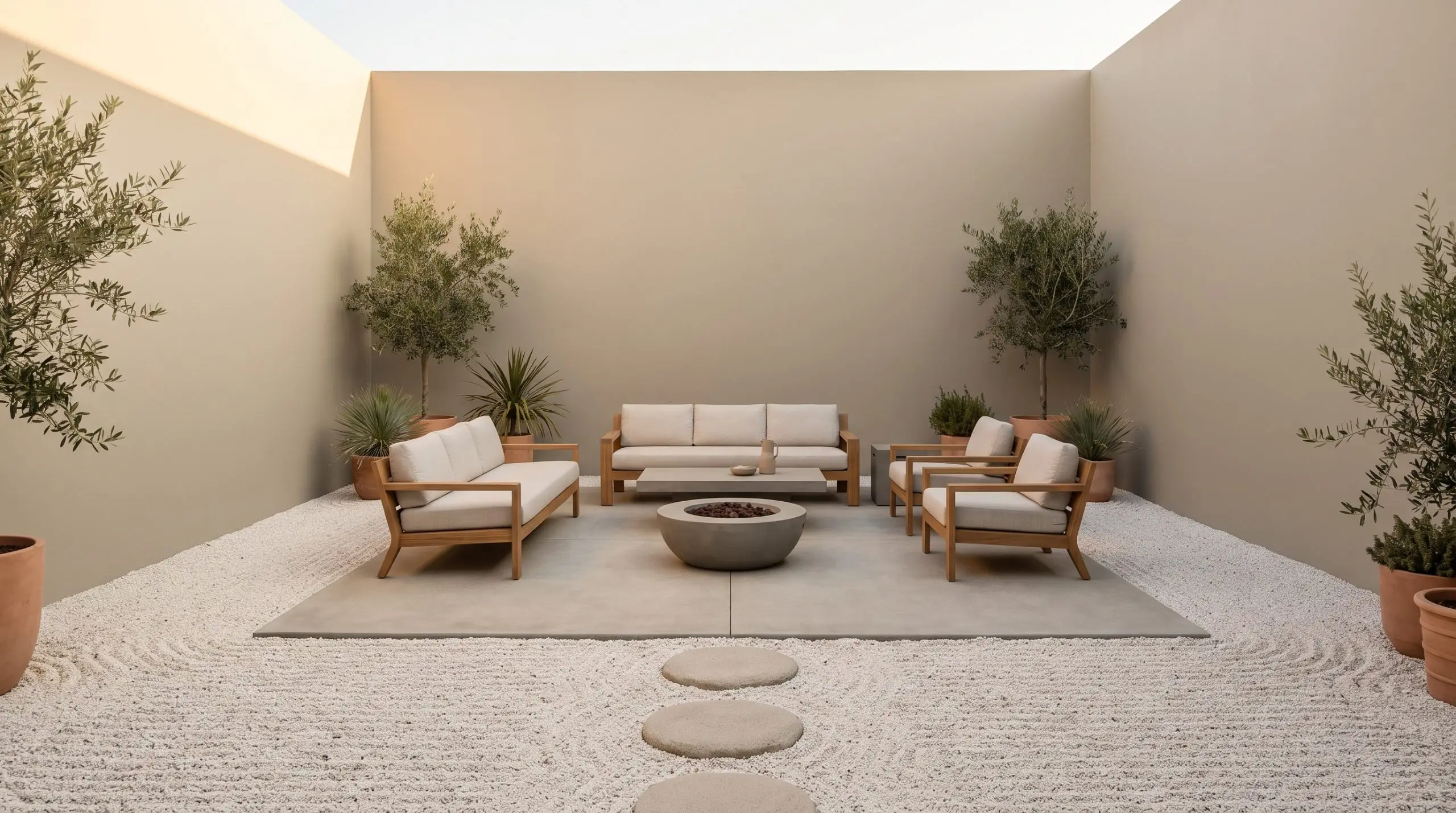
You do not have to commit to a strictly traditional aesthetic to harness spatial calm. Hybridize these minimalist hardscaping rules with organic modern patio Ideas or low-profile Japandi outdoor furniture to create a highly functional, contemporary living space.
- Vibe: Transitional, warm, and highly functional.
- Courtyard Wall Paint Match: Benjamin Moore “Seapearl”.
- Styling Pro-Tip: Leave a wide perimeter of raked Shirakawa-suna around the edges of a concrete patio slab, allowing the sleek furniture to float within a traditional border.
Cultivating Stillness in Your Own Backyard
Creating an architectural landscape of this caliber is fundamentally an exercise in discipline. The true value of a dry landscape is not just in looking at it; the physical act of pulling a rake through crushed granite and meticulously shaping a pine branch forces a powerful shift in perspective. Assess your current yard layout. Strip away the overgrown, chaotic elements that demand constant, frantic upkeep. Source your first anchor boulder, map out your negative space, and begin building a sanctuary defined by absolute, uncompromising intention.
The Aesthetics Desk curates the visual direction for Hackrea. Specializing in design history, global architectural movements, and interior styling, this desk focuses on the psychology of space and how to translate high-end, magazine-quality aesthetics into approachable residential design without falling into fleeting micro-trends.