Styling a Wood Slat Accent Wall Behind Your Sofa
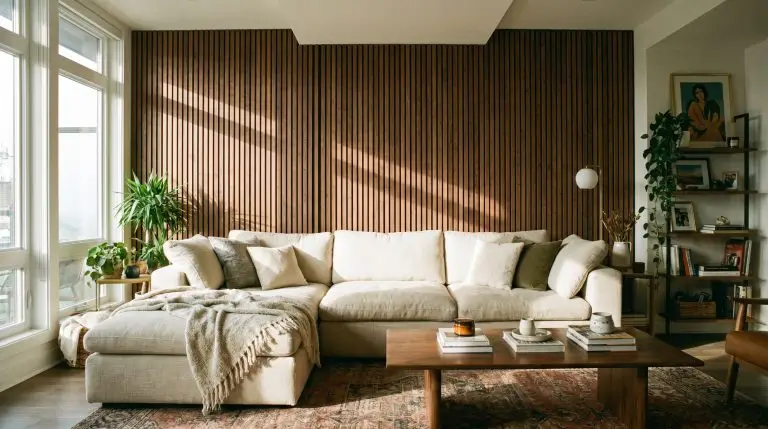
Modern open-concept living rooms frequently leave the sofa floating aimlessly against a vast, blank wall. This architectural void not only diminishes the room’s visual impact but creates a severe acoustic echoing problem, especially in spaces dominated by hard flooring and minimal window treatments. Addressing this requires more than just hanging a standard picture frame; it demands a physical, tactile intervention.
Acoustic slat panels offer a highly functional architectural solution, absorbing ambient noise while introducing a rigid, sophisticated rhythm to the room. We are bypassing broad living room layouts here to focus exclusively on the precise physical interplay between your couch, the wood texture, the lighting, and the wall itself.
By manipulating scale, proportion, and shadow, you can transform the dead space behind your seating into a custom-milled architectural anchor.
The Sofa-to-Slat Visual Weight Guide
Pairing a massive, overstuffed leather sectional with ultra-thin micro-fluting creates an immediate visual imbalance, making the wall look fragile behind a heavy object. The style and visual mass of your sofa strictly dictate the width and tone of your wood slats. Furthermore, the backing felt color is critical to the illusion; never install slats over a stark white backing wall, as it entirely kills the three-dimensional shadow effect necessary for a high-end look.
| Sofa Style | Ideal Slat Width | Recommended Wood Tone & Backing |
|---|---|---|
| Low-Profile Linen / Bouclé | 1-inch (Thin Micro-Fluting) | Light Ash or White Oak with Grey Felt |
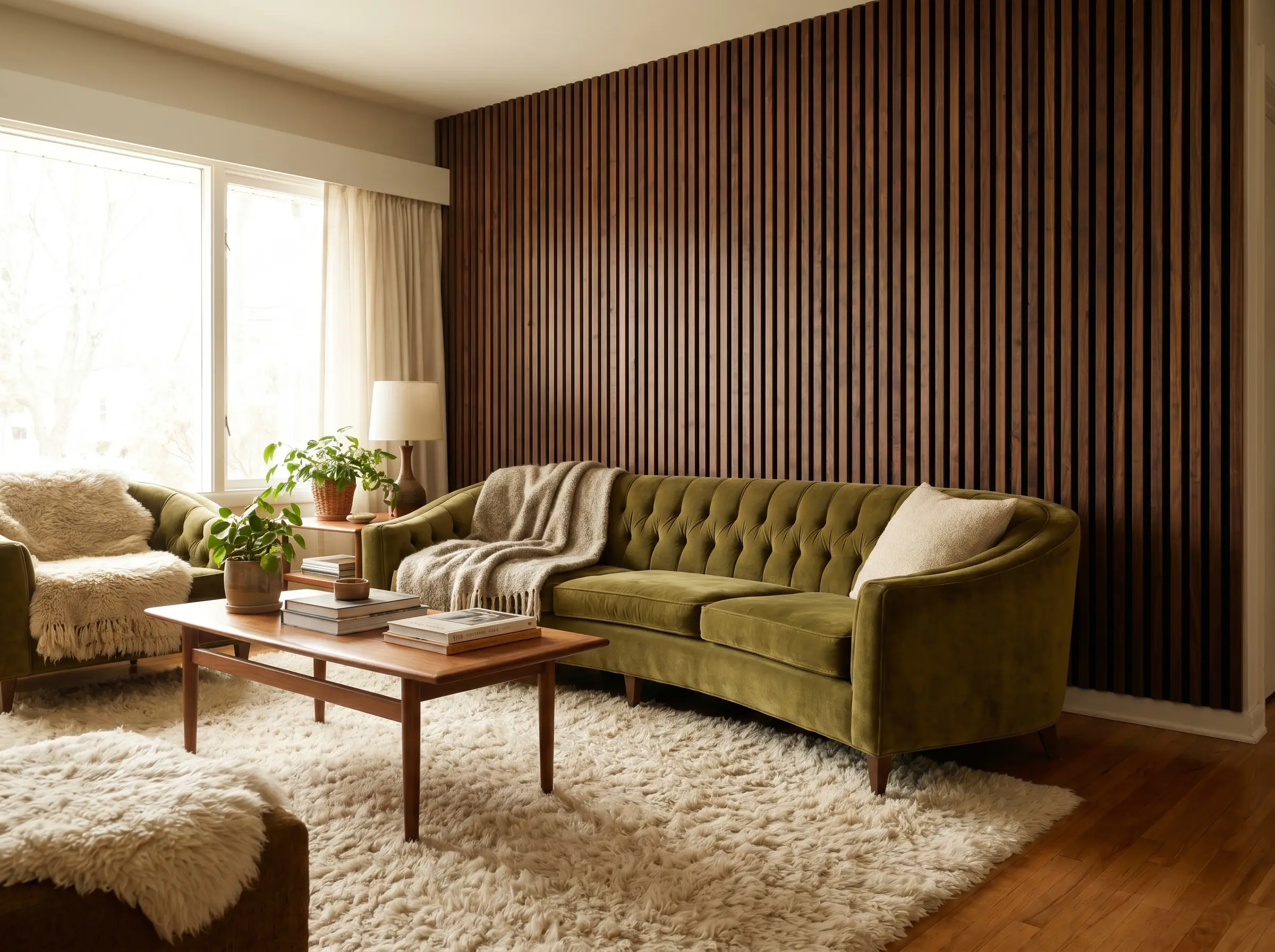
| Mid-Century Tufted Velvet | 1.5-inch to 2-inch (Standard) | Walnut or Teak with Black Felt |
| Heavy Leather Sectional | 2.5-inch to 3-inch (Substantial) | Smoked Oak or Charred Timber with Black Felt |
Sourcing the Right Materials: Premium Slat Brands for the Living Room
Because the wall directly behind the sofa sits at eye level and is subject to close visual scrutiny by guests, utilizing real wood veneer is absolutely critical. Budget MDF panels wrapped in printed vinyl will immediately degrade the room’s aesthetic. Industry standards favor heavy-duty acoustic felt backing paired with authentic wood grain.
- The Wood Veneer Hub: Their signature Grainmatch acoustic panels ensure a seamless, continuous wood grain across multiple boards, and their recent Drew & Jonathan Scott collaborations offer superb, designer-grade finishes.
- WoodUpp: Renowned for their exceptionally high-quality real wood veneer and rigid structural integrity, making DIY installation practically foolproof while maximizing the sound absorption coefficient.
Lighting Integrations and Architectural Details
A truly custom architectural feature relies heavily on how it interacts with light and how the edges terminate. Integrating illumination and structural cuts directly into the wood ensures the installation looks built-in rather than pasted onto the drywall.
Embed Recessed LED Extrusion Channels Between Slats
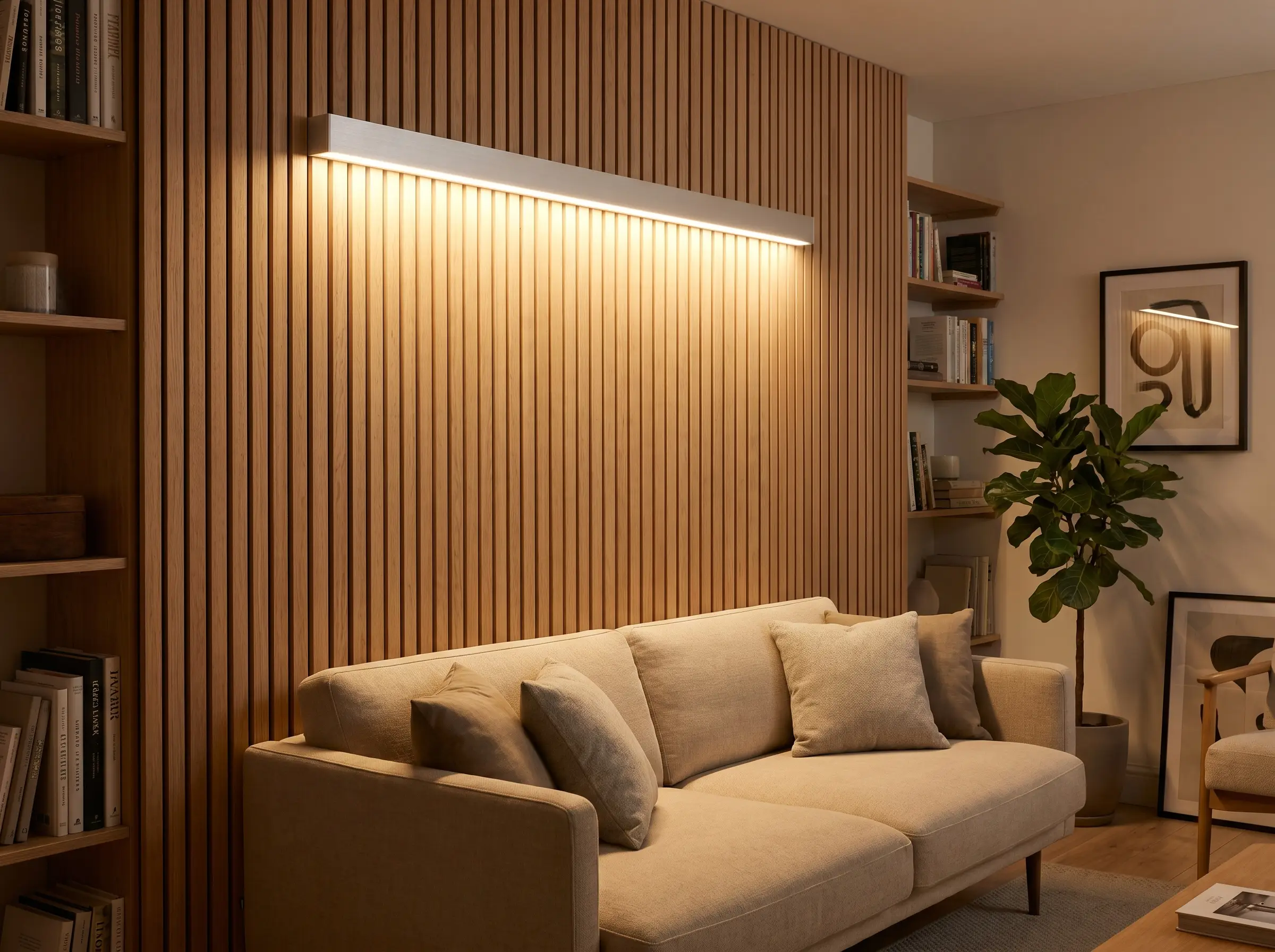
Ditching standard overhead lighting in favor of integrated illumination gives the wall a completely bespoke aesthetic. By replacing a single wood slat with an aluminum LED extrusion channel and a frosted diffuser, you create a soft ambient wash that highlights the veneer without casting harsh, striped shadows.
Always specify 2700K LED strips to ensure the oak veneer casts a warm, inviting glow. Anything cooler than 3000K will make the wood look sickly and sterile.
Designer Detail
- Vibe: High-End Contemporary.
- Key Materials: Aluminum extrusion channel, frosted polycarbonate diffuser, Govee RGBIC strips.
- Execution: Position the light strip asymmetrically, roughly one-third of the way across the wall, rather than dead center behind the couch.
Mount Hardwired Brass Sconces Directly Through the Veneer
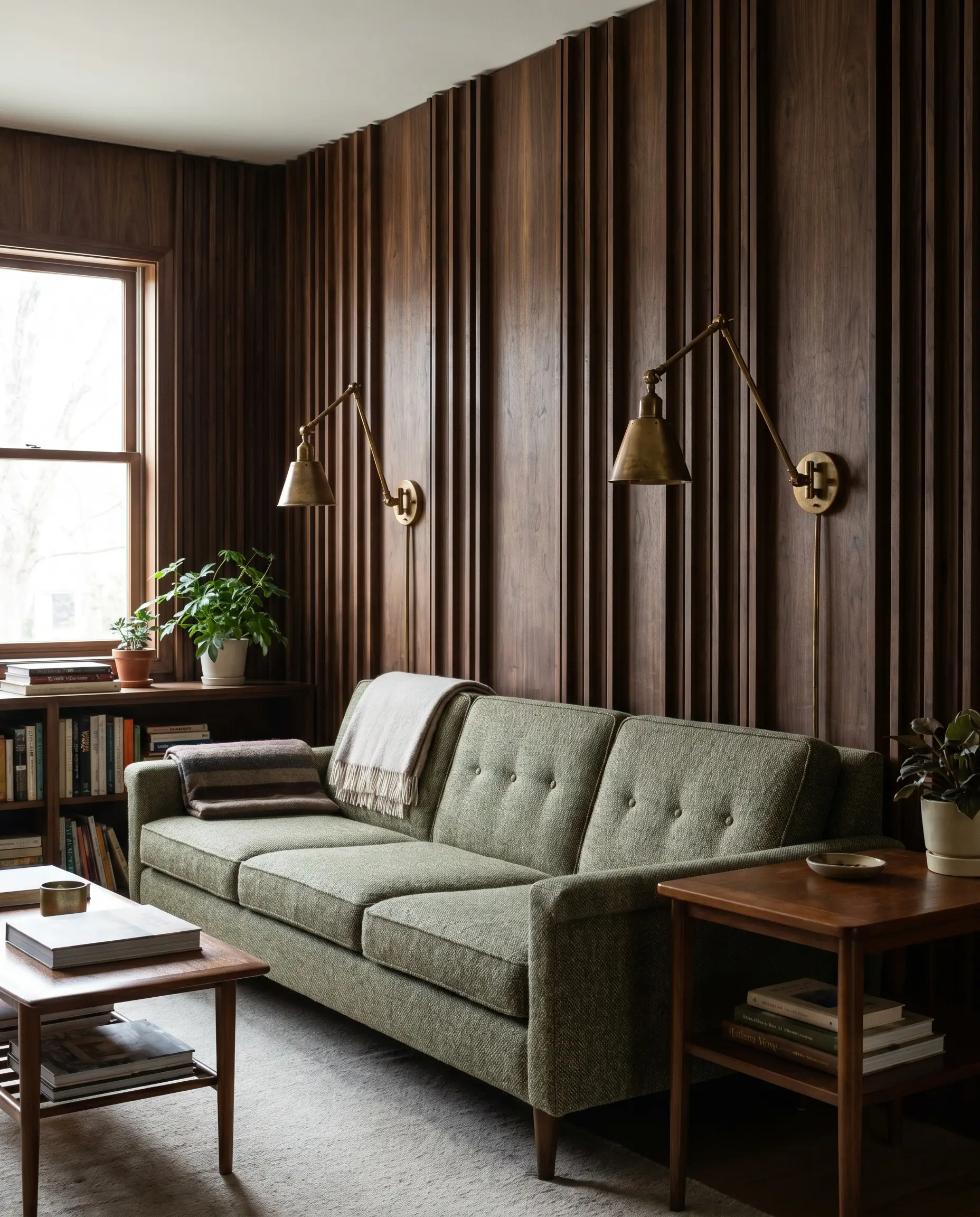
Pulling electrical wire through the acoustic felt before mounting the panels allows you to hardwire fixtures directly onto the fluting. The juxtaposition of smooth metal against rigid wood grain creates a striking Mid-Century Modern focal point.
- Vibe: Mid-Century Modern.
- Key Materials: Unlacquered brass sconces, dark walnut acoustic panels.
- Styling Pro-Tip: Position the sconces exactly 18 inches above the top of the sofa back for optimal reading light and visual balance.
Stop Slats 8 Inches Below the Ceiling for a Shadow Reveal
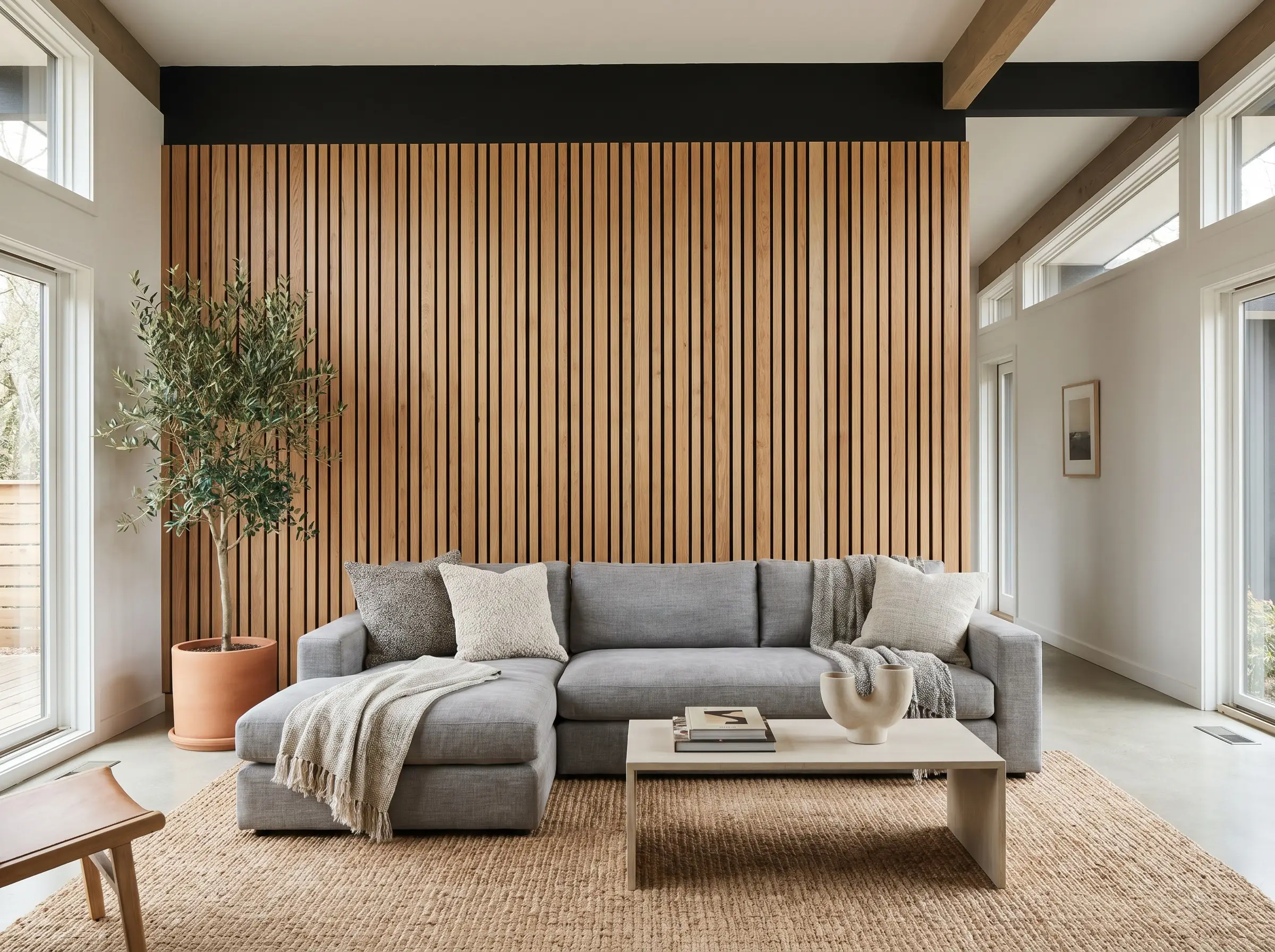
Running vertical slats all the way to a low ceiling (under 8’6″) can inadvertently make the living room feel compressed and cage-like. Leaving a painted gap at the top creates a horizontal shadow line that tricks the eye into perceiving a much taller room.
- Vibe: Architectural Minimalism.
- Key Materials: Matte black or charcoal paint for the reveal gap.
- Execution: Stop the panels exactly 6 to 8 inches below the ceiling line and paint the exposed drywall to match the backing felt.
Integrate a Hidden Drink Ledge at the Sofa’s Top Height
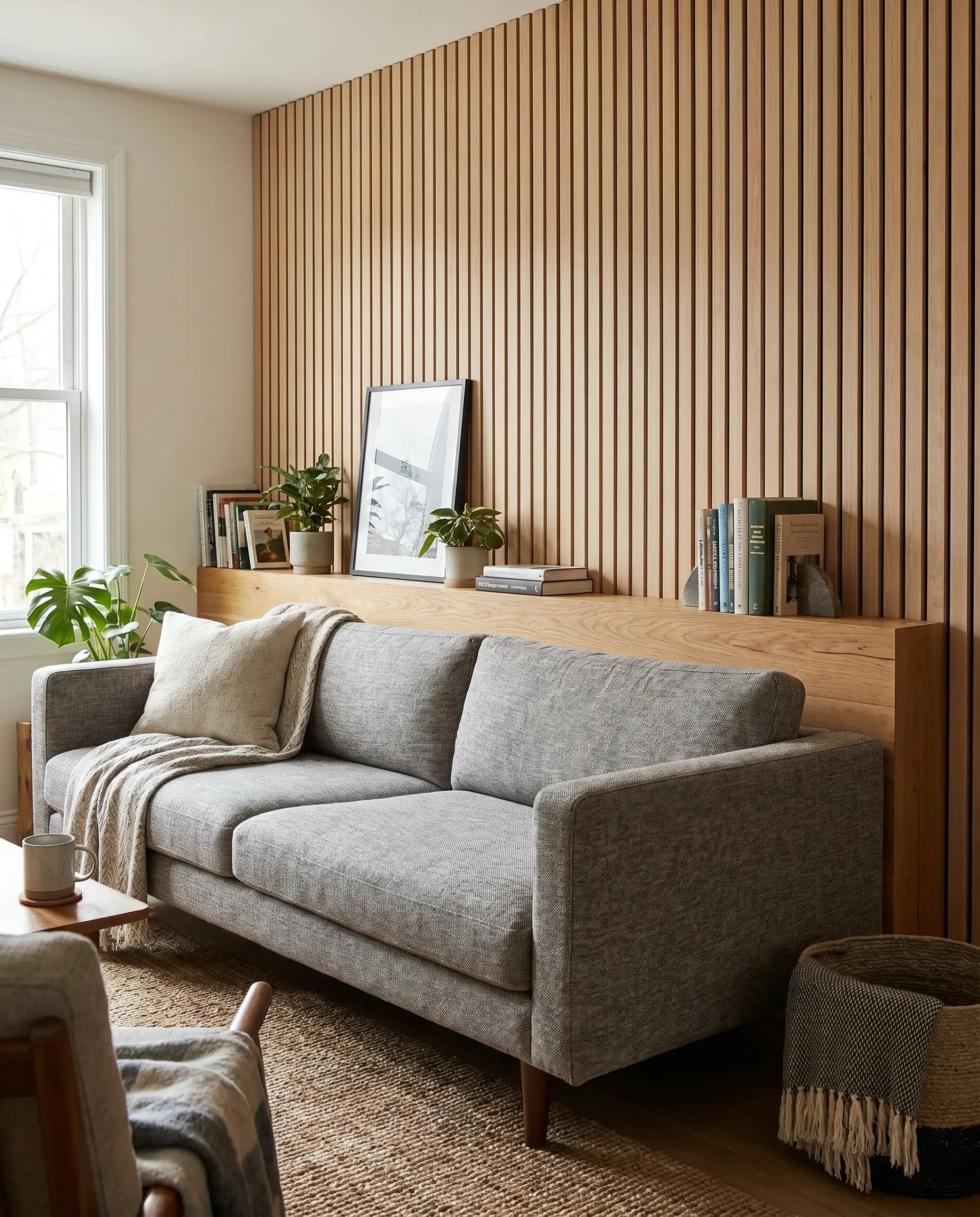
For tight urban spaces where standard end tables simply will not fit, building a shallow ledge directly into the slat structure reclaims lost functionality. The geometry must align perfectly with the furniture to look intentional.
- Vibe: Pragmatic Modernism.
- Key Materials: 4-inch deep solid oak board, heavy-duty concealed L-brackets.
- Execution: Mount the ledge directly into the wall studs through the slats, aligning it flush with the top frame of the sofa.
Curve the Slat Paneling Around an Adjacent Bullnose Corner
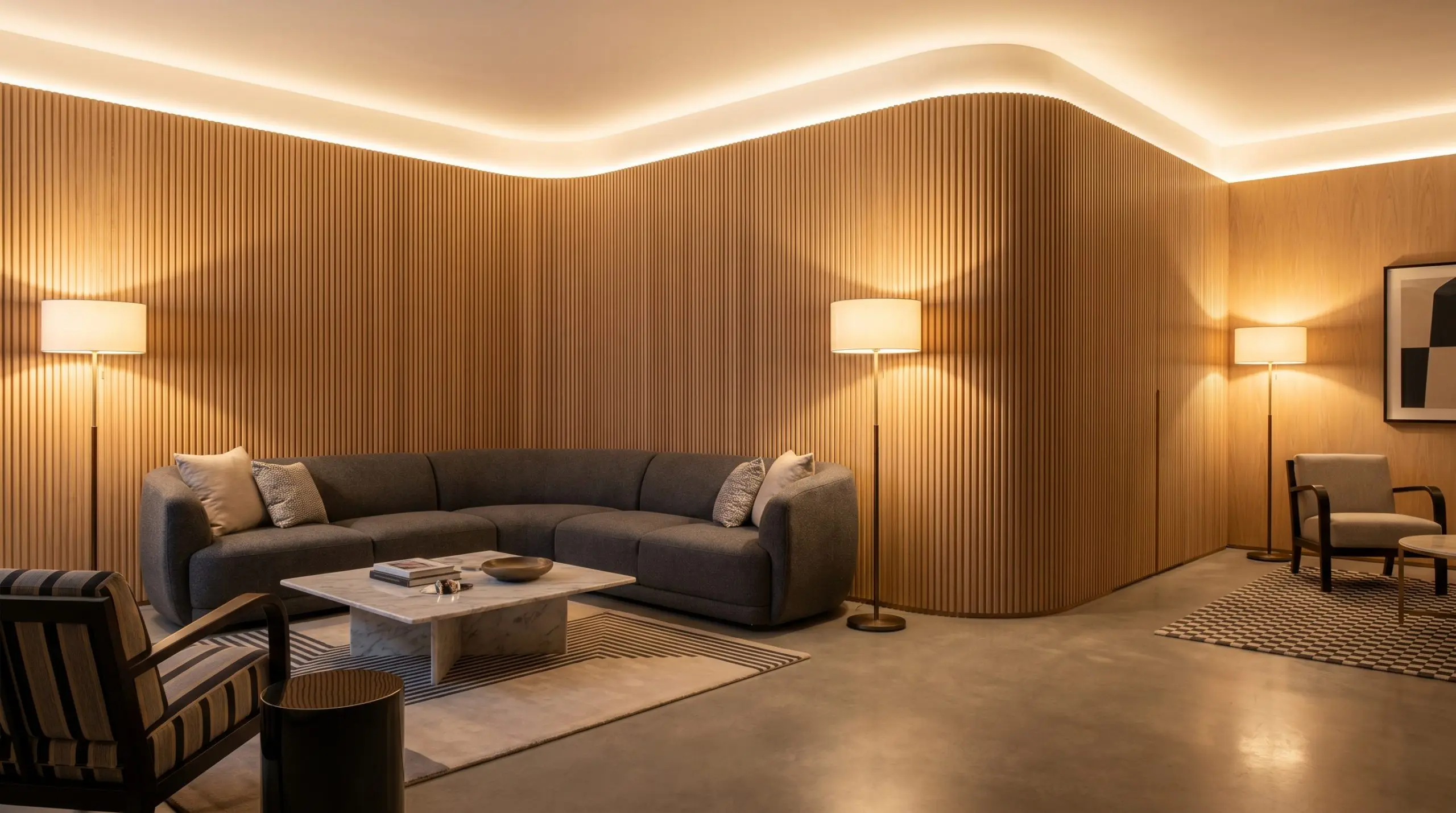
Moving beyond flat, single-wall applications introduces a fluid, high-end architectural flow. Wrapping an outer corner behind a sectional using specialized flexible backing eliminates harsh stops and visually expands the seating area.
- Vibe: Custom Millwork / Postmodern.
- Key Materials: Flexible tambour panels or individually routed slats.
- Styling Pro-Tip: Ensure the baseboards are removed so the wood wrap flows seamlessly from the floor up.
Spatial Illusions and Layout Applications
Wood lines are highly effective tools for manipulating the perceived size and shape of a living room. By altering the horizontal and vertical rhythm of the slats, you can correct awkward room proportions.
Run Horizontal White Oak Slats to Widen a Narrow Room
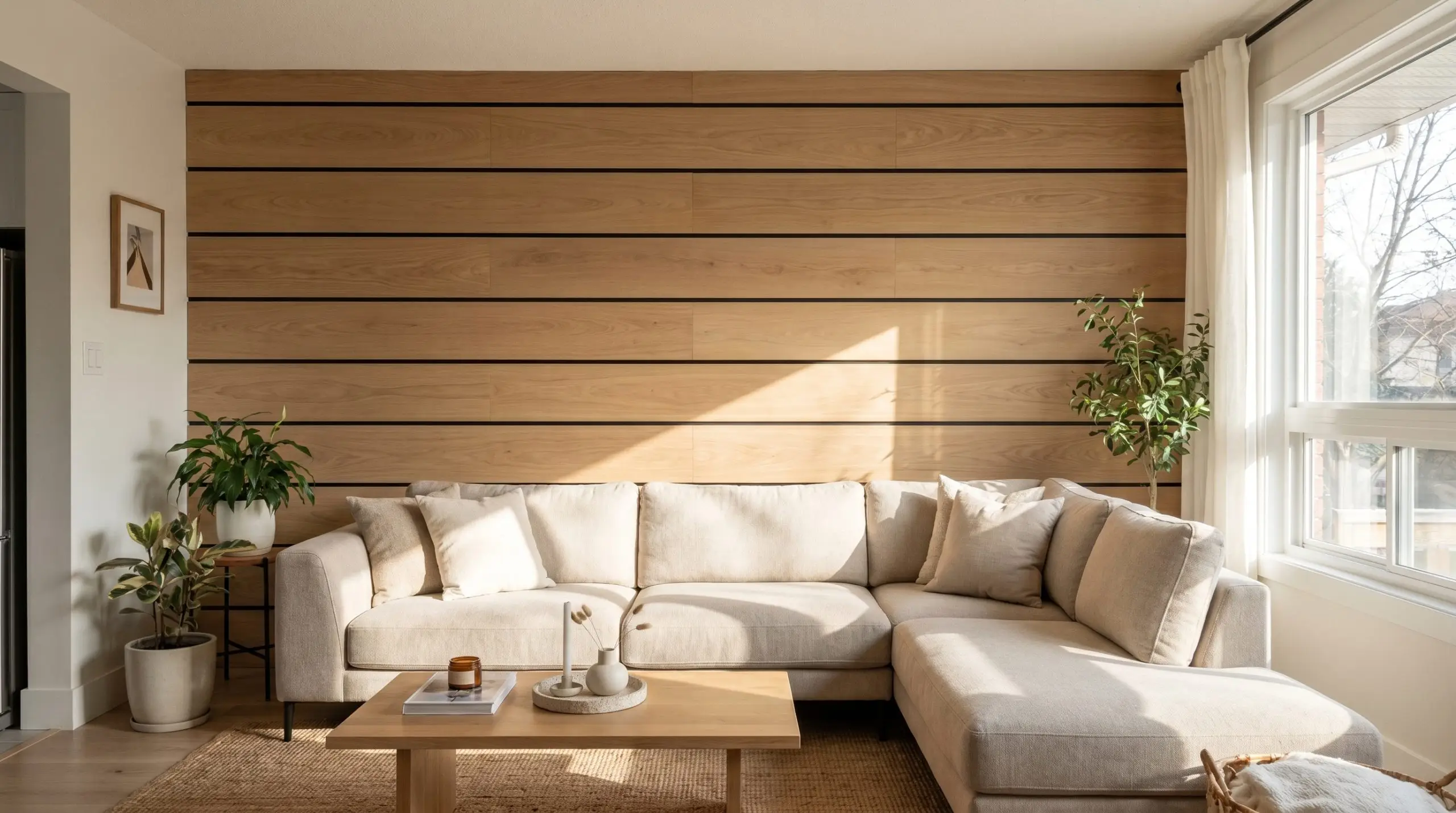
While vertical lines draw the sightline upward, horizontal lines pull the eye outward, making a cramped, narrow living room feel significantly wider. The wall must be at least 8 feet wide for this horizontal rhythm to register properly.
- Vibe: Expansive Contemporary.
- Key Materials: White oak veneer panels.
- Execution: Utilize a strict 1-inch gap between slats to capture mid-afternoon shadows perfectly without looking like exterior siding.
Use an Asymmetrical Slat Strip Behind an L-Shaped Sectional
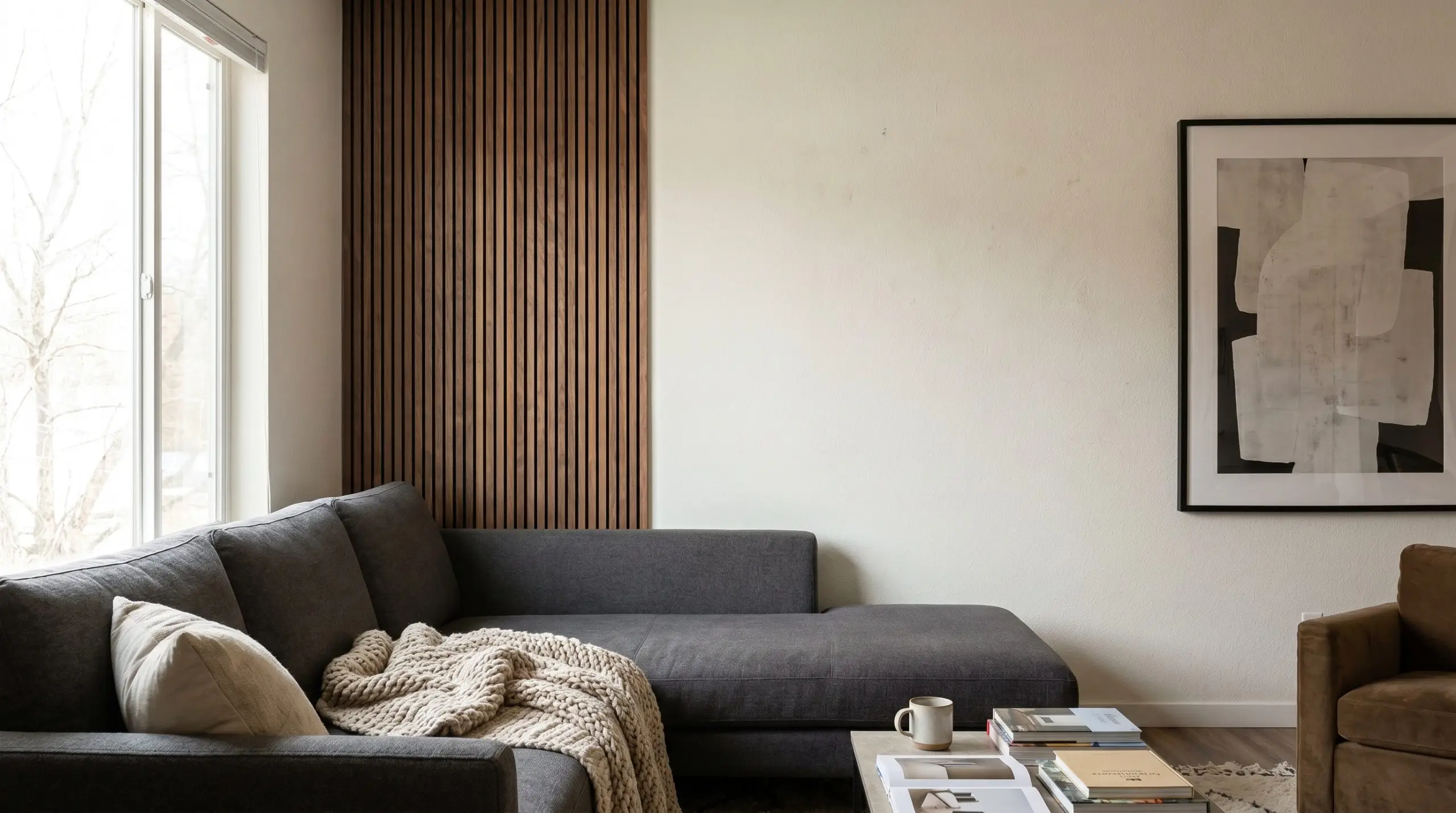
Rather than covering the entire wall, applying a concentrated strip of wood creates a deliberate zoning effect. Aligning a narrow column of slats perfectly with the chaise lounge portion of a sectional anchors that specific seating quadrant.
- Vibe: Asymmetrical Postmodern.
- Key Materials: 4-foot wide vertical acoustic panel arrangement.
- Execution: Position the strip off-center, leaving the rest of the wall bare to emphasize the negative space.
Create a Half-Wall Wainscoting Slat Effect Behind a Low Couch
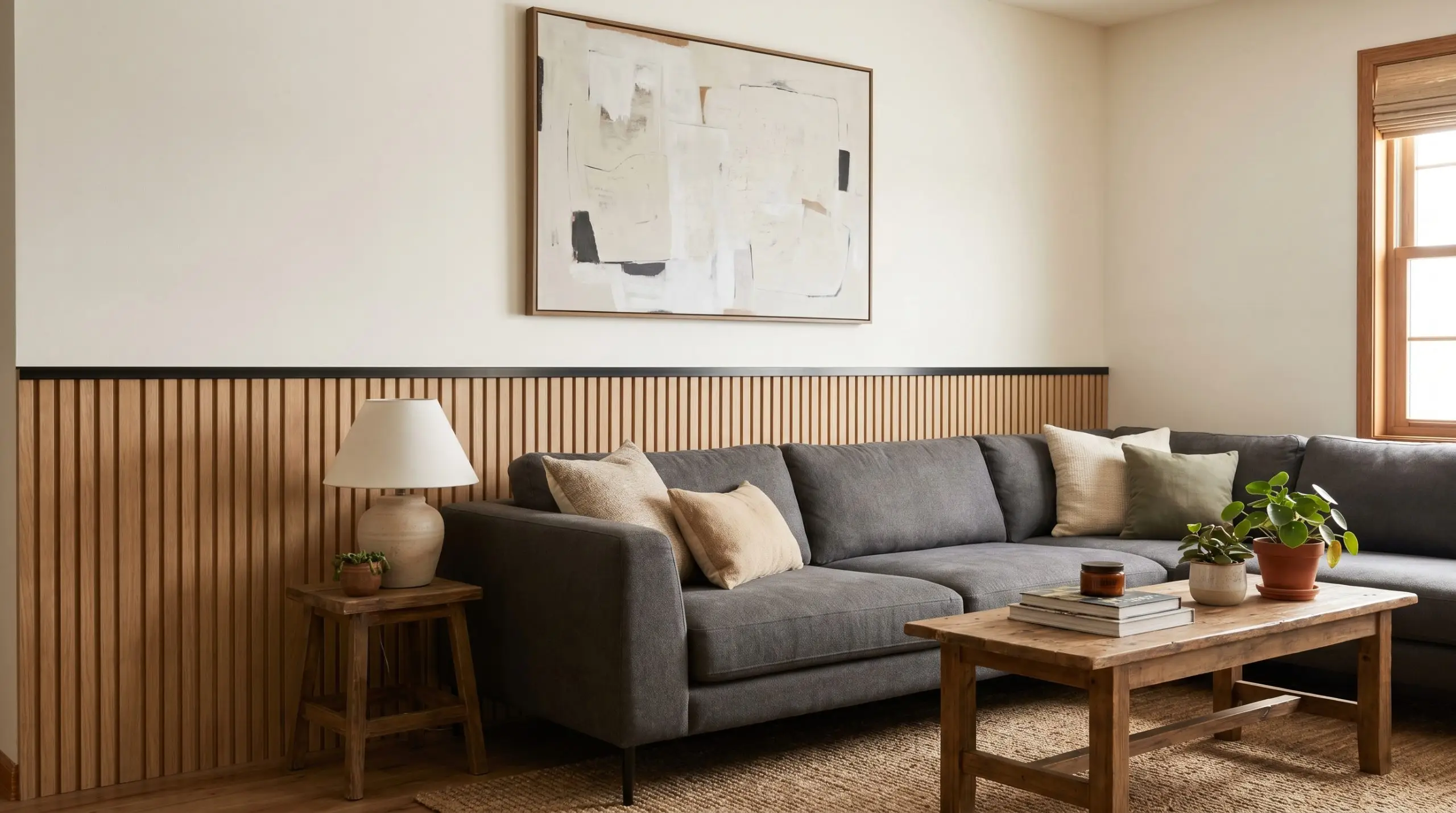
Running vertical slats only on the bottom half of the wall offers a contemporary take on traditional wainscoting. This grounds a low-profile sofa while leaving the upper wall open for oversized artwork.
Never leave the top edge of the slats exposed. Cap the installation with a sleek, 1-inch black metal trim or a matching solid wood bullnose piece exactly 6 inches above the back of the sofa to finish the sightline cleanly.
Pro-Tip
- Vibe: Transitional Modern.
- Key Materials: 4-foot high slat panels, metal J-trim capping.
- Execution: Ensure the cut edges at the top are perfectly level before applying the capping trim.
Flank the Sofa with Slat Panels While Leaving the Center Smooth
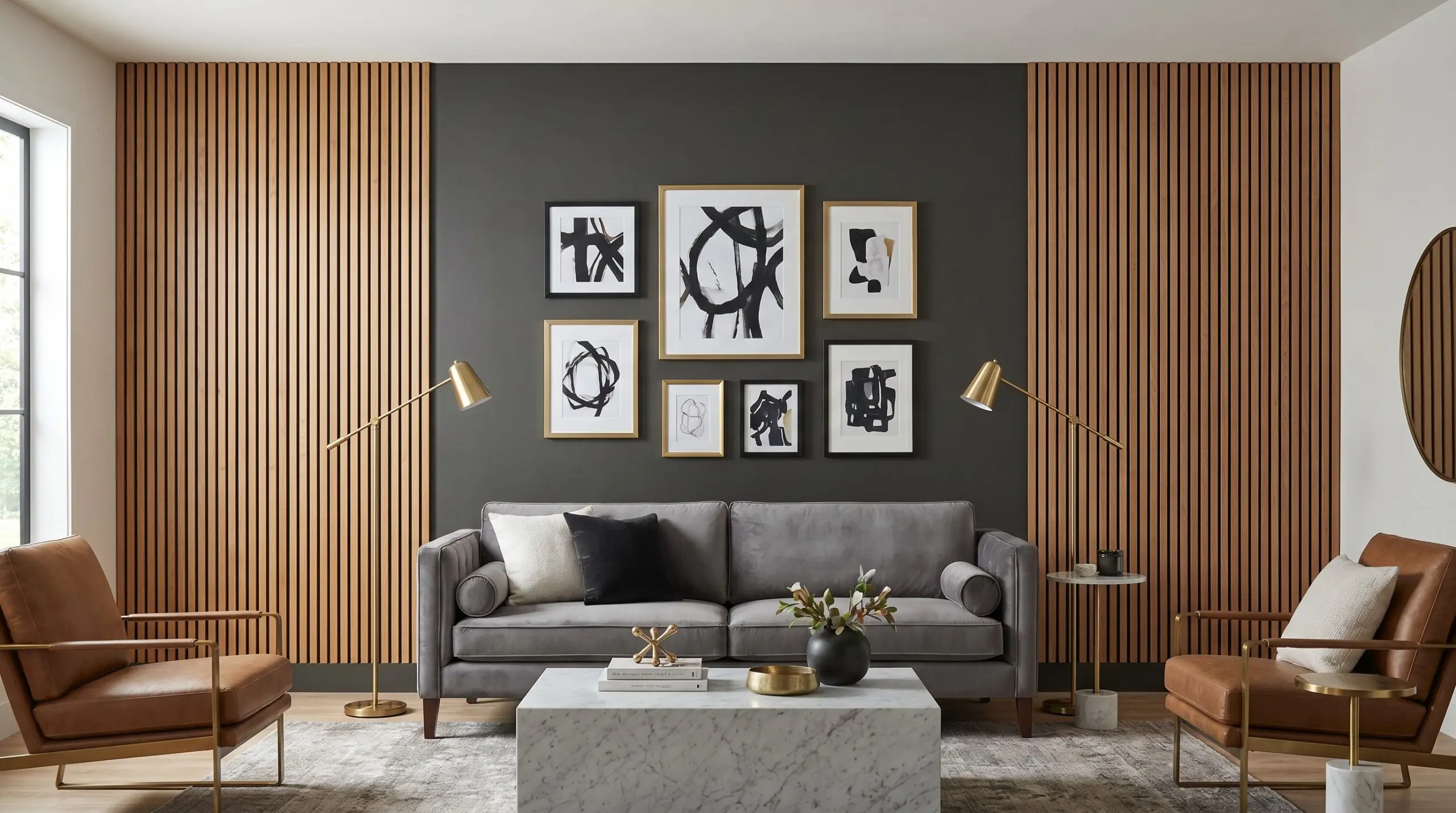
Creating a reverse accent wall uses fewer panels while maximizing dramatic impact. By framing the left and right thirds of the wall with wood, the center block directly behind the sofa becomes a smooth, highly focused gallery space.
- Vibe: Gallery Chic.
- Paint Recommendation: Sherwin-Williams Iron Ore.
- Execution: Plaster the center block completely smooth and paint it a rich, dark hue to contrast against the textured wood flanks.
Install Floor-to-Ceiling Mirrors at the Edges of the Slat Wall
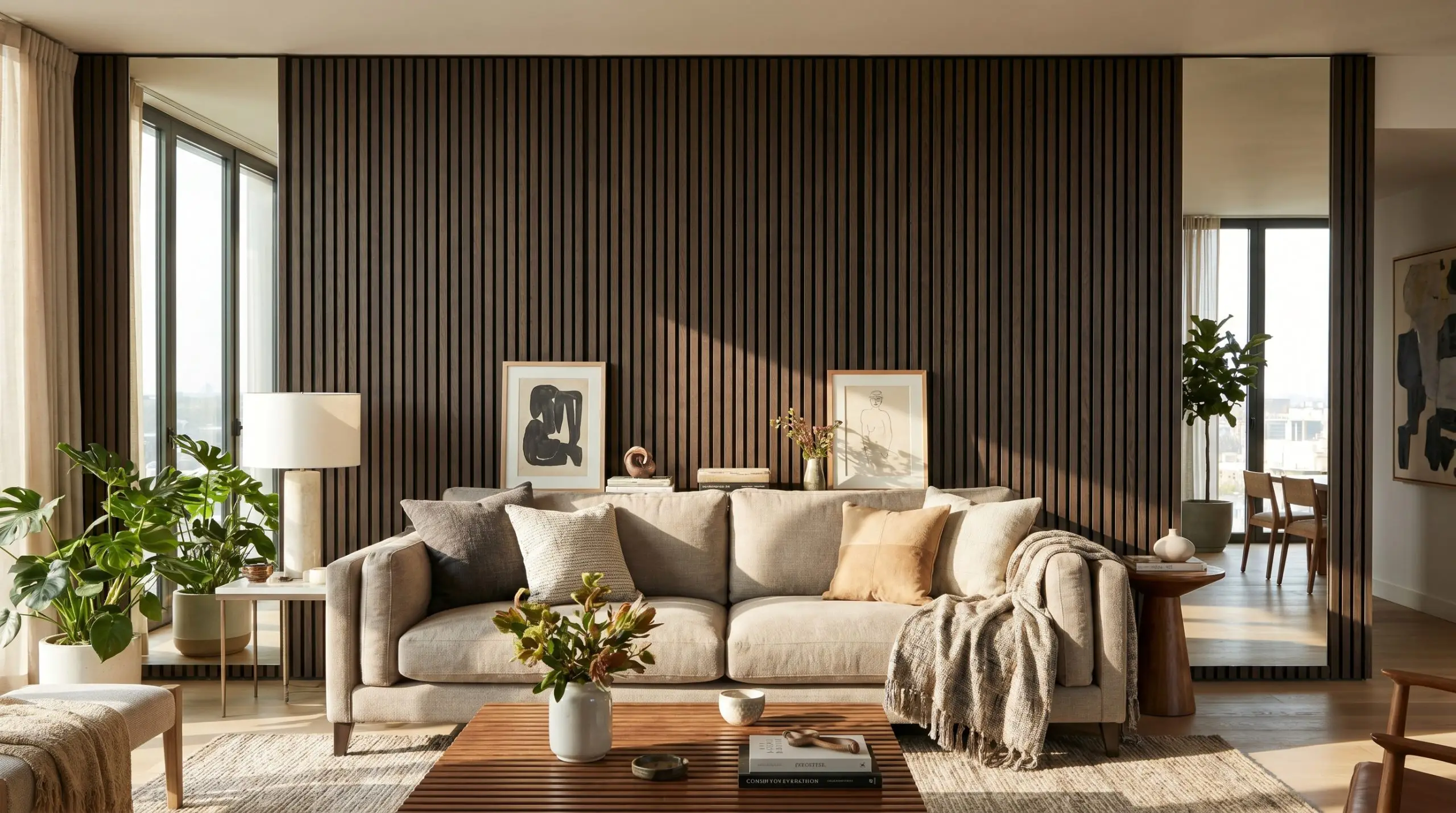
Dark woods like smoked oak or walnut can occasionally make a living room feel cave-like if natural light is scarce. Installing narrow mirrors at the extreme left and right boundaries of the slat installation bounces light back onto the seating area.
- Vibe: High-End Hospitality.
- Key Materials: 12-inch wide floor-to-ceiling mirrored panels.
- Execution: Mount the mirrors completely flush with the depth of the wood slats to create a seamless, integrated wall surface.
Material Pairings and Color Contrasts
The success of your living room relies on the tactile collision of textures between the furniture and the wall. The fabric of the sofa and the finish of the wood must engage in a deliberate dialogue.
Contrast a Cool-Toned Bouclé Couch with Warm Teak Paneling
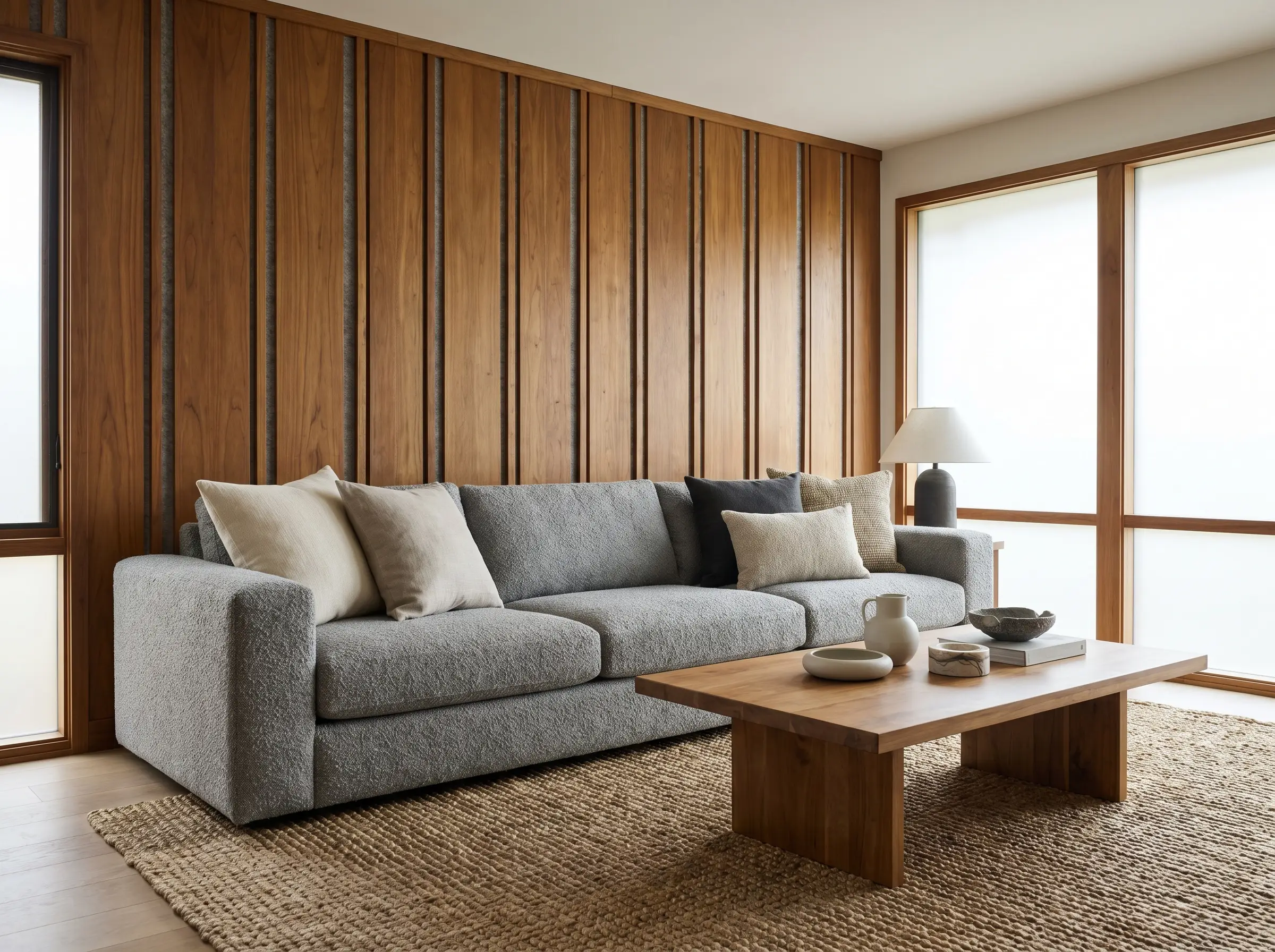
Cold, highly textured fabrics require the visual warmth of rich wood to prevent the room from feeling sterile. The deep, honeyed undertones of teak perfectly balance the icy, nubby texture of a white or grey bouclé sofa.
- Vibe: Organic Modern.
- Key Materials: Teak wood panels, grey acoustic felt.
- Styling Focus: Keep throw pillows strictly neutral to let the fabric-to-wood contrast remain the focal point.
Ground a Vibrant Velvet Sofa with Matte Black Slat Walls
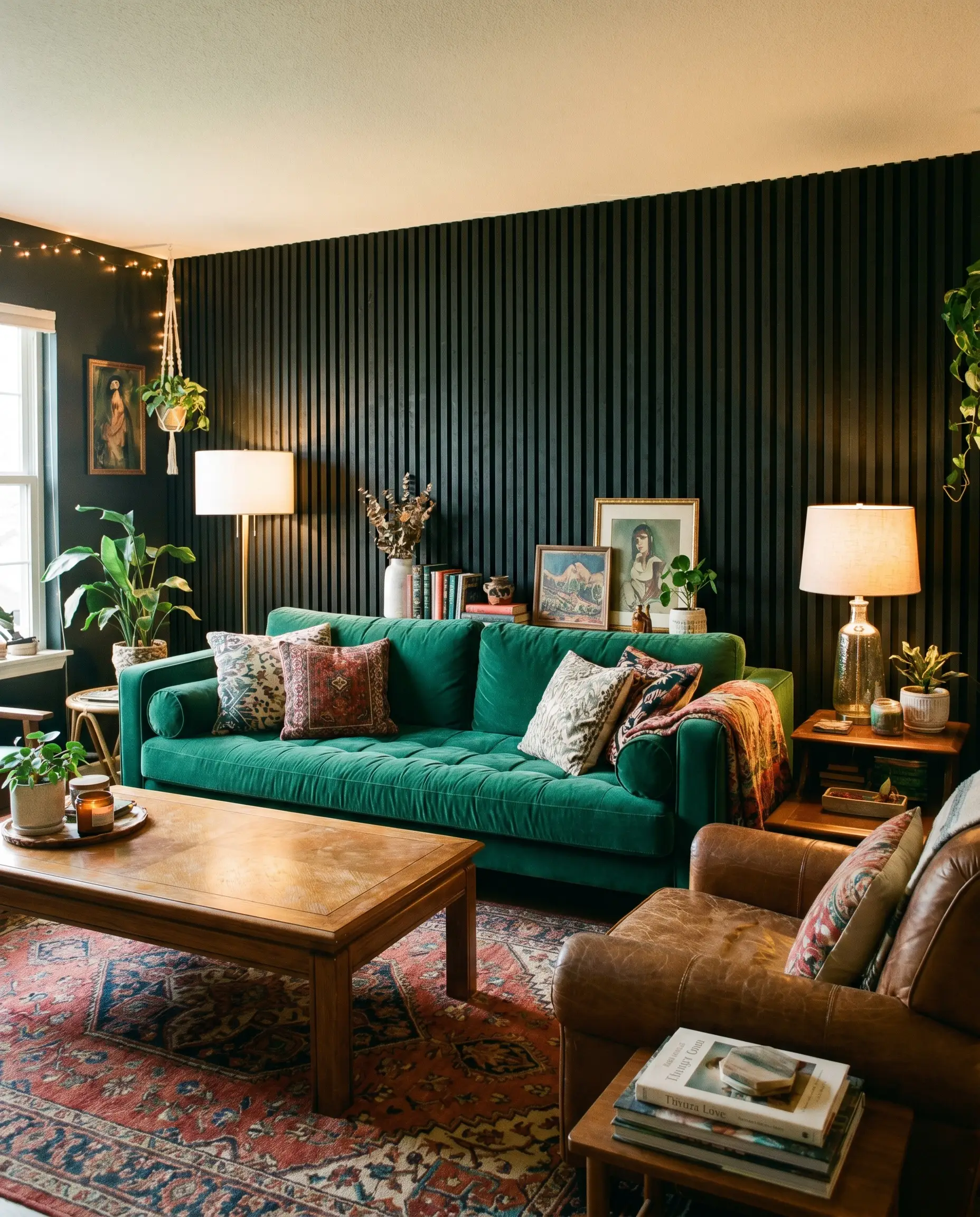
For moody interiors, a dark, textural void allows jewel-toned furniture to command the space. Black-stained slats against a black felt backing absorb light, making an emerald green or mustard yellow velvet sofa absolutely pop visually.
- Vibe: Maximalist / Moody.
- Key Materials: Black-stained oak panels, black PET felt backing.
- Execution: Ensure the room has adequate ambient lighting elsewhere to prevent the black wall from flattening out.
Pair Fluted Pine Slats with Limewash Plaster for Organic Modernism
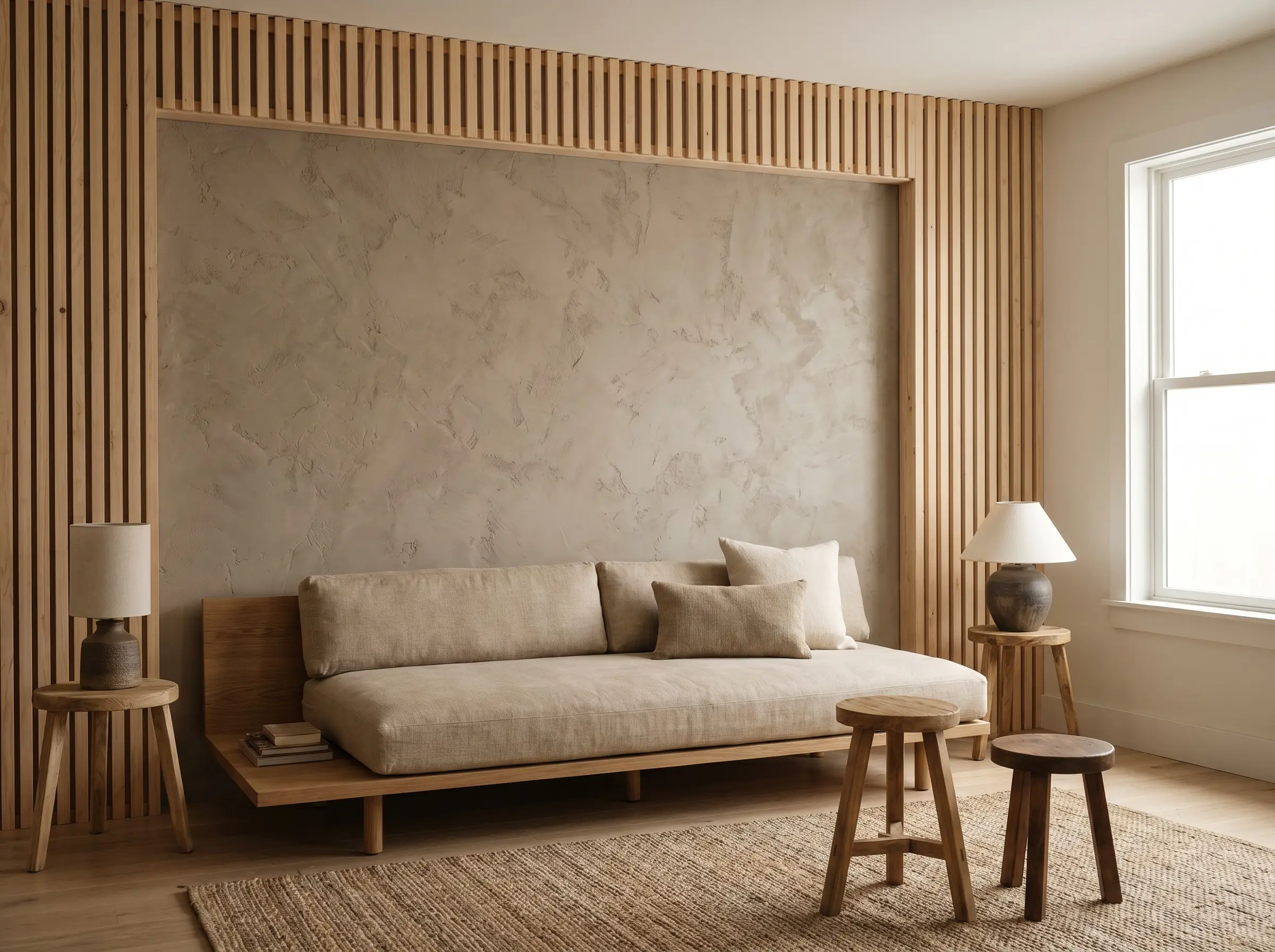
Applying natural, matte finishes to raw materials yields a highly bespoke aesthetic for ambitious renovators. Bordering raw pine against a heavily textured plaster wall creates a rich, earthy sightline.
- Vibe: Earthy Minimalist.
- Key Materials: Unfinished pine slats, Rubio Monocoat Pure.
- Paint Recommendation: Portola Paints Roman Clay in “Coda.”
- Execution: Sand the pine strictly to 220 grit before sealing to ensure the matte finish applies flawlessly without yellowing.
Match the Slat Wood Tone Exactly to Your Exposed Sofa Legs
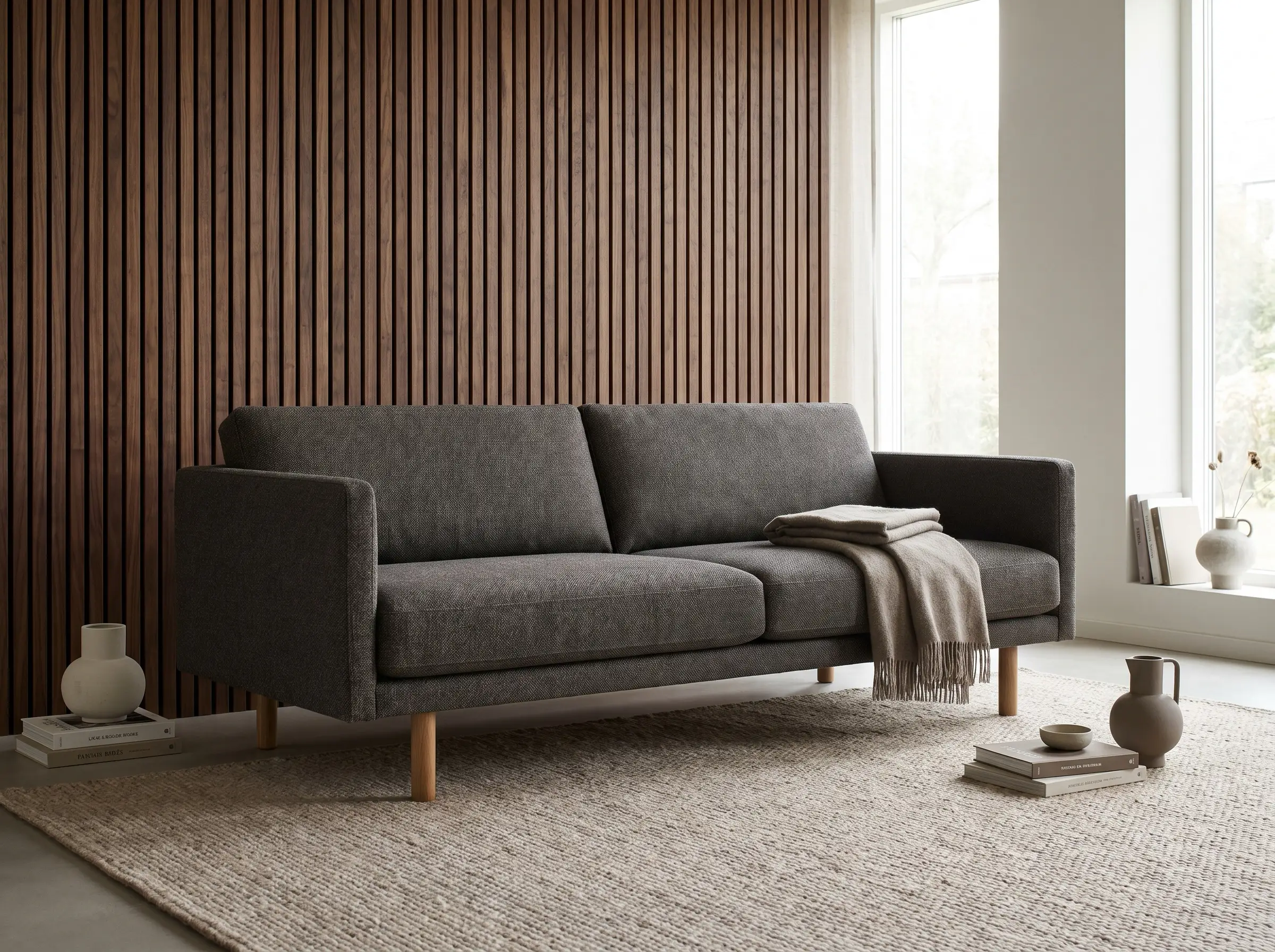
Aligning the architectural millwork with the furniture’s structural base is an insider secret that instantly unifies the room. If your sofa features exposed cylindrical oak legs, sourcing an exact stain match for the wall veneer creates a cohesive, grounded look from floor to ceiling.
- Vibe: Refined Tailoring.
- Key Materials: Custom-stained wood veneer.
- Styling Focus: Keep the rug relatively flat and neutral so it doesn’t interrupt the visual connection between the legs and the wall.
Use a Dark Grey Felt Backing to Hide Wall Imperfections
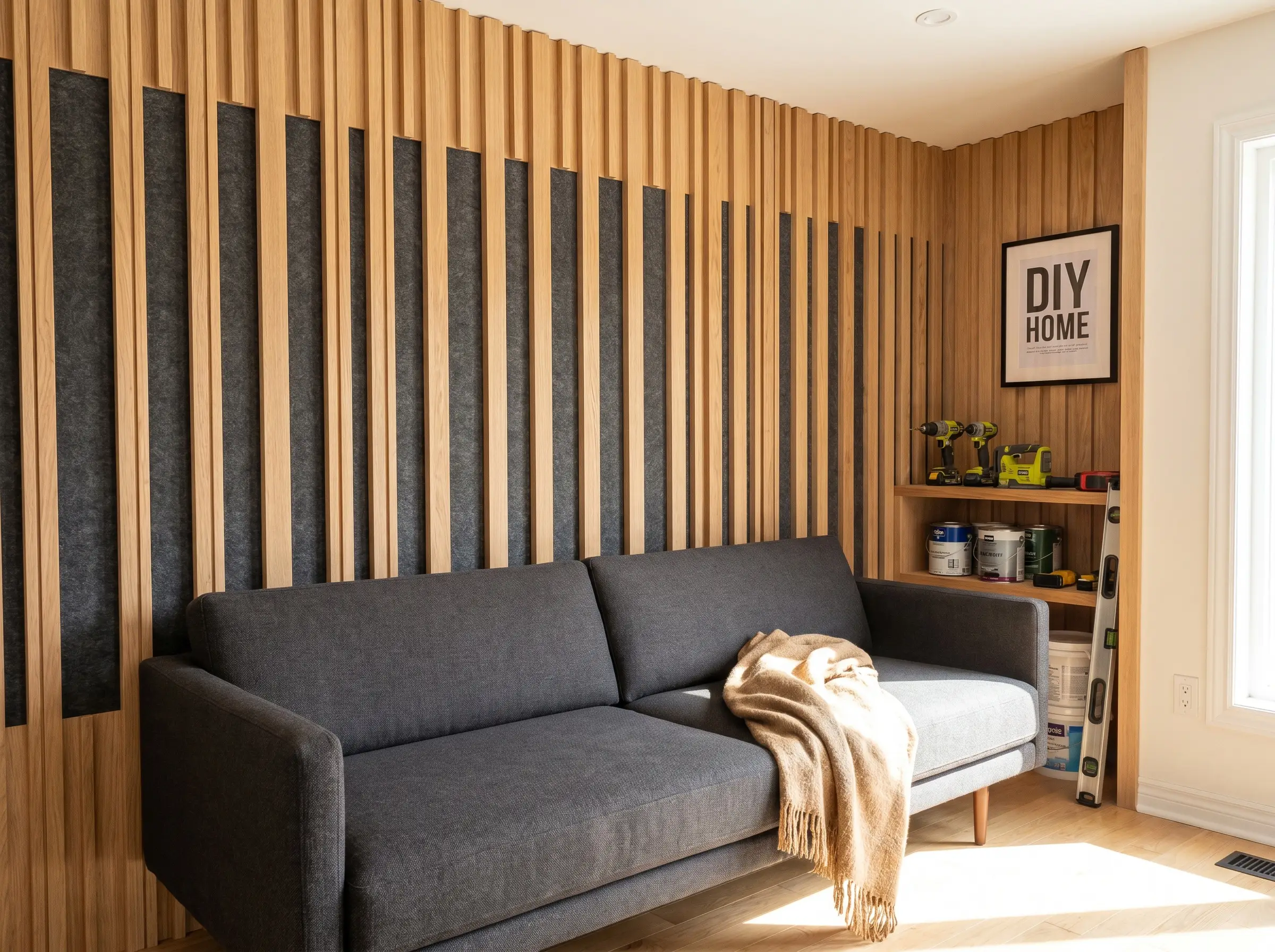
Beyond sound absorption, the thick PET felt backing acts as an incredible camouflage layer. A dark grey or charcoal felt completely masks bumpy, heavily textured, or damaged drywall directly behind the sofa without the grueling need for skim-coating.
- Vibe: Practical Renovation.
- Key Materials: 9mm thick dark grey PET acoustic felt.
- Execution: Apply panels directly over the damaged drywall using construction adhesive and black trim screws.
Contrast Heavy Leather Sofas with Ultra-Thin Micro-Fluting
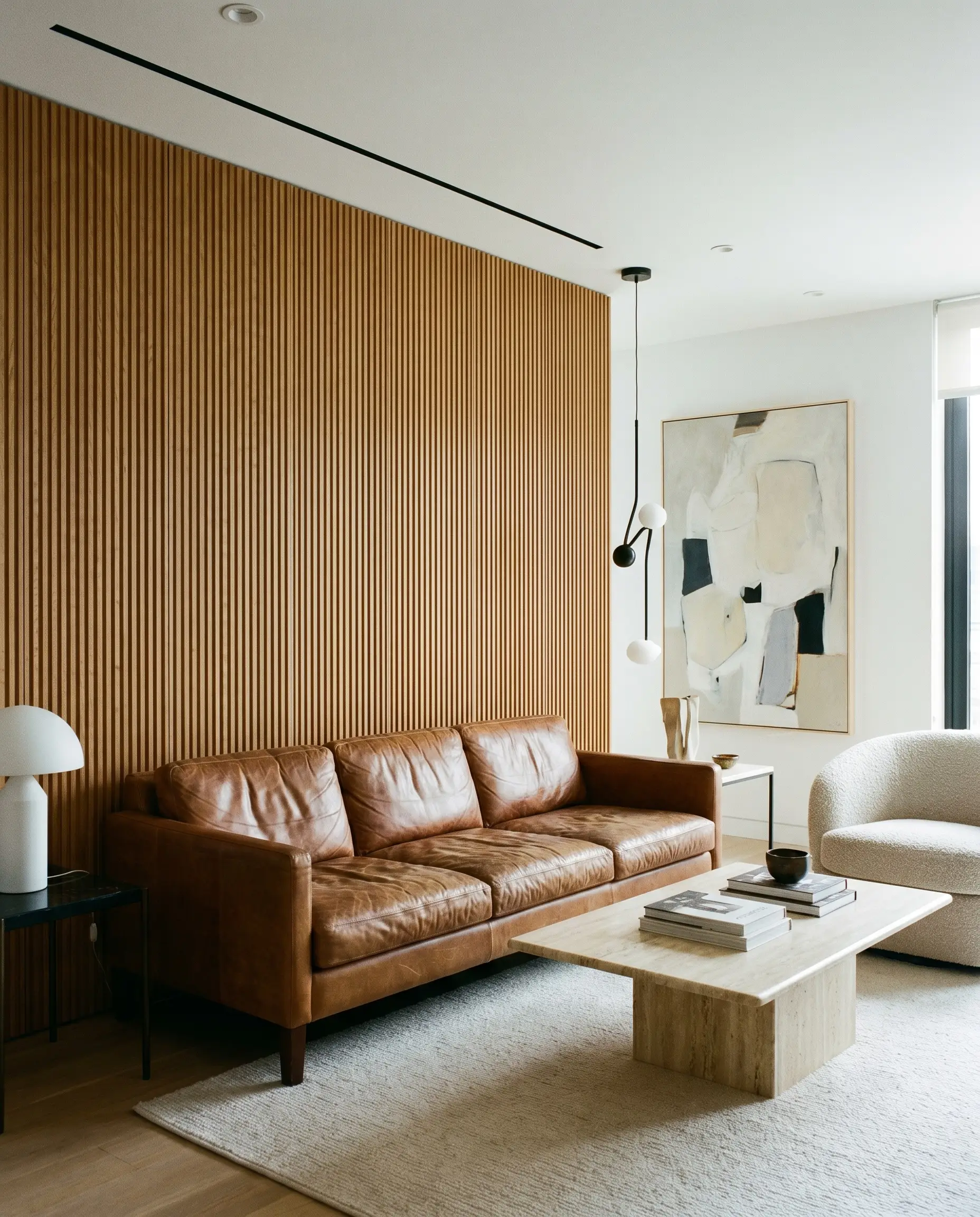
A distressed, chunky cognac leather sofa paired with standard wide slats can quickly look like a rustic cabin. Pairing that heavy leather with delicate, half-inch micro-fluted panels refines the room, pushing the aesthetic firmly into contemporary territory.
- Vibe: Refined Contemporary.
- Key Materials: Cognac leather, 0.5-inch micro-fluted panels.
- Execution: Run the micro-fluting vertically to give the heavy sofa a sense of upward lift.
Styling and Decorating Over Slats
One of the largest hurdles is understanding how to hang decor on an uneven, slatted surface without ruining the wood. The solution requires specific hardware and a deliberate approach to layering.
Mount a Floating Metal Gallery Ledge Over the Wood Slats
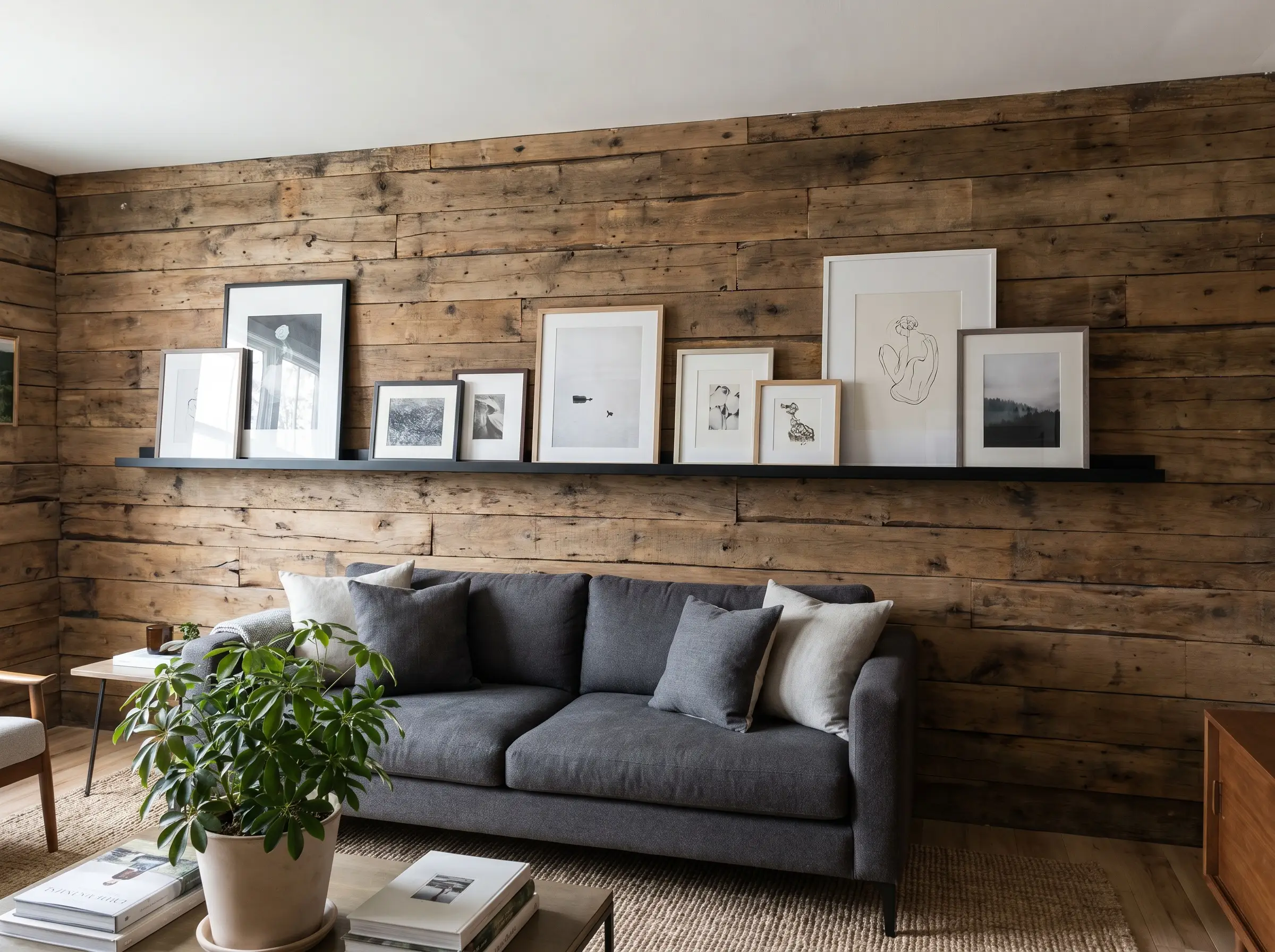
Attempting to align multiple small frames across an uneven slatted surface often results in a cluttered, visually chaotic sightline. Installing a single, slim matte-black metal picture ledge straight across the panels allows you to lean and swap artwork dynamically above the sofa while maintaining architectural order.
- Vibe: Gallery-curated minimalism.
- Key Material: 60-inch matte black aluminum floating ledge.
- Hardware Note: Never anchor heavy art ledges solely into the acoustic felt; toggle bolts must penetrate completely through the MDF core to bear the weight safely.
Hang Large-Format Canvas Art Using Deep-Standoff Hardware
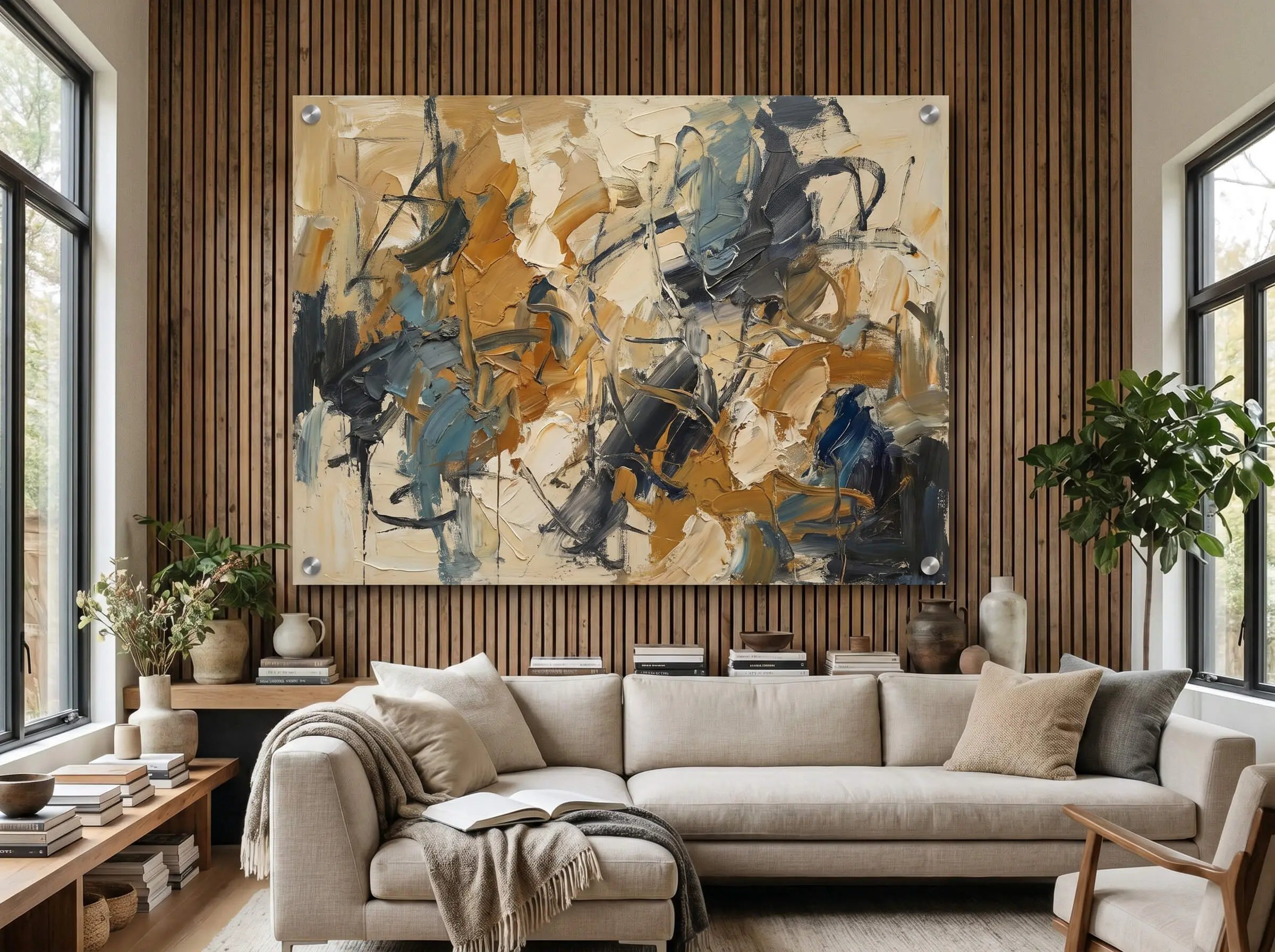
Pressing a large canvas flat against textured slats visually crushes the architectural depth of the wood. Utilizing deep standoff mounts floats a massive, single-canvas abstract art piece one inch in front of the slats, creating sophisticated layered depth.
- Vibe: High-End Gallery.
- Key Materials: 1-inch stainless steel standoff hardware mounts.
- Execution: Pre-drill through the gaps in the slats to sink the standoff anchors directly into the wall studs.
Suspend a Woven Tapestry to Soften the Wood Lines
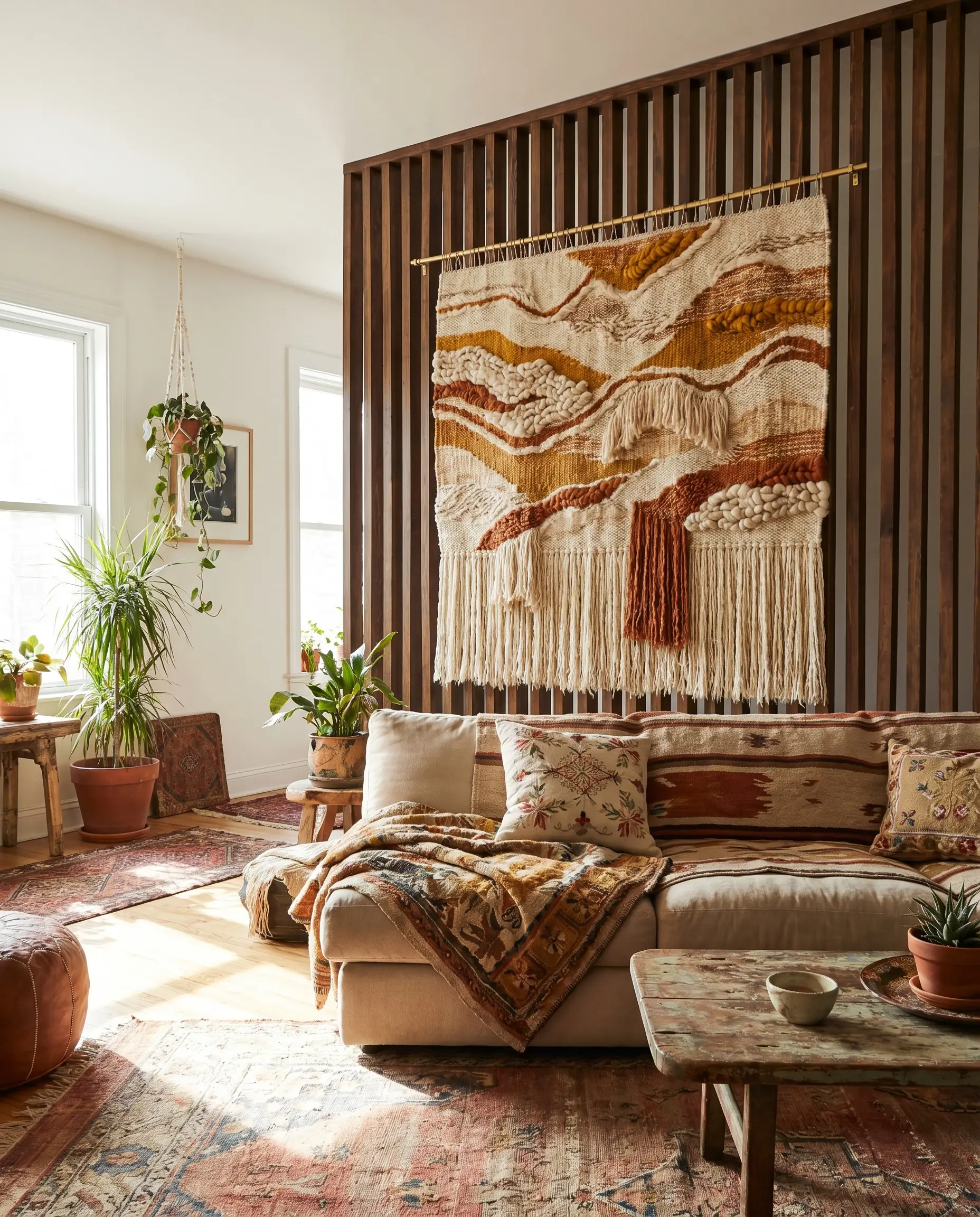
Slats introduce an overwhelming amount of hard, rigid vertical geometry. To balance the room’s energy, hang an organic, free-flowing wool textile directly in the center of the wall behind the sofa to soften the rigid framework.
- Vibe: Tactile Bohemian.
- Key Materials: Thick wool or raw cotton woven hanging, brass hanging rod.
- Execution: Suspend the rod from the ceiling or high up on the slats so the textile floats gently over the wood grain.
Anchor a Dramatic Arched Floor Mirror Against the Slats
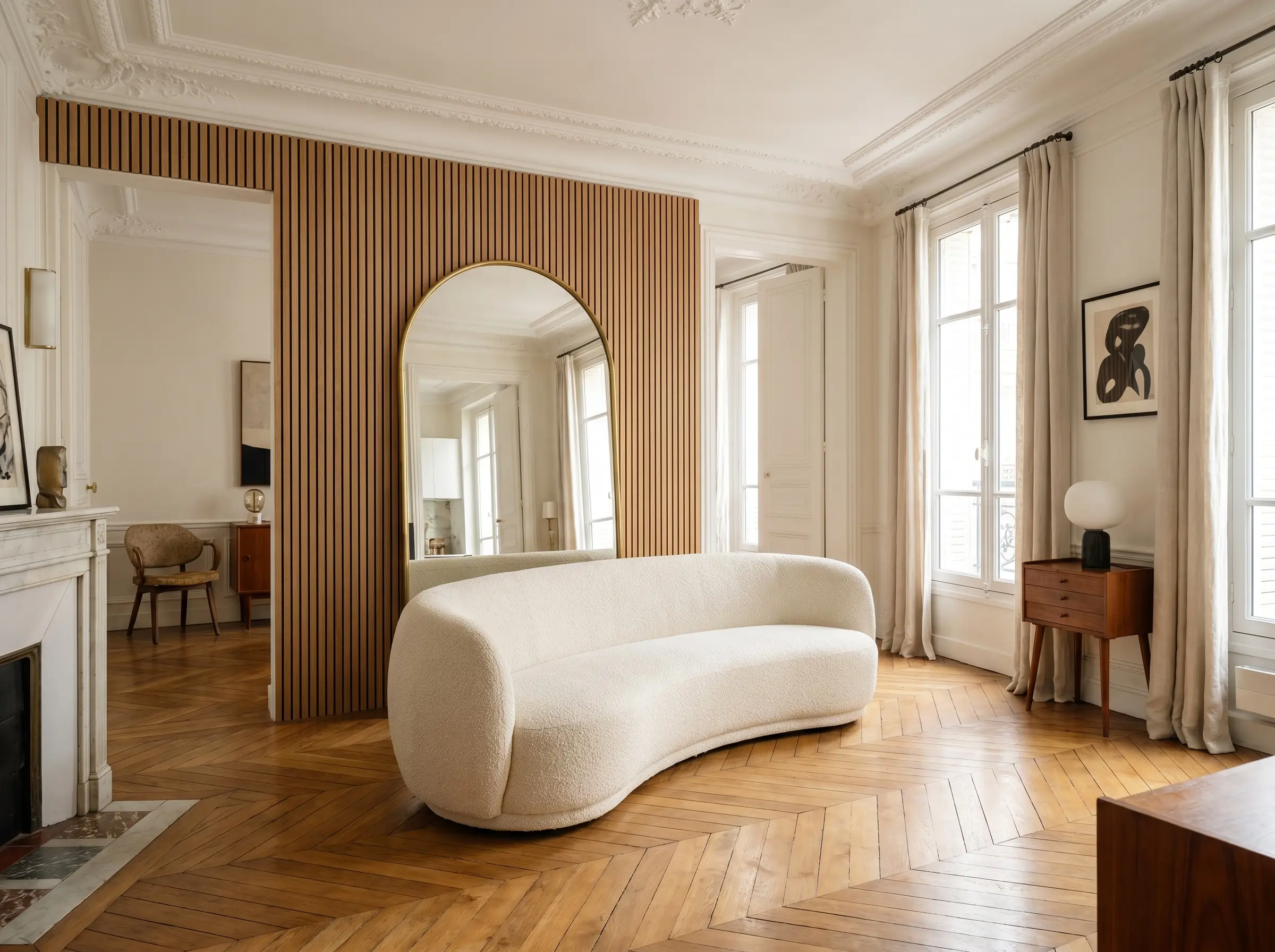
Rather than drilling into the new millwork, leverage the floor space behind the seating. Placing an oversized, brass-framed arched mirror on the floor and leaning it directly against the wood slats breaks up the vertical lines while bouncing light across the room.
- Vibe: Parisian Modern.
- Key Materials: 72-inch high arched brass floor mirror.
- Execution: Pull the sofa forward by at least 10 inches to allow the mirror to lean safely without being bumped by the furniture back.
Style Tall, Sculptural Olive Trees in the Sofa-to-Wall Gap
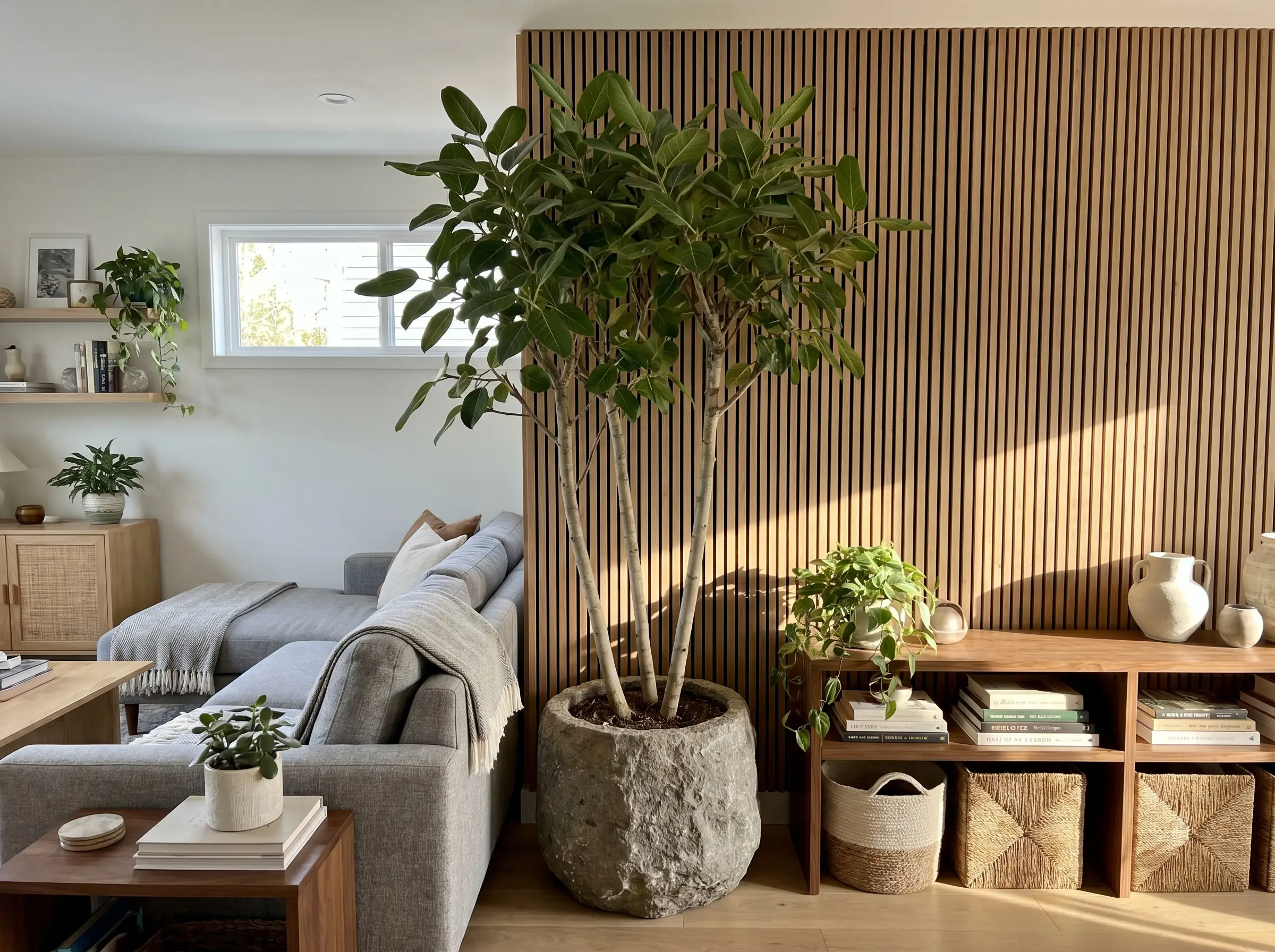
If the room’s layout dictates that the sofa must sit 12 to 18 inches away from the slat wall to allow for a walkway, that negative space must be addressed. Filling the void with a large, sculptural indoor tree introduces an organic canopy that beautifully disrupts the strict wood lines.
- Vibe: Lush Organic Modern.
- Key Materials: Black Olive or Ficus Audrey tree, textured stone planter.
- Execution: Place the planter slightly off-center to maintain an asymmetrical, natural look behind the seating area.
Install Matte Black Floating Shelves for Trailing Pothos Plants
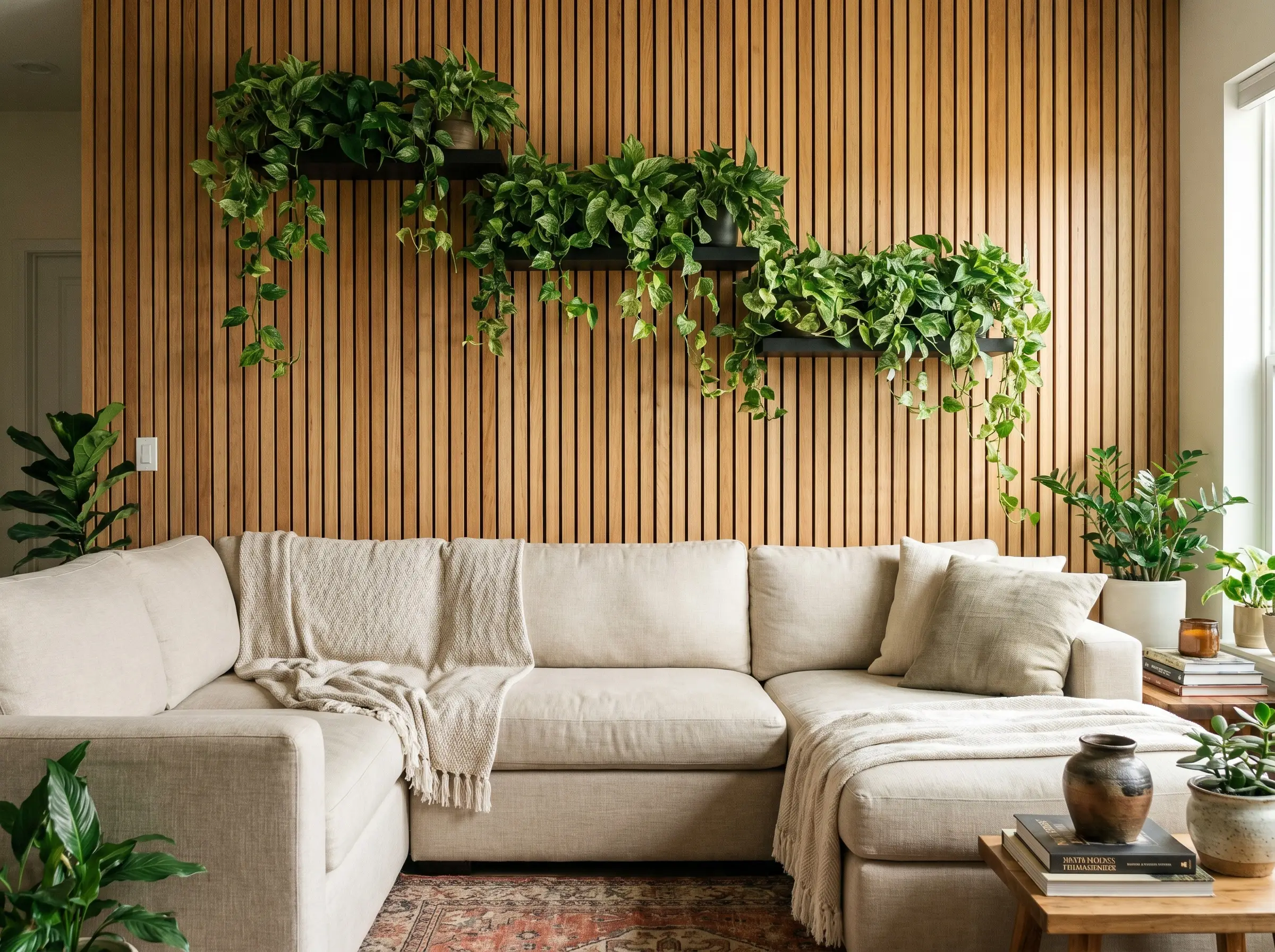
Mounting short, staggered floating shelves directly onto the slats above the couch provides a platform for cascading greenery. The visual contrast between the vibrant green trailing foliage and the strict, warm wood grain softens the overall aesthetic immensely.
- Vibe: Biophilic Design.
- Key Materials: 12-inch matte black steel floating shelves, Marble Queen Pothos.
- Execution: Stagger the shelves diagonally across the upper third of the wall to draw the eye upward.
The Slat Wall Installation Pre-Checklist
Executing this architectural intervention requires strict planning before a single drop of adhesive touches your drywall. Master tradespeople generally recommend verifying the following parameters to ensure a flawless finish.
- Do check the acoustic rating: Ensure your chosen panels have a high NRC (Noise Reduction Coefficient) if your primary goal is dampening echoes in a hard-floored room.
- Do map your outlets: Plan exactly how to measure and cut around wall outlets behind the couch before applying construction adhesive.
- Don’t ignore the baseboards: Decide strictly beforehand whether to run the slats down to the bare floor (which requires removing the baseboards) or to terminate them cleanly at the top of the existing baseboard line.
- Don’t skip the level: Never trust your ceiling line to be perfectly straight; always use a laser level for the first panel to guarantee the rhythm stays true across the entire wall.
Sealing the Room: Finalizing Your Architectural Canvas
The wall behind your sofa is the fundamental anchor of your living room. Treating it as an architectural canvas rather than an afterthought alters the entire spatial experience of your home. Before you commit to a full installation, always order physical samples of the wood veneer. You must test these samples directly against your sofa fabric in your room’s exact ambient lighting to ensure the textures and undertones harmonize perfectly.
Once your wood tones are locked in and the panels are secured, the final step is ensuring the texture is properly illuminated. Explore Hackrea’s complete guide on living room lighting to discover how to cast the perfect ambient wash over your new custom millwork.

The Hackrea Style Desk treats interior decoration as an exact visual science. Rather than focusing on demolition or floor plans, this desk masters the art of color theory, undertone matching, material pairings, and spatial proportion. From balancing the visual weight of mixed metals to finding the perfect bridging tone between disparate wood species, this desk provides the rigorous aesthetic rules needed to achieve high-end, editorial-quality harmony in any space.