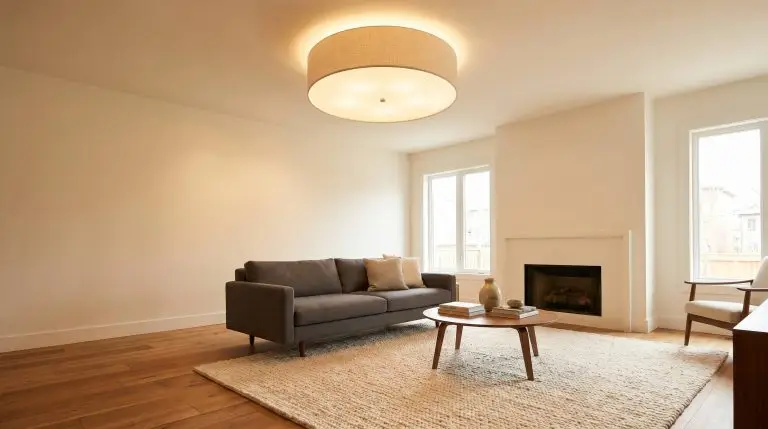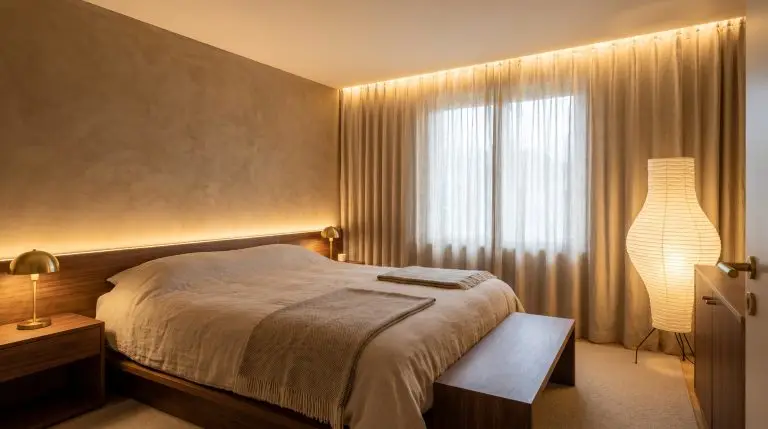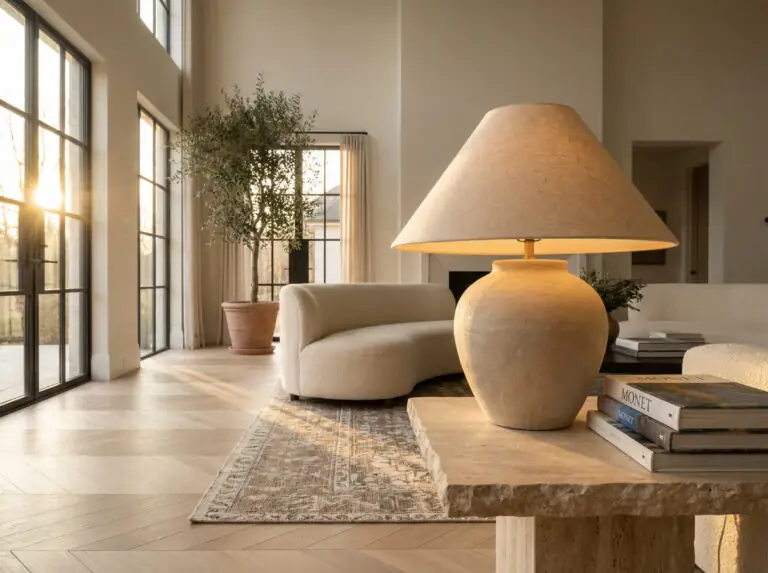
A room can look finished at noon and unfinished after dark. The paint is even. The trim is clean. One ceiling bulb comes on, and the wall you just spent a weekend on goes flat.
That wall is the one people look at. A mantel. A long run of warm beige. The chair you actually sit in. Ceiling light covers the floor. It does not give the wall a face. Design rooms fail this way more often than they fail on color. The swatch was right. The light hitting the swatch was not.
Give The Wall Its Own Light
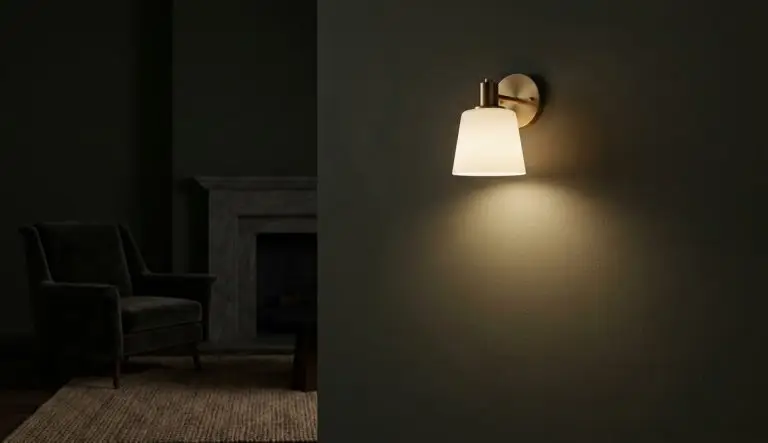
The fix is a wall sconce at about seated eye height, aimed down the paint and a little into the room. One is enough on a short wall. A fireplace wall usually wants a pair, set wide enough that the middle does not go black.
Hang the shade so the bulb is hidden from the sofa. If you can see the bulb, the light is too high, or the shade is too shallow. Fabric shades are kinder to new paint than an open bulb. Metal cups throw a sharper arc, which can look sharp beside stone and harsh beside a bed. In a living room, the arc should fade before it hits the ceiling. A hard circle on the ceiling means the light is aimed up when the wall needs it down.
Hackrea’s fireplace roundup treats the surround as the piece the room is built around. Firelight is what gives that stone a shape after dark. A sconce does the smaller version of that job on nights you do not light a fire. Leaving a new surround in ceiling-light shadow is how a careful paint job still looks half done.
Do not add the light to fill an empty wall. Add it where someone sits, reads, or faces the fireplace. “It looked empty” shows. A chair, a console where keys land, or a hearth you sit toward is a reason. If nobody uses that stretch of wall, leave it.
What The Bulb Does To The Color
Warm beige, greige, and the soft greens in current rooms all shift under a cool bulb. A north-facing wall can look calm at noon and chalky at 7 p.m. because a daylight LED strips the yellow out of the paint. People blame the color and buy another gallon. The gallon will do the same thing under the same bulb.
ENERGY STAR describes color appearance on the Kelvin scale: lower numbers look more yellow, and bulbs made to match old incandescent light sit around 2200K to 3000K. Whiter light is marked about 3500K to 4100K. For a living room wall, stay in that warmer band. Keep the wall light dimmer than the lamp by the chair. The wall should glow. It should not compete with the page.
Test a sample after dusk, shade held at the real height, before the second coat. Tape the sample. Sit where you will sit. Five minutes tells you more than a noon photo on a phone. Phone cameras punish mixed warmth. If the ceiling is cool and the sconce is warm, the room looks broken in the picture even when it feels acceptable in person. Pick one warmth and repeat it.
The Illuminating Engineering Society defines a footcandle as one lumen per square foot. You do not need a meter to use the idea. A wall that is as bright as the ceiling is not a feature. It is just more light. Accent on a mantel or a paint color should read brighter than the rest of the room, then fall off. If the whole wall is blown out, the bulb is too strong for the shade. If the middle is a hole, the pair is too far apart, or the bulbs are too weak.
Where It Belongs
Measure from the seat, not the ceiling. The bottom of the shade sits a little above seated eye line, so you see the glow on the paint and not the lamp. On a mantel, matching heights matter more than centering on the shelf. A pair hung for the ceiling reads as an afterthought. A pair hung for the chair reads as part of the room.
Spacing is the other miss. Two lights jammed beside a narrow frame look nervous. Two lights so far apart that the center stays dark look as if they belong in different rooms. Leave a gap wide enough for the art or the mantel, then look with the overhead off.
A stair is a different job. A living room wants a soft pool of color. A stair wants a light you can see from the step below. Do not copy the living room height onto a landing and call it done. Halls can wait. The wall you see every night is the one that changes how the home feels.
If you rent, a plug-in version still puts light on the paint. It will not look built-in. That is fine. The point is the wall after dark, not a new cable.
A Simple Order
Pick the wall first. In most living rooms, that is the one opposite the sofa or the one with the fireplace. Stand where you sit, at the hour you use the room, with the ceiling as the only source. If that wall is one even wash, it needs its own light.
Then pick the height and the shade before you buy a brighter bulb. Then test the paint sample under that shade. Then hang. People reverse this and wonder why the new color looks harsh. The bulb and the height did it.
Turn the ceiling down once the sconce is in. Keep the overhead for cleaning and for daytime tasks. You do not need it for the evening the room was painted for. One sconce, or a pair, is the whole change. More fixtures will not make the color look more finished. They will only add another switch to leave on.
After The First Night
Sit for ten minutes with the ceiling off. If your eye goes to the bulb, lower the shade or swap it. If the paint still looks dirty, change to a warmer Kelvin before you open another paint can. ENERGY STAR’s scale is the label on the box, not a design trend. Read the number. Do not trust the word “daylight” on a living room bulb.
Art on that wall needs light beside the frame, not on the glass. Glass throws the bulb back at the sofa. A sconce just outside the frame, aimed down the paint, keeps the picture visible without a spotlight. You do not need a gallery system for one living room.
Then stop. The finished version of this room is close to the one you already painted. It needs an honest look after dark, one light on the wall you face, and the overhead turned down. That is the whole job.
If the color still looks wrong after a warmer bulb and a lower shade, then reopen the paint. Not before. Most “bad beige” complaints in a living room are a cool ceiling bulb on a wall that never got its own light.