Low Ceilings, High Impact: The Definitive Guide to Low-Profile Statement Lighting
Standard 8-foot ceilings often feel like a structural penalty. The default assumption for most renovators is that limited vertical clearance requires surrendering to sterile recessed cans or the dreaded, builder-grade “boob light” just to walk through a room safely. We understand the frustration of wanting a dramatic focal point but feeling restricted by the physical boundaries of your architecture.
Having a standard ceiling height does not mean forfeiting a sophisticated centerpiece. The trick is shifting the visual weight from a vertical drop to horizontal expansion. By relying on highly specific geometries—going wide instead of deep—and utilizing the optical refraction of materials like carved alabaster, fluted glass, and unlacquered brass, you can command the room without encroaching on livable air space.
By manipulating scale, embracing wide-span fixtures, and utilizing the reflective properties of high-end finishes, we can trick the eye into perceiving a much taller, grander space.
The Structural Rules of Low-Ceiling Lighting
Before sourcing bespoke finishes, we must define the spatial constraints that govern standard sightlines and safe clearances.
- The 7-Foot Clearance Rule: Any fixture placed in an active walking path must sit a minimum of 84 inches (7 feet) above the finished floor to prevent head-strikes and visual claustrophobia.
- Wide, Not Deep: When vertical drop is restricted, compensate with horizontal volume. A fixture spanning 30 inches across the ceiling carries the same visual weight as a deep, traditional chandelier without interrupting the room’s upper sightlines.
Low-Profile Centerpieces: Living Rooms & Bedrooms
Central living spaces and bedrooms demand ambient light that disperses evenly across the room without physically encroaching on human headspace. The strategy here relies entirely on broad, shallow geometries that hug the ceiling while commanding structural attention.
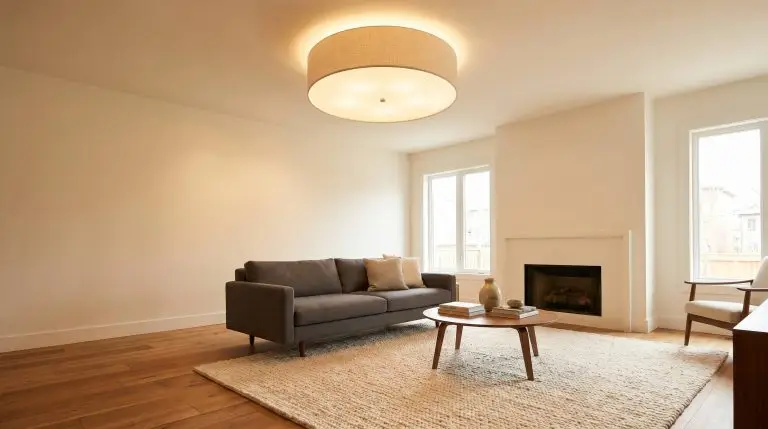
1. Oversized Linen Drum Shades for Diffused Ambient Glow
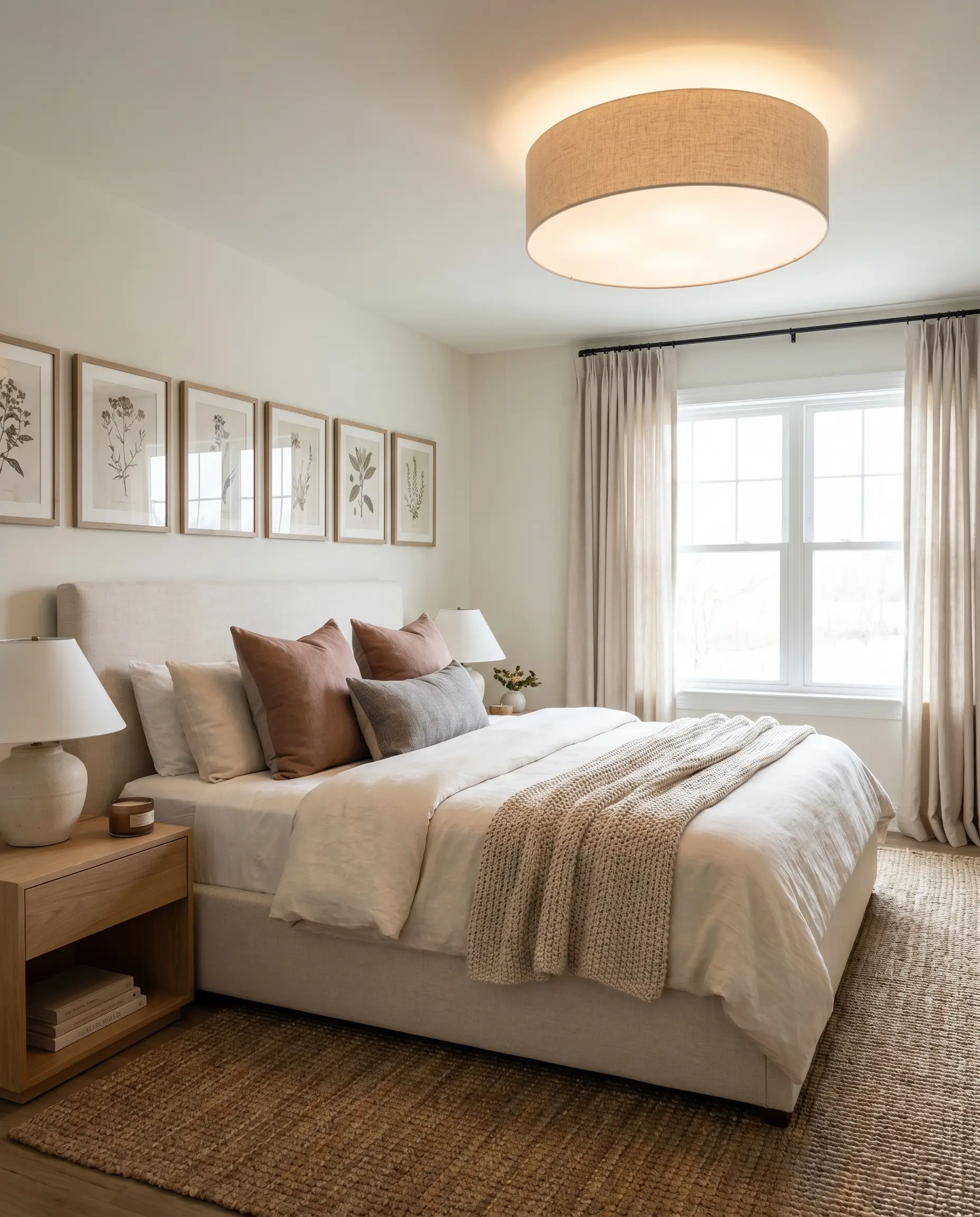
A massively wide, shallow linen drum semi-flush mount creates an immediate architectural statement through sheer horizontal scale. The linen fabric diffuses the bulbs, casting a soft, even wash across the room while eliminating harsh, direct glare against the low ceiling plane.
- Vibe: Transitional, Soft Modern.
- Key Material: Natural linen or raw silk shade with an acrylic bottom diffuser.
- Spatial Fact: Aim for a minimum 24-inch to 36-inch diameter to ensure the fixture acts as a true centerpiece rather than an afterthought.
Ensure the drum depth does not exceed 6 to 8 inches to maintain the necessary 7-foot walking clearance beneath it.
Hackrea Styling Tip
2. Articulated Mid-Century Spider Fixtures
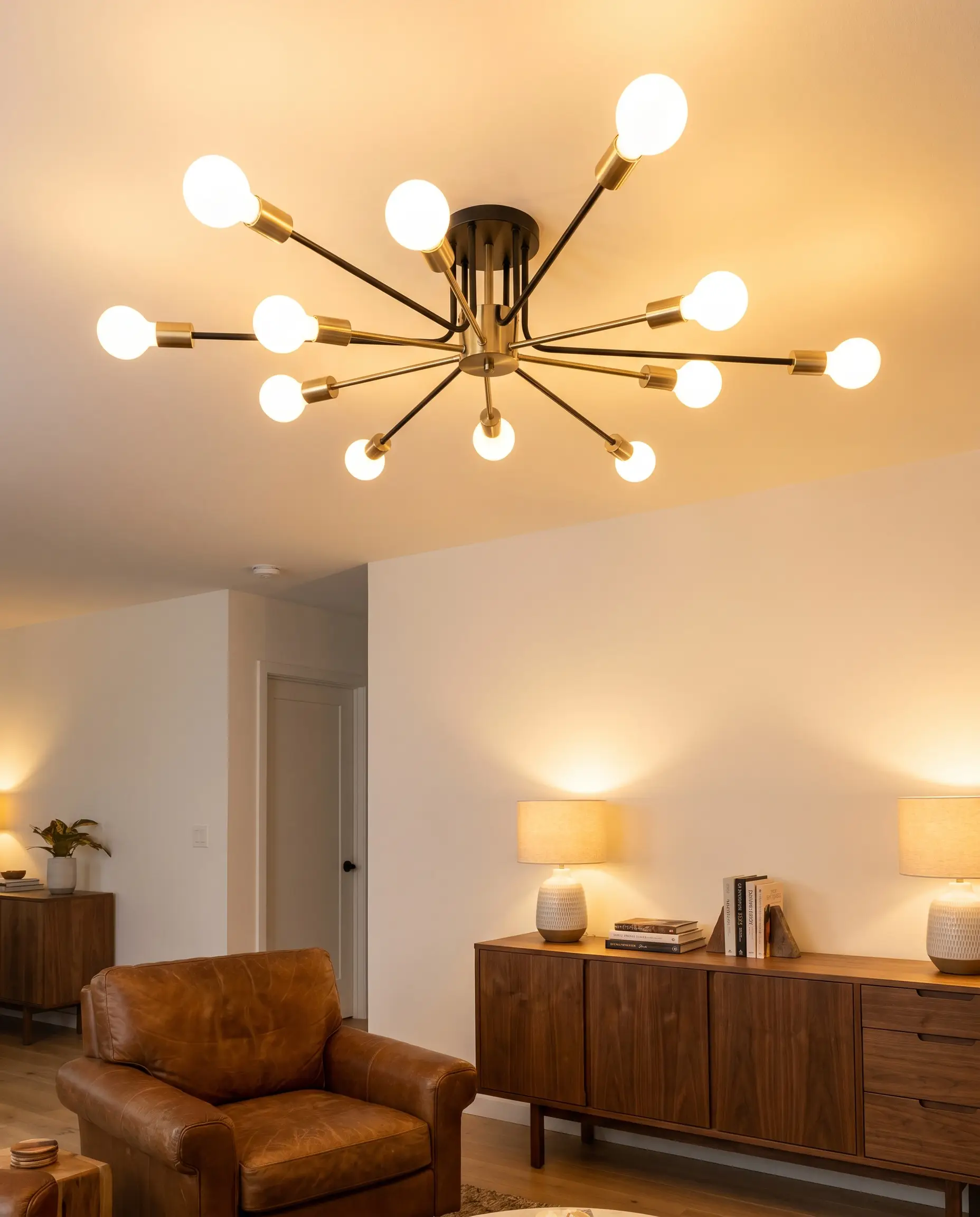
Multi-arm spider fixtures stretch sharply outward, utilizing thin, adjustable metal arms to direct light across the ceiling rather than pointing it downward. This horizontal radiation draws the eye to the room’s perimeter, visually expanding the ceiling’s width and distracting from its lack of height.
- Vibe: Mid-Century Modern, Graphic.
- Key Material: Matte enameled metal or brushed brass.
- Bulb Recommendation: G45 or G16.5 globe bulbs for a streamlined, retro silhouette.
3. Sculptural Alabaster Flush Mounts
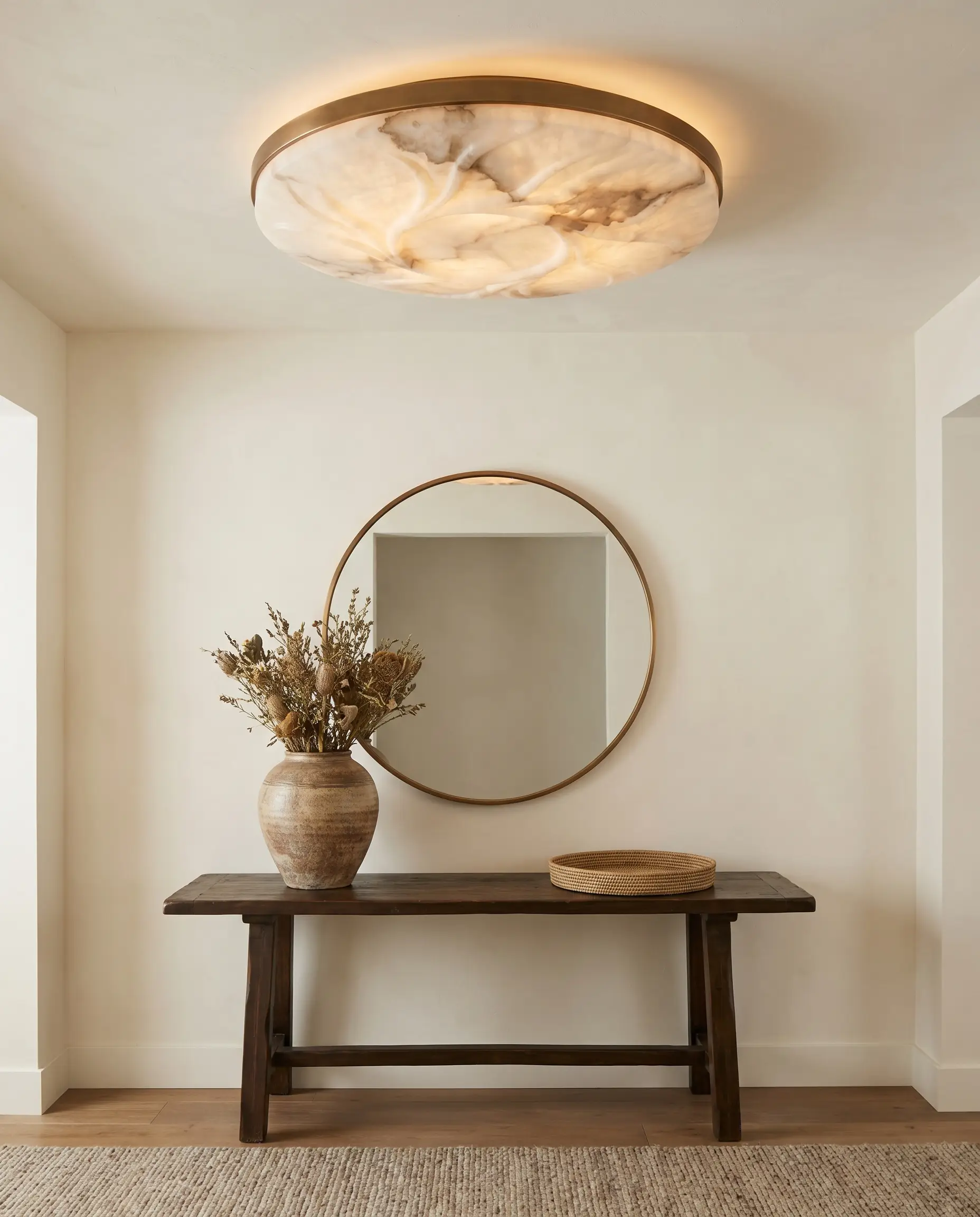
Upgrading to a solid, natural stone like alabaster transforms a flush mount from a utilitarian necessity into a bespoke sculptural detail. Brands like Visual Comfort & Co. and Kelly Wearstler champion this look, where the heavy, veined stone contrasts beautifully with the soft, organic light bleeding through it.
- Vibe: Organic Modern, Accessible Luxury.
- Key Material: Carved natural alabaster with brass or bronze detailing.
- Color Match: Pair with warm white walls like Benjamin Moore White Dove to echo the stone’s creamy undertones.
4. Matte Black Multi-Arm Semi-Flush Mounts
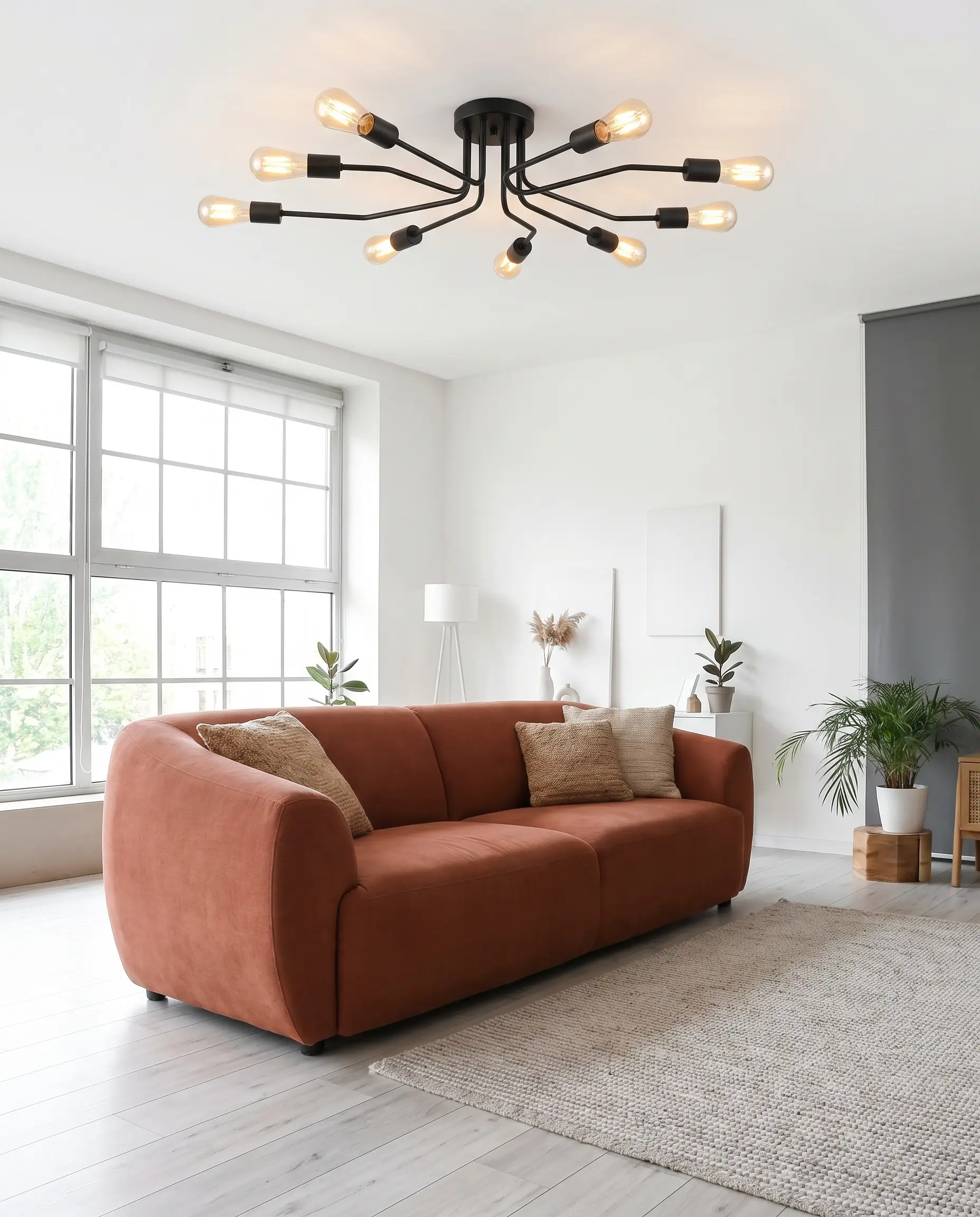
A high-contrast matte black fixture acts as a sharp, graphic anchor against a standard white ceiling. The dark finish creates a definitive endpoint for the eye, while the multi-arm structure ensures the light source is spread wide across the room’s upper quadrant.
- Vibe: Contemporary, Industrial Minimalist.
- Key Material: Powder-coated steel or wrought iron.
- Styling Pro-Tip: Pair stark matte black hardware with warm 2700K bulbs to prevent the fixture from feeling too austere or cold.
5. Beveled Glass Starbursts for Ceiling Refraction
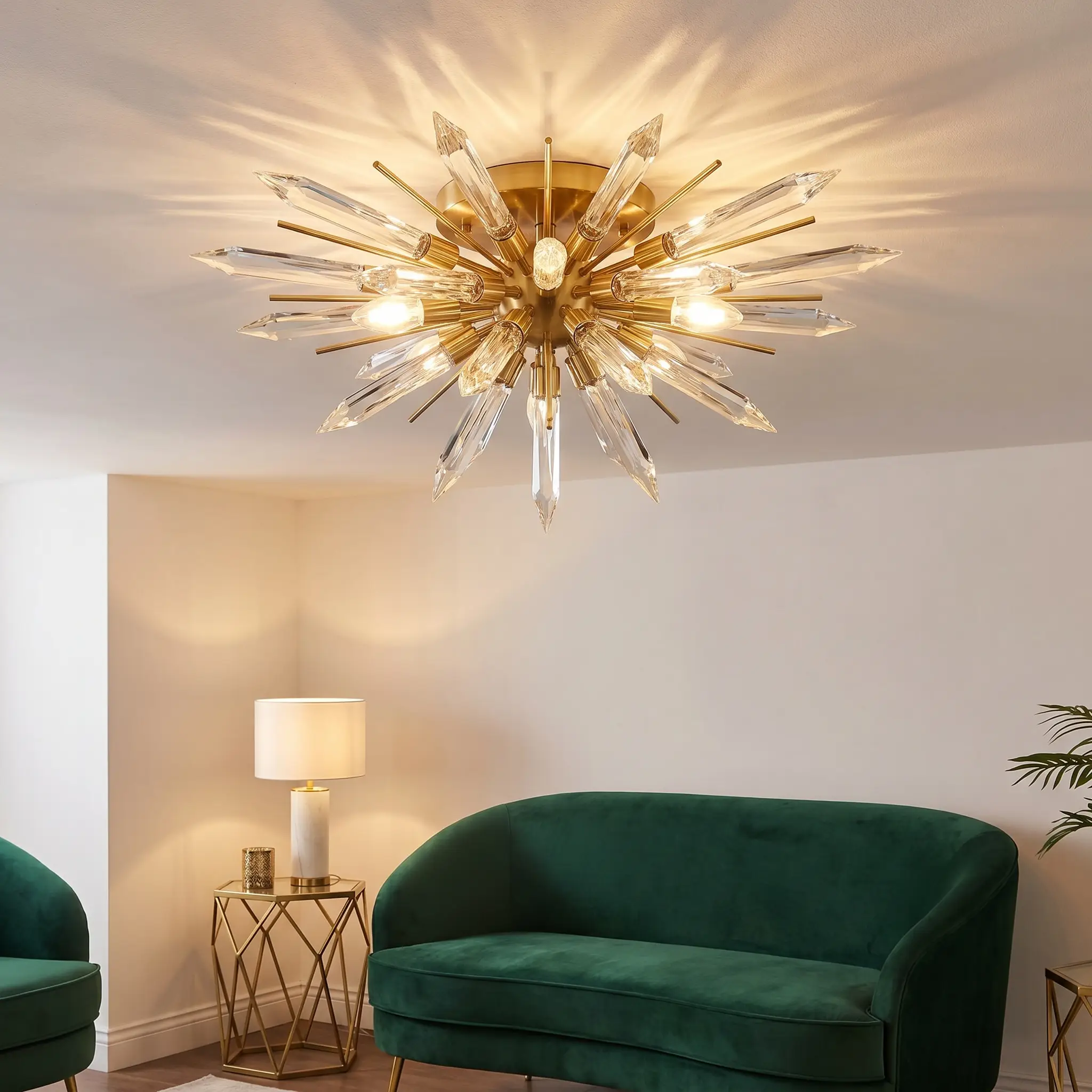
Low-profile starburst shapes utilizing beveled glass rely on optical manipulation to expand the room. The faceted glass throws intricate, elongated light patterns directly onto the ceiling plaster, visually blurring the hard boundary line and making the ceiling feel significantly higher.
- Vibe: Hollywood Regency, High-End Glamour.
- Key Material: Beveled or hand-cut crystal and polished brass.
The closer the glass sits to the ceiling, the sharper and more dramatic the refracted light pattern will be.
Designer Secret
Strategic Anchoring: Dining Rooms & Kitchens
The Furniture Anchor Exemption is the single greatest spatial loophole for low ceilings. If a fixture hangs directly over a dining table or kitchen island, it bypasses standard clearance rules, allowing you to drop the light 30 to 36 inches above the surface without obstructing foot traffic.
6. Low-Slung Linear Brass Bars
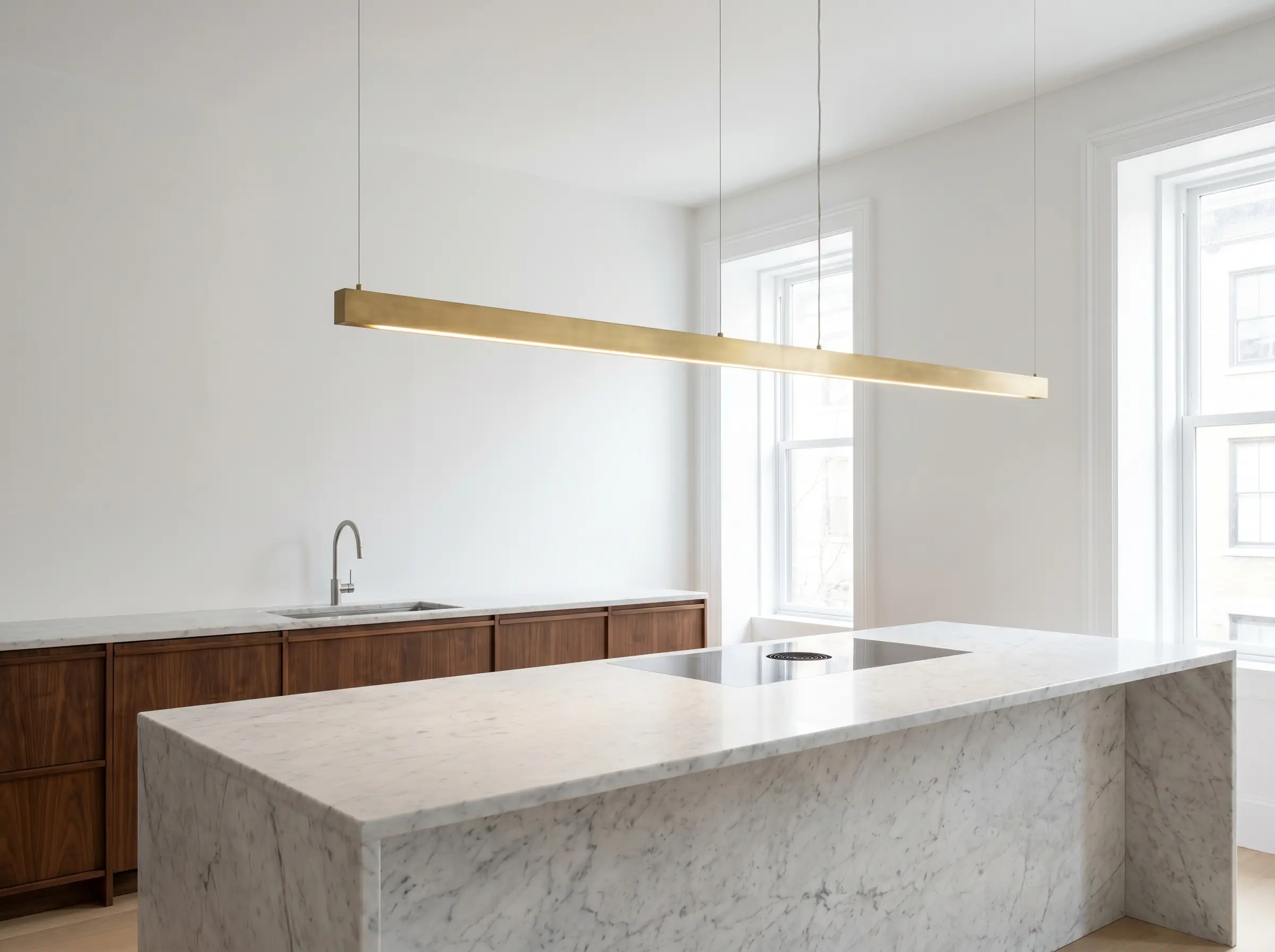
Sleek, horizontal linear suspensions deliver massive visual presence over a kitchen island without cluttering the vertical sightline. Unlike bulky, traditional island lanterns that block your view across the room, a thin brass bar provides intense task lighting while keeping the upper half of the room feeling airy.
- Vibe: Minimalist, Modern.
- Key Material: Aged or unlacquered brass with integrated LED strips.
- Spatial Fact: The linear bar should span roughly two-thirds the length of your kitchen island for balanced visual weight.
7. Transparent Clustered Glass Globes
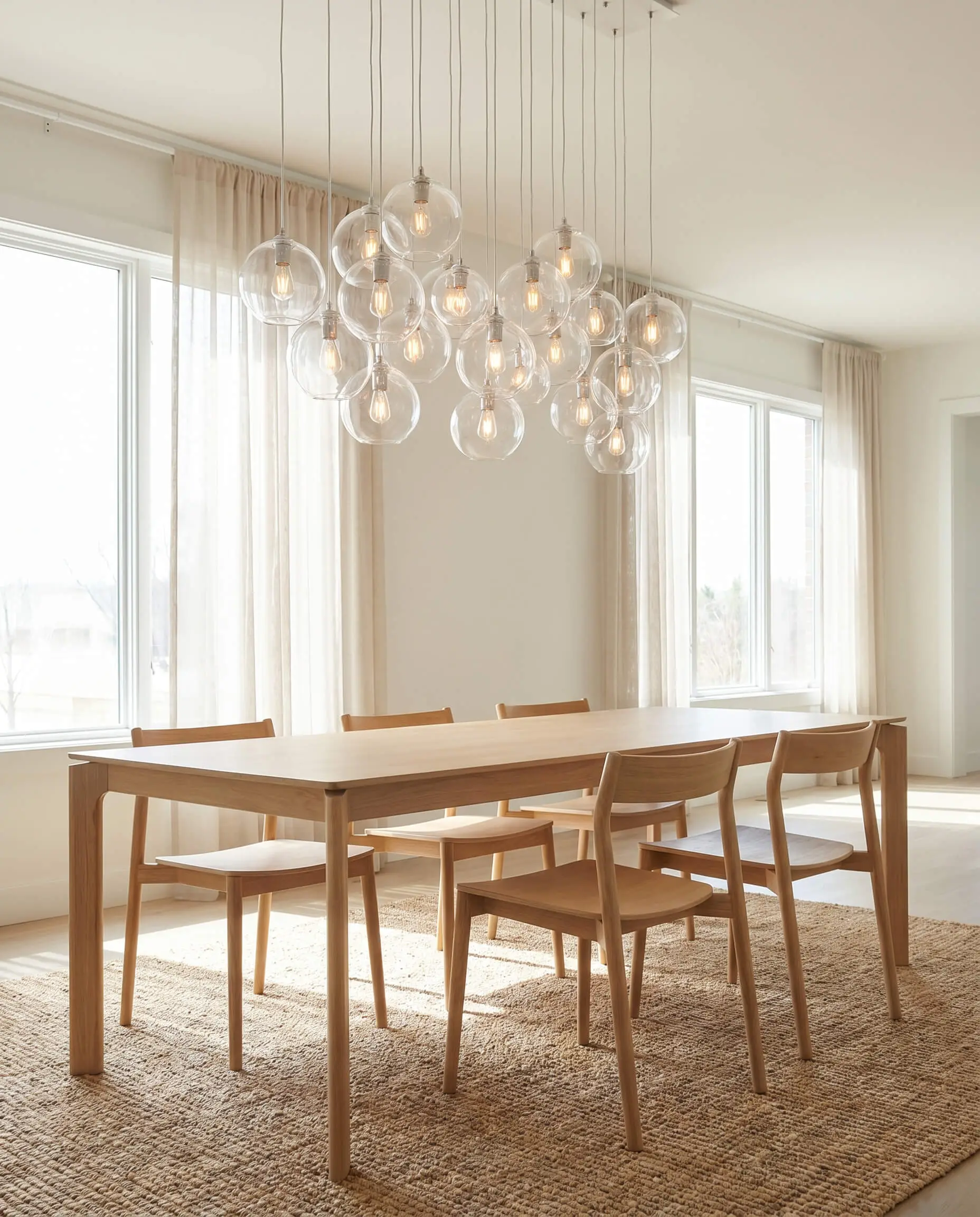
Clustering multiple clear glass globes over a dining table creates volume and sculptural interest without acting as a visual wall. The sheer transparency of the glass ensures that your sightline remains uninterrupted, preventing the compressed room from feeling heavy or enclosed.
- Vibe: Contemporary, Scandi-Modern.
- Key Material: Hand-blown clear glass and thin wire suspension cables.
- Styling Pro-Tip: Use vintage-style Edison bulbs or decorative LED filaments, as the bulb itself becomes the primary design feature inside the clear glass.
8. Woven Rattan Wide-Brim Pendants
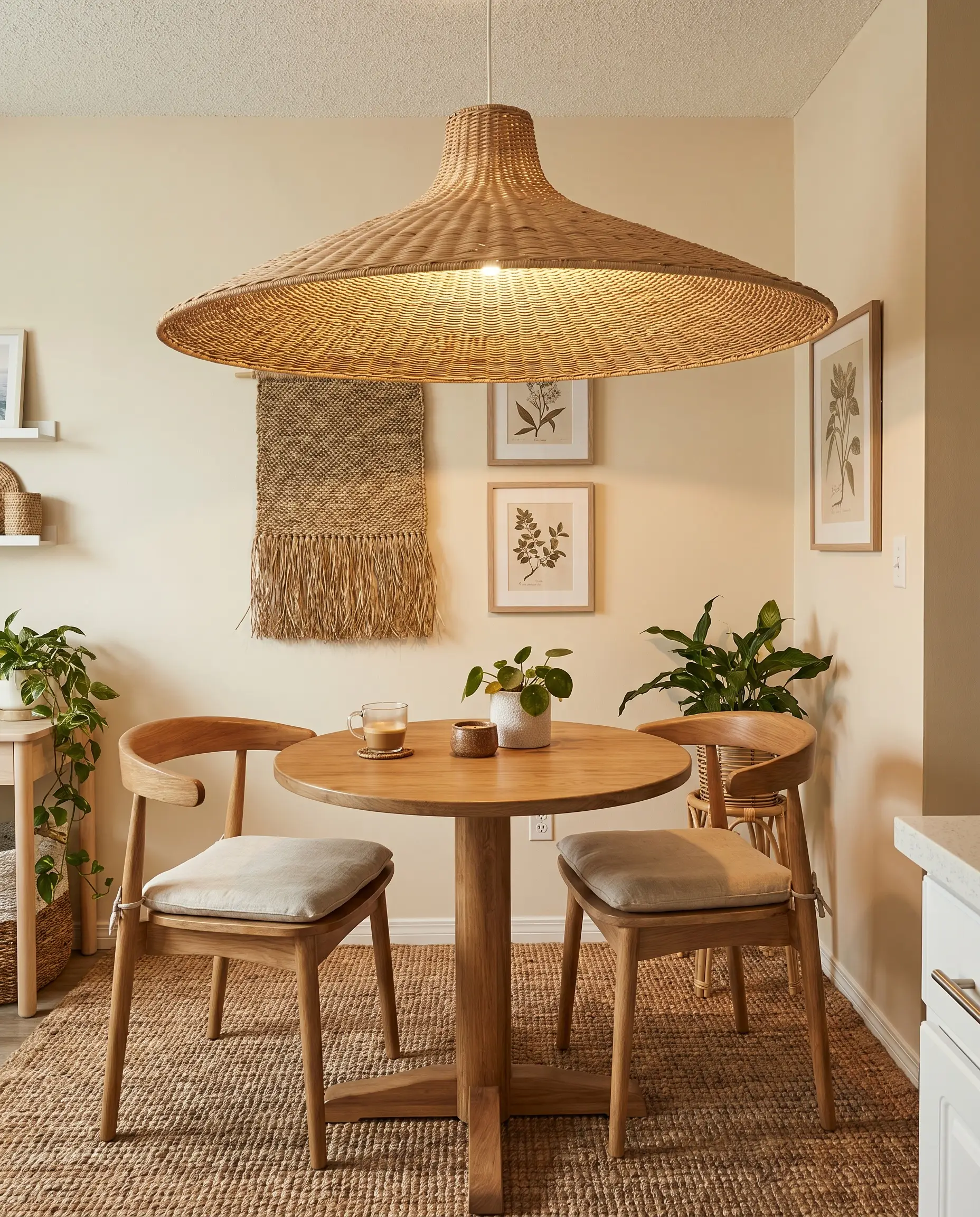
An oversized, shallow-brimmed rattan pendant commands the space over a breakfast nook while maintaining an incredibly low vertical profile. The wide span anchors the table beneath it, while the woven texture filters light softly, adding a layer of relaxed, tactile warmth to the room.
- Vibe: Organic Modern, Coastal.
- Key Material: Natural rattan, wicker, or woven seagrass.
- Color Match: Sherwin-Williams Alabaster on the surrounding walls highlights the natural, earthy tones of the woven fibers.
9. Staggered Asymmetrical Micro-Pendants
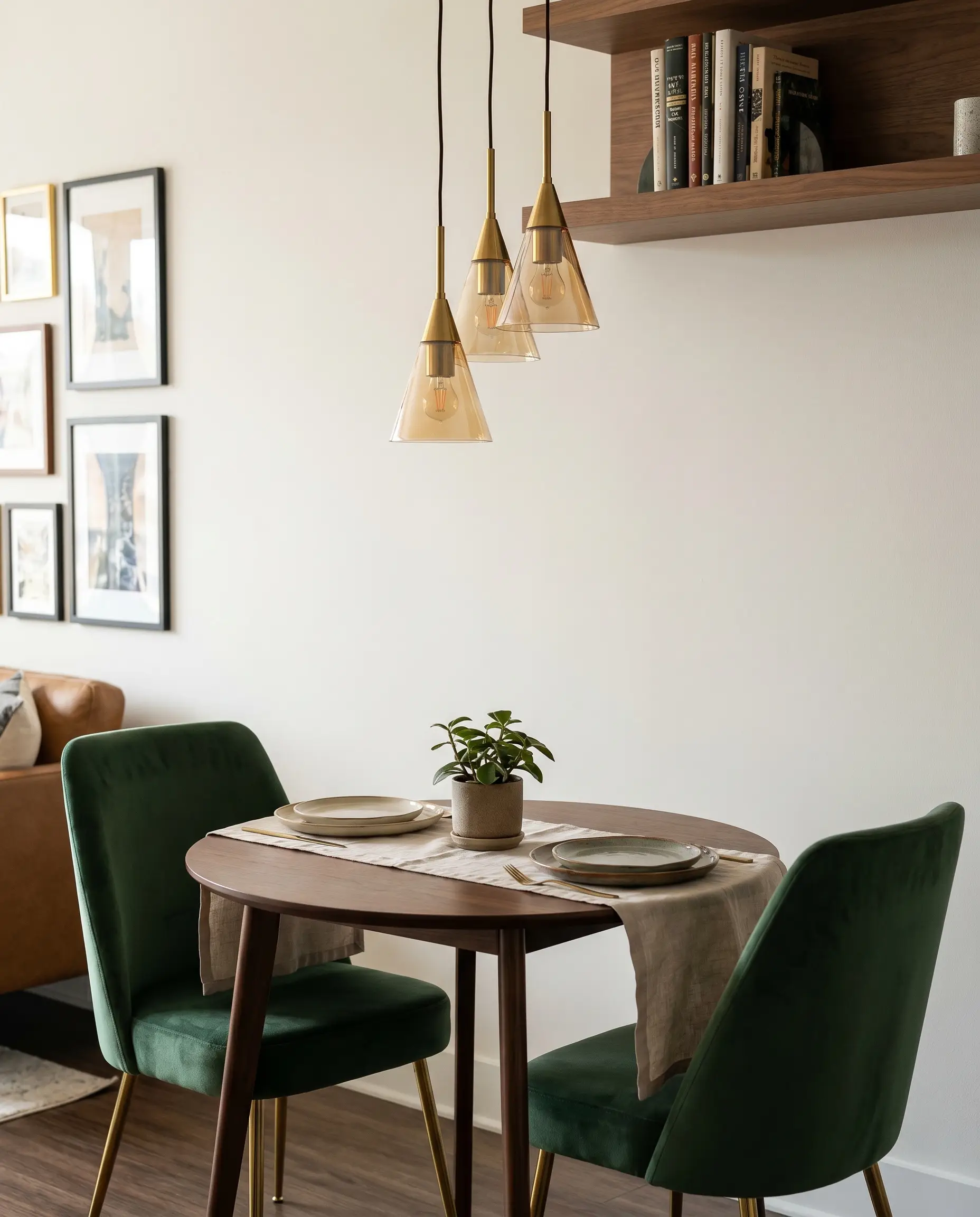
Instead of forcing one large, heavy chandelier into a tight dining space, drop three to five micro-pendants at slightly varying heights. This delicate, asymmetrical styling creates a sense of vertical rhythm and movement, drawing the eye up and down without overwhelming the room’s limited air space.
- Vibe: Art Deco, Modern Eclectic.
- Key Material: Spun brass, tinted glass, or ceramic cones.
Keep the height variance between each micro-pendant tightly clustered—no more than 2 to 3 inches of difference—to maintain a cohesive, intentional grouping rather than a chaotic scatter.
Hackrea Spatial Tip
10. Plaster Dome Semi-Flush Mounts
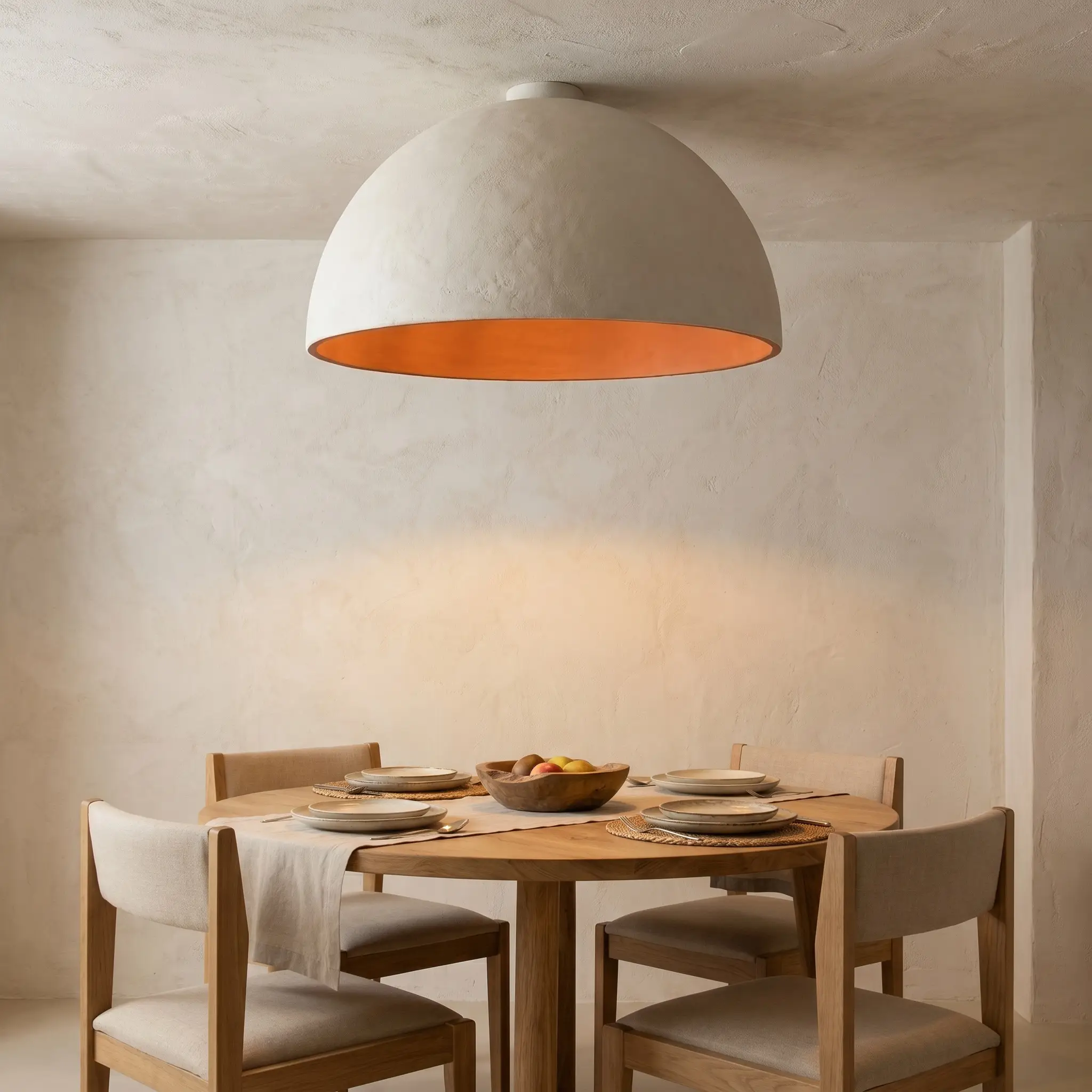
Smooth plaster domes suspended just inches from the ceiling offer heavy, architectural textural interest while blending seamlessly into the plasterwork above. The chalky, matte finish absorbs light rather than reflecting it, creating a quiet, sophisticated anchor over a round dining table.
- Vibe: Minimalist, Wabi-Sabi.
- Key Material: Hand-troweled plaster or matte ceramic.
- Styling Pro-Tip: Paint the interior of the dome a warm metallic or soft terracotta to cast a flattering, warm glow down onto the dining surface.
Wall-Driven Illumination: Hallways & Corridors
In particularly tight corridors where every inch of vertical clearance matters, the most advanced design approach is abandoning the ceiling altogether. Shifting the primary light source to the walls completely bypasses the 8-foot constraint, freeing up the overhead plane entirely.
11. Double-Jointed Architectural Sconces
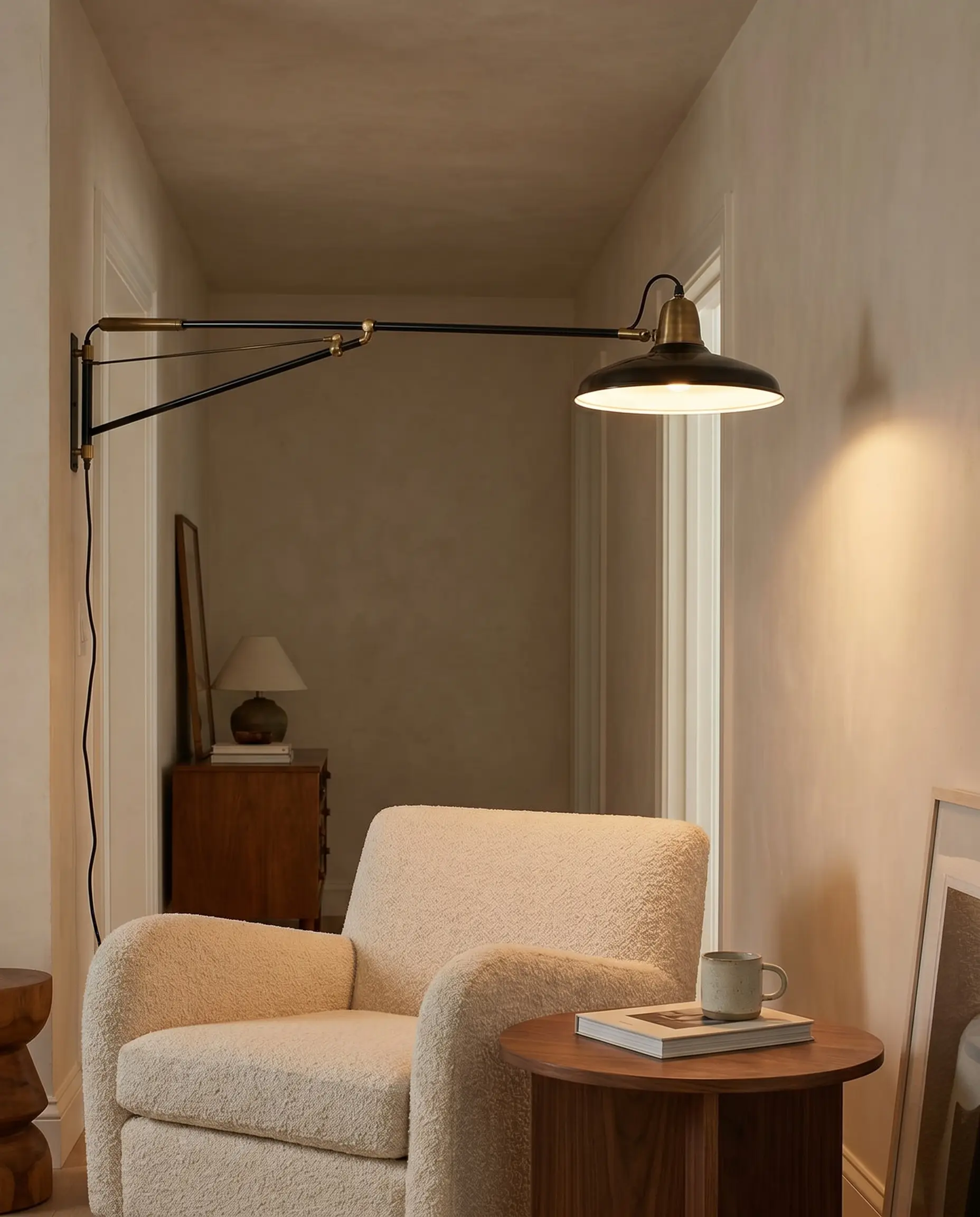
Large, articulating arm sconces installed high on the wall can extend outward to act as overhead lighting for reading nooks or narrow hallways. Nodding to French modernism and the iconic silhouettes of Serge Mouille, these fixtures provide localized task light while leaving the ceiling completely bare.
- Vibe: French Modern, Industrial.
- Key Material: Black enameled steel with brass joints.
- Spatial Fact: Mount the base of the sconce roughly 60 to 66 inches from the floor to allow the articulated arm to reach comfortably over a chair or walkway.
12. Vertical Brass Uplights
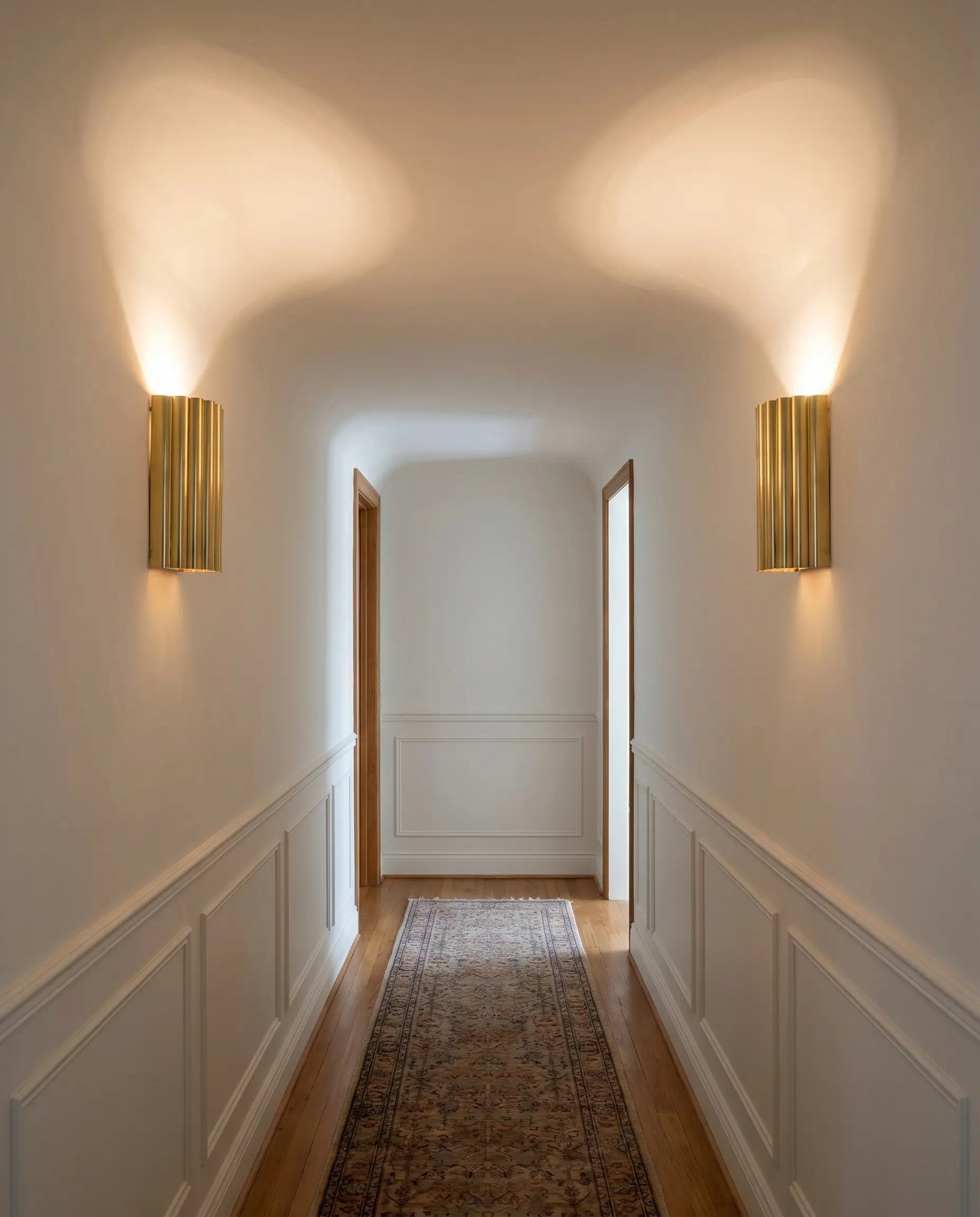
Utilizing sconces that shoot light strictly upward washes the ceiling in a soft, ambient glow. This optical illusion of uplighting blurs the hard corners of the room, creating a perceived dome effect that tricks the eye into believing the roofline is significantly higher than it actually is.
- Vibe: Art Deco, Streamline Moderne.
- Key Material: Polished brass or fluted ceramic half-cylinders.
Uplighting works best on a flat, matte ceiling. High-gloss or semi-gloss ceiling paint will reveal every surface imperfection when washed with harsh upward light.
Designer Secret
13. Picture Lights Over Blank Paneling
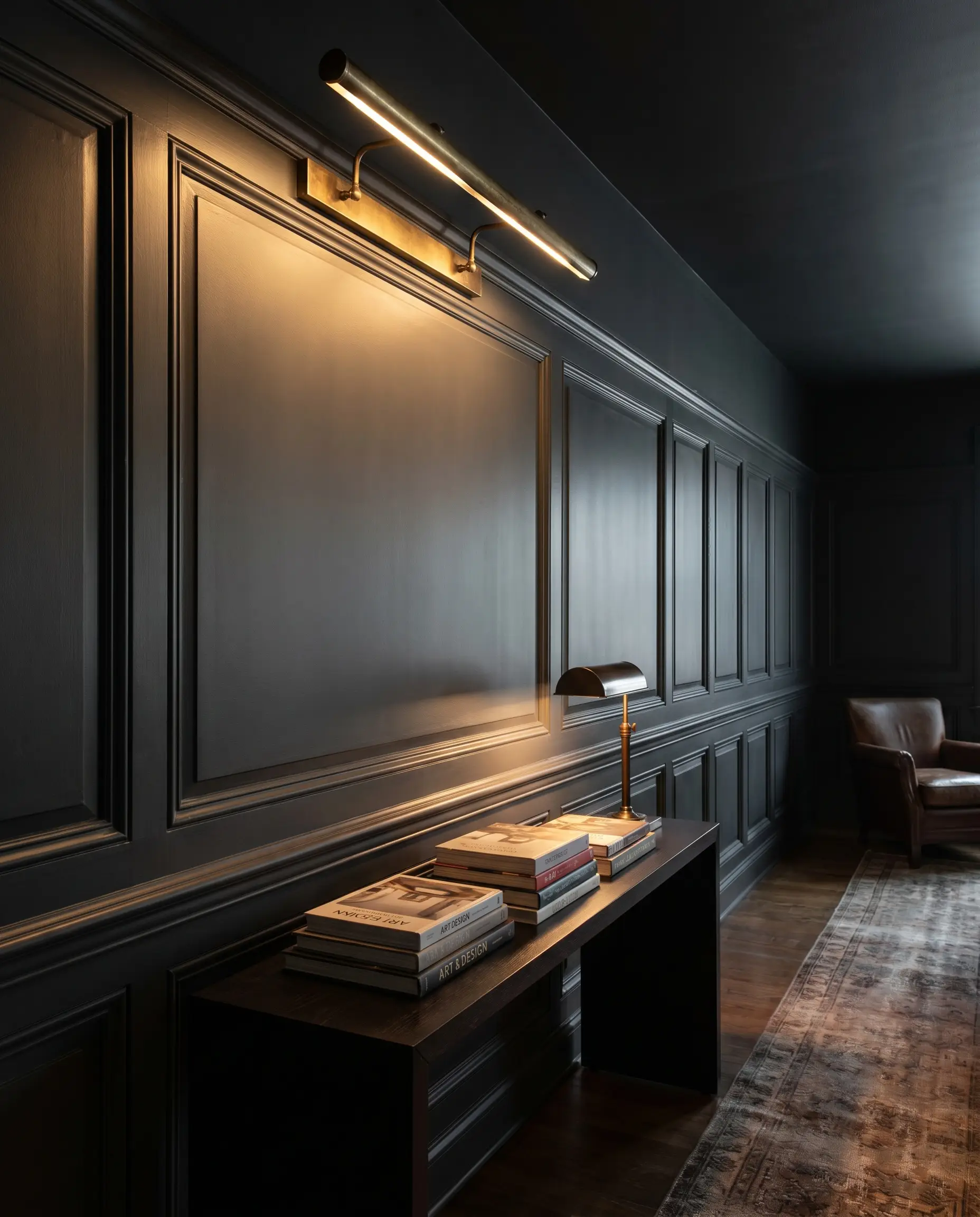
Long brass picture lights do not require artwork to be effective; they can be used to wash blank architectural paneling or wainscoting. This technique draws the eye strictly to the perimeter walls, providing a moody, low-profile alternative to harsh overhead recessed cans.
- Vibe: Traditional, Moody Library.
- Key Material: Antiqued brass or oil-rubbed bronze.
- Styling Pro-Tip: Use 18-inch to 24-inch wide picture lights to ensure a broad enough wash of light down the wall surface.
14. Plug-In Sconces with Drooping Cables
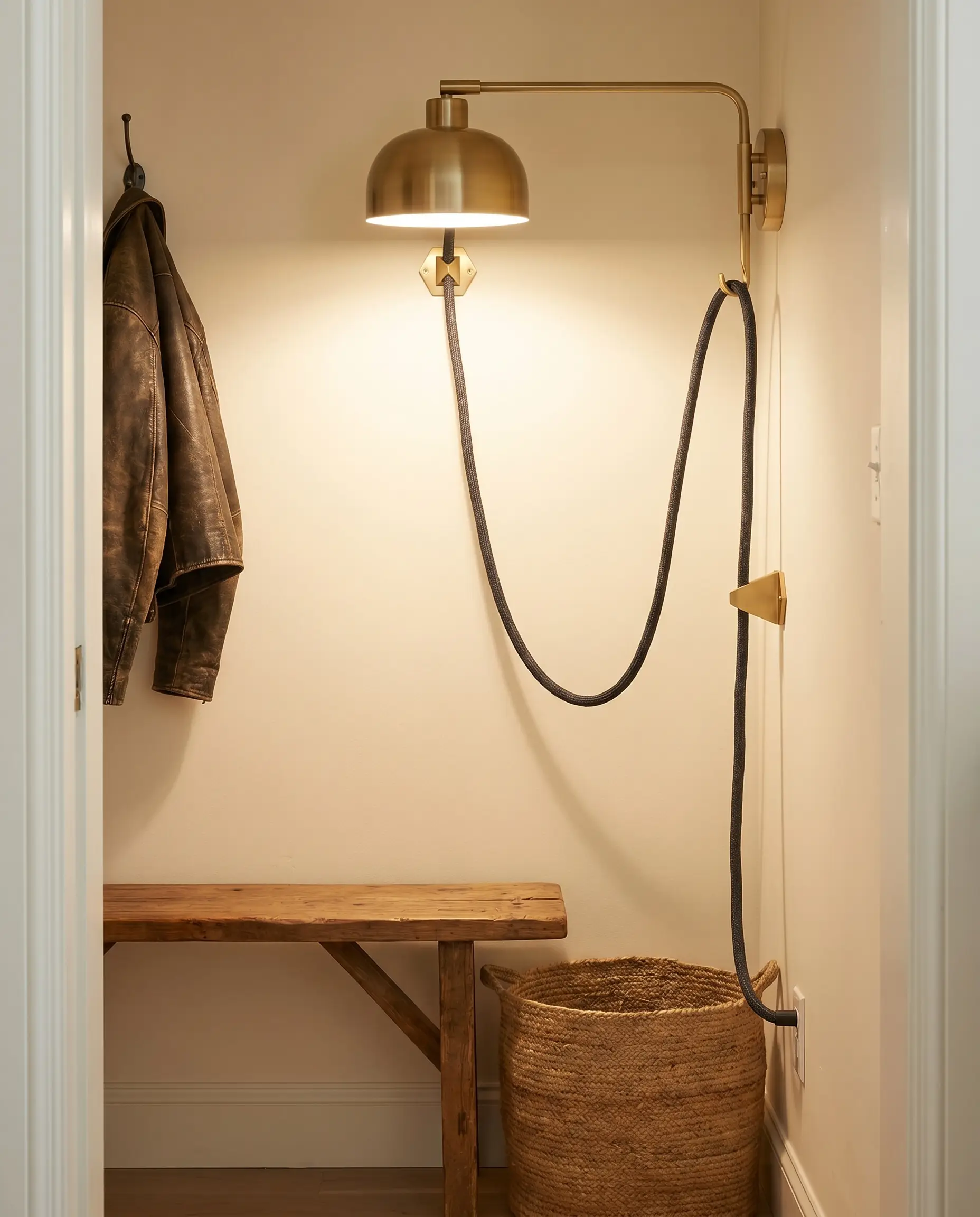
For a renter-friendly solution, high-design plug-in sconces turn a functional necessity into an architectural feature. By intentionally styling the heavy, exposed cord to droop dramatically down the wall, you introduce a strong vertical line that naturally draws the eye upward, adding perceived height to the corridor.
- Vibe: Casual Modern, Bohemian.
- Key Material: Fabric-wrapped cords and brushed metal hardware.
- Styling Pro-Tip: Anchor the cord to the wall with stylized brass cleats or leather straps to make the drape look entirely intentional rather than messy.
Material & Optical Illusions: The Anti-Builder-Grade Upgrades
The physical materials and hardware finishes you select dictate exactly how heavy a fixture feels in a compressed space. By strategically manipulating color matches and reflective surfaces, you can physically alter the perceived geometry of the room.
15. Color-Matched Ceiling Canopies
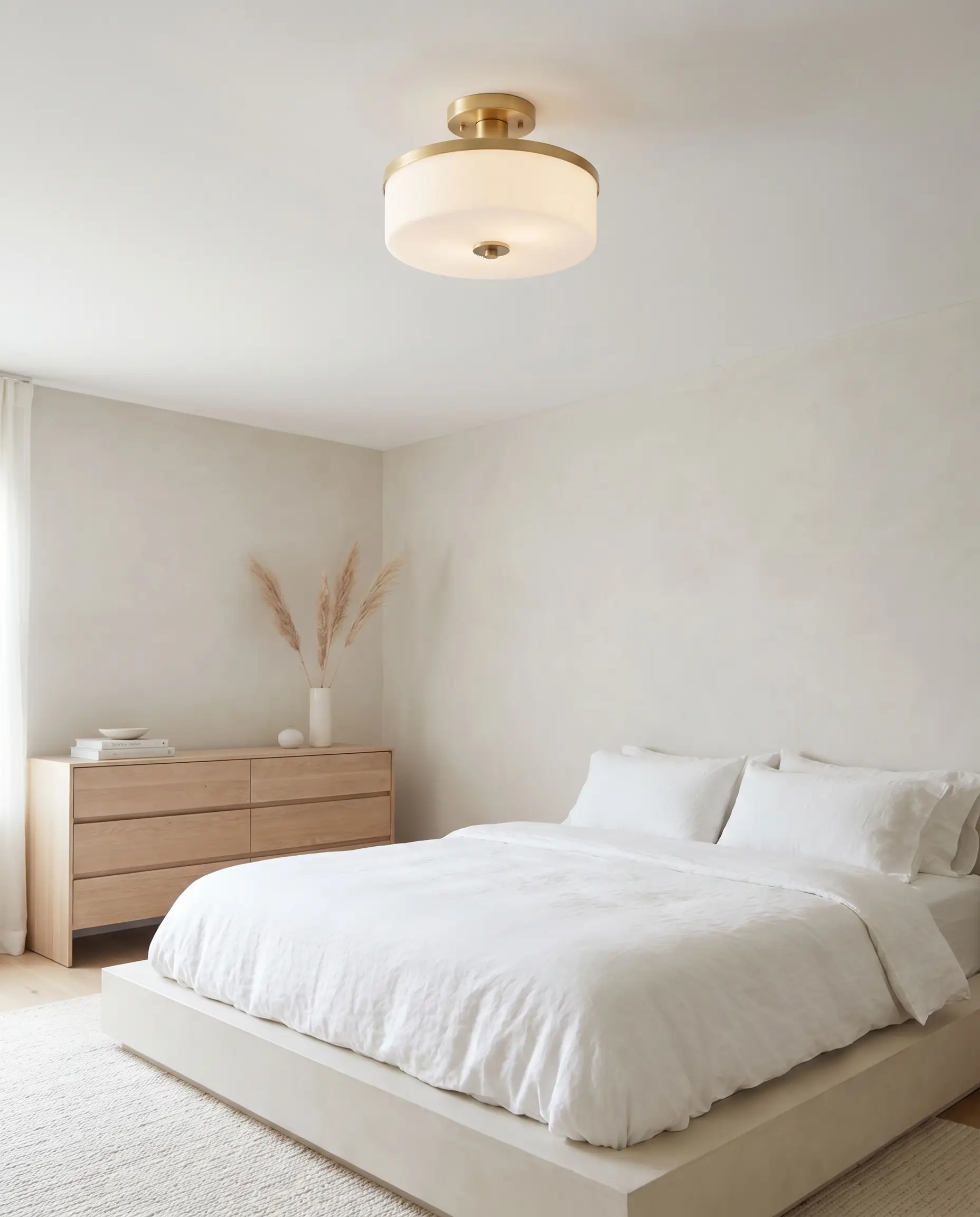
The canopy plate is the metal disc connecting the fixture to the ceiling box. By painting or sourcing a canopy that exactly matches your ceiling color, the hardware visually dissolves, allowing the actual light fixture to appear as though it is floating effortlessly in mid-air.
- Vibe: Seamless, Bespoke.
- Key Material: Primed metal painted to match the ceiling.
- Paint Recommendation: Benjamin Moore Chantilly Lace (a standard, crisp ceiling white match).
Most standard fixtures come with a brass or black canopy. Lightly sand the metal, apply a bonding primer, and use your exact ceiling paint for a custom, high-end camouflage.
Designer Secret
16. Ribbed Glass for Vertical Refraction
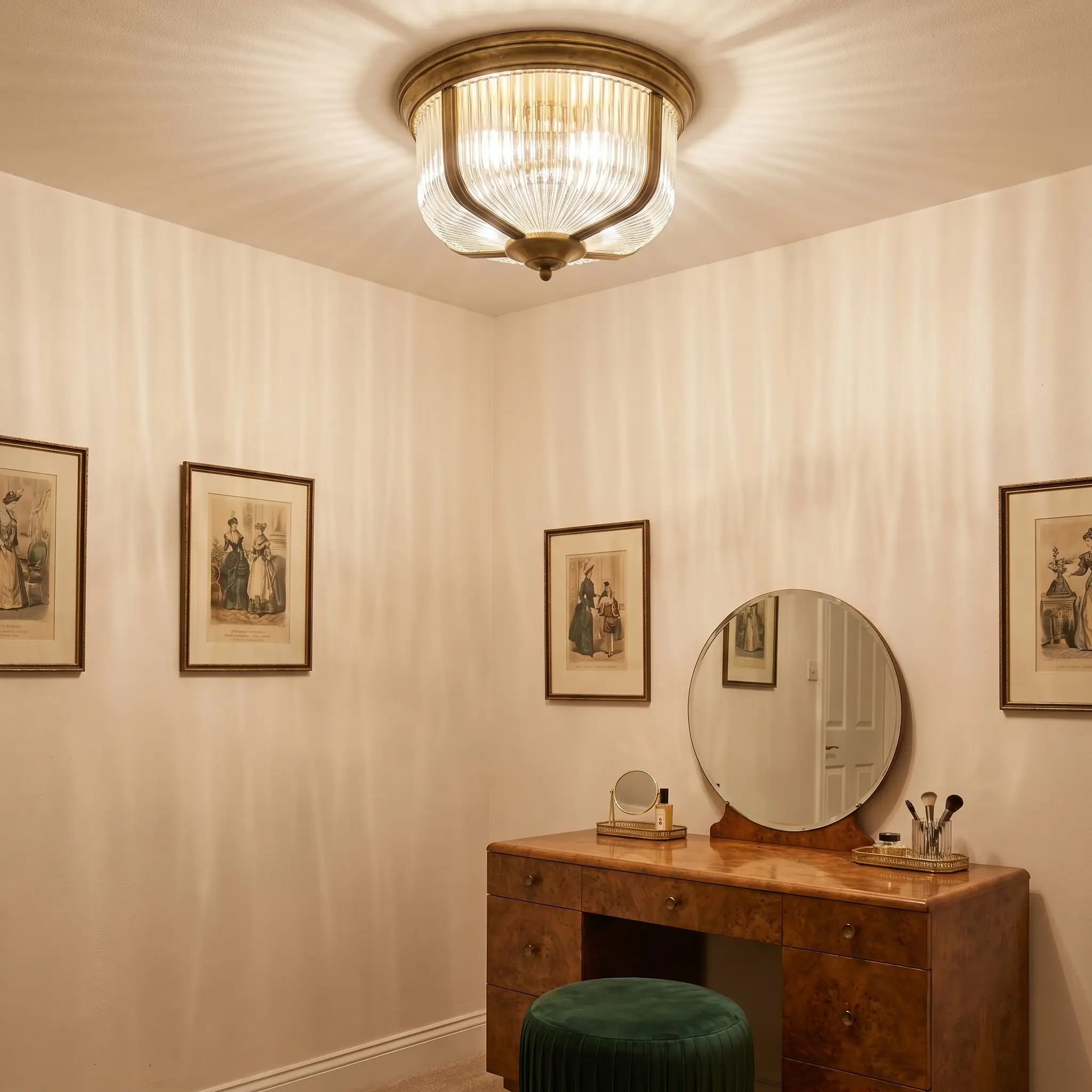
Upgrading from cheap, flat frosted glass to thick fluted or ribbed glass introduces vital verticality to a low fixture. The vertical lines carved into the glass draw the eye upward and cast elegantly elongated shadows across the walls, mimicking the effect of tall architecture.
- Vibe: Art Deco, Vintage Glamour.
- Key Material: Heavy cast ribbed or fluted glass.
- Styling Pro-Tip: Ensure the glass ribbing runs strictly vertical, as horizontal ribbing will visually squash the height of the fixture.
17. High-Contrast Polished Nickel Profiles
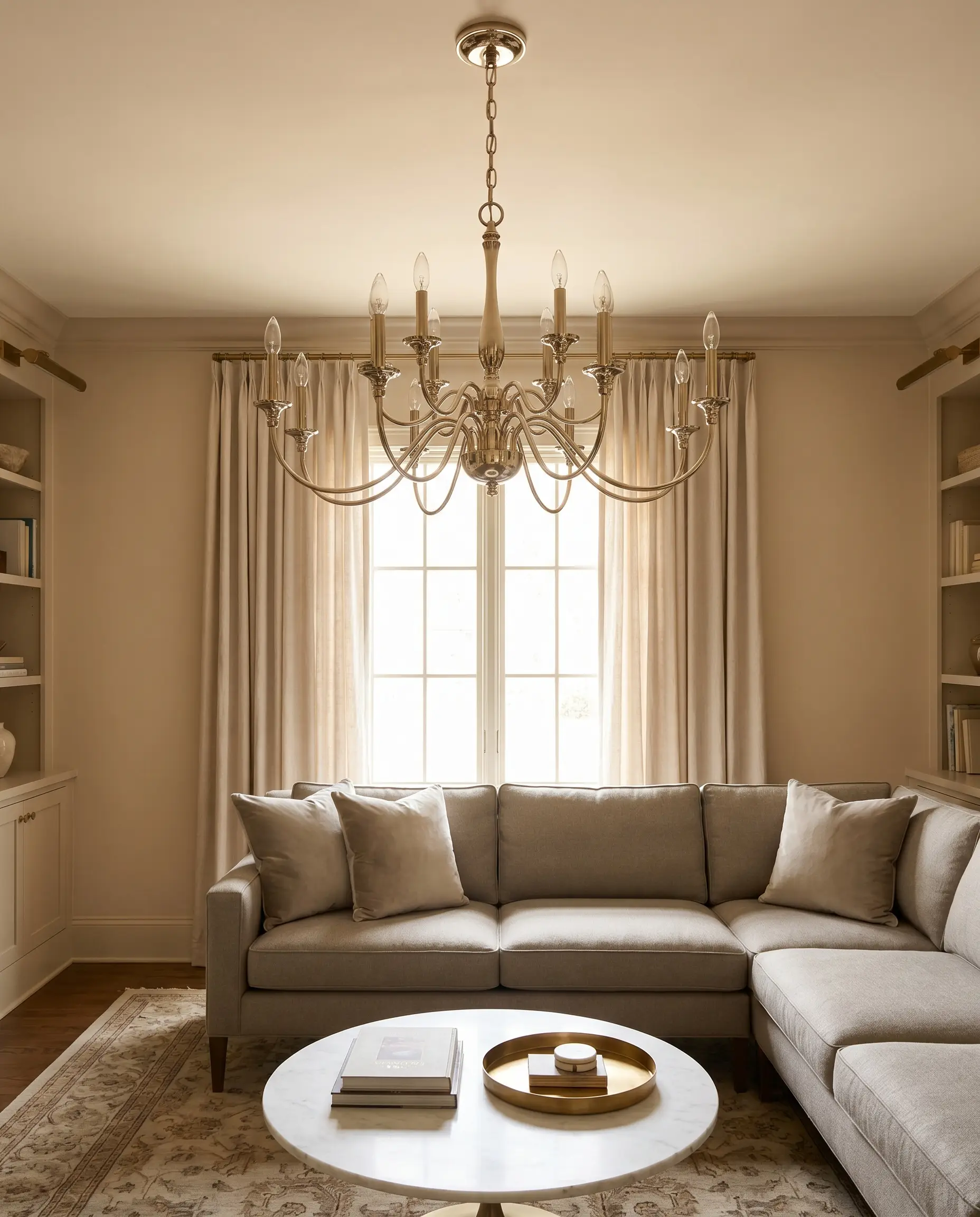
Highly reflective metals like polished nickel bounce ambient room light around the space, feeling significantly lighter and less imposing than heavy, light-absorbing oiled bronze. This sophisticated, transitional finish acts almost like a mirror, reflecting the room back on itself and minimizing the fixture’s visual footprint.
- Vibe: Transitional, Classic Elegance.
- Key Material: Solid brass core with a polished nickel electroplate.
- Styling Pro-Tip: Polished nickel has a warmer, slightly golden undertone compared to the sterile, blueish tint of standard polished chrome.
18. Perforated Metal Shades for Ceiling Washes
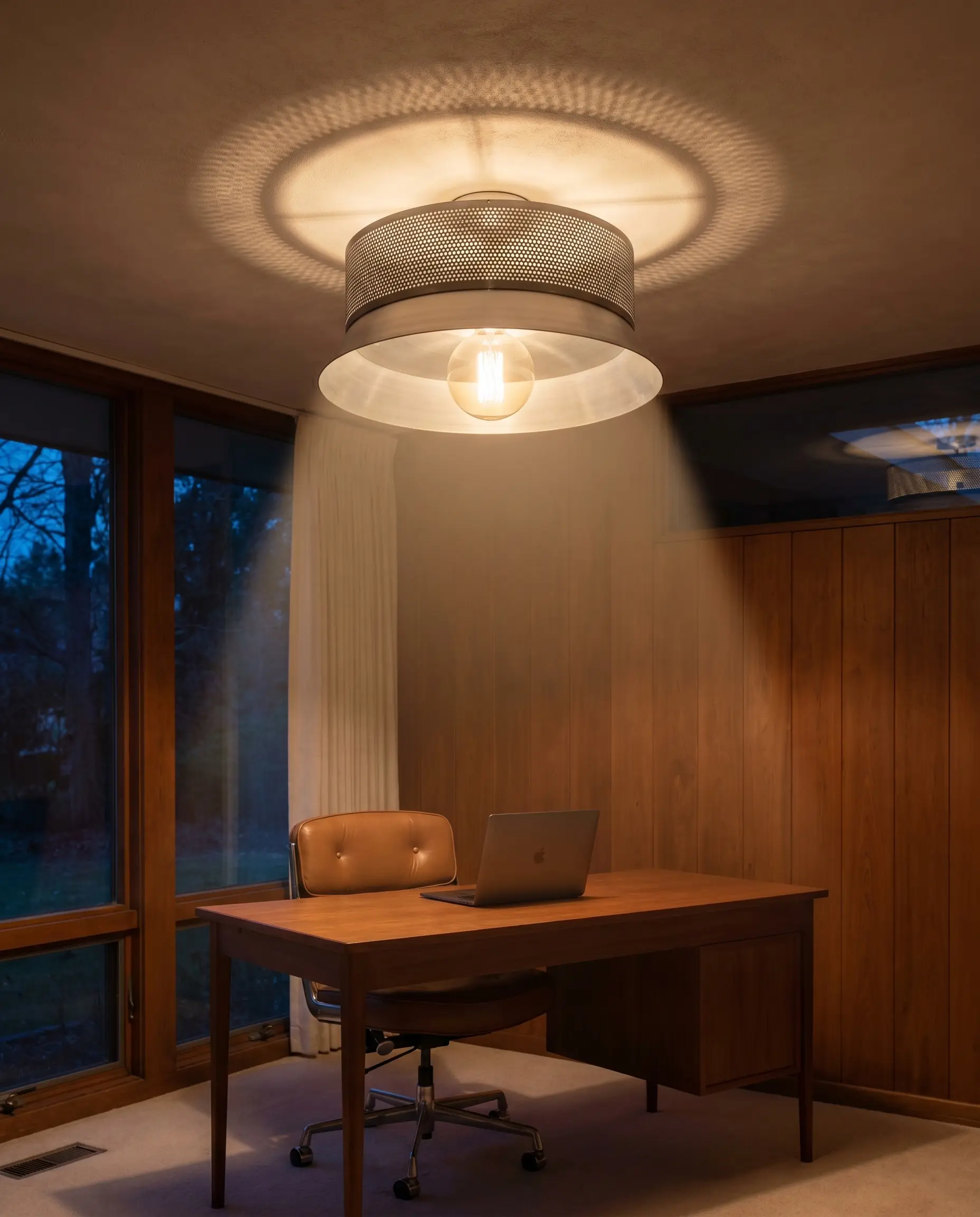
Shallow metal shades with tiny perforations punched around the upper collar allow a dotted pattern of light to escape upward while directing the main beam downward. This subtle upward bleed softens the hard, dark stop of the low ceiling plaster, creating a gentle gradient that eases the room’s visual boundaries.
- Vibe: Industrial, Mid-Century.
- Key Material: Spun aluminum or steel with precision-cut perforations.
- Styling Pro-Tip: Use a clear bulb rather than a frosted one to ensure the light piercing through the perforations remains sharp and distinct against the ceiling.
Elevating the 8-Foot Standard
Standard 8-foot clearance is simply a geometric puzzle waiting for the right solution. Do not let spatial constraints force you into a lifetime of uninspired, flush-mounted mediocrity. Grab your tape measure, confirm your 7-foot walking paths, assess your furniture anchor points, and confidently source a fixture that expands your sightlines.

The Hackrea Style Desk treats interior decoration as an exact visual science. Rather than focusing on demolition or floor plans, this desk masters the art of color theory, undertone matching, material pairings, and spatial proportion. From balancing the visual weight of mixed metals to finding the perfect bridging tone between disparate wood species, this desk provides the rigorous aesthetic rules needed to achieve high-end, editorial-quality harmony in any space.