A well-designed deck should feel like it belongs to the home, not like a separate platform placed outside the back door. It should make the move from indoors to the yard feel easy, comfortable, and visually calm. When the deck, facade, garden, paths, and seating areas work together, the entire exterior feels more thoughtful.
That connection comes from the details. Scale, materials, door placement, planting, lighting, and nearby hardscaping all affect how the space looks and feels in daily life. With the right choices, a deck can soften the line between house and garden and turn the yard into a more natural extension of the home.
1. Start With The Path From Indoors To Outdoors
The best outdoor spaces usually begin with a clear route. If the main door opens onto the deck, but the seating area, grill, or garden path pulls people in another direction, the layout can feel awkward before anyone can explain why. Good flow starts by noticing how people move through the home and where they naturally want to go once they step outside.
A deck connected to a kitchen often works best when it has a direct path to the dining area and grill. A deck off a living room may feel more relaxed when it opens toward lounge seating, planters, or a wider view of the yard. If the yard already has a patio, garden path, pool area, or fire pit, the deck should guide people toward those spaces rather than cut them off.
The goal is simple: stepping outside should feel effortless. When the route is clear, the deck becomes a comfortable bridge between the home and the landscape.
2. Match The Deck’s Scale To The Home
A deck should be spacious enough to use, but not so large that it overpowers the house. Scale is often the reason one outdoor space feels settled while another feels awkward or tacked on. A small cottage, a tall townhouse, and a wide suburban home all need different deck proportions.
Height matters as much as size. A raised deck can feel heavy if it has no visual grounding, while a low deck can disappear if it has no defined edge or connection to the landscape. Shape matters as well. A simple rectangular deck often feels calm beside a clean-lined home, while a layered layout can help soften a larger yard or create separate areas for dining and lounging.
The right proportion makes the deck feel useful and visually at ease. It should support outdoor living while still respecting the home’s shape and character.
3. Use Materials To Create Continuity
Materials can make a deck feel closely tied to the house or completely separate from it. The strongest outdoor spaces rarely rely on a perfect match. They usually work through quiet coordination. Decking, siding, stone, brick, gravel, pavers, and trim should feel like part of the same palette, even when they bring different textures.
A warm wood-tone deck can soften a cool exterior. Stone or pavers near the deck can echo the foundation, walkway, or patio. Darker decking can ground a light facade, while softer natural finishes can make the transition to the garden feel more relaxed. Repeating one or two visual cues often works better than adding new material at every turn.
Durability matters as much as appearance. Outdoor surfaces have to withstand sun, moisture, foot traffic, and seasonal changes, so it helps to consider eco-friendly deck materials that suit the climate and how the space will be used. When materials are both practical and visually connected, the deck feels less like a separate structure and more like part of the exterior story.
4. Treat Decks As Part Of The Whole Exterior
A deck can look beautiful on its own and still feel disconnected from the house. The difference often comes down to the surrounding details: where the doors open, how the siding meets the deck edge, whether the trim feels consistent, and how paths or planting beds continue the movement into the yard. When these elements are planned separately, the deck can read as an addition rather than a natural part of the home.
A deck feels more intentional when the exterior is treated as a single, connected system, and the work of Choice Exteriors shows how outdoor living design can connect the home, yard, and surrounding exterior details without feeling like an afterthought.
A connected deck should support the way the home already functions. It can frame a garden view, create a more direct route to a patio, or soften the transition from indoor comfort to open air. When the deck works with the exterior instead of sitting apart from it, the yard feels more inviting, and the house feels more complete.
5. Soften The Edge With Planting And Hardscaping
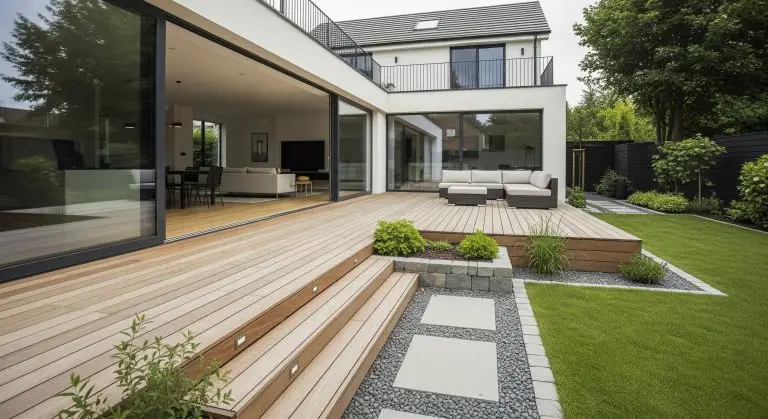
A deck can feel exposed when it ends in a sharp line. Planting and hardscaping help soften that edge and create a more natural connection between the outdoor space and the yard. Even a simple border of grasses, low shrubs, or seasonal planters can ground the deck rather than make it feel like it’s floating above the landscape.
Paths are especially useful because they give both the eye and the body a clear direction. Gravel, stepping stones, pavers, or a narrow garden path can lead from the deck to a patio, lawn, shed, or quiet seating corner. These details make the transition feel deliberate while keeping the yard relaxed and easy to use.
Planting can do the same work in a softer way. Layered greenery around the deck can create privacy, frame views, and soften hard surfaces without closing the space in. These landscaping decisions that shape outdoor spaces show how small choices can change the way a yard feels from day to day.
6. Create Outdoor Zones That Still Feel Connected
A connected deck still needs structure. Dining, lounging, grilling, and quiet seating can coexist in the same space without becoming a single crowded arrangement. The key is to define zones with subtle cues rather than heavy divisions.
Furniture placement does much of the work. A dining table can sit closer to the door for easy serving, while lounge seating can face the garden or the best view. Planters, outdoor rugs, low lighting, and small shifts in furniture direction can define each area without blocking movement across the deck.
The best layouts leave enough open space between zones. People should be able to move from the house to the yard without squeezing around chairs or cutting through the middle of a conversation area. When each zone has a purpose, and the route between them stays clear, the deck feels comfortable, flexible, and easy to enjoy.
7. Make The Space Work After Dark
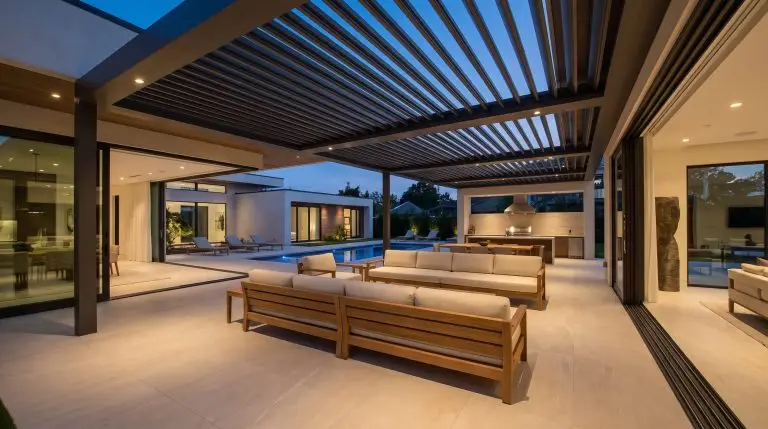
A deck that feels connected during the day should still feel easy to use at night. Lighting plays a major role, especially when the space links several areas of the yard. The goal is a soft, practical glow that helps people move comfortably without making the deck feel overlit.
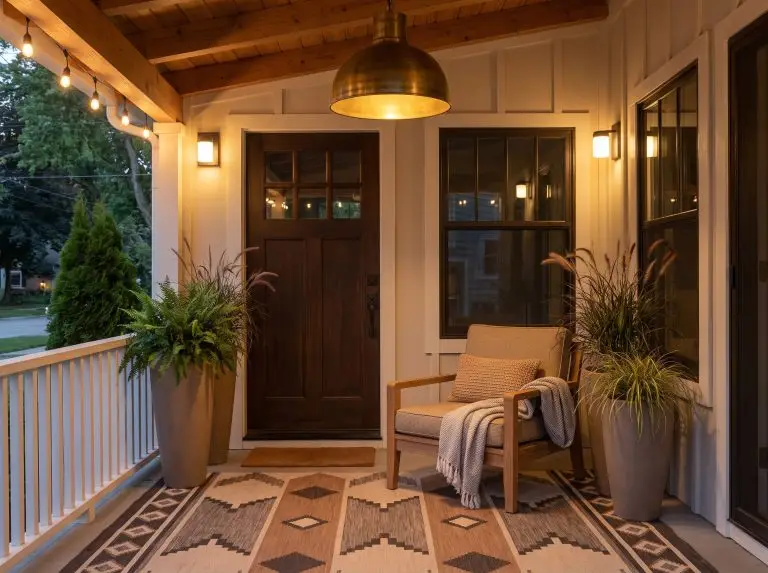
Start with the main routes. Lights near the door, along the deck edge, and close to paths or planting beds can make the transition from house to yard feel clear. Wall lights, step lights, low landscape lighting, and lanterns can work together when they share a similar warmth and scale.
Comfort matters after dark as well. A few sheltered seating spots, soft cushions, privacy planting, or a fire feature can make the deck feel more inviting in the evening. When lighting and comfort receive the same care as the daytime layout, the outdoor space stays useful long after the sun goes down.
Conclusion
A deck feels most successful when it strengthens the relationship between the home and the yard. The right scale, materials, planting, lighting, and layout can make that transition feel natural instead of forced.
When every detail supports the same outdoor rhythm, the deck becomes more than an extra surface for seating or dining. It becomes the link that helps the whole exterior feel calm, useful, and connected.