TL;DR
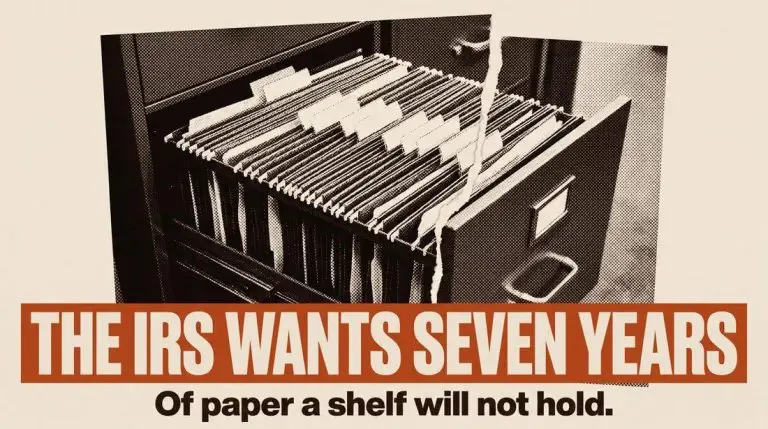
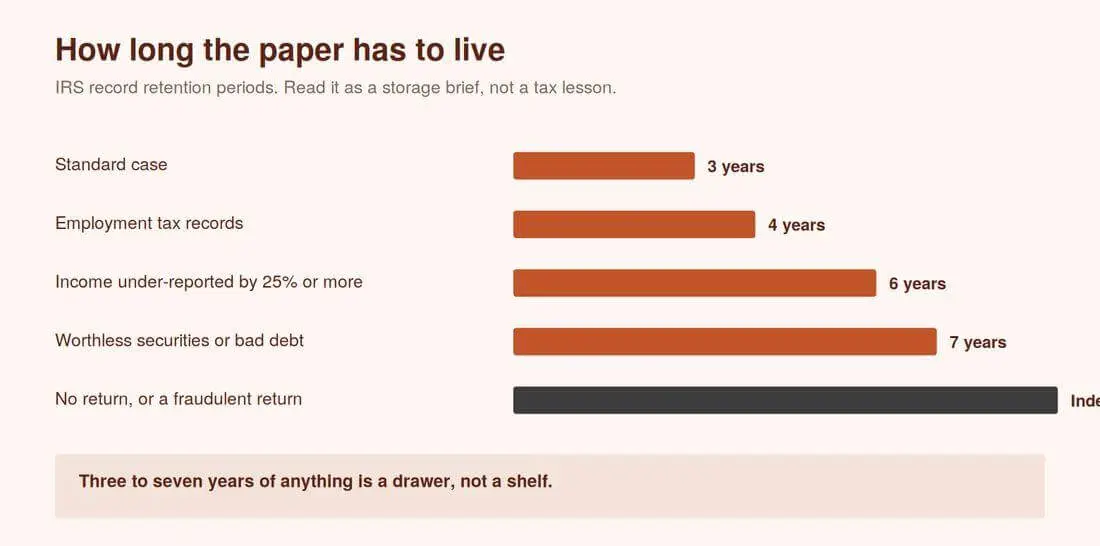
- The IRS asks most people to keep records 3 years, employment tax records 4 years, and 6 years where income was underreported by more than 25%. That is the volume your storage has to absorb.
- Open shelving photographs well and fails at paper. Anything you must keep for years wants a drawer, not a shelf.
- A lateral unit holds files side to side, so a 36 in wide cabinet takes roughly twice the paper of a two-drawer vertical in the same floor area.
- Buy the storage before the desk. It is the piece with the fixed dimensional requirement.
Short version: most home office storage is styled for the things you look at and sized for none of the things you are obliged to file.
Storage first, and specifically drawer storage
The piece to choose before anything else is the filing, because it has real dimensional constraints and the desk does not.
Paper filing needs a drawer deep enough for a hanging folder and a runner that can carry the weight when full, which is heavier than people expect. A drawer of letter files weighs meaningfully more than the cabinet around it. This is why lateral file cabinets built for commercial use tend to specify their drawer slides by cycle rating and load, while residential furniture describes the finish and stops.
A lateral unit stores folders across the width of the drawer rather than front to back. In practice a 36-inch lateral in a standard depth holds around twice the paper of a two-drawer vertical occupying similar floor space, and it gives you a usable surface on top at roughly desk height.
How much paper you are actually storing
The honest answer to “how much filing do I need” comes from retention rules rather than taste.
The IRS sets out how long to keep records, and the periods are longer than most people assume:
| Situation | Keep for |
| Standard case | 3 years |
| Employment tax records | 4 years |
| Income underreported by more than 25% | 6 years |
| Claim for worthless securities or bad debt | 7 years |
| No return filed, or a fraudulent return | Indefinitely |
Property records run until the limitation period expires for the year you dispose of the property, which for a house can be a very long time.
Read that as a storage brief rather than a tax lesson. Three to seven years of anything is not a shelf of magazine files. It is a drawer, and probably two.
Where the design problem actually is
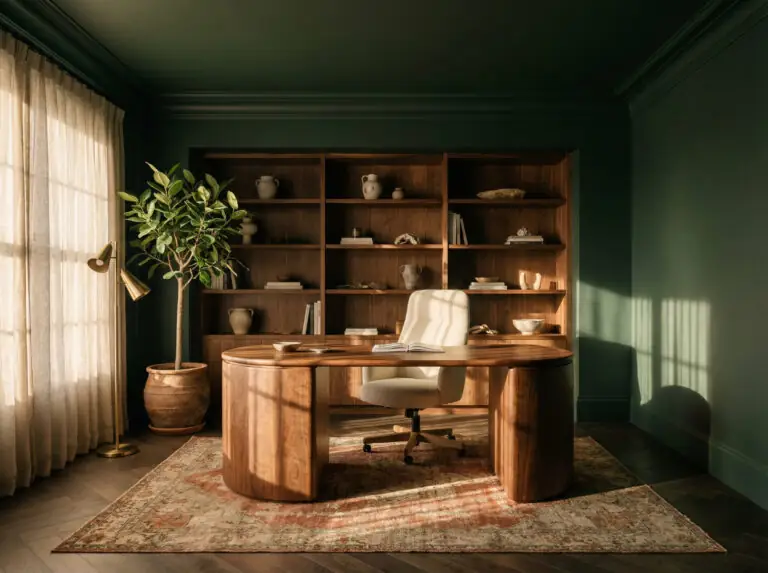
The reason home office storage looks bad is almost always that it was chosen to be seen.
Open shelving is the default in every inspiration photograph because it shows objects, and objects are what makes a room look styled. It is genuinely good for books, samples, plants and the things you want on display. It is poor for documents, because paper stored in the open needs boxes and folders to look tidy, and those boxes then become the thing you see.
The workable split is boring and reliable. Closed storage at low level for anything you file. Open storage at high level for anything you like looking at. The eye reads the top half of a wall first, so the display goes where it gets seen and the filing goes where it does not.
That layered approach to a workspace, where organisation is planned alongside lighting and finish rather than bolted on afterwards, is what separates a home office that keeps working from one that photographs well in month one. The same thinking runs through this piece on designing a home office that supports creativity and productivity.
Five choices that decide whether it looks residential
Commercial lateral file cabinets solve the storage problem and can look institutional in a house. These are the levers that fix that.
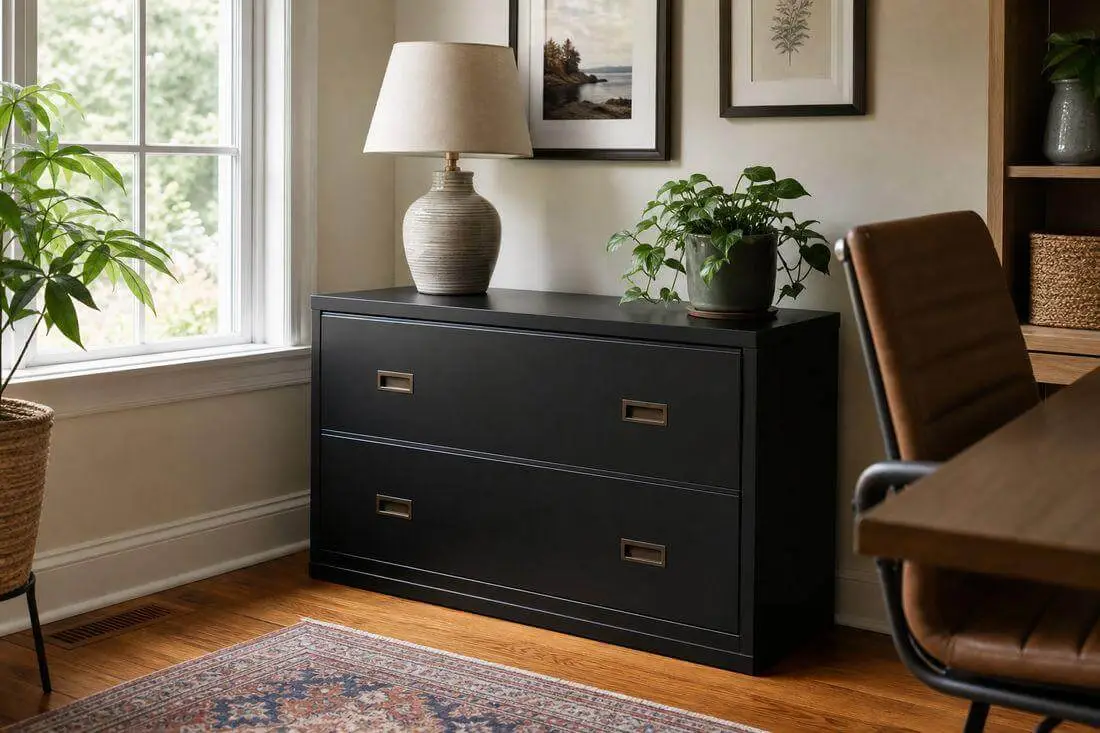
- Height. A cabinet at 28 to 30 inches reads as furniture and works as surface. A full-height unit reads as an office.
- Finish. Wood-effect laminate and matte painted steel both disappear. Light grey and black gloss do not.
- Handles. Recessed pulls are the giveaway. Many ranges take a standard handle, and changing them costs almost nothing.
- Top surface. Put a lamp, a plant and one framed thing on it and it stops being a filing cabinet.
- Position. Under a window is usually the best place in a small room, because it uses the wall that cannot take tall furniture anyway.
The measurement people forget
Check the drawer extension, not just the cabinet footprint.
A lateral drawer needs to open fully to reach the back files, and full extension means roughly the drawer depth again in clear floor space in front of it. In a room where the desk chair sits opposite, that clearance and the chair are competing for the same square foot. Measure the open state, not the closed one, and check it against where the chair actually rolls.
What to do if you have almost no floor area
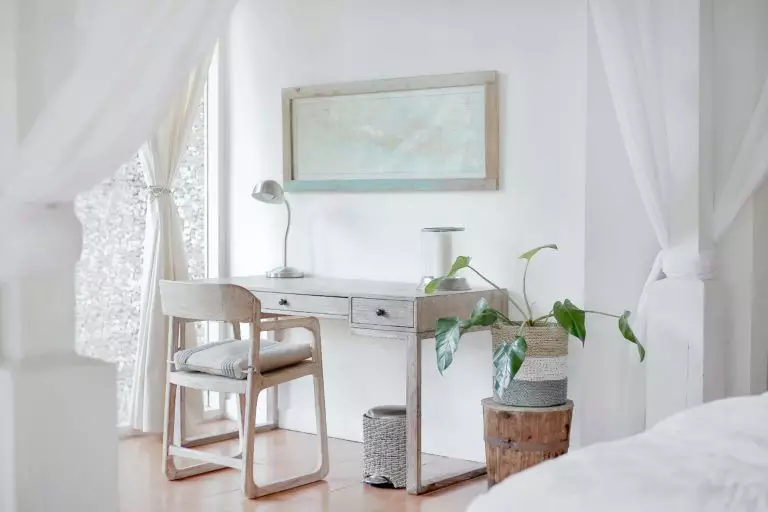
The genuine constraint case is a room too small for a separate cabinet, and the answer is to stop treating storage as a separate object.
A desk with a full-depth pedestal on one side gives you one filing drawer without adding a footprint. It is less capacity than a lateral unit and it is the right call when floor space is the binding limit rather than volume. Above roughly two drawers of paper, though, the pedestal stops coping and the separate cabinet earns its place back.