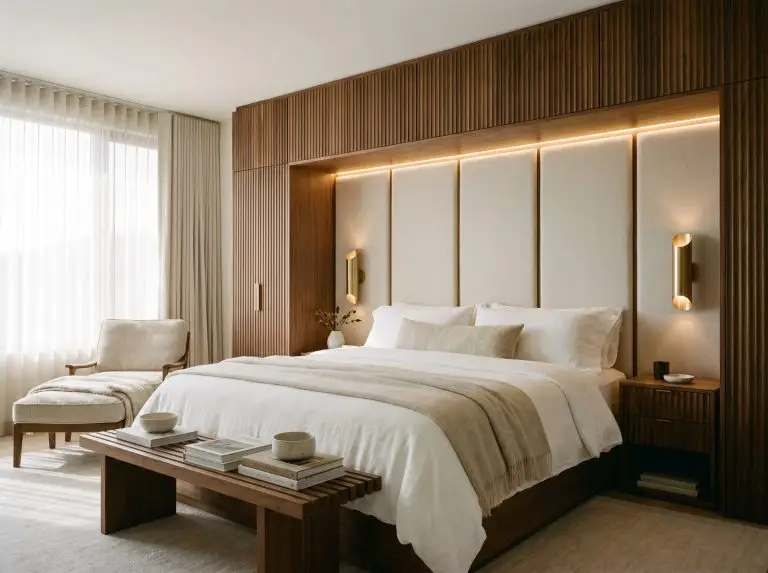
A bed pushed against a blank wall is merely a mattress in a room. To construct a restorative, intentional space, we must treat headboard design as the absolute architectural anchor of the bedroom. It dictates the spatial flow, controls the acoustic reverberation, and defines the tactile experience of the entire environment.
Moving beyond the concept of a standalone piece of furniture, the most compelling residential bedrooms borrow principles from high-end hospitality design. Our curatorial eye views the vertical plane behind the bed as a structural and textural composition. Whether you are executing custom millwork or utilizing high-impact pigment to manipulate proportions, this localized zone requires rigorous attention to scale, materiality, and integrated lighting.
The Architectural Approach: Wall-to-Wall & Integrated Designs
Contemporary hospitality design frequently abandons the traditional, isolated bed frame in favor of treating the headboard as an extension of the wall architecture. By establishing a continuous horizontal datum line across the wall, you instantly widen a tight bedroom and create a grounded, bespoke aesthetic.
Fluted Wood Baffle Panels with Floating Nightstands
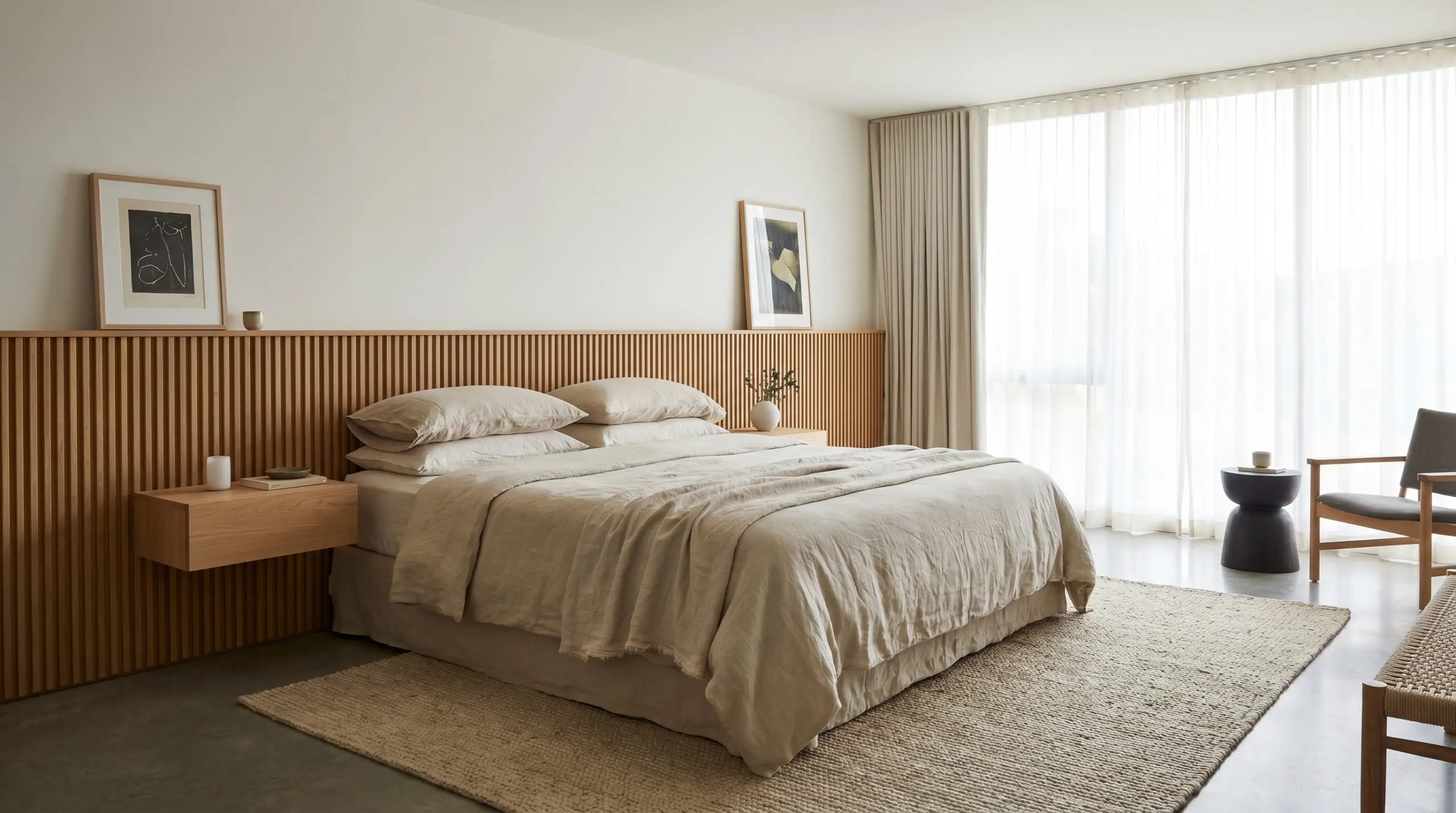
Running vertical fluting wall-to-wall introduces rhythmic texture while simultaneously absorbing ambient light to soften the room’s hard architectural edges. Suspending floating nightstands directly off the baffle panels keeps the floor plan visually open and emphasizes the continuous horizontal expanse.
- Vibe: Boutique Hotel Modernism
- Material Spec: Rift-sawn white oak or walnut ensures a refined, linear grain without the chaotic knots of cheaper lumber.
- Proportion Check: Ensure the datum line sits at least 12 inches above your mattress height to maintain visual presence once pillows are stacked.
- Styling Pro-Tip: Contrast the rigid wood geometry with soft, organic bedding.
Plaster and Drywall Niche Headboards
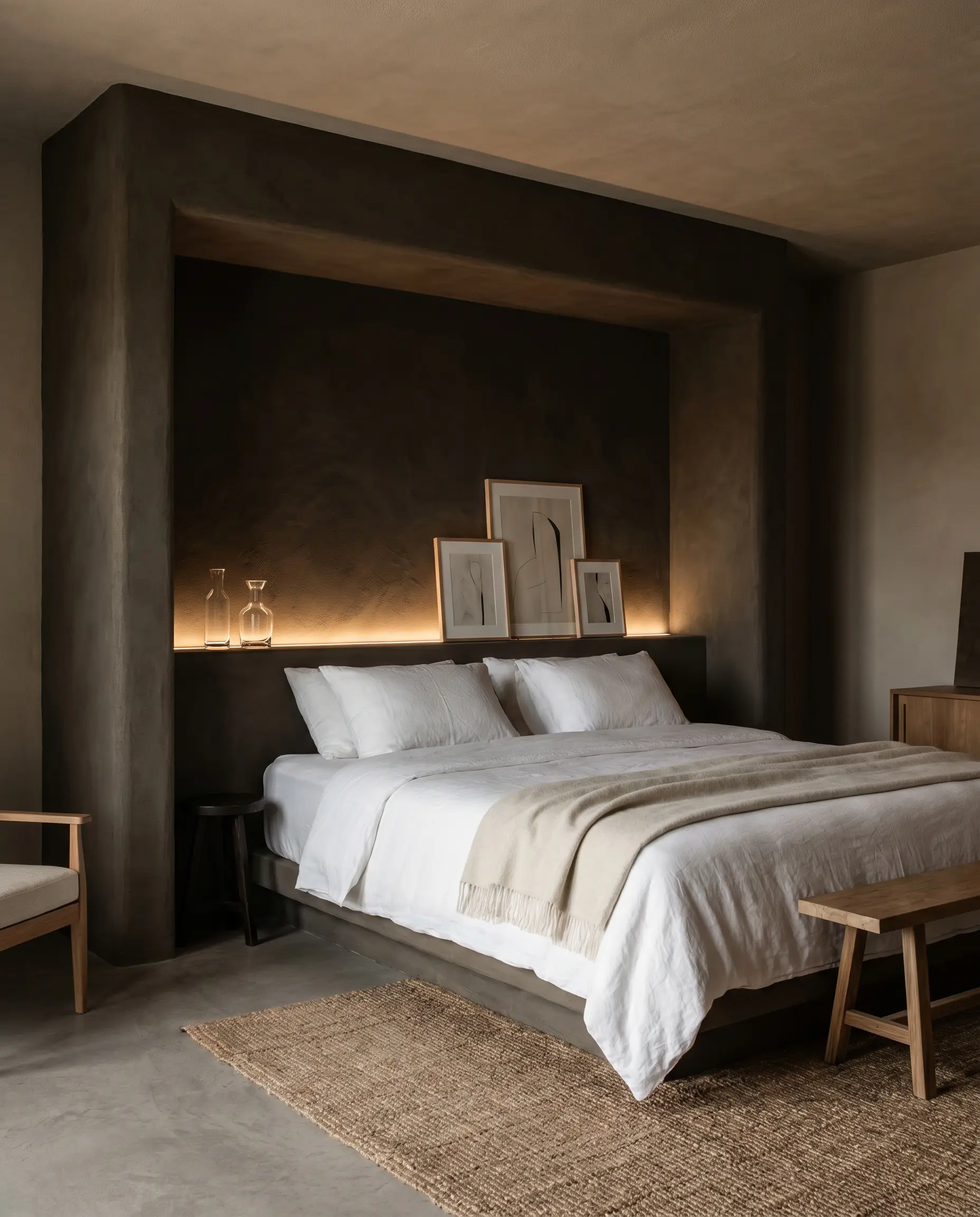
Building out a false wall to carve an inset alcove directly behind the bed frames the sleeping zone within a heavy, structural void. This brutalist, warm minimalist approach replaces the need for traditional furniture while providing an integrated, continuous ledge for art and lighting.
- Vibe: Brutalist / Warm Minimalist
- Key Materials: 5/8-inch drywall, corner bead, and a Roman clay topcoat.
- Scale Check: Construct the integrated ledge with a minimum depth of 6 inches to practically accommodate framed art and water glasses.
- Paint Match: Portola Paints “Fade to Black” (Roman Clay).
Integrated LED Backlighting and Hardwired Sconces
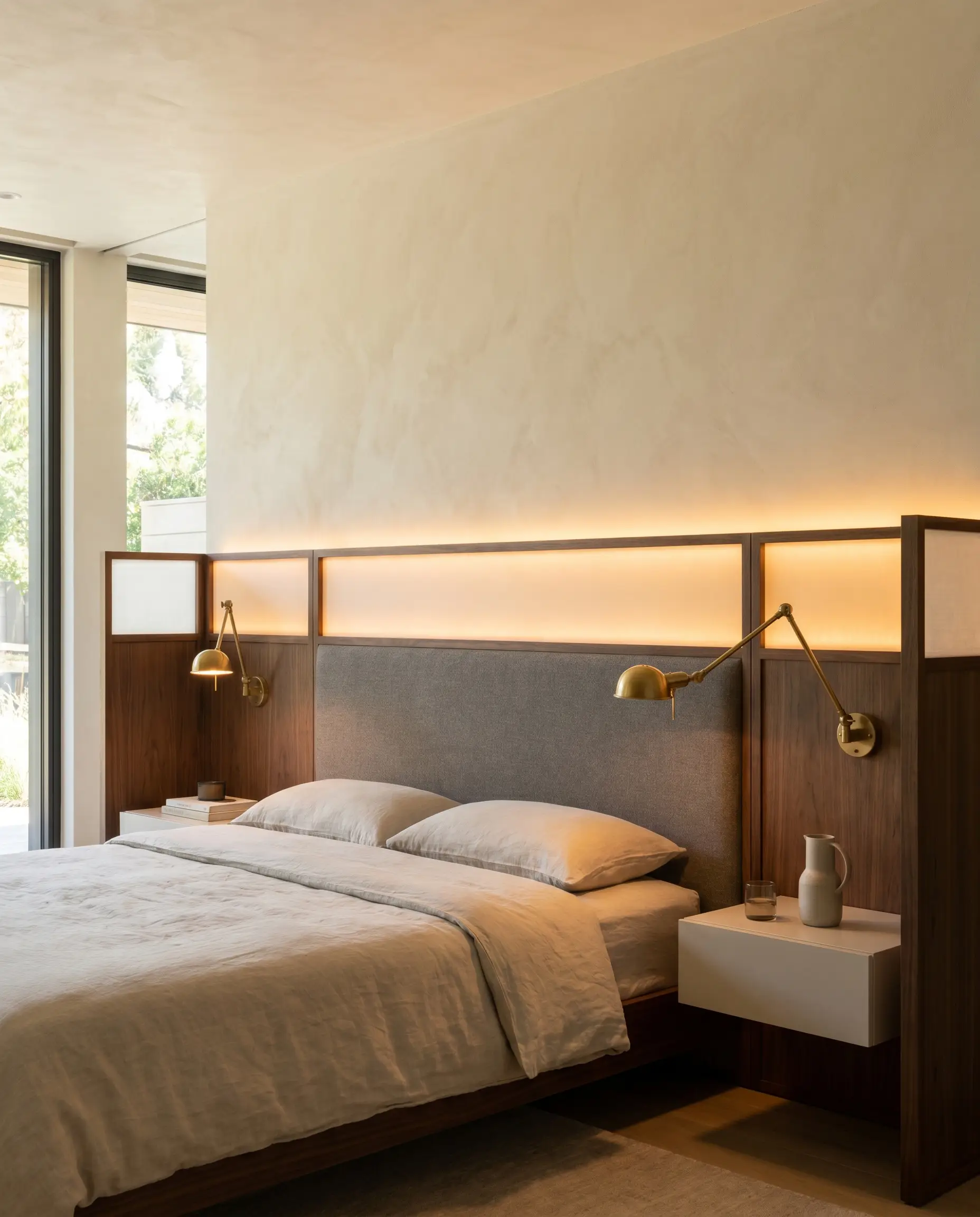
Embedding lighting directly into the headboard structure transforms the bed into a glowing architectural feature rather than a dark mass. Concealing LED strip channels behind the headboard edge washes the wall with soft ambient light, while hardwired sconces provide localized task lighting without cluttering the nightstands.
- Vibe: High-Tech Luxury
- Key Components: Aluminum LED channels with diffusers, brass articulated sconces.
- Technical Spec: Specify strictly 2700K temperature LED strips to ensure a warm, restorative glow rather than harsh, clinical white light.
Electrical integration dictates your timeline. You must plan the exact placement of your hardwired sconces and run the wiring into the millwork before fabrication begins.
Hackrea Planning Secret
Tactile Softness: Advanced Upholstery & Acoustic Dampening
Transitioning from hard architectural lines to soft, enveloping textures requires a rigorous selection of fabrics. Beyond visual warmth, advanced upholstery provides critical acoustic dampening, absorbing high-frequency echoes to engineer a noticeably quieter, more restorative sleep environment.
Deep Vertical Channeled Velvet or Leather
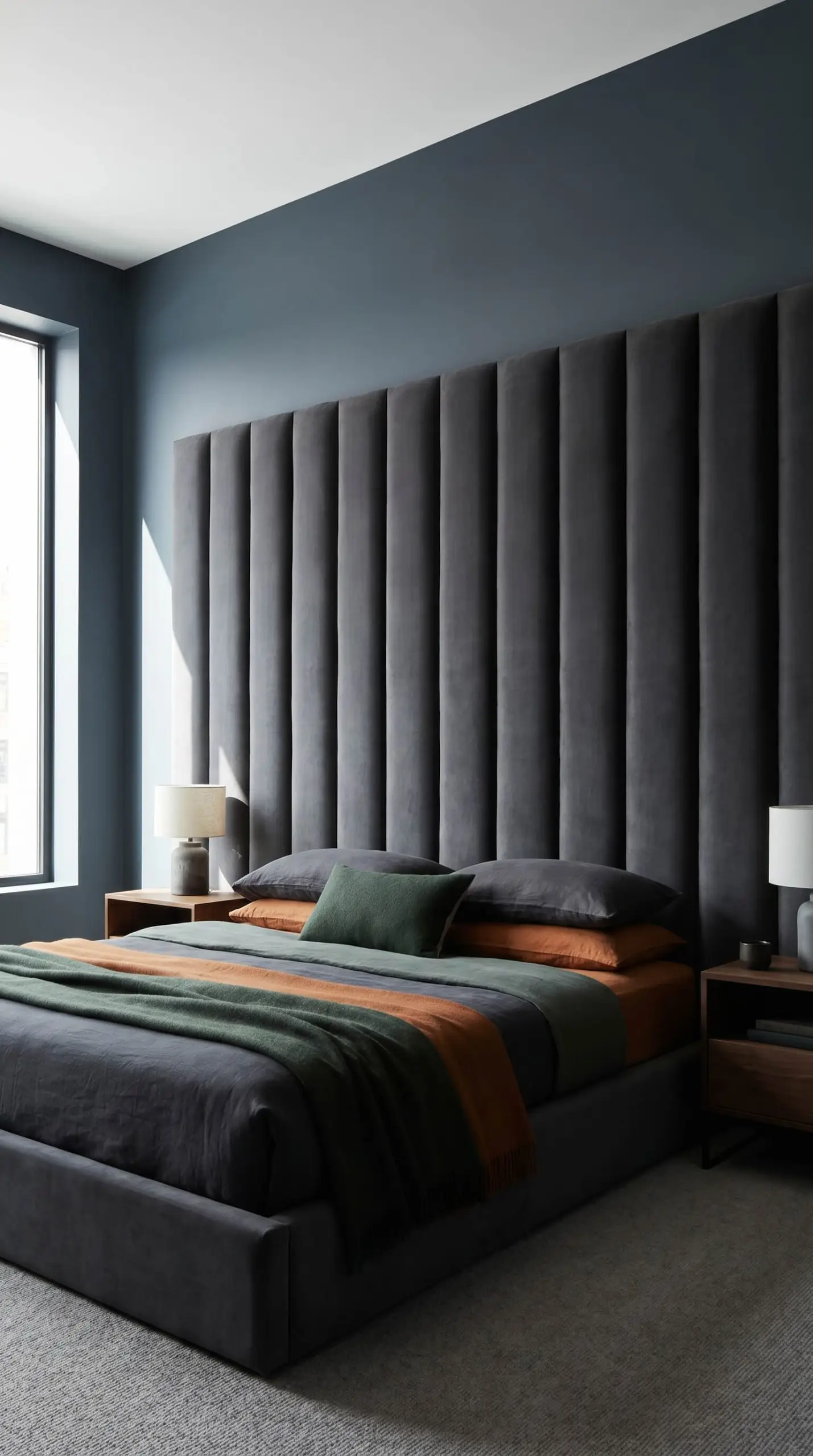
Channeled upholstery offers incredible visual weight, but the width of the channeling completely shifts the aesthetic. Tight, narrow channels read as sharp and mid-century, while oversized, plush channels lean into a postmodern, chubby aesthetic that dominates current high-end interiors.
- Vibe: Moody Postmodern
- Material Spec: Performance aniline leather offers durability and a rich patina, while a heavyweight cotton velvet maximizes acoustic dampening.
- Color Match: Farrow & Ball “Hague Blue” (for surrounding walls to complement a moody velvet).
- Styling Pro-Tip: Pair oversized channeling with a low-profile platform frame to keep the massive visual weight grounded.
The Relaxed Belgian Linen Slipcover
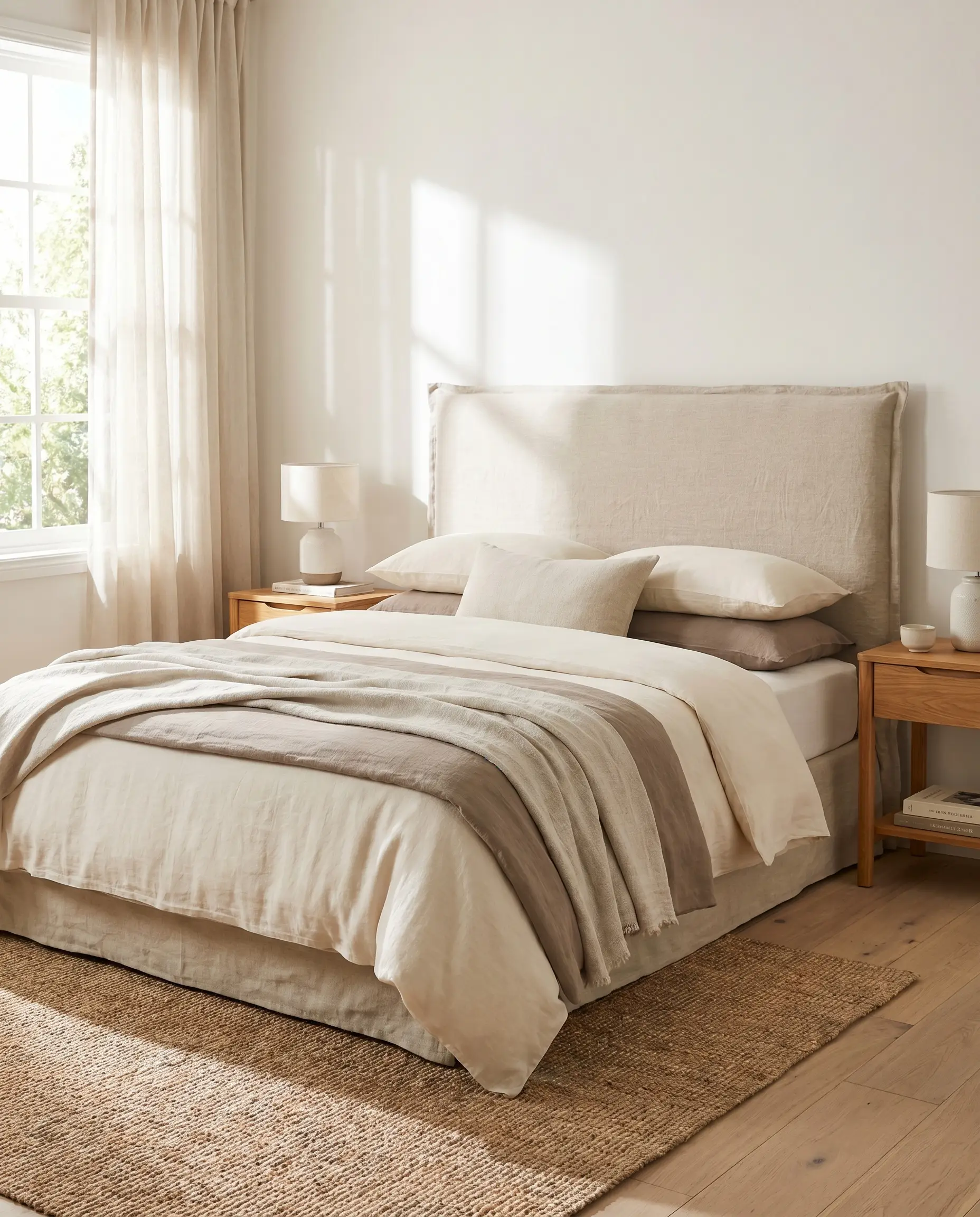
The slipcovered headboard masters the art of casual luxury, providing a tailored yet effortlessly draped silhouette. Detailing the cover with a flanged edge or a raw French seam introduces subtle structural interest while maintaining the practicality of a removable, dry-cleanable surface.
- Vibe: Organic Transitional
- Material Spec: Opt for an 18oz heavyweight stonewashed Belgian linen so the slipcover drapes solidly without looking flimsy or wrinkled.
- Key Detailing: Specify a 1-inch flange or a prominent French seam for architectural definition.
Because headboards face constant friction from hair oils and pillows, a removable slipcover extends the lifespan of your investment exponentially compared to fixed upholstery.
Design Ally Tip
Organic Asymmetrical Silhouettes
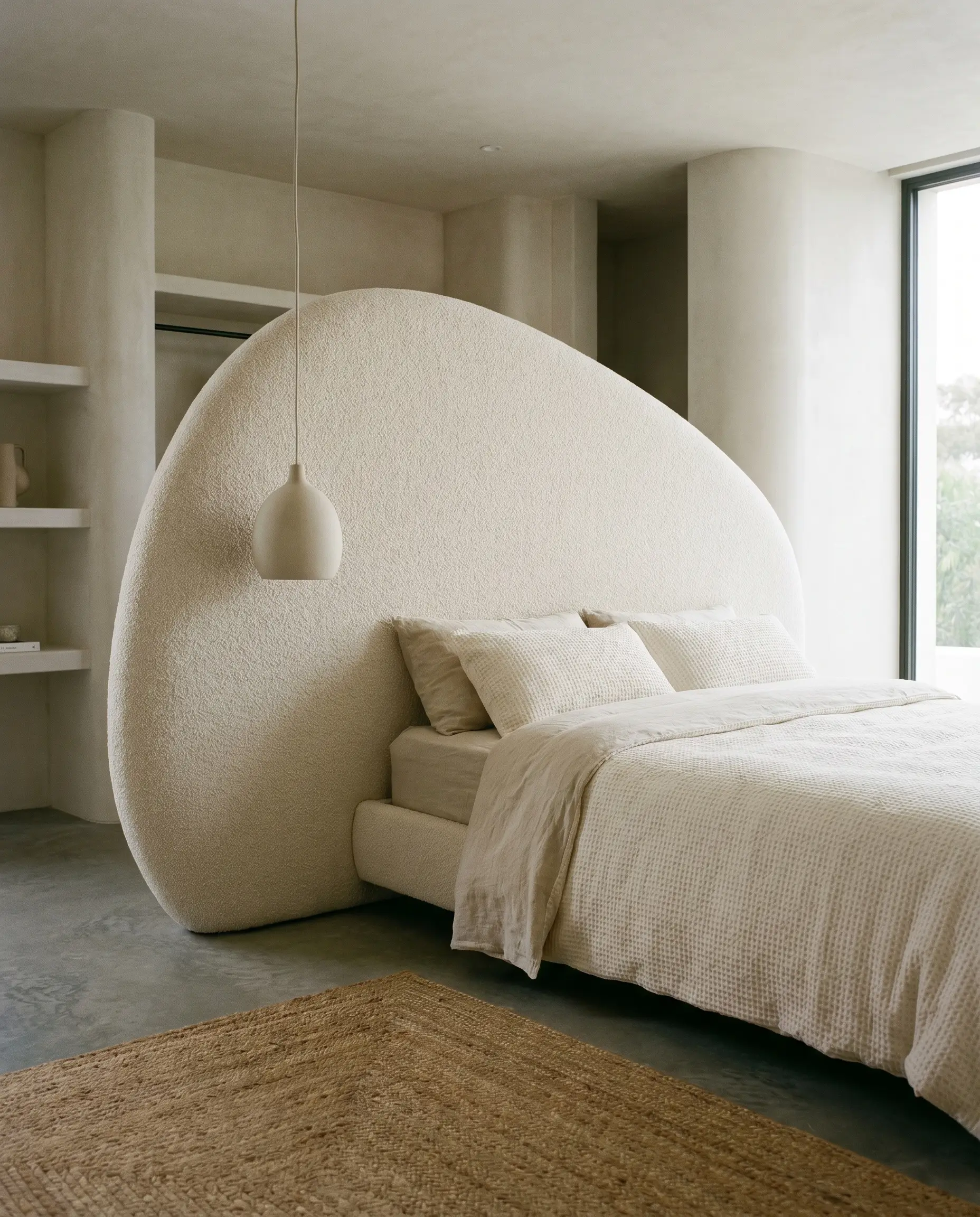
Moving decisively away from standard rectangles, sculptural and sweeping asymmetrical shapes act as functional art. These pebble-like silhouettes demand a uniform, highly textured fabric to highlight the shape without the distraction of a printed pattern.
- Vibe: Sculptural Avant-Garde
- Material Spec: A tight-weave performance boucle perfectly coats the curved geometry while resisting snagging.
- Styling Pro-Tip: Offset the highest peak of the asymmetrical curve with a low-hanging pendant light on the opposite side to balance the spatial composition.
The Curated Eclectic: Vintage & Repurposed Anchors
For a deeply personal, collected-over-time aesthetic, high-end execution relies on patina and monumental scale. Repurposing historical textiles or architectural salvage requires deliberate mounting techniques to ensure the final composition feels highly curated, not haphazard.
Oversized Vintage Tapestries and Rugs
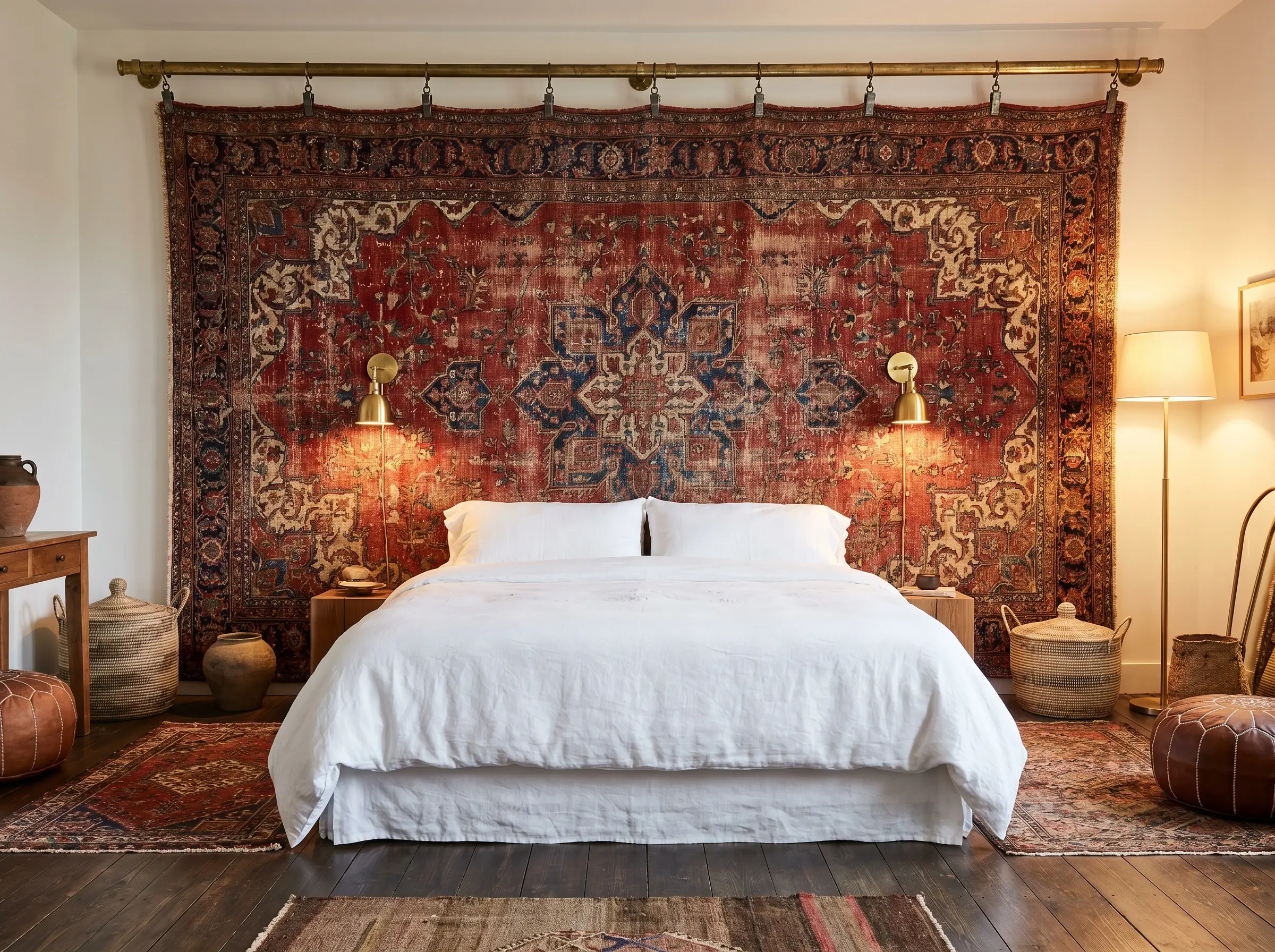
Suspending a heavy Moroccan or distressed Turkish rug directly behind the bed injects immediate historical depth and provides massive acoustic benefits. The dense, woven wool absorbs sound while acting as a towering, floor-to-ceiling focal point.
- Vibe: Nomadic Luxury
- Key Materials: Vintage Oushak or Moroccan wool rug, unlacquered brass gallery rail.
- Hardware Spec: Mount the rug using a solid brass drapery rod with heavy-duty rug clips spaced evenly every 4 inches to prevent sagging.
- Styling Pro-Tip: Keep the bed linens stark white to let the textile’s patina command the room.
Reclaimed Architectural Salvage & Screens
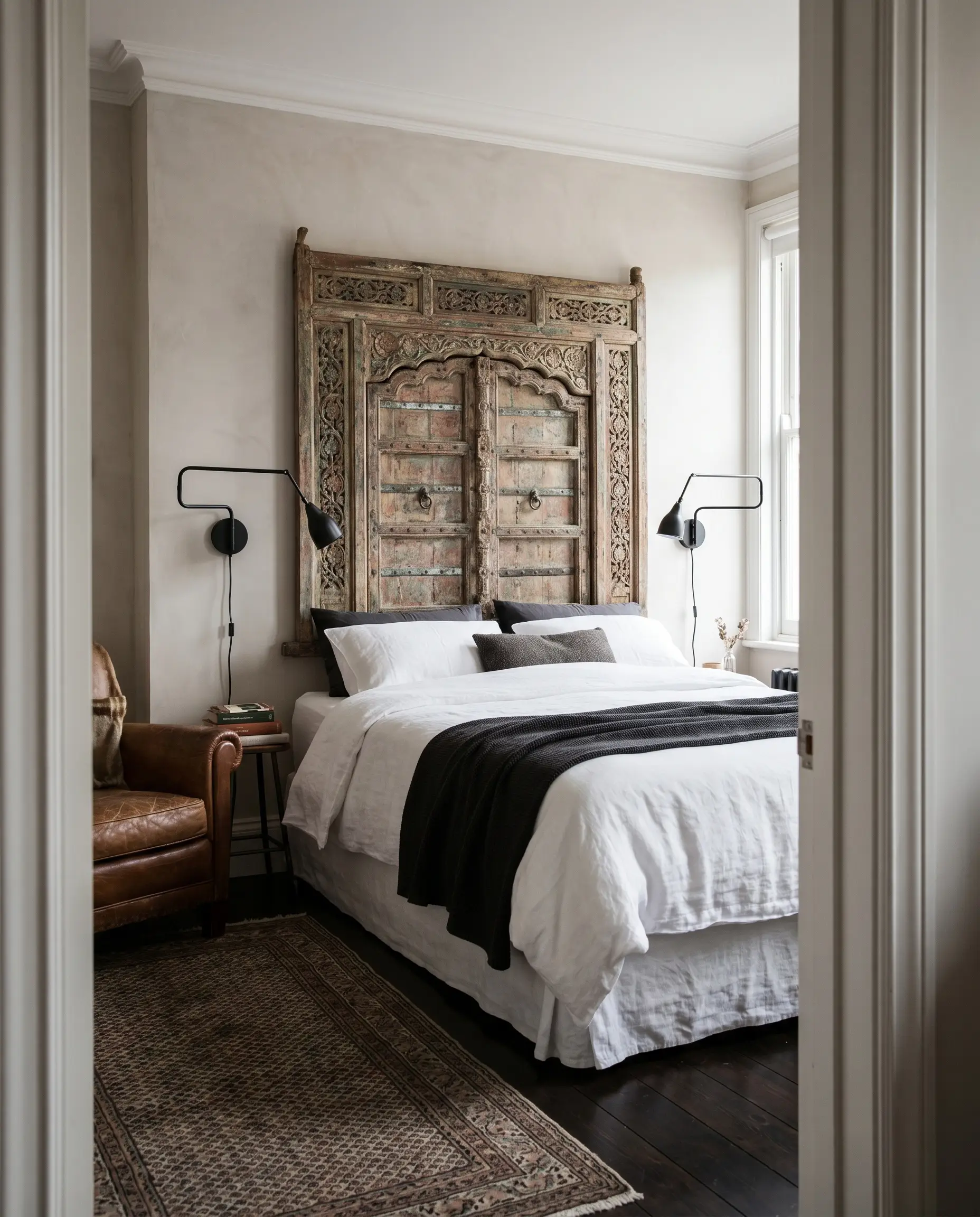
Mounting antique coromandel screens, distressed French doors, or carved Indian room dividers to the wall creates an incredibly commanding structural presence. The aged wood and intricate carvings provide a level of tactile history that new fabrication simply cannot replicate.
- Vibe: Historical Eclectic
- Key Materials: Antique bi-fold screens, heavy-duty French cleats.
- Scale Check: Ensure the salvage piece is at least 6-10 inches wider than the mattress on both sides to avoid looking dwarfed by the bed.
Classic Rattan Cane with a Modern Contrast
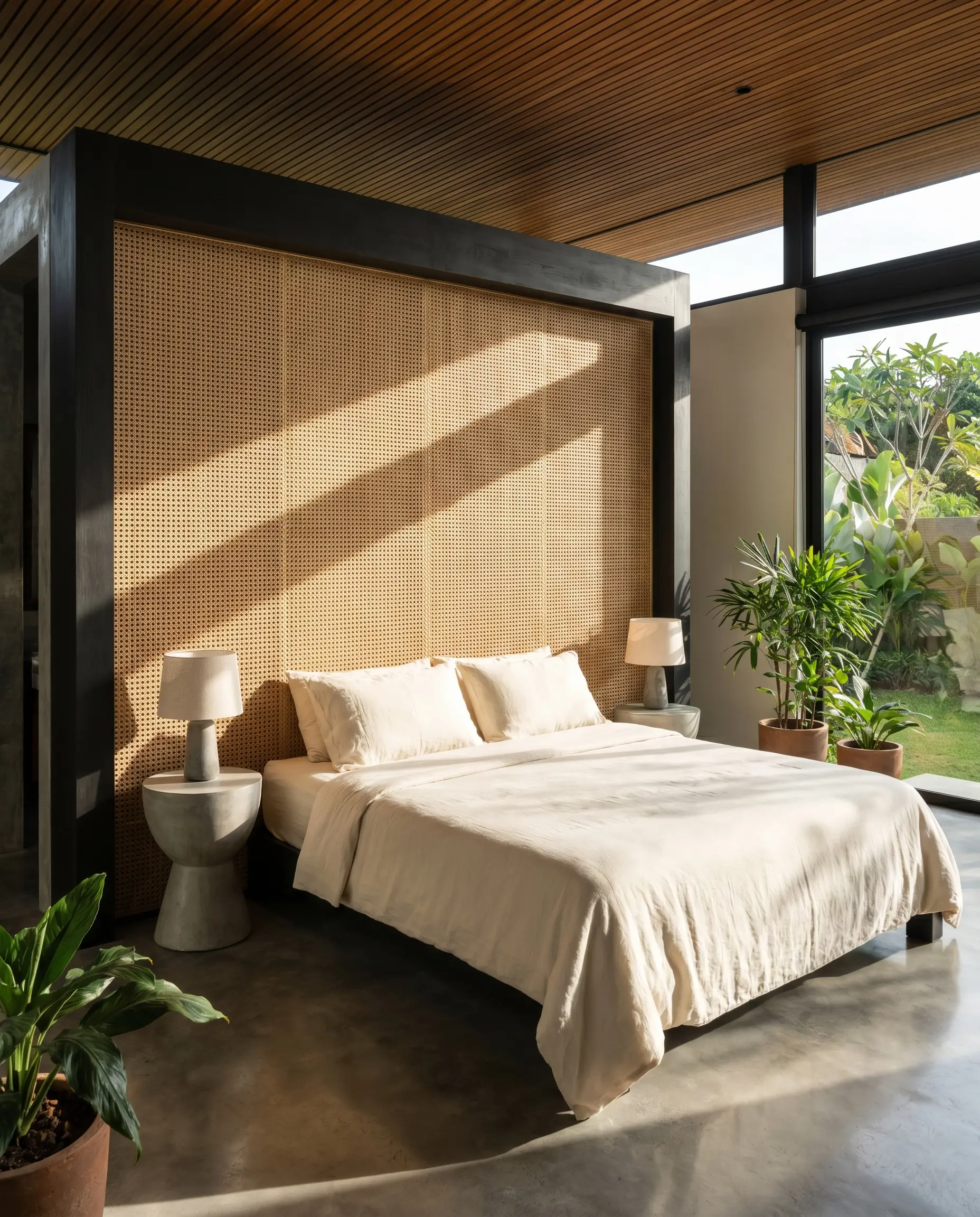
Natural rattan cane webbing offers excellent texture, but it requires sharp, contemporary framing to avoid looking like dated bohemian decor. Pairing the organic, woven cane with a stark, brutalist frame instantly sharpens its visual profile.
- Vibe: Tropical Modernism
- Material Spec: Natural radio-weave cane backed by a solid structural panel.
- Finish Spec: Frame the cane in a stark matte black or a high-gloss oxblood lacquer for maximum sophisticated contrast.
- Paint Match: Sherwin-Williams “Tricorn Black”.
High-Impact Pigment: Paint & Wallpaper Solutions (Budget-Friendly)
You do not need a custom millwork budget to successfully anchor a bed. Paint and wallpaper, when treated as rigorous geometric tools rather than mere decoration, define space and manipulate proportions with architectural precision.
The Painted Trompe L’Oeil Arch
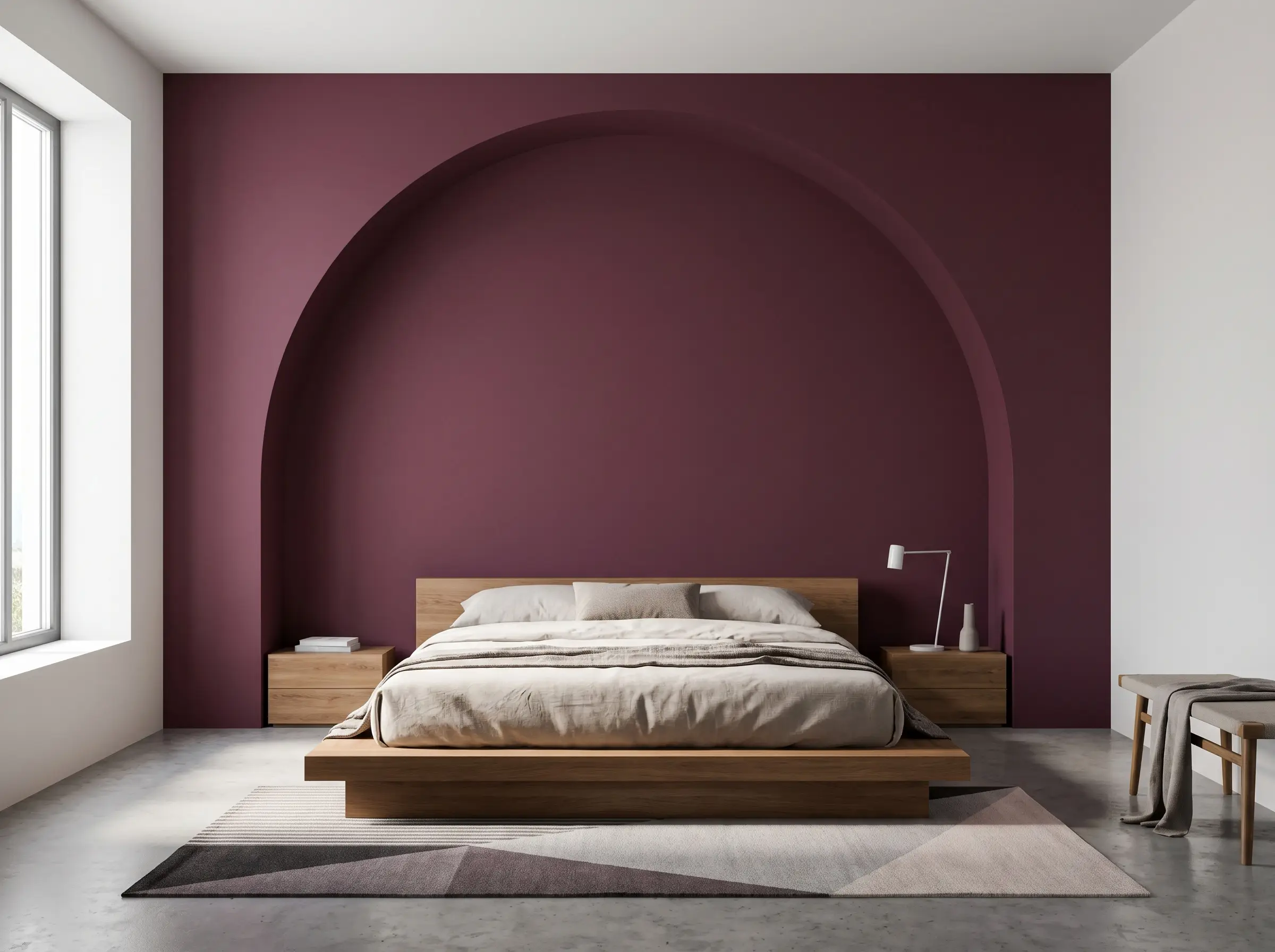
Painting a perfectly masked, ceiling-height arch behind a simple platform bed establishes an immediate, artificial sense of depth. Using rich, saturated tones visually carves out a dedicated sleeping zone without occupying a single inch of floor space.
- Vibe: Geometric Contemporary
- Paint Match: Benjamin Moore “Dark Burgundy” or “Hunter Green”.
- Finish Spec: Use a strictly matte or flat finish; an eggshell sheen will reflect ambient light and instantly ruin the illusion of structural depth.
- Styling Pro-Tip: Align the width of the arch exactly with the outer edges of your nightstands for a cohesive, built-in look.
Limewash and Roman Clay Color-Blocking
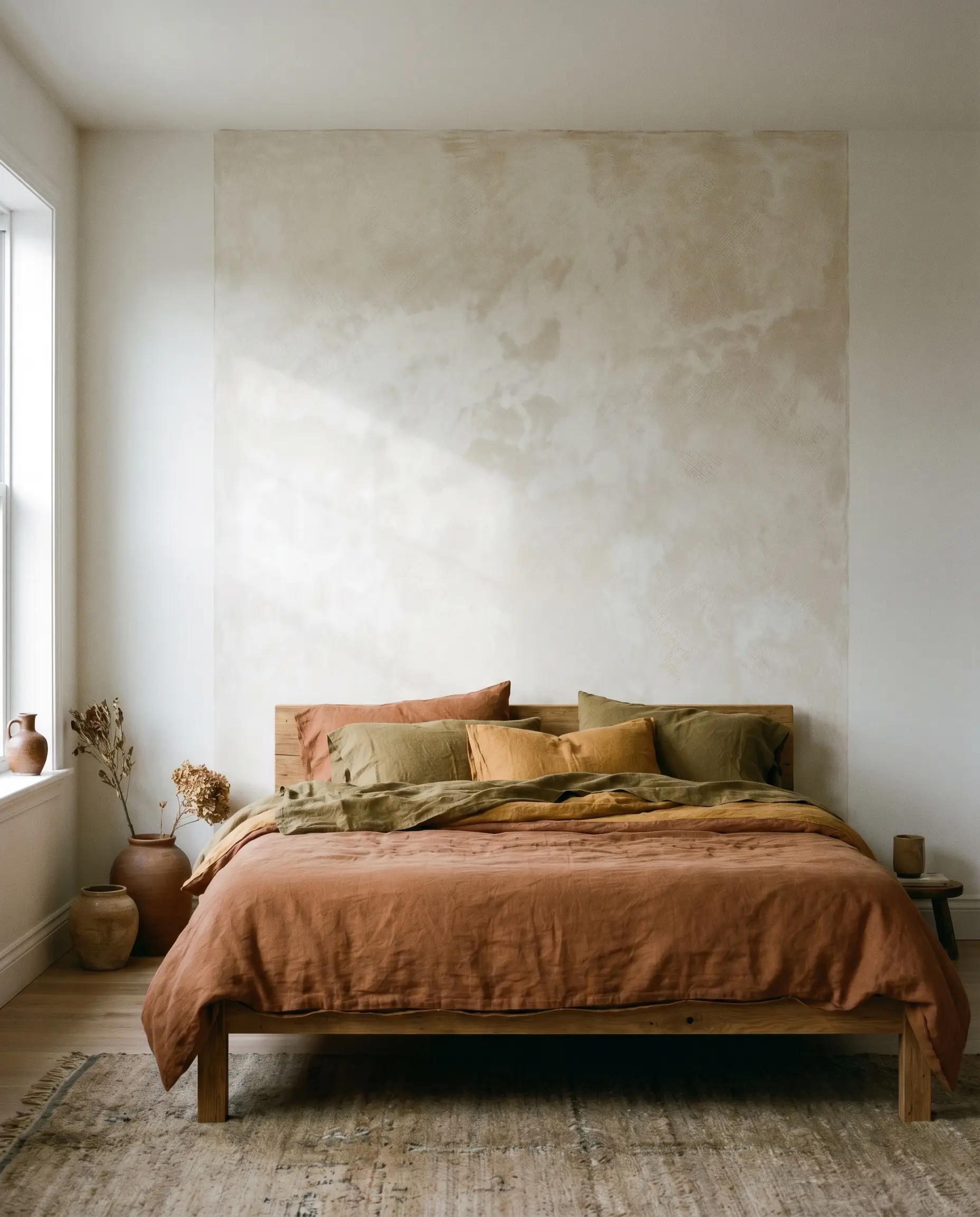
Applying mineral-based paints in a crisp square or rectangle directly behind the bed introduces incredible physical texture to a flat wall. The suede-like, mottled finish of limewash catches natural light dynamically, mimicking the depth of raw concrete or aged plaster.
- Vibe: Organic Wabi-Sabi
- Key Materials: Mineral limewash primer and topcoat, block brush.
- Color Match: Bauwerk Colour “Bone”.
Limewash must be applied with a specialized block brush in a cross-hatch pattern. Rolling it on with a standard napped roller will destroy the cloudy, tactile texture that makes the finish so luxurious.
Hackrea Application Tip
Framed Wallpaper Backdrops
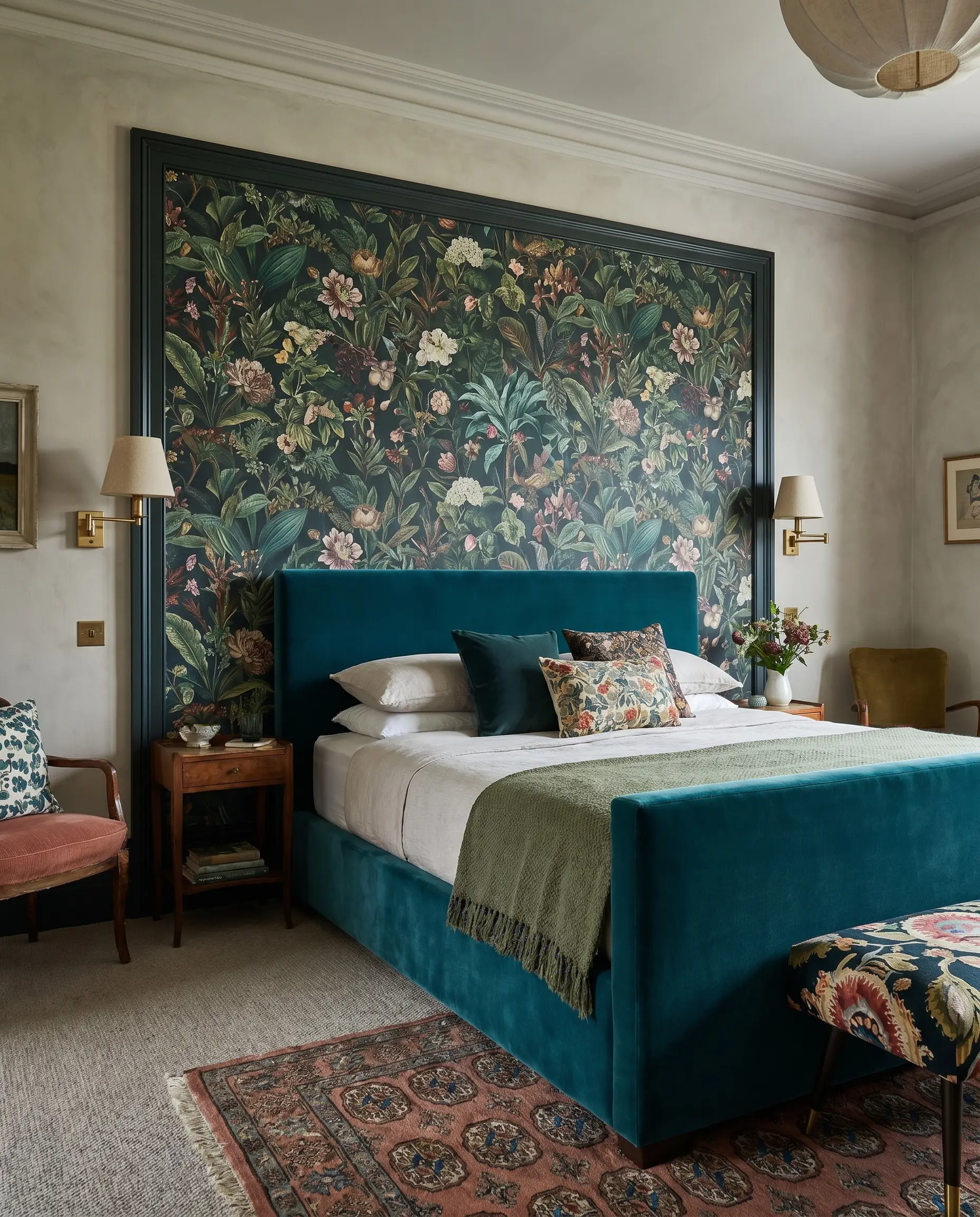
Installing a large-scale botanical or geometric wallpaper strictly across the width of the bed zone and framing it with simple trim molding transforms the wall into a massive, integrated art piece. This technique contains the visual noise of a bold pattern while providing a dramatic backdrop.
- Vibe: Maximalist Tailored
- Key Materials: Large-scale mural wallpaper, 1-inch wood trim molding.
- Application Spec: Traditional paste wallpaper offers seamless edges, whereas peel-and-stick is excellent for renters but may shrink slightly over time, exposing seams.
The Headboard Proportion and Sizing
Executing the perfect headboard relies entirely on mathematical scale. Use this proportion guide to dictate your exact fabrication dimensions based on the architectural realities of your space.
| Ceiling Height / Room Width | Recommended Headboard Height | Recommended Width / Nightstand Clearance | Design Rationale |
|---|---|---|---|
| 8-Foot Ceilings (Standard) | Max 48 inches from floor | Bed width + 24 inches per side | Prevents the room from feeling top-heavy while allowing adequate breathing room above the datum line. |
| 10-Foot+ Ceilings (Tall) | 60-72 inches, or full ceiling height | Full wall-to-wall | Tall ceilings dwarf standard headboards; oversized verticals or floor-to-ceiling baffle panels command the spatial volume. |
| Narrow Room (Under 12 ft wide) | 36-42 inches (Low Profile) | Exact bed width | A low, tightly scaled silhouette ensures the bed doesn’t consume the limited spatial flow of the room. |
Anchoring the Sanctuary
The headboard is undeniably the foundation of your bedroom’s entire design narrative. Before committing to a silhouette or fabric, ruthlessly evaluate your room’s structural deficiencies: do you need acoustic dampening, integrated lighting, or a jolt of tactile texture? By treating this zone as a calculated architectural feature rather than an afterthought, you lay the groundwork for a truly restorative space.

The Hackrea Style Desk treats interior decoration as an exact visual science. Rather than focusing on demolition or floor plans, this desk masters the art of color theory, undertone matching, material pairings, and spatial proportion. From balancing the visual weight of mixed metals to finding the perfect bridging tone between disparate wood species, this desk provides the rigorous aesthetic rules needed to achieve high-end, editorial-quality harmony in any space.