Last week, a user on the Hackrea community forum uploaded a floor plan of their 1980s colonial build, paralyzed by a $14,000 flooring quote. They were caught in the classic renovation trap: balancing the aesthetic pull of natural timber against a rigid household budget.
When mapping out the cost to install hardwood floors vs luxury vinyl plank, looking purely at the retail sticker price per square foot is a massive financial miscalculation.
Retailers sell you the Day 1 material cost. Contractors bill you for the Year 10 Lifecycle Cost.
Hidden structural fees, extensive subfloor preparation, and long-term durability metrics drastically alter the final invoice. Before you rip up your existing floors and start sourcing materials for matching wood floors to your kitchen cabinets, you need to understand the brutal math of structural prep.
2. Hardwood Flooring Cost Breakdown
Hardwood Material Tiers
Solid Hardwood Flooring is a living, breathing structural element. Pricing is determined by the exact lumber species, the milling process, and its specific rating on the Janka hardness scale.
Red oak sits at a standard 1290 Janka rating, making it a reliable, accessible baseline. Conversely, Brazilian walnut hits a staggering 3684, driving the material cost exponentially higher due to the difficulty of milling such dense timber.
You must categorize your material options before calculating total square footage.
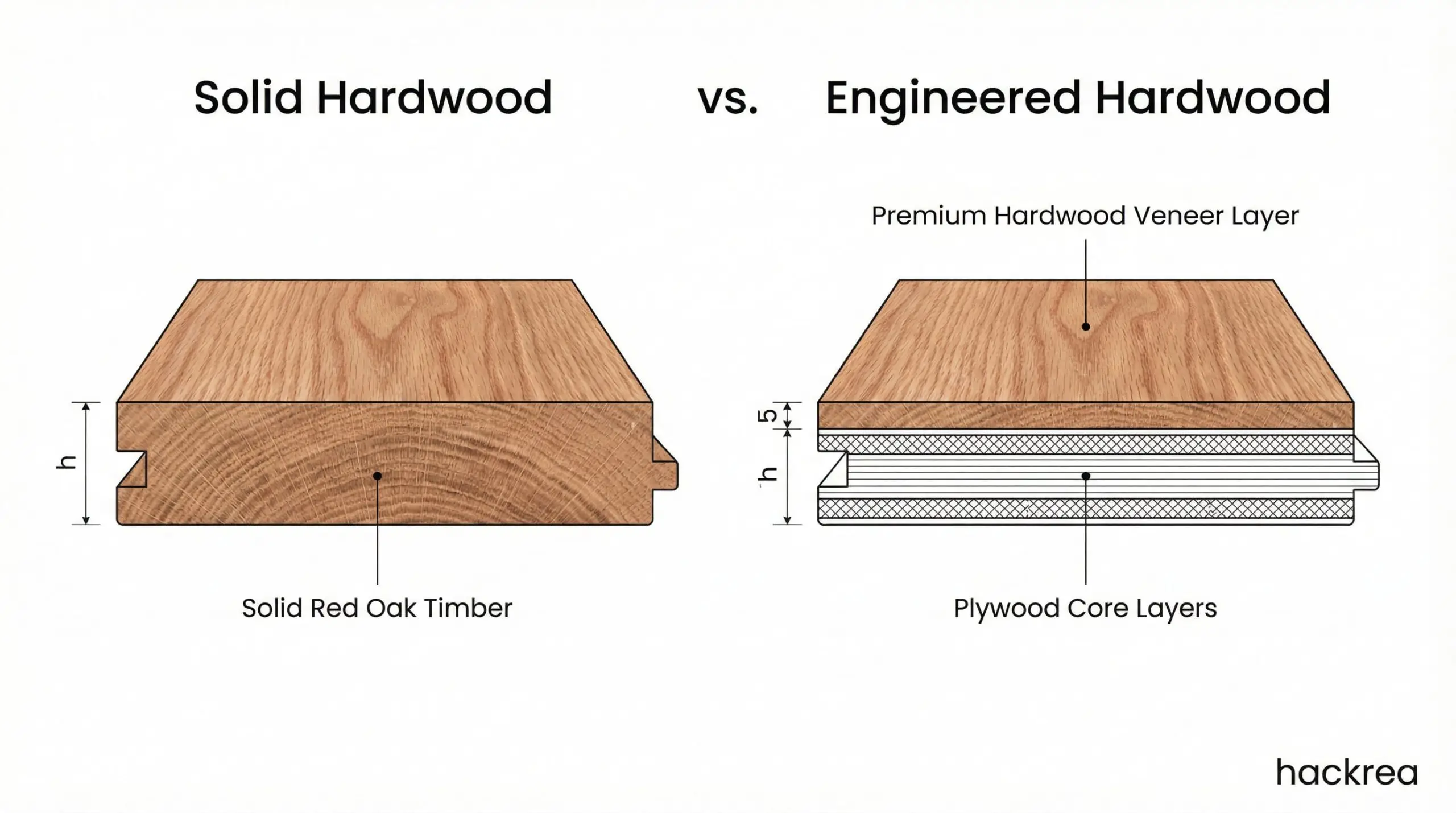
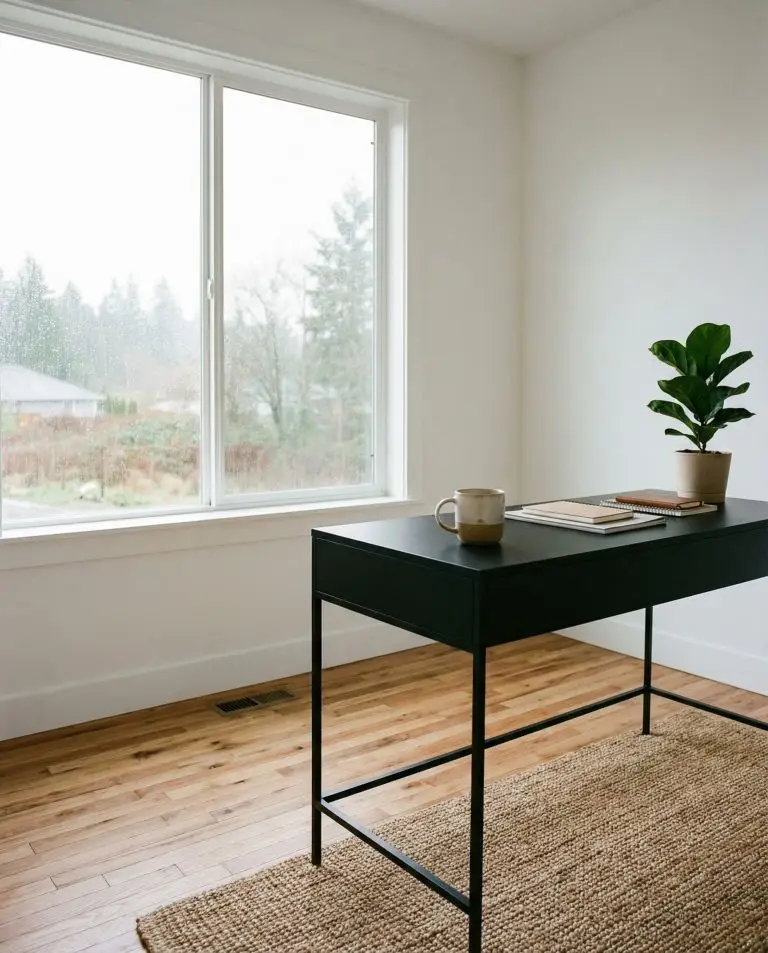

Always order a strict 10% to 15% overage for any hardwood job. The wider the plank, the higher the waste factor will be during complex cuts around hallways, custom cabinetry, and HVAC floor registers.
💡 Hackrea Pro Tip
Hardwood Labor & Installation Methods
Hardwood installation is not a weekend DIY project. It is a highly specialized, labor-intensive carpentry trade.
Before a single board is secured, the wood requires a strict 72-hour to 5-day acclimation period inside your home to equalize with the indoor humidity. Skipping this step guarantees massive buckling and structural failure down the road.
Labor rates fluctuate wildly based on the exact fastening method and the finishing requirements.
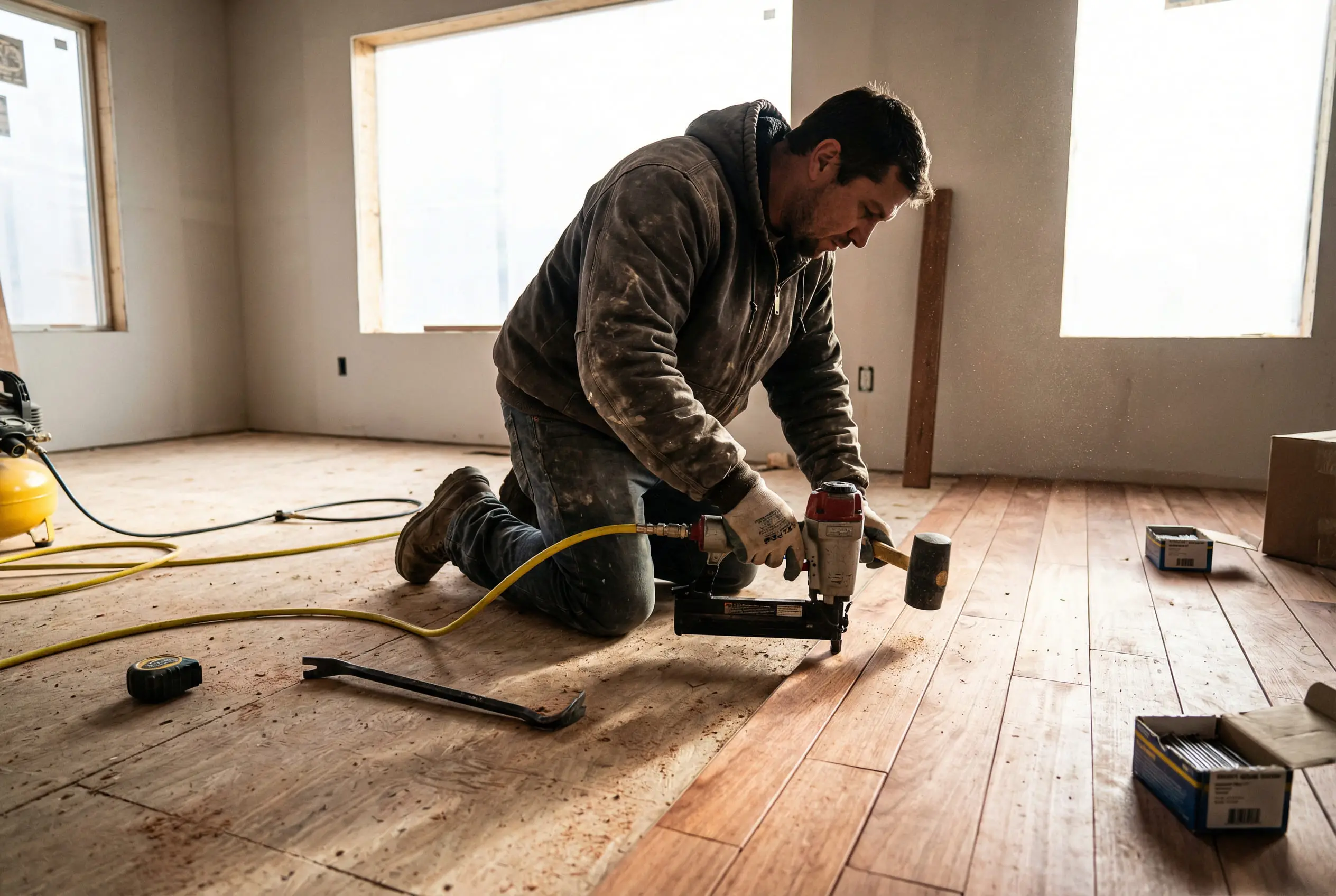
Key Takeaway: Pre-finished engineered hardwood offers the most predictable labor costs, while site-finished solid oak leaves you vulnerable to extended timeline overages.
3. Luxury Vinyl Plank (LVP) Cost Breakdown
LVP Material Tiers & Core Types
Luxury Vinyl Plank (LVP) is a feat of modern material science, but the market is flooded with cheap, low-density plastics.
To accurately budget, you must look past the printed wood-grain photograph and examine the physical core construction. LVP is primarily divided into two categories: WPC (Wood Polymer Composite), which is softer and quieter underfoot, and SPC (Stone Polymer Composite), which is incredibly rigid and highly dent-resistant.
The true indicator of price, however, is the Wear Layer (Mil). This is the clear urethane coating protecting the photographic print from foot traffic.
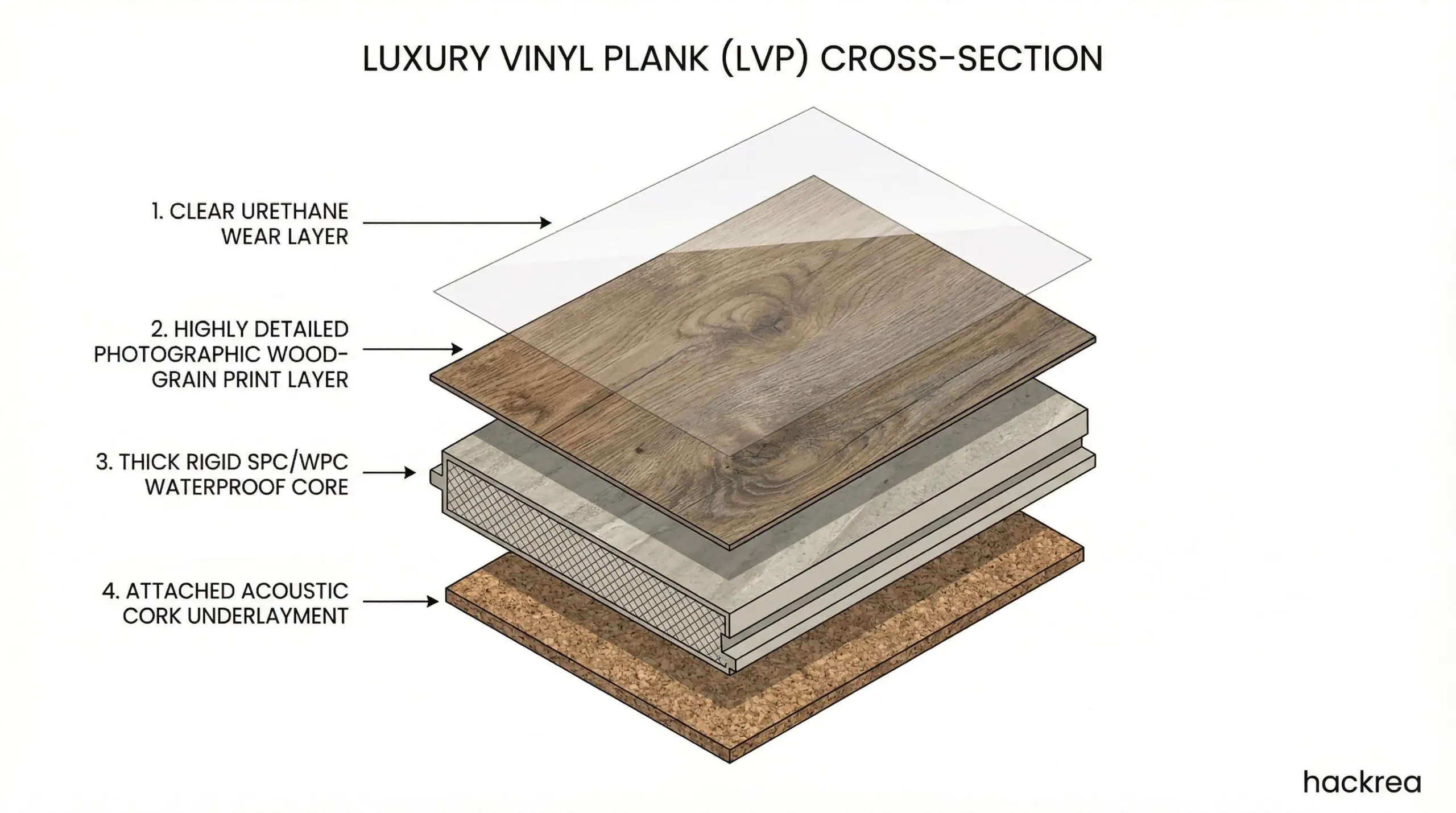
Never confuse millimeters (mm) with mils. The overall plank thickness is measured in millimeters, but the critical wear layer is measured in “mils” (one-thousandth of an inch).
🛠️ Hackrea Technical Tip
LVP Labor & Installation Methods
The primary financial appeal of Luxury Vinyl Plank is the drastically reduced labor invoice.
Unlike solid timber, LVP is engineered as a floating floor. The planks are not physically attached to the house. Instead, they feature a precision-milled click-and-lock system that snaps together, allowing the entire floor to rest freely over the subfloor.
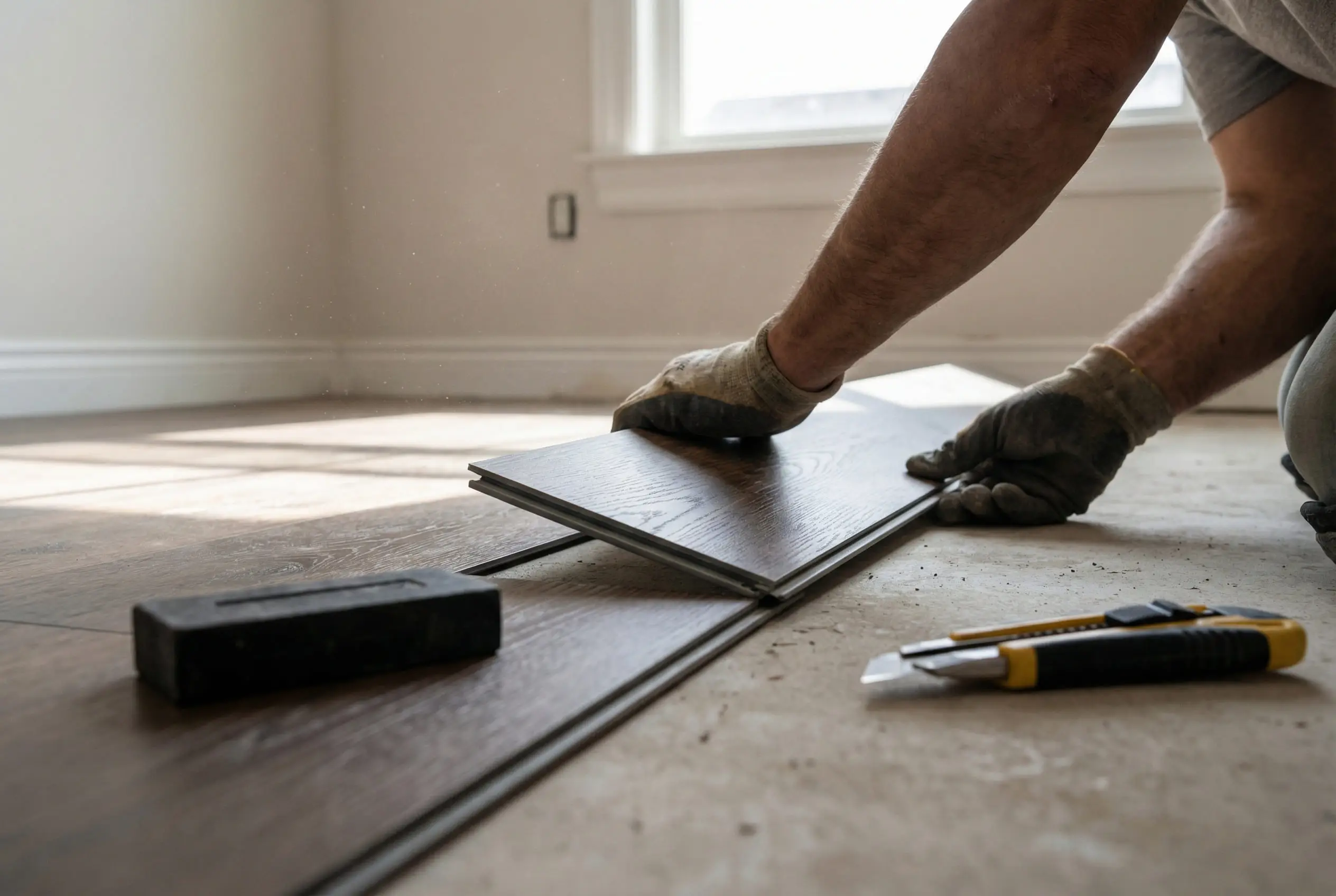
This mechanical design eliminates the need for pneumatic nailers, toxic urethane adhesives, and multi-day acclimation periods.
The labor savings here are undeniable. A contractor will charge you less than half the price to snap together LVP compared to nailing down solid oak.
However, there is a massive structural caveat.
These rapid labor rates are entirely contingent on your home having a perfectly pristine, mathematically flat foundation. If your concrete slab is pitted or your wooden joists are sagging, the cheap floating floor installation instantly transforms into a financial nightmare.
4. The “Hidden Costs” Contractors Don’t Tell You About
The Subfloor Trap & Prep Costs
This is the single most expensive reality check in the flooring industry. We call it the “Subfloor Trap.”
Because LVP is a rigid, floating system, it requires an immaculately flat foundation. The absolute industry standard dictates that the subfloor must be flat to within 3/16 of an inch over a 10-foot radius.
If you install a rigid SPC plank over a dip in the floor, the hollow void beneath it will cause the brittle click-and-lock mechanism to snap the moment you step on it.
Solid hardwood can bridge minor imperfections. LVP cannot.
When a contractor pulls up your old carpet and discovers a wavy concrete slab or sagging plywood, all your anticipated LVP budget savings instantly vanish. Proper Subfloor Preparation is highly specialized, messy, and extremely expensive. Contractors must pour a liquid self-leveling compound across the entire footprint of the room.
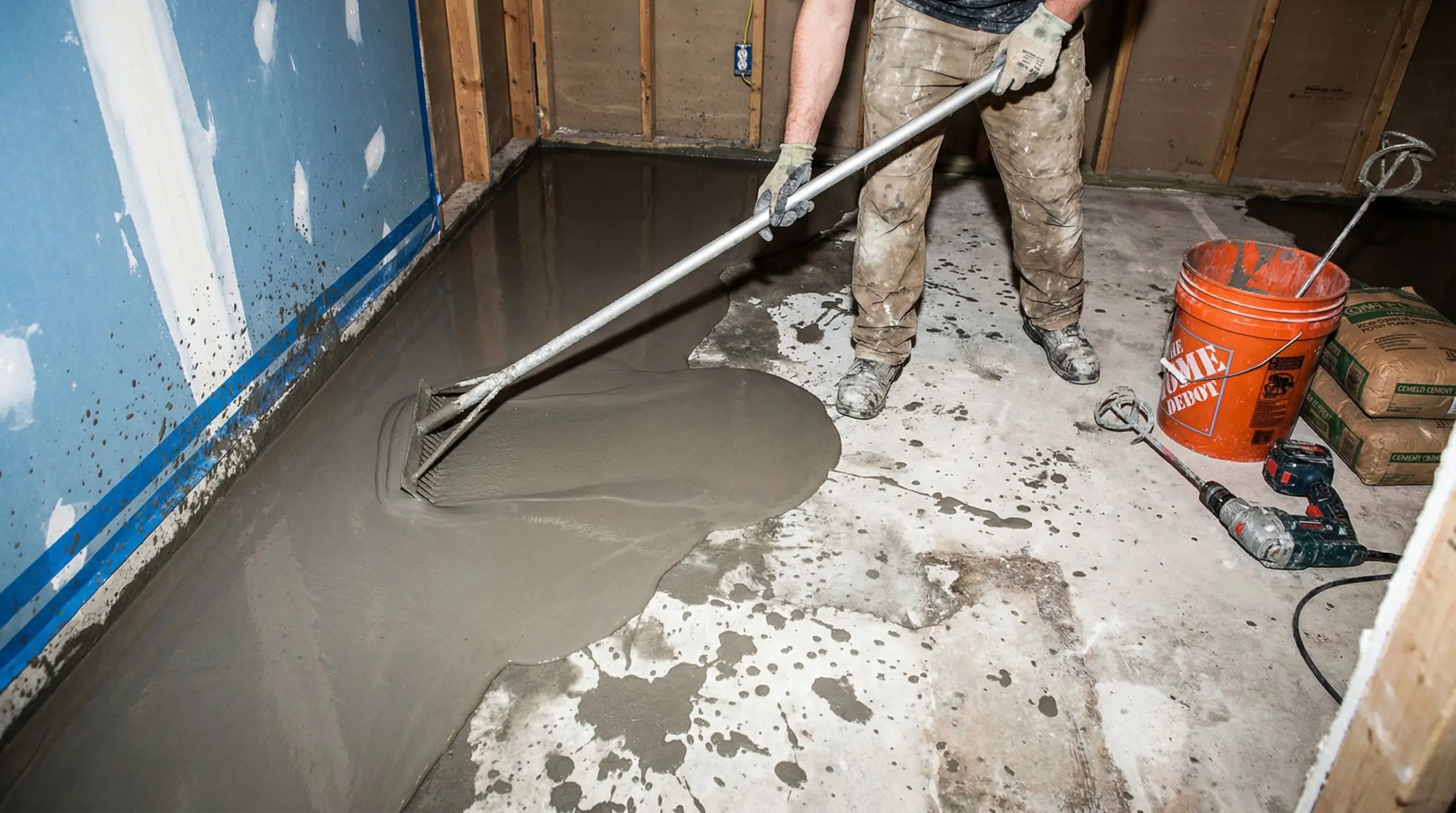
This specialized cement costs roughly $40 per 50-pound bag. When you factor in the primer, the mixing labor, and the specialized tools required, subfloor leveling will add $2.00 to $4.00 per square foot to your final invoice.
For a standard 1,000-square-foot basement, leveling the concrete slab can easily add $3,500 to the bill before a single piece of vinyl is even unpacked. If you are attempting this phase yourself to save money, you must strictly follow the technical protocols for how to level a subfloor for vinyl plank flooring.
Never let a contractor tell you that a thicker underlayment pad will fix an uneven floor. Padding only masks the dip temporarily; the locking joints will still inevitably fail under pressure.
⚠️ Hackrea Warning
Demolition & Removal
New flooring cannot be installed until the old material is completely eradicated.
Demolition is dirty, physically exhausting labor, and the commercial disposal fees at local landfills are rising every single year. Tearing up a floating laminate floor is relatively cheap, but removing ceramic tile or glued-down engineered wood is a brutal process requiring heavy demolition hammers and motorized floor scrapers.
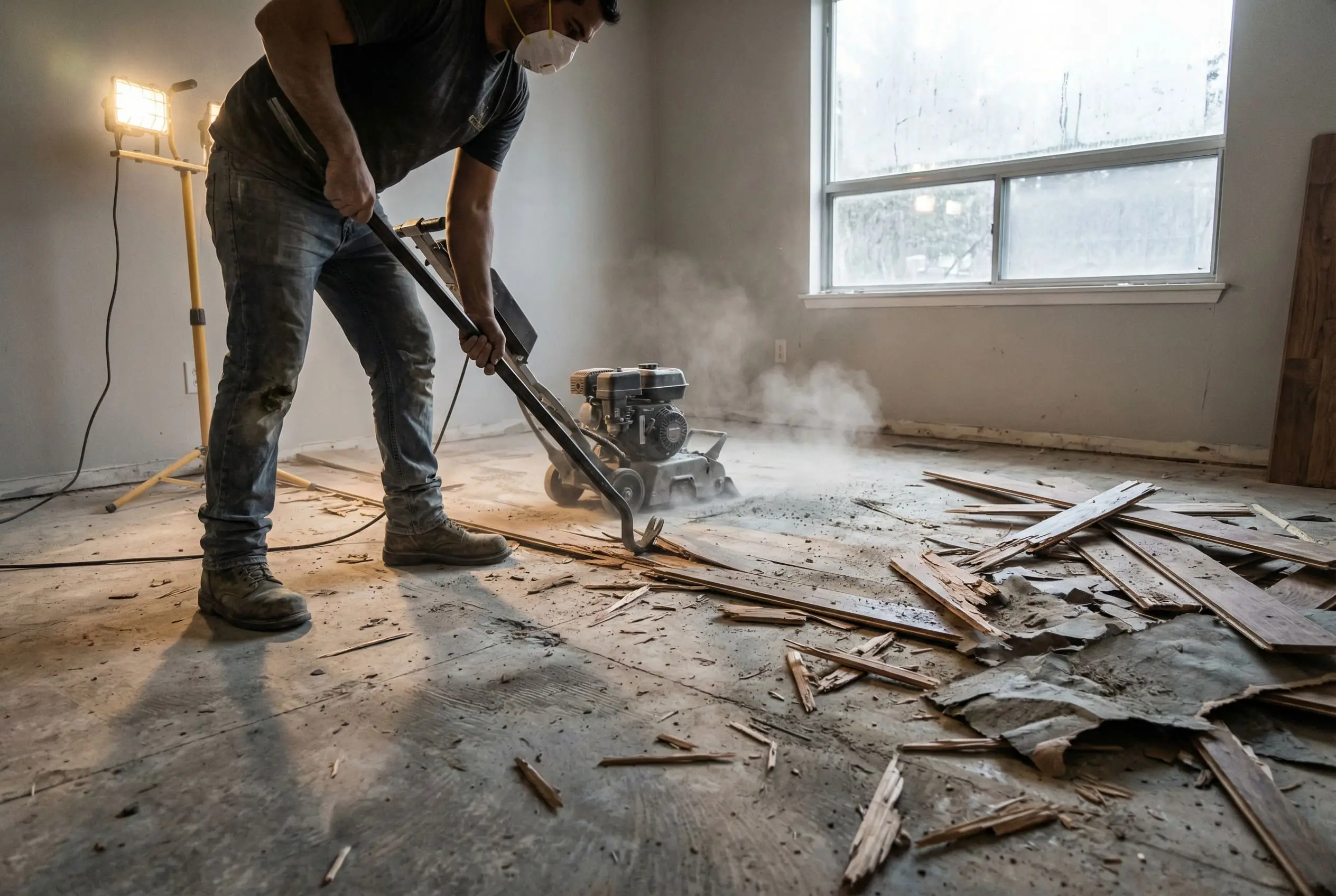
Expect to pay $1.00 to $1.50 per square foot to remove standard carpet and pad.
If your contractor has to chip up thick ceramic tile or aggressively scrape cured urethane adhesive off a concrete slab, the demolition rate will quickly skyrocket to $2.50 to $4.00 per square foot. Never assume your installer will haul away the debris for free. Always demand a separate line item for demolition and dumpster rental fees on your initial quote to avoid day-one financial surprises.
Trim, Baseboards, and Transitions
The final 5% of a flooring installation often causes the most severe budget shock.
When installing a floating floor or a new solid hardwood system, you must leave a mandatory 1/4-inch expansion gap around the entire perimeter of the room. This gap must be hidden by architectural trim.
Contractors have two choices: carefully pry off your existing baseboards and reinstall them higher up, or leave the baseboards in place and nail a strip of shoe molding (or quarter-round) to the bottom edge.
Careful baseboard removal and reinstallation will cost roughly $1.50 to $2.50 per linear foot. If the old MDF baseboards snap during removal, you will be forced to buy entirely new trim, plus pay a carpenter to cut, caulk, and paint it.
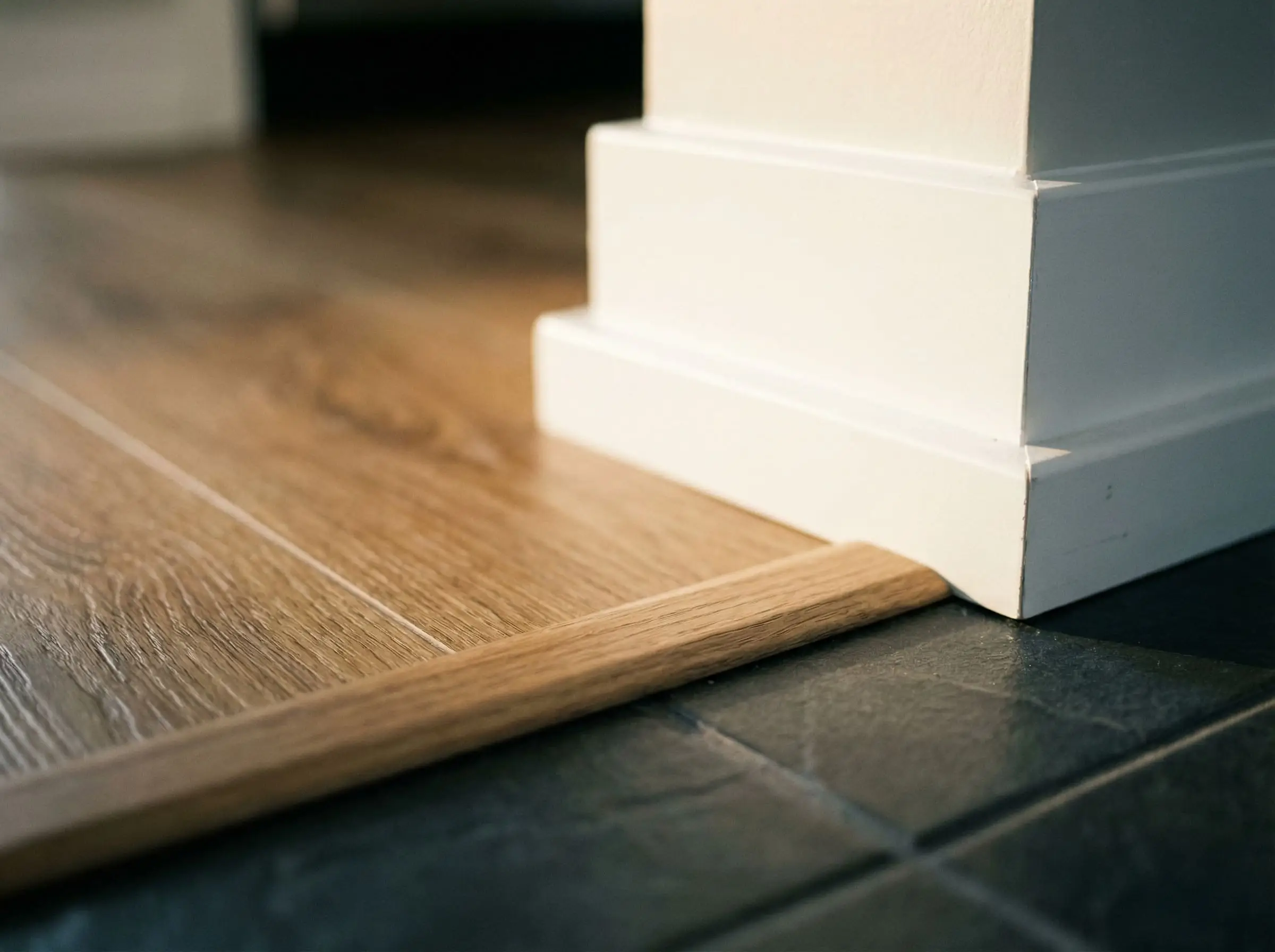
Transition strips are another hidden financial drain.
Every time your new floor meets a different material—like transitioning from hallway LVP into bathroom tile—you need a reducer or T-molding. Hardwood transitions are relatively affordable and easy to stain-match.
However, custom LVP transition strips and stair nosing are notoriously expensive. Because you cannot sand and stain plastic, you must buy the exact proprietary stair nosing manufactured by the LVP brand. These specialized vinyl caps frequently cost $60 to $90 per piece. If you have a standard flight of 14 stairs, the specialized vinyl nosing alone will add over $1,000 to your materials invoice.
Opt for a sleek, squared-off shoe molding rather than a traditional rounded quarter-round. It provides a much cleaner, modern architectural line against the baseboard.
📐 Hackrea Styling Tip
5. Head-to-Head Scenario: 1,000 Sq. Ft. Project
To understand the true financial weight of these materials, we must strip away the retail marketing jargon and look at a highly localized, line-by-line contractor invoice.
Recently, a user utilized the Hackrea project estimator tool to price out a standard 1,000-square-foot main floor renovation in a suburban home. The house featured a structurally sound plywood subfloor, but the project required the aggressive removal of outdated, glued-down engineered planks.
We ran the exact same floor plan through two entirely different bidding scenarios to expose the hidden fees.
Scenario A utilizes a Mid-Range Engineered Hardwood ($9/sq. ft. material) installed via a traditional pneumatic nail-down method.
Scenario B utilizes a Premium SPC Luxury Vinyl Plank ($7/sq. ft. material) installed as a rapid floating system.
Here is the brutal reality of the mathematical breakdown. While the LVP material is inherently cheaper and the floating installation labor is drastically lower, the rigid vinyl core demands a mathematically perfect foundation. To achieve the mandatory 3/16-inch flatness tolerance, the contractor had to quote an aggressive $2,500 in self-leveling compound and specialized prep labor for the LVP side. The engineered hardwood, possessing significantly more structural forgiveness, required zero leveling compound.
The Setup: A 1,000 sq. ft. open-concept living space requiring heavy demolition.
The Rule: Always calculate your project based on the final, fully trimmed-out invoice, never the retail material sticker price.
| Project Line Item | Mid-Range Engineered Hardwood | Premium Luxury Vinyl Plank (SPC) |
|---|---|---|
| Old Floor Demolition | $2,000 ($2.00/sq. ft.) | $2,000 ($2.00/sq. ft.) |
| Subfloor Preparation | $0 (Wood bridges minor dips) | $2,500 (Self-leveling compound) |
| Flooring Material (with 10% waste) | $9,900 ($9.00/sq. ft.) | $7,700 ($7.00/sq. ft.) |
| Installation Labor | $4,000 ($4.00/sq. ft.) | $2,000 ($2.00/sq. ft.) |
| Trim, Baseboards & Transitions | $800 (Standard stained wood) | $1,200 (Proprietary LVP nosings) |
| Total Final Invoice | $16,700 | $15,400 |
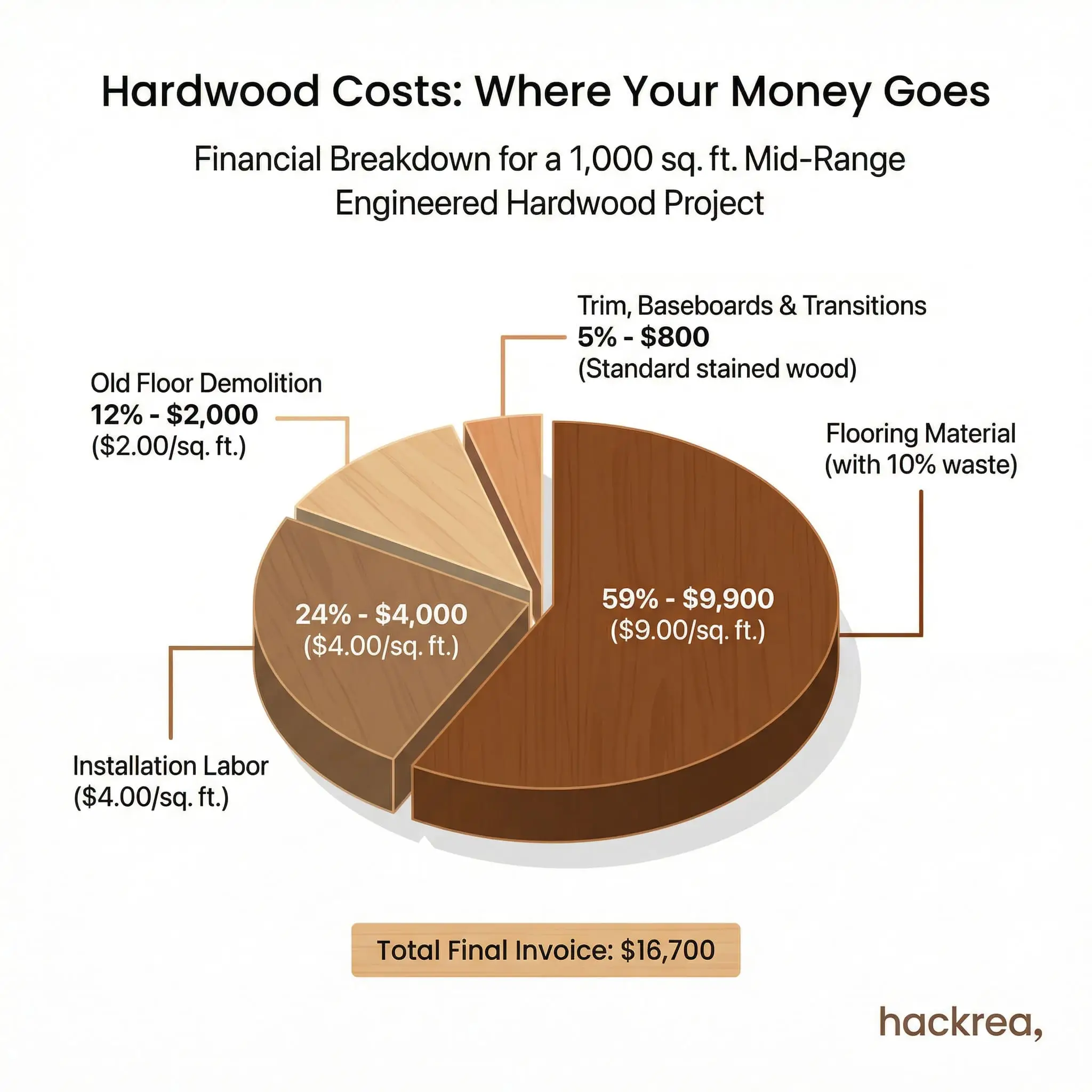
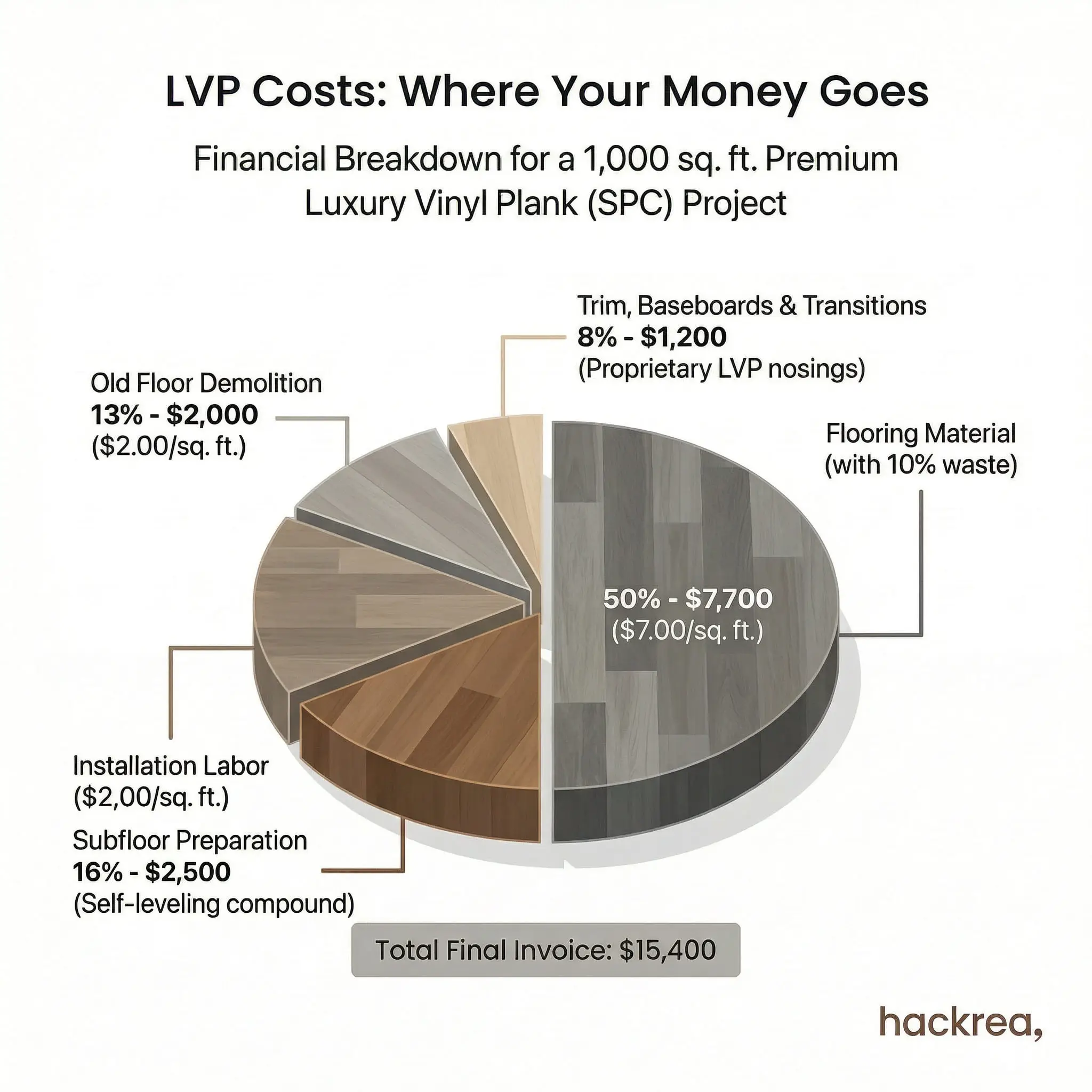
As the data proves, the massive labor savings promised by the LVP floating floor were almost entirely wiped out by the hidden costs of subfloor preparation and expensive proprietary vinyl trim pieces.
The LVP project only saved the homeowner $1,300 on a massive five-figure renovation. When the final numbers run this tight, your decision must pivot away from day-one budget savings and focus entirely on long-term real estate appraisals.
6. Resale Value, Appraisals & Long-Term ROI
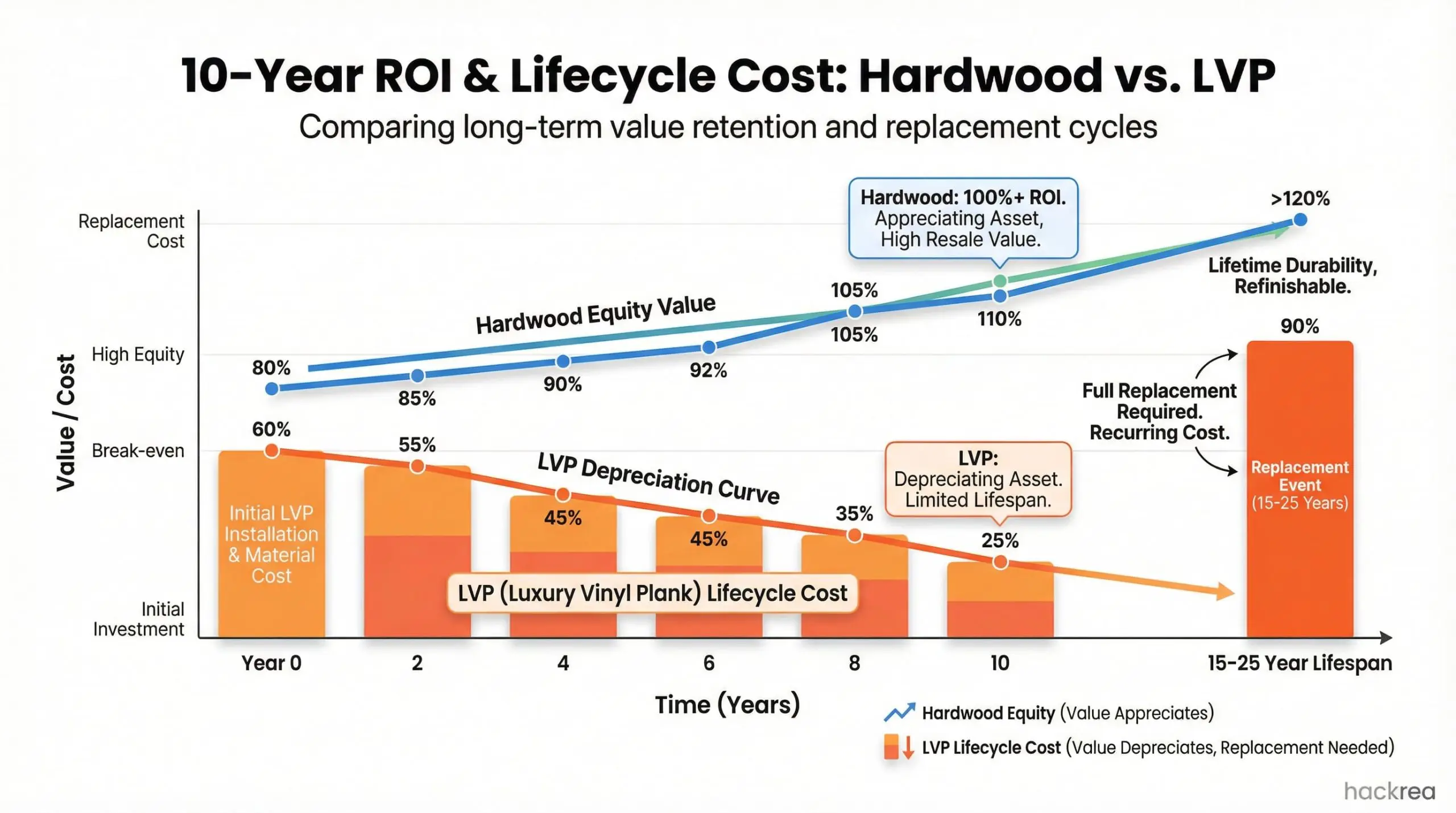
You must separate the concept of “durability” from “longevity.”
LVP is incredibly durable against daily scratches, but it has a finite lifespan. Solid hardwood requires more daily maintenance, but it serves as a permanent architectural asset.
According to remodeling impact reports from the National Association of Realtors (NAR), homeowners routinely recover 100% to 118% of the cost of a new hardwood floor upon resale.
Real estate appraisers view hardwood as a high-value equity upgrade that fundamentally increases the appraised value of the home.
Conversely, the market views LVP as a durable utility. It will absolutely help sell a mid-market home faster by providing a modernized aesthetic, but it rarely adds raw, dollar-for-dollar appraised equity.
The true Return on Investment (ROI) becomes glaringly obvious at the ten-year mark.
Solid timber floors can be aggressively sanded and refinished three to five times over a 100-year lifespan, adapting to decades of shifting interior design trends. If a future buyer hates your dark stain, they simply sand it down.
LVP cannot be sanded or repaired. Its photographic print is permanent. Once the wear layer inevitably degrades, or the brittle SPC locking mechanisms fracture after 15 to 25 years of heavy structural settling and foot traffic, the entire floor must be ripped up and hauled to a local landfill.
Hardwood is a structural investment. LVP is a consumable product.
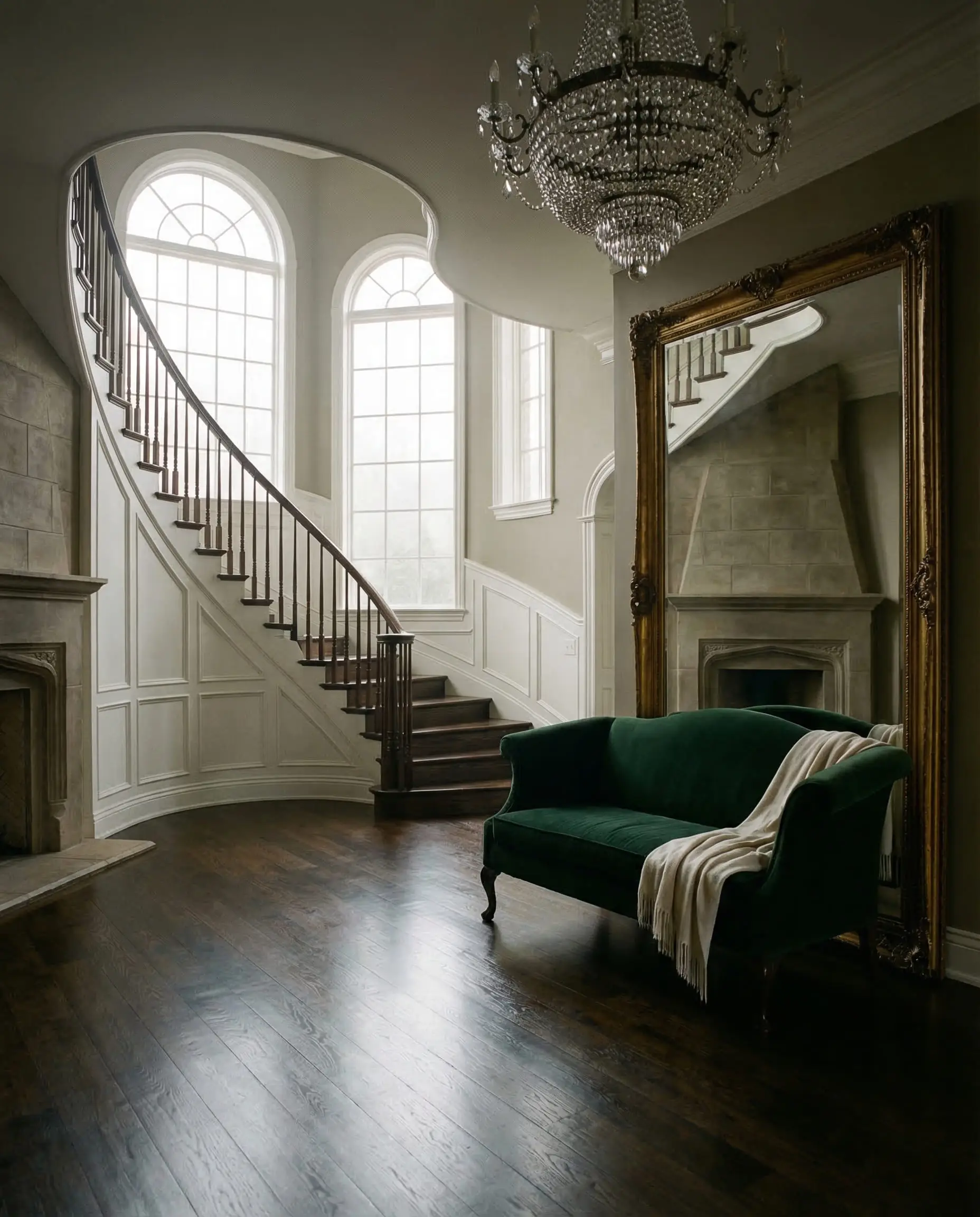
If flipping a mid-market house, LVP offers the fastest turnaround. For homes valued over $750,000, vinyl in main living areas actively repels luxury buyers.
📈 Hackrea Pro Tip
7. Final Verdict & Actionable Takeaways
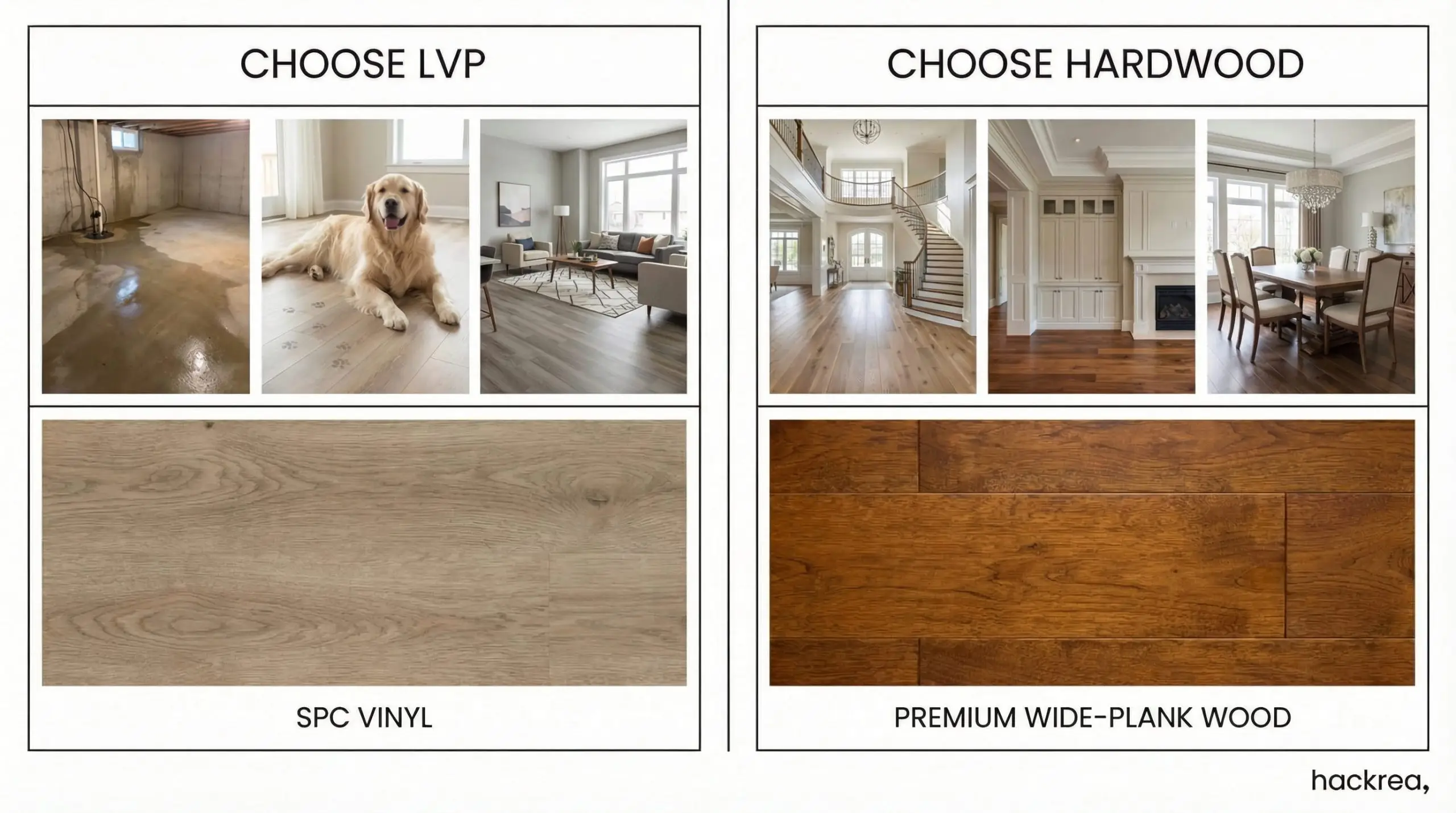
The math dictates that your subfloor condition, not the retail material price, should drive your final decision.
Stop guessing at your renovation budget and let the structural math guide your investments.
Subscribe to the official Hackrea Newsletter today for weekly, zero-fluff budget breakdowns, contractor negotiation tactics, and deep-dive material science guides delivered straight to your inbox.

The Hackrea Technical Desk handles the mathematics and material science of interior architecture. With a ruthless focus on lifecycle costs, structural integrity, and contractor-level reality checks, this desk cuts through manufacturer marketing to tell homeowners exactly how materials perform, what they actually cost, and the hidden pitfalls of installation.