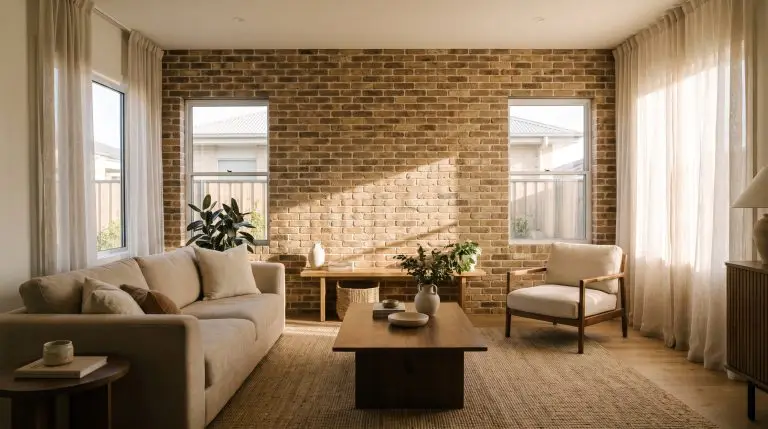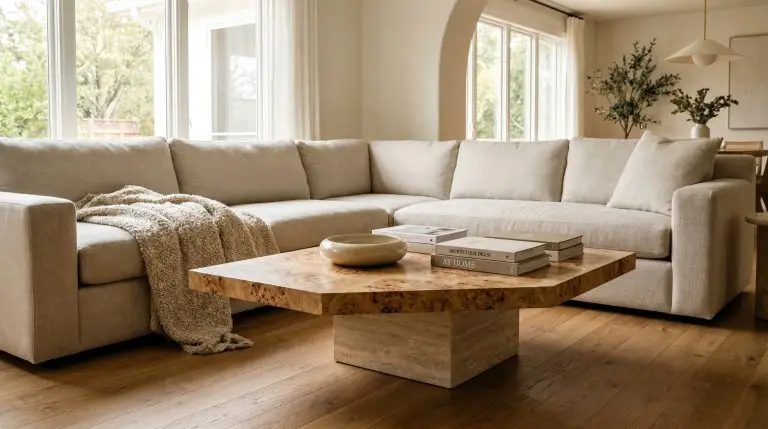
A beige sectional is an architectural blank canvas, but it is also the fastest route to design paralysis. Dropping a generic, mass-produced table in front of all that neutral upholstery creates a flat, lifeless room—a veritable sea of beige. To break the monotony, you must rely on material tension. The right coffee table acts as a disruptor, providing the necessary friction against soft linen or boucle to anchor the space. If you want your living room to look expertly curated, mastering the intersection of raw texture and geometric shape is non-negotiable.
The Golden Rules of Pairing with a Sectional
Before sourcing monolithic stone or rift-sawn oak, you must establish the spatial math. A beautiful table placed at the wrong clearance radius instantly ruins the flow of the room.
- The 18-Inch Clearance Radius: Maintain exactly 18 inches of negative space between the interior edge of your sectional and the coffee table to allow comfortable foot traffic while keeping drinks within reach.
- The 2/3rds Length Rule: The table should measure approximately two-thirds the length of the sectional’s main seating span, completely ignoring the chaise extension.
- The Visual Weight Offset: Contrast the mass. If your sofa features a heavy, floor-skimming skirt, source a leggy, airy table. Conversely, if your sectional sits high on stiletto mid-century legs, ground the arrangement with a chunky, solid pedestal base.
Organic & Sculptural: Softening the Right Angles
An L-shape configuration introduces massive, harsh 90-degree angles into your living room’s footprint. The most effective way to soften this rigid geometry is by introducing organic, sweeping curves that disrupt the boxy silhouette and naturally guide foot traffic.
Kidney-Shaped and Pebble Travertine
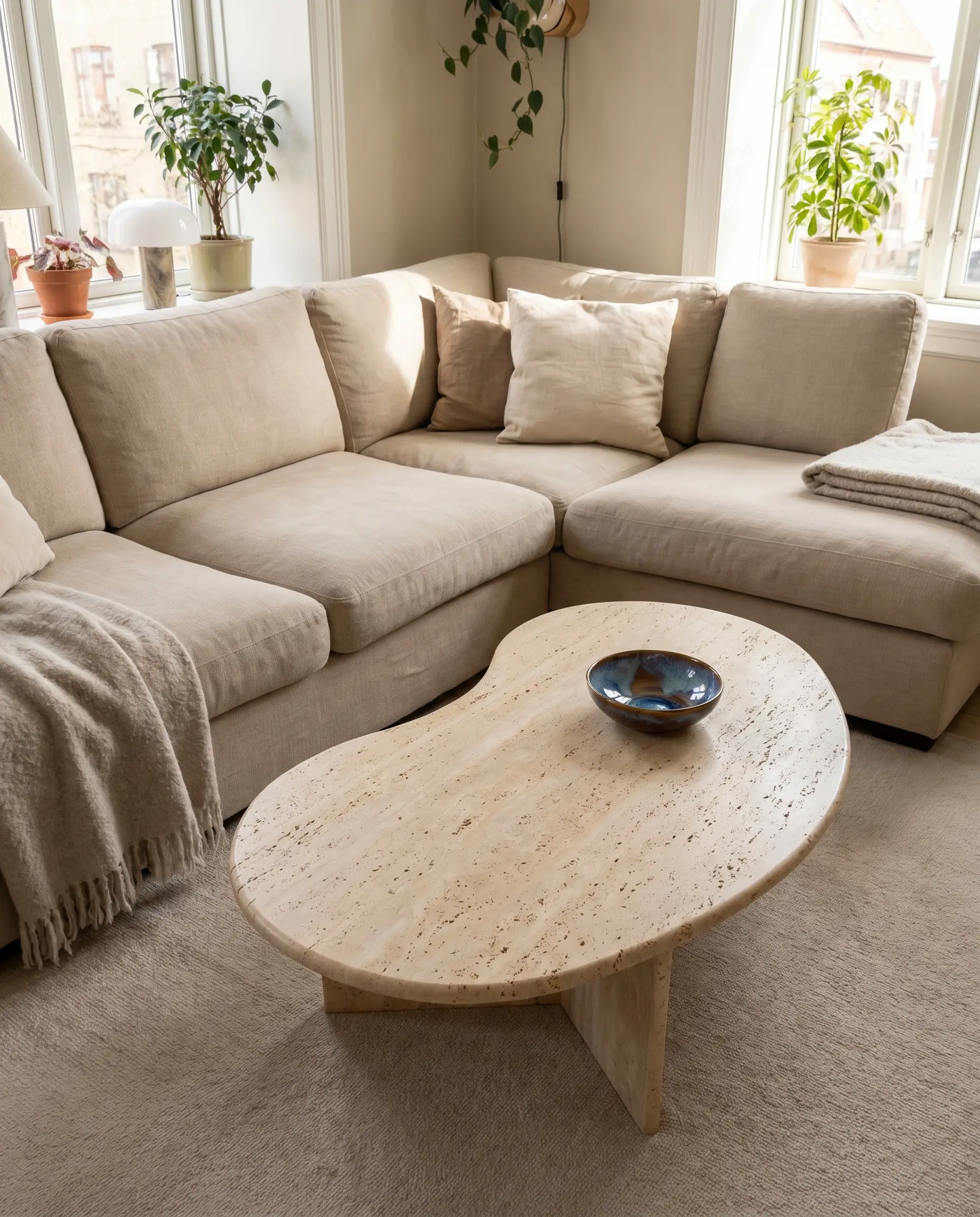
A kidney or pebble shape naturally tucks into the harsh interior corner of an L-shape, radically improving the spatial flow. Opting for the highly porous, tactile nature of honed travertine introduces an ancient, earthen quality that cuts right through the softness of modern upholstery.
- Vibe: Earthy, Accessible Luxury
- Key Material: Honed, unfilled travertine
- Styling Pro-Tip: Contrast the stone’s matte surface with a high-gloss ceramic catchall.
When sourcing travertine, strictly demand a honed finish. Polished travertine reflects too much overhead light and instantly cheapens the organic, tactile aesthetic we are trying to achieve.
Curator’s Note
Chunky Plaster Pedestal Tables
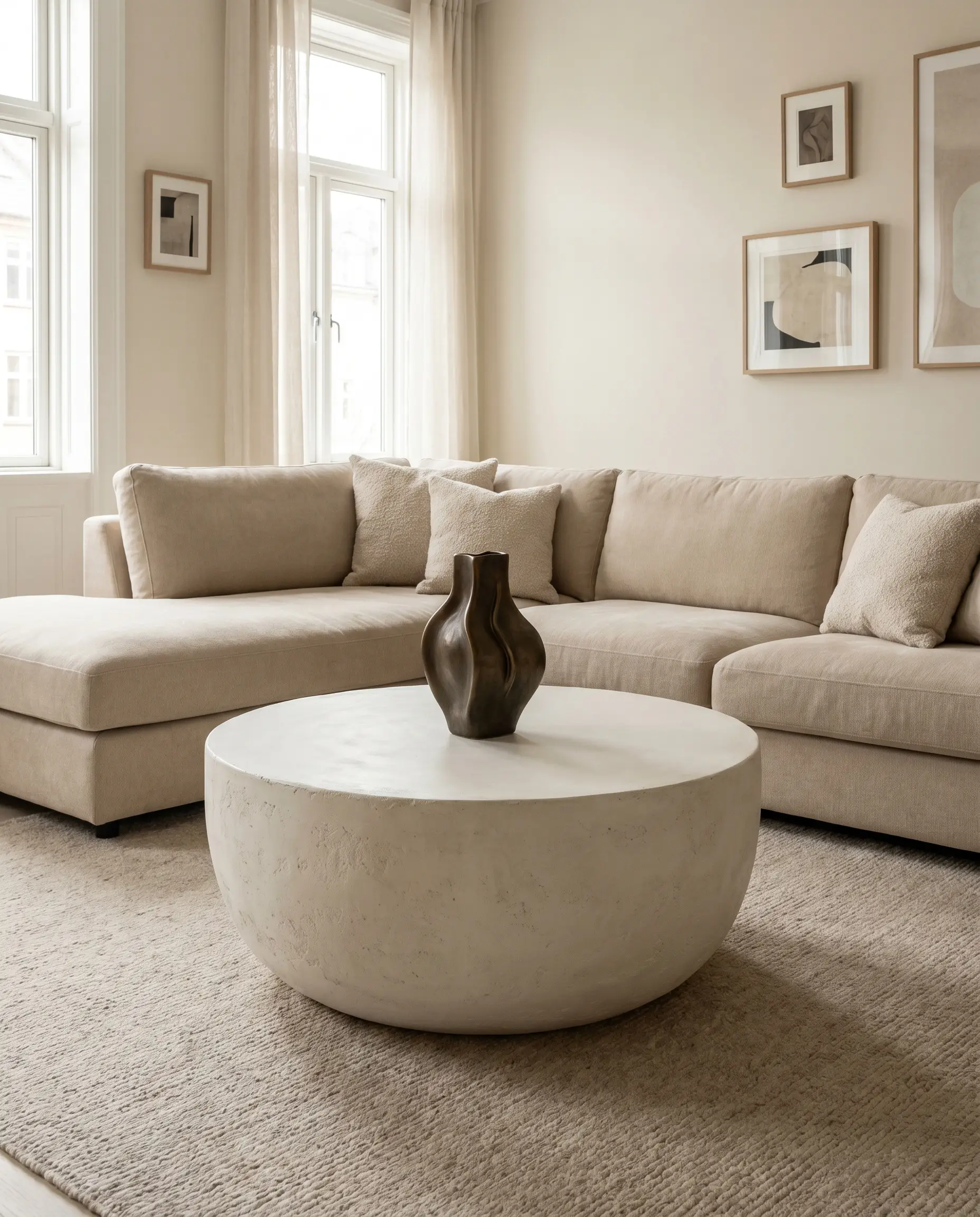
White or cream plaster provides a raw, chalky texture that perfectly complements the softness of beige fabric without matching it exactly. A solid drum or pedestal base eliminates visual clutter at the floor level, acting as a clean, monolithic anchor for the room.
- Vibe: Postmodern Minimalist
- Key Material: Artisan plaster or micro-cement
- Color Match: Sherwin-Williams Alabaster (for a warm, tonal wall backdrop)
- Styling Pro-Tip: Display a sculptural, dark bronze vessel to break up the monochromatic palette.
Asymmetrical Burl Wood
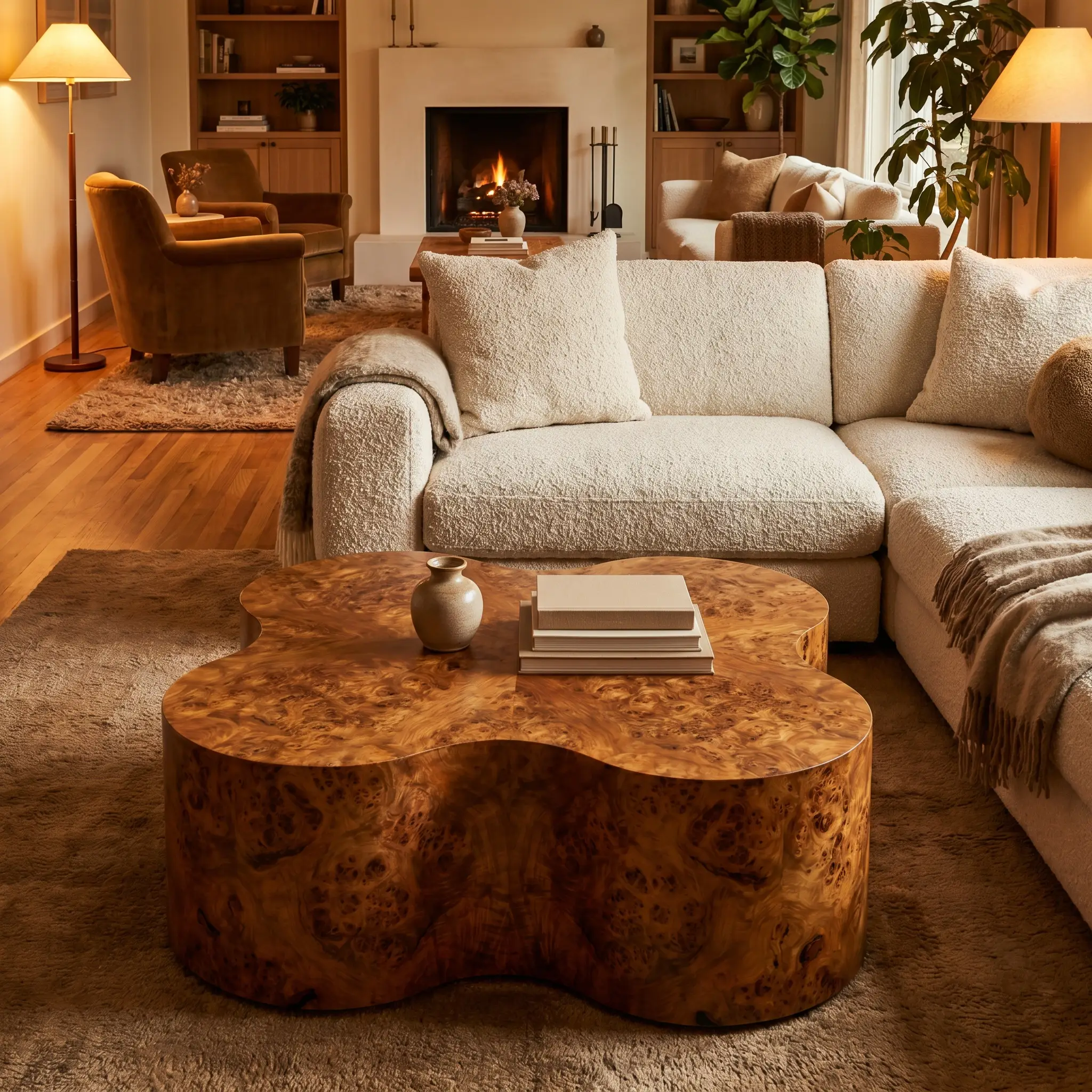
Burl wood delivers intense visual movement and chaotic, swirling grain patterns that prevent a beige foundation from looking sterile. Choosing an asymmetrical, amoeba-like shape injects high-end, 70s-revival warmth directly into the center of the room.
- Vibe: 70s Revival, Bespoke High-End
- Key Material: Mappa or Walnut Burl Veneer
- Styling Pro-Tip: Keep the tabletop styling minimal; the aggressive wood grain is the focal point.
Burl wood is a dominant, visually loud material. If your sectional features a heavy, highly textured boucle, ensure the burl table has an asymmetrical shape to prevent the two heavy textures from competing for dominance.
Curator’s Note
The High-Contrast Approach: Anchoring the Room
A purely light-toned room often feels washed out, leaving the eye with nowhere to rest. Beige inherently demands a dark, structured anchor to ground the space and inject sophisticated, modern friction.
Matte Black Fluted Wood
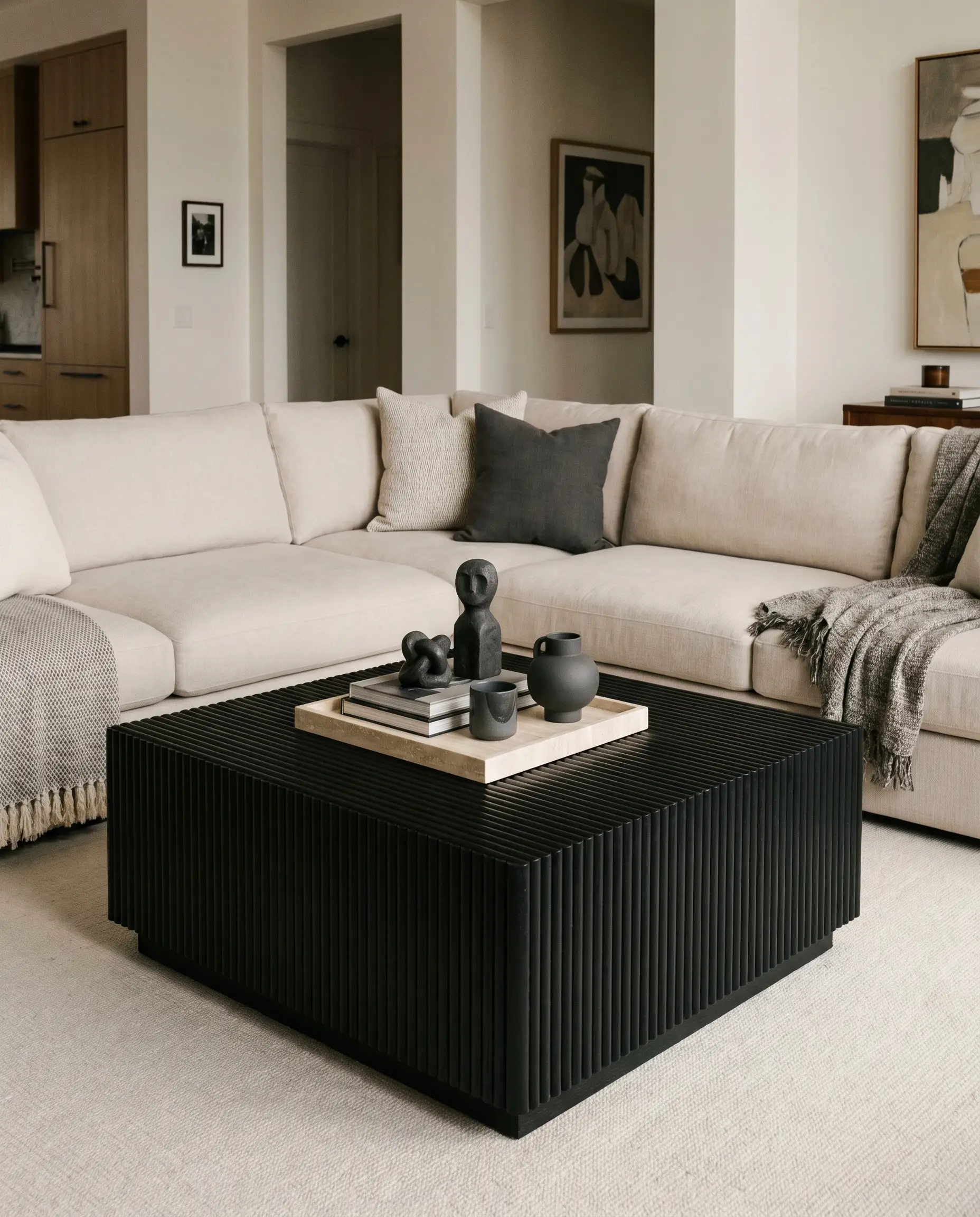
Deep black absorbs light, instantly creating a gravitational center against a pale sectional. Fluted or ribbed detailing introduces rigid vertical lines that brilliantly contrast with the sprawling horizontal mass of the sofa.
- Vibe: Structured Modernism
- Key Material: Matte black stained fluted oak
- Color Match: Benjamin Moore Cheating Heart (for moody, contrasting accents)
- Styling Pro-Tip: Use a light, travertine tray on top to tie the black table back to the beige sofa.
Smoked Glass and Blackened Steel
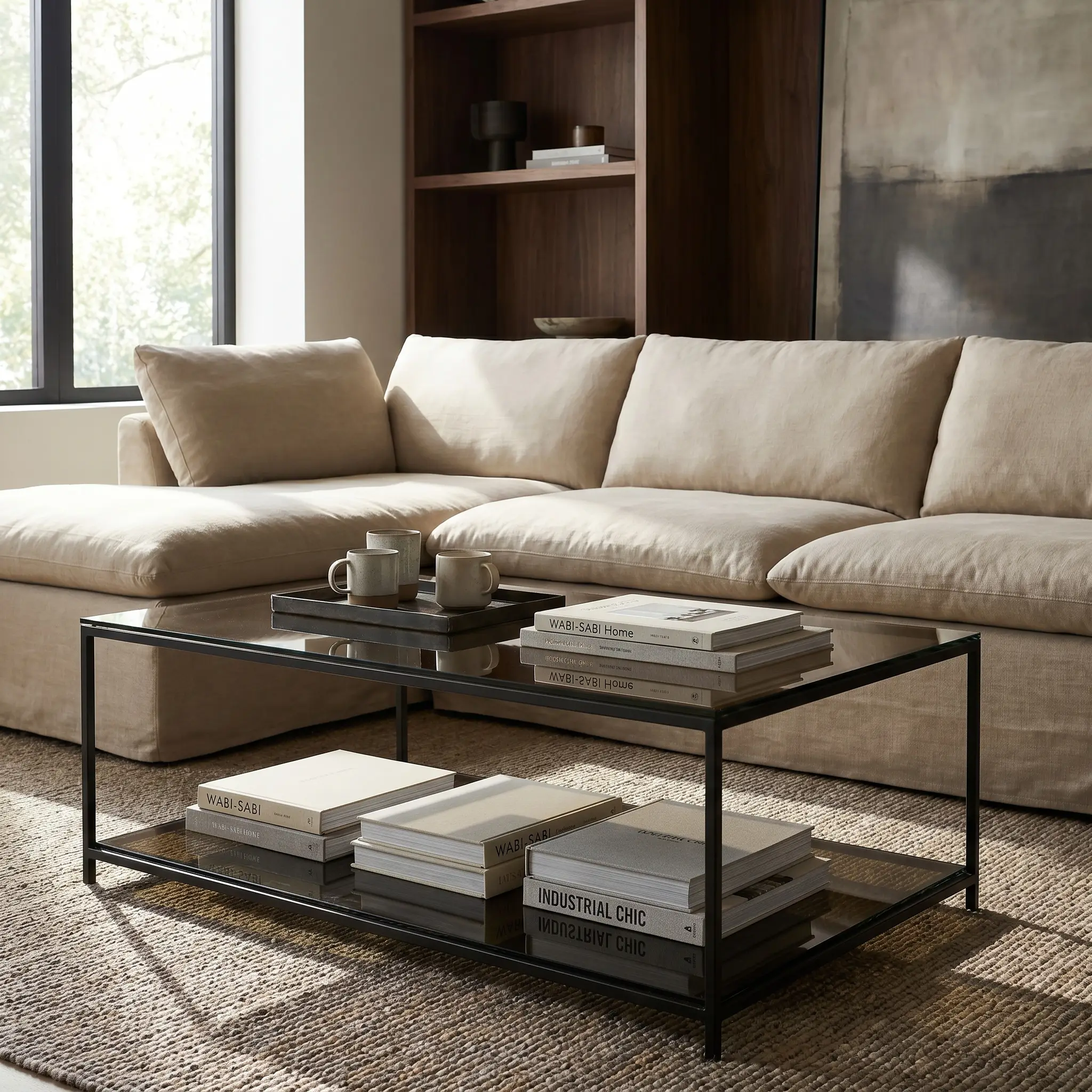
Glass consumes absolutely zero visual space, but opting for a smoked tint adds a moody, sophisticated filter that grounds the arrangement. Paired with blackened steel legs, this combination brings an industrial edge that effectively toughens up soft beige linen.
- Vibe: Industrial Luxe
- Key Material: Tempered smoked glass, blackened steel framing
- Styling Pro-Tip: Stack oversized, linen-bound design books to add necessary visual weight to the transparent surface.
This is the most practical application of the Visual Weight Offset. Reserve smoked glass strictly for thick, floor-skimming sectionals that threaten to swallow the room; the glass provides critical breathing room.
Curator’s Note
Deep Walnut Mid-Century Surfboards
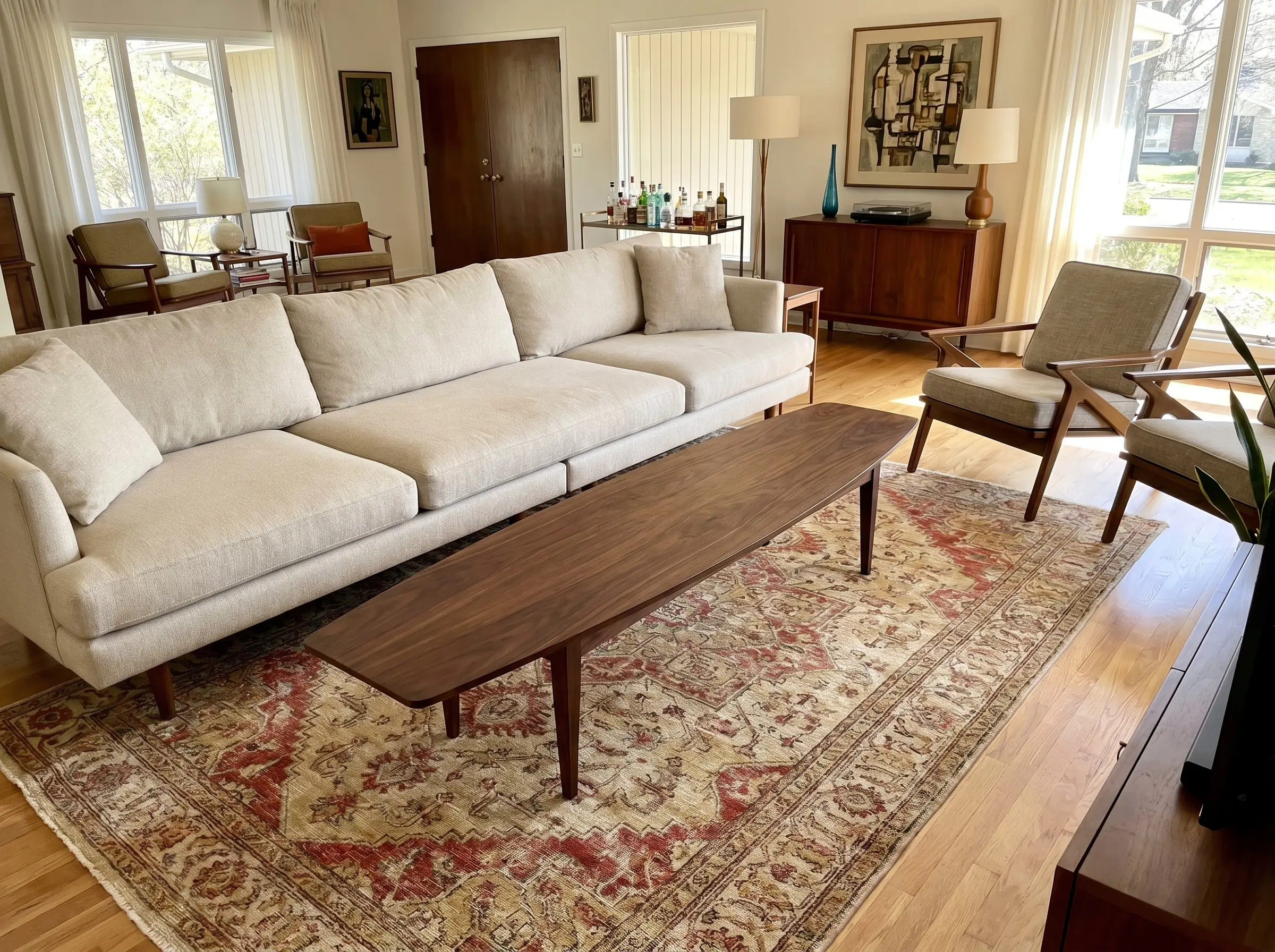
The elongated, tapered surfboard silhouette is mathematically perfect for extra-wide, sprawling sectionals. A rich, chocolate-toned deep walnut introduces a classic mid-century warmth that sharply defines the negative space around a light beige cushion.
- Vibe: Mid-Century Warmth
- Key Material: Solid Walnut or premium Walnut veneer
- Styling Pro-Tip: Highlight the tapered legs by layering a low-pile vintage rug underneath.
Textural & Tonal: Layering Neutrals Without Flatness
If your goal is a serene, monochromatic space, you must adhere to one uncompromising rule: If you match the color, you must violently contrast the texture. Layering neutrals correctly requires distinct, tactile shifts to avoid a flat, builder-grade look.
Whitewashed Rift-Sawn Oak
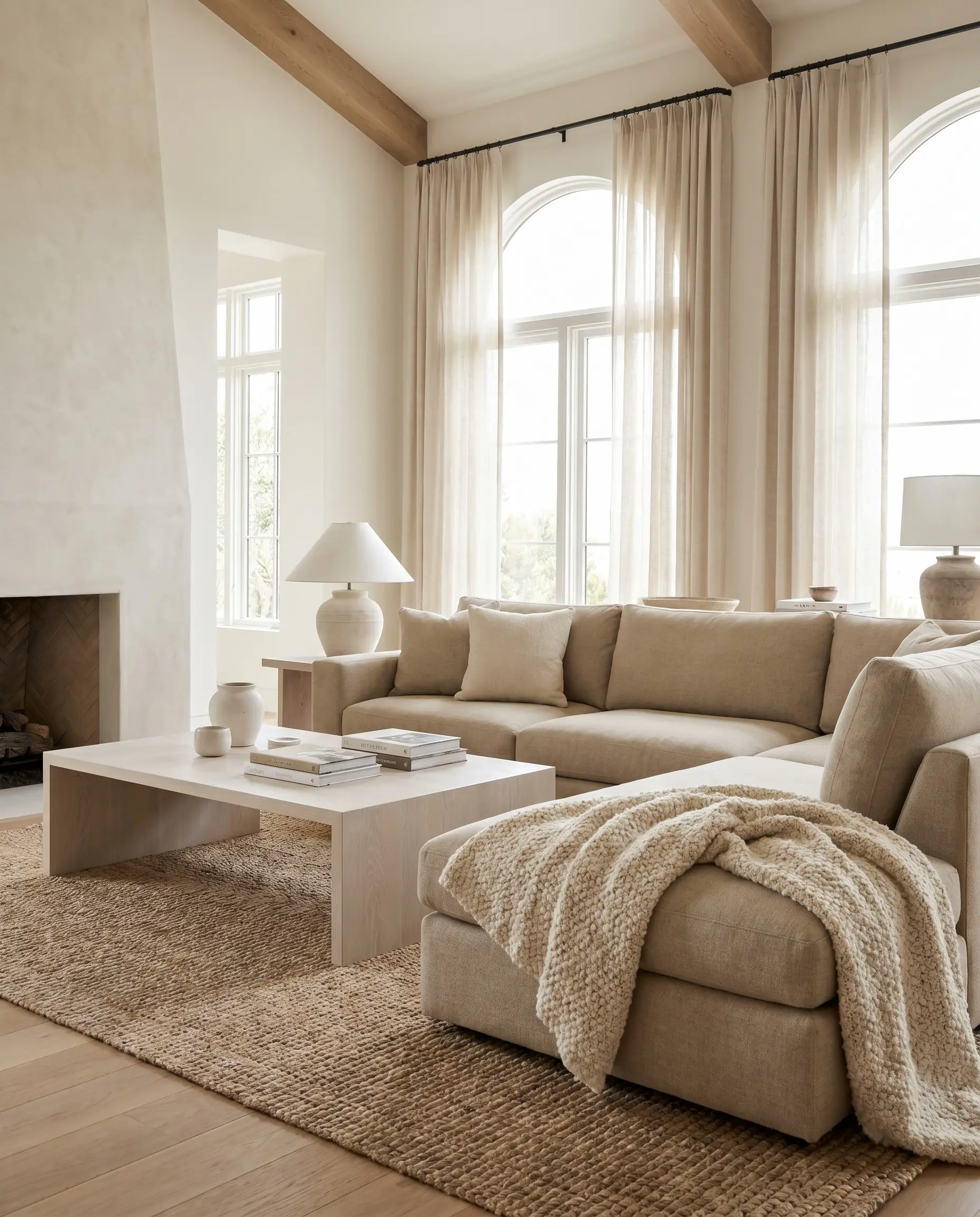
Rift-sawn white oak offers a clean, linear grain that blends impeccably with warm beige, actively avoiding the dated yellow or orange undertones of standard cuts. This precise milling technique provides a high-end, architectural finish that feels intentionally subdued.
- Vibe: Accessible Luxury, Coastal Modern
- Key Material: Rift-sawn white oak with a matte whitewash
- Styling Pro-Tip: Pair with a heavily textured, nubby wool throw on the sectional to enhance the tactile friction.
Honed Marble Nesting Tables
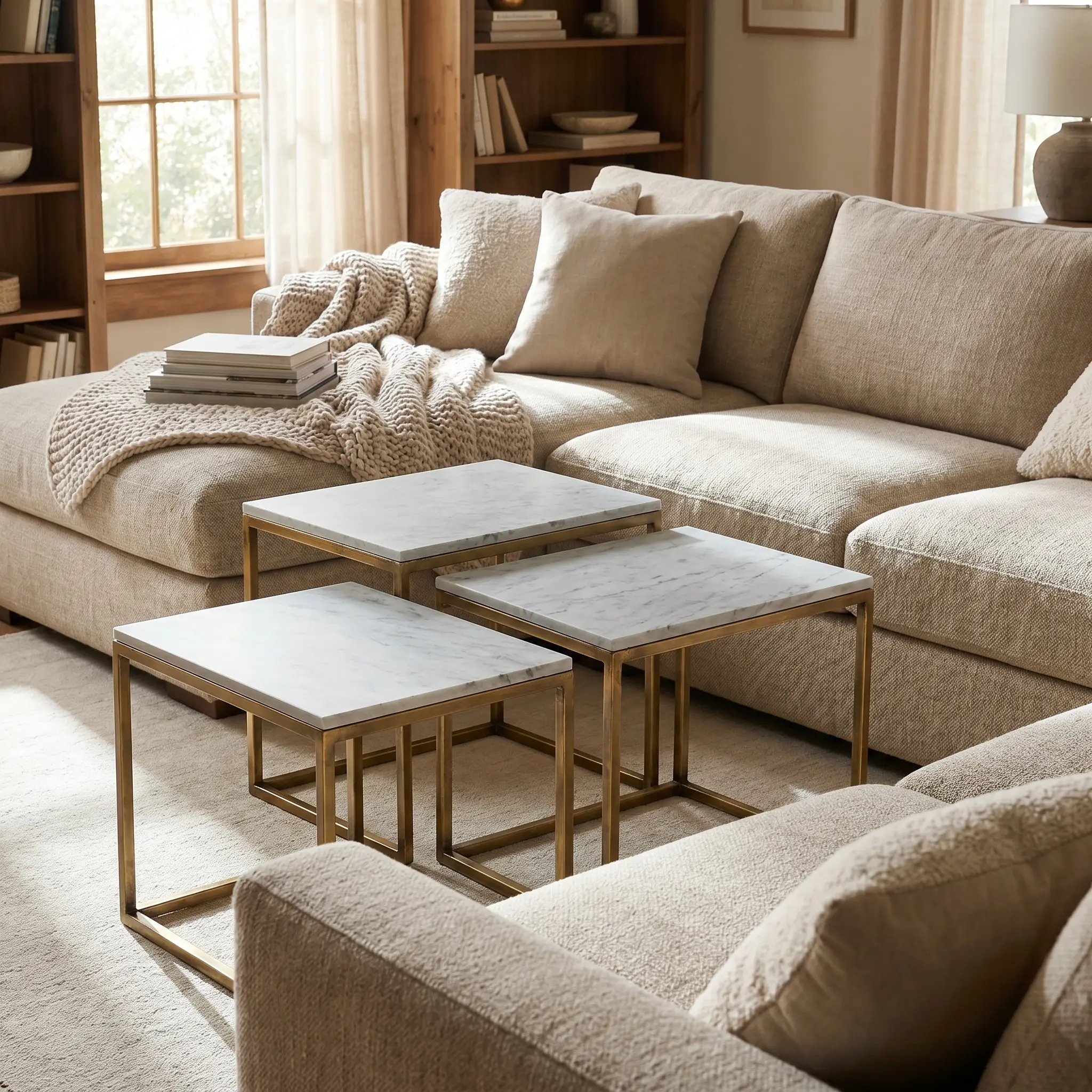
Nesting tables are a masterclass in transitional styling, allowing you to expand the functional surface area when hosting and collapse it for daily spatial flow. The icy, rigid touch of honed white or cream marble provides a brilliant sensory contrast against the warm, inviting weave of the upholstery.
- Vibe: Transitional Elegance
- Key Material: Honed Carrara or Calacatta marble, brushed brass framing
- Styling Pro-Tip: Stagger the nested tables slightly to break up the rigid lines of the sectional.
Ribbed Concrete Cylinders
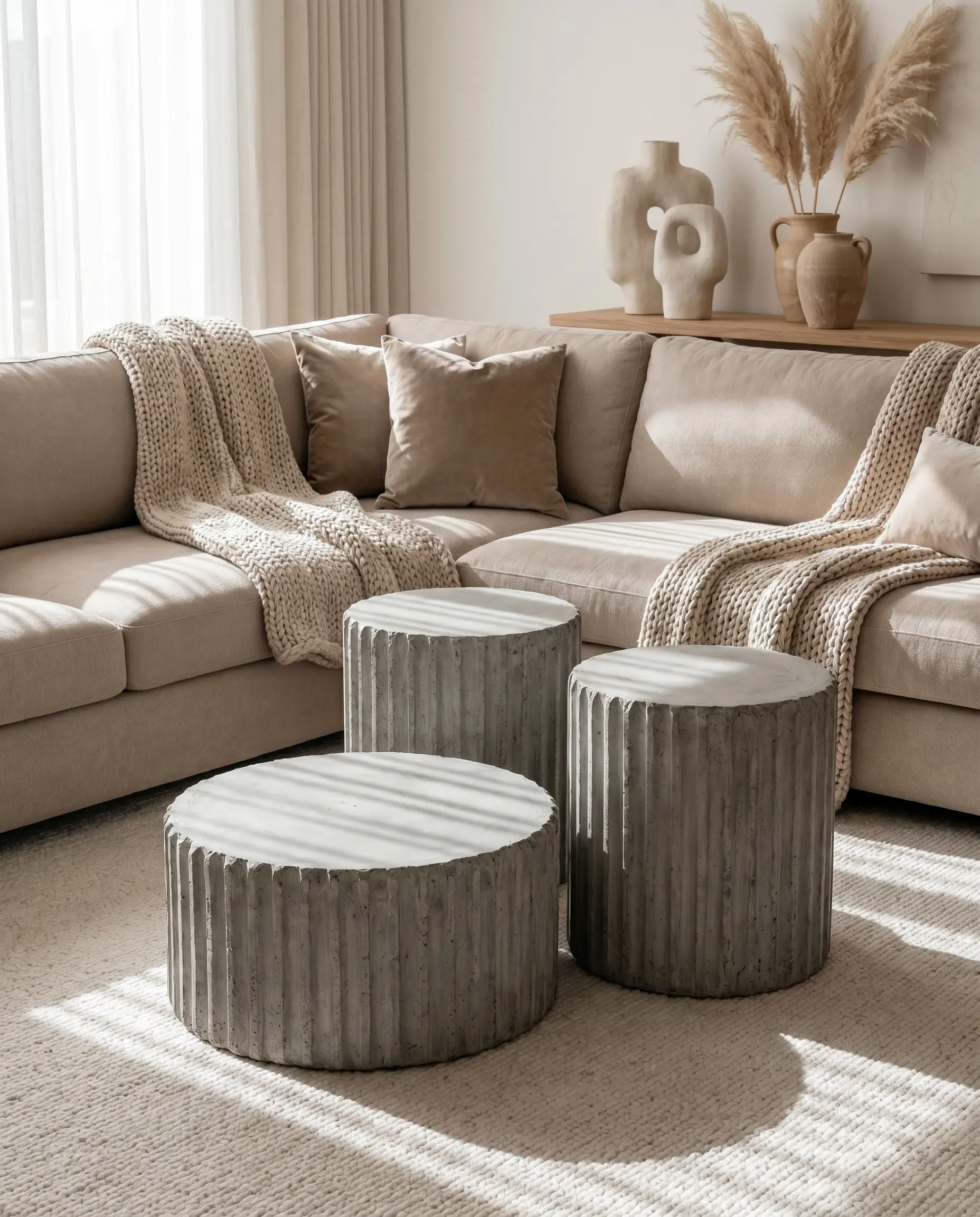
Bringing concrete indoors introduces an edgy, architectural element that roughens up a purely tonal room. The deep ribbed texture catches ambient shadows throughout the day, generating necessary visual depth without relying on a contrasting color.
- Vibe: Brutalist-Lite
- Key Material: Cast concrete or glass-fiber reinforced concrete (GFRC)
- Styling Pro-Tip: Cluster two or three cylinders of varying heights rather than utilizing one massive, unmovable block.
Space-Saving & Modular Solutions
Massive family rooms and compact apartments share a common challenge: static furniture limits usability. Modular solutions prioritize flexibility and movement, breaking up the monolithic footprint of a large sectional.
Trio of Staggered Brass Drink Tables
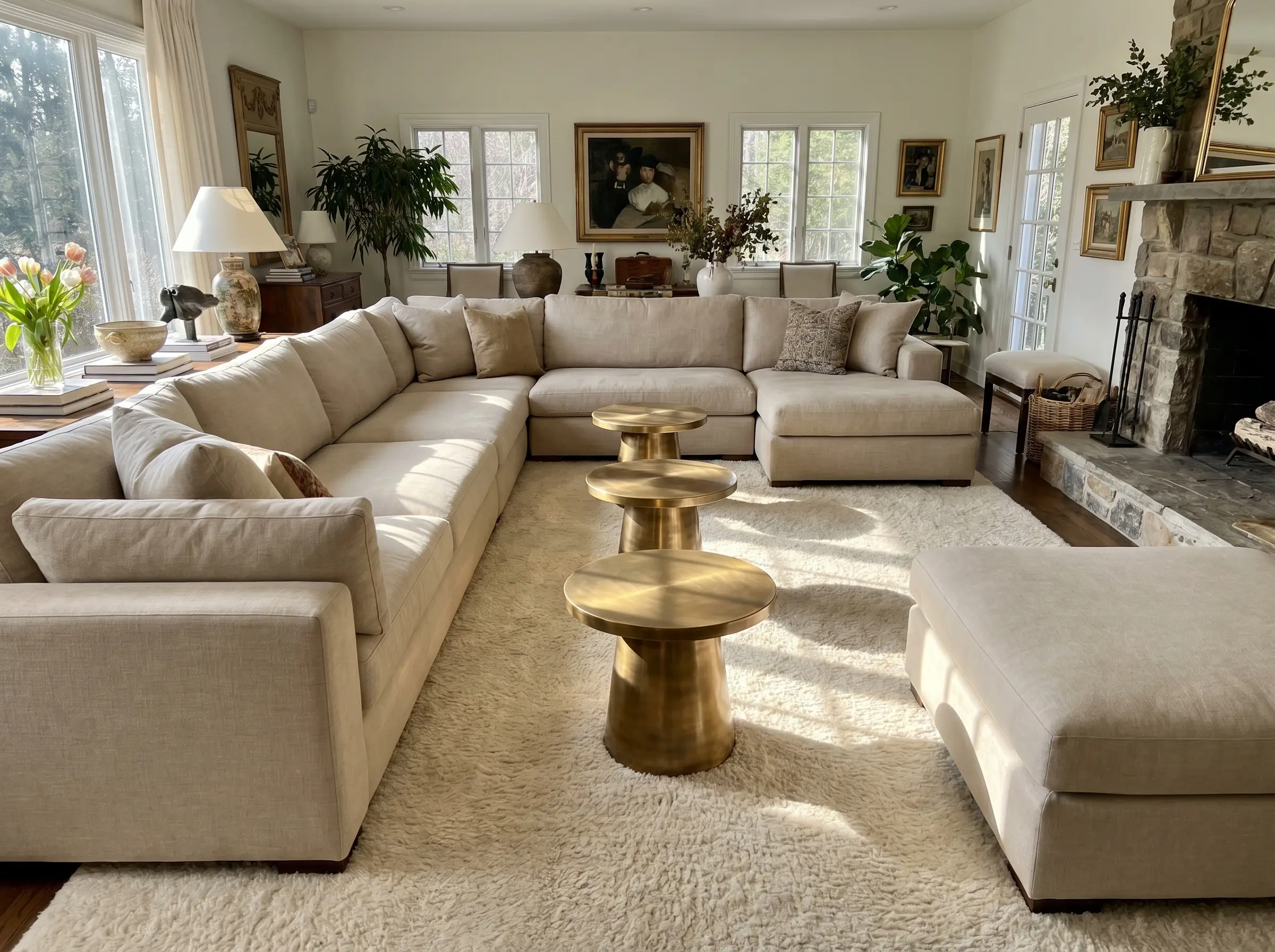
For massive U-shaped sectionals where a single center table is impossible to reach from every seat, abandon the traditional coffee table entirely. Deploying three heavy-based brass drink tables adds a reflective metallic sheen while allowing guests to migrate the surfaces exactly where they are needed.
- Vibe: High-End Host
- Key Material: Antiqued or unlacquered brass
- Styling Pro-Tip: Ensure the bases are heavily weighted to prevent tipping on plush rugs.
Upholstered Leather Ottoman with a Floating Tray
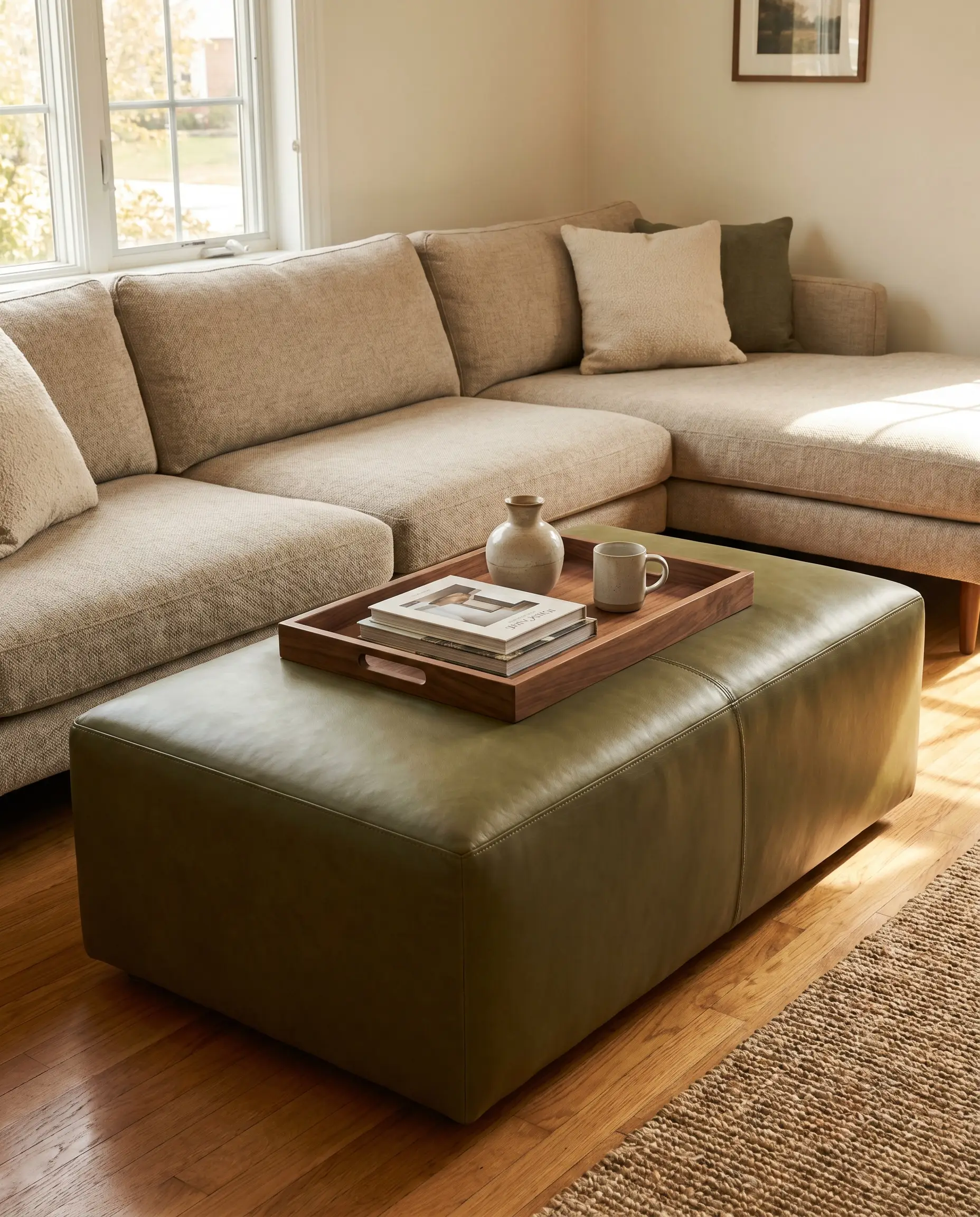
An upholstered ottoman offers a family-friendly, soft-edge solution, provided you strictly avoid matching the sofa’s fabric. Contrasting a woven beige sectional with a smooth, cognac or olive green leather ottoman injects rich, durable texture, while a solid wood floating tray ensures rigid stability for drinks.
- Vibe: Elevated Casual
- Key Material: Top-grain leather, solid walnut tray
- Styling Pro-Tip: Never put a beige fabric ottoman in front of a beige fabric sofa; always contrast the upholstery material.
If you choose an ottoman, ensure the clearance radius remains at exactly 18 inches. Ottomans naturally invite people to prop their feet up, and crowding the sectional will make the space feel claustrophobic.
Curator’s Note
The Sectional Pairing Cheat Sheet
When you are ready to finalize your purchase, the specific fabric of your sectional should dictate the material of your table. Use this reference chart to guarantee flawless material tension.
| Sofa Fabric | Ideal Table Material | Why It Works |
|---|---|---|
| Heavy Boucle | Smoked Glass & Steel | The airy glass offsets the dense visual weight of the boucle. |
| Soft Washed Linen | Burl Wood or Walnut | Rich, swirling wood grains ground the light, breezy nature of linen. |
| Performance Velvet | Honed Travertine | The matte, porous stone cuts through the high-sheen glamour of the velvet. |
| Smooth Leather | Ribbed Concrete | The rough, architectural concrete provides aggressive friction against slick leather. |
Finalizing Your Living Room Layout
The coffee table is the central anchor, but it is only the beginning of a curated space. To fully realize your living room layout, you must style the table with intention—layering architectural ceramics, heavy design books, and casting a localized glow with a low-slung floor lamp to highlight the material tension you have just created. When designing your broader living room layout, remember that the floor beneath the table is just as critical as the table itself. To ensure your foundational layer is just as strong, explore our guide on the best living room rugs for light sofas to complete the aesthetic.

The Hackrea Style Desk treats interior decoration as an exact visual science. Rather than focusing on demolition or floor plans, this desk masters the art of color theory, undertone matching, material pairings, and spatial proportion. From balancing the visual weight of mixed metals to finding the perfect bridging tone between disparate wood species, this desk provides the rigorous aesthetic rules needed to achieve high-end, editorial-quality harmony in any space.