A dark attic is often treated as dead space: somewhere to store boxes, old furniture, and the things no one quite knows what to do with. Yet with the right design decisions, it can become one of the most characterful rooms in a home. Natural light is usually the turning point.
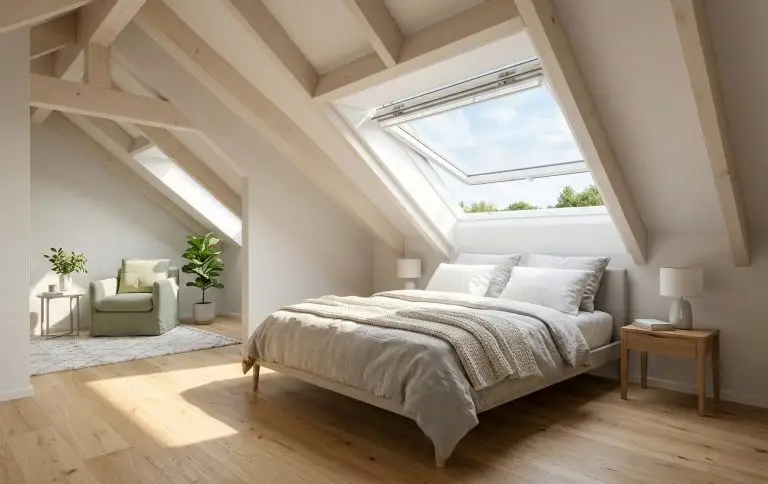
A pitched roof window can dramatically change how an attic feels, not simply by making it brighter, but by altering its sense of scale, comfort, and usability. In a room where sloping ceilings and limited wall space can feel restrictive, daylight from above reaches areas that conventional vertical windows cannot.
The result is often surprising. What once felt like a cramped loft can become a workable bedroom, study, playroom, or quiet retreat.
Why attic rooms often feel darker than they are
Attics have several characteristics that make them challenging to light well. Their floor area may be generous, but much of the usable wall height is lost beneath the roof slope. This limits the size and placement of traditional windows, particularly on terraced homes or properties where overlooking neighbours is a concern.
Light from a vertical window also tends to stay close to the wall it enters through. In contrast, light from the roof falls more centrally into the room. That difference matters. A roof window can illuminate the middle of an attic, reducing the heavy shadows that make ceilings appear lower and corners feel enclosed.
Orientation plays a role too. South-facing roof windows can bring strong daylight for much of the day, while north-facing windows provide a softer, more even quality of light that can work particularly well in home offices or artist studios. East- and west-facing options offer changing light across the morning or afternoon.
The goal is not necessarily to make the room sun-drenched at every hour. It is to create a more balanced, comfortable level of daylight that supports how the space will actually be used.
More than a source of light
A pitched roof window affects several aspects of attic design at once. It can improve ventilation, make low ceilings feel less oppressive, and provide a visual connection to the outdoors. On clear evenings, it may even give a bedroom or reading space a completely different atmosphere.
Ventilation and everyday comfort
Warm air rises, which means loft rooms can become uncomfortably hot in summer and prone to condensation in colder months. An opening roof window allows stale, warm air to escape at the highest point in the room. When paired with another opening elsewhere in the space, it can create effective cross-ventilation.
This is especially useful in converted lofts used as bedrooms. Better airflow can help manage humidity from sleeping, drying laundry, or en-suite bathrooms, reducing the likelihood of condensation forming on cold surfaces.
Of course, ventilation needs to be considered alongside insulation and heating. A poorly insulated attic will remain difficult to regulate, regardless of how many windows it has. The best outcomes come from treating daylight, ventilation, insulation, and shading as parts of the same design decision.
Choosing the right window position
Placement is often more important than size. A single well-positioned roof window can have greater impact than two smaller units installed where they offer limited light or an awkward view.
For homeowners considering the practical options, this overview of Sterling Build pitched roof windows is a useful starting point for understanding the types of installation available and how roof windows can be incorporated into different loft spaces.
In general, the window should be positioned so that someone standing or sitting in the room can benefit from both the daylight and the view. Installing it too high may bring in light but offer little connection to the outside. Too low, and it may interfere with furniture layouts or create privacy concerns.
The pitch of the roof also affects the experience. On a shallow roof, a window can sit closer to the occupant’s line of sight and capture a wider view of the sky. On a steeper pitch, careful positioning becomes even more important to avoid a window feeling detached from the rest of the room.
Design considerations before installation
A roof window can be transformative, but it is not a simple decorative upgrade. The roof structure, planning position, and thermal performance all need proper attention.
Think about heat gain and glare
More daylight is welcome until an attic becomes too hot to use. South- and west-facing windows are particularly susceptible to overheating during warm weather. Blinds, external shading, and appropriate glazing can make a significant difference.
It is worth considering how the room is used at different times of day. A home office with a screen directly beneath a roof window may experience glare, while a child’s bedroom may need blackout blinds during lighter summer evenings.
Check permissions and regulations
Many roof window installations fall under permitted development rights in England, provided they meet certain conditions. However, this is not guaranteed. Conservation areas, listed buildings, flats, and properties with specific planning restrictions may require additional consent.
Building Regulations are also relevant, particularly where the attic is being converted into habitable accommodation. Requirements may cover fire escape, insulation, structural alterations, ventilation, and safe access. If the window is intended as an emergency escape route, its size and opening dimensions must meet specific standards.
Before work begins, establish whether the project is a straightforward replacement, a new opening in the roof, or part of a larger loft conversion. Each has different implications.
Making the most of the new light
Once the window is installed, interior choices determine whether the room feels genuinely transformed. Pale finishes can help reflect daylight, but the answer is not always to paint everything white. Warm neutrals, soft greens, muted blues, and natural timber can all work well in loft spaces without making them feel clinical.
Keep tall furniture away from the brightest area where possible. A desk, reading chair, or bed positioned to benefit from the new light can make the room feel intentional rather than improvised. Mirrors can help distribute daylight, although they should be placed thoughtfully to avoid unwanted glare.
A pitched roof window will not solve every attic problem on its own. It cannot compensate for poor insulation, inadequate headroom, or an impractical layout. But where the underlying space is sound, it can be the element that changes an attic from storage space into a room people genuinely want to spend time in.