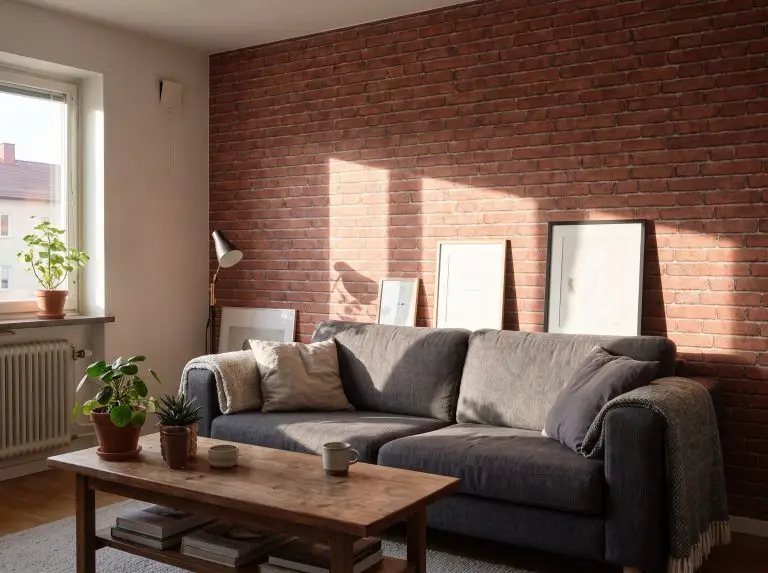
Let’s talk about the dorm-room stigma—shiny, flat contact paper that screams fake from ten feet away. The secret to realistic faux masonry relies heavily on trompe l’œil techniques, tricking the human eye by mimicking architectural mass and physical texture. By sourcing 3D embossed, non-woven wallpapers and styling them with structural precision, you can achieve rich, renter-friendly character that looks strikingly real. The magic isn’t just the roll of paper you buy; it is entirely about how you integrate it into the room’s existing architecture.
Strategic Architectural Placement
Real brick is inherently structural, meaning applying it to a random, flat drywall expanse instantly shatters the illusion. To sell the faux masonry look, place the wallpaper strictly where a chimney breast, exposed load-bearing wall, or foundational column would naturally exist.
Fake a Chimney Breast or Fireplace Surround
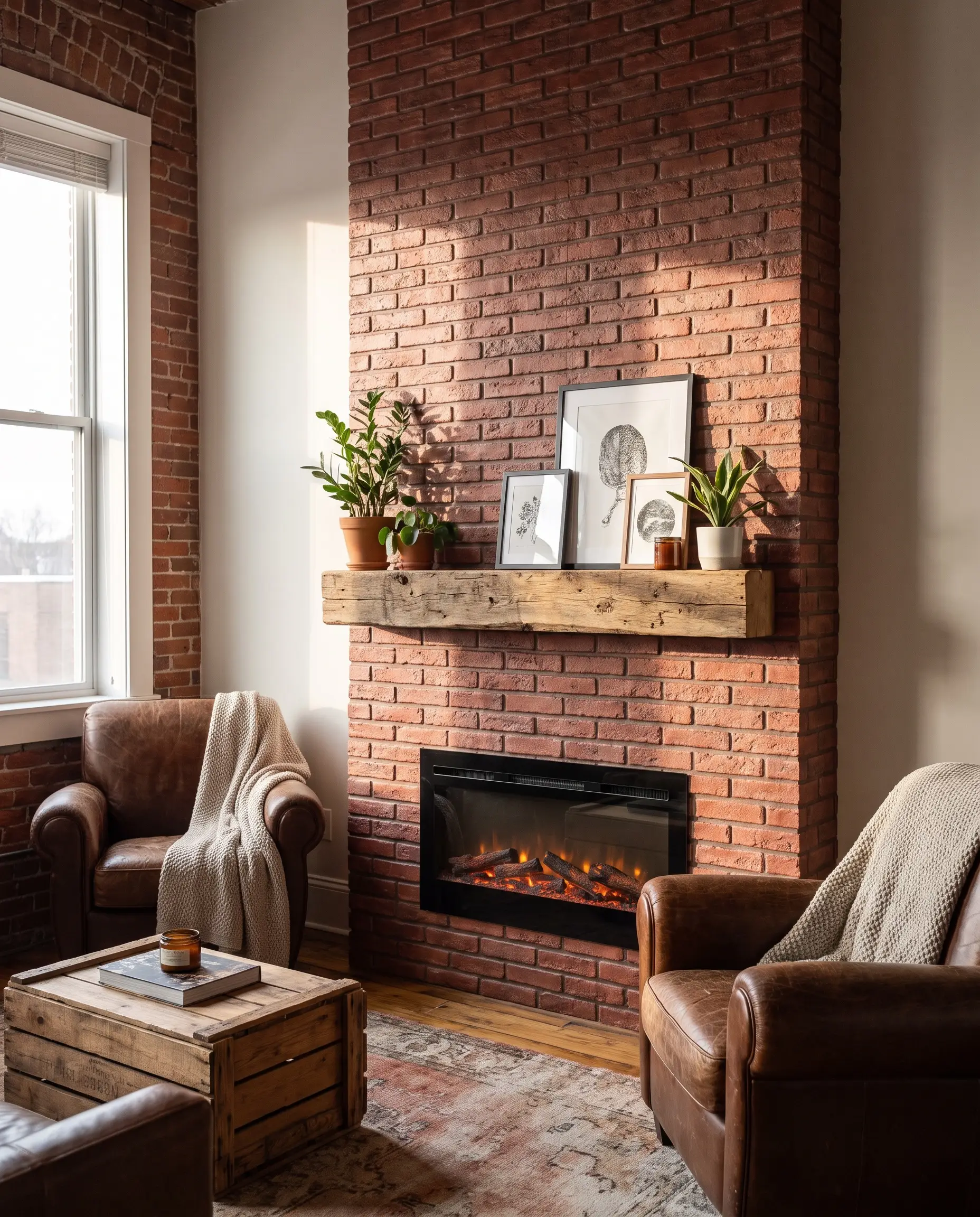
Building out a faux chimney breast using standard 2x4s and drywall creates the physical protrusion necessary to make the pattern look like authentic millwork. Wrapping this dimensional bump-out in heavily textured brick paper forces the eye to register structural mass rather than a flat surface.
- Vibe: Historic Loft
- Key Materials: 3D embossed red brick wallpaper, 2×4 lumber, drywall panels.
- Styling Pro-Tip: Anchor the base with a salvaged wood mantel or a faux electric fireplace insert to complete the architectural lie.
- Authenticity Check: The physical depth of a protruding wall structure forces natural room light to cast real shadows on the paper’s edges, confirming the trompe l’œil illusion.
Anchor an Urban Loft Bedroom Headboard Wall
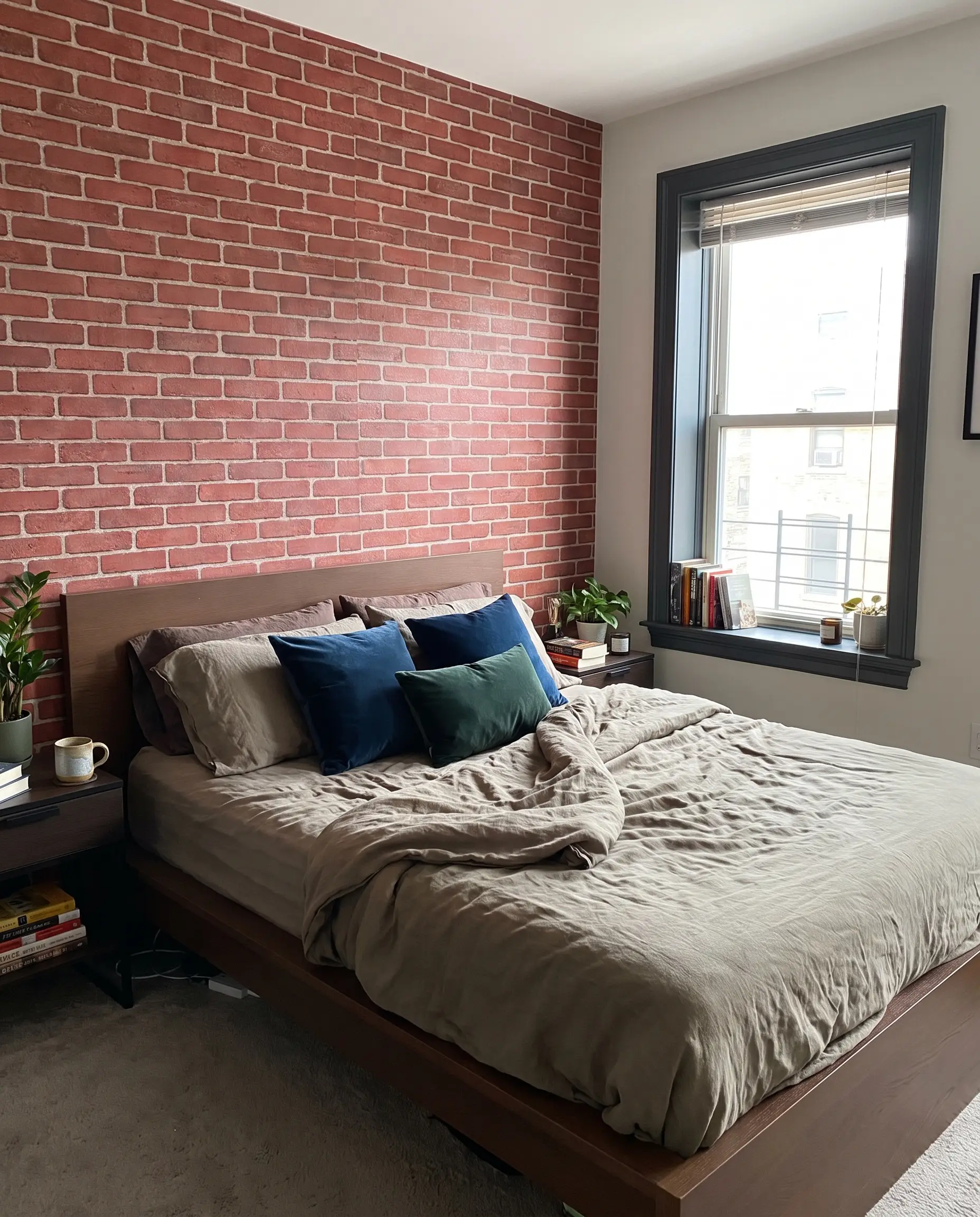
Grounding your bedroom with a heavily textured, classic red brick paper behind the bed establishes immediate visual weight. You must contrast the raw, industrial grit of the faux masonry with hyper-soft, luxurious textiles to balance the room’s aesthetic.
- Vibe: Industrial Chic
- Key Materials: Matte-finish brick wallpaper, washed linen sheets, velvet throw pillows.
- Color Match: Benjamin Moore Soot (for contrasting baseboards or window trim).
- Styling Pro-Tip: Keep the bed frame low to the ground to maximize the exposed vertical plane of the brick pattern above the pillows.
Line a Mudroom or Entryway Nook
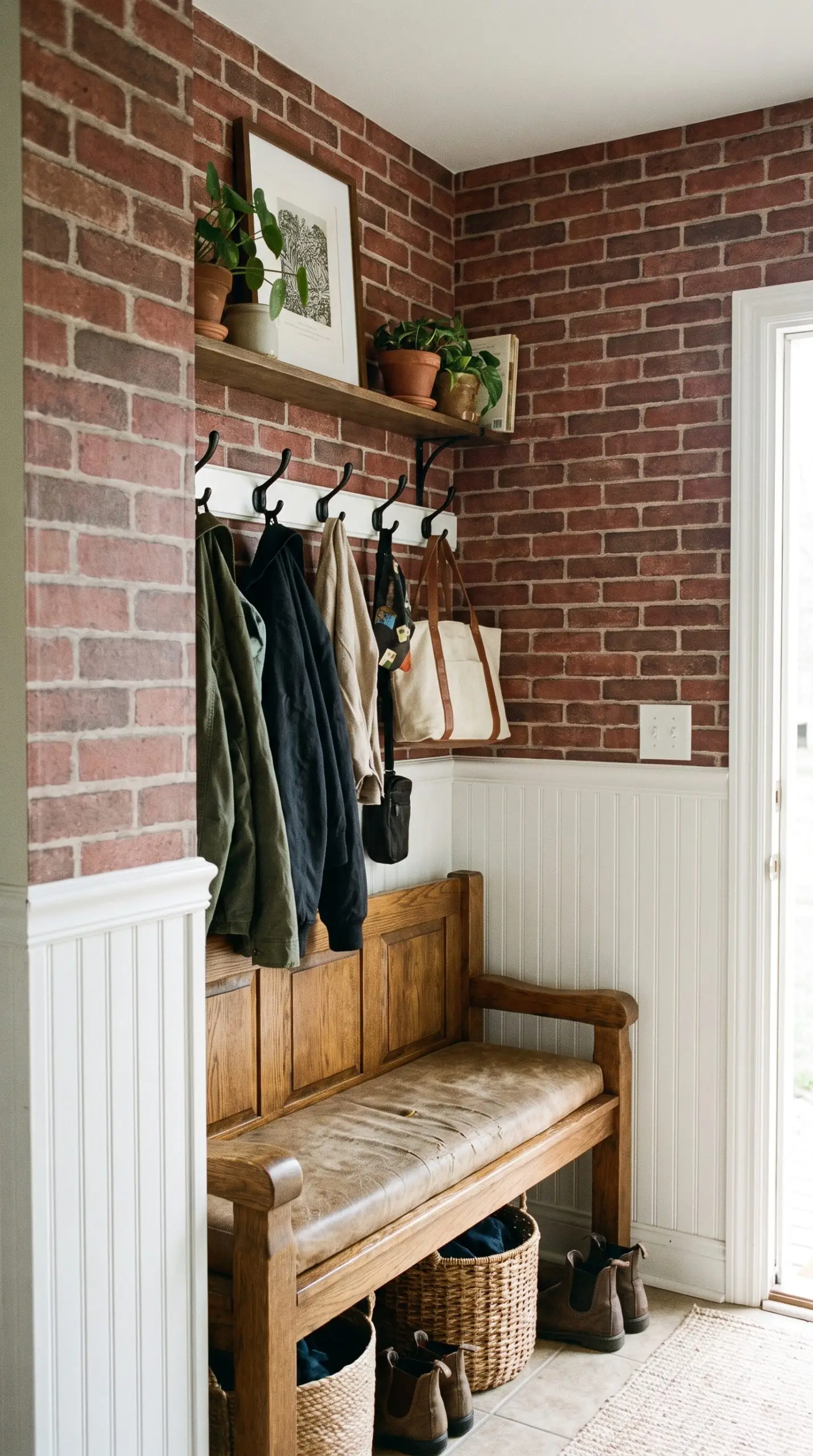
Applying faux brick to the back of a built-in mudroom bench or coat alcove adds instant visual durability to a high-traffic zone. The tight spatial constraints of an entryway nook naturally obscure the wallpaper’s edges, making the masonry look built-in.
- Vibe: Utilitarian Warmth
- Key Materials: PVC-free washable brick wallpaper, matte black coat hooks, heavy oak bench.
- Styling Pro-Tip: Install beadboard or wainscoting on the bottom third of the wall, using the brick paper strictly on the upper two-thirds to break up the pattern repeat.
Wrap a Kitchen Island Base
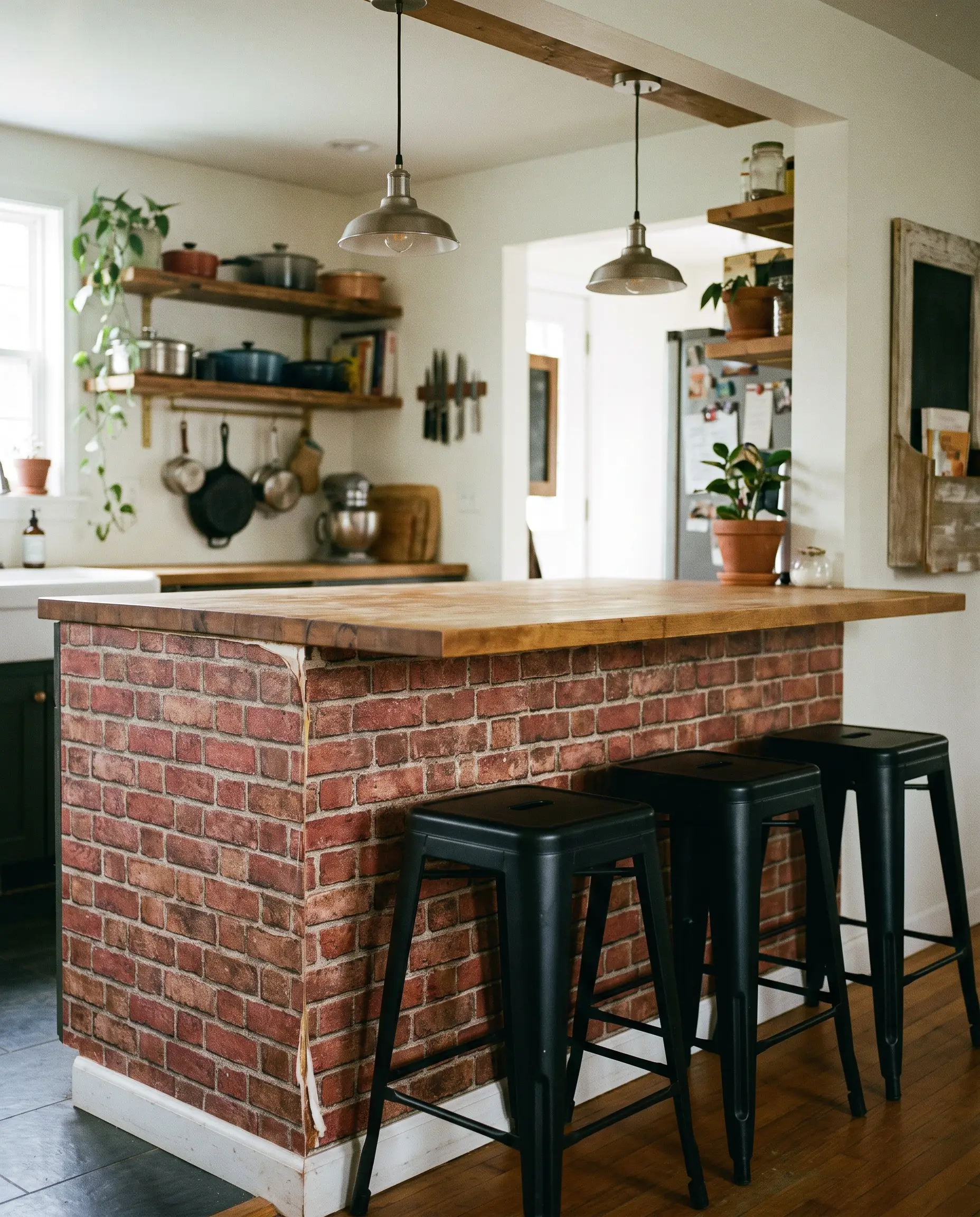
Instead of committing to a massive, labor-intensive backsplash, wrap the front-facing base of your kitchen island in a heavily embossed brick wallpaper. Capping this textured base with a thick butcher block or poured concrete counter completes a rugged, high-end industrial look on a strict budget.
- Vibe: Modern Industrial Kitchen
- Key Materials: Scrubbable faux brick vinyl, butcher block countertop, matte black barstools.
- Styling Pro-Tip: Ensure the paper is rated for high-traffic or lightly seal it, as island bases endure heavy scuffing from shoes.
Upgrade Open Bookshelves as a Textural Backing
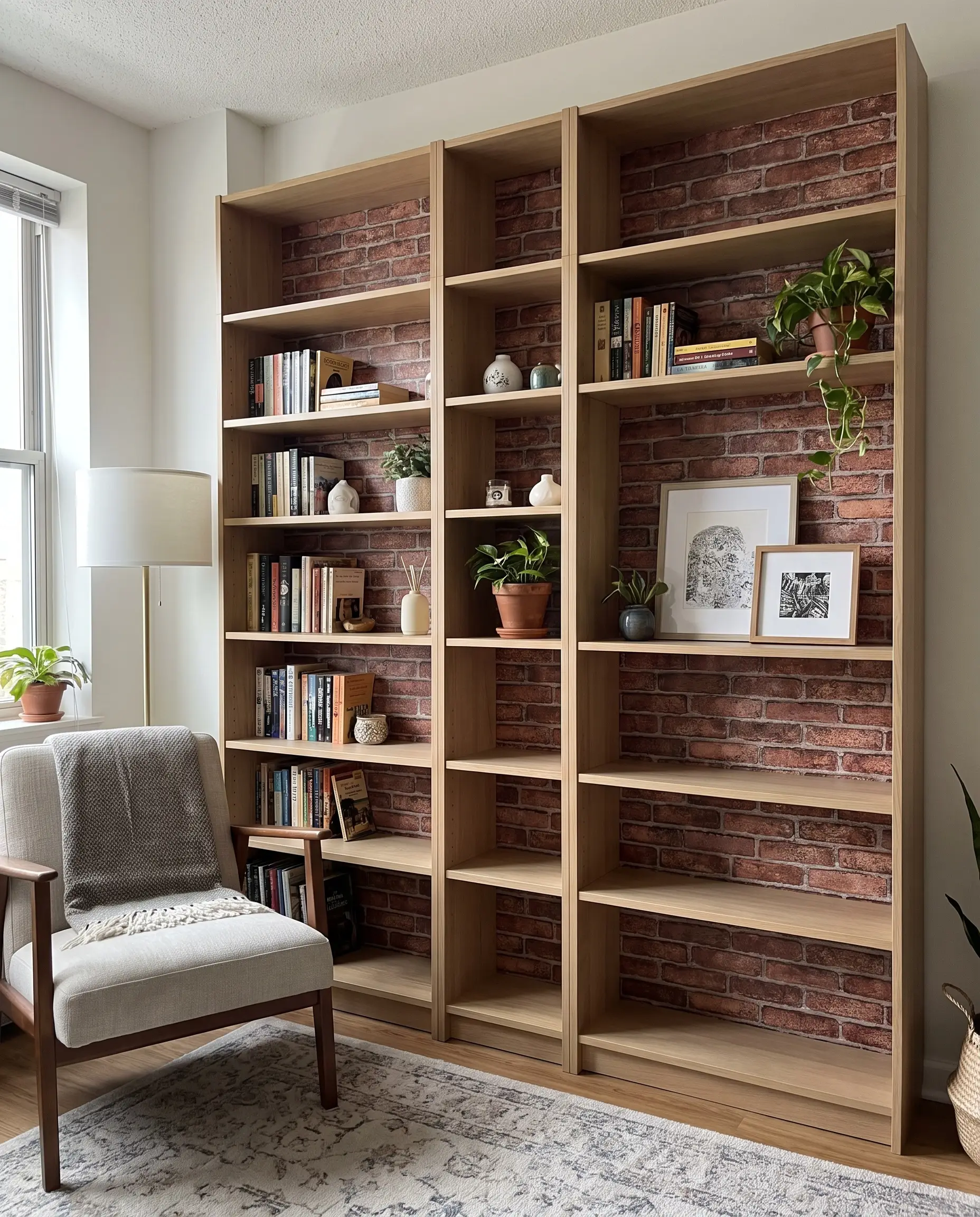
Applying wallpaper strictly to the back panel of an open bookcase injects rich architectural character into a flat room without altering the actual walls. The physical shelves and curated decor sitting in front of the paper thoroughly disrupt the visual plane, effectively masking any slight imperfections in the 3D illusion.
Before applying the paper to the bookcase backing, trace and cut the paper to fit perfectly inside the shelf cavities. If you are renting and cannot paint or paper the actual apartment walls, this standalone furniture trick delivers massive industrial impact with zero deposit risk.
Hackrea Renter Hack
- Vibe: Curated Library
- Key Materials: Peel-and-stick brick wallpaper, flat-pack shelving.
- Styling Pro-Tip: Leave 30% of the shelf space completely empty so the tactile brick texture remains visible behind your curated objects.
Color Variations and Faux Finishes
You are no longer restricted to factory red. Modern non-woven wallpapers offer incredibly nuanced, culturally specific finishes, allowing you to seamlessly match the tactile mood of your faux masonry to your chosen design style.
Classic Red Brick for Brooklyn Loft Warmth
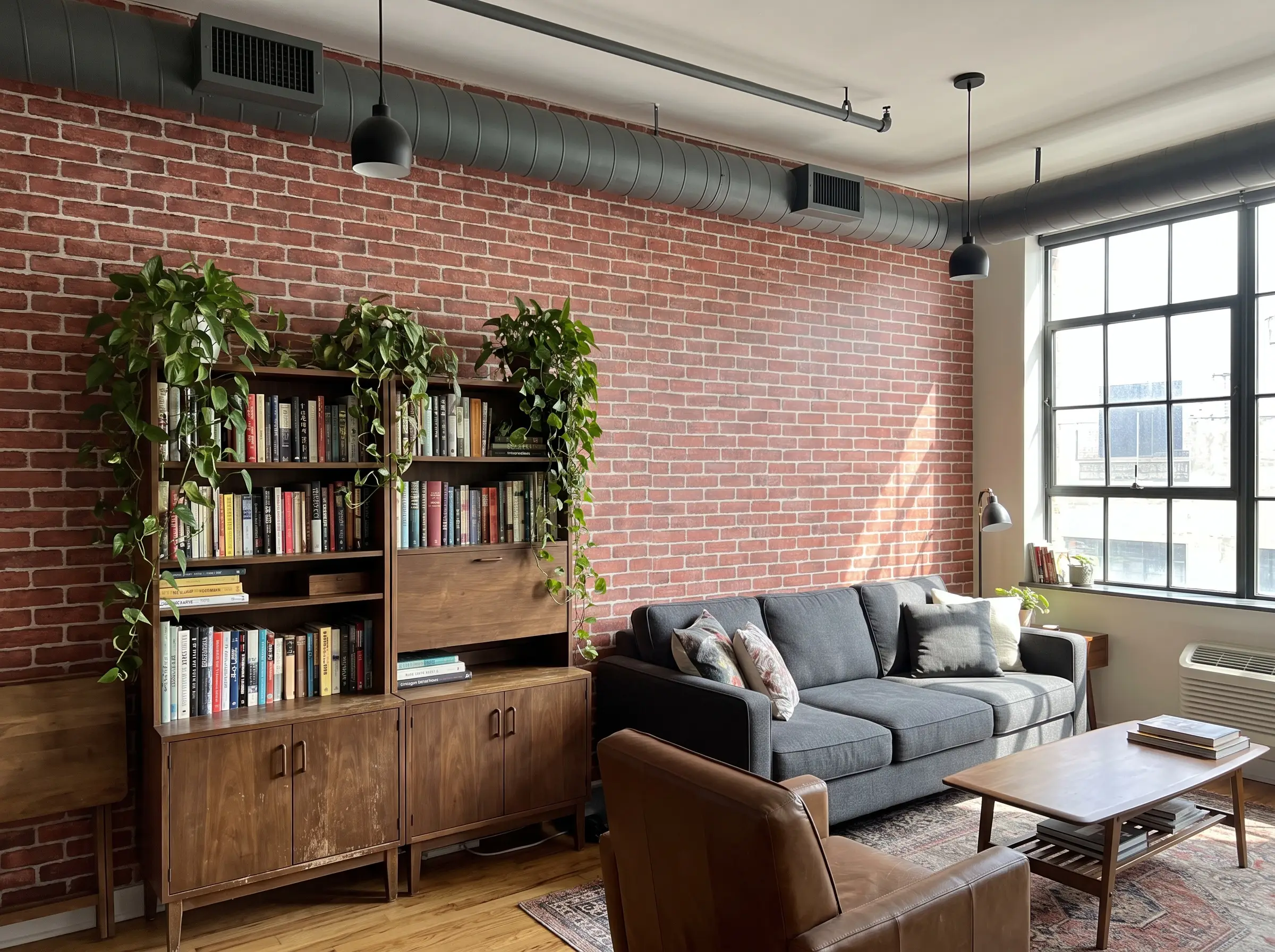
Standard red brick provides an unmistakable, grounded warmth that anchors vast or sterile spaces. To avoid looking dated, pair this traditional colorway with stark, modern elements like exposed ductwork aesthetics and warm walnut furniture.
- Vibe: Classic Brooklyn Loft
- Key Materials: Standard scale red brick wallpaper, matte black hardware, walnut woods.
- Styling Pro-Tip: Use plenty of trailing green plants to contrast against the heavy red tones.
Distressed Whitewash for Modern Farmhouse Nuance
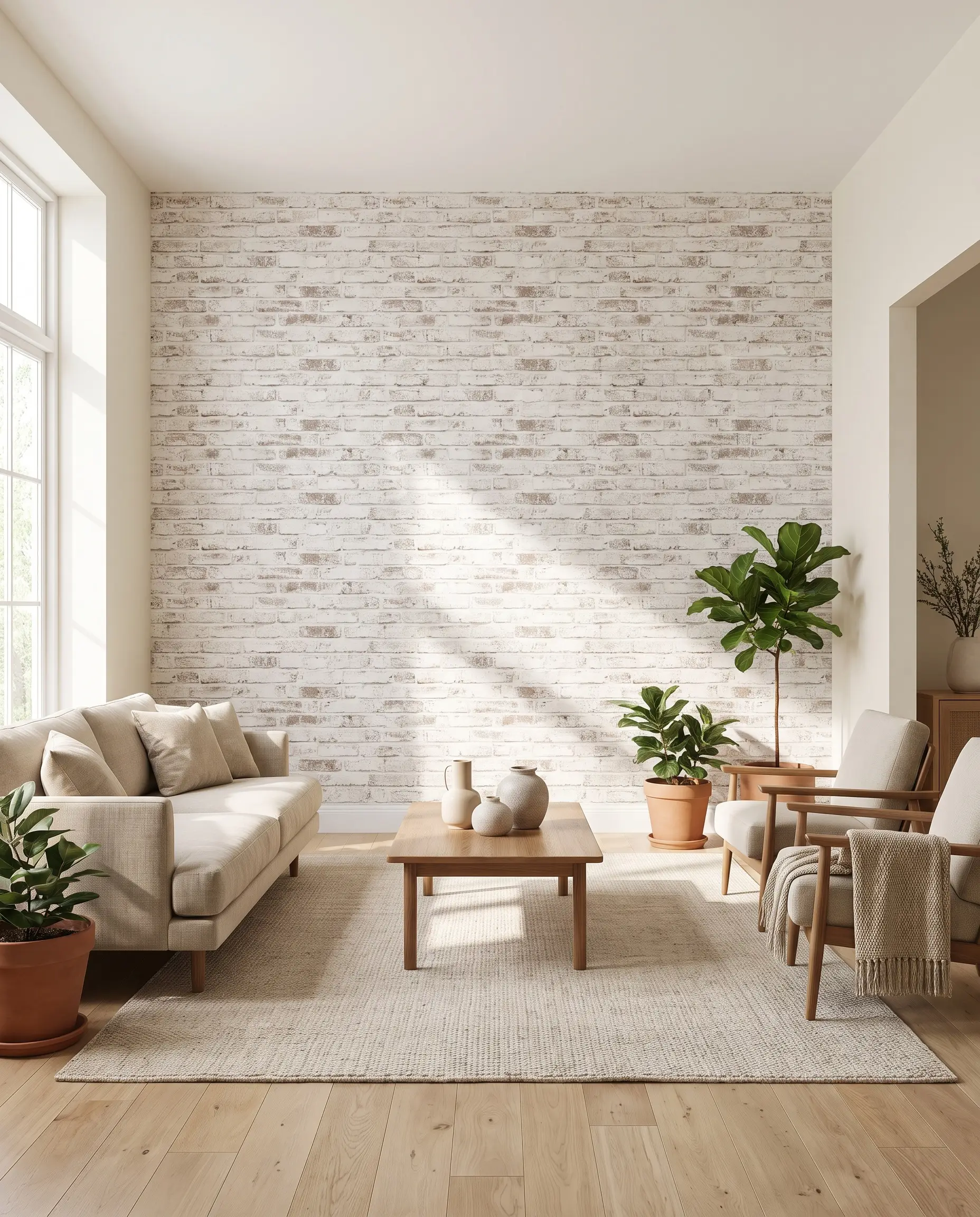
A whitewash or limewash effect paper inherently reflects natural light, making small or cramped rooms feel significantly larger and more airy. The distressed, chalky texture pairs beautifully with light oak floors and breezy linen textiles.
- Vibe: Airy Modern Farmhouse
- Key Materials: Whitewashed faux brick wallpaper, light European oak, raw linen.
- Paint Recommendation: Sherwin-Williams Alabaster (for surrounding drywall to seamlessly blend the whitewashed edges).
- Styling Pro-Tip: Avoid overly rustic decor; keep the surrounding furniture sleek and modern to stop the room from feeling like a theme park.
Moody Charcoal Brick for Dark Academia Studies
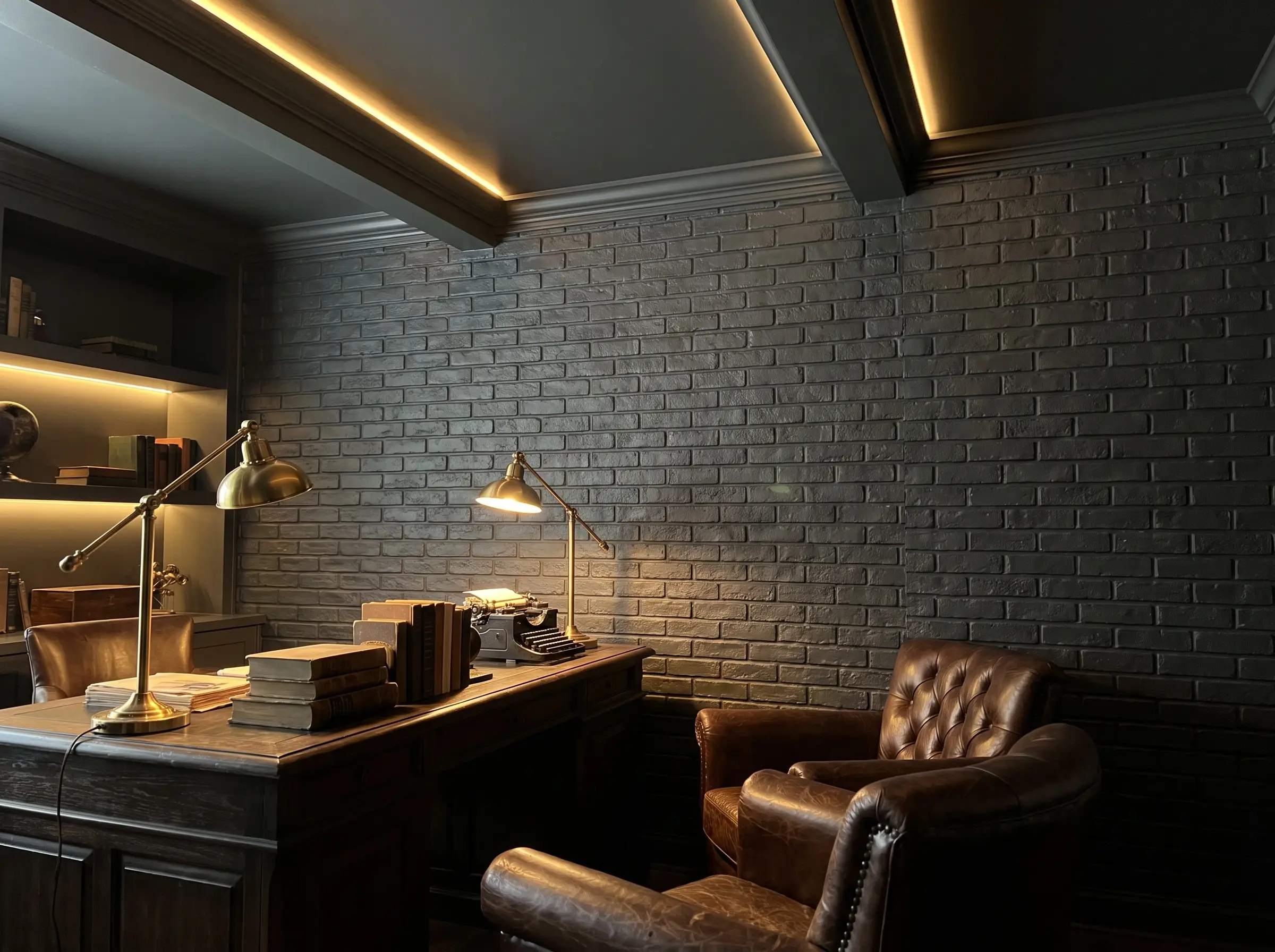
Deploying a black or charcoal brick wallpaper establishes a deeply textured, highly dramatic backdrop perfect for a home office or library. The dark, light-absorbing matte finish makes the room feel intimate and sophisticated, especially when layered with rich leathers.
- Vibe: Dark Academia
- Key Materials: Charcoal 3D embossed brick paper, aged brass desk lamps, tufted leather seating.
- Paint Recommendation: Farrow & Ball Railings (for painting the ceiling or trim to match the moody masonry).
- Styling Pro-Tip: Install warm, low-kelvin ambient lighting to highlight the subtle texture of the dark grout lines.
Sun-Faded German Smear Illusions
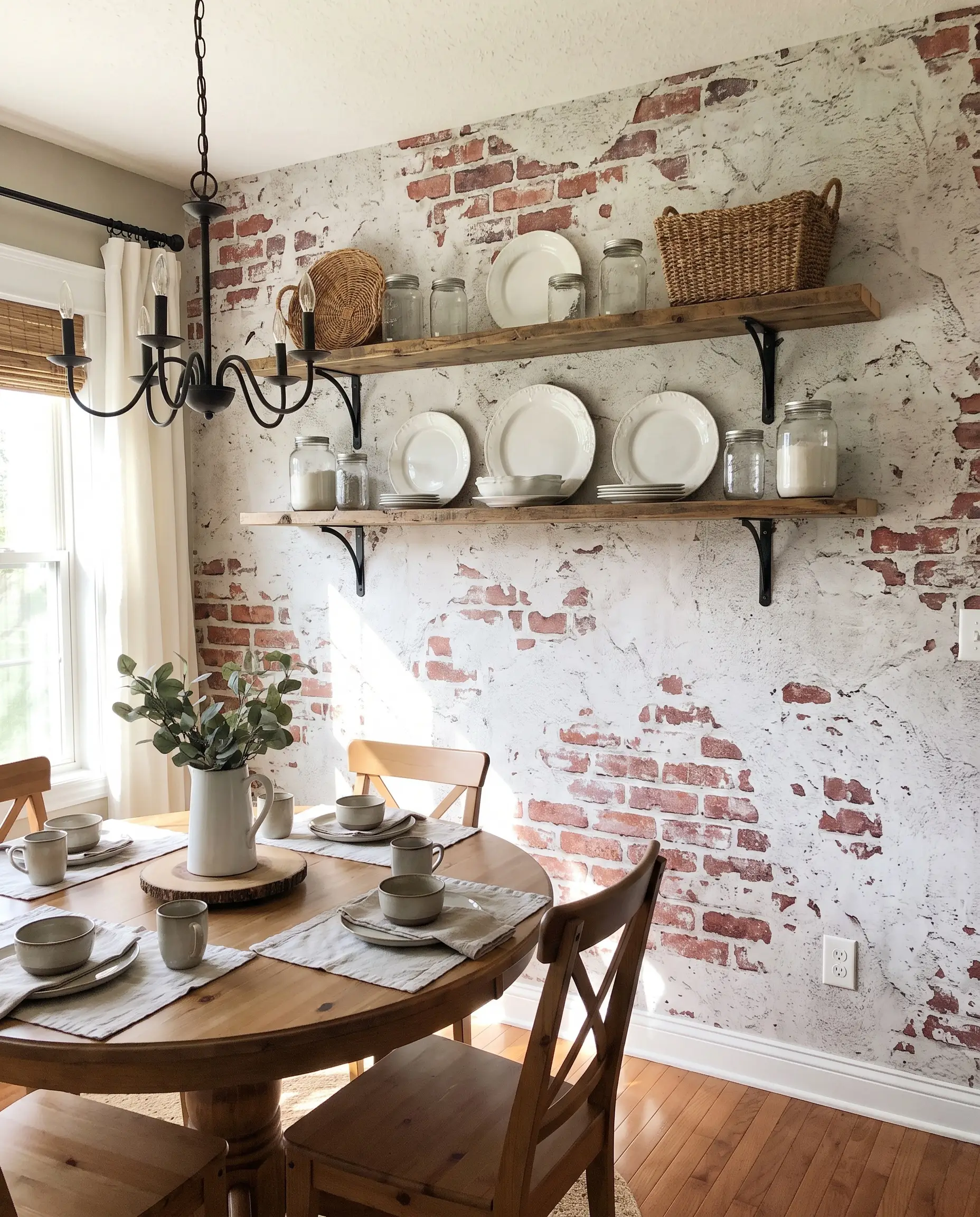
Wallpapers mimicking the heavy, messy mortar of a traditional German smear technique offer a highly specific, rustic European architectural finish. The irregular patches of faux white mortar disrupt the standard grid of the brick, hiding the dreaded pattern repeat almost effortlessly.
- Vibe: Rustic European Villa
- Key Materials: German smear printed wallpaper, wrought iron accents, reclaimed wood.
- Styling Pro-Tip: Use this specific style in kitchens or dining rooms paired with open shelving for a convincing old-world aesthetic.
Painted Terracotta Tones for Earthy Warmth
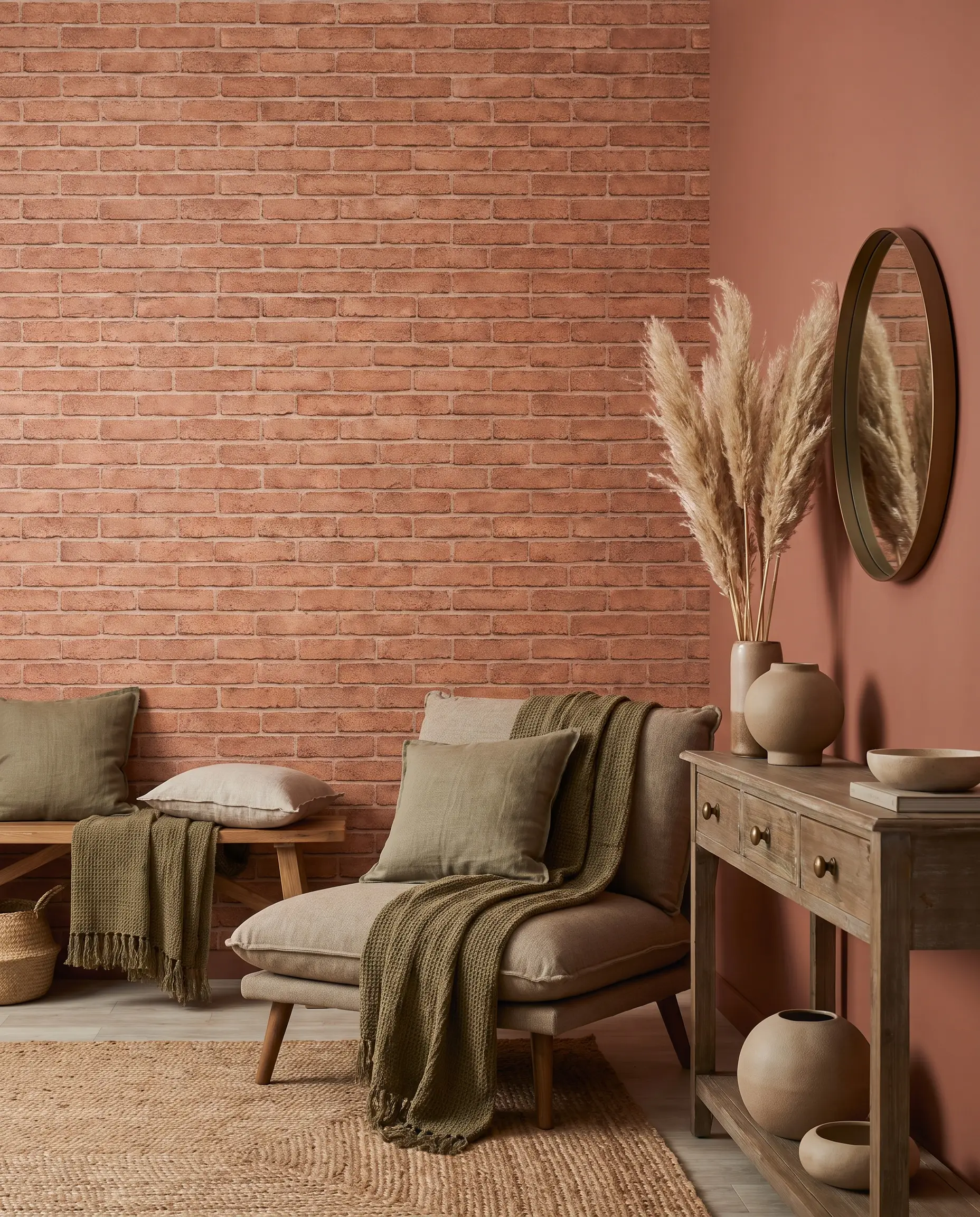
Moving away from standard reds and stark whites, terracotta-toned faux brick introduces a Mediterranean or Southwestern warmth to an otherwise cold room. This earthy colorway acts as a grounding foundational layer that pairs brilliantly with organic shapes and dried botanicals.
- Vibe: Earthy Modern
- Key Materials: Terracotta brick wallpaper, olive green accents, dried pampas grass.
- Material Match: Aged brass or matte bronze hardware complements the warm, baked-clay undertones of the terracotta paper perfectly.
- Paint Recommendation: Sherwin-Williams Cavern Clay (for accenting nearby solid walls).
Pro-Level Styling to Break the Visual Plane
The golden rule of faux masonry is unforgiving: never leave a faux brick wall entirely bare. You must aggressively disrupt the eye with physical layers, lighting, and millwork to sell the architectural illusion.
Install Floating Wood Shelves
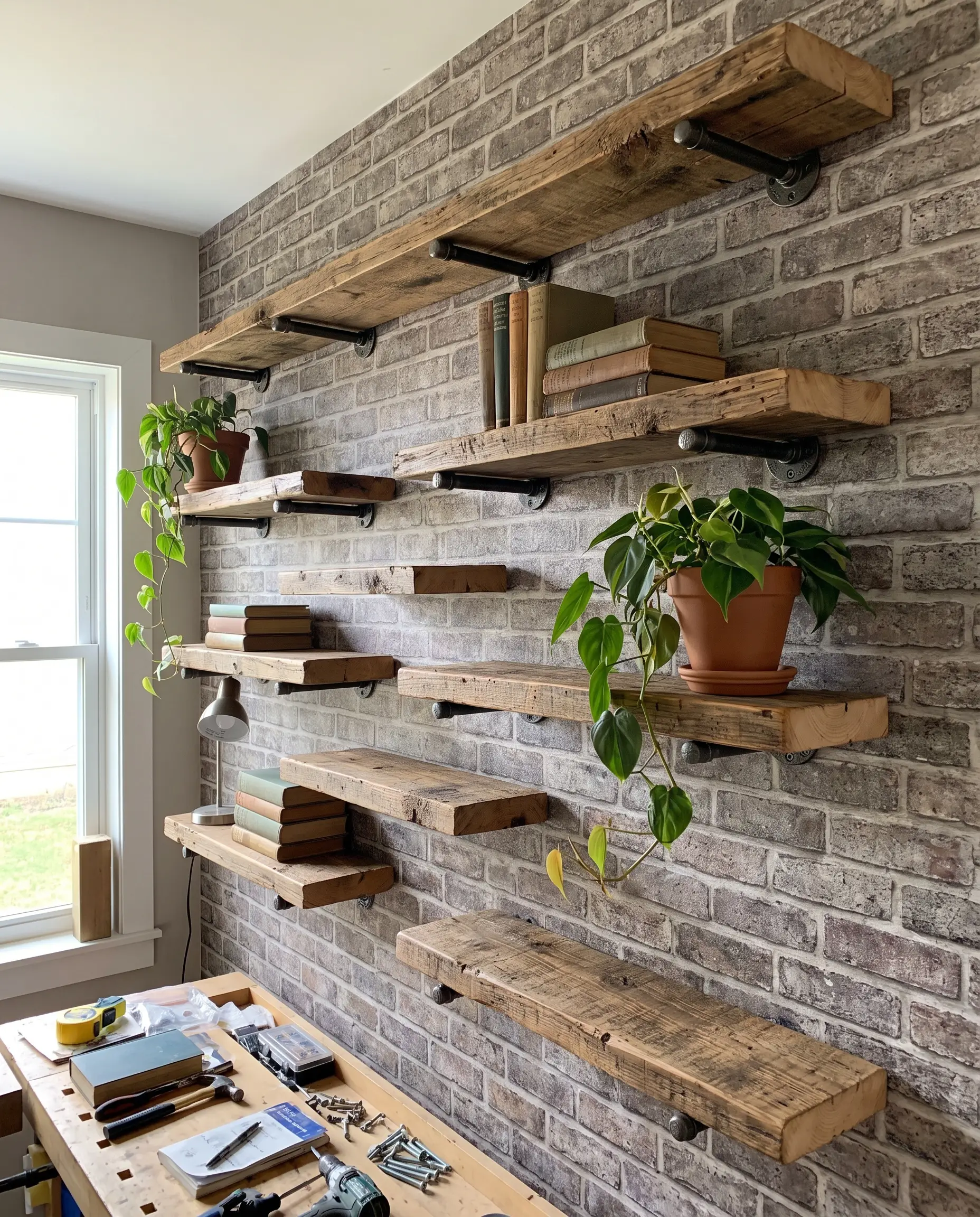
Drilling chunky, solid wood floating shelves directly over the wallpaper forces the human eye to register the physical 3D depth of the shelf. This spatial interruption makes the flat paper behind it recede into the background, feeling distinctly like a true load-bearing wall.
- Vibe: Functional Industrial
- Key Materials: Heavy timber floating shelves, heavy-duty hidden brackets.
- Styling Pro-Tip: Stagger the shelf placement asymmetrically to break up the strict horizontal and vertical grid of the printed grout lines.
Use Directional Sconces to Cast Faux Shadows
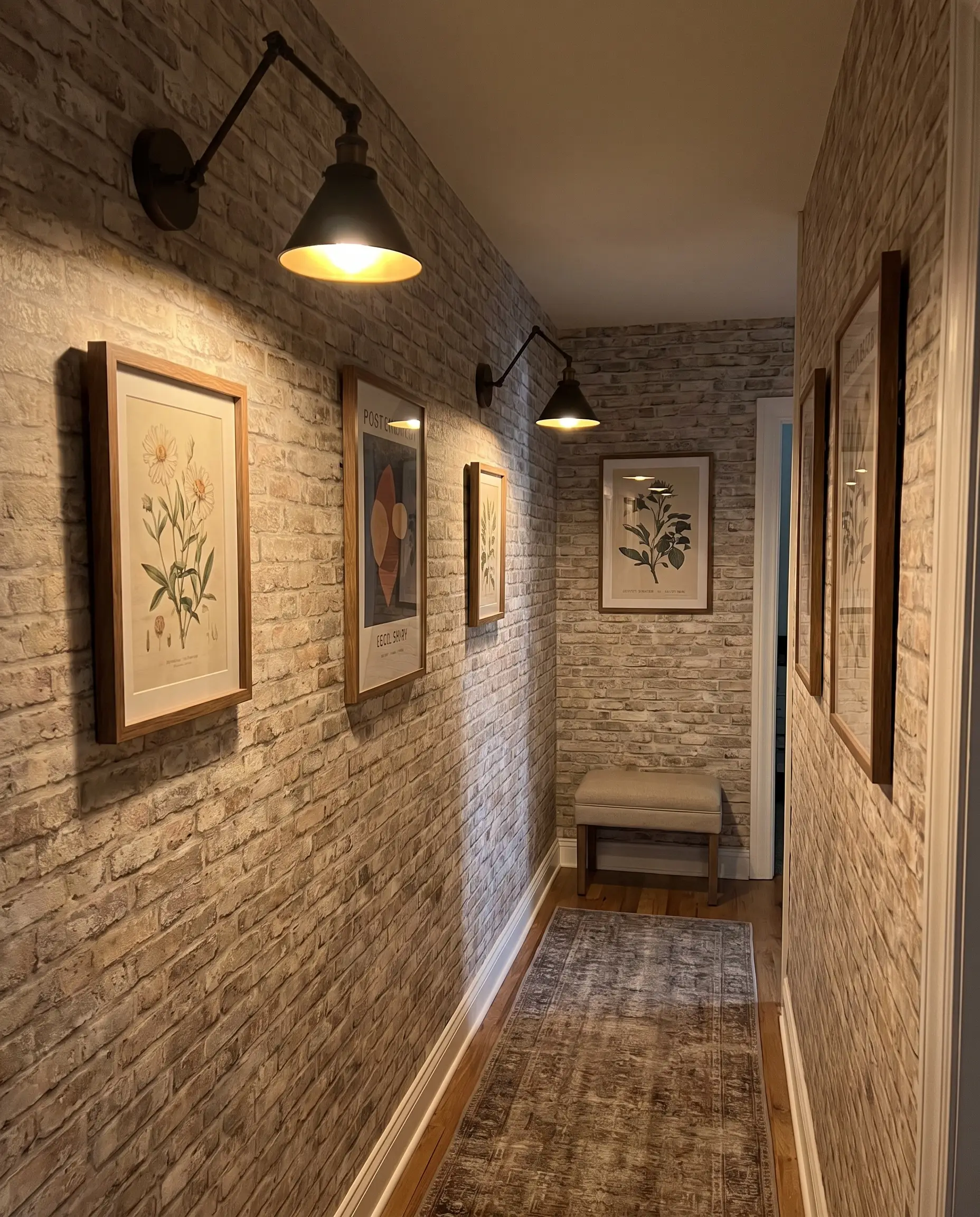
Because flat wallpaper naturally lacks the deep mortar shadows of real brick, you must manufacture that depth using artificial light. Installing down-lighting or wall sconces directly over the paper mimics how light would rake across real, uneven masonry, drastically enhancing the printed 3D effect.
- Vibe: Curated Gallery
- Key Materials: Hardwired or plug-in directional sconces, warm LED bulbs (2700K).
- Styling Pro-Tip: Mount the sconces so the light washes closely down the wall, maximizing the shadow play on the embossed texture.
Wrap the Paper Around Corners
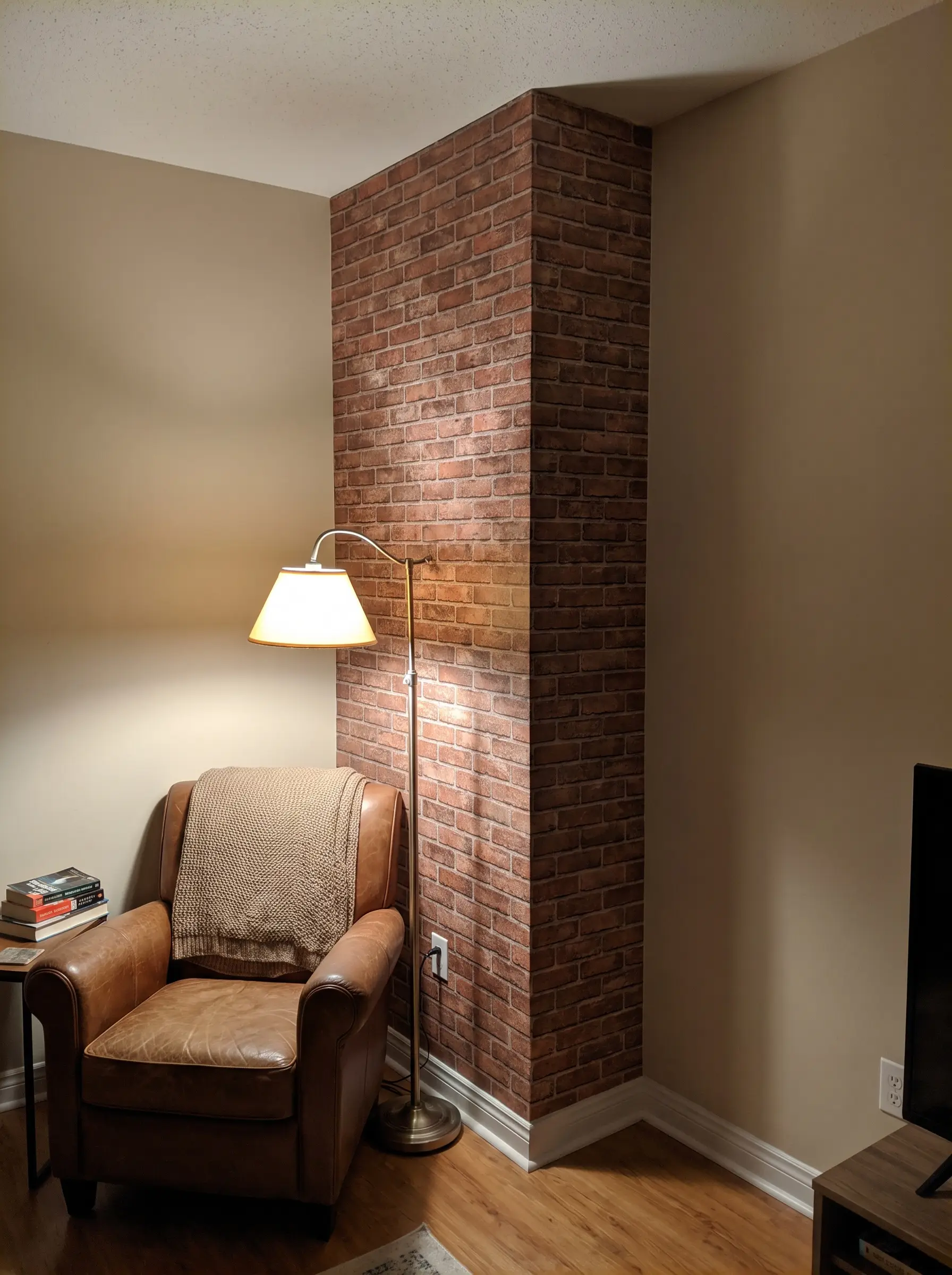
Real brick walls are structural masses that do not magically stop flush at an external drywall edge. If you are papering an alcove or a structural bump-out, you must wrap the paper seamlessly around the physical corner to create a solid masonry column.
- Vibe: Authentic Architectural Build
- Key Materials: Flexible non-woven brick wallpaper, strong wallpaper seam adhesive.
- Authenticity Check: Wrapping the paper around a physical corner tricks the eye by mimicking the structural depth and continuous mass of a real masonry wall.
Layer Large-Scale Artwork
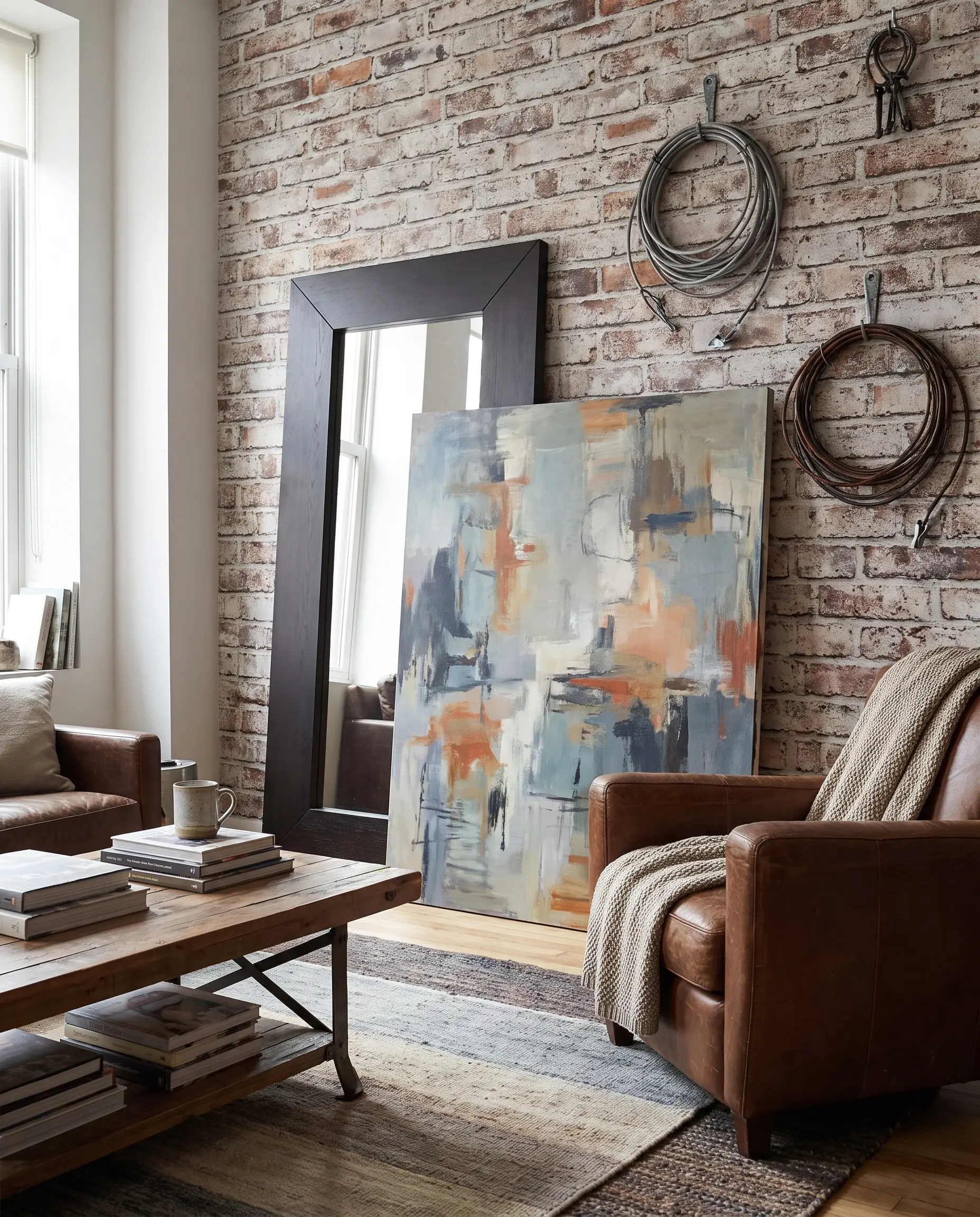
Hanging a massive canvas or a heavily framed mirror directly on the faux brick wall grounds the space while performing a critical optical trick. The large art piece hides massive sections of the pattern repeat, forcing the visible brick to look more organic and less like a printed factory roll.
- Vibe: Urban Art Studio
- Key Materials: Oversized abstract canvas, heavy structural picture wire, masonry anchors.
- Styling Pro-Tip: Lean a large floor mirror against the brick wall instead of hanging it to create a casual, lived-in loft atmosphere.
Integrate Baseboard and Crown Molding
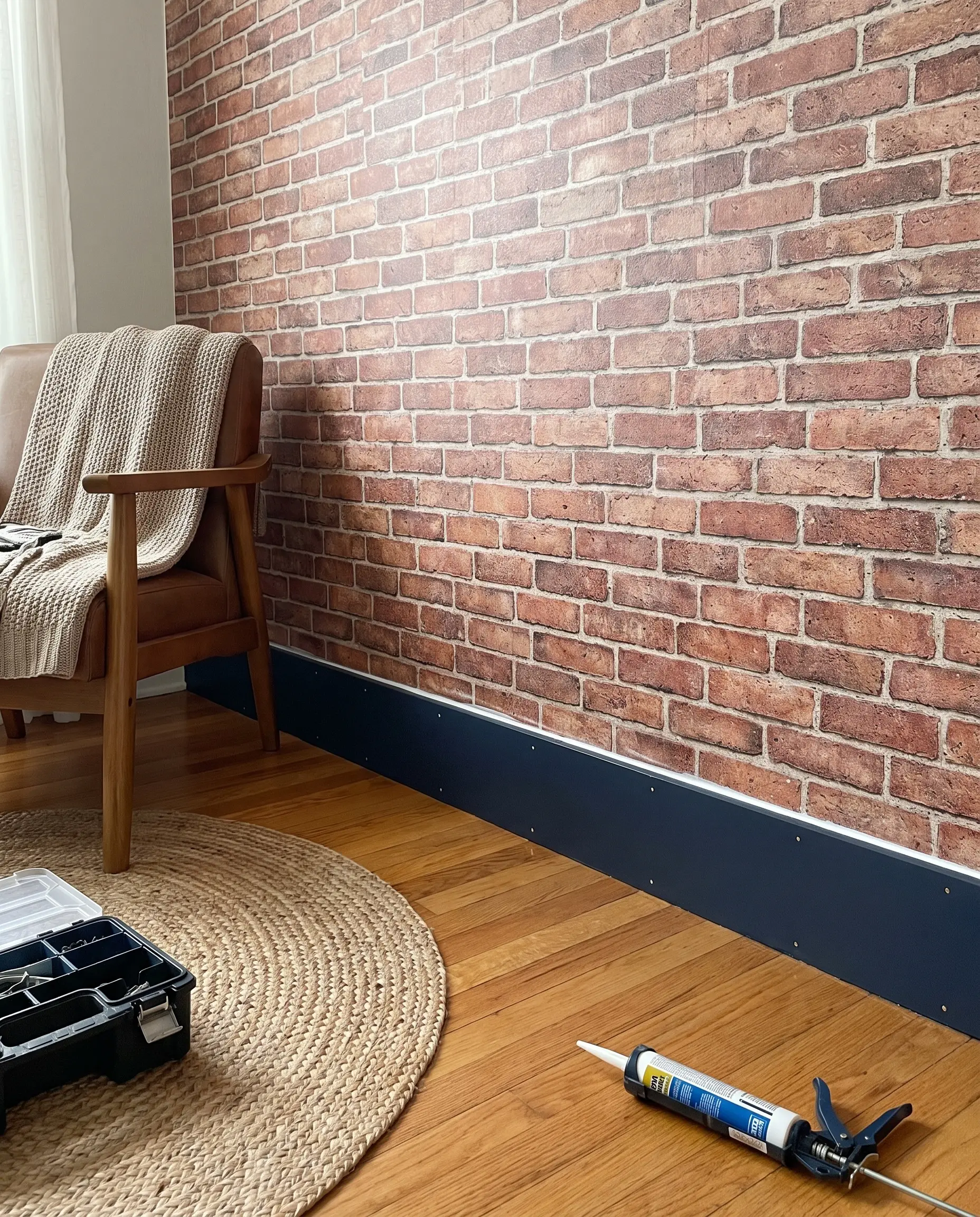
Never allow your brick wallpaper to float awkwardly above a raw floor line or stop abruptly at the ceiling. Re-installing chunky baseboards directly over the bottom edge of the paper grounds the “brick,” making it look as though the masonry was built directly into the home’s foundation.
- Vibe: Finished Millwork
- Key Materials: 5-inch or taller MDF baseboards, finishing nails, caulk.
- Styling Pro-Tip: Paint the baseboards a deep, contrasting color to frame the brick wall and draw the eye away from the bottom wallpaper seam.
Installation and Material Selection Hacks
Transitioning from visual styling to physical execution requires strict attention to material science. Sourcing the right product and prepping your surface dictates whether the final result looks like a historic loft or a cheap dorm room.
- Material Composition: Always verify the label says “Non-woven” or “3D PVC-free foam” rather than standard glossy vinyl.
- Pattern Match Type: Confirm the roll is listed as a “Straight Match” or “Drop Match” to ensure grout lines align.
- Finish Specification: The product description must explicitly state “Matte Finish” to avoid unnatural light glare.
- Overage Calculation: Purchase exactly 20% more paper than your square footage dictates to absorb pattern-matching waste.
Prioritize Matte, Heavily Embossed Textures
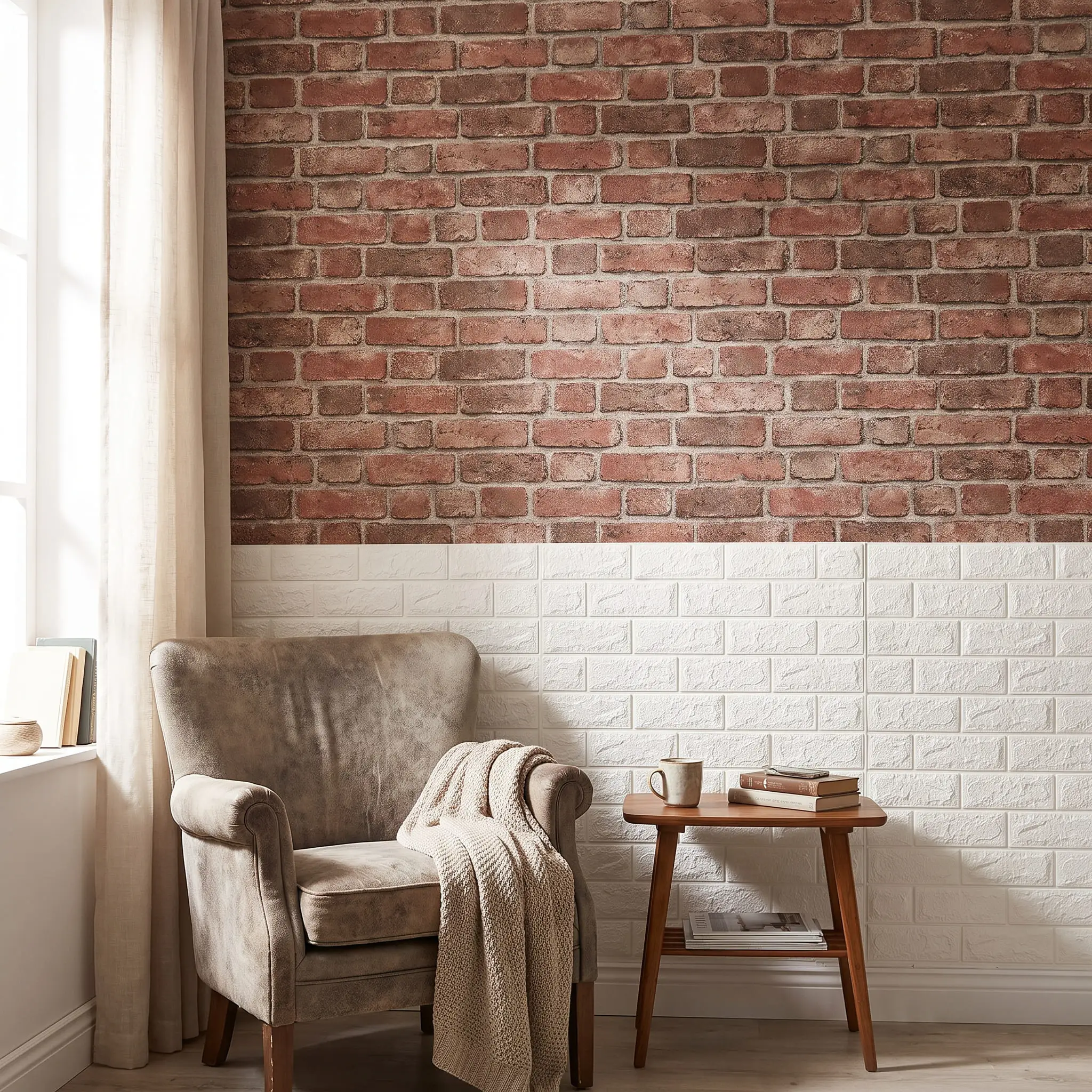
Glossy vinyl is the absolute enemy of realistic brick, bouncing light in a way that immediately reveals the flat surface. Look strictly for non-woven, matte-finish papers or 3D foam panels—like those from Rebel Walls or Art3D—that physically mimic the rough, light-absorbing grit of baked clay.
- Vibe: Tactile Realism
- Key Materials: Rebel Walls non-woven brick murals, Art3D textured foam panels.
- Styling Pro-Tip: Order a sample first and tape it to your wall; observe how your room’s natural light hits it at different times of the day to ensure zero glare.
Master the Grout Line Pattern Match
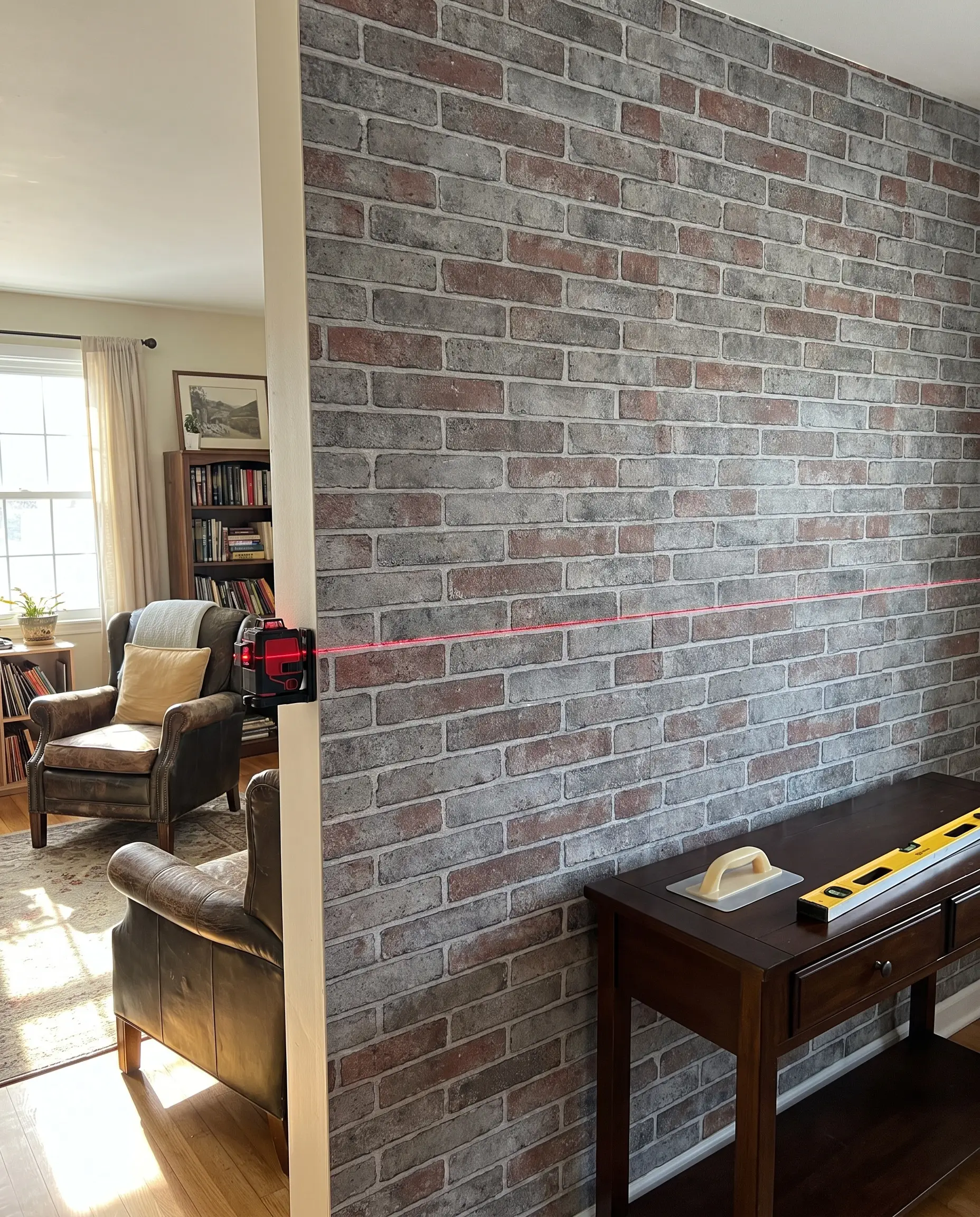
Brick wallpaper requires a flawless straight match or drop match during installation. If the horizontal grout lines do not perfectly align from one panel to the next, the architectural illusion is instantly and permanently broken.
- Vibe: Professional Precision
- Key Materials: Laser level, sharp utility knife, wallpaper smoothing tool.
- Styling Pro-Tip: Always match the pattern at eye level first, allowing any slight misalignments to fall near the floor or ceiling where they are less visible.
Prep the Wall Smoothness to Prevent Bubbling
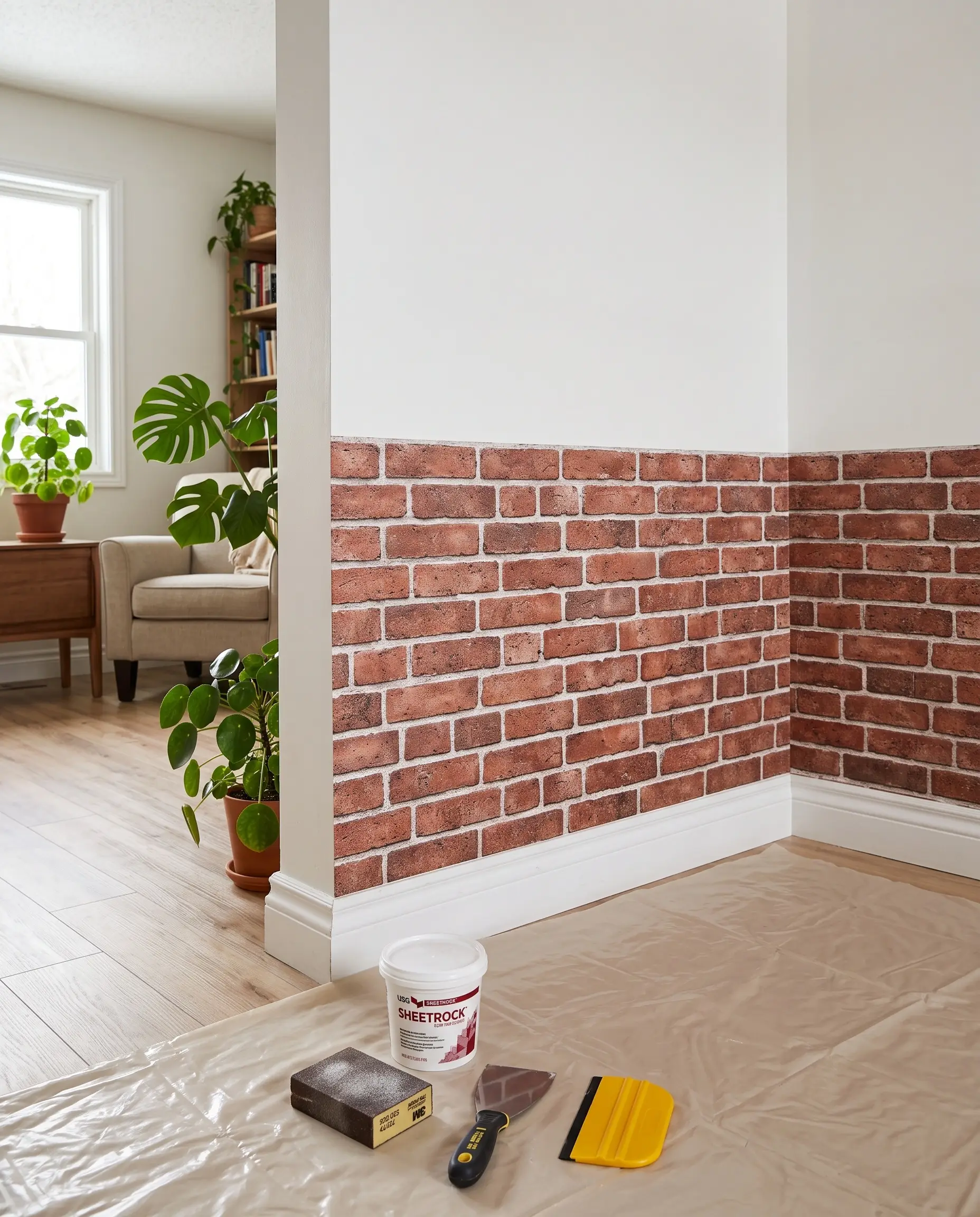
Ironically, to achieve the rough and rugged look of brick, the drywall underneath must be sanded perfectly smooth. Any rogue drywall bumps, old paint drips, or unpatched nail holes will distort the flat peel-and-stick paper, ruining the trompe l’œil effect with obvious air pockets.
- Vibe: Flawless Foundation
- Key Materials: Spackle, fine-grit sandpaper, tack cloth, wall primer.
- Styling Pro-Tip: Wash the wall with TSP (Trisodium Phosphate) and apply a specific wallpaper primer to ensure maximum adhesion without damaging the drywall upon future removal.
From Flat Paper to Architectural Statement
By prioritizing a heavy matte texture, deploying strategic directional lighting, and respecting the rules of structural placement, faux brick can easily fool even the most discerning eye. The secret lies entirely in how you integrate the paper into your room’s existing architectural plane. If you are nervous about tackling a massive living room, start small with a bookcase backing or a mudroom nook. Which wall are you planning to transform first?