The Architect’s Guide to Benjamin Moore Exterior Paint for the Modern Farmhouse
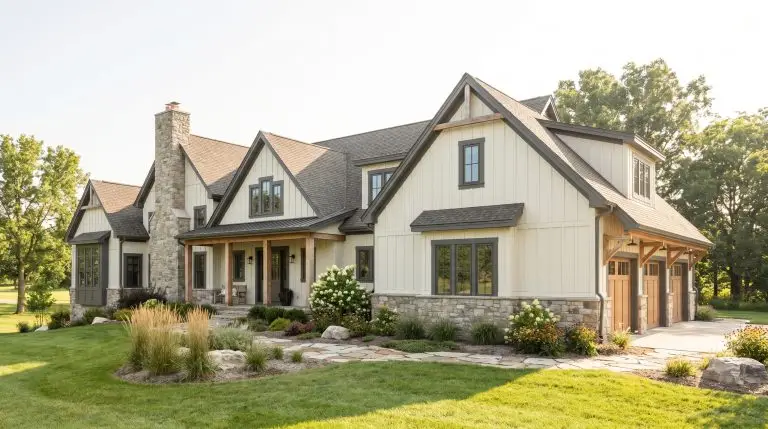
Choosing exterior paint is a high-stakes decision that dictates the entire architectural presence of your property. Homeowners and custom builders often experience intense color anxiety because natural sunlight washes out paint colors by at least two shades, turning an interior cream into a glaring exterior hazard. Finding the perfect benjamin moore modern farmhouse exterior colors requires looking past the stark, blinding whites of 2018 and embracing the “Modern Farmhouse 2.0” aesthetic—a sophisticated shift toward softer, earthier greiges and grounded charcoals.
Understanding Light Reflectance Value (LRV) is the single most critical step in executing this organic, high-end facade. We rely on data, directional light analysis, and undertone science to ensure your siding profiles and trim details look intentional rather than stark or cheap.
You must test large physical paint samples on all four sides of the house to observe how the shifting daylight interacts with the specific undertones.
The Science of Exterior Sunlight and LRV
Before selecting a single swatch of color for your board and batten, we must establish the physics of how natural light manipulates pigment. Light Reflectance Value (LRV) measures how much light a color reflects on a strict scale from 0 (absolute black) to 100 (pure white).
- The Blinding White Zone (LRV 85+): Colors in this range reflect so much sunlight that they obliterate architectural massing, making board and batten shadows disappear completely in direct sun.
- The Safe Exterior White Range (LRV 65–84): This is the sweet spot for modern farmhouse siding, providing enough depth to retain visual texture without feeling stark.
- The North-Facing Rule: Northern light casts cool, blue shadows, requiring warmer paint choices to prevent the exterior from looking sterile or icy.
- The South-Facing Rule: South-facing light provides intense, warm illumination that washes out color, demanding paints with deeper, earthier undertones to hold their ground.
The Core Whites for Board and Batten Siding
The main body of a modern farmhouse requires a white that possesses enough depth to not look like cheap primer in the noon sun. These four Benjamin Moore colors are the undisputed industry standards for adapting to varied lighting conditions.
Swiss Coffee (OC-45): The Sun-Drenched Standard
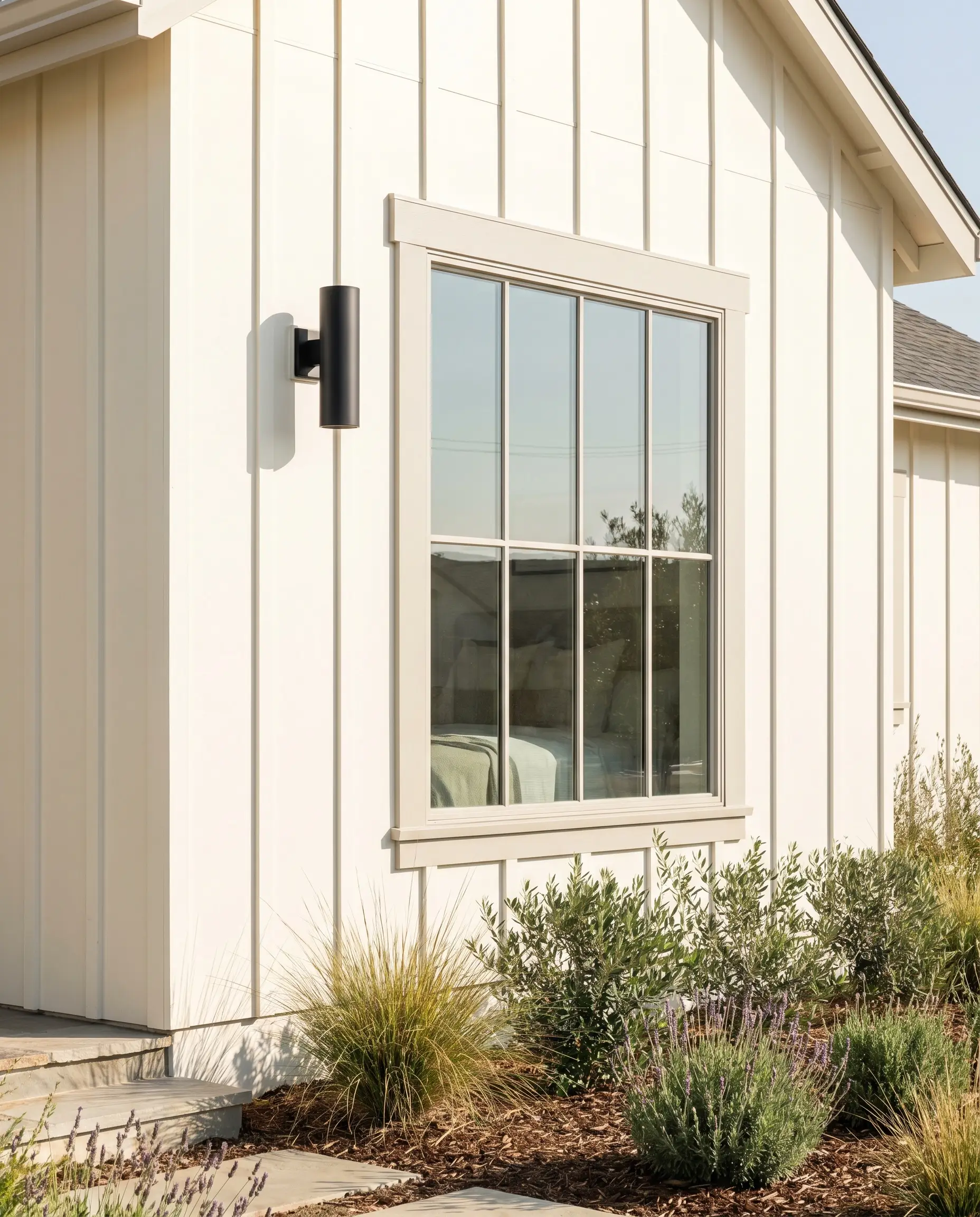
With an LRV of 81.91, this warm white serves as the backbone of the organic modern farmhouse aesthetic. Its creamy undertones successfully absorb intense Southern light, preventing the facade from looking stark while maintaining a crisp, clean architectural presence.
- Vibe: Sun-drenched, organic modern.
- Key Metric: LRV 81.91
- Perfect Pairing: Pale Oak trim for a low-contrast look, or Wrought Iron for a striking high-contrast finish.
White Dove (OC-17): The Universal Neutral
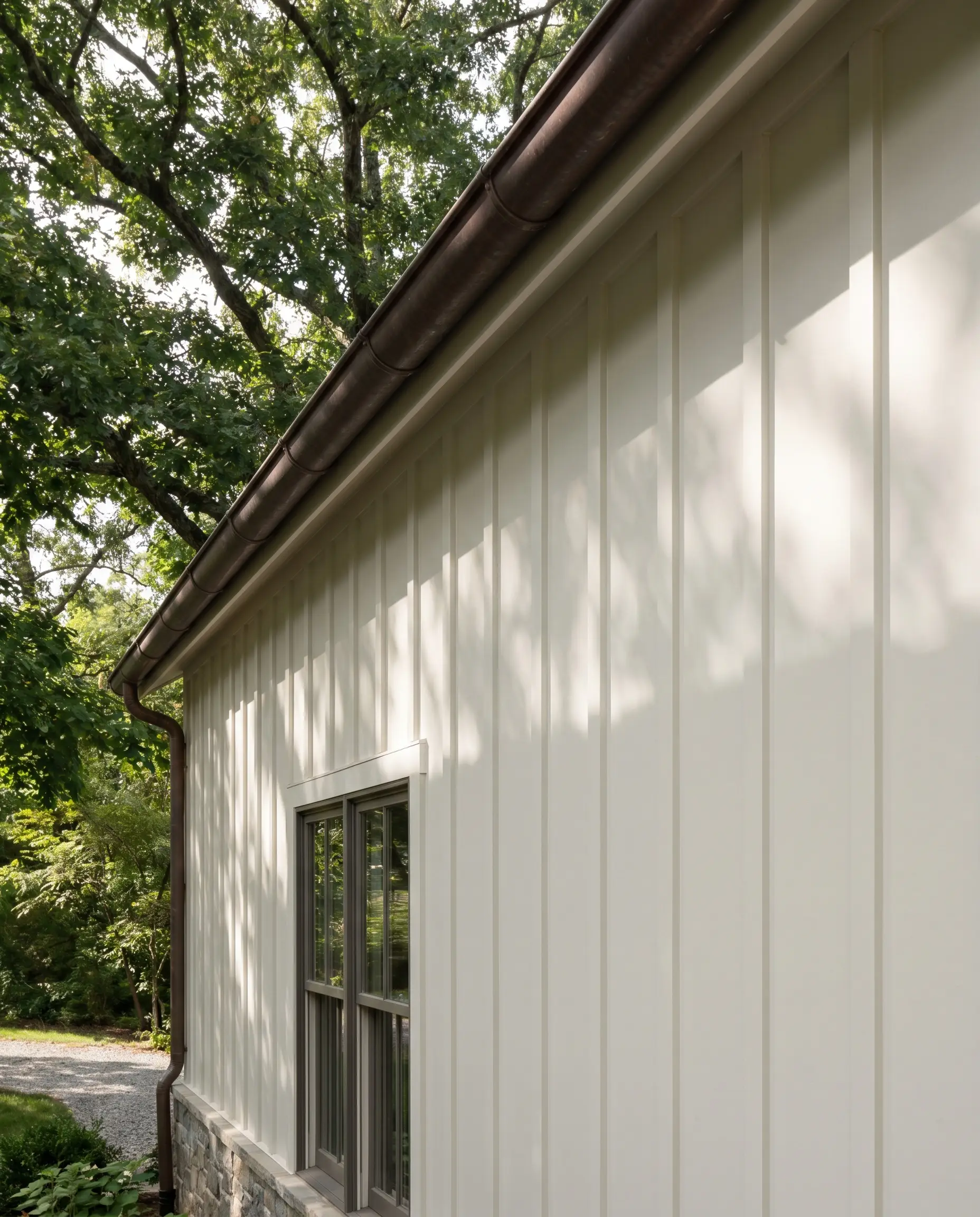
As a universally beloved soft neutral, this shade carries an LRV of 83.16 and features a slight greige undertone that grounds the home. It performs exceptionally well in standard, mixed lighting conditions where a balanced, traditional white is required.
- Vibe: Universal, balanced neutral.
- Key Metric: LRV 83.16
In heavy shade or on heavily wooded, North-facing lots, the subtle greige undertone can occasionally flash slightly yellow or green as it reflects surrounding foliage.
Directional Light Warning
Seapearl (961): The Coastal Farmhouse Bridge
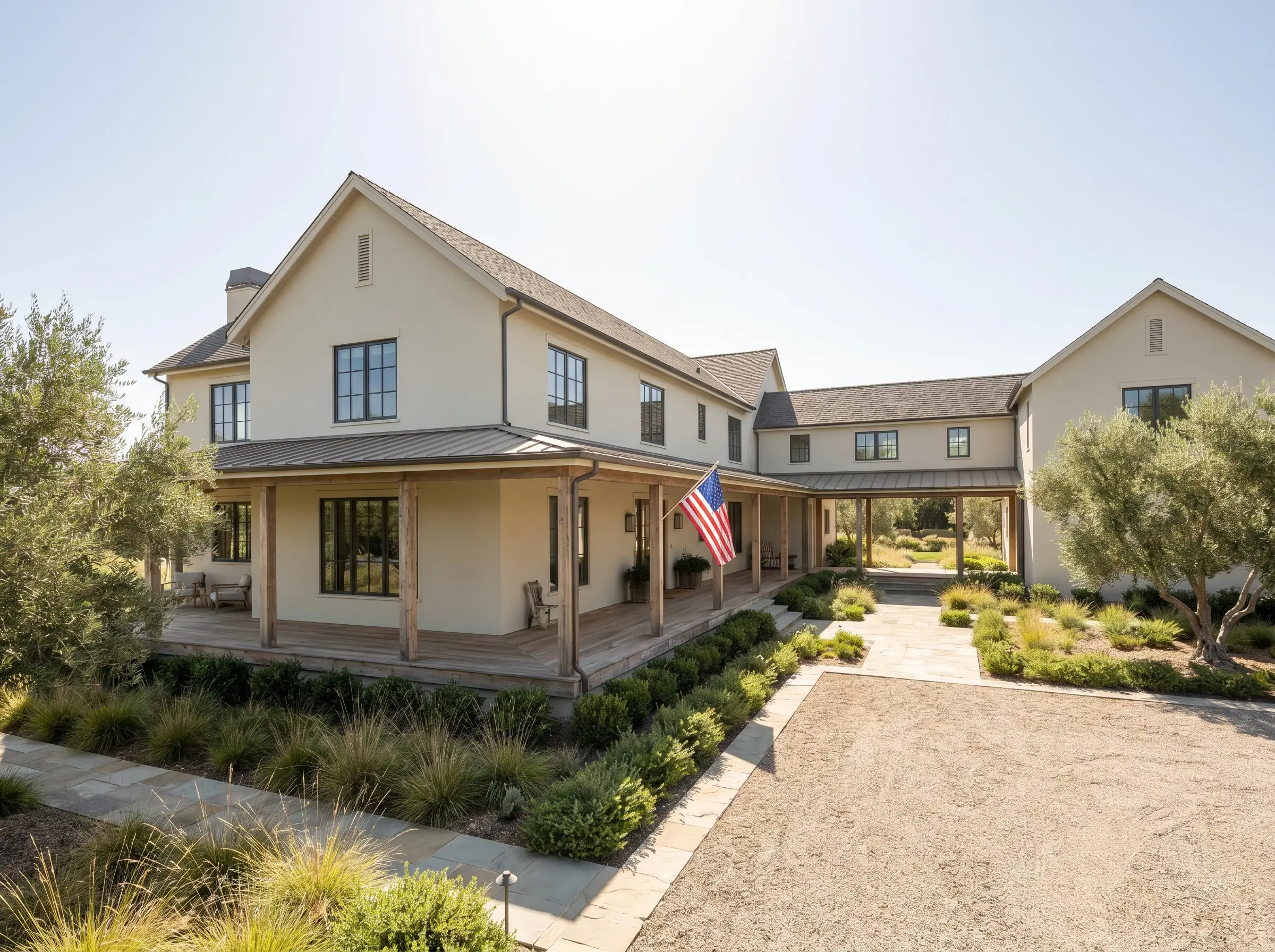
Carrying a slightly heavier LRV of 76.43, this shaded white holds its ground brilliantly outdoors without blinding the neighbors. It provides crucial visual weight and massing for large properties, making it an exceptional choice for estates heavily exposed to direct sun without mature tree cover.
- Vibe: Grounded, coastal transitional.
- Key Metric: LRV 76.43
- Architectural Application: Best applied to expansive, unshaded facades to anchor the property.
Pale Oak (OC-20): The Greige Alternative
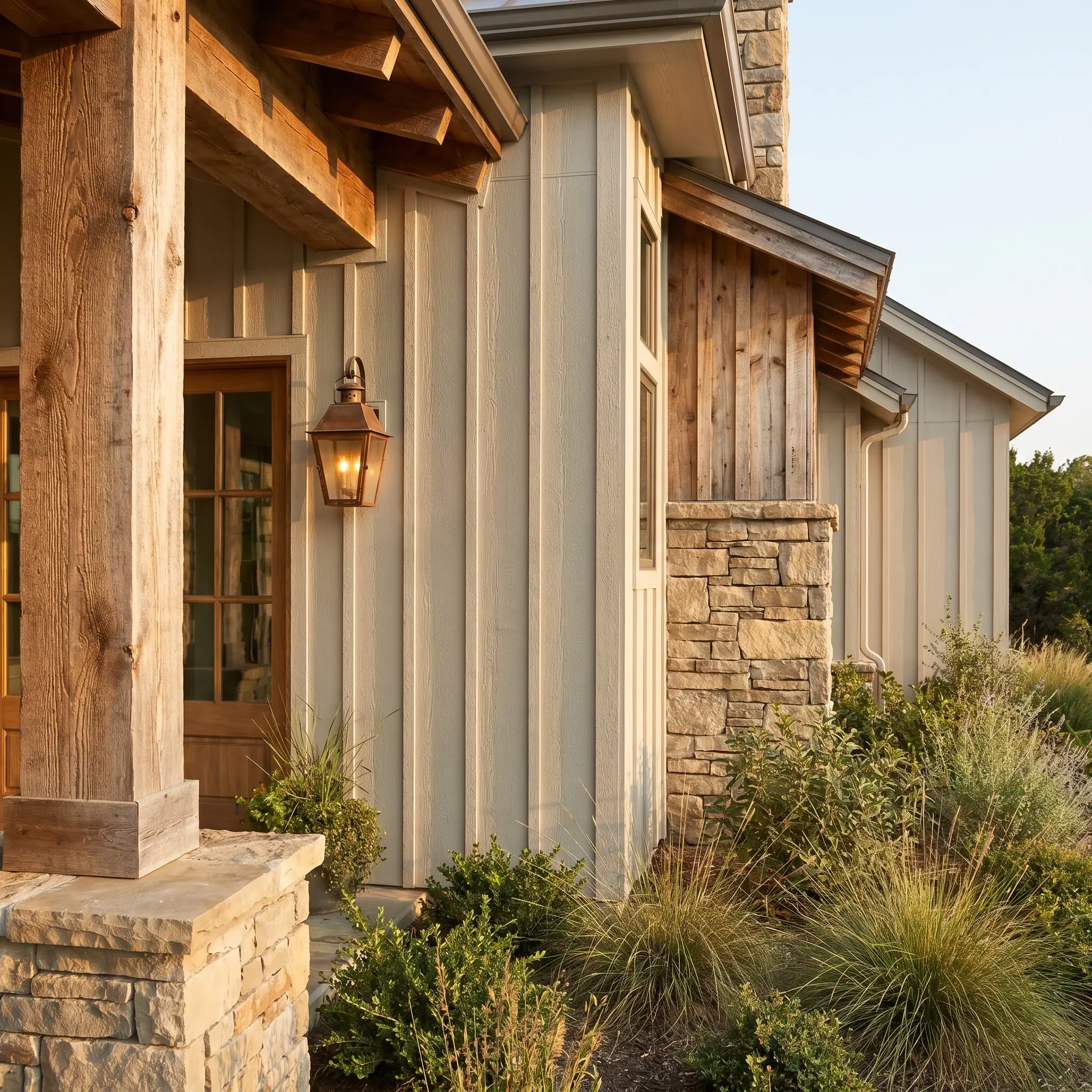
While often categorized as a greige indoors, its LRV of 68.64 allows it to read as a beautifully rich, earthy white on an exterior elevation. This is the definitive choice for bespoke custom builds aiming for an established, highly tactile look that interacts perfectly with raw materials.
- Vibe: Bespoke, earthy greige.
- Key Metric: LRV 68.64
- Material Match: Natural stone cladding and raw cedar accents.
High-Contrast Accents for Trim, Fascia, and Windows
High contrast is the defining hallmark of the modern farmhouse, but true jet black often looks harsh and inexpensive. The architectural secret to a refined facade is utilizing a “soft black” to bridge the contrast ratio gracefully.
Wrought Iron (2124-10): The Industry Secret Black
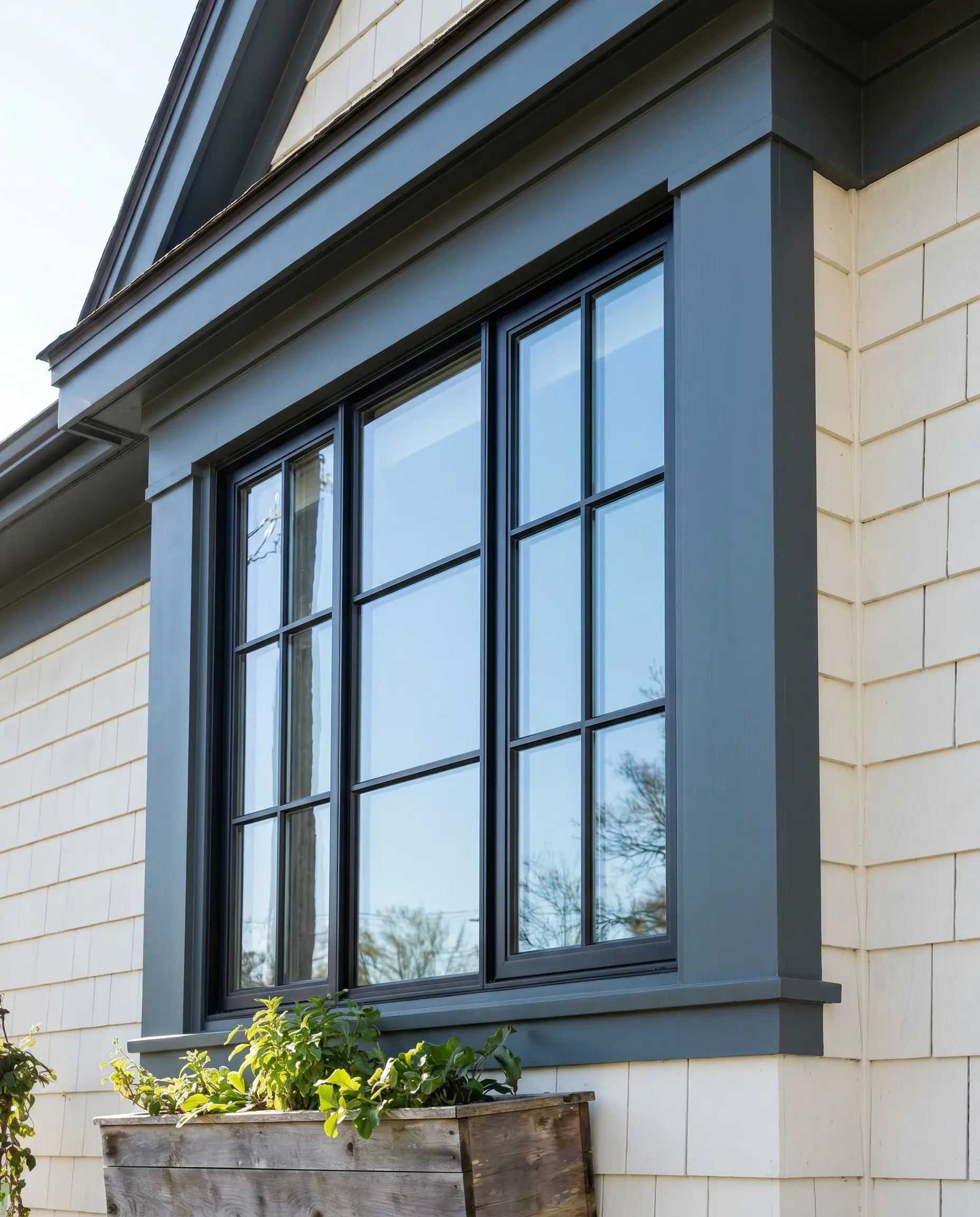
This sophisticated shade bridges the gap perfectly between classic farmhouse styling and contemporary architecture. It features subtle navy and grey undertones that soften the contrast against white siding, avoiding the severity of standard black.
- Vibe: Softened, contemporary industrial.
- Key Metric: LRV 6.16
- Perfect Pairing: White Dove or Swiss Coffee siding.
Kendall Charcoal (HC-166): The Earthy Transition
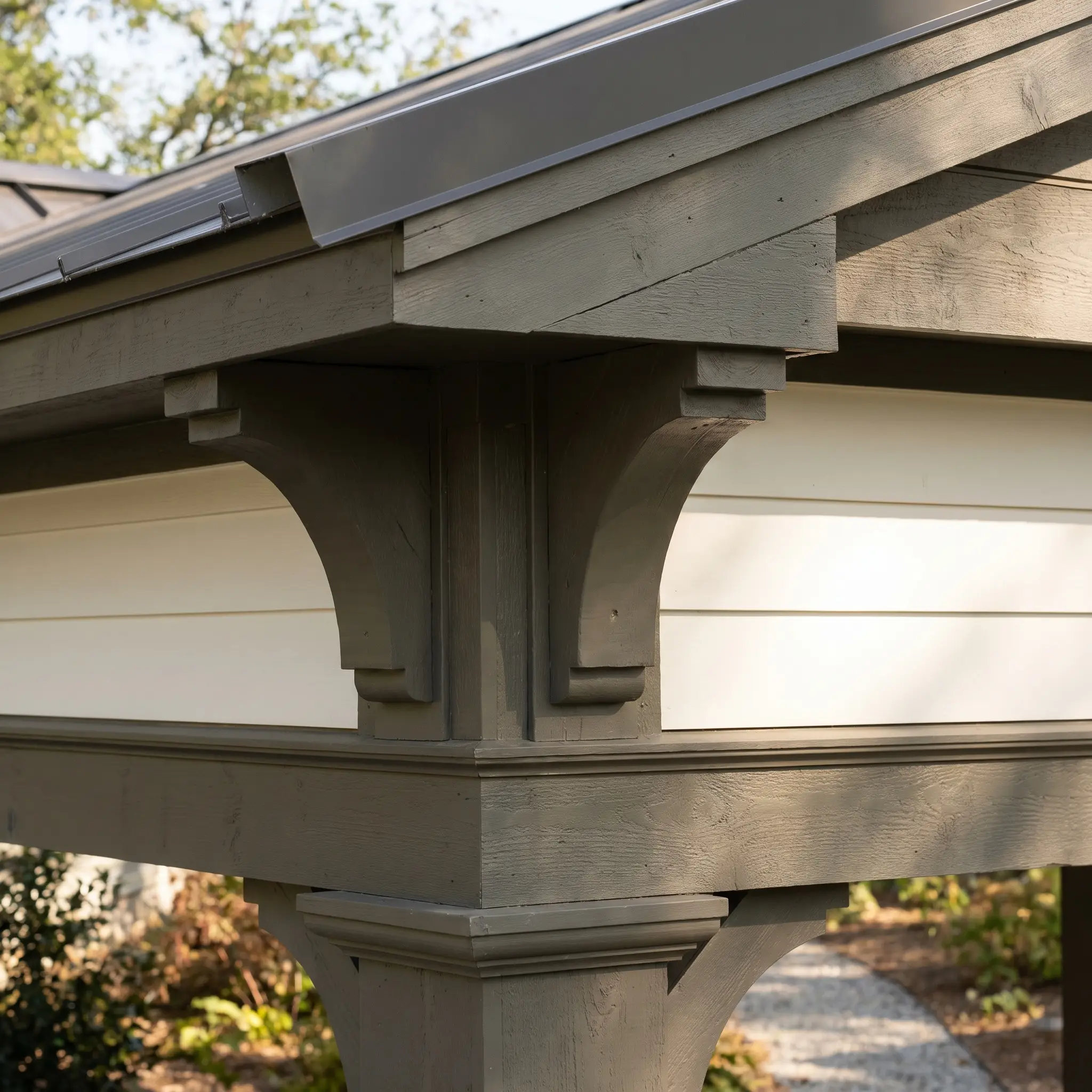
Offering a deep, rich grey with complex green and brown undertones, this color provides significant contrast without reading as black. It is the ideal earthy transition color for grounding structural accents and secondary outbuildings.
- Vibe: Earthy, grounding dark.
- Key Metric: LRV 12.9
- Best Architectural Elements: Corbels, Fascia boards, and window mullions.
Iron Mountain (2134-30): The Warm Dark
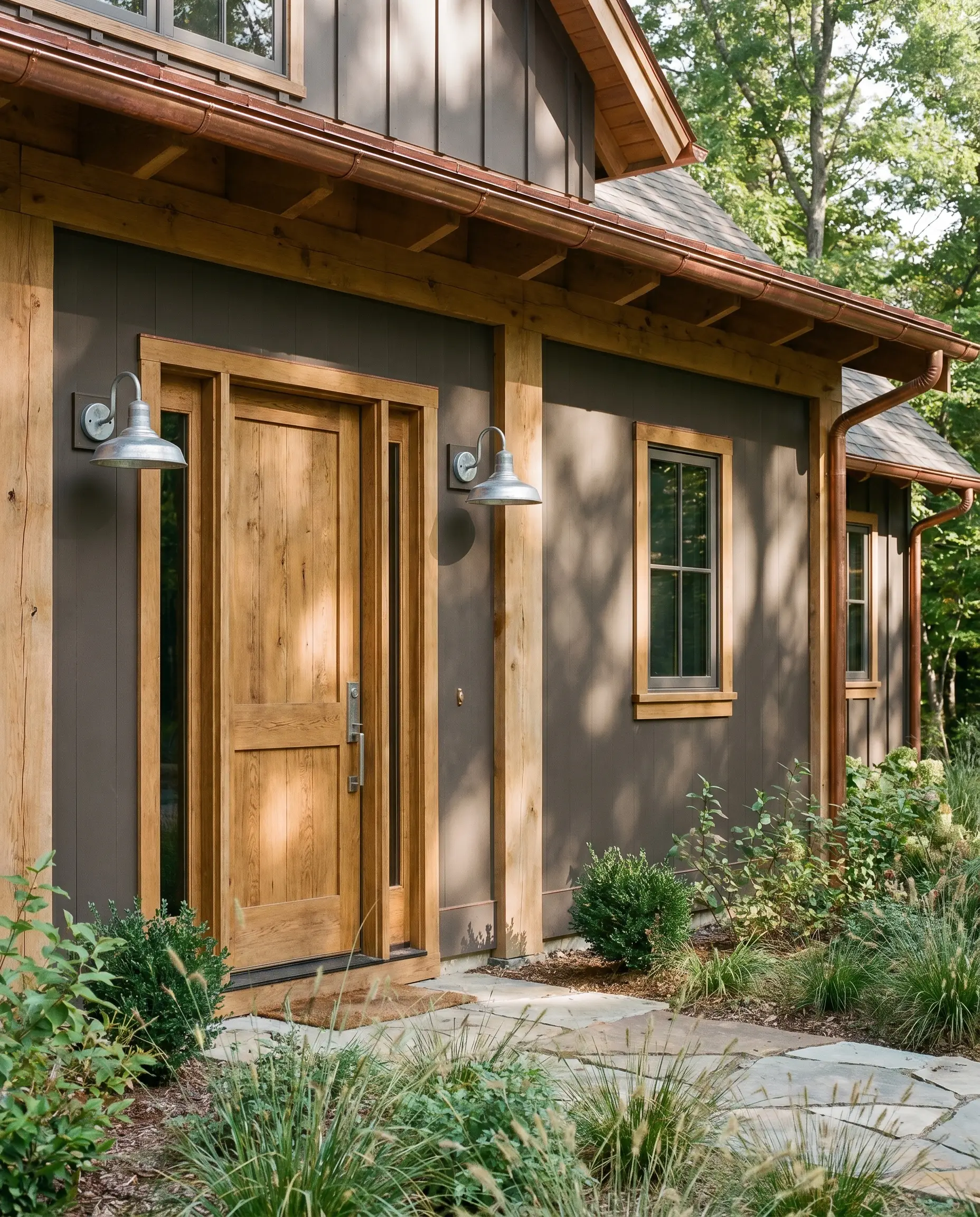
This warm, brown-leaning charcoal connects the structure to its natural landscaping far better than cooler, industrial greys. It excels at anchoring the house and creating a harmonious dialogue with natural wood architectural features.
- Vibe: Warm, historic charcoal.
- Key Metric: LRV 10.93
- Hardware/Material Callout: Galvanized steel fixtures and copper flashing.
Earthy Neutrals for Stucco or Shake Accents
Many modern farmhouses rely on mixed-material facades, pairing board and batten with stone, stucco, or cedar shake. These earthy neutrals provide the necessary textural transition to seamlessly tie those disparate materials together.
Revere Pewter (HC-172): The Grounding Element
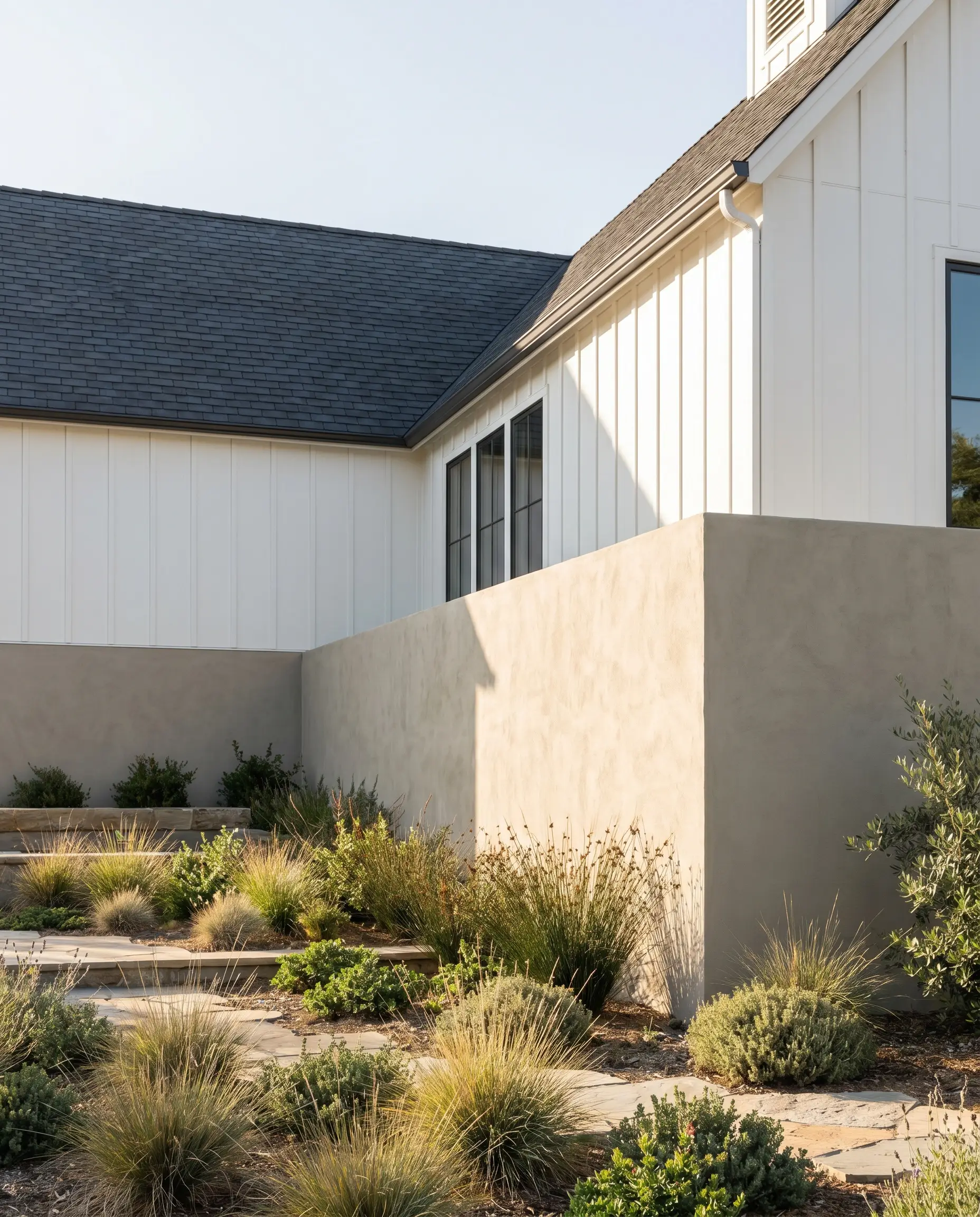
This iconic color washes out to a perfect, warm greige when exposed to direct sunlight. It acts as an incredible grounding element, gracefully bridging the visual gap between bright white siding and heavy, dark roofing materials.
- Vibe: Warm, historic greige.
- Key Metric: LRV 55.05
- Application Strategy: Deploy extensively on stucco bases or masonry retaining walls.
Briarwood (HC-175): The Muddy Brown-Grey
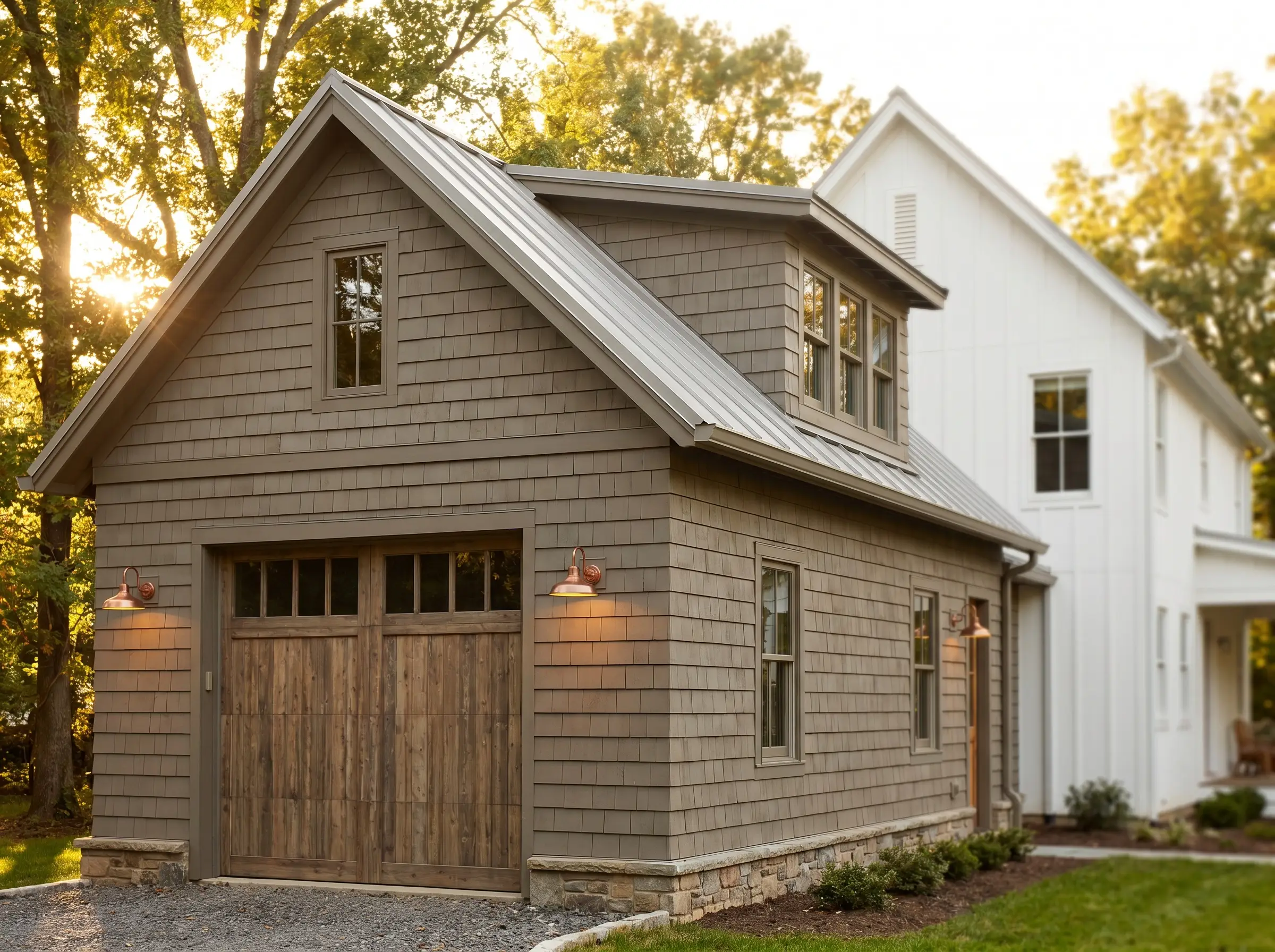
Introducing a deep, rich neutral adds immediate historical depth to a modern build. When applied to large expanses, it effectively manages the visual massing of the property by distinguishing secondary structures from the primary residence.
- Vibe: Muddy, dimensional brown-grey.
- Key Metric: LRV 26.9
- Application Strategy: Contrast this visually against a stark white main house on detached garages, guest houses, or expanses of cedar shake.
Sag Harbor Gray (HC-95): The Historic Green-Grey
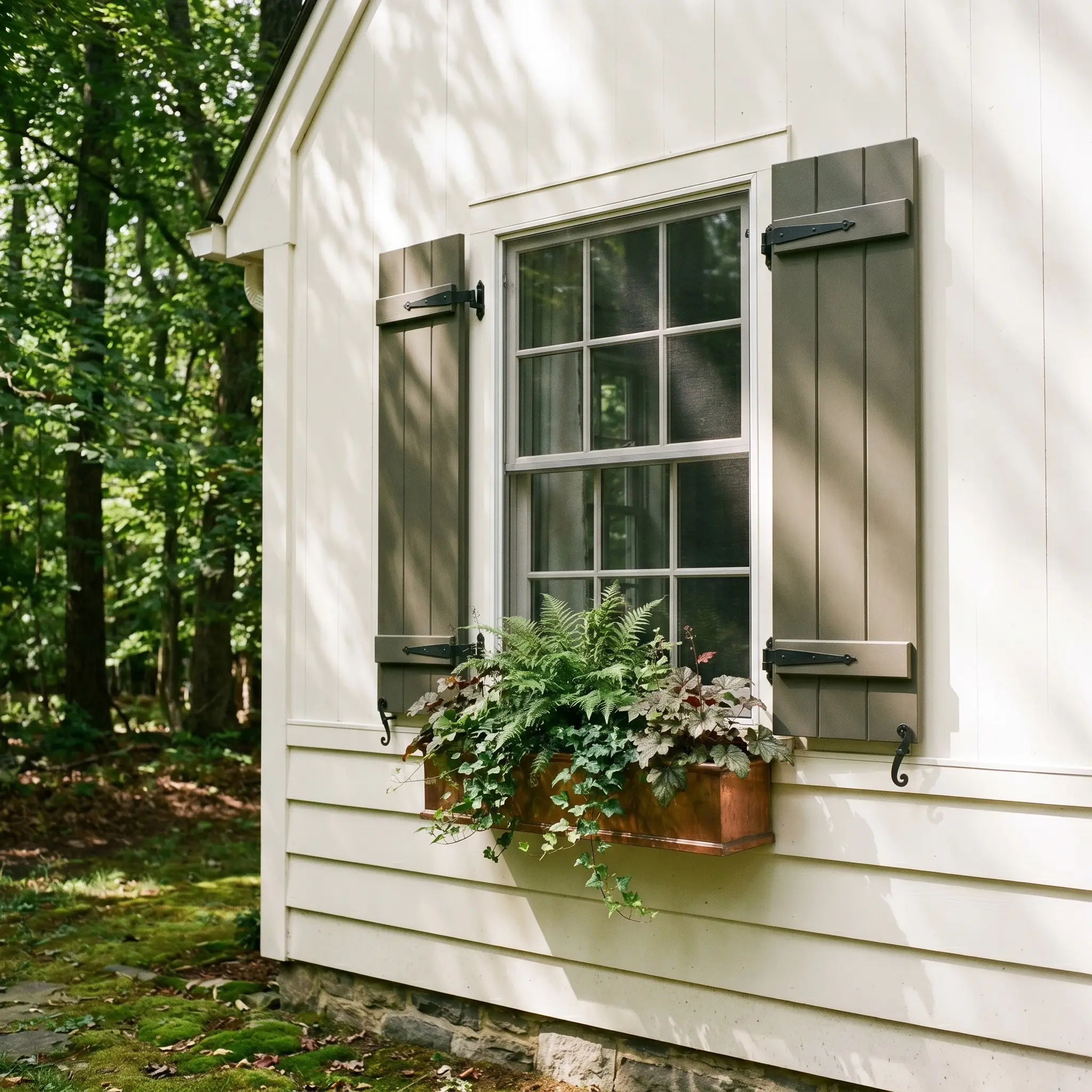
For homeowners looking to step away from the rigid black-and-white binary, this organic, nature-inspired accent ties beautifully into heavily wooded lots. It offers a sophisticated, historic sensibility to traditional exterior elements like shutters.
- Vibe: Organic, nature-inspired green-grey.
- Key Metric: LRV 43.66
The historic green undertone in this color will significantly amplify when applied in heavy, North-facing shade, leaning much greener than it appears on a physical swatch.
Directional Light Warning
Front Door Focal Points
The front door serves as the architectural handshake of the home. It is the one dedicated zone where modern farmhouse architecture invites a welcoming pop of saturated color.
Hale Navy (HC-154): The Coastal Classic
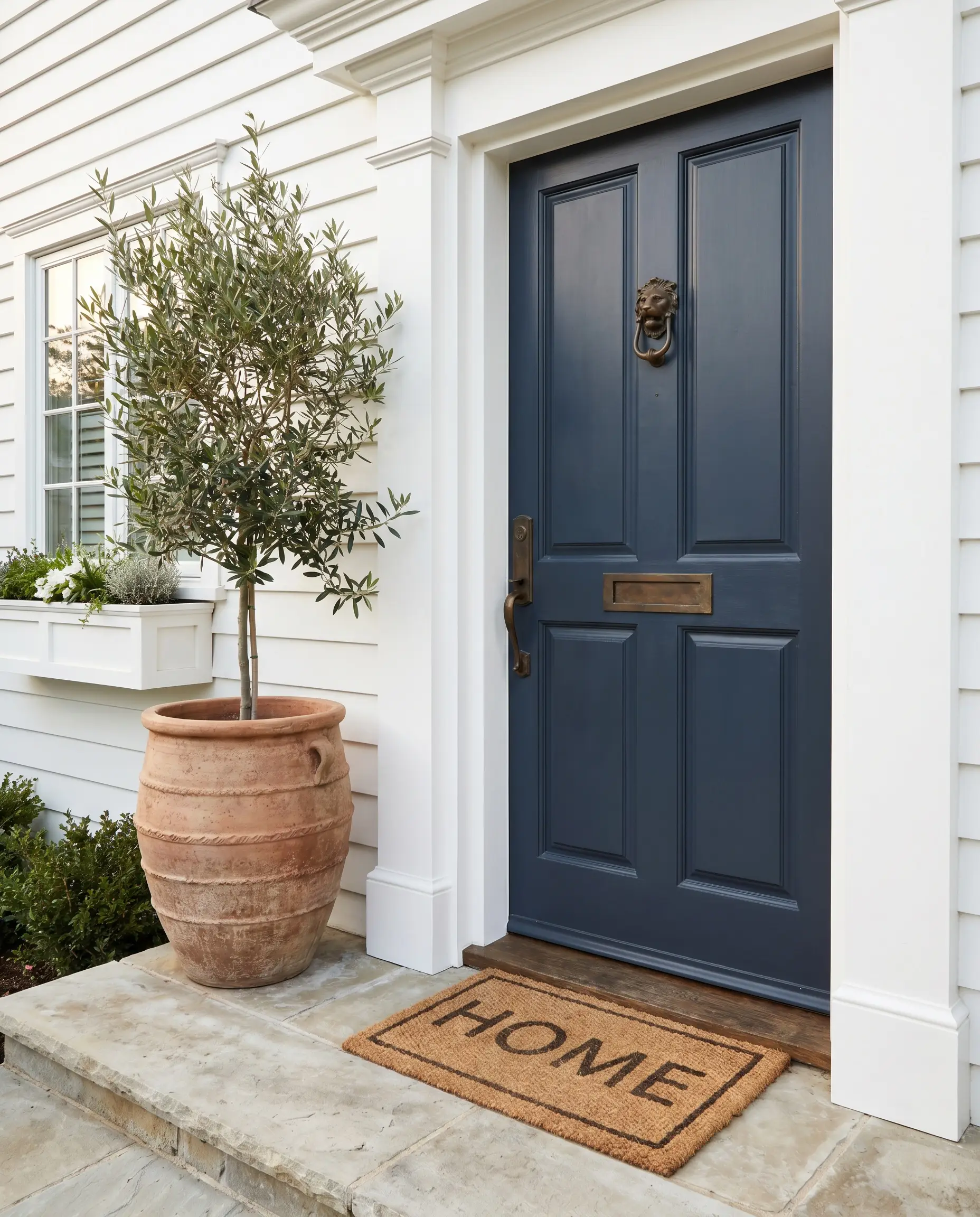
As the undisputed king of navy blue exterior doors, this shade is deeply saturated with just enough grey to prevent it from looking purely nautical. It delivers an immediate sense of coastal heritage and sophisticated restraint.
- Vibe: Sophisticated, coastal heritage.
- Key Metric: LRV 8.36
- Hardware Pairing: Unlacquered brass hardware for an aging, living patina.
Providence Olive (HC-98): Organic Modern Depth
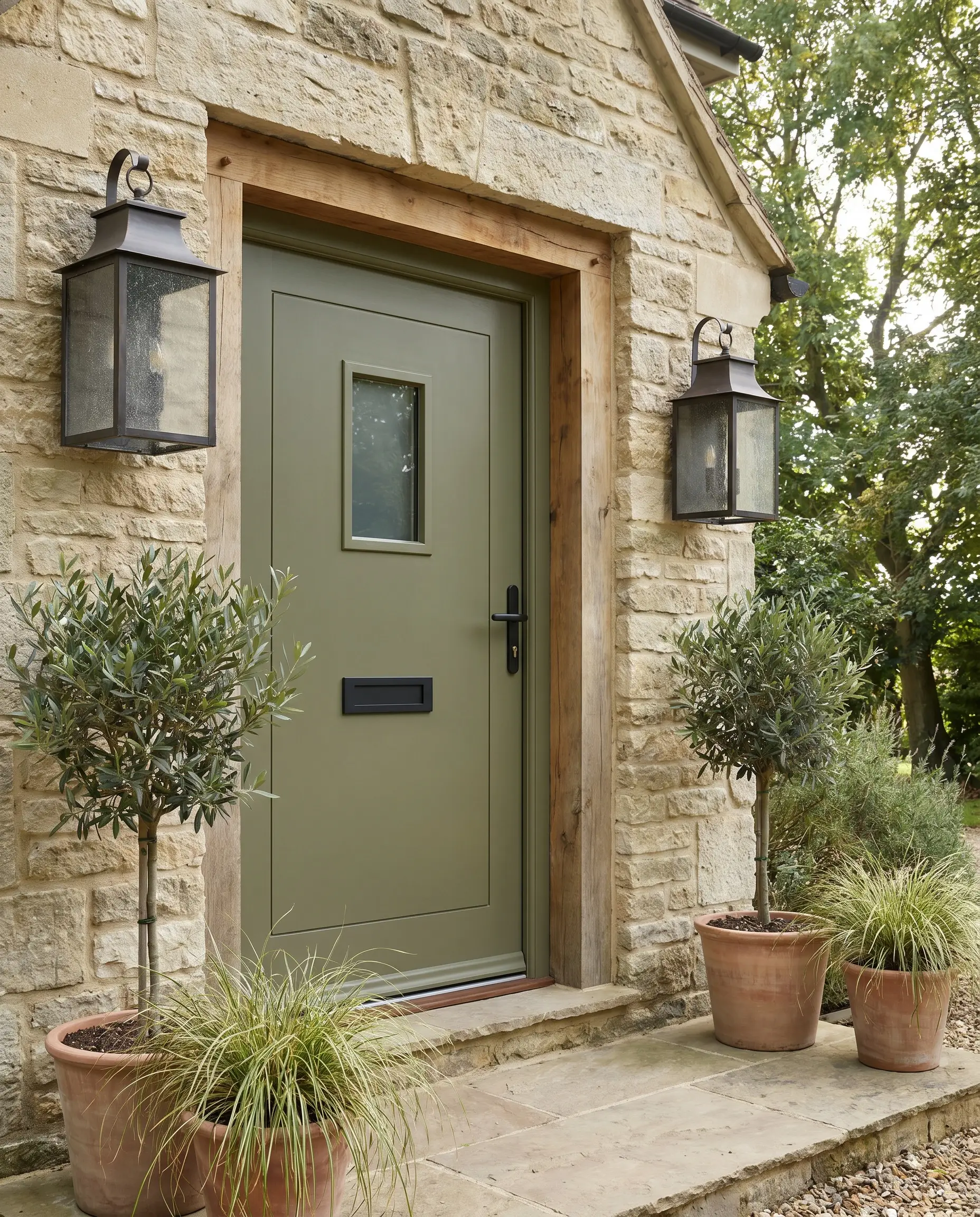
Speaking directly to the organic modern movement, this muted, sophisticated olive integrates flawlessly into natural landscapes. It looks incredible alongside raw structural elements like heavy timber framing and natural limestone porches.
- Vibe: Trend-forward, earthy green.
- Key Metric: LRV 22.82
- Mandatory Finish: High-gloss or satin for maximum durability and wipeability.
Wythe Blue (HC-143): The Heritage Cyan
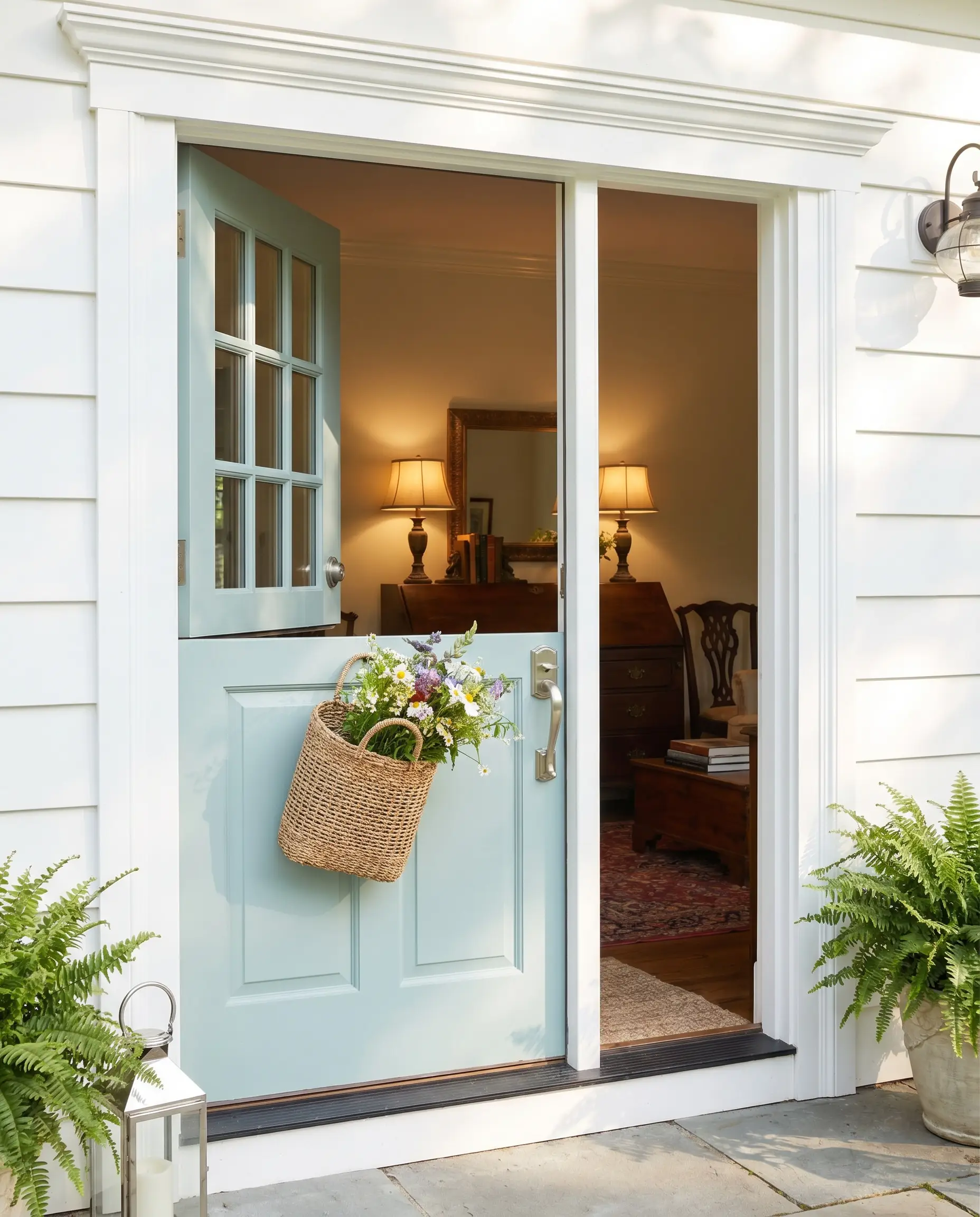
Adding a touch of curated Southern charm to a rigid, modern exterior, this historic cyan creates an incredibly welcoming psychological feeling of entry. It softens the facade and invites guests in with a relaxed, heritage energy.
- Vibe: Welcoming, curated Southern charm.
- Key Metric: LRV 48.18
- Best For: Dutch doors or secondary mudroom entryways.
Black Beauty (2128-10): The Grounded Entry
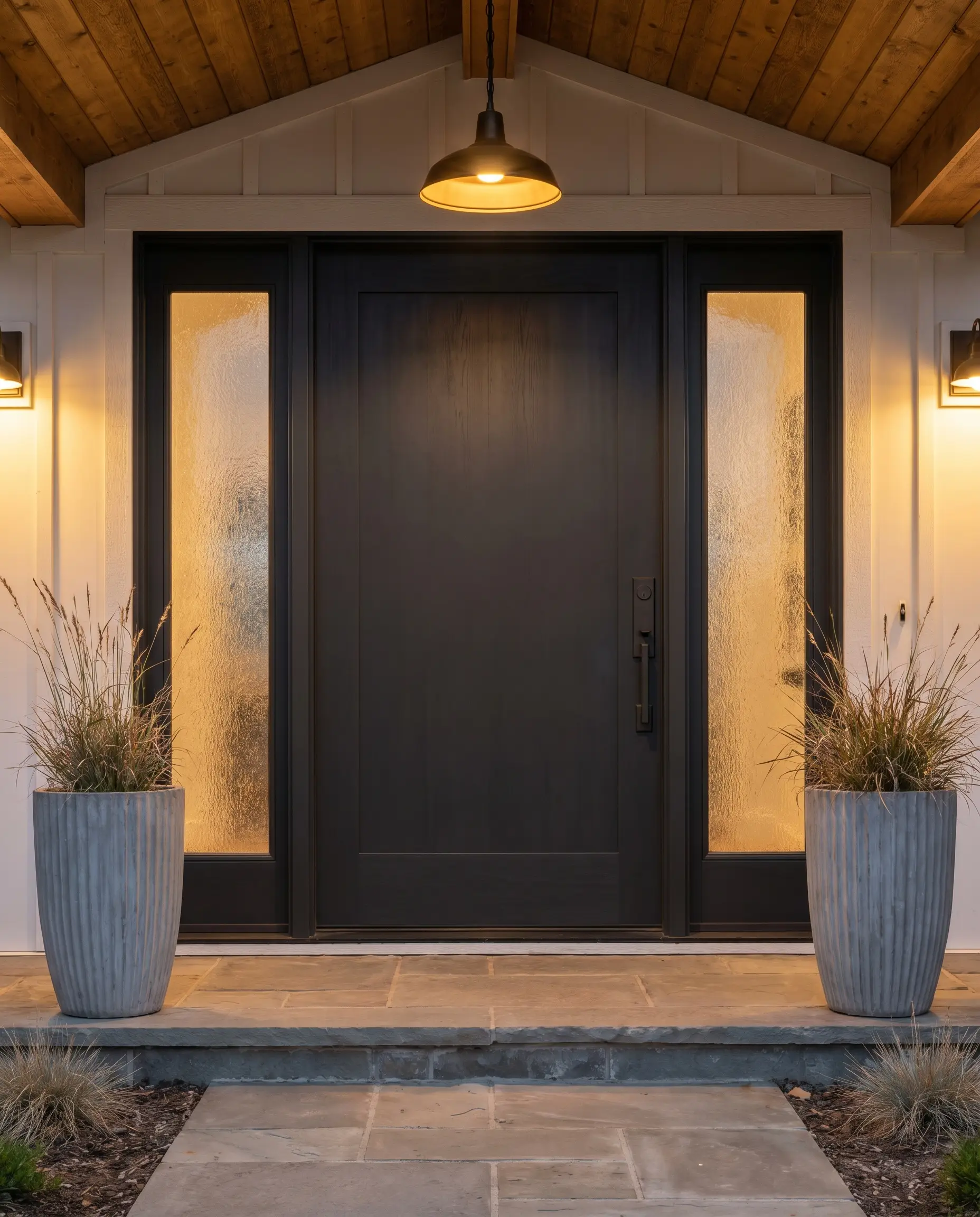
Unlike softer charcoals, this shade reads as a true black but carries distinct warm undertones that prevent the entryway from feeling icy or foreboding. It delivers a dramatic, grounded entrance for those who want a bold focal point without the harshness of jet black.
- Vibe: Grounded, dramatic warmth.
- Key Metric: LRV 3.26
- Styling Pro-Tip: Frame the entry with frosted or seeded glass side-lites to break up the dense block of color.
The Benjamin Moore Exterior Finish
Selecting the correct sheen is just as critical as the color itself, dictating both the longevity of the paint and how it interacts with the elements. Flat finishes hide siding imperfections but aggressively hold onto environmental dirt, making a strategic approach to finishes mandatory.
| Architectural Element | Recommended Finish | Why It Works |
|---|---|---|
| Board and Batten Siding | Low-Lustre | The absolute sweet spot. It hides structural imperfections while providing just enough sheen to resist dirt accumulation. |
| Trim and Fascia | Satin | Mandatory for horizontal planes to ensure water actively sheds off the surface, protecting the underlying wood from rot. |
| Front Doors | High-Gloss or Satin | Creates a distinct, jewel-box effect that draws the eye while offering a highly wipeable surface for heavy-traffic touchpoints. |
We mandate the use of the Benjamin Moore Aura Exterior line for all custom builds. Its proprietary color lock technology provides unparalleled UV fade resistance, ensuring that highly saturated accents and delicate greiges maintain their precise LRV over years of harsh solar exposure.
Final Walkthrough: Executing Your Exterior Color Palette
Executing a flawless exterior palette requires moving beyond digital screens and tiny paper swatches. You must purchase physical pint samples of your selected paints and apply them to large, standalone test boards—never paint directly onto your existing siding, as the current color will aggressively warp your perception of the new undertones.
Move these painted boards around the property, leaning them against both North and South-facing elevations. Observe them strictly at 8 AM, high noon, and 5 PM to understand exactly how the shifting UV light alters the contrast ratio. Once you have validated the performance of these colors in your specific micro-climate, consult your design-build contractor or visit a dedicated Benjamin Moore dealer to mix your final production gallons.