Step inside the new era of Art Deco. We are trading the predictable costume-party tropes for a sophisticated curation of channel-tufted velvets, exotic burl woods, and moody jewel tones. The modern Deco revival is defined entirely by tension—the precise, calculated friction between strict, masculine architectural geometry and plush, deeply feminine textiles. It is a style that demands confidence, taking cues from the streamlined brilliance of designers like Kelly Wearstler and Greg Natale, who prove that true vintage glamour translates flawlessly into contemporary livability.
Achieving this look is not about pasting metallic decals onto your walls or buying mass-produced furniture stamped with sunburst motifs. It requires a rigorous, curatorial eye for authentic, highly-figured materials. You must prioritize the heavy drape of matte mohair, the sharp reflection of polished nickel, and the diffused glow of frosted glass.
Prepare to transform your sleep space from a standard room into an unapologetic, deeply tactile retreat.
Foundational Architecture & Wall Treatments
Art Deco requires a strong, unapologetic architectural baseline. You cannot place a velvet bed in a plain white drywall box and expect true glamour; the walls themselves must participate in the design, acting as a highly structured shell for the soft furnishings to come.
Install Fluted Wood or Plaster Paneling
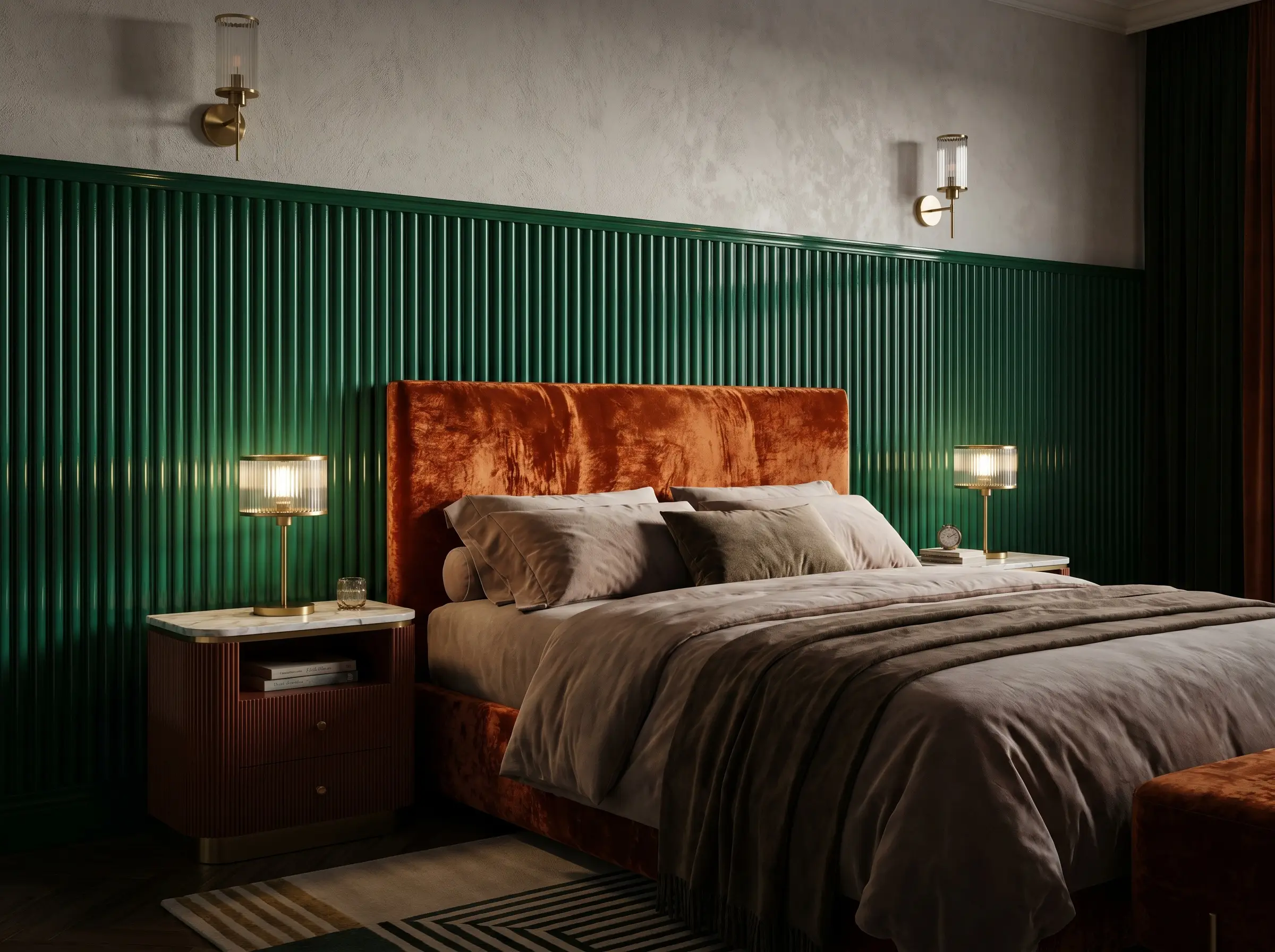
Fluted and reeded textures introduce a strict, rhythmic geometry to the walls, establishing an immediate architectural baseline. Installing half-wall or full-wall fluted paneling behind the bed creates a highly textural backdrop that catches ambient light beautifully.
- Vibe: Structured Opulence
- Key Materials: Plaster, Milled Wood
- Finish Recommendation: High-Gloss Enamel
Never pair a matte wall with a matte headboard. If the paneling is painted in a flat finish, your upholstered bed must feature a crushed, high-sheen fabric to maintain visual tension.
Tactile Check
Apply Tone-on-Tone Geometric Wallpaper
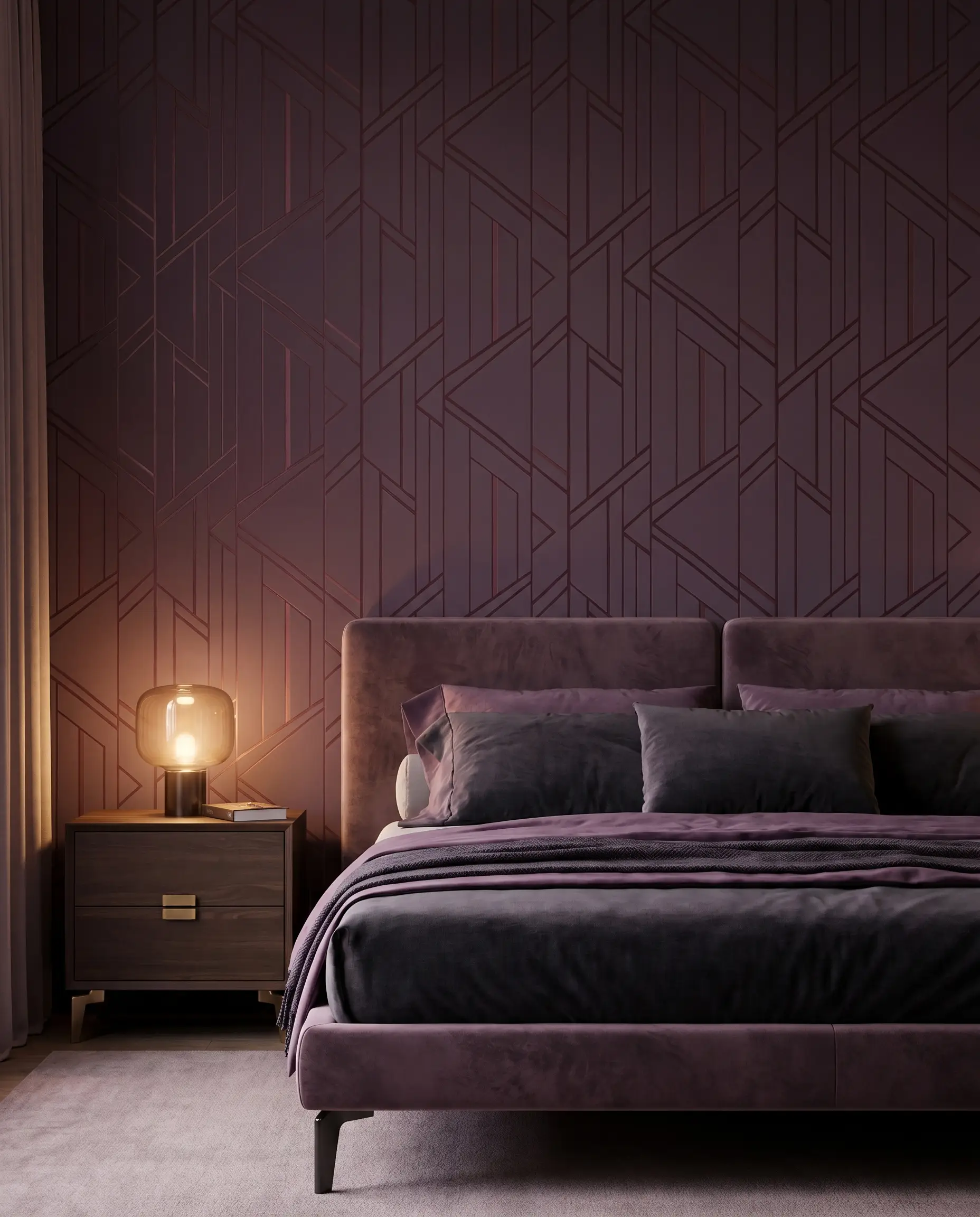
High-contrast, metallic-heavy wallpapers easily skew cheap, ruining the sophisticated atmosphere of a modern boudoir. Tone-on-tone geometric patterns provide necessary richness and depth without visually overwhelming the sleep space.
- Vibe: Restful Glamour
- Key Materials: Flocked Paper, Matte Metallic Ink
- Color Recommendation: Deep plum with maroon linework
To keep the room restful, select wallpapers where the background color and the geometric pattern share the exact same undertone, differing only slightly in saturation or sheen.
Designer Secret
Frame the Space with High-Contrast Black Trim
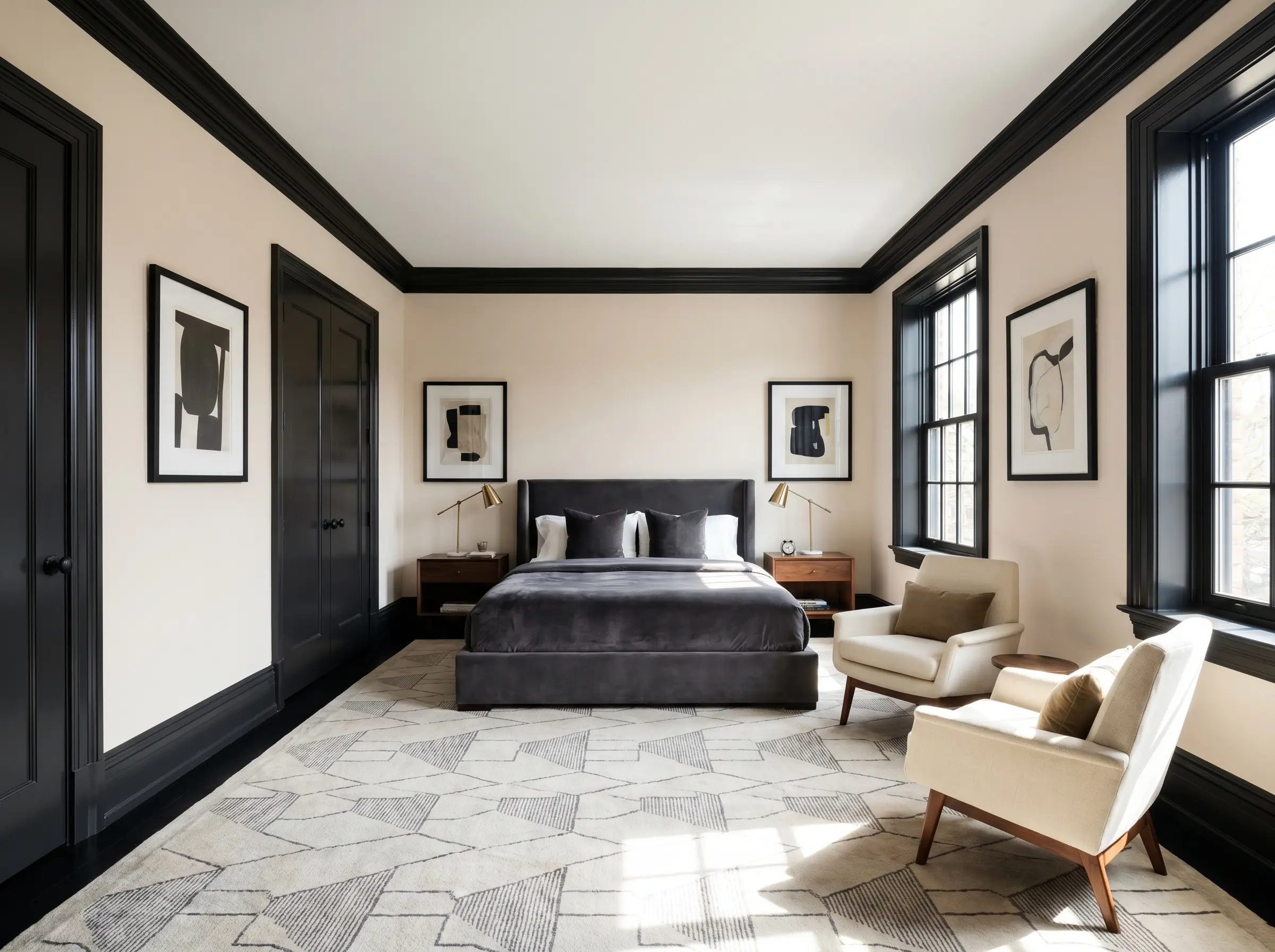
Art Deco relies heavily on sharp, definitive borders to outline spatial geometry. Painting baseboards, crown molding, and window casings in a stark, glossy black frames the room, providing instant architectural definition even against neutral walls.
- Vibe: Crisp & Tailored
- Key Materials: High-Gloss Enamel Paint
- Paint Recommendation: Farrow & Ball Pitch Black
- Styling Pro-Tip: Apply this technique to standard closet doors to transform them into bespoke architectural features.
Drench the Room in Moody Jewel Tones
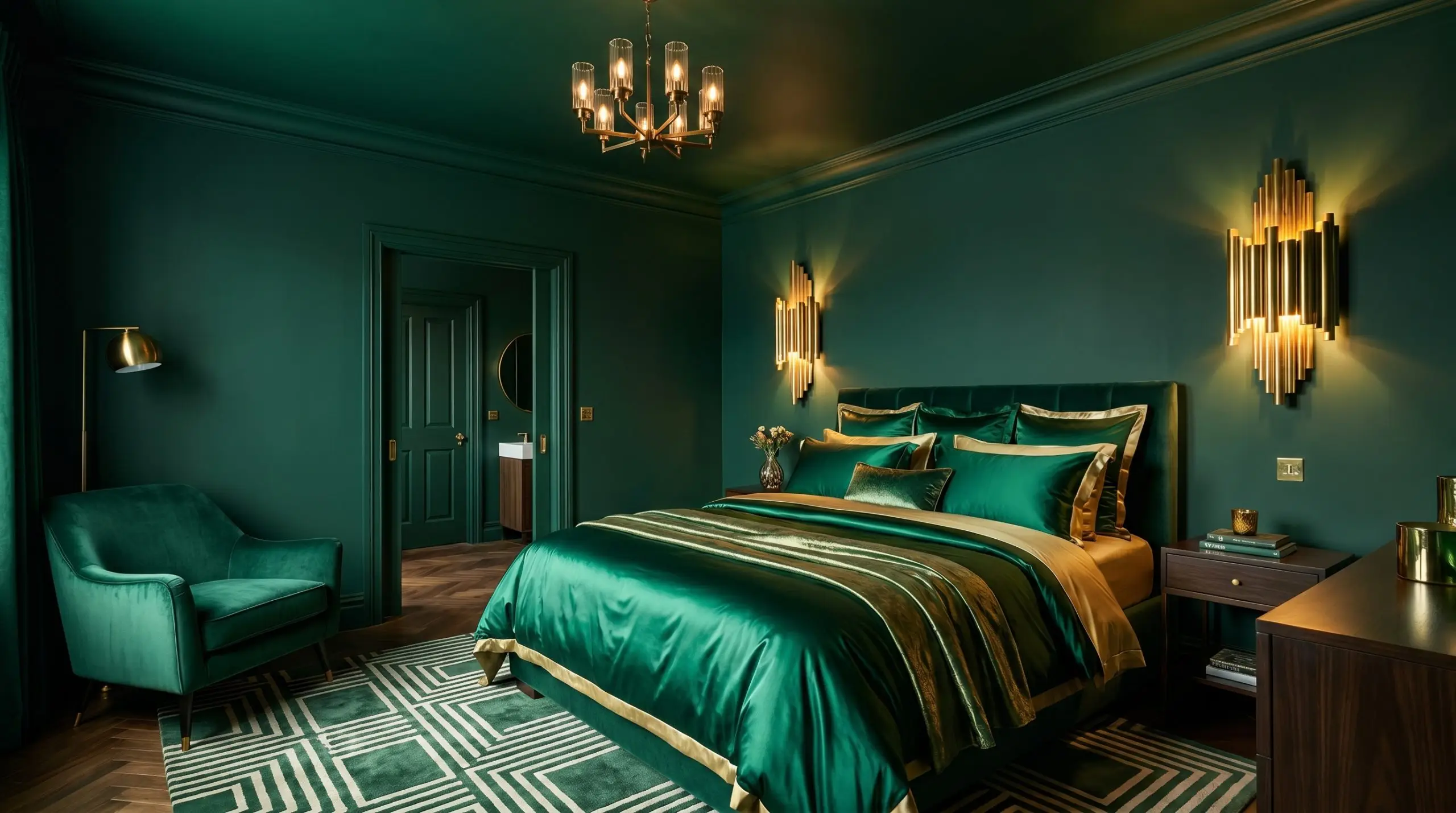
Saturated, moody hues are ideal for a boudoir, moving the palette far beyond the expected black and gold. Color drenching the walls, ceiling, and trim in a single rich shade creates an enveloping, luxurious atmosphere that feels undeniably high-end.
- Vibe: Moody & Enveloping
- Key Materials: Velvet-finish Interior Paint
- Paint Recommendation: Sherwin-Williams Cascades
- Color Match: Emerald green, lapis lazuli, deep oxblood
When color drenching a room in a dark jewel tone, ensure your bedding includes highly reflective materials like silk or satin to prevent the space from feeling like a black hole.
Tactile Check
The Bed and Tactile Textiles
The bed is the unapologetic anchor of the room and must look like a plush, structured destination. In a modern Deco space, this central piece demands exaggerated proportions and impeccably tailored fabrics.
Anchor with an Oversized Channel-Tufted Headboard
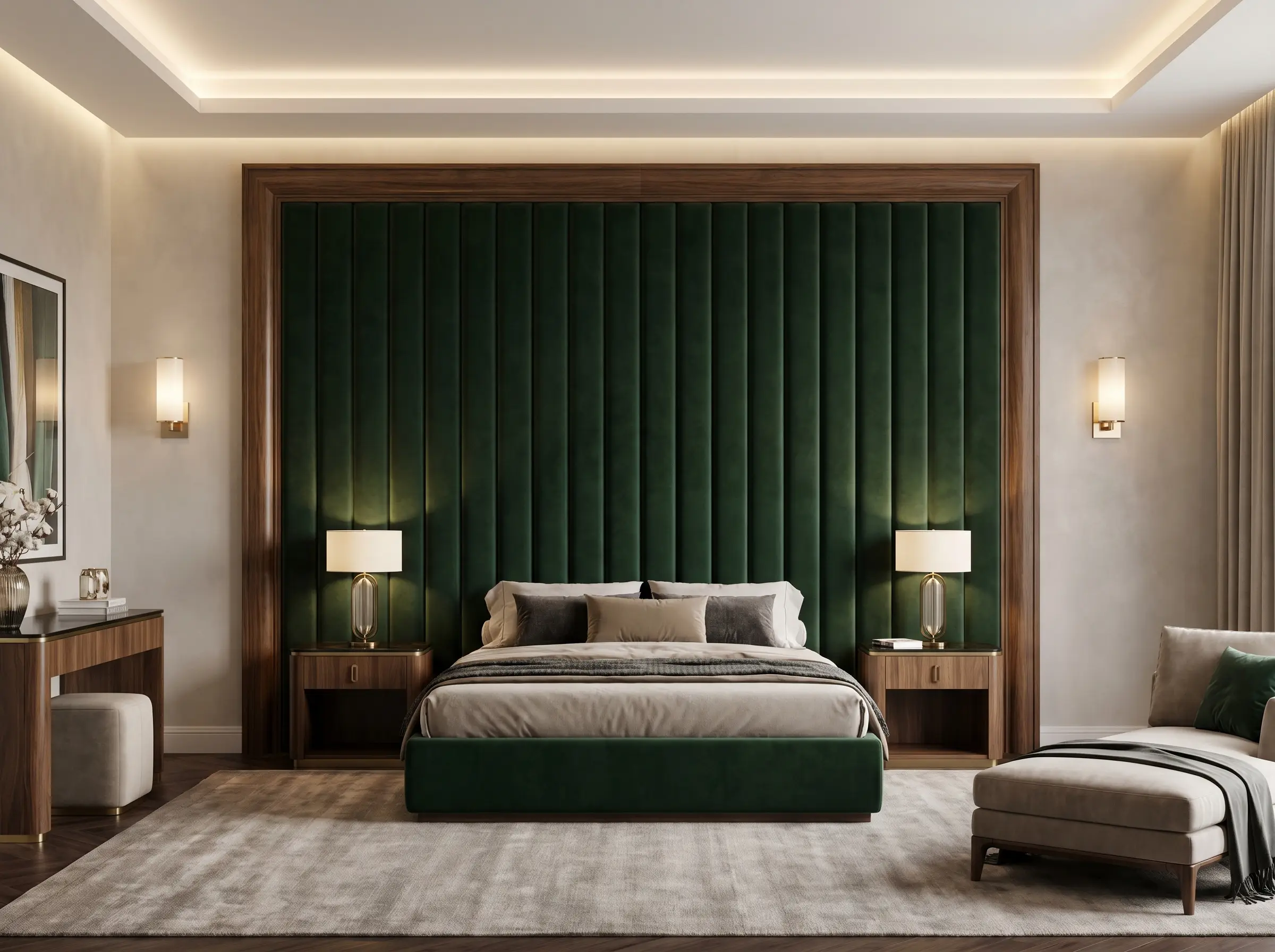
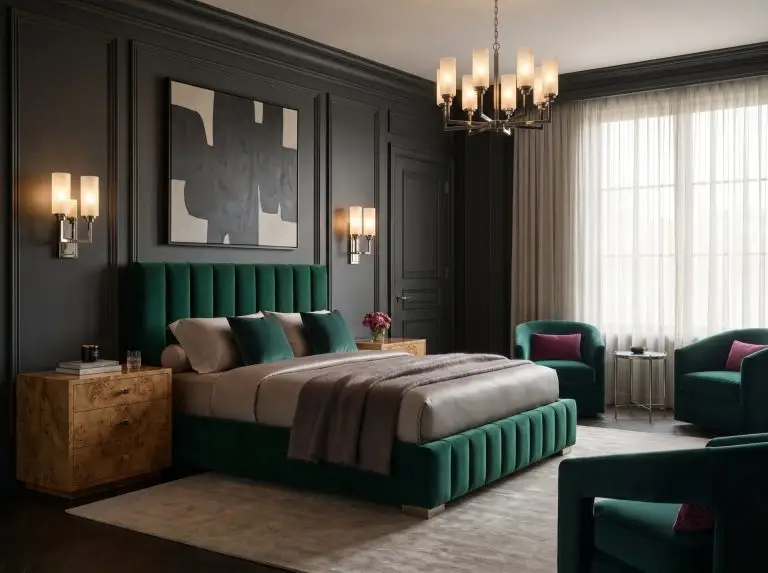
Diamond tufting belongs to the Victorian era; vertical or horizontal channel tufting is the undisputed hallmark of Deco styling. Look for exaggerated proportions, sourcing headboards that stretch wall-to-wall behind the nightstands or extend dramatically to the ceiling.
- Vibe: Dominant Luxury
- Key Materials: Performance Velvet, Hardwood Frame
- Styling Pro-Tip: Ensure the channels are deeply padded (at least three inches thick) to emphasize the strict geometric lines.
Embrace the Stepped-Arch Silhouette
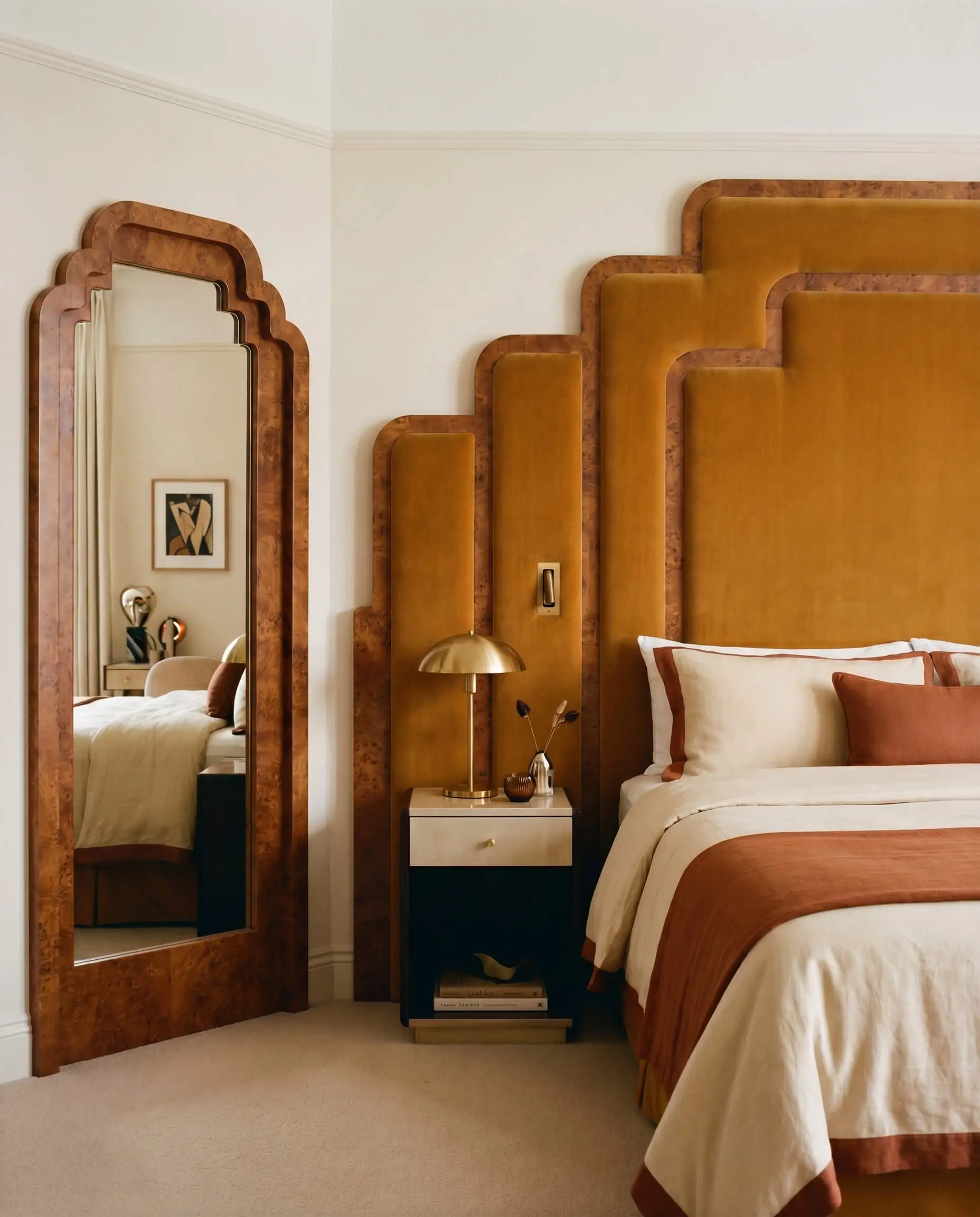
The stepped arch offers a perfect motif for custom bed surrounds, providing geometric rigidity alongside softened, rounded corners. This specific silhouette instantly visually upgrades the space, shifting away from standard rectangular frames into bespoke territory.
- Vibe: Architectural Grace
- Key Materials: Upholstered Mohair, Burl Wood borders
- Styling Pro-Tip: Mirror the stepped-arch motif in your vanity mirror or architectural niches to create a cohesive visual language.
Layer Crushed Velvet, Mohair, and Silk
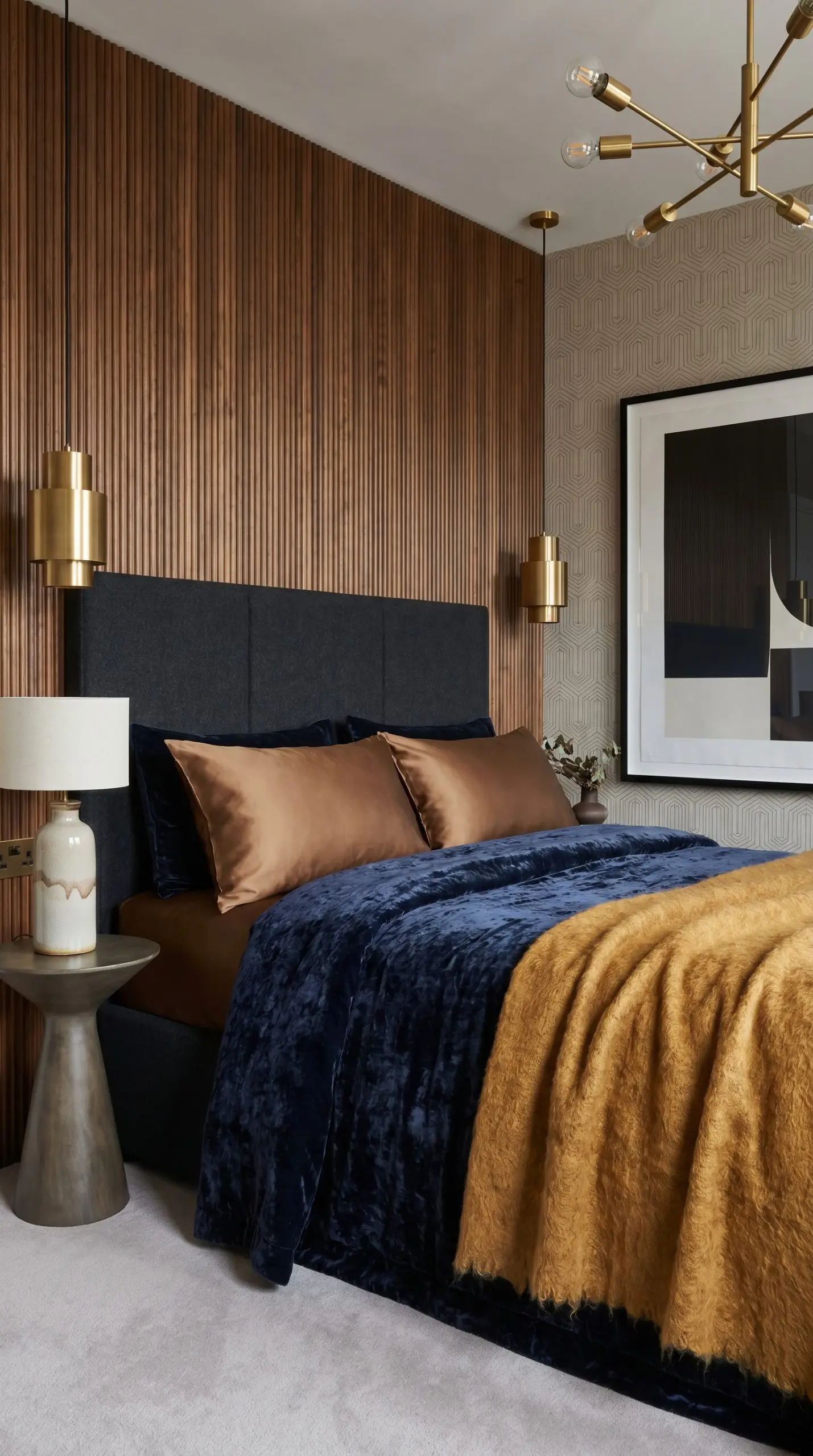
Deco styling requires a heavy, opulent hand with fabrics, demanding a strategic mix of sheens and textures. The friction between matte and high-shine textiles creates a deeply tactile environment that feels expensive and curated.
- Vibe: Sensual & Layered
- Base Layer: High-sheen silk pillowcases and sheets
- Mid Layer: Crushed velvet duvet cover
- Top Layer: Matte mohair throw blanket
If your headboard is upholstered in a smooth, matte fabric like wool or linen, force the contrast by dressing the bed entirely in high-shine silk and heavy, lustrous velvet.
Tactile Check
Finish with Contrast Piping
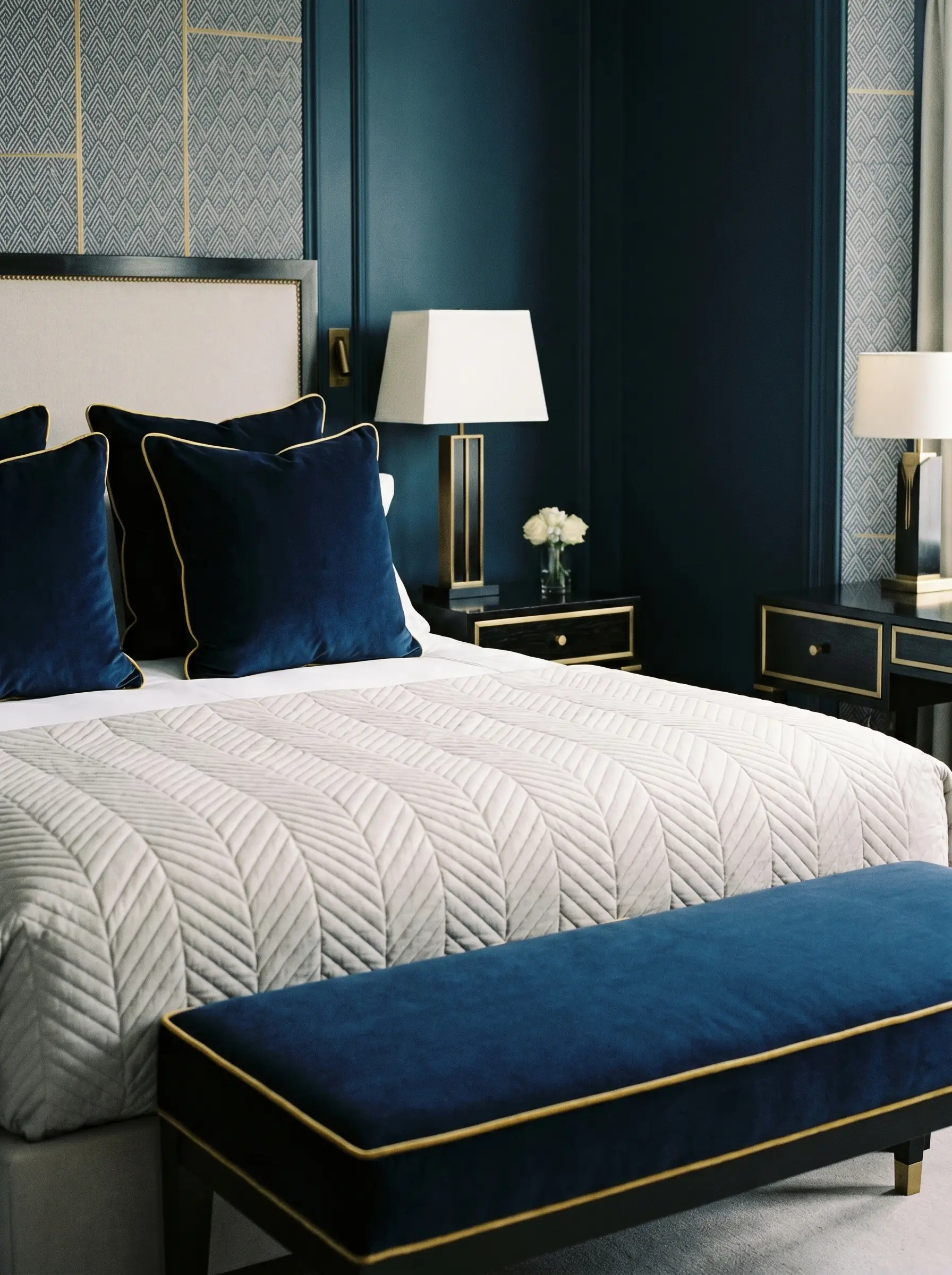
True bespoke luxury is always found in the tailoring and the micro-details. Adding contrasting welt or piping to pillows, shams, or an upholstered bench reinforces the sharp geometric borders necessary for this style.
- Vibe: Bespoke Tailoring
- Key Materials: Silk Welt, Velvet Base
- Styling Pro-Tip: Pair a heavy navy blue velvet pillow with a stark white or gold silk piped edge for maximum visual impact.
Architectural Lighting and Metallic Finishes
Lighting in this design ethos is never merely functional; it operates as structural art that dictates the entire mood of the room. Recessed lighting completely destroys this aesthetic, making layered, dramatic ambient light an absolute necessity.
Frame the Bed with Symmetrical Sconces
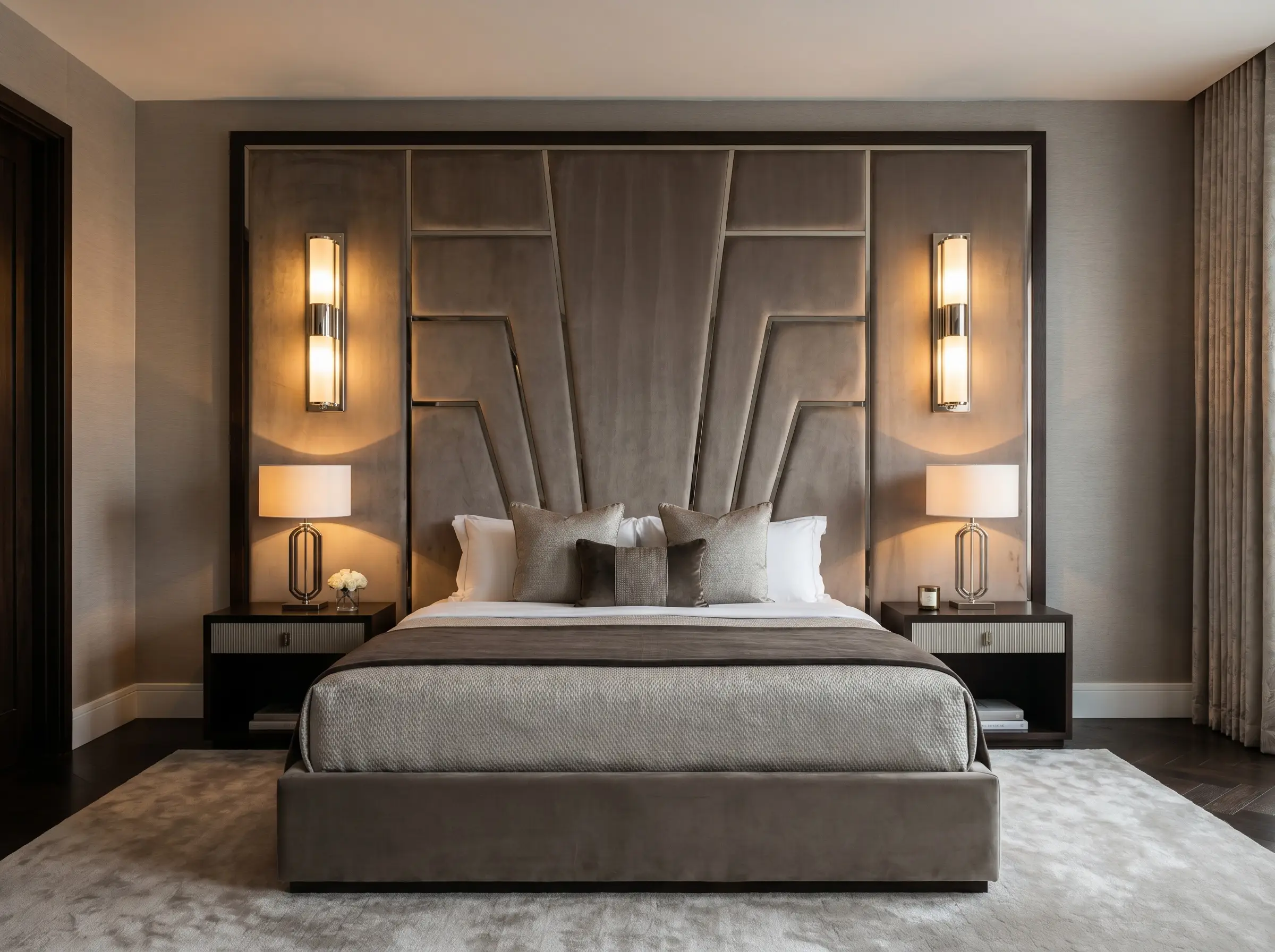
Symmetrical layouts are non-negotiable in this space, creating a sense of balanced, hotel-like luxury. Abandon mismatched bedside lamps in favor of hardwired, elongated, vertical wall sconces flanking the bed to draw the eye upward.
- Vibe: Hotel-Grade Polish
- Key Materials: Polished Nickel, Frosted Glass
- Styling Pro-Tip: Choose sconces with a minimum height of 18 inches to properly scale against an oversized headboard.
When hanging symmetrical sconces, position the backplate exactly 60 inches from the floor to cast the most flattering, cinematic light across the bed.
Designer Secret
Swap Standard Pendants for Frosted Glass Globes
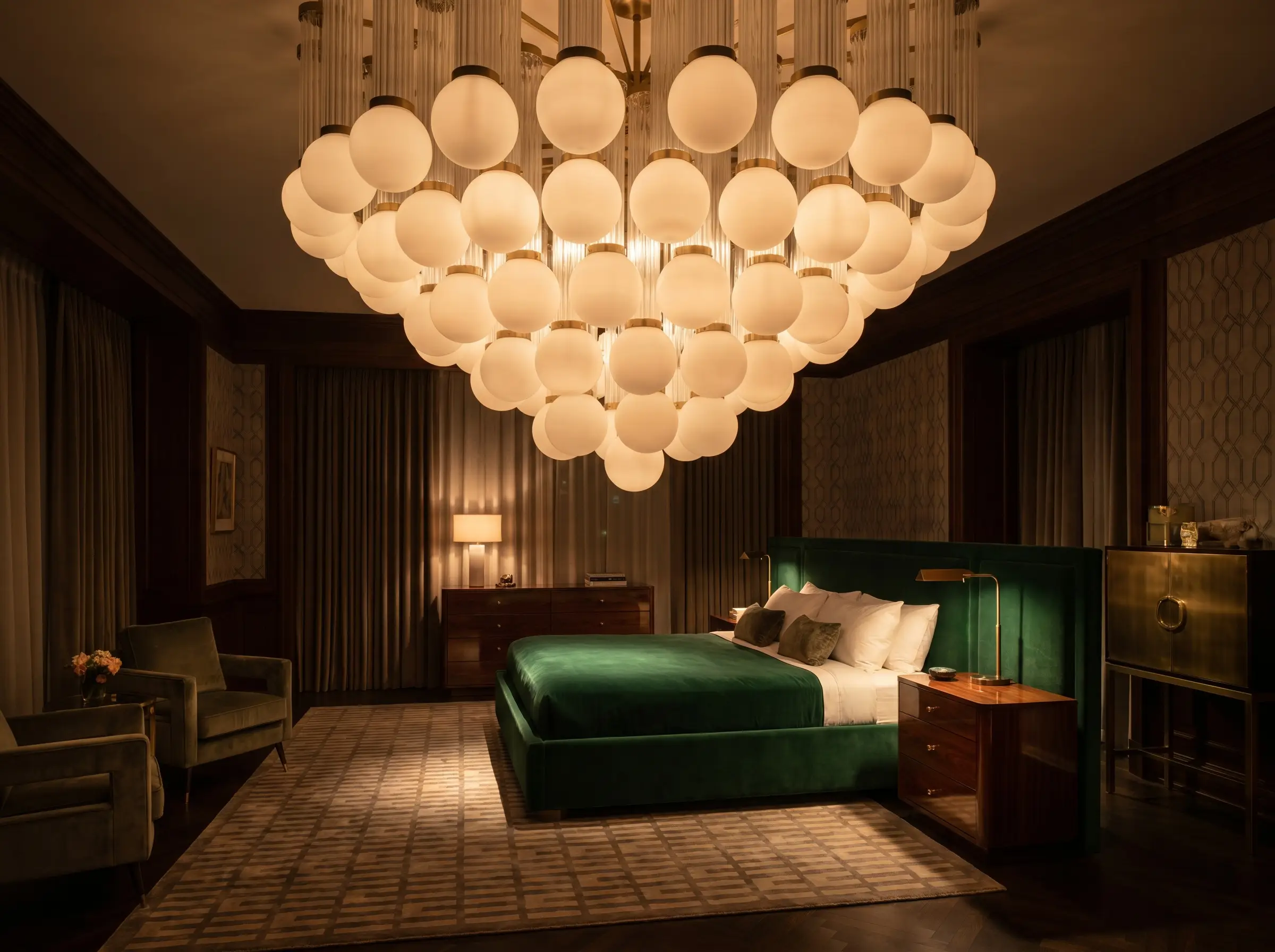
Clear glass reads too modern, while seeded glass leans farmhouse; this aesthetic demands frosted, milk, or fluted glass. These diffused lenses create the perfect chiaroscuro effect, casting a soft, moody, and cinematic glow across the bedroom.
- Vibe: Cinematic Mood
- Key Materials: Milk Glass, Fluted Glass Tubes
- Styling Pro-Tip: Look for tiered glass rods or perfect globe silhouettes for the main overhead fixture.
Mix Polished Nickel with Warm Brass
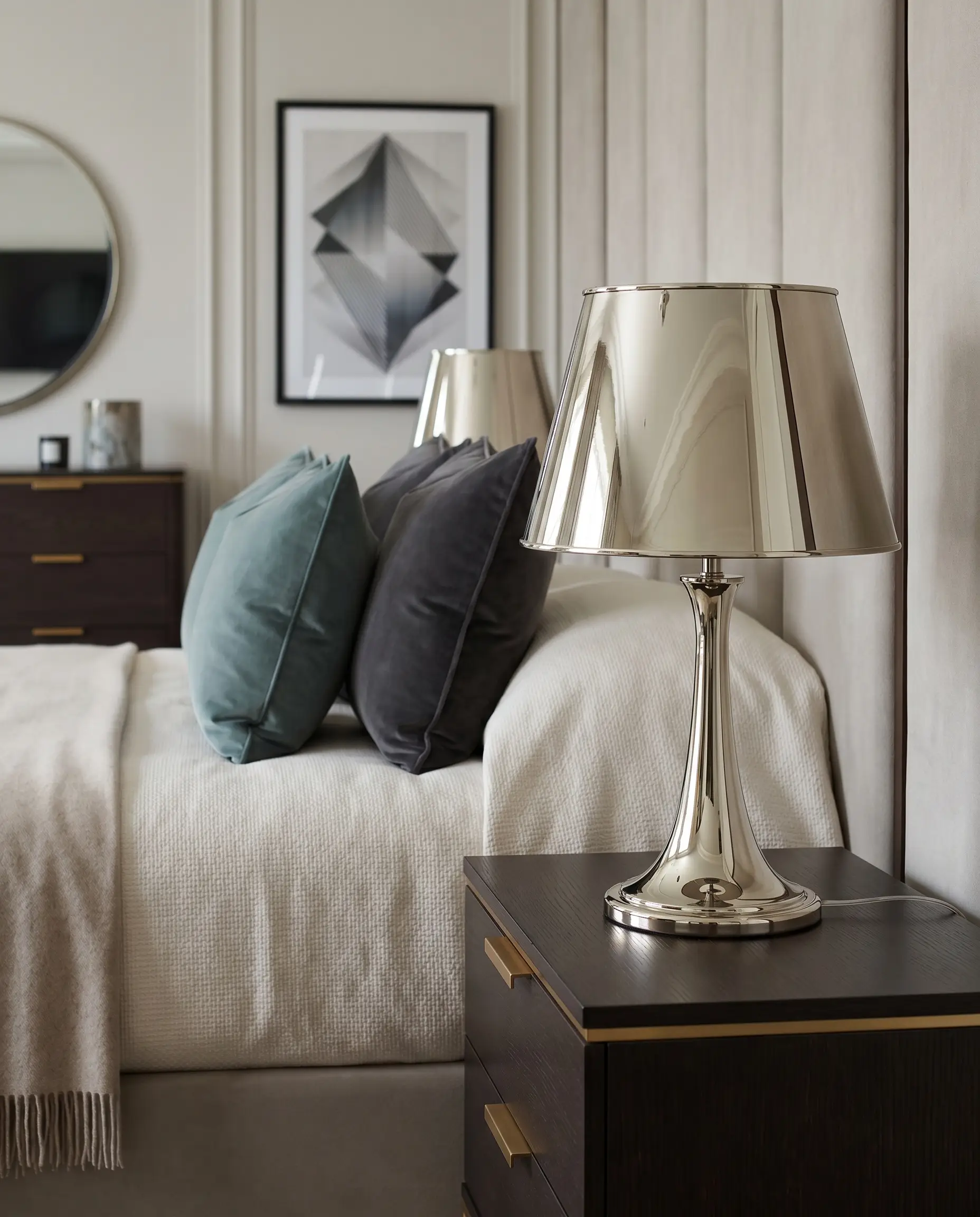
While brass is a standard go-to, the true streamline era relied heavily on the cold, brilliant reflection of polished chrome and nickel. Confidently mix warm, unlacquered brass with high-shine polished nickel to curate a collected, highly intentional look.
- Vibe: Curated Brilliance
- Primary Metal: Polished Nickel
- Accent Metal: Unlacquered Brass
Never use brushed, matte, or antiqued metal finishes. The glamour of this style relies entirely on the sharp, mirror-like reflection of highly polished metals against soft fabrics.
Tactile Check
Install Sculptural Alabaster Fixtures
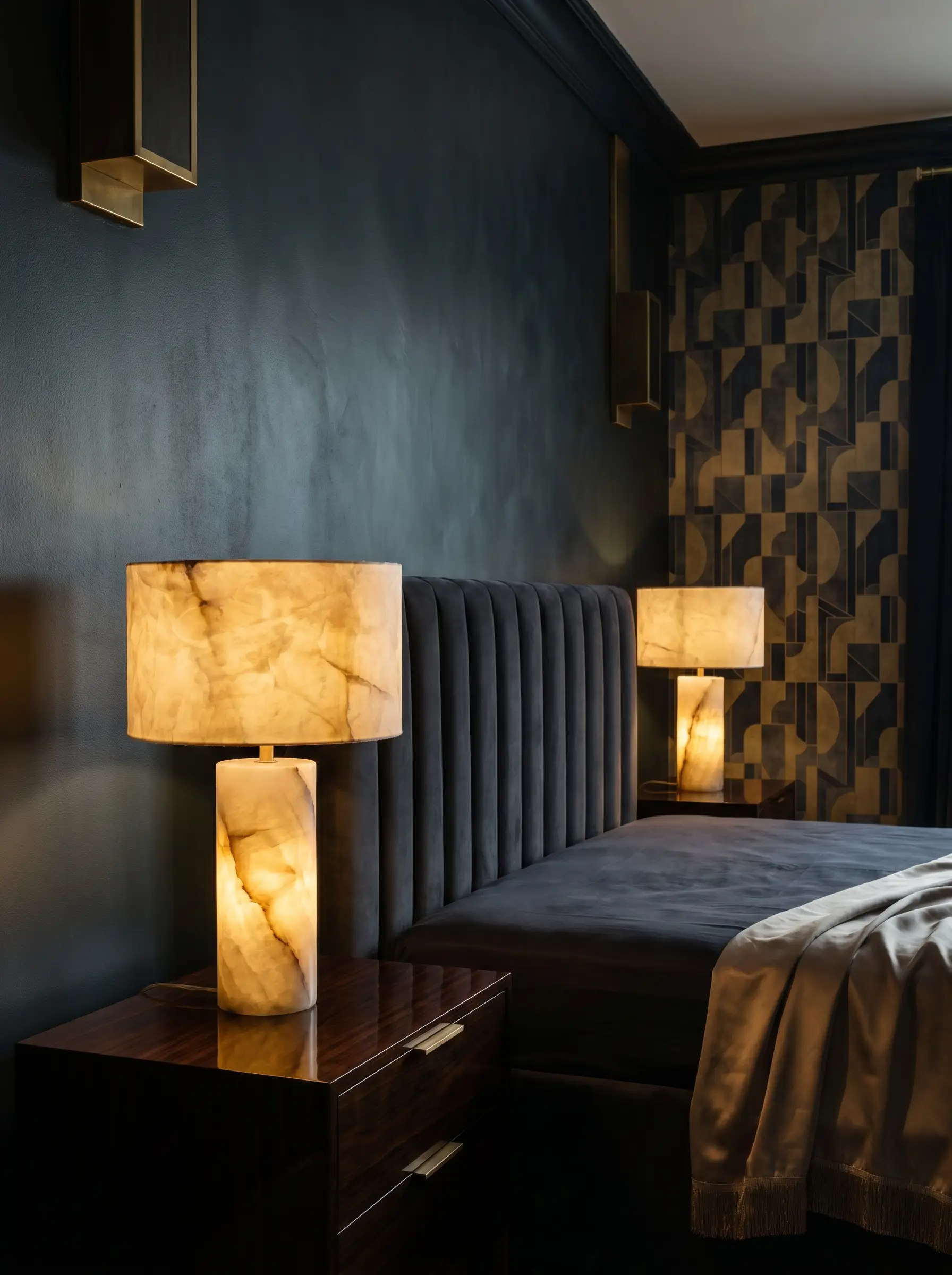
Alabaster serves as the ultimate investment material for revival lighting. Its heavy, veined stone appearance combined with a warm translucence when lit injects massive visual weight and organic texture into a strictly geometric room.
- Vibe: High-End Investment
- Key Materials: Solid Alabaster Stone
- Styling Pro-Tip: Use alabaster for bedside table lamps if hardwiring wall sconces is outside the current project scope.
Casegoods, Furniture, and Rugs
Furniture selections must carefully balance the heavy, plush textiles with sleek, highly reflective, or wildly figured surfaces. This is where standard domestic woods fail and exotic, highly polished materials take center stage.
Introduce Burl Wood and Macassar Ebony
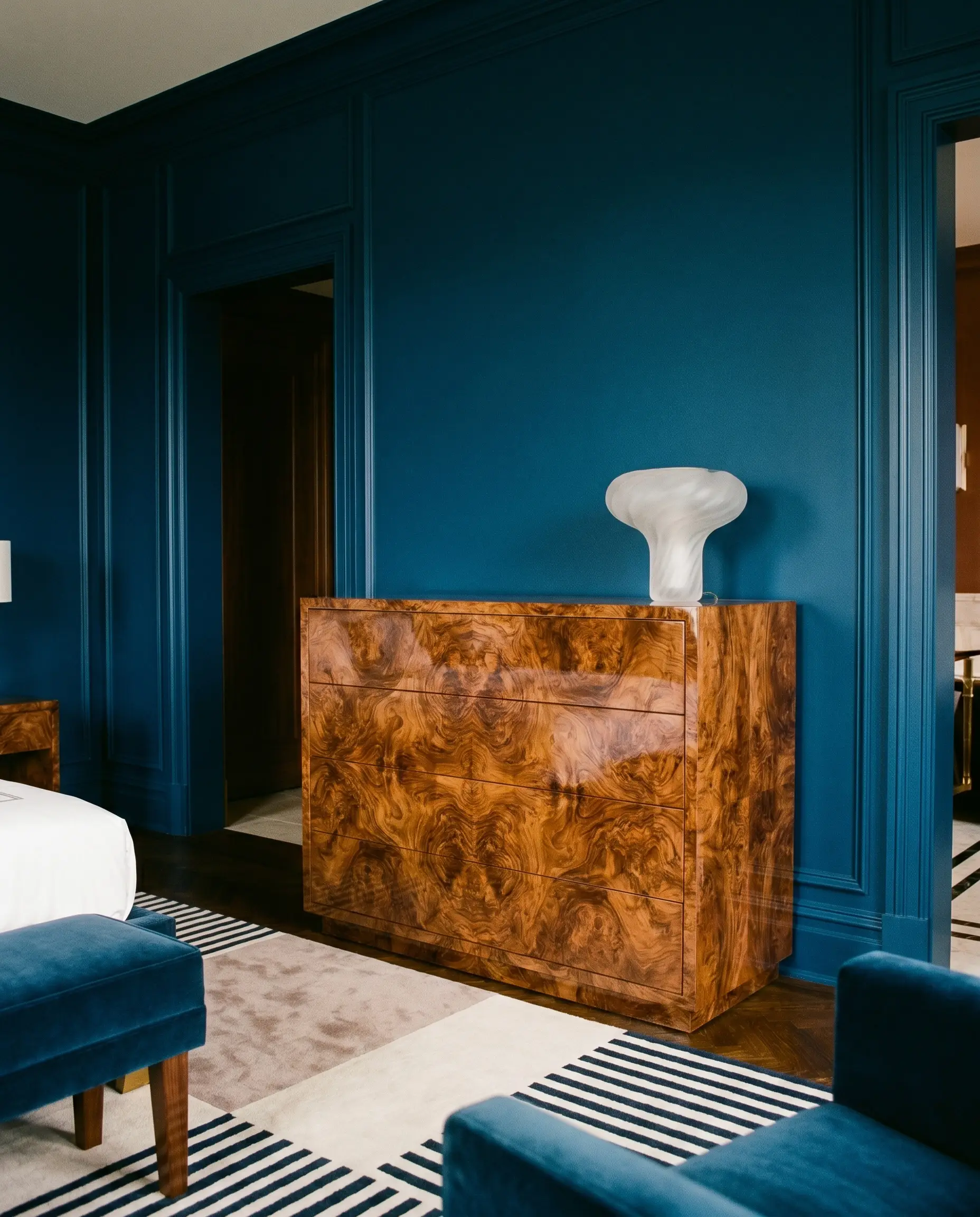
Standard oak or pine completely ruins the desired aesthetic. Demand the use of highly-figured woods like Burl wood or Macassar ebony for dressers and nightstands, as their chaotic, beautiful grain patterns contrast perfectly with strict architectural lines.
- Vibe: Exotic & Figured
- Key Materials: Burl Wood Veneer, Macassar Ebony
- Styling Pro-Tip: Let a large burl wood dresser act as the standalone statement piece against a solid, jewel-toned wall.
Incorporate Mirrored or Lacquered Nightstands
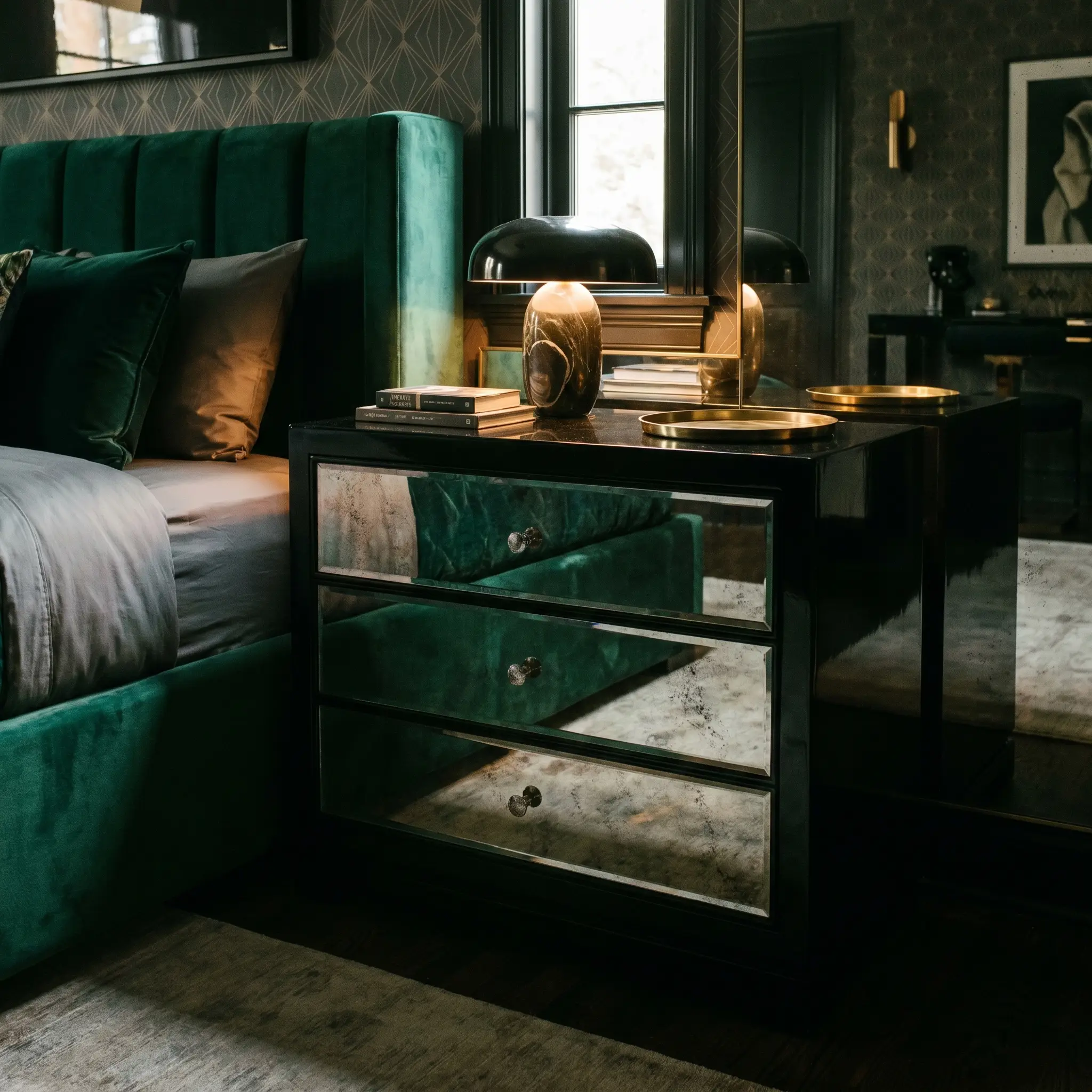
To bounce moody ambient lighting around the darkened boudoir, introduce high-gloss lacquered bedside tables or vintage-inspired antiqued mirror furniture. These highly reflective surfaces add depth and glamour without adding visual bulk.
- Vibe: Reflective Glamour
- Key Materials: High-Gloss Lacquer, Antiqued Glass
- Styling Pro-Tip: Limit mirrored furniture to a maximum of two matching pieces in the room to avoid a chaotic disco-ball effect.
Anchor the Floor with a Bold Patterned Rug
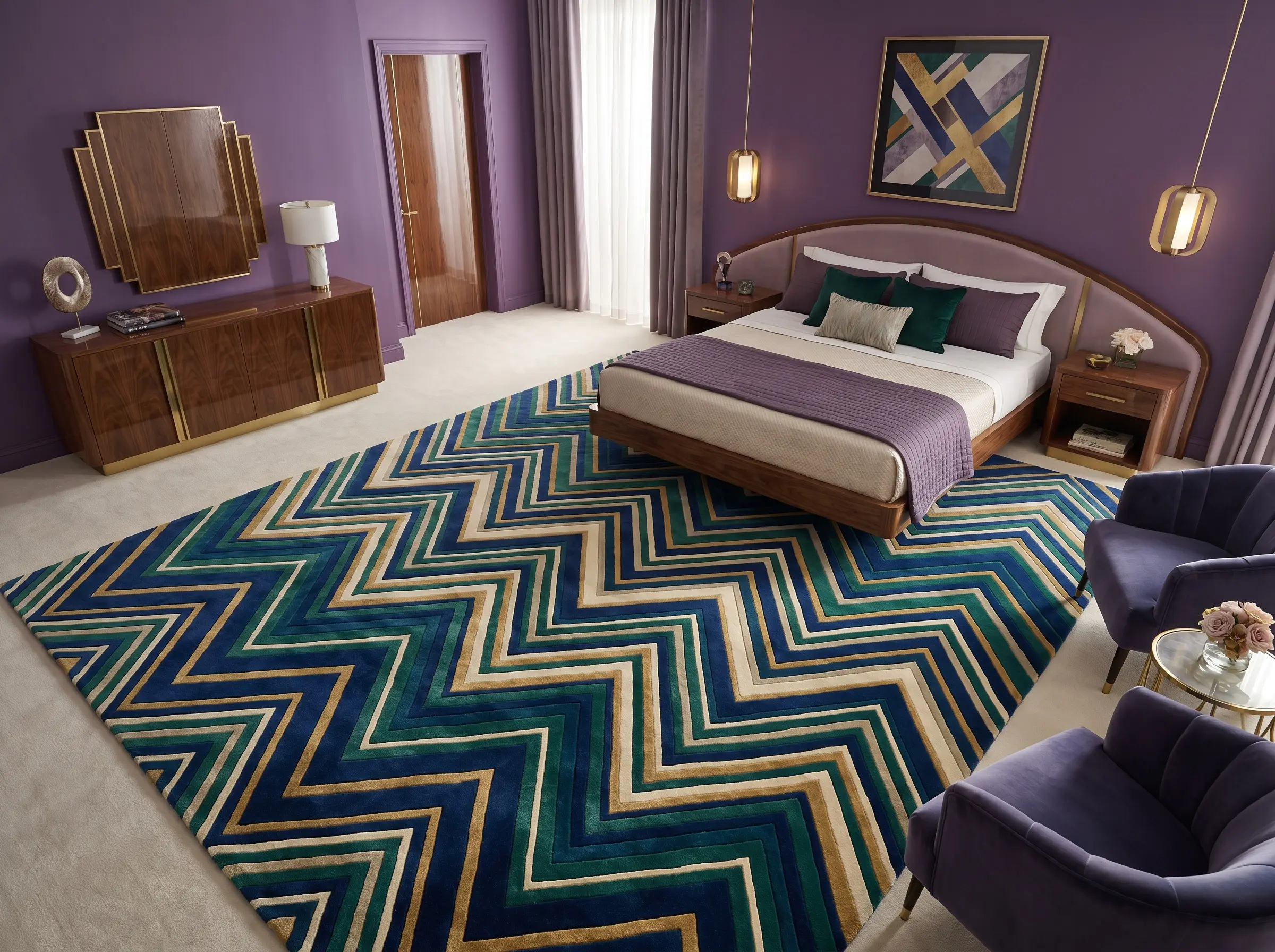
If the walls remain solid jewel tones, the floor becomes the ideal canvas for large-scale geometric play. A dramatic chevron, greek key, or abstract Cubist rug provides a necessary graphic foundation that anchored the floating furniture.
- Vibe: Graphic Foundation
- Key Materials: Hand-tufted Wool, Silk blend
- Styling Pro-Tip: For a Queen or King bed, source a 9×12 rug to ensure the pattern extends at least two feet on all sides of the bed frame.
Add a Curved Bouclé or Fringed Accent Chair
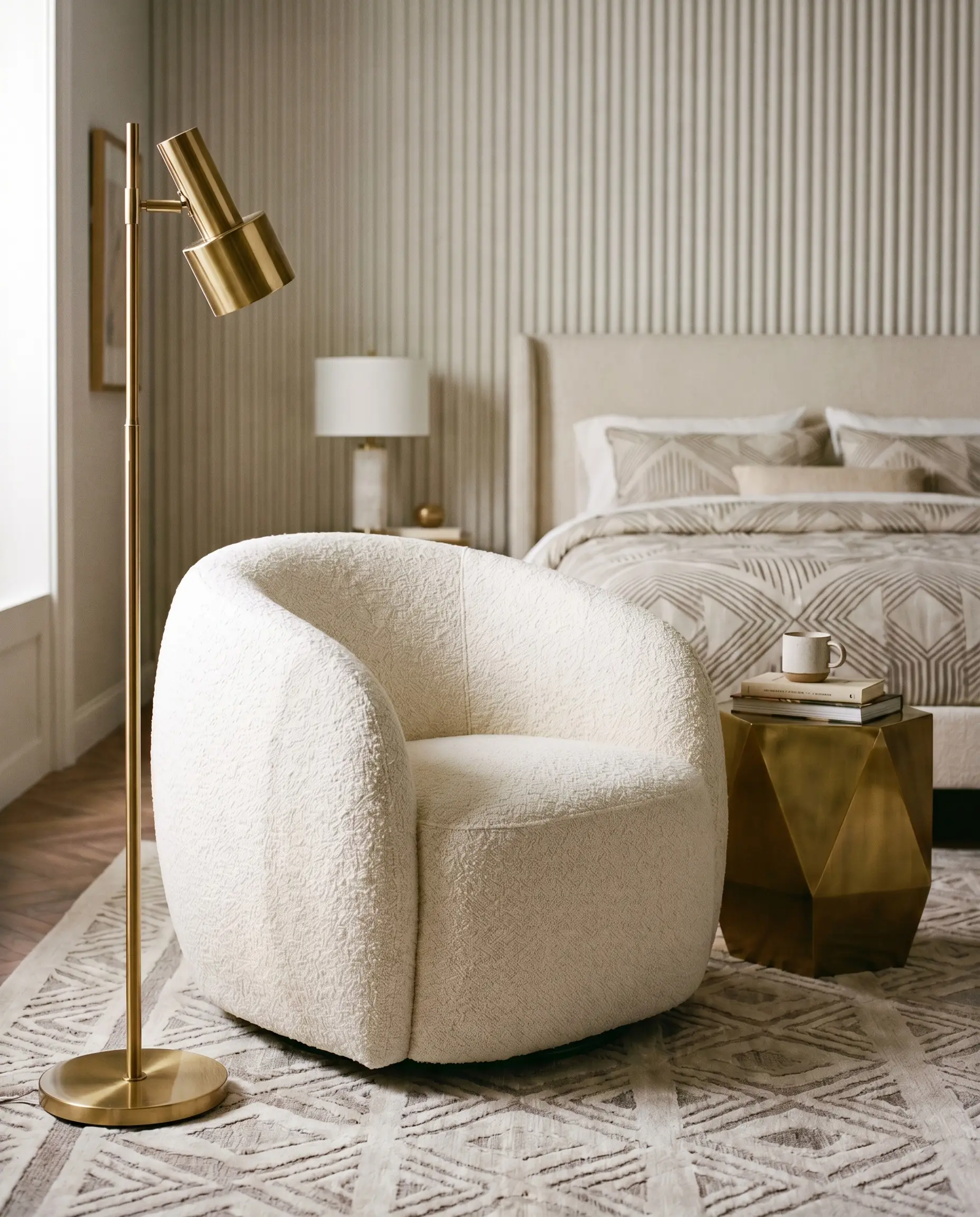
Every sophisticated boudoir requires a dedicated accent chair to soften the room’s rigid geometry. Contrast the sharp lines of your casegoods with a heavily curved, barrel-back chair that invites lounging.
- Vibe: Sculptural Softness
- Modern Restraint: Upholster in heavy ivory bouclé
- Vintage Maximalism: Upholster in heavy velvet with a bullion fringe skirt
Position this curved chair in the corner of the room, angled slightly toward the bed, and pair it with a single, highly polished brass floor lamp to create an intimate reading zone.
Designer Secret
Subtle Deco: The Minimalist Approach
Not every space requires dark, moody saturation to achieve this aesthetic. You can beautifully capture the essence of this era purely through shape, symmetry, and subtle material choices while keeping the room entirely serene and neutral.
Stick to a Monochromatic Cream Palette
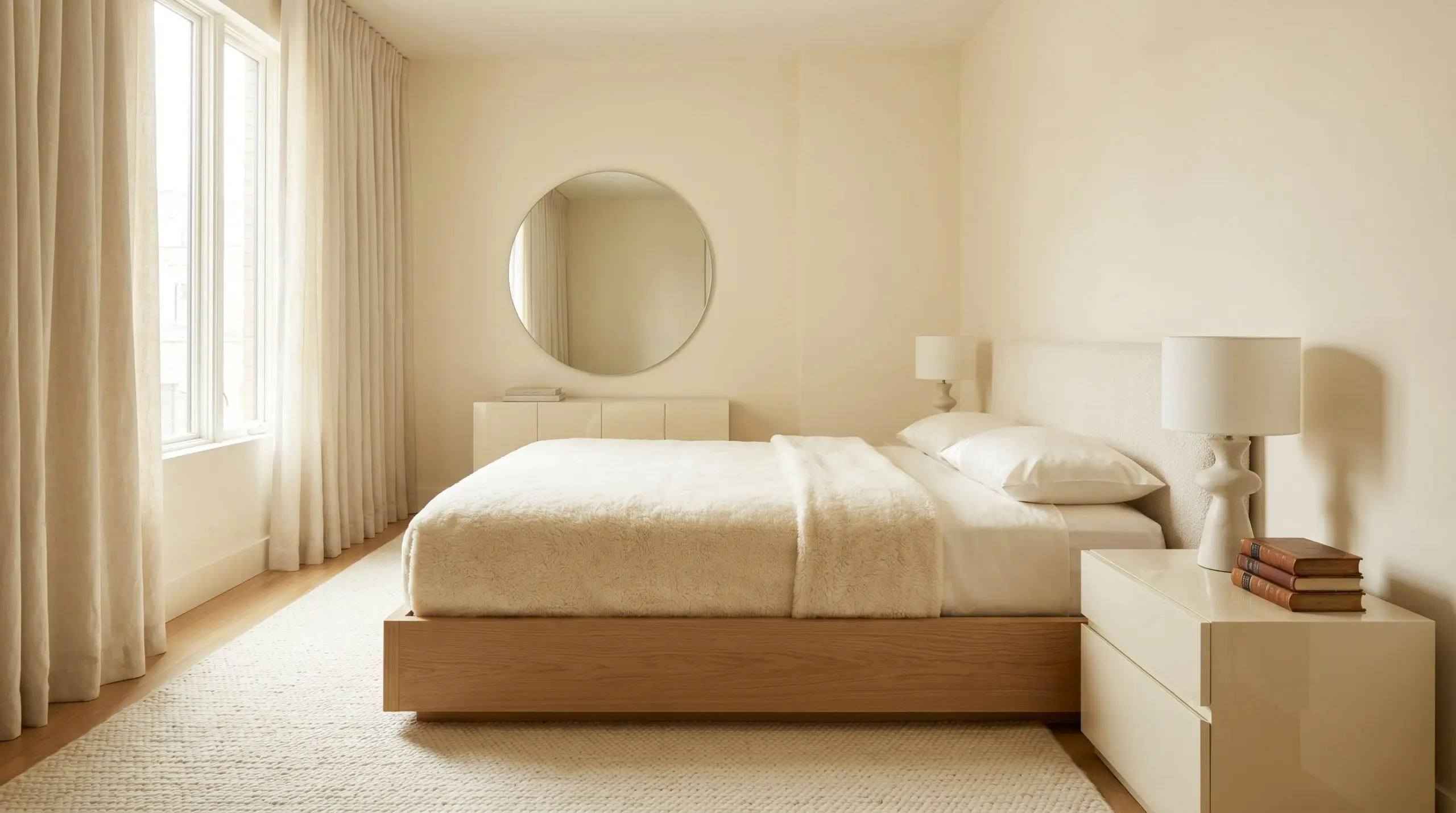
By layering ivory, alabaster, bone, and stark white, the glamour is generated entirely from the mix of textures rather than stark color contrast. A stark white silk pillow against a cream shearling throw and an ivory lacquered nightstand exudes quiet, expensive luxury.
- Vibe: Serene & Monochromatic
- Key Materials: Silk, Shearling, Lacquer
- Paint Recommendation: Benjamin Moore Swiss Coffee
- Styling Pro-Tip: Ensure all whites have a warm undertone to prevent the bedroom from feeling like a sterile hospital ward.
Use Subtle Brass Inlays on Flat-Panel Doors
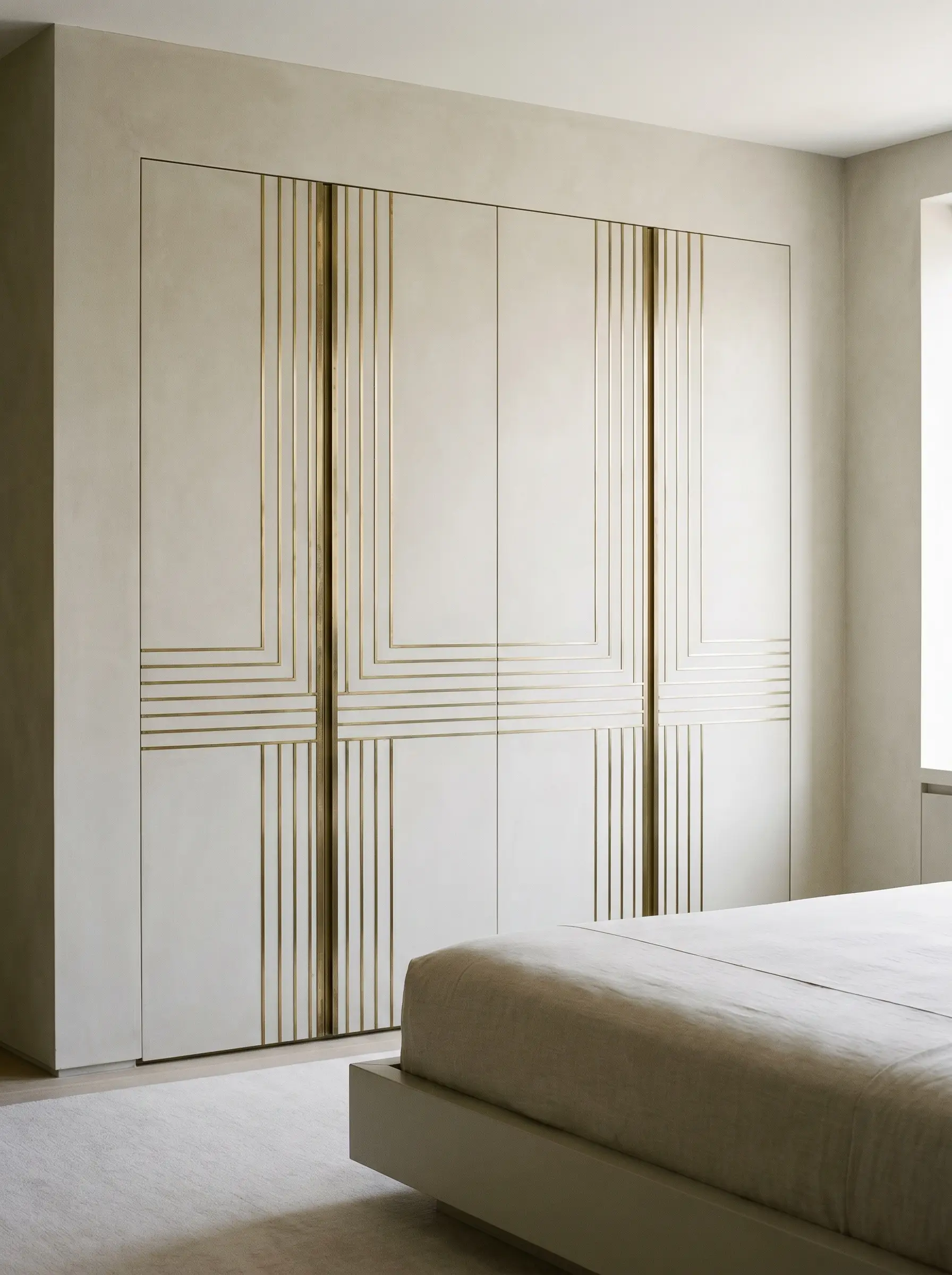
Instead of loud, graphic wallpaper, incorporate thin, linear brass inlays into custom closet doors, flat-panel bedroom doors, or even the floorboards. This micro-geometry provides a quiet whisper of 1920s architecture tailored for the minimalist eye.
- Vibe: Bespoke Minimalism
- Key Materials: Flat-Panel Wood, Unlacquered Brass Strips
- Styling Pro-Tip: Keep the inlay lines strictly vertical or horizontal; avoid complex zig-zags to maintain the minimalist approach.
Rely Exclusively on Shape (Curved vs. Linear)
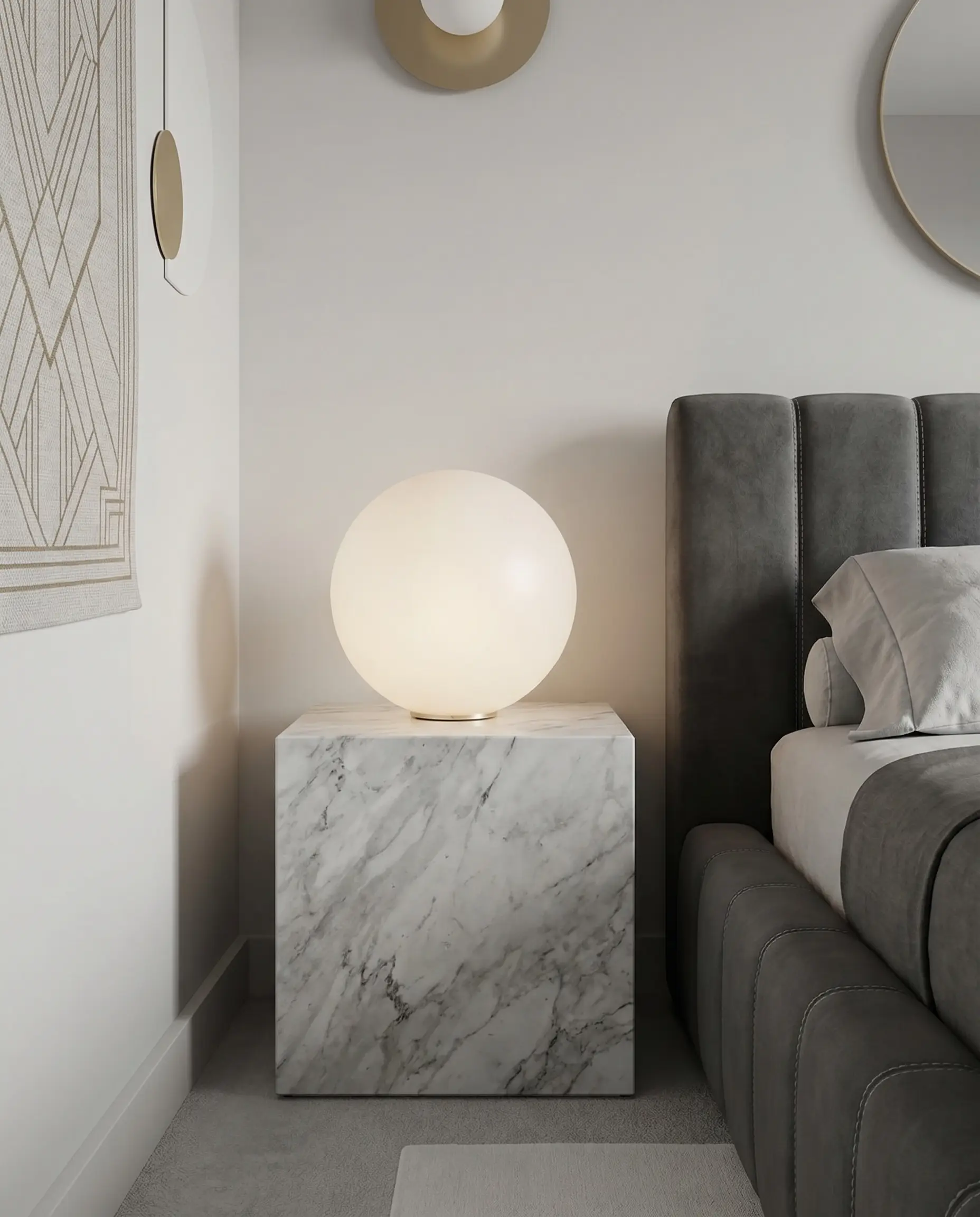
The core design theory of this era relies on the tension between opposing shapes. Placing a perfectly spherical frosted glass lamp on top of a stark, sharp-edged, rectangular marble block nightstand creates the exact spatial tension that defines the aesthetic.
- Vibe: Sculptural Tension
- Key Elements: Spheres, Stepped Blocks, Hard Angles
- Styling Pro-Tip: Ensure every curved item in the room is directly paired with or placed upon a sharply linear item.
The Core Rules of Deco Revival
To successfully execute this look without veering into theatrical territory, you must adhere strictly to a few guiding principles. Here is the definitive framework for mastering the revival.
| Deco Revival: Do This | Not That |
|---|---|
| Invest in Highly-Figured Woods: Source authentic burl wood or Macassar ebony. | Avoid Standard Grains: Do not use basic oak, pine, or farmhouse-style distressed woods. |
| Enforce Strict Symmetry: Flank the bed with matching, hardwired sconces and identical nightstands. | Avoid Asymmetrical Layouts: Do not use mismatched bedside tables or solitary, off-center floor lamps. |
| Layer Tactile Fabrics: Mix crushed velvet, heavy mohair, and high-sheen silk. | Avoid Flat Cottons: Do not rely on basic matte cotton or unironed linen bedding. |
| Embrace Chiaroscuro Lighting: Use frosted glass and alabaster for moody, diffused ambient light. | Avoid Recessed Lighting: Do not flood the ceiling with harsh, modern downlights. |
Curating Your Modern Boudoir
Designing an Art Deco bedroom is about creating an unapologetic sanctuary. It requires immense confidence, a deep love for tactile materials, and a strict adherence to symmetry. You do not need to overhaul the entire space in a single weekend. Start with one major investment piece—whether that is a towering channel-tufted bed or a highly-figured burl wood dresser—and build the glamour outward from there. Let the chiaroscuro lighting and the sensual fabrics do the heavy lifting, ensuring your retreat remains both visually stunning and profoundly livable. Which piece of this opulent revival are you brave enough to anchor your bedroom with first?
The Aesthetics Desk curates the visual direction for Hackrea. Specializing in design history, global architectural movements, and interior styling, this desk focuses on the psychology of space and how to translate high-end, magazine-quality aesthetics into approachable residential design without falling into fleeting micro-trends.