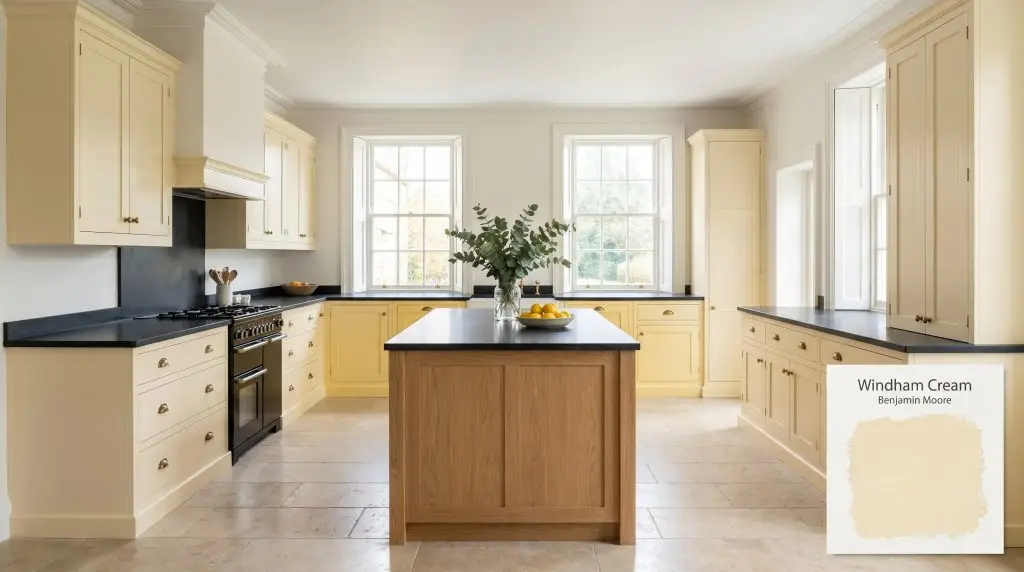
Benjamin Moore Windham Cream (HC-6) is a sunlit, luscious cream paint color with a warm yellow base and a whispery undertone of pale butter and peach. With an LRV of 80.4, it reflects a significant amount of light, making it a bright, inviting architectural finish.
Will Windham Cream clash with your room?
Paint Technical Profile
| Color ID / SKU | HC-6 |
| HEX Code | #F5E9C7 |
| Light Reflectance (LRV) | 80.4 |
| Temperature | Warm |
| Primary Undertone | Yellow |
| Hidden Undertones | Peach And Pale Butter |
| Use | Interior, Exterior |
| Best Exposures | North-facing, East-facing |
| Best For | Kitchen cabinets, Living rooms, Nurseries, Dark hallways, Traditional exteriors |
Windham Cream Digital Design Concept Boards
Kitchen Cabinetry (Traditional & Cottage Styles)
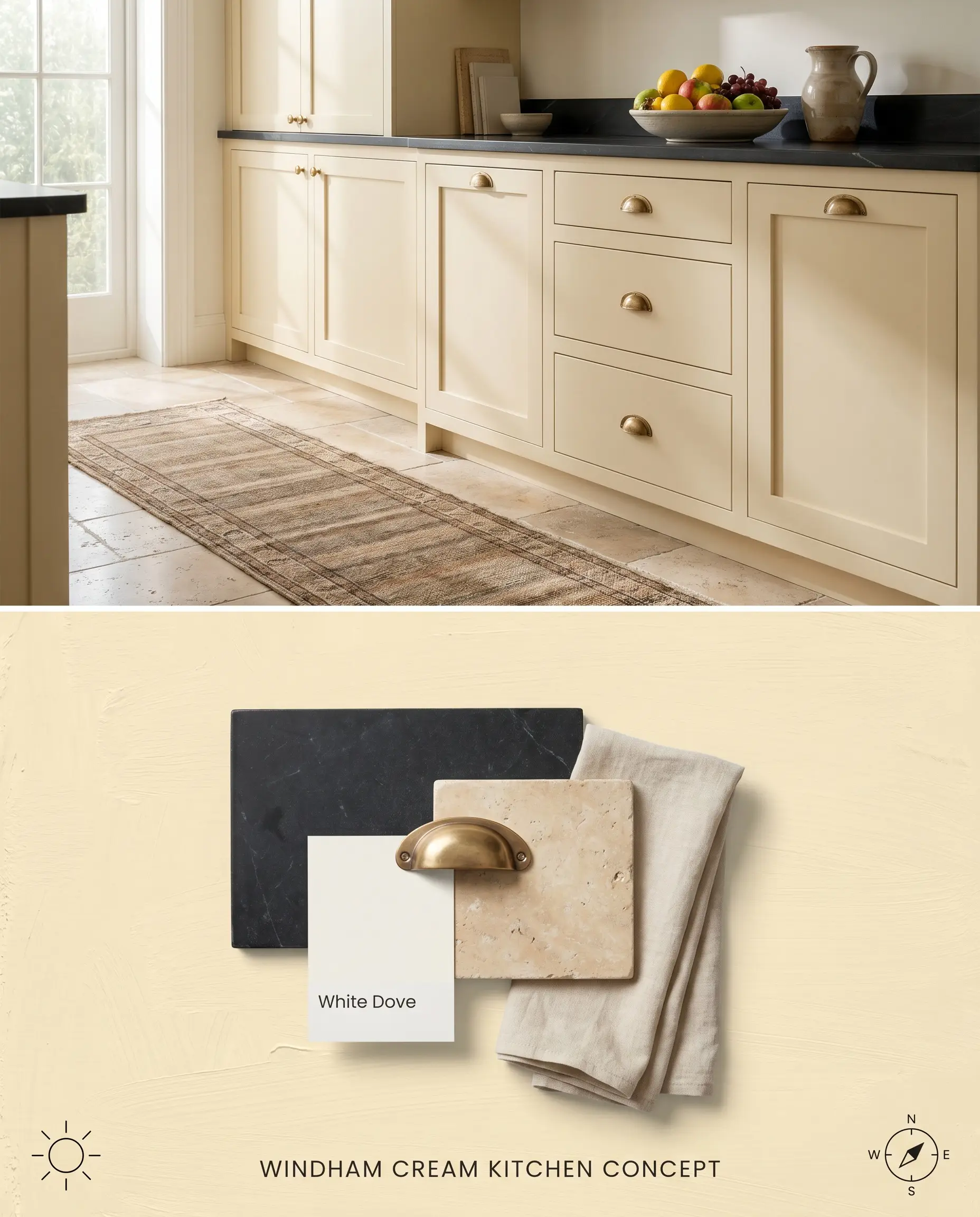
Will Windham Cream work with your specific lighting, floor, or furniture?
Benjamin Moore Windham Cream HC-6 transforms flat cabinetry into a luminous architectural finish by reflecting ambient kitchen light off its prominent yellow base. Pairing this pale butter tone with unlacquered brass hardware accelerates the aging process visually, grounding the cottage aesthetic through metallic oxidation. The subtle peach undertone prevents the millwork from reading sterile against the dense, matte surface of natural soapstone counters.
North-Facing Living Rooms
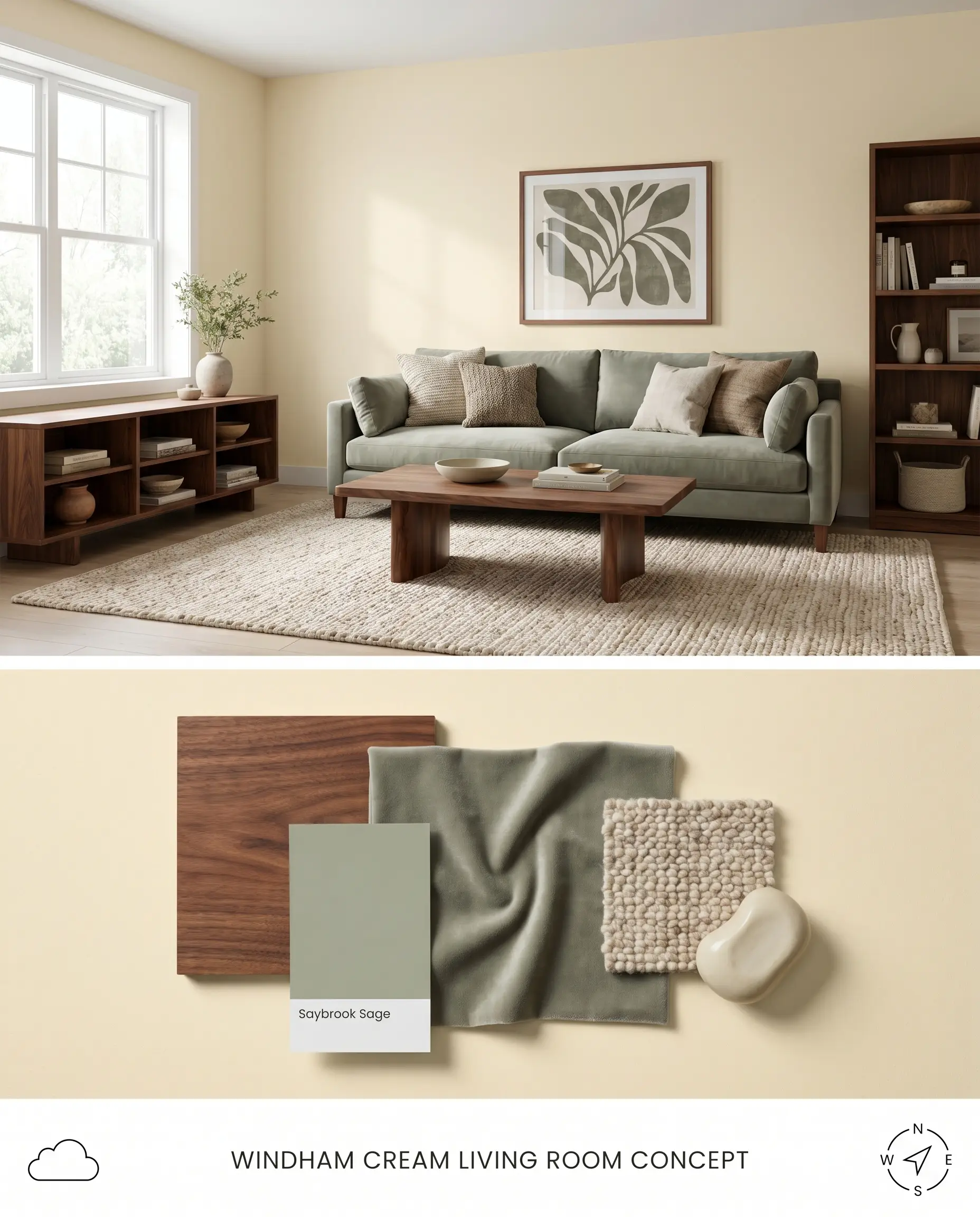
The notoriously cool, gray light of northern exposures requires a high LRV warm neutral to counteract the chill. Windham Cream acts as a sunlit cream in these environments, injecting an artificial warmth that physically neutralizes the blue-tinted daylight hitting the walls. Layering this wall color with deeply textured, matte fabrics absorbs the brightness, preventing the room from feeling stark or unanchored.
Nurseries and Playrooms
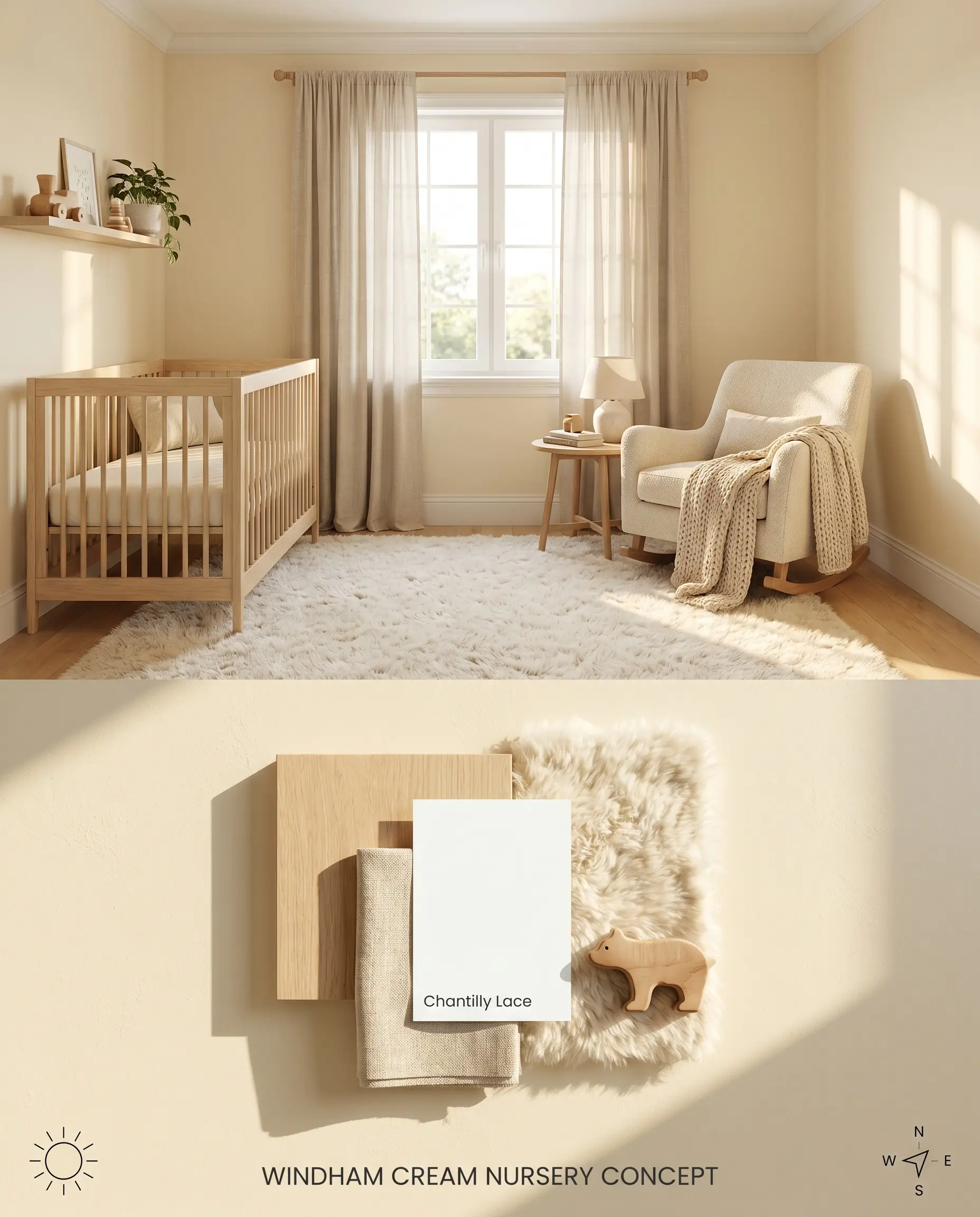
A nursery requires visual softness, and Windham Cream delivers a gentle, enveloping glow without the sharp contrast of a pure white. The peach undertone interacts directly with plush, fibrous rugs and woven linen drapery to create a tactile, low-contrast environment. This shade adapts seamlessly as daylight shifts, maintaining a steady warmth that bounces off soft furnishings.
Dark Hallways and Windowless Entryways
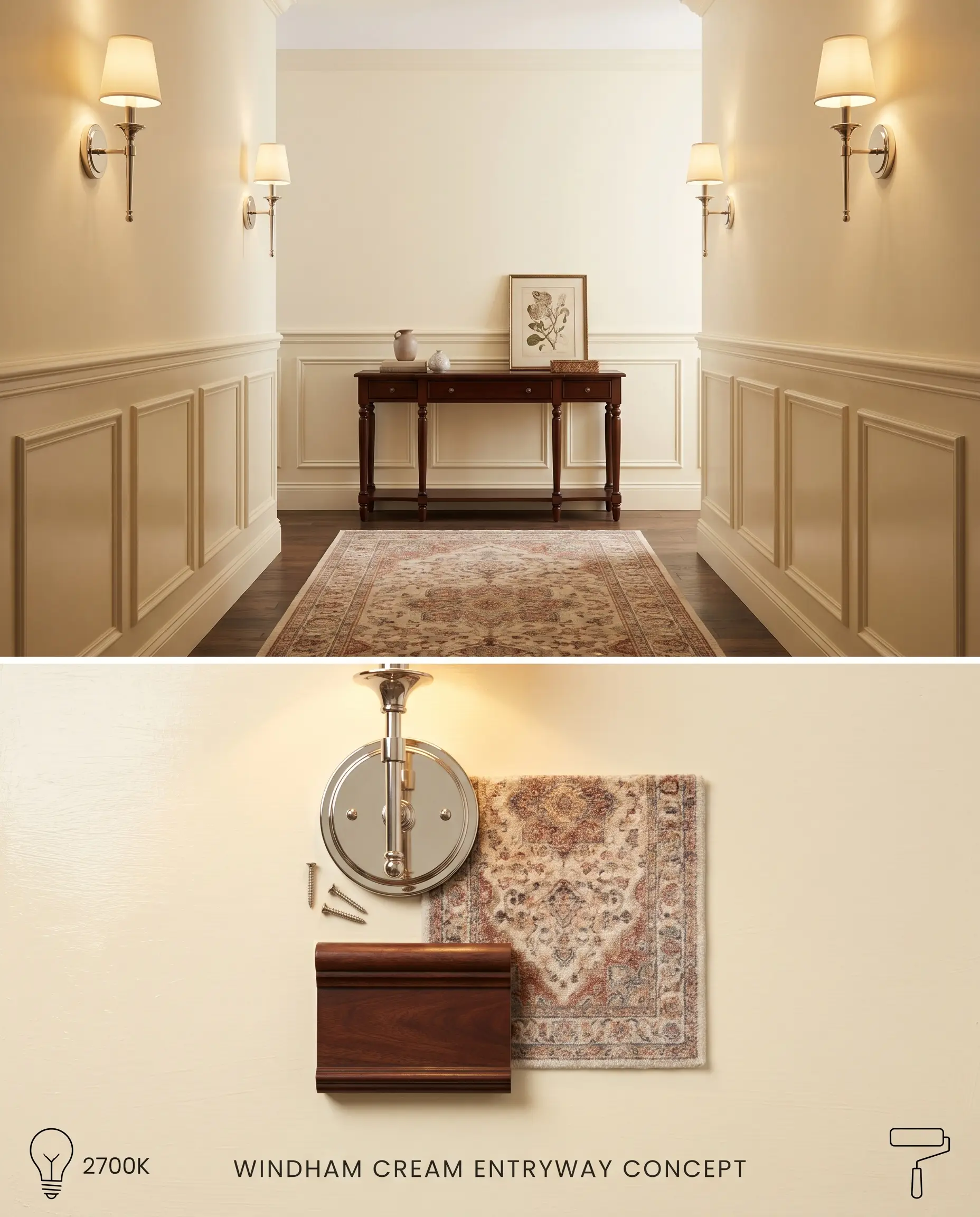
Will Windham Cream work with your specific lighting, floor, or furniture?
In transitional spaces devoid of natural light, an 80.4 LRV acts as a mirror, bouncing available artificial light from wall to wall. The yellow base prevents the corridor from feeling like a sterile tunnel, mimicking the thermal effect of natural sunlight. Utilizing a higher sheen on lower wainscoting amplifies this reflective property, visually expanding the narrow footprint by bouncing light upward.
Traditional Exterior Siding and Trim
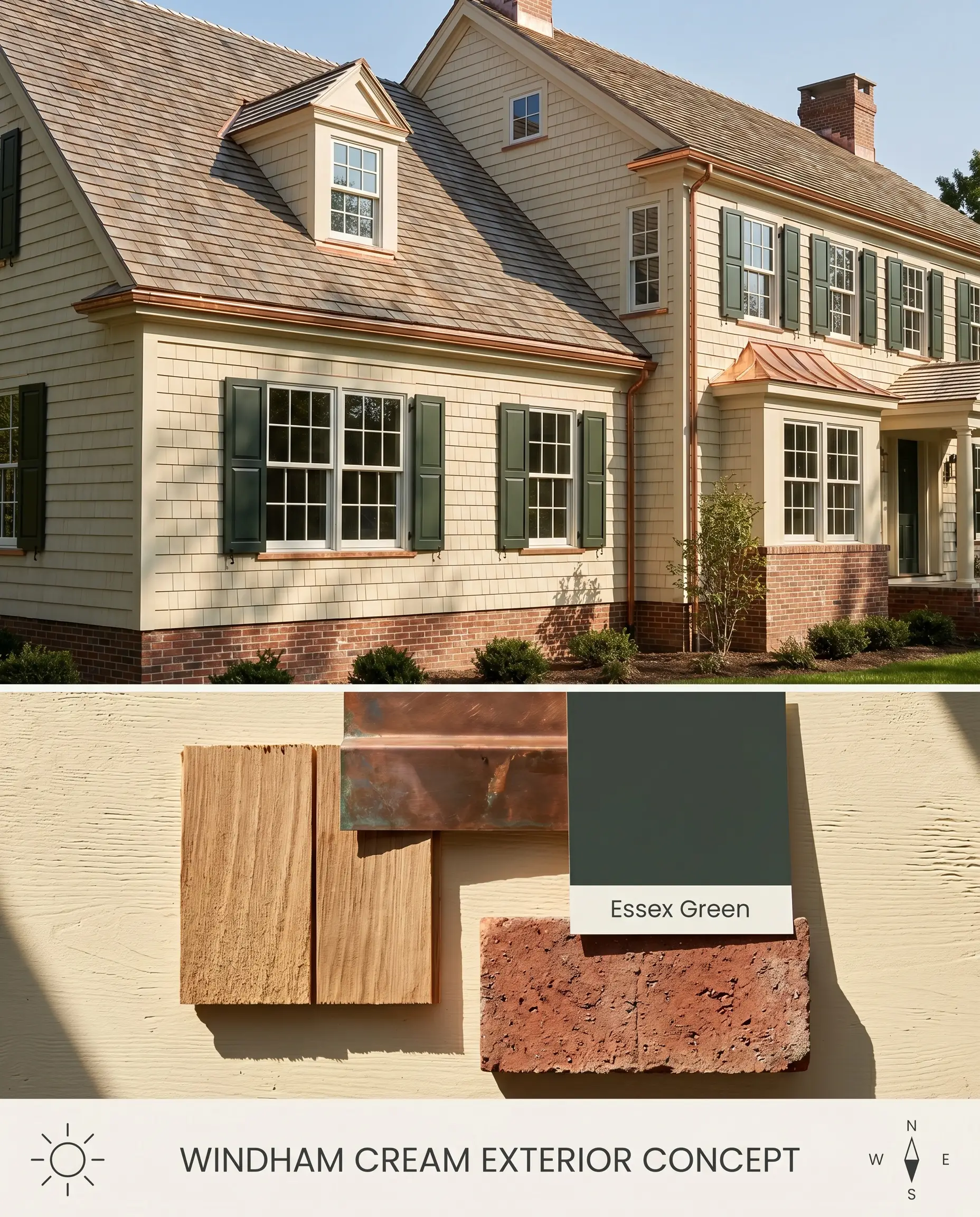
Exterior applications strip paint of its subtlety, but Windham Cream retains its chromatic profile under direct UV exposure. When applied to cedar shake or clapboard siding, it reads as a robust, historic cream rather than bleaching out to a blinding white. The color physically recedes behind dark, high-contrast shutters, grounding the facade in classic proportions.
Head-to-Head Comparisons
Benjamin Moore Windham Cream HC-6 vs. Benjamin Moore Gentle Cream OC-96
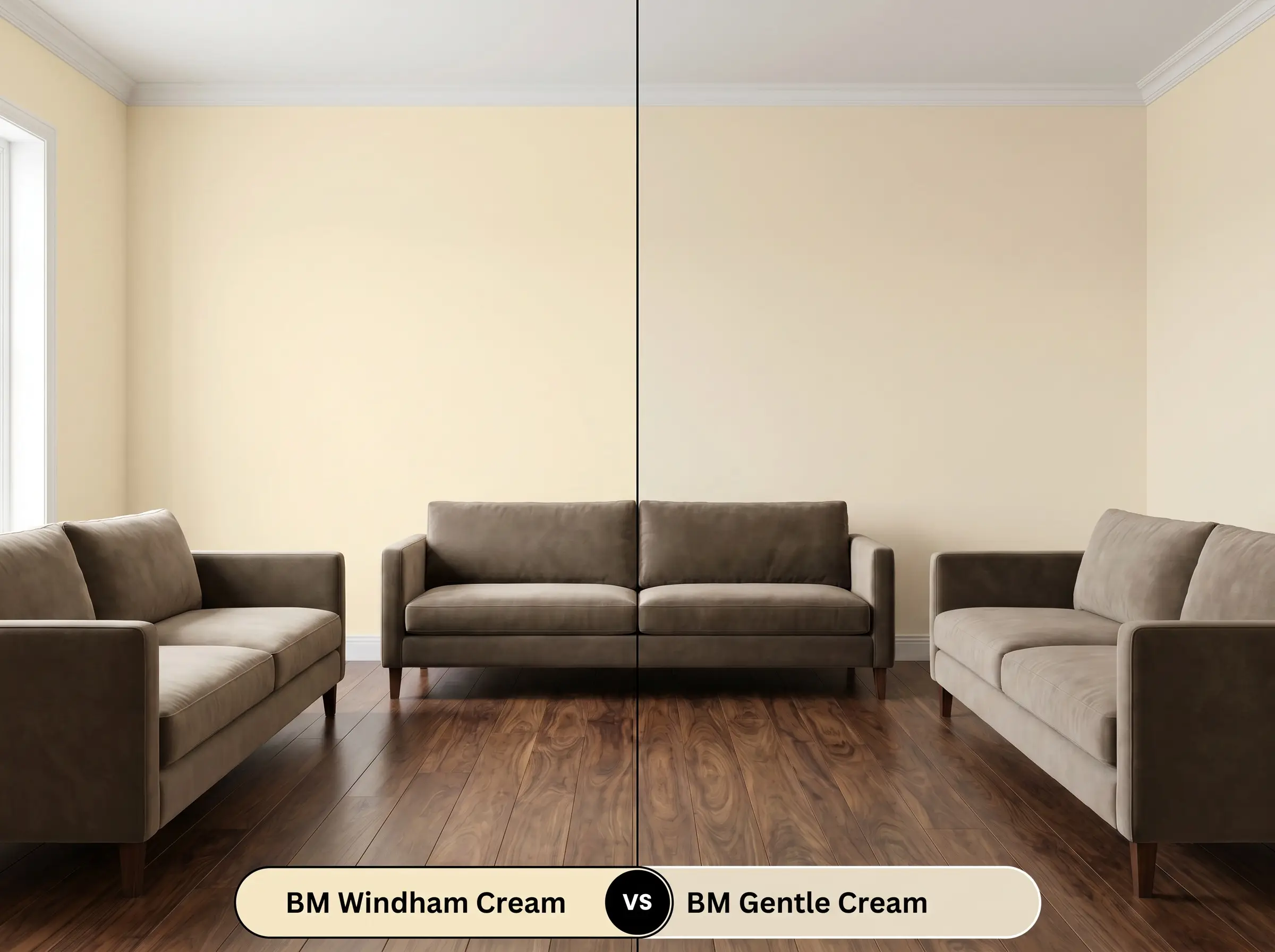
Benjamin Moore Windham Cream HC-6 operates with a distinct yellow base and a subtle peach undertone, giving it a pronounced, sunny presence on the wall. Benjamin Moore Gentle Cream OC-96 sits lower on the LRV scale (71.32) and leans firmly into a muted, earthy beige structure, stripping away the yellow vibrancy. Specify Windham Cream for north-facing rooms that require artificial sunshine to combat gray light, and use Gentle Cream in south-facing spaces where you need a warm neutral that will not turn neon under direct solar heat.
Benjamin Moore Windham Cream HC-6 vs. Benjamin Moore Navajo White OC-95
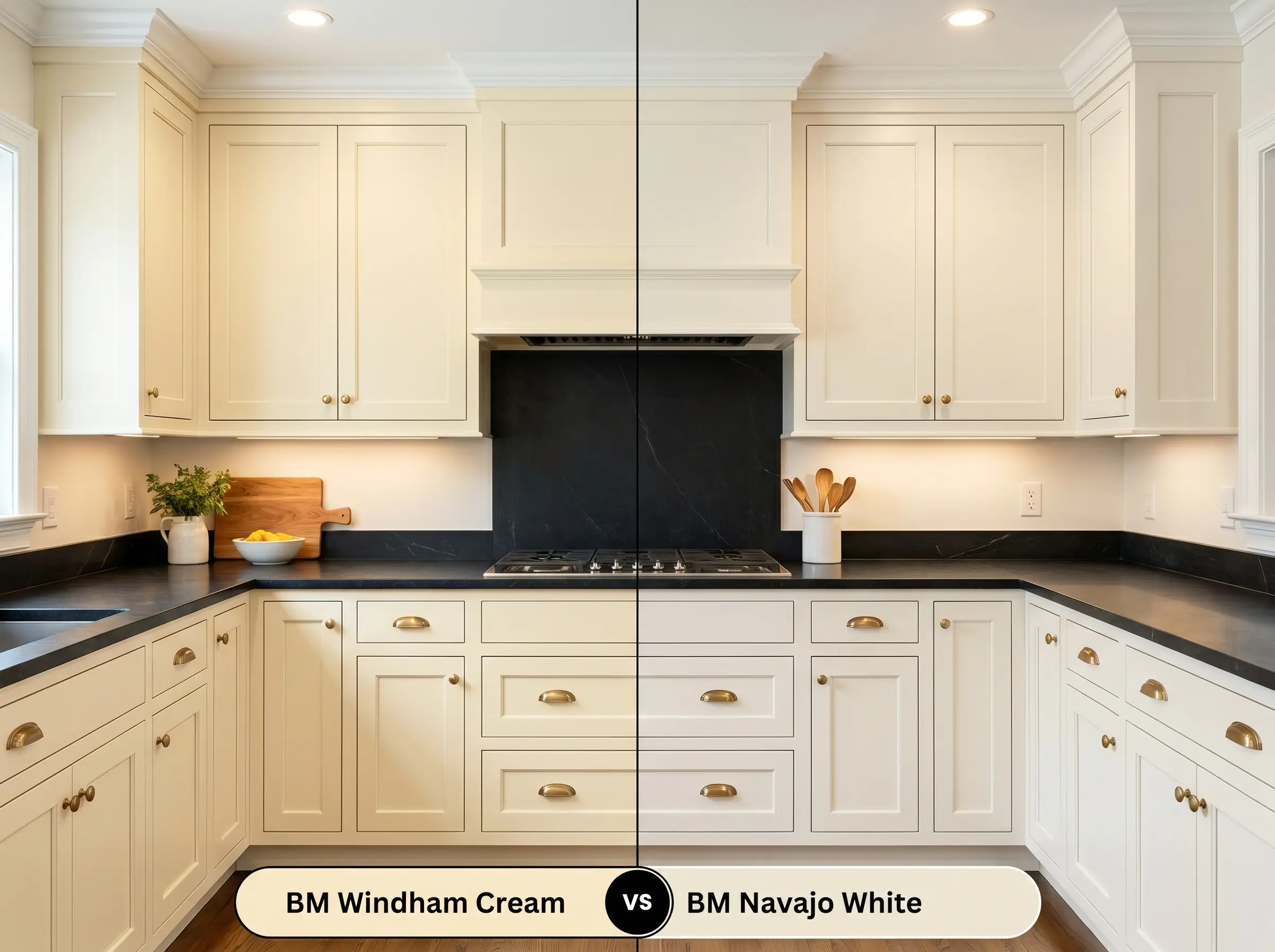
Benjamin Moore Navajo White OC-95 is a quintessential off-white with a complex green-yellow undertone, making it highly mutable and slightly shadowed at an LRV of 78.26. Benjamin Moore Windham Cream HC-6 is brighter (LRV 80.4) and entirely commits to its pale butter identity without the muddying effect of green. Deploy Navajo White when bridging the gap between cool stones and warm woods in a kitchen, but specify Windham Cream when you need a clear, unambiguous cream to highlight crisp white trim in traditional historical collection renovations.
Benjamin Moore Windham Cream HC-6 vs. Sherwin-Williams Napery SW 6386
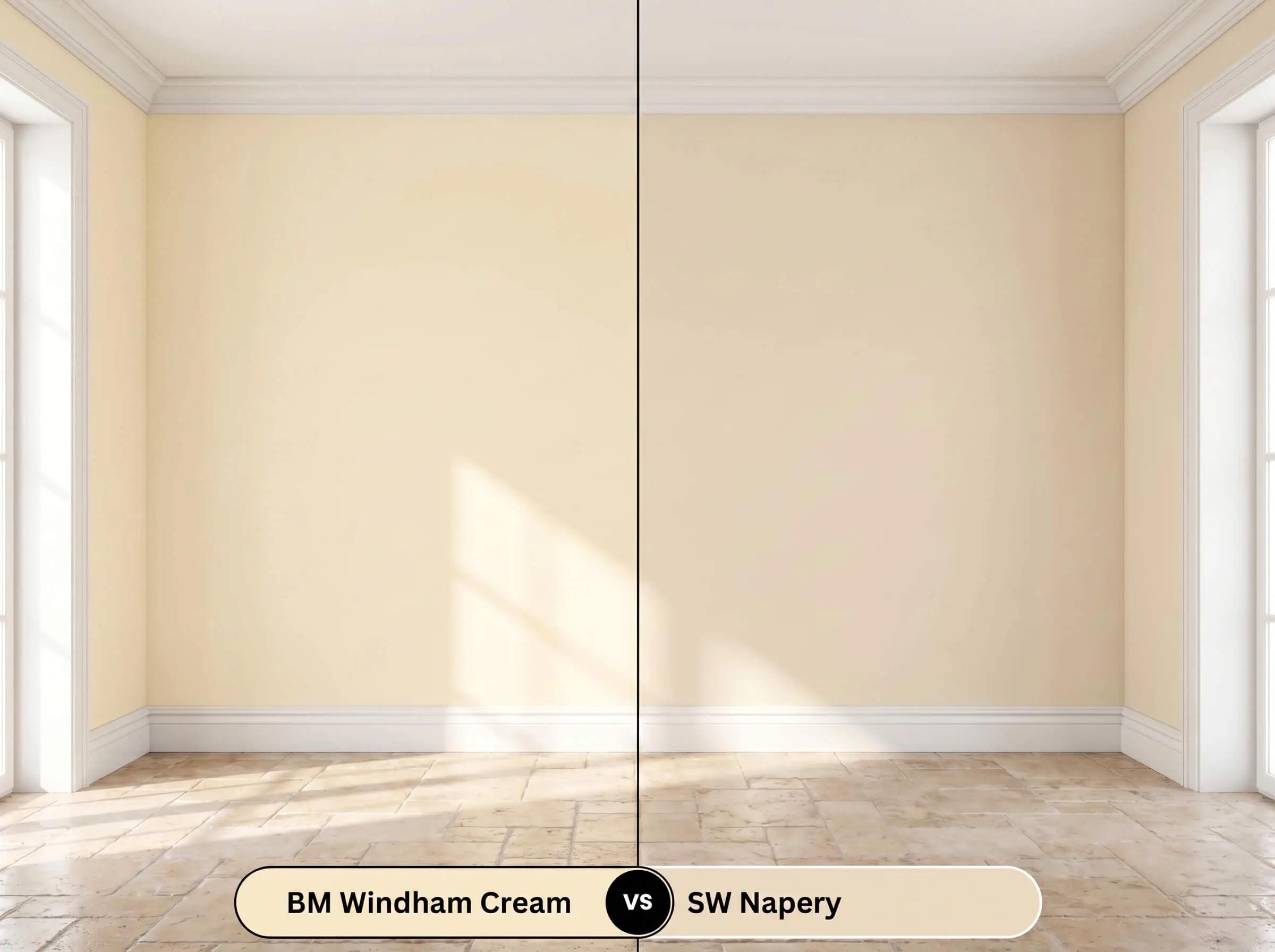
Will Windham Cream work with your specific lighting, floor, or furniture?
Sherwin-Williams Napery SW 6386 shares a similar yellow-cream DNA but carries a slightly more muted, tan-leaning chromatic profile. Benjamin Moore Windham Cream HC-6 projects a cleaner, more luminous yellow-peach reflection, making it feel lighter and more buoyant. Utilize Napery in rustic or Tuscan-inspired architecture where textured plaster requires an earthy anchor, and reserve Windham Cream for smooth drywall and refined millwork where a clean cabinetry finish is paramount.
FAQ
Yes, the intense, warm light of a southern exposure will amplify the yellow base of Benjamin Moore Windham Cream HC-6, potentially pushing it toward a neon or overly sunny yellow. In these high-exposure environments, it loses its soft cream identity and reads as a primary color.
Under cool LED lighting (4000K+), the peach undertone flattens, causing the paint to look disjointed and slightly synthetic. Warm LED bulbs (2700K) harmonize with the yellow base, enhancing the cozy, enveloping nature of the color without exaggerating the peach.
The yellow and peach undertones in Benjamin Moore Windham Cream HC-6 directly oppose the cool, blue-gray veining of Carrara marble, creating an uncomfortable visual friction. This combination forces the marble to look stark and the paint to appear dingy or aged.
Intense UV light strips away subtle undertones, causing Benjamin Moore Windham Cream HC-6 to read as a soft, warm white rather than a distinct cream. It will not wash out completely to a blinding white due to its 80.4 LRV, retaining enough pigment to provide a gentle contrast against darker siding.
Room Compatibility & Clashes Diagnoses
Hackrea's reports evaluating the compatibility of Windham Cream in real rooms.No compatibility tests for Windham Cream yet.
Be the first to see how this color reacts to your space. Run a free architectural diagnostic now.
Paint Aesthetic & Practical Analysis
| Profile | Analysis | |
|---|---|---|
| The Clash Warning | Because Windham Cream has a strong yellow base with a subtle peach cast, it will violently clash with cool, blue-leaning grays or stark, icy whites. Avoid pairing this hue with pink-leaning beiges or taupes, as the competing warm undertones will make the color structure look muddy or overly yellow. |
Closest Cross-Brand Equivalents
The absolute closest scientific color matches for Windham Cream across top paint brands.