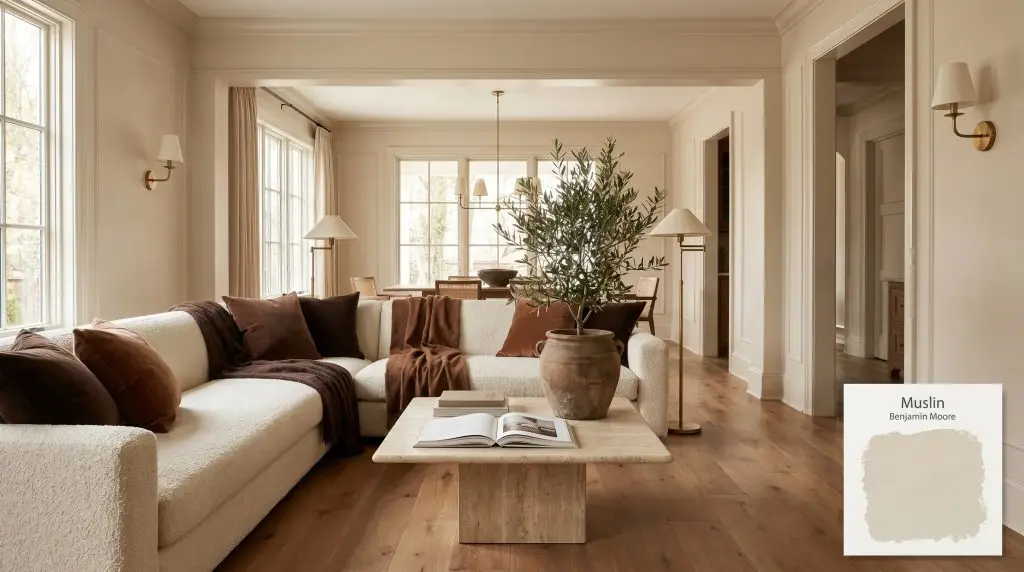
Benjamin Moore Muslin (OC-12) is a light, warm beige paint color with subtle pink and peach undertones. With an LRV of 66.54, it acts as a cozy, inviting neutral that warms up cool spaces without feeling overly heavy or dated.
Will Muslin clash with your room?
Paint Technical Profile
| Color ID / SKU | OC-12 |
| HEX Code | #E1D6C1 |
| Light Reflectance (LRV) | 66.54 |
| Temperature | Warm |
| Primary Undertone | Pink / Peach |
| Hidden Undertones | Subtle Orange And Soft Yellow |
| Use | Interior, Exterior |
| Best Exposures | North-facing or South-facing |
| Best For | Living Rooms, Open-Concept Spaces, Bedrooms, Hallways, Traditional Kitchens |
Muslin Digital Design Concept Boards
Living Rooms
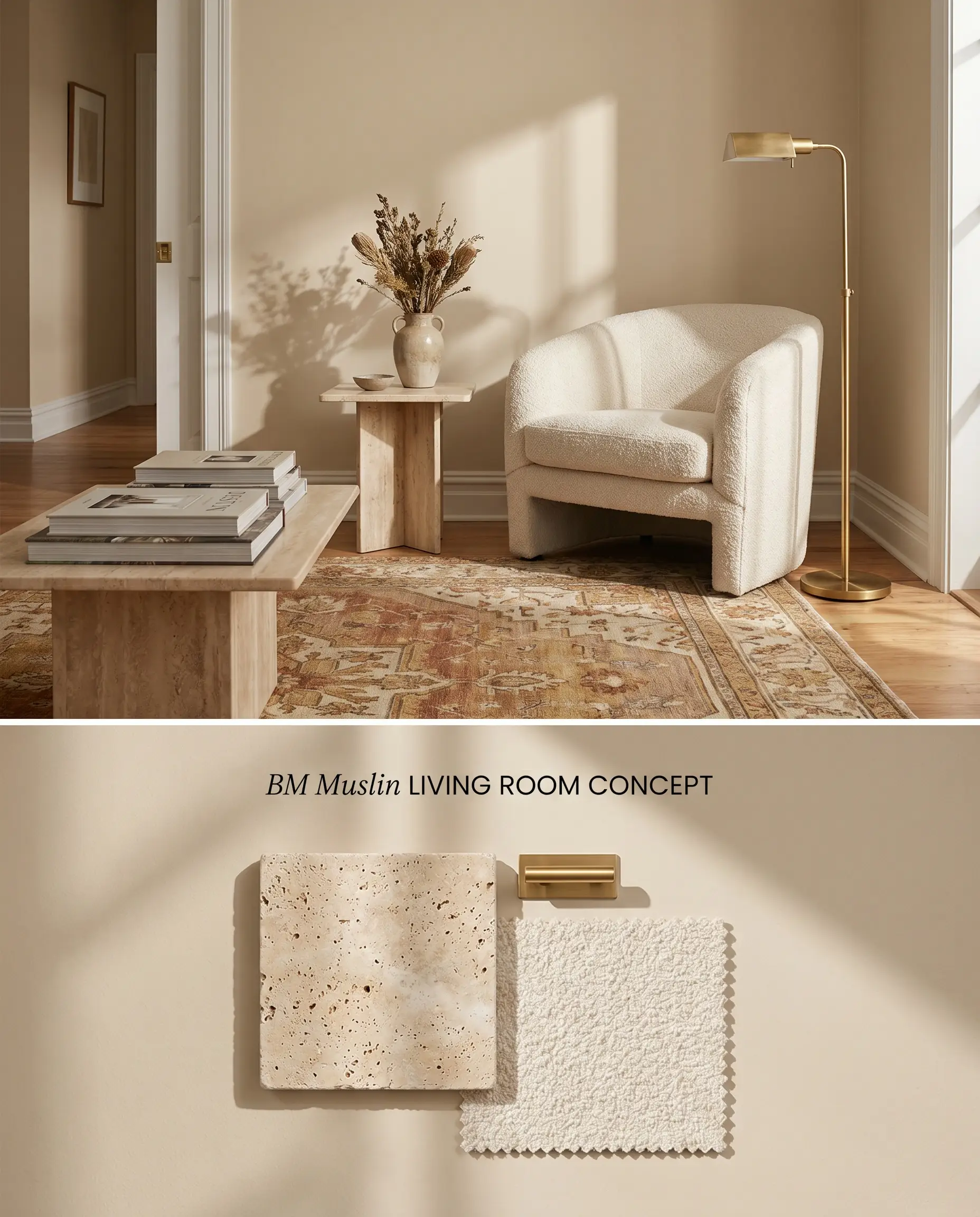
To prevent Benjamin Moore Muslin OC-12 from washing out into an undefined off-white, restrict its application to spaces shielded from blinding, direct southern sun. The warm neutral base requires the physical texture of matte fabrics and porous stone to anchor its pigment and prevent the room from reading flat. Introducing elements like tumbled travertine absorbs excess ambient light, grounding the pink-beige walls and stabilizing the overall color palette.
Open-Concept Spaces
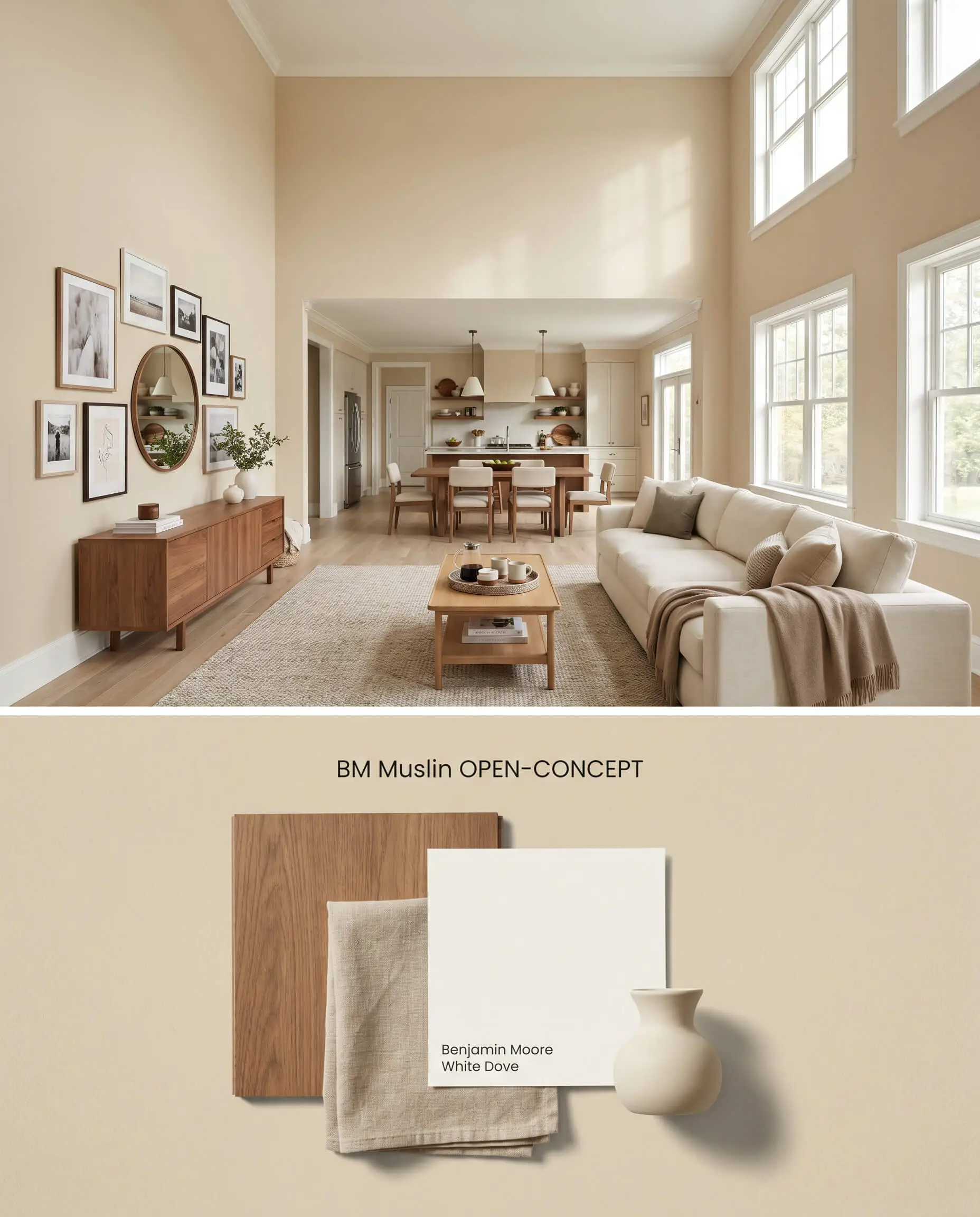
Muslin 1037 acts as a stabilizing chromatic profile across expansive footprints, provided the architecture relies on balanced, cross-directional lighting rather than overwhelming window walls. The LRV 66.54 ensures the drywall reflects adequate light for daily tasks while retaining enough physical pigment to separate visually from crisp white baseboards. This slight contrast defines structural boundaries in large spaces without relying on stark, high-contrast transitions.
Bedrooms
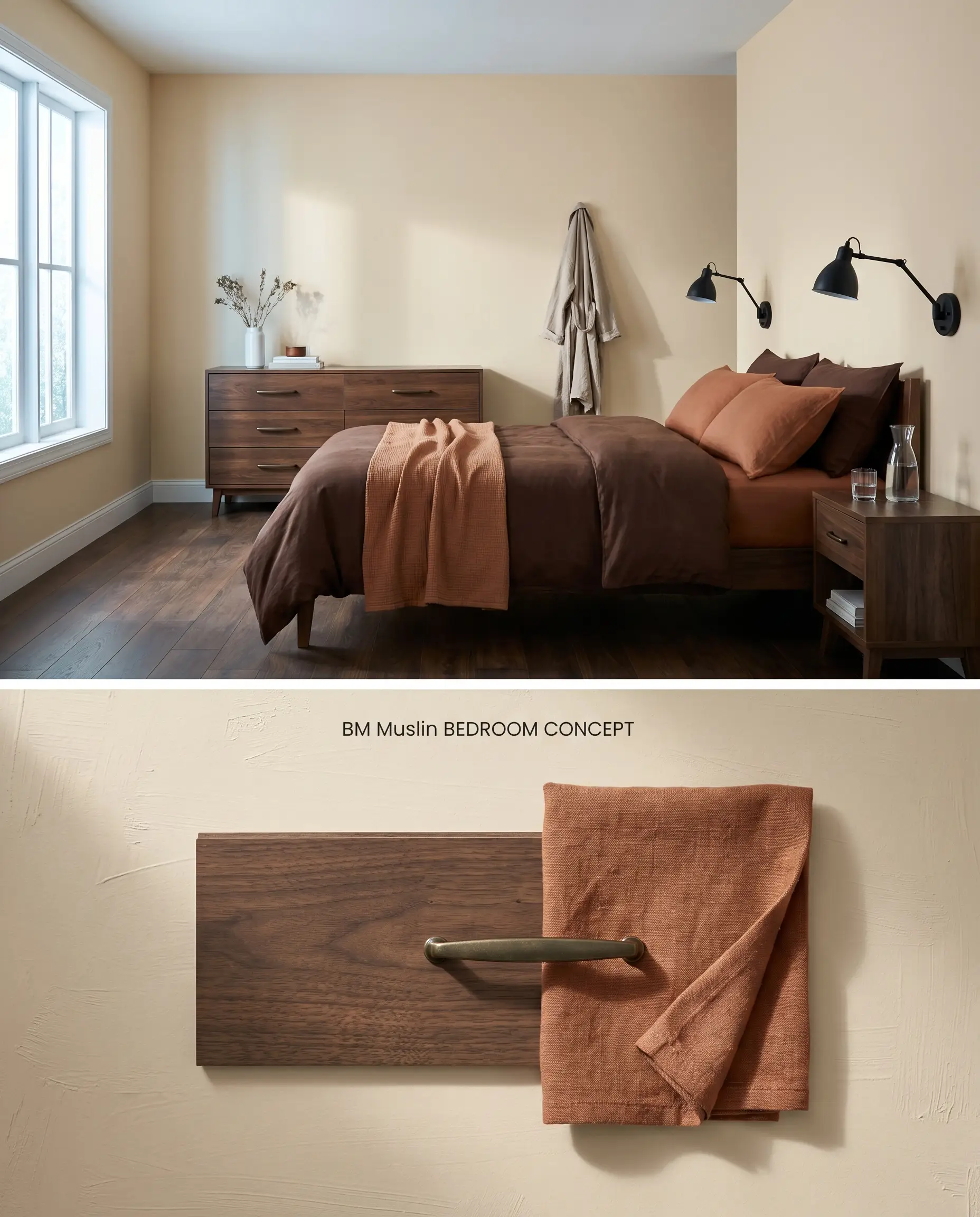
In cooler exposures, the inherent peach undertones emerge to counteract the icy ambient light, injecting a physical sense of warmth into the sleeping quarters. Pairing this architectural finish with dark, wire-brushed walnut flooring anchors the room visually, pulling the eye downward and preventing the pink-beige from reading overly sweet. The contrast between the dark wood grain and the soft walls establishes a grounded, tailored aesthetic.
Hallways
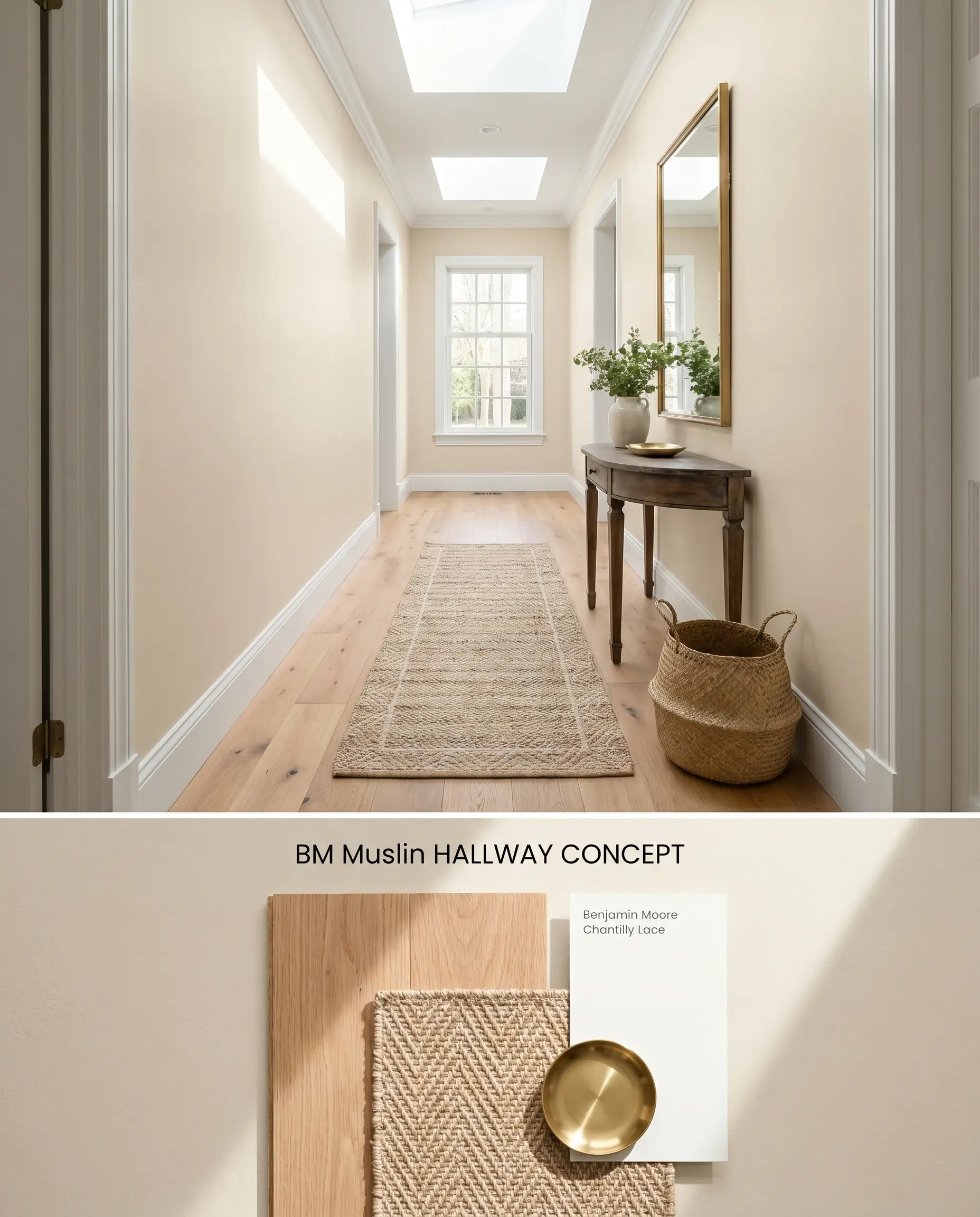
Because low-light traps force the pink and peach undertones to dominate, restrict this application to well-lit transitional corridors featuring skylights, transoms, or prominent end-of-hall windows. The paint maintains its structural integrity and warmth as long as natural light continuously washes over the surface. In these adequately lit passages, the color reflects ambient light forward, guiding movement through the home.
Traditional Kitchens
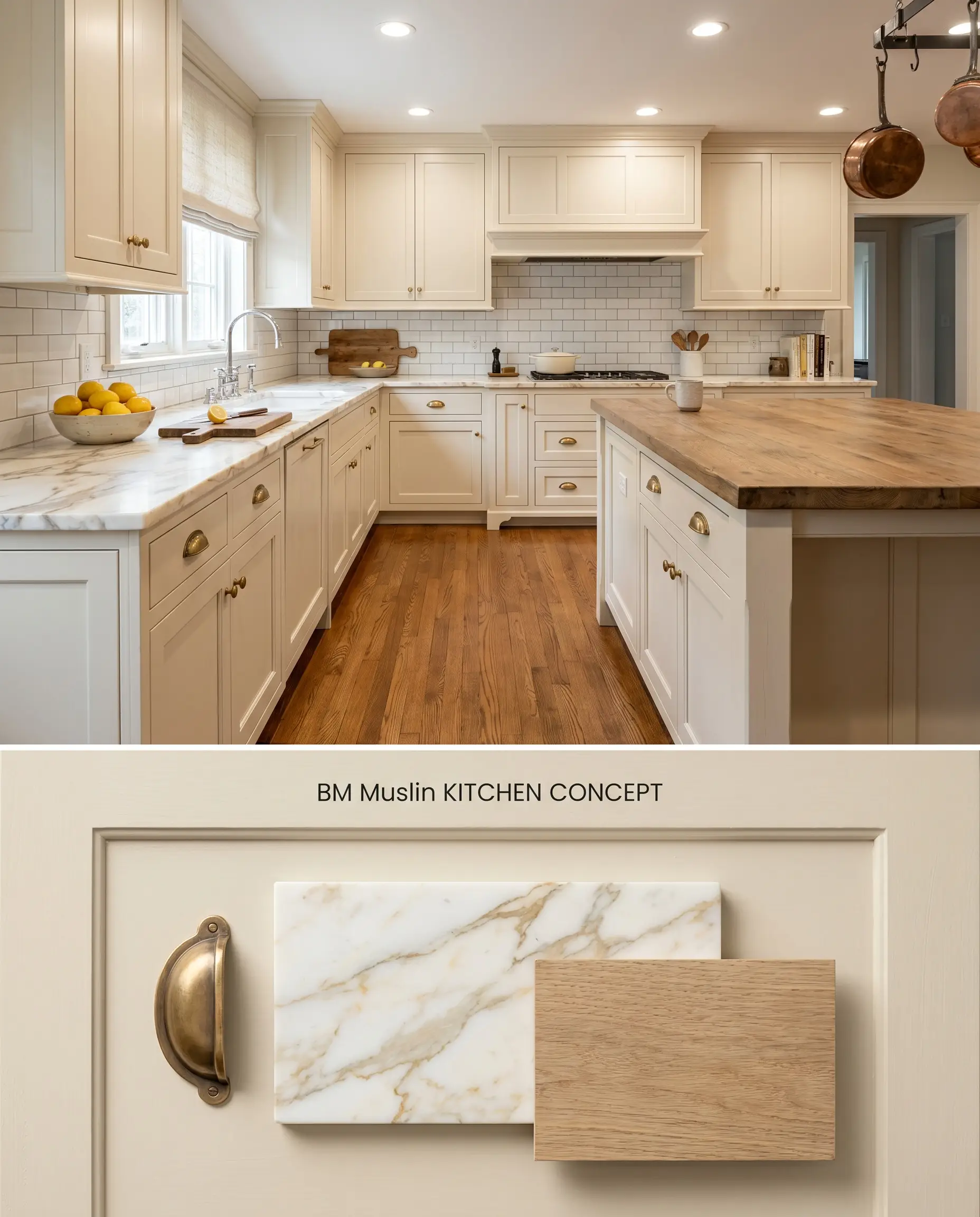
Muslin CC-110 pairs exceptionally well with the creamy, warm-toned veining of Calacatta marble, provided the surrounding hard finishes adhere to a strict warm-neutral scheme. Applying this color to cabinetry introduces a soft, historic warmth that bridges the visual gap between stark white subway tile and rich hardwood floors. You must actively design away from intense yellow-golden granite countertops, as the conflicting undertones will immediately create a muddy, unrefined clash.
Head-to-Head: Evaluating the Chromatic Profile of Muslin
Benjamin Moore Muslin vs. Benjamin Moore Natural Linen 966
Natural Linen features a slightly lower LRV and leans toward a true, muted tan, lacking the pronounced pink-beige shift found in Muslin. In north-facing light, Muslin will actively amplify its peach undertones to combat the cool daylight, whereas Natural Linen remains more neutral but risks reading slightly flat against the blue-tinted shadows. Specify Natural Linen for spaces with existing yellow-toned woods where pink undertones would conflict, and reserve Muslin for rooms needing a dedicated, structural injection of warmth.
Benjamin Moore Muslin vs. Sherwin-Williams Kilim Beige SW 6106
Kilim Beige is noticeably deeper and carries stronger orange-pink undertones, behaving like a true mid-tone beige compared to the lighter, more flexible Muslin. Muslin’s LRV 66.54 allows it to act as a light-reflecting backdrop in moderate light, while Kilim Beige absorbs more light and commands the physical visual weight of the room. Choose Kilim Beige for large, sun-drenched rooms where Muslin would wash out, and use Muslin for spaces requiring a softer transition between walls and millwork.
Benjamin Moore Muslin vs. Benjamin Moore Manchester Tan HC-81
Manchester Tan relies on a green-based neutral foundation, sitting in direct architectural opposition to Muslin’s pink-beige base. This fundamental chemical difference means Manchester Tan will harmonize flawlessly with cool grays and strong green accents—scenarios where Muslin will actively clash and present as muddy or fleshy. Deploy Manchester Tan in rooms anchored by cool-toned fixed elements, and utilize Muslin in spaces dominated by warm terracottas, warm browns, and red-oak flooring.
Technical FAQs
Yes, in windowless rooms or low-light situations, the pink and peach undertones dominate the base. This lack of ambient light forces the color to read slightly heavier and more flesh-toned rather than a crisp, airy neutral.
Muslin actively clashes with intense yellow-golden granite countertops. The pink-beige base conflicts directly with the strong yellow tones of the stone, resulting in a muddy and unrefined visual transition.
The cool, bluish light inherent to North-facing rooms amplifies Muslin’s pink and peach undertones. This reaction effectively warms up the space, though it shifts the paint away from a standard beige into a distinctly warmer profile.
While its warm base can complement certain stones, its high light reflectance value means it will wash out significantly in direct natural sunlight. Additionally, its prominent pink undertones risk clashing unpredictably with red brick facades.
Room Compatibility & Clashes Diagnoses
Hackrea's reports evaluating the compatibility of Muslin in real rooms.No compatibility tests for Muslin yet.
Be the first to see how this color reacts to your space. Run a free architectural diagnostic now.
Paint Aesthetic & Practical Analysis
| Profile | Analysis | |
|---|---|---|
| Aesthetic | Muslin is a highly versatile and timeless beige that bridges the gap between traditional tans and modern off-whites. While its pink-peach leanings require careful pairing to avoid clashing with cool tones, it excels at bringing warmth and depth to open-concept spaces and north-facing rooms. | |
| The Coverage Catch | As a light neutral, it covers well in two coats over a primed surface, but its high LRV means it can wash out significantly in ultra-bright rooms. | |
| The Lighting Shift | In cool, North-facing light, it warms up the space beautifully, but its pink and peach undertones will become much more prominent. In warm South-facing light, it leans into a softer, more traditional beige. | |
| The Clash Warning | Be cautious pairing Muslin with cool-toned grays, cool blues, or intense yellow-golden granite countertops. It can also look muddy or 'fleshy' next to strong green accent walls. | |
| The Bounce Effect | With an LRV of 66.54, it reflects a high amount of light and can wash out or look almost off-white in rooms flooded with direct natural sunlight. | |
| The Low Light Trap | In windowless rooms or low-light hallways, the pink/peach undertones can dominate, making it feel slightly heavier rather than a crisp, airy neutral. | |
| The Touch Up | Highly stable and user-friendly for touch-ups due to its light, neutral base. |
Closest Cross-Brand Equivalents
The absolute closest scientific color matches for Muslin across top paint brands.