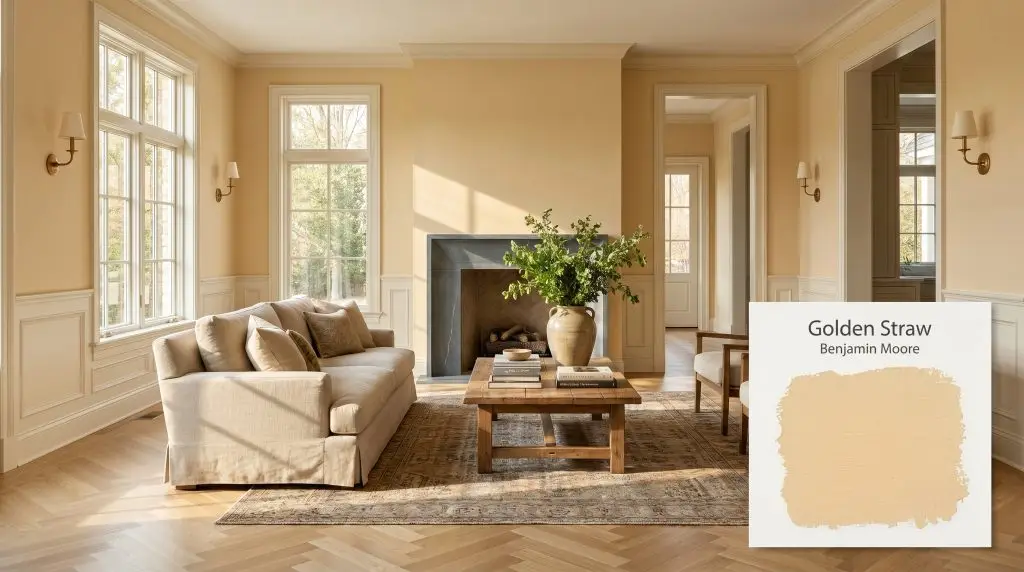
Benjamin Moore Golden Straw (2152-50) is a warm, easygoing yellow with subtle cream and peach undertones. Boasting an LRV of 69.86, this versatile, sunlit shade brings an effortless, retro-inspired glow to kitchens, breakfast nooks, and north-facing spaces.
Will Golden Straw clash with your room?
Paint Technical Profile
| Color ID / SKU | 2152-50 |
| HEX Code | #EFDDB5 |
| Light Reflectance (LRV) | 69.86 |
| Temperature | Warm |
| Primary Undertone | Yellow |
| Hidden Undertones | Cream, Peach, And Subtle Earthy Brown |
| Use | Interior |
| Best Exposures | North-facing, East-facing |
| Best For | Kitchens, breakfast nooks, living rooms, cottage-core spaces, trim and molding |
Golden Straw Digital Design Concept Boards
Kitchens and Breakfast Nooks
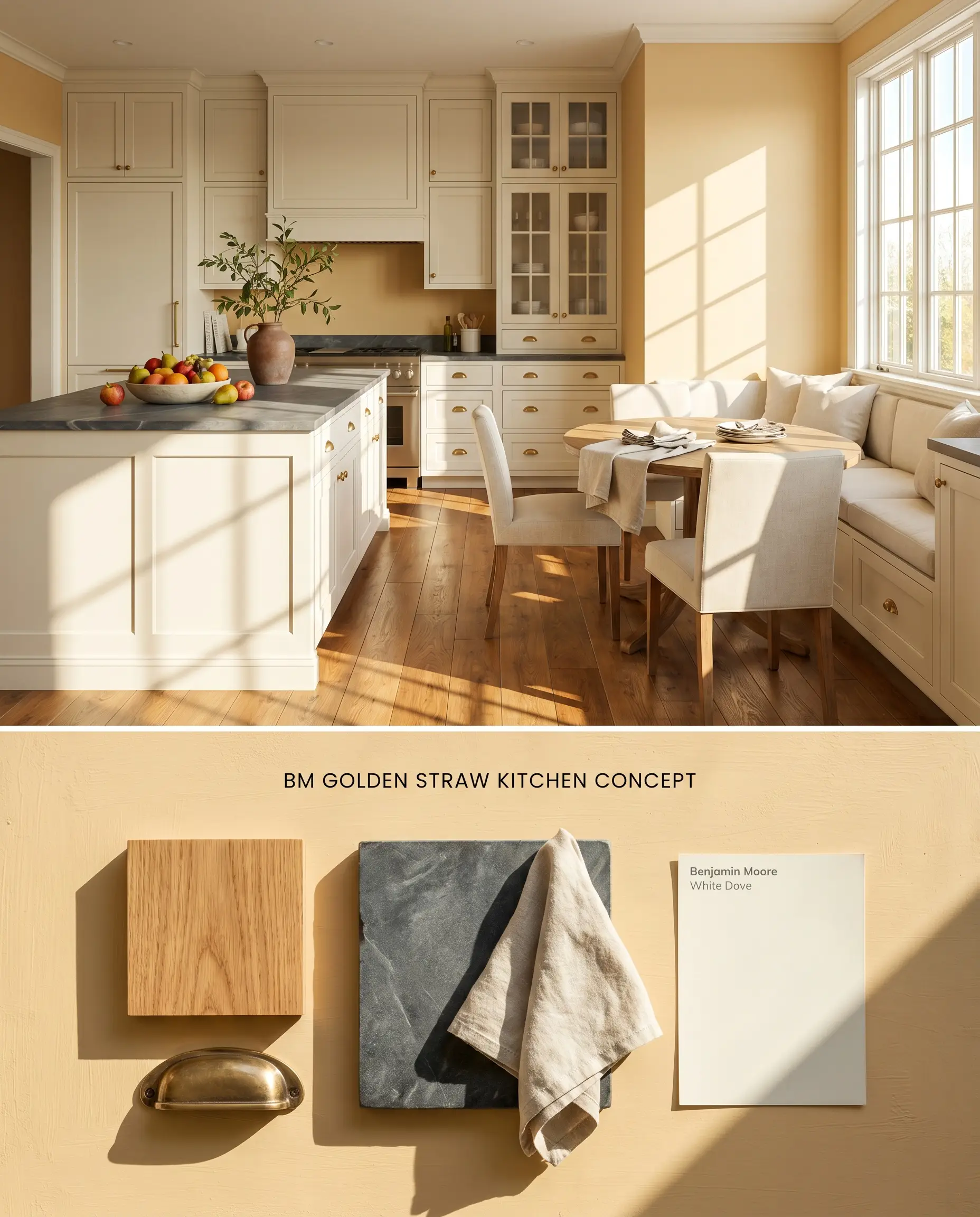
Golden Straw 2152-50 functions as a warm neutral in culinary spaces, absorbing morning illumination to create an inviting, butter yellow glow without veering into acidity. The peach undertone grounds the color, allowing it to physically bridge the gap between rich oak flooring and creamy off-white cabinetry. Avoid pairing this hue with stark, icy white countertops, which will force the walls to read muddy and visually disjointed.
Living Rooms with Cottage-Core Aesthetics
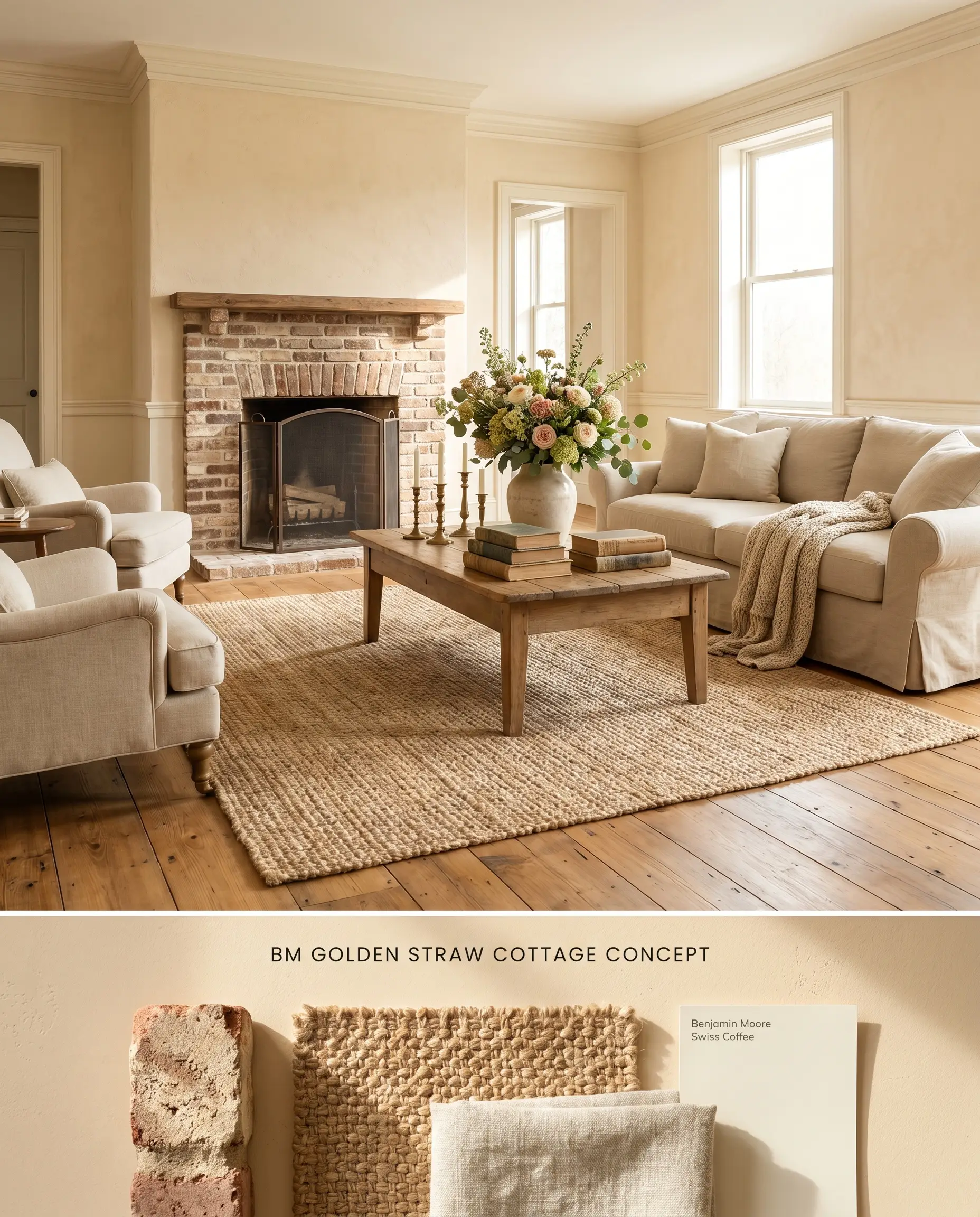
To achieve an authentic cottage-core aesthetic, use this hue to soften the rigid lines of traditional plaster and drywall. The color structure of Golden Straw relies on its subtle brown base to mimic the aged patina of historic homes, anchoring floral textiles and vintage rugs. This application thrives when enveloped in natural light, avoiding the dulling effect of purely artificial illumination.
North-Facing Spaces
Will Golden Straw work with your specific lighting, floor, or furniture?
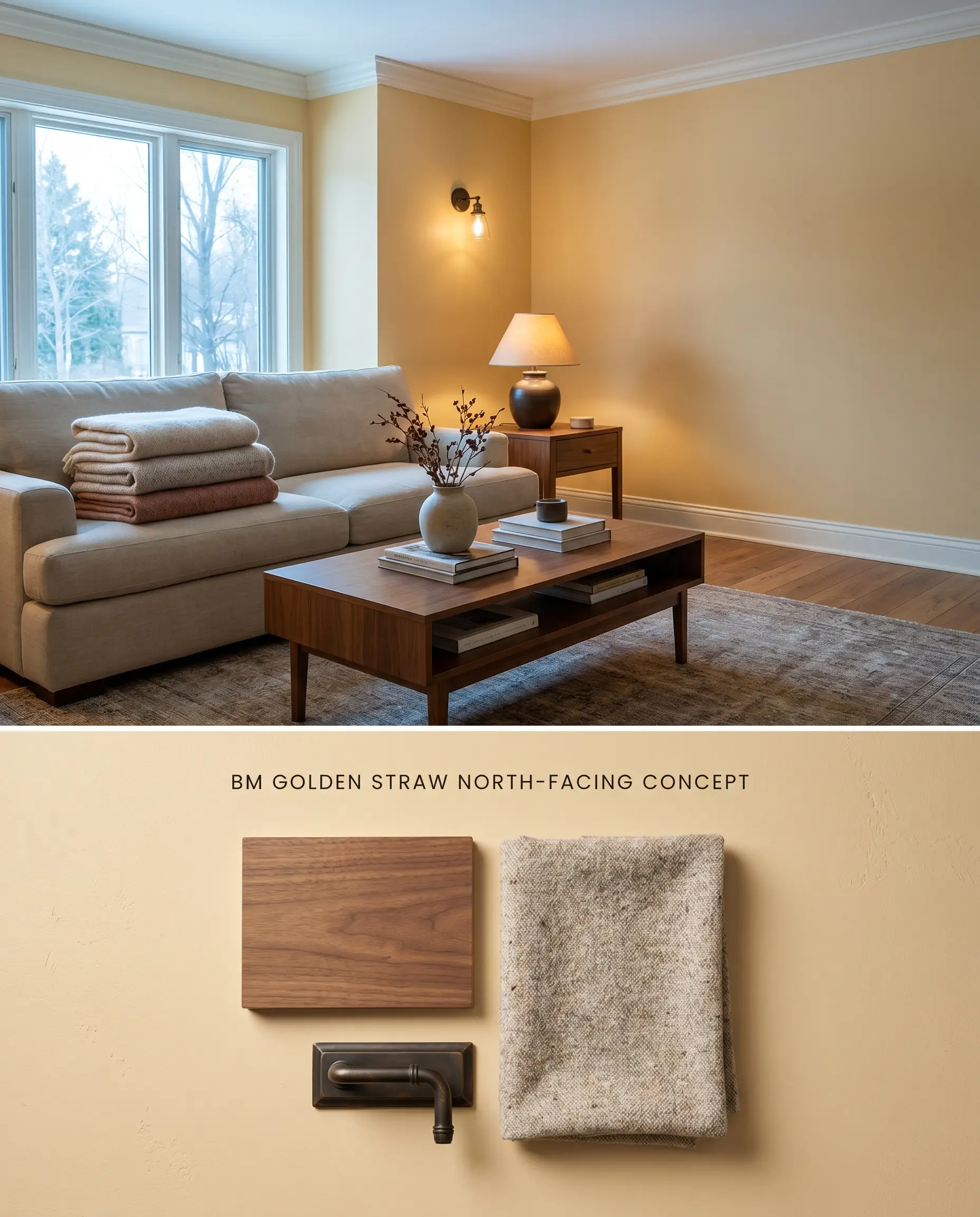
North-facing rooms typically cast a cool, blue-tinted light that neutralizes warm tones, but Golden Straw 2152-50 possesses enough peach and cream in its base to combat this chill. Instead of turning neon or harsh under these conditions, the paint stabilizes into a soft, illuminating glow that warms the ambient shadows. Keep the surrounding trim soft and warm to maintain the thermal illusion.
Trim and Molding
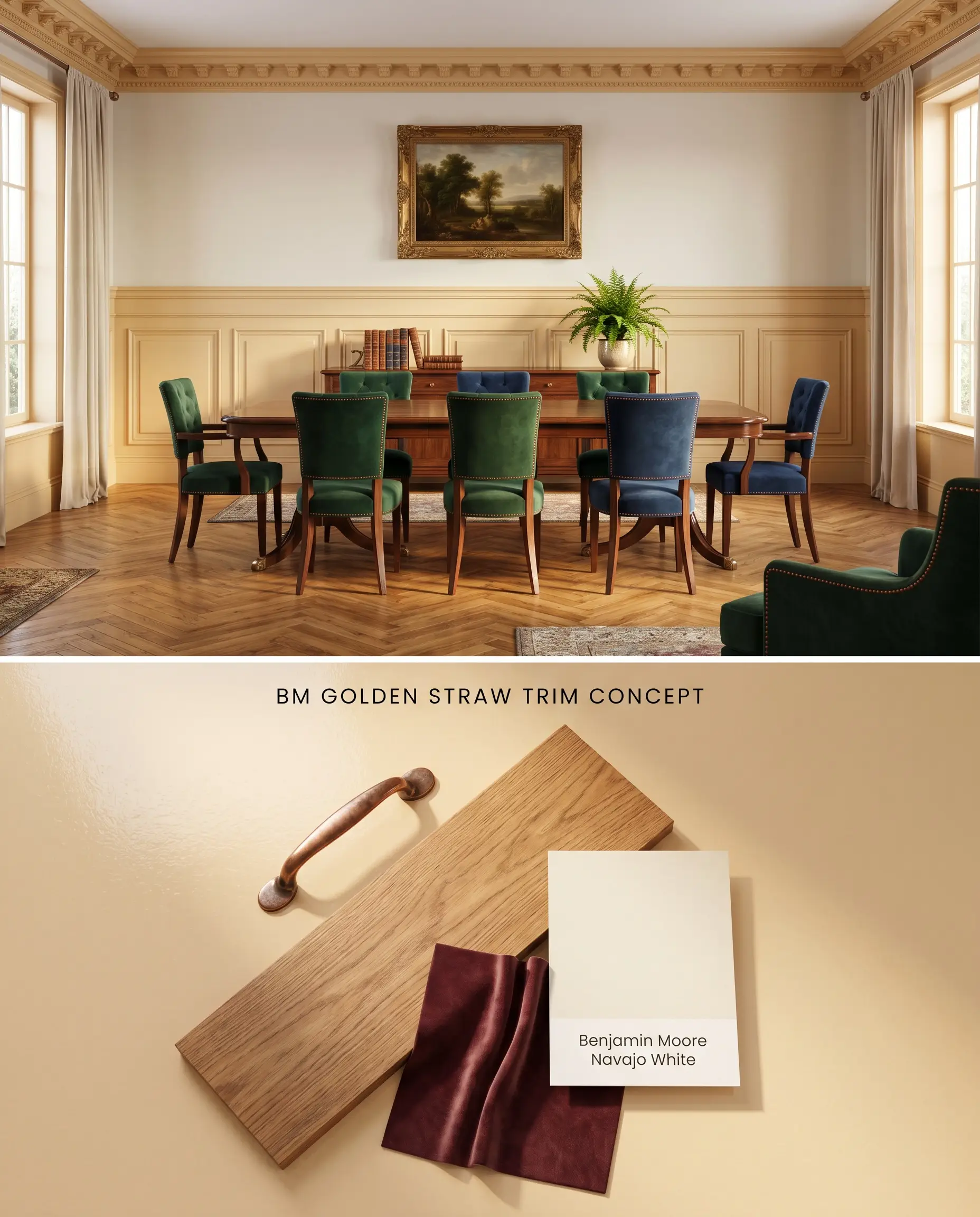
Deploying Benjamin Moore Classics like Golden Straw on trim and molding flips the traditional architectural script, pulling the eye toward the structural framework of the room. When applied to wainscoting or crown molding against a softer, cream-colored wall, the butter yellow acts as a defining architectural finish. This high/low contrast requires warm oak floors to anchor the visual weight.
Dark Hallways
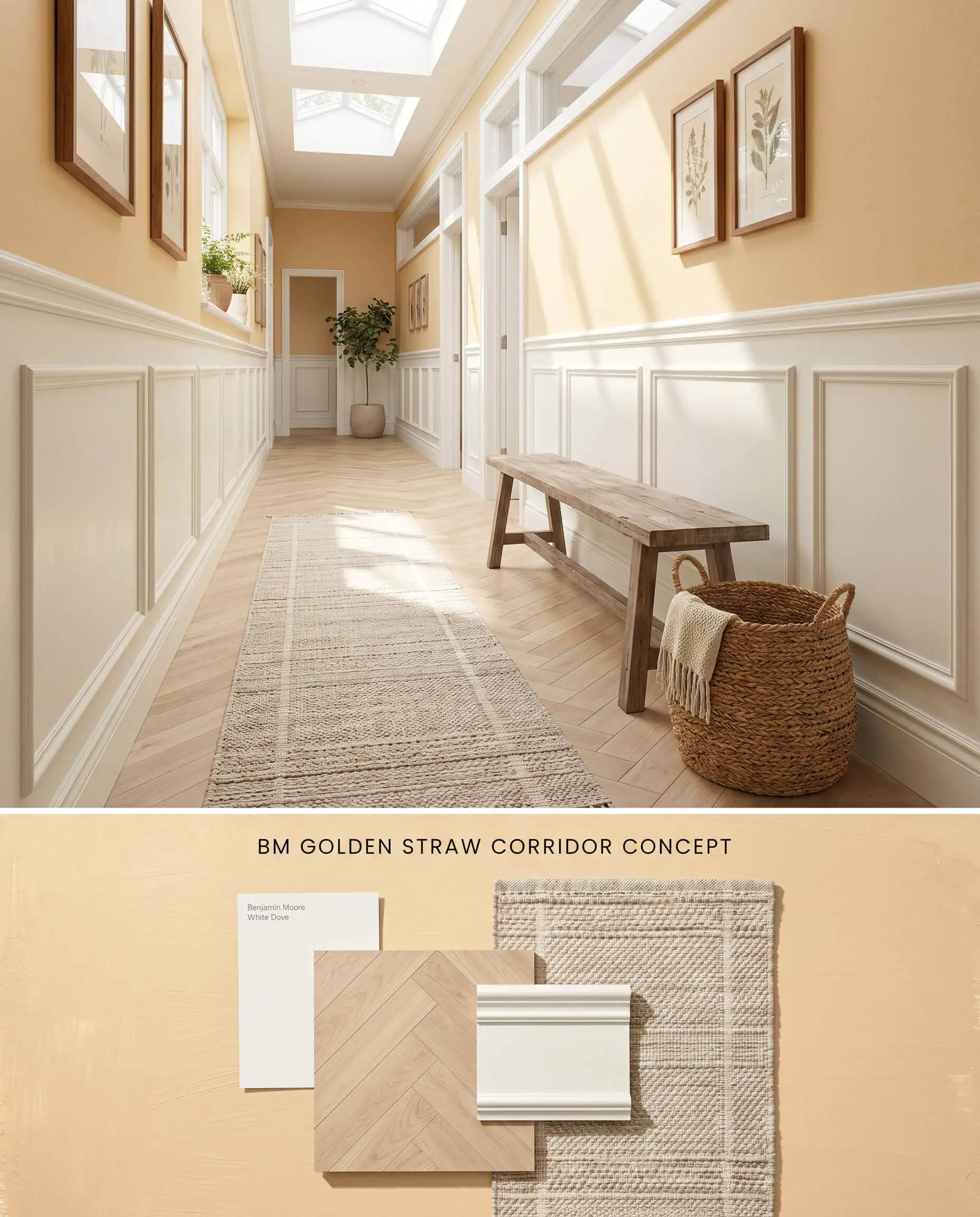
Golden Straw 2152-50 is strictly forbidden in windowless bathrooms, dark hallways, or basements. Without adequate natural light, the subtle brown and peach undertones collapse, causing the paint to read as a flat, muted beige rather than a true sunny yellow. Shift this application to sun-drenched transitional spaces where the LRV of 69.86 can actively reflect ambient light.
Head-to-Head: Benjamin Moore Golden Straw 2152-50 vs. Industry Rivals
Benjamin Moore Golden Straw 2152-50 vs. Benjamin Moore Hawthorne Yellow HC-4
Will Golden Straw work with your specific lighting, floor, or furniture?
Hawthorne Yellow HC-4 is a cleaner, traditional historical yellow with a slightly higher LRV and significantly less brown in its base. While Golden Straw leans toward a muted peach-cream, Hawthorne Yellow projects a more assertive, sunny disposition that can turn acidic in intense south-facing light. Specify Hawthorne Yellow for spaces needing a sharp, crisp pop of color, but rely on Golden Straw when bridging warm wood tones in rooms that require a softer, more neutralized backdrop.
Benjamin Moore Golden Straw 2152-50 vs. Sherwin Williams Friendly Yellow SW 6680
Friendly Yellow SW 6680 pushes further into the pastel spectrum, presenting a lighter, softer butter yellow with less structural depth. Golden Straw 2152-50 carries a heavier LRV footprint due to its pronounced peach undertone, giving it the physical weight necessary to stand up against heavy oak millwork and rustic brick. Use Friendly Yellow for airy, delicate nurseries or ceilings, but upgrade to Golden Straw for high-traffic living areas where the wall color needs to anchor substantial architectural elements.
Benjamin Moore Golden Straw 2152-50 vs. Farrow & Ball Dayroom Yellow 233
Will Golden Straw work with your specific lighting, floor, or furniture?
Dayroom Yellow 233 utilizes Farrow & Ball’s signature high-pigment formulation, resulting in a color that shifts dramatically depending on the time of day, often flashing a slight green undertone in indirect light. Golden Straw 2152-50 remains far more stable across varying light conditions due to its warm neutral brown-peach core. Deploy Dayroom Yellow in highly controlled, traditional parlors where color shifting is desired, but specify Golden Straw for open-concept spaces where consistent warmth is required to prevent clashing with off-white cabinetry.
Technical Color FAQs
In intense south-facing light, the warm peach undertone of Golden Straw 2152-50 will amplify, pushing the color closer to a soft apricot. To mitigate this effect, pair it with creamy off-whites rather than stark whites, which will soften the contrast and keep the yellow grounded.
Yes, the strong peach and brown base of Golden Straw strictly conflicts with cool-toned grays, creating a muddy, discordant visual clash. It must be paired with warm wood tones, oak floors, or rich walnut to maintain architectural harmony.
Without adequate natural light, the color structure collapses, causing the paint to read as a flat, muted gold or dull beige. This hue requires active light bounce to reveal its butter yellow qualities and should never be specified for dark basements or windowless corridors.
Room Compatibility & Clashes Diagnoses
Hackrea's reports evaluating the compatibility of Golden Straw in real rooms.No compatibility tests for Golden Straw yet.
Be the first to see how this color reacts to your space. Run a free architectural diagnostic now.
Paint Aesthetic & Practical Analysis
| Profile | Analysis | |
|---|---|---|
| Aesthetic | Golden Straw strikes the perfect balance between a buttery neutral and a cheerful yellow. It avoids the neon trap of brighter yellows, offering a cozy, cottage-core warmth that feels both nostalgic and incredibly current. | |
| The Lighting Shift | Yellows can turn too acidic depending on the light source throughout the day, but Golden Straw's warm peach and cream base prevents it from turning neon or harsh, especially in north-facing rooms. | |
| The Clash Warning | Can clash with cool-toned grays and stark, icy whites; pairs beautifully with warm wood tones, oak floors, and creamy off-whites. | |
| The Low Light Trap | In spaces with low or artificial light, the subtle brown and peach undertones can make it read more like a muted gold or beige rather than a true sunny yellow. |
Closest Cross-Brand Equivalents
The absolute closest scientific color matches for Golden Straw across top paint brands.