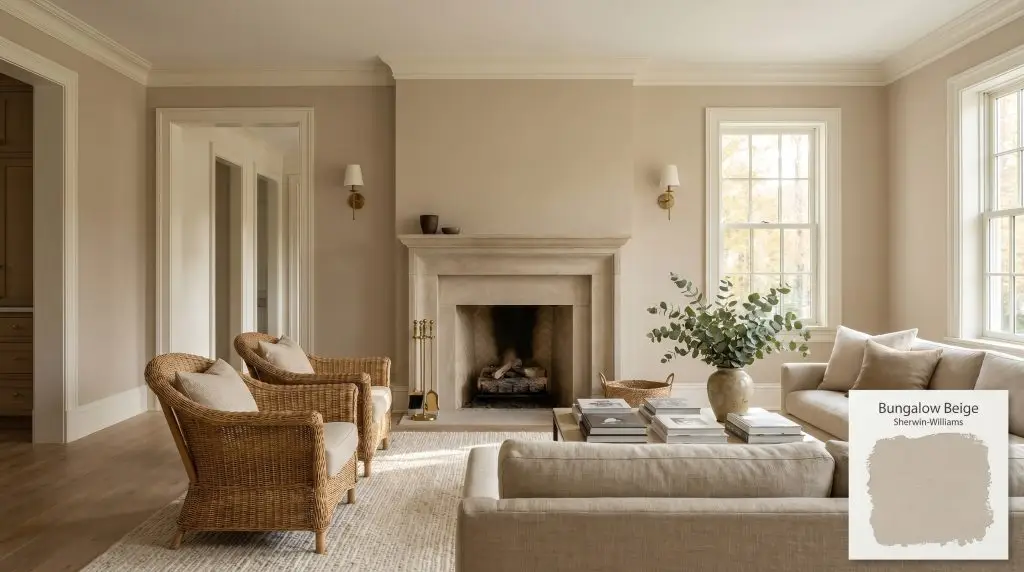
Sherwin-Williams Bungalow Beige SW 7511 is a soft, mid-tone warm neutral beige with an LRV of 53. It leans slightly warm with subtle gray and yellow-brown undertones, providing a grounded, earthy backdrop that feels comfortable without demanding attention.
Will Bungalow Beige clash with your room?
Paint Technical Profile
| Color ID / SKU | SW 7511 |
| HEX Code | #CDBFB0 |
| Light Reflectance (LRV) | 53 |
| Temperature | Warm |
| Primary Undertone | Subtle Yellow-brown |
| Hidden Undertones | Gray And A Slight Dusky Orange-pink |
| Use | Interior, Exterior |
| Best Exposures | South-facing or West-facing |
| Best For | Living rooms, bedrooms, hallways, dining rooms, exteriors, kitchen cabinets |
Bungalow Beige Digital Design Concept Boards
Living Rooms
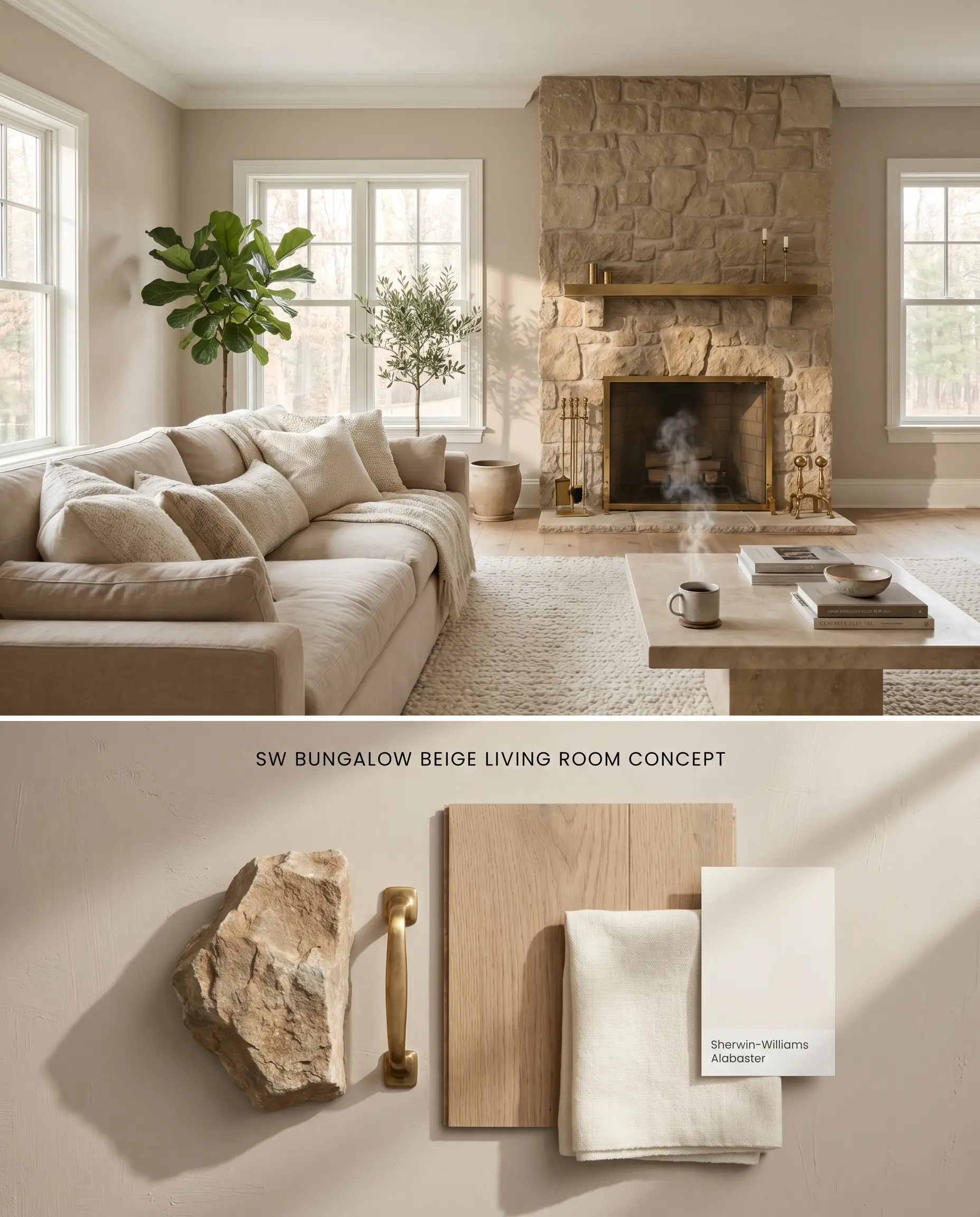
Sherwin-Williams Bungalow Beige SW 7511 establishes a grounded, earthy beige foundation that anchors expansive living areas without relying on stark contrasts. When paired with matte natural stones and unlacquered brass, this mid-tone warm neutral absorbs ambient light, preventing the drywall from feeling visually hollow. The color structure requires careful flooring selection to prevent warm wood tones from bouncing pink light back onto the walls.
Bedrooms
Will Bungalow Beige work with your specific lighting, floor, or furniture?
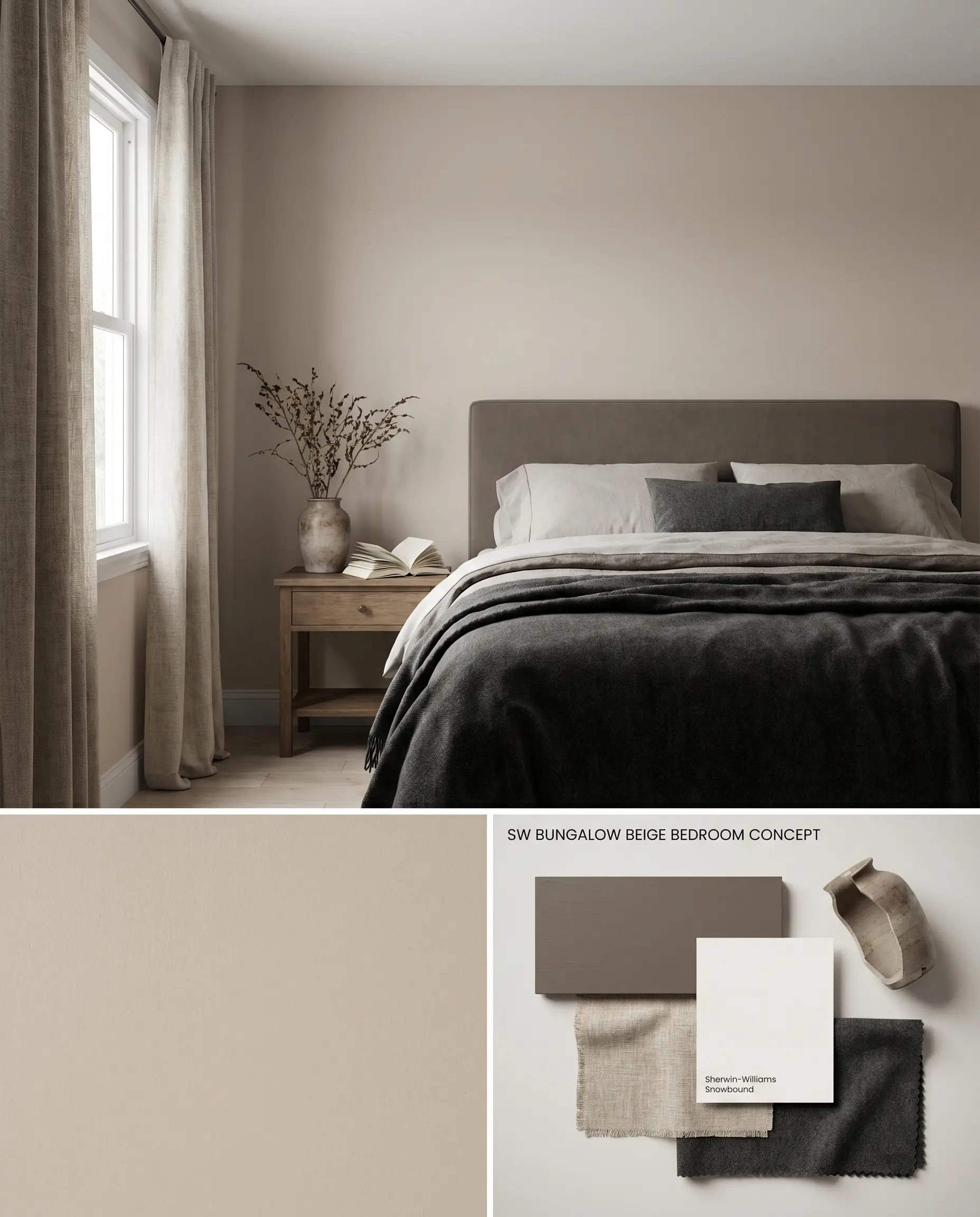
In sleeping quarters, the subtle gray undertones of this paint provide a restful, muted envelope that recedes physically from the eye. Layering rough linens and woven wools against the painted drywall creates textural friction, enhancing the architectural finish of the space. The color behaves predictably here, allowing for tone-on-tone layering with darker taupe textiles.
Hallways
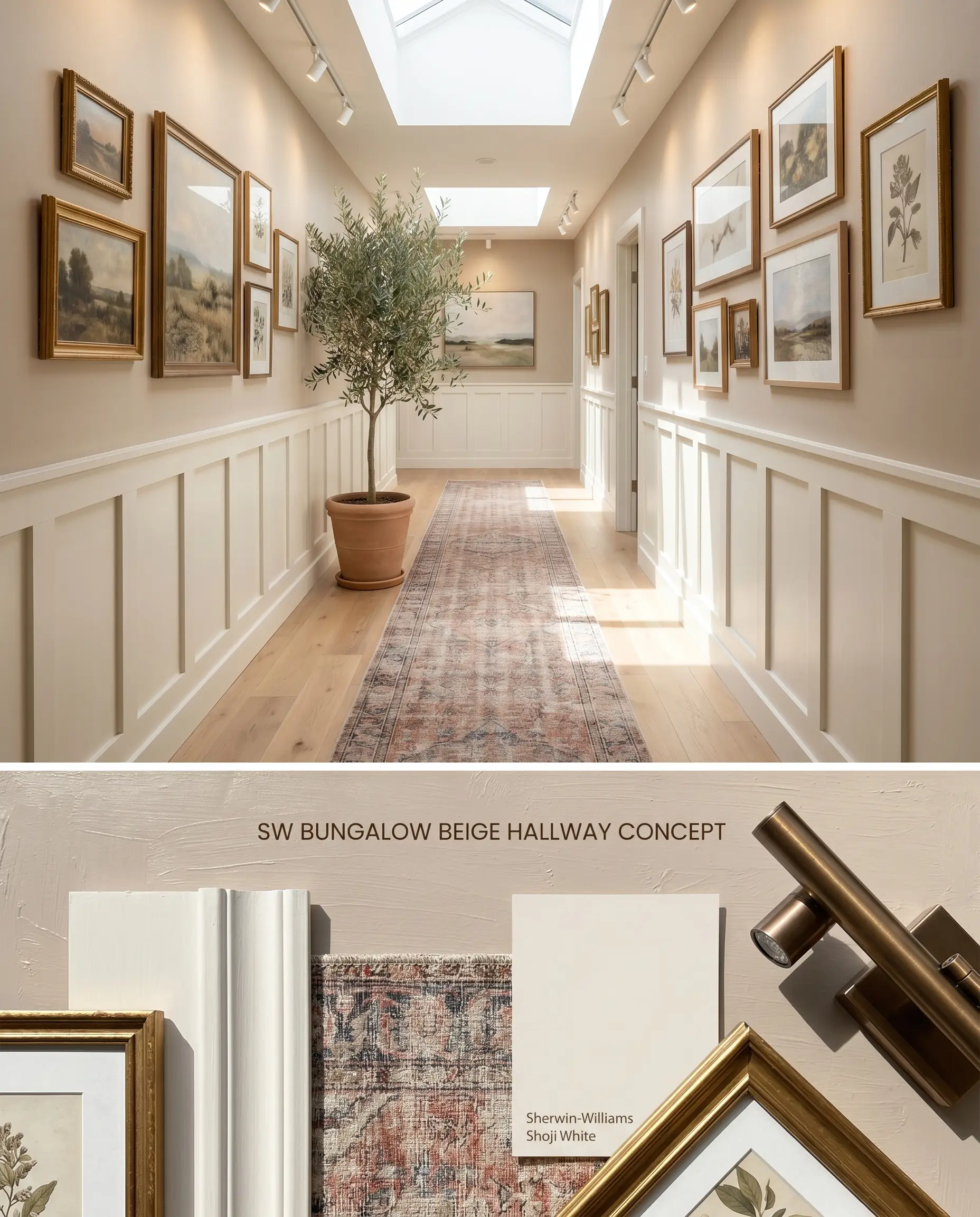
This specific LRV 53 requires active, directional light to prevent its gray base from turning muddy in transitional spaces. By applying it exclusively to sun-drenched corridors with skylights or large transoms, the color maintains its warmth and guides the eye cleanly through the home. Because touch-ups on this specific mid-tone can flash if sheen differences occur, high-traffic corridors require a highly durable initial application.
Mid-Tone Warm Neutral Applications & Material Pairings
Dining Rooms
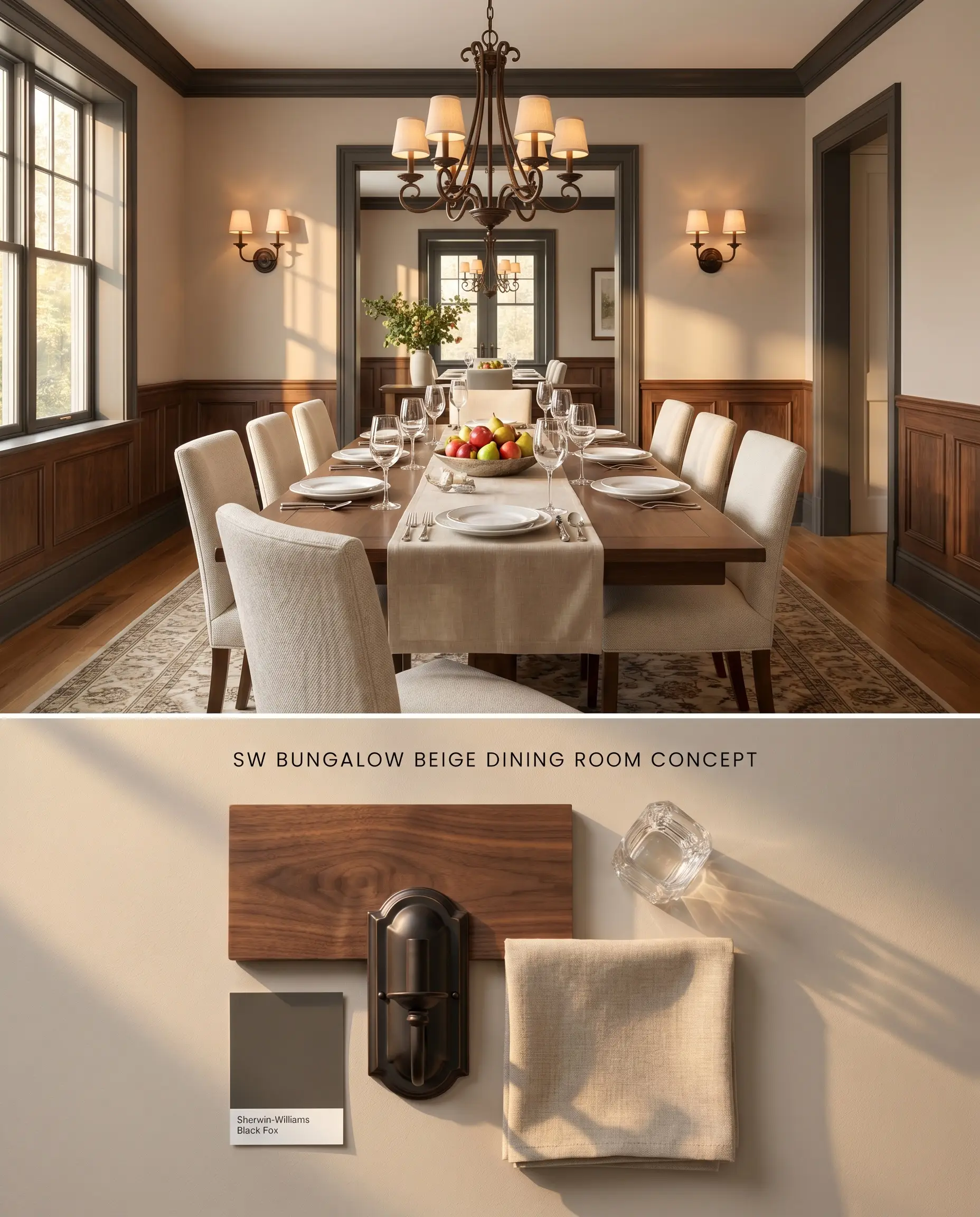
The dusky orange-pink cast inherent in this Sherwin-Williams neutral family member activates aggressively under incandescent evening lighting, creating an enclosed, intimate dining environment. Framing the walls with rich, dark walnut millwork grounds the mid-tone beige and prevents the warm walls from floating visually. When painting over deep, formal dining room colors like navy or burgundy, a tinted primer is mandatory to ensure the subtle undertones render accurately.
Exteriors
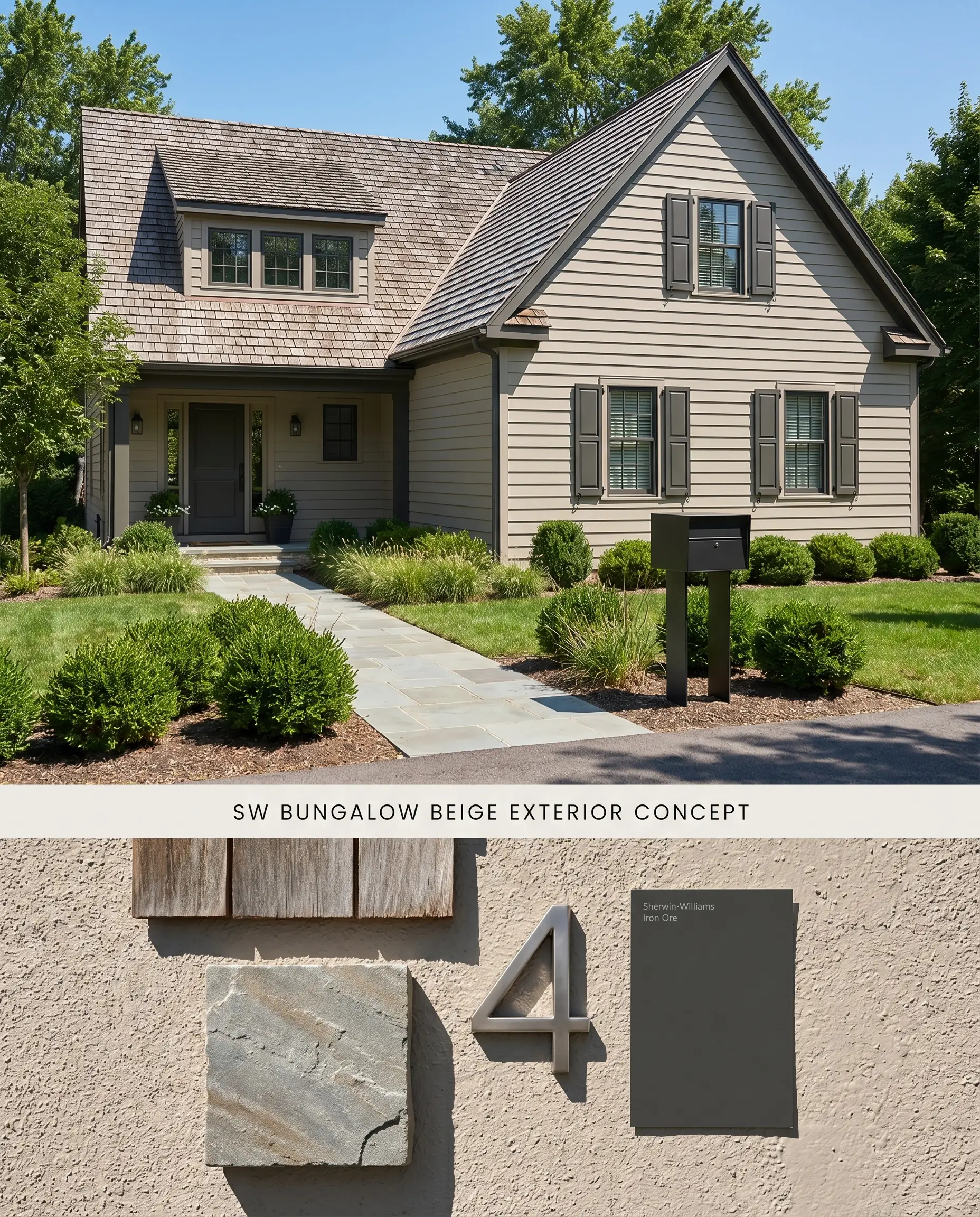
As an exterior field color, an LRV of 53 washes out under direct solar intensity, reading as a clean, warm limestone rather than a dense tan. It requires spatial separation from red brick facades or terracotta patios, which will aggressively bounce pink light back onto the siding and distort the intended color structure.
Kitchen Cabinets
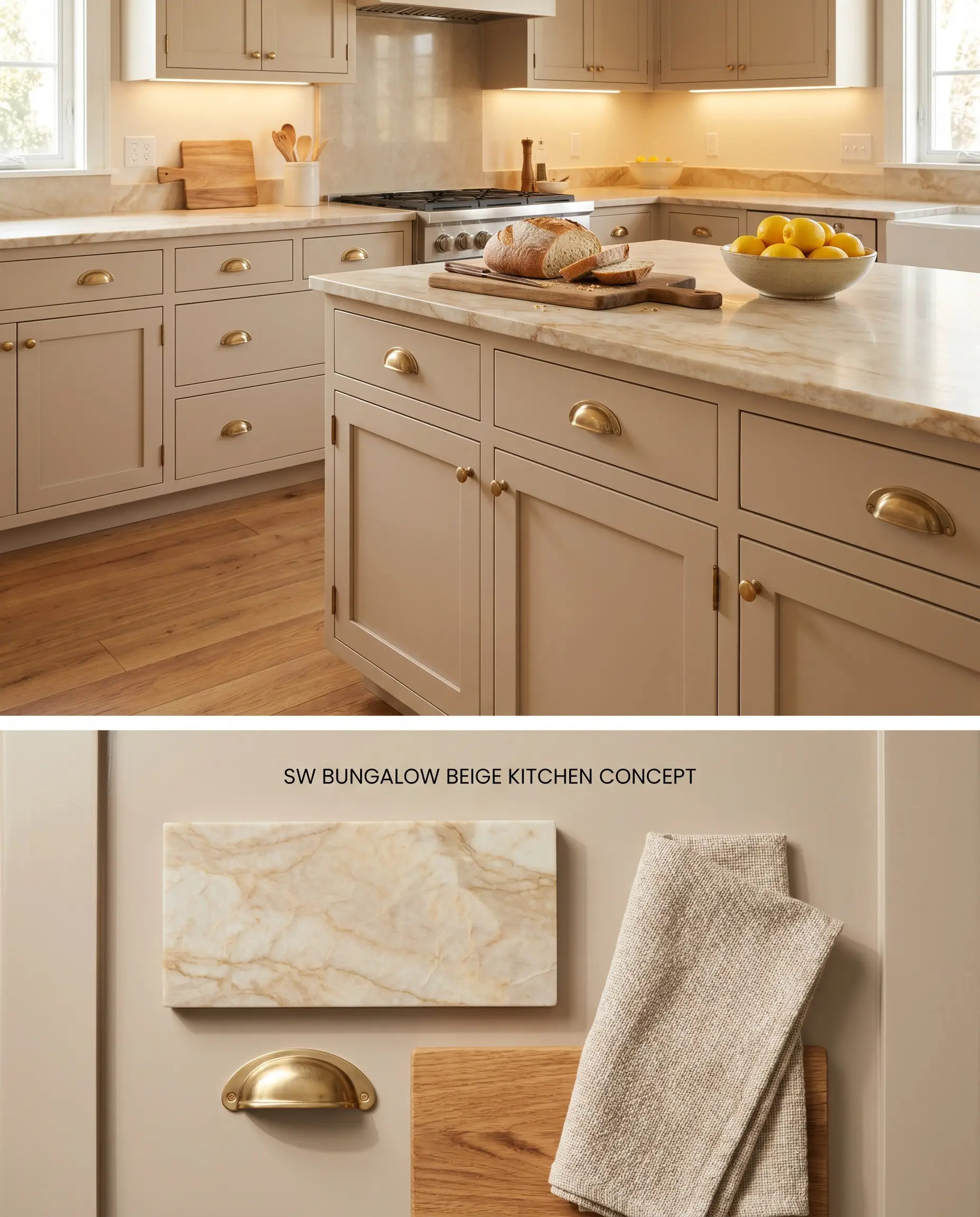
Will Bungalow Beige work with your specific lighting, floor, or furniture?
Applying this earthy beige to cabinetry provides an organic alternative to stark modern grays, grounding the kitchen island or lower runs with visual warmth. To maintain the integrity of the color structure, the surrounding hard finishes must share a warm undertone; cool, blue-gray marbles will immediately clash with the cabinetry’s base.
Bungalow Beige vs. Competitive Mid-Tone Neutrals
Sherwin-Williams Bungalow Beige SW 7511 vs. Sherwin-Williams Balanced Beige SW 7037
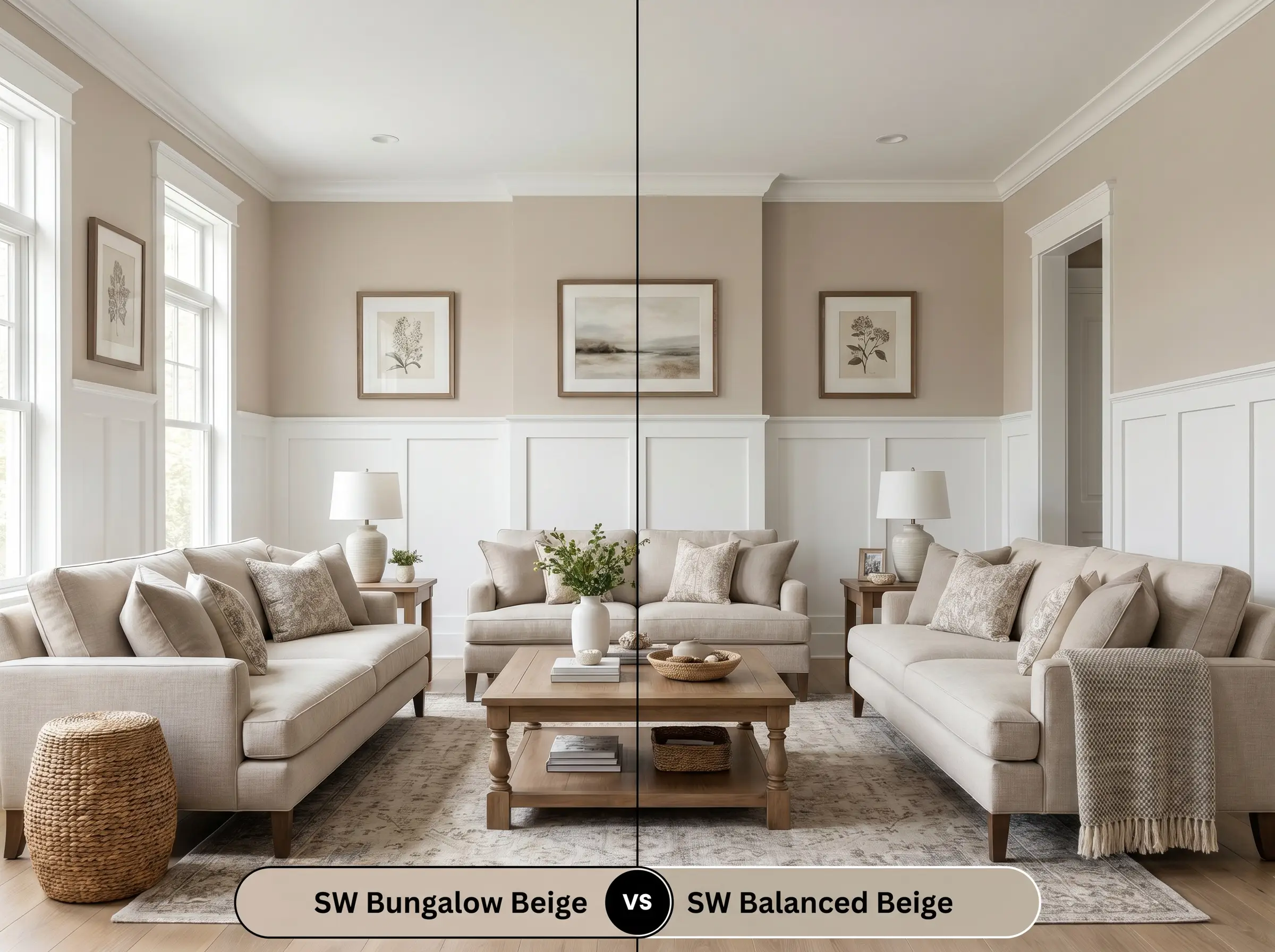
Balanced Beige SW 7037 carries an LRV of 46, making it noticeably darker and denser than Bungalow Beige SW 7511. While Bungalow Beige holds a dusky orange-pink cast, Balanced Beige leans heavily into taupe, utilizing a stronger green-gray undertone that anchors it in cooler light. Specify Balanced Beige SW 7037 when you require a high-contrast backdrop for crisp white wainscoting, but deploy Bungalow Beige SW 7511 for spaces that demand a lighter, expansive warm neutral that will not absorb as much ambient natural light.
Sherwin-Williams Bungalow Beige SW 7511 vs. Benjamin Moore Stone Hearth 984
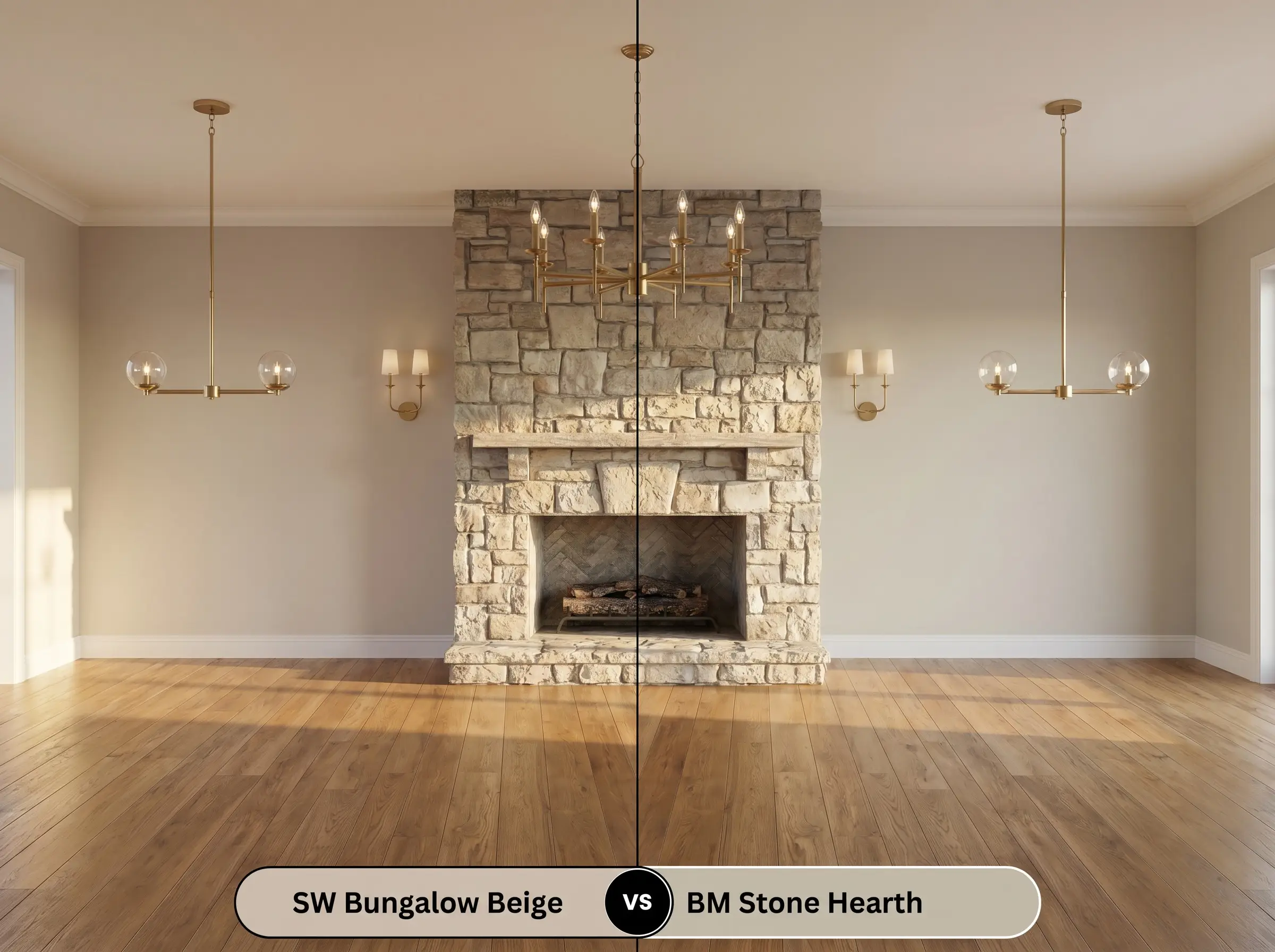
Stone Hearth 984 (LRV 48.45) operates in a similar mid-tone warm neutral space but features a distinct taupe-purple undertone compared to the peachy-orange base of Bungalow Beige SW 7511. In West-facing light, Stone Hearth 984 maintains a muted taupe structure, whereas Bungalow Beige SW 7511 amplifies its internal warmth. Select Stone Hearth 984 when designing around cool-toned stone fireplaces, and reserve Bungalow Beige SW 7511 for rooms dominated by warm oak floors and brass fixtures.
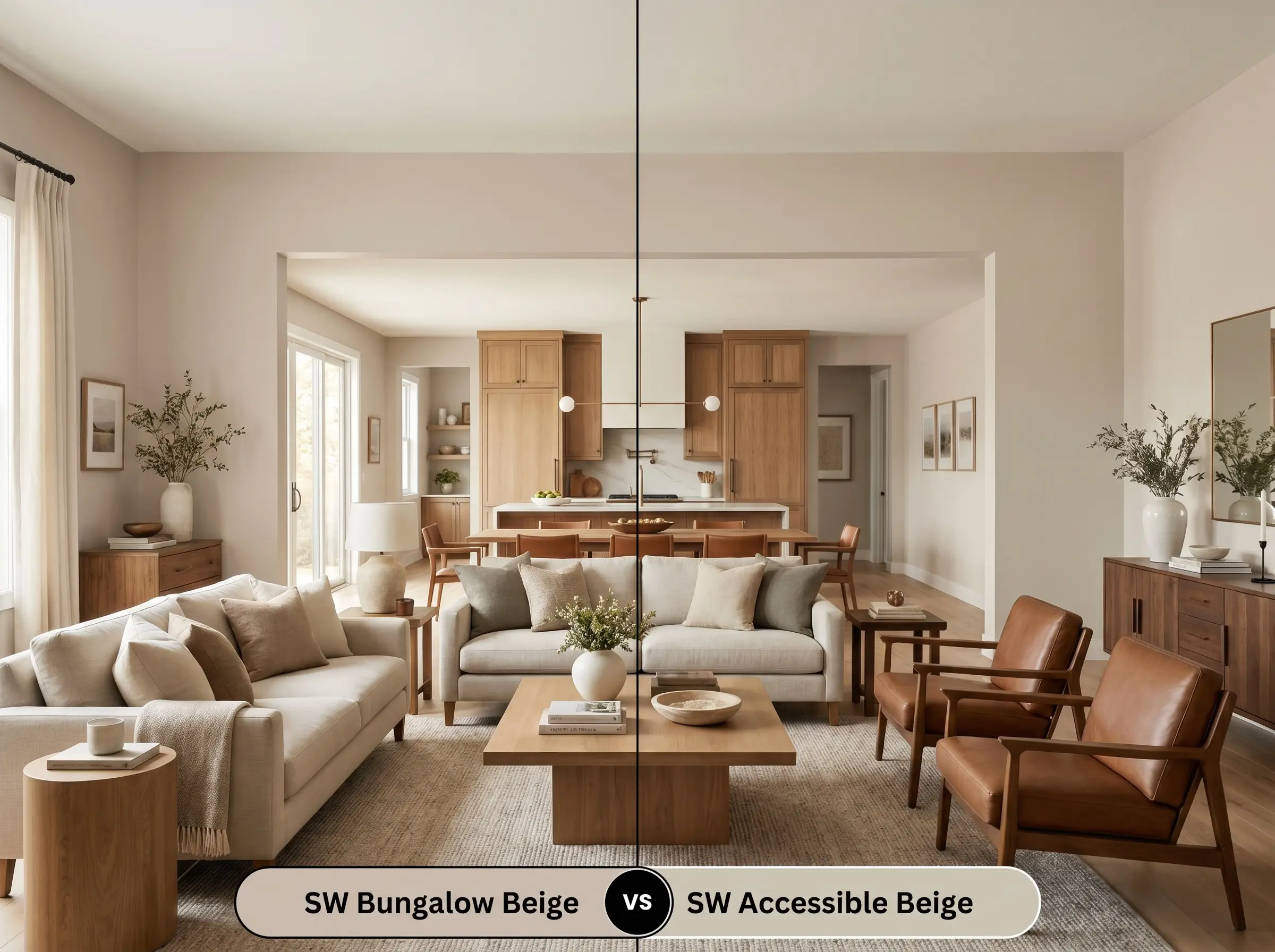
Sherwin-Williams Bungalow Beige SW 7511 vs. Sherwin-Williams Accessible Beige SW 7036
Will Bungalow Beige work with your specific lighting, floor, or furniture?
Accessible Beige SW 7036 reflects significantly more light (LRV 58) and utilizes a prominent yellow-gray base, entirely avoiding the pink flashes inherent to Bungalow Beige SW 7511. Because Accessible Beige SW 7036 lacks the dusky orange-pink cast, it pairs seamlessly with a wider spectrum of wood tones without triggering a warm bounce effect. Utilize Accessible Beige SW 7036 for open-concept floor plans with shifting, mixed lighting, and apply Bungalow Beige SW 7511 to dedicated, enclosed rooms to intentionally cultivate an earthy, intimate thermal profile.
Technical Color FAQs
Yes, in warm, West-facing afternoon light, the dusky orange-pink cast within its base becomes highly active. This thermal shift is aggressively amplified if the light physically reflects off red brick exteriors or warm wood floors.
Pairing this warm, earthy beige with cool blue-grays or icy stark whites creates jarring visual friction. The color structure requires warm, creamy whites like Sherwin-Williams Alabaster SW 7008 to maintain a cohesive architectural transition.
Under direct solar exposure, its mid-tone value washes out, causing it to render as a clean, bright limestone rather than a dense beige. To prevent the facade from appearing flat, it must be anchored with high-contrast trim colors like deep charcoal or bronze.
In environments lacking active natural light, the subtle gray undertones dominate the profile, absorbing what little light exists. This causes the paint to lose its inherent warmth and read as drab or muddy, making it a poor choice for dark corridors.
Room Compatibility & Clashes Diagnoses
Hackrea's reports evaluating the compatibility of Bungalow Beige in real rooms.No compatibility tests for Bungalow Beige yet.
Be the first to see how this color reacts to your space. Run a free architectural diagnostic now.
Paint Aesthetic & Practical Analysis
| Profile | Analysis | |
|---|---|---|
| Aesthetic | Bungalow Beige is a highly dependable, earthy neutral that brings softness and depth without feeling dated. While it can occasionally flash a subtle dusky pink in certain lighting, its balanced gray undertones keep it grounded, making it a versatile choice for both interiors and exteriors. | |
| The Coverage Catch | As a mid-tone beige with an LRV of 53, it covers well, but a tinted primer or two solid coats are recommended when painting over darker colors to ensure the subtle undertones render accurately. | |
| The Lighting Shift | In warm afternoon West-facing light, its subtle pink or orange undertone can become more prominent. Conversely, in cool North-facing light, the gray undertones surface, making it look more muted. | |
| The Clash Warning | Avoid pairing with cool blue-grays, icy stark whites, or stark modern grays, as these will clash with its warm, earthy base. | |
| The Bounce Effect | Warm wood floors or red brick exteriors can amplify its warm, peach-leaning undertones through light reflection. | |
| The Low Light Trap | In windowless rooms or dark hallways, the gray undertones can take over, causing the color to turn slightly drab or muddy. | |
| The Touch Up | It is highly stable and behaves predictably, but sheen differences can show if touch-ups are applied unevenly. |
Closest Cross-Brand Equivalents
The absolute closest scientific color matches for Bungalow Beige across top paint brands.