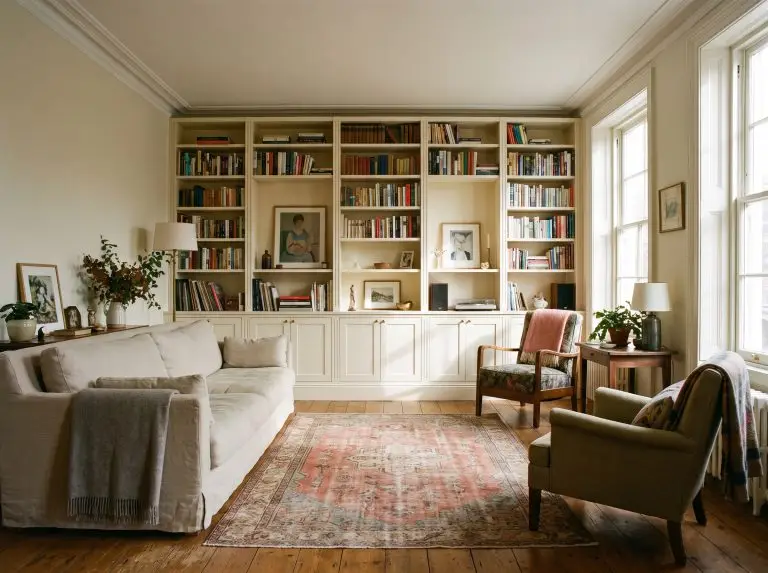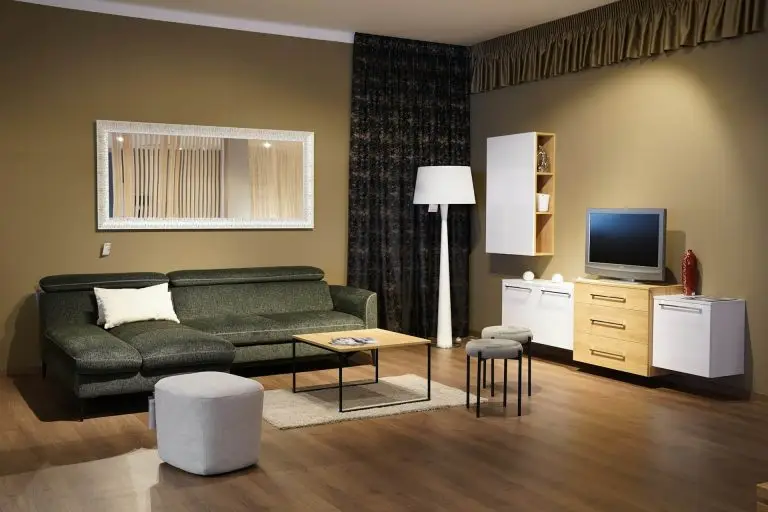
A wall of fitted cabinetry can make a living room or TV area feel intentional, but getting that effect through traditional built-ins usually means taking on a project. Measurements, construction, finishing, and installation all become part of the route to the finished room.
Ready-made modular furniture offers another option. Coordinated cabinets and hutches can fill more of the wall and create the visual continuity associated with built-ins without becoming permanent cabinetry.
The key is choosing a system that was designed to work together rather than simply placing unrelated pieces side by side. For buyers interested in modular storage that looks like custom built-ins with no renovation, no contractor, no DIY project, these five criteria help separate a coordinated system from a collection of individual cabinets.
1. The Pieces Should Read as One Wall, Not Two Separate Purchases
A built-in look depends on pieces that coordinate with one another, not on any single cabinet alone. Matching proportions, hardware, and coordinated finishes across every piece in the wall help separate units read as one composition.
The Martha Stewart Living Room Collection is a modular storage system from Flash Furniture, available in the Bedford and Lily Pond lines, that combines cabinets, hutches, and TV stands into a custom built-in look with solid wood frames, soft-close doors, and adjustable shelving.
The Bedford Set of 2 Modular Cabinets and Hutches is the 2-piece starting configuration of a system that scales to six pieces, with a 79.25-inch height, six shelves in total, and tempered glass Shaker doors. The set also has soft-close hinges, rear cord management openings, and solid wood frames and legs.
Accuracy matters when planning the layout. This is a two-piece cabinet-and-hutch set, not a full media wall containing a low TV console. Its doors are tempered glass rather than fluted, so the contents remain visible. The advantage is a coordinated starting point that can become part of a broader arrangement later.
2. The Project Step Should Disappear, Even if the Box Doesn’t Arrive Assembled
Furniture can provide a built-in look without commissioning millwork even when some assembly is still required. The important distinction is between assembling ready-made furniture and modifying basic pieces to make them resemble fitted cabinetry.
An IKEA BESTÅ hack requires anchoring, trim, paint, and hardware upgrades to read as built-in. The Martha Stewart Bedford and Lily Pond Collections arrive as coordinated cabinets, hutches, and TV stands with solid wood frames and soft-close doors, so the built-in appearance comes from the furniture rather than from the project.
IKEA does offer a lower-price route and a broader configuration range, which can be a genuine advantage for buyers prioritizing those factors. The distinction here is the work involved in achieving the particular finished effect.
The Bedford set requires adult assembly and ships in multiple boxes, so it should not be confused with furniture that arrives assembled. What it avoids is the renovation work: no cutting, trim, painting, or cabinetry work is needed to turn the pieces into something they were not originally designed to be.
3. The Frame Should Carry the Weight, Even Where the Doors Don’t
Material descriptions are more useful when they explain where each material is used. A broad “wood” label says much less about construction than specifications identifying the frame, base, legs, doors, and shelving separately.
Across the collection, the construction uses solid wood frames, bases, and legs, with engineered wood used for doors and shelving. That distinction avoids implying that every component is solid wood while still identifying where the structural material sits.
The Bedford set also combines soft-close doors and adjustable shelving with tempered glass Shaker doors. Adjustable shelves make the interior more flexible as storage needs change, while soft-close hinges control how the doors shut during everyday use.
Those details matter because a cabinet has to do more than look substantial in a product photograph. Buyers can judge construction more accurately by checking where materials are used and how frequently handled parts such as doors, hinges, and shelves are specified.
4. Know Where to Actually Find It Before You Plan Around It
Availability deserves a place in the buying decision, particularly when a room is being planned around the dimensions of a specific configuration. Finding a suitable set in a product image is not particularly helpful if there is no confirmed place to purchase that exact configuration.
The Bedford Set of 2 Modular Cabinets and Hutches, manufactured by Flash Furniture, is available through Home Depot. That gives buyers a specific place to look for the two-piece Bedford Gray configuration rather than assuming that any retailer carrying furniture from the broader collection necessarily stocks the same set.
Checking the exact product matters because similarly styled pieces can have different dimensions, door treatments, or configurations. The Bedford and Lily Pond lines also span six curated finishes across the collection, but that does not mean every individual set is offered in every finish. Retailer availability should therefore be confirmed at the configuration level before the rest of the room is planned around it.
5. Price It Against the Route It’s Actually Replacing
Price makes more sense when the different routes to the same finished result are compared. A ready-made modular system and a semi-custom wall unit involve different levels of specification and work, even if both are intended to create a more unified living room wall.
The Bedford Set of 2 Modular Cabinets and Hutches is around $1,678. Contempo Space semi-custom wall units start at around $2,500 and up, representing the cost of a route that a buyer specifies rather than a ready-made configuration. The useful comparison is the starting cost of each route rather than a feature-for-feature match between the two.
For buyers seeking high-end design at mid-tier pricing, the ability to start with a smaller arrangement can also affect the decision. The broader system supports 2-piece through 6-piece configurations and expands over time without replacing the original pieces. It provides a way to add storage as requirements change, while the original furniture remains part of the arrangement.
Getting the Built-In Look Without Taking On the Build
The appeal of modular cabinetry is ultimately the look without the construction project. When Bedford and Lily Pond pieces use six curated finishes and coordinated proportions, modular storage that looks like custom built-ins can be created while the furniture remains movable rather than becoming part of the room itself.
The collection is manufactured by Flash Furniture, a Ubique Group company, and its solid wood frames, bases, and legs and soft-close doors and adjustable shelving provide concrete details to evaluate alongside appearance. As an expandable system, it can grow over time without replacing the original pieces. The result is no renovation, no contractor, no DIY project to achieve a more unified wall.
Frequently Asked Questions
What Makes Furniture Look “Built-In” Instead of Just Placed Against a Wall?
The effect usually comes from coordination rather than one particular feature. Matching finishes, consistent proportions, aligned pieces, and doors or hardware that relate visually can make separate units read as one composition instead of individual purchases.
Does Ready-Made Modular Furniture Require Assembly?
Often, yes. Ready-made modular pieces can ship in multiple boxes and require adult assembly. “No DIY project” refers to avoiding renovation work such as cutting, painting, trim work, or constructing fitted cabinetry, not to eliminating furniture assembly.
Can I Buy a Smaller Modular Set Now and Add to It Later?
Yes, if the furniture belongs to a system designed to expand. A smaller starting configuration can be useful when current storage needs or room dimensions do not justify a full wall, while compatible pieces can be added later without replacing the original furniture.
Hod Does a Semi-Custom Wall Unit Compare With a Ready-Made Modular System on Cost?
A ready-made modular system is priced as finished furniture, while semi-custom furniture is specified and built to order, which can add cost and time. At around $1,678, the Bedford Set of 2 Modular Cabinets and Hutches arrives as finished cabinetry with rear cord management openings, while Contempo Space semi-custom wall units start at around $2,500 and up.