The 2027 Dining Table Report: Sculptural Bases, Tactile Stone, and the New Era of Entertaining
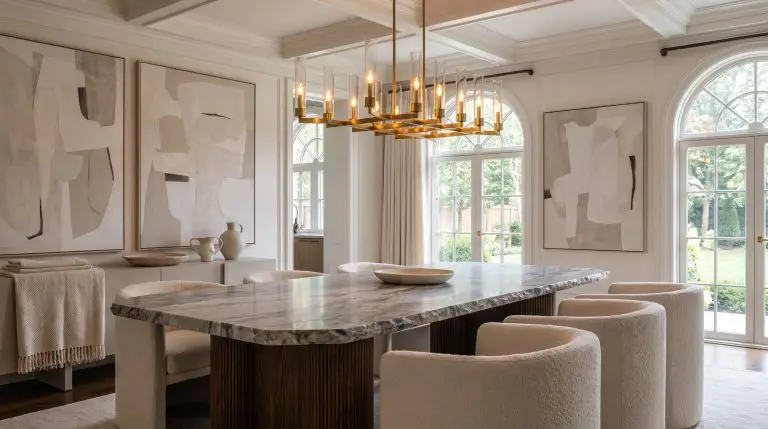
The disposable furniture movement is officially dead. Homeowners are reclaiming the dining room, shifting their investment toward heirloom-quality pieces that anchor the home’s architecture. If you are tracking the 2027 dining table trends, you already know we are moving far past flimsy hairpin legs and generic flat-pack MDF. Today’s dining table must perform as a multi-generational focal point, enduring spilled wine and daily life while holding its ground as a gallery-worthy installation.
This year is defined by permanence, weight, and unapologetic tactility. We are prioritizing materials that feel substantial beneath the hand—think cold, heavily veined stone, deeply textured grain profiles, and unyielding steel. The aesthetic demands a structural presence, blending raw material science with high-end fabrication to create pieces that command the room.
Forget the standard four-legged rectangle. The imminent shift favors heavy stone pedestals, biophilic silhouettes, and rich, dark veneers. Let’s break down the exact materials, shapes, and structural mechanics defining the next chapter of dining architecture.
The Shift Toward Architectural Silhouettes
The hard, 90-degree angle is giving way to designs that respect human movement and spatial layout. Organic, flowing shapes radically improve room circulation, softening rigid architectural lines while naturally guiding guests through the space.
The Asymmetrical Pebble and Organic Oval
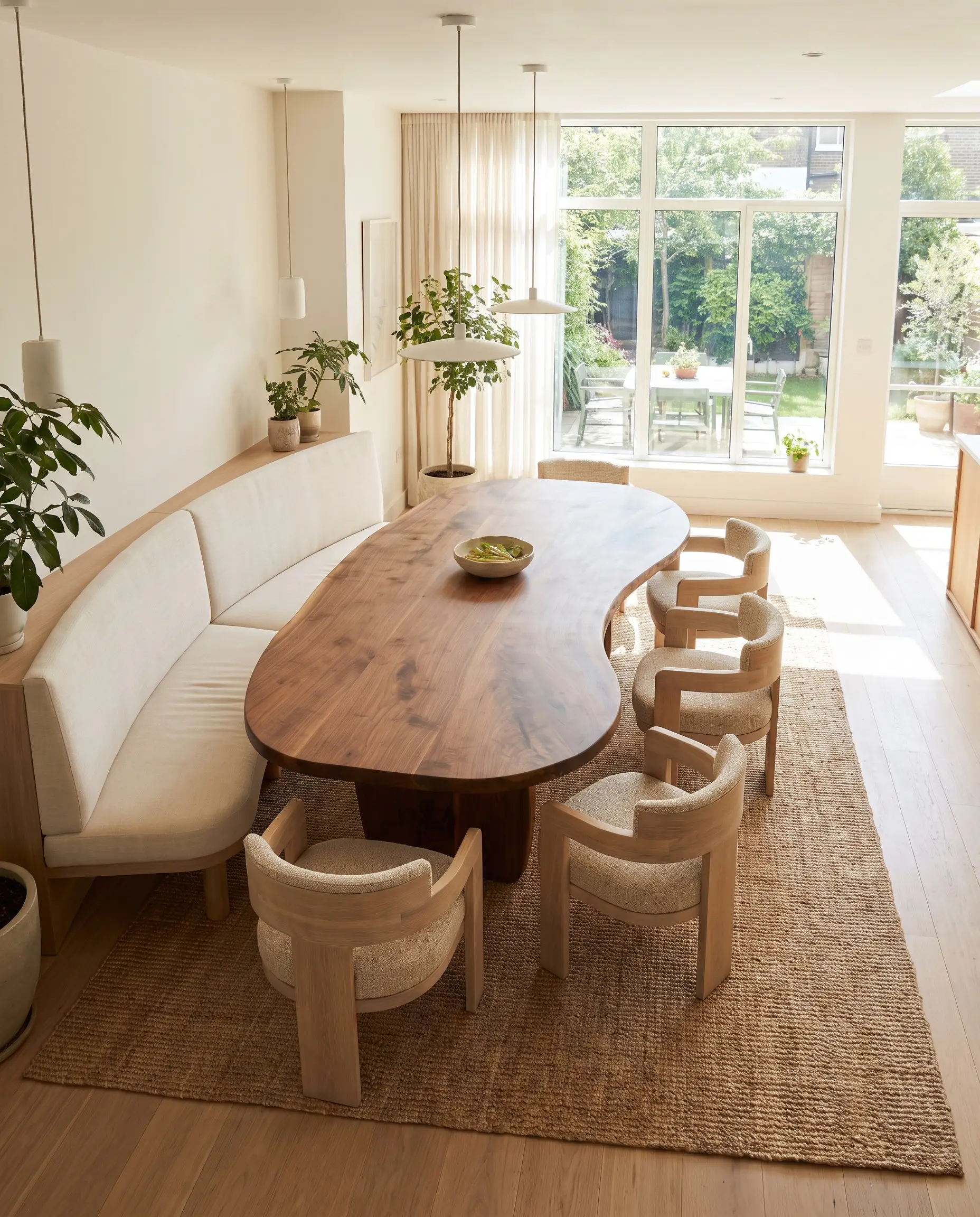
Biophilic silhouettes modeled after irregular river stones instantly break up the monotony of boxy, drywall-heavy dining rooms. This fluid footprint optimizes clearance paths and promotes a continuous visual flow, making it remarkably effortless to squeeze in an extra guest without anyone feeling trapped at a hard corner.
- Vibe: Sculptural, relaxed, and organically modern.
- Key Materials: Solid live-edge walnut, poured micro-cement, or honed travertine.
- Seating Strategy: Pair with a curved banquette or low-profile, rounded chairs to echo the table’s geometry.
Ensure a minimum of 36 inches of clearance between the table edge and the wall for comfortable chair push-back, measuring from the widest curve of the pebble shape.
Spatial Rule
Soft-Square and Deep-Radius Corners
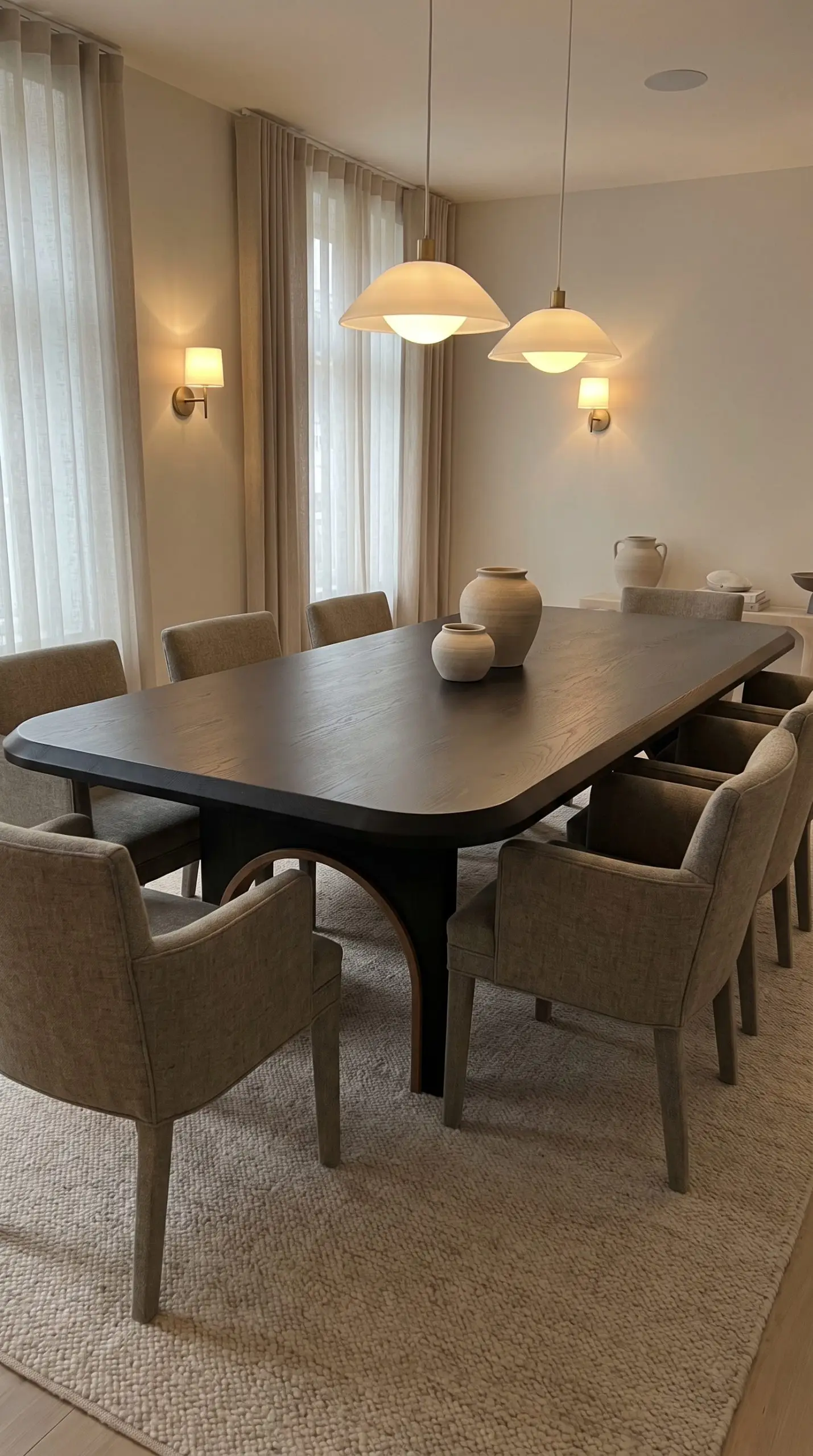
The traditional rectangle is evolving into the soft-square, featuring deep-radius corners that preserve high-capacity formal seating while stripping away aggressive, sharp edges. This bespoke, custom-milled detail instantly separates high-end manufacturing from mass-market production, offering an architectural aesthetic that is also highly practical for households with children.
- Vibe: Refined, tailored, and quietly luxurious.
- Key Materials: Ebonized oak or heavily grained ash.
- Edge Profile: Look for a bullnose or heavy chamfered edge to emphasize the rounded corner.
Inspect the architectural joinery underneath the radius corners; luxury makers use continuous bentwood or solid carved blocks rather than cheap, veneer-banded MDF joints.
The Investment Check
The Double-Cylinder Pedestal
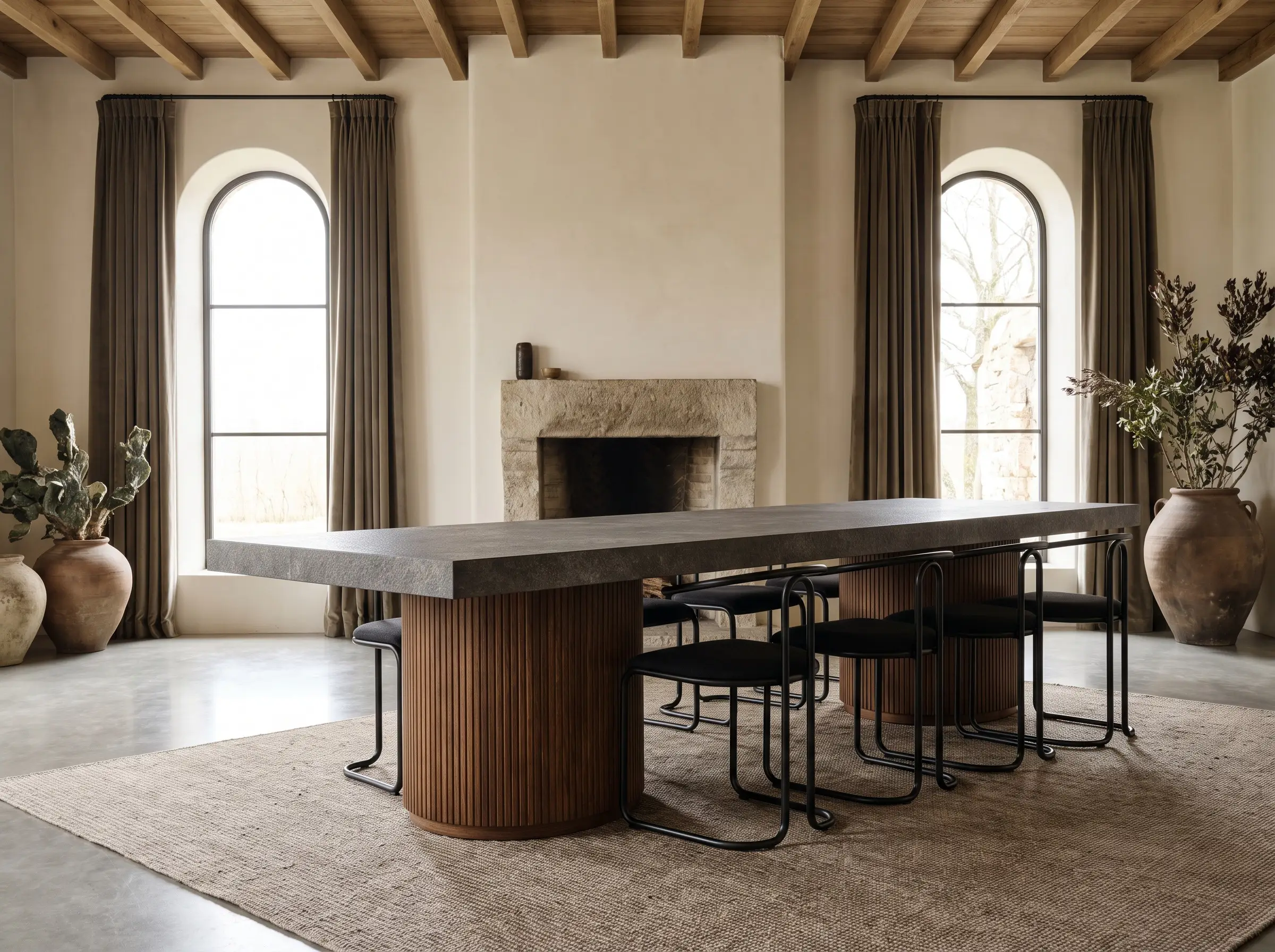
We are moving definitively past the restrictive four-legged table. The double-cylinder pedestal base—often featuring ribbed or fluted detailing—anchors the room with monolithic visual weight while allowing chairs to tuck under the surface entirely unobstructed.
- Vibe: Romanesque, grounded, and structurally dominant.
- Key Materials: Sintered stone, fluted pedestal base in plaster, or ribbed solid oak.
- Chair Pairing: Contrast the heavy cylinders with slender, tubular steel seating.
To maximize seating capacity, verify that the inner distance between the two cylinders offers at least 48 inches of clearance. Anything less will severely restrict how many standard-width chairs you can push in.
Structural Note
Material Obsessions: The Tactile Dining Surface
Smooth, generic finishes are obsolete. The current market demands extreme durability paired with striking visual depth, prioritizing surfaces that are cool to the touch and texturally complex.
Sintered Stone and Ultra-Compact Surfaces
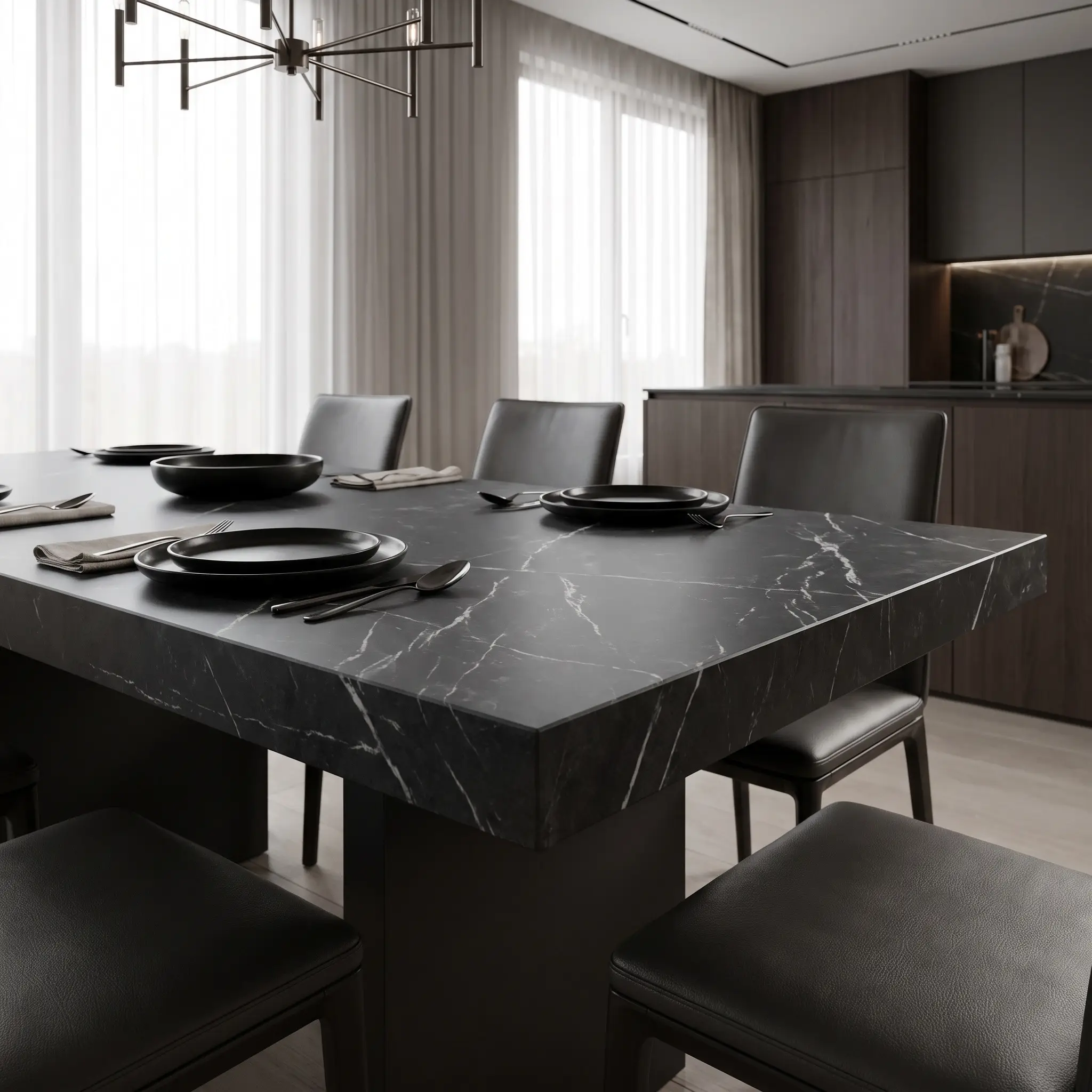
Sintered stone represents the most critical material science advancement in modern furniture, compressing raw minerals under extreme heat to create an impervious slab. It delivers the dramatic, heavy veining of Calacatta marble or the moody depth of Nero Marquina, but it completely rejects red wine stains, heat scorches, and knife scratches.
- Vibe: Bulletproof luxury and dramatic opulence.
- Key Materials: Neolith, Dekton, or premium porcelain slabs.
- Finish Recommendation: Always specify a honed or matte finish to avoid a cheap, glossy glare.
Pros/Cons: Sintered Stone vs. Natural Marble
- Pros: Zero porosity, zero sealing required, highly scratch and heat resistant, lighter weight per square foot.
- Cons: The pattern is printed on the surface and does not run through the body of the slab, meaning edge profiles must be meticulously mitered to hide the core.
High-Gloss Burl Wood Revival
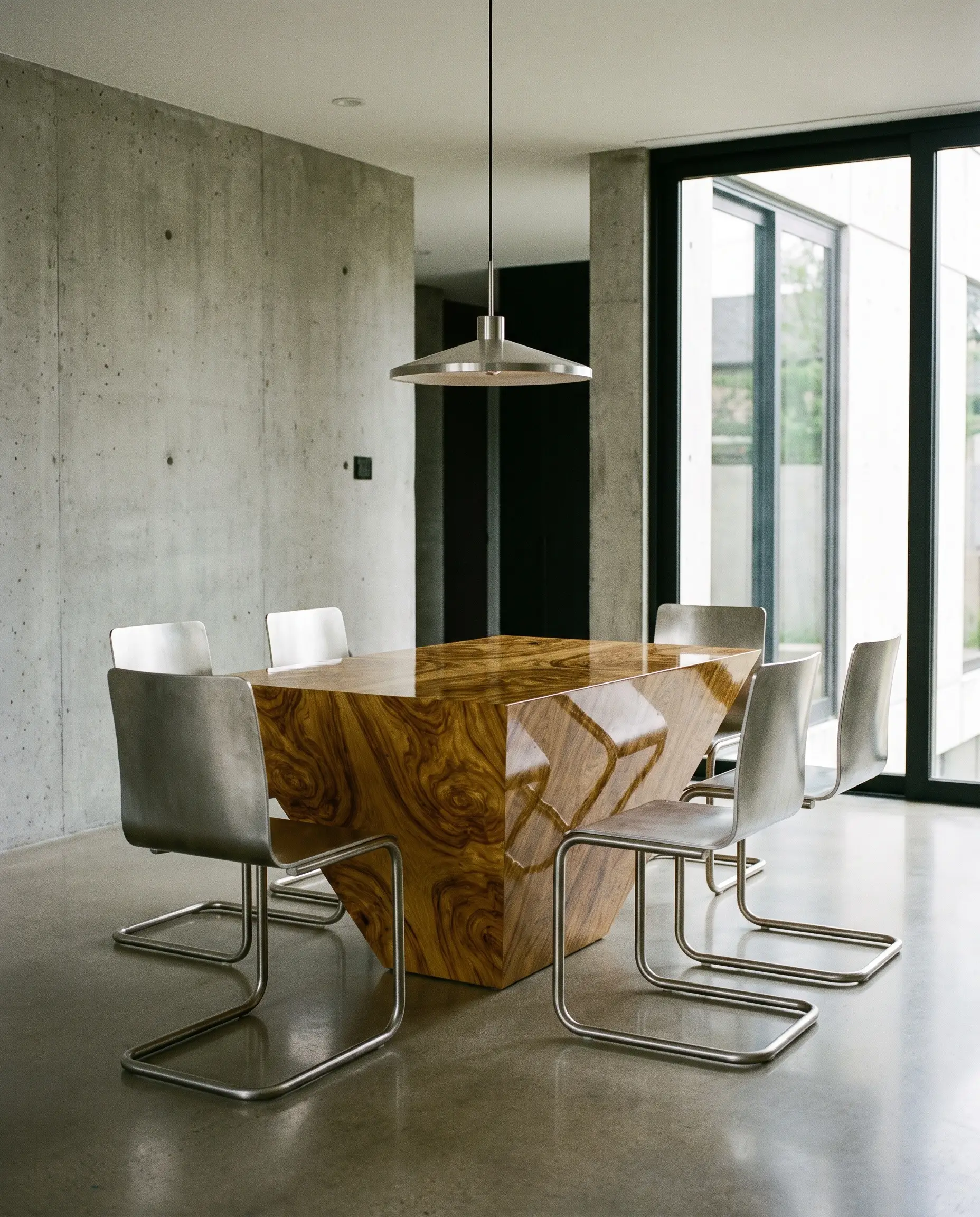
Burl wood veneer is experiencing a massive revival, bringing swirling, kaleidoscopic 1970s grain patterns back into the dining room. To prevent the piece from looking like antique store clutter, modern fabricators are applying these highly figured veneers to ultra-minimalist, geometric silhouettes.
- Vibe: Glamorous, retro-futuristic, and highly figured.
- Material Match: Olive ash burl, walnut burl, or mappa burl veneer.
- Styling Pro-Tip: Modernize the heavy wood pattern by pairing the table with cold, brushed steel or high-shine chrome cantilevered chairs.
Brutalist Travertine and Poured Plaster
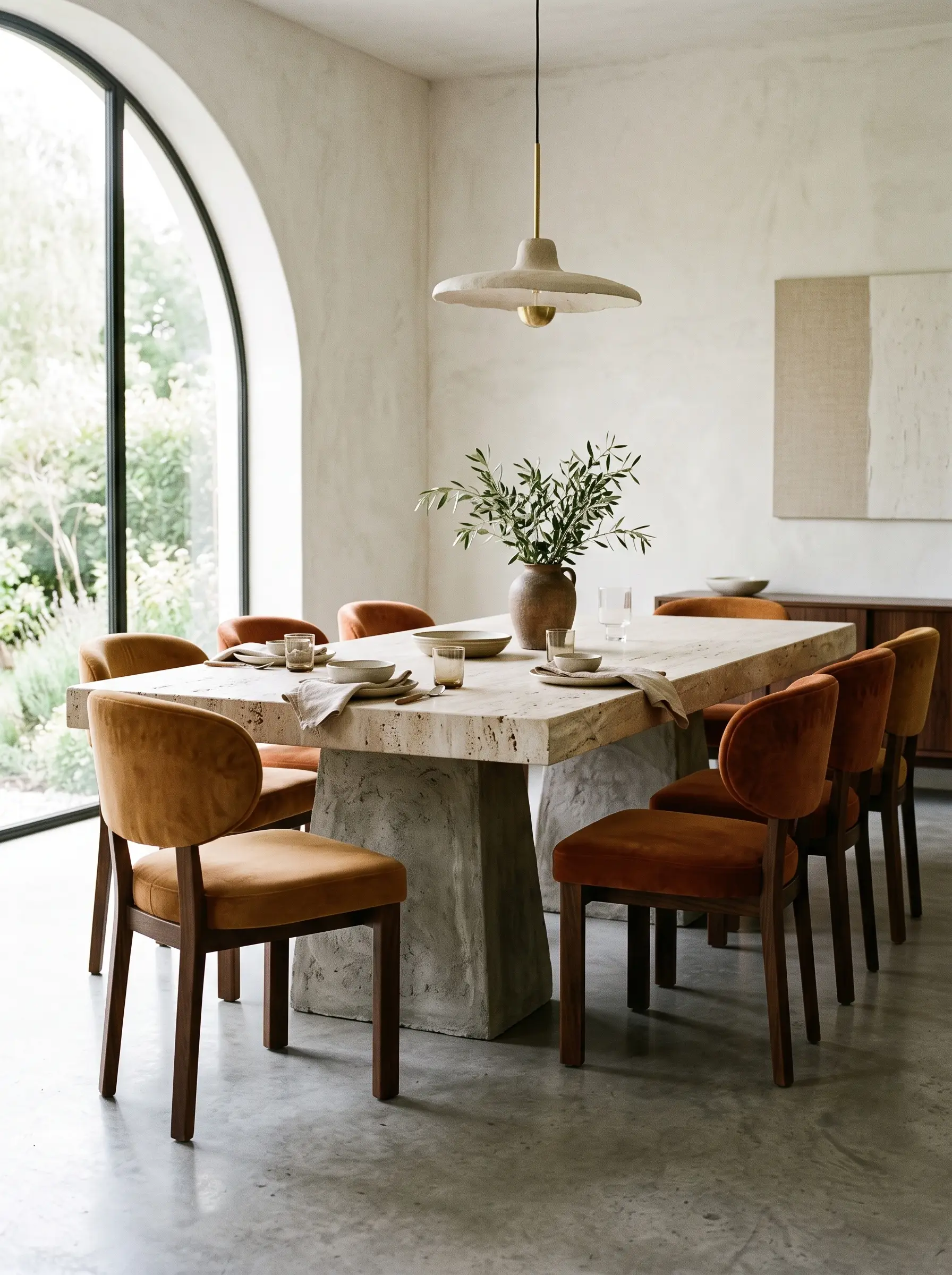
Soft Brutalism continues to command the accessible luxury market, with travertine evolving into thicker, chunkier profiles that dominate the room’s footprint. Poured plaster and micro-cement tables offer a monolithic, gallery-like presence, turning the dining surface into a tactile, chalky sculpture.
- Vibe: Earthy, stoic, and architecturally austere.
- Key Materials: Unfilled Italian travertine, Tadelakt plaster, or specialized micro-cement.
- Textural Contrast: Soften the heavy stone with velvet or boucle upholstered seating.
Natural travertine is highly porous. Always ask the manufacturer if the stone has been filled and sealed with a commercial-grade matte resin; otherwise, oil and wine will permanently stain the surface within minutes.
The Investment Check
Smoked and Ribbed Glass
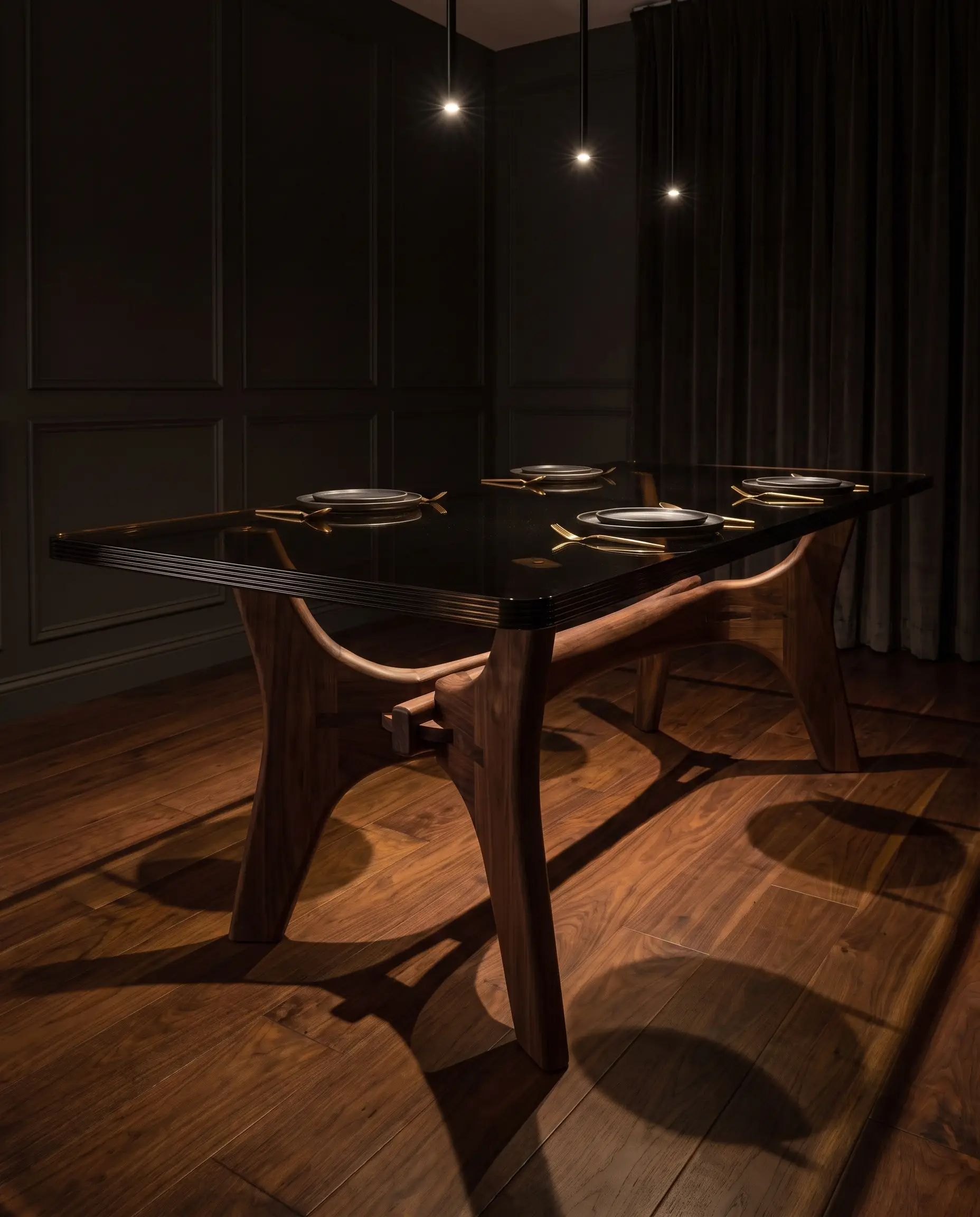
Clear glass lacks presence, but thick, cast-ribbed glass or smoked bronze panes provide necessary visual lightness in tighter spaces while maintaining a moody, architectural stance. This material plays beautifully with overhead lighting, creating dynamic refraction and shadow play across the dining room floor.
- Vibe: Sleek, cinematic, and spatially efficient.
- Key Materials: 3/4-inch tempered smoked glass or fluted cast glass.
- Base Requirement: Pair with a highly sculptural, metallic, or carved wood base, as the transparent top makes the joinery completely visible.
Structural Mechanics and Functionality
A beautiful table is entirely useless if it fails to function during daily life or holiday hosting. High-end dining architecture requires seamless flexibility and flawless mechanical engineering.
Invisible Extension Mechanisms
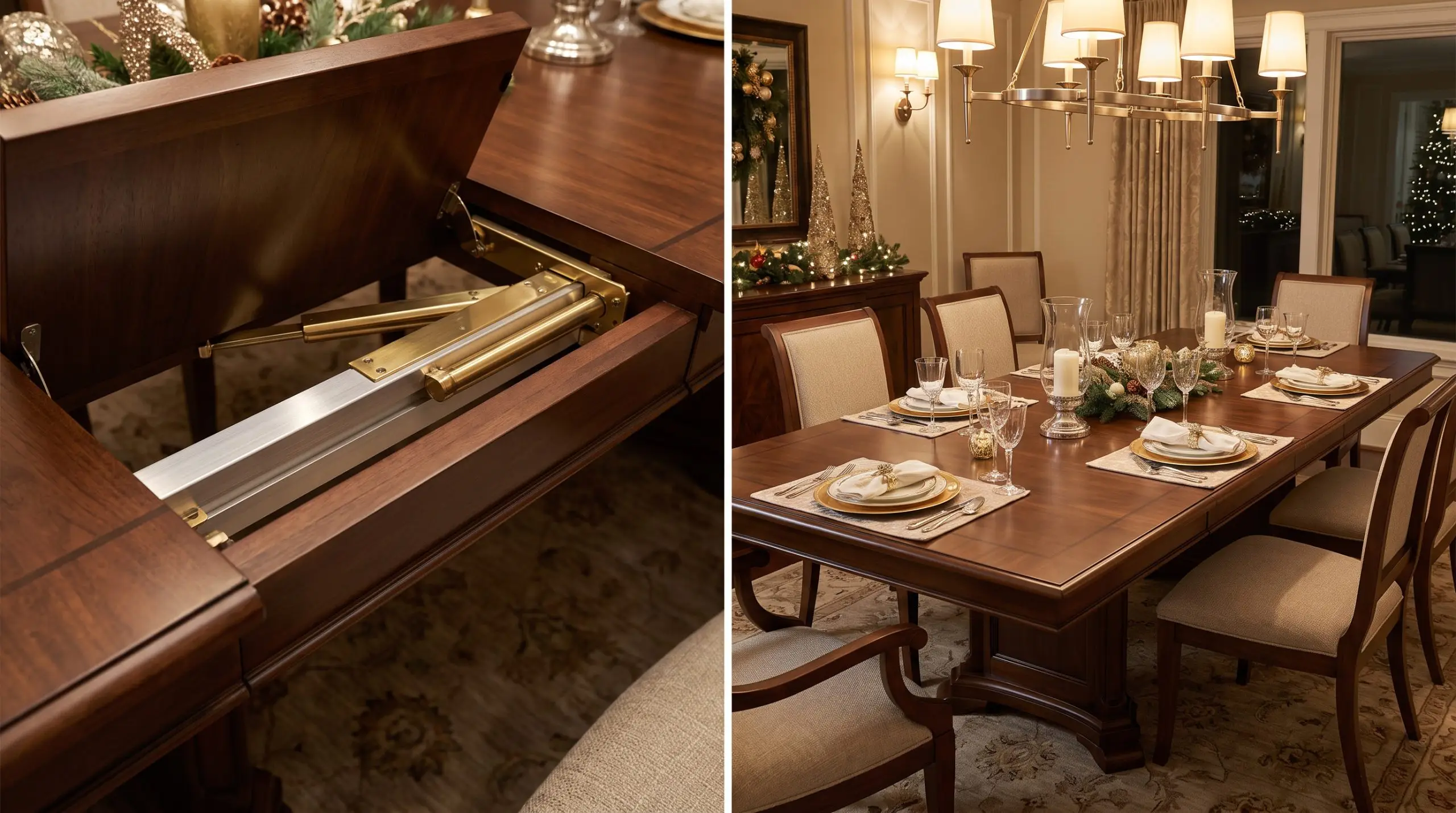
The days of wrestling with clunky, highly visible table seams and separate storage bags for leaves are over. Precision joinery now allows for seamless butterfly leaves or rotating stone expansions that hide completely within the slim profile of the table apron.
- Vibe: Engineered precision and effortless hospitality.
- Key Mechanics: Cantilevered slides, self-storing folding leaves, or synchronized pull-systems.
- Hardware Demand: Look for mechanisms built from extruded aluminum or solid brass to ensure the track never warps or sticks.
Banquette-Optimized Trestle Bases
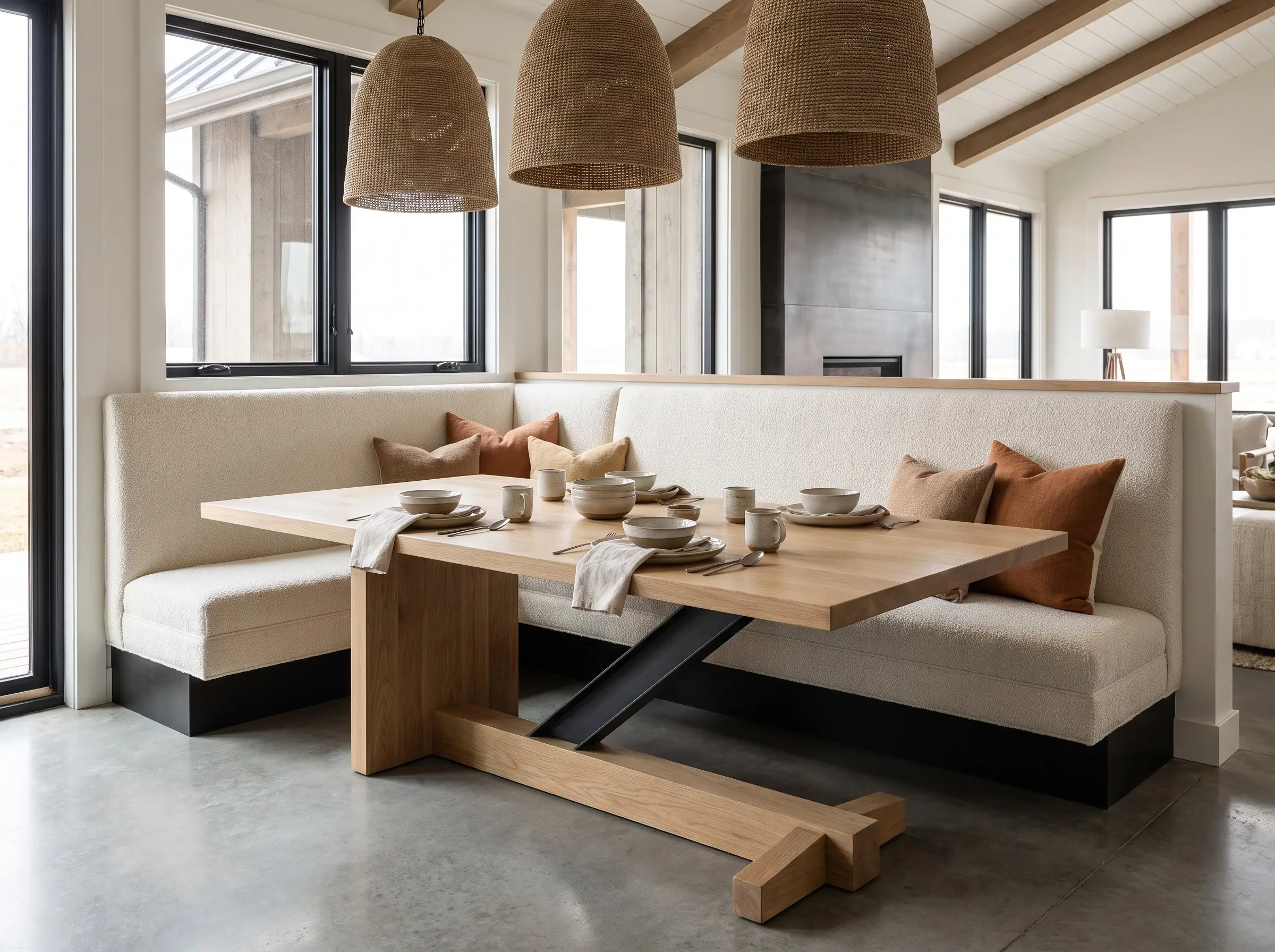
As built-in dining banquettes heavily trend, the standard four-legged table creates a spatial trap, forcing guests to awkwardly slide in and out. The recessed trestle base solves this by providing total knee clearance, allowing effortless entry into banquette pairing arrangements.
- Vibe: Custom-built, ergonomic, and highly functional.
- Key Materials: Solid white oak, blackened steel, or carved walnut.
- Design Alignment: Match the angle of the cantilevered trestle to the slant of the banquette backrest for a cohesive architectural look.
To guarantee unhindered access to banquette seating, the trestle base must be recessed a minimum of 12 to 14 inches inward from the outer edge of the tabletop.
Spatial Rule
Color and Finish Trajectories
The pale, raw ash tones of the recent Scandi-boom are fading rapidly. The market is shifting decisively toward darker, richer, and highly saturated finishes that command attention.
Roasted Walnut and Ebonized Oak
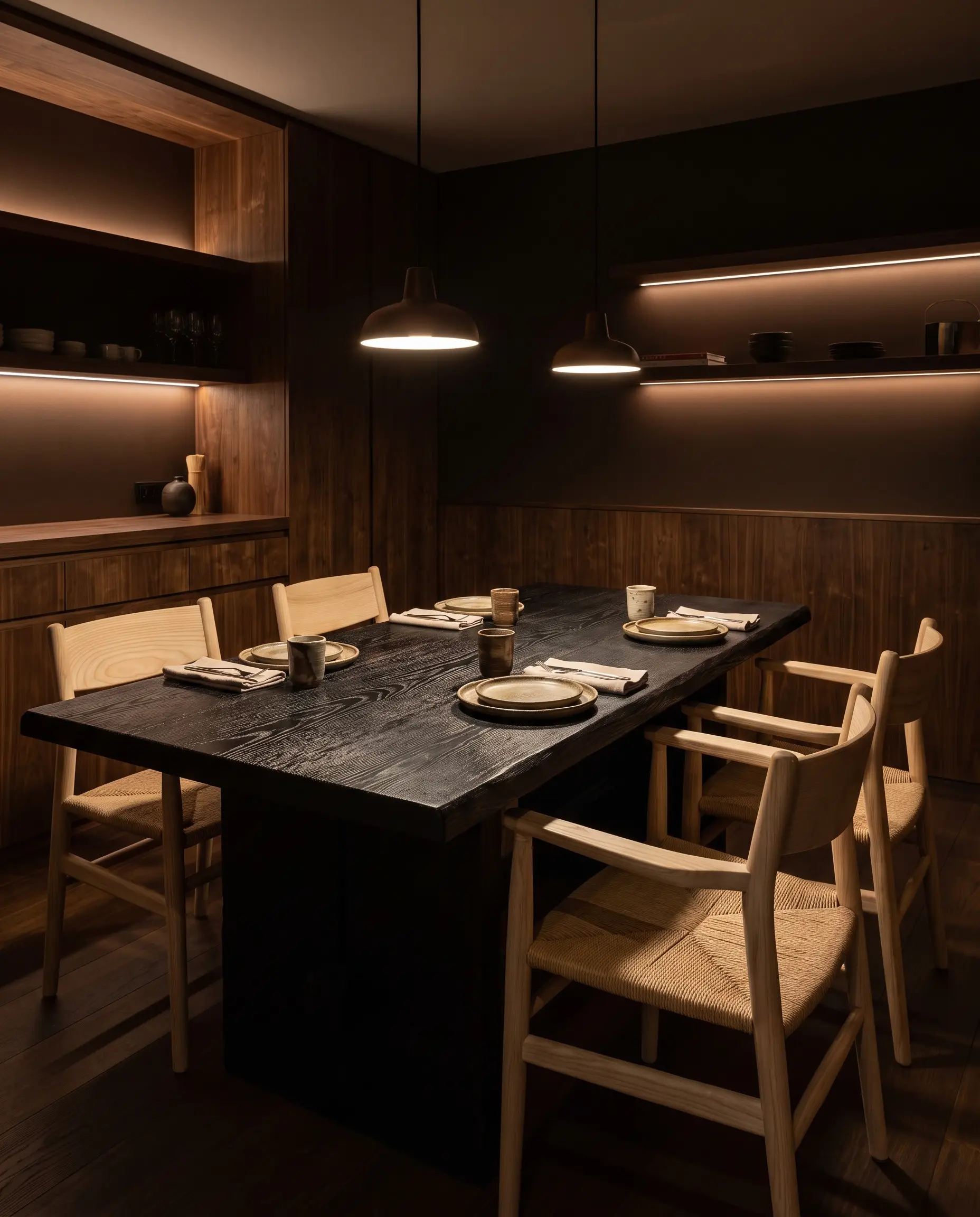
Wood tones are warming up and dropping in value, standing in stark contrast to the flat, gray-wash woods of the 2010s. Roasted walnut delivers deep, luxurious chocolate tones, while ebonized oak offers a matte, textured black that proudly displays the wood’s tactile grain.
- Vibe: Brooding, sophisticated, and deeply grounded.
- Wood Stain Match: Minwax Dark Walnut or custom ebonizing solutions.
- Color Match: Sherwin-Williams Tricorn Black (for replicating the depth of ebonized wood on existing pieces).
True ebonizing involves a chemical reaction with the wood’s tannins, not just slapping on black paint. Ask your fabricator if they use an iron acetate solution to ensure the tactile grain remains highly visible.
The Investment Check
Monochromatic Matte Lacquer
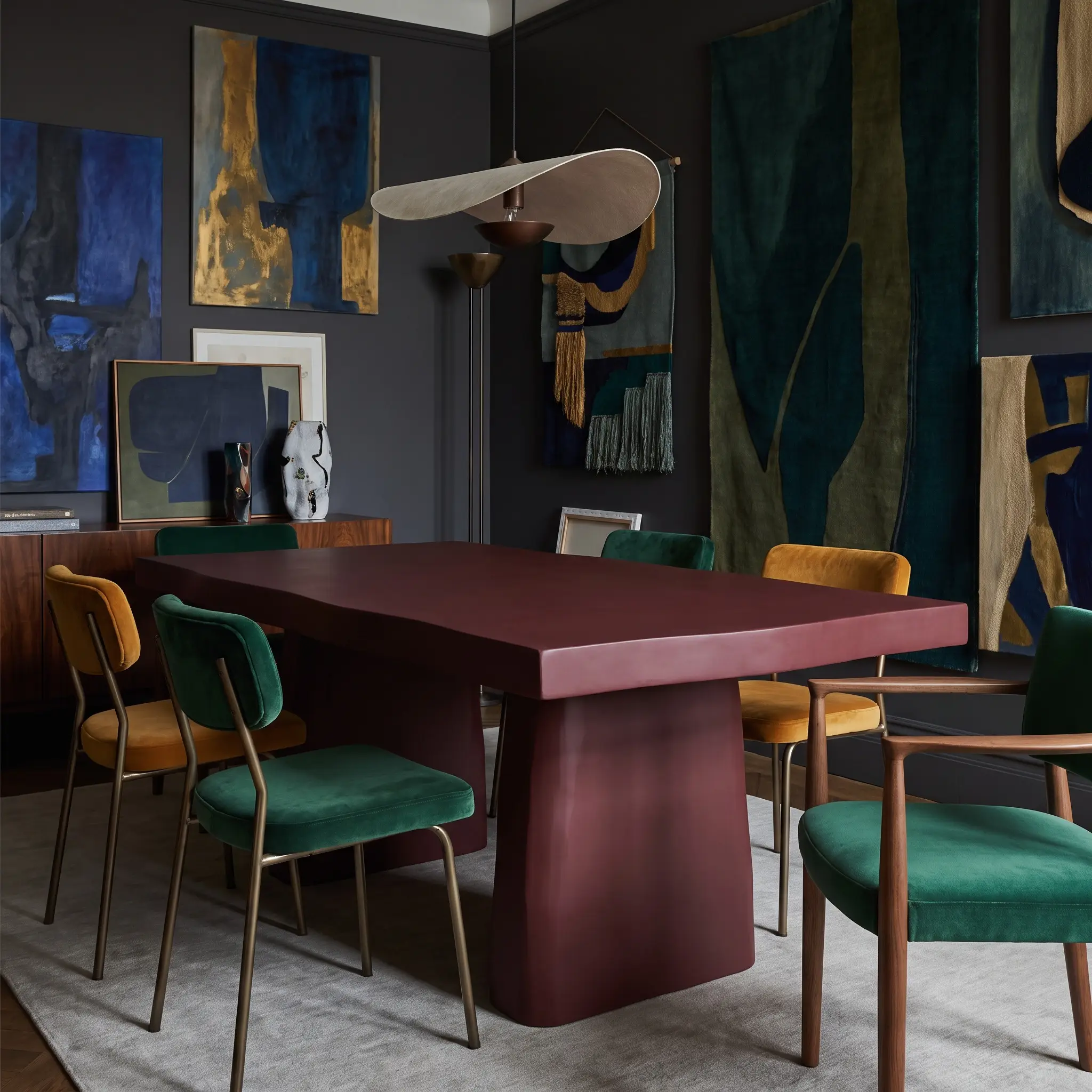
For spaces moving away from natural wood grains, chunky, sculptural silhouettes are being drenched in rich, highly saturated matte lacquers. This Postmodern silhouette approach to color transforms the table into a bold, monolithic block, perfect for eclectic, contemporary spaces.
- Vibe: Postmodern, avant-garde, and gallery-inspired.
- Key Finishes: 5-percent sheen polyurethane or catalyzed matte lacquer.
- Color Match: Farrow & Ball Brinjal (oxblood red) or Farrow & Ball Studio Green.
The 2027 Table and Chair Pairing Guide
A dining table does not exist in a vacuum; it requires deliberate, proportionate seating to complete the architectural footprint. Masterful dining design relies entirely on the principles of contrast and scale.
| Table Style | Chair Pairing | Design Rationale |
|---|---|---|
| Heavy Travertine Cylinder | Slender tubular steel and velvet | Contrast the immense visual weight of the stone with airy, visually light metal frames. |
| High-Gloss Burl Wood | Bauhaus influences with cantilevered chrome | Modernize the retro, highly figured wood grain with sharp, cold, industrial metal lines. |
| Ebonized Oak Trestle | Woven paper cord and raw ash | Introduce a tactile, organic material to soften the brooding, matte black finish of the table. |
| Sintered Stone Pebble | Low-profile, curved boucle armchairs | Echo the table’s biophilic silhouette while adding warmth to the impervious, cold stone surface. |
Securing the Architectural Centerpiece of Your Home
The dining table is arguably the hardest-working piece of furniture in your home. Before you finalize a purchase, rigorously evaluate your spatial footprint and your daily reality. If you host formal dinners, prioritize the deep-radius soft-square; if your space serves as a high-traffic hub for children and daily life, sintered stone is non-negotiable. Measure your seating clearance, analyze your lighting, and invest in a piece that functions flawlessly. Ready to complete the room?
The Aesthetics Desk curates the visual direction for Hackrea. Specializing in design history, global architectural movements, and interior styling, this desk focuses on the psychology of space and how to translate high-end, magazine-quality aesthetics into approachable residential design without falling into fleeting micro-trends.