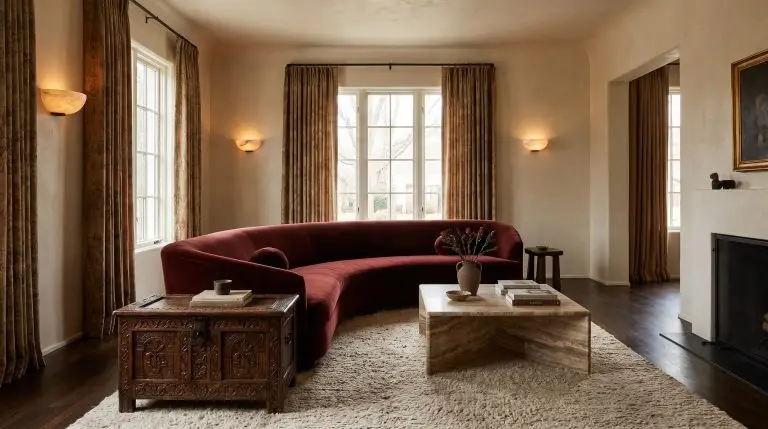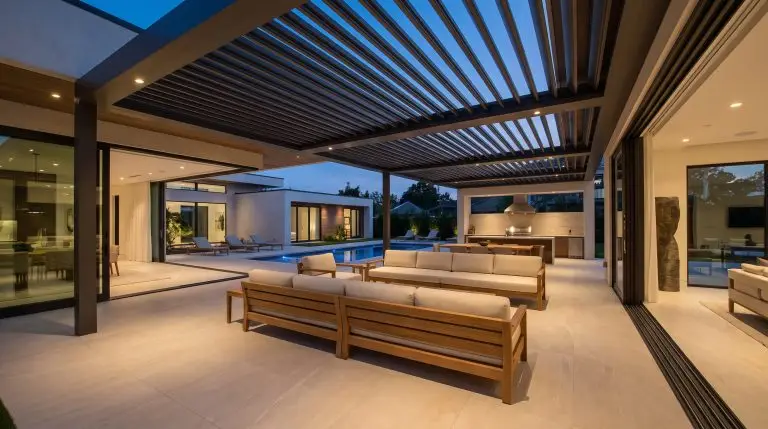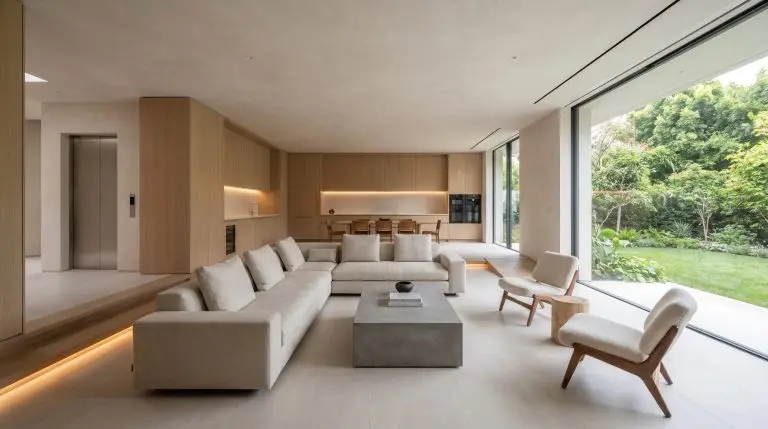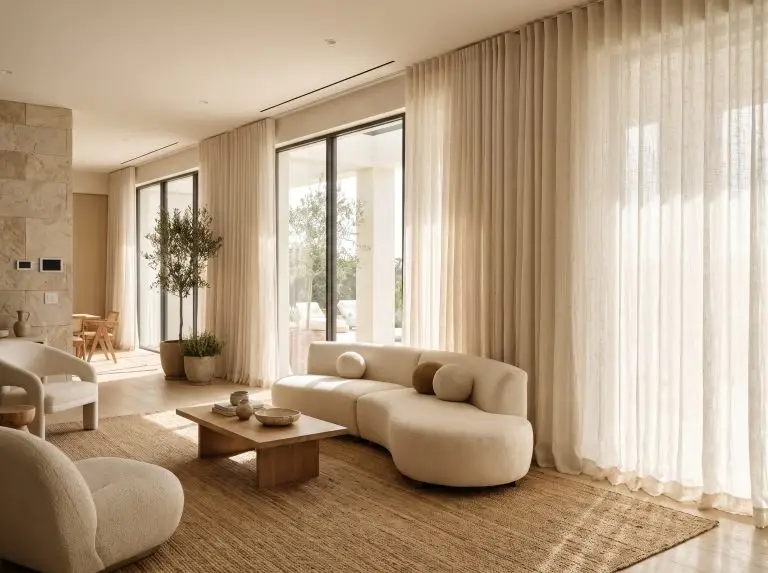
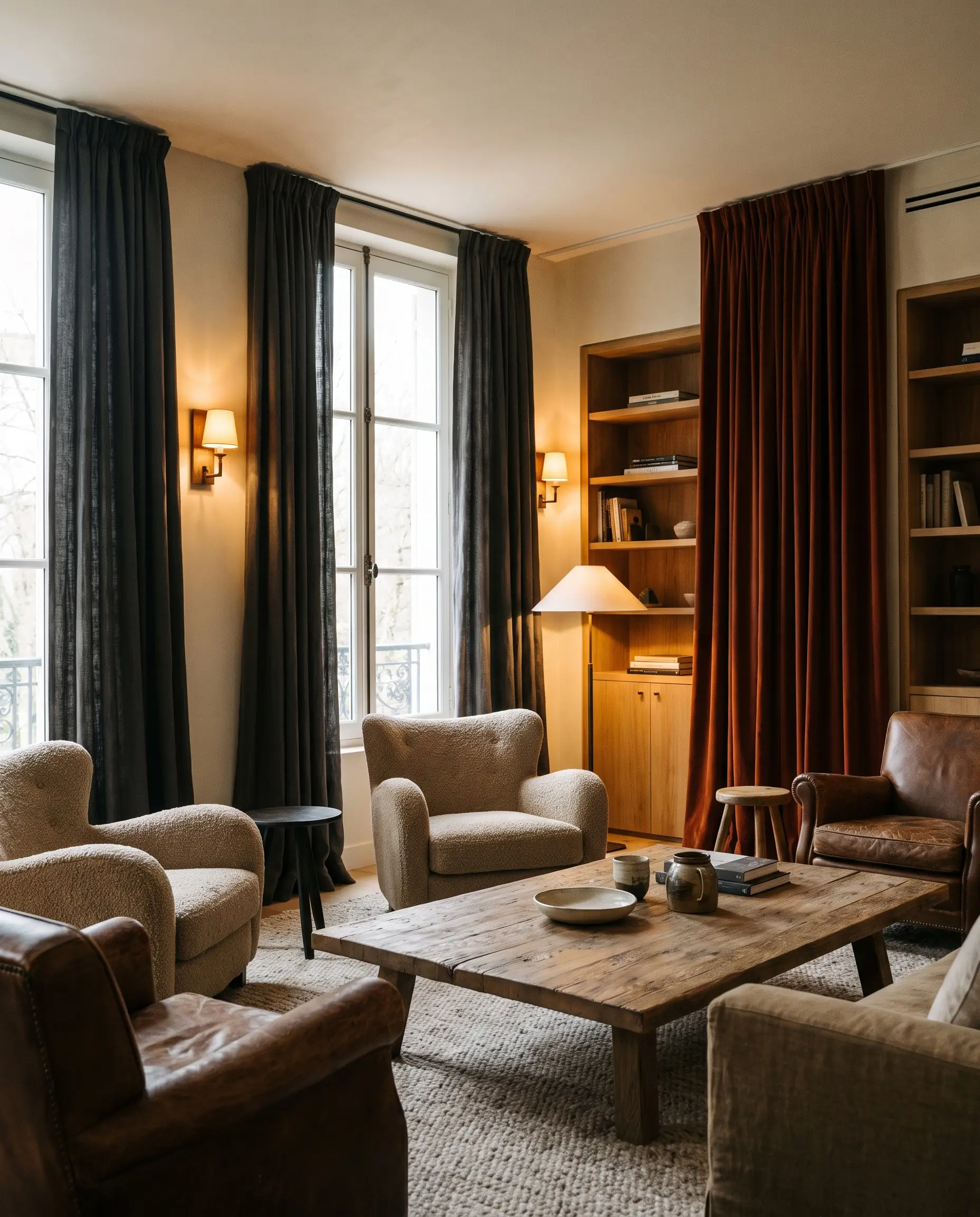
Window treatments demand a formidable budget, and the anxiety of spending thousands on custom fabrication only to see it look dated in three years is a legitimate fear. The defining philosophy for window treatment trends 2027 is a complete departure from viewing drapery as an afterthought decoration; instead, we are treating these elements as highly integrated architectural assets. This year focuses intensely on seamless hardware, agnostic smart home sync, and tactile, high-performance textiles that work as hard as they look.
In this guide, you will learn the exact fabrication methods, smart motorization protocols, and bespoke textiles required to future-proof your home’s light architecture.
Architectural Integration & Minimalist Hardware
The days of chunky, decorative wooden poles dominating a room’s upper third are yielding to sleek, invisible, or highly architectural mounting solutions. By prioritizing recessed tracks and flush mounts, you artificially extend the verticality of the space, making your ceilings look higher and the room substantially wider.
1. Recessed Ceiling Pockets (The Invisible Mount)
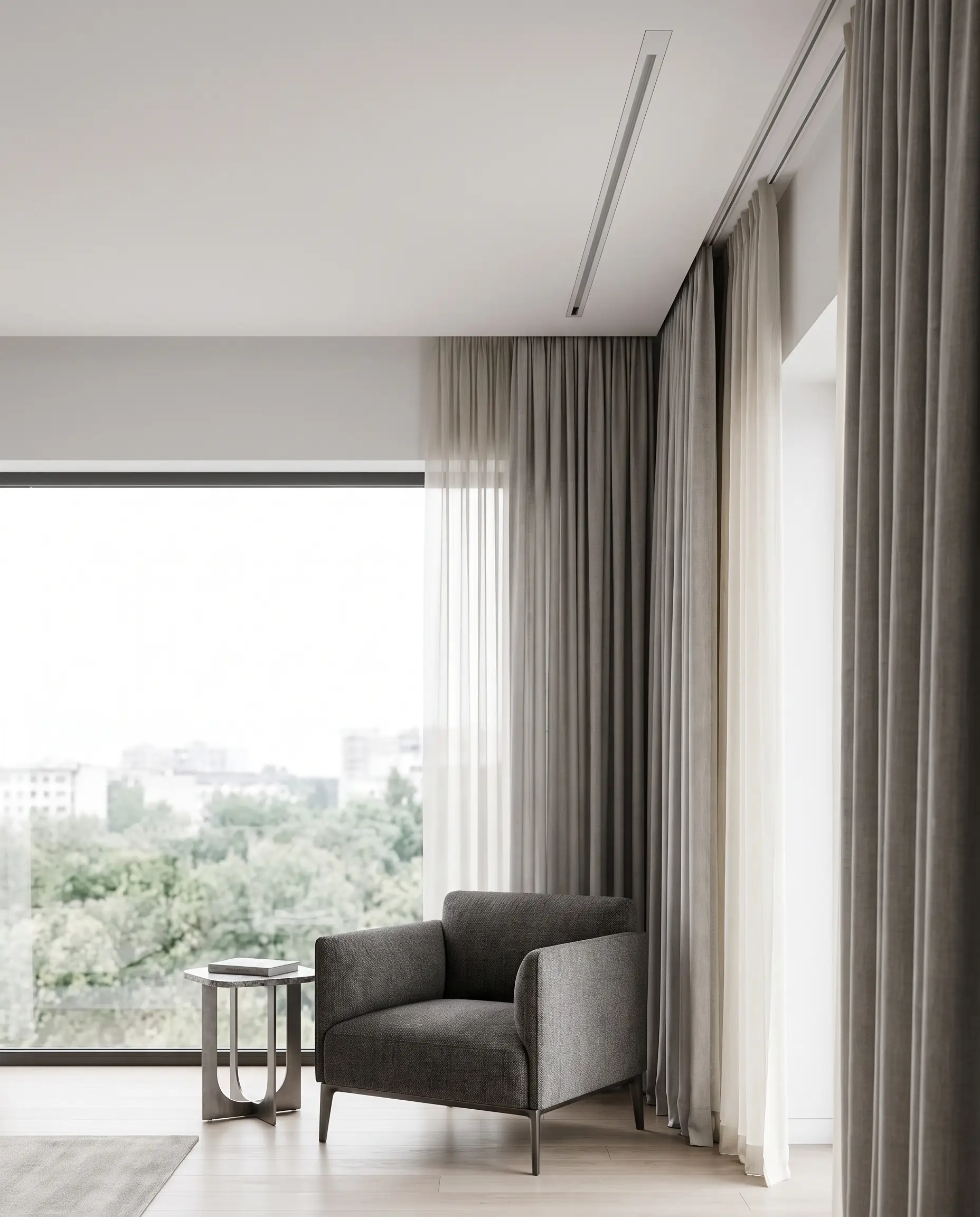
Dropping the drywall to create a precise architectural recess hides the track entirely, allowing the drapery to appear as though it is cascading directly out of the ceiling. This seamless integration is the pinnacle of minimalist luxury, removing visual clutter and maximizing the height of the room.
Always calculate your ceiling pocket depth to a minimum of 6 inches and a width of 8 inches to comfortably accommodate a motorized dual-track system without the fabric snagging on the drywall edge.
Workroom Secret
- Vibe: Uncompromising Minimalist Luxury.
- Key Materials: Aluminum C-channel tracks, drywall mud-in flanges.
- Ask for This: “A recessed ceiling pocket with a flush-mounted, motorized track pre-wired for a 120v system.”
2. Ultra-Minimalist Traverse Tracks
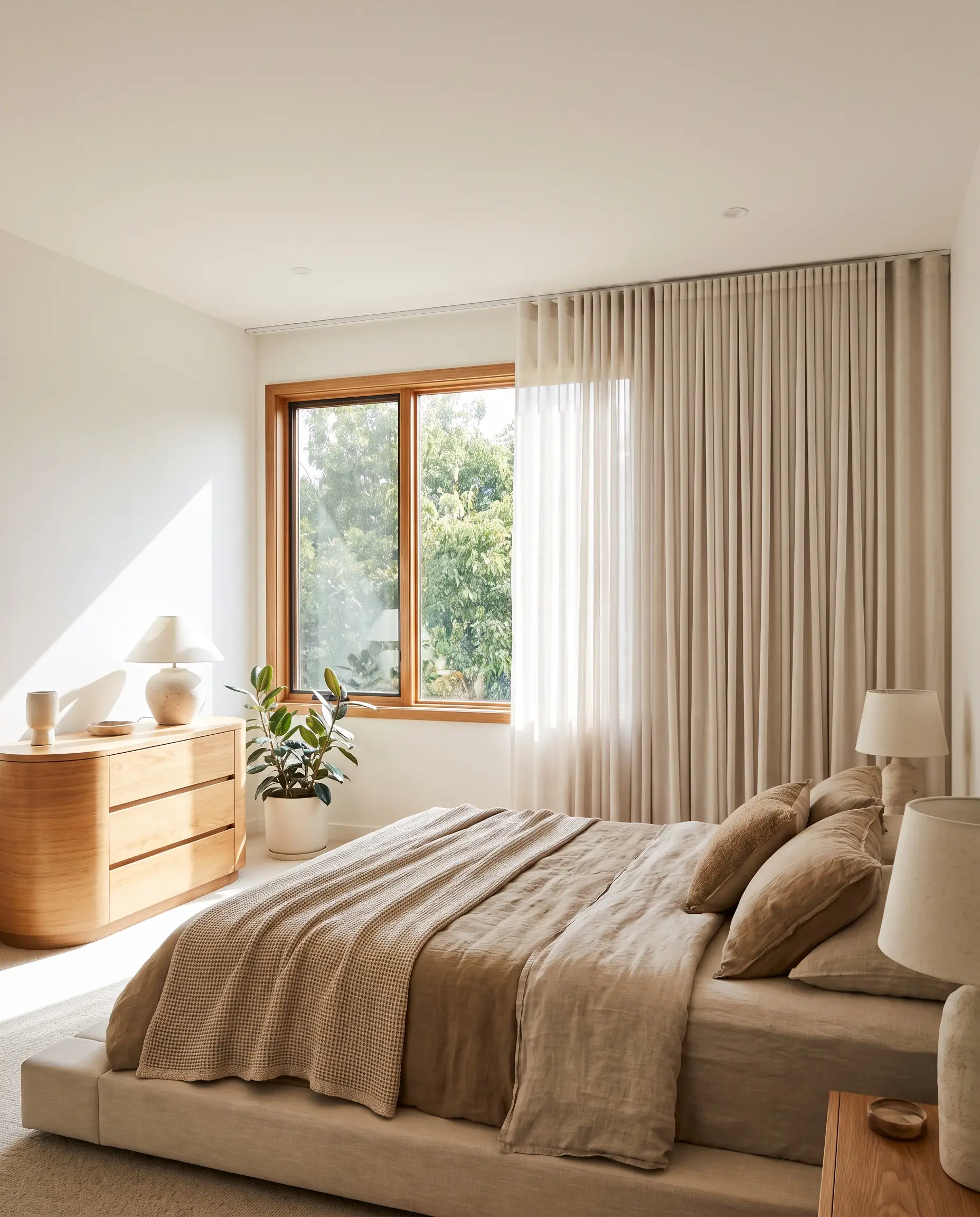
For existing structures where cutting into the ceiling isn’t feasible, micro-profile aluminum traverse tracks mounted flush to the ceiling provide an incredibly accessible alternative. These tracks are engineered for floor-to-ceiling Ripplefold drapery, allowing the fabric to glide effortlessly while compressing tightly against the wall.
- Vibe: Streamlined Organic Modern.
- Key Feature: Ultra-tight stackback (the physical space the curtains occupy when fully open).
- Rule of Thumb: Always extend the track at least 15 inches past the window frame on each side to ensure the stackback clears the glass entirely, maximizing natural light.
3. Wall-to-Wall Drapery Wraps
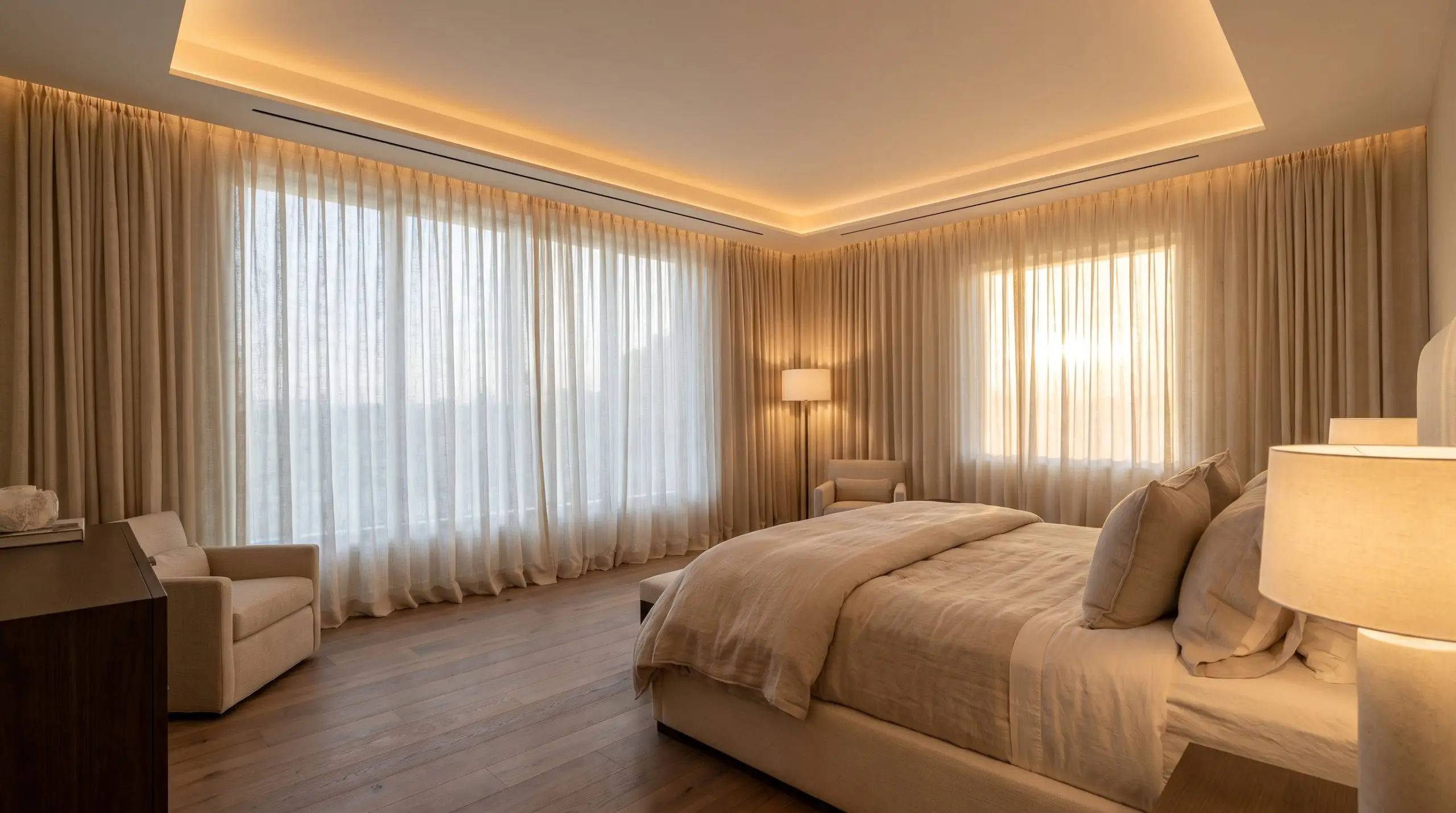
Rather than merely framing a window, wrapping an entire wall in continuous drapery creates a deeply luxurious, acoustic backdrop that transforms the room’s spatial layout. This technique easily tricks the eye, making small, awkwardly placed windows feel massive by hiding the actual architectural boundaries behind a continuous textile fall.
- Vibe: Immersive, high-end boutique hotel.
- Key Materials: Light-filtering sheer wools or slubby linens.
- Styling Pro-Tip: Run the track continuously corner-to-corner on the focal wall, even over solid drywall, to create a unified architectural feature.
4. Unlacquered Brass French Returns
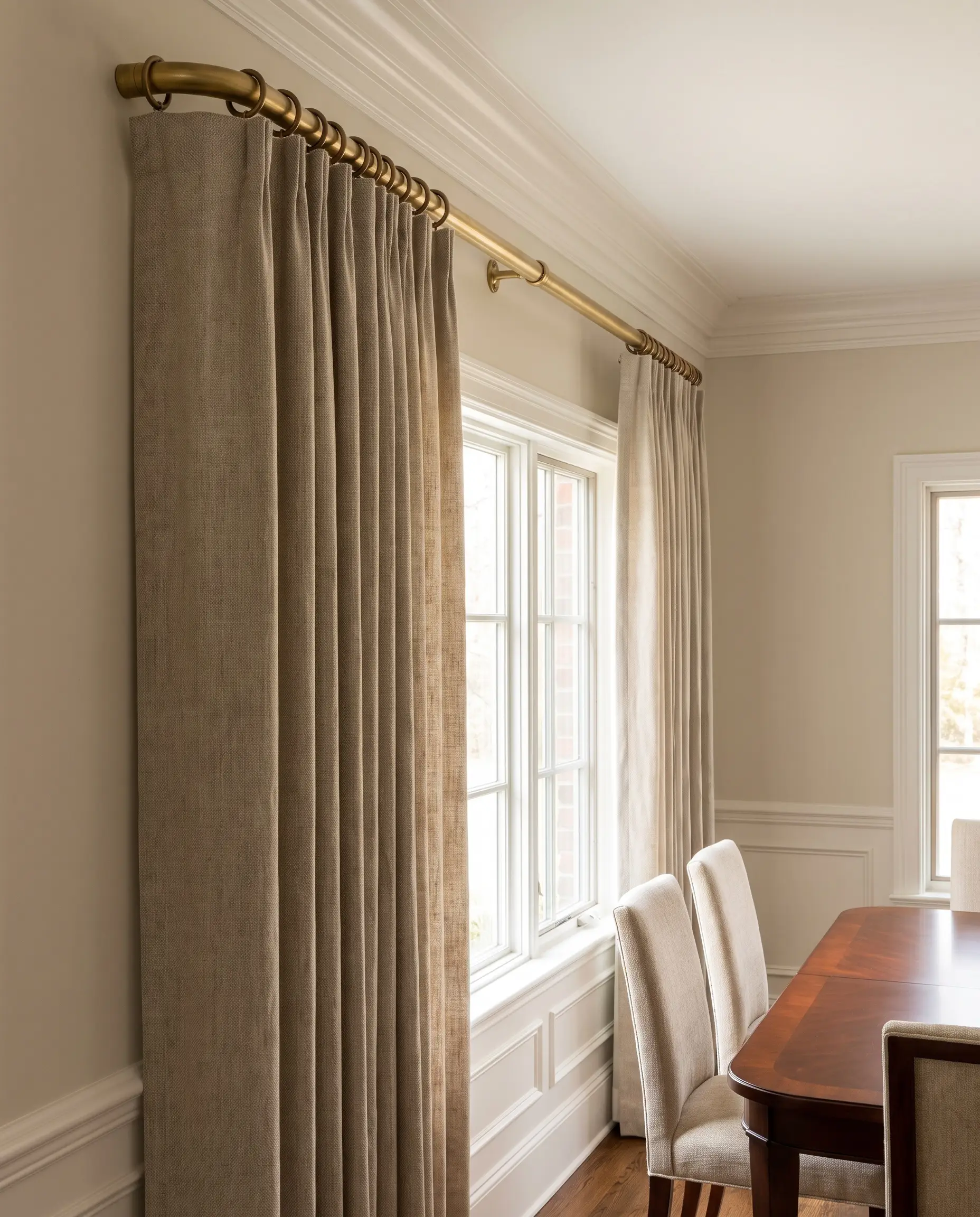
If you prefer visible hardware, the curved French return—where the rod bends seamlessly into the wall without decorative finials—is the unequivocal standard for 2027. Executed in living, unlacquered brass, this hardware profile forces the leading edge of the drapery flush against the drywall, effectively eliminating annoying side-light bleed.
- Vibe: Sophisticated New Traditional.
- Key Materials: Heavy-gauge unlacquered brass, solid bronze.
- Design Ally Tip: Specify a “C-ring” setup if your French return spans a wide window, allowing the drapery to glide past the center support brackets uninterrupted.
5. Exposed Brutalist Steel Fixtures
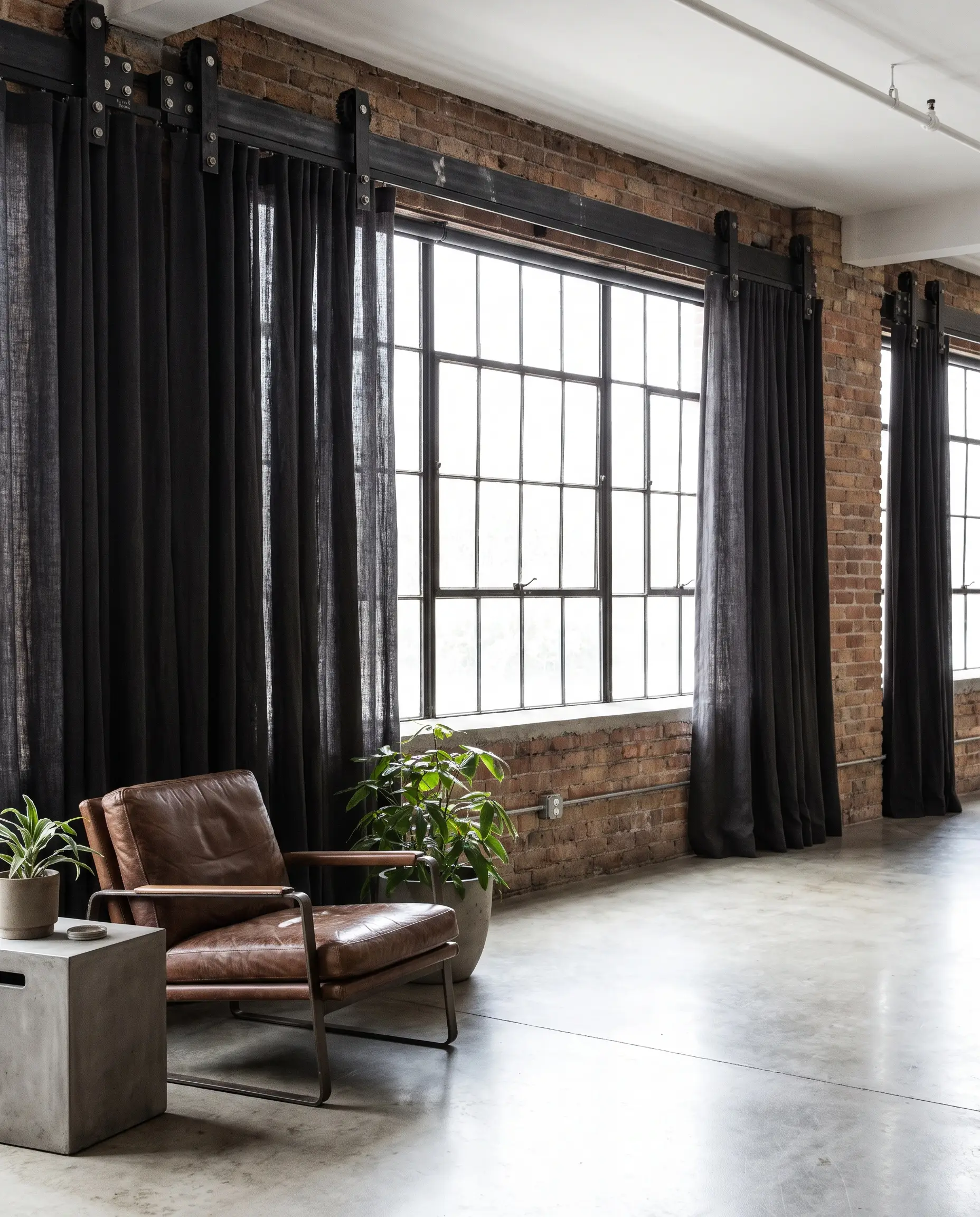
Moving sharply away from polished chrome, industrial and modernist homes are adopting raw, blackened steel hardware with exposed mechanical fasteners. This edgy aesthetic treats the mount as a piece of architectural machinery, celebrating the structural integrity of the installation.
- Vibe: Refined Industrial Modernism.
- Key Materials: Blackened cold-rolled steel, exposed hex bolts.
- Hardware Match: Pair with heavy, matte canvas or thick linen blends to balance the visual weight of the raw metal.
The Smart Window: Motorization & Tech Innovations
Motorization is no longer a billionaire’s novelty; it is a standard expectation for modern home builds and renovations. The driving force behind this shift is the Matter protocol, a universal smart home standard that finally allows your window treatments to talk flawlessly with every other device in your house.
6. Matter-Protocol Motorization
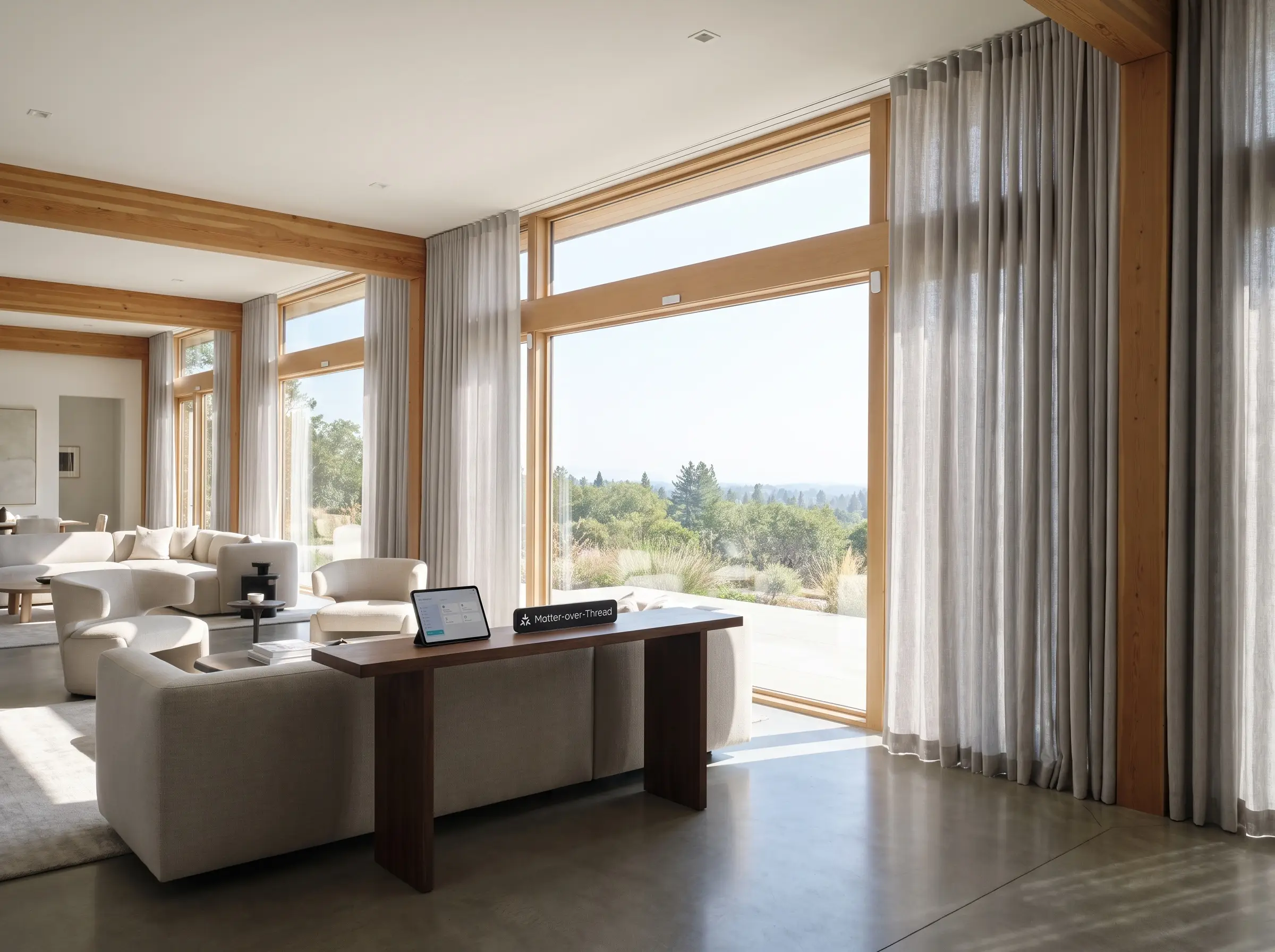
The integration of window treatments into universal smart ecosystems (like Apple Home, Google, and Amazon) without proprietary, clunky hubs is the tech standard defining 2027. This agnostic approach means your motorized drapery operates seamlessly on a mesh network, reacting to ambient light sensors or vocal commands without latency.
- Vibe: Frictionless Smart Luxury.
- Key Tech: Matter-over-Thread enabled motors.
- Ask for This: “A low-voltage motorized track with native Matter protocol compatibility, requiring no third-party bridge.”
7. Dual-Roller Architectural Shades
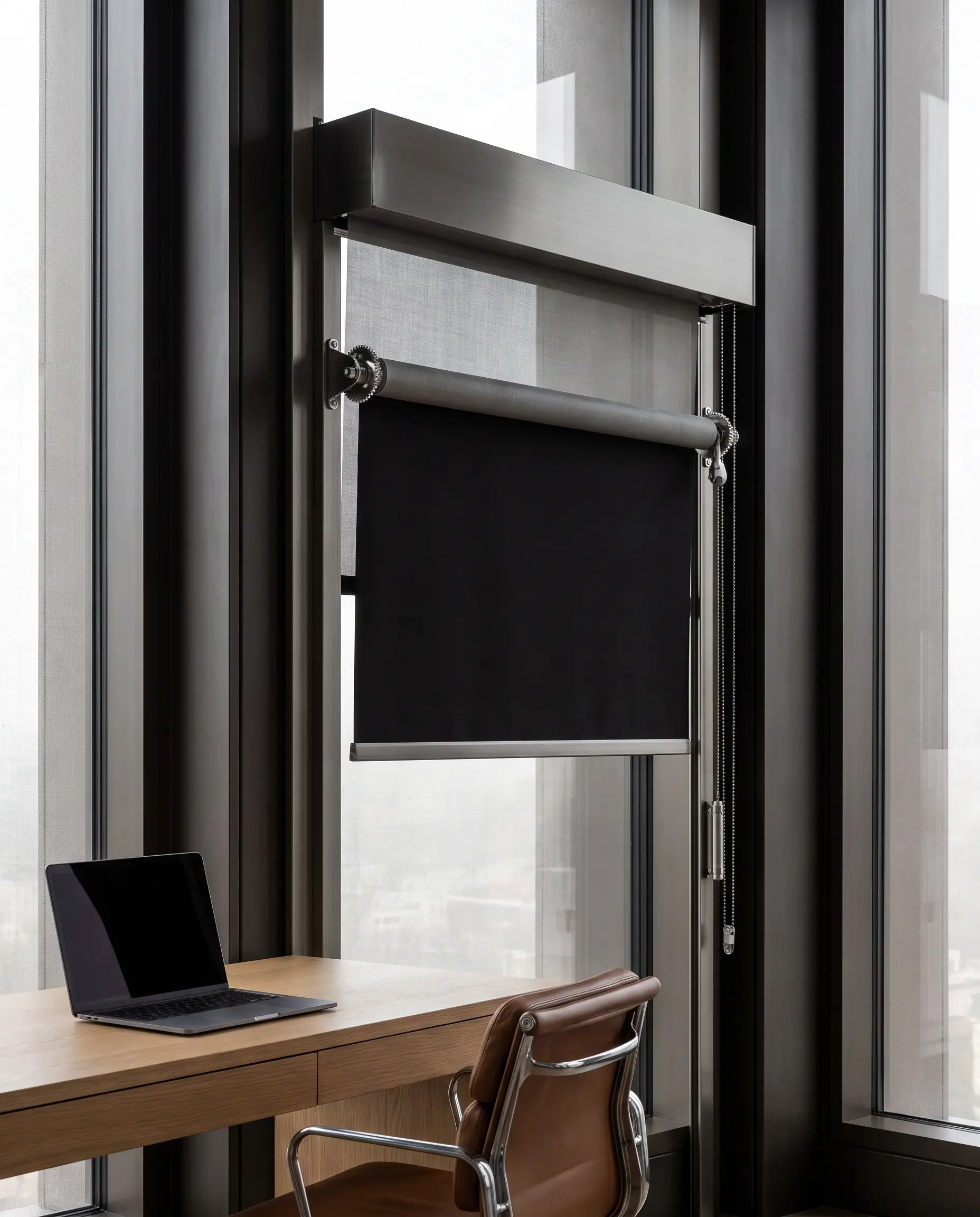
Advanced systems now house a light-filtering solar shade for daytime UV protection and a heavy blackout shade for nighttime privacy inside one sleek, architectural cassette. High-end iterations, like the Lutron Palladiom, expose the precision-machined aluminum brackets, turning the mechanics themselves into a bespoke design feature.
- Vibe: High-Tech Minimalist.
- Key Materials: Machined aluminum brackets, fiberglass-core solar mesh.
- System Pros & Cons:
| Feature | The Pros | The Cons |
|---|---|---|
| Functionality | Uncompromising light control; protects art/furniture from UV while maintaining views. | Requires deep window jambs (minimum 4-5 inches) for flush inside mounting. |
| Aesthetics | Clean, highly architectural look with zero visible wires or plastic caps. | Can feel too sterile if not layered with soft drapery in living spaces. |
| Investment | Increases home resale value; industry-leading quiet motorization. | Commands a high-end budget ($1,500+ per window for bespoke systems). |
8. Solar-Powered Smart Blinds
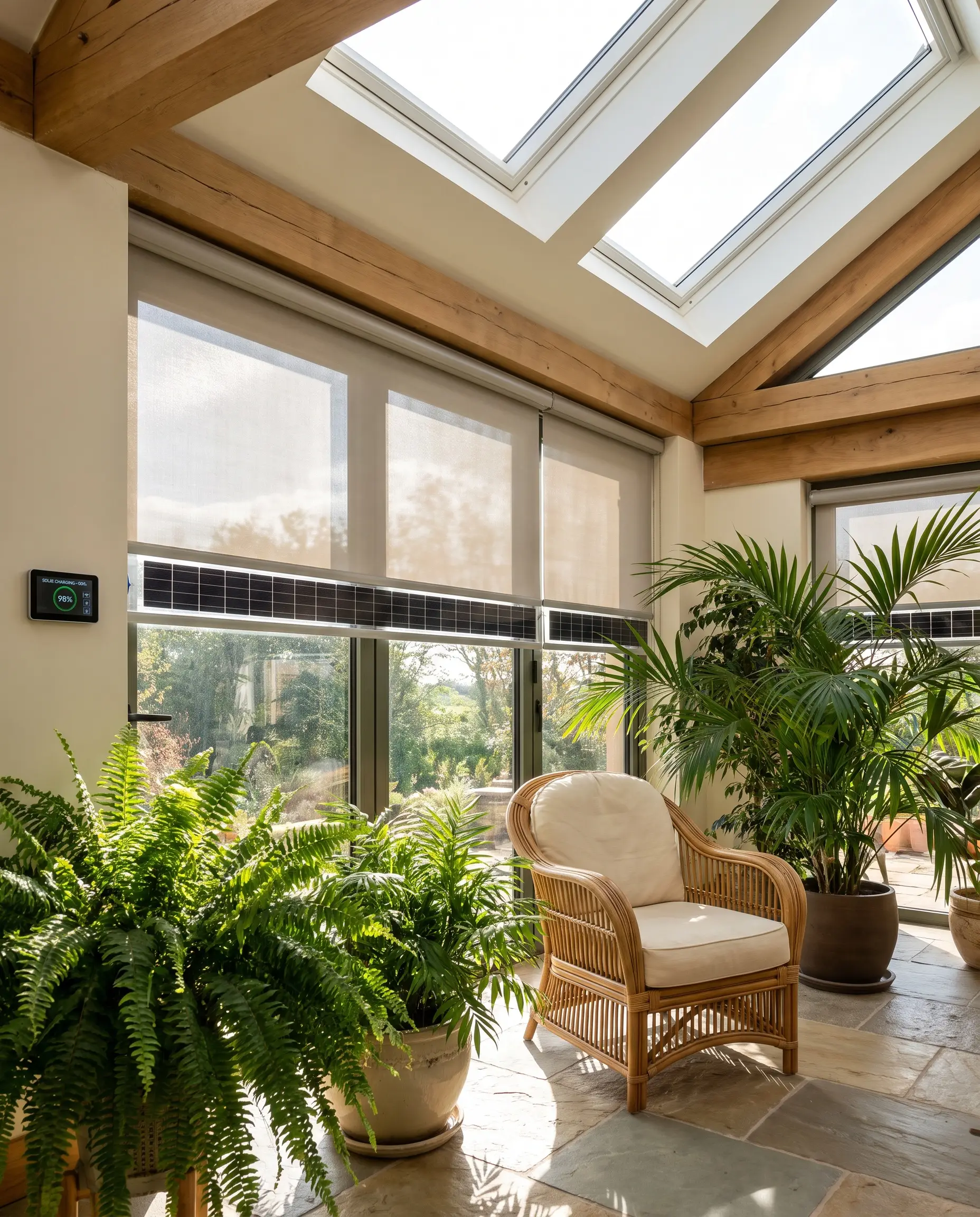
Sustainability meets cutting-edge convenience with shades featuring micro-solar panels positioned outward against the glass. This completely eliminates the need to hardwire the house or manually recharge battery wands, offering a perpetual, eco-friendly power cycle.
- Vibe: Eco-Conscious Innovation.
- Key Tech: Photovoltaic micro-strips integrated into the cassette.
- ROI Factor: Drastically reduces installation costs by bypassing the need for an electrician to pull low-voltage wires through existing walls.
9. Invisible Battery Wands
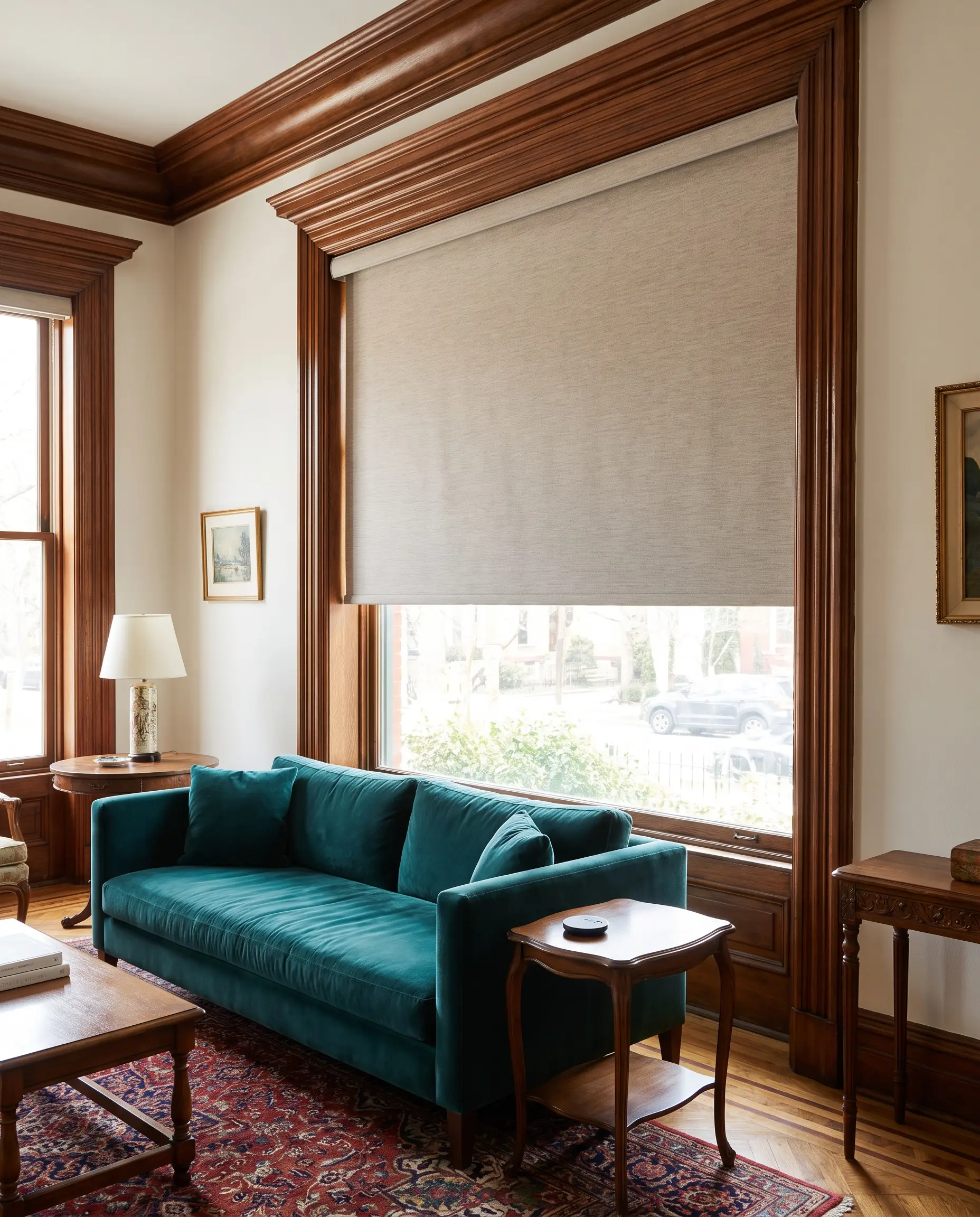
For retrofitting older homes that cannot run hardwired electricity, new designs completely hide lithium-ion battery packs inside the roller tube itself. This engineering feat removes the ugly, dust-collecting external battery clips of previous years, offering accessible luxury tech with a flawless finish.
These internal batteries typically hold a charge for 9 to 12 months under standard daily use and recharge via a simple, hidden USB-C port.
Workroom Secret
- Vibe: Accessible Modernization.
- Key Tech: Internal lithium-ion tubular motors.
- Ask for This: “A motorized roller shade with a fully concealed, built-in rechargeable lithium-ion battery.”
Bespoke Textiles & Advanced Fabrication
Cutting-edge tech and invisible hardware mean nothing if the textile itself falls flat. The bespoke fabrication trends of 2027 are entirely focused on heavyweight performance, rich textural depth, and precise, uncompromising tailoring.
10. The Return of the Euro Pleat
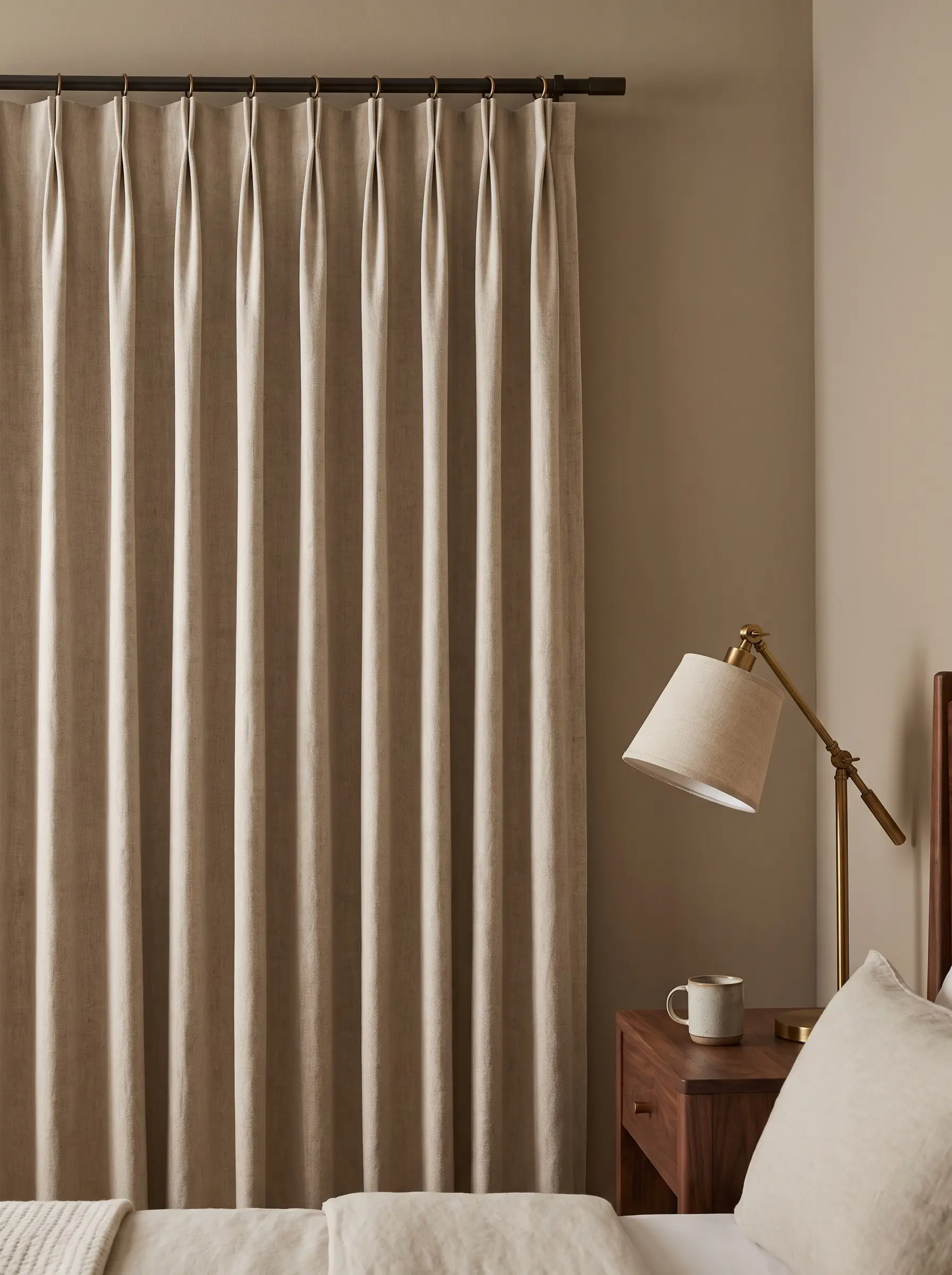
We are moving sharply away from the stiff, formal standard pinch pleats and the distinctly cheap look of metal grommets. The Euro pleat—pinched at the very top header and allowed to cascade cleanly down—offers a tailored, relaxed luxury that perfectly bridges the gap between traditional craftsmanship and modern ease.
- Vibe: Tailored Organic Elegance.
- Key Style: Top-tacked pleating (also known as a Parisian pleat).
- Rule of Thumb: Specify a two-finger Euro pleat for standard weight linens, and a three-finger pleat if you are using a lighter sheer to guarantee a robust, full drape.
11. Heavyweight Sheer Wools
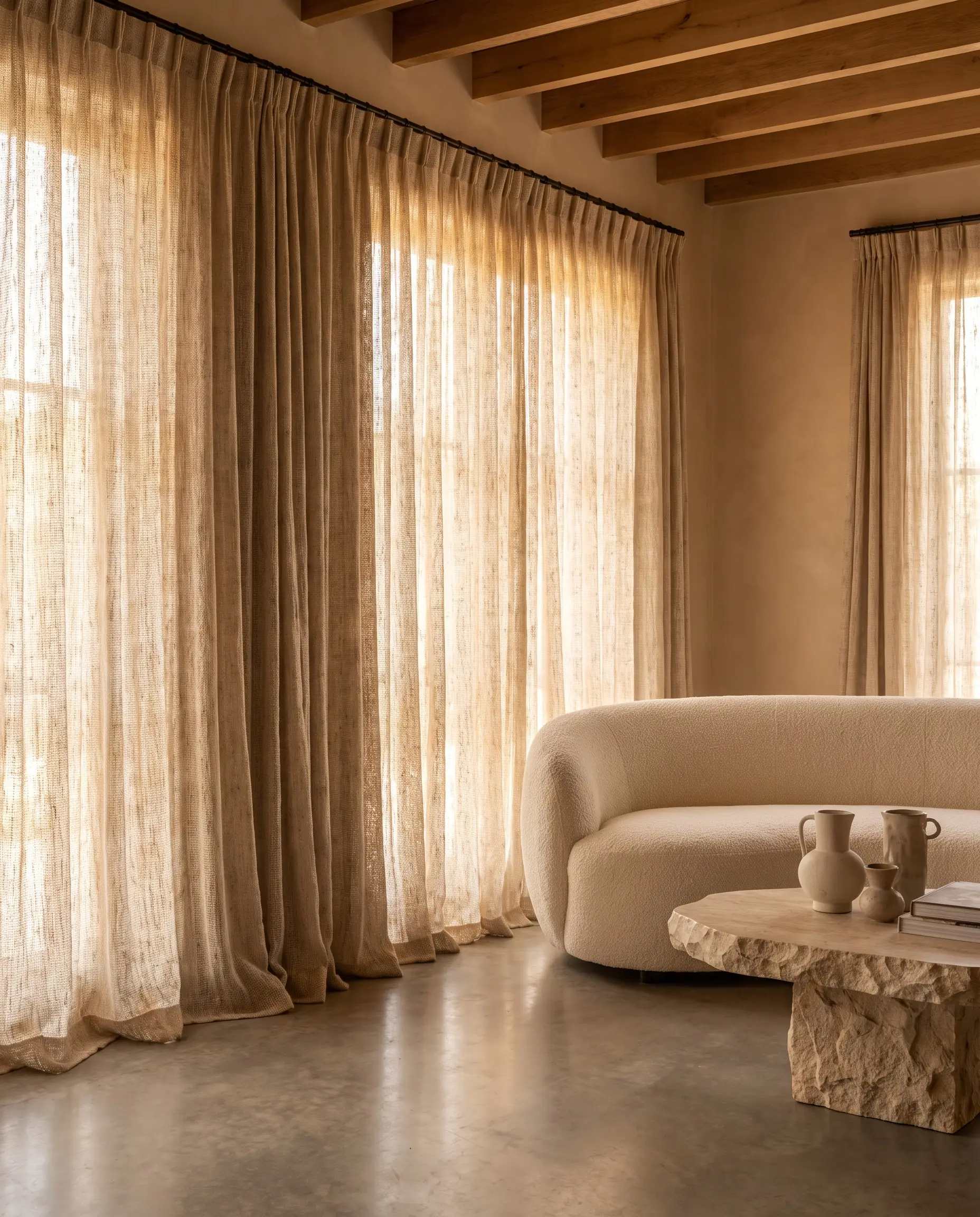
The industry is moving past flimsy, synthetic polyester sheers in favor of open-weave wools and alpacas that offer beautiful light diffusion with incredible tactile depth. These organic, slubby materials drape with a heavy, satisfying weight, filtering harsh sunlight into a soft, ambient glow.
- Vibe: Earthy, Bespoke Luxury.
- Key Materials: Alpaca blends, open-weave merino wool.
- Styling Pro-Tip: Let sheer wools “kiss” the floor (touching exactly, without pooling) to maintain a crisp, architectural line while showing off the fabric’s heavy drape.
12. Thermally Engineered Linens
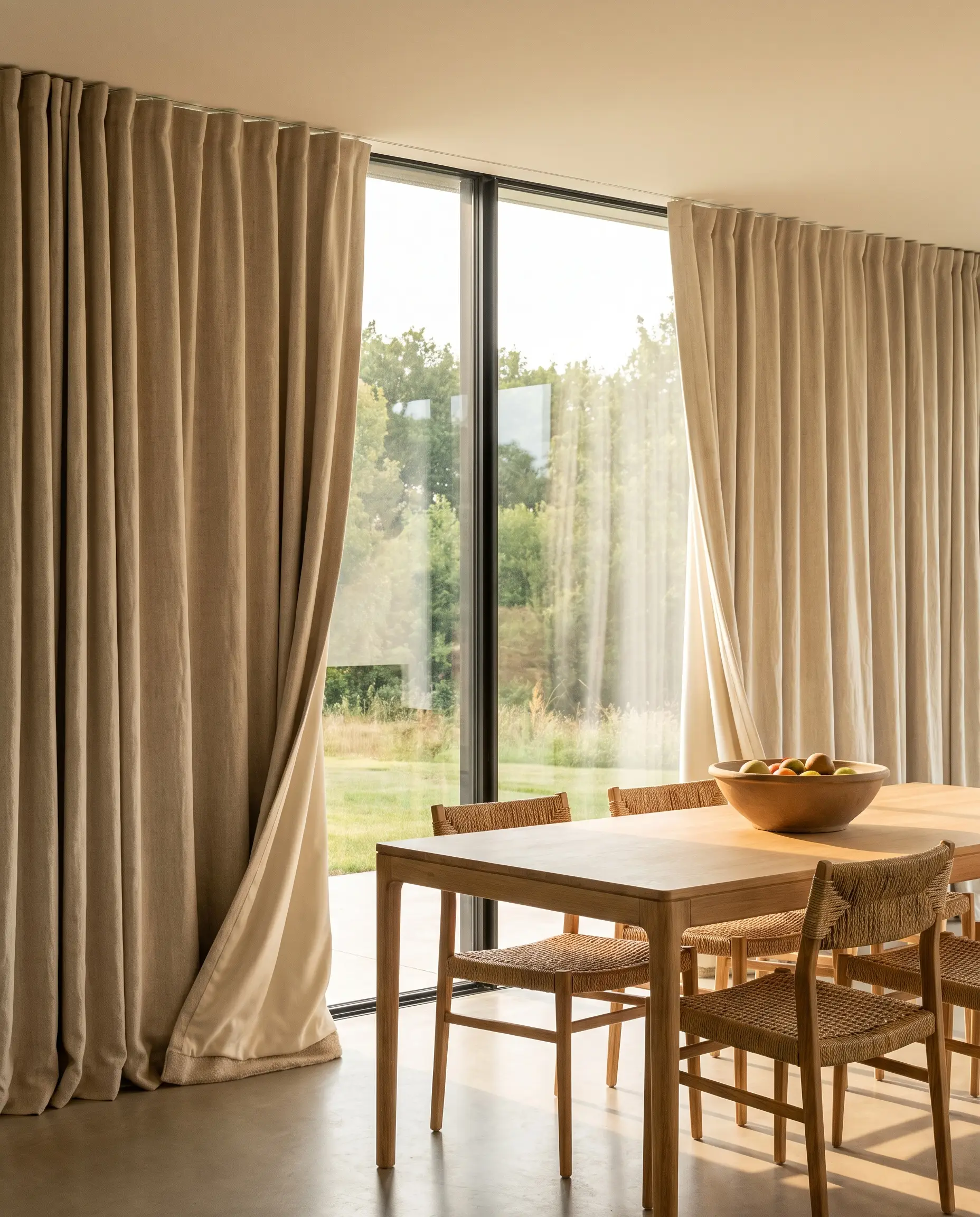
Climate-conscious design has finally merged with high-end aesthetics by backing organic linens with advanced, lightweight thermal interlining. This hidden layer insulates the room against extreme heat and cold without making the drape look stiff, bulky, or synthetic.
Always insist on a three-layer fabrication (face fabric, thermal interlining, and a standard lining) to protect the thermal layer from direct UV degradation over time.
Workroom Secret
- Vibe: High-Performance Comfort.
- Key Materials: Belgian linen face, fleece-like thermal interlining, cotton sateen lining.
- Ask for This: “A linen drape backed with a high-performance thermal interlining and a standard cotton lining.”
13. Contrast-Banded Leading Edges
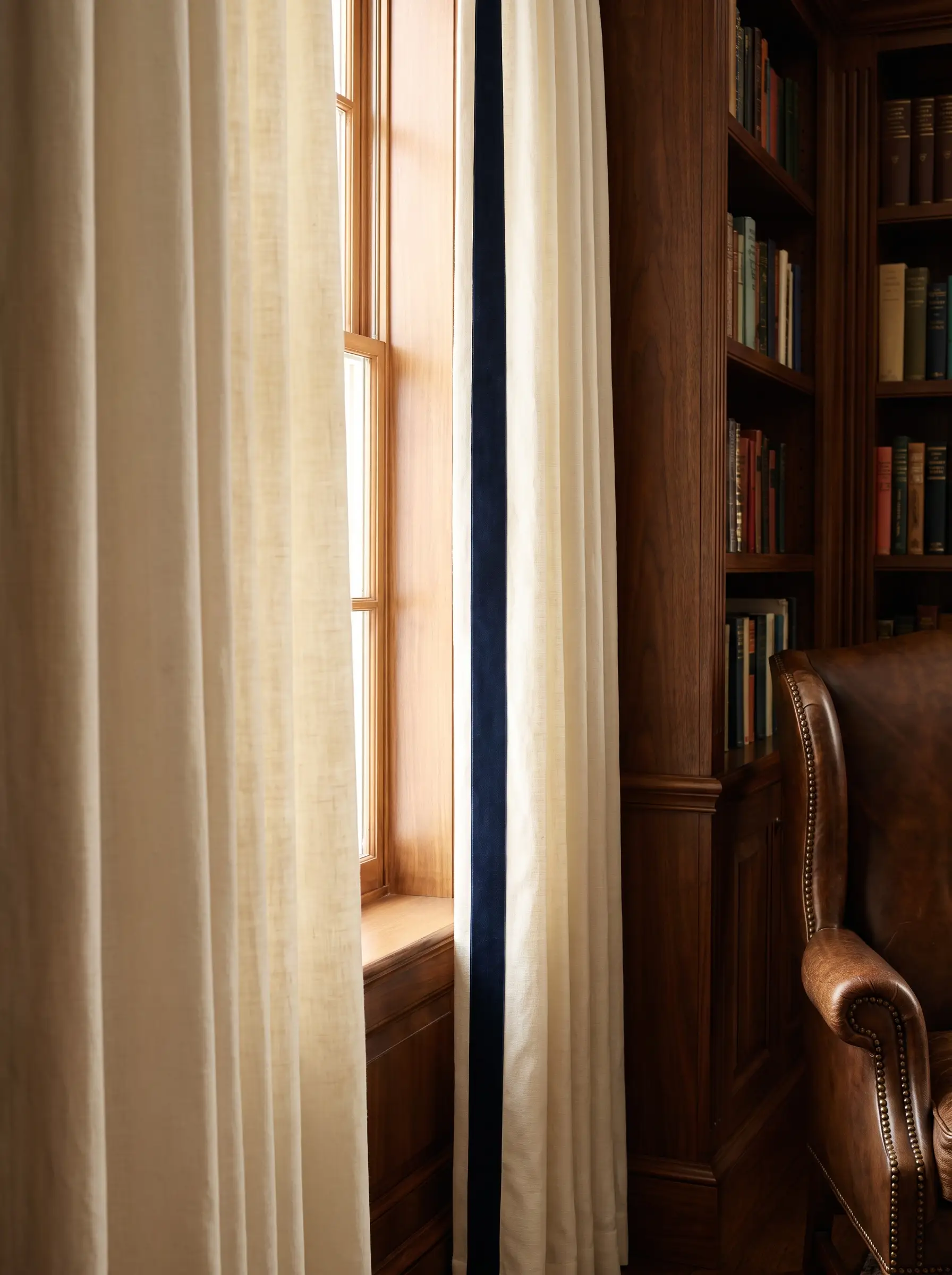
As a sophisticated nod to New Traditionalism, custom workrooms are adding a sharp 2-inch band of contrasting color or velvet straight down the leading edge (the vertical line where the curtains meet in the middle). This bespoke, custom-tailored signature grounds the fabric and draws the eye upward, acting as a visual anchor.
- Vibe: Refined New Traditional.
- Key Materials: Linen base with a cotton-velvet or grosgrain ribbon band.
- Ask for This: “A 2-inch inset contrast band on the leading edge, blind-stitched so no threads are visible on the face.”
14. Bouclé and Textured Borders
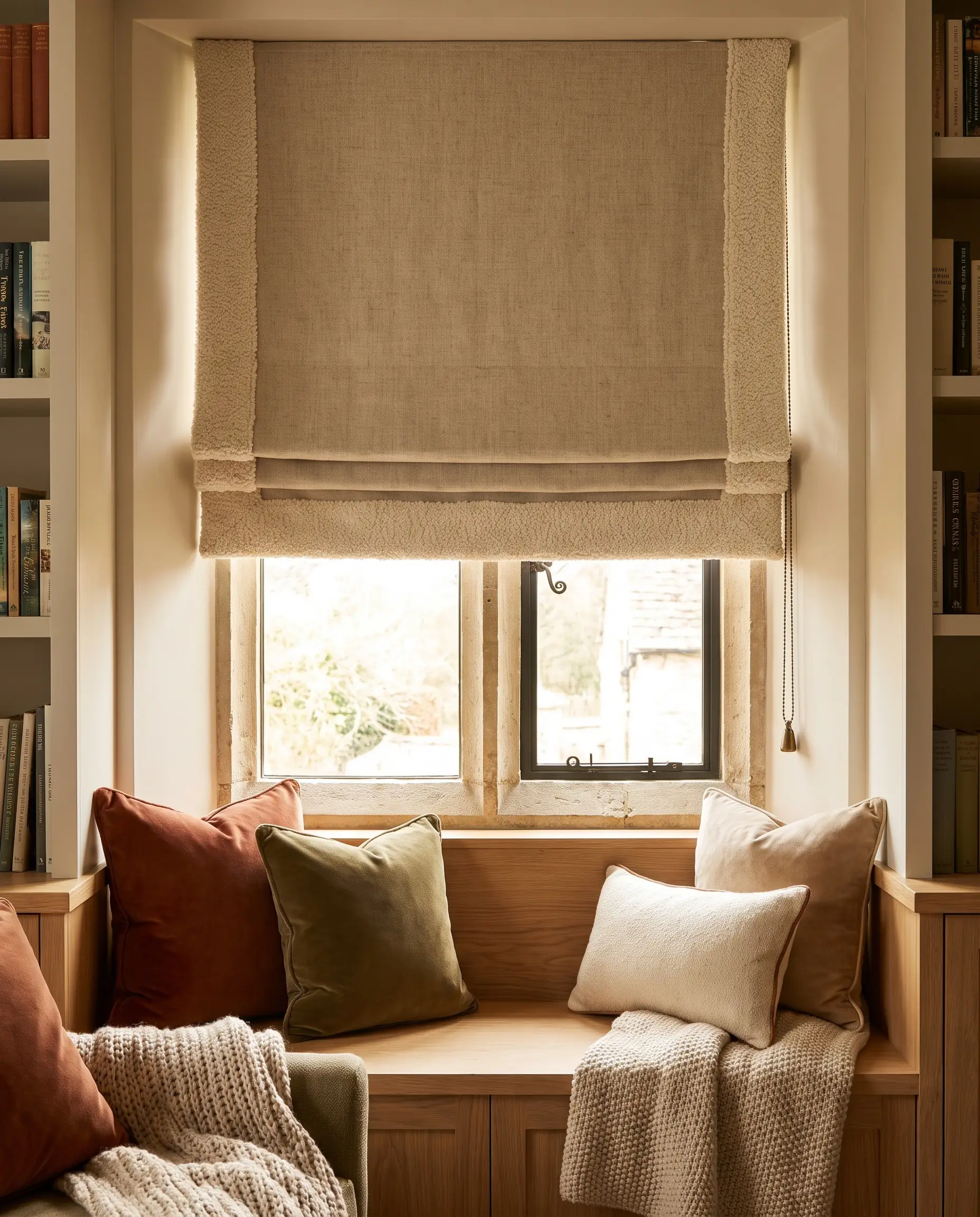
To add immediate depth to flat windows, designers are trimming flat Roman shades or simple linen panels with tactile, heavy textures like bouclé. This texture-on-texture application brings a highly sensory, tactile element to an otherwise rigid architectural plane.
- Vibe: Sensory, Layered Warmth.
- Key Materials: Flat-fold linen Roman shades, heavy bouclé trim.
- Hardware Match: Keep the operating chain metal (antique brass or oil-rubbed bronze) rather than cheap plastic to match the high-end feel of the bouclé.
Styling Rules & Color Palettes for 2027
Selecting the right hardware and fabric is only half the battle; how you deploy them dictates the success of the room. The styling rules for 2027 turn high-level interior design theory into actionable, spatial magic, using color and layering to tie your window treatments into the home’s overarching palette.
15. Color-Drenched Monochromatic Drapery
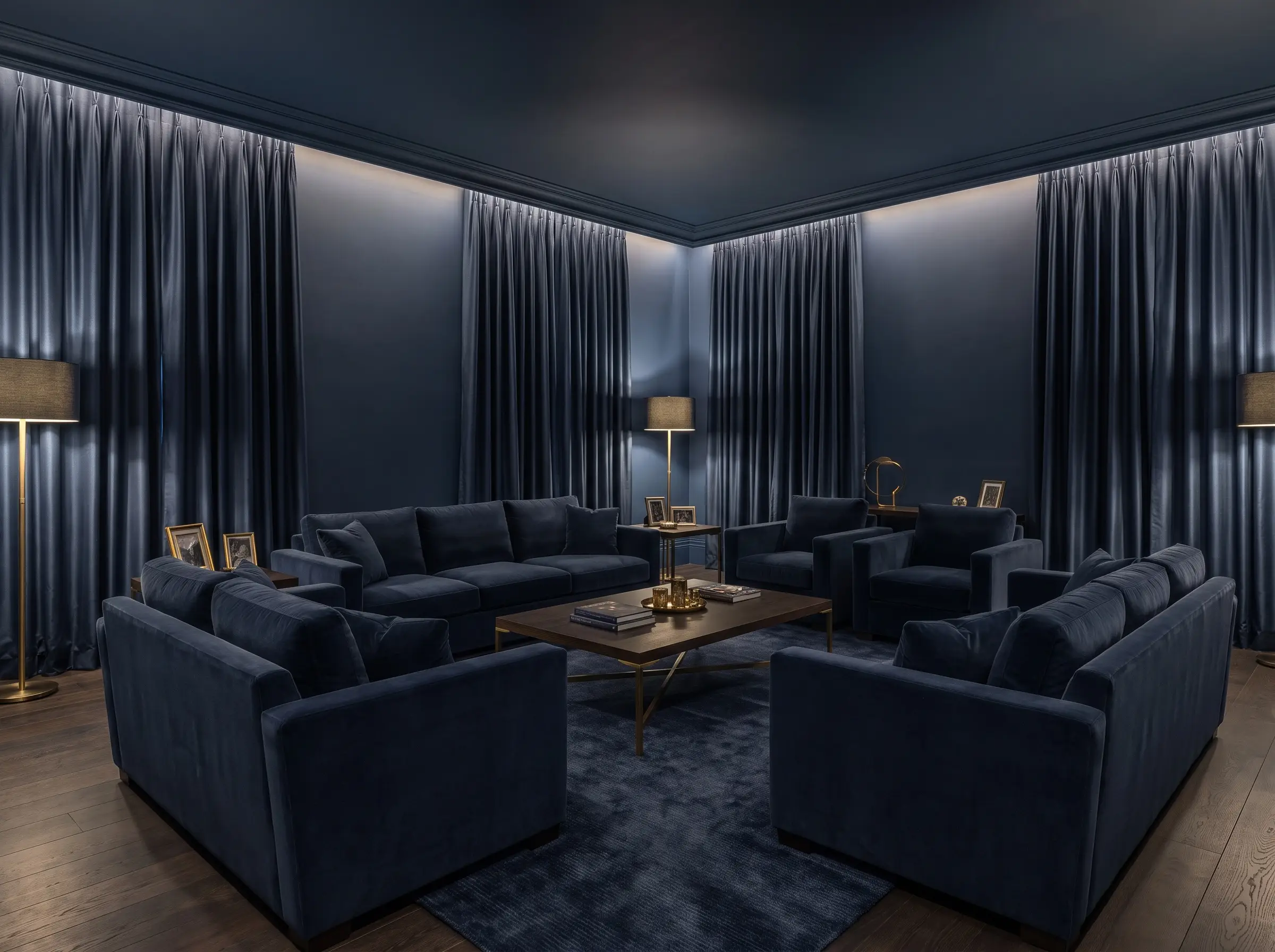
The most powerful color trend of the year involves matching the exact paint color of your walls to the drapery fabric, immersing the room in a single, unbroken hue. By removing high-contrast vertical lines, this color-drenching technique expands the room visually and makes ceilings feel substantially taller.
If you color-drench, vary the finishes. Pair a matte, chalky wall paint with a drapery fabric that has a slight sheen or a heavy, slubby texture to prevent the room from feeling flat.
Hackrea Styling Tip
- Vibe: Immersive, Moody Sophistication.
- Color Match: Sherwin-Williams Dried Thyme walls paired with matching sage heavy-weight linen.
- Color Match: Benjamin Moore Hale Navy walls paired with rich navy wool sateen.
16. Woven Grasscloth & Roman Pairings
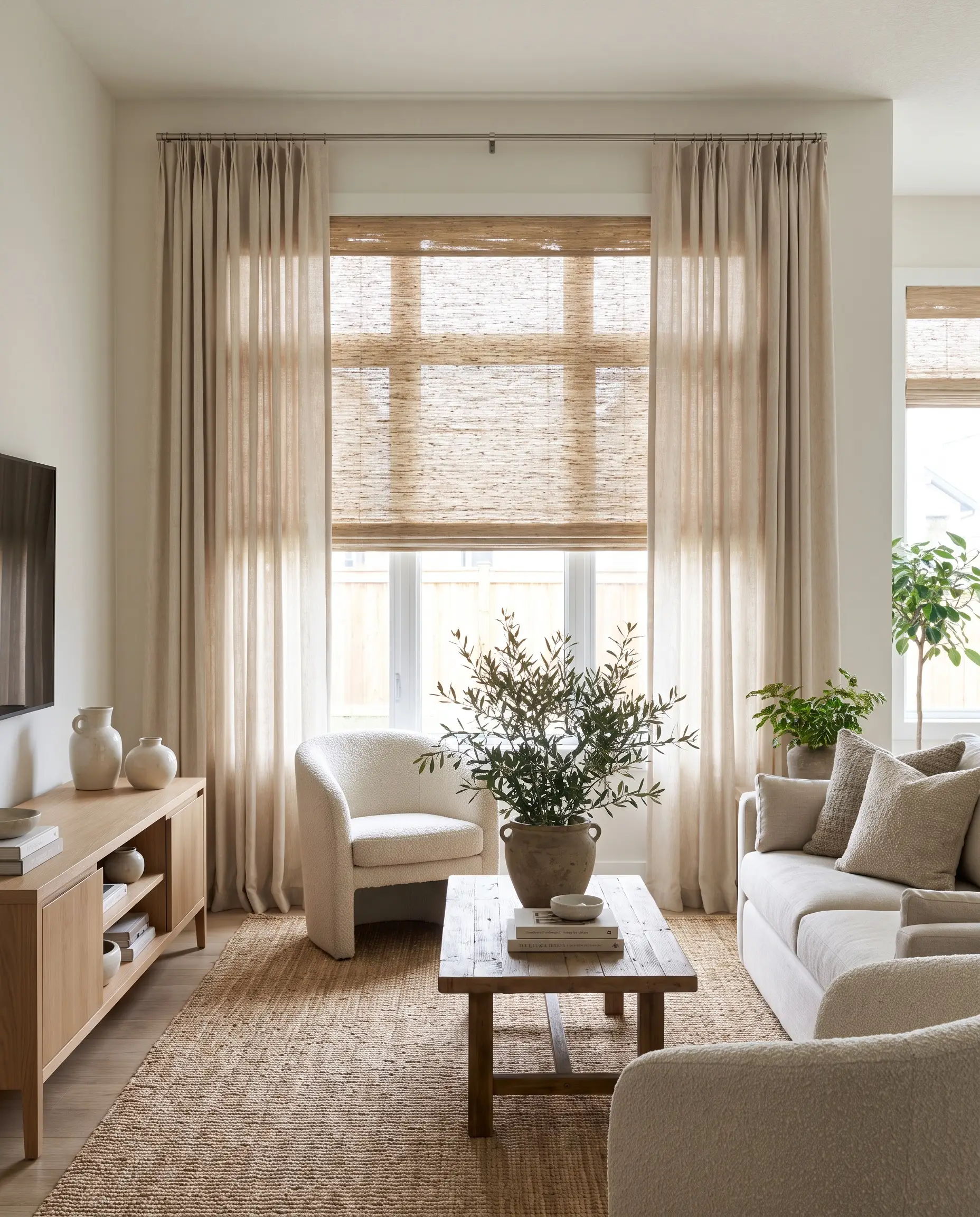
Single-treatment windows often feel unfinished, which is why layering a natural woven wood or grasscloth shade inside the window frame, flanked by soft, operable drapery panels, is dominating 2027. This pairing balances the rigid, organic texture of the grasscloth with the soft, acoustic dampening of the flanking textiles.
- Vibe: Layered Organic Modern.
- Key Materials: Woven arrowroot or jute shades, light-filtering linen panels.
Step-by-Step Layering:
- Step 1: Install the woven grasscloth shade as a flush, inside-mount to highlight the window’s architectural depth.
- Step 2: Mount a minimalist traverse rod high (inches from the ceiling) and wide (10-15 inches past the frame).
- Step 3: Layer the operable drapery panels on the rod to soften the hard edges of the woven shade.
17. High-Contrast Black Window Framing
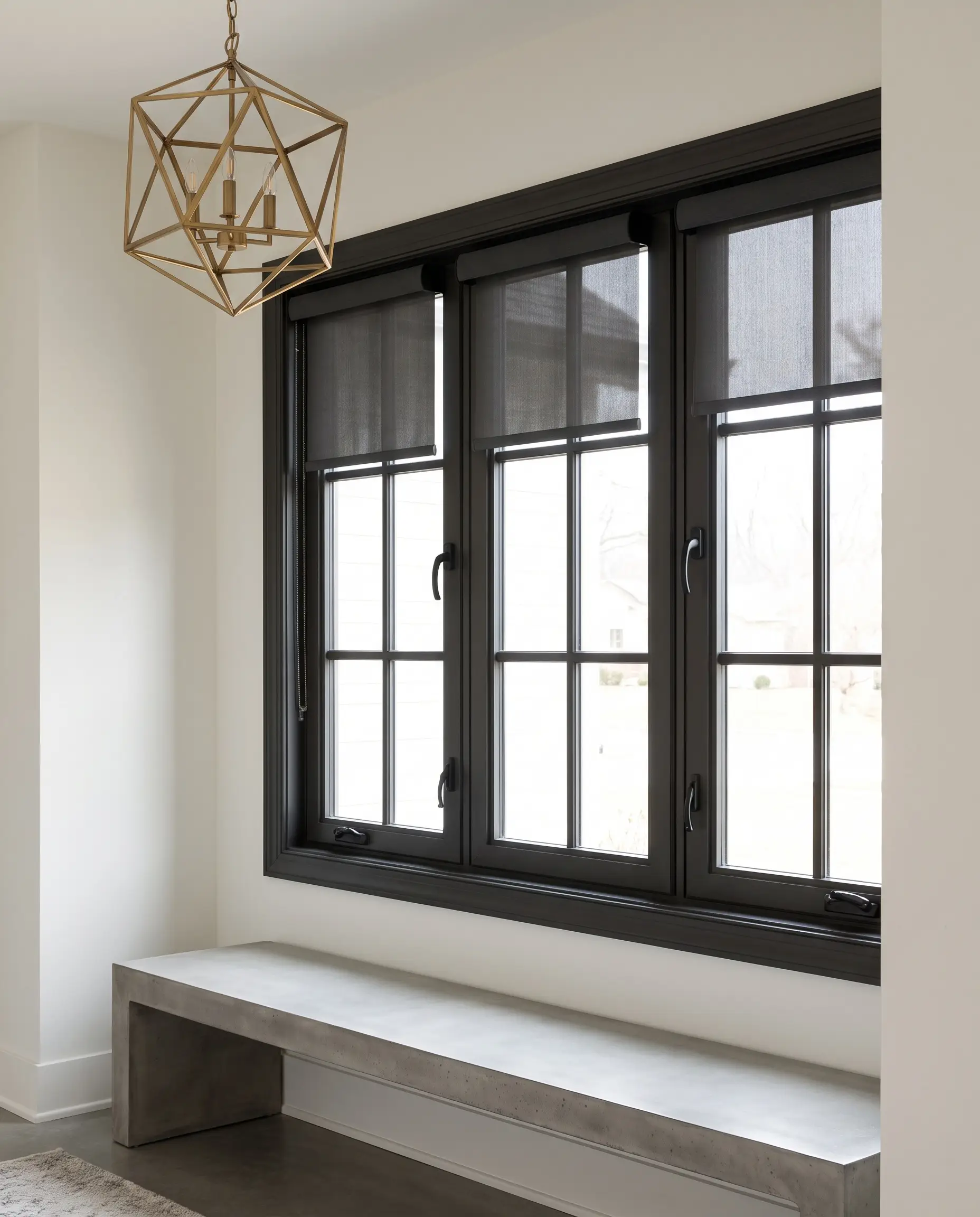
For those embracing Minimalist Luxury or industrial aesthetics, using matte black hardware, black leading edges, or charcoal sheer shades explicitly draws attention to architectural window mullions. This high-contrast approach treats the window itself as a piece of framed art, rather than trying to blend it into the drywall.
- Vibe: Sharp Minimalist Luxury.
- Key Materials: Matte black iron hardware, charcoal solar mesh.
- Paint Recommendation: Benjamin Moore Onyx for painting the interior window sashes to perfectly match the hardware.
18. Tone-on-Tone Subtle Stripes
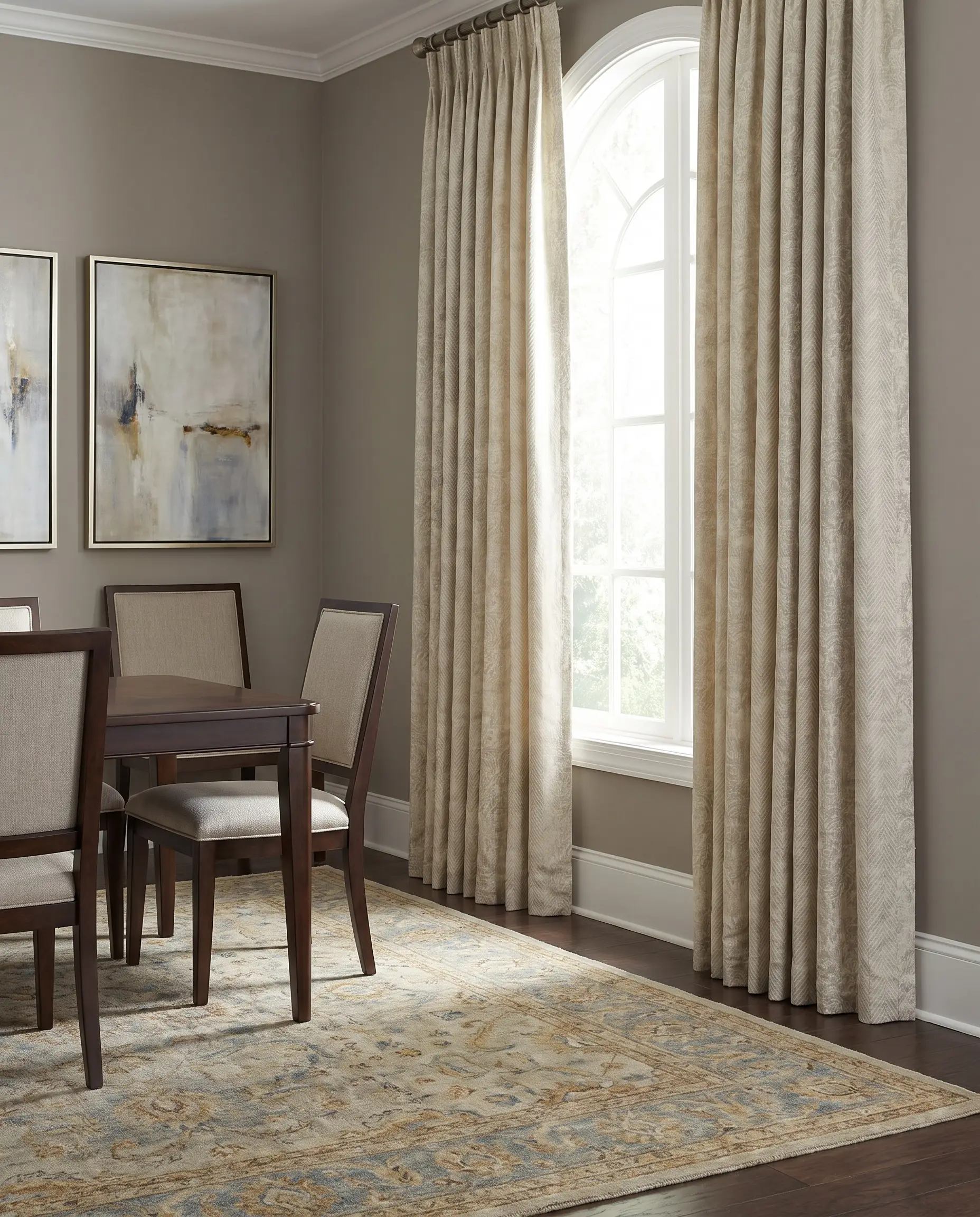
Loud, geometric prints and aggressive florals are definitively out. The pattern of choice for 2027 is a subtle, woven tone-on-tone stripe that reads as a solid from afar but reveals rich, structural visual interest up close.
- Vibe: Quiet Luxury.
- Key Style: Woven damask stripes or subtle herringbone.
- Styling Pro-Tip: Deploy this specific pattern in transitional bedrooms or formal dining rooms where you want depth without overwhelming the space’s primary art or rugs.
The “Out” List: Trends to Leave Behind in 2027
To protect your formidable investment, you must know what elements will instantly date your home. The following fabrication choices and styling habits are firmly in the past, offering nothing but visual clutter and compromised functionality.
19. Heavy Swag Valances
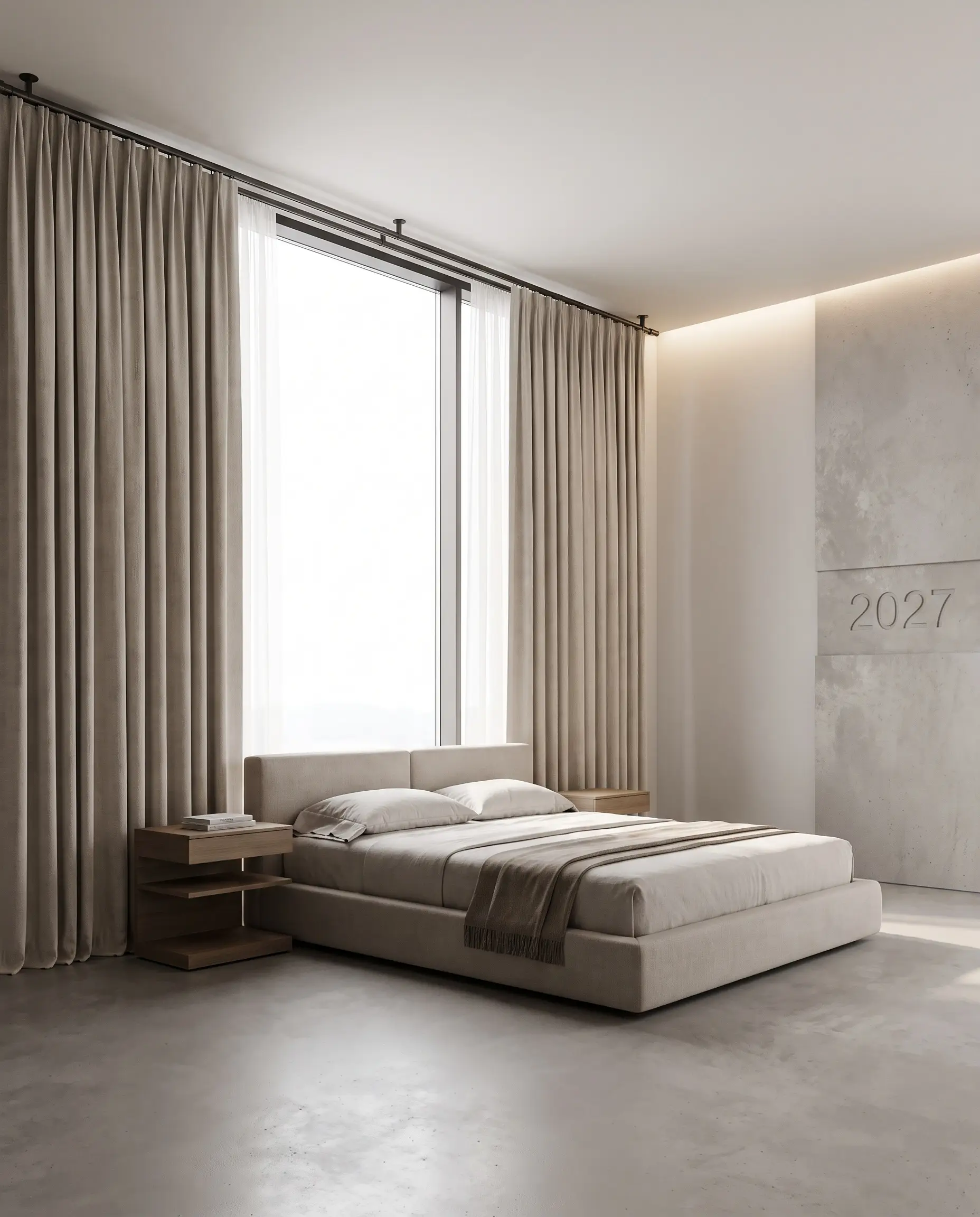
Bulky, decorative top-treatments and swags actively block precious natural light and artificially lower the perceived ceiling height. Replace these oppressive fabric dust-catchers with clean architectural cornices, recessed pockets, or exposed French returns.
- The Problem: Suffocates the room’s verticality and looks inherently dated.
- The 2027 Fix: Expose the hardware with a sleek traverse track or hide it entirely in a ceiling pocket.
20. Stiff Pinch Pleats and Grommets
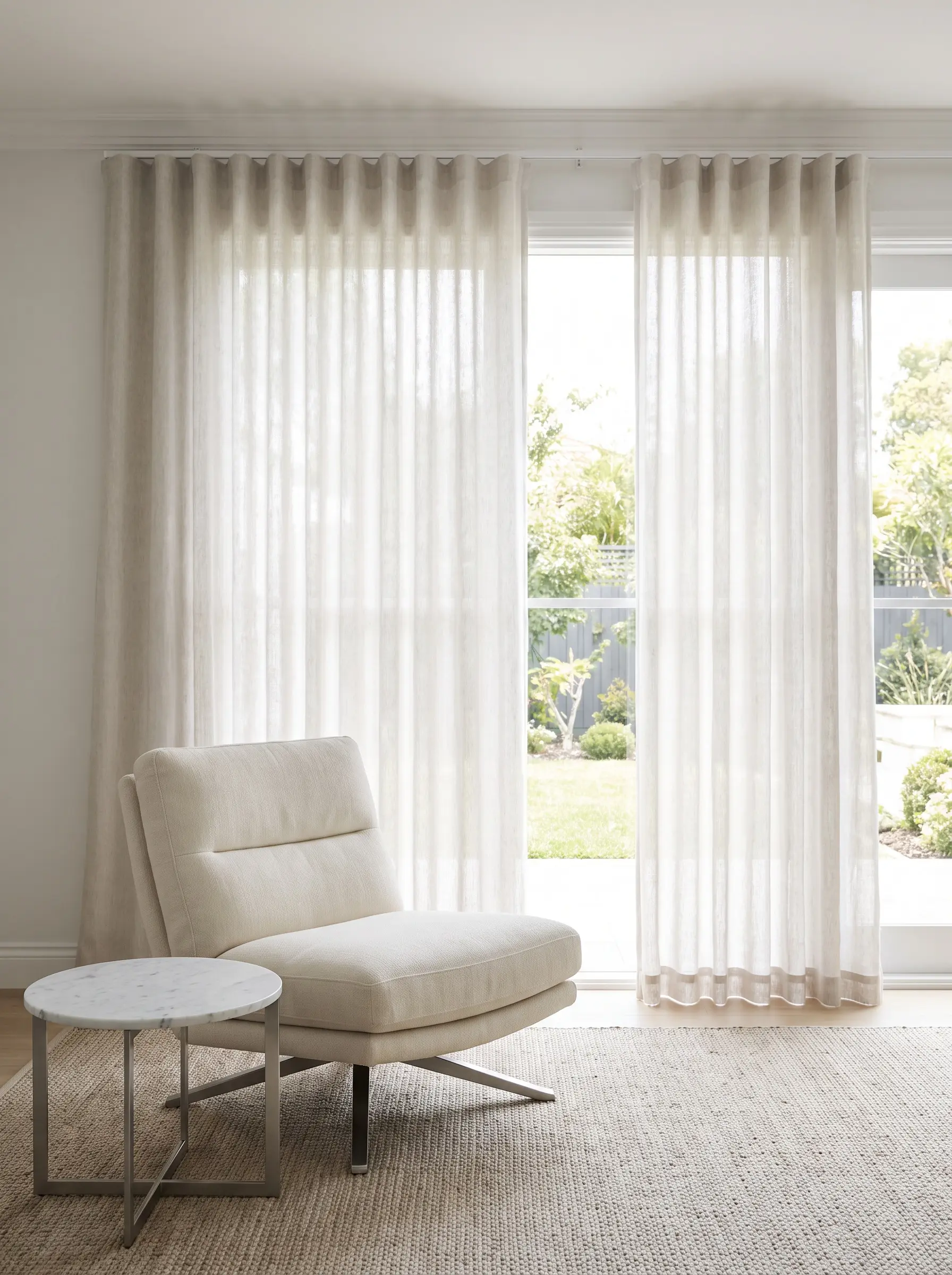
Grommet-top curtains belong exclusively in college dorm rooms, as they look cheap and interrupt the fabric’s natural drape with glaring metal rings. Similarly, the overly stiff, rigid pinch pleat looks like a relic from a 1990s corporate hotel and lacks the relaxed elegance required for modern interiors.
- The Problem: Poor structural draping and outdated, rigid aesthetics.
- The 2027 Fix: Default strictly to the relaxed Euro pleat or a seamless, continuous Ripplefold.
21. Glossy Synthetic Silks
High-shine faux silks and cheap polyesters reflect ambient room light poorly, drawing immediate attention to their synthetic, inexpensive nature. The 2027 aesthetic is uncompromising in its demand for matte, organic, and highly textural finishes that absorb light rather than glaring against it.
- The Problem: Looks synthetic, feels abrasive, and degrades quickly under UV exposure.
- The 2027 Fix: Push your budget toward matte Belgian linens, sheer wools, or heavy cotton velvets.
Finalizing Your Home’s Light Architecture
Window treatments represent the critical bridge between your home’s rigid, hard architecture and its soft, lived-in furnishings. By prioritizing invisible architectural hardware, seamless tech integration, and uncompromising tailoring over loud, decorative fabrics, you ensure your investment will look bespoke for decades. Assess your current window setups today, and begin your upgrade in your most heavily utilized living space by stripping away the clutter and installing a layered, smart, and texturally rich treatment.
The Aesthetics Desk curates the visual direction for Hackrea. Specializing in design history, global architectural movements, and interior styling, this desk focuses on the psychology of space and how to translate high-end, magazine-quality aesthetics into approachable residential design without falling into fleeting micro-trends.