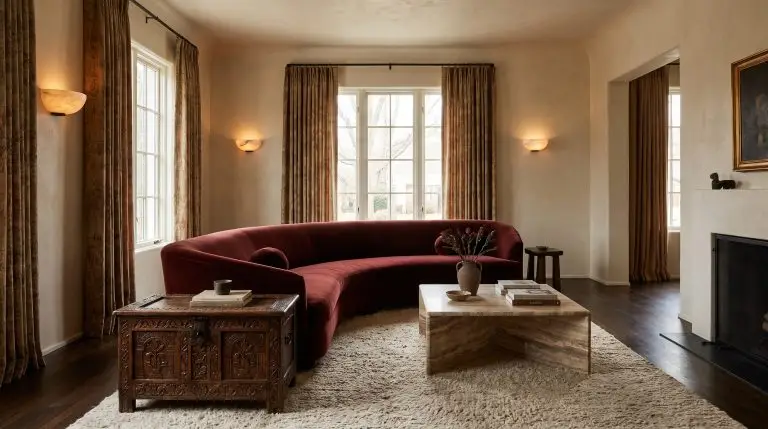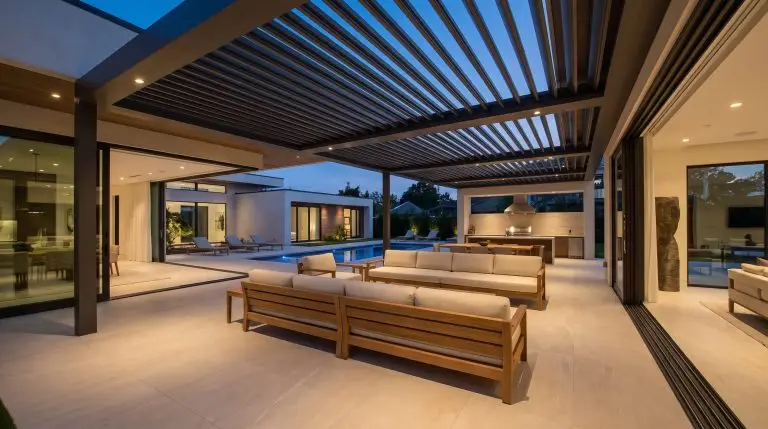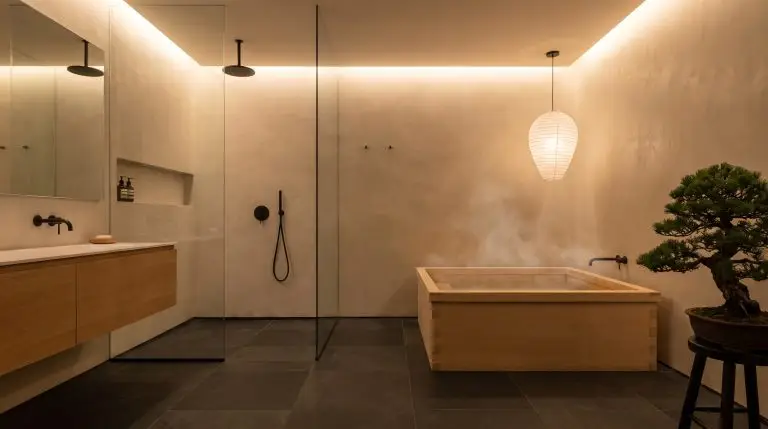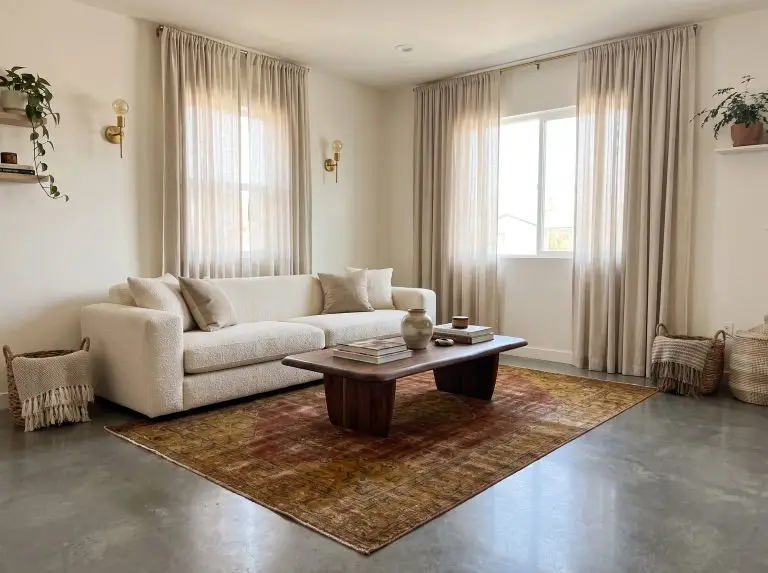
For years, gray flooring was the default setting of the modern renovation. It is incredibly practical, famously hides dirt, and offers extreme durability, especially in high-traffic homes. But as interior styling trends shift toward deeply personal, highly tactile spaces, many homeowners look down at their gray Luxury Vinyl Plank (LVP) or concrete and worry their rooms feel sterile, cold, or suspiciously like a flipped house.
The secret to making gray floors look expensive and intentional in 2026 is a concept we call Temperature Balancing. You do not need to rip out your flooring to create a rich, inviting room. Instead, you must treat gray not as a flat neutral, but as a distinctly cool base layer that mathematically demands warm, highly textured counterparts to feel complete.
By aggressively contrasting your floors with warm woods, tactile fabrics, and organic shapes, you neutralize the chill. Temperature balancing transforms gray flooring from a cold compromise into a sophisticated, grounding foundation.
The Core Rule: Identifying Your Floor’s Undertone
Before you buy a single piece of furniture or open a can of paint, you must understand that gray is never just gray. Every gray floor has a dominant undertone, leaning either cool (flashing blue, green, or purple in natural light) or warm (leaning brown or yellow, commonly known as greige). Identifying this undertone dictates every styling decision you make moving forward.
To find your floor’s true undertone, lay a piece of pure white printer paper flat on the planks during the brightest part of the day. The stark white will force the floor’s hidden colors to the surface, instantly revealing if it leans icy blue or warm brown.
Hackrea Designer Secret
The most critical mistake you can make is mixing a warm greige floor with a cool, blue-leaning gray wall, or vice versa. This clash creates a muddy, unsettling visual tension that makes the room feel fundamentally “off.”
Hackrea Designer Secret
Modern Gray Flooring Materials (Ideas 1-5)
If you are currently shopping for new floors, aim for high texture and matte finishes to avoid a plastic, flat appearance. These are the modern materials that lay a sophisticated groundwork.
1. Wide-Plank Greige French Oak
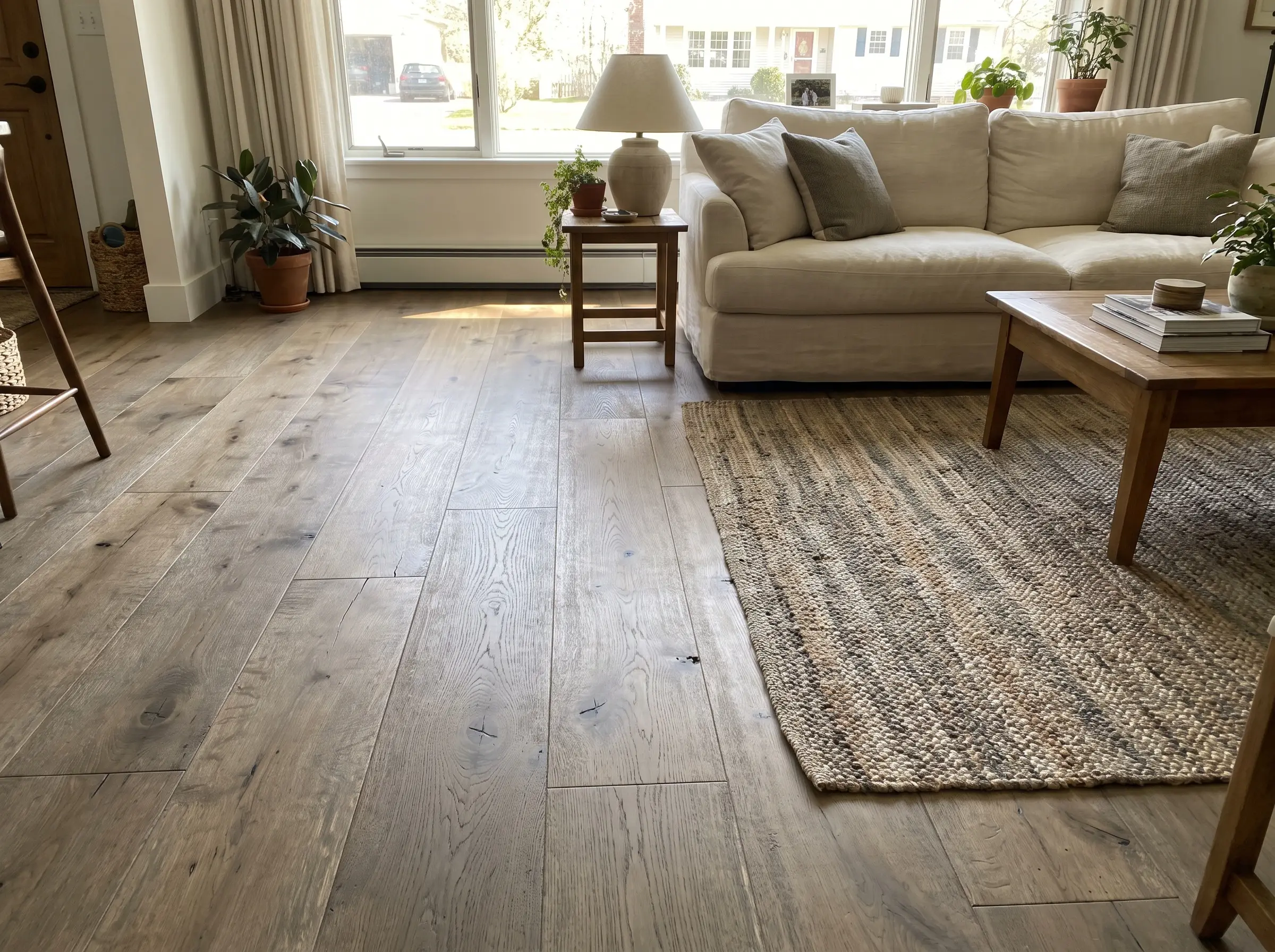
Warm-leaning gray, or greige, featuring natural knots offers a grounded, European sensibility. The sheer visual weight of 7-9 inch wide planks reduces the number of seams, making the room feel expansive and historically rooted rather than newly manufactured.
- Vibe: Transitional & Organic Modern.
- Key Material: 7-9 inch wide planks.
- Styling Pro-Tip: Run the planks parallel to the longest wall in the room to maximize the feeling of spatial flow.
2. Polished Microcement for Organic Modernism
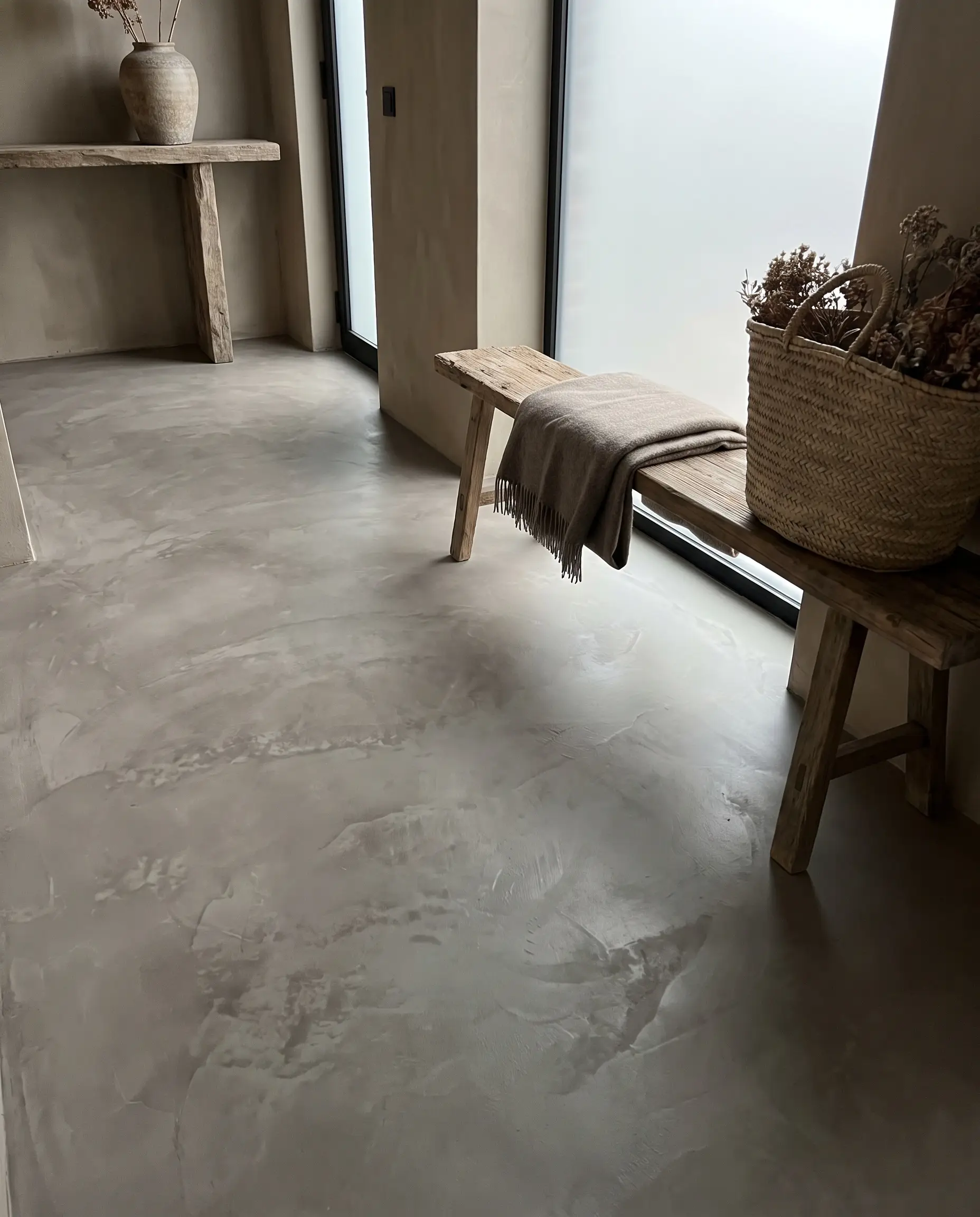
Seamless, poured microcement brings an artisanal, handcrafted warmth to industrial gray. Its cloudy, imperfect tactile nature absorbs light beautifully, creating a surface that feels distinctly human and grounding.
- Vibe: Wabi-Sabi & Soft Industrial.
- Material Match: Poured microcement.
- Finish Recommendation: Hand-troweled for maximum visual movement.
3. High-Variation Slate Tile in a Herringbone Pattern
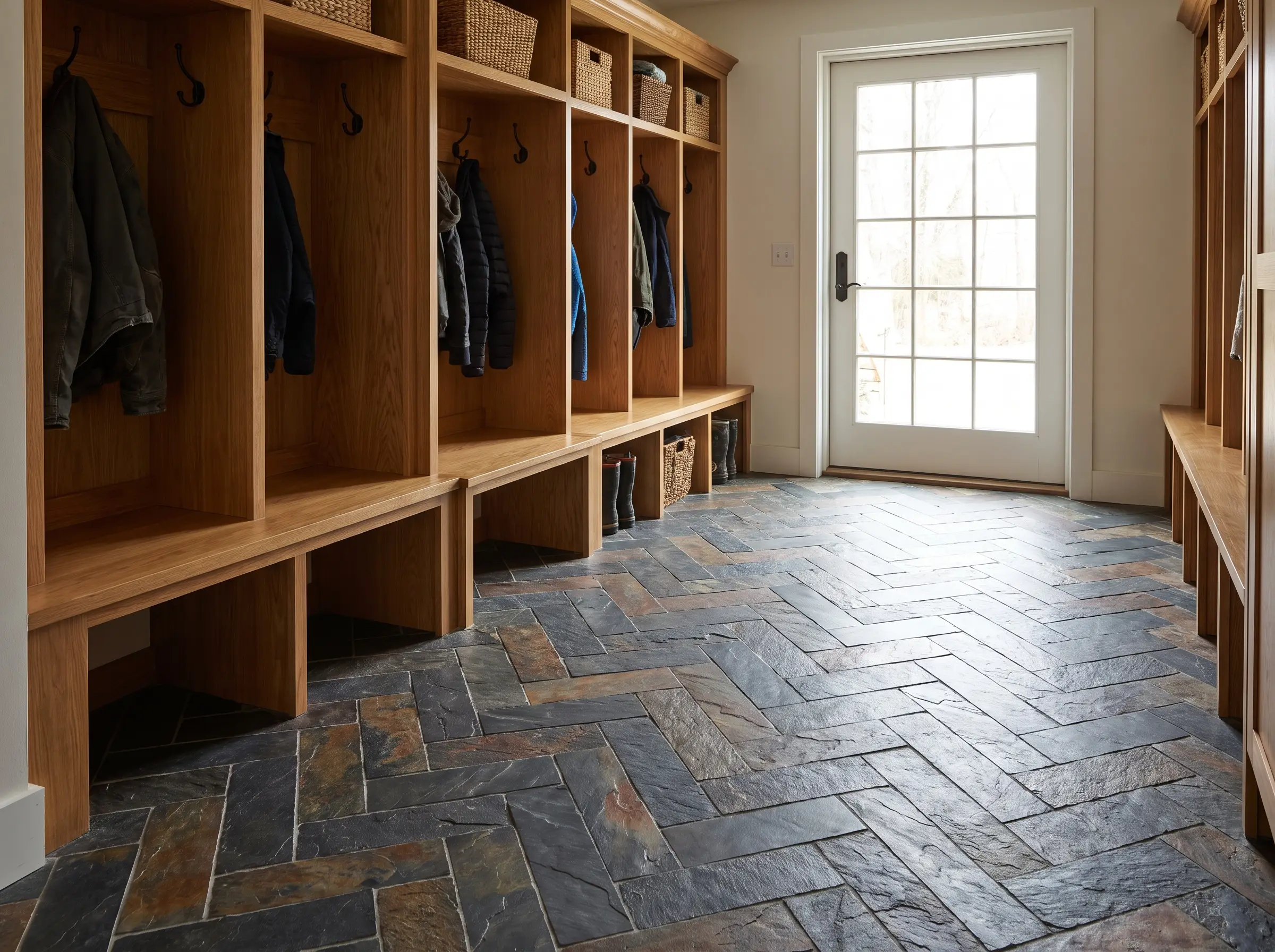
Natural stone introduces deep, earthy contrast right into the flooring itself. Cleft slate with high color variation—incorporating rust and charcoal tones—laid in a herringbone pattern gives mudrooms or entryways incredible architectural authority.
- Vibe: Heritage & Accessible Luxury.
- Tile Specification: Natural cleft slate.
- Layout Pro-Tip: A herringbone pattern directs the eye forward, establishing an immediate sense of arrival.
4. Matte Luxury Vinyl Plank (LVP) with Wire-Brushed Texture
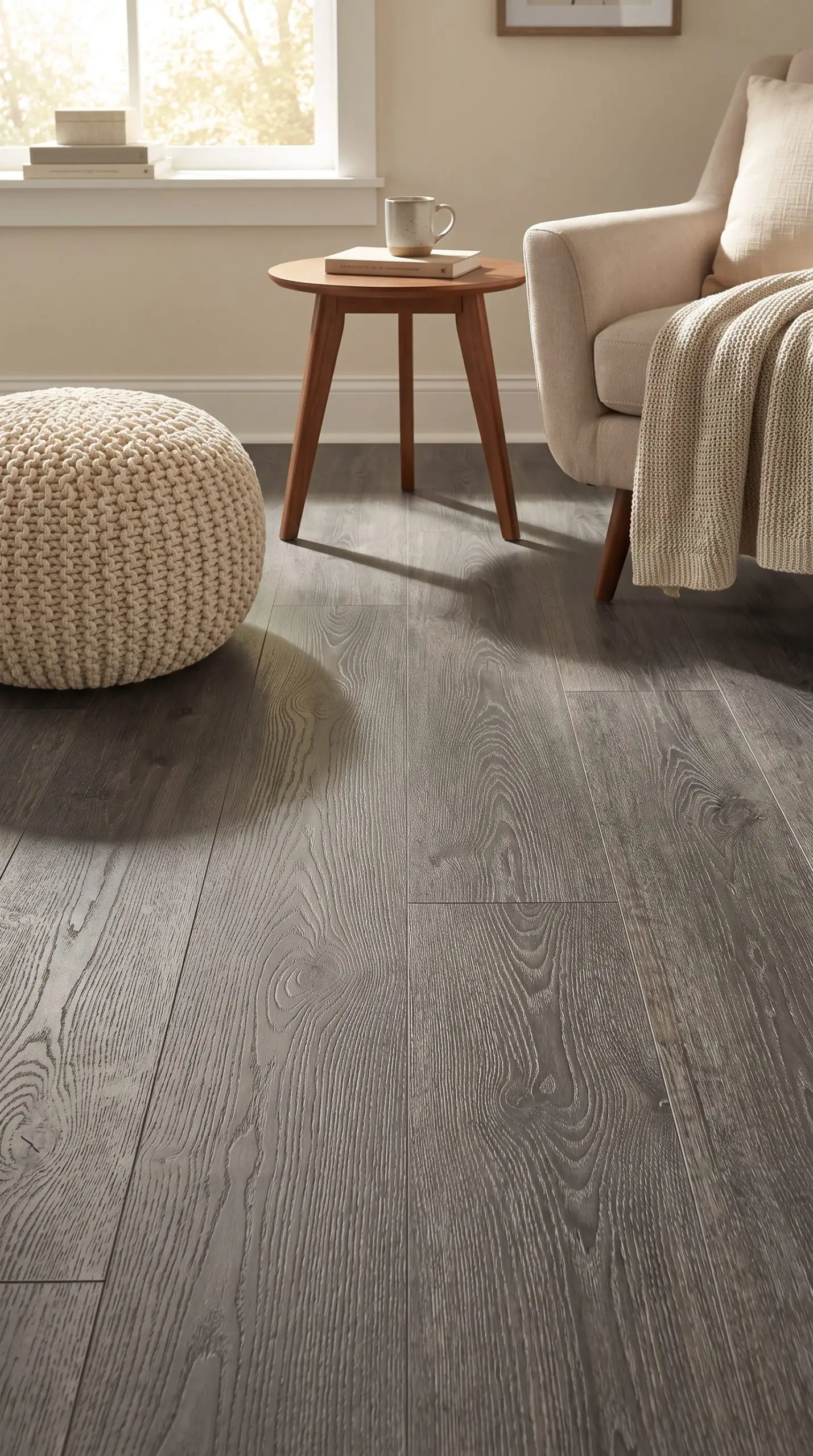
For budget-friendly LVP, you must absolutely avoid glossy topcoats that reflect glare and reveal a plastic composition. Seek out a heavily wire-brushed texture that mimics authentic wood grain to give the floor necessary friction and realism.
- Vibe: Pragmatic Modern.
- Non-Negotiable Trait: Matte finish.
- Texture Recommendation: Deep wire-brushed embossing.
5. Terrazzo with Charcoal and Warm Aggregate Binding
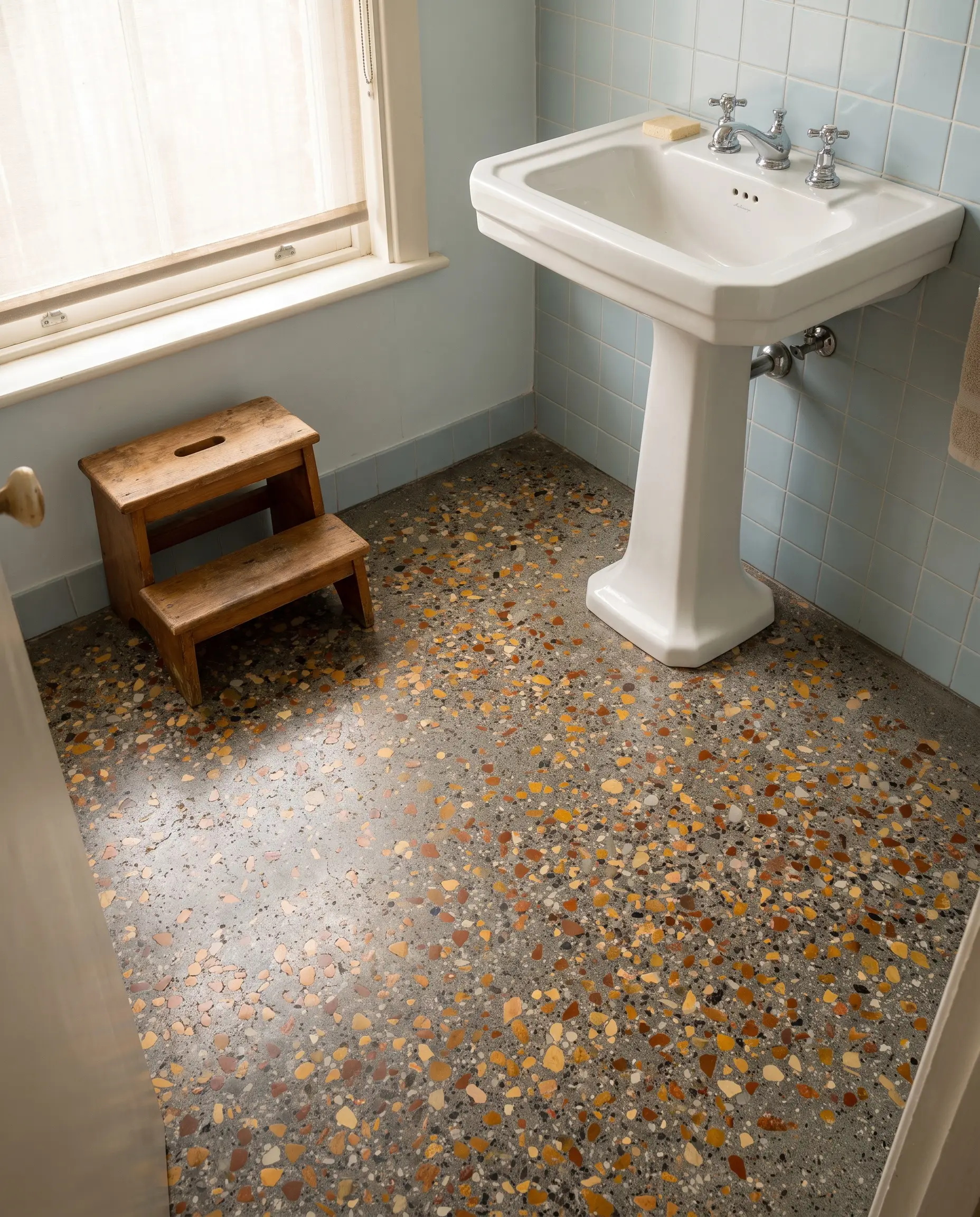
Terrazzo handles the temperature balancing for you directly within the stone. A gray cement binder speckled with warm amber or terracotta aggregates naturally bridges the gap between cool and warm tones.
- Vibe: Mid-Century Modern & Postmodern.
- Material Composition: Gray cement base with warm stone chips.
- Best Application: High-traffic entryways or bold bathroom floors.
Living Room Styling: Warming Up Cool Floors (Ideas 6-12)
The living room requires the most aggressive temperature balancing. This is where we introduce heavily textured textiles and rich, dark woods to counteract the cool foundation of the floor.
6. Anchor the Room with a Cream Bouclé Sofa
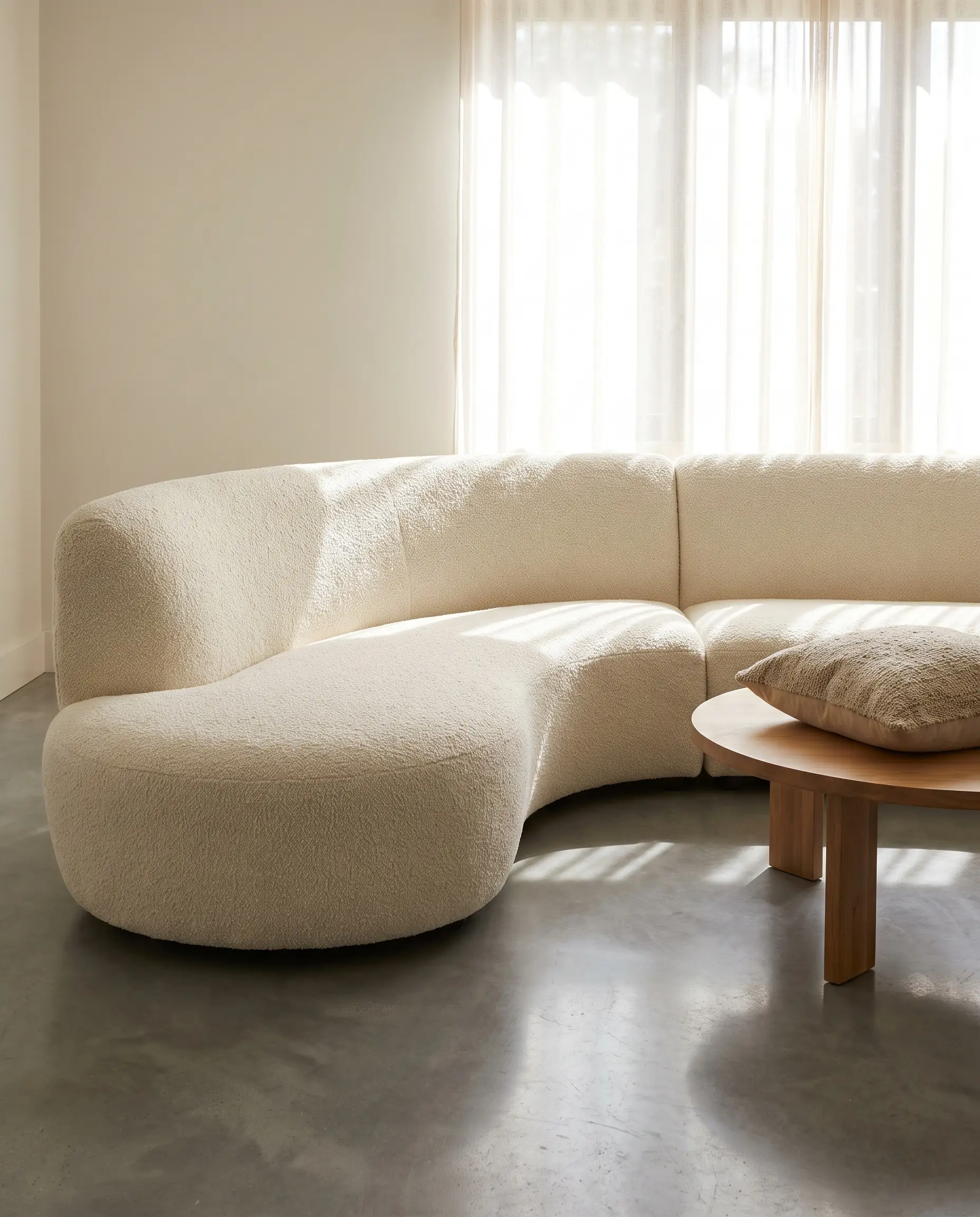
Highly textured, warm-white fabrics physically soften the harshness of a hard gray floor. A bouclé or shearling sofa provides a massive, tactile anchor that immediately warms the visual field and invites you to sit down.
- Vibe: Soft Modern.
- Textile Recommendation: Heavy cream bouclé or shearling.
- Temperature Balancing Tip: Contrast the “hard” floor with the “soft” organic curves of the furniture.
7. Layer Vintage Turkish Rugs for Color Disruption
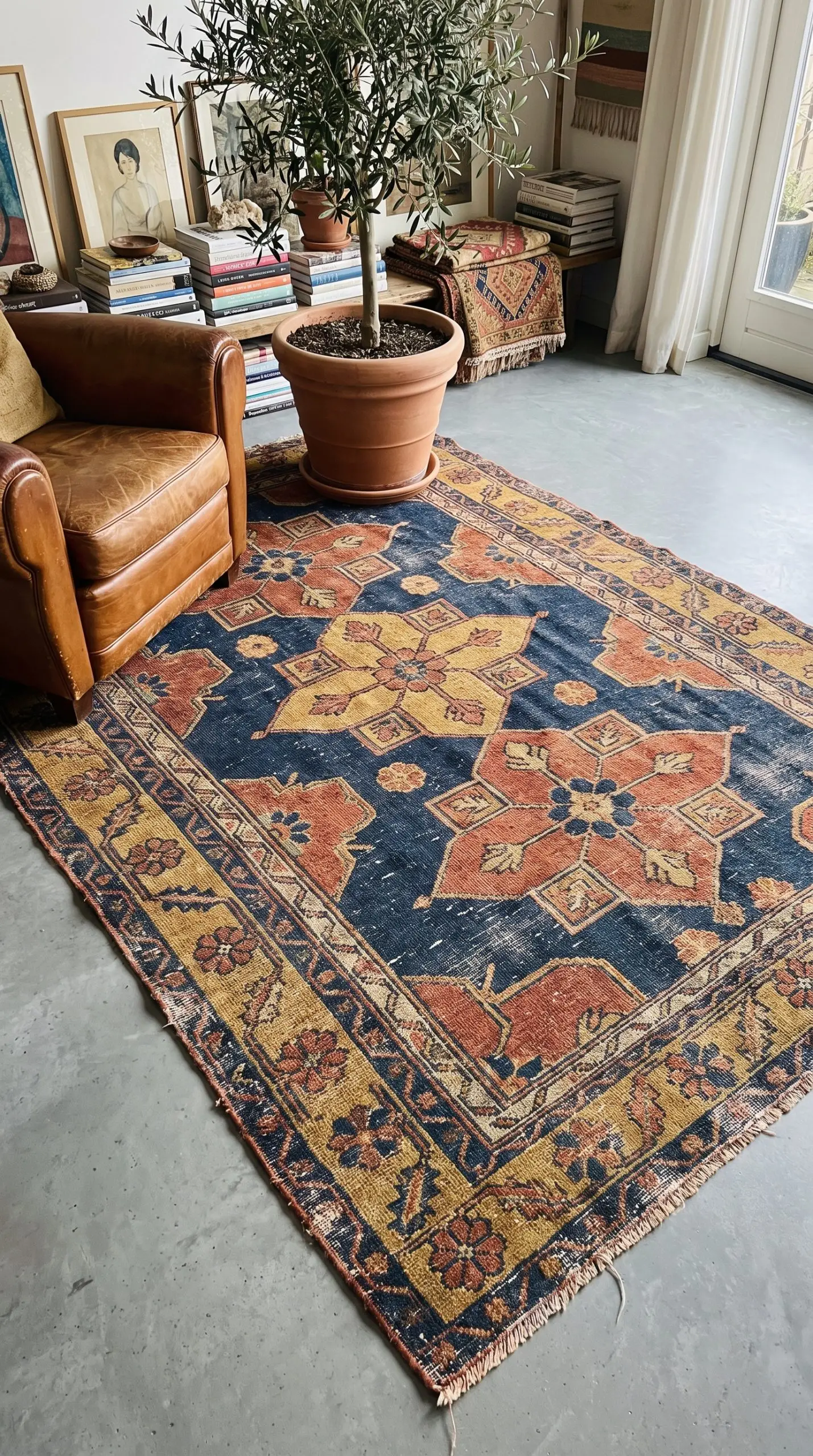
Avoid gray rugs entirely; they compound the coldness and flatten the room. Instead, lay down a vintage Oushak or Turkish rug featuring rust, faded navy, and mustard yellow to aggressively break up the visual monotony.
- Vibe: Curated & Lived-in.
- Color Match: Rust, mustard, and faded navy.
8. Contrast with Mid-Century Walnut Furniture
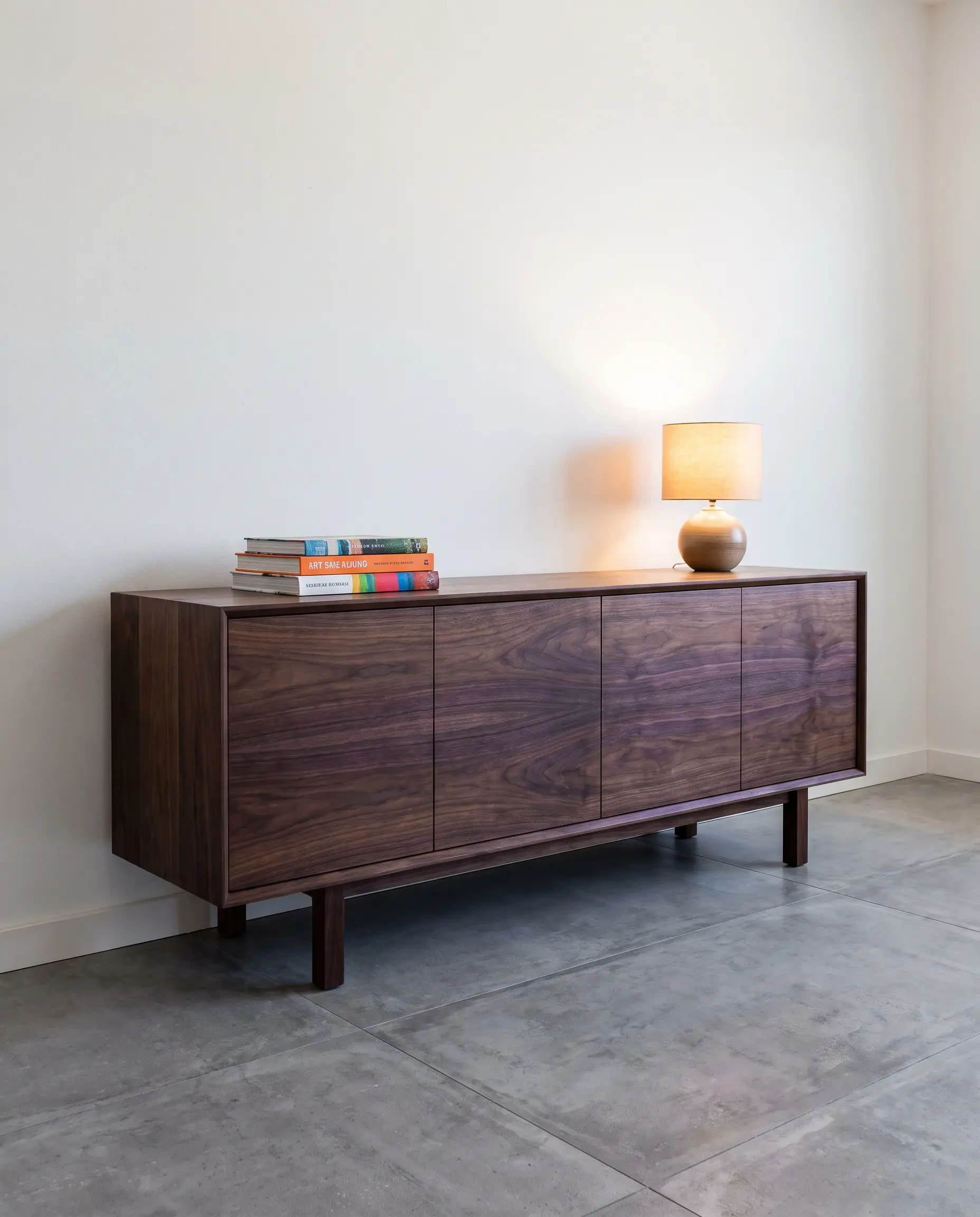
Rich, dark woods are the ultimate antidote to cool floors. Walnut’s deep chocolate and subtle purple undertones perfectly complement and warm up the room, providing crucial organic contrast against the gray.
- Vibe: Mid-Century & Sophisticated.
- Wood Species: Walnut.
- Strict Warning: Absolutely ban the use of gray-washed, whitewashed, or weathered wood furniture.
9. Paint Walls a Warm White (Strictly Avoid Cool Blues)
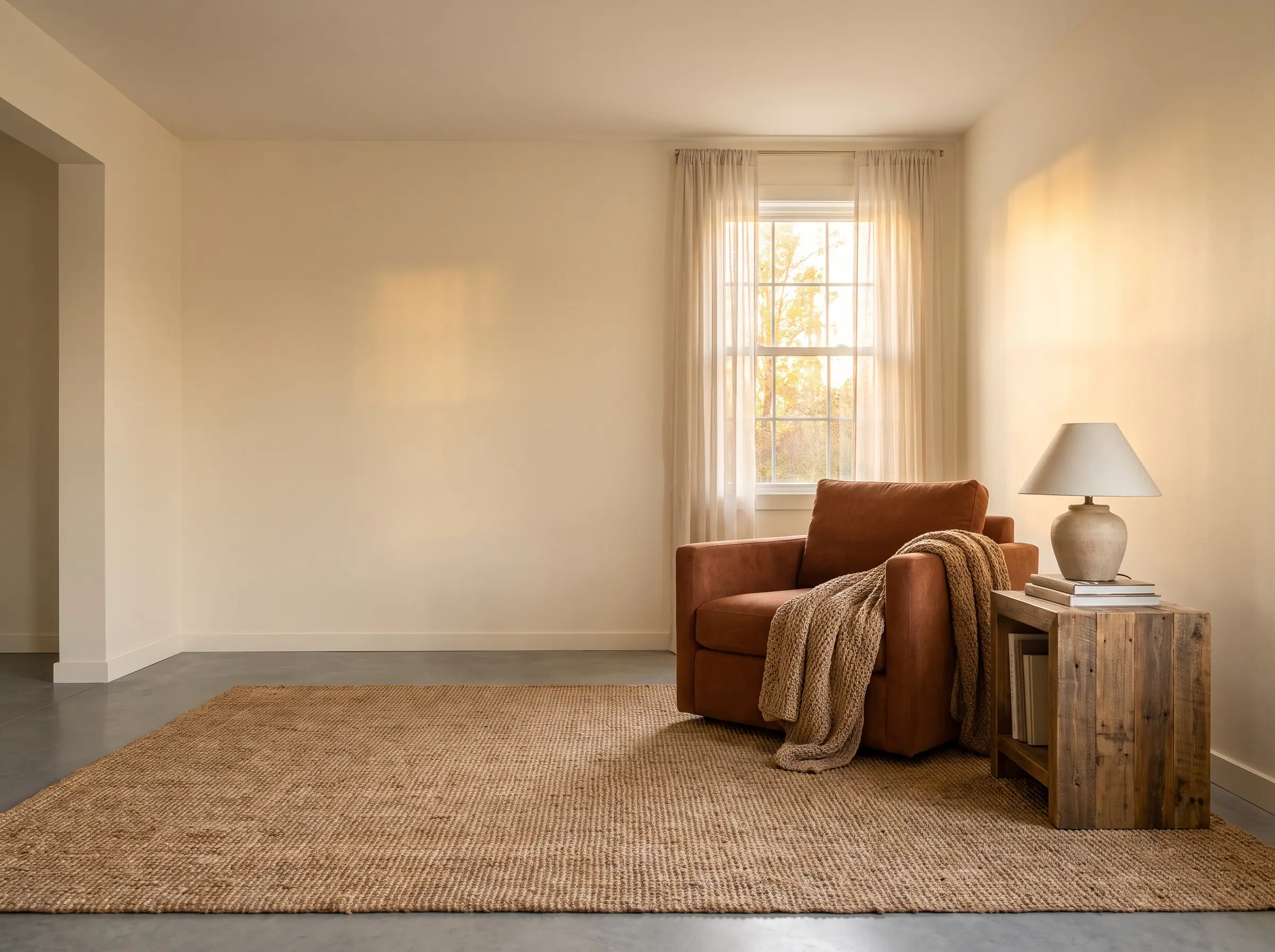
Stark, hospital whites make a gray-floored space feel clinical and harsh. You need creamy, warm whites that reflect golden light back into the room to counteract the floor’s inherent temperature.
- Vibe: Warm & Inviting.
- Paint Recommendation: Sherwin-Williams Alabaster or Benjamin Moore Swiss Coffee.
10. Introduce Cognac Leather Accents
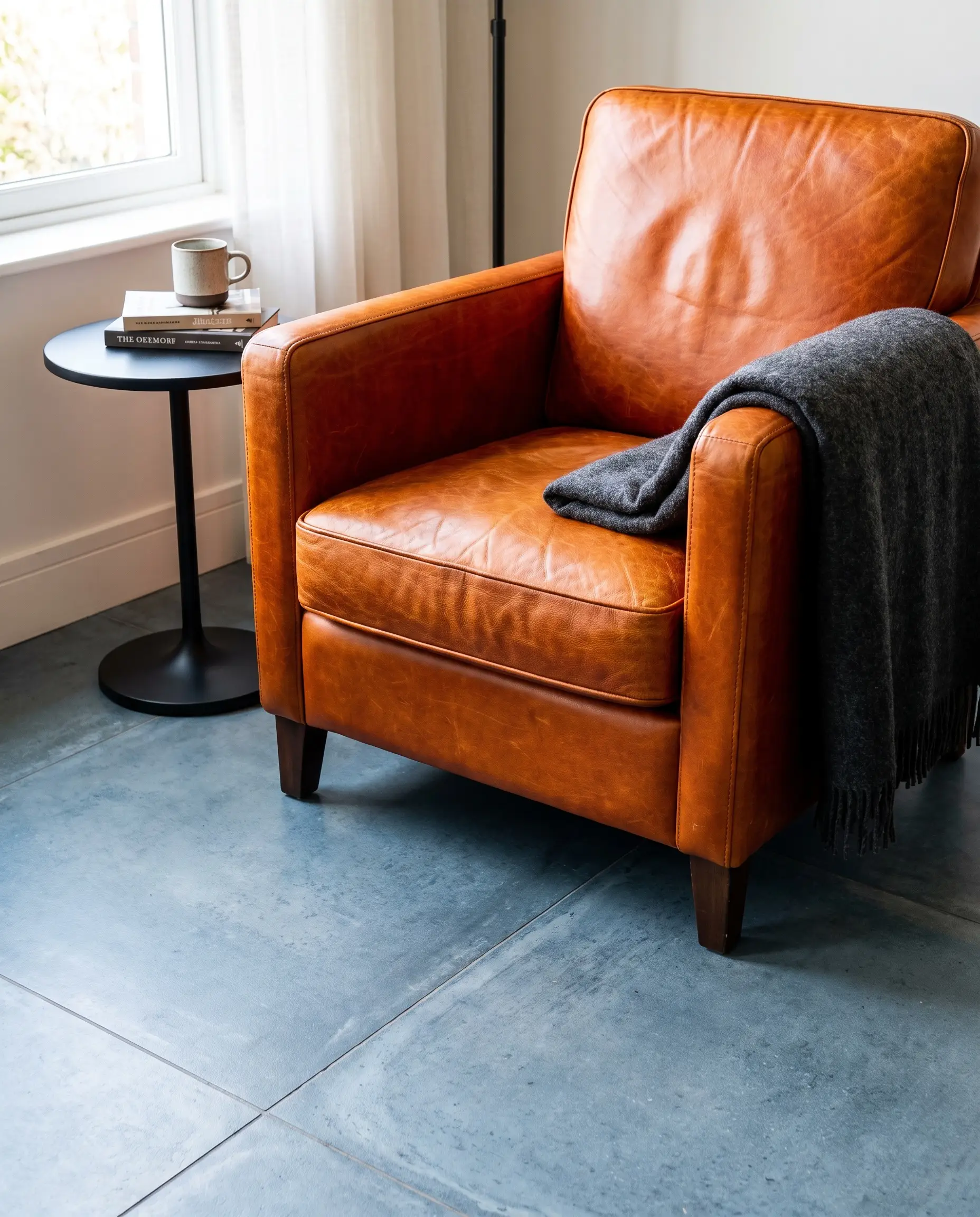
Cognac or camel leather chairs act as a direct complementary color to blue-leaning gray floors. The orange and brown tones serve as a visual heat source, immediately drawing the eye and warming the space.
- Vibe: Grounded & Masculine.
- Material Match: Full-grain cognac leather.
- Color Theory Application: Orange/brown tones directly complement blue/cool grays.
11. Hang Floor-to-Ceiling Heavy Linen Drapes
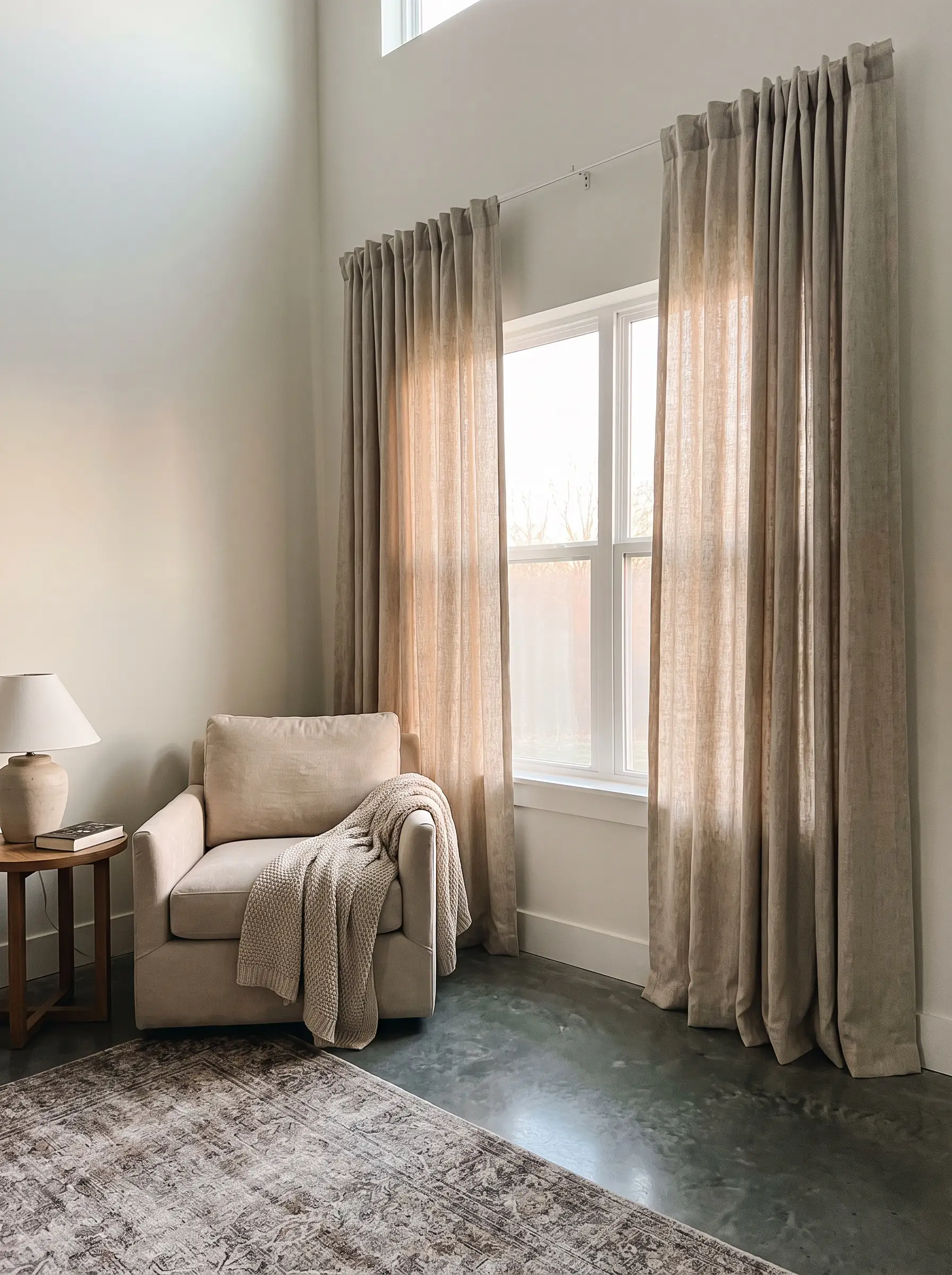
Use your vertical space to pull warmth upward from the floor. Oatmeal or flax-colored heavy linen drapes draw the eye to the ceiling while adding soft, organic texture to the room’s perimeter.
- Vibe: Tailored & Organic.
- Textile Specification: Heavy linen.
- Styling Pro-Tip: Hang the curtain rod as close to the ceiling as possible to maximize vertical visual weight.
12. Incorporate Unlacquered Brass Lighting Fixtures
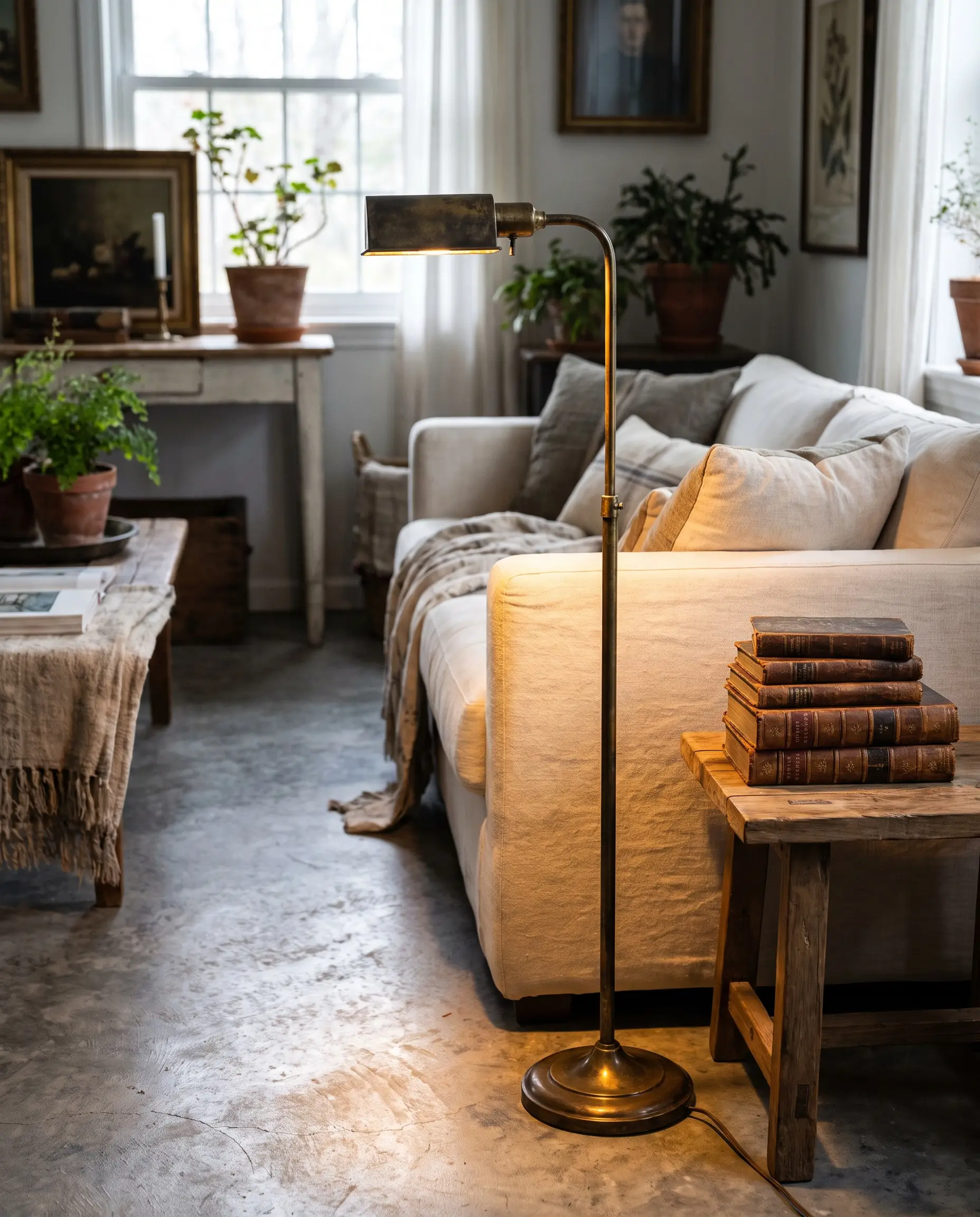
Brushed nickel or chrome hardware will only exacerbate the coldness of a gray base. Unlacquered brass introduces a living patina that warms up the room and evolves beautifully over time.
- Vibe: Heritage & Warm.
- Metal Finish: Unlacquered brass.
- Hardware Strategy: Use this finish on sconces, floor lamps, and overhead pendants.
Kitchen & Dining Pairings (Ideas 13-18)
Kitchens are dominated by hard surfaces and sharp angles. If your cabinetry and hardware are not chosen wisely, a gray floor will quickly make the space feel sterile and uninviting.
13. Pair Gray Floors with Rift-Sawn White Oak Cabinets
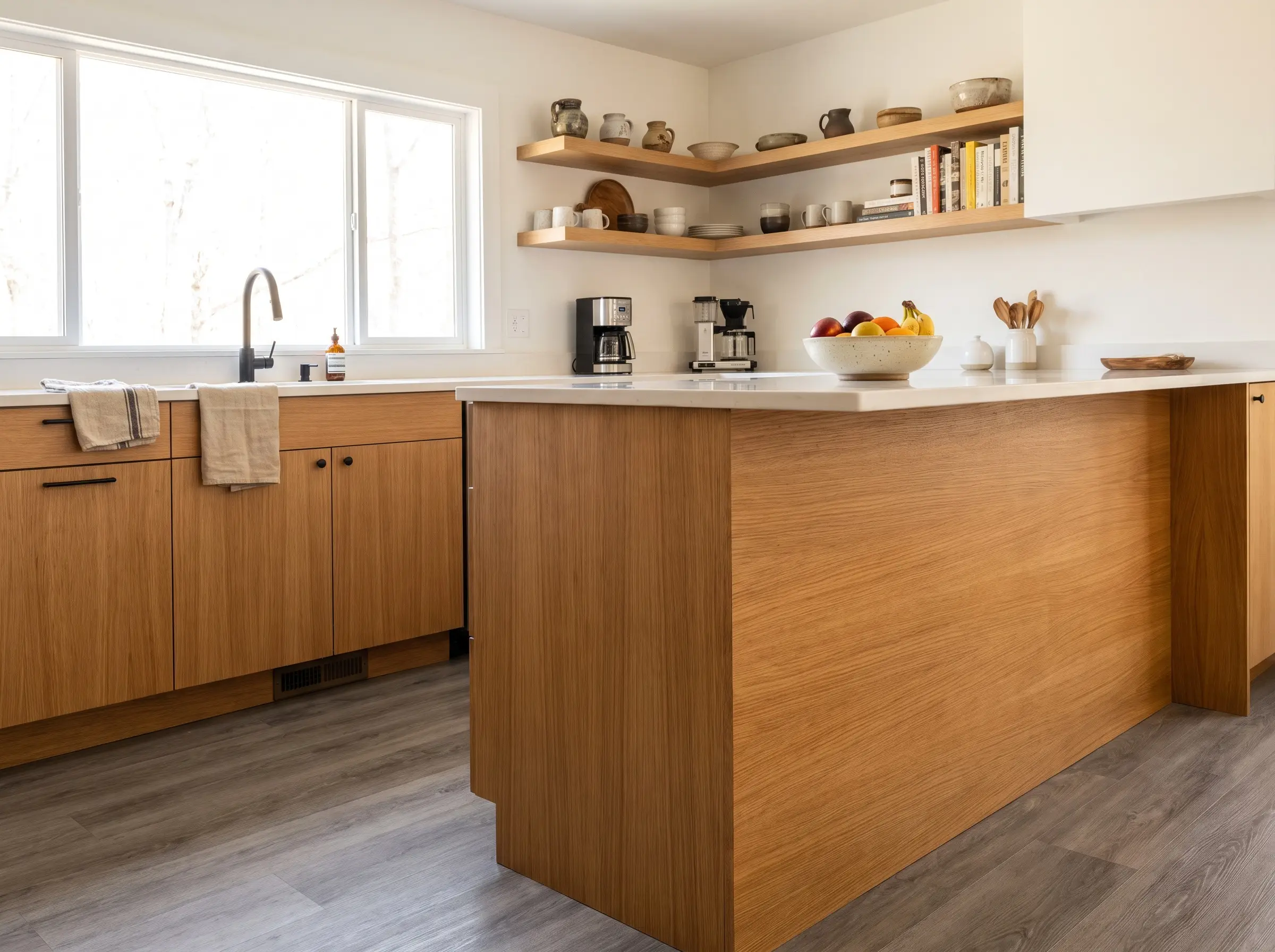
Rift-sawn white oak for lower cabinets or kitchen islands is a masterful pairing for gray LVP or tile. The tight, linear grain and warm honey tones cut through the coldness of the floor immediately.
- Vibe: High-End Organic Modern.
- Wood Species: Rift-sawn white oak.
14. Contrast with Matte Black Cabinet Hardware
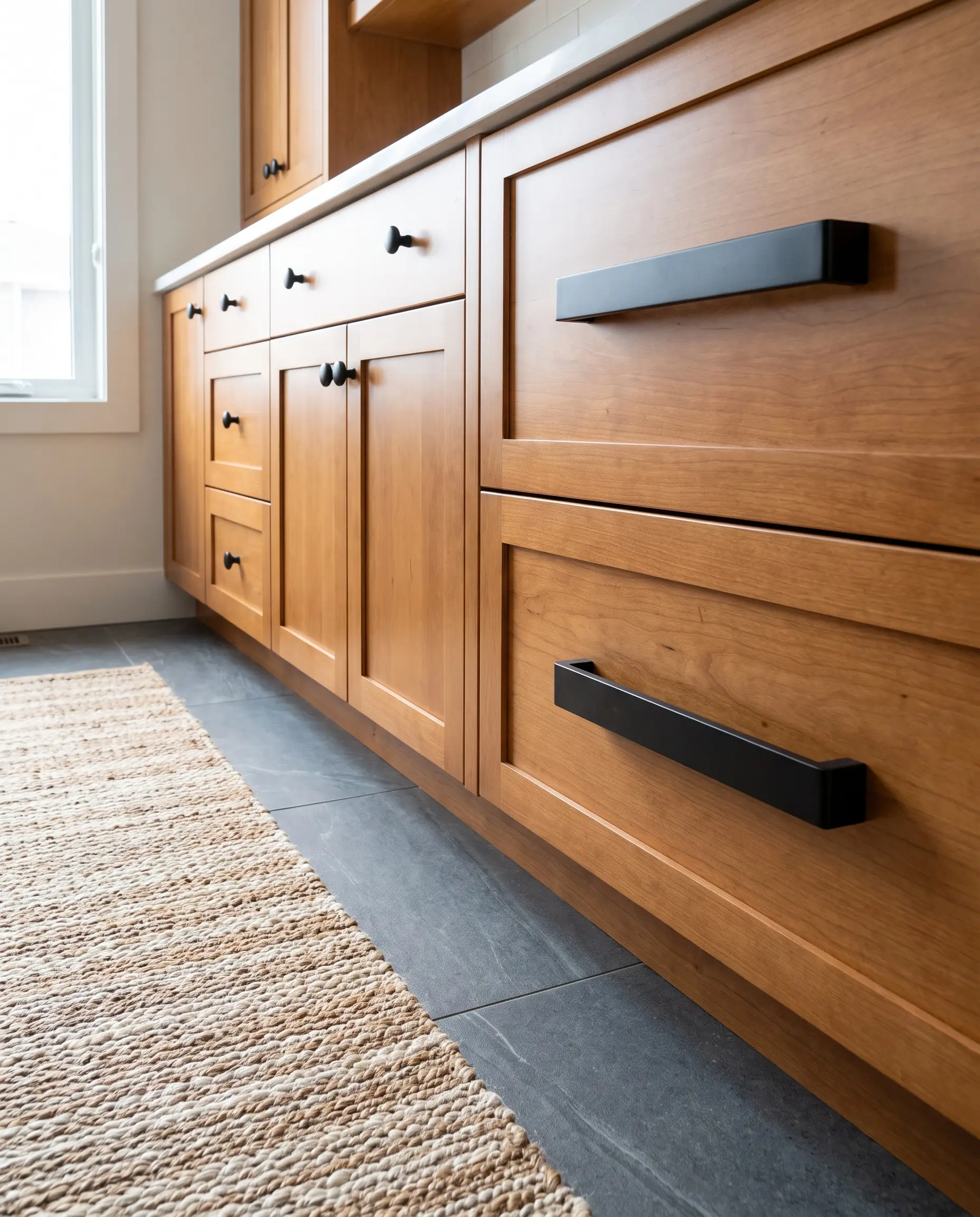
Instead of matching the floor with silver hardware, create a crisp, graphic punch. Matte black pulls and knobs ground the space, pulling the eye upward and providing a definitive modern edge.
- Vibe: Sharp & Pragmatic.
- Hardware Finish: Matte black.
- Styling Pro-Tip: Use oversized bar pulls on lower drawers for a highly functional, modern aesthetic.
15. Opt for a Heavily Veined Warm Marble Island
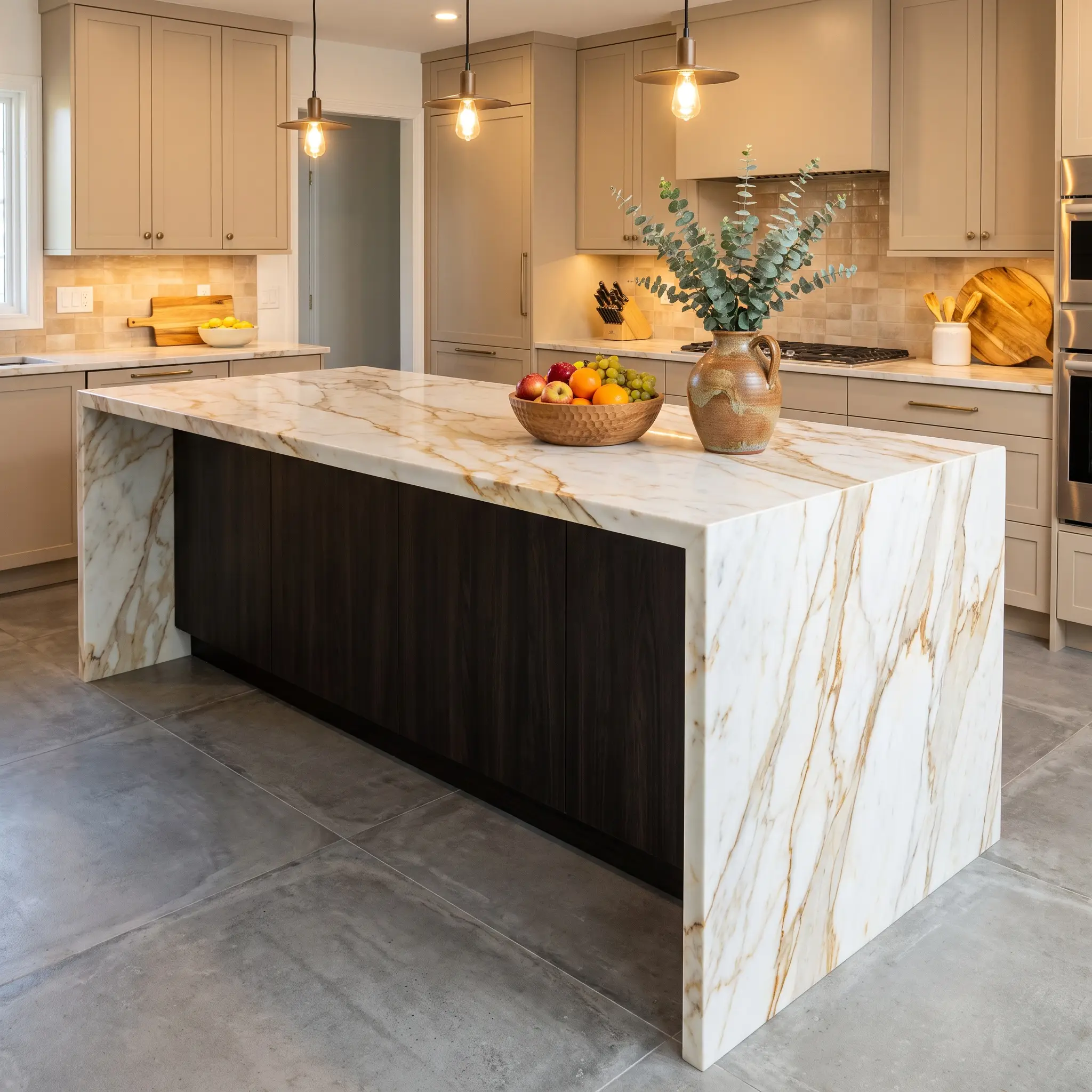
If you are using natural stone countertops, bypass the cool Carrara. Marbles like Calacatta Gold or Paonazzo feature rich amber and gold veining alongside gray, brilliantly tying the room’s color palette together.
- Vibe: Accessible Luxury.
- Stone Specification: Calacatta Gold or Paonazzo.
- Color Match: Warm amber veining.
16. Ground the Dining Space with a Chunky Jute Rug
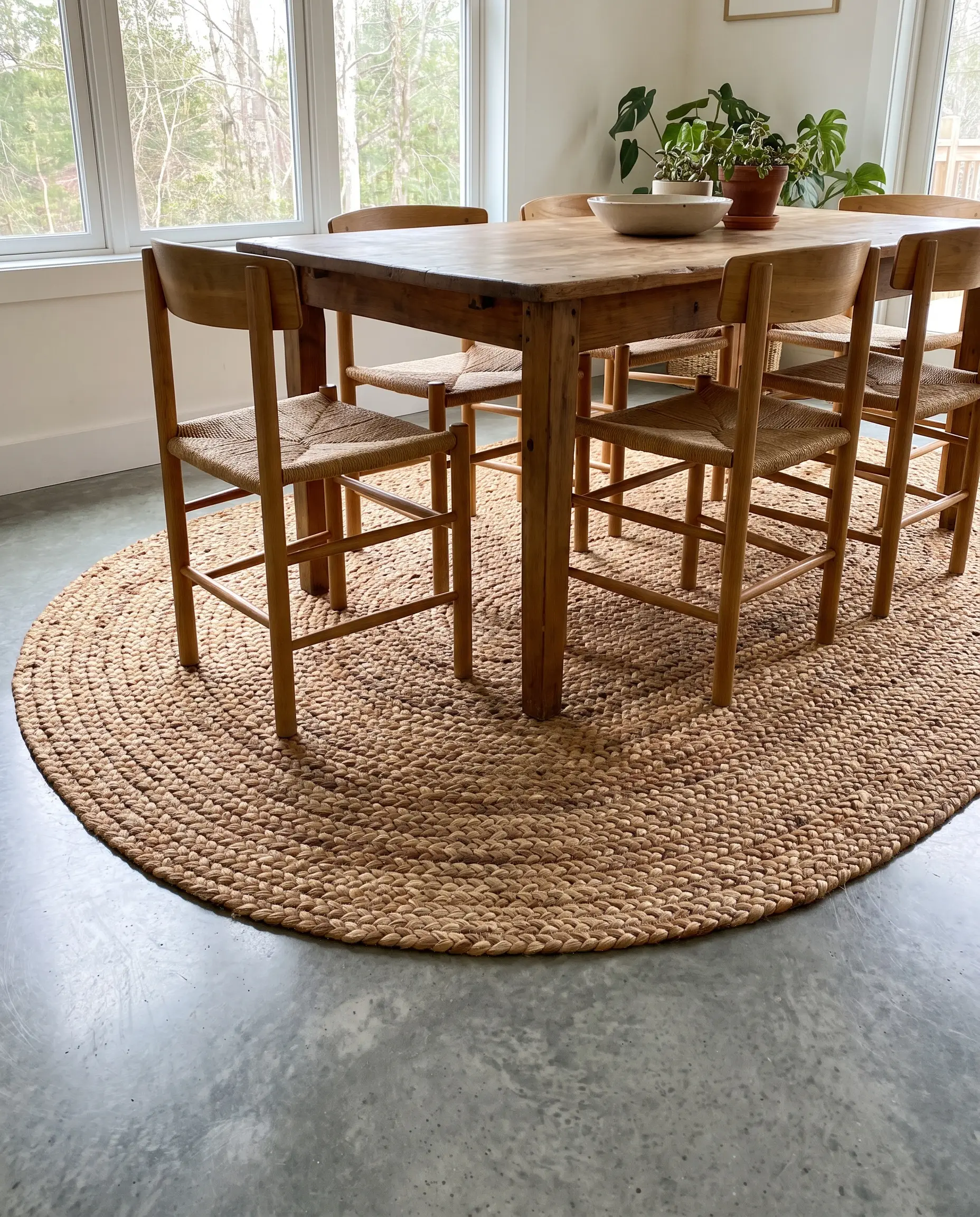
Dining rooms need aggressive organic texture to visually separate the dining table from the floor. A massive, thick jute or sisal rug provides durable, earthy warmth underfoot.
- Vibe: Earthy & Textural.
- Key Material: Chunky braided jute.
- Functional Benefit: Jute handles dining chair friction exceptionally well while hiding crumbs.
17. Add Woven Rattan or Cane Barstools
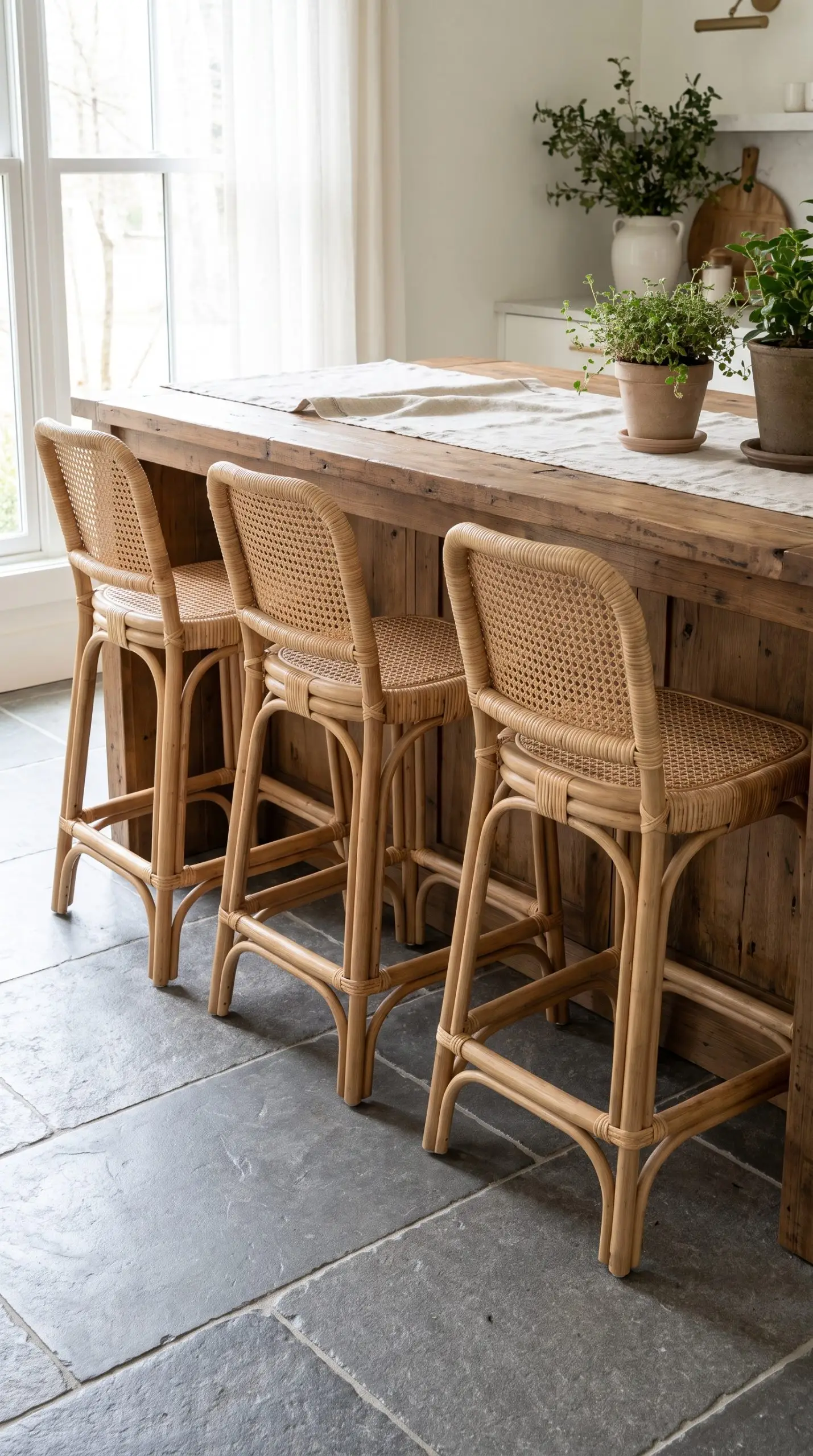
Bring biophilic design elements directly into your kitchen’s hardscape. Rattan or cane barstools add a lightweight, organic element that contrasts beautifully against heavy gray flooring.
- Vibe: Coastal Modern & Organic.
- Material Match: Natural woven rattan or cane.
- Design Theory: Introduces necessary visual permeability and warmth.
18. Use Terracotta Pendants Over the Dining Table
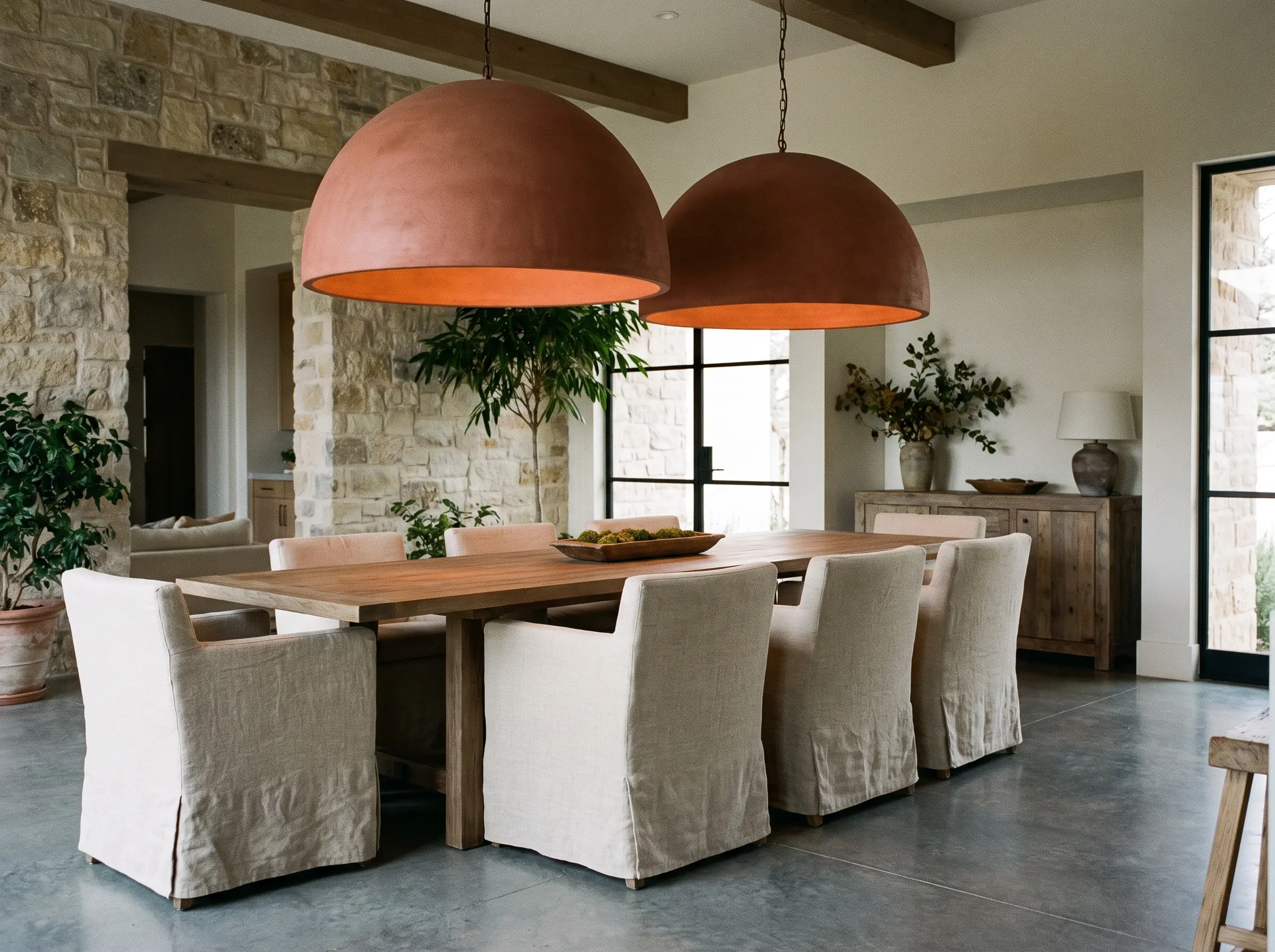
Introduce earthy, baked-clay lighting fixtures overhead to balance the room’s lower half. The matte, reddish-brown surface acts as a visual heat source for the dining space, countering the cool floor below.
- Vibe: Mediterranean Modern.
- Fixture Material: Raw terracotta or fired clay.
- Lighting Strategy: Hang large dome pendants low over the table to create an intimate dining zone.
Bedroom & Bathroom Executions (Ideas 19-24)
Bedrooms and bathrooms require absolute serenity and relaxation. To prevent these intimate spaces from feeling like a corporate hotel, rely heavily on rich tactility and strategic scale.
19. Install Large-Format Concrete-Look Tiles in Showers
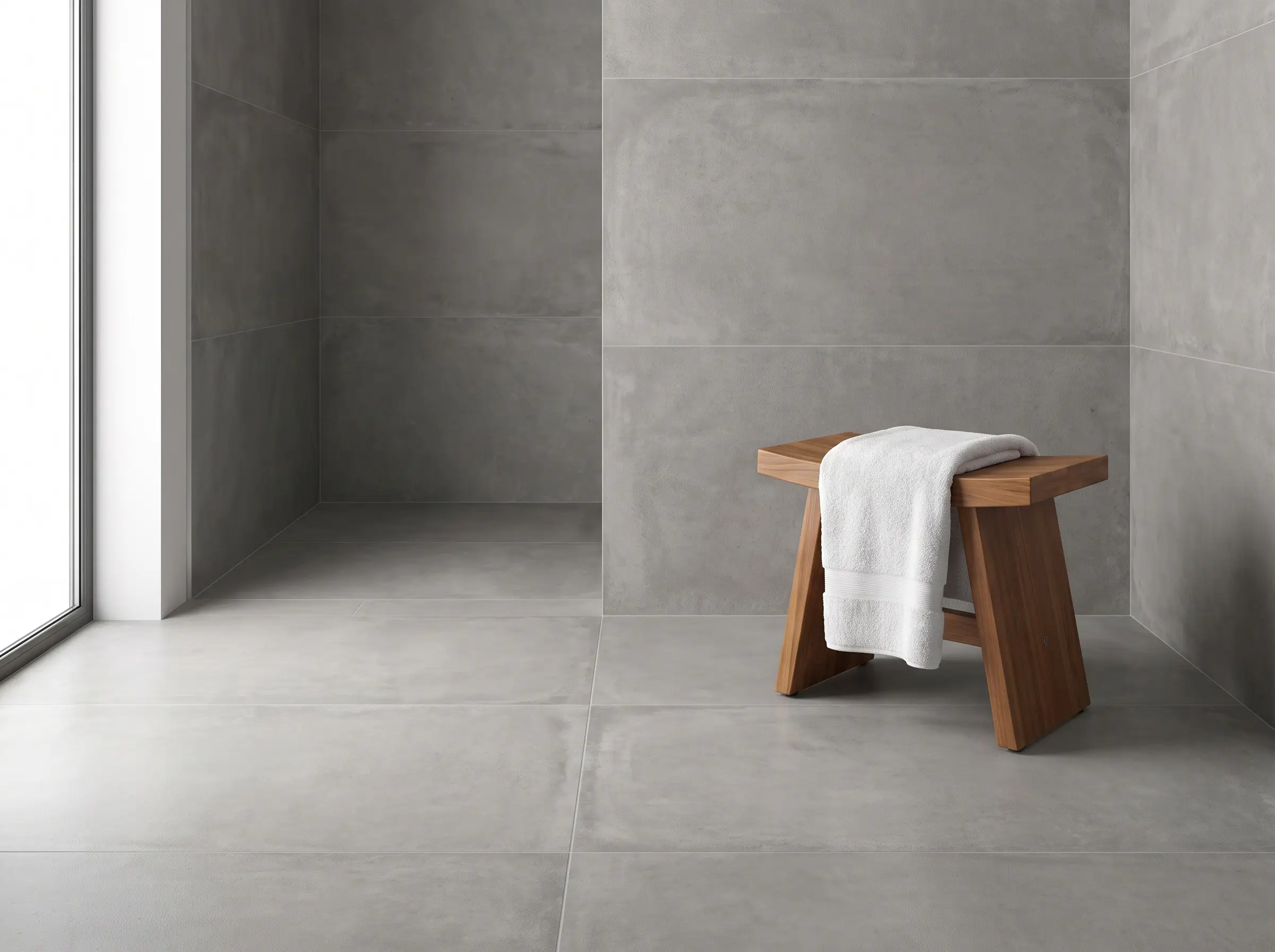
For a spa-like wet room, continue your gray floor tiles up the shower wall to create a seamless envelope. Mandating 24×48 large-format tiles minimizes grout lines and visual clutter, allowing the space to breathe.
- Vibe: Minimalist Luxury.
- Tile Dimension: 24×48 large-format.
- Installation Pro-Tip: Use a grout color that perfectly matches the tile to maintain the seamless illusion.
20. Float a Warm Teak Vanity Over Gray Bathroom Floors
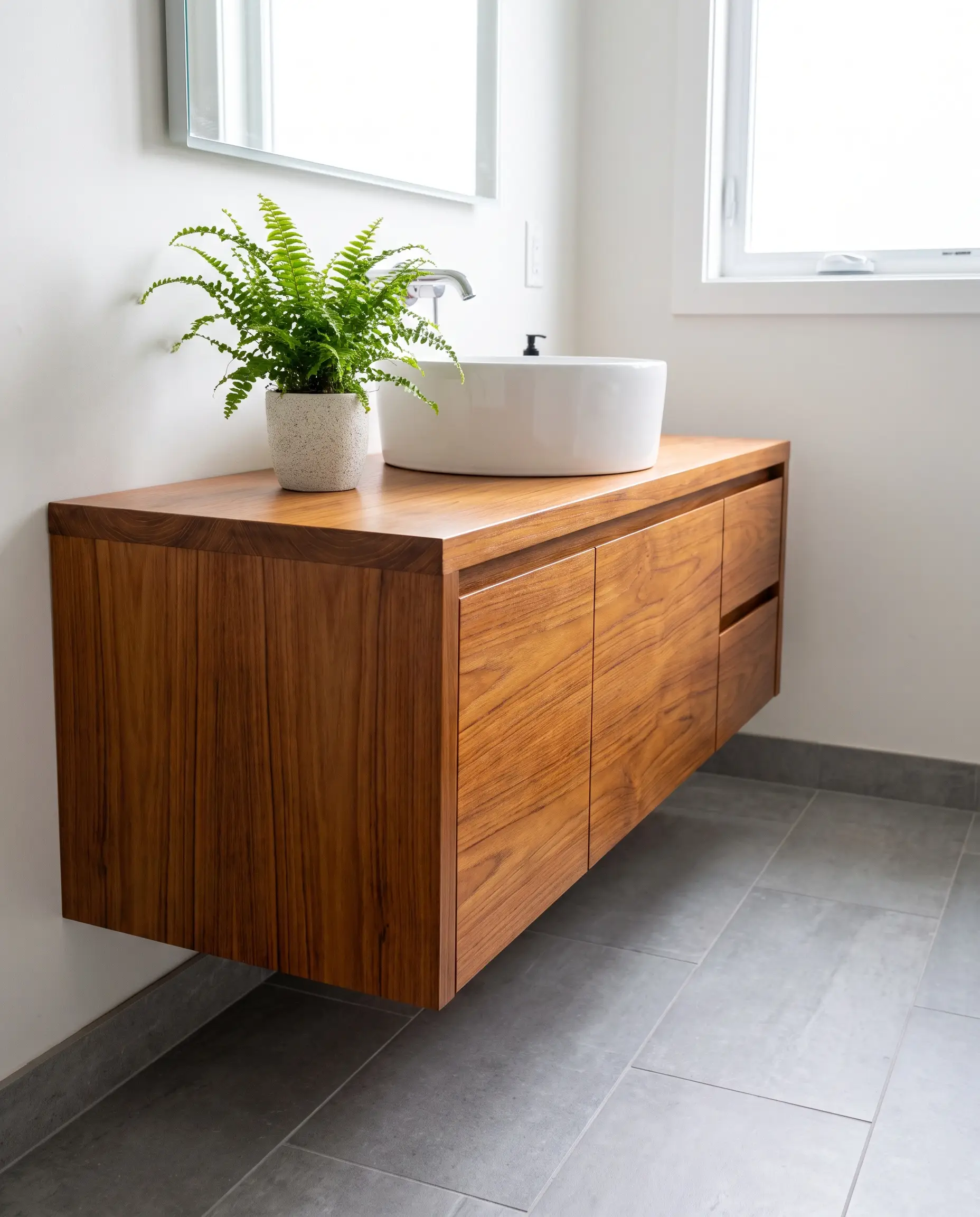
Teak is naturally moisture-resistant and brings an intense, rich warmth to wet spaces. A floating teak vanity provides a stunning mid-century contrast against a cool gray tile floor while keeping the room feeling airy.
- Vibe: Spa-Like & Mid-Century.
- Wood Species: Solid or veneered teak.
- Architectural Feature: Wall-mounted floating installation.
21. Soften the Bedroom with an Oversized Wool Rug
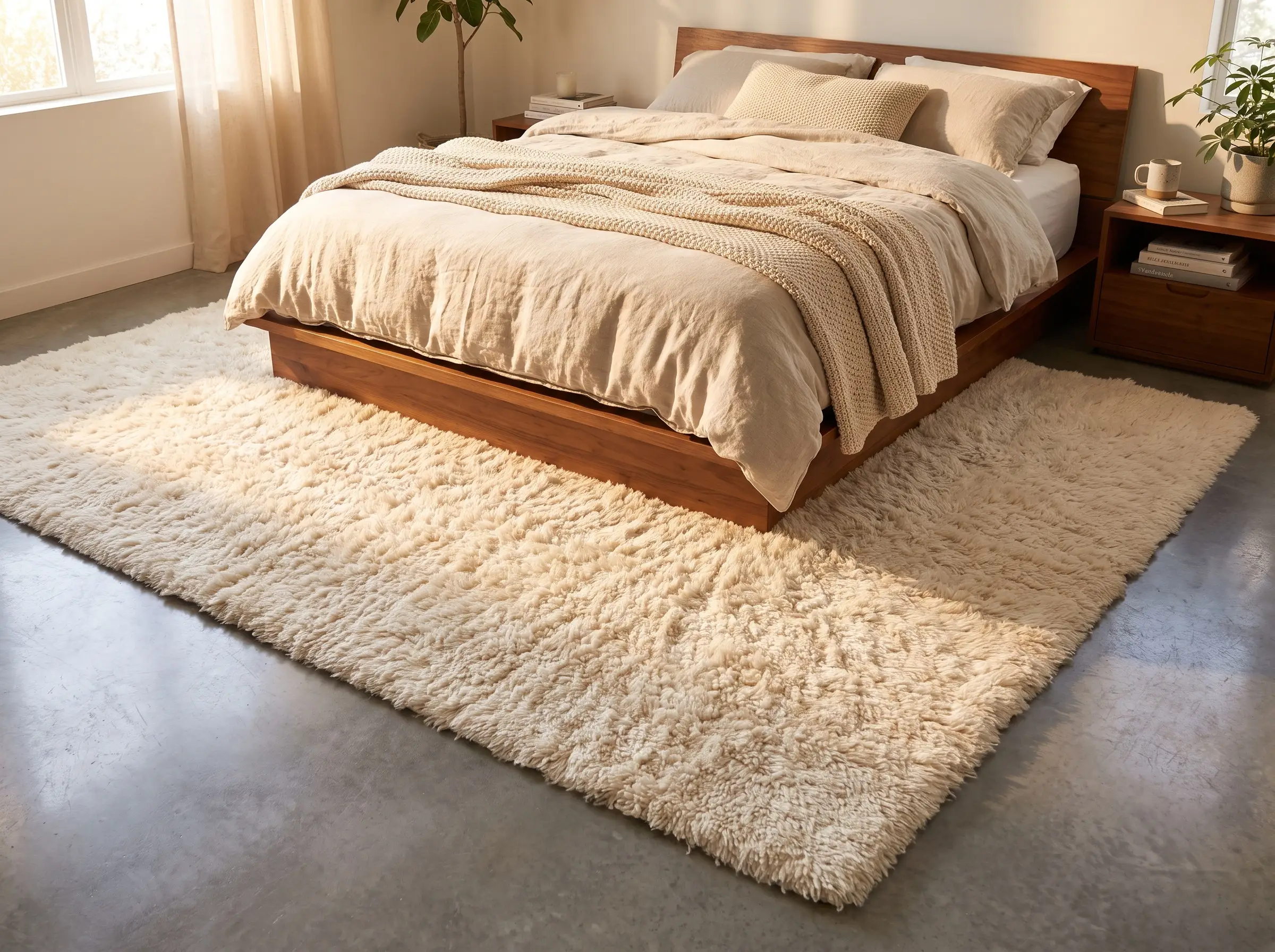
Bedrooms demand softness underfoot. A plush, high-pile wool rug covering 70% of the gray floor ensures your first step out of bed is warm, tactile, and highly inviting.
- Vibe: Plush & Grounded.
- Textile Recommendation: High-pile Moroccan or solid wool.
- Sizing Rule: 70% floor coverage extending well past the sides and foot of the bed.
22. Layer Olive Green or Rust Linen Bedding
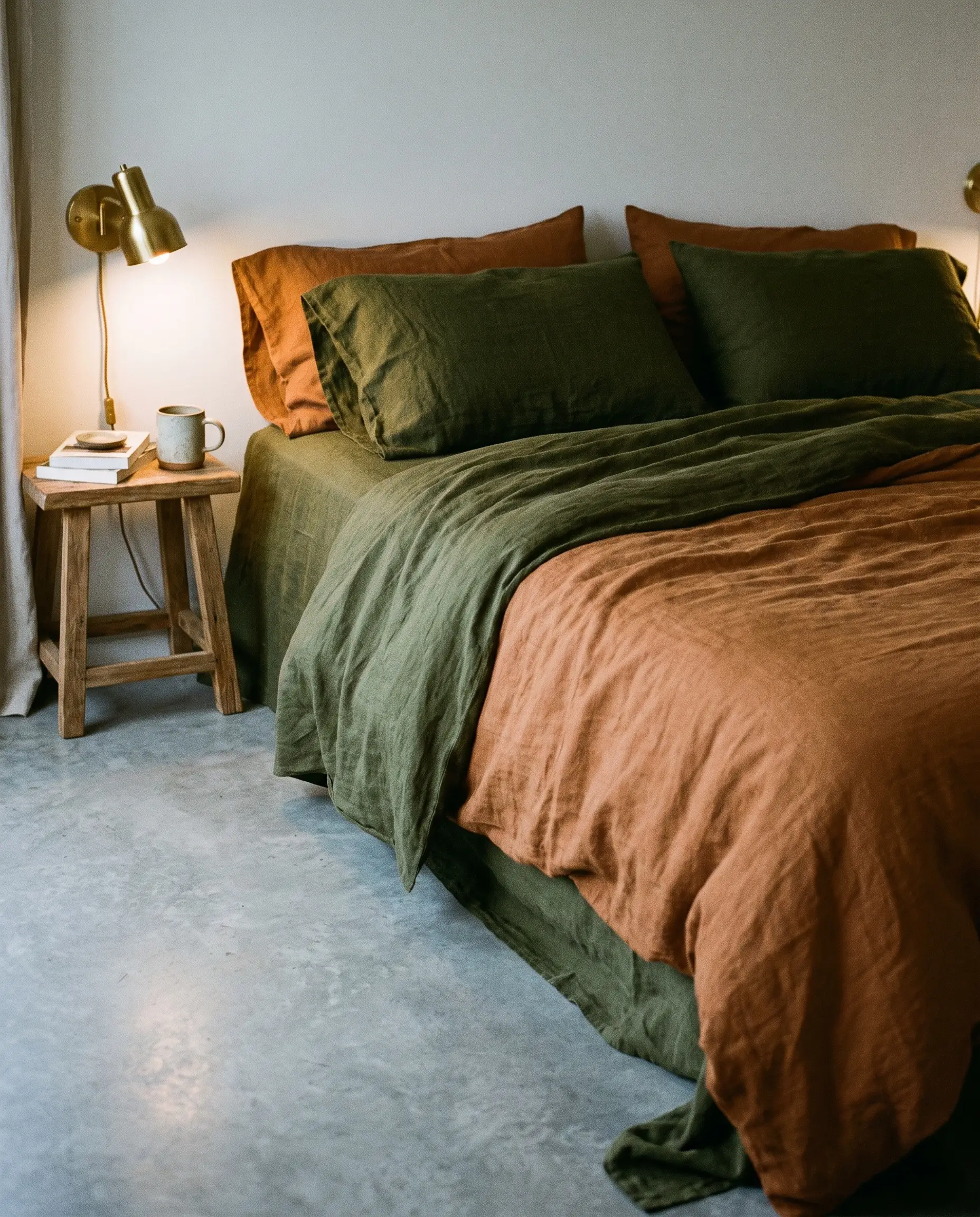
Treat your bed as a massive color block to neutralize the cool floor. Earthy tones like olive green, rust, or deep ochre create a moody, grounded atmosphere that instantly warms the room.
- Vibe: Moody & Earthy.
- Color Palette: Olive green, rust, terracotta, or ochre.
- Material Match: Washed French linen.
23. Incorporate Fluted Wood Wall Paneling Behind the Bed
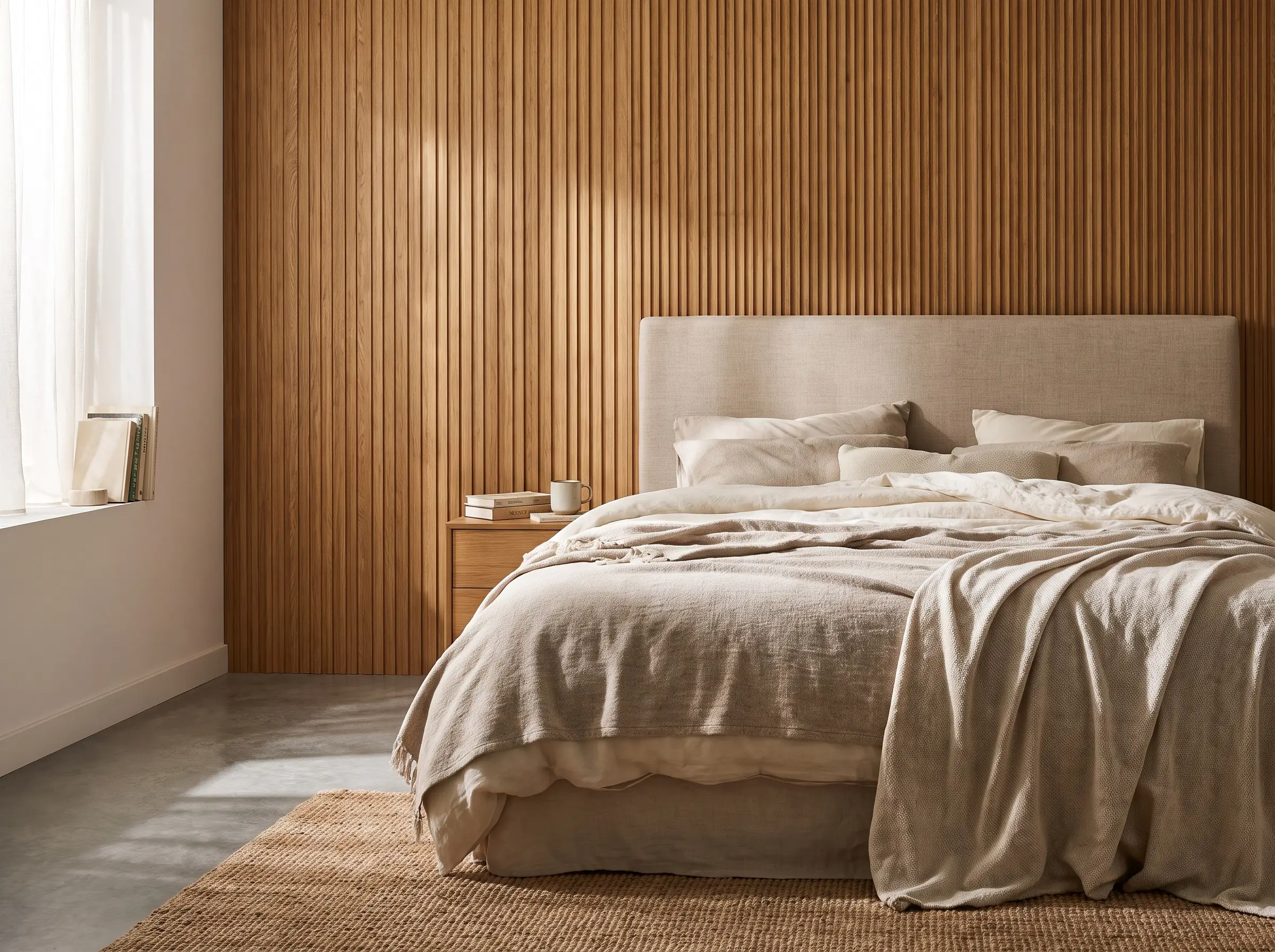
Add architectural depth to draw the eye away from the floor. A fluted wood accent wall behind the headboard introduces a beautiful 3D texture and vertical rhythm to the space.
- Vibe: High-End Architectural.
- Architectural Element: Vertical fluted wood paneling.
- Visual Strategy: The ridges create dynamic shadows that warm up the room’s flat surfaces.
24. Use Plaster or Limewash Wall Treatments for Texture
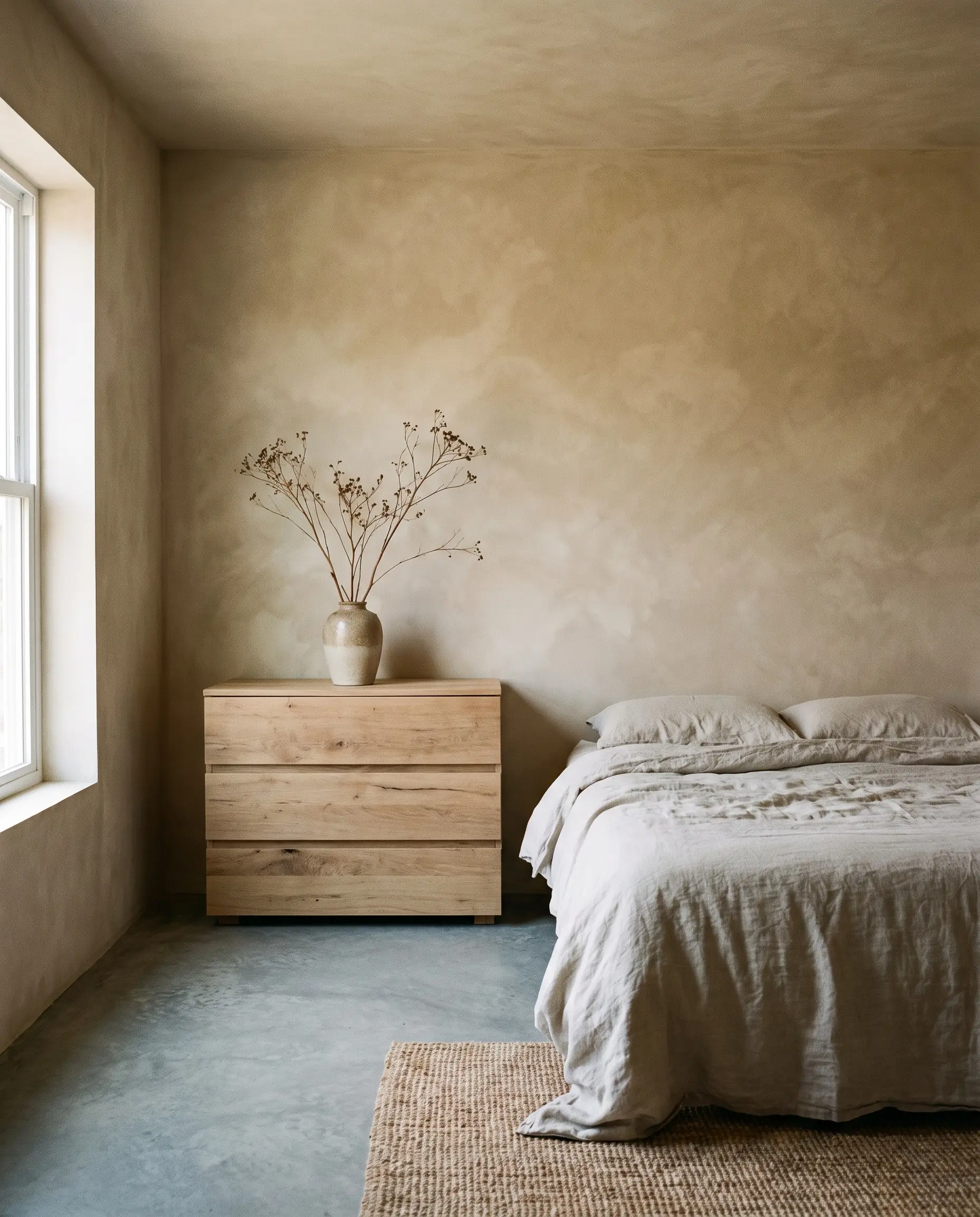
Ditch flat paint in the bedroom in favor of a cloudy, suede-like finish. Limewash or Roman clay in a warm beige perfectly complements gray floors by adding rich, uneven texture to the walls.
- Vibe: Wabi-Sabi & Serene.
- Wall Treatment: Roman clay or limewash.
- Resource: Limewash and Roman Clay Wall Treatments
The Gray Flooring Styling Rules (Do’s and Don’ts)
Before you begin sourcing materials or rolling out paint, keep this quick-reference temperature balancing matrix in mind to ensure your space remains sophisticated and cohesive.
| Do | Don’t |
|---|---|
| Mix Wood Tones: Rely on warm, rich woods like walnut, teak, and rift-sawn white oak to counteract the floor. | Buy Gray-Washed Furniture: Never match your furniture to the floor. Gray-washed wood creates a flat, sterile environment. |
| Use Warm White Paint: Choose creamy whites with yellow or brown undertones to reflect warm light. | Match Gray Walls to Gray Floors: Avoid cool-toned gray paints; this results in a muddy, overwhelming “flipper” aesthetic. |
| Layer Heavy Textures: Introduce bouclé, chunky jute, heavy linen, and high-pile wool to physically soften the hard surface. | Use Glossy, Flat Finishes: Avoid high-gloss LVP or shiny synthetic fabrics that look cheap and manufactured. |
| Embrace Warm Metals: Install unlacquered brass or matte black hardware for graphic, warm contrast. | Use Cool-Toned LED Bulbs: Avoid daylight bulbs (4000K+). They emphasize the blue undertones in gray floors, making the room feel icy. |
Grounding Your Space with Confidence
Gray floors offer an incredibly durable, versatile foundation for high-traffic homes. The key to mastering this finish is simply treating it as one half of a design equation that requires deliberate warmth, organic textures, and rich woods to be complete. By applying the principles of temperature balancing, you take total control over the mood of your home, transforming a practical surface into a deeply sophisticated backdrop. How do you plan to introduce warmth and texture into your space this weekend?
The Aesthetics Desk curates the visual direction for Hackrea. Specializing in design history, global architectural movements, and interior styling, this desk focuses on the psychology of space and how to translate high-end, magazine-quality aesthetics into approachable residential design without falling into fleeting micro-trends.