The Stylist’s Guide to Curved Sofas: Layouts, Pairings, and Sculptural Impact
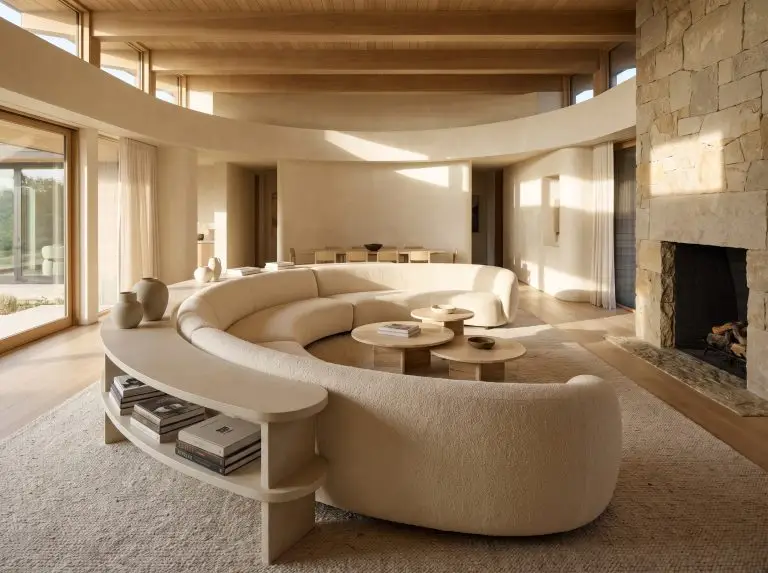
Purchasing a serpentine sofa is the easy part; mastering curved sofa design in a rigidly rectangular room is where the true logistical challenge begins. A curved sofa is not merely a place to sit—it is a sculptural anchor that dictates the spatial flow, negative space, and visual weight of your entire living area. We are skipping the broad historical overviews and diving straight into the architectural realities of working with these striking, uncompromising silhouettes.
Standard 90-degree corners and boxy floor plans actively fight against organic shapes, leaving many homeowners intimidated by the footprint required to make them look intentional. This guide breaks down exactly how to conquer the geometry of curved seating, covering precise spatial layouts, complementary furniture pairings, tactile upholstery impact, and distinct stylistic adaptations.
Spatial Planning and Room Layout Strategies
Curved furniture demands breathing room to maintain its architectural silhouette. Pushing a crescent couch flat against a primary wall instantly kills its sculptural value, turning a high-end statement piece into an awkward space-waster. True spatial flow requires respecting the negative space and prioritizing clear, sweeping sightlines.
Float the Sofa to Define Open-Concept Zones
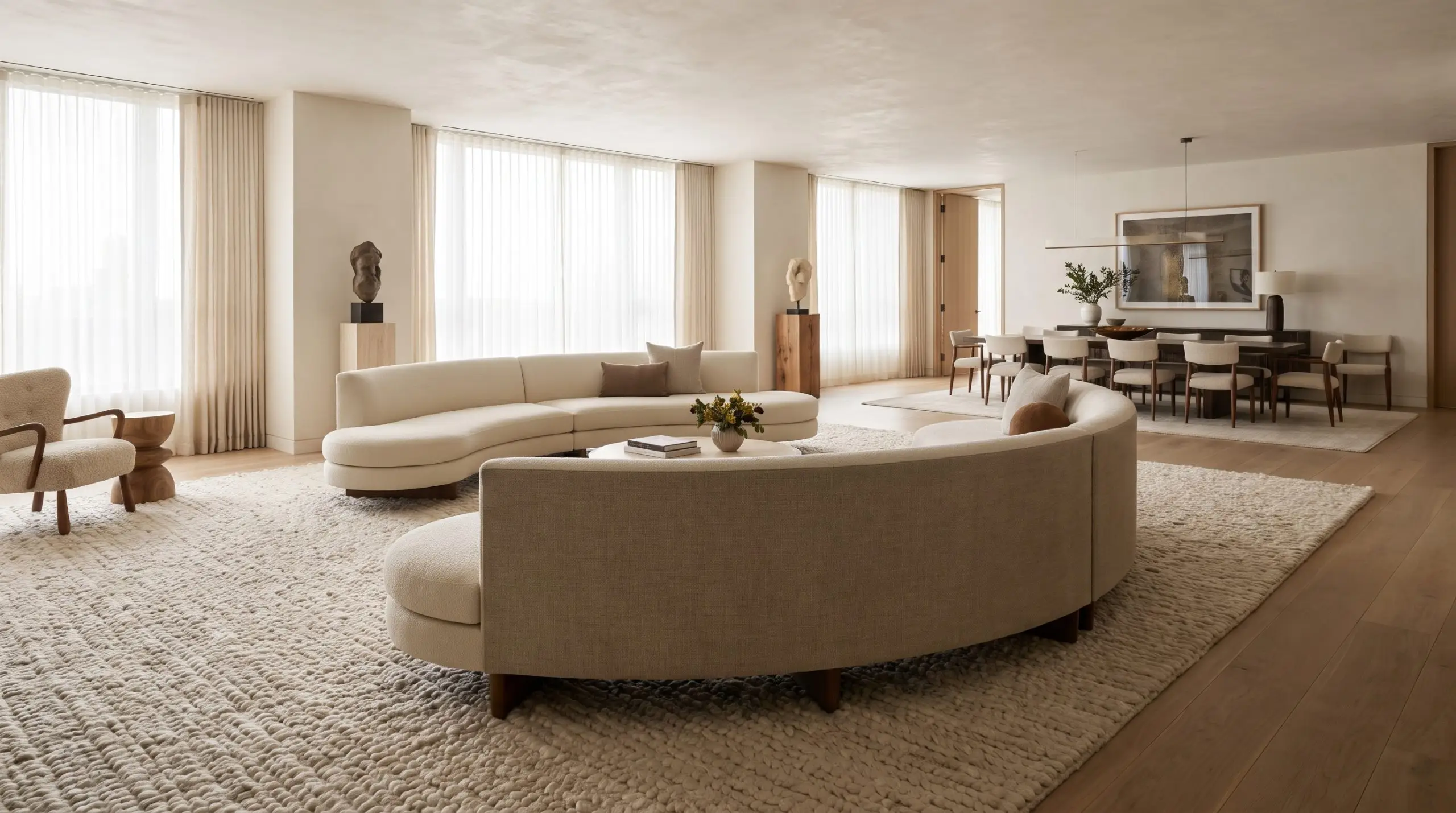
The sweeping back of a curved sofa creates a natural, fluid pathway in open-plan spaces, gently guiding foot traffic around the seating area rather than abruptly blocking it. By pulling the piece away from the walls, the sofa acts as a soft architectural room divider that delineates the lounge from the dining zone without the visual harshness of a standard sectional.
- Vibe: Expansive, gallery-like, and highly intentional.
- Key Consideration: Requires a finished, aesthetically pleasing backrest profile.
- Styling Pro-Tip: Anchor the floating arrangement with a massive, highly textured rug to ground the visual weight.
To determine if pulling your seating into the center of the room is the right logistical move, consider the spatial realities of your floor plan:
| Layout Strategy | The Structural Advantages | The Spatial Drawbacks |
|---|---|---|
| Floating Placement | Maximizes the sculptural silhouette; creates natural foot traffic curves; defines distinct zones in open-concept rooms. | Requires a significant room footprint; exposes the back of the sofa, demanding additional styling (like a console). |
| Wall-Adjacent | Preserves central floor space in narrow rooms; allows for standard end-table placement. | Flattens the architectural impact; traps awkward negative space between the curve and the flat wall. |
Tuck a Crescent Sofa into a Bay Window
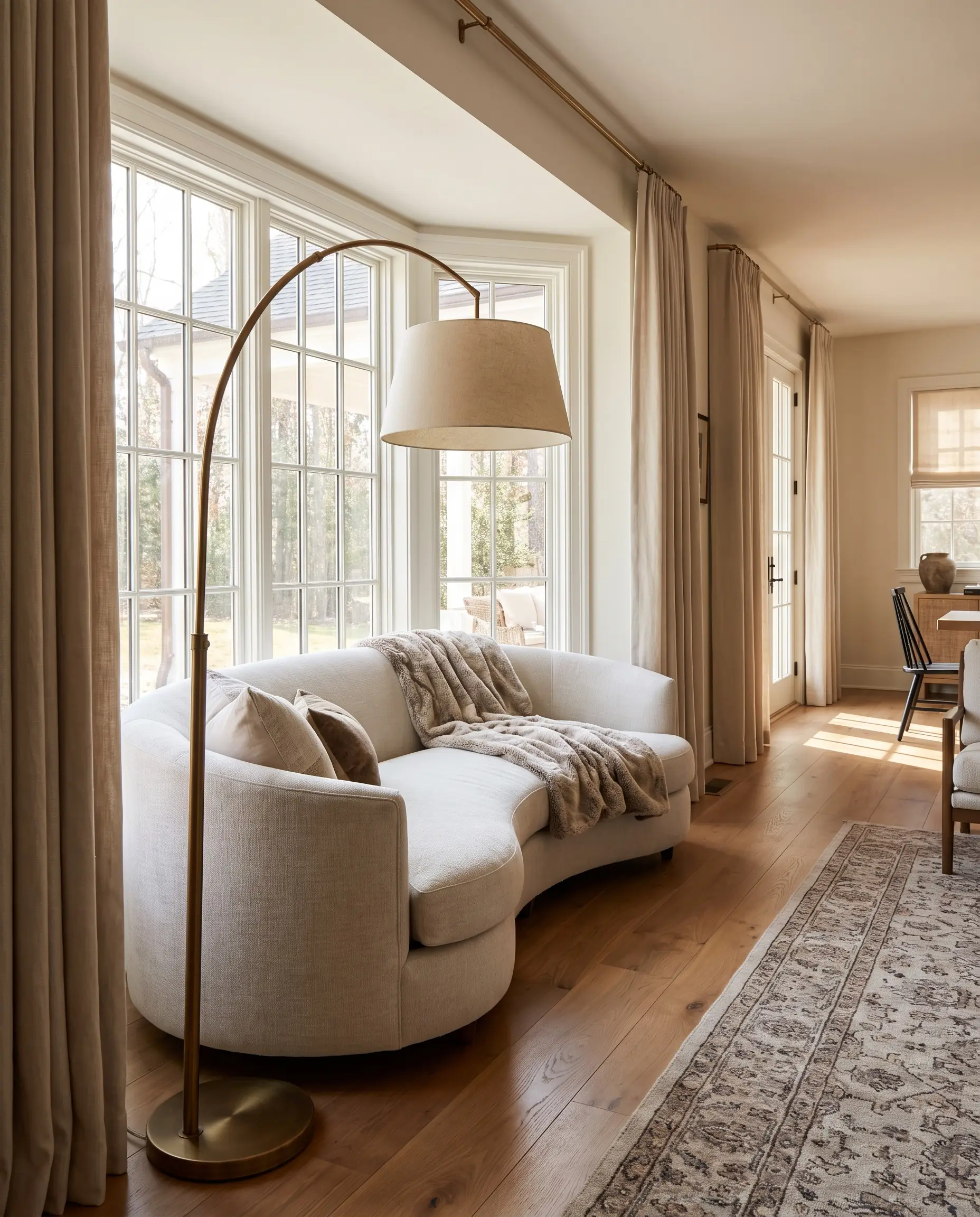
A crescent shape perfectly mimics the alcove of a bay or bow window, transforming an awkward architectural quirk into a custom-feeling lounge nook. The low-profile backrest typical of these sofas prevents the upholstery from blocking precious natural light, ensuring the room remains bright while maximizing an otherwise dead corner.
- Vibe: Intimate, bespoke, and architecturally integrated.
- Key Material: Fade-resistant performance linen to withstand direct UV exposure.
- Lighting Match: A sweeping floor lamp reaching over the seating area to replace ceiling fixtures.
Maintain a strict 6-inch clearance between the window glass and the absolute apex of the sofa’s backrest to prevent condensation damage and allow for curtain clearance.
Spatial Rule
Offset Boxy Corners with an Asymmetrical Layout
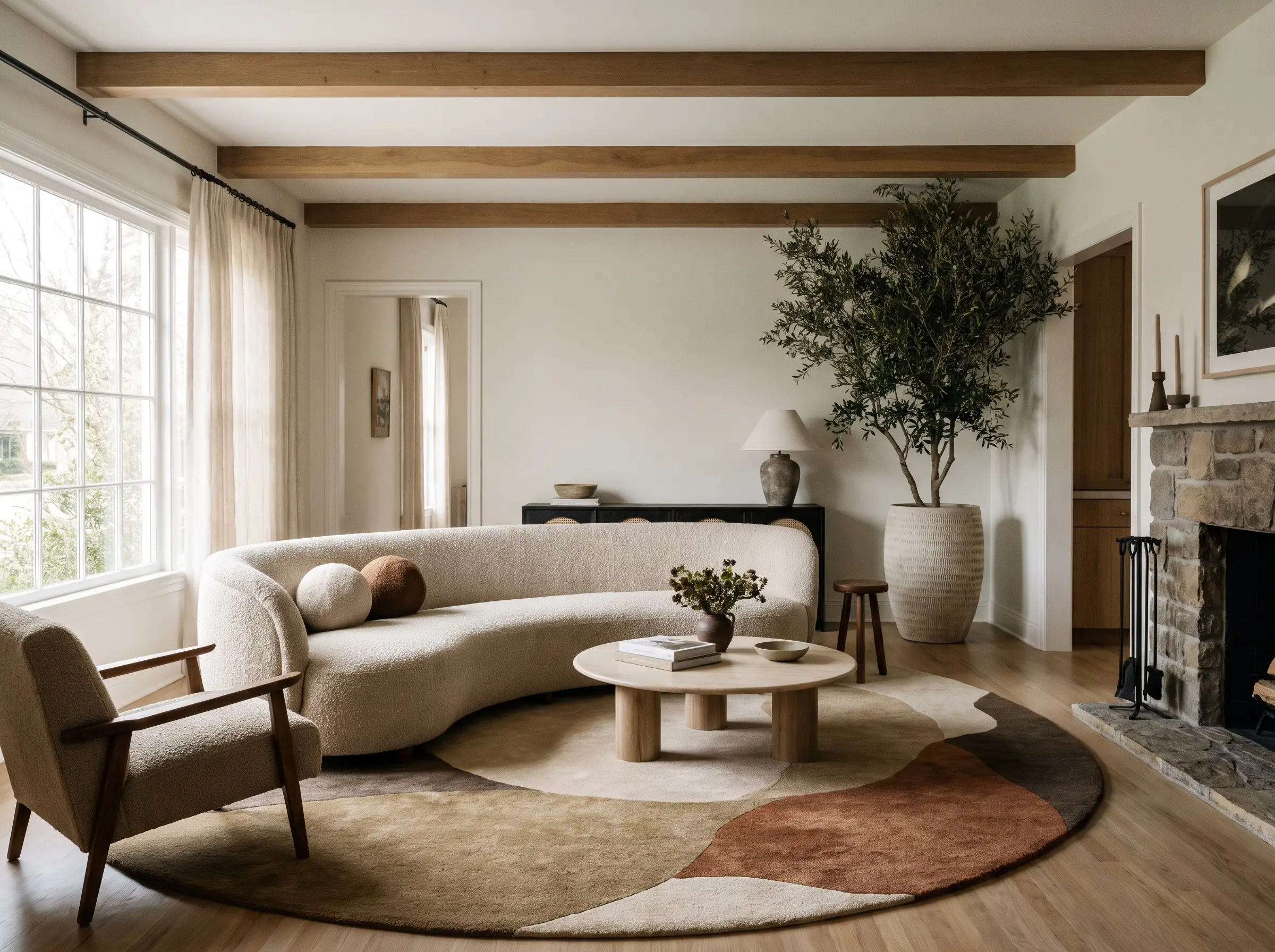
When dealing with a rigidly 90-degree rectangular room, angling a curved sofa diagonally across the corner breaks up the harsh architectural lines and introduces necessary visual tension. Fill the resulting triangular dead space behind the upholstery with a towering floor plant, like a Black Olive tree, to add organic verticality that softens the room’s hard edges.
- Vibe: Dynamic, heavily layered, and organically modern.
- Key Addition: A tall, textured ceramic planter to ground the indoor tree.
- Spatial Anchor: Use an oversized, asymmetrical rug to connect the angled sofa back to the rest of the room.
Aim for a strict 45-degree angle off the primary wall to ensure the seating arrangement feels deliberately angled rather than accidentally bumped out of place.
Spatial Rule
Build a Symmetrical Conversational Seating Circle
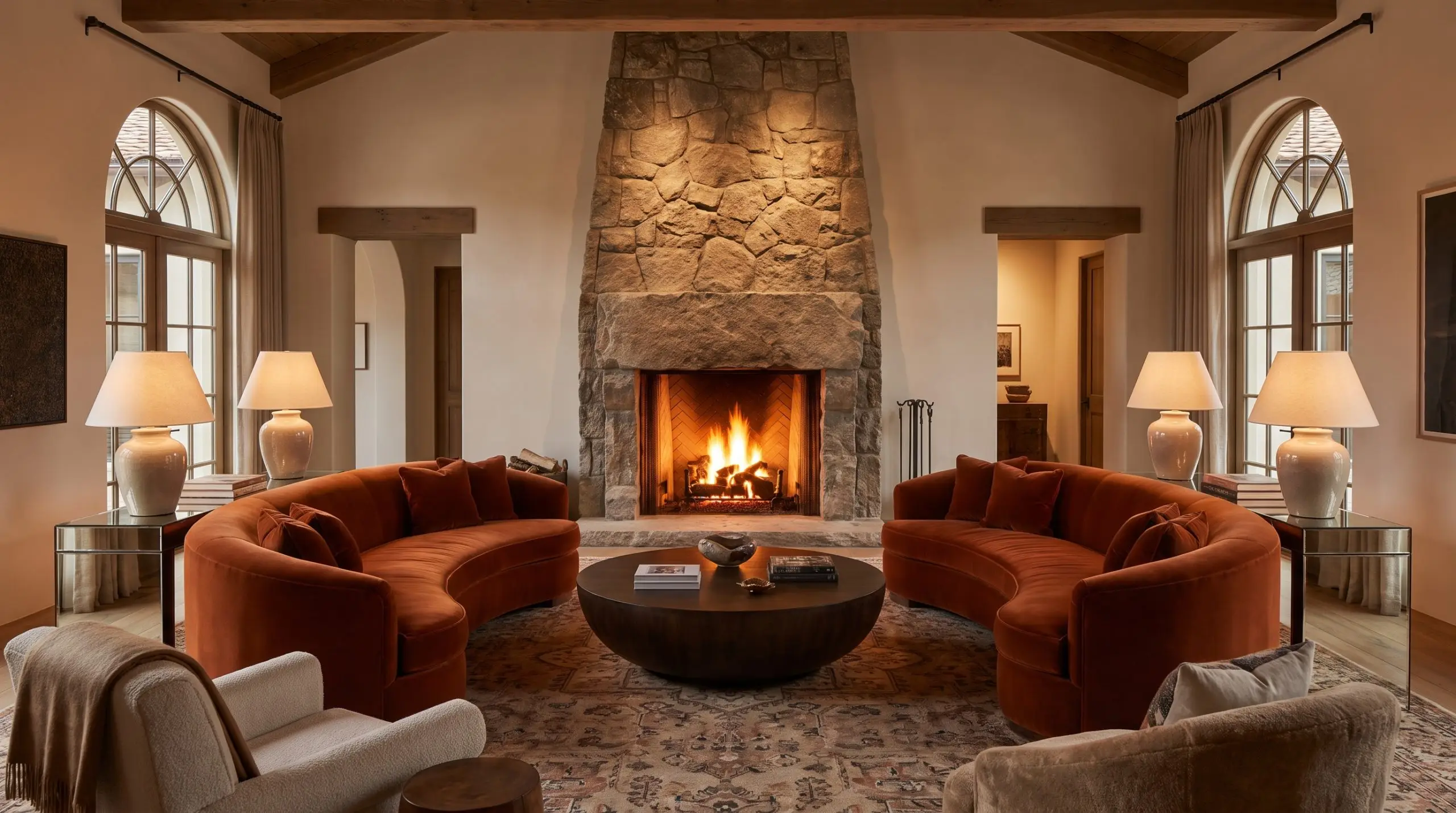
Pairing two identical curved sofas facing each other creates an enclosed, highly intimate conversational seating arrangement that feels like a boutique hotel lounge. This symmetrical layout requires a substantial room footprint and works flawlessly when centered around a heavy architectural focal point, such as a monumental stone fireplace or a large picture window.
- Vibe: High-end hospitality, balanced, and fiercely social.
- Layout Focus: Perfect mirroring of seating and side tables.
- Styling Pro-Tip: Keep the center coffee table low to the ground to ensure unobstructed sightlines between guests.
Rug and Coffee Table Pairings for Serpentine Shapes
Standard rectangular rugs and sharp, square coffee tables will aggressively fight your sofa’s natural curves. Achieving geometric harmony requires a highly deliberate curation of complementary round shapes, staggered heights, and asymmetrical foundations to properly anchor the room.
Anchor the Curve with an Amoeba or Kidney-Shaped Rug
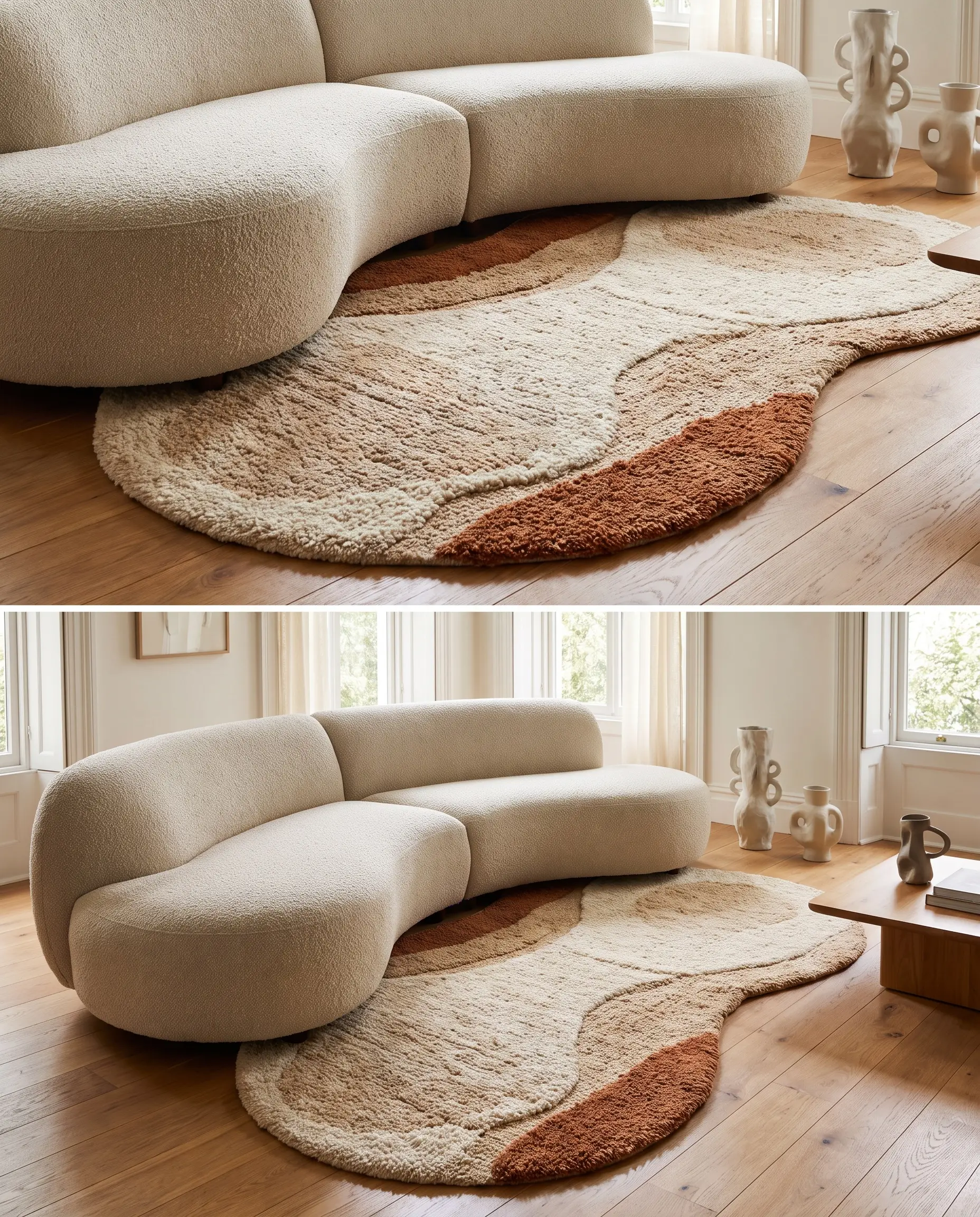
Standard rectangular rugs often create awkward tangents where the sweeping sofa legs abruptly fall off the pile. To fix this common error, introduce an amoeba or kidney bean-shaped rug that mathematically echoes the sofa’s serpentine lines, creating a cohesive, fluid foundation. If you must use a standard rectangle, pull it far enough out into the room so the front legs sit securely on the pile while the back curve sweeps off entirely.
- Vibe: Avant-garde, fluid, and highly curated.
- Key Material: Hand-tufted New Zealand wool with a varied pile height.
- Styling Pro-Tip: Ensure the concave curve of a kidney rug hugs the convex curve of the sofa’s front edge.
Stagger Nested Round Coffee Tables for Visual Scale
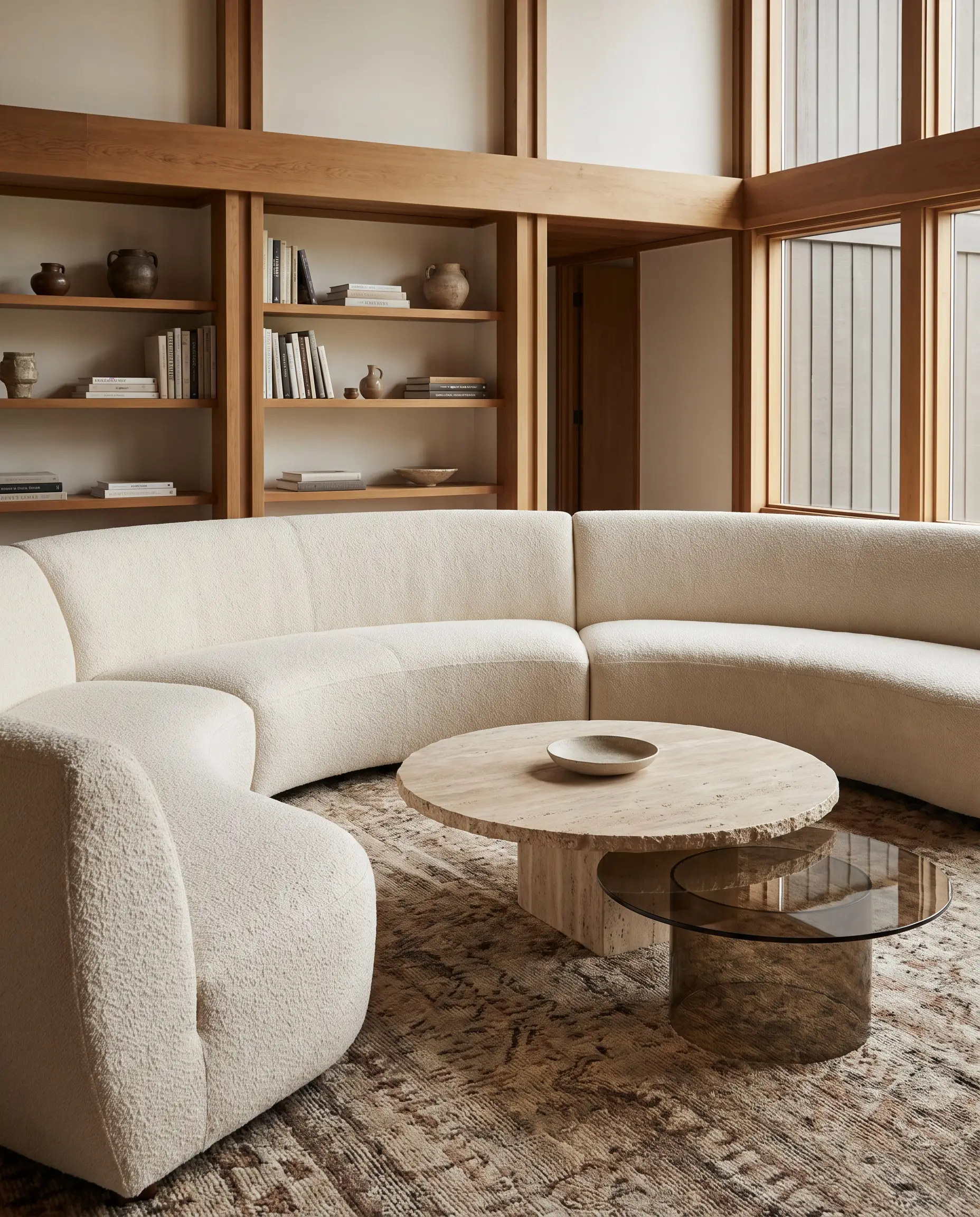
A single, small round coffee table looks entirely lost within the massive negative space created by a crescent sofa. Staggering two or three nested round tables of varying heights fills the void dynamically, providing accessible surface area to every seat while building essential visual scale.
- Vibe: Layered, architecturally complex, and highly functional.
- Key Materials: Contrast a heavy unhoned travertine table against a delicate smoked glass counterpart.
- Styling Pro-Tip: Overlap the tables by at least a third of their diameter to connect them visually.
Matching the right table geometry to your specific seating silhouette is critical for maintaining spatial flow:
| Sofa Silhouette | Optimal Coffee Table Geometry | Stylistic Rationale |
|---|---|---|
| Crescent / C-Shape | Nested Round Tables | Fills the deep, central negative space while offering staggered heights. |
| Semi-Circle | Large Oval Table | Mirrors the wide, sweeping radius without introducing sharp edges. |
| Asymmetrical Curve | Freeform / Organic Slab | Complements the unpredictable, fluid lines of the seating. |
Introduce Rigid Fluted Side Tables for Contrast
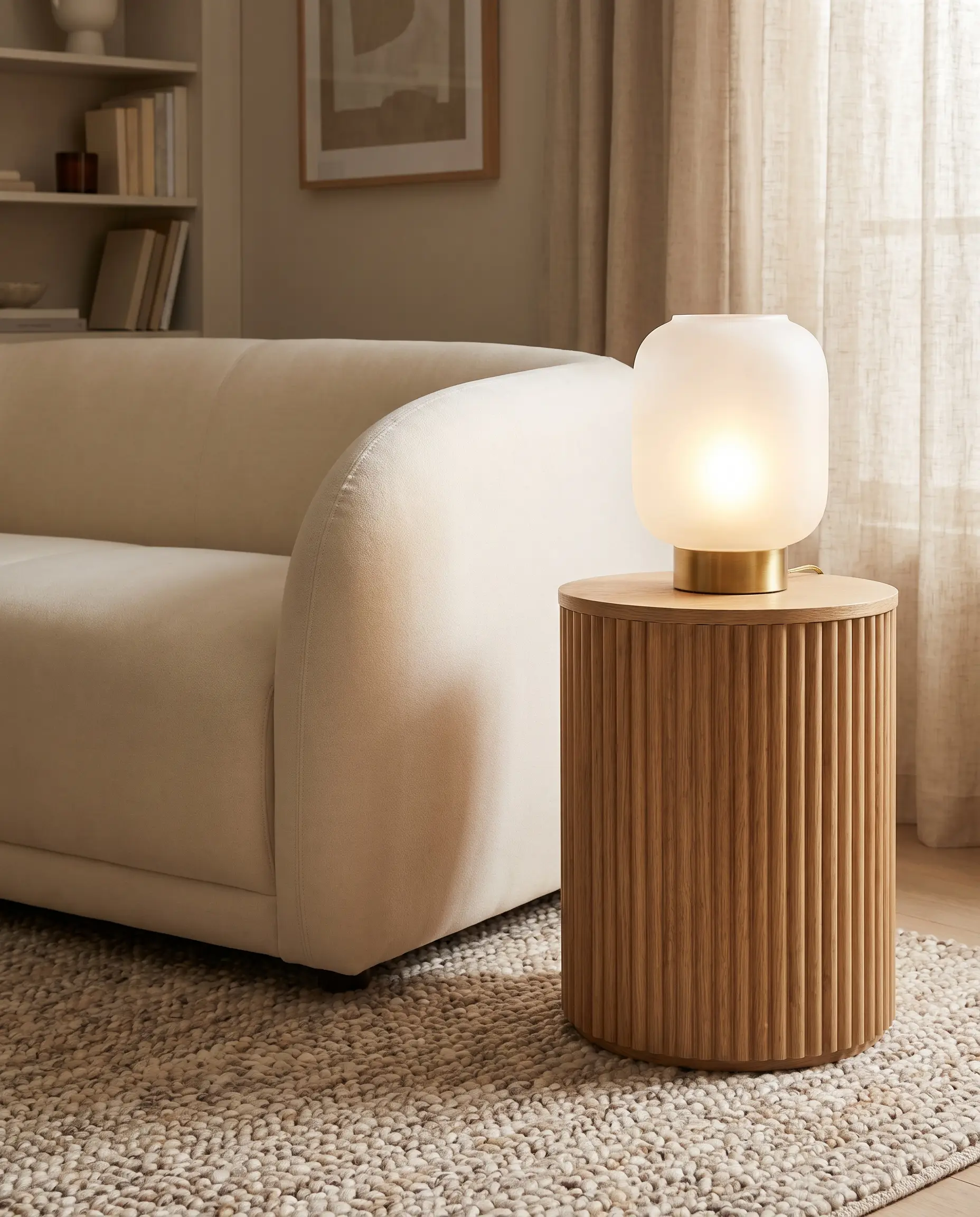
A room entirely composed of soft curves quickly devolves into a cartoonish, formless bubble lacking any sophisticated structure. Introduce rigid, vertical lines via fluted oak or ribbed concrete side tables; this sharp architectural contrast beautifully grounds the softness of the upholstery and restores tension to the design.
- Vibe: Grounded, structurally balanced, and tactile.
- Key Material: Solid white oak with deep, rhythmic fluting.
- Styling Pro-Tip: Keep the side tables perfectly cylindrical to maintain the round footprint while providing vertical rigidity.
Mask the Floating Backrest with a Curved Console
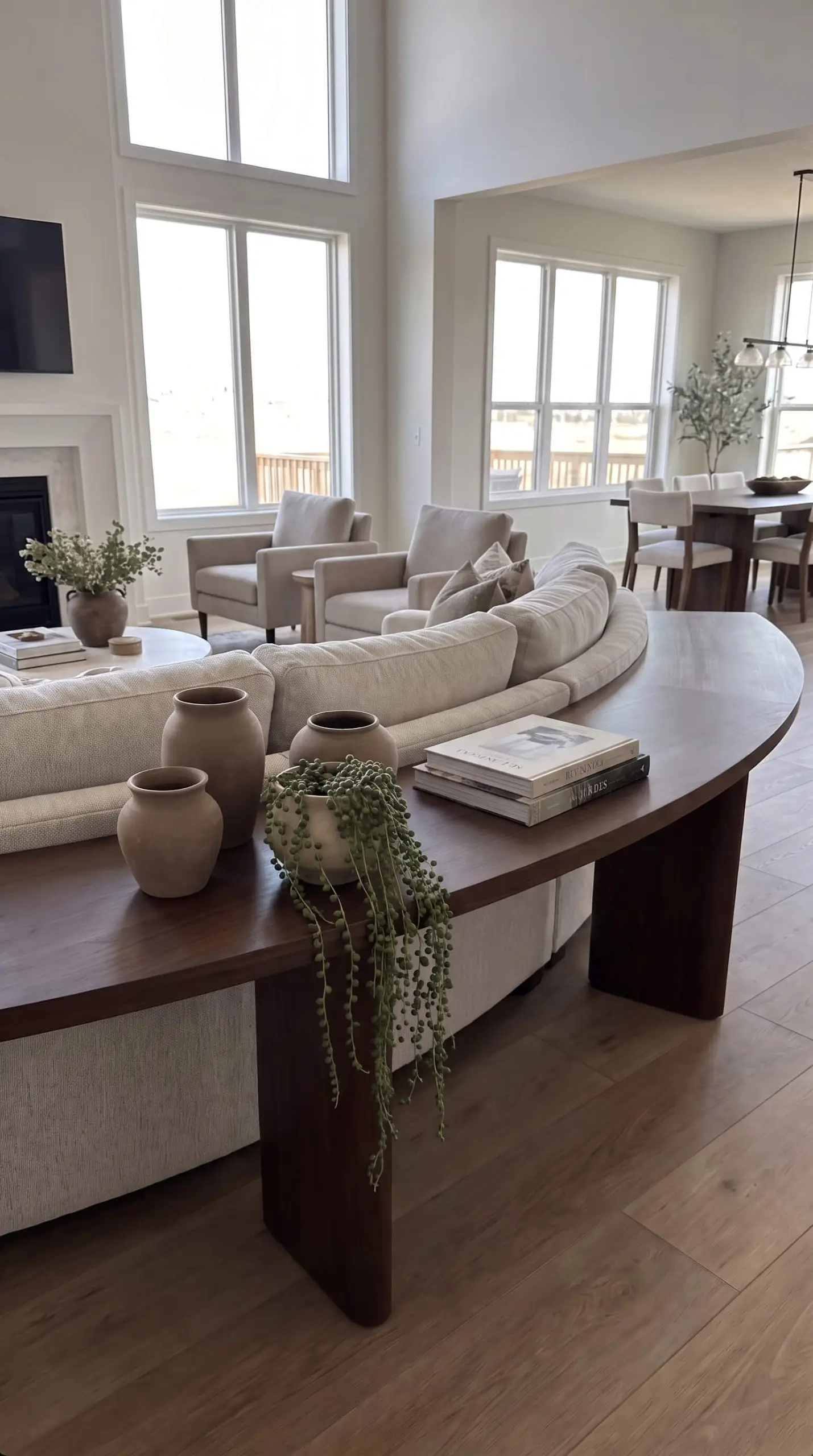
When floating a serpentine sofa in the center of a room, the expansive, uninterrupted backrest can look visually barren and heavy. Source a curved console table that mathematically hugs the exact radius of the sofa’s back to create a seamless visual transition and provide a much-needed styling surface.
- Low-Profile Ceramic Vessels: Groupings of three matte, unglazed vases to add staggered height.
- Heavy Art Books: Stacked horizontally to introduce rigid, grounding geometry.
- Trailing Greenery: A small pothos or string of pearls to break the hard line of the console edge.
A curved sofa floating in a room exposes its back; always match the back radius with a sweeping console table to anchor the visual weight and prevent the piece from looking like it was abandoned in the center of the floor.
Stylist’s Secret
Upholstery and Base Materials for Sculptural Impact
The fabric and base construction dictate whether your seating feels like a heavy, grounding anchor or a light, floating cloud. Material selection is not just about durability; it is a critical tool for manipulating light, shadow, and the overall aesthetic weight of the sculptural form.
Maximize Shadow Play with Heavy-Weight Bouclé
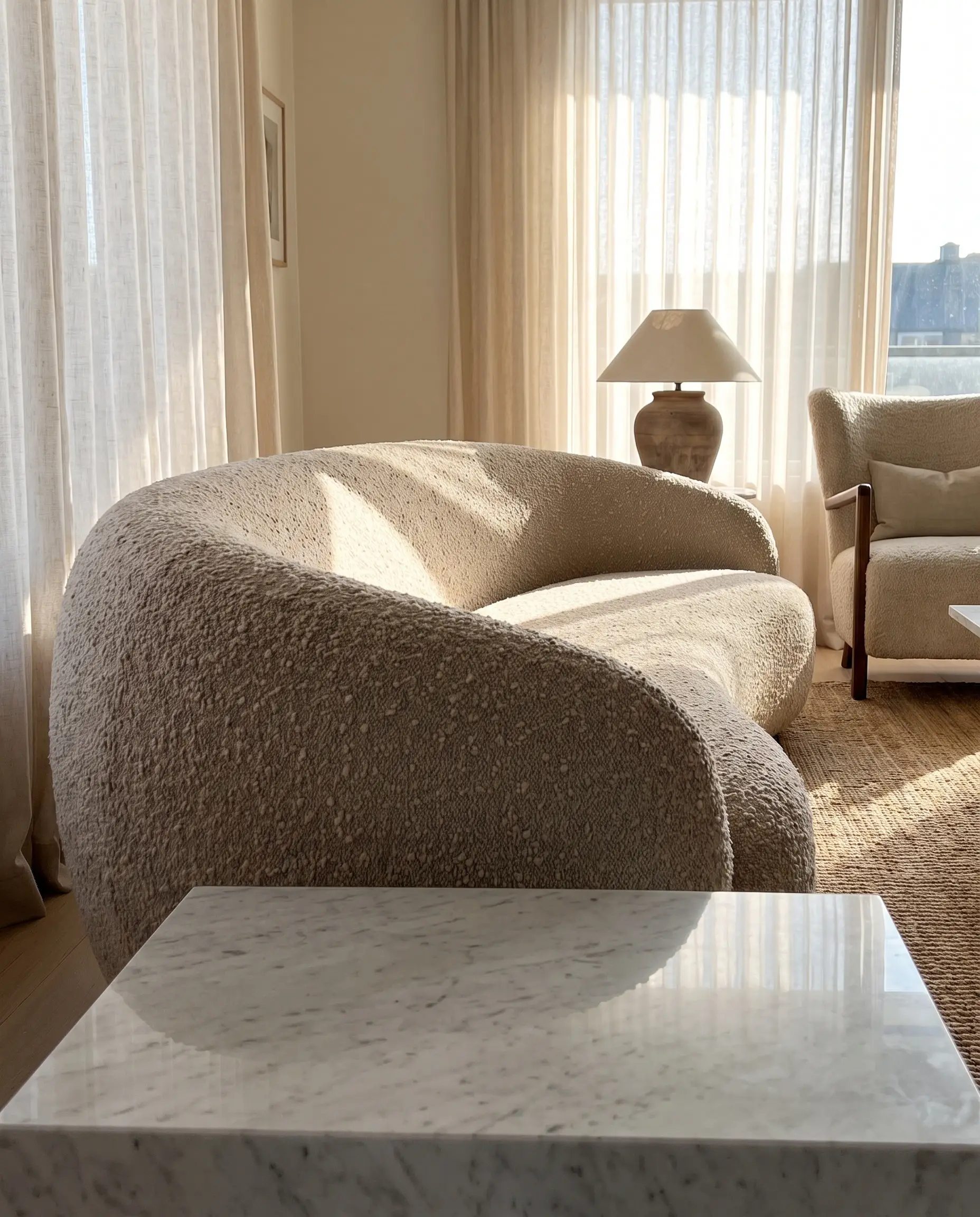
Bouclé and shearling fabrics trap ambient light within their highly textured loops, creating deep shadow play that actively highlights the structural curves of the furniture. We highly advise this tactile application for spaces lacking inherent architectural character, as the sofa itself becomes the primary source of texture.
- Vibe: Earthy, inviting, and highly tactile.
- Key Material: Heavy-weight wool bouclé in a warm alabaster or oat.
- Styling Pro-Tip: Pair with smooth, cold surfaces like polished marble to contrast the heavy warmth of the fabric.
Highlight Art Deco Lines with High-Sheen Velvet
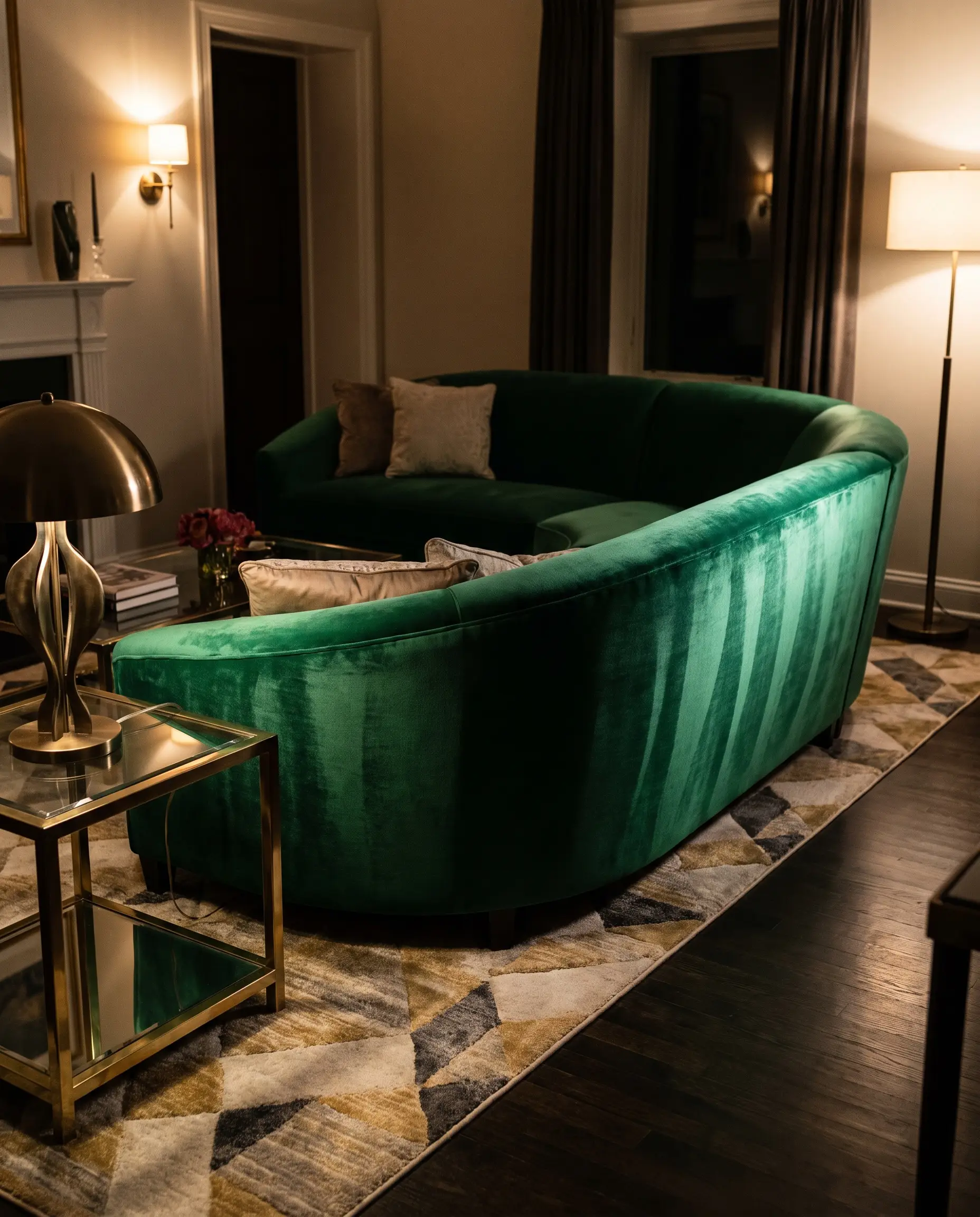
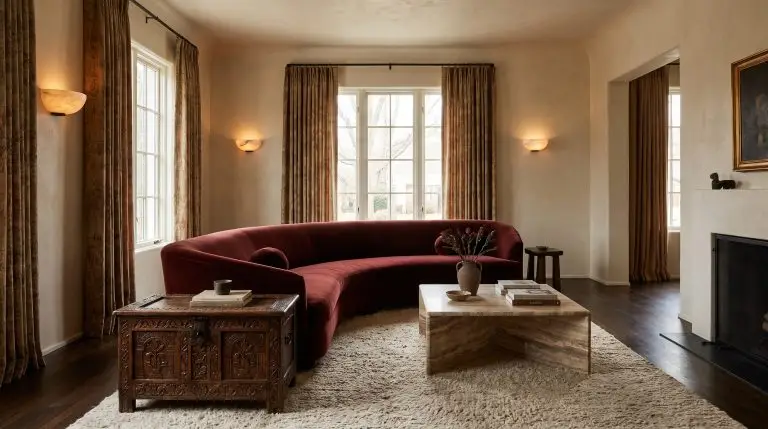
For a sleeker, high-glamour aesthetic, mohair or high-sheen velvet brilliantly reflects light directly along the crest of the upholstery’s curves. This reflective quality is an accessible luxury upgrade essential for bringing a sense of movement, depth, and luminosity to darker, moodier rooms.
- Vibe: Opulent, cinematic, and sleek.
- Key Material: 100% cotton velvet or premium mohair.
- Styling Pro-Tip: Brush the velvet pile in a single direction to maintain a clean, unbroken reflection of light across the curve.
Ground the Softness with a Metallic or Burl Wood Plinth Base
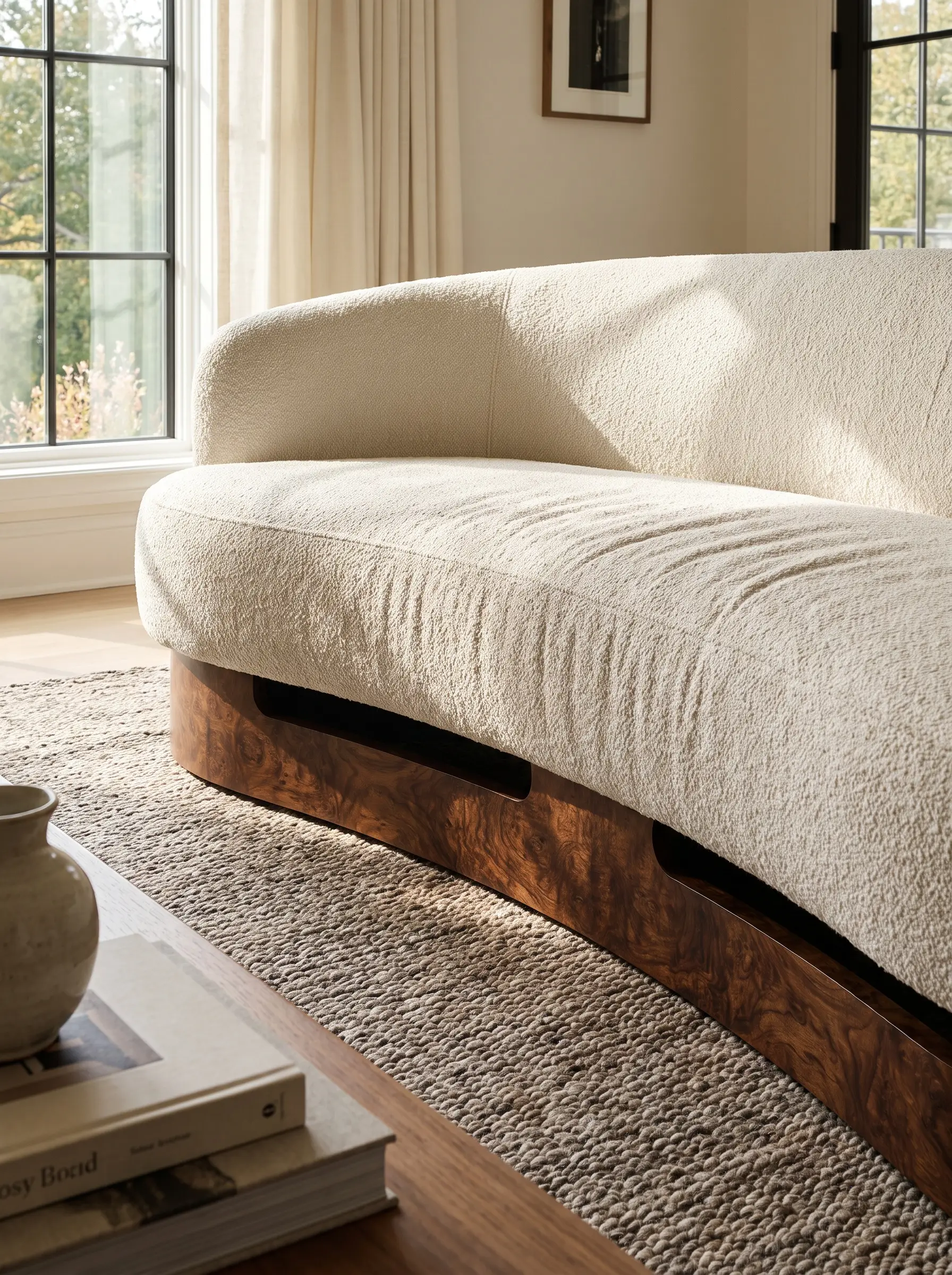
A heavy curved silhouette that drops straight to the floor can look suffocatingly dense and visually blocky. A recessed plinth base in brushed brass or rich burl wood provides a necessary visual break, allowing the heavy upholstered form to appear as though it is hovering elegantly just above the rug.
- Vibe: Architectural, tailored, and sophisticated.
- Key Material: Polished brass or high-contrast olive burl wood.
- Styling Pro-Tip: Ensure the plinth is recessed at least two inches to create a convincing shadow line underneath the sofa.
Restrict Throw Pillows to Maintain the Architectural Silhouette
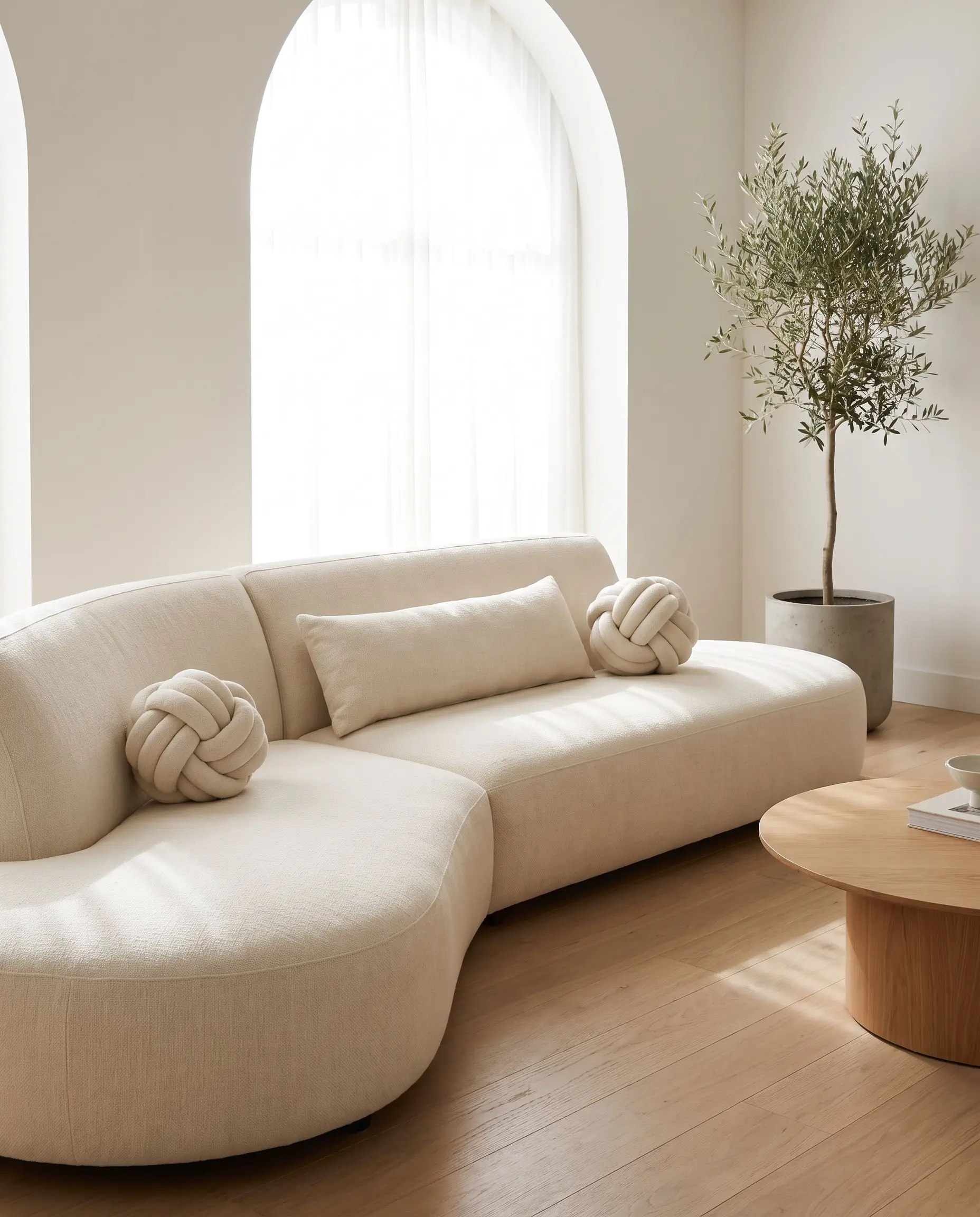
A curved sofa is absolutely not a dumping ground for standard square throw pillows, as excessive right angles will aggressively fight the natural, sweeping lines of the frame. Rely heavily on the solid, tactile fabric of the sofa itself, restricting accents to spherical shapes or highly textured lumbar supports rather than busy prints.
- Vibe: Minimalist, tailored, and structurally respectful.
- Key Material: Heavyweight linen or velvet for the accent pillows.
- Styling Pro-Tip: Match the pillow fabric exactly to the sofa for a monolithic, highly sculptural look.
Introduce no more than three pillows to a curved sofa: two spherical or knot pillows, and one elongated lumbar. Anything more destroys the architectural silhouette.
Styling Rule
Adapting the Curve to Distinct Interior Styles
Moving beyond the standard white minimalist living room, the serpentine shape is incredibly versatile when subjected to different design languages. By altering the color palette and surrounding materials, these sculptural forms adapt flawlessly to diverse, high-end aesthetics.
Soften Wabi-Sabi Spaces with Organic Modern Curves
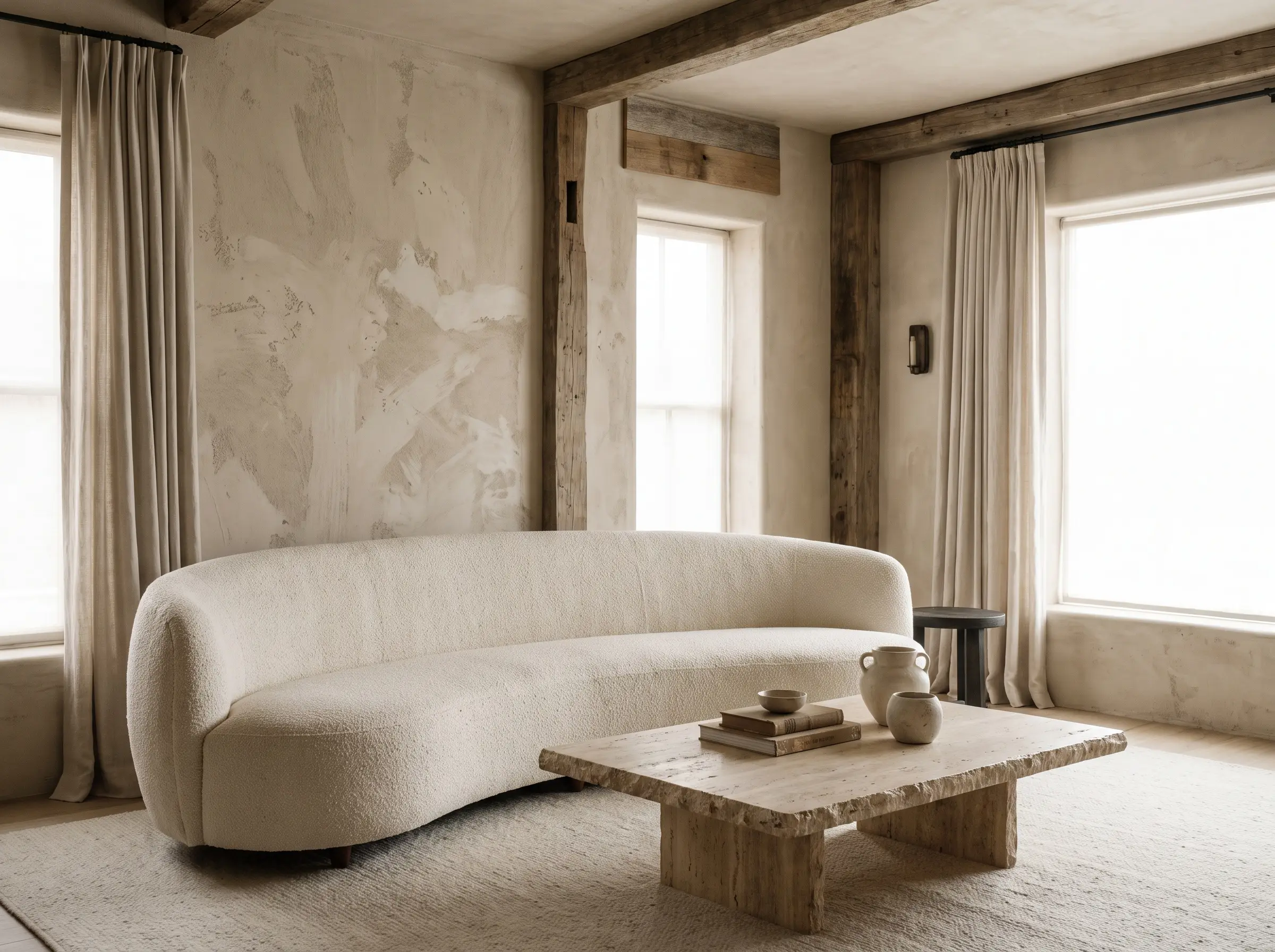
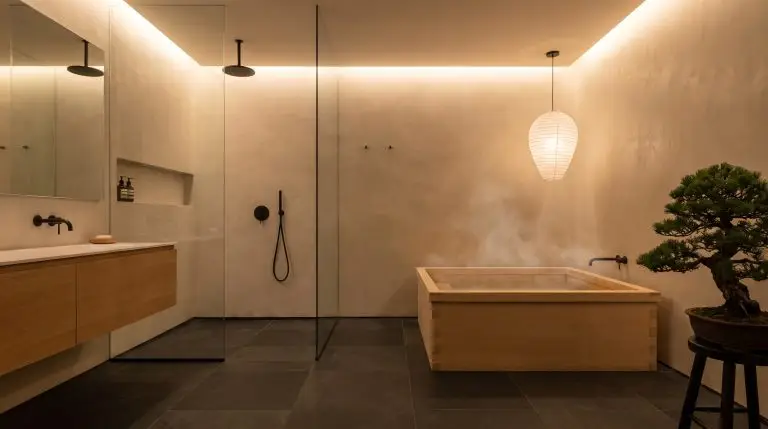
Pairing a beige or ivory textured sofa with raw, porous materials beautifully emphasizes natural, imperfect forms. Surround the seating with unhoned travertine, reclaimed timber, and heavily textured walls to nail the contemporary, earthy aesthetic.
- Vibe: Grounded, serene, and naturally imperfect.
- Key Material: Raw, open-pore travertine.
- Paint Recommendation: Portola Paints Roman Clay in “Oatmeal” for a highly textured, earthy backdrop.
- Styling Pro-Tip: Avoid high-gloss finishes entirely; rely on matte, light-absorbing surfaces.
Lean into Postmodern 80s Revival with Tubular Frames
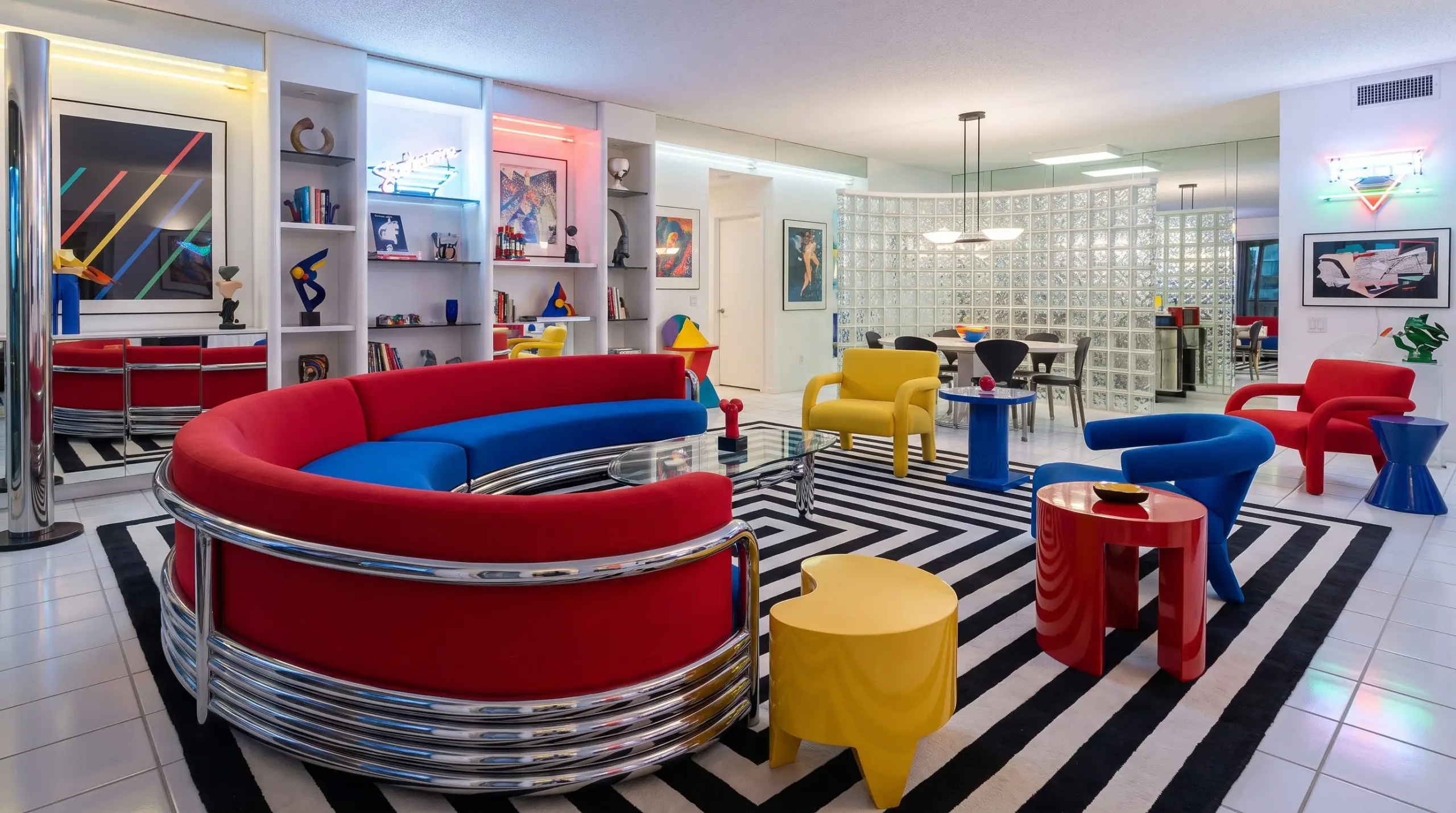
For an edgy, trend-forward execution, opt for a curved silhouette supported by a chunky, tubular chrome frame. Pair this high-contrast piece with primary color accents, glass block dividers, and high-gloss lacquered finishes to master the bold, Memphis-inspired Postmodern revival.
- Vibe: Edgy, high-contrast, and unapologetically bold.
- Key Material: Polished tubular chrome and lacquered wood.
- Styling Pro-Tip: Introduce a stark, geometric black-and-white striped rug to clash brilliantly against the chrome curves.
Pair Serpentine Velvet with Ornate Parisienne Millwork
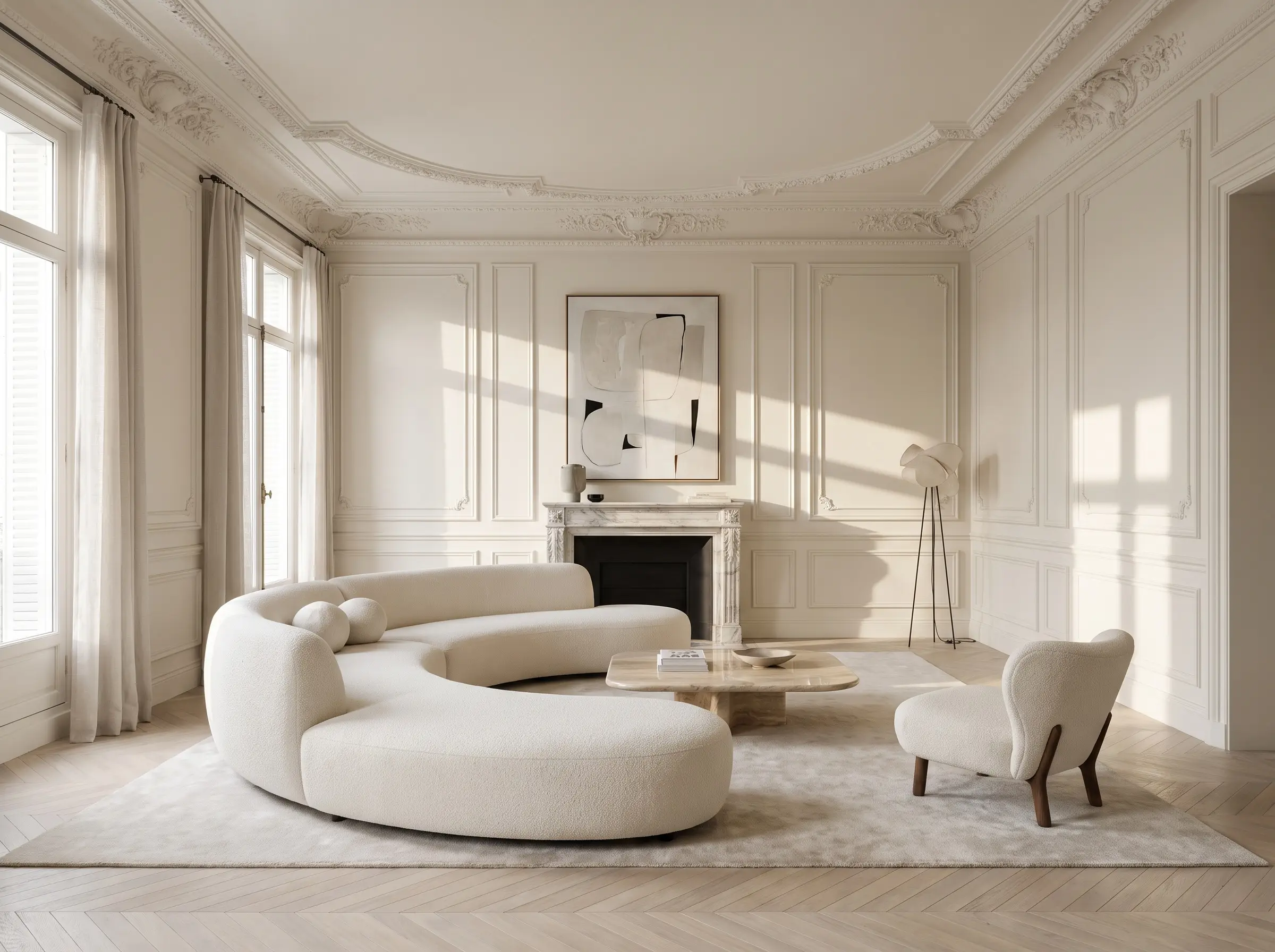
The tension created by placing a hyper-modern, minimalist curved sofa inside a room featuring highly traditional, ornate Haussmann-style wall paneling is the absolute pinnacle of accessible luxury. This juxtaposition of clean, sweeping contemporary lines against intricate classical molding creates a breathtaking transitional space.
- Vibe: Sophisticated, historically rich, and deeply chic.
- Key Material: Plaster crown molding and intricate picture frame wainscoting.
- Paint Recommendation: Farrow & Ball “Pointing” to highlight the shadows of the ornate millwork.
- Styling Pro-Tip: Keep the sofa fabric a stark, solid neutral so it doesn’t compete with the architectural details of the walls.
Maximize Drama with Gem-Toned Art Deco Revival
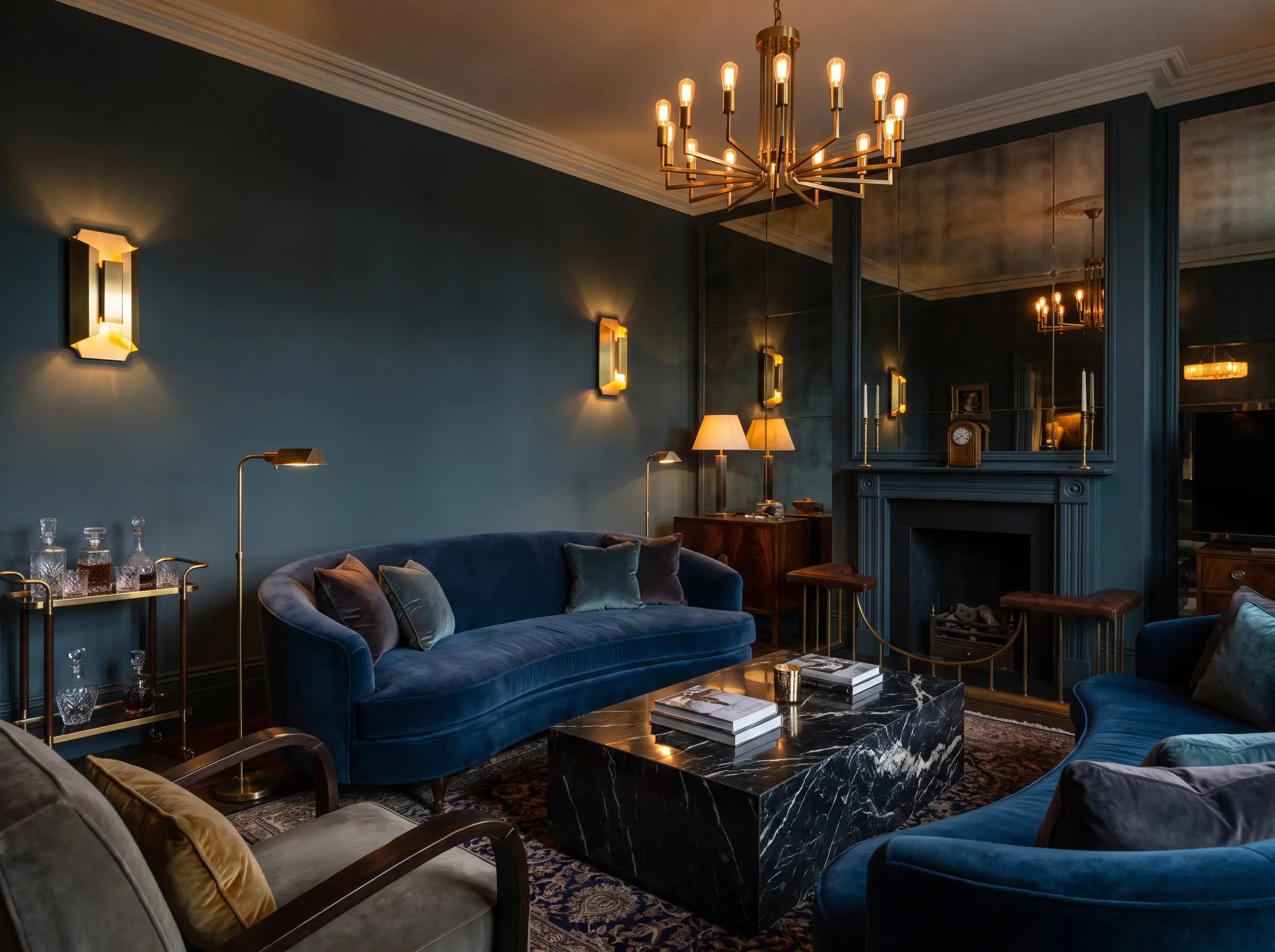
Immerse the room in cinematic glamour by specifying a deep emerald or sapphire velvet curved sofa set against rich, moody walls. Complement the heavy color palette with geometric brass lighting fixtures, heavily veined marble tables, and smoked mirrors to evoke a modernized, high-end speakeasy.
- Vibe: Moody, glamorous, and heavily saturated.
- Key Material: Heavily veined Nero Marquina marble.
- Paint Recommendation: Farrow & Ball “Hague Blue” for a deeply saturated, enveloping wall color.
- Styling Pro-Tip: Use warm, low-kelvin ambient lighting to make the jewel-toned velvet glow from within.
Grounding Your Sculptural Centerpiece
Styling a serpentine silhouette is ultimately a strict exercise in spatial geometry and aesthetic restraint. Success relies entirely on measuring your spatial flow, respecting the expansive negative space, and choosing complementary round furniture shapes without sacrificing structural, architectural contrast. Which layout strategy will you deploy to anchor your space? Explore our curated sourcing guides to find the perfect nested coffee tables and fluted side pieces to complete your room’s transformation.

The Hackrea Style Desk treats interior decoration as an exact visual science. Rather than focusing on demolition or floor plans, this desk masters the art of color theory, undertone matching, material pairings, and spatial proportion. From balancing the visual weight of mixed metals to finding the perfect bridging tone between disparate wood species, this desk provides the rigorous aesthetic rules needed to achieve high-end, editorial-quality harmony in any space.