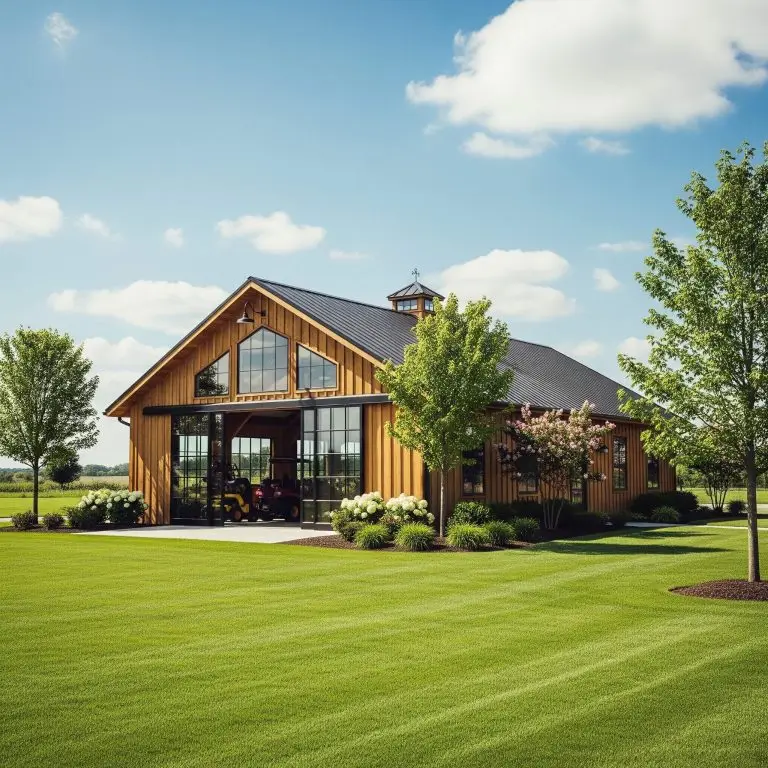
You FINALLY have enough room to add that pole barn to your property. You’ve been all about windows and placement for weeks, and you think you’ve figured out exactly what it will look like and what you’ll do with it. Good for you.
But have you thought about the space around it?
Will it block the morning light you love to see in the kitchen? Will you be able to put in the gravel patio off the side door, or is it too close to the drainage swale? Is there going to be enough space to back the riding mower around the back corner?
There’s a lot that goes into planning, and part of it doesn’t have anything to do with the building itself.
That Empty Corner Might Not Be the Best Location
An empty patch looks like the obvious spot, but hold on a little.
Yes, it’s a shame to let it go to waste because there’s nothing but weeds there, but you have to think about how your property works. Don’t go into this thinking about what’s convenient right now, but about what will make sense in the long run.
Your property is a lot more than a bunch of random features. It’s an environment, and all the pieces in that environment affect each other in one way or another.
That corner you’re eyeing might block the view from the house or the afternoon sun your vegetable garden needs. A lot of people make the mistake of focusing on the building’s footprint without stopping to think about what’s around it. Sooner or later, though, that kind of thinking comes back to bite them.
Look at what you already have. Which views do you want to keep at all costs? Where does the morning light come from?
A clear patch of ground doesn’t mean it’s the best place for a pole barn. Whatever’s on your property took a long time to develop, so you probably don’t want a new building to ruin all that.
One other thing that people regularly forget is how they move on their property.
You wouldn’t want to accidentally block the path from the driveway to the backyard, right?
Think about those types of patterns before you make any decisions you can’t take back. The same goes for entry points to the barn – it has to make sense for how your equipment moves and how you use your property.
Experienced builders have seen these mistakes so many times they’ve lost count.
This is why you shouldn’t do this on your own. It’s better to be sure and work with pros that fully specialize in custom bark builds, like the ones at Hilltop Post Buildings or a similar reputable company.
What Needs Space Around the Building
Here’s what to keep in mind when it comes to leaving space around your pole barn.
The View From the House
Unless you want to spend too much time looking at your pole barn, you’ll need to be careful with placement. Who wants to see a shed or a barn from their kitchen window, right?
If you place your pole barn too close to the house or straight in front of your favorite view, that’ll become the focal point of your entire property. You won’t be able to help but look at it all the time because it’ll just draw the eye.
Give the building some distance so you can keep the space feeling and looking open. That’s not unused land but breathing room.
Where People Naturally Walk
You want a pole barn because you’ll use it in some way, which means you’ll walk around it a lot. And equipment needs space, as does maintenance. Don’t take shortcuts here because, if the space that’s left is too tight, it’ll be a nightmare.
You should be able to move comfortably around the barn, whether you’re carrying equipment or not.
Plants Grow, Buildings Don’t
Plants will get bigger than you expect them to. That’s simply how it goes.
A cute little shrub that’s 3 feet from the barn now might brush against it in a few years and trap moisture. Trees are even more complicated because their canopies spread out just like their roots do. If the tree is close now, it’ll cause a lot of issues in 2 or 3 years when its branches reach the roof height or the roots get to the foundation.
You also need to think about shadows. Your garden needs sunlight to grow, so if a building blocks that sunlight, you can say goodbye to your tomatoes.
Conclusion
It might seem like you have too much to think of now, but you really don’t. Of course, unless you’ve already planned something like this (successfully!), it might be better to leave that part to the pros.
After all, it would be a shame to spend time and money on a new pole barn only to have it cause issues when it’s up.