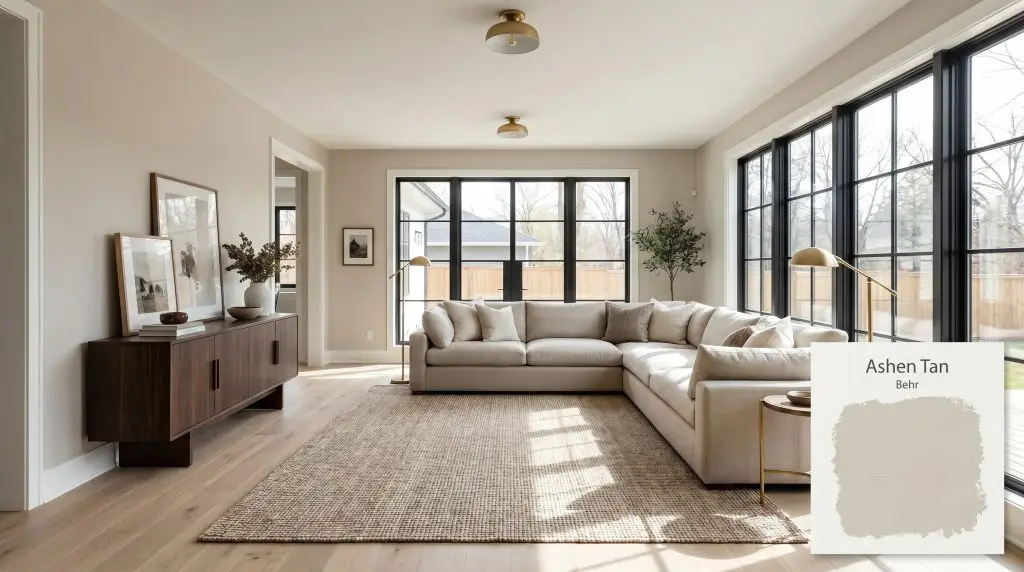
Behr Ashen Tan (N220-2) is a soft, warm greige or light taupe that perfectly balances gray and tan. With an LRV of 60, it reflects a comfortable amount of light, making it a highly versatile, cozy neutral for living rooms, bedrooms, and open-concept spaces.
Will Ashen Tan clash with your room?
Paint Technical Profile
| Color ID / SKU | N220-2 |
| HEX Code | #d3cabf |
| Light Reflectance (LRV) | 60 |
| Temperature | Warm |
| Primary Undertone | Taupe |
| Hidden Undertones | Gray, Subtle Pink/purple |
| Use | Interior |
| Best Exposures | North-facing, East-facing |
| Best For | Living rooms, bedrooms, hallways, bathrooms, open-concept spaces |
Ashen Tan Digital Design Concept Boards
Living Rooms
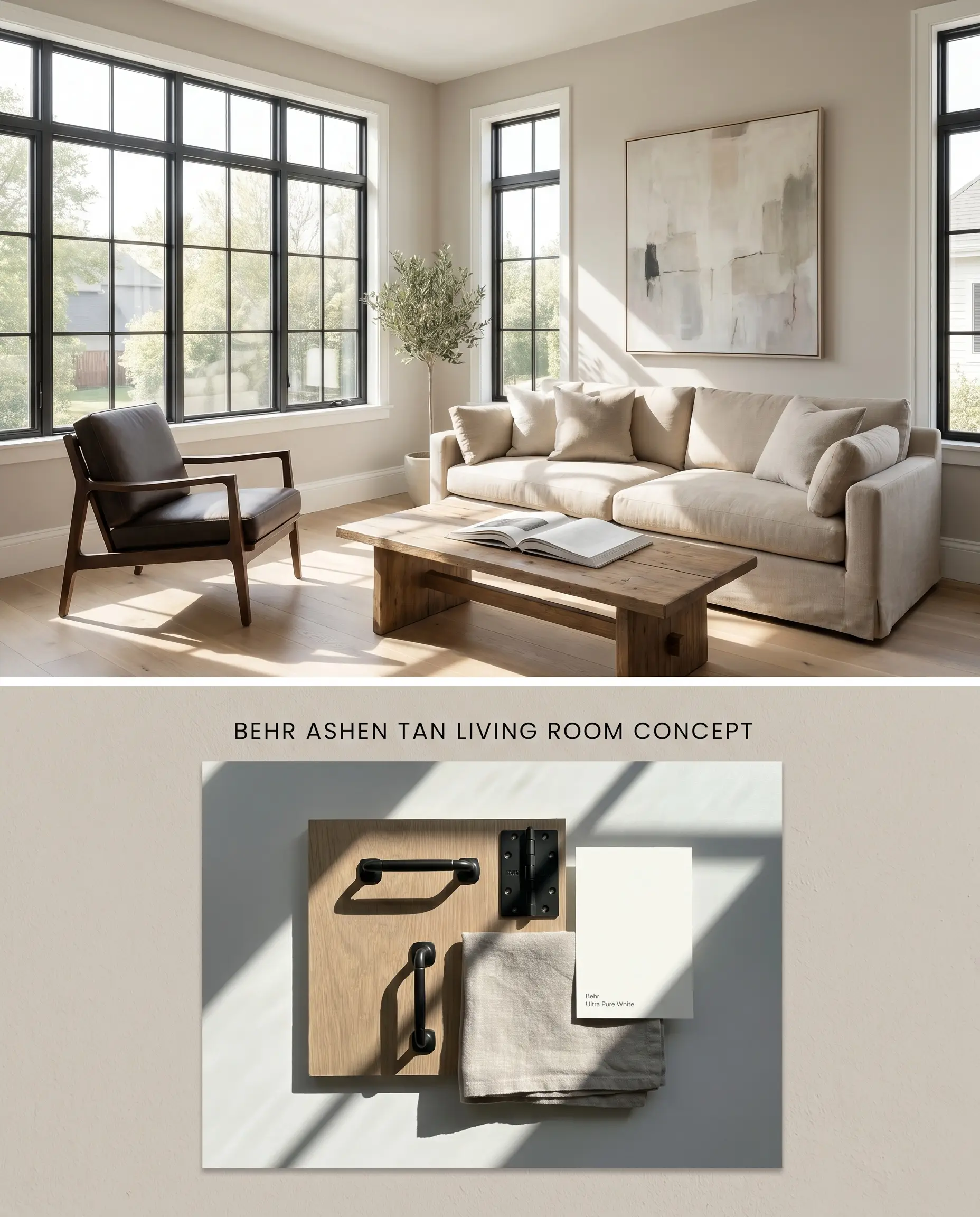
As a warm greige, this tone requires ample natural light to prevent its taupe base from flattening out. When paired with high-contrast architectural elements like blackened steel window frames, the ashy finish absorbs glare while grounding the room’s perimeter. Avoid pairing this hue with honey oak floors, as the yellow tones will immediately force a latent purple undertone to the surface.
Bedrooms
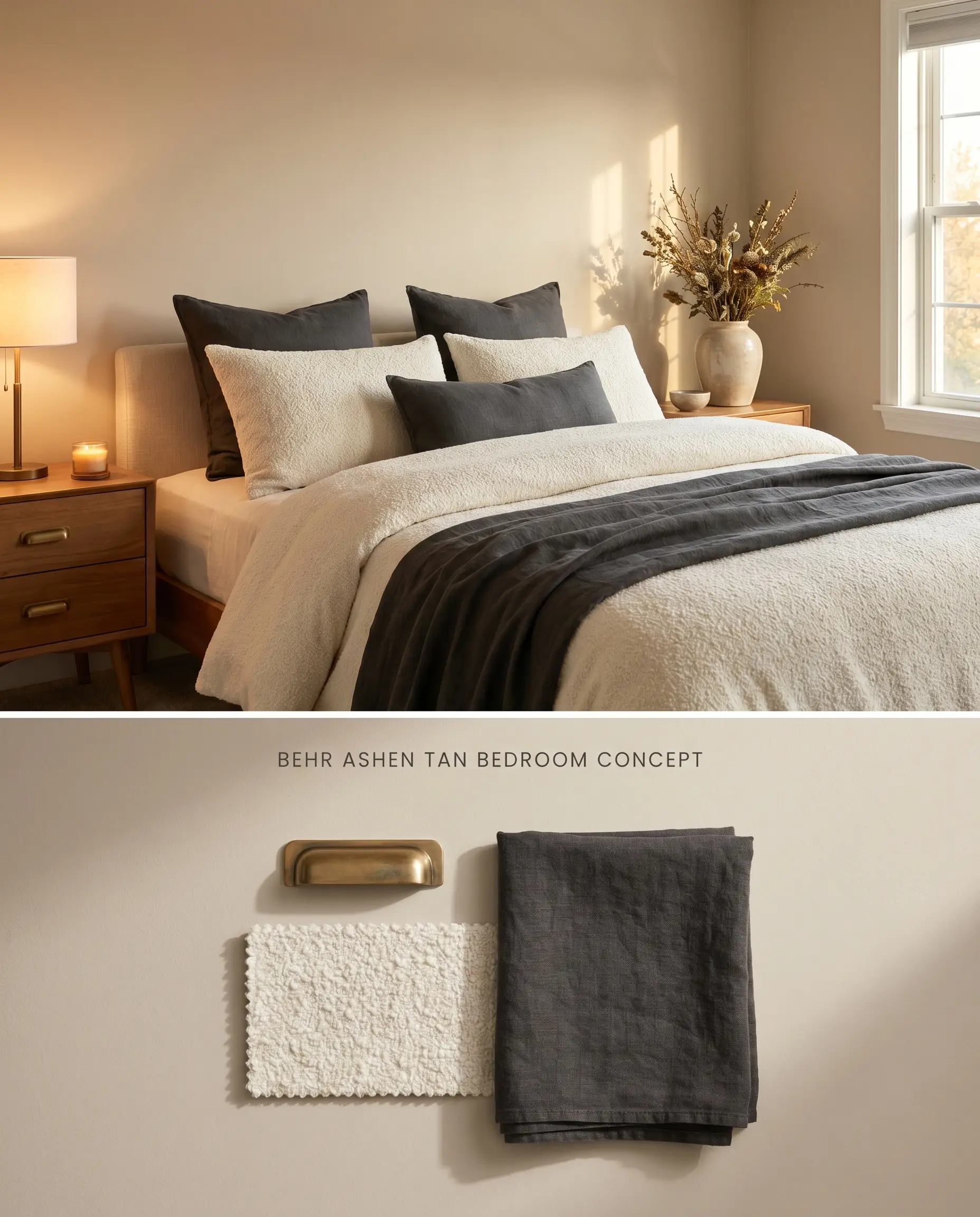
The muted LRV 60 rating establishes a cozy atmosphere without absorbing all the ambient light in a resting space. Soft linens and brushed brass hardware pull the taupe paint color forward, neutralizing its tendency to read as a stagnant gray. Ensure artificial lighting leans warm (3000K) to suppress any hidden pink flashes during evening hours.
Hallways
Will Ashen Tan work with your specific lighting, floor, or furniture?
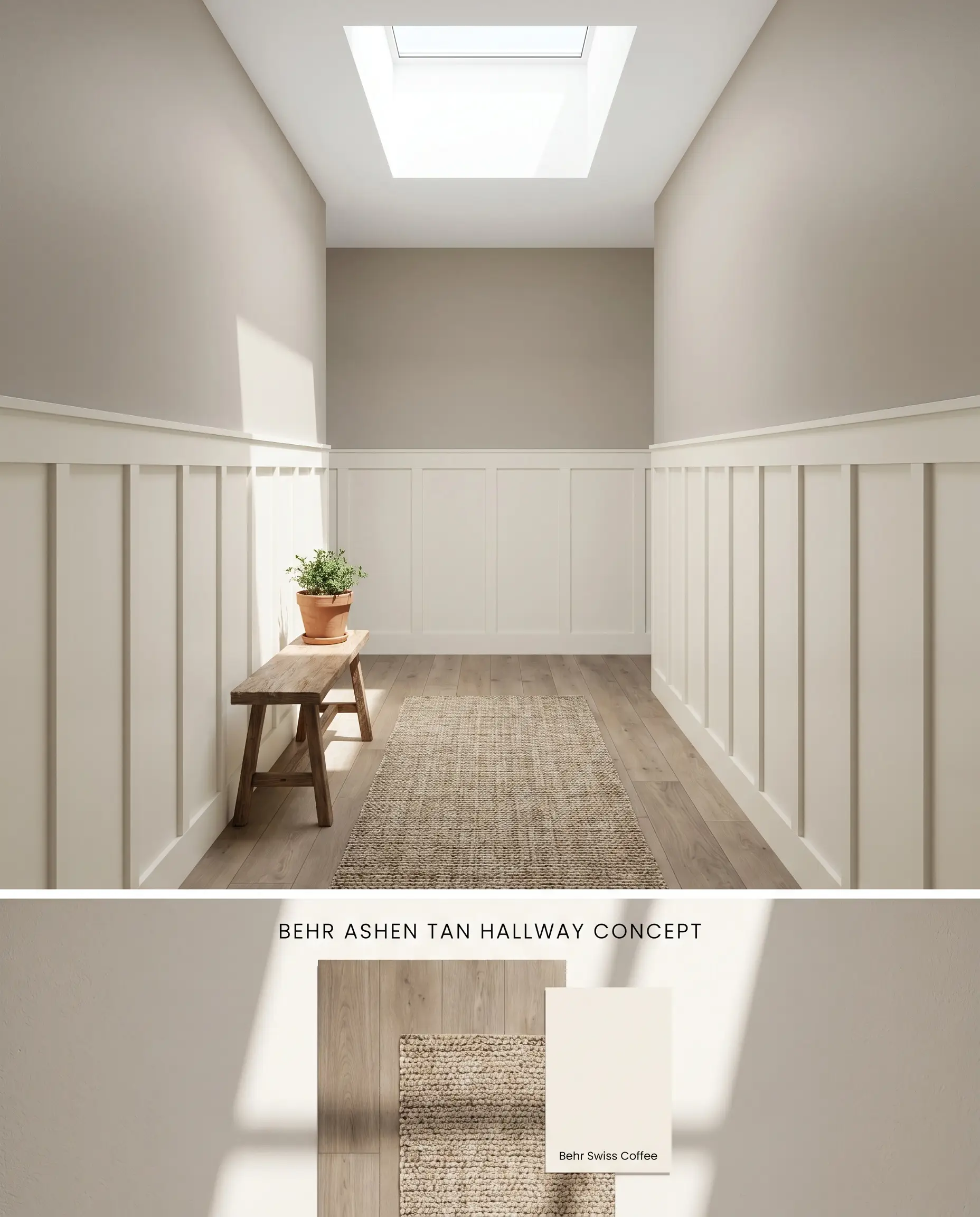
This color is strictly reserved for hallways with active natural light sources, such as transoms or skylights. In windowless corridors, the lack of directional light traps the color, turning it into a muddy, flat gray. When illuminated properly, it serves as a seamless transitional shade between high-contrast rooms.
Bathrooms
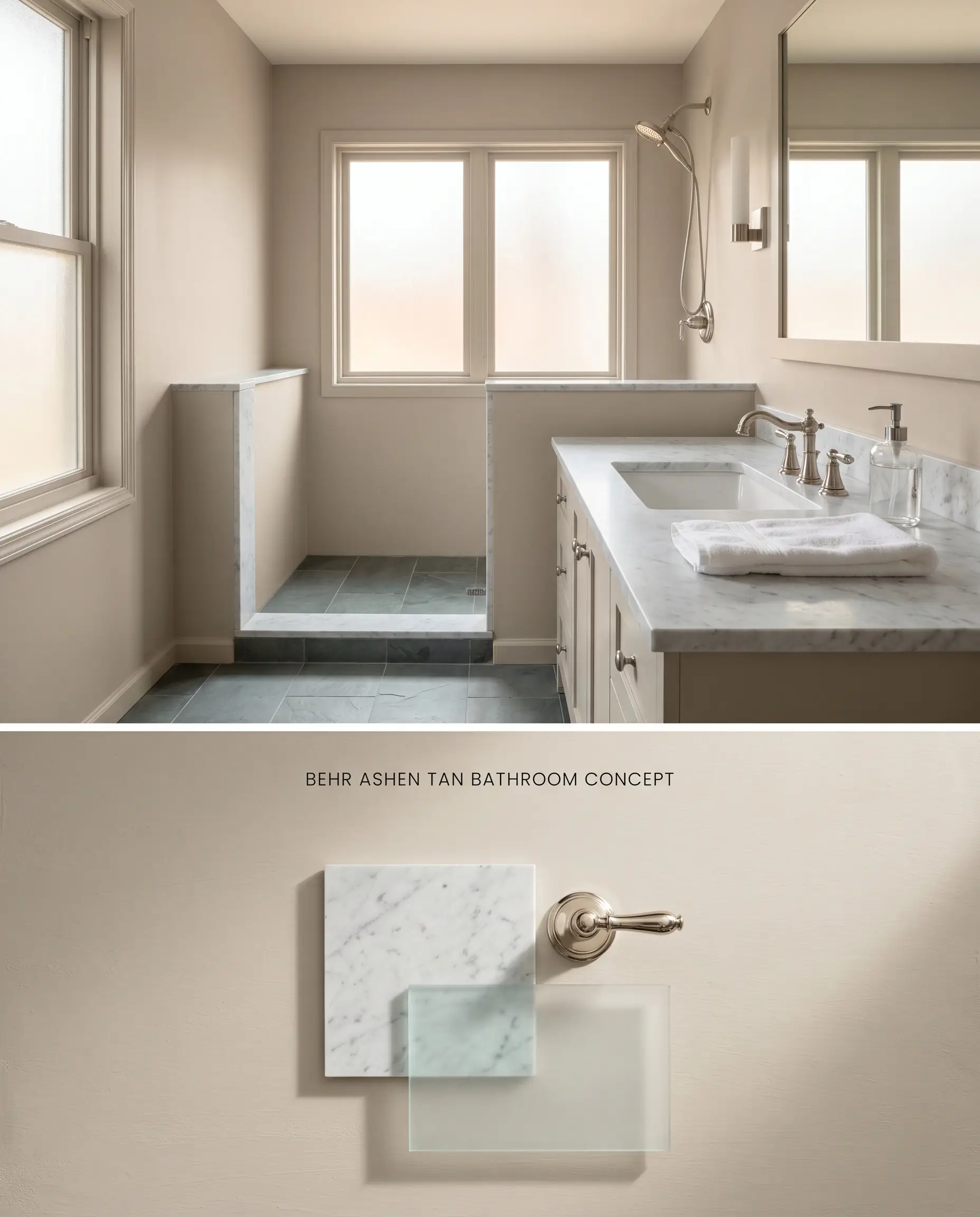
Will Ashen Tan work with your specific lighting, floor, or furniture?
Moisture-rich environments often feature cool, reflective surfaces like polished chrome and white porcelain, which starkly contrast with an ashy finish. To ground the space, introduce porous, organic textures like honed Carrara marble or tumbled limestone, which absorb light and soften the visual transition from the wall to the vanity.
Open-Concept Spaces
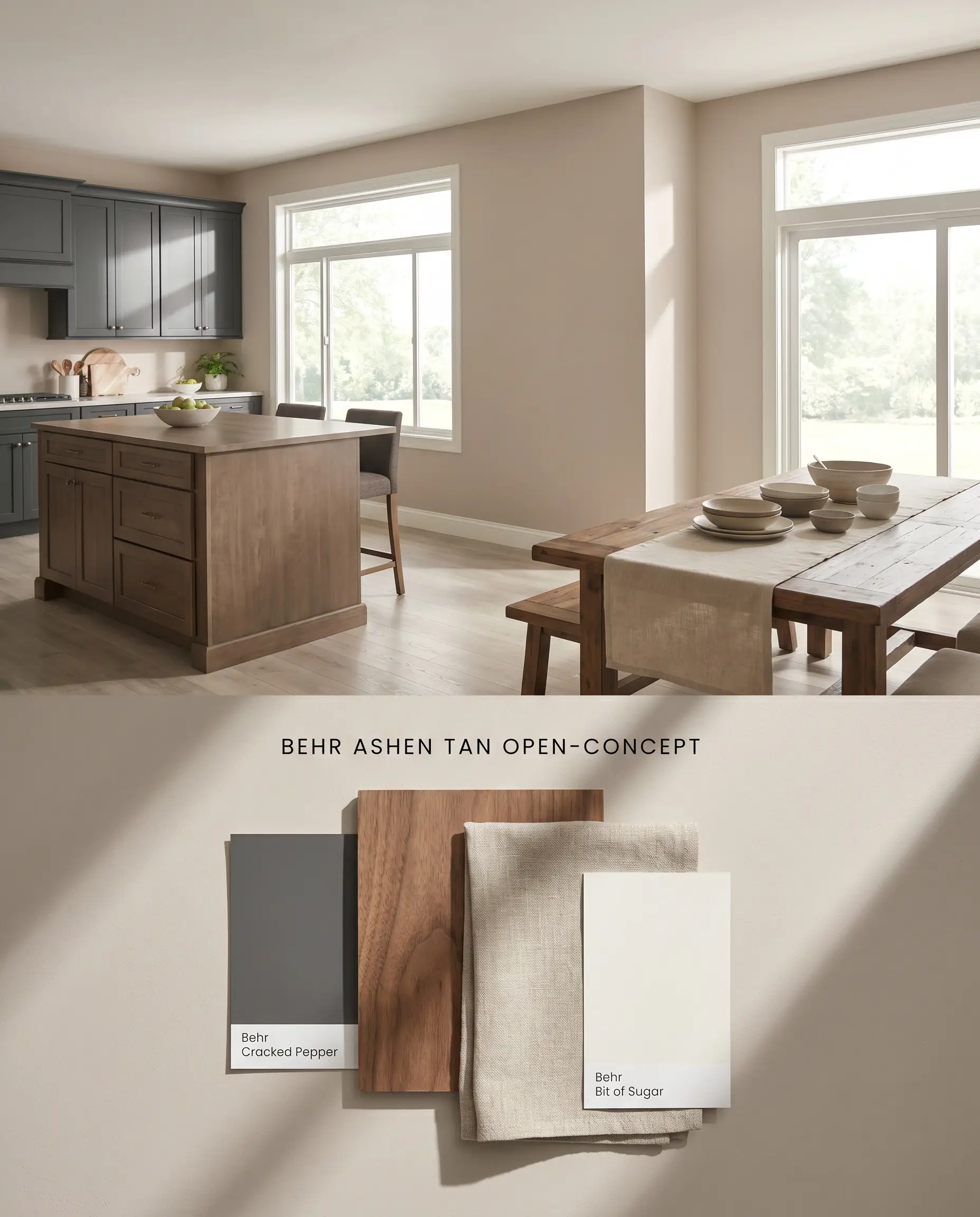
Operating as an open-concept neutral, this shade provides a continuous structural backdrop that unifies disparate living zones. Its muted profile prevents the bounce effect of aggressive light from large window walls, maintaining a consistent color read across long spans of drywall. You must meticulously coordinate all built-in cabinetry to avoid yellow-toned woods that will trigger an unwanted color shift.
Comparative Color Theory and Pairings
Behr Ashen Tan vs. Benjamin Moore Edgecomb Gray HC-173
Edgecomb Gray holds an LRV of 63.88, making it slightly more reflective and noticeably warmer than the Behr N220-2 formulation. While Edgecomb Gray leans into a subtle green-yellow base to maintain its warmth, Ashen Tan relies on a cooler, ash-driven taupe base. Specify Edgecomb Gray in North-facing rooms where you need to artificially inject warmth, but deploy Ashen Tan in bright, South-facing rooms where Edgecomb might read too creamy or distinctly yellow against cool stone finishes.
Behr Ashen Tan vs. Sherwin-Williams Agreeable Gray SW 7029
Will Ashen Tan work with your specific lighting, floor, or furniture?
Agreeable Gray (LRV 60) shares the exact same light reflectance value as Ashen Tan, but their physical behavior under artificial lighting diverges sharply. Agreeable Gray features a well-documented green-brown undertone that resists color shifting in mixed lighting. Conversely, Ashen Tan contains a hidden purple undertone that will flash pink when exposed to cool lighting or paired with yellow-dominant hard finishes. Use Agreeable Gray for foolproof whole-house applications, and reserve Ashen Tan for controlled lighting environments paired with strictly cool or neutral-toned woods.
Technical FAQs for Open-Concept Neutrals
Yes, the cool, blue-tinted light typical of North-facing exposure strips away the warm taupe surface, exposing a latent purple or pink undertone. To prevent this color shift, restrict its use to South or West-facing rooms with warmer natural light.
It will clash aggressively. The yellow in honey oak acts as a complementary color to purple on the color wheel, actively forcing the hidden pink/purple undertones in the paint to the surface.
In environments lacking natural directional light, the color loses its nuanced warmth and flattens into a muddy, stagnant gray. It requires active light bounce to maintain its intended taupe profile.
Room Compatibility & Clashes Diagnoses
Hackrea's reports evaluating the compatibility of Ashen Tan in real rooms.No compatibility tests for Ashen Tan yet.
Be the first to see how this color reacts to your space. Run a free architectural diagnostic now.
Paint Aesthetic & Practical Analysis
| Profile | Analysis | |
|---|---|---|
| Aesthetic | Ashen Tan by Behr is an incredibly versatile warm neutral that walks the line between beige and gray beautifully. While it brings a cozy, sophisticated vibe to most spaces, you need to test it carefully in cool lighting, where its hidden pink or purple undertones can occasionally surface. | |
| The Coverage Catch | While Behr's premium lines generally offer good hide, Ashen Tan's light taupe base can sometimes struggle to fully mask highly saturated dark colors without a tinted primer, requiring an extra coat for full opacity. | |
| The Lighting Shift | In cool, North-facing light, the gray takes over and can unexpectedly flash a subtle pink or purple undertoneu2014a common quirk reported by homeowners in online forums. | |
| The Clash Warning | It can clash terribly with yellow-heavy woods (like honey oak cabinets) or bright yellow-toned elements, which tend to exacerbate its hidden purple/pink flash. | |
| The Bounce Effect | Because it is a muted, ashy shade, it does not typically bounce neon or aggressive light, maintaining a soft profile even in bright rooms. | |
| The Low Light Trap | In windowless rooms or hallways with poor artificial lighting, the color can turn slightly muddy, losing its warm taupe charm and reading as a flat, heavy gray. | |
| The Touch Up | It is generally stable and touches up well, provided you use the exact same sheen and application method. |
Closest Cross-Brand Equivalents
The absolute closest scientific color matches for Ashen Tan across top paint brands.