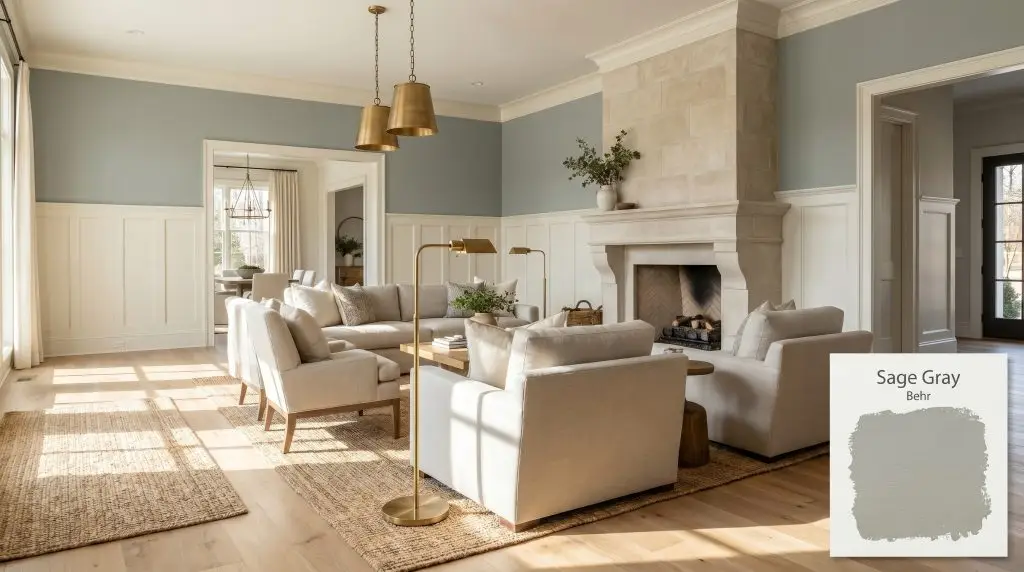
Behr Sage Gray (710F-4) is a medium-depth, cool-leaning gray-green with an LRV of 36. It acts as a soothing, earthy neutral that balances natural green with a strong gray base, preventing it from looking overly minty or bright on the walls.
Will Sage Gray clash with your room?
Paint Technical Profile
| Color ID / SKU | 710F-4 |
| HEX Code | #9EA49D |
| Light Reflectance (LRV) | 36 |
| Temperature | Cool to Neutral |
| Primary Undertone | Green |
| Hidden Undertones | Olive In Warm Light, Greige Or Blue-gray In Cool Light |
| Use | Interior, Exterior |
| Best Exposures | South-facing or East-facing |
| Best For | Kitchen Cabinets, Living Rooms, Bathrooms, Exteriors, Accent Walls |
Sage Gray Digital Design Concept Boards
Kitchen Cabinets
Will Sage Gray work with your specific lighting, floor, or furniture?
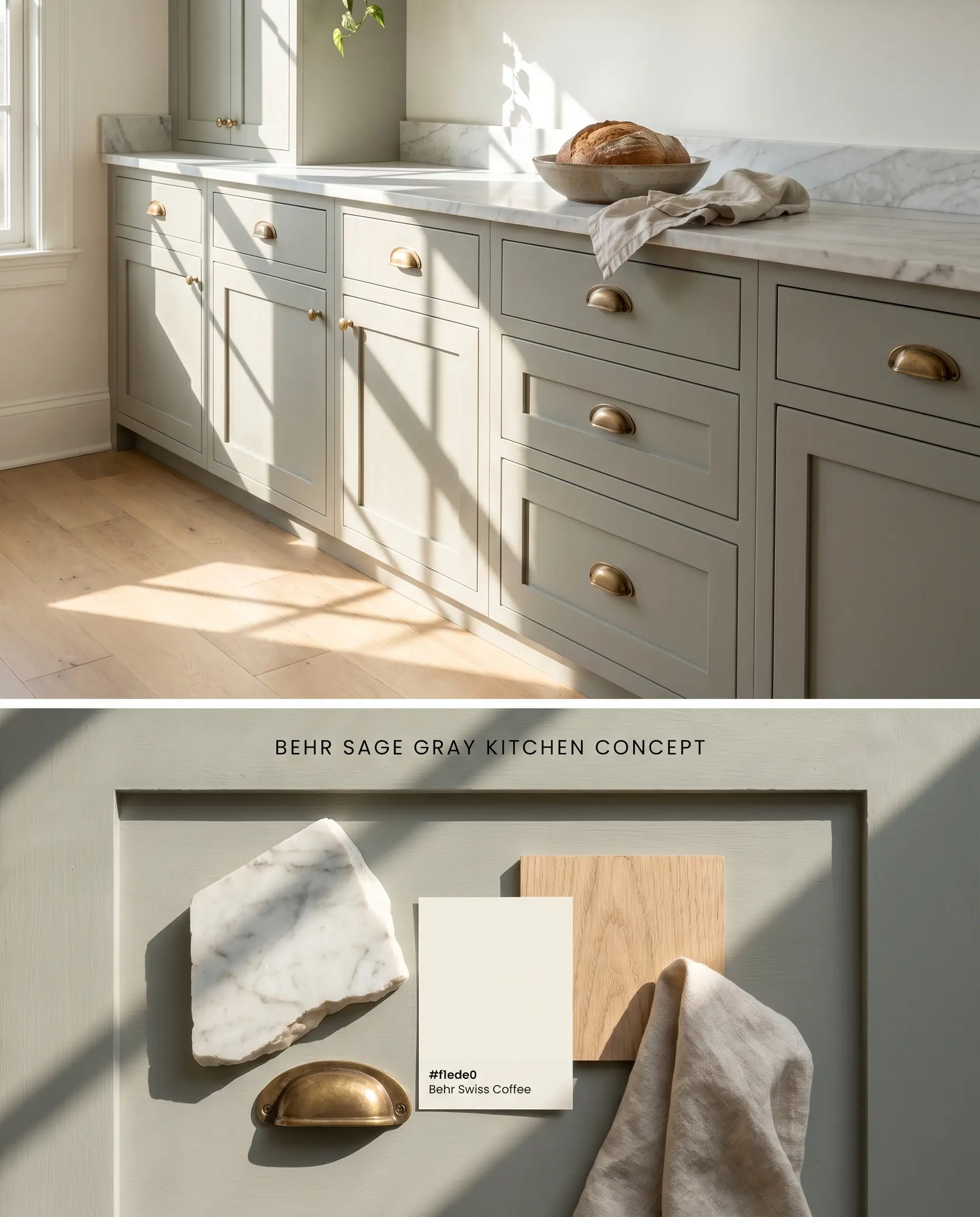
The mid-tone neutral depth of this gray-green blend anchors lower cabinetry without visually shrinking the floor plan. When paired with warm oak, the green undertones activate, counteracting the wood’s yellow cast and establishing a balanced, organic earthy hue. Its low LRV of 36 absorbs ambient light, requiring bright countertops and reflective backsplashes to maintain vertical visual lift.
Living Rooms
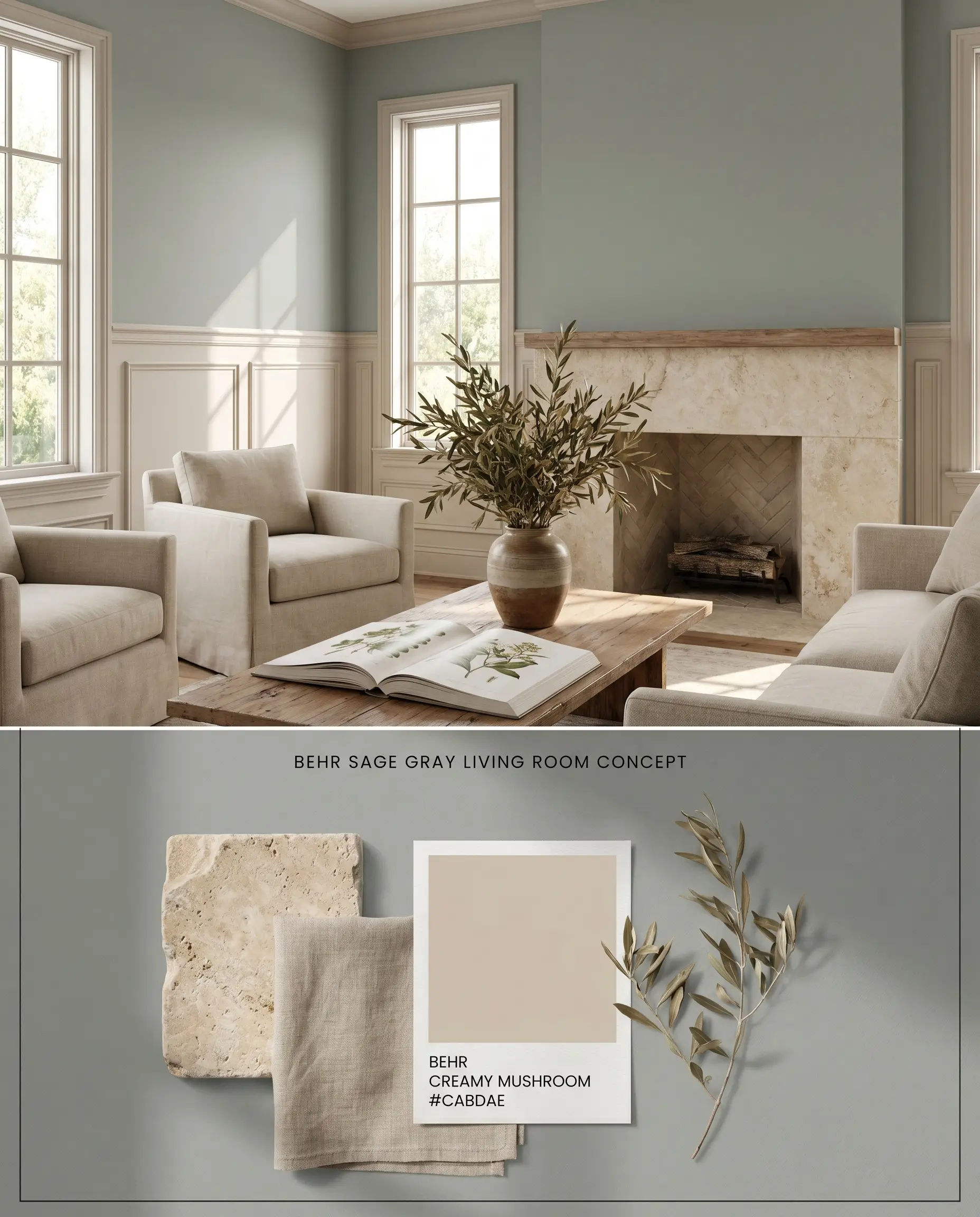
Applying this color structure across expansive drywall requires strategic natural light to prevent the room from feeling enclosed. The paint’s tendency to absorb light means it grounds airy, high-ceiling spaces, pulling the visual weight downward. Avoid fleshy pink accents like Behr Canyon Dusk S210-4, which create a discordant, muddy interaction against the green base.
Bathrooms
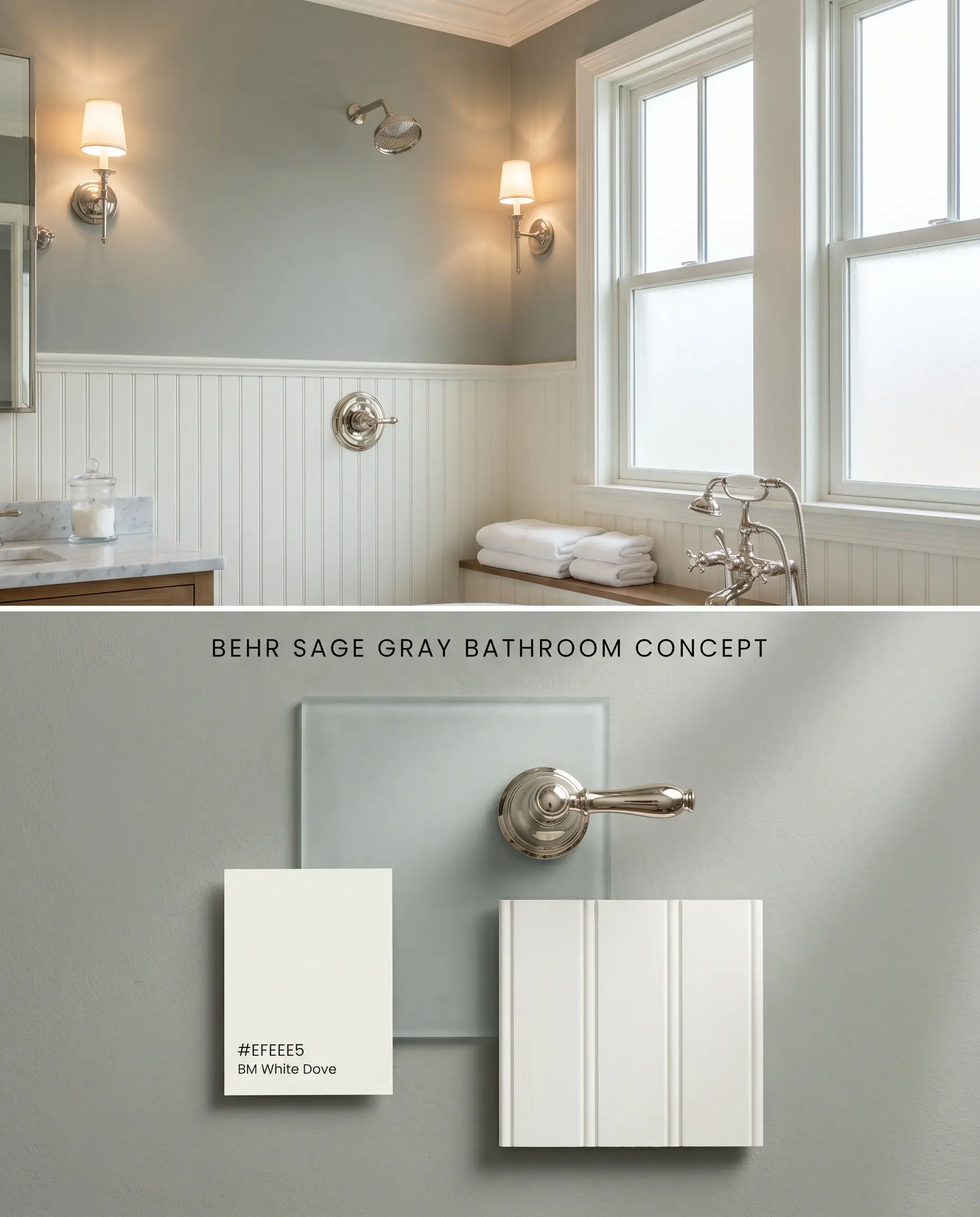
This shade requires careful placement in bathrooms, as deeply shadowed layouts will trap the color, forcing it to read as a flat, muddy gray. When used on a vanity or upper wall above crisp white beadboard, the ambient lighting shift from sconces highlights its sophisticated green undertones. The contrast against polished plumbing fixtures sharpens the overall architectural finish.
Exteriors
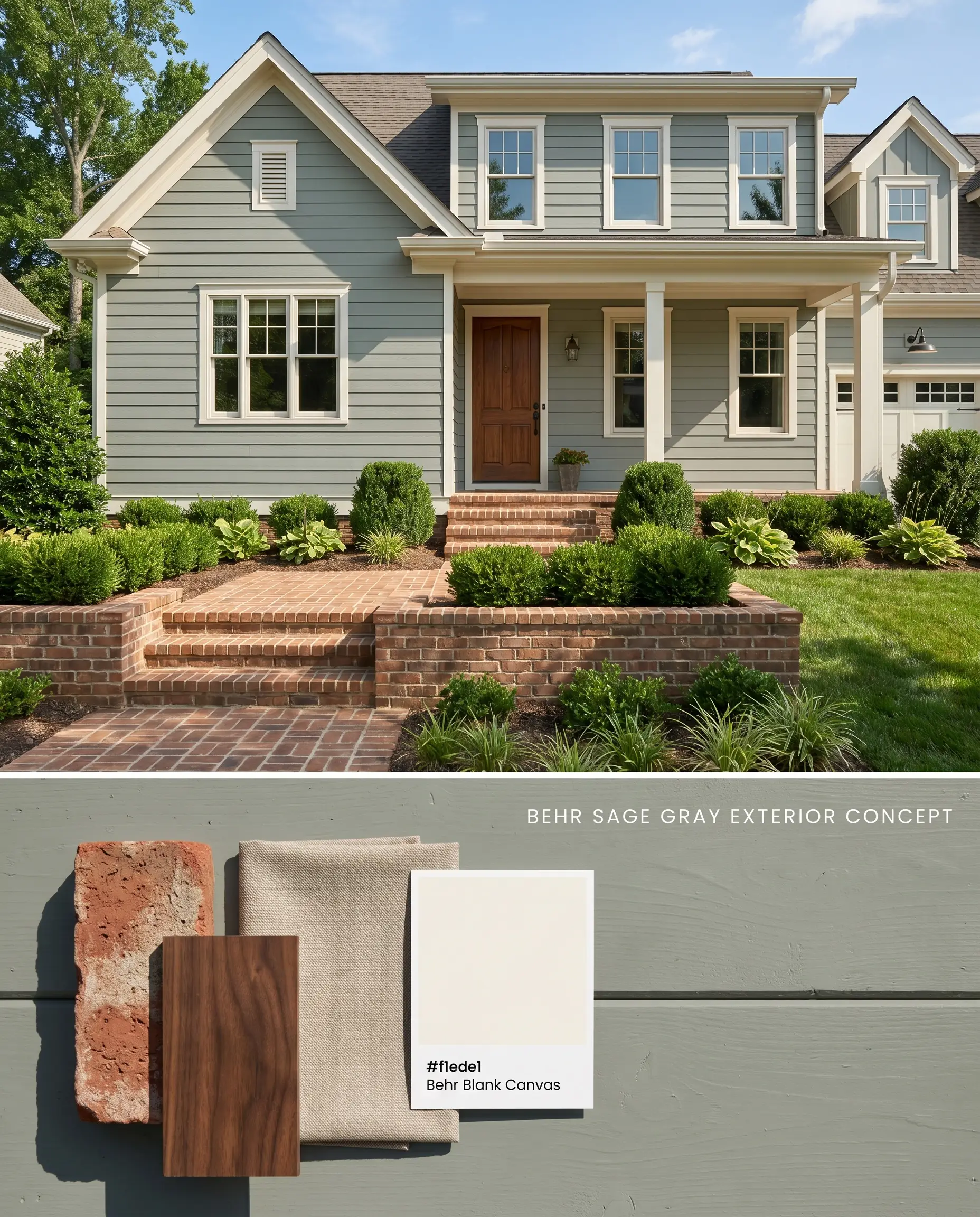
Will Sage Gray work with your specific lighting, floor, or furniture?
Direct sunlight washes out the subtleties of most mid-tones, but the LRV of 36 gives this paint enough depth to hold its chromatic profile against harsh UV exposure. It bridges the gap between natural landscaping and hardscaping, working exceptionally well alongside natural stone or warm brick facades. The green base neutralizes the red tones in brick, creating a unified exterior palette.
Accent Walls
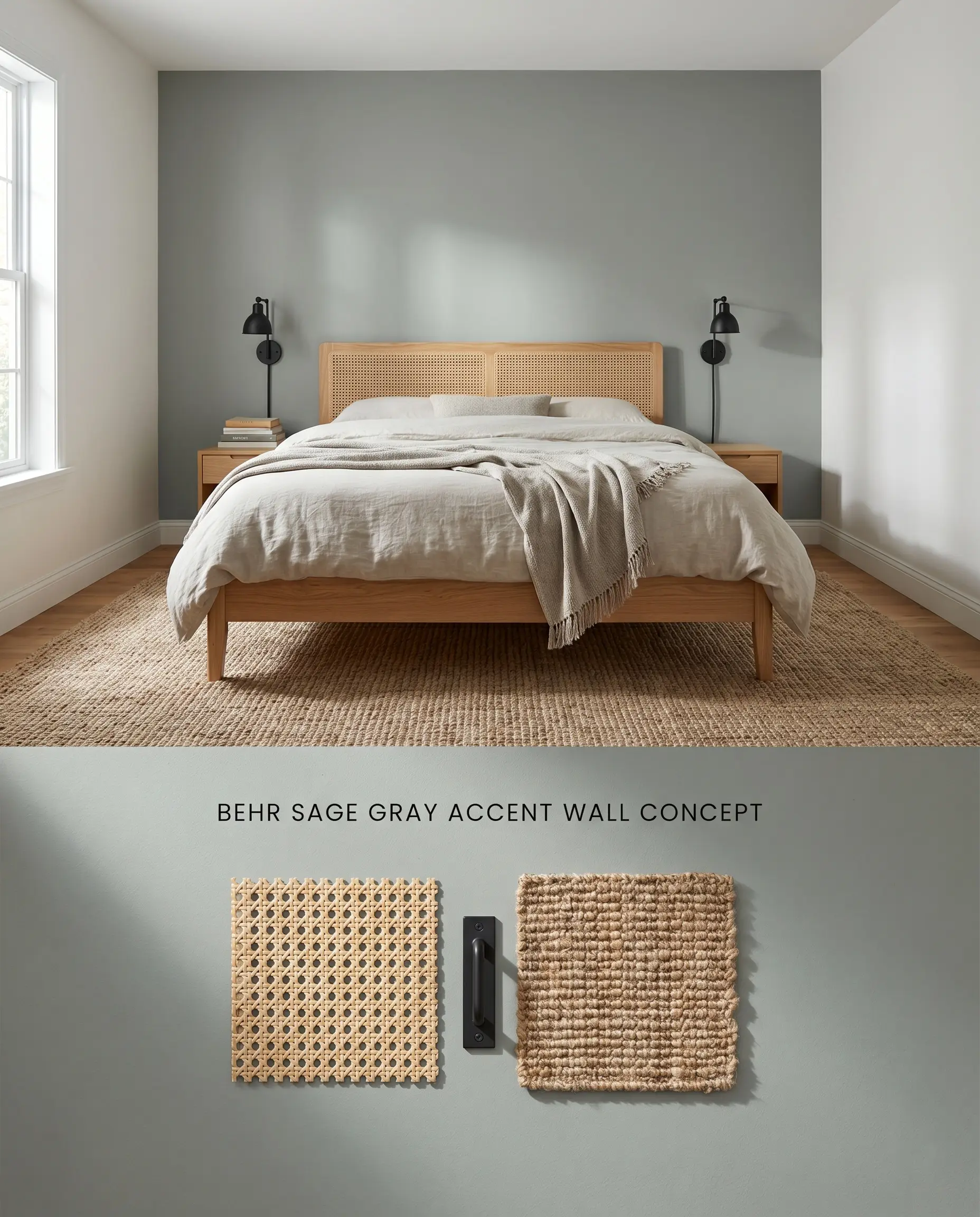
Confining this shade to a single focal wall prevents the room from feeling visually restricted while still delivering a concentrated punch of organic color. Applying it behind a bed frame or a built-in bookcase allows the shadows to play up the gray base, while adjacent light-reflective walls keep the floor plan open. This targeted application entirely bypasses the risk of shrinking a tight space.
Head-to-Head Comparisons: Analyzing Competing Gray-Green Blends
Behr Sage Gray 710F-4 vs. Sherwin Williams Evergreen Fog SW 9130
Sherwin Williams Evergreen Fog SW 9130 (LRV 30) absorbs significantly more light and leans further into a dominant green base than Behr Sage Gray 710F-4. In north-facing rooms, Behr’s formula flattens into a moody greige, whereas Sherwin Williams retains its distinct forest-floor identity despite the cooler light. Specify Evergreen Fog for high-contrast, shadowed studies, and reserve Sage Gray for transitional spaces where a softer, more ambiguous neutral is required.
Behr Sage Gray 710F-4 vs. Benjamin Moore Heather Gray 2139-40
Will Sage Gray work with your specific lighting, floor, or furniture?
Benjamin Moore Heather Gray 2139-40 carries a pronounced blue-gray undertone compared to the warm, slightly olive lean of Behr Sage Gray 710F-4 in southern light. When paired with warm oak or walnut flooring, Behr harmonizes by pulling out its earthy green tones, while Benjamin Moore clashes by emphasizing its cool, slate-like properties. Deploy Heather Gray alongside cool Carrara marble, and utilize Sage Gray when anchoring warm woods and creamy white architectural details.
Technical FAQs
Yes. In cool, north-facing light or deeply shadowed rooms, the color loses its green vibrancy and the gray base dominates, rendering it as a flat, muddy gray. It requires warm, southern light or robust artificial illumination to activate its green undertones.
No. The green base in this paint acts as a natural complement to the red and orange undertones found in warm oak and red brick. This interaction neutralizes harsh tones and establishes a grounded, organic aesthetic.
During peak daylight in south-facing rooms, the ambient lighting shift warms the paint, revealing a cozy olive green. As the sun sets or in shadowed areas, the hue absorbs the light, pushing the gray base forward and transforming it into a muted greige.
Room Compatibility & Clashes Diagnoses
Hackrea's reports evaluating the compatibility of Sage Gray in real rooms.No compatibility tests for Sage Gray yet.
Be the first to see how this color reacts to your space. Run a free architectural diagnostic now.
Paint Aesthetic & Practical Analysis
| Profile | Analysis | |
|---|---|---|
| Aesthetic | Behr Sage Gray is a highly versatile and sophisticated mid-tone. It brings a grounded, organic feel to a space without overwhelming it, though it requires ample natural light to prevent its gray base from reading muddy or flat. | |
| The Coverage Catch | Users report excellent coverage, often achieving true one-coat hide when tinted into Behr's premium Marquee or Dynasty lines, though DIYers note that rolling over it excessively while wet can cause the finish to peel or lift. | |
| The Lighting Shift | In warm, south-facing light, the color structure warms up to reveal a cozy, slightly olive green. In cool, north-facing light, the gray base dominates, pulling the hue closer to a moody greige or flat gray. | |
| The Clash Warning | It can clash heavily with stark, cool whites or fleshy pink tones (like Behr Canyon Dusk). It pairs best with creamy whites or natural wood tones like oak and walnut. | |
| The Bounce Effect | Because of its medium depth (LRV 36), it absorbs more light than it reflects. It won't bounce aggressively or turn neon, but it can make a room feel smaller if used on all four walls in a tight space. | |
| The Low Light Trap | In windowless rooms or areas with heavy shadows, the color can lose its green vibrancy entirely and read as a flat, muddy gray. | |
| The Touch Up | As a mid-tone with a complex gray-green base, touch-ups may flash slightly if the sheen or application method (brush vs. roller) differs from the original coat. |
Closest Cross-Brand Equivalents
The absolute closest scientific color matches for Sage Gray across top paint brands.