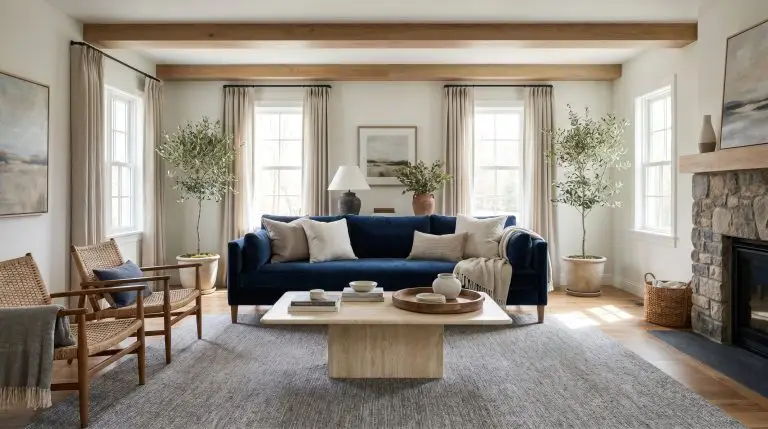
A navy blue sofa is a commanding focal point, but without the right visual counterweight, it can quickly turn a living room into a dark, heavy cave. Finding the right coffee tables to match a navy blue sofa comes down to understanding how light interacts with your specific upholstery. A blocky navy piece absorbs ambient light; your table must strategically reflect or ground it.
Mastering the spatial relationship between your dark seating and your center table relies entirely on balancing light reflectance value with precise textural contrast.
The Core Rule: Matching Table Material to Sofa Upholstery
Navy upholstery dictates the physical properties your coffee table must possess. We evaluate this through Light Reflectance Value (LRV)—the percentage of light a material bounces back into a room. Matte fabrics like performance linen or cotton bouclé absorb light, requiring earthy, grounded tables to maintain an organic, tactile aesthetic. Conversely, navy velvet or leather inherently possesses a sheen, demanding high-contrast, reflective table surfaces to prevent the arrangement from feeling bottom-heavy.
Reflective Table Materials (Glass, Polished Brass, Marble)
- Pros: Maximizes ambient light, creates essential negative space, and highlights the rich, cool undertones of dark blue.
- Cons: Requires frequent maintenance to remove fingerprints; can feel visually cold if not layered with warm textiles.
- Best For: Navy velvet sofas, low-light rooms, and maximalist or transitional aesthetics.
Matte Table Materials (Honed Travertine, Reclaimed Wood, Plaster)
- Pros: Introduces organic warmth, hides dust and daily wear, and beautifully grounds the high visual weight of the sofa.
- Cons: Can absorb too much light if the surrounding floors and area rugs are also dark.
- Best For: Navy linen or cotton sofas, organic modern interiors, and architectural spaces with abundant natural light.
Warm Woods and Earthy Organics to Soften Navy
Wood is the most common pairing for dark blue, but it carries the highest risk of clashing. On the color wheel, blue and orange are complementary, meaning warm brown woods naturally flatter a navy anchor piece, provided you strictly avoid reddish cherry or mahogany tones that skew dated next to cool blues.
Light Rift-Sawn Oak for Coastal Brightness
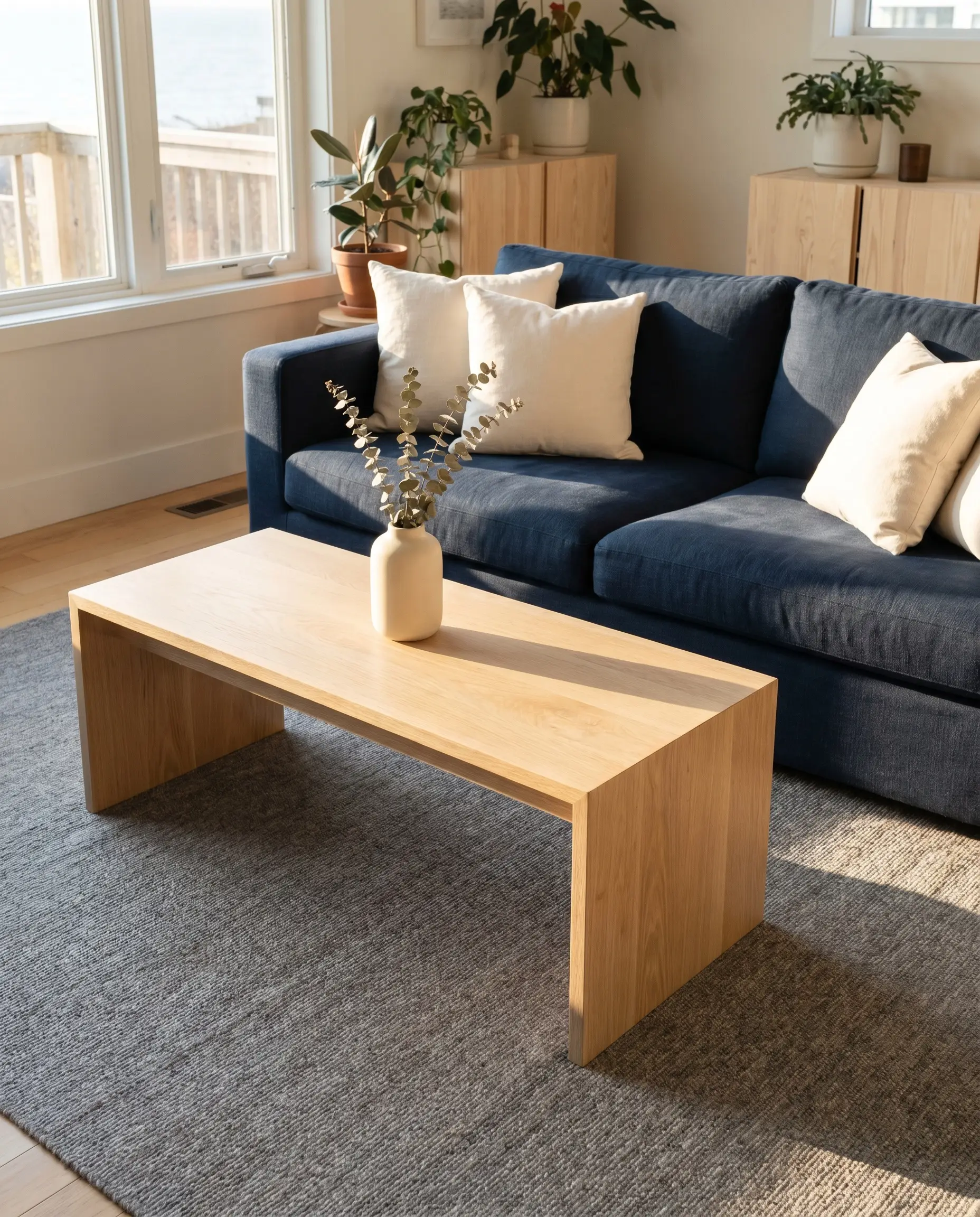
The linear, tight grain of rift-sawn white oak introduces high-contrast brightness without visually competing with the solid block of navy. This pairing relies on extreme tonal separation, allowing the pale wood to float visually above the floor and lighten the entire spatial flow.
- Best For: Coastal or Scandinavian interiors featuring navy linen.
- Rug Pairing: A flatweave heathered gray or off-white wool rug to bridge the high contrast.
- Finish Details: Specify a clear, matte water-based polyurethane to prevent the wood from yellowing over time.
Rich Walnut with Fluted Edges for Mid-Century Warmth
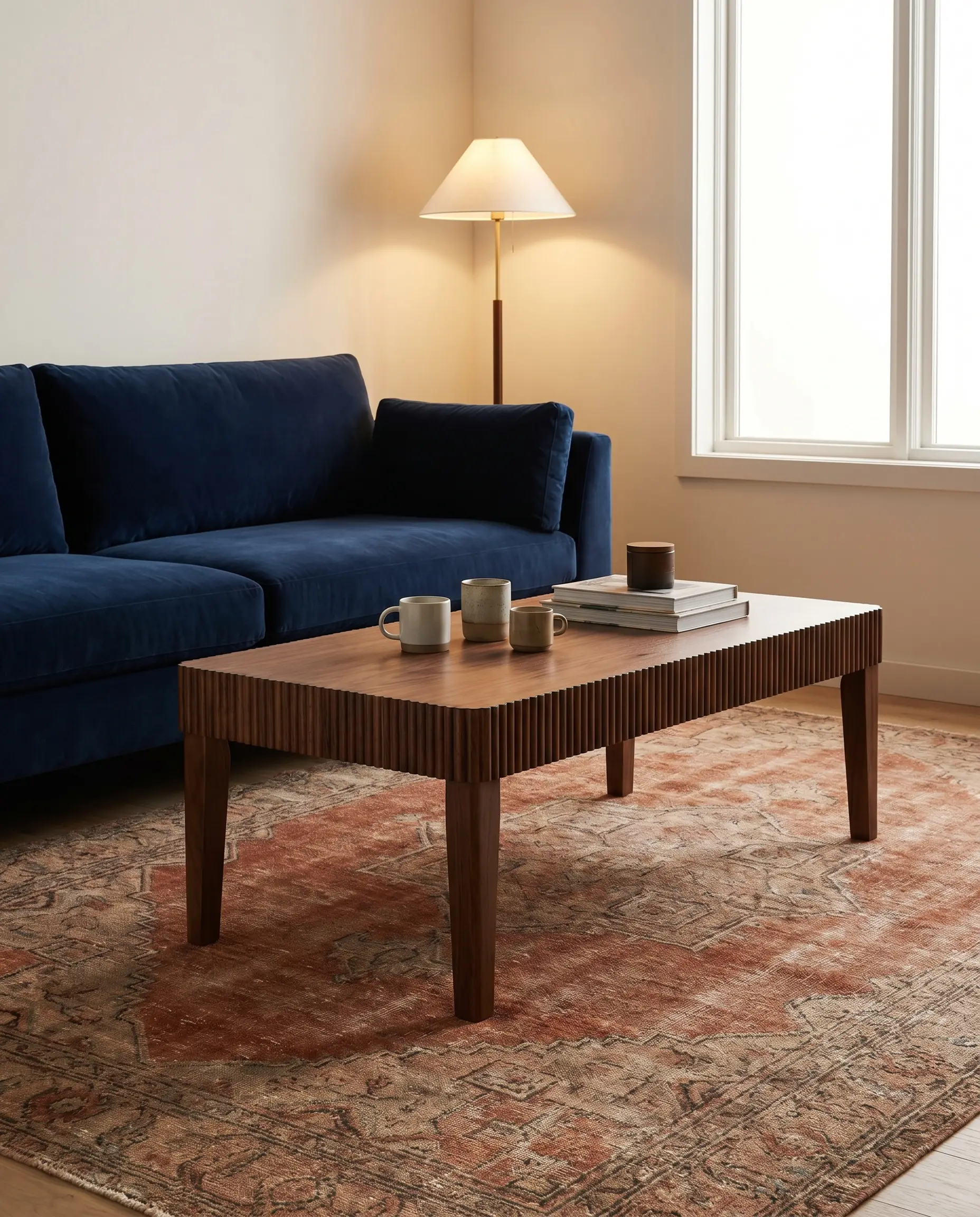
Dark blue and warm brown is a classic architectural pairing that thrives on subtle, sophisticated contrast. Fluted detailing on a dark walnut base introduces vertical shadow lines, breaking up the massive horizontal bulk of the sofa.
- Best For: Mid-Century homes with navy velvet or leather.
- Rug Pairing: A faded rust or muted terracotta Persian rug to highlight the wood’s natural warmth.
- Styling Pro-Tip: Keep surface styling minimal; let the rich, tactile grain of the walnut act as the primary texture.
Burled Wood Blocks for Maximalist Contrast
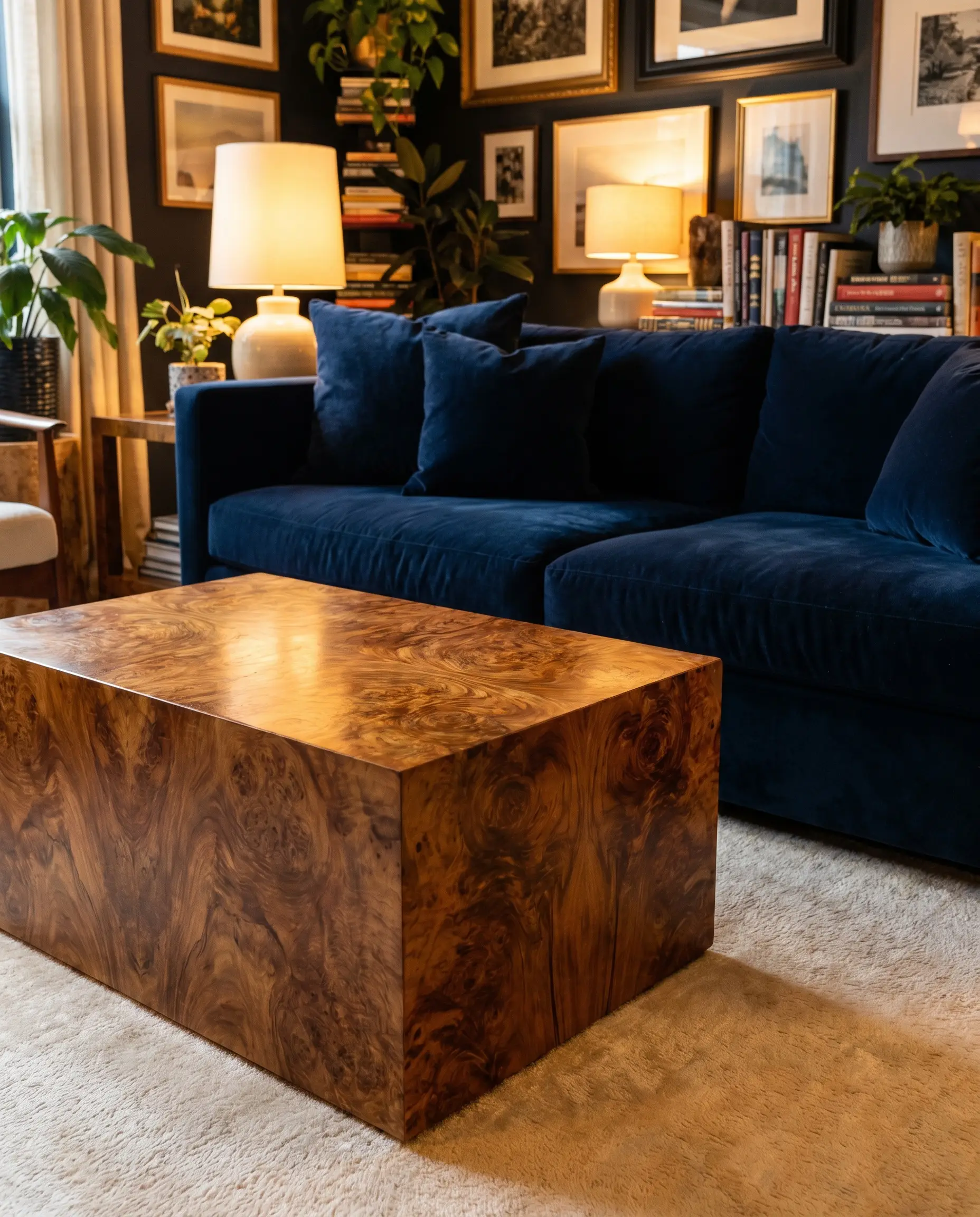
Heavily patterned burled wood acts as a bespoke, high-end focal point that stands up to the commanding presence of a solid navy piece. The chaotic, swirling grain profile prevents a dark, solid-colored sofa from feeling visually flat.
- Best For: Maximalist or eclectic spaces looking for a high-end statement.
- Rug Pairing: A solid cream or pale beige silk-blend rug to let the burl pattern shine.
- Visual Weight Check: Ensure the block table leaves at least 16 inches of clearance to avoid a cramped spatial flow.
Burled wood is incredibly visually active. Keep your sofa throw pillows solid and tonal so the table remains the unquestioned star of the arrangement.
Lead Stylist’s Note
Ebonized Ash for Moody, Monochromatic Layering
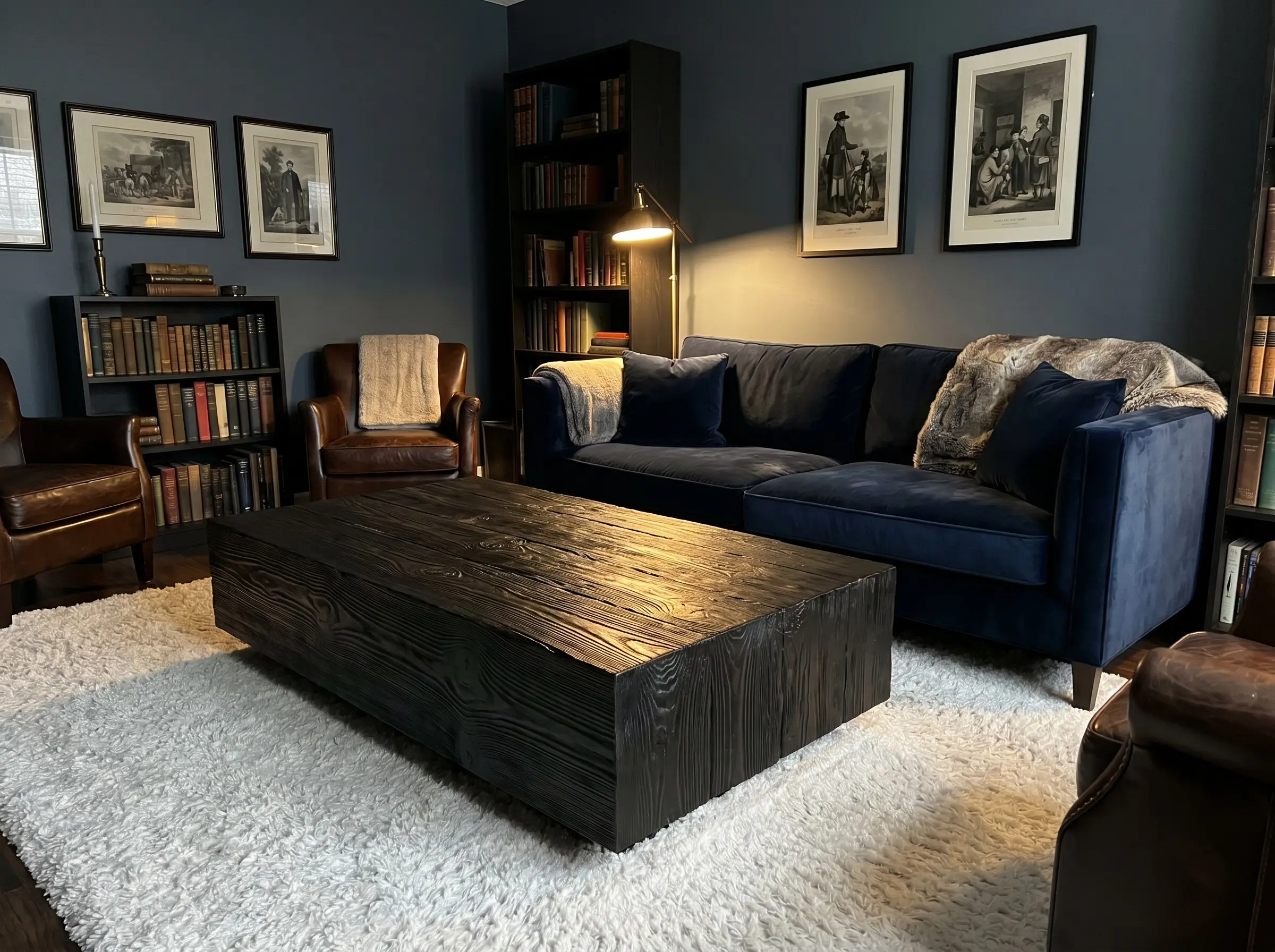
Pairing a black, ebonized ash table with dark navy is a masterclass in tonal, moody layering. The deeply raised, visible ash grain provides just enough tactile separation so the black table doesn’t disappear completely into the dark blue upholstery.
- Best For: Dark academia or highly saturated, moody living rooms.
- Rug Pairing: A stark white or light silver high-pile rug is absolutely mandatory here to prevent a visual black hole.
- Paint Match: Sherwin-Williams Cyberspace for surrounding accent walls to carry the dark, tonal aesthetic.
Reclaimed Teak for Organic Grounding
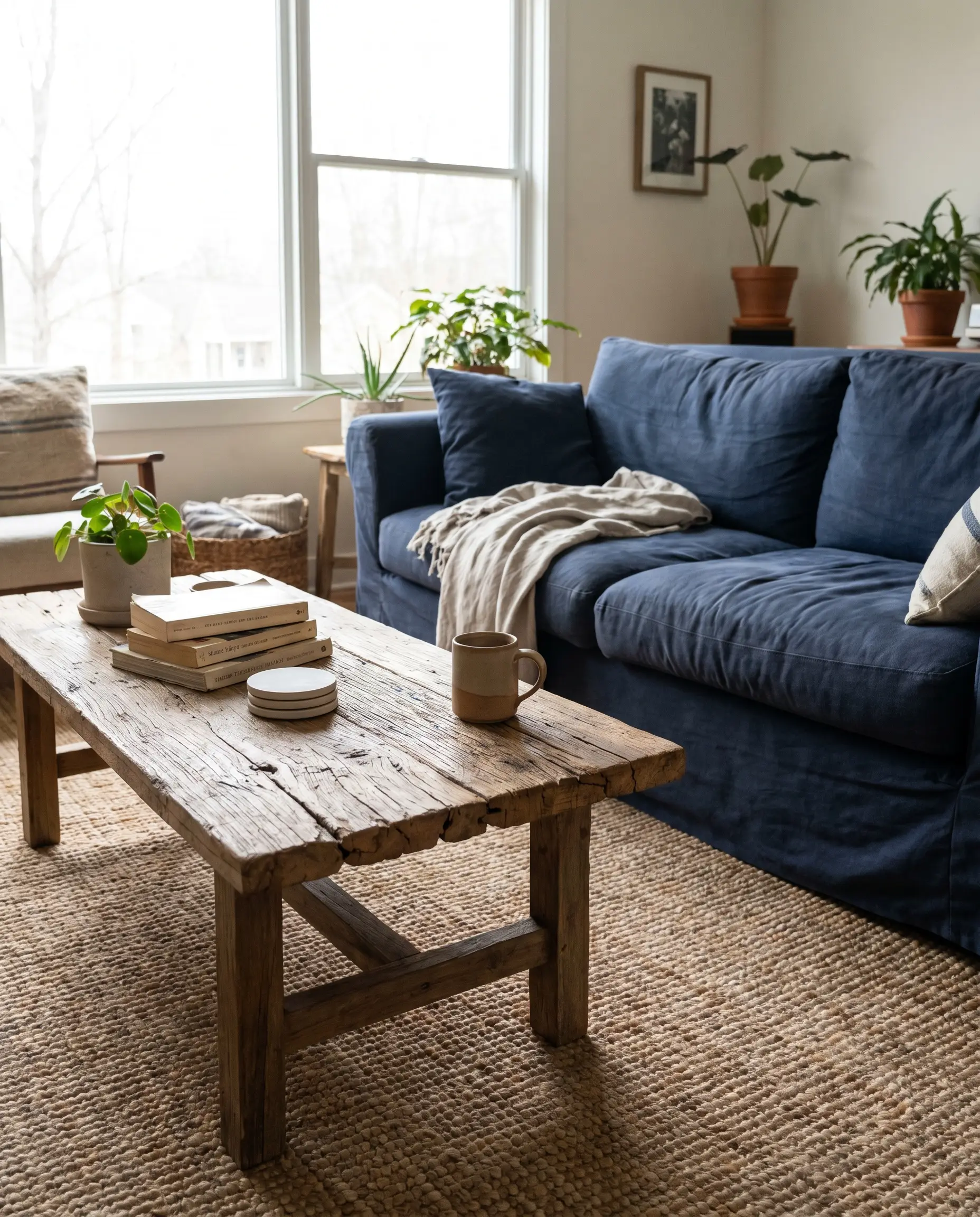
The highly tactile, imperfect surface of reclaimed teak grounds a casual navy sofa, stripping away any lingering formality. This combination thrives on raw, unpolished textures that invite a relaxed, lived-in atmosphere.
- Best For: Organic modern spaces utilizing slipcovered navy cotton.
- Rug Pairing: A chunky, natural jute or sisal rug to amplify the earthy texture.
- Maintenance Reality: Reclaimed wood is porous; use matte coasters to protect the unfinished surface from water rings.
Reflective Metals and Glass to Bounce Light
When dealing with a dark, light-absorbing sofa, reflective materials physically solve the “dark room” problem by bouncing ambient light across the space. Metal and glass tables create essential negative space, allowing the eye to travel through the furniture rather than stopping abruptly at a heavy wooden block.
Unlacquered Brass for Warm Vintage Patina
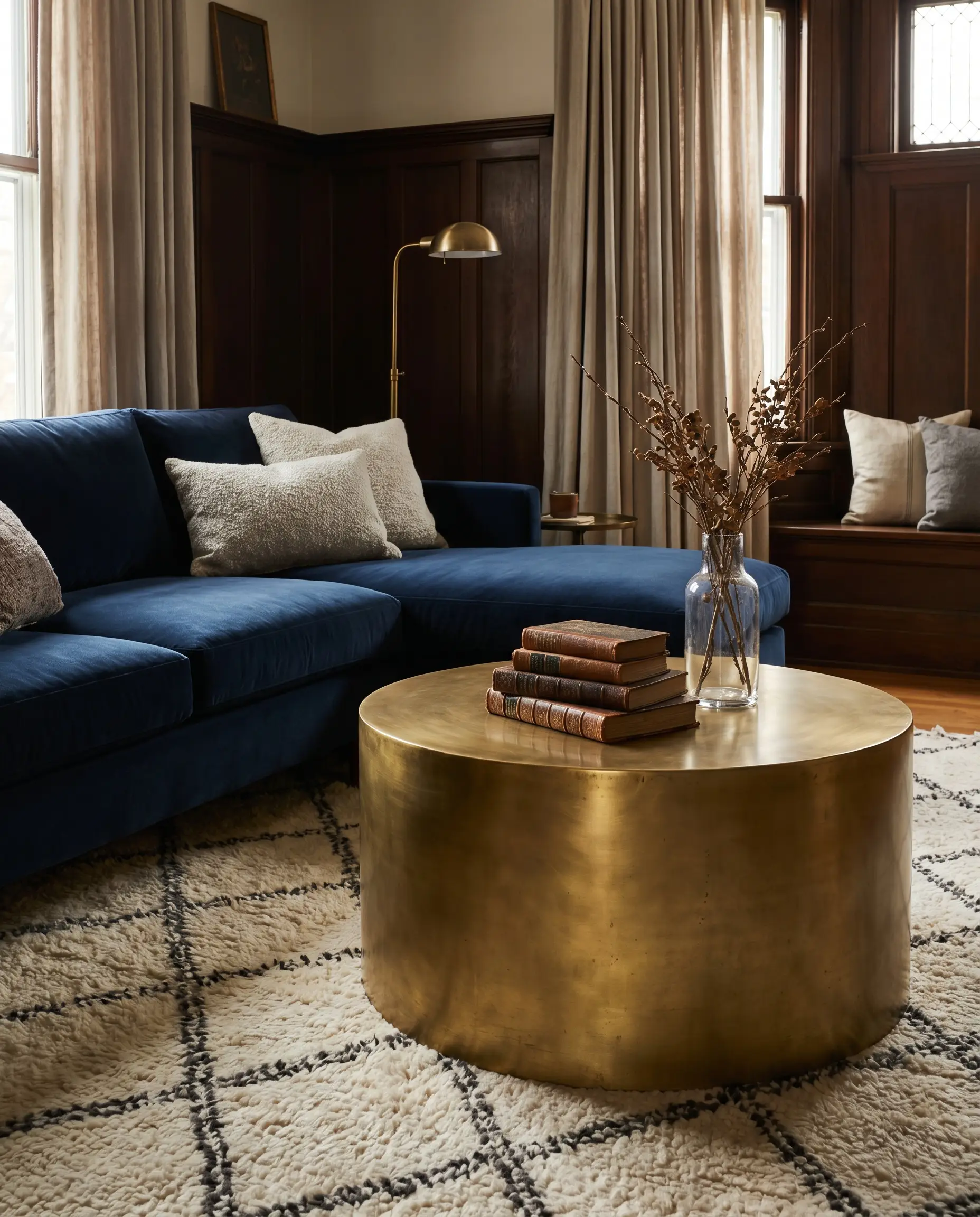
The luxurious clash of warm, glowing gold tones against deep, cool navy creates an instant, undeniable sophistication. Unlacquered brass develops a living patina over time, adding a dynamic, evolving texture to the center of the room.
- Best For: Transitional or historic homes with heavy navy velvet sectionals.
- Structural Profile: Look for heavy brass drum bases or thick cast-brass legs to balance the sofa’s bulk.
- Visual Payoff: The high LRV of the brass acts like a secondary light source in the room.
Polished Chrome and Smoked Glass for 1970s Revival
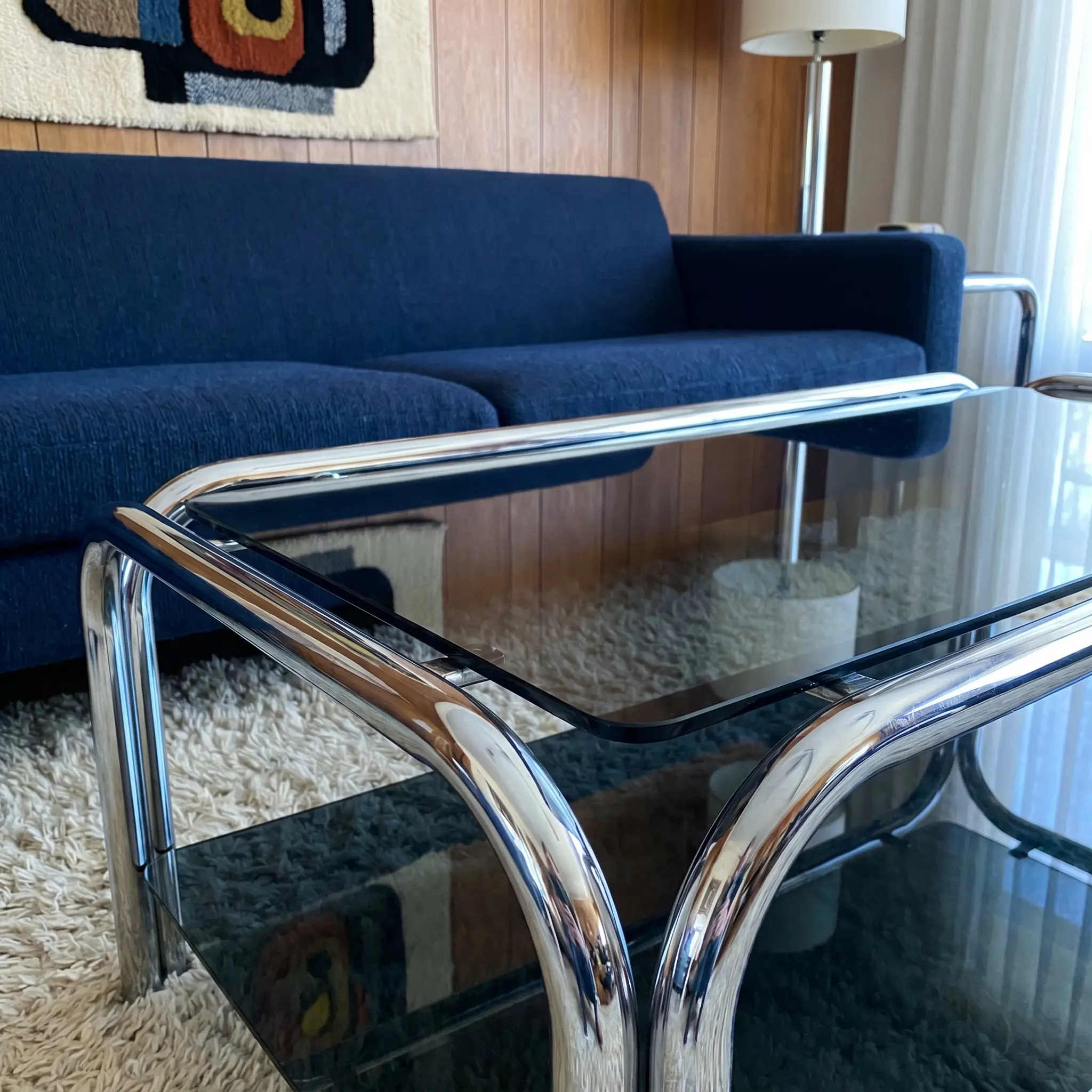
This combination leans into a slightly colder, highly reflective aesthetic that cuts right through the visual weight of dark blue. The smoked glass subtly echoes the dark tones of the room while the chrome framework provides sharp, glittering boundaries.
- Best For: Trendy, retro-modern spaces with low-slung navy seating.
- Structural Profile: Tubular chrome frames with inset tinted glass.
- Maintenance Reality: Requires daily dusting and glass cleaner, but the striking 1970s edge justifies the upkeep.
Ultra-Clear Tempered Glass on an Acrylic Base
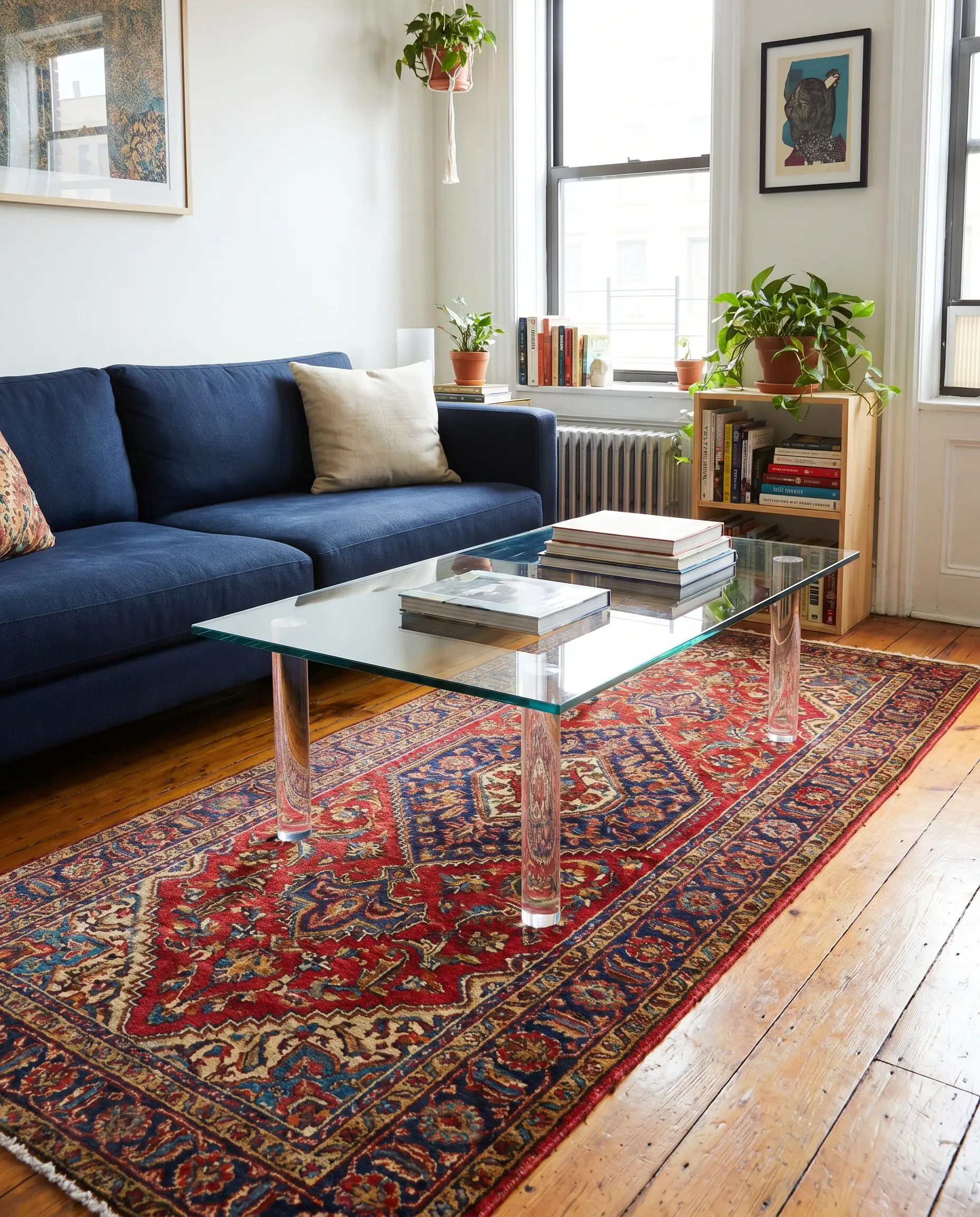
In tight spaces where a heavy sofa threatens to overpower the room, a completely transparent table effectively disappears. This invisible footprint ensures the navy upholstery remains the sole anchor without crowding the spatial flow.
- Best For: Small apartments or narrow living rooms where floor space is premium.
- Structural Profile: 3/4-inch thick tempered glass atop clear acrylic pillars.
- Rug Pairing: A highly patterned vintage runner; the clear table acts as a literal window to the floor beneath it.
Matte Black Iron with Thin Profiles for Industrial Edge
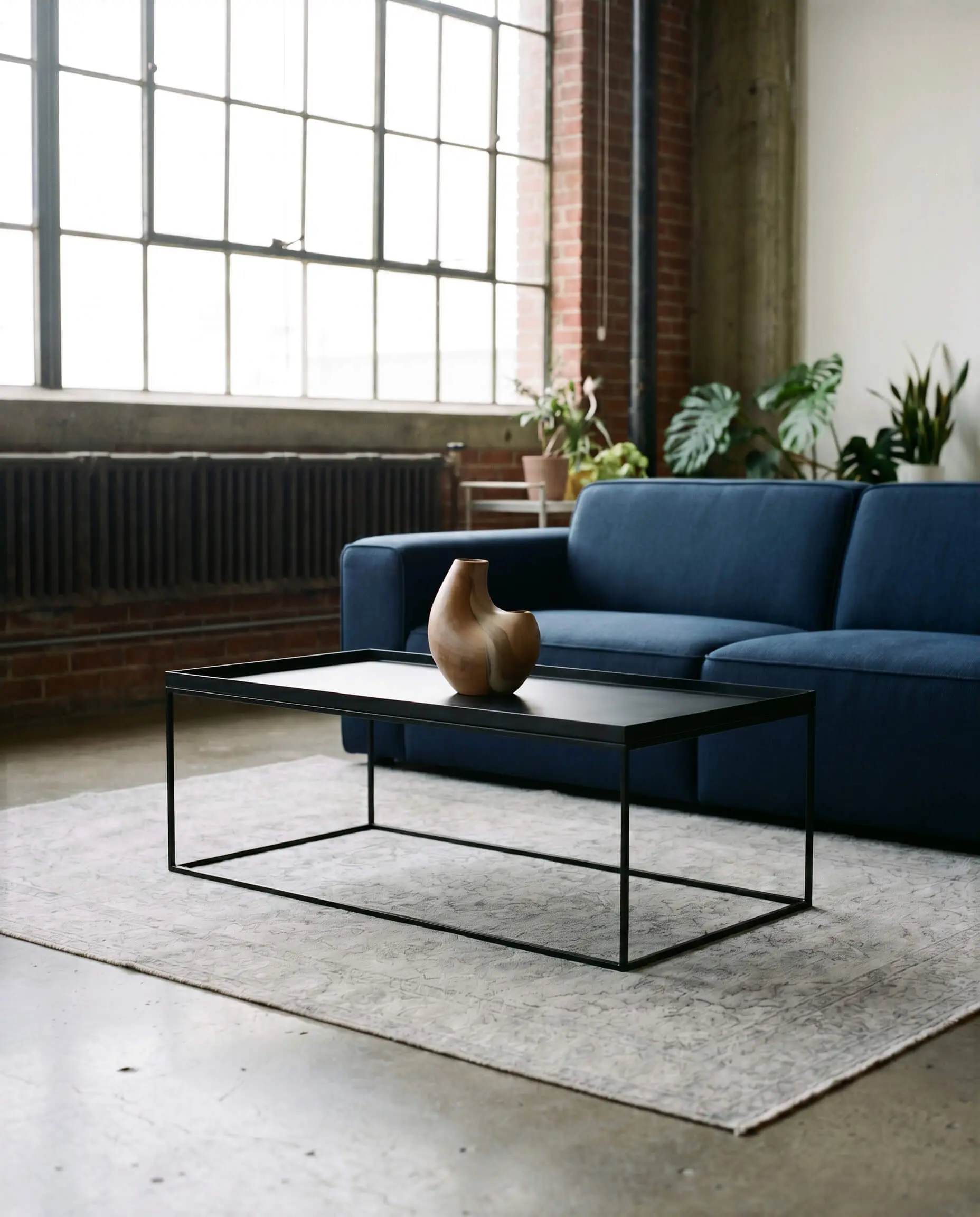
Thin, wiry iron frames inject an industrial sharpness without adding an ounce of unwanted bulk to the room. The matte black finish reads as a crisp silhouette against the softer, expansive blue fabric.
- Best For: Industrial lofts or minimalist spaces with structured navy sofas.
- Structural Profile: Ultra-thin gauge metal legs supporting a slim tray top.
- Styling Pro-Tip: Soften the severe iron lines with an organic, curved ceramic vase on top.
Hammered Copper Drums for Tactile Warmth
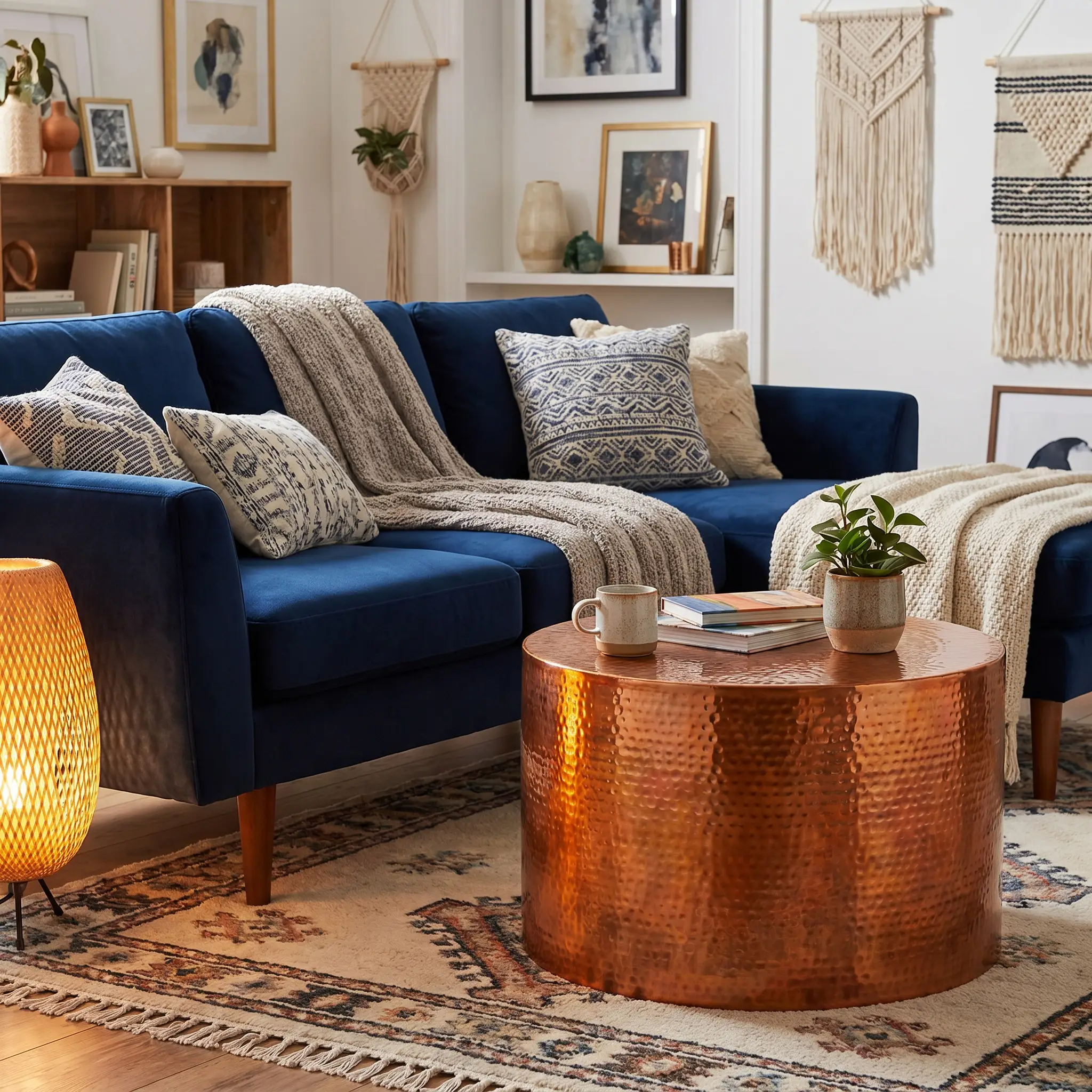
Copper provides a unique, fiery metallic clash that instantly warms up the naturally cool undertones of blue. The hammered texture diffuses light softly rather than reflecting it harshly, creating a cozy, glowing focal point.
- Best For: Eclectic or bohemian spaces looking to add unexpected warmth.
- Structural Profile: A solid, enclosed cylindrical drum.
- Visual Weight: High; the drum shape is heavy, so pair it with a sofa that has exposed, lifted legs.
Copper is highly reactive. If you prefer a pristine finish over a rustic patina, ensure the drum is sealed with a clear lacquer before placing it in a high-traffic zone.
Material Stylist Insight
Antique Mirrored Surfaces for Subtle Glamour
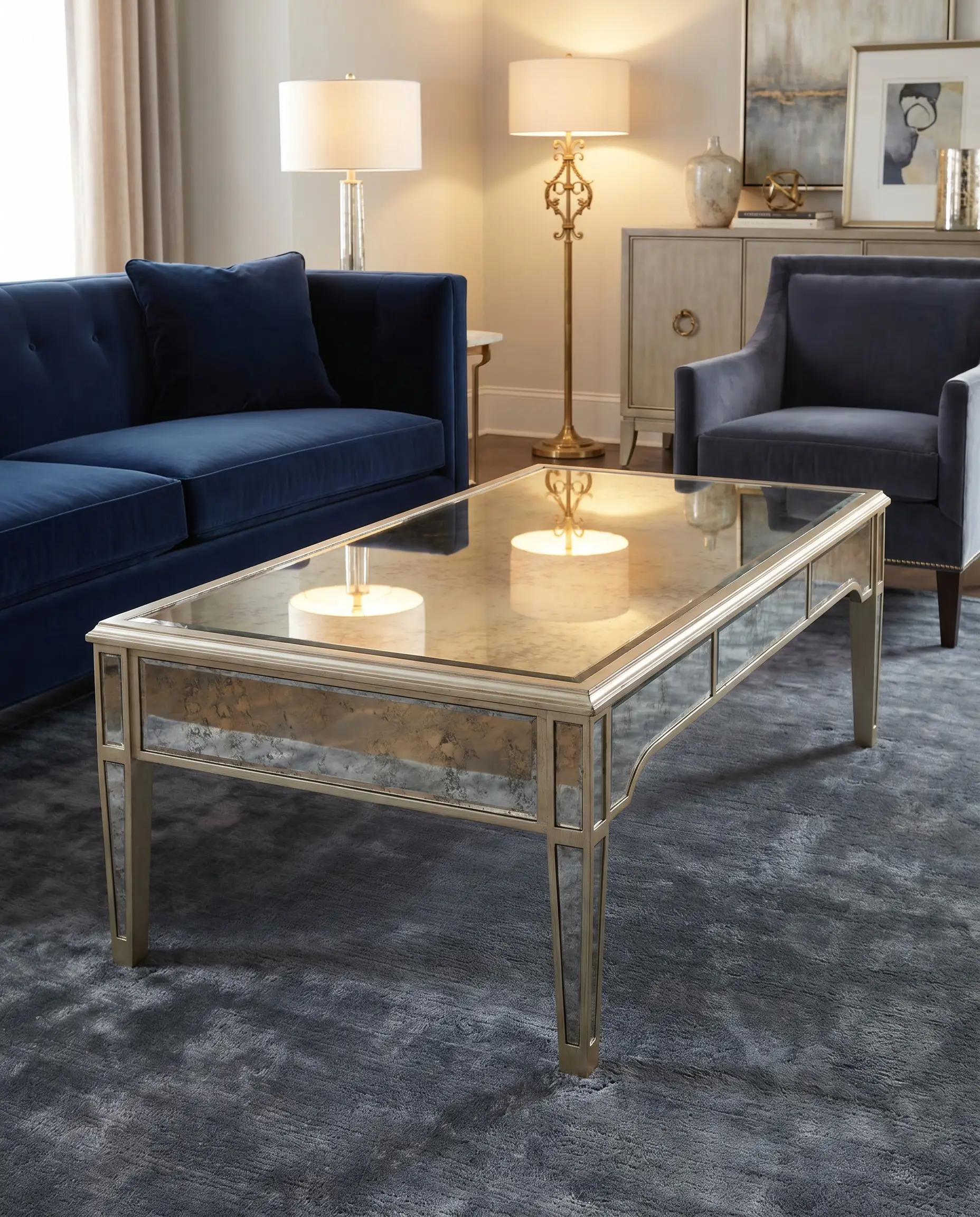
Antique mirrors offer the light-bouncing benefits of standard glass but diffuse the reflections through a beautifully mottled, aged finish. This softens the glare while adding a layer of muted, transitional glamour to a tailored navy piece.
- Best For: Glam or Hollywood Regency aesthetics.
- Structural Profile: Mirrored panels set into a champagne or silver-leafed wood frame.
- Rug Pairing: A plush, deep-pile viscose rug in charcoal or slate gray.
Stone and Heavy Textures for Architectural Anchor Points
Solid, blocky stone tables are magnificent architectural statements, but they require a rigorous understanding of scale and proportion. To prevent a heavy stone table from dragging a heavy navy sofa down into a bottom-heavy layout, you must carefully manage the color contrast and structural heights.
Honed Cream Travertine for Earthy Neutrality
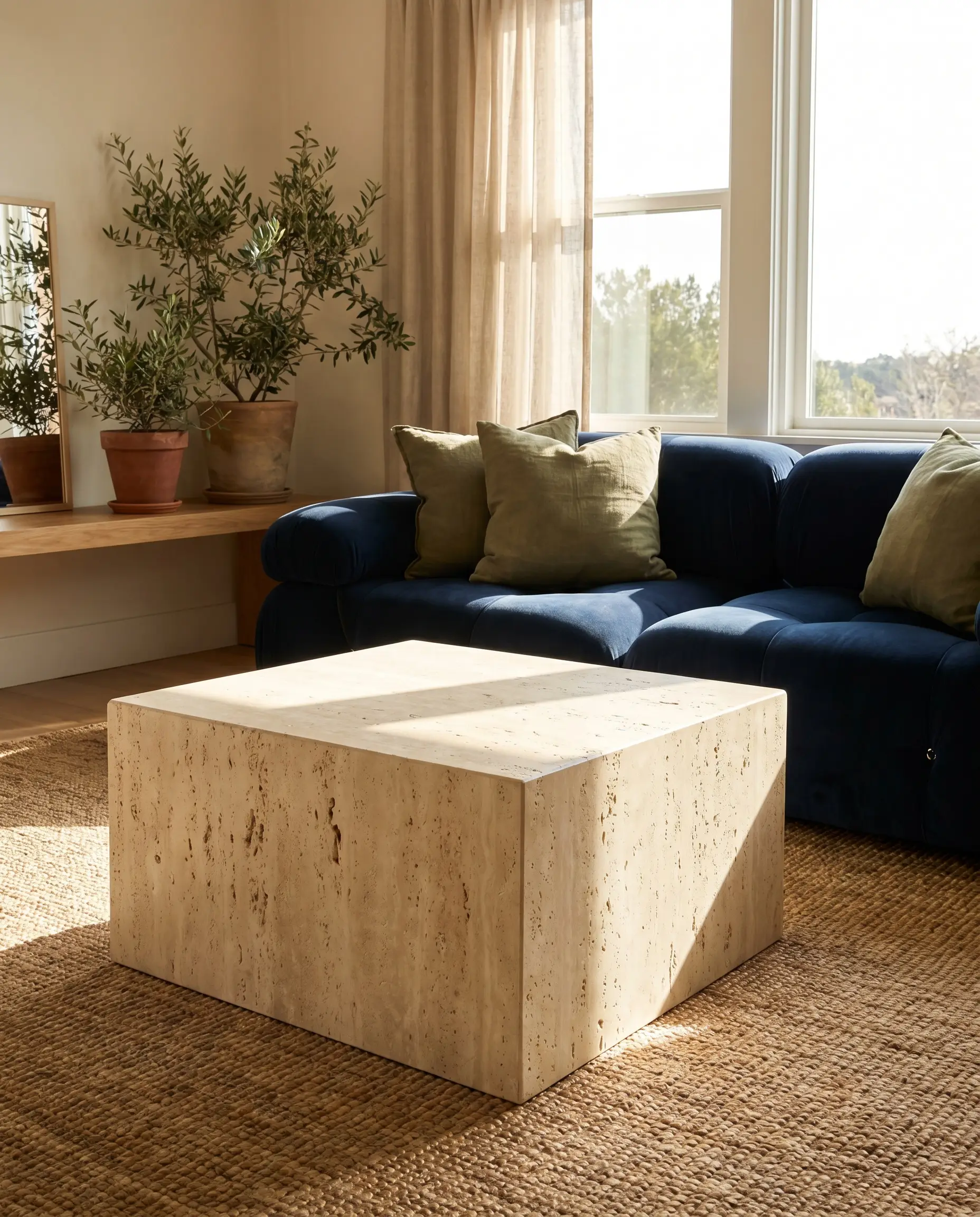
The porous, pitted surface of honed travertine provides a breathtaking organic contrast to the smooth, flawless finish of navy fabrics. Cream and navy is a failsafe color palette, allowing the light stone to pop vividly against the dark backdrop.
- Best For: Organic modern or Mediterranean-inspired interiors.
- Color Palette Pairing: Cream stone, deep navy, and soft olive green accents.
- Tactile Sensation: The matte, chalky finish absorbs light, making it ideal for sunny, south-facing rooms.
Heavily Veined Calacatta Viola Marble
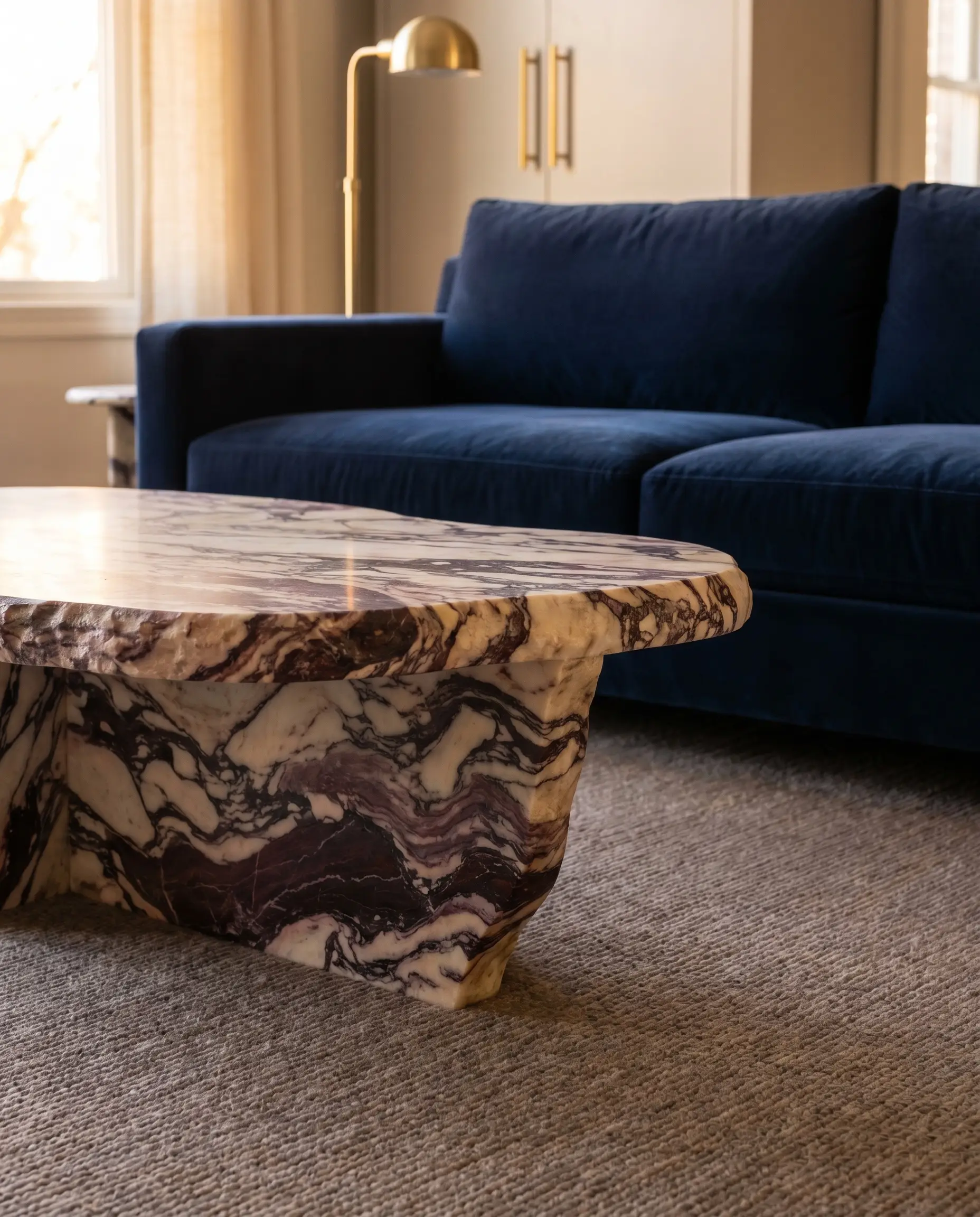
The dramatic burgundy and deep purple veining of Calacatta Viola serves as a highly sophisticated, analogous color complement to dark blue. This stone turns the center of the room into a commanding piece of natural art.
- Best For: Accessible luxury spaces demanding a high-drama centerpiece.
- Color Palette Pairing: Burgundy veining, navy upholstery, and brushed gold hardware.
- Maintenance Reality: Marble is porous; seal it biannually to protect against red wine or coffee spills.
Microcement or Faux Concrete for Sculptural Brutalism
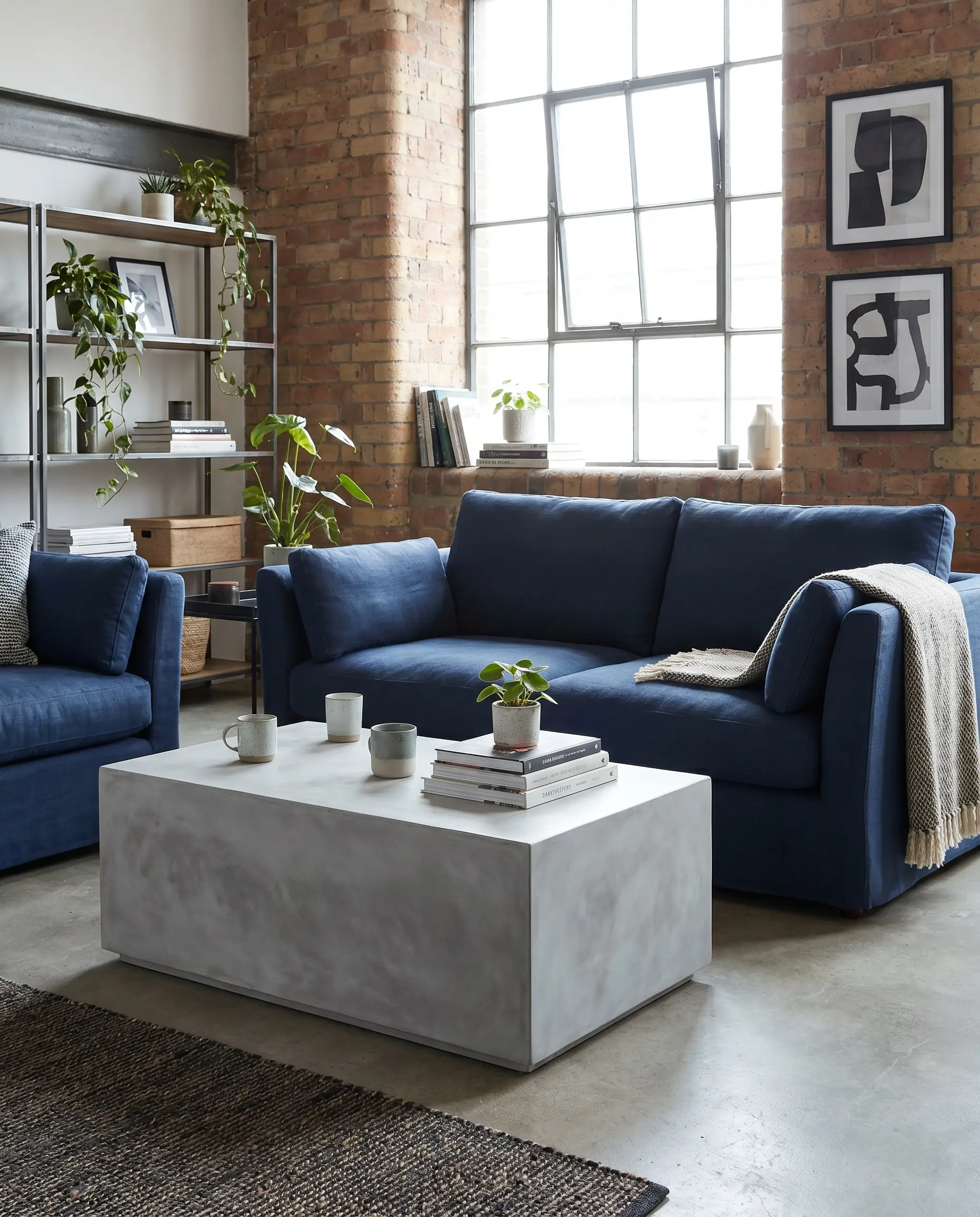
A microcement finish introduces a raw, industrial brutalism that pairs exceptionally well with the relaxed tailoring of a linen sofa. Ash gray and navy creates a cool, urban palette that feels incredibly intentional and modern.
- Best For: Budget-friendly DIY enthusiasts or minimalist urban lofts.
- Color Palette Pairing: Cool concrete gray, deep navy, and stark black accents.
- Tactile Sensation: A smooth, slightly cool-to-the-touch surface with subtle, cloudy color variations.
Fluted Plaster Pedestals
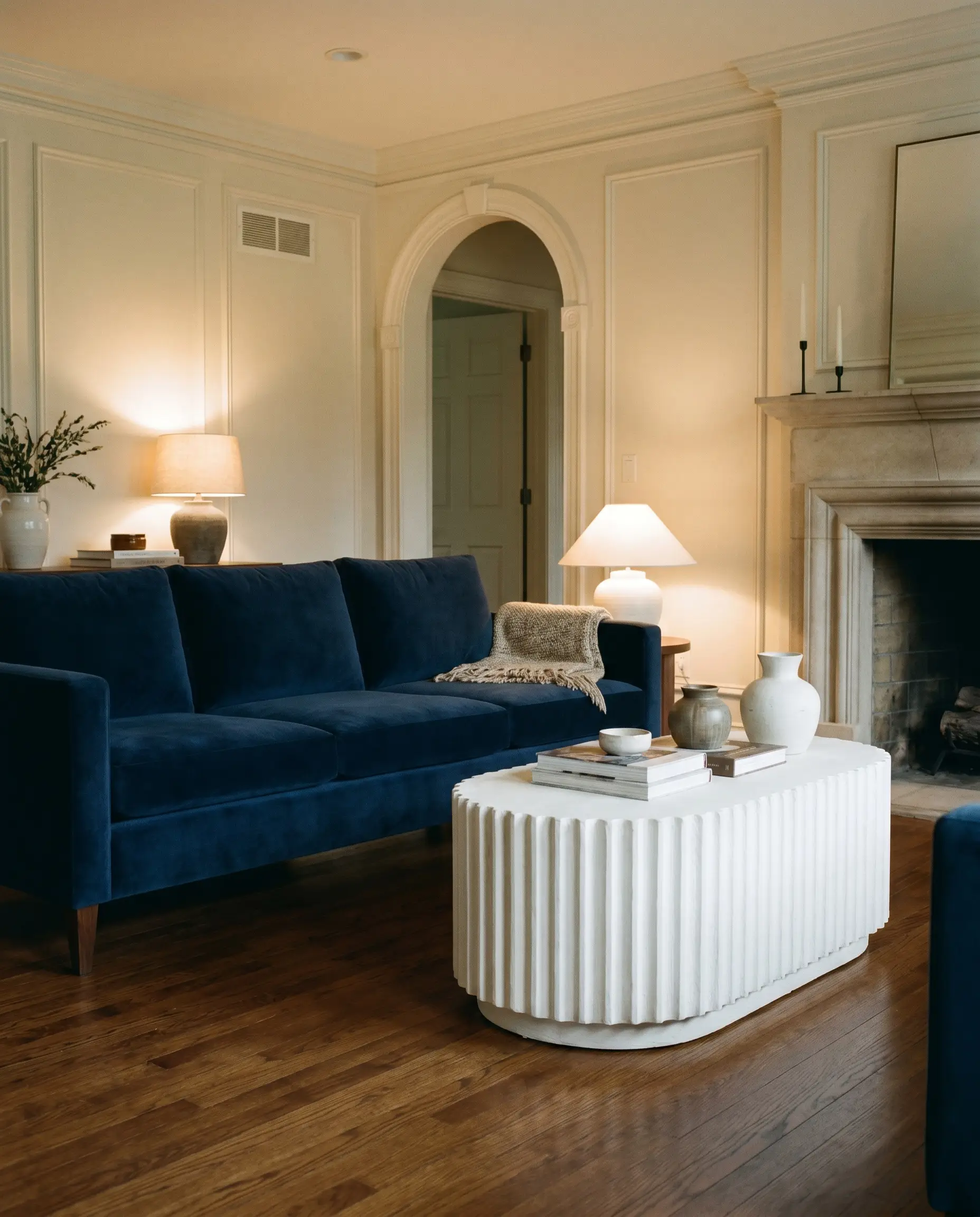
Fluted plaster tables use deep vertical ridges to draw the eye upward, beautifully contrasting the long, horizontal mass of a standard three-seater sofa. Chalk white and navy provides a crisp, tailored contrast that feels both historic and contemporary.
- Best For: Transitional spaces blending classical architecture with modern seating.
- Color Palette Pairing: Chalk white plaster, navy velvet, and warm walnut flooring.
- Visual Weight: The pedestal base creates negative space around the floor, lightening the overall footprint.
Dark Soapstone for Low-Contrast Sophistication
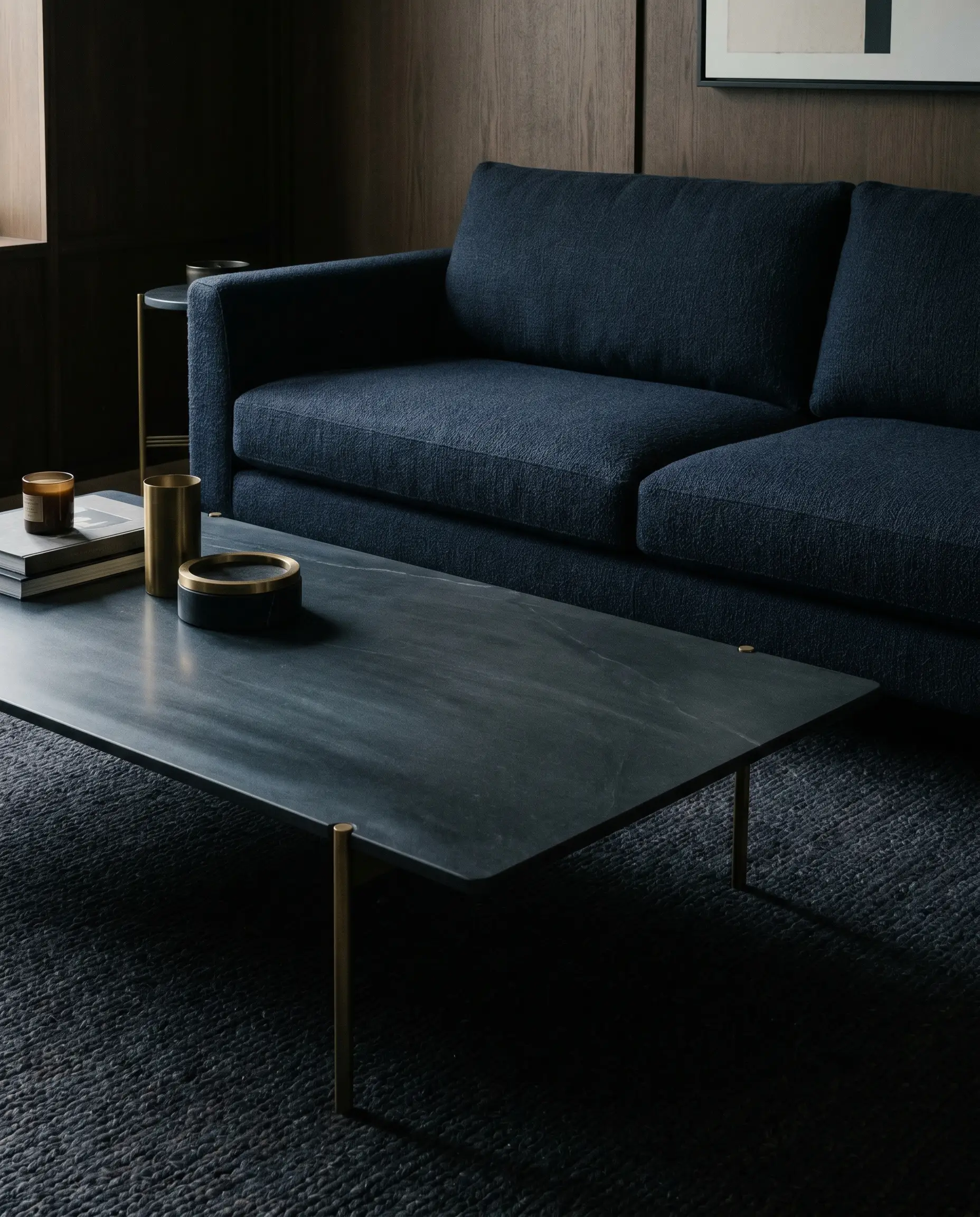
For a moody, tonal approach, dark charcoal soapstone blends seamlessly into the visual weight of the sofa, creating a quiet, uninterrupted flow of dark hues. Charcoal and navy requires a masterclass in texture, relying on the soapy, matte finish of the stone to visually differentiate itself from the fabric.
- Best For: Ultra-modern or masculine spaces prioritizing low-contrast styling.
- Color Palette Pairing: Charcoal gray stone, dark navy, and muted brass.
- Tactile Sensation: Distinctly dense and silky-smooth to the touch.
Structural Shapes to Offset a Blocky Navy Sectional
The material is only half the battle; the silhouette is the other. A massive, 90-degree chaise sectional introduces rigid, unyielding lines into your floor plan, demanding specific, strategic coffee table shapes to maintain comfortable spatial flow.
Asymmetrical Amoeba Shapes to Break Rigid Lines
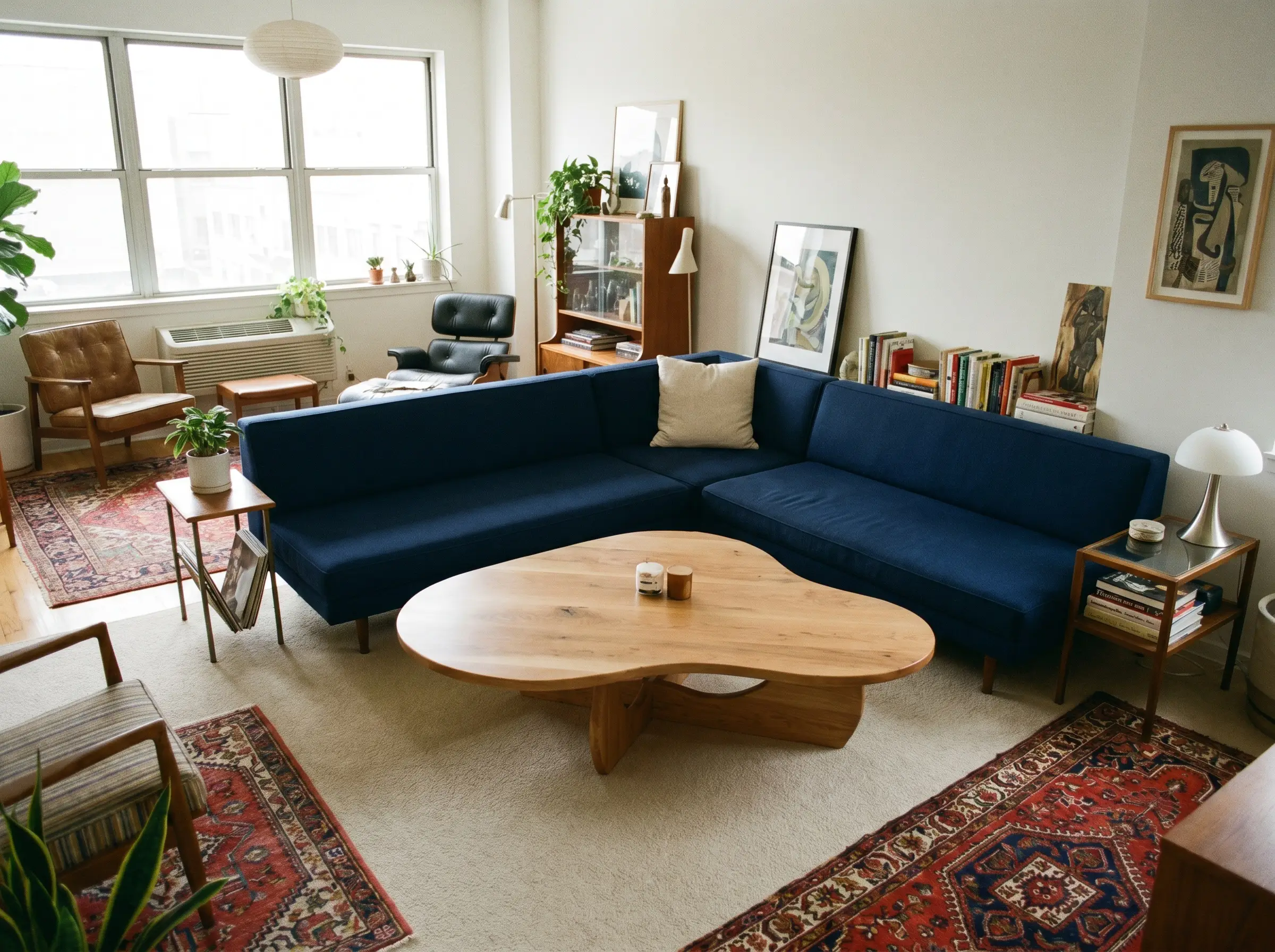
The sweeping, irregular curves of an amoeba or kidney-shaped table instantly soften the aggressive right angles of an L-shaped sectional. This organic silhouette forces the eye to trace a fluid path, visually loosening up a strict, boxy room.
- Best For: Modern or eclectic living rooms with rigid, low-back sectionals.
- Clearance Metric: Leave 16 to 18 inches of clearance between the sofa edge and the table’s closest curve.
- Styling Pro-Tip: Place the widest part of the amoeba table parallel to the longest section of the sofa.
Dual Nested Round Tables for Flexible Flow
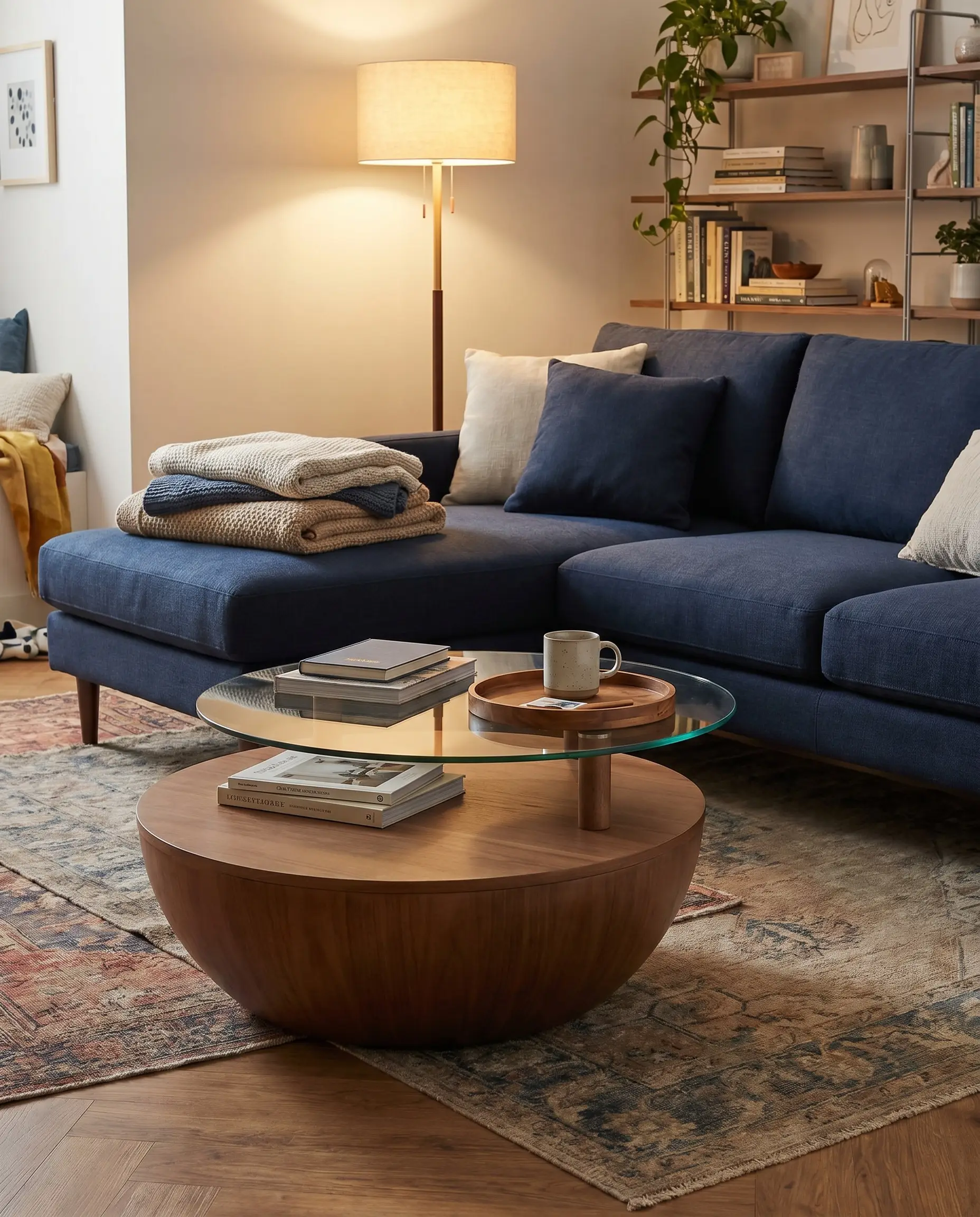
Circular tables completely eliminate harsh corners, allowing easy navigation around the tight interior angle of a chaise. Nested tables offer modular flexibility, letting you expand the surface area when entertaining or tuck them away to reclaim floor space.
- Best For: High-traffic family rooms or tight, multi-use spaces.
- Clearance Metric: Maintain a minimum of 14 inches from the deepest point of the sectional wedge.
- Design Hack: Mix materials on the nested set—pair a glass upper table with a solid wood lower table for layered depth.
Never shove a round table perfectly deep into the corner of an L-sectional. Pull it out slightly so it floats, allowing the architecture of the sofa to breathe.
Layout Command
Soft-Edge Rectangles to Maximize Surface Area
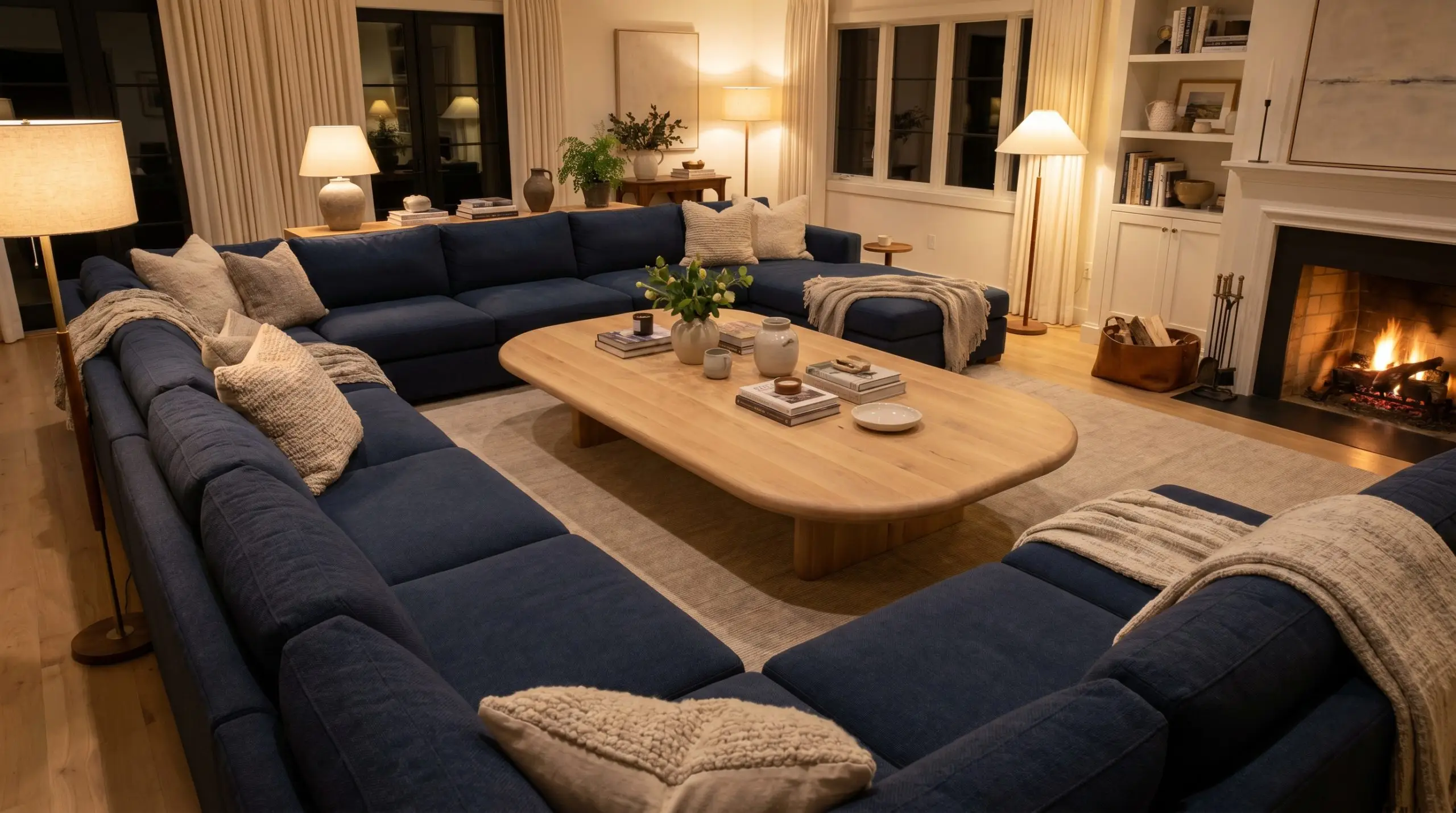
If you need maximum functional surface space but want to avoid the harshness of a standard rectangle, look for heavily radiused or pill-shaped corners. This provides the length required for a massive 120-inch sofa while keeping the walking paths safe and fluid.
- Best For: Oversized living rooms with massive, symmetrical U-shaped sectionals.
- Clearance Metric: Ensure 18 inches of clearance on all four sides to allow comfortable seating access.
- Proportion Rule: The table should measure roughly two-thirds the length of the main sofa seating area.
Low-Profile Plinth Bases for Contemporary Lounging
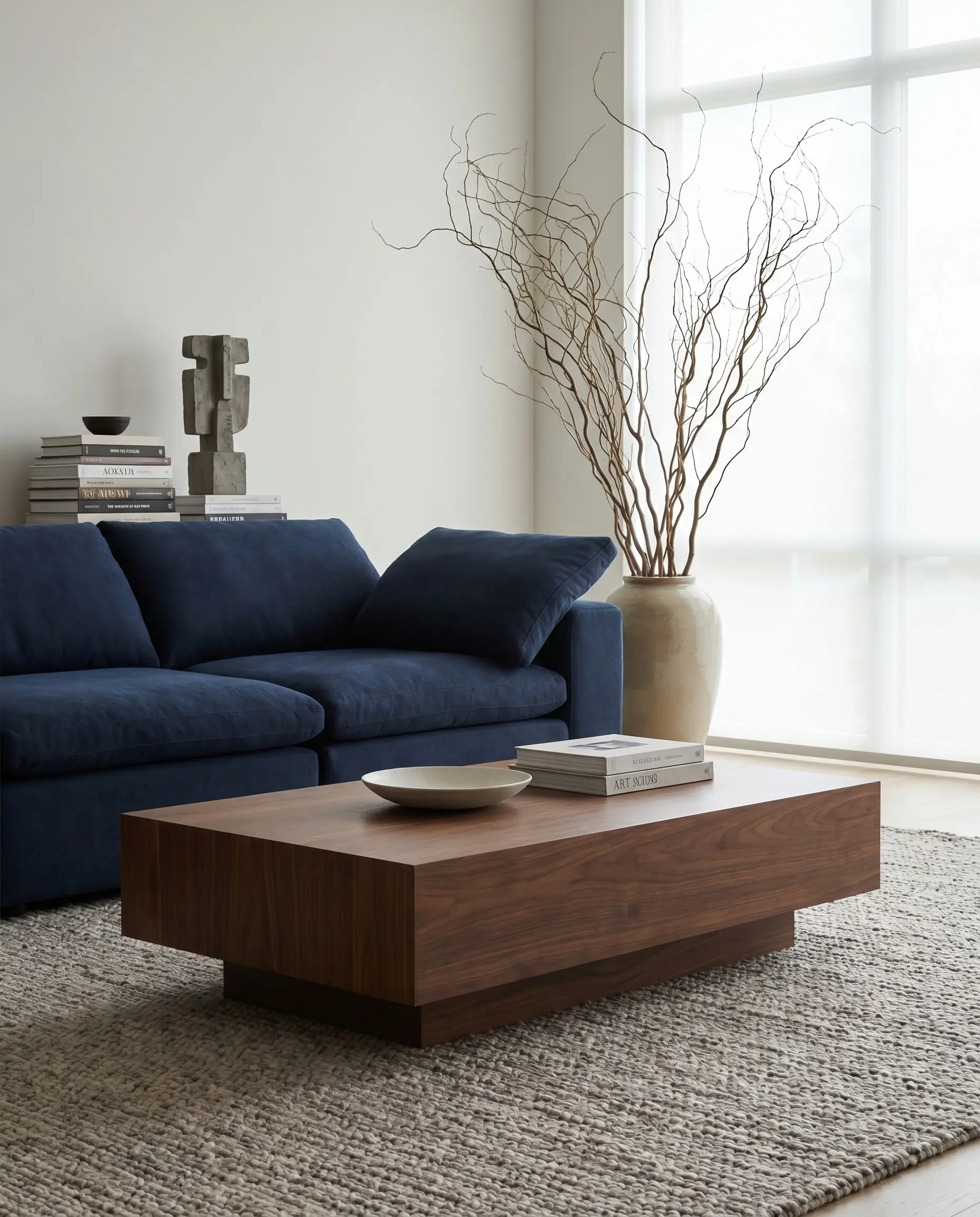
A table that sits mere inches off the floor emphasizes a relaxed, lounge-heavy atmosphere while letting the navy upholstery dominate the vertical sightlines. Dropping the table height creates an illusion of higher ceilings and a more expansive room.
- Best For: Contemporary, low-slung cloud-style navy sectionals.
- Clearance Metric: Keep the table height 1 to 2 inches lower than the sofa’s seat height.
- Styling Pro-Tip: Anchor the low table with tall, vertical styling objects like high-reaching branches in a structural vase.
Upholstered Leather Ottomans as Alternative Tables
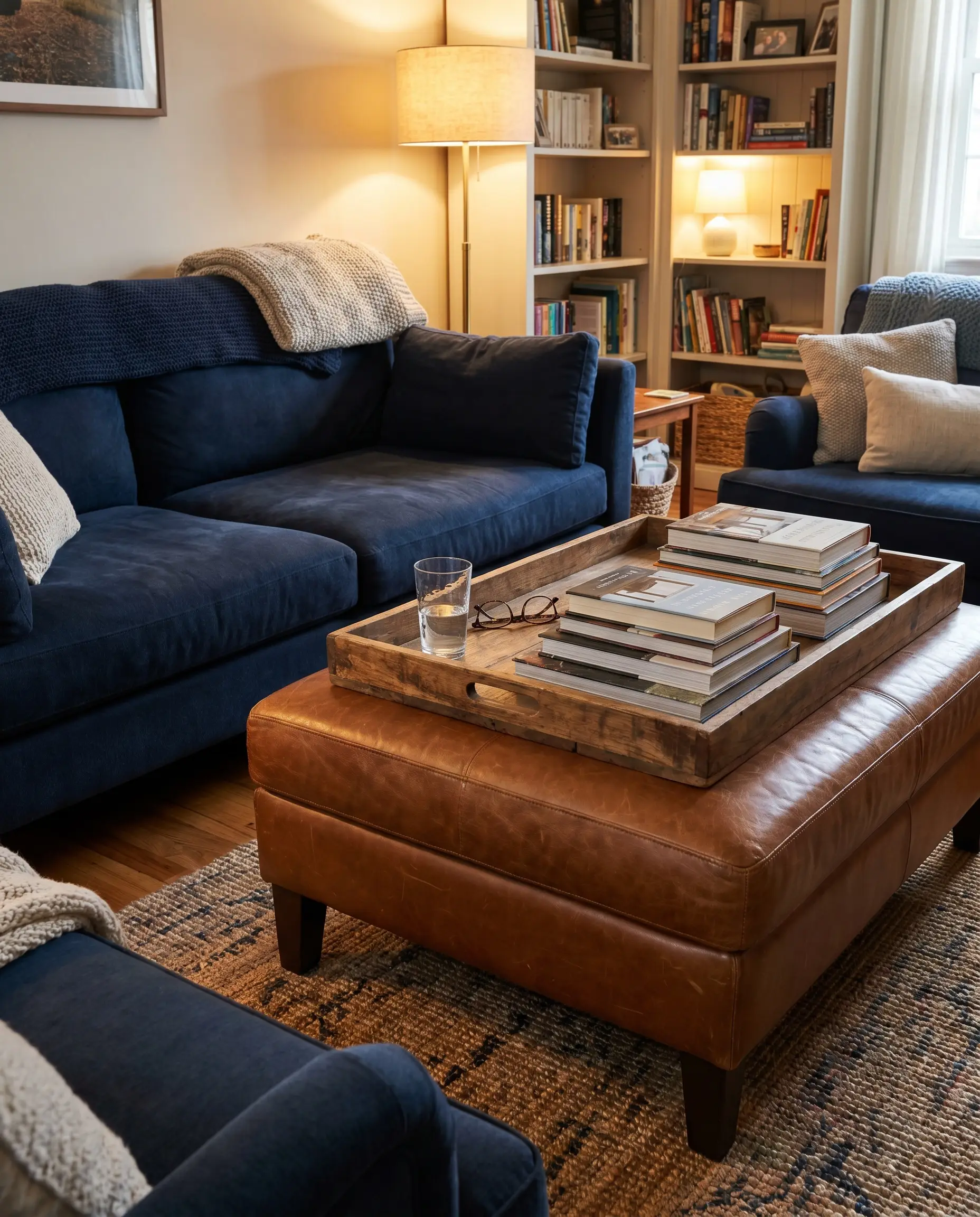
Swapping a hard table for a cognac or tan leather ottoman introduces a massive dose of warmth and soft, tactile luxury. The rich, saddle-brown leather perfectly complements dark blue while providing a safe, kid-friendly surface that doubles as extra seating.
- Best For: Family-friendly media rooms prioritizing comfort over formal styling.
- Clearance Metric: Push the clearance tighter to 12 to 14 inches so the ottoman can comfortably be used as a footrest.
- Functionality Hack: Top the soft leather with a heavy, oversized wooden tray to create a stable surface for drinks.
Securing the Look: Final Clearances and Rug Pairings
A navy sofa and your perfectly selected coffee table cannot exist in a vacuum; the area rug beneath them acts as the necessary visual bridge. Without the right grounding layer, even the most beautiful materials will visually bleed into the floor or clash abruptly.
- For Dark Woods & Black Iron: Source a high-contrast cream, light gray, or vintage-faded rug to ensure the table’s silhouette pops.
- For Travertine & Light Oak: Opt for deeply saturated, moody rugs—like a muted terracotta or faded indigo—to anchor the light materials.
- For Glass & Brass: Utilize highly textural rugs, such as a thick wool Moroccan trellis or a plush viscose, to add the tactile warmth that reflective surfaces lack.
Mastering this spatial flow is just the beginning. Refine your living room’s architecture further by exploring our definitive guide to mixing metal finishes, or consult our technical breakdown on proper rug sizing to ensure your foundation is flawless.

The Hackrea Style Desk treats interior decoration as an exact visual science. Rather than focusing on demolition or floor plans, this desk masters the art of color theory, undertone matching, material pairings, and spatial proportion. From balancing the visual weight of mixed metals to finding the perfect bridging tone between disparate wood species, this desk provides the rigorous aesthetic rules needed to achieve high-end, editorial-quality harmony in any space.