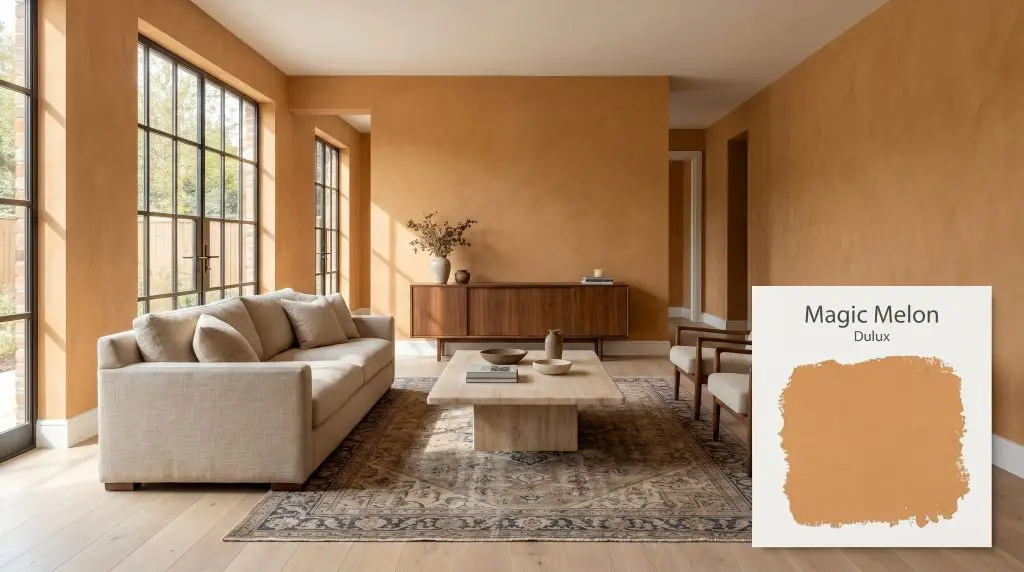
Dulux Magic Melon (S10G7) is a warm, earthy orange with a Light Reflectance Value (LRV) of 41. This inviting mid-tone shade features soft apricot and terracotta undertones, making it an excellent choice for adding vibrant yet grounded energy to living spaces and bedrooms.
Will Magic Melon clash with your room?
Paint Technical Profile
| Color ID / SKU | S10G7 |
| HEX Code | #de9351 |
| Light Reflectance (LRV) | 41 |
| Use | Interior, Exterior |
| Best Exposures | South, West, East |
| Best For | Accent walls, dining rooms, eclectic bedrooms, creative spaces |
Dulux Magic Melon: The Earthy Apricot Redefining Warmth in Modern Homes
Orange paint often carries an unfair reputation for being overly aggressive, but Dulux Magic Melon dismantles that assumption the moment it touches the wall. This warm architectural finish operates more like a sun-baked clay than a traditional bright, offering a highly sophisticated take on interior warmth. It is a color built for tactile environments, begging to be paired with raw materials and textured fabrics.
When you roll out this muted apricot, you are instantly changing the visual temperature of your home. It wraps a room in a soft, radiant energy that feels incredibly intentional, especially when interacting with shifting natural light.
Whether you are updating a stark urban apartment or bringing life to a mid-century layout, this mid-tone shade provides a stunning alternative to standard neutrals. The secret to its success lies entirely in its muted base. By pulling back on the vibrant saturation, the Dulux color palette delivers a highly livable hue that feels both fresh and historically rooted.
Dulux Magic Melon: Temperature, Undertones & LRV
Is Magic Melon warm or cool? This shade is definitively and unapologetically warm. It completely eliminates any cool, sterile energy from a room, replacing it with a radiant, sun-drenched atmosphere.
To understand how this color will actually look on your walls, we have to look at its structural DNA:
With a light reflectance value of 41, Dulux S10G7 sits comfortably right in the middle of the light-to-dark spectrum. This specific LRV means the paint absorbs a moderate amount of light, giving the color structure enough visual weight to hold its character on the wall. It provides substantial color payoff without ever making a standard-sized room feel dark or enclosed.
Lighting Effects & The Chameleon Factor of Magic Melon
Because of its complex chromatic profile, this sunset hue is highly responsive to the light pouring through your windows. You must anticipate how your room’s specific exposure will shift the final color.
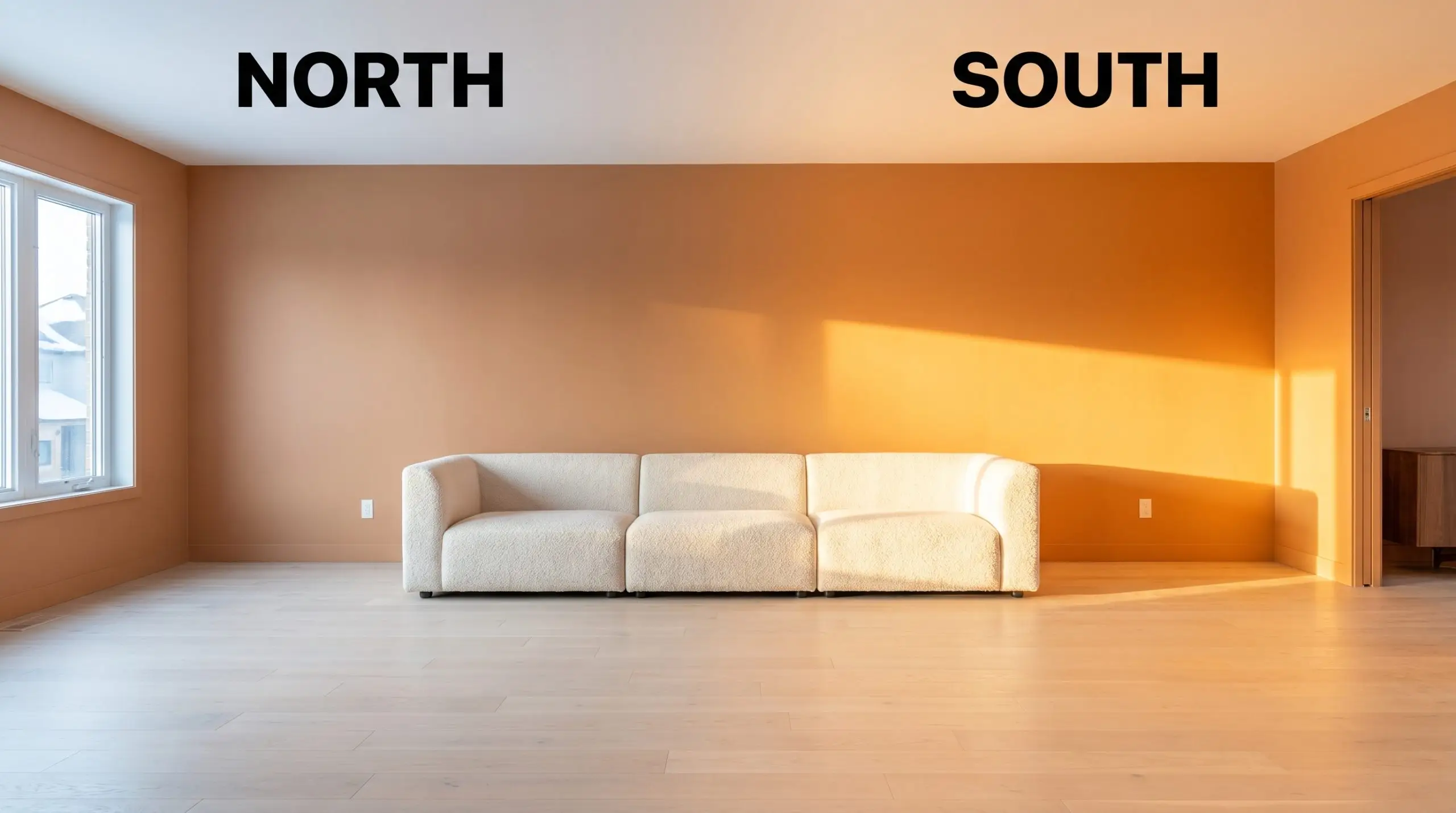
If you want to maintain the lively apricot energy of this paint after the sun goes down, never use daylight bulbs. Stick strictly to soft white or warm white LEDs (2700K–3000K) to preserve the color’s intended sunset glow.
Hackrea Pro-Tip (The Bulb Rule)
Transforming Spaces with the Dulux Color Palette
The beauty of this mid-tone shade is its ability to completely redefine the mood of a space based entirely on how you apply it and what materials you place next to it. Here is how to maximize its potential across your home.
The Social Hub (Dining Rooms)
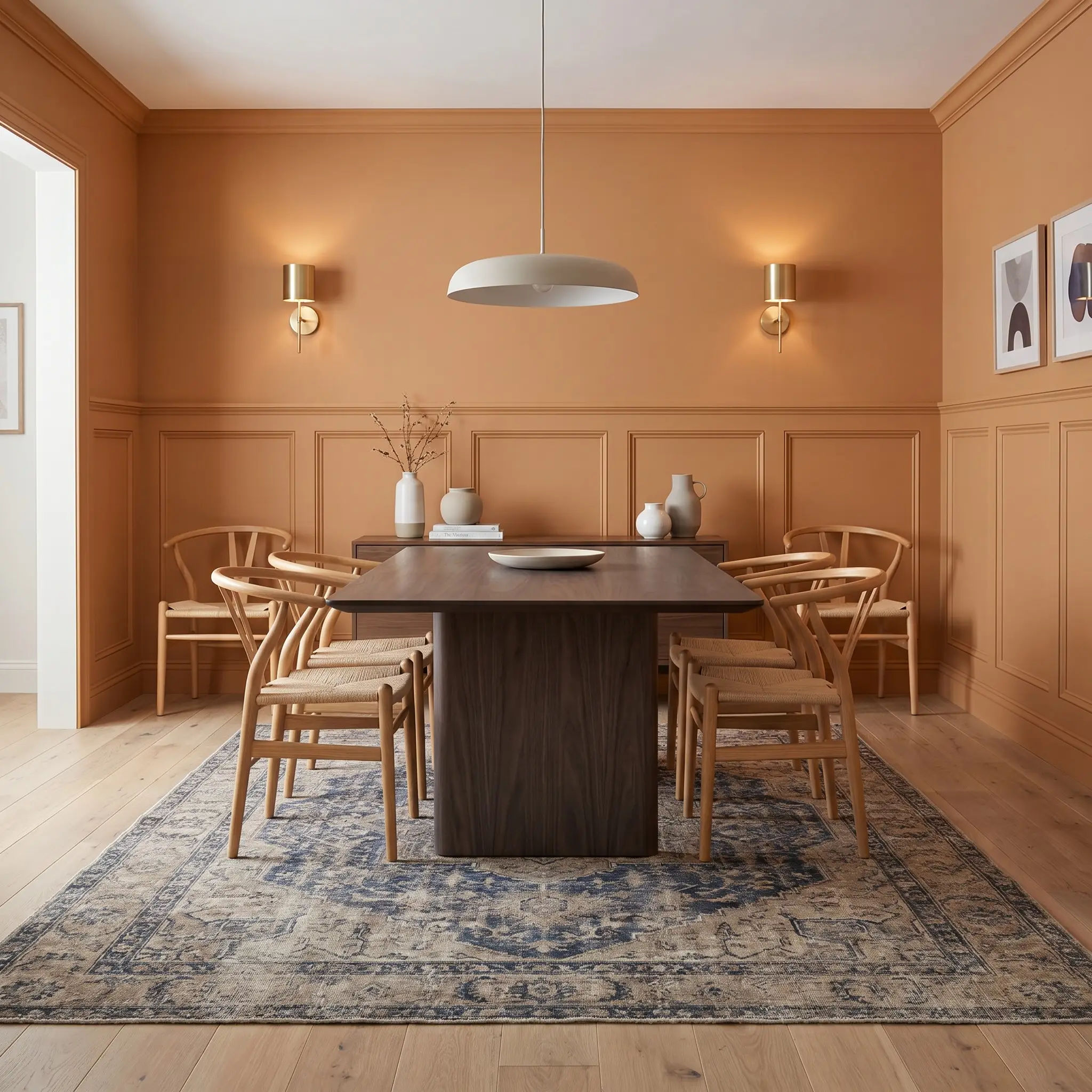
Dining rooms thrive on intimacy, and wrapping the walls in this earthy orange instantly creates a welcoming, conversational atmosphere for dinner parties. The warm undertones are incredibly flattering to skin tones, casting a soft, candle-lit glow across the room even before the sun sets.
To elevate the design, avoid overly rustic furniture. Instead, pair the paint with a sleek walnut pedestal table and wishbone chairs to introduce a crisp, mid-century modern tension. If your dining room features wainscoting or picture molding, consider painting the trim the exact same color as the walls for a seamless, tailored finish that feels highly custom.
Finish the space with brushed brass sconces and a vintage rug featuring subtle navy blue and taupe accents. The cool navy will beautifully contrast the warm walls, creating a balanced, dynamic aesthetic.
The Tailored Retreat (Bedrooms)
Will Magic Melon work with your specific lighting, floor, or furniture?
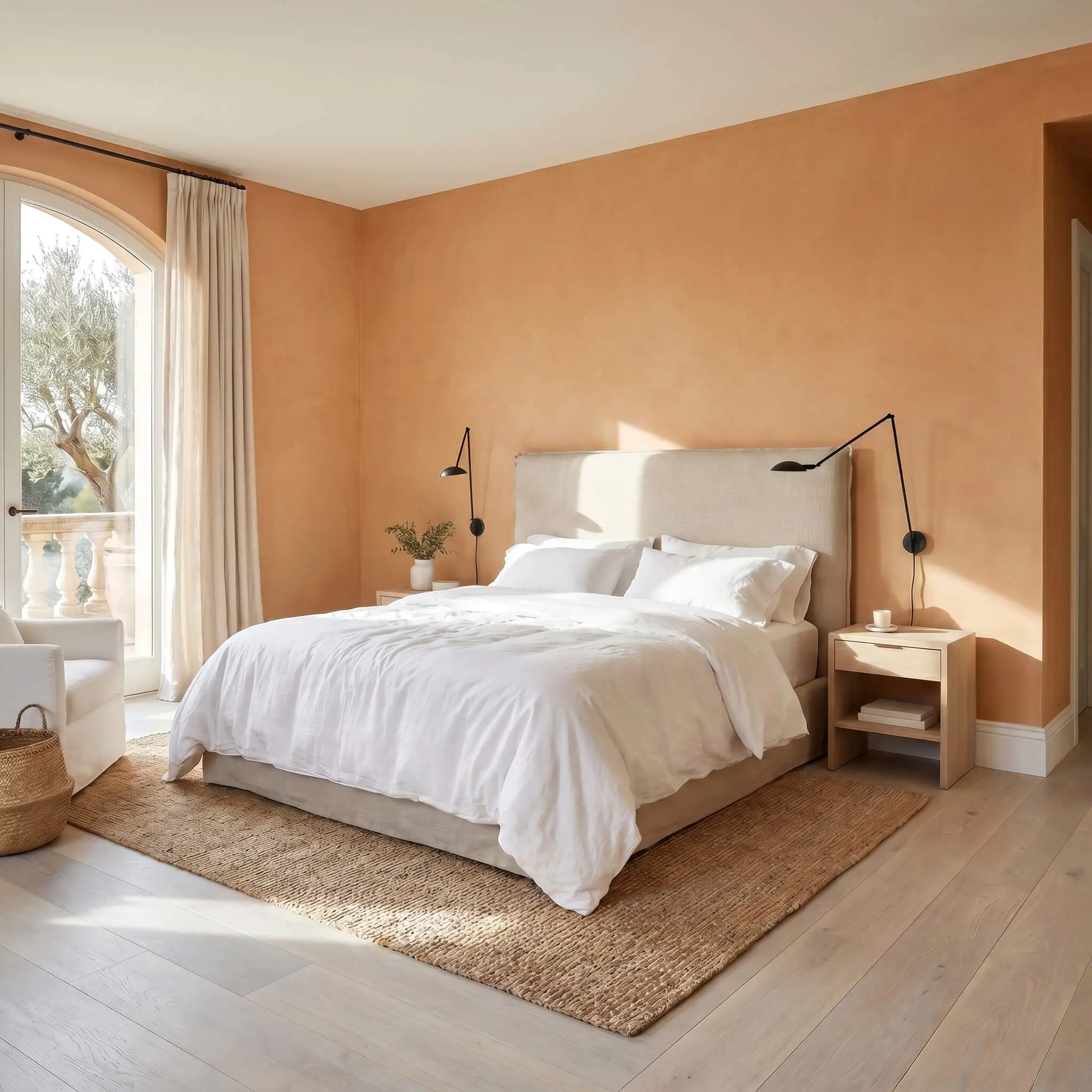
While orange is often typecast as a loud, chaotic choice for sleeping quarters, the brown undertones in Magic Melon make it a brilliant candidate for a restorative, Mediterranean-inspired bedroom. The key to success here is strict texture control.
Instead of overwhelming the room with eclectic patterns, pair the painted walls with crisp white percale sheets, a raw linen upholstered headboard, and simple white oak nightstands. This intentional restraint allows the wall color to act as the primary design feature. If you want to push the architectural envelope, apply the paint using a subtle limewash technique to mimic the tactile, sun-baked plaster found in boutique coastal hotels.
Be incredibly careful when mixing this paint with yellow or orange-toned woods (like clear pine or golden oak). The competing warm undertones will clash and make the room feel overwhelmingly fiery. Stick to cool-toned walnut, bleached oak, or matte black steel furniture.
Clash Warning (The Wood Tone Trap)
The Focused Study (Home Offices)
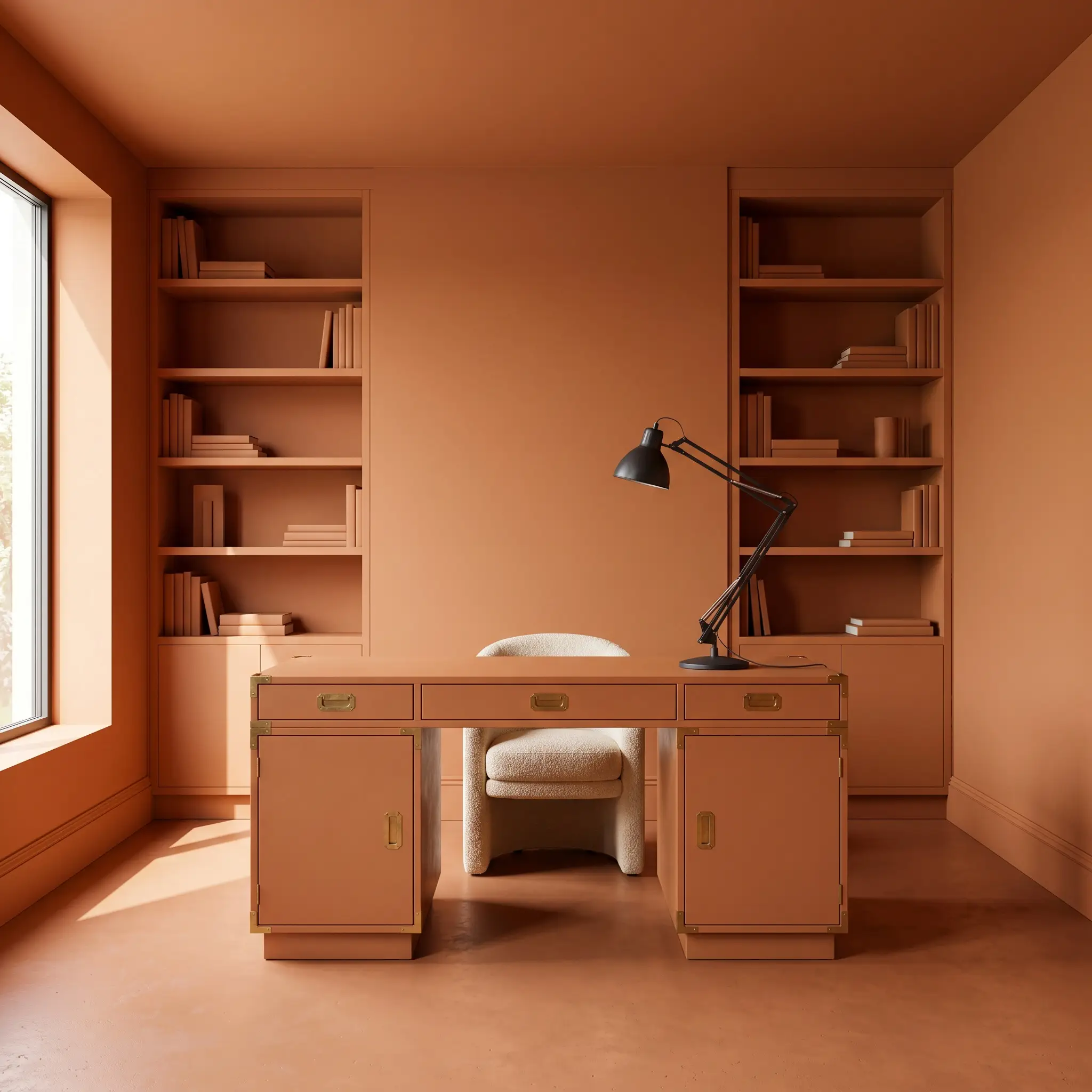
For those who work from home, this muted apricot provides a brilliant burst of energy that avoids the eye-strain associated with brighter yellows or reds. To create a structured, professional environment, consider color-drenching the room—painting the walls, baseboards, and built-in bookcases in the same continuous finish.
This monochromatic application roots the room, making standard modular shelving look like expensive custom millwork. Break up the solid color block by introducing a vintage campaign desk and a low-profile lounge chair wrapped in cream boucle. Add a matte black steel desk lamp to introduce a sharp, graphic line that cuts through the warmth of the walls.
The Facade (Exterior Front Doors & Accent Render)
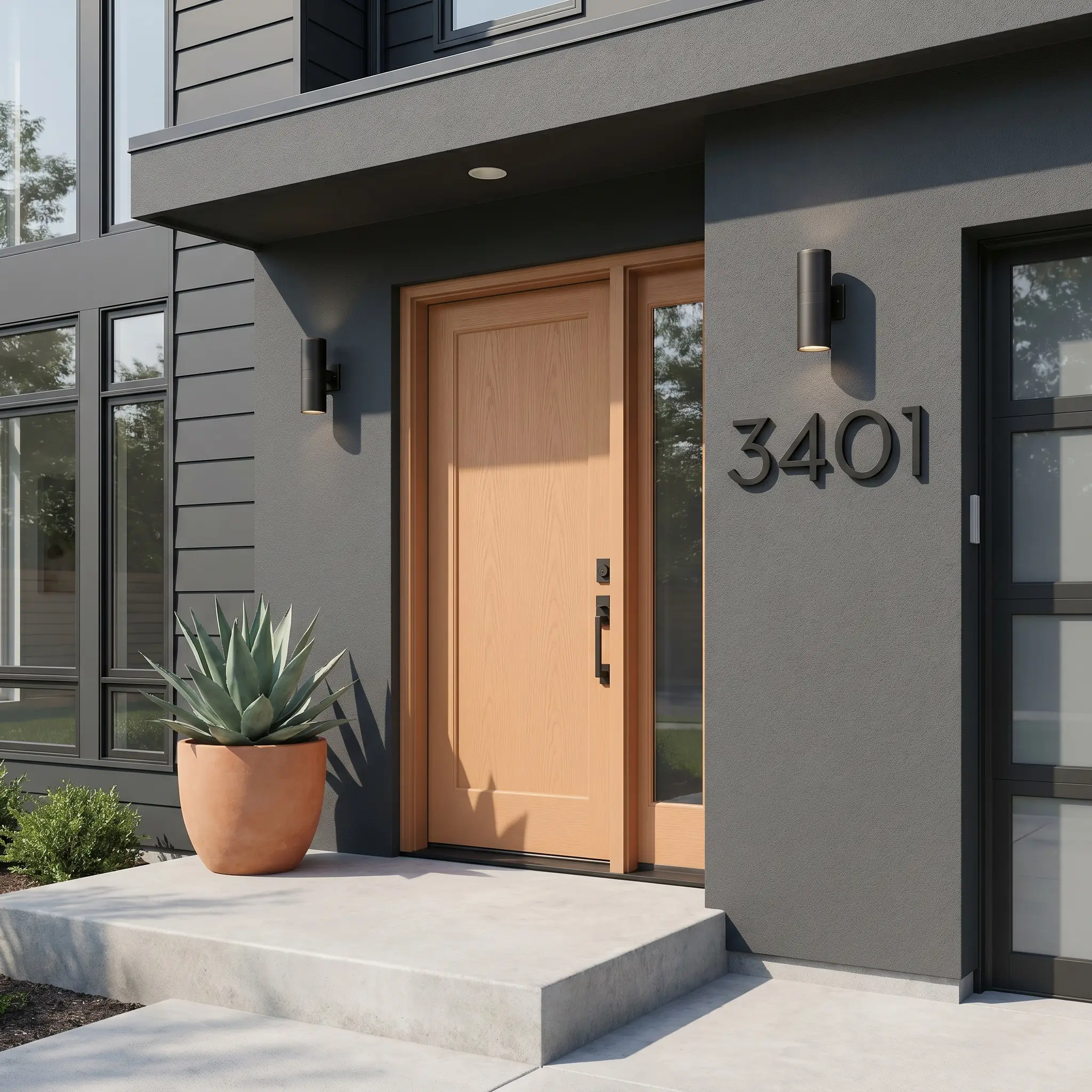
Will Magic Melon work with your specific lighting, floor, or furniture?
When taken outside, the intense natural sunlight will significantly wash out the color’s vibrancy, pulling it closer to a soft, sandy terracotta. It makes an incredible statement on a front door, especially when set against a crisp white or charcoal grey exterior.
For modern homes, using this paint on a specific section of exterior accent render instantly warms up a stark architectural facade. Pair the painted surface with oversized, matte black house numbers and blackened bronze lighting fixtures. The dark, heavy metals will stabilize the bright hue and give your entryway a highly curated, premium finish.
The Culinary Focal Point (Kitchen Islands)
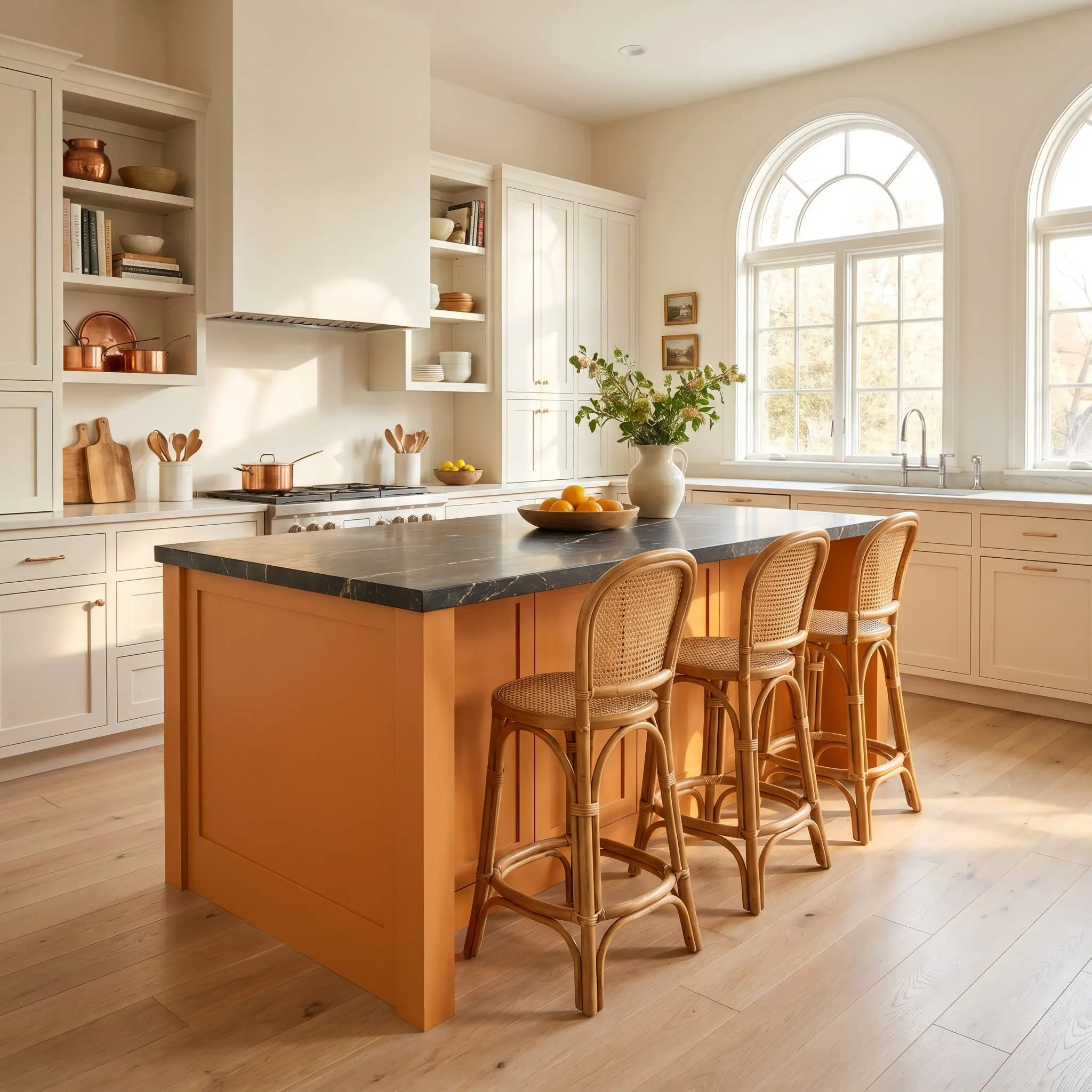
If you are hesitant to commit to a fully orange kitchen, using Dulux S10G7 exclusively on the base of a kitchen island is a brilliant compromise. It injects a massive dose of personality into the center of the room while allowing the perimeter cabinets to remain a safe, accessible off-white.
To make the island look like a bespoke piece of furniture, top it with a honed soapstone or dark marble counter. The dark, veined stone provides a necessary visual weight that grounds the vibrant base. Finish the look by pulling up a set of woven cane or rattan bentwood stools, blending organic texture perfectly with the painted finish.
Building a Cohesive Palette Around Magic Melon
This saturated pigment requires deliberate contrast to truly shine, thriving when placed next to crisp, structural boundaries or deep, light-absorbing tones. Its inherent warmth acts as a visual anchor, demanding secondary colors that either cool the room down or provide a clean architectural frame.
Crisp Boundaries for Millwork and Trim
Tactile Finishes and Hardware Pairings
Secondary Palette Additions
Curated Styling Concepts
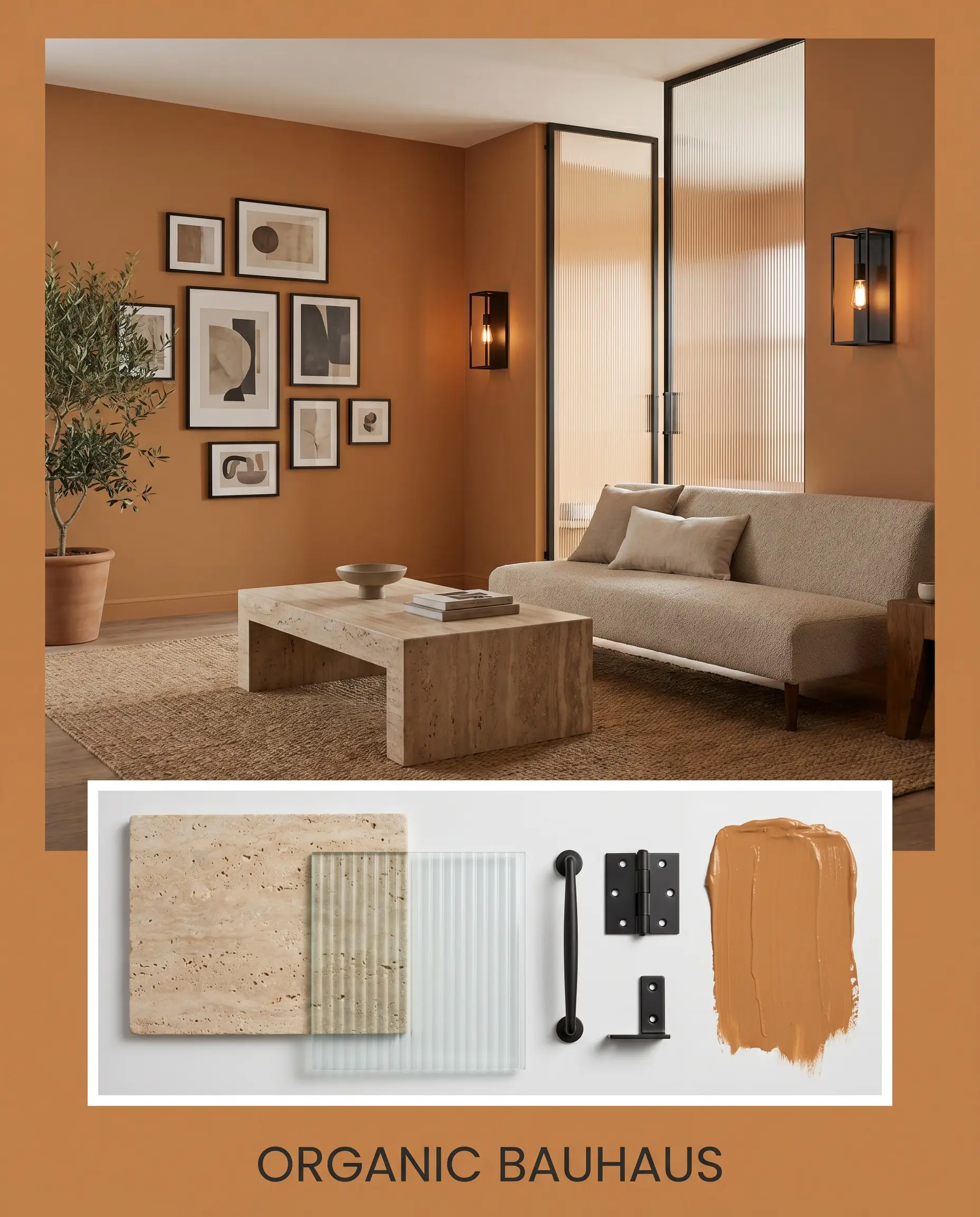
Organic Bauhaus This aesthetic leverages the earthy orange as a backdrop for strict geometric lines and raw, honest materials. Pair the painted walls with an asymmetrical gallery wall framed in matte black steel and a brutalist coffee table carved from solid travertine. The introduction of fluted glass partitions and minimalist sconces creates a highly disciplined yet incredibly warm environment. It feels both historically significant and effortlessly modern.
Cinematic Deco Leaning into a more glamorous, moody energy, this palette uses the muted apricot to set a deeply theatrical stage. Establish the space with Farrow & Ball Hague Blue on the doors or wainscoting, allowing the dark navy to push the wall color forward. Incorporate unlacquered brass candlesticks, a curved velvet sofa, and stacked art books to build a rich, tactile atmosphere. The resulting vibe is sophisticated, curated, and perfect for evening entertaining.
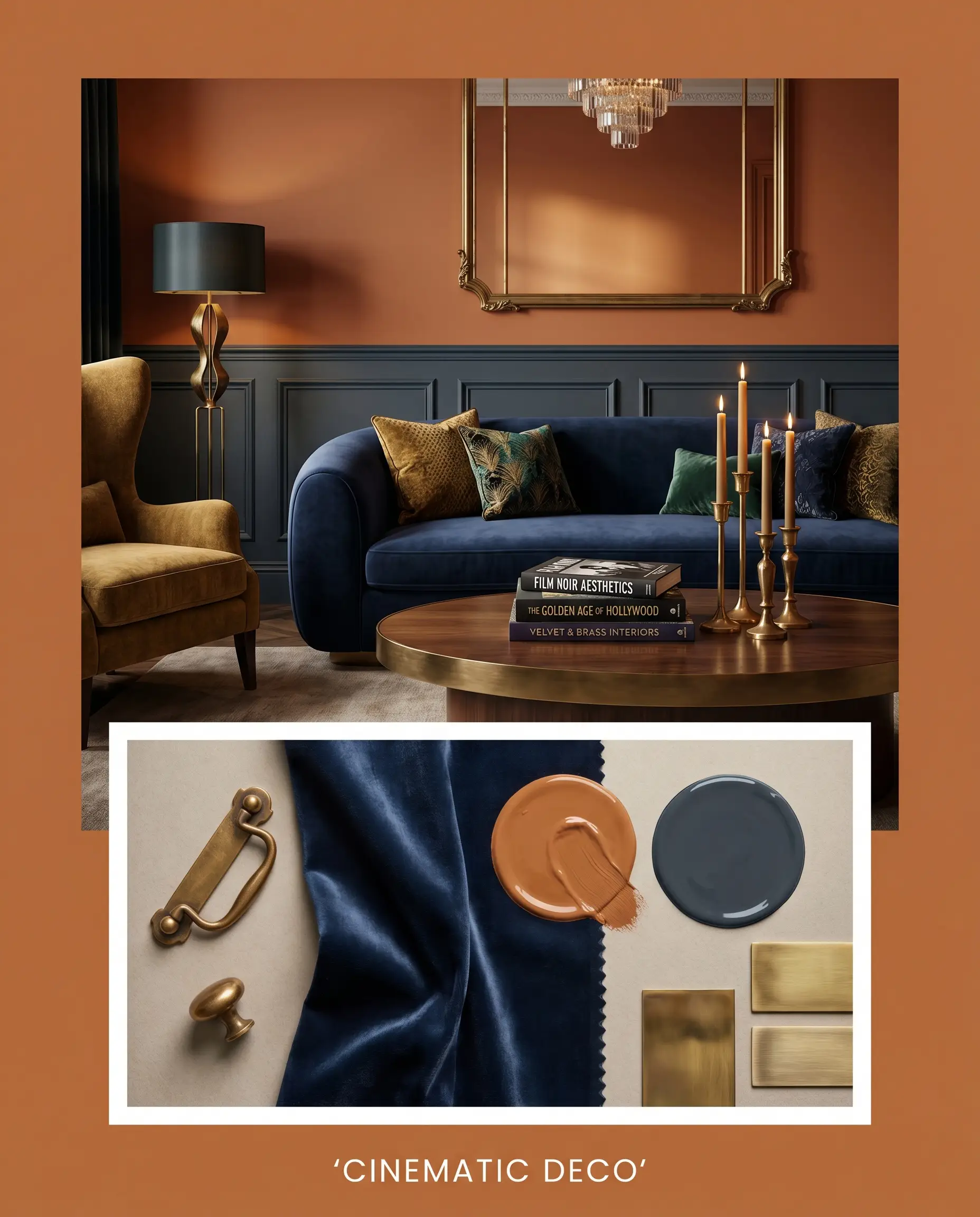
Will Magic Melon work with your specific lighting, floor, or furniture?
Navigating Undertones: How the Paint Compares
When evaluating mid-tone oranges, the decision often comes down to how much natural light your home receives. If your room is flooded with direct western sun, a highly saturated apricot might become overwhelming, signaling the need for a slightly more muted or darker alternative.
Dulux Magic Melon vs. Dulux Golden Mandarin
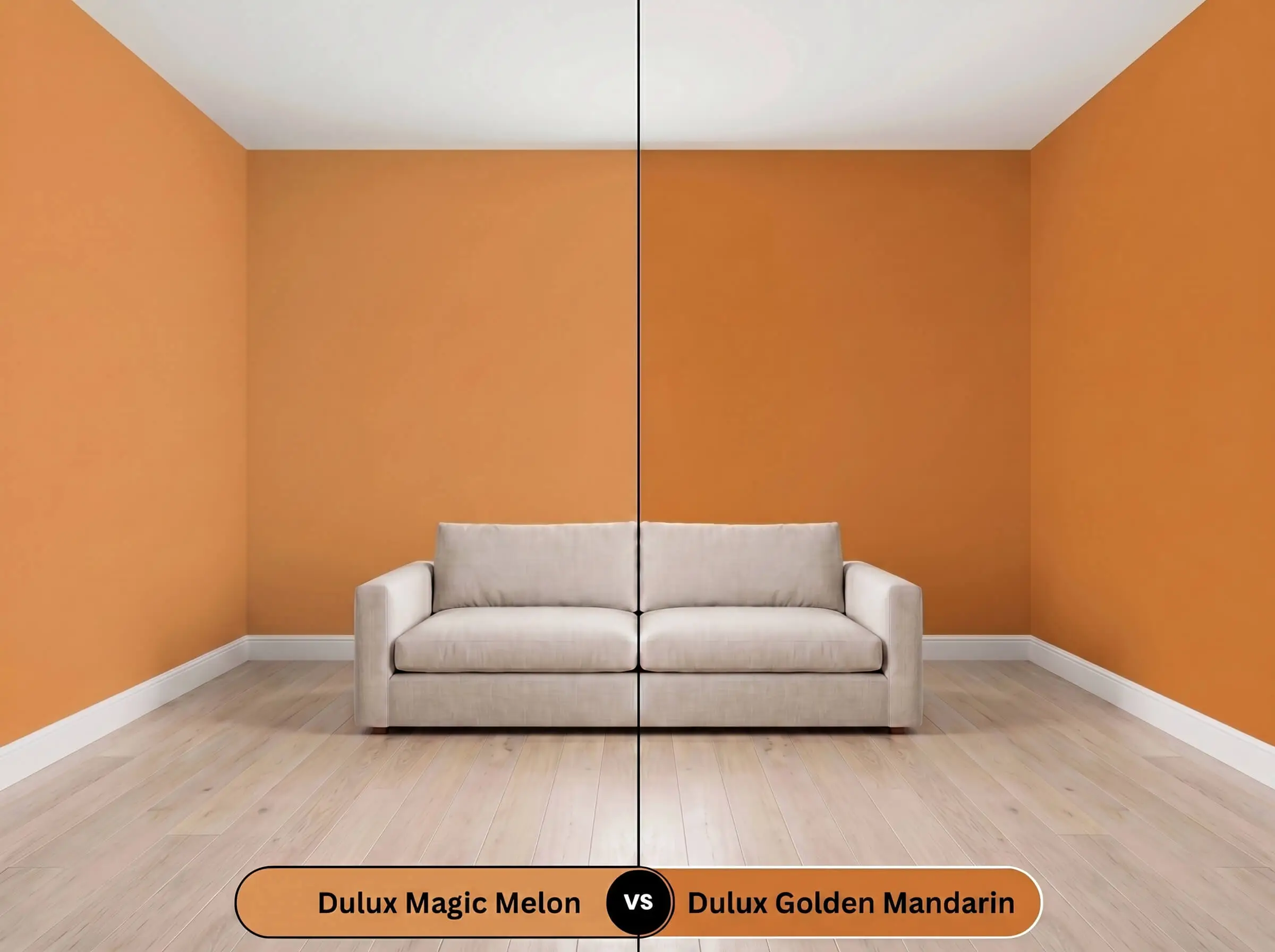
If you place these two side-by-side, Dulux Golden Mandarin instantly reveals a much stronger yellow influence. Golden Mandarin reflects light more aggressively, making it feel like a true, vibrant citrus. If your room lacks natural light and needs a significant energetic lift, Golden Mandarin is the better candidate. However, if you want a more stabilized, earthy finish that feels like sun-baked clay, Magic Melon offers superior architectural sophistication.
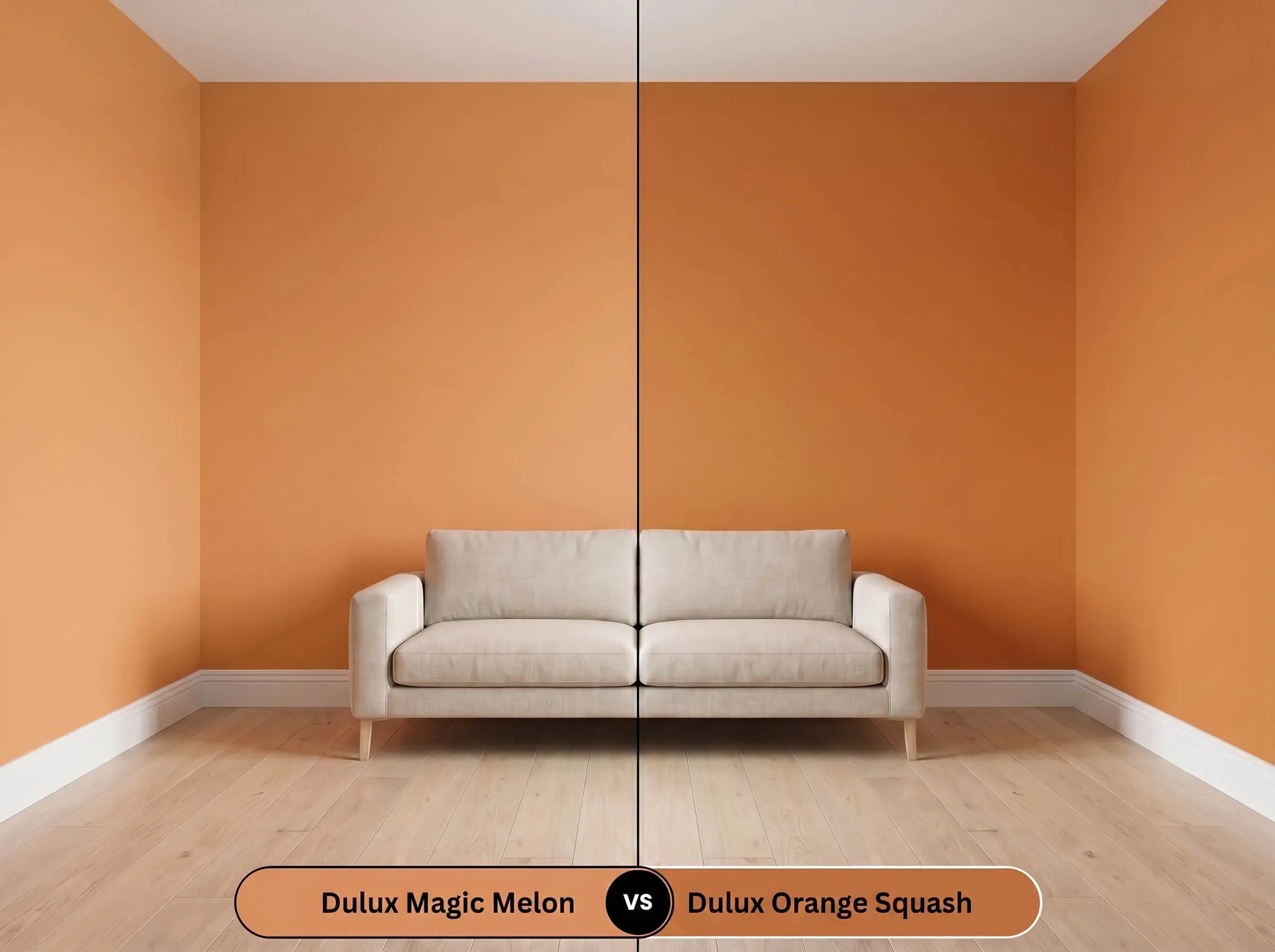
Dulux Magic Melon vs. Dulux Orange Squash
Will Magic Melon work with your specific lighting, floor, or furniture?
Dulux Orange Squash pulls back the intensity, operating much closer to a soft peach or pastel melon. It carries a noticeably higher light reflectance value, making it a safer choice for four-wall applications in small, enclosed spaces. If you are afraid of the color visually shrinking the room, Orange Squash provides a gentle, airy glow. Magic Melon, by contrast, demands attention and requires deliberate styling to balance its deeper, bolder pigment.
Sourcing Alternatives for Magic Melon
Sometimes the perfect color profile needs a slight adjustment to harmonize with your existing floors, or you simply need a match from a different manufacturer. Finding the right alternative ensures your vision remains intact even if the specific can is unavailable.
Same-Brand Variations
Cross-Brand Color Matches
Execution Strategy and Paint Finishes
Translating this sunset hue from a swatch to a flawless wall requires strict attention to your finish selection and roller technique.
The Sheen Selection Guide
Priming and Coverage Requirements
Because of its mid-tone depth and red-yellow base, this paint requires a high-quality, tinted grey primer to ensure the true color develops accurately. Expect to roll a minimum of two full coats, applying with a premium microfiber roller to avoid visible flashing or uneven streaks.
When working with highly saturated oranges, always keep a wet edge while cutting in around baseboards and ceilings. If the edges dry before you roll the main wall, you will be left with a distinct, darker halo around the perimeter of the room.
Hackrea Design Secret (The Cut-In Rule)
Frequently Asked Questions
The intense UV exposure on exterior render will naturally fade the vibrancy of the pigment over the years, softening it into a beautifully muted, sun-bleached terracotta. To ensure longevity, always apply a premium UV-resistant topcoat to protect the color structure.
Because it has a moderate LRV of 41, it can actually create a stunning, jewel-box effect in a small powder room. The key to preventing claustrophobia is installing excellent overhead lighting and pairing the walls with highly reflective surfaces like a polished marble vanity or oversized mirrors.
The stark contrast between a warm apricot wall and a cold, blue-leaning grey floor will create a harsh, disjointed visual break. To bridge this gap, layer a warm, textured jute or vintage wool rug over the grey flooring to introduce a transitional middle tone.
As warm-dim systems lower in brightness, they push a heavy yellow-orange light into the room, which will massively amplify the paint’s sunset qualities. This makes the walls glow with an intense, cozy energy, perfect for evening entertaining but significantly different from its daytime appearance.
The Final Verdict on Dulux S10G7
Dulux Magic Melon is an exceptional choice for the design enthusiast who wants to inject sophisticated, architectural warmth into their home without resorting to predictable neutrals. It performs brilliantly in dining spaces, tailored bedrooms, and on exterior accents where its earthy, sun-baked clay qualities can truly establish a design. This color is perfect for those embracing Mediterranean, mid-century, or highly textured organic aesthetics.
However, this vibrant hue requires careful material curation to succeed. You must avoid pairing this paint with cool-toned, blue-grey luxury vinyl plank flooring or stark, icy white contemporary furniture. The extreme temperature difference between the warm walls and the cold floors creates an uncomfortable visual tension that breaks the cohesion of the room. Instead, always ground this pigment with rich woods, natural stones, and warm-leaning textiles to maintain its premium, intentional atmosphere.
Room Compatibility & Clashes Diagnoses
Hackrea's reports evaluating the compatibility of Magic Melon in real rooms.No compatibility tests for Magic Melon yet.
Be the first to see how this color reacts to your space. Run a free architectural diagnostic now.