The 2026 Biophilic Living Room: 22 Ways to Engineer a Natural Sanctuary
Digital fatigue is at an all-time high, demanding living spaces that actively intervene to lower cortisol levels. The houseplant maximalist aesthetic is officially dead; hoarding potted ferns does not constitute architectural wellness. The 2026 paradigm is rooted in sensory biomimicry, bio-fabricated materials, and invisible environmental technology that works subliminally to regulate the human nervous system. We are engineering natural sanctuaries through structural haptic textures and acoustic precision, entirely redefining the intersection of nature and technology.
Materiality & Bio-Innovation: The Living Room Foundation
True carbon-negative luxury shifts the focus from extracting finite resources to utilizing grown, bio-based materials. The foundation of a 2026 living space relies entirely on haptic resonance and living architecture.
Anchor the Room with Mycelium Composite Coffee Tables
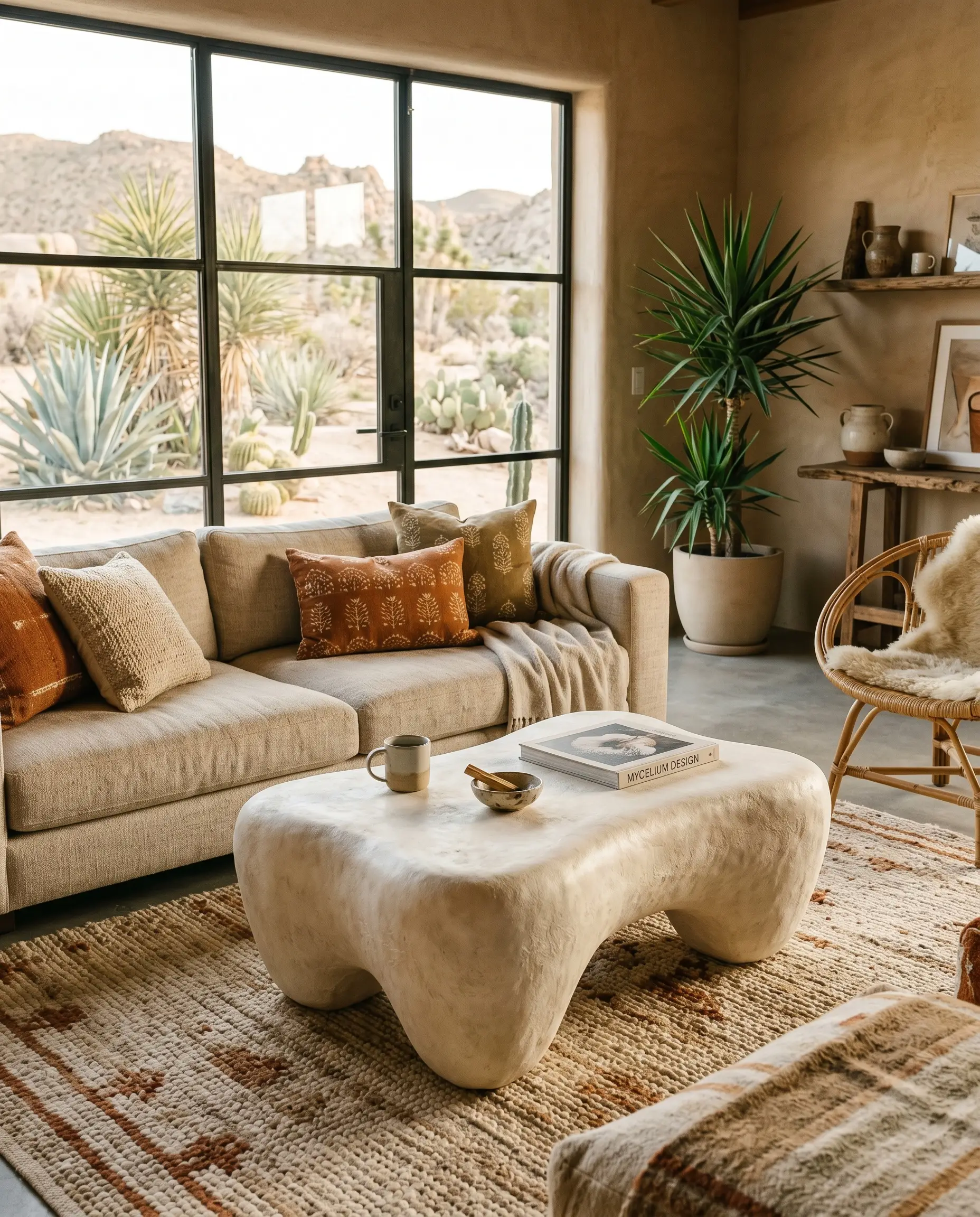
Sculptural forms grown from fungal networks represent the pinnacle of 2026 bio-design, offering an unparalleled tactile experience. Mycelium composites possess a velvety, bone-like finish that introduces grounded, organic mass into the center of the living area.
- Design Style Pairing: Desert Modernism.
- Key Vibe: Monolithic, avant-garde warmth.
- Material Reality: Cured, inert vegetative fungal root structures bound with agricultural waste.
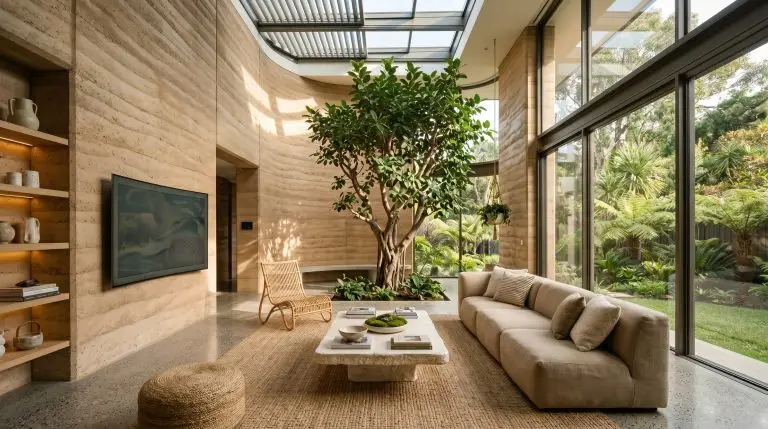
Apply Rammed Earth or Lime Wash for Thermal Mass Walls
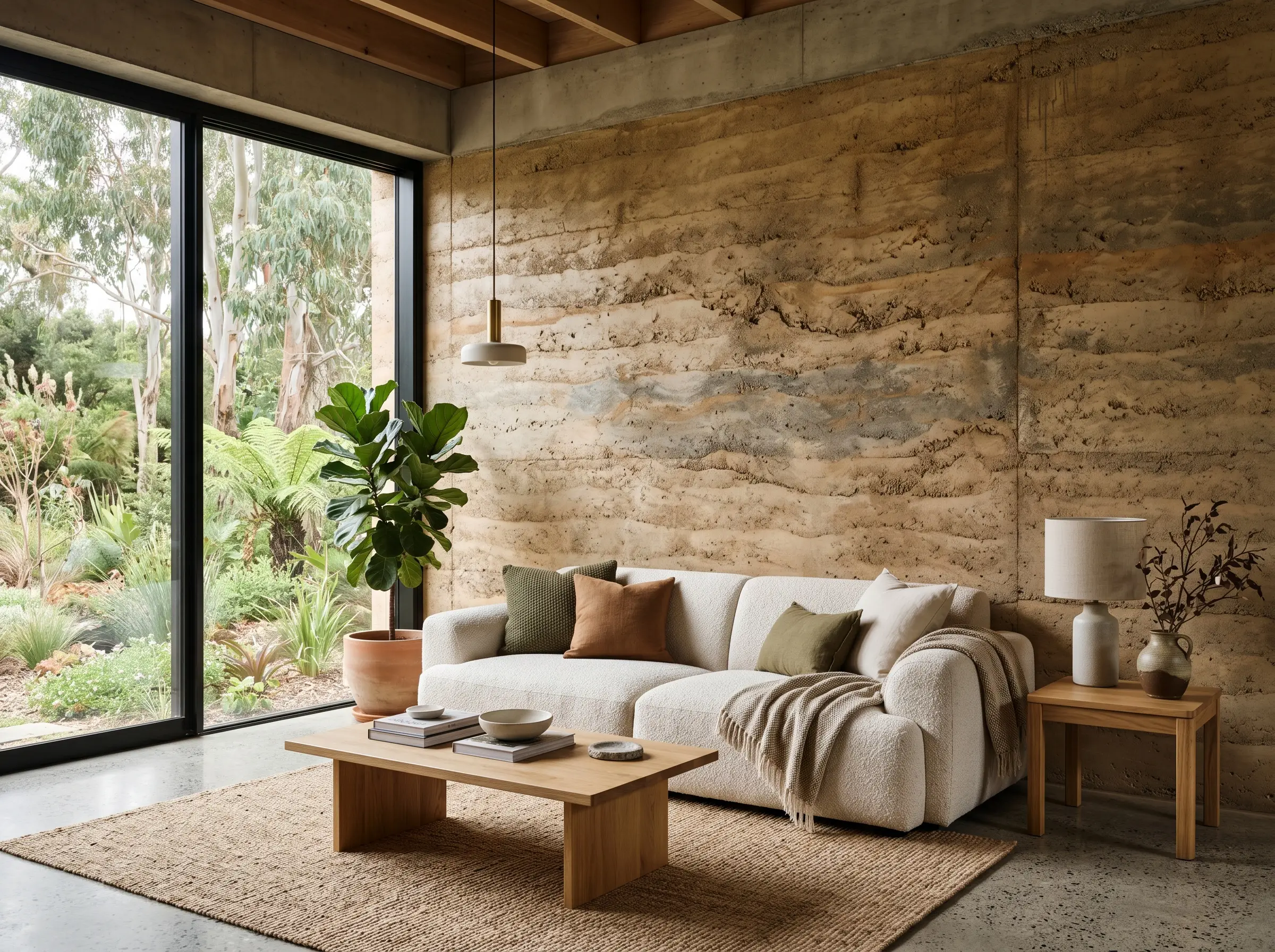
Flat, synthetic drywall actively repels the human eye, which is evolutionarily wired to seek out nuanced, natural imperfections. Introducing rammed earth or heavy lime wash plaster provides essential thermal mass while creating a deeply grounding, haptic texture.
- Design Style Pairing: Eco-Brutalism.
- Texture Profile: Matte, chalky, and highly varied depending on the light.
- Execution Strategy: Trowel-applied natural lime plaster over existing drywall for an accessible upgrade, or custom poured-in-place earth for bespoke builds.
Replace Synthetic Rugs with Undyed, Hand-Spun Alpaca or Jute
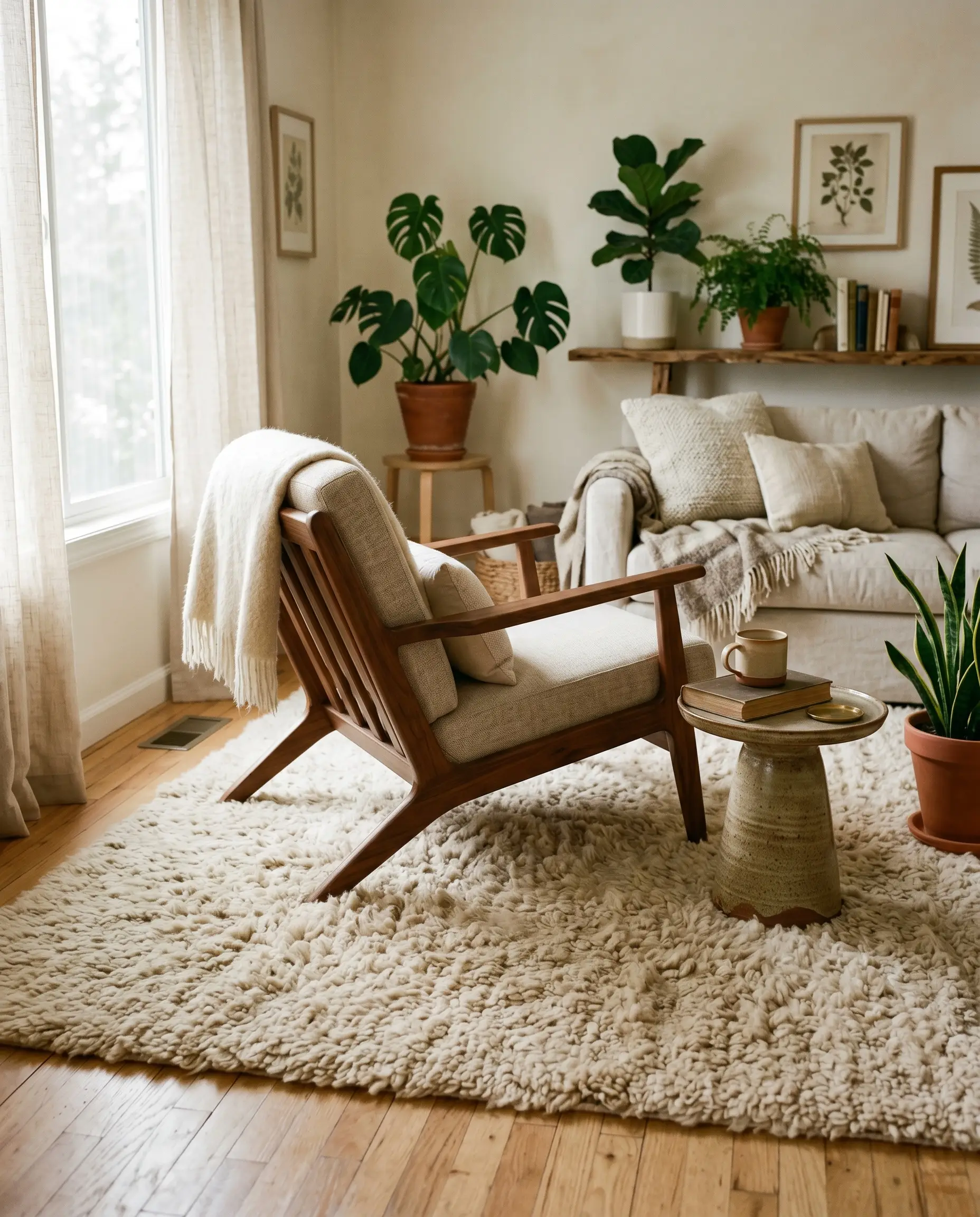
The tactile boundary between the floor and the foot dictates the subconscious comfort level of the entire room. Undyed, hand-spun alpaca or raw jute eliminates synthetic off-gassing while introducing essential friction and organic softness.
- Design Style Pairing: Organic Modernism.
- Sensory Impact: High haptic friction and acoustic dampening.
- Sourcing Reality: Look for unbleached, raw fibers to ensure zero VOC emissions and maximum natural lanolin retention.
Utilize Cork Block Seating for Haptic Warmth and Acoustics
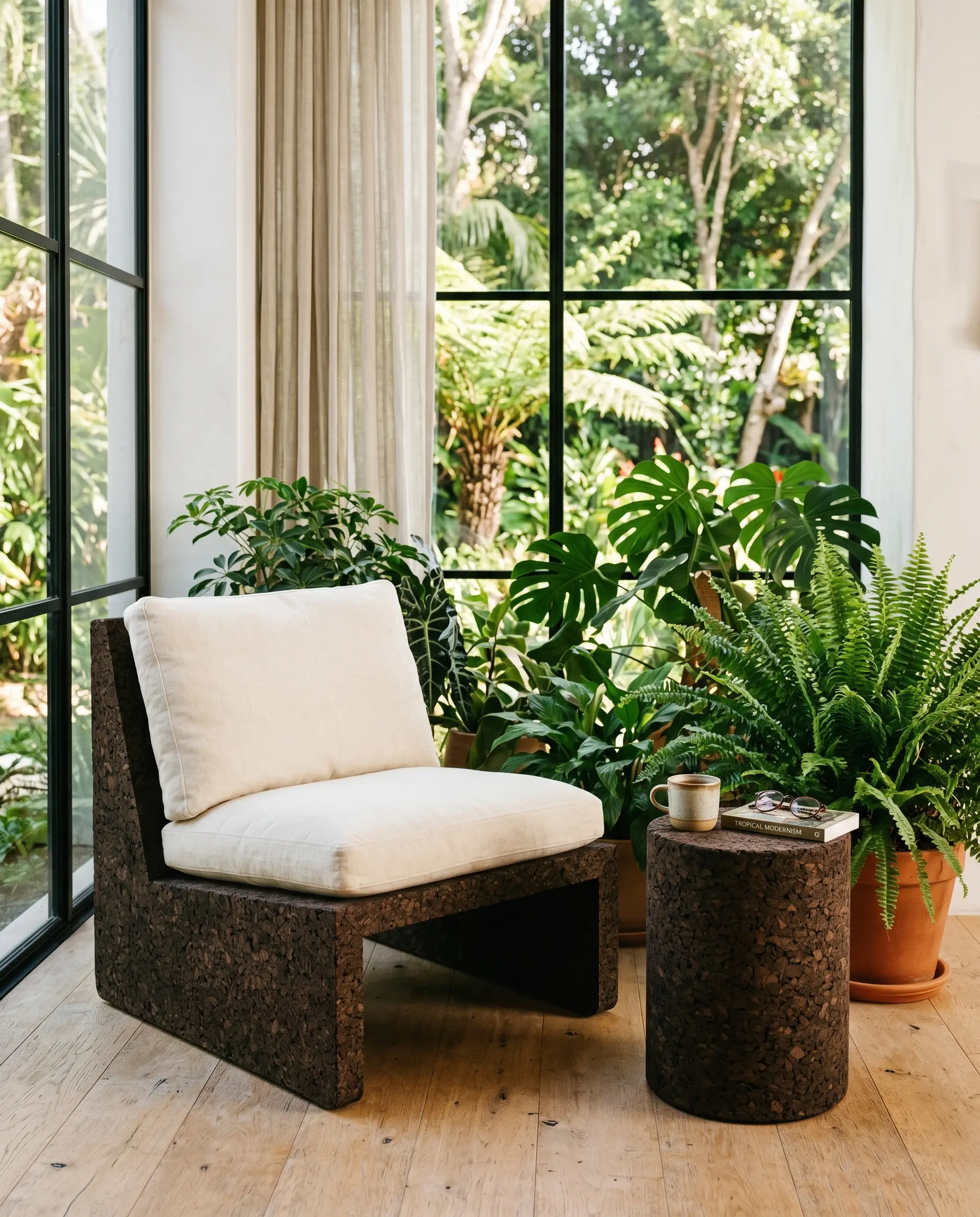
High-density cork has transcended underlayment to become a primary structural material for seating and side tables. Its cellular structure naturally absorbs ambient sound, reducing the harsh echoes typical of minimalist spaces while providing immediate thermal warmth to the touch.
- Design Style Pairing: Tropical Modernism.
- Acoustic Rating: Exceptionally high; naturally mitigates mid-to-high frequency sound waves.
- Finish Detail: Specify smoked or carbonized cork for a richer, darker aesthetic that avoids looking like a bulletin board.
Specify Thermally Modified Ash for Built-In Shelving
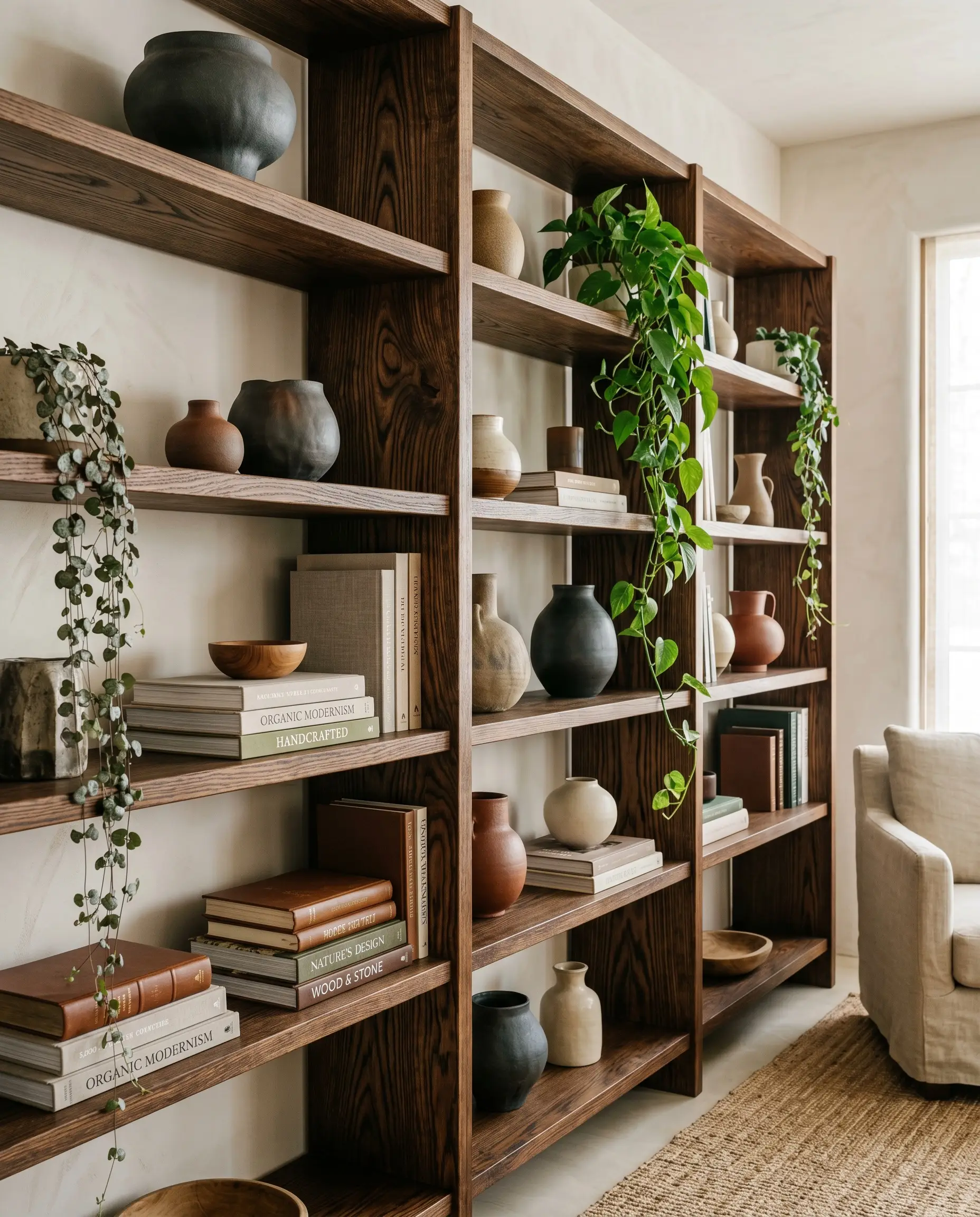
Standard timber lacks the rich, multidimensional grain profile required for a truly sensory environment. Thermally modified ash undergoes a chemical-free baking process that darkens the wood throughout, resulting in a hyper-stable material with a deeply roasted, biomorphic grain structure.
- Design Style Pairing: Organic Modernism.
- Durability Factor: Impervious to humidity shifts, preventing warping in climate-controlled spaces.
- Finish Recommendation: Raw oil or hard-wax finishes only; absolutely no polyurethane, which destroys the haptic connection.
Atmospheric Tech & Sensory Biomimicry
Visual biophilia is a superficial metric; a true 2026 sanctuary actively engages the ears, skin, and internal body clock. We are deploying invisible technology that bridges the gap between sophisticated interior architecture and precise biological wellness.
Install Biodynamic Circadian Lighting Systems
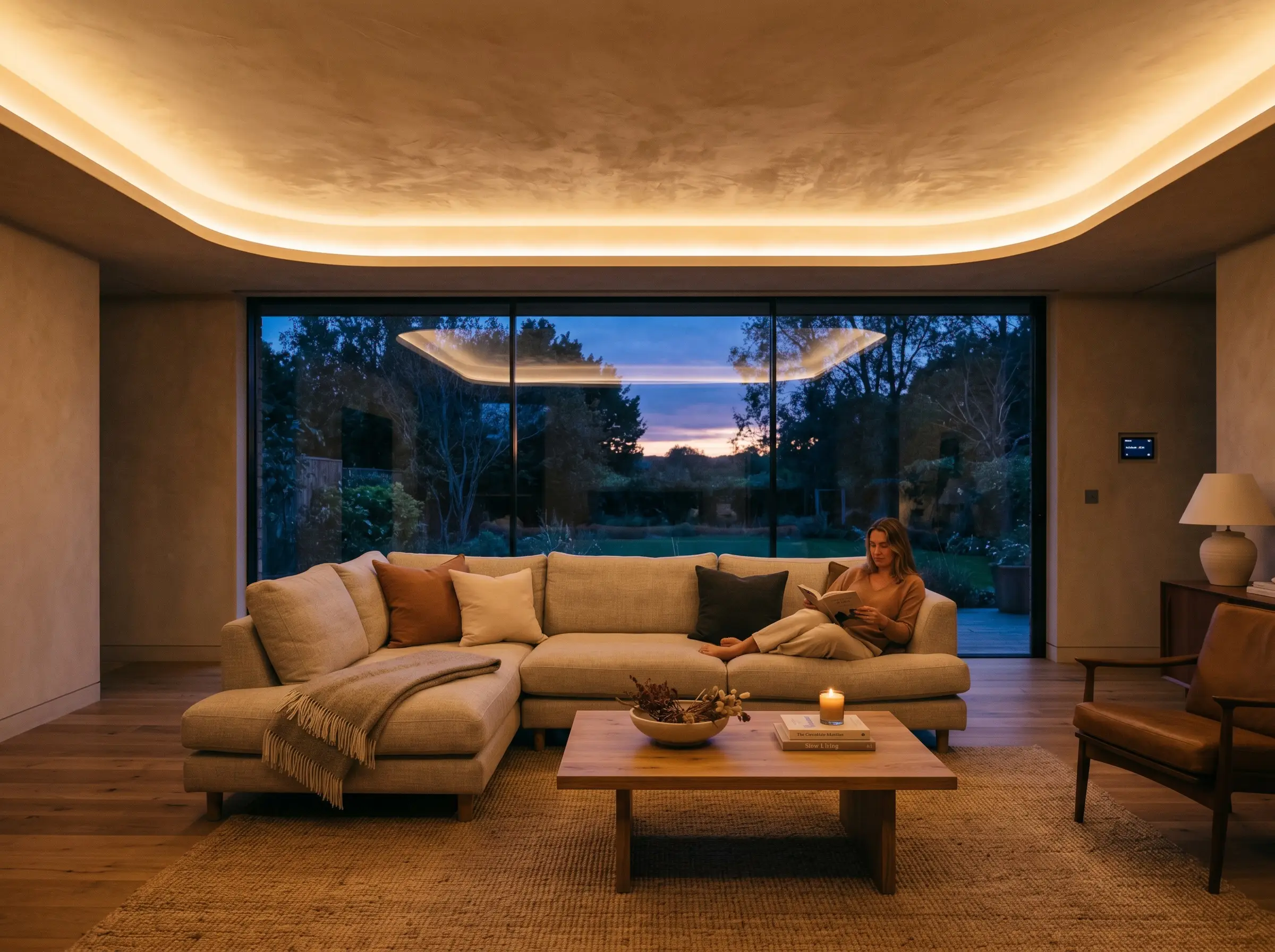
Static overhead lighting actively disrupts the endocrine system, inducing physiological stress in an otherwise calm room. Integrating automated biodynamic lighting ensures the space mirrors the exact solar progression of the outside world, seamlessly shifting color temperatures as the day wanes.
Circadian bulbs automatically shift from 6000K blue light at noon to 2700K amber light at dusk to regulate melatonin production.
Tech Spec
- Lighting Goal: Subconscious hormonal regulation and reduced digital eye strain.
- System Integration: Hardwired DALI systems for high-end builds, or smart-hub LED retrofits for accessible luxury.
- Styling Pro-Tip: Hide the light source within architectural coves to bounce the shifting spectrum off natural plaster ceilings.
Integrate Acoustic Wood Slats with Fractal Patterns
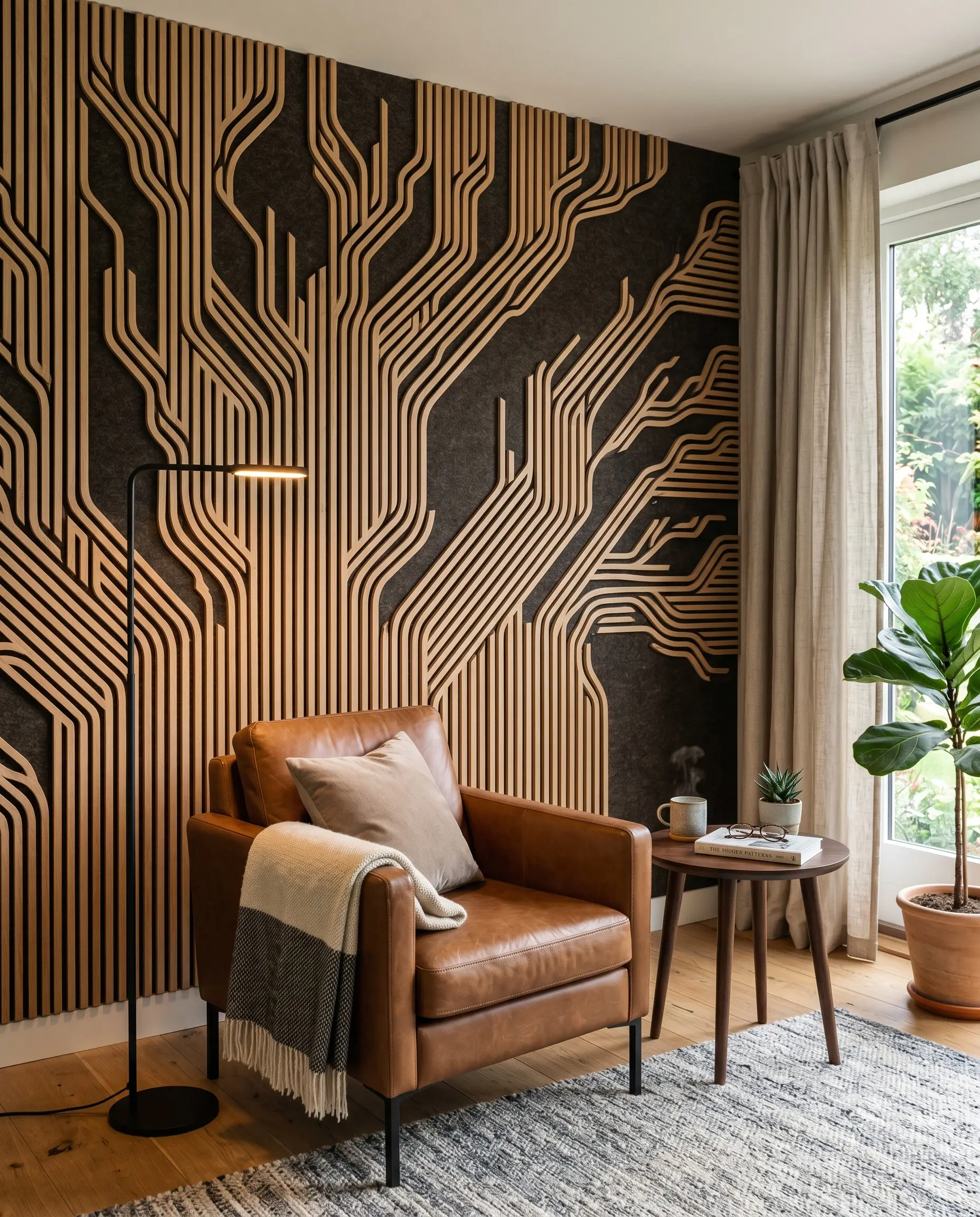
Hard, flat surfaces bounce sound waves aggressively, creating an acoustic environment that subtly elevates heart rates. Engineered wood paneling arranged in precise, nature-mimicking geometries solves this by dispersing sound while feeding the brain the complex visual math it craves.
Fractal patterns—repeating geometric scales found in fern leaves and river networks—have been scientifically shown to reduce observer stress by up to 60%.
Tech Spec
- Visual Strategy: Install as a singular focal wall behind the primary listening or reading zone.
- Material Check: Ensure the backing felt is made from recycled PET or natural wool, not virgin synthetics.
- Acoustic Goal: Elimination of flutter echoes and reduction of overall reverberation time.
Introduce Low-Frequency Indoor Water Features (Not Fountains)
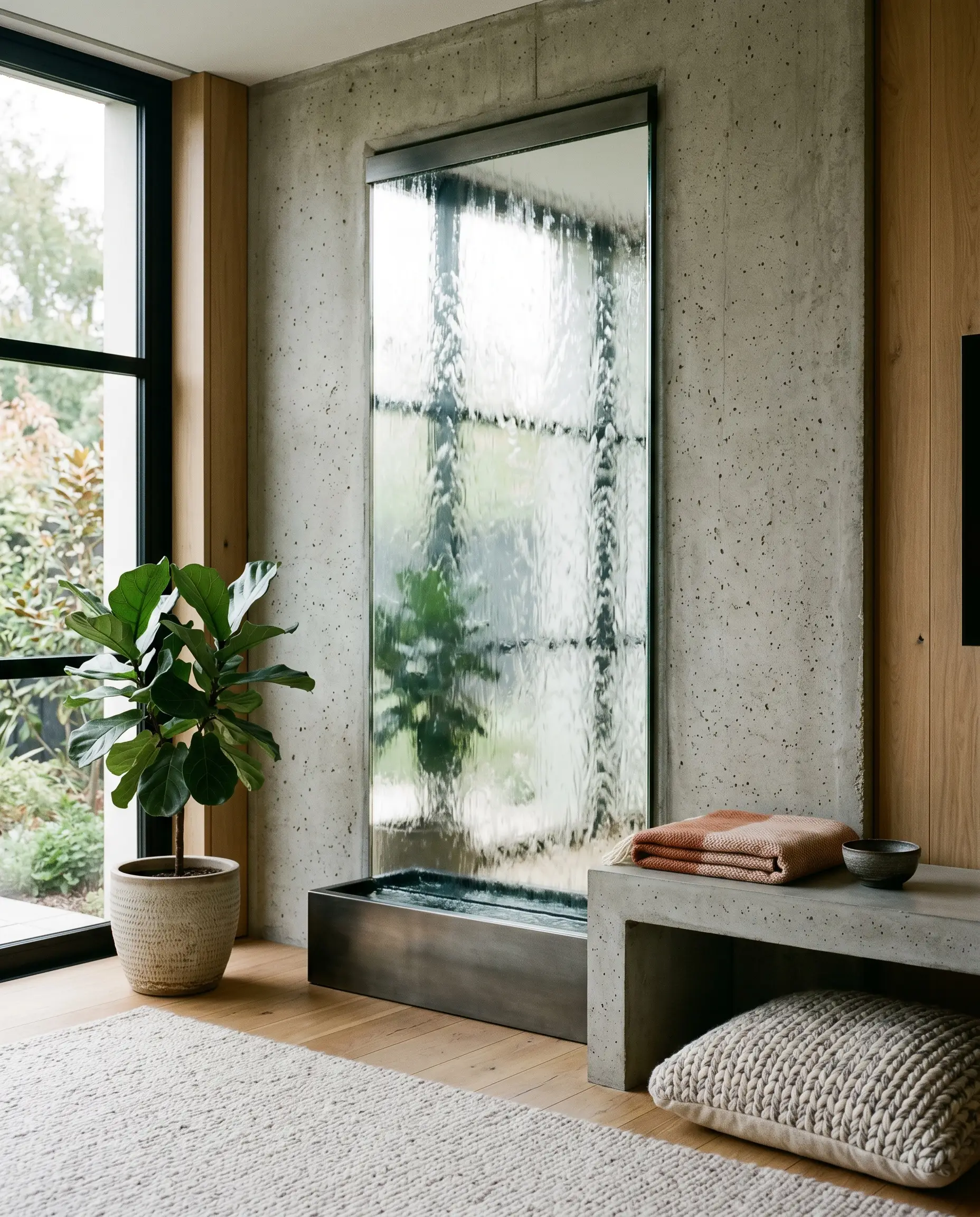
The aggressive, gurgling fountains of previous decades have been replaced by sophisticated, silent fluid dynamics. Modern indoor water elements focus on ultra-low frequency ripples or sheer condensation walls, introducing a hypnotic, slow-moving focal point that anchors the room’s energy.
Continuous, low-velocity water movement generates negative ions, which bind to airborne pollutants and subtly improve indoor air quality.
Tech Spec
- Execution Vibe: Brutalist reflection pools or frameless glass condensation panels.
- Sensory Benefit: Deep visual relaxation and subtle humidity regulation.
- Maintenance Note: Requires integrated UV filtration to prevent algae growth without harsh chlorine off-gassing.
Utilize Smart Skylights for Dynamic Shadow Play
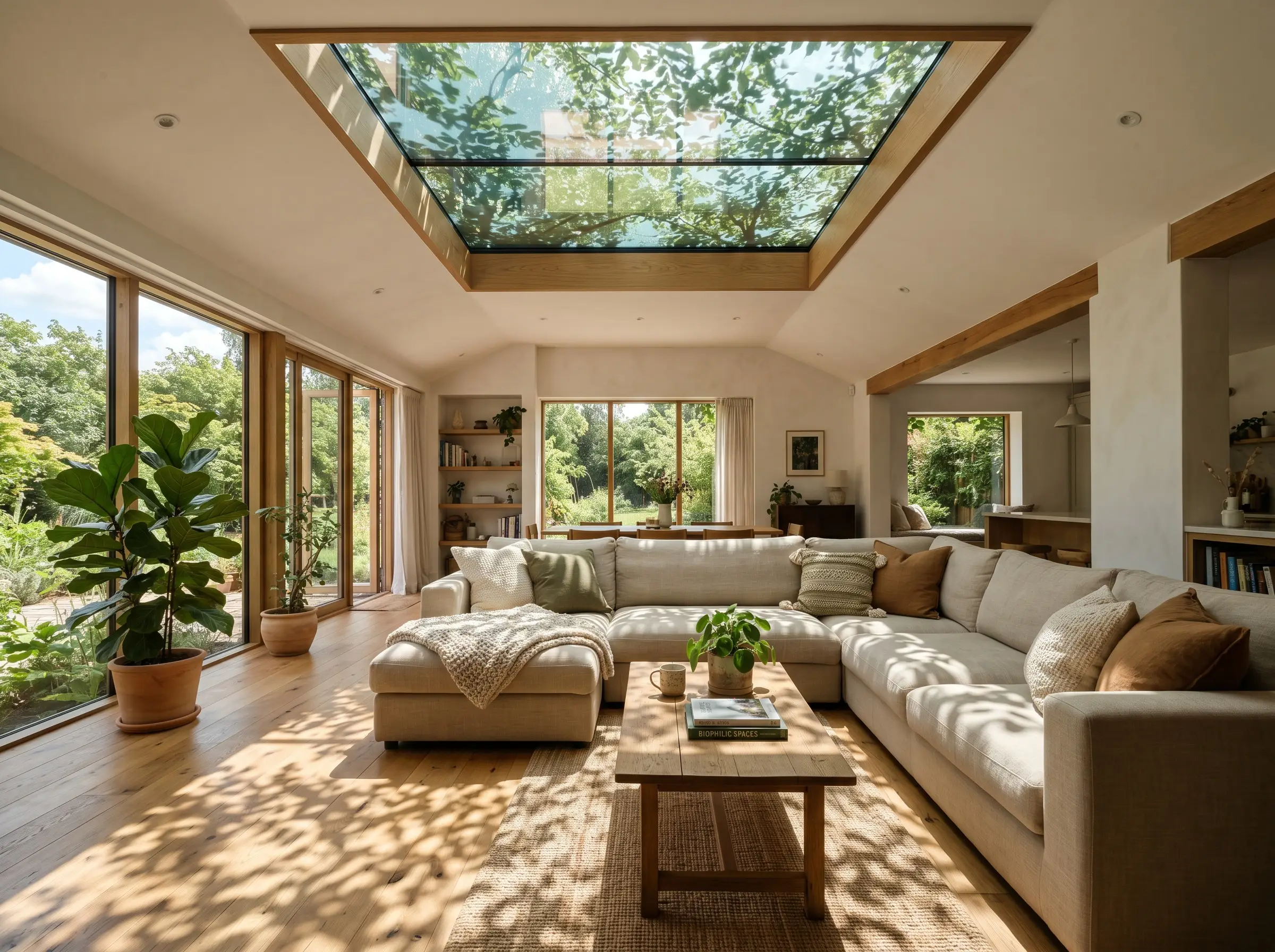
A static room feels dead; biological spaces require the passage of time to be visibly tracked across the architecture. Smart skylights filter harsh UV rays while allowing the sharp, moving shadows of nearby tree canopies to track slowly across the living room floor.
Electrochromic glass glazing dynamically tints in response to solar heat gain, preventing thermal overload while maintaining visual connection to the sky.
Tech Spec
- Architectural Impact: Creates a dynamic, ever-changing pattern of light and shadow.
- Wellness Metric: Maximizes pure lumen exposure to maintain a balanced biological rhythm.
- Placement Strategy: Center directly over the primary seating arrangement to establish a natural spotlight.
Diffuse Phytocides via HVAC-Integrated Scent Systems
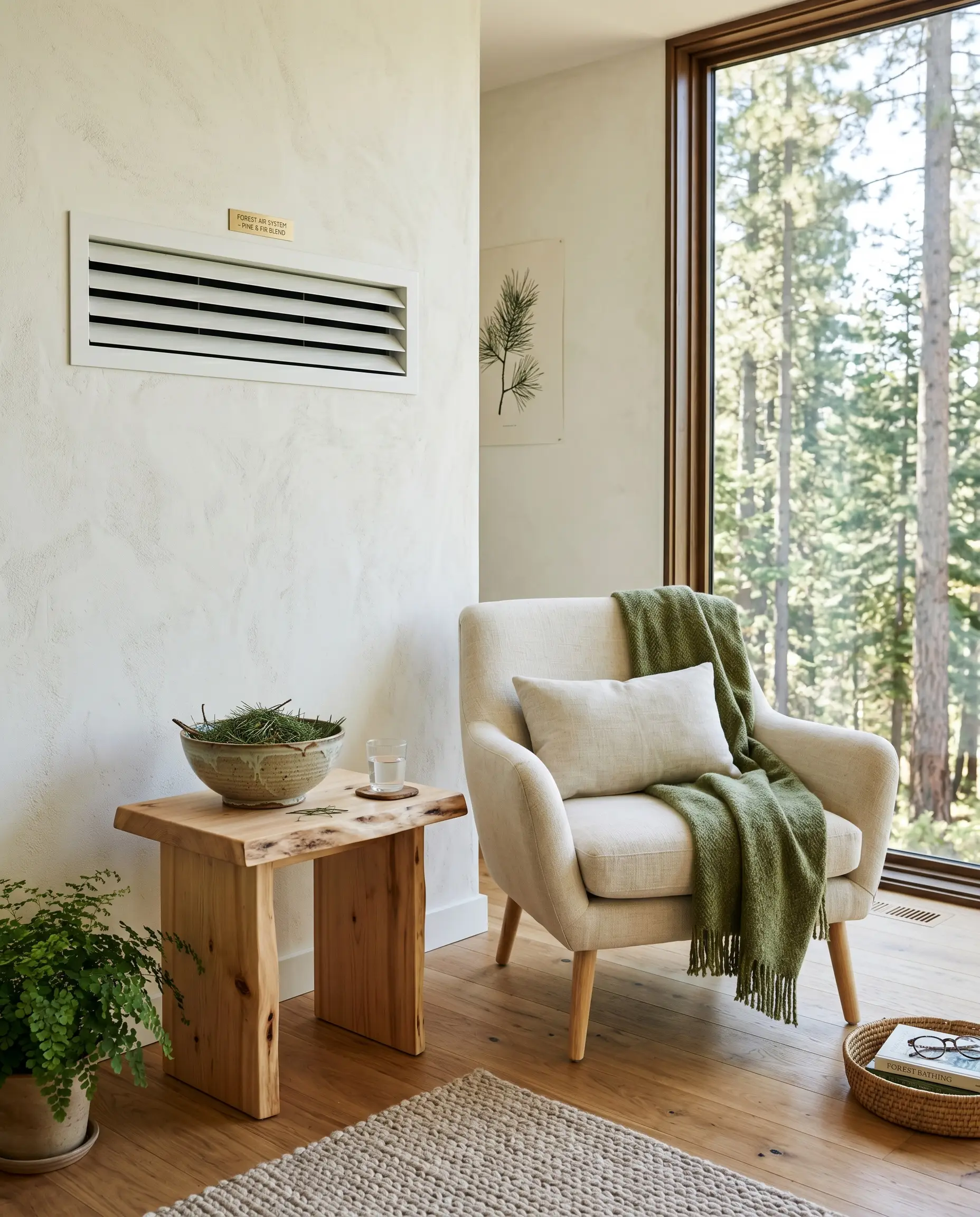
The olfactory dimension is the fastest route to the central nervous system, yet it is often ignored in residential design. Injecting pure, forest-derived compounds directly into the climate control system creates an invisible, therapeutic atmosphere that mimics the air quality of an old-growth forest.
Phytocides are antimicrobial volatile organic compounds emitted by trees that, when inhaled, significantly boost human natural killer (NK) cell activity and lower blood pressure.
Tech Spec
- Aroma Profile: Hinoki wood, damp earth, and crushed pine needles.
- Delivery Method: Cold-air diffusion units plumbed directly into the home’s ductwork.
- Purity Mandate: Strictly utilize 100% pure, wild-harvested essential oils; synthetic fragrances introduce harmful VOCs.
Structural Flow & Biomorphic Forms
Translating biological principles into a living space requires abandoning the rigid, Cartesian grid. We must manipulate spatial fluidity and embrace the psychology of shape to create a room that physically guides the body with ease.
Eliminate Hard Angles with Plaster-Curved Archways
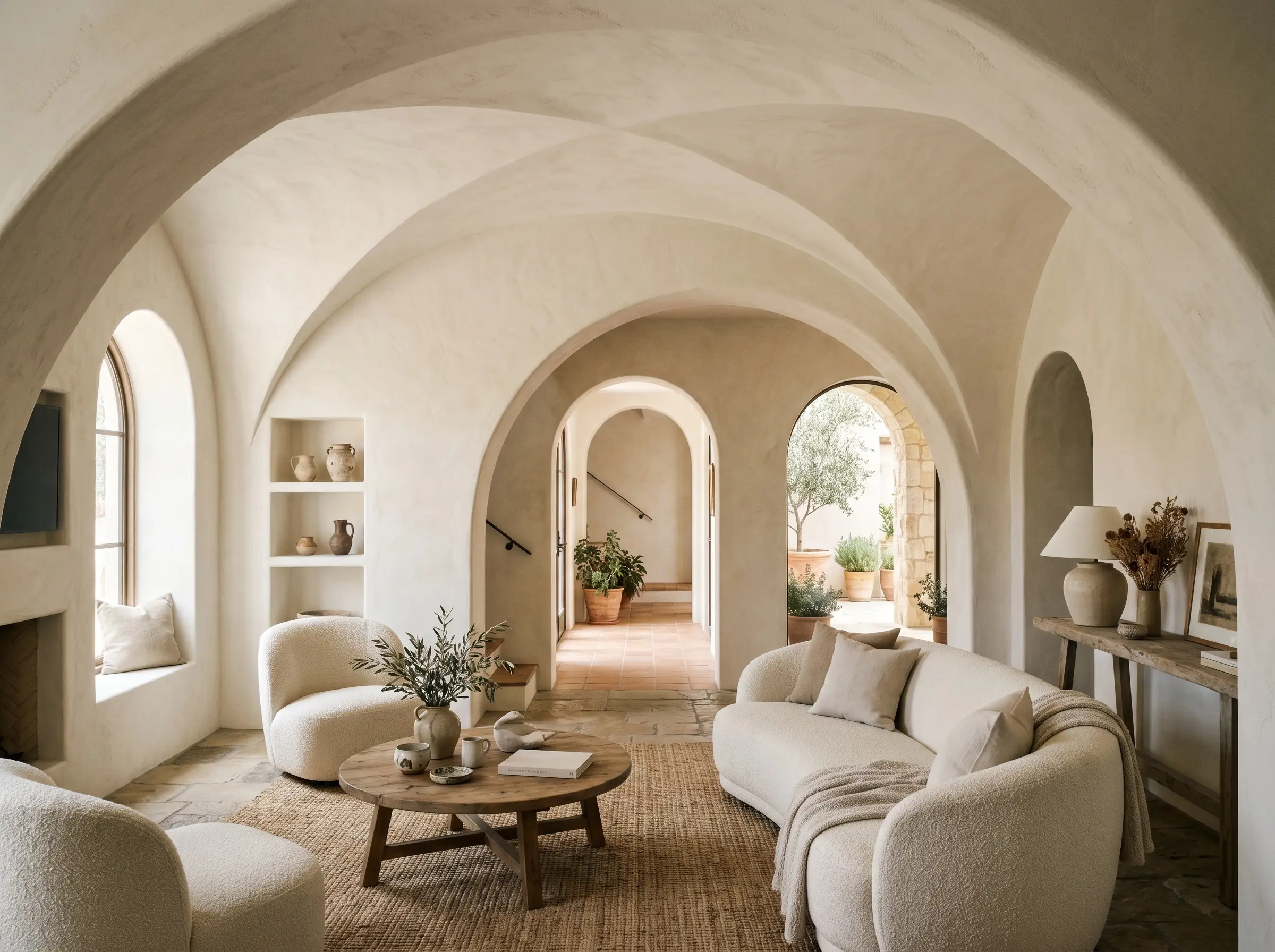
Sharp 90-degree corners trigger a subtle, subconscious threat response in the human brain. Softening structural transitions with sweeping, hand-troweled plaster archways creates a continuous visual flow that mimics the eroded forms of natural caves and canyons.
Ensure the radius of the archway curve is proportionate to the ceiling height; a minimum 24-inch radius is required to successfully soften a standard 9-foot ceiling.
Spatial Rule
- Architectural Vibe: Organic Modernism meets Mediterranean heritage.
- Execution Reality: Requires skilled framing and flexible corner bead beneath the final lime plaster finish.
- Visual Impact: Draws the eye upward, making the ceiling feel infinitely higher.
Float Sofas Away from Walls to Mimic Organic Landscapes
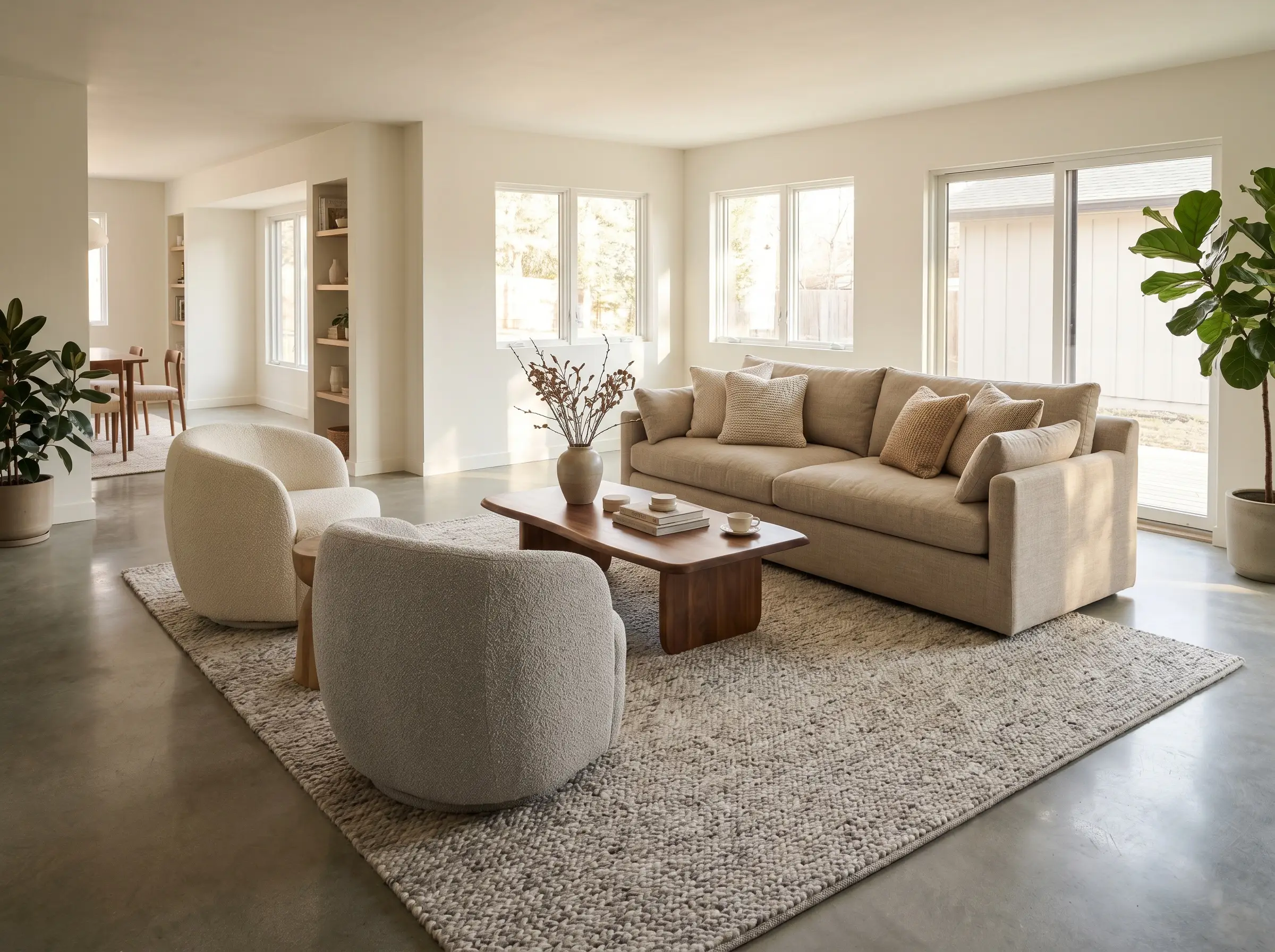
Shoving furniture against the perimeter creates a stagnant, waiting-room energy that kills spatial permeability. Pulling heavy seating into the center of the room establishes an intentional “island,” allowing for free-flowing, circulatory pathways that mimic natural riverbends.
Maintain a minimum 36-inch circulatory pathway around all sides of a floating seating arrangement to ensure unobstructed spatial flow.
Spatial Rule
- Layout Strategy: Centralized, conversational clustering.
- Grounding Tactic: Anchor the floating furniture with an oversized, textured area rug to define the zone.
- Psychological Benefit: Promotes a feeling of refuge and intimacy within a larger open-plan space.
Opt for Low-Profile Seating to Ground the Sightline
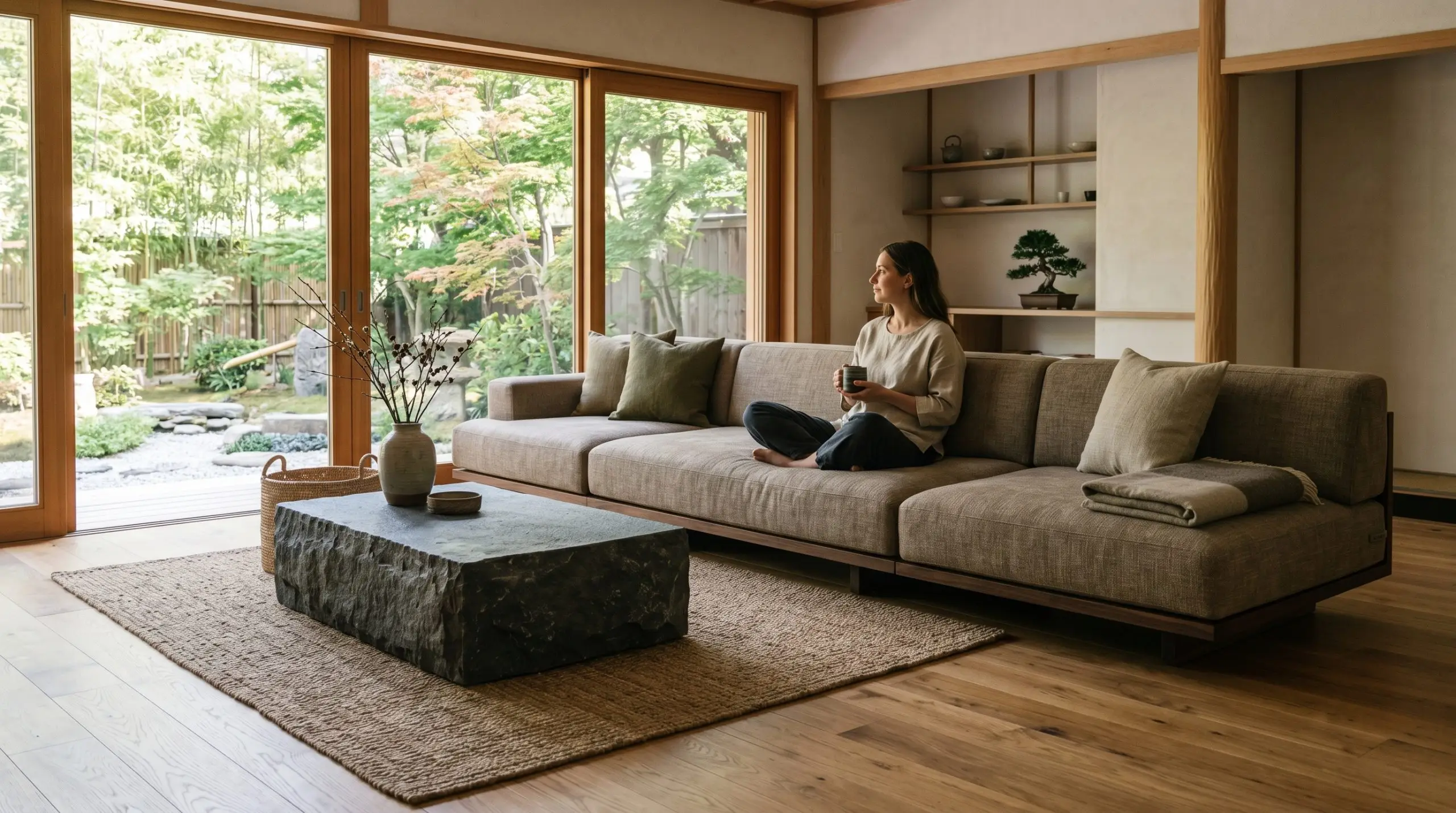
Towering, overstuffed sofas dominate the visual field and sever the connection to the floor. Selecting low-slung, deeply horizontal seating drops the room’s center of gravity, anchoring the occupant closer to the earth and expanding the perceived volume of the space above.
Seat heights should strictly measure between 14 to 16 inches from the floor to successfully execute a grounded, biomorphic profile.
Spatial Rule
- Silhouette Profile: Deep, horizontal, and highly structured.
- Cultural Influence: Borrows heavily from traditional Japanese tatami-level living principles.
- Styling Synergy: Pairs flawlessly with heavy, monolithic stone or mycelium coffee tables.
Maximize Indoor-Outdoor Permeability with Pocket Glass Walls
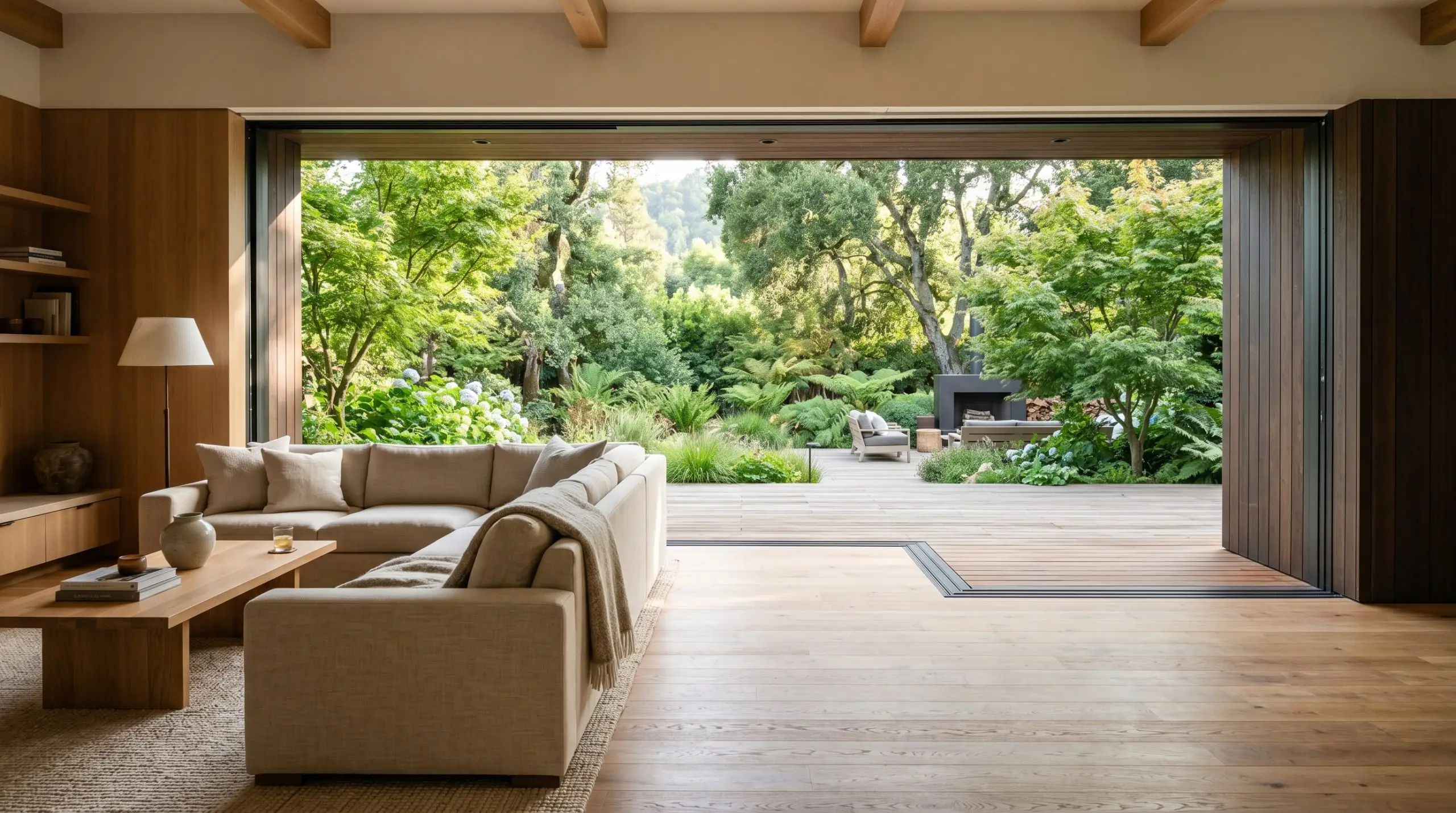
The ultimate biophilic achievement is the complete dissolution of the architectural boundary between the living room and the exterior landscape. Retractable pocket glass systems physically remove the wall, inviting natural breezes, ambient outdoor acoustics, and uninterrupted sightlines directly into the home.
The exterior decking material must perfectly match the interior flooring in both color and texture to achieve a seamless visual transition when the doors are open.
Spatial Rule
- Structural Reality: Requires significant header reinforcement and a flush-track floor installation.
- Climatic Consideration: Specify thermally broken aluminum frames and triple-glazing to maintain energy efficiency.
- Sensory Gain: Total immersion in hyper-local weather patterns and natural lighting.
Use Asymmetrical, Pebble-Shaped Ottomans and Mirrors
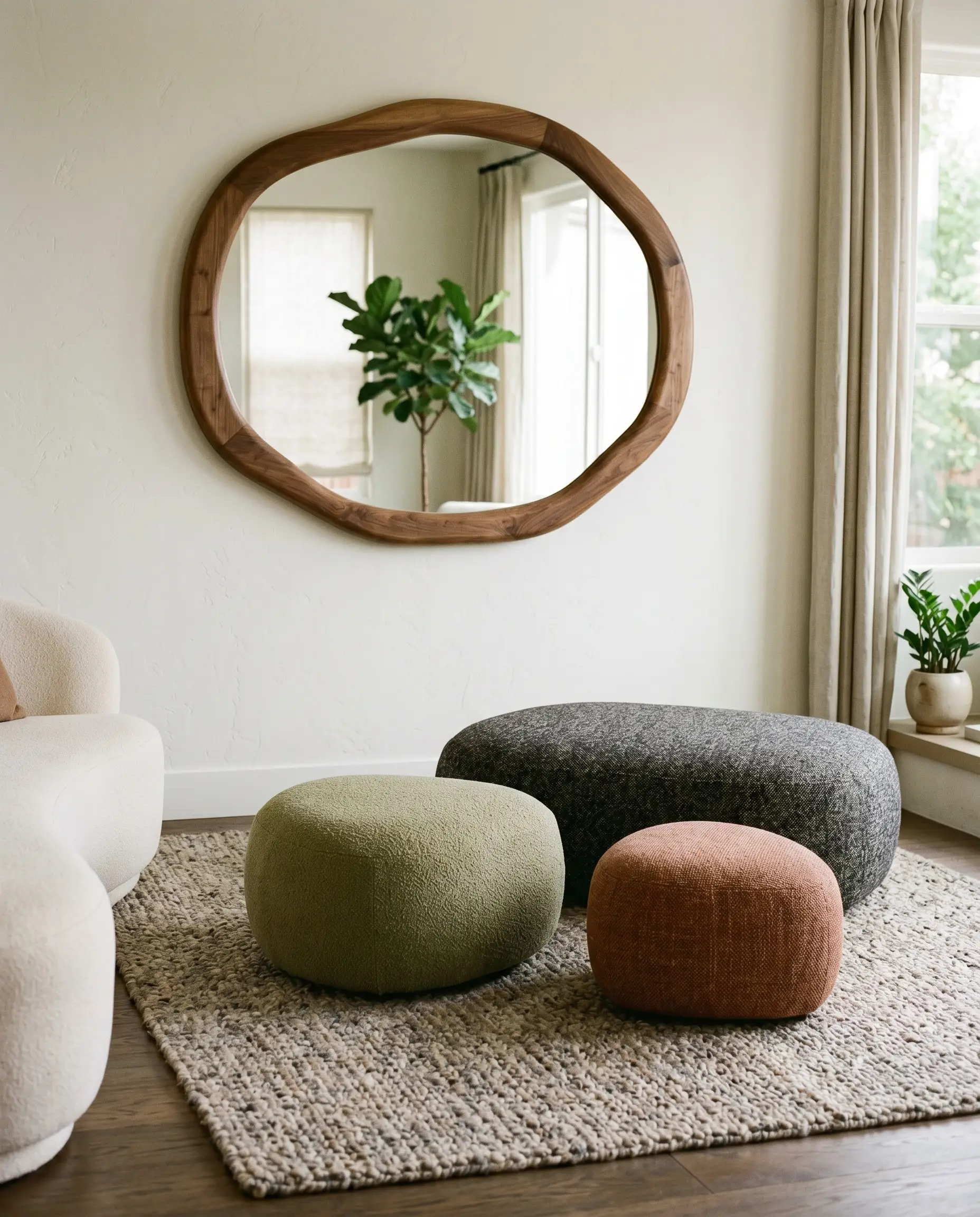
Perfect symmetry does not exist in the wild; it is an artificial construct that reads as rigid and clinical. Introducing kidney-shaped mirrors and pebble-like, asymmetrical ottomans injects necessary biomorphic irregularity, giving the eye organic shapes to trace and explore.
Leave at least 18 inches of breathing room around asymmetrical furniture to allow the irregular silhouette to be fully appreciated.
Spatial Rule
- Form Factor: Soft, rounded, and distinctly non-geometric.
- Placement Strategy: Cluster ottomans in groups of two or three varying sizes to mimic scattered river stones.
- Reflective Benefit: Asymmetrical mirrors bounce light unpredictably, creating a more dynamic, natural illumination pattern.
Botanical Integration 2.0: Curated, Not Cluttered
The chaotic, overstuffed aesthetic of the indoor jungle is a maintenance nightmare that ultimately induces anxiety. 2026 demands a firm, editorial approach: we are executing curated, architectural plant integration that treats living foliage as high-end sculpture.
Frame the Sofa with a Singular, Mature Specimen Tree (e.g., Black Olive)
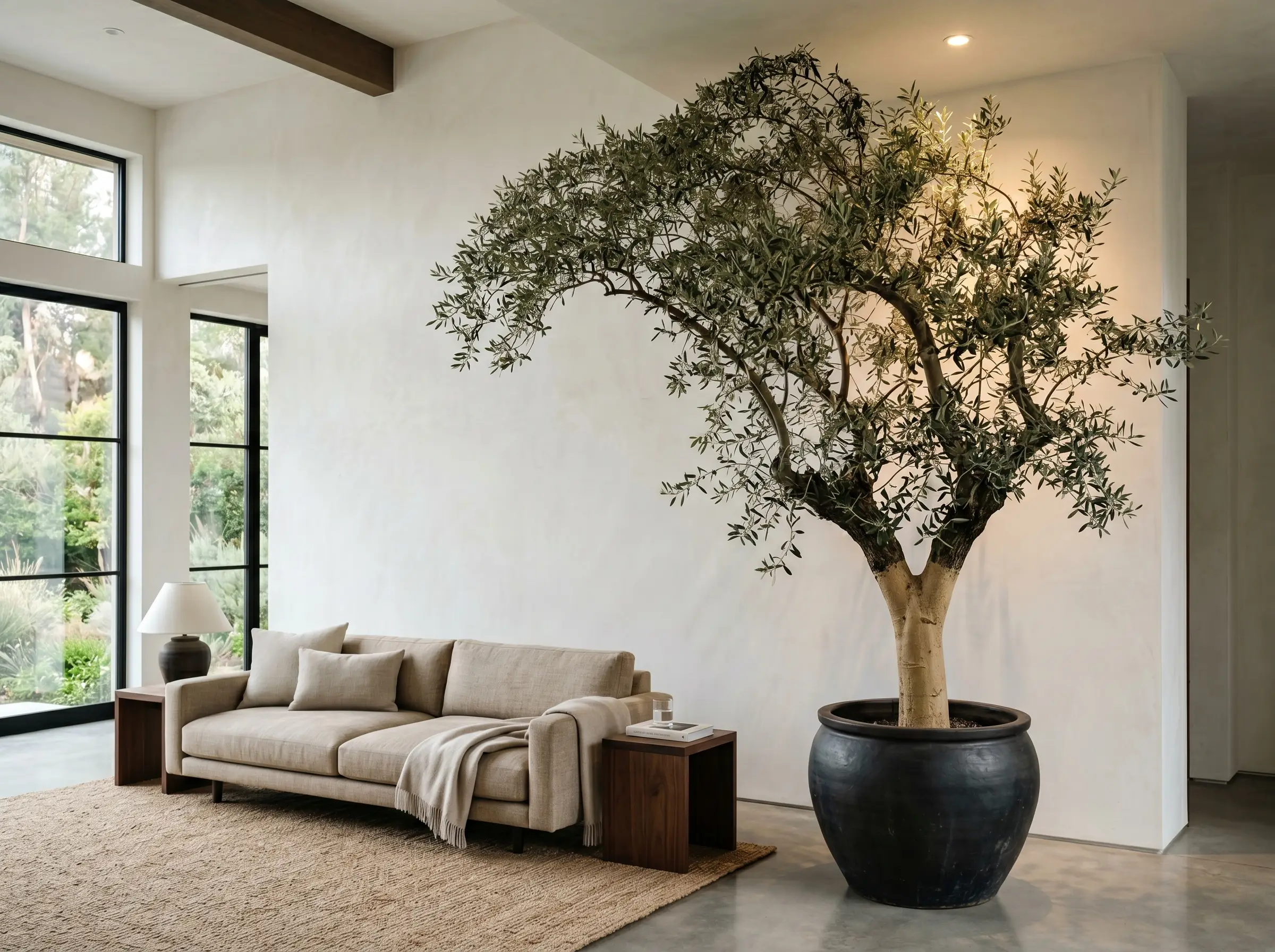
Dozens of tiny, mismatched pots create severe visual clutter that distracts from the room’s architecture. Investing in one massive, mature specimen tree—such as a Black Olive or Ficus Audrey—provides immense structural canopy and a singular, breathtaking focal point.
- Visual Impact: High-end, architectural drama that immediately establishes scale.
- Pros: Delivers maximum biophilic impact with a clean, minimalist footprint.
- Cons: Requires precise directional lighting and strict watering regimens to protect the investment.
Install Preserved Reindeer Moss Acoustic Panels
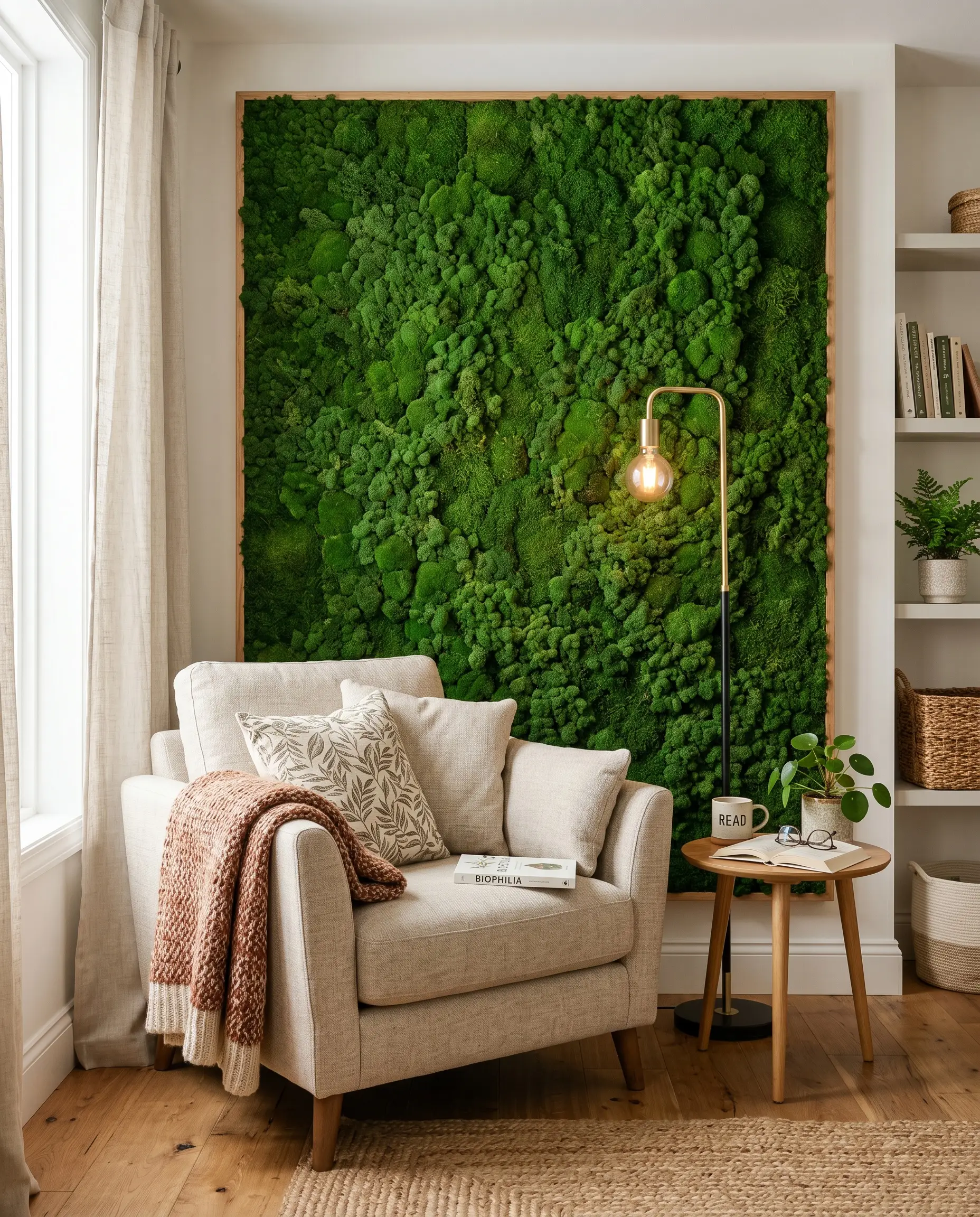
Living green walls are notoriously prone to failure, often dying and leaking within climate-controlled residential interiors. Preserved reindeer moss offers the exact same dense, fractal texture and acoustic dampening properties, but it has been biologically suspended in glycerin to freeze it in time.
- Acoustic Benefit: Highly effective at absorbing high-frequency sound waves and reducing echo.
- Pros: Requires absolutely zero water, zero sunlight, and zero pruning.
- Cons: Cannot be placed in direct, harsh sunlight, as the UV rays will eventually fade the natural pigments.
Cultivate Hyper-Local, Enclosed Coffee Table Terrariums
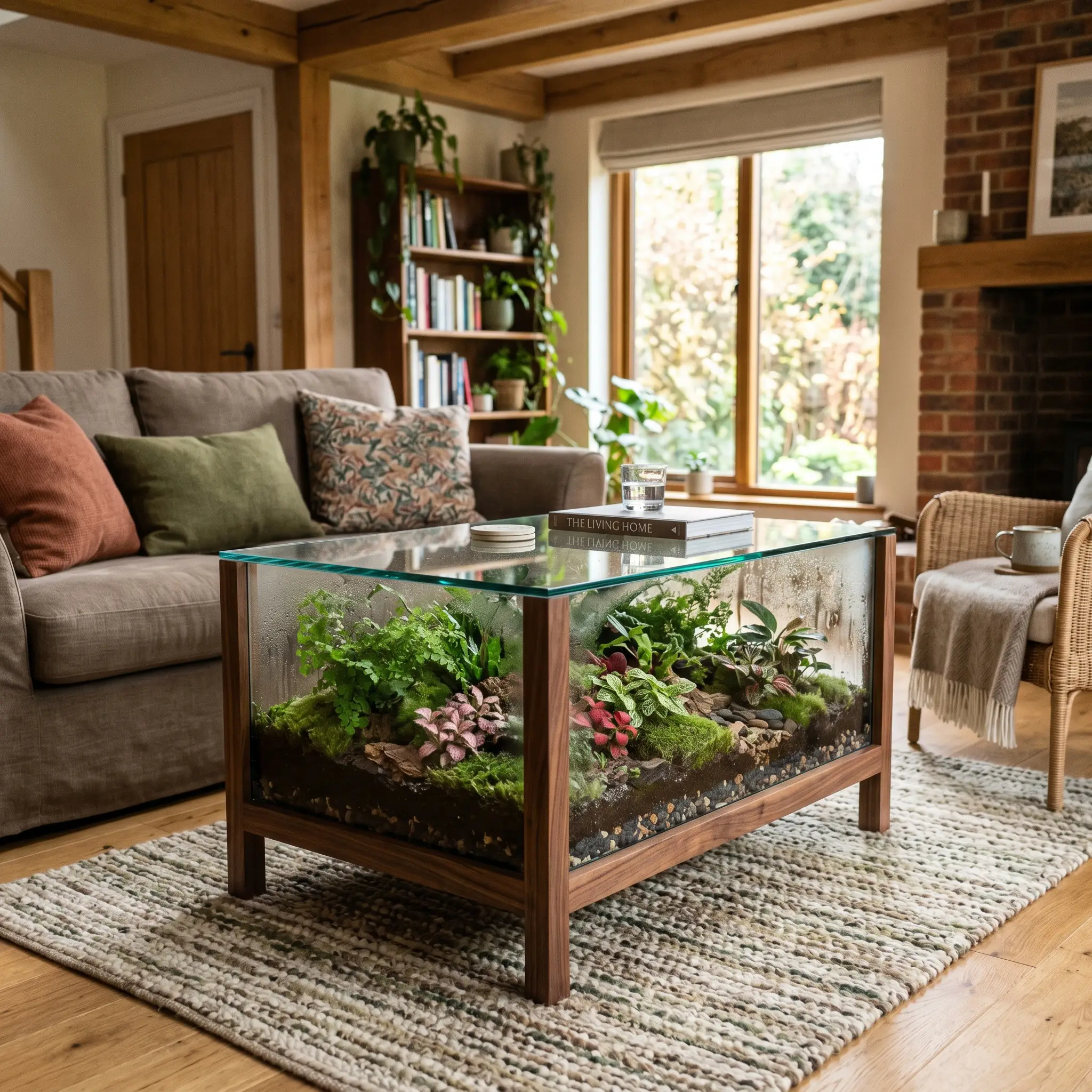
Instead of scattering foliage across every available surface, concentrate the botanical life into a single, highly engineered micro-climate. A custom glass-enclosed coffee table acting as a humid terrarium provides a mesmerizing, self-sustaining ecosystem right at the center of the seating area.
- Ecosystem Type: Closed-loop, high-humidity tropical flora (ferns, mosses, fittonias).
- Pros: Self-watering via condensation cycles; acts as a living, breathing piece of furniture.
- Cons: Requires occasional glass cleaning and precise initial soil layering to prevent rot.
Suspend Kokedama Installations over Reading Nooks
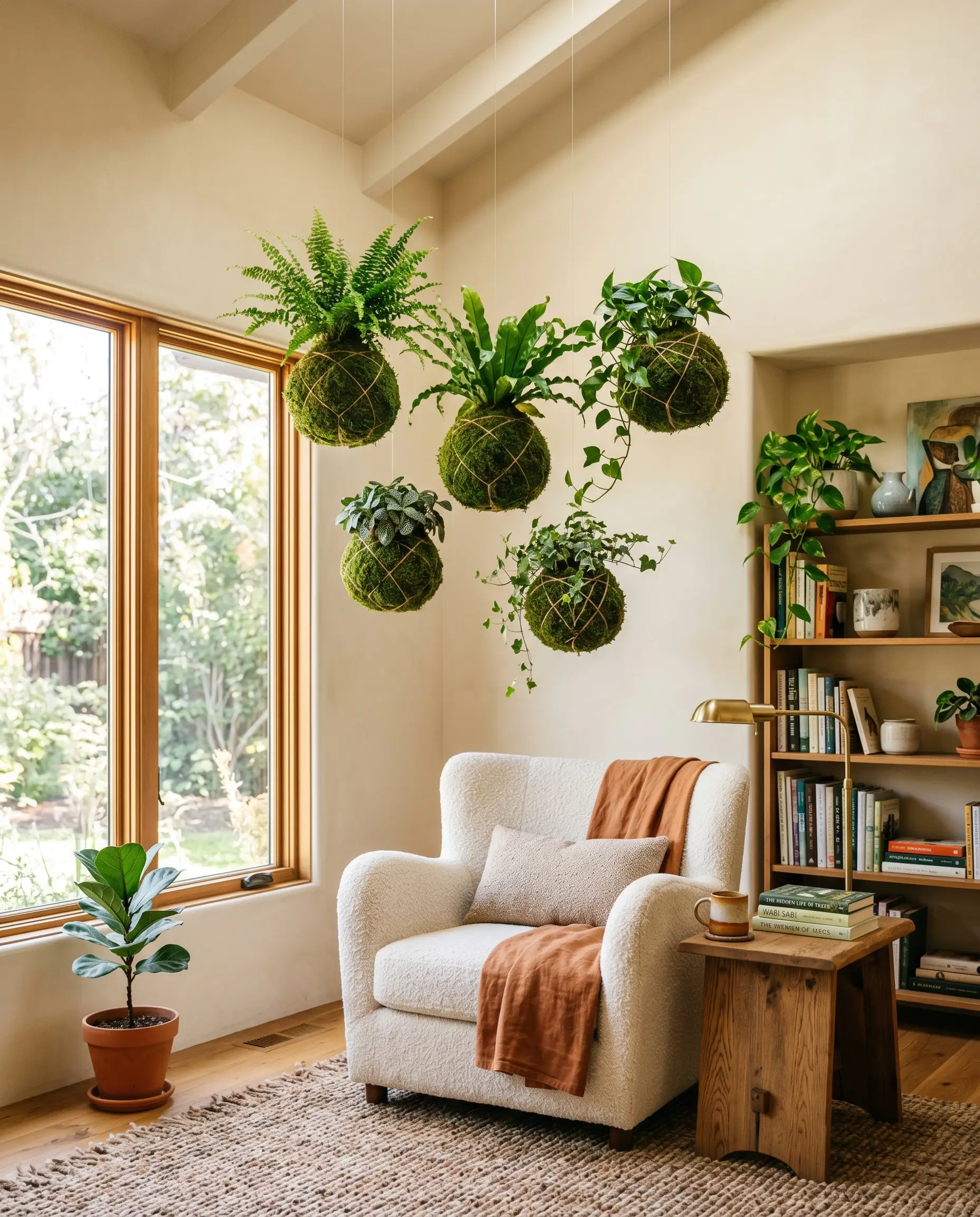
Elevating plant life off the floor draws the eye upward, expanding the perceived height of the sanctuary. Suspending a curated cluster of Kokedama—Japanese moss balls—creates a floating, biomorphic canopy that adds delicate, kinetic movement as they catch ambient air currents.
- Styling Approach: Hang in odd-numbered clusters using invisible monofilament line.
- Pros: Frees up valuable floor space while adding dramatic vertical interest.
- Cons: Requires taking them down weekly for a submerged soaking routine, demanding a dedicated maintenance schedule.
Color Theory: Algae, Earth, and Mineral Pigments
The 2026 color palette rejects synthetic acrylics entirely, focusing heavily on the organic source and chemical makeup of the pigment. We are mapping color to psychological responses using pure, earth-derived materials.
Drench Walls in VOC-Free, Algae-Derived Greens
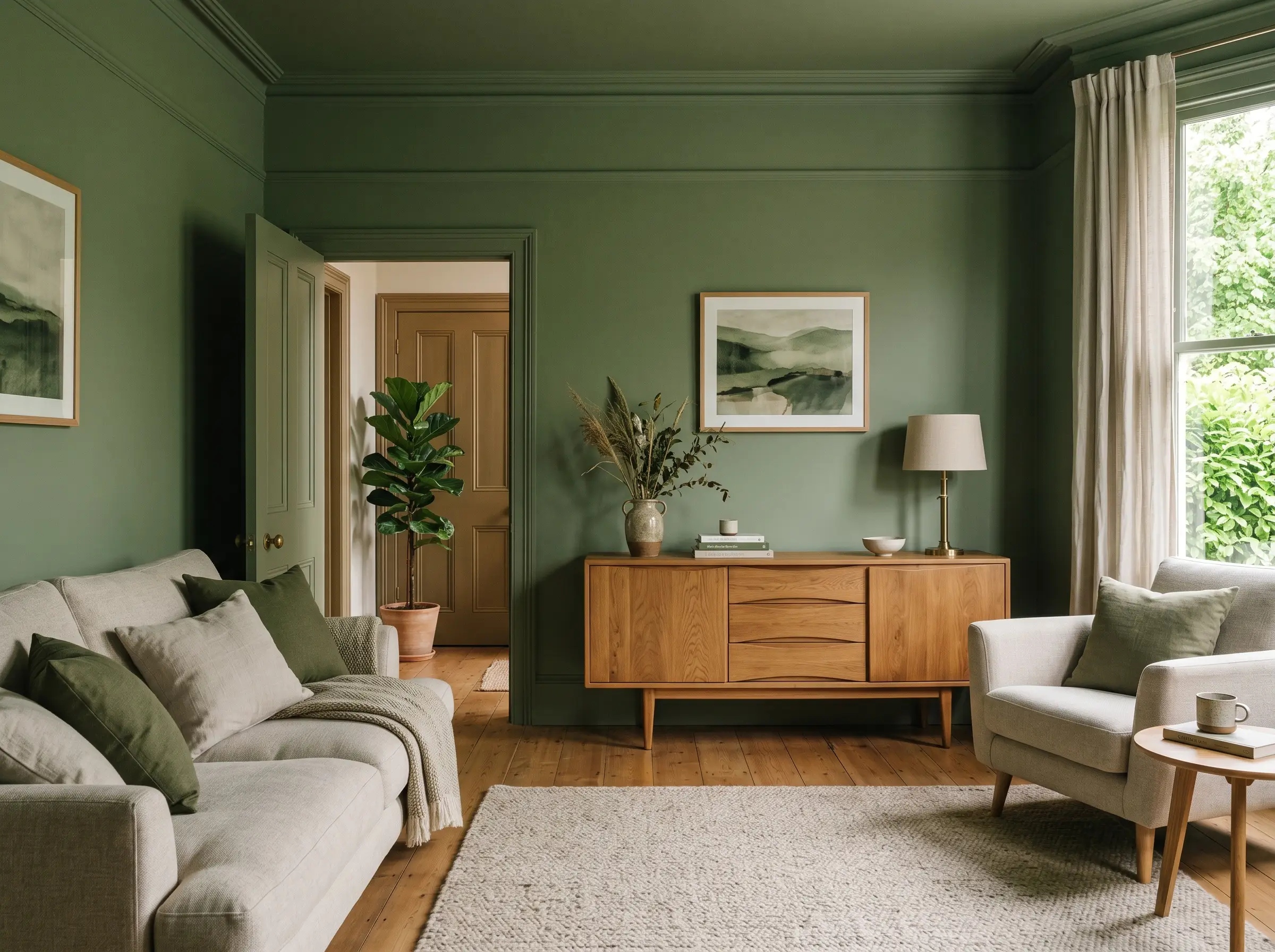
Standard paint off-gasses toxic chemicals for years, actively degrading indoor air quality. Utilizing algae-derived, VOC-free pigments to color-drench the entire room (walls, trim, and doors) wraps the occupant in a seamless, breathable envelope of restorative, natural color.
- Brand Recommendation: Graphenstone (Ecosphere line) for true ecological purity.
- Paint Match: Graphenstone Biosphere in “Olive”
- Psychological Impact: Deeply calming; lowers heart rate by mimicking the immersion of a dense forest environment.
Layer Monochromatic Mineral Tones (Terracotta, Sand, Ochre)
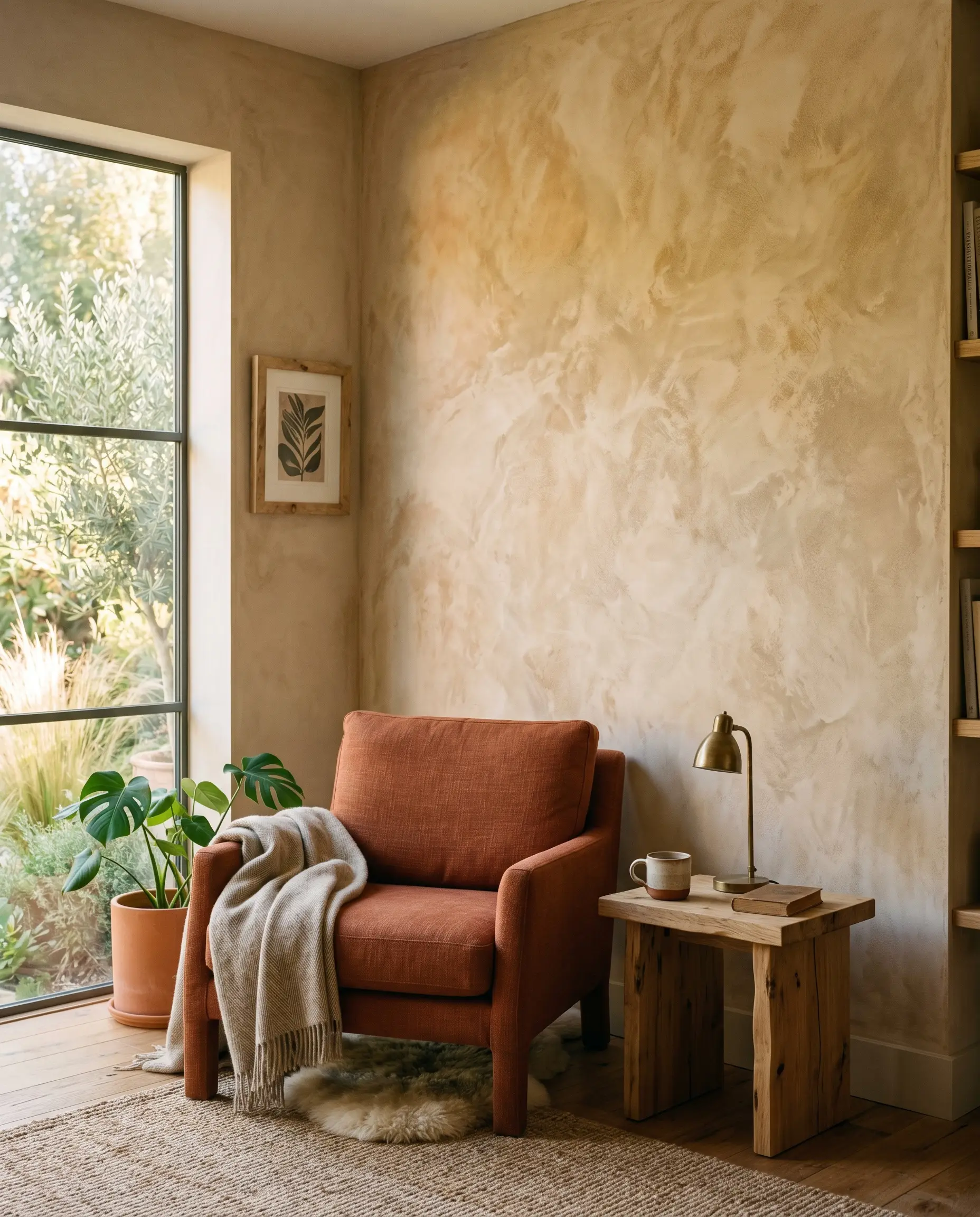
Relying on stark, hospital-white walls creates a sterile environment that is biologically alienating. Layering complex, monochromatic mineral tones derived from crushed clay and stone introduces a subtle, earthy warmth that shifts beautifully as the sun moves across the room.
- Brand Recommendation: Portola Paints (Roman Clay finish).
- Paint Match: Portola Paints Roman Clay in “Patagonia”
- Application Technique: Trowel-applied to create a suede-like, mottled texture that catches the light.
Use Deep “Forest Canopy” Tones Exclusively on the Ceiling
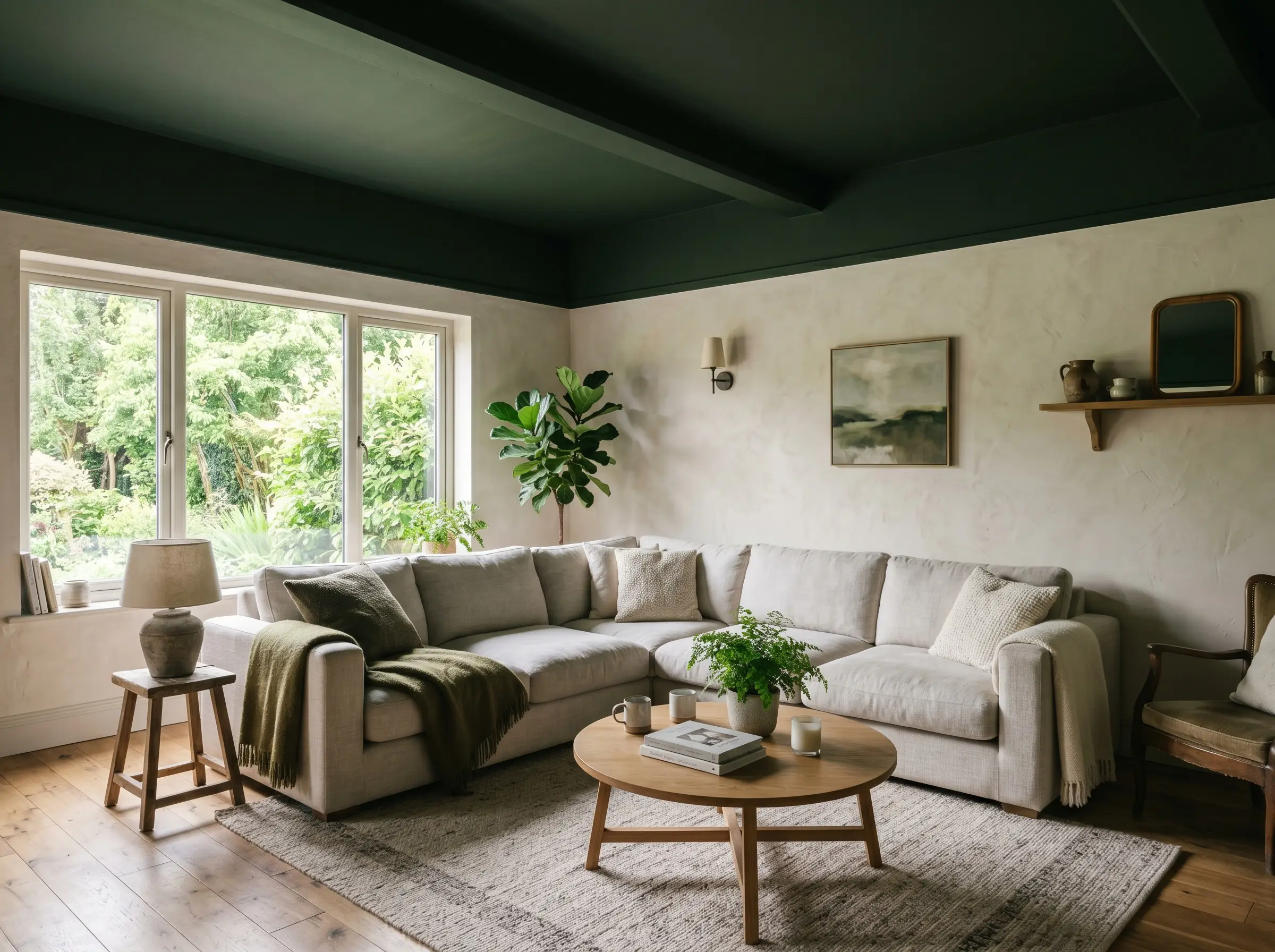
The ceiling is the most underutilized plane in residential architecture. Painting the ceiling a deeply saturated, dark canopy tone triggers “refuge theory”—an evolutionary psychological response that makes humans feel protected and sheltered from above.
- Brand Recommendation: Farrow & Ball (Dead Flat finish for zero light reflection).
- Paint Match: Farrow & Ball Dead Flat in “Studio Green” (No. 93)
- Spatial Effect: Visually lowers an excessively high ceiling, creating a profound sense of intimacy and enclosure.
The 2026 Biophilic Investment Matrix
Executing a natural sanctuary requires strategic capital allocation based on spatial priorities. Use this matrix to determine where to deploy accessible upgrades versus where to invest in bespoke, high-end architectural integrations.
| Element | Accessible Upgrade | High-End Bespoke |
|---|---|---|
| Lighting | Smart LED circadian bulbs | Hardwired DALI biodynamic systems |
| Walls | Troweled mineral lime wash | Custom poured rammed earth |
| Acoustics | Recycled PET wood slats | Fractal-milled thermally modified ash |
| Botanicals | Singular mature specimen tree | Integrated HVAC phytocide diffusion |
| Furniture | Raw jute area rugs | Mycelium composite sculptural tables |
Engineering Your Living Sanctuary
The 2026 biophilic living room is a holistic sensory experience, far surpassing the limitations of a mere visual theme. True spatial wellness is achieved through a meticulous layering of haptic textures, precise acoustic management, and advanced material science. Do not attempt to execute every innovation simultaneously; begin by anchoring the space with one macro-element—such as a biodynamic lighting system or a commanding specimen tree—before layering in the micro-textures of raw alpaca or mineral pigments. Step into your living room tonight, turn off the overhead lights, and critically evaluate the acoustic harshness and tactile temperature of your current layout.

The Aesthetics Desk curates the visual direction for Hackrea. Specializing in design history, global architectural movements, and interior styling, this desk focuses on the psychology of space and how to translate high-end, magazine-quality aesthetics into approachable residential design without falling into fleeting micro-trends.