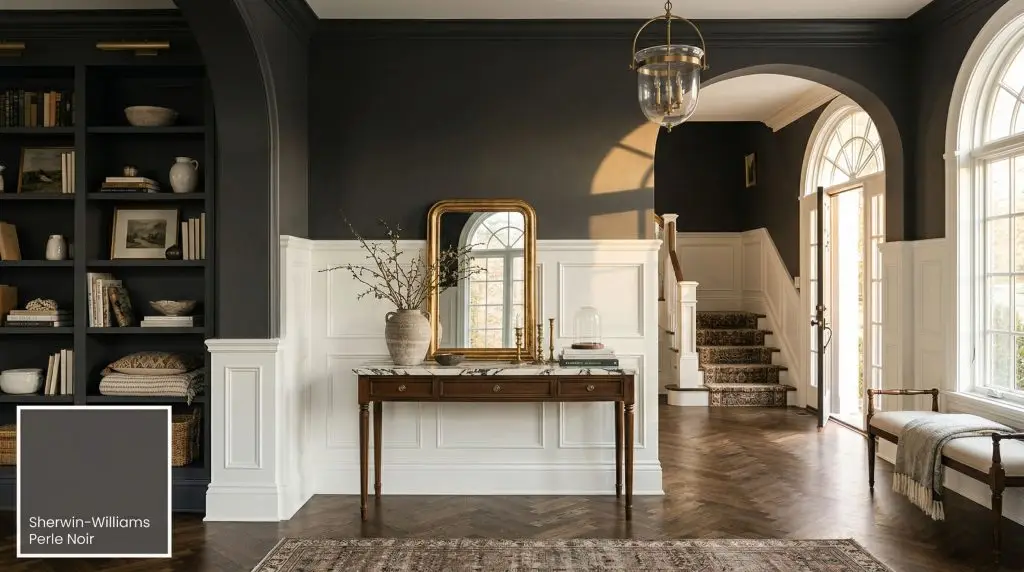
Perle Noir (SW 9154) is a deeply sophisticated, low-chroma charcoal with distinct cool plum and violet undertones. With an LRV of 8, it acts as a softer, more complex alternative to stark black, shifting between a velvety dark gray and a moody indigo-purple depending on the lighting.
Will Perle Noir clash with your room?
Paint Technical Profile
| Color ID / SKU | SW 9154 |
| HEX Code | #4f4d51 |
| Light Reflectance (LRV) | 8 |
| Use | Interior, Exterior |
Sherwin-Williams Perle Noir SW 9154: The Secret to Bespoke, Moody Sophistication
You want drama, but you fear the void. Stark black paint can suck the life out of a room, leaving it feeling flat, harsh, and utterly devoid of character. If you are chasing a historically grounded atmosphere, you need a color that provides massive architectural contrast while maintaining hidden depth.
Sherwin-Williams Perle Noir SW 9154 is the answer. This shade is dominating high-end design right now because it refuses to be one-dimensional. It delivers that coveted velvety depth without turning your carefully curated space into a black hole.
The Color DNA: Undertones & LRV
Understanding this low-chroma charcoal requires looking past its initial shadowed appearance. The math behind the pigment and its color reflectance tells a completely different story than the basic paint chip.
Because of its Light Reflectance Value of 8, this moody indigo-purple absorbs a staggering 92% of the light that hits it. That heavy light absorption means it sits dangerously close to true black. In shadows, it reads as a heavy charcoal, but the moment natural light strikes the wall, the chalky plum undertones bloom to the surface.
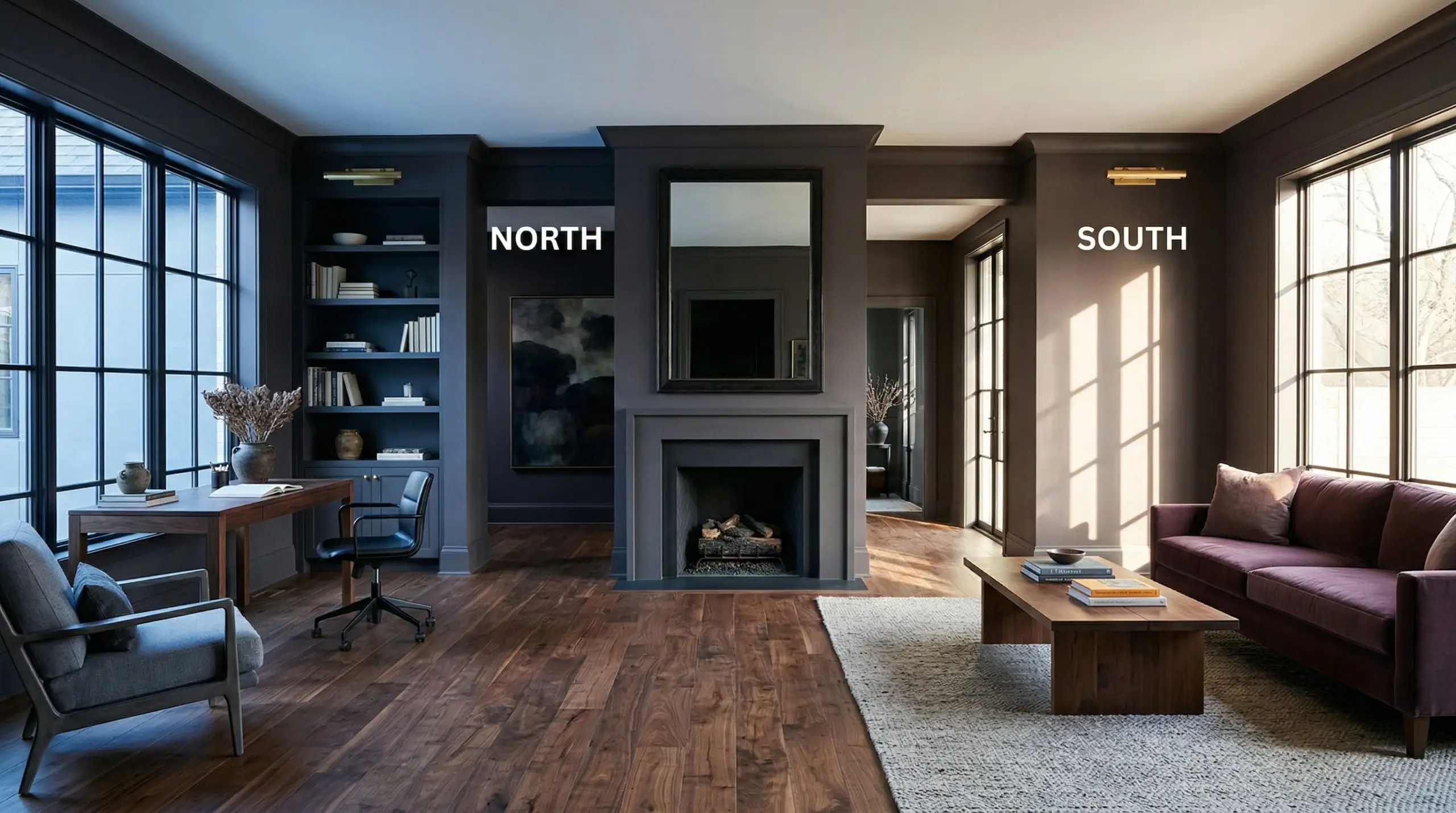
Lighting Effects & The Chameleon Factor
Let’s address the elephant in the room: you are terrified this paint will turn your elegant study into a tacky 1990s Barney nightmare. That fear is completely valid. Because Sherwin-Williams technically classifies SW 9154 as a purple, treating it like a standard neutral gray is a catastrophic mistake.
Its chameleon nature demands strict lighting control to succeed.
Popular Room Applications
Perle Noir is not a beginner-friendly neutral. It is highly specific, demanding intentional architecture and curated lighting to succeed. If you lack natural light or commit to the wrong pairings, it will drag a room down.
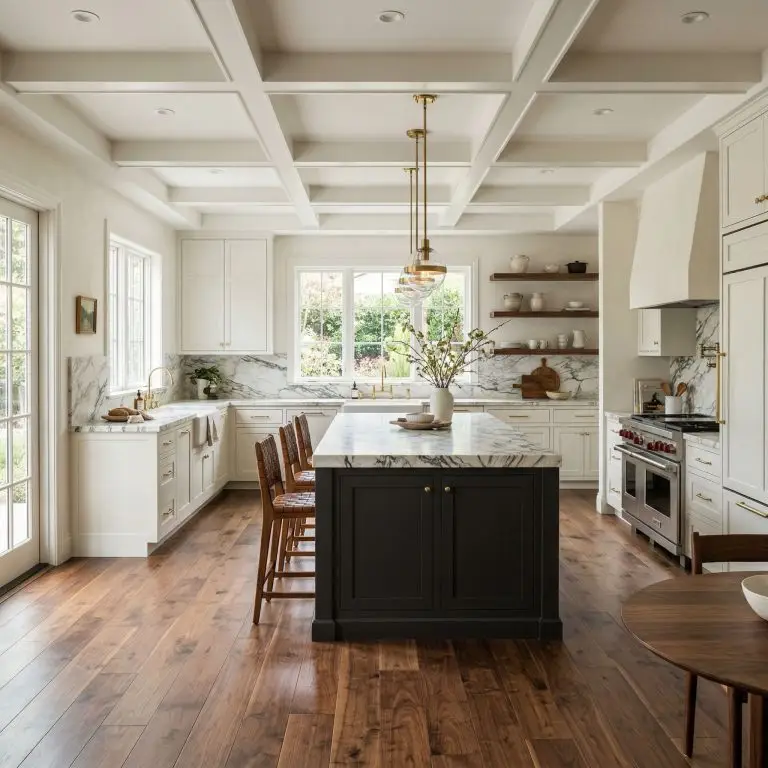
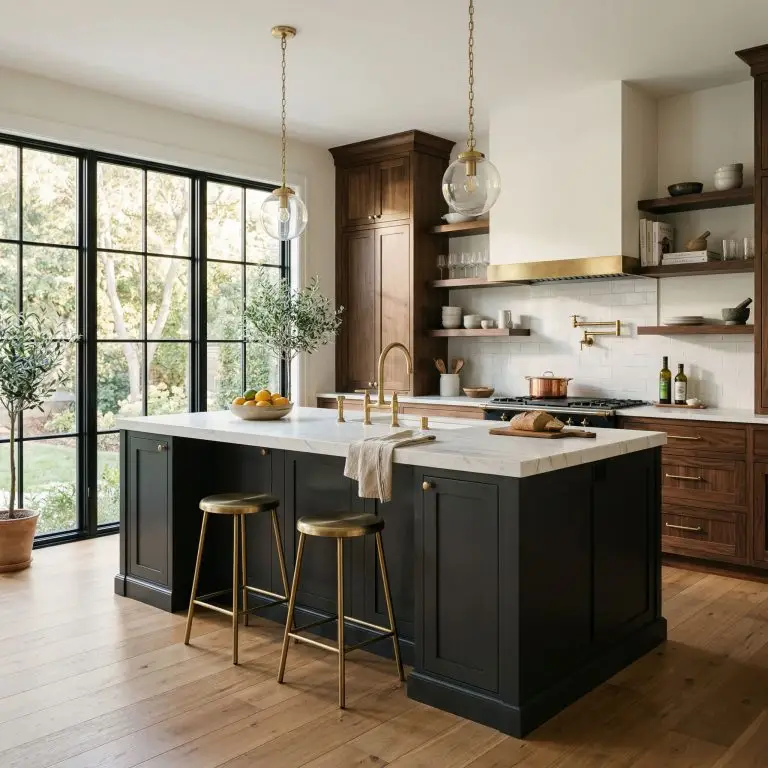
Grounding Kitchen Islands
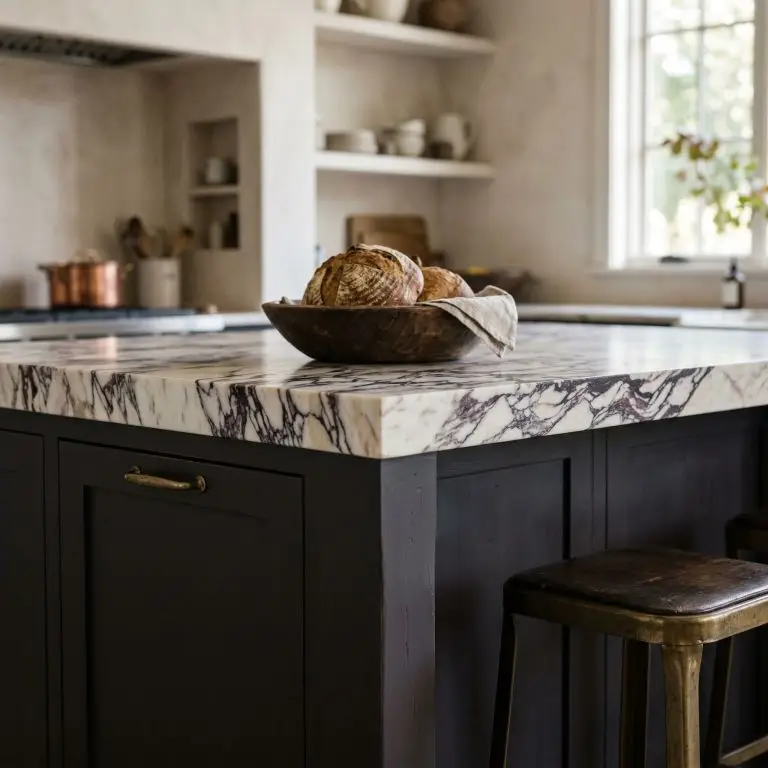
Using this moody charcoal on a kitchen island provides massive visual weight without the harshness of pure black. The key here is the horizontal plane of light. Because overhead lighting hits the vertical face of the cabinetry differently than the countertops, the plum undertones will subtly shift as you move around the kitchen. Pair it with heavily veined countertops to give the eye a dynamic focal point.
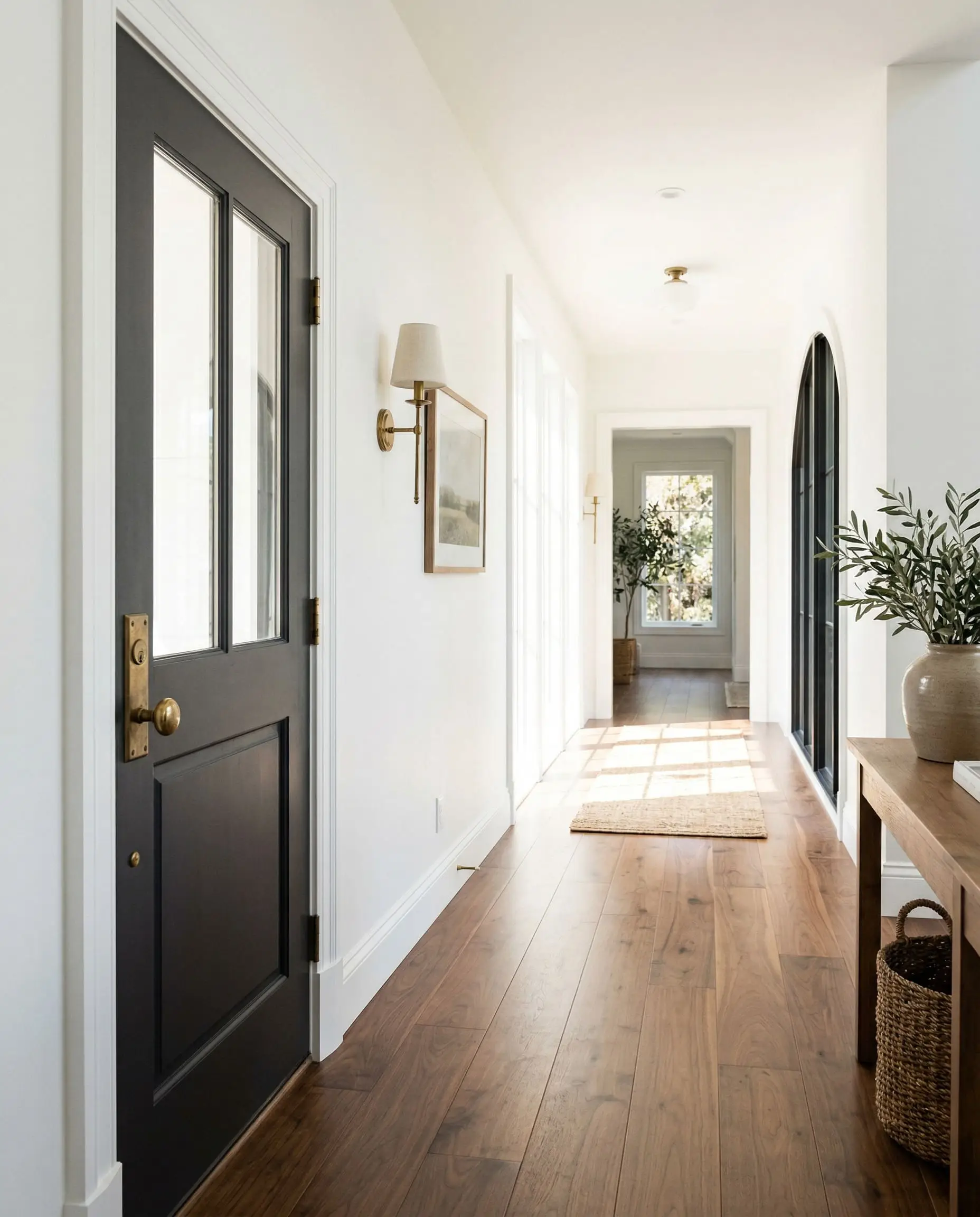
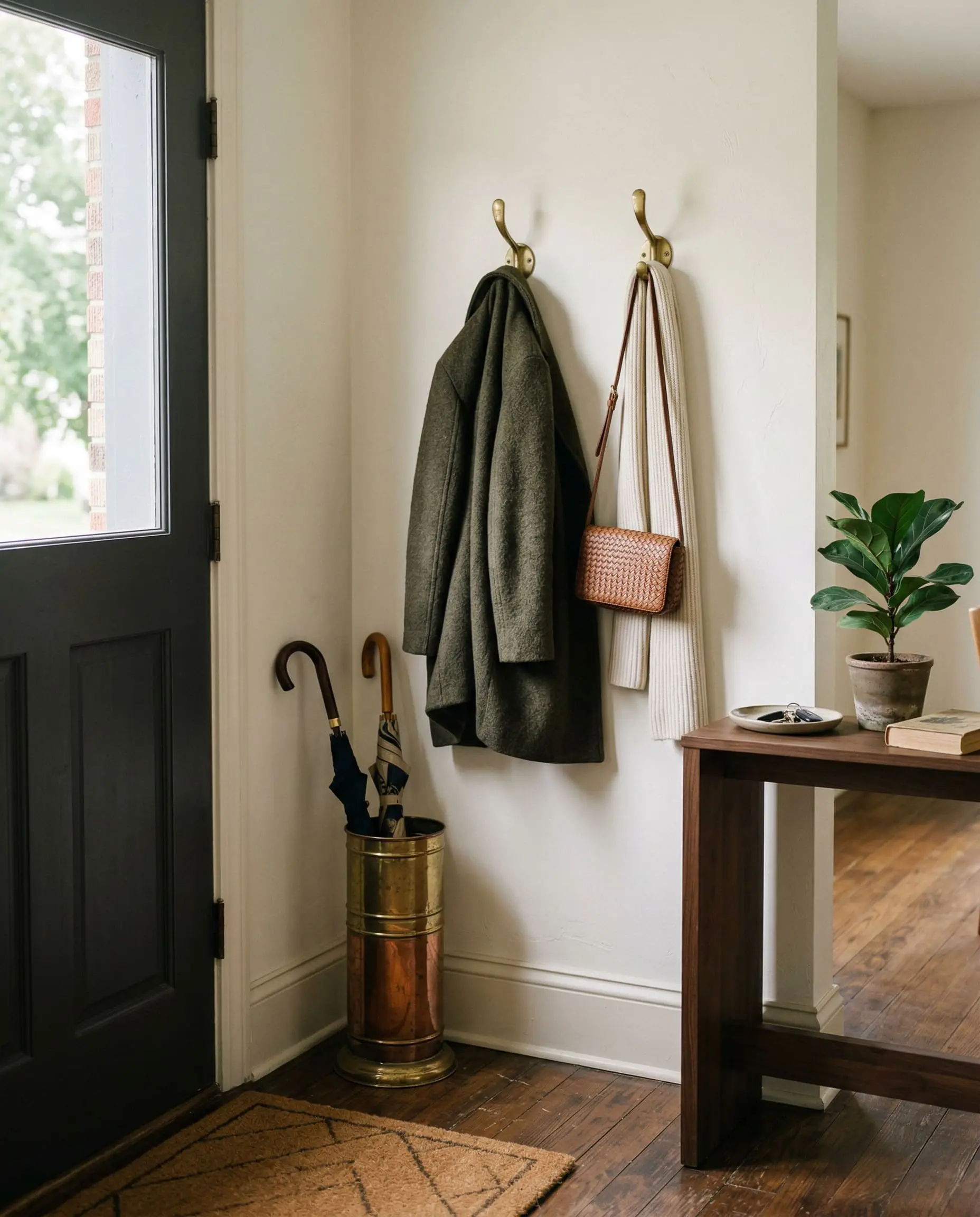
Striking Interior Front Doors
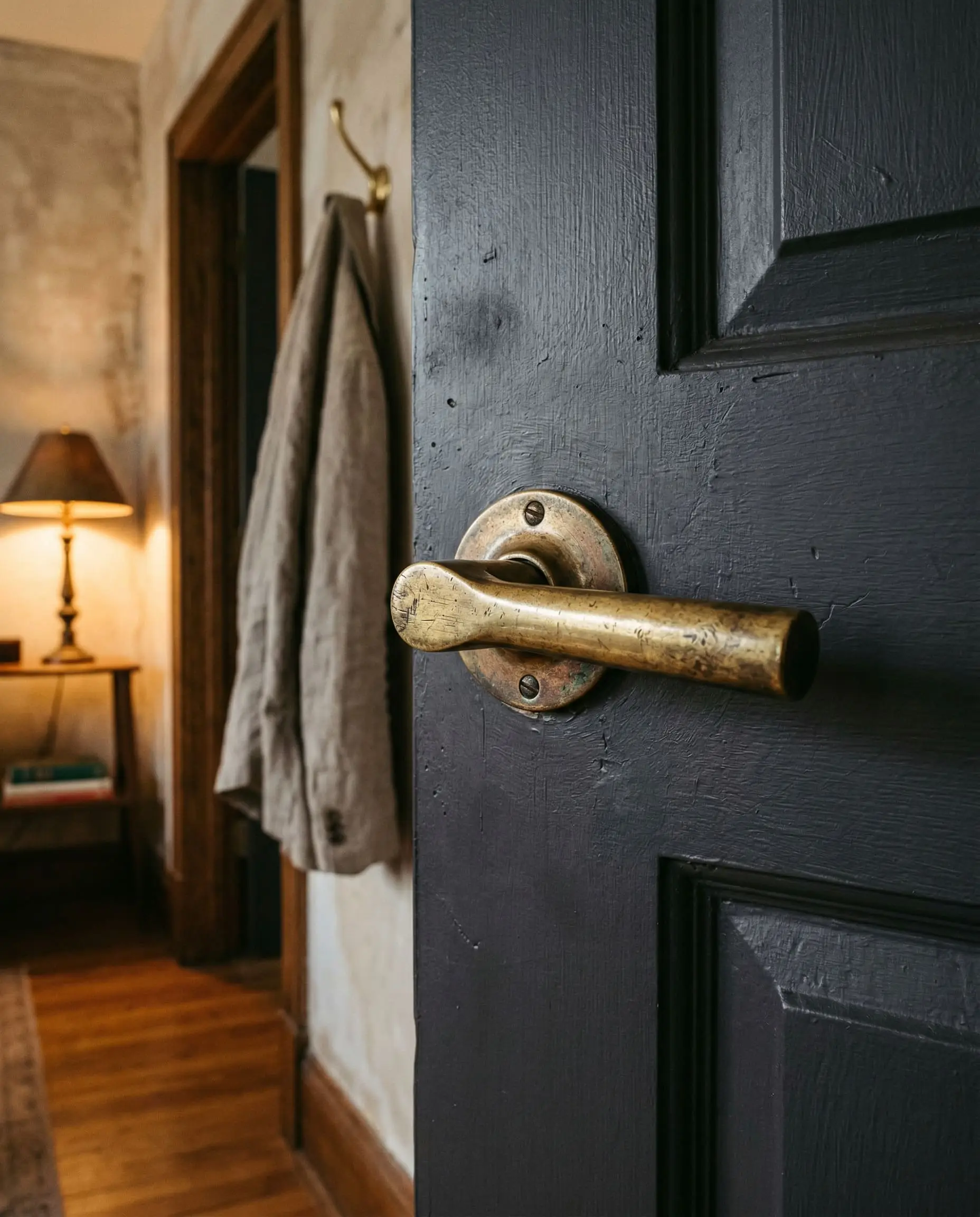
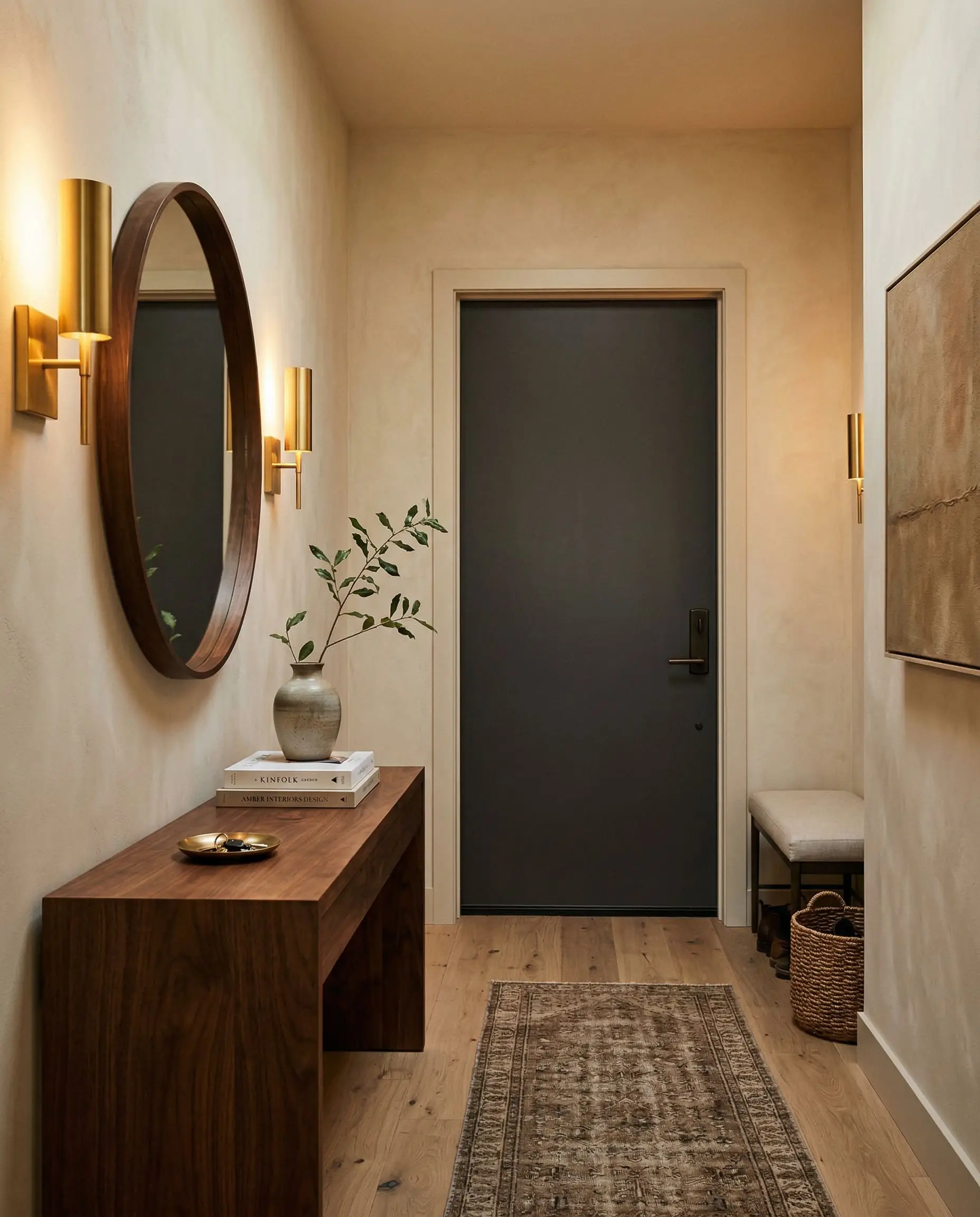
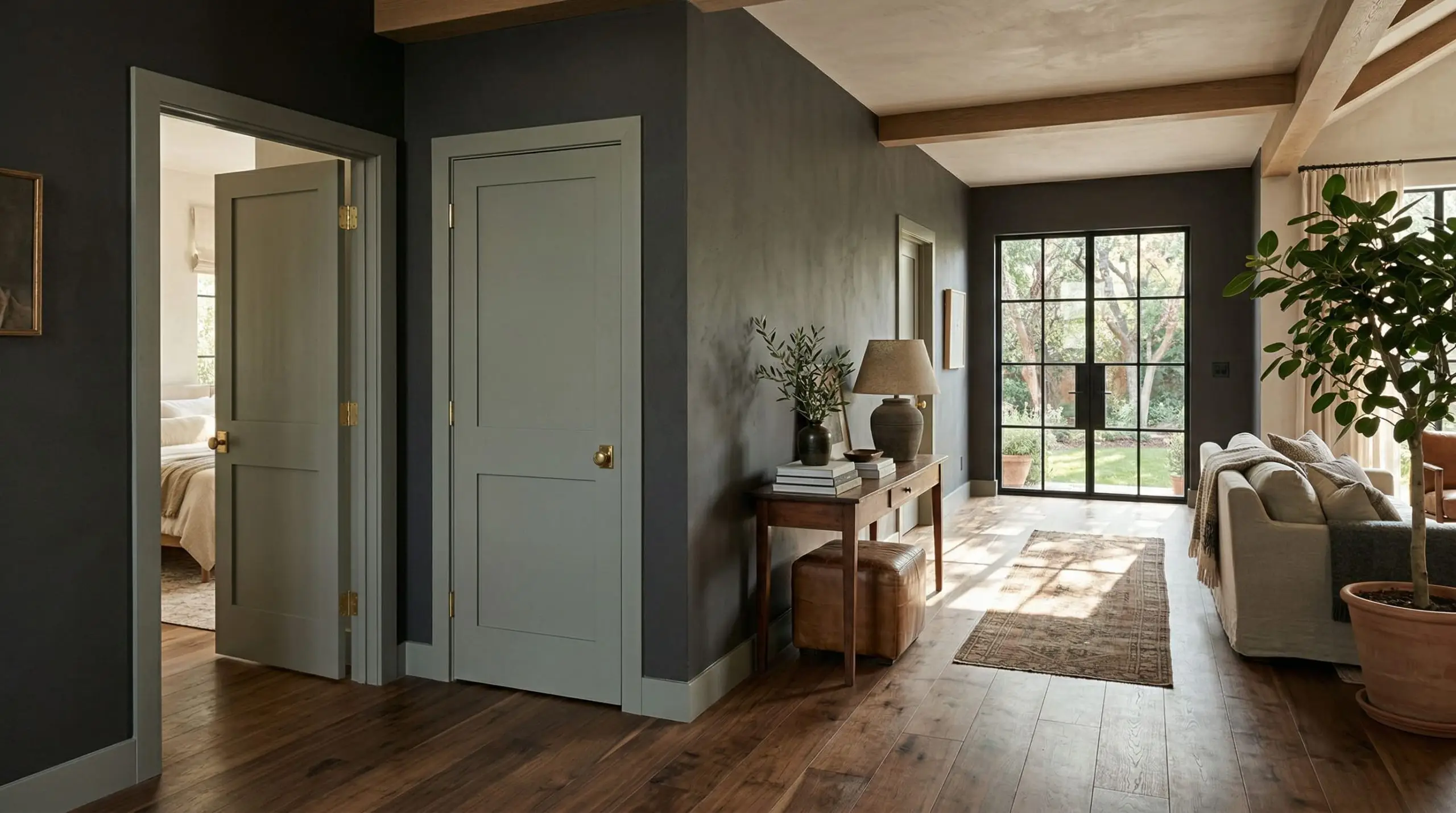
Painting an interior door is an exercise in framing. SW 9154 acts as a heavy, sophisticated border that draws the eye toward the exit. In a hallway flooded with natural light, the door becomes a standalone piece of art. If your entryway is completely windowless, be prepared for it to read as a soft, flat black.
Will Perle Noir work with your specific lighting, floor, or furniture?
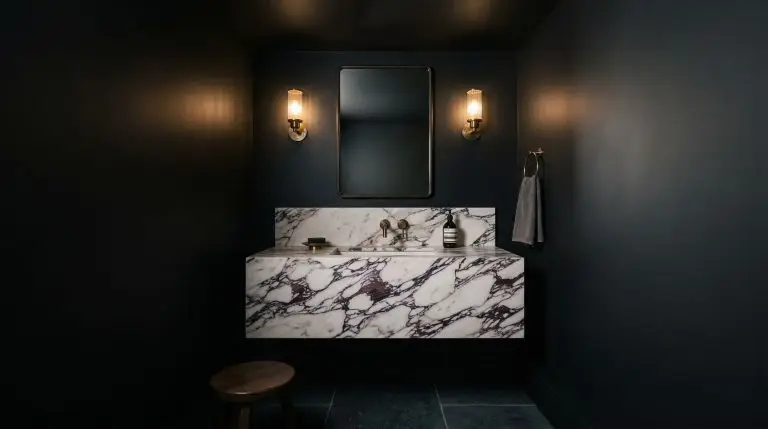
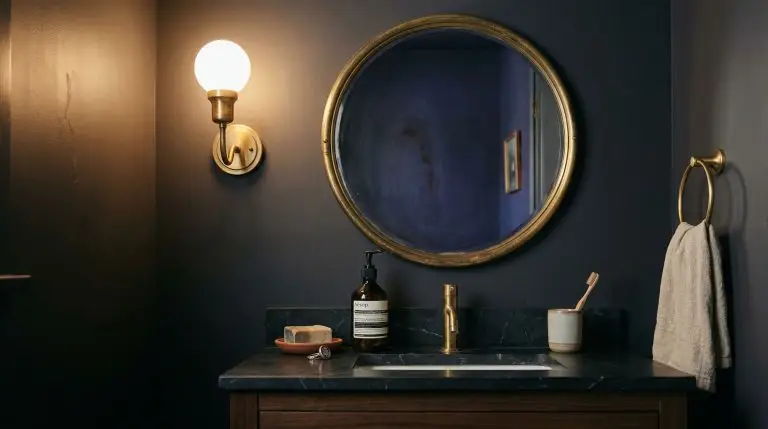
Immersive Powder Rooms
Powder rooms are the ultimate testing ground for dark colors. Because these spaces typically lack windows, you control the narrative entirely through artificial sconce lighting. By wrapping the walls and ceiling in this shade, you blur the physical boundaries of the room. The low LRV makes the corners recede, creating an illusion of endless, velvety space.
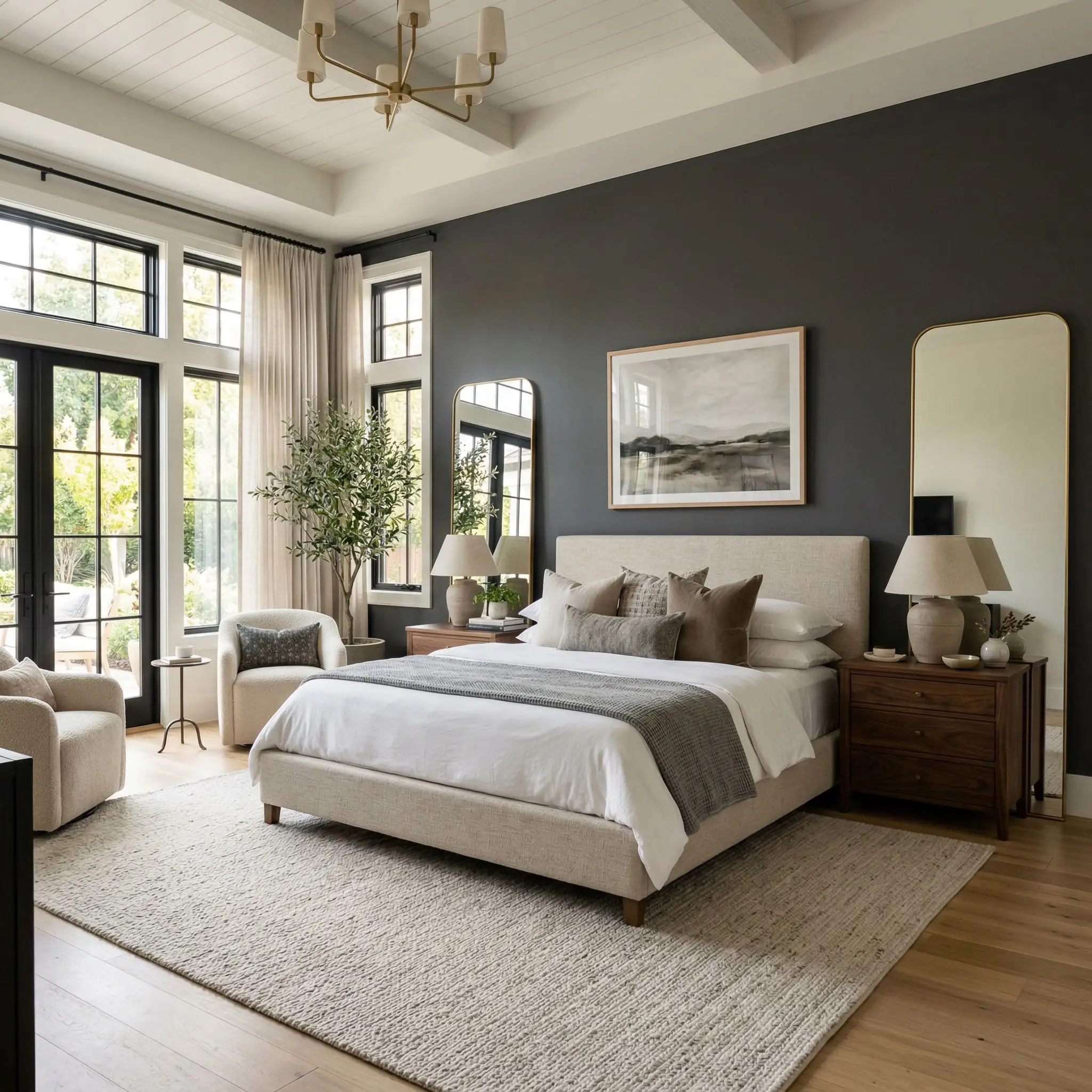
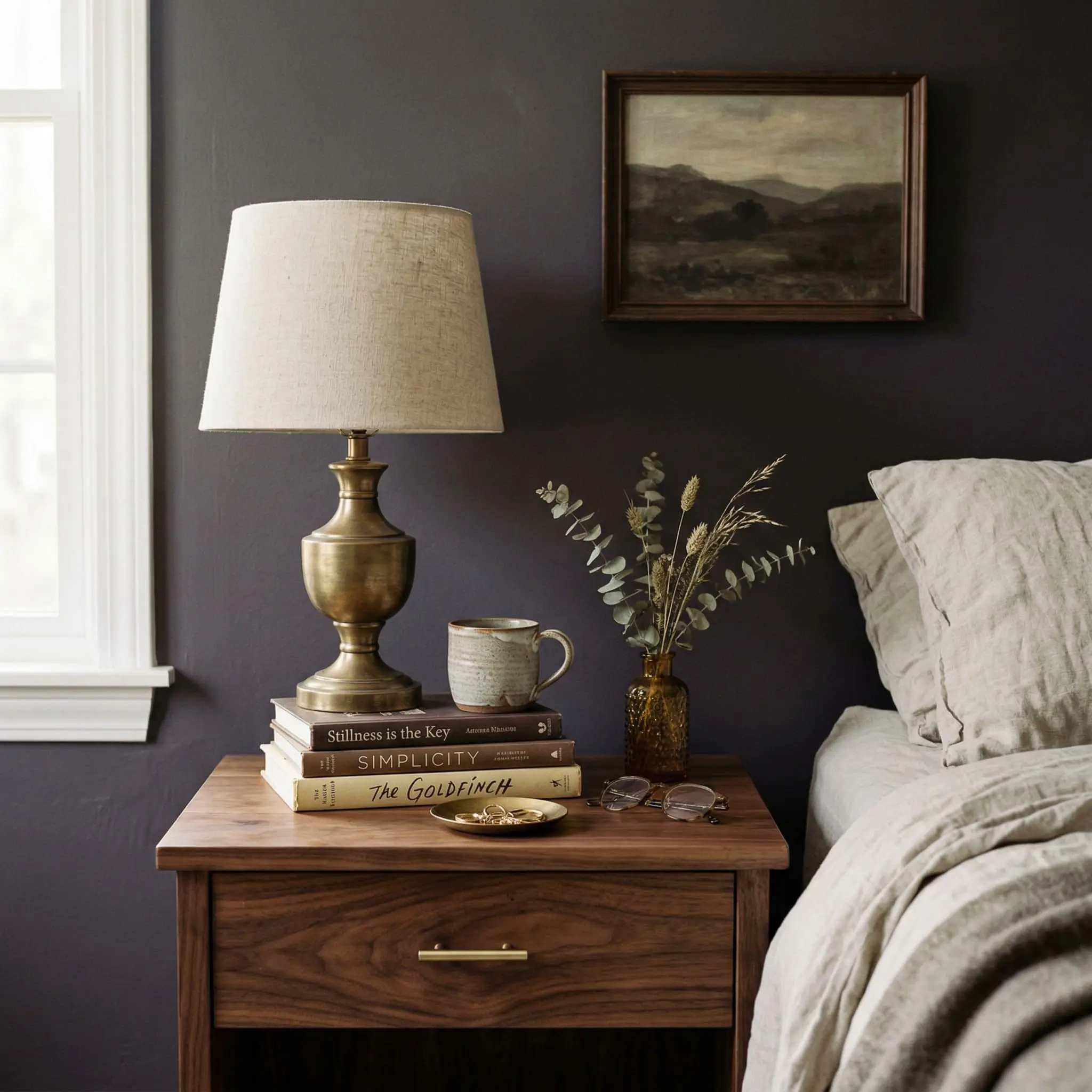
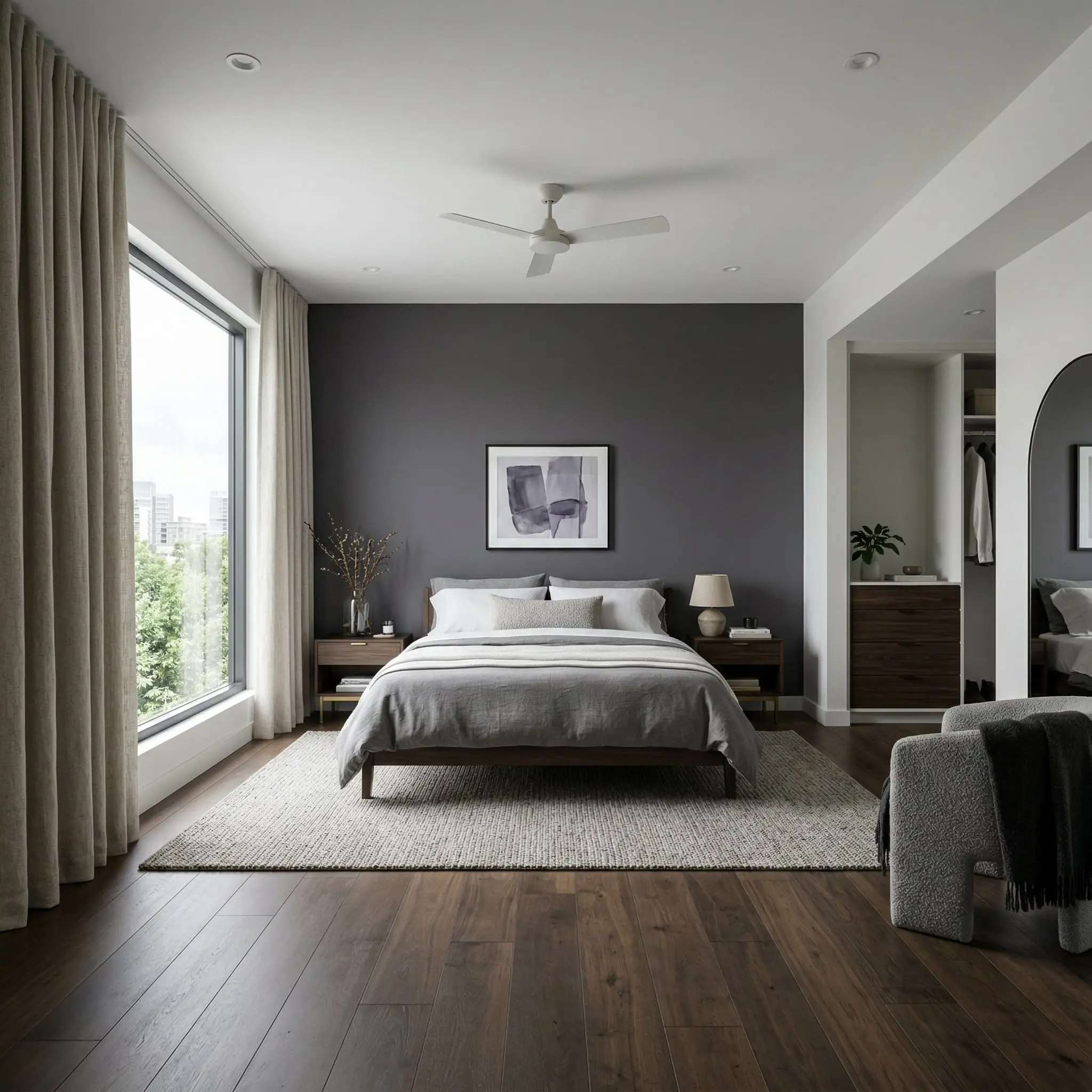
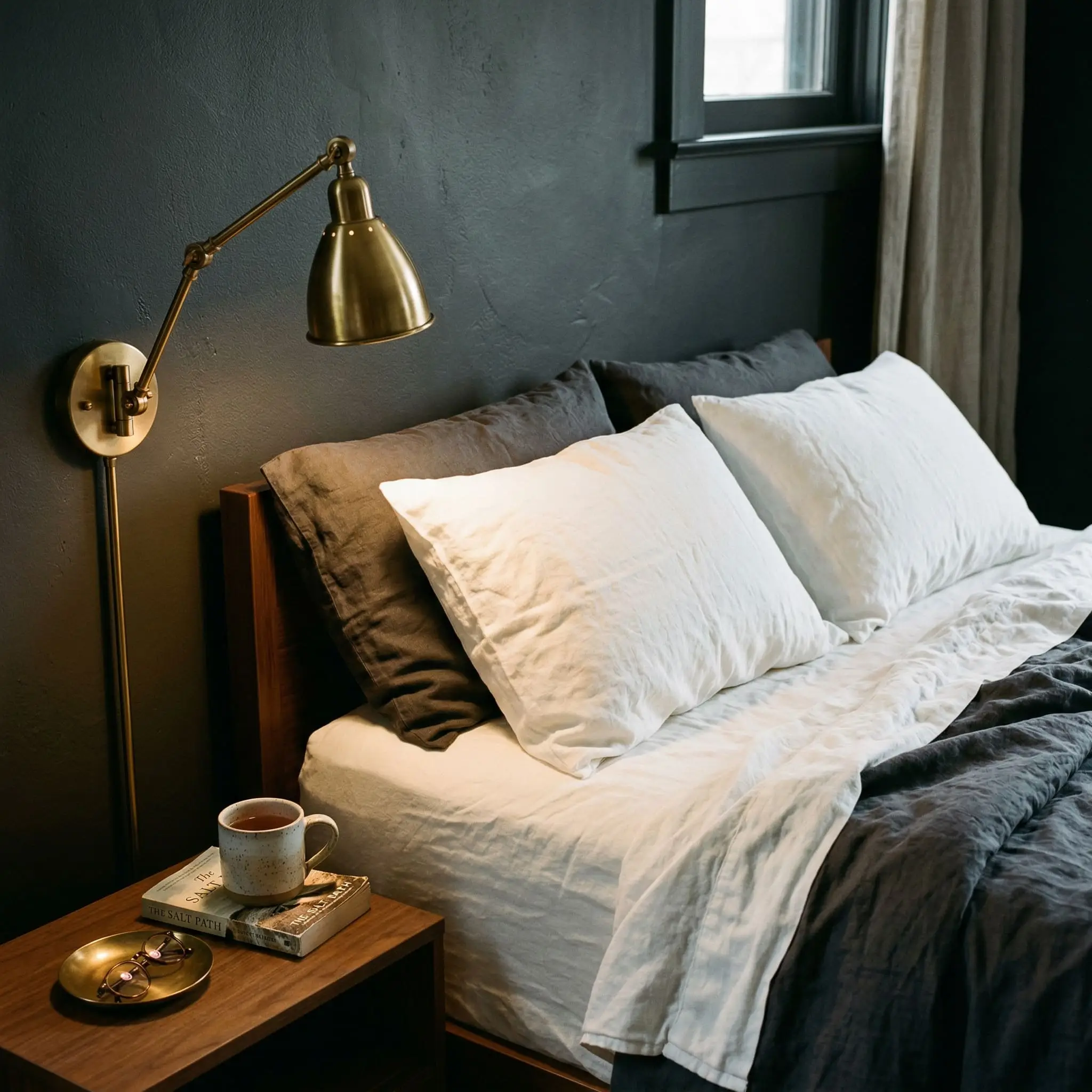
Dramatic Primary Bedrooms
A feature wall in this deep hue instantly anchors a bed frame and dictates the mood of the entire suite. It is a staple in our guide to the best moody paint colors because it forces a sense of calm. However, you must balance the heavy light absorption with ample textiles and reflective surfaces to prevent the room from feeling like a cave.
Signature Design Ideas & Inspiration
Broad applications are fine, but this specific pigment truly shines when pushed to its architectural limits. When you lean into its historic roots and complex color chemistry, the results are breathtaking.
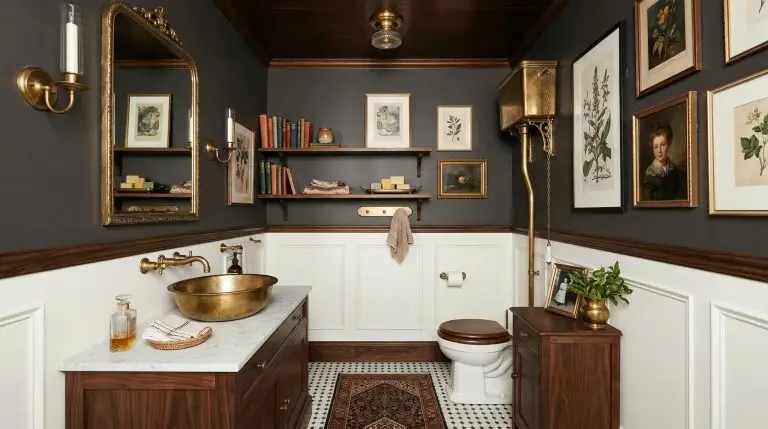
Victorian Maximalist Dining Rooms
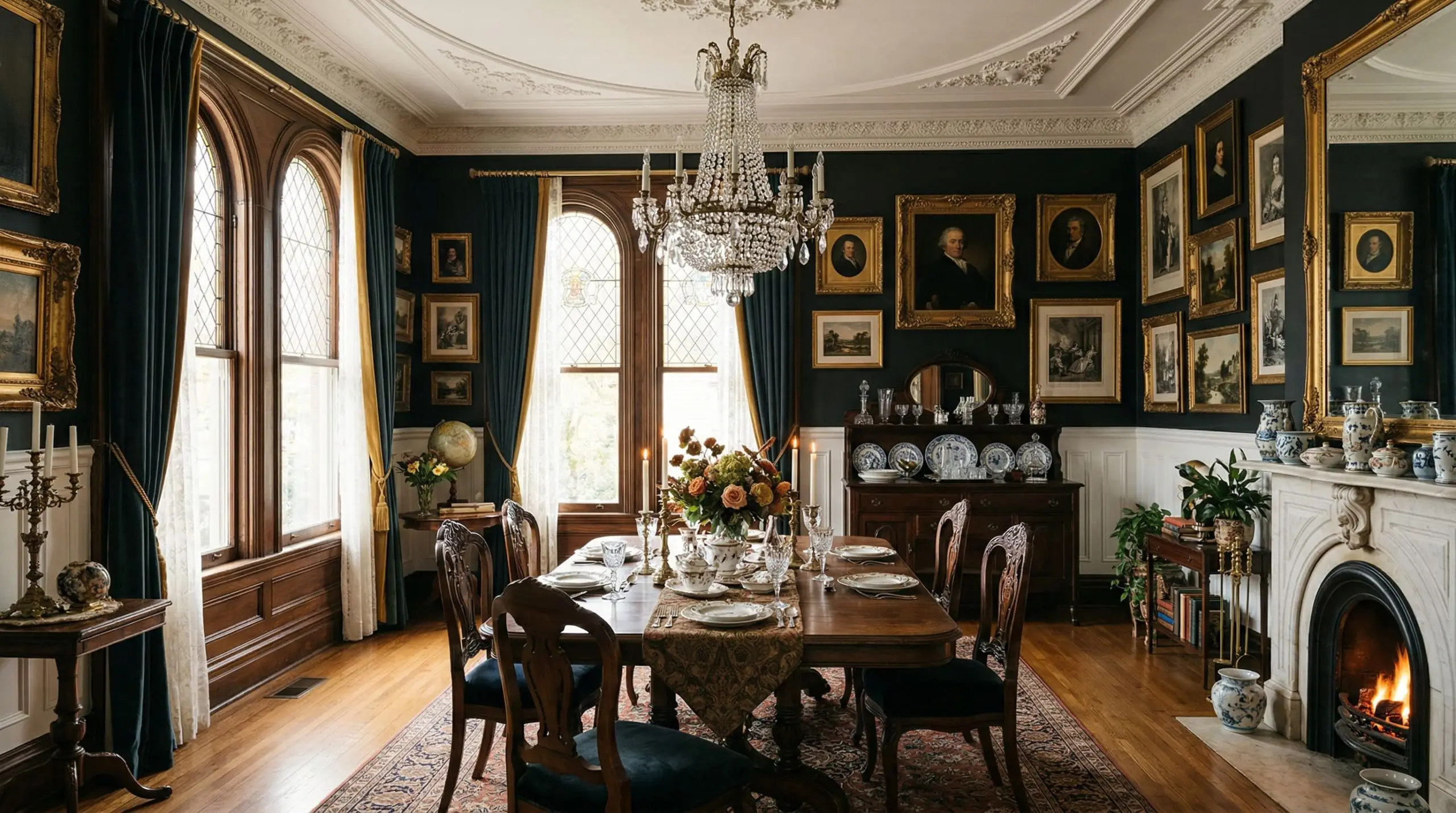
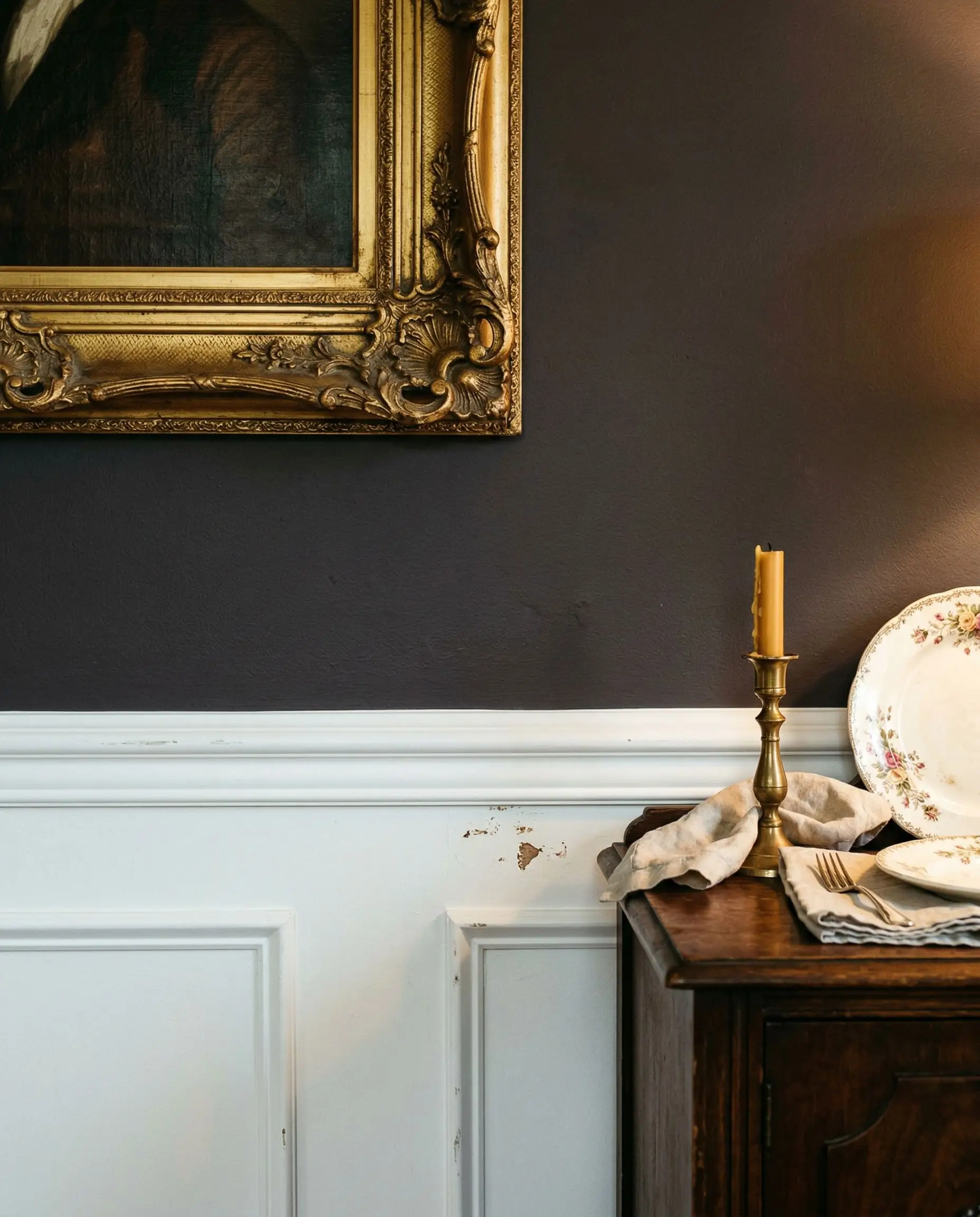
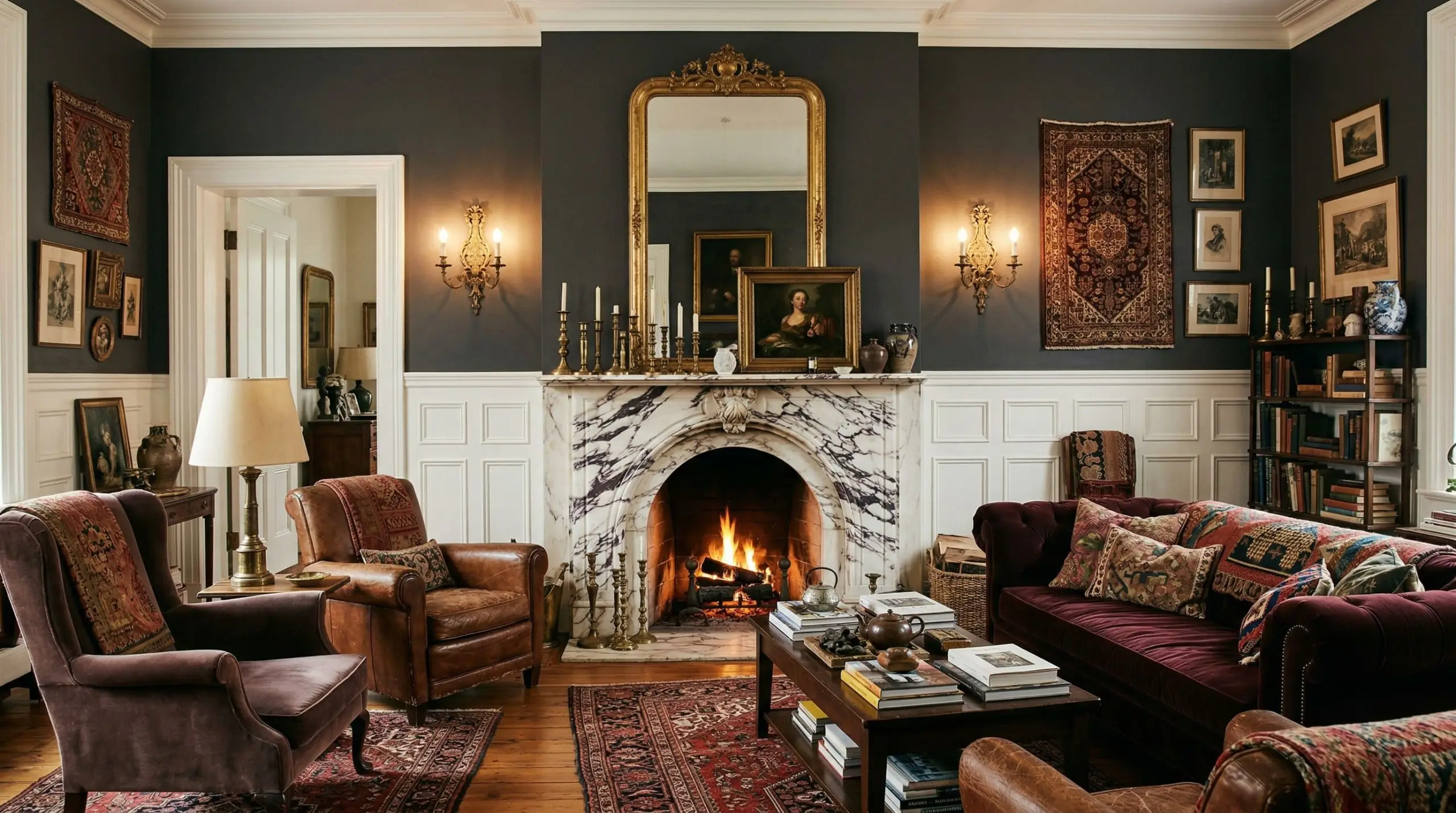
This color feels entirely at home in a space dripping with history and ornate detailing. By painting it above crisp white wainscoting, you echo the grandeur of the 19th-century aesthetic. The sharp contrast grounds the room, while the chalky plum undertones provide the perfect backdrop for gilded frames and crystal chandeliers. It is a direct nod to an era that embraced heavy, saturated hues.
Will Perle Noir work with your specific lighting, floor, or furniture?
Dramatic Library Built-Ins
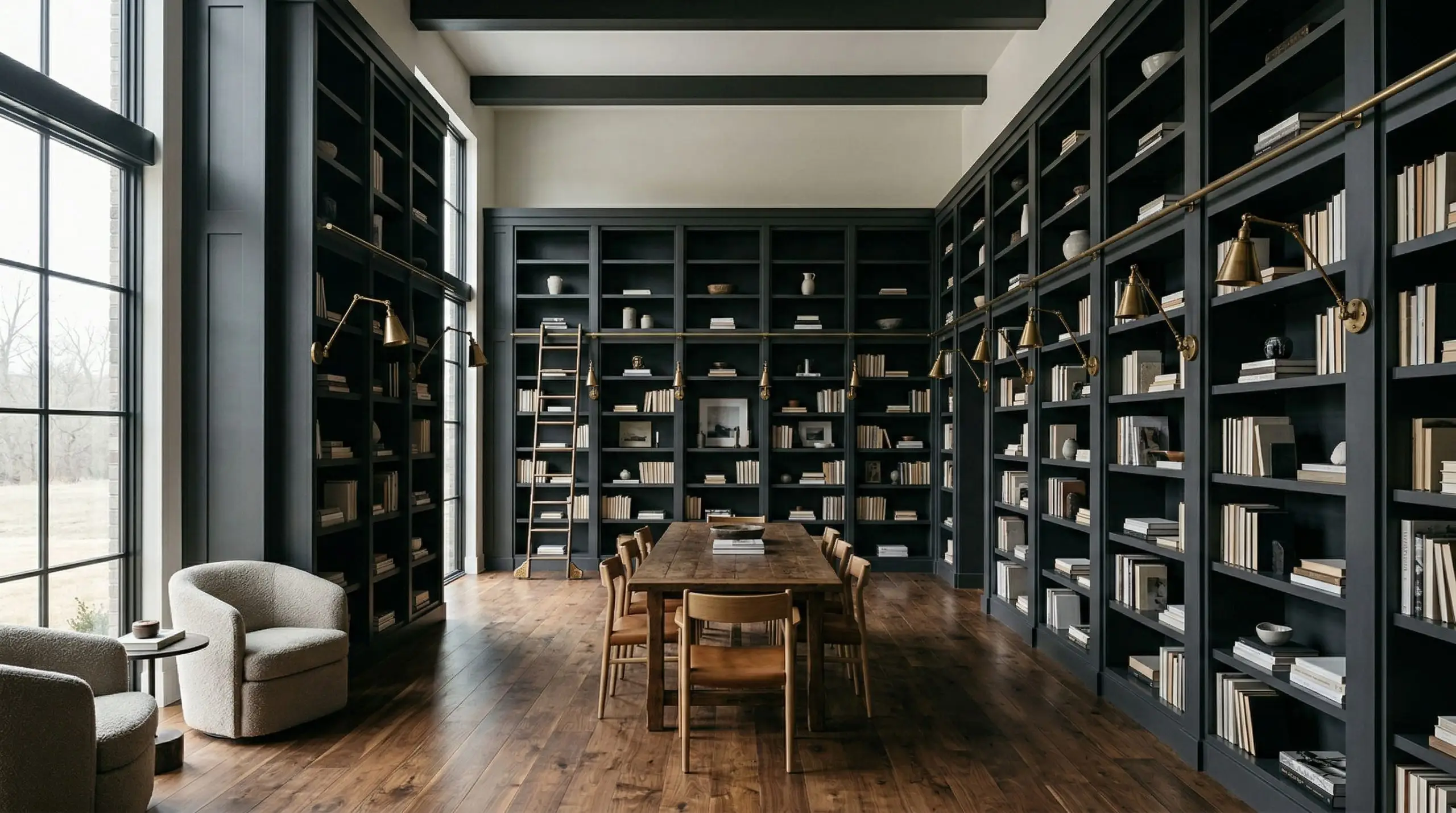
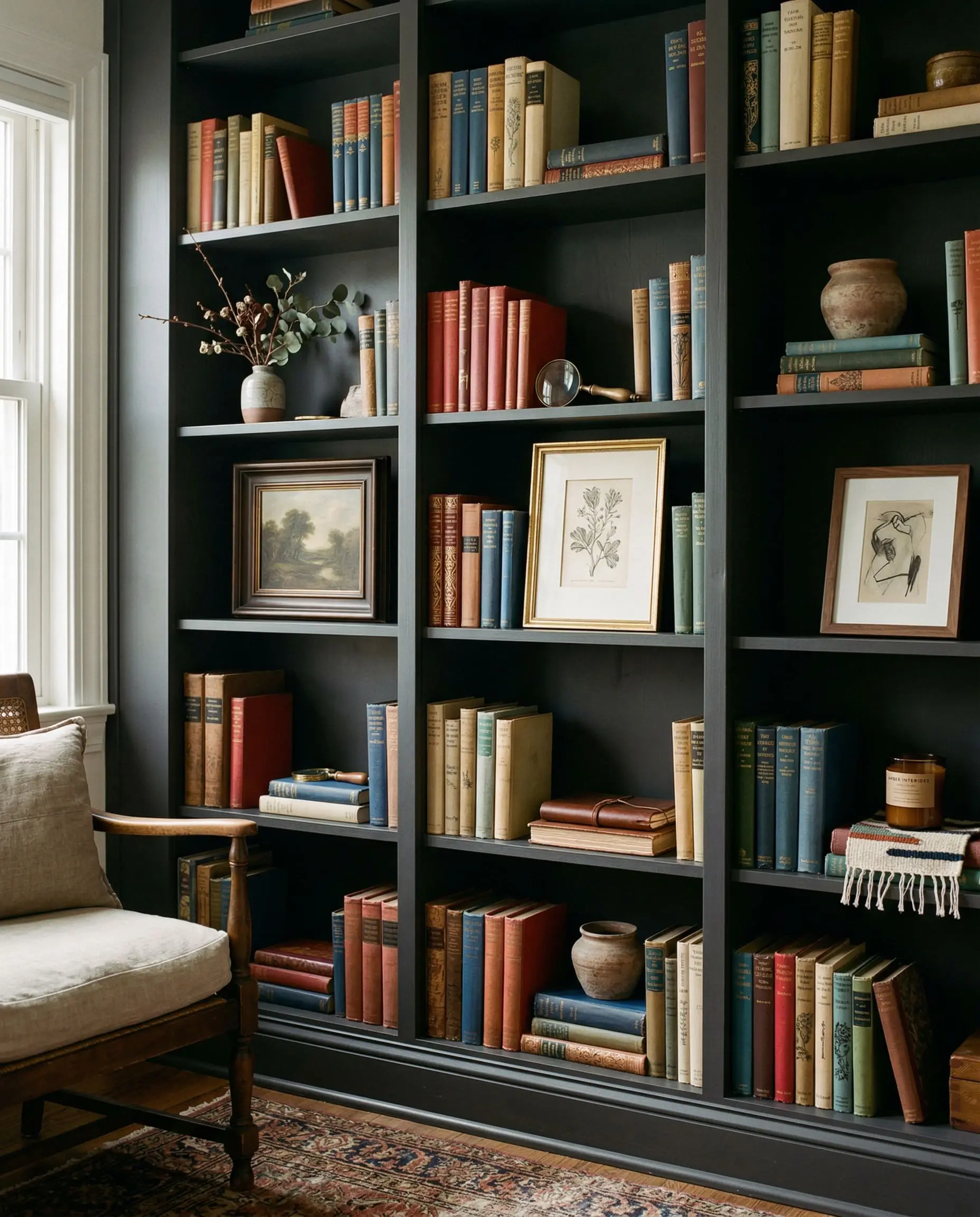
Bookcases demand a backdrop that makes the bindings pop, and this low-chroma charcoal delivers. When applied to floor-to-ceiling built-ins, the paint physically recedes, allowing the shelving structure to frame the books and art. The color wraps around the millwork, creating a heavy, shadowed depth inside the cubbies that pure black simply cannot achieve.
Will Perle Noir work with your specific lighting, floor, or furniture?
Vintage Bathroom Vanities
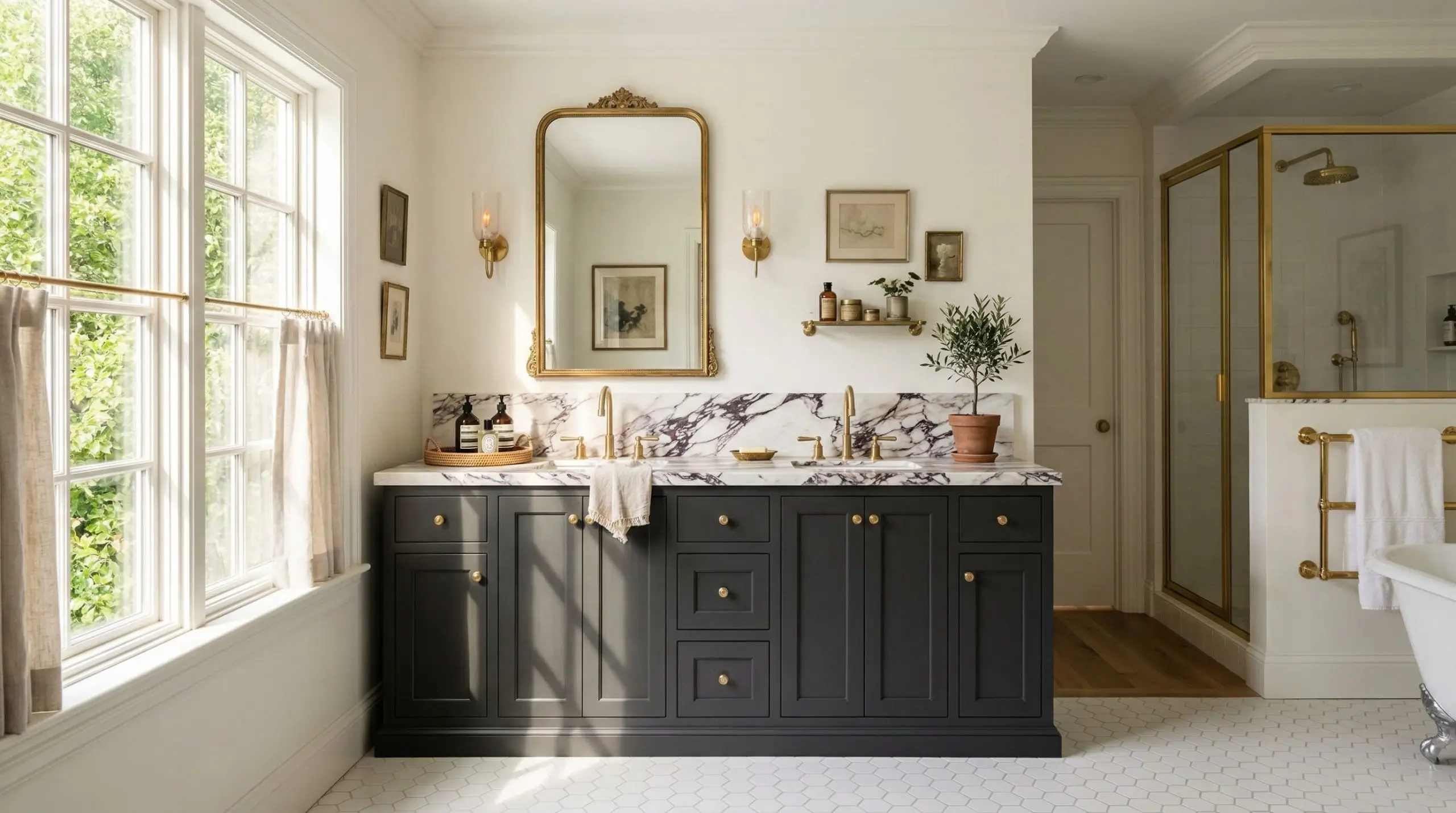
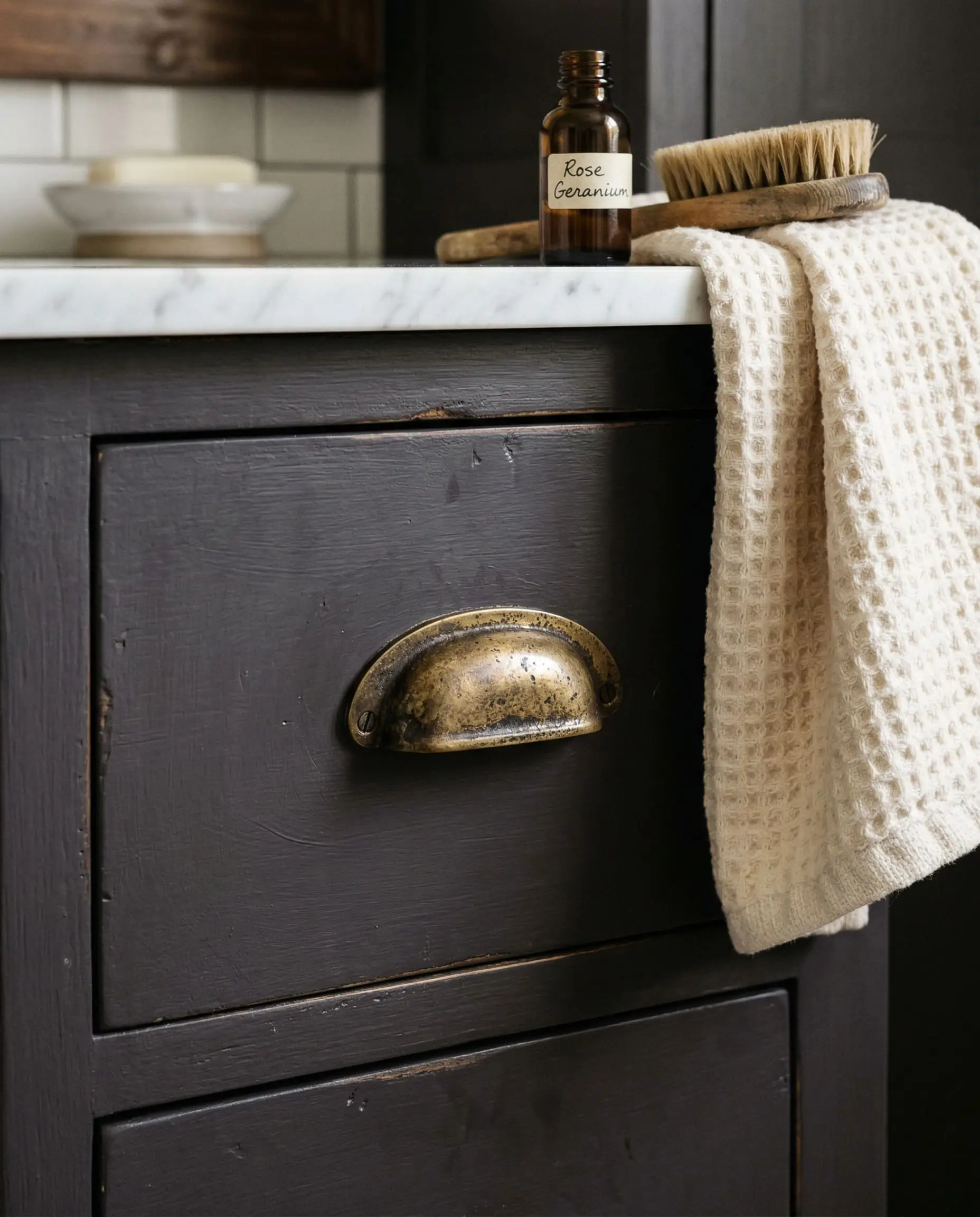
Imagine the tactile experience of running your hand over a smooth, dark cabinet, interrupted by the cold, heavy bite of unlacquered brass hardware. The metallic warmth of the brass cuts violently through the cool violet undertones of the paint. It creates a tension that feels incredibly expensive, grounding the vanity in a deeply tactile, sensory-rich environment.
Modern Industrial Exteriors
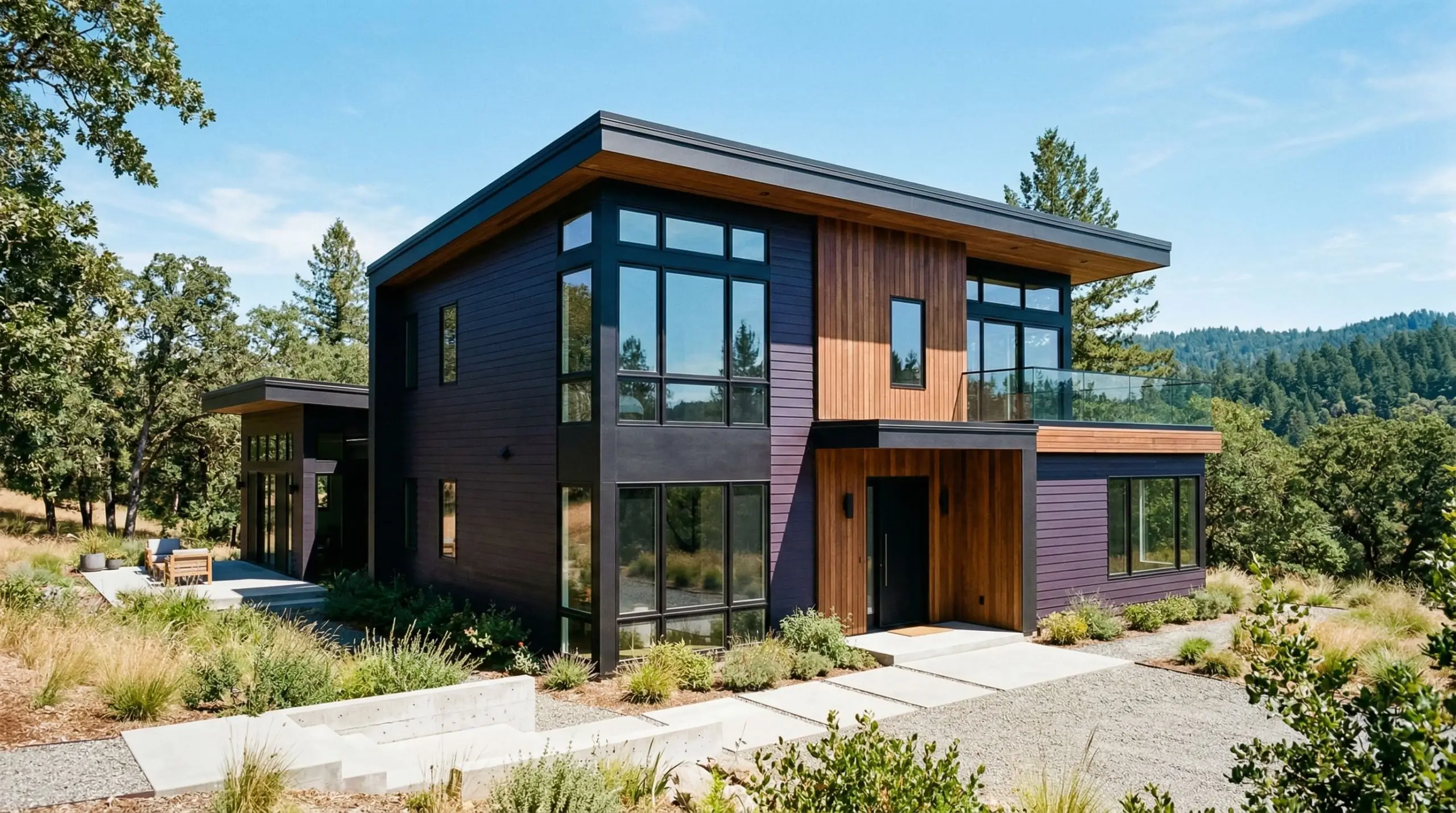
Using this shade on an exterior siding or trim modernizes a facade instantly. But if you fail to account for the sun, you will ruin your home’s curb appeal. Direct outdoor sunlight washes out dark colors significantly, meaning those hidden purple undertones will scream from the street. If you want a neutral gray house, look elsewhere; if you want a bold, architectural statement, check our dark exterior color palettes guide to balance this hue correctly.
The Pairings & Accents Guide
A color this complex cannot survive in a vacuum. The elements you place next to Perle Noir will either tame its purple tendencies or violently amplify them.
Flawless Trim Pairings
You must use a trim color that provides razor-sharp architectural contrast without pulling yellow.
Transformative Architectural Materials
Fixed elements in the room dictate how we perceive color temperature.
Mathematically Sound Coordinating Colors
These specific hues share a chemical harmony with our featured charcoal.
Never pair Perle Noir with yellow-leaning creams or honey oak floors. Yellow and orange sit directly opposite purple on the color wheel. Placing them together will aggressively amplify the purple undertones, triggering the exact 1990s tacky aesthetic you are trying to avoid.
Clash Warning
Curated Aesthetic Mood Boards
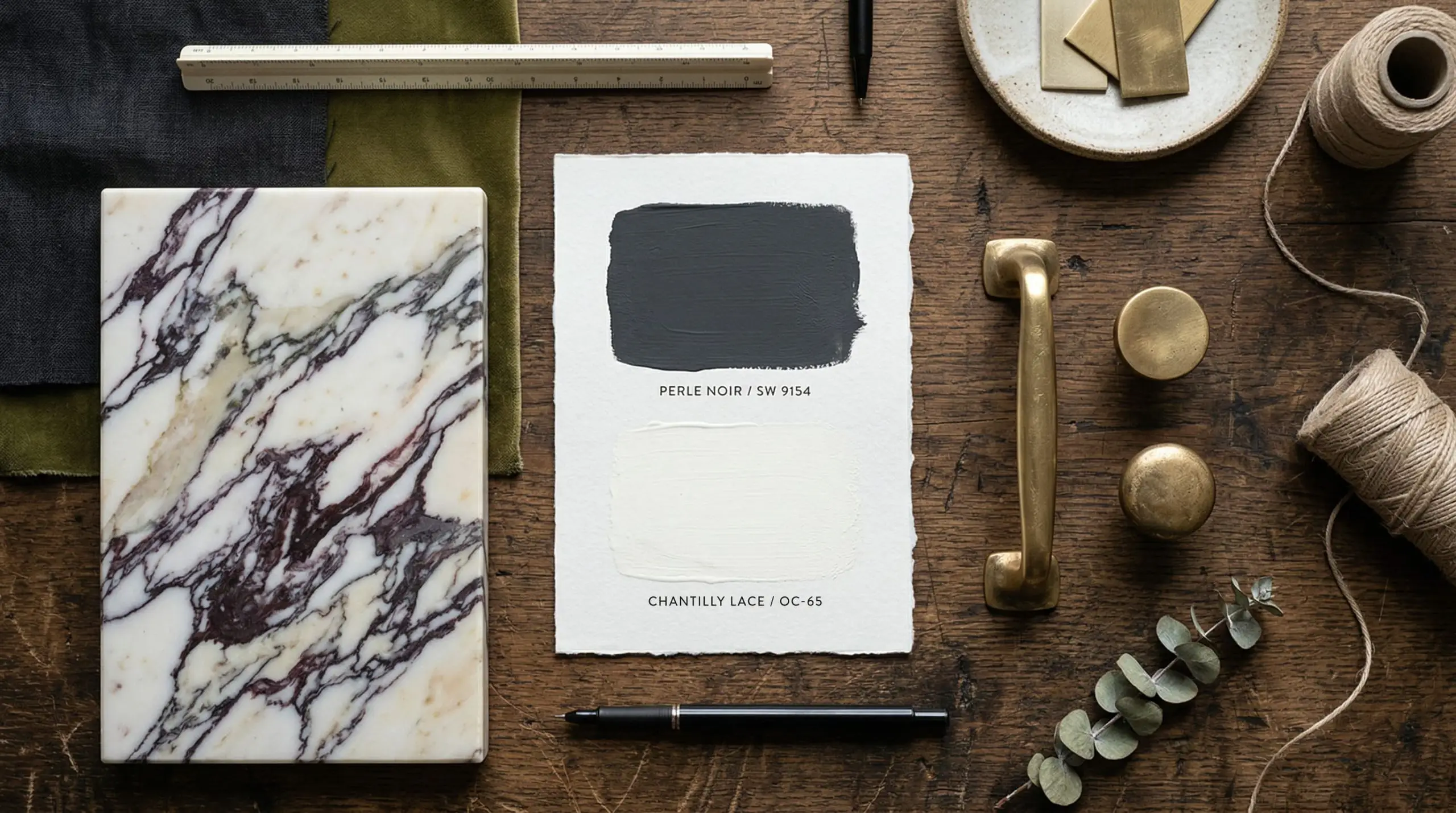
The Historic Maximalist Palette: Combine SW 9154 on the upper walls with crisp Chantilly Lace wainscoting. Introduce heavy Calacatta Viola marble on a nearby fireplace surround, and finish the space with unlacquered brass sconces. The result is a room that feels impossibly rich, leveraging the chalky plum notes to create a sense of old-world royalty.
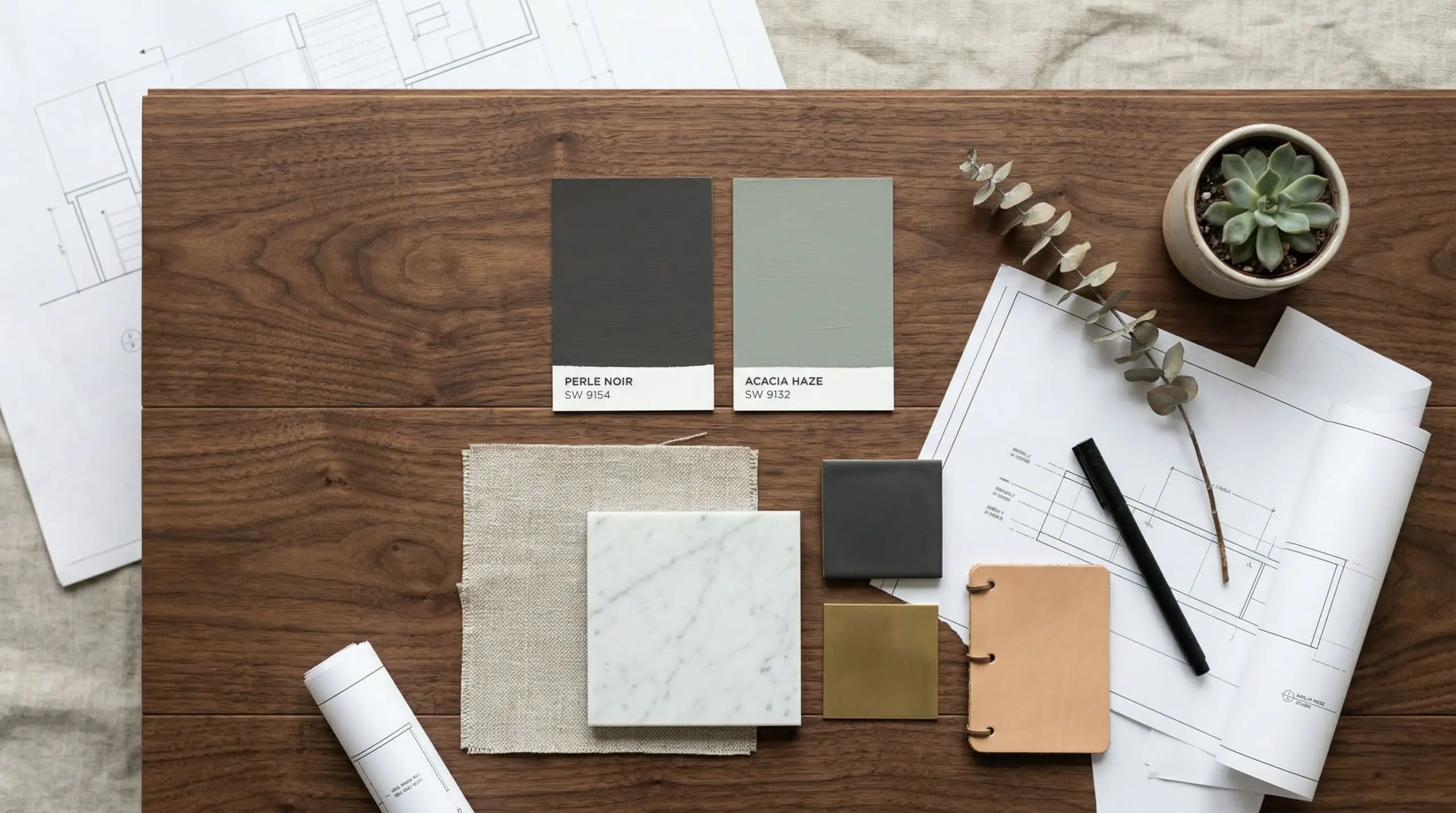
The Organic Modern Tension Palette: Wrap a room entirely in this dark shade, but interrupt the darkness with warm, rich walnut flooring and accents of Acacia Haze on adjacent doors. The green-gray fights the plum just enough to create a space that feels earthy, grounded, and intensely modern.
Will Perle Noir work with your specific lighting, floor, or furniture?
Head-to-Head Comparisons
Choosing the right dark paint often comes down to microscopic differences in pigment. Here is how this moody shade stacks up against its biggest rivals.
Sherwin-Williams Perle Noir vs. Sherwin-Williams Iron Ore
Iron Ore is a much more traditional, green-leaning dark gray. While both colors share a similar depth, Iron Ore feels significantly more organic and neutral. If you are terrified of purple, choose Iron Ore; if you want bespoke, velvety depth, stick with Perle Noir.
Sherwin-Williams Perle Noir vs. Sherwin-Williams Peppercorn
Peppercorn is noticeably lighter and reads as a true, balanced dark gray with almost equal parts warm and cool undertones. It is far safer and more universally appealing. Perle Noir is darker, moodier, and demands much more architectural intent to pull off successfully.
Sherwin-Williams Perle Noir vs. Sherwin-Williams Tricorn Black
Tricorn Black is the ultimate, undertone-free true black. It absorbs everything and reflects nothing. Next to Tricorn, Perle Noir clearly reveals its dusty, chalky plum identity. Use Tricorn for stark, modern lines, and use our featured charcoal for softer, historic atmospheres.
Similar Colors & Brand Equivalents
If you love the concept but need a slight pivot in execution, the color wheel offers a few compelling alternatives.
Sherwin-Williams Alternatives
Cross-Brand Color Matches
Practical Application & DIY Advice
Translating color theory into a flawless physical finish requires strict adherence to contractor-level protocols. If you are tackling a major project, reference our guide on how to paint kitchen cabinets like a pro before buying your supplies.
The Dynamic Sheen Matrix
Formulating a Primer Strategy
With an LRV of 8, this paint requires a deeply tinted gray primer. If you attempt to roll this over a standard white primer, the dark pigment will struggle to grab, resulting in a streaky, uneven mess. A gray primer establishes a dark base, allowing the true complexity of the indigo-purple to materialize in fewer coats.
Coverage Expectations and Touch-Up Warnings
Expect to apply an absolute minimum of two coats, though three is often necessary to achieve total, opaque saturation.
Touch-ups on flat, dark paints are notoriously difficult. The fresh paint will almost always “flash” (dry with a slightly different sheen or texture). If a wall gets scuffed, you will likely need to repaint the entire wall from corner to corner to maintain a flawless finish.
Hackrea Pro-Tip
Frequently Asked Questions
It is technically classified as a purple by Sherwin-Williams. While it appears as a soft black or dark charcoal in shadows, its strong plum and violet undertones become highly visible in direct natural light.
Yes, but with a massive caveat. Direct sunlight washes out dark colors, meaning the purple undertones will be highly magnified outdoors. It works beautifully on modern industrial facades, provided you actually want a purple-leaning charcoal.
Iron Ore is a green-leaning, organic dark gray, whereas Perle Noir is driven by cool plum and violet undertones. Iron Ore feels earthy and neutral; its rival feels historic and moody.
It pairs best with crisp, cool whites like Chantilly Lace, warm earthy neutrals like Sherwin-Williams Shiitake, and muted gray-greens like Acacia Haze. You must avoid yellow-leaning creams at all costs.
Final Verdict & Expert Warnings
Sherwin-Williams Perle Noir is a triumph of color science, but it is not for the faint of heart. It is the ultimate weapon for creating a bespoke, moody atmosphere that demands attention and respect. This low-chroma charcoal is perfect for the design-obsessed homeowner who understands lighting and wants to push their architecture into a deeply historic, maximalist direction.
However, if your home is filled with honey oak trim, yellow-beige carpets, or if you simply want a safe, predictable dark gray, you must avoid SW 9154 at all costs. It will clash violently with warm woods and punish poor lighting. Commit to the plum, curate your accents with intention, and it will reward you with unparalleled velvety depth.
Room Compatibility & Clashes Diagnoses
Hackrea's reports evaluating the compatibility of Perle Noir in real rooms.No compatibility tests for Perle Noir yet.
Be the first to see how this color reacts to your space. Run a free architectural diagnostic now.