Living in a compact space comes with unique design hurdles. The bedroom, in particular, requires a careful balance between restfulness and strict utility. When square footage is at a premium, tossing a standard bed and matching nightstands into the room will likely leave you frustrated and cramped. A bedroom should be relaxing, not an obstacle course of bulky furniture.
However, a tight floor plan does not mean you have to sacrifice style or comfort. By rethinking your approach to spatial planning, editing your belongings, and selecting furniture scaled for your exact dimensions, you can build a highly functional room that feels comfortable to sleep and wake up in.
Assessing Your Floor Plan First
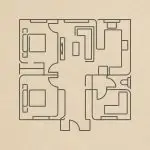
Before you buy a single piece of furniture, you need a realistic view of your room. Grab a tape measure and record the exact dimensions of your walls, windows, and doors. Do not guess the measurements. Draw a simple layout on a piece of grid paper. Pay special attention to the swing radius of your bedroom door and closet doors. Blocking these paths will instantly make the room frustrating to navigate.
A helpful rule of thumb is to leave at least two to three feet of walking space around the edges of the bed. If your room is especially narrow, you might have to make compromises, such as pushing one side of the bed against a wall. Mark out potential furniture placements on the floor using painter tape. This physical outline helps you visualize traffic flow and proves whether or not a specific chest or bed frame will fit before you start moving heavy items.
Choosing the Right Storage Furniture
Storage is usually the biggest hurdle in a compact bedroom. You have clothes, shoes, and personal items, but very little floor area to house them all. The secret here is to think vertically rather than horizontally. A tall, narrow footprint will serve you much better than a wide, bulky piece that eats up your entire walking path.
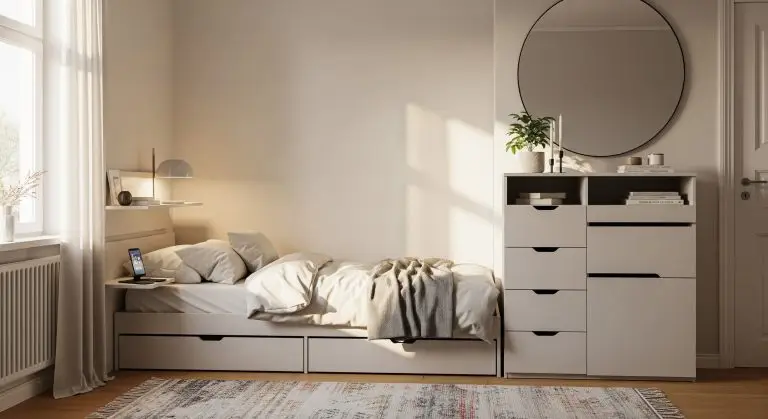
When furnishing a compact bedroom, selecting furniture that offers ample storage without overwhelming the space is key. Utilizing well-designed small dressers can provide essential clothing storage while maintaining an open feel. You can place them inside a closet if you have the depth, freeing up the main bedroom area completely. If they must stay in the main room, tuck them into a tight alcove or next to the door to keep the central walkways clear. The goal is to maximize interior drawer capacity while minimizing the external footprint.
The Magic of Multi-Functional Pieces
When every inch of your bedroom counts, ask your furniture to do double duty. A standard bed frame on four legs leaves a significant amount of wasted volume underneath. Swapping it for a storage bed with built-in drawers gives you an immediate spot to keep off-season clothing, extra blankets, or bulky sweaters without needing plastic bins that gather dust. If buying a new bed is not an option, invest in sleek rolling storage boxes that slide easily out of sight under your current frame.
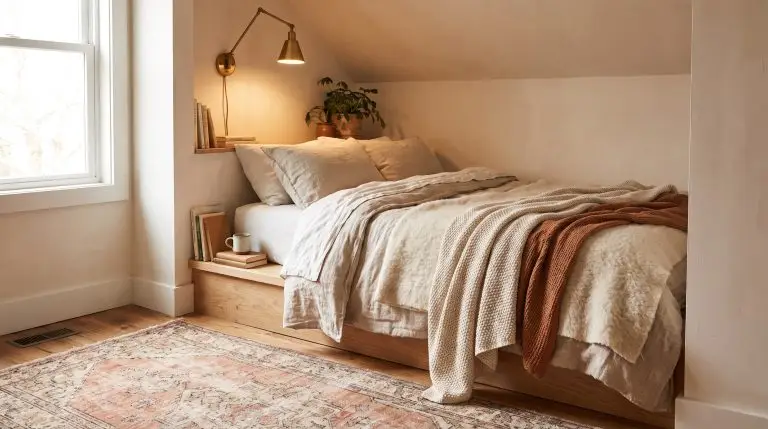
Nightstands are another area where you can optimize. Instead of a tiny side table with just enough room for a lamp, use a small set of drawers or a writing desk next to the bed. This provides surface area for your daily items while offering deep storage for books and electronics. Alternatively, floating shelves installed next to the bed remove the need for floor-based furniture altogether, making the room look much lighter and easier to vacuum.
Lighting and Color to Open Up the Room
Visual space is just as important as physical space. Dark colors absorb light and can make walls feel like they are closing in on you. To make the bedroom look more spacious, lean toward light and neutral paint colors. Soft whites, pale grays, and warm beiges reflect natural sunlight around the room, blurring the sharp lines of the corners. You can still add color through your bedding, rugs, and artwork without shrinking the visual size of the room.
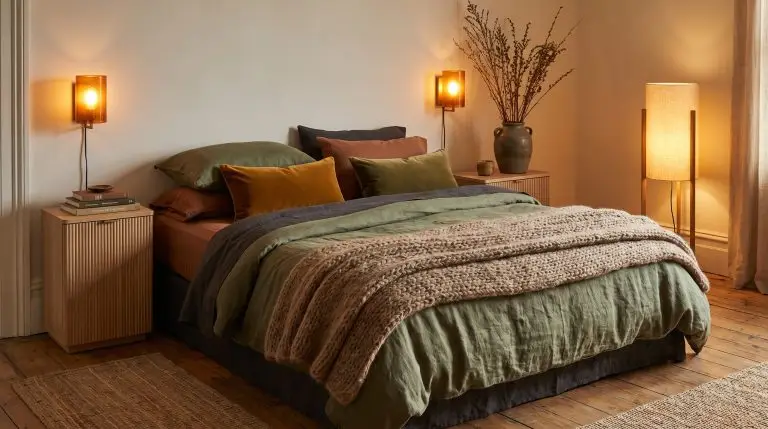
Lighting placement plays a major role in how a room feels. Bulky floor lamps consume valuable corners, and large table lamps dominate your nightstand surfaces. Wall-mounted sconces are a highly practical alternative. Installing a pair of plug-in or hardwired sconces above the bed frees up surface space and draws the eye upward. Highlighting the height of the ceiling draws attention away from the narrow floor plan.
Keeping the Layout Uncluttered
Even the most perfectly planned bedroom will feel tiny if it is messy. Clutter eats up visual space faster than bad furniture choices. Developing a daily habit of putting things away will do wonders for how spacious the room feels. The fewer loose items scattered across flat surfaces, the bigger the room will appear.
Use the simple one in, one out method for your wardrobe. If you buy a new sweater, donate or sell an old one. Keep the top of your furniture clear of loose papers, excessive decorative items, and half-empty glasses. A clean surface gives the eye a place to rest, which translates to a calmer atmosphere. Group small necessities on a decorative tray to make them look intentional rather than messy.
Utilizing Mirrors to Double the Space
Mirrors are a classic interior design trick for a good reason. By reflecting light and imagery, they trick the brain into thinking a room extends further than it actually does. Placing a large mirror opposite your primary window will bounce natural daylight into the darkest corners of the room.
You do not need to cover an entire wall to get this effect. Leaning a tall floor mirror in a corner or hanging a wide horizontal mirror above your headboard works beautifully. Mirrored closet doors are another way to bounce light around without taking up an inch of wall space. Just check that the mirror is reflecting something pleasant, like a neat bed or a piece of art, rather than a pile of laundry.
Final Steps for a Better Bedroom Layout
Improving your bedroom layout comes down to strict intention. Do not try to fit a matching five-piece bedroom set into a room that can only comfortably hold three pieces. Scale your furniture to the room you have, not the room you wish you had. Prioritize easy movement, embrace vertical storage, and edit your belongings regularly. A well-organized, compact room is highly rewarding to live in once you figure out the exact balance of furniture and open space. Treat your small bedroom as a fun spatial puzzle, and you will quickly realize its full potential.
FAQ About Small Bedroom Layouts
Aim for at least two to three feet of walking space on the sides and foot of the bed. This gives you enough room to comfortably walk, make the bed, and open nearby drawers without feeling restricted.
Pushing a bed into the corner opens up maximum floor space in the center of the room. This works perfectly for twin or full beds. However, for a queen bed shared by two people, it is usually better to leave space on both sides for easy access.
Light neutrals like soft white, cream, pale gray, and light sage green are excellent choices. These colors reflect light, blurring the boundaries of the walls and making the room feel open and airy.
Look upward and utilize your walls. Install floating shelves above your bed or desk, use tall bookcases instead of wide ones, and swap standard bed frames for ones with built-in storage drawers underneath.
Yes, mirrors are highly effective at creating the illusion of more space. Placing a large mirror opposite a window bounces natural light around the room, making it feel significantly brighter and deeper.