Wrought Iron vs. Aluminum Railings: Which Lasts Longer?
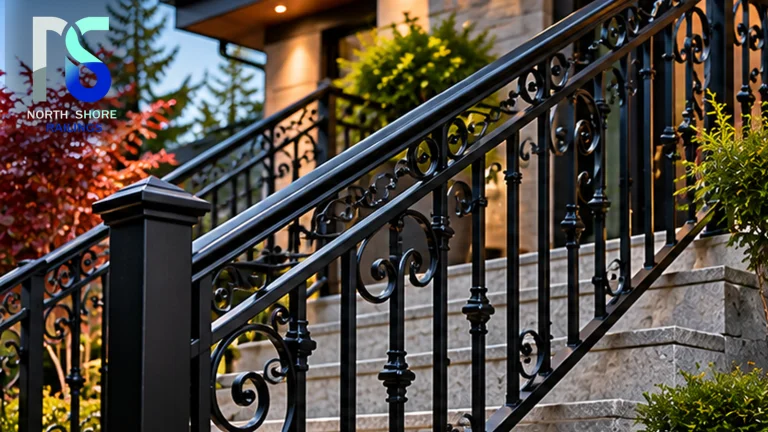
Choosing between wrought iron and aluminum railings involves more than picking a favourite design. For Vancouver homeowners, the real question is how each material stands up to rain, corrosion, regular use, and the passing years. A good exterior railing should remain secure and attractive without creating avoidable maintenance costs.
That question is especially relevant in Vancouver, North Vancouver, and West Vancouver. Long wet seasons and exposure near the coast can reveal weak finishes, unsuitable fittings, and installation shortcuts. A railing that looks flawless on day one may not perform the same way several winters later.
This comparison of Wrought Iron vs. Aluminum Railings looks at material properties, expected upkeep, structural considerations, and long-term costs. It also uses examples from the Lower Mainland to help homeowners choose a practical system for their property.
Wrought Iron vs. Aluminum Railings: Understanding the Materials
Both materials can make attractive, durable railings, but they behave differently outdoors. Weight, corrosion protection, fabrication methods, and the quality of the finished assembly all affect how long a railing performs well.
One important distinction often gets missed: genuine wrought iron is rare in today’s residential railing market. What suppliers call wrought iron railings are frequently mild-steel products shaped and finished to create a traditional ornamental look.
For homeowners planning residential railing installation, this distinction matters. Steel and traditional wrought iron can resemble one another, yet their material specifications differ. Aluminum forms a protective oxide layer that helps resist corrosion. These differences make it easier to evaluate quotations.
Material Comparison at a Glance
| Feature | Wrought-Iron-Style Steel | Aluminum |
| Corrosion resistance | Depends heavily on protective coatings | Naturally corrosion-resistant |
| Weight | Relatively heavy | Lightweight |
| Design flexibility | Excellent for decorative fabrication | Excellent for modern profiles |
| Maintenance | Coating inspections and occasional repairs | Regular cleaning and inspections |
| Appearance | Traditional and ornamental | Modern or traditional |
| Coastal suitability | Good with appropriate protection | Generally very good |
| Long-term durability | Can last decades with proper care | Can last decades with proper care |
The practical takeaway is that aluminum often needs less corrosion-related attention, while properly protected decorative steel remains a durable choice when detailing and fabrication quality are priorities.
Which Material Lasts Longer in Vancouver’s Coastal Climate?
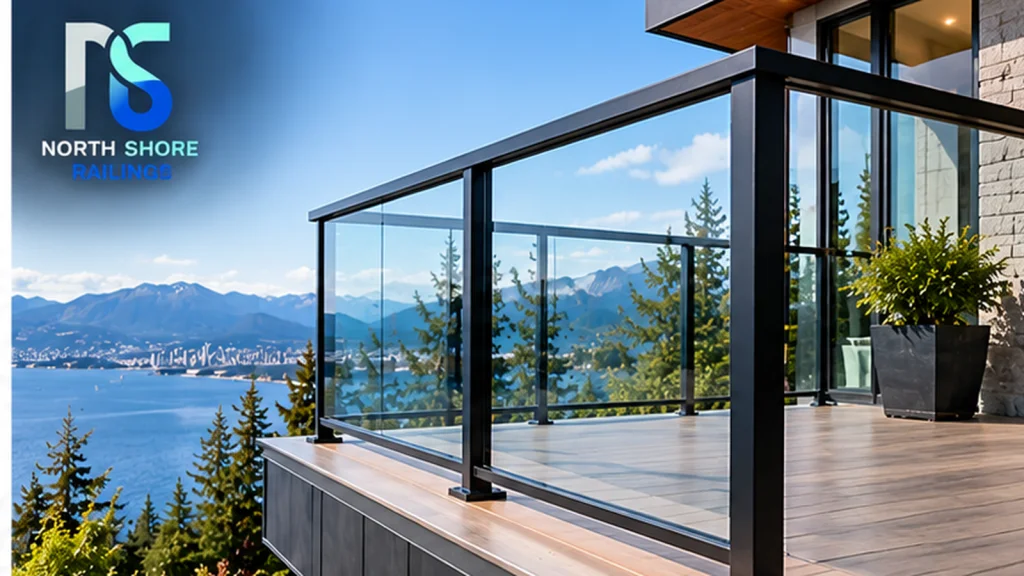
Aluminum Railings: Naturally Resistant to Rust
Unlike iron and steel, aluminum does not form the familiar reddish-brown rust that appears when iron reacts with moisture and oxygen.
Aluminum develops a thin oxide film that protects the underlying material. This natural resistance helps explain why it is popular for exterior balconies, stairways, and deck guards in wet climates.
The Aluminum Association identifies corrosion resistance, durability, and low weight among the characteristics that make aluminum useful in building applications.
Still, corrosion-resistant does not mean maintenance-free. Salt deposits, incompatible metal fasteners, poor drainage, or damage to a protective coating can lead to staining or localized deterioration.
A properly applied powder-coated finish can add another layer of protection while giving homeowners more choice in colour and appearance.
Wrought-Iron-Style Railings: Strong but Finish-Dependent
Decorative steel railings can also remain serviceable for decades, but their performance depends more directly on fabrication details and corrosion protection.
When water reaches bare steel, corrosion can begin. Welds, sharp edges, scratched finishes, and joints that trap moisture need particular attention because these are common weak points.
Hot-dip galvanizing is one widely used way to protect steel. During the process, the finished component receives a zinc coating that helps shield the underlying metal.
When comparing finishes for custom railings and gates, ask whether steel components are galvanized before they are painted or powder-coated. This layered approach is known as a duplex coating system and can offer stronger protection than relying on a decorative finish alone.
The American Galvanizers Association describes how zinc coatings and compatible paint or powder-coating systems can work together to extend the useful life of protected steel.
That is why the quality of the finished system matters more than a simple material label. Well-galvanized, properly coated steel may last longer in service than poorly designed or badly installed aluminum.
Why Vancouver Weather Changes the Durability Equation
The Lower Mainland creates several different exposure conditions within a relatively small area.
Environment and Climate Change Canada’s 1991–2020 climate normals report an annual average temperature of approximately 11.4°C at Vancouver Harbour.
Mild temperatures alone do not prevent metal deterioration. Repeated wetting, lingering dampness, salt in the air, and poorly drained connections can all increase the need for maintenance.
The exact installation site makes a difference, too.
A sheltered stair railing in Burnaby may face much less moisture and salt exposure than a balcony overlooking Burrard Inlet in North Vancouver.
For an exposed West Vancouver balcony, the contractor may need to pay extra attention to fastener compatibility, water drainage, coating specifications, and access for future cleaning.
For that reason, coastal durability is best judged as a property of the whole railing assembly, not just the metal named on the quotation.
What Do 2026 Canadian Construction Statistics Tell Us?
Materials are only one part of the budget. Labour, fabrication complexity, finishing, access, and anchoring can have a substantial effect on the installed price.
According to Statistics Canada’s July 2026 construction price report, residential building construction costs increased 0.5% nationally during the second quarter of 2026.
The metal fabrications division recorded a 2.1% quarterly increase across the surveyed metropolitan areas.
During the same period, Vancouver’s overall residential building construction price index declined 0.2%.
British Columbia also recorded approximately $2.1 billion in building permit values in August 2026, an increase of 7.5% from July.
These figures are indicators of broader construction conditions, rather than measured prices or demand for individual railing installations.
For homeowners, the useful lesson is to compare detailed local quotations. A realistic budget should account for the specific metal, finish, custom fabrication, hardware, and labour required.
Strength, Weight, and Structural Performance
Is Wrought Iron Stronger Than Aluminum?
Steel is generally stiffer than aluminum when the pieces being compared have similar dimensions. That can be helpful in some slender profiles or highly customized designs.
However, the stronger material on paper is not automatically the safer railing in practice.
A properly engineered aluminum guard can meet the applicable safety and loading requirements just as a suitable steel guard can.
The entire assembly must be considered, including post spacing, sections, fixings, anchoring surfaces, and how loads move into the structure.
Why Aluminum’s Lower Weight Matters
The Aluminum Association notes that aluminum can weigh up to approximately 65% less than steel in comparable material applications.
Aluminum’s lower mass can make large sections easier to transport, lift, and position during installation.
That advantage can be useful on elevated decks, balconies, and renovation sites where carrying heavy components through a home is difficult.
It does not remove the need for sound structural design. The posts, anchors, substrate, and connections must still support the forces required by the relevant building rules.
Maintenance Costs: Which Material Is More Affordable Over Time?
To compare value fairly, look beyond the original invoice. Cleaning, coating repairs, inspection, and eventual refurbishment contribute to what a railing costs over its lifetime.
Aluminum systems usually call for regular washing, checks of connections and fasteners, and prompt attention when a finish is damaged.
Ornamental steel may need closer monitoring for rust at joints, welds, and coating defects. Depending on exposure and the protective system, local touch-ups or refinishing may become necessary.
Illustrative 20-Year Ownership Comparison
| Maintenance Factor | Aluminum | Coated Decorative Steel |
| Routine cleaning | Required | Required |
| Corrosion inspections | Recommended | Particularly important |
| Coating touch-ups | Sometimes needed | May be needed more frequently |
| Complete refinishing | Not routinely necessary | Depends on coating condition |
| Replacement risk | Depends on damage and installation | Depends on corrosion and installation |
| Typical maintenance effort | Lower | Potentially higher |
The comparison above describes common maintenance patterns, not a guaranteed twenty-year schedule or a price forecast for either material.
A correctly fabricated and galvanized steel railing can stay in good condition for many years with relatively modest attention.
Equally, poor powder coating, trapped water, or unsuitable fixings can create early repairs even on an aluminum installation.
The better investment is the system whose finish, installation details, and upkeep expectations suit the property, rather than whichever metal has the lowest advertised starting price.
Three Vancouver-Area Project Scenarios
These are hypothetical examples intended to illustrate the decision process. They are not descriptions of verified customer projects.
Example 1: A Waterfront Balcony in West Vancouver
Picture a contemporary home in West Vancouver with an open balcony near the shoreline.
The owners want a clean appearance, a clear view, and minimal ongoing work.
A well-designed powder-coated aluminum guard may meet those goals because it is lightweight, corrosion-resistant, and available in simple modern profiles.
The exposed location still calls for compatible hardware, appropriate finish specifications, and periodic removal of coastal deposits.
Likely fit: Aluminum, provided the complete assembly is suitable for the coastal exposure.
Example 2: A Heritage-Inspired Home in North Vancouver
Now consider a North Vancouver home with traditional architecture and a decorative front staircase.
The design calls for shaped details, ornamental posts, and a dark finish that matches the building’s character.
Custom-fabricated steel is often well suited to this kind of ornamental work because it allows detailed shapes and tailored components.
A galvanized and properly finished assembly can help those features remain attractive despite the local weather.
Likely fit: Protected decorative steel when traditional detailing is central to the project.
Example 3: A Residential Staircase in Burnaby
In Burnaby, imagine a homeowner replacing the guard along a straightforward exterior stairway.
Either material may be suitable, as long as the design and installation meet applicable guard and load requirements.
Aluminum can reduce routine upkeep. Steel may be worth comparing where special profiles or site-specific fabrication are required.
Likely fit: Request comparable quotations that specify the material, finish, anchoring method, and installation work.
Building Code Requirements for Railings in British Columbia
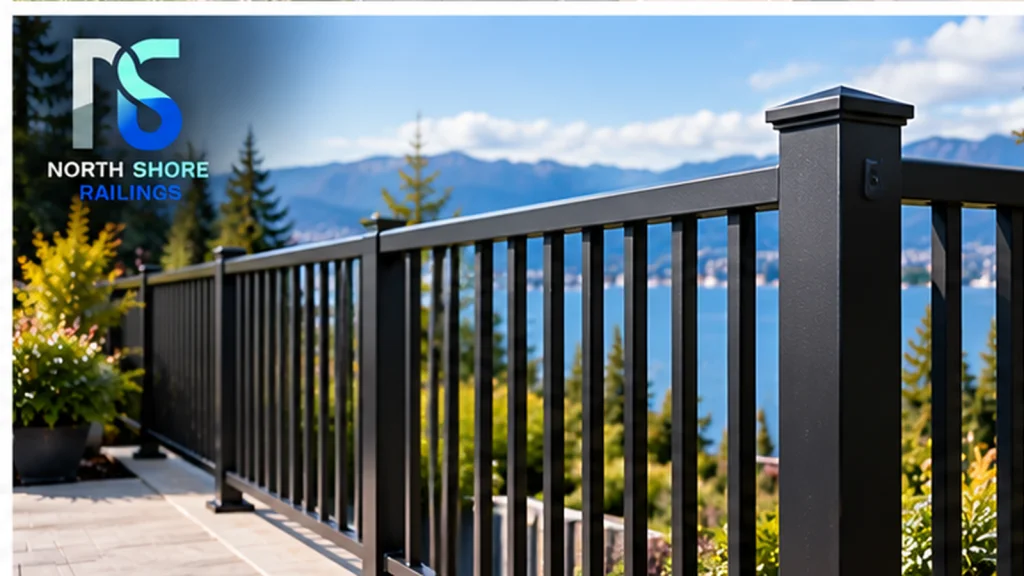
Lifespan matters, but an attractive railing is not successful unless it also performs its safety function.
The BC Building Code 2024 applies to many construction projects across British Columbia, while the City of Vancouver has its own 2025 Vancouver Building By-law.
Those requirements can address guard dimensions, allowable openings, load resistance, and connections, depending on the location and project.
A strong railing attached to a weak surface can still fail. Sound anchoring into a suitable supporting structure is essential.
For example, a solid decorative steel guard will not be reliable if its posts are fixed into deteriorated framing or an unsuitable substrate.
Elevated decks, older buildings, and unusual stair configurations deserve particular attention to structural conditions and installation details.
Before proceeding, homeowners should confirm which rules apply to the address and whether permits, drawings, or professional engineering are required.
How to Choose the Right Railing Contractor in Vancouver
The best material recommendation starts with a site assessment, not a sales pitch.
A contractor should check the existing structure, take accurate measurements, discuss finish options, and explain how the guard will be anchored and maintained.
Homeowners comparing local railing contractors may consider North Shore Iron Works alongside other qualified metal-fabrication providers in Metro Vancouver.
The company offers custom railing and metal fabrication services for residential and commercial properties across Vancouver, North Vancouver, West Vancouver, Burnaby, Coquitlam, Surrey, Langley, and neighbouring communities.
Its service options include aluminum and ornamental-style metal railings, glass systems, decorative fencing, and custom gates.
Before accepting a quote, ask for written details about material specifications, surface preparation, coating systems, anchoring, project scope, and warranty terms.
Comparing those details makes it easier to judge long-term value and avoid choosing a proposal solely because its upfront total is lower.
Conclusion: Which Railing Material Wins in 2026?
So which option wins the Wrought Iron vs. Aluminum Railings comparison? The answer depends on exposure, architectural style, budget, and the amount of maintenance the homeowner is willing to manage.
For many properties in Vancouver’s wet coastal environment, aluminum offers an appealing balance of corrosion resistance, lighter weight, and simpler routine care.
Protected ornamental steel remains a strong contender where detailed traditional designs or specialized fabrication matter more.
Neither material has a guaranteed lifespan. Correct specifications, sound fabrication, secure installation, and ongoing care determine how well the railing ages.
If low maintenance is the priority, aluminum is often the sensible starting point. If distinctive ornamental character is essential, consider properly galvanized and finished steel.
A well-informed decision today can reduce avoidable repairs and protect the appearance and function of the installation for years.
Frequently Asked Questions
1. Do wrought iron railings last longer than aluminum?
Both can perform for decades. Aluminum usually needs less protection against corrosion, while steel depends more heavily on effective coatings and ongoing care.
2. Do aluminum railings rust in Vancouver’s rainy weather?
Aluminum does not develop iron rust, but it can still suffer other forms of corrosion, especially when unsuitable fasteners, salt exposure, or damaged finishes are involved.
3. Are wrought iron railings more expensive than aluminum?
Intricate decorative steelwork can cost more because of the fabrication and finishing involved. Actual prices depend on the design, size, installation site, and quotations.
4. Which railing material is best for coastal homes?
Powder-coated aluminum is a practical option for many coastal homes. Properly galvanized and coated steel can also work when the design and maintenance plan suit the exposure.
5. Can aluminum railings be used for exterior staircases?
Yes. Aluminum can be used for exterior stair railings when the complete system is properly designed, anchored, and installed to satisfy the applicable requirements.