The New Modern Farmhouse Exterior: 25 Architectural Details for a Custom Build
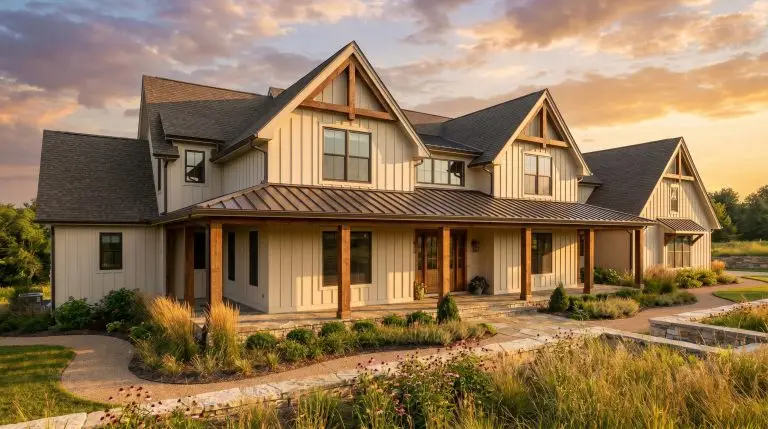
We are officially moving past the stark, clinical white siding paired with cheap, taped-on black window grids. The modern farmhouse exterior is evolving into its second generation, trading flat suburban replication for rich organic textures, varied siding widths, and deeply moody color palettes. For a custom build or major renovation to command true architectural authority, the exterior envelope must prioritize historic proportions and tactile, heavy-weight materials.
The Evolution of Siding, Texture, and Color Palettes
Siding and paint choices dictate 80% of a home’s curb appeal before anyone even registers the architectural massing. The current standard relies on a sophisticated mix of materials, blending durable fiber cement with natural stone and rich wood tones to ground the structure.
Swap Bright White for Creamy, Warm Neutrals
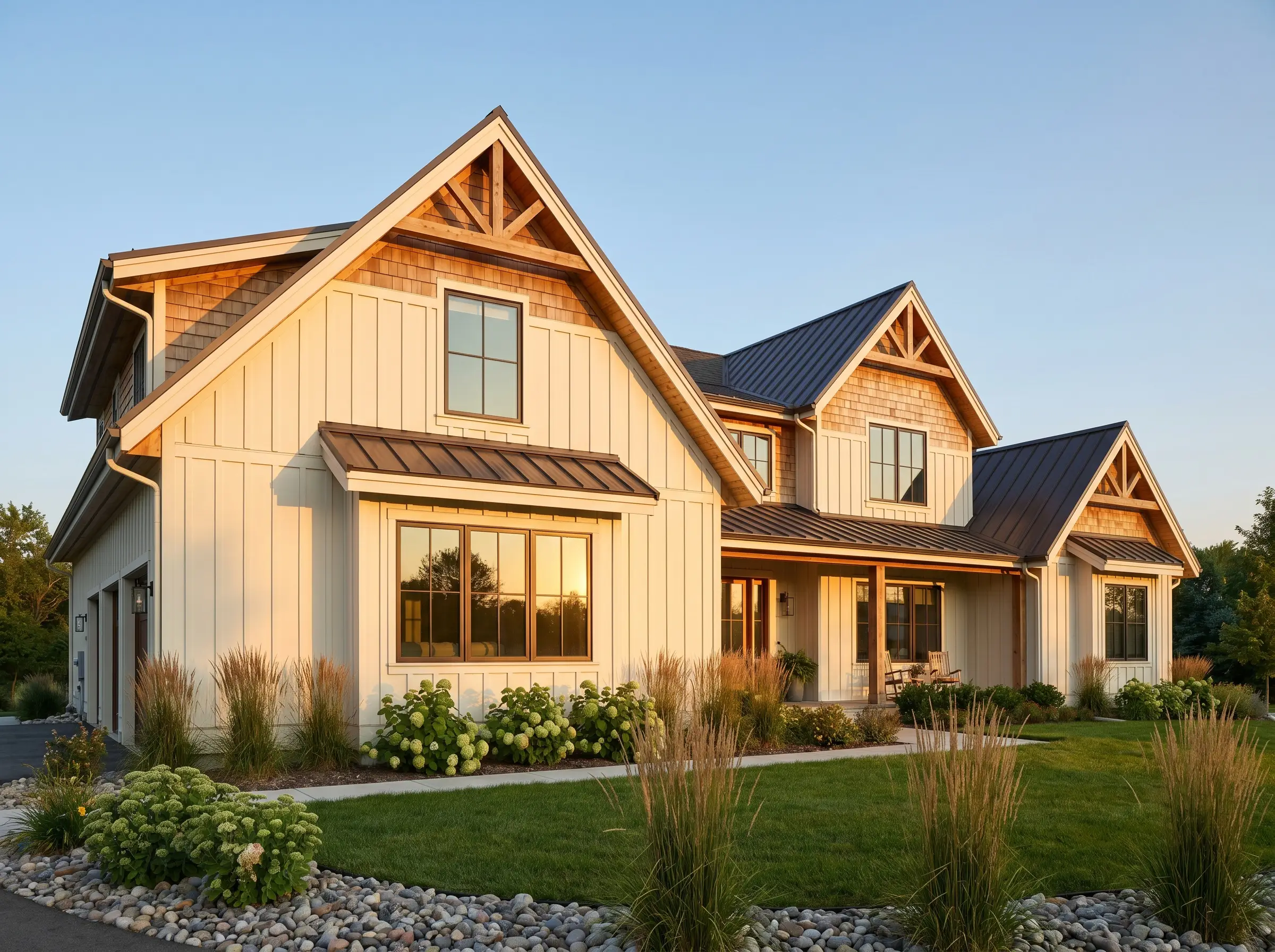
Blinding, cool-toned whites can make a new build look sterile and artificially flat against natural landscaping. Transitioning to creamy, warm neutrals allows the siding to interact beautifully with sunlight, catching golden-hour rays and casting softer, more organic shadows across the board and batten.
- Vibe: Organic Modern Farmhouse
- Key Materials: James Hardie fiber cement
- Paint Recommendation: Benjamin Moore Swiss Coffee
- Color Match: Pair with natural cedar and dark bronze metal accents
The Moody Shift: Charcoal and Dark Green Exteriors
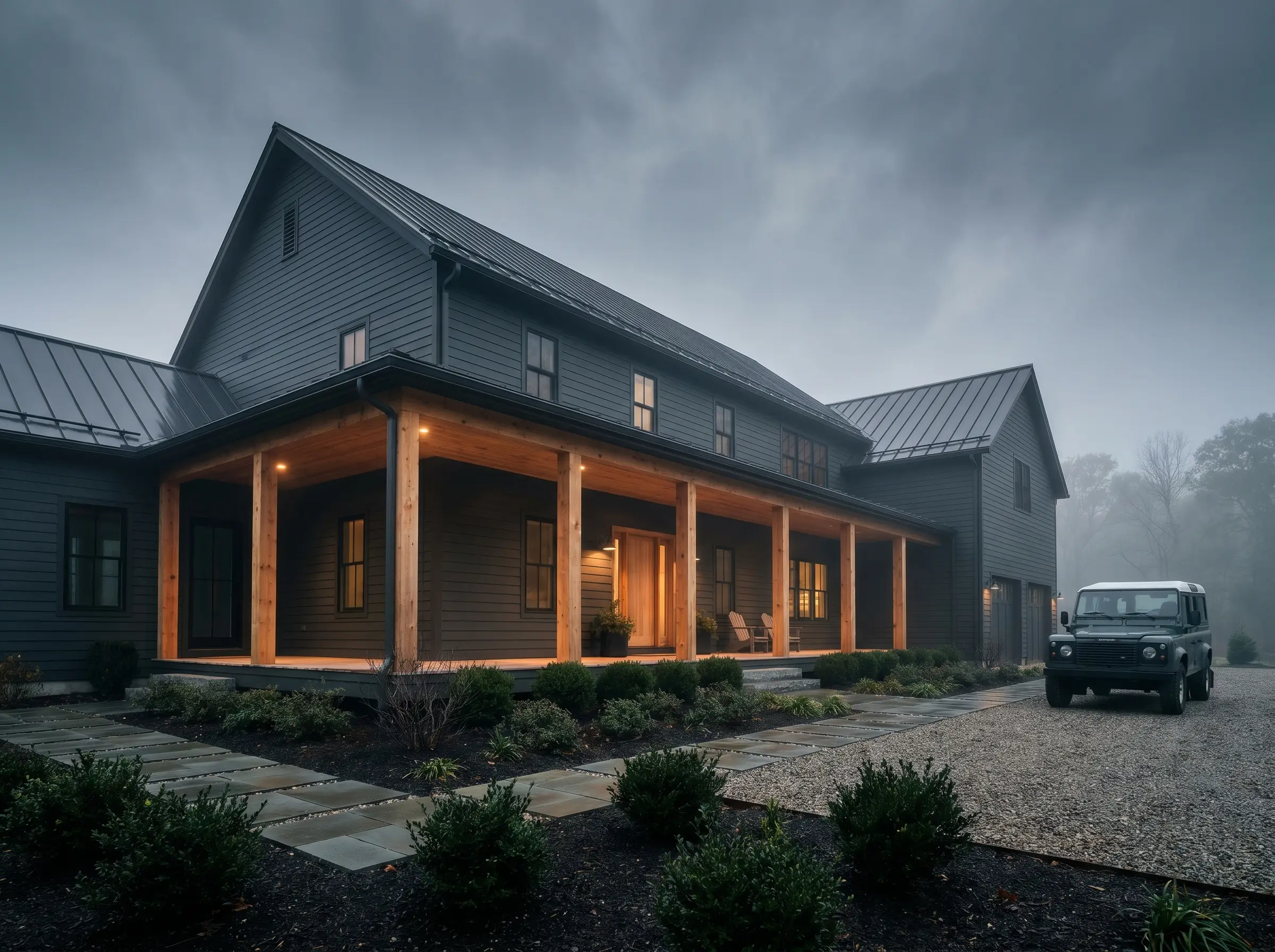
Painting the entire exterior envelope a deep, saturated hue instantly modernizes the traditional agrarian silhouette, pulling it away from expected norms. These dark colors ground the home firmly in its site, making the structure feel like a heavy, permanent fixture rather than a lightweight box.
- Vibe: Scandinavian & Industrial Farmhouse
- Paint Recommendation: Sherwin-Williams Iron Ore or Sherwin-Williams Ripe Olive
- Styling Pro-Tip: Offset dark siding with warm, natural wood tones on the front porch to prevent the facade from looking like a black void.
Mix Board and Batten with Natural Cedar Accents
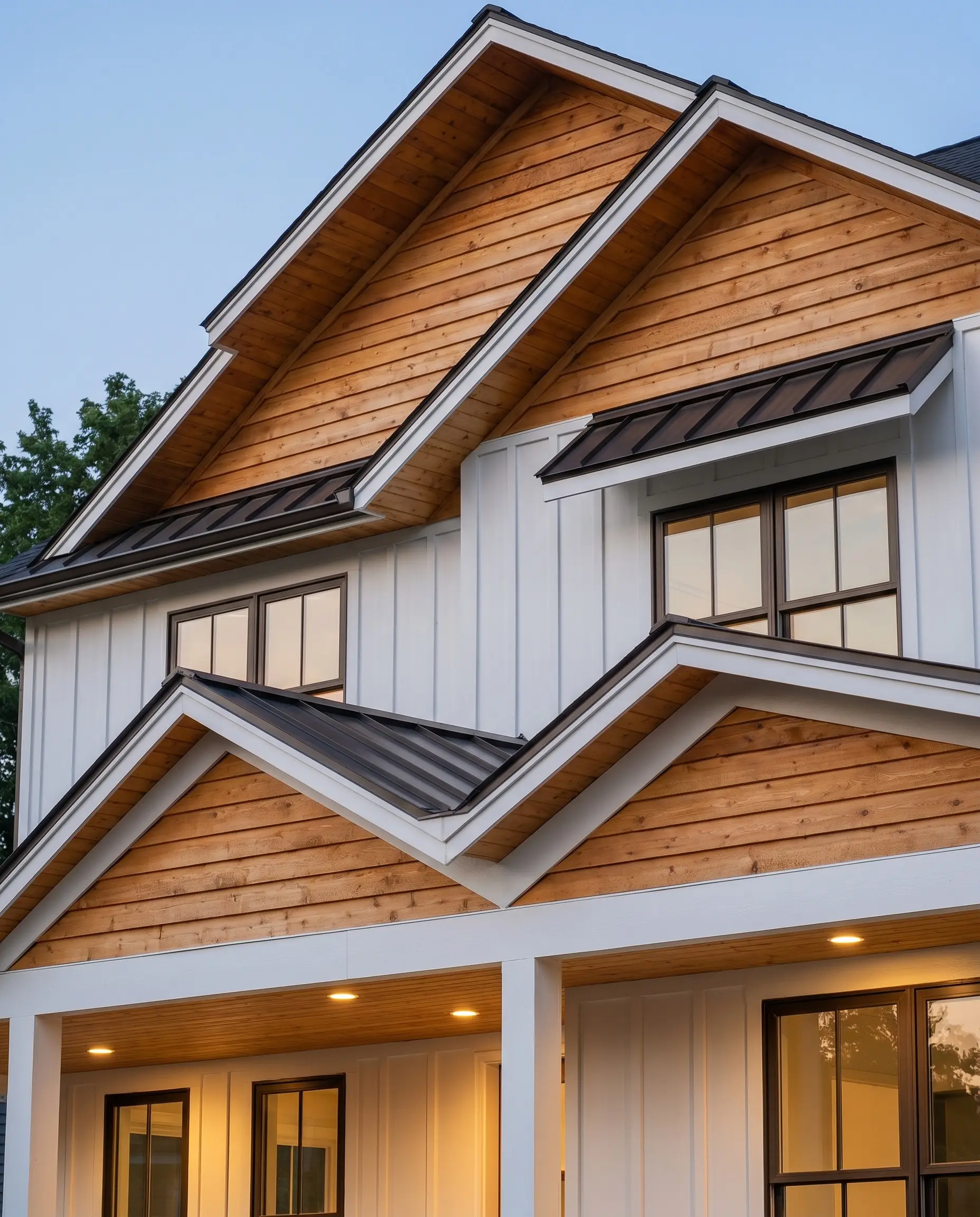
Breaking up the visual monotony of single-material siding is crucial for a high-end, custom aesthetic. Introduce clear vertical-grain cedar in the gable peaks or as a porch ceiling treatment to provide a stunning, tactile contrast against painted fiber cement.
Designer Secret When mixing cedar and painted siding, ensure the cedar is placed in protected areas like deep gables or under soffits to minimize weather degradation and maintenance.
- Vibe: Accessible Luxury Custom Build
- Key Materials: Board and batten, rough-sawn cedar
- Styling Pro-Tip: Use a clear, UV-blocking matte stain on the cedar to preserve its natural honey tone without turning orange.
Ground the Elevation with Limewash Brick Skirting
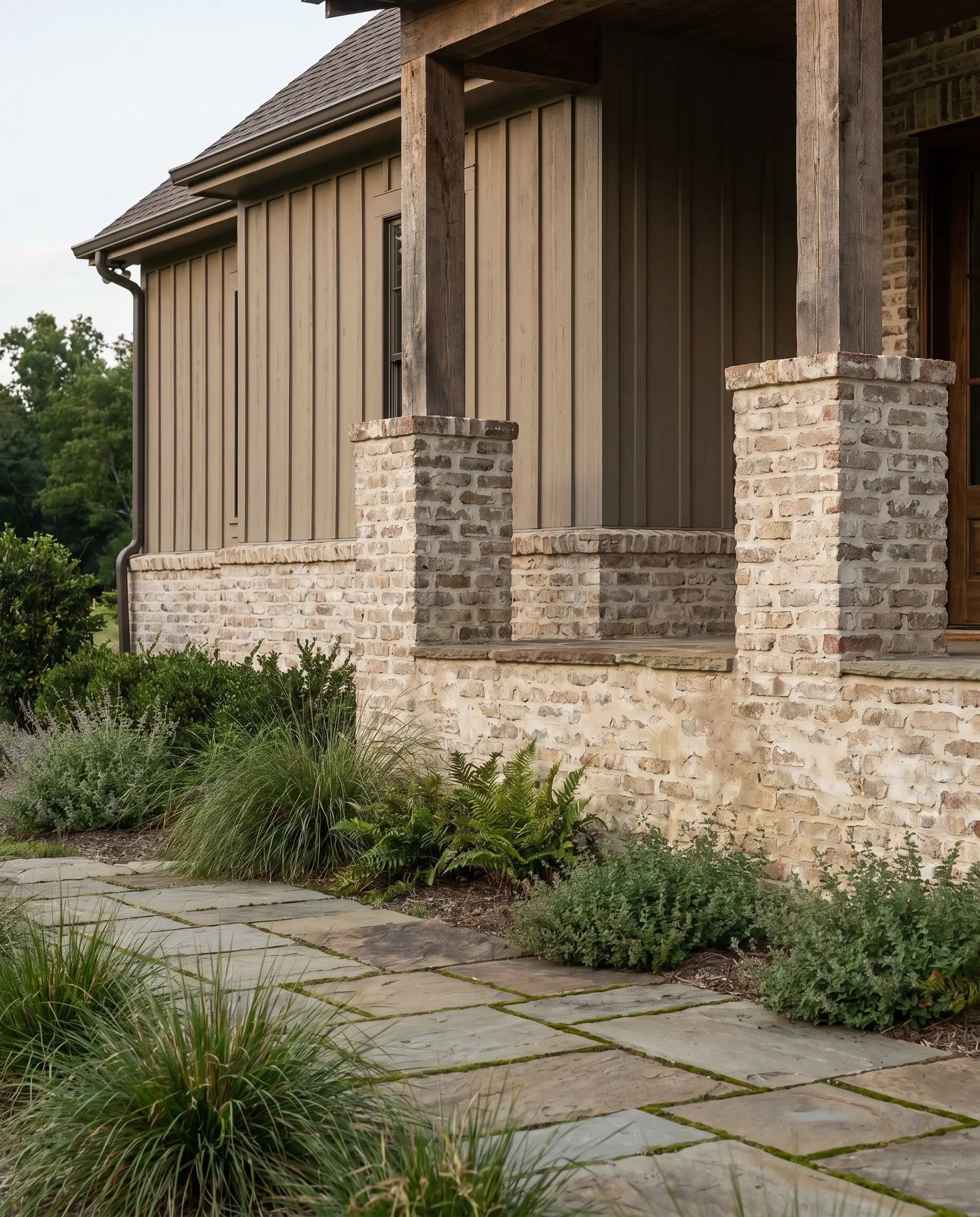
Standard veneer stone often looks distinctly suburban and pasted-on, lacking structural logic. Over-grouted limewash brick—where the mortar is smeared flush with the brick face—gives the foundation skirting an aged, European-farmhouse patina that anchors the home beautifully.
- Vibe: Historic Agrarian
- Key Materials: Solid brick, slaked lime putty
- Styling Pro-Tip: Carry the limewash skirting up to form the base of the front porch columns to create visual cohesion across the lower elevation.
Vary Siding Widths for Architectural Interest
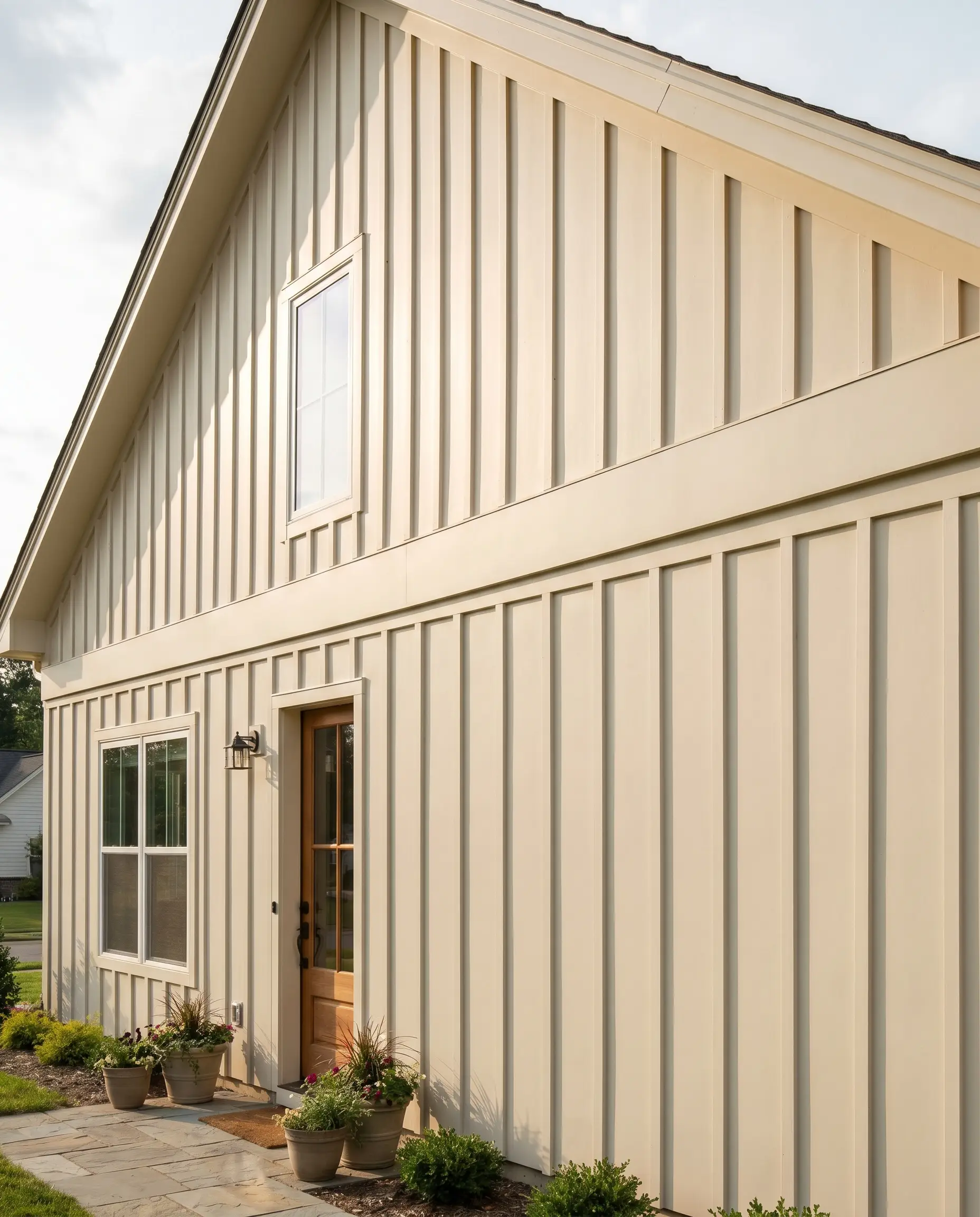
Applying the exact same board and batten spacing across an entire multi-story home results in a flat, mass-produced appearance. Alternating the width—such as running 16-inch spacing on the lower level and tightening to 8-inch spacing on the gables—adds subtle, bespoke character and draws the eye upward.
- Vibe: Tailored Custom Build
- Key Materials: James Hardie architectural panels and batten strips
- Styling Pro-Tip: Keep the horizontal transition seamless by using a distinct belly band trim piece between the varying widths.
Embrace Shou Sugi Ban for an Industrial Edge
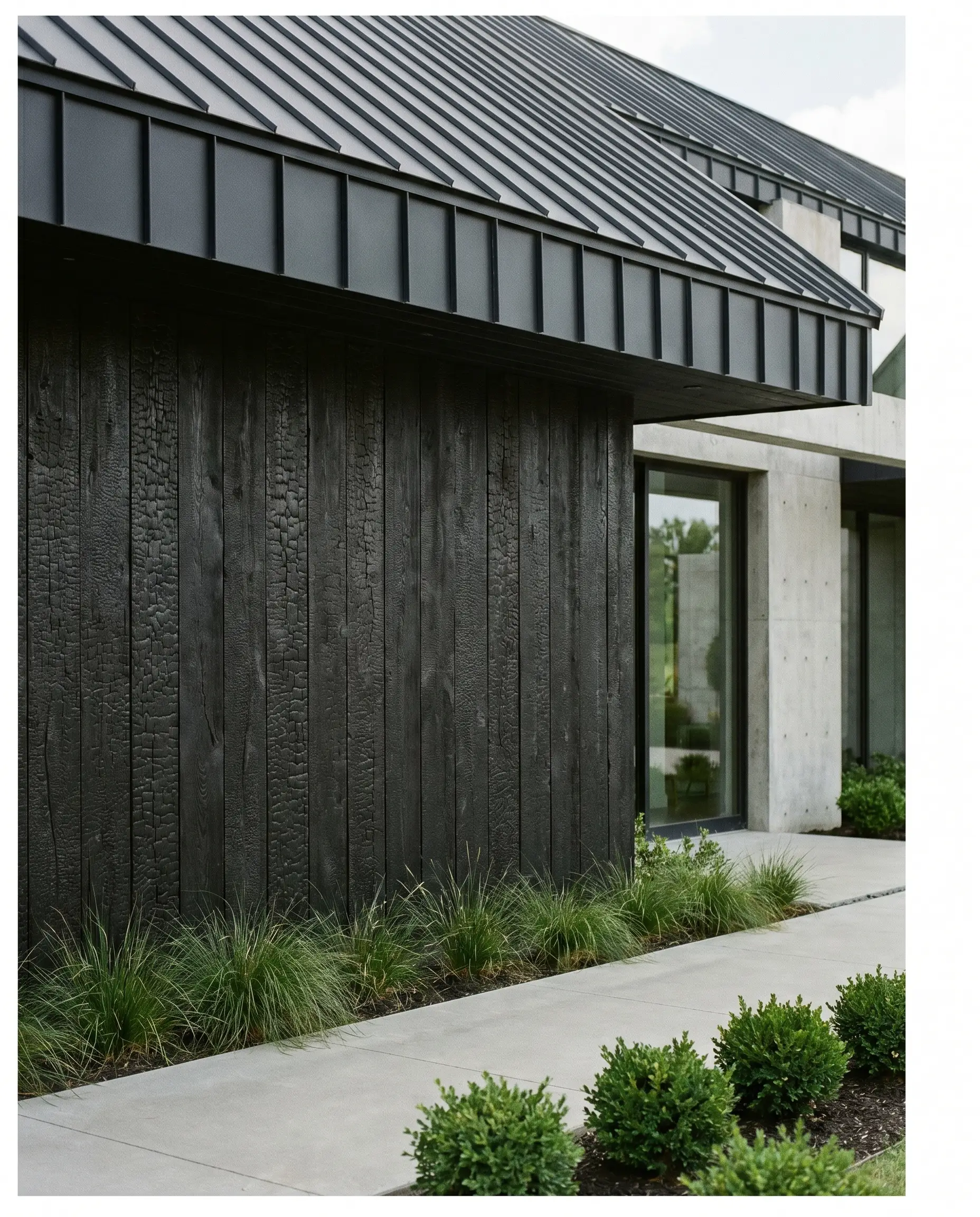
Charred timber siding introduces a rugged, weather-resistant texture that completely transforms the standard farmhouse profile. Using this Japanese burning technique as a striking accent wall or on a detached garage brings a deeply tactile, high-end industrial contrast to the property.
- Vibe: Industrial Farmhouse
- Key Materials: Shou sugi ban charred timber
- Styling Pro-Tip: Pair charred timber with matte black standing seam metal roofs and minimal landscaping for a stark, sculptural aesthetic.
Windows, Rooflines, and Structural Scale
A true farmhouse relies entirely on correct architectural proportions and massing. A compromised roof pitch or cheap, flat window grids will immediately downgrade the entire build, regardless of how beautiful the siding is.
Invest in True Divided Light for Black Window Frames
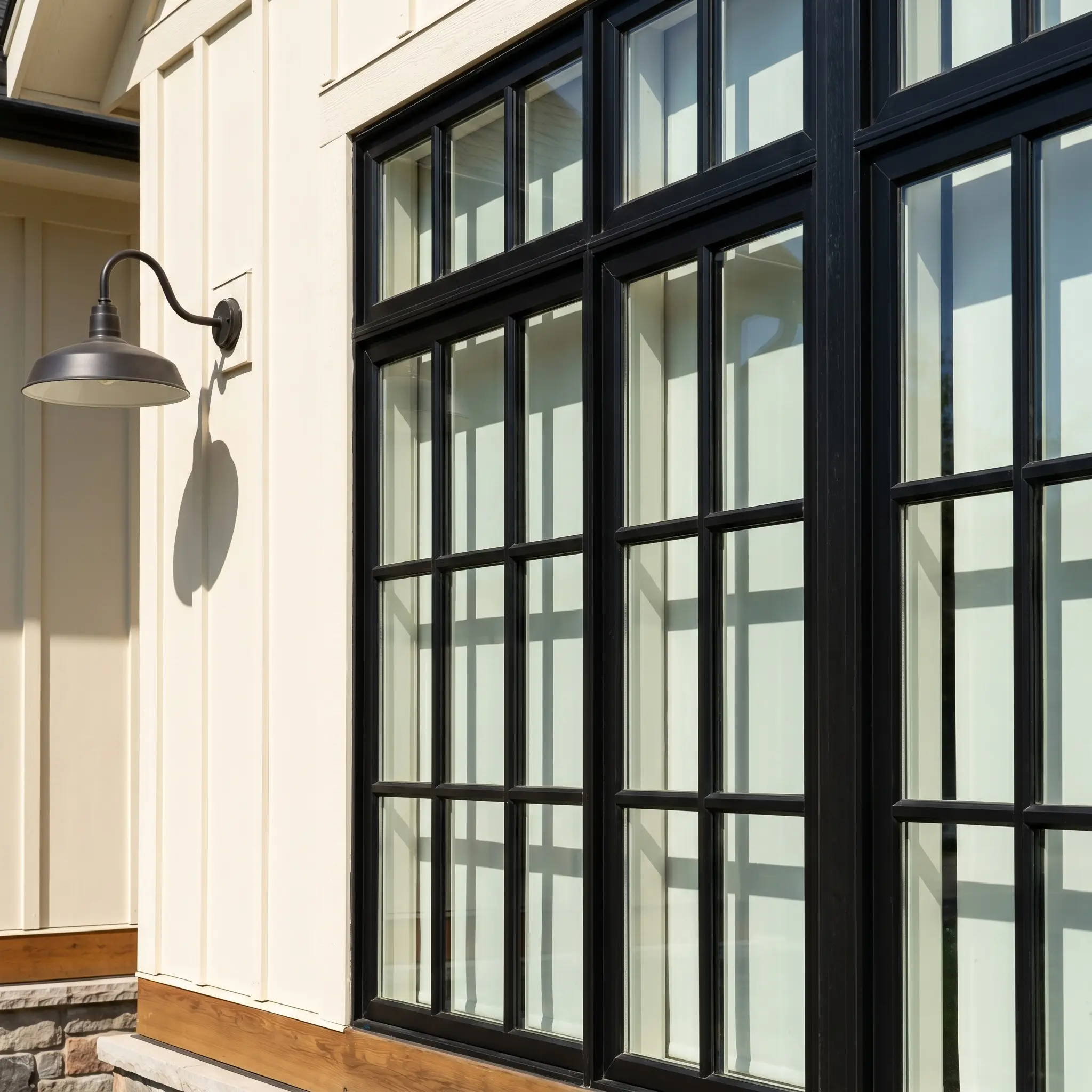
Windows with flat, applied grids trapped between the glass panels strip a home of its dimensional character and cast zero real shadows. Upgrading to Simulated Divided Light (SDL) or true divided light with exterior muntins is an absolute mandate for achieving authentic, high-end scale.
Always specify a 5/8-inch simulated divided light muntin bar; anything wider looks clunky and heavily dated.
Hackrea Designer Secret
- Vibe: Bespoke Heritage
- Key Materials: Aluminum-clad wood windows
- Styling Pro-Tip: Opt for a matte black or dark bronze finish on the exterior cladding to absorb light rather than reflecting it.
Use Standing Seam Metal Roofs as Strategic Accents
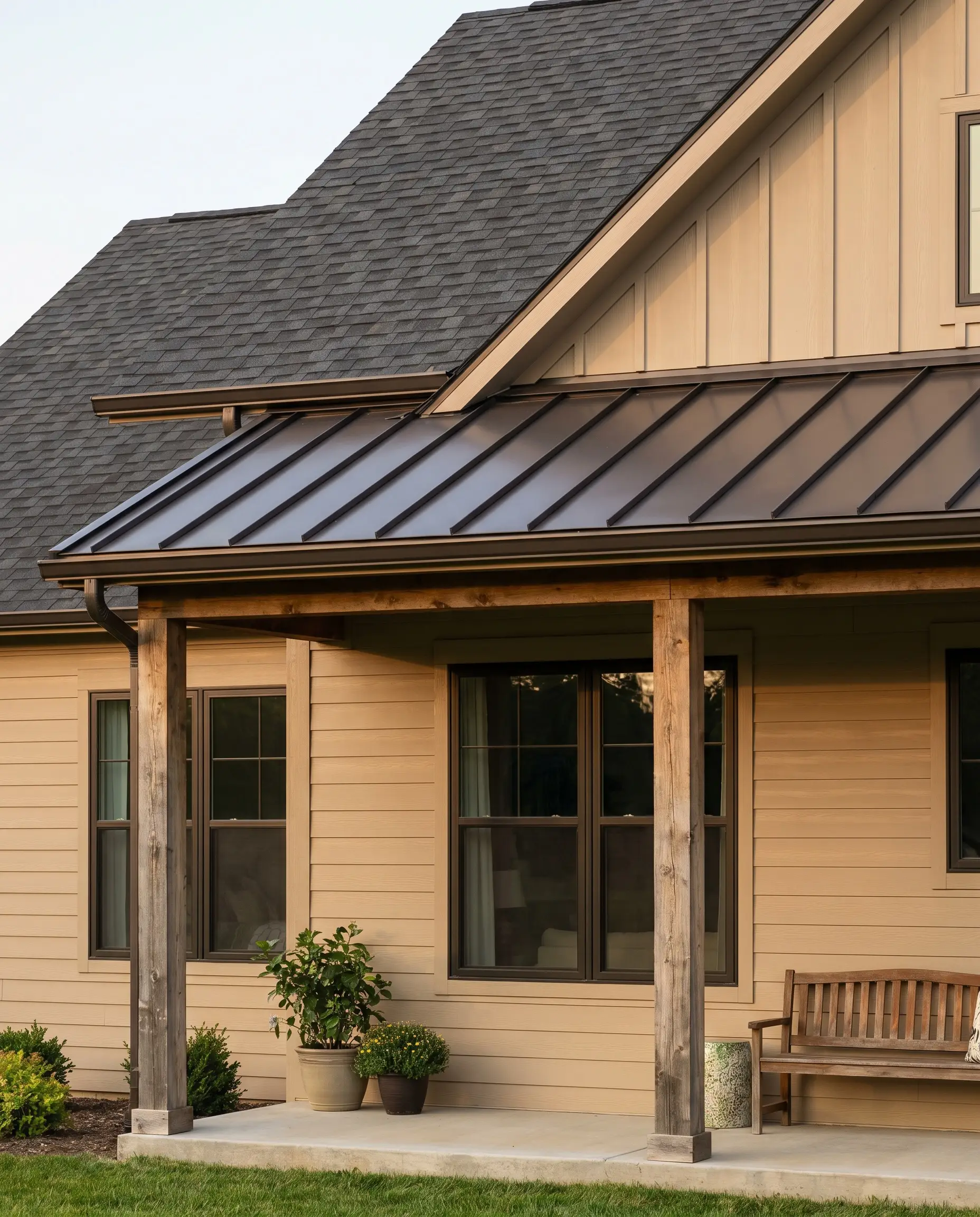
While full metal roofs are an incredible luxury, they carry a massive price tag that can consume a budget. Strategically deploying a standing seam metal roof only on the front porch awning or lower dormer windows delivers the identical high-end aesthetic while allowing architectural shingles to cover the main structure.
- Vibe: Accessible Luxury
- Key Materials: 24-gauge standing seam metal, dimensional architectural shingles
- Color Match: Matte black or dark bronze metal against charcoal shingles.
Pitch Matters: Designing Steep Gables and Dormers
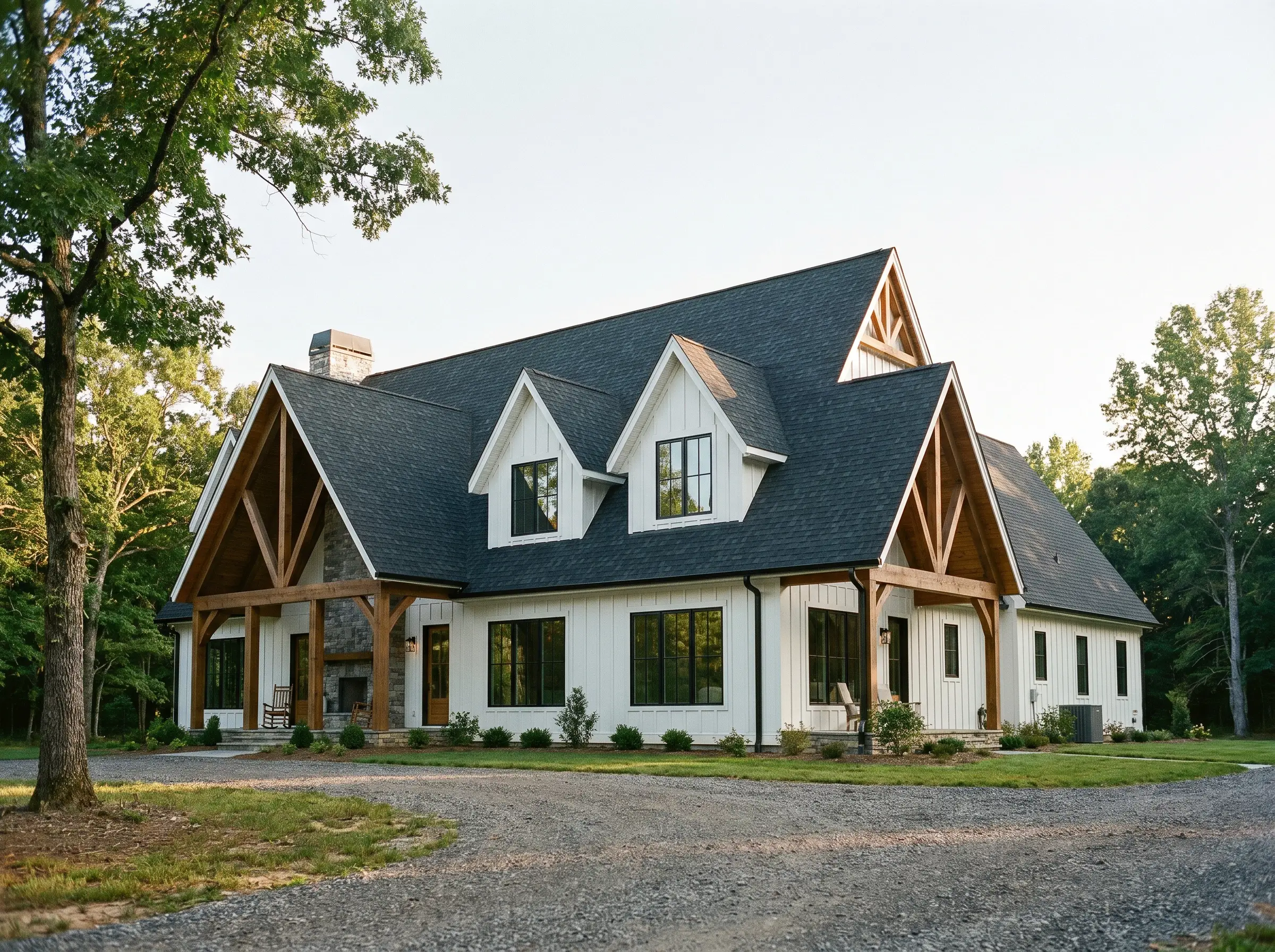
Modern farmhouses require a steep, aggressive roof pitch to capture that classic agrarian silhouette; shallow angles look like generic ranches sporting farmhouse siding. Pushing the primary gables to a 10/12 or even 12/12 pitch establishes commanding architectural authority and soaring curb appeal.
- Vibe: Historic Custom Scale
- Key Structural Element: 10/12 to 12/12 roof trusses
- Styling Pro-Tip: Use steep dormer windows to break up the visual weight of the massive roof plane on a 1.5-story build.
Match Window Grids to the Home’s Proportion
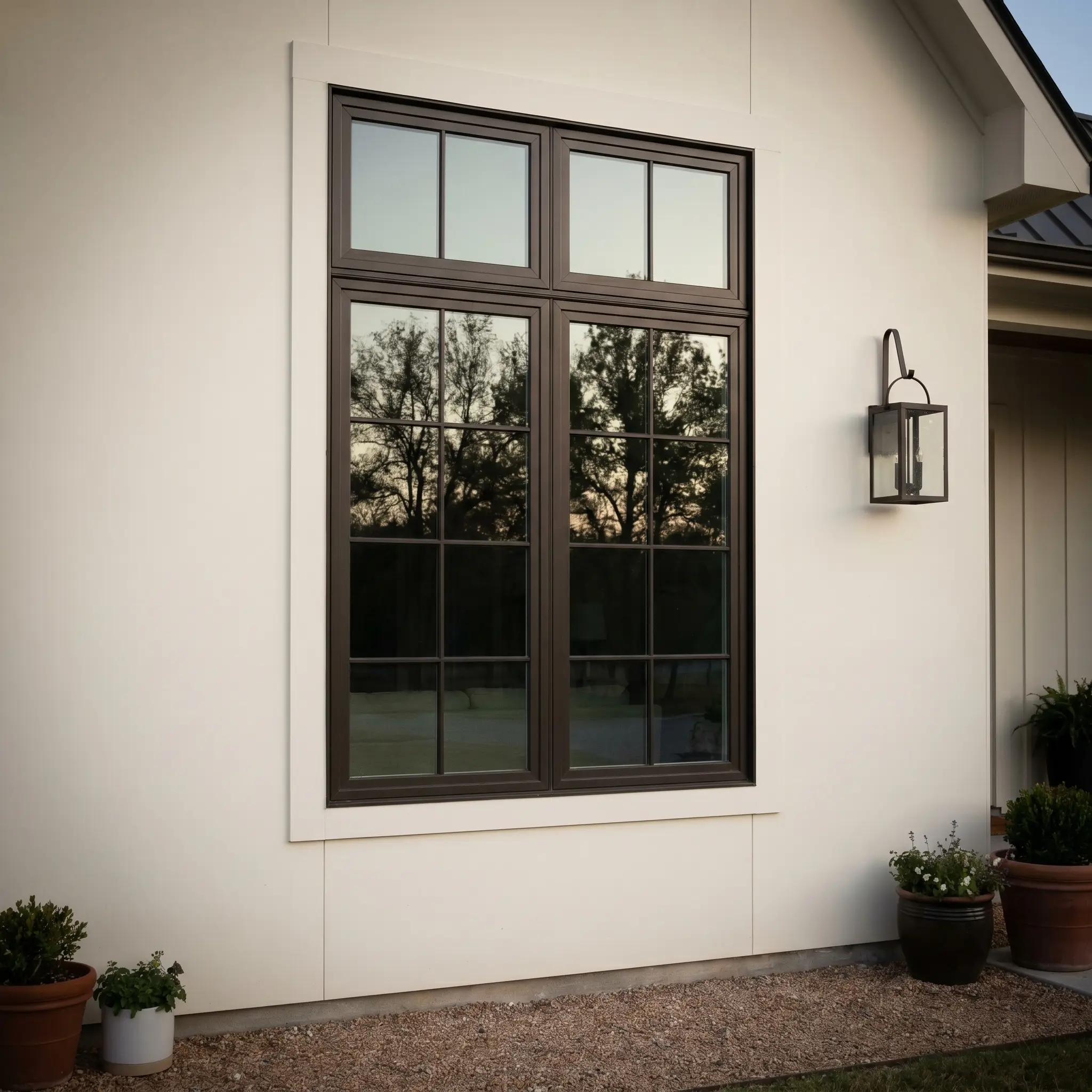
Overly busy traditional colonial grids, like a 6-over-6 pattern, aggressively clash with the clean, modern ethos of this architectural style. A 2-over-2 or a minimalist 4-over-1 grid pattern provides just enough historic structure without cluttering the glass.
- Vibe: Clean Transitional
- Key Element: 2-over-2 SDL grids
- Styling Pro-Tip: If your home leans heavily toward Scandinavian farmhouse, consider removing the grids entirely for massive, uninterrupted panes of glass.
Soften Hard Lines with Arched Entryways
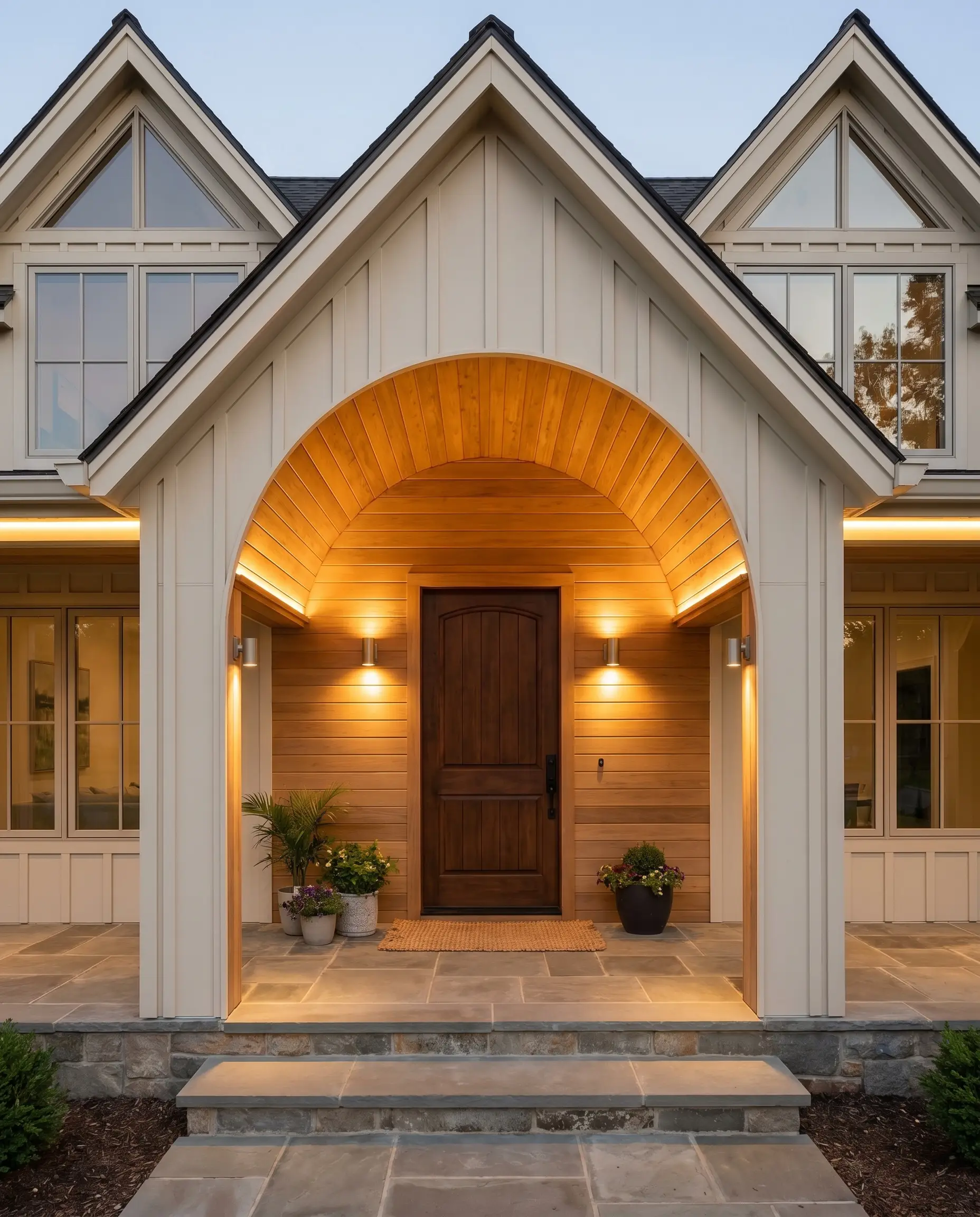
The typical farmhouse facade is dominated by sharp, triangular gables and rigid rectangular windows, which can feel austere. Incorporating a subtle arch over the front door or the main porch opening introduces an organic modern curve that brings immediate warmth and approachability to the elevation.
- Vibe: Organic Modern Farmhouse
- Key Structural Element: Framed architectural arches
- Styling Pro-Tip: Line the interior of the arch with warm wood paneling to draw the eye directly to the entry point.
The Front Porch: Columns, Doors, and Entryways
The porch serves as the welcoming focal point and requires tactile, premium materials because it is experienced up close. Before finalizing your entry, review the structural differences between wood vs. fiberglass front doors to ensure your choice aligns with your climate.
Upgrade from Thin Posts to Oversized Rough-Sawn Timber Columns
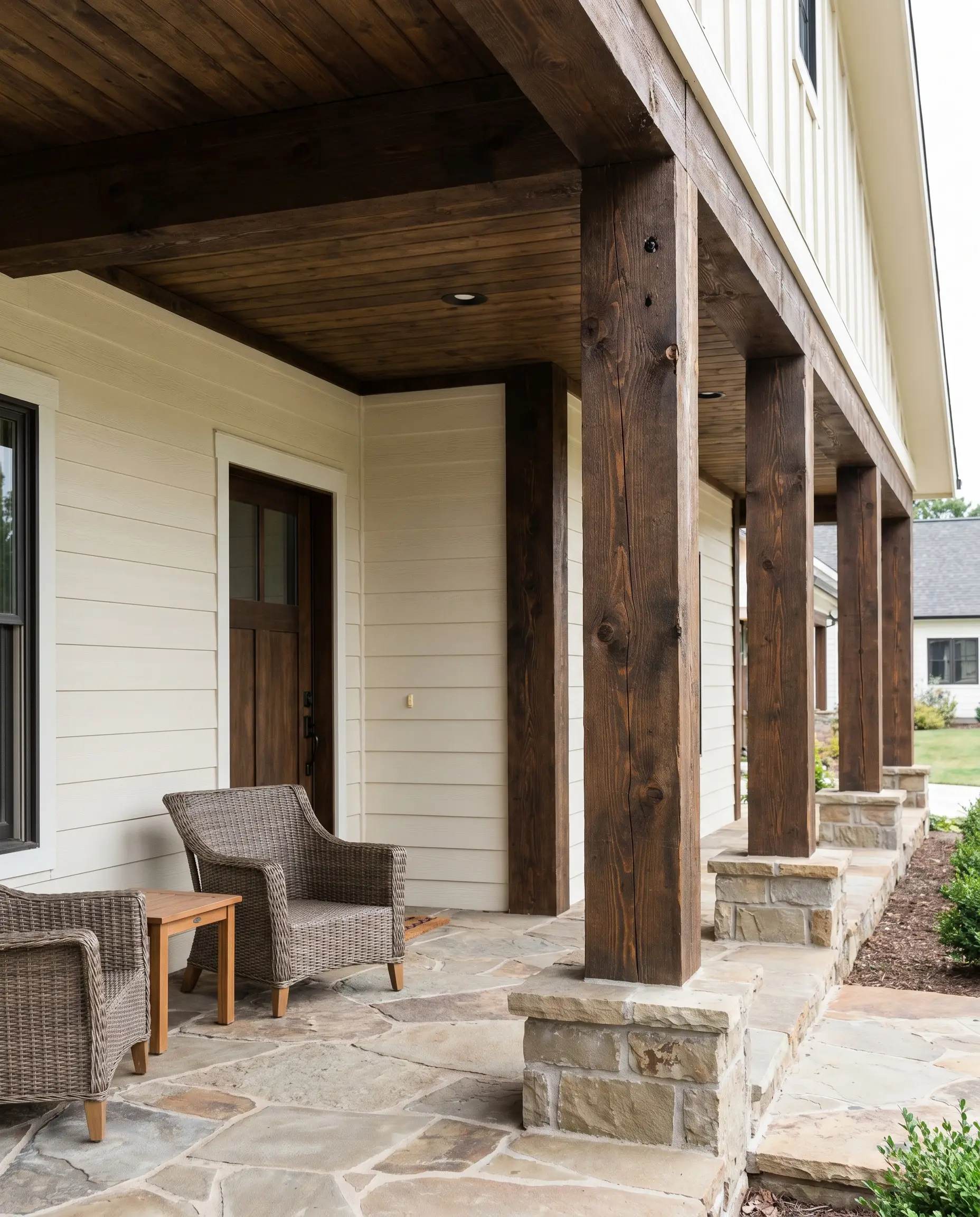
Thin 4×4 or 6×6 posts look structurally weak, completely undermining the massing of a substantial home. Anchoring the porch with thick, oversized rough-sawn cedar or Douglas fir columns gives the entry necessary visual weight and authentic timber-frame appeal.
Never wrap a small post in 1-inch pine boards to fake thickness; the mitered corners will inevitably split and reveal the hollow construction. Invest in solid 8×8 timbers.
Designer Secret
- Vibe: Heavy Timber Custom
- Key Materials: Rough-sawn cedar, Douglas fir
- Sizing Rule: Minimum 8×8 posts for standard porches; 10×10 for double-height entries.
Anchor the Entry with a Solid White Oak Double Door
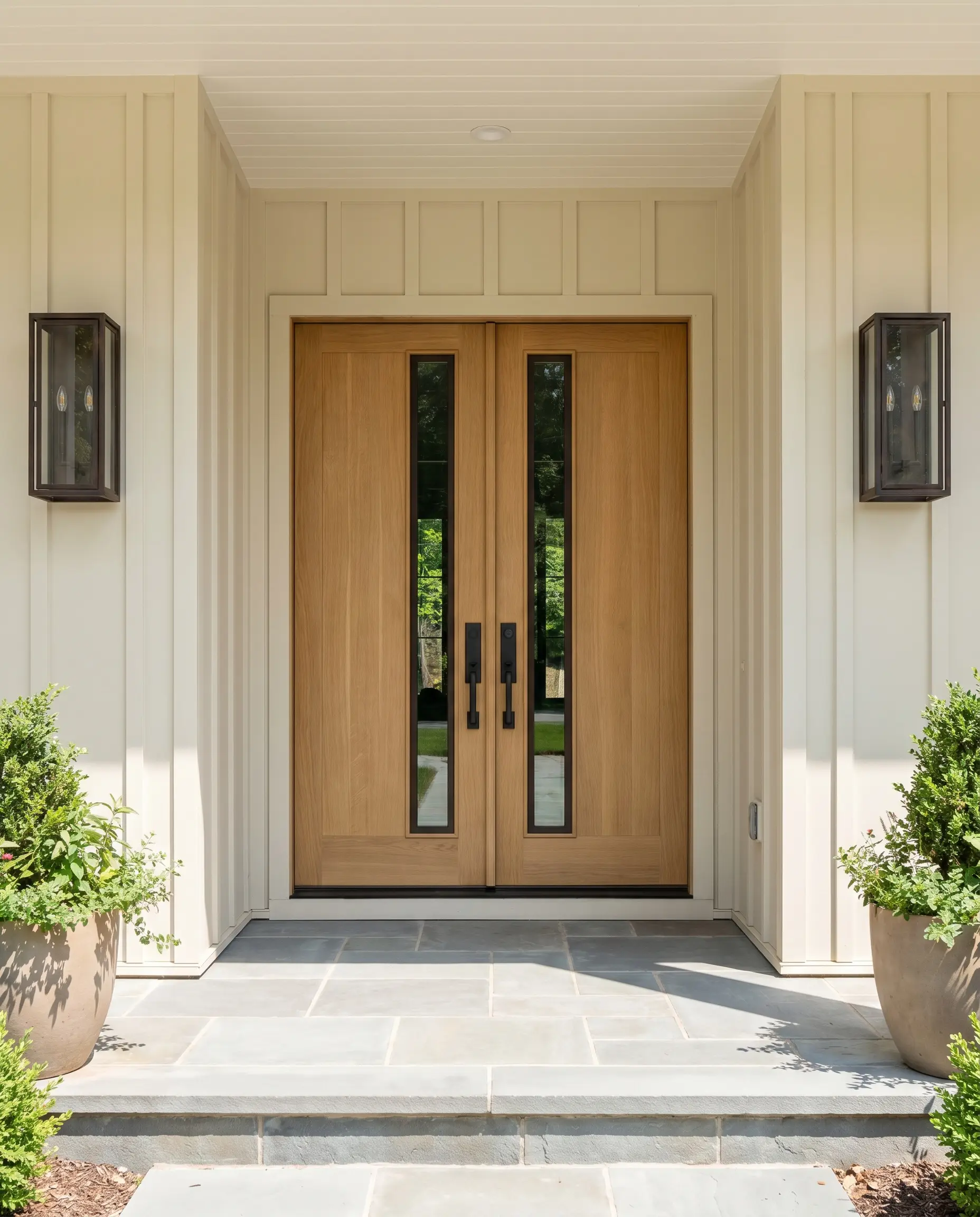
Skipping standard painted doors in favor of natural wood establishes the entry as the undeniable focal point of the house. A solid white oak or mahogany front door, finished with a clear matte sealant, injects instant luxury and organic texture into a neutral exterior palette.
- Vibe: High-End Bespoke
- Key Materials: Rift-sawn white oak, mahogany
- Styling Pro-Tip: Choose a door profile with tall, narrow glass panels to echo the verticality of board and batten siding.
Install Bluestone or Thermal Flagstone Porch Flooring
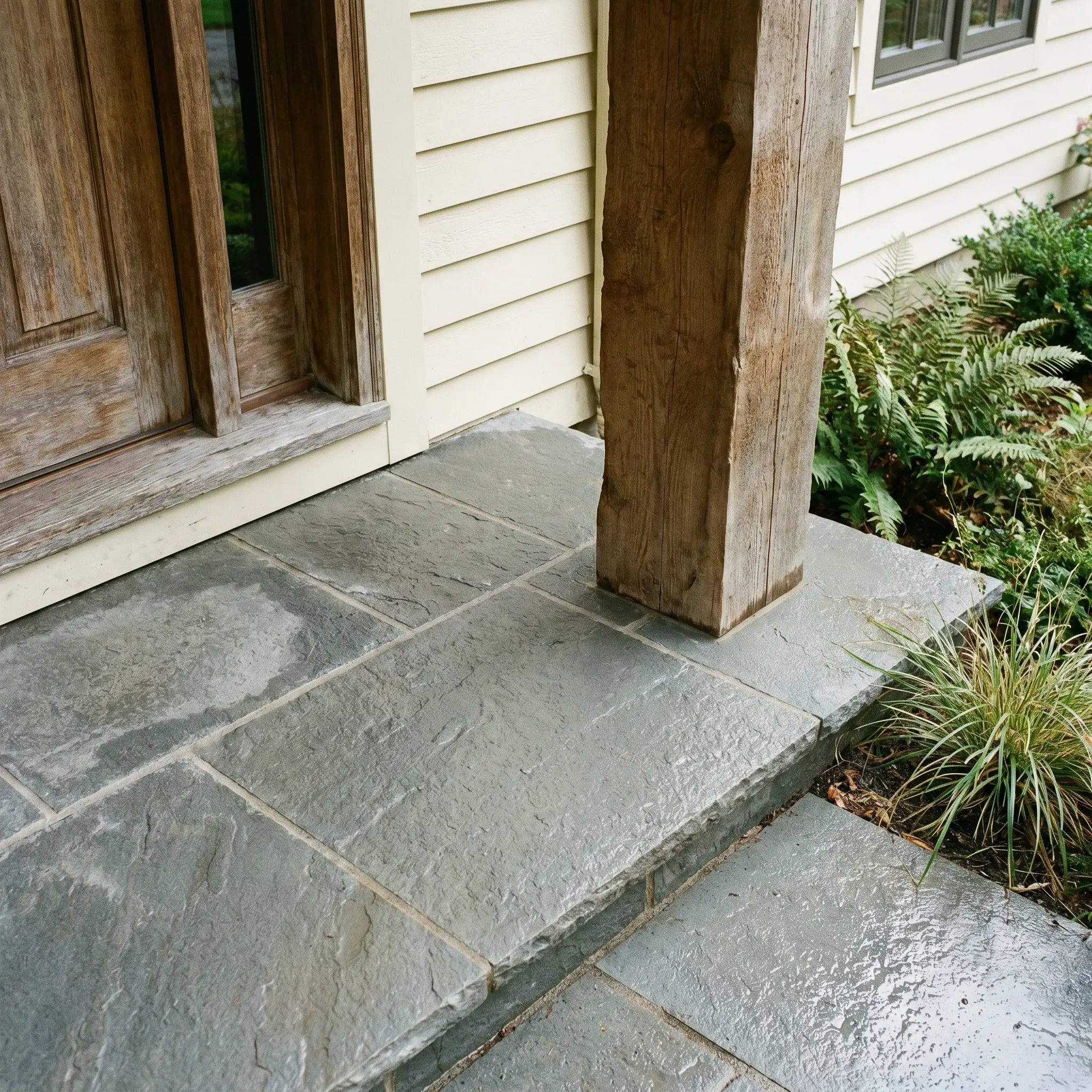
A basic poured concrete slab drastically lowers the perceived value of a custom entryway. Laying down cut bluestone or thermal flagstone bridges the aesthetic gap between the sharp architecture of the house and the natural, organic landscaping of the yard.
- Vibe: Heritage Estate
- Key Materials: Pennsylvania bluestone, thermal flagstone
- Styling Pro-Tip: Opt for a “thermal” finish on the stone, which provides a uniform, slip-resistant texture perfect for high-traffic entryways.
Frame the Entry with Custom Cedar Brackets
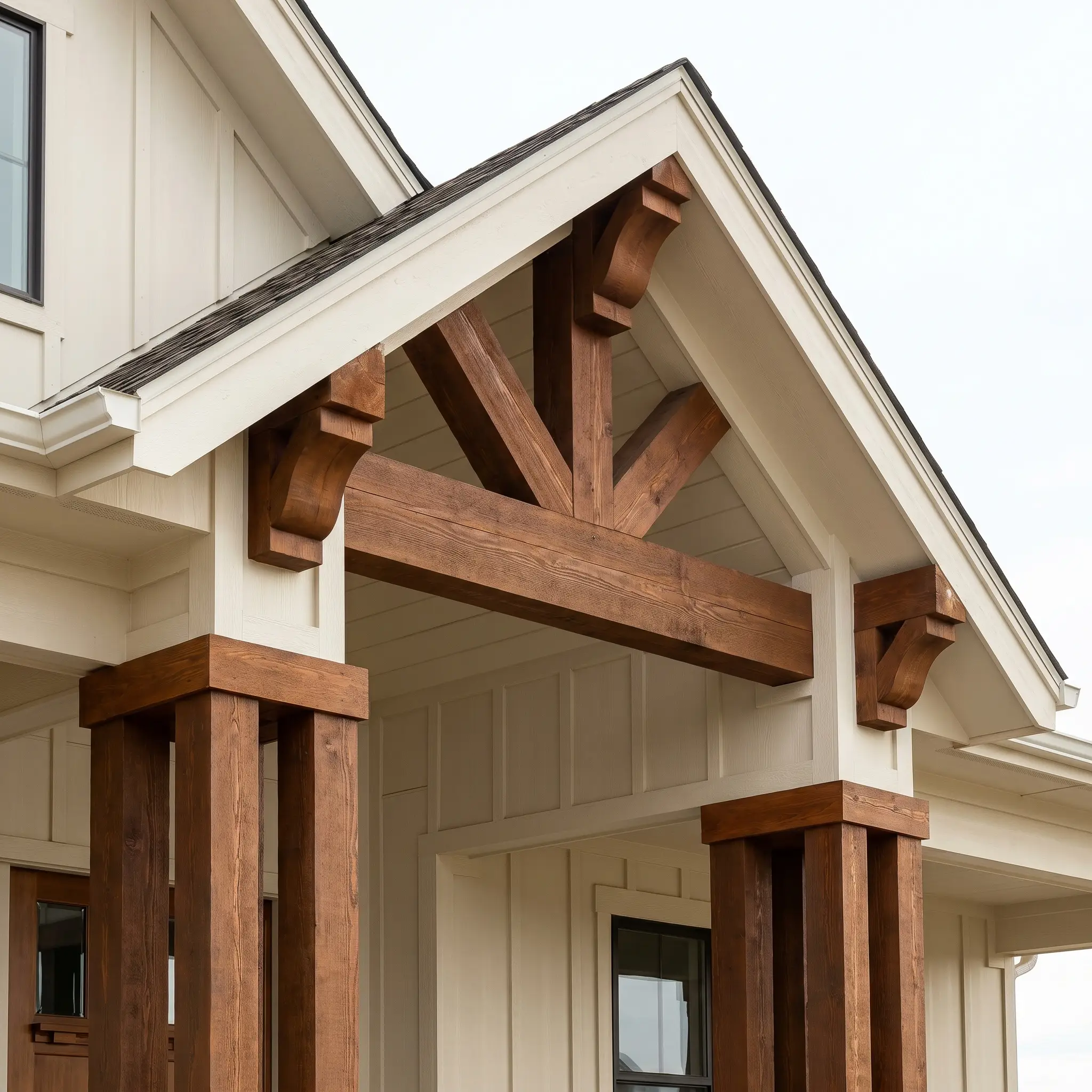
Adding architectural detailing requires a careful hand to avoid cluttering the clean lines of the facade. Heavy timber corbels or custom cedar brackets placed in the gable above the front door add necessary structural logic without crossing into fussy, Victorian gingerbread territory.
- Vibe: Timber-Frame Accent
- Key Materials: Solid rough-sawn cedar
- Styling Pro-Tip: Match the stain of your brackets perfectly to your porch columns and front door to create a cohesive wood-tone triad.
Paint the Porch Ceiling in Haint Blue or Warm Charcoal
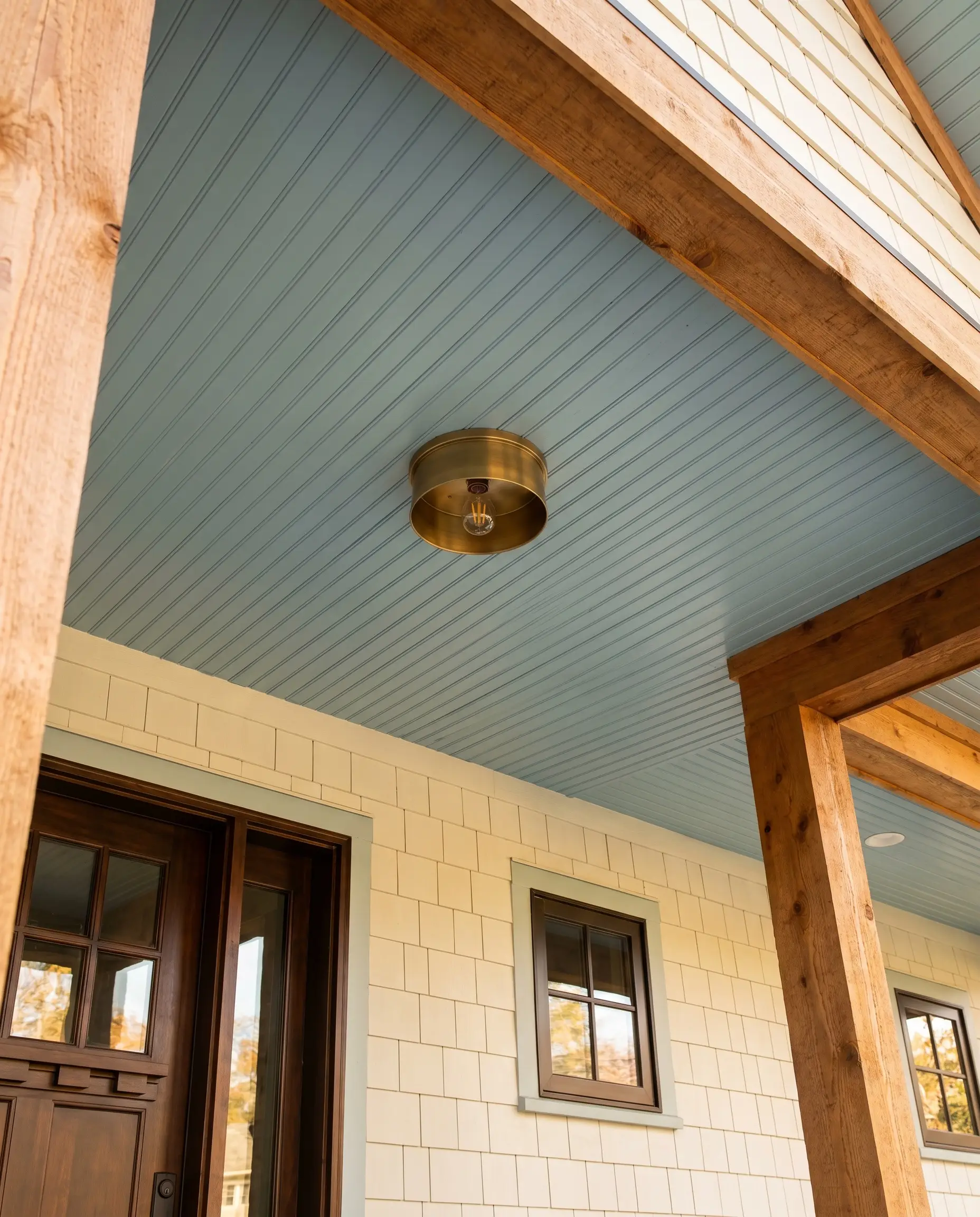
The porch ceiling is a massive, often-ignored canvas that presents a prime opportunity for unexpected color. A soft Haint Blue nods to historic Southern farmhouse roots, while matching the ceiling to your dark window frames delivers a moody, modern compression of the space.
- Vibe: Southern Heritage or Modern Industrial
- Paint Recommendation (Blue): Sherwin-Williams Atmospheric
- Paint Recommendation (Dark): Benjamin Moore Cheating Heart
Add a Functional Wrap-Around Layout with Deep Overhangs
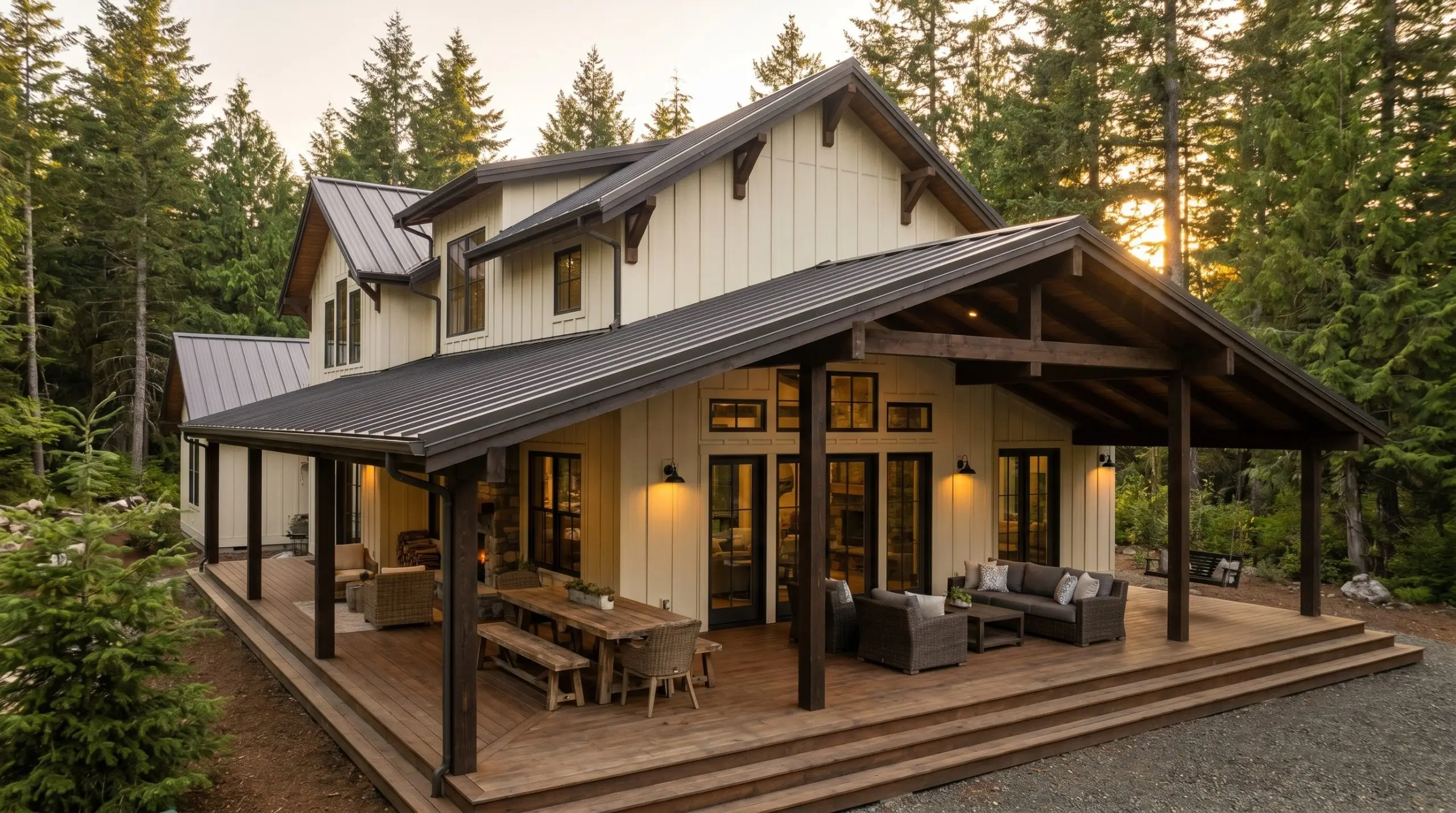
A successful modern farmhouse actively engages with its surrounding environment through thoughtful spatial layout. Integrating a wrap-around porch with deep overhangs protects the home’s interior from harsh solar heat gain while creating a deeply functional, shaded outdoor living space.
- Vibe: Lifestyle-Driven Custom
- Key Structural Element: Extended roof trusses, wrap-around decking
- Styling Pro-Tip: Ensure the porch depth is at least 8 feet to comfortably accommodate dining tables and deep-seated lounge furniture.
Lighting, Hardware, and Finishing Details
Lighting and hardware act as the architectural jewelry of the house, firmly solidifying the build’s luxury tier. For a deeper dive into luminaire placement, explore our guide on front porch lighting ideas to ensure your fixtures scale correctly.
Scale Up Your Gooseneck Sconces
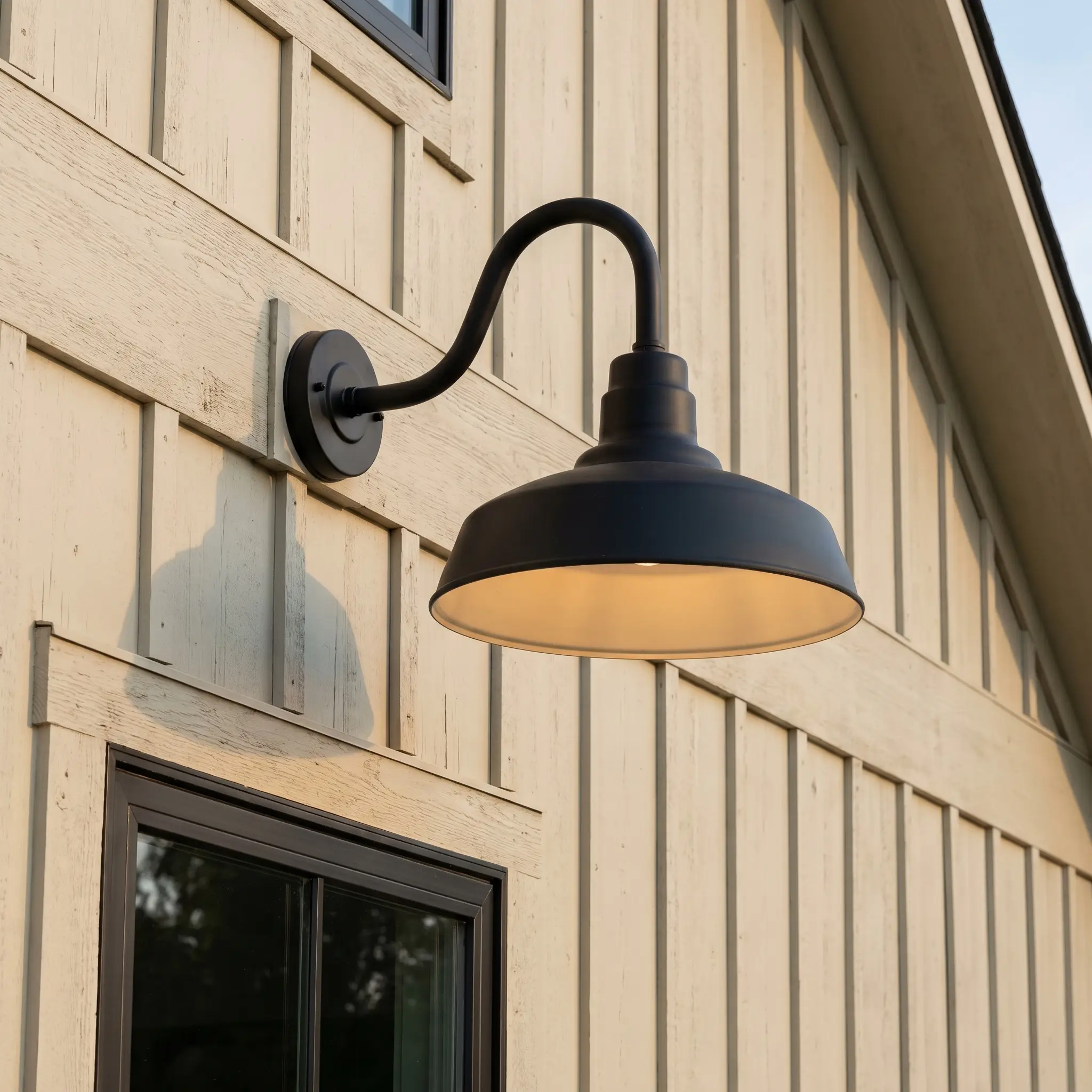
The most common exterior styling failure is selecting lighting that is drastically undersized for the elevation. Gooseneck sconces or barn lights flanking the garage and front door must be aggressively oversized to hold their visual weight against massive expanses of siding.
- Vibe: Industrial Scale
- Key Materials: Powder-coated aluminum, galvanized steel
- Sizing Rule: Fixtures should be 18 to 24 inches wide for standard exterior placement.
Choose Living Finishes: Unlacquered Brass and Copper Hardware
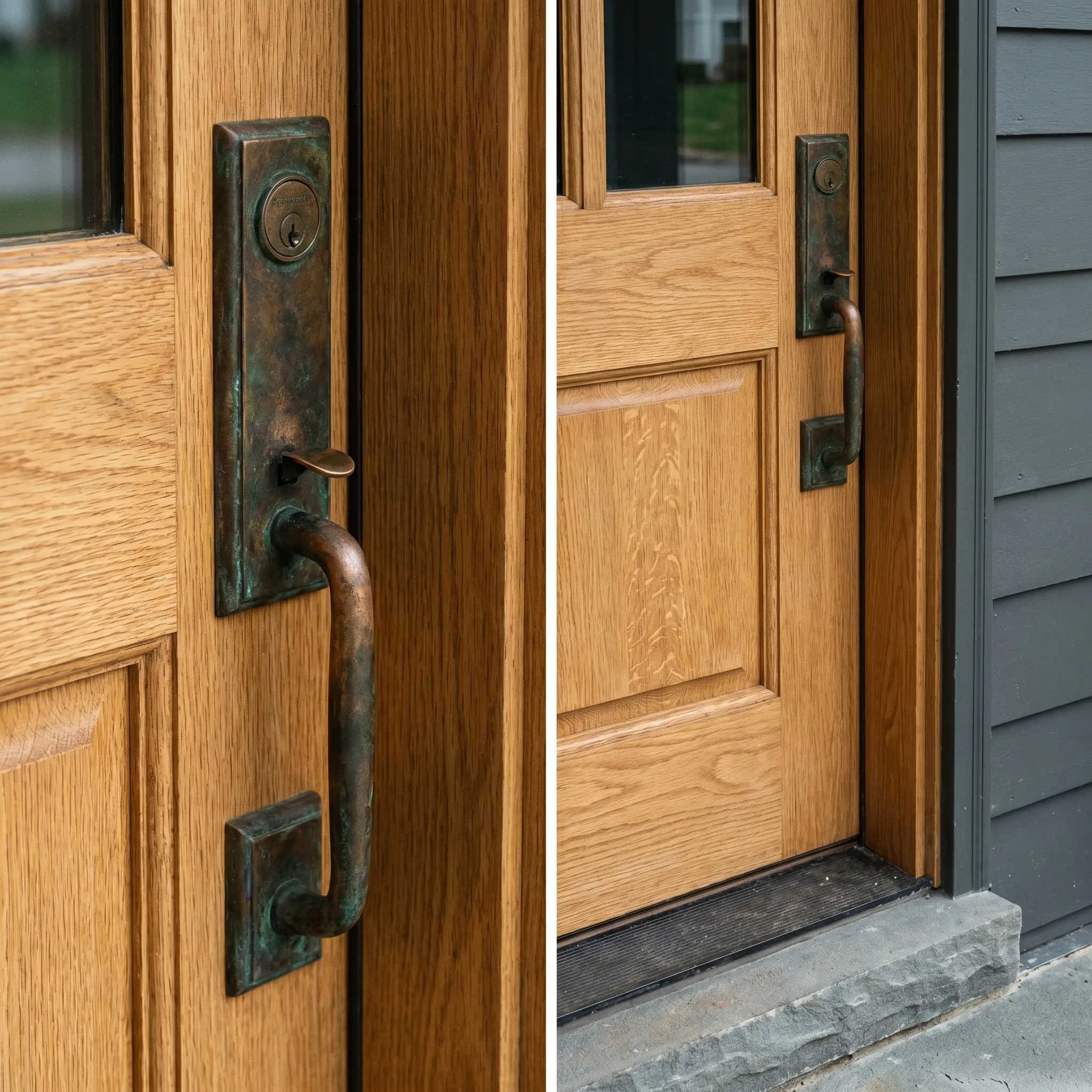
Moving away from the ubiquitous matte black door hardware introduces premium, tactile materials that age beautifully alongside the home. Specifying unlacquered brass or copper means the metal will develop a rich, dark patina over time, lending a profound sense of history to a brand-new build.
- Vibe: Heirloom Quality
- Key Materials: Unlacquered brass, raw copper
- Styling Pro-Tip: Pair living finishes with a solid wood door; the warm tones of the oxidized brass complement the natural wood grain perfectly.
Integrate Flush-Mount Soffit Lighting for Nighttime Drama
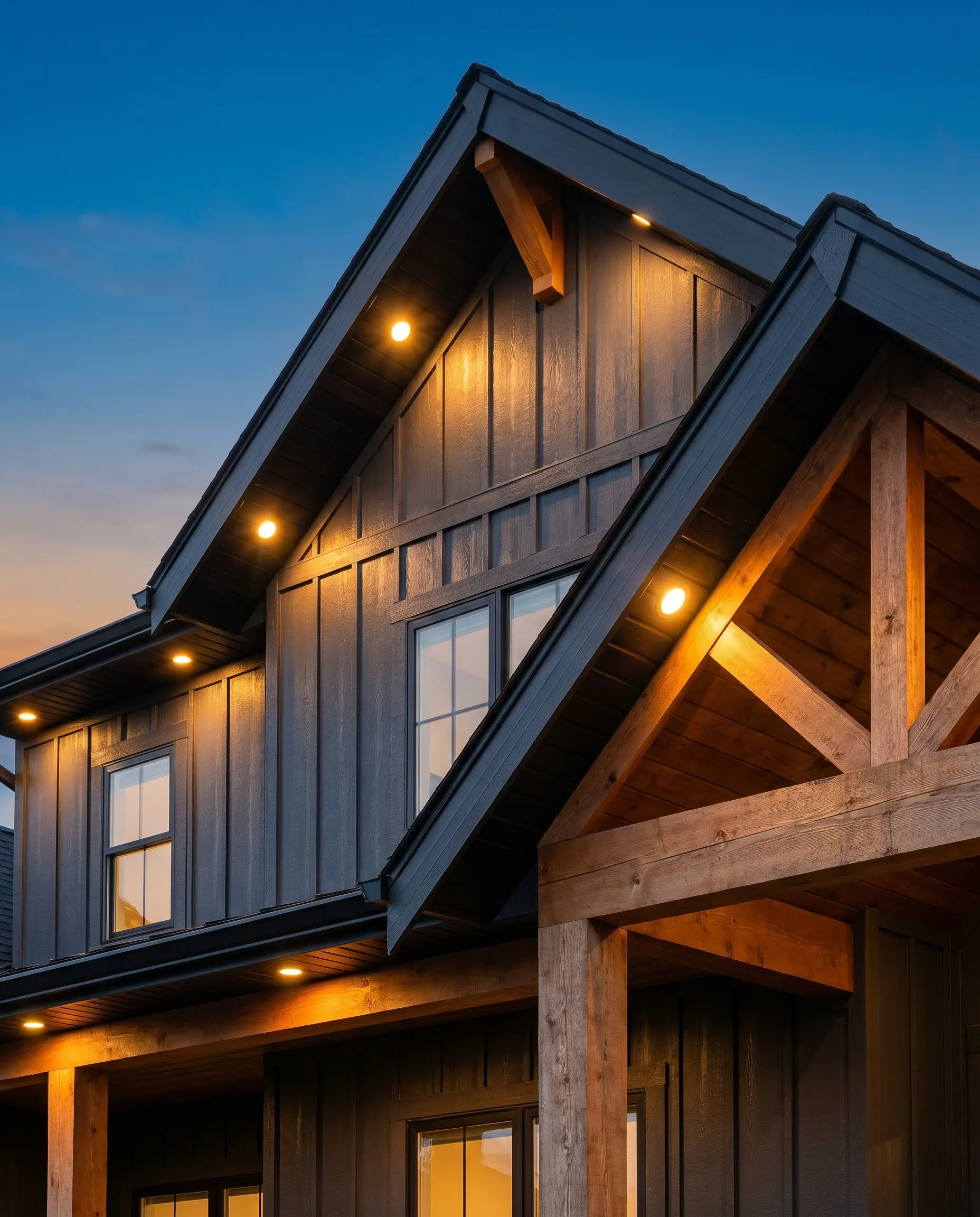
Relying solely on wall sconces leaves the upper architecture of the home completely lost in the dark. Installing discreet, flush-mount architectural soffit lighting washes the textured board and batten siding in a warm, grazing light, making the home glow beautifully at dusk.
Space soffit lights strategically to highlight architectural peaks and columns, rather than spacing them uniformly across the eaves like an airport runway.
Designer Secret
- Vibe: Architectural Luxury
- Key Materials: LED flush-mount downlights
- Styling Pro-Tip: Specify a warm 2700K color temperature for your exterior LEDs to avoid the harsh, clinical glare of cool-toned bulbs.
Install Custom Copper Rain Gutters and Downspouts
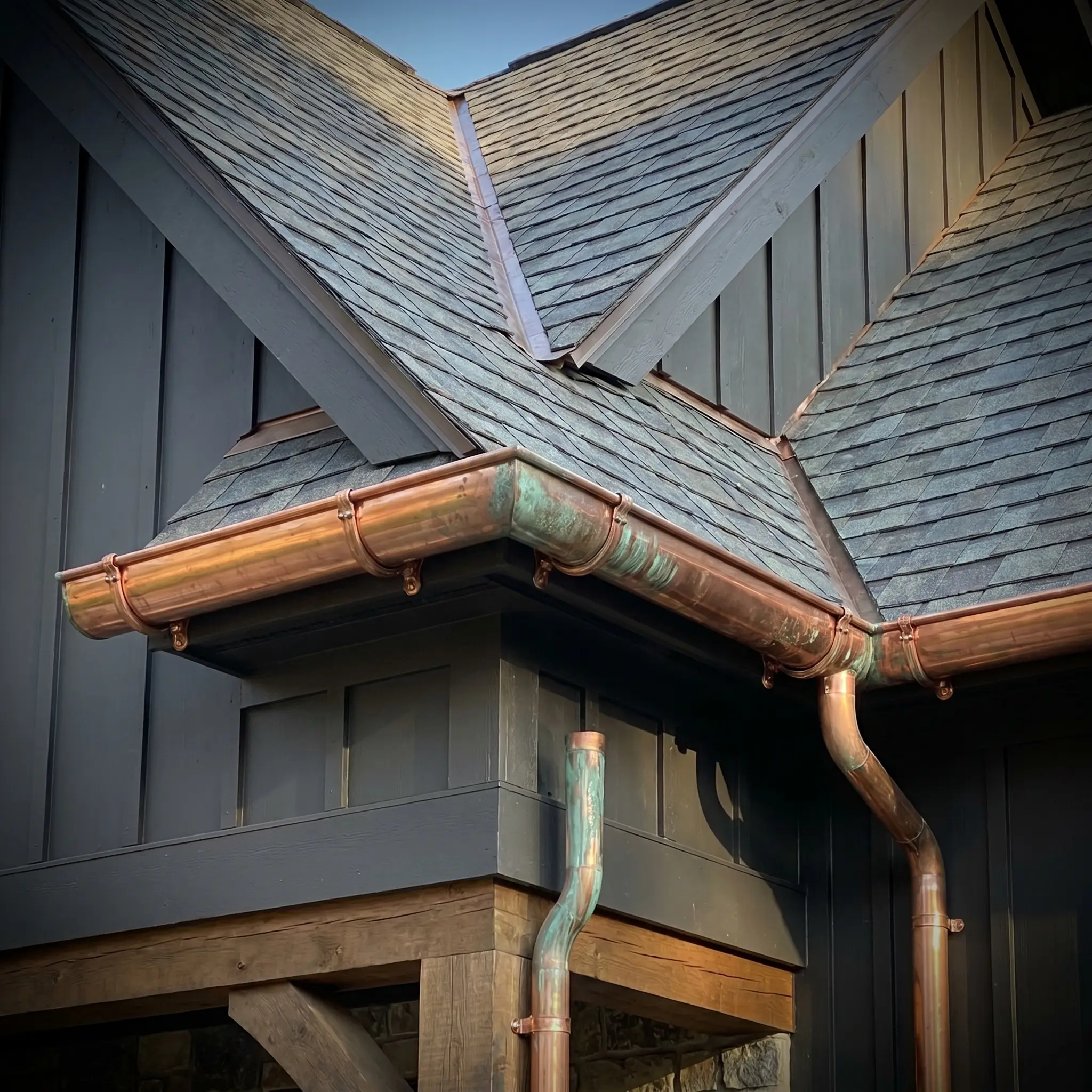
Transforming a mundane functional necessity into a striking architectural feature is the hallmark of a high-end exterior. Half-round custom copper gutters offer a jewelry-like gleam against dark siding, eventually oxidizing into a stunning, highly coveted verdigris finish.
- Vibe: Bespoke Heritage
- Key Materials: Half-round copper, round downspouts
- Budget Note: This is a definitive high-end splurge, costing significantly more than standard aluminum K-style gutters.
Modernize the Garage with Flush Wood-Look Doors
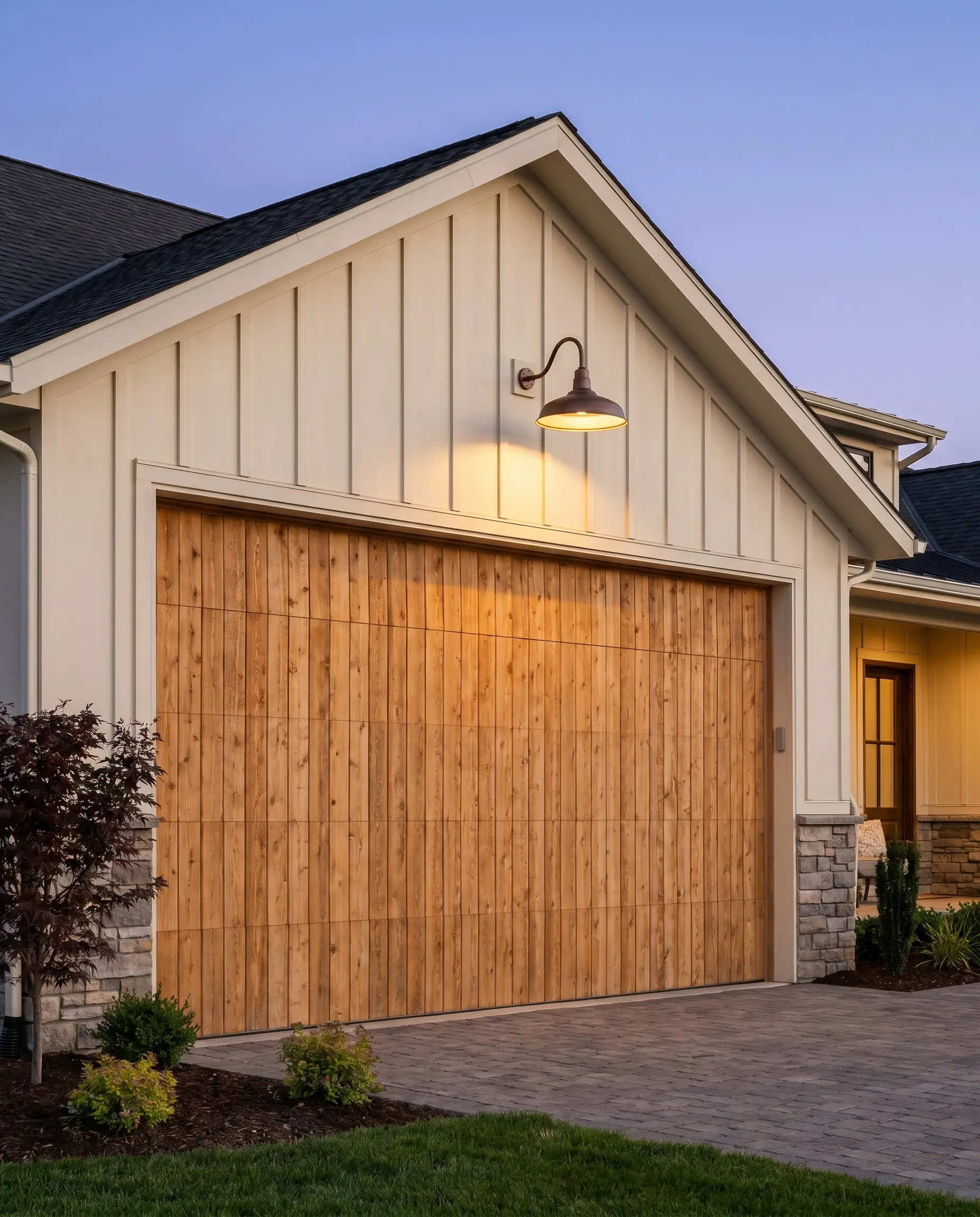
A prominent, builder-grade raised-panel garage door with cheap plastic window inserts will instantly ruin a carefully curated facade. Opting for flush, vertical-plank wood doors or premium composite overlays that perfectly mimic rough-sawn cedar transforms the garage into a cohesive architectural element.
- Vibe: Tailored Modern
- Key Materials: Solid cedar, high-end composite cladding
- Styling Pro-Tip: Align the vertical planks of the garage door with the width of your exterior board and batten to create a seamless visual rhythm.
Use Native Landscaping to Soften the Hardscape
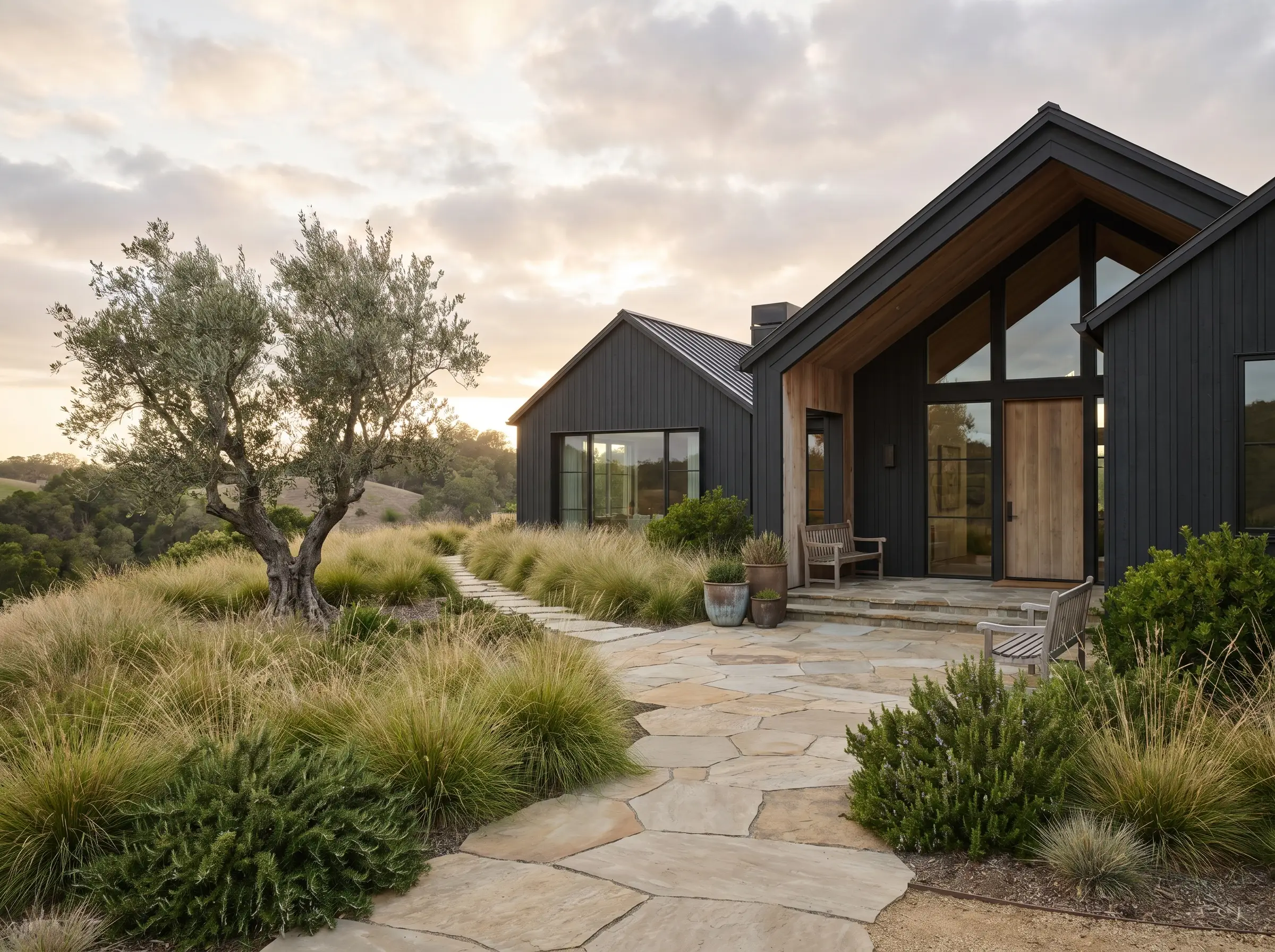
A bespoke property should never look as though it was abruptly dropped onto an empty plot of dirt. Planting sweeping ornamental grasses, ancient olive trees, or dense native shrubs softens the sharp, aggressive geometry of the architecture and grounds the siding in its natural context.
- Vibe: Organic Integration
- Key Elements: Ornamental grasses, native evergreens
- Styling Pro-Tip: Keep plantings slightly wild and organic to contrast against the rigid, tailored lines of the farmhouse envelope.
Add a Custom Floating House Number Address Plaque
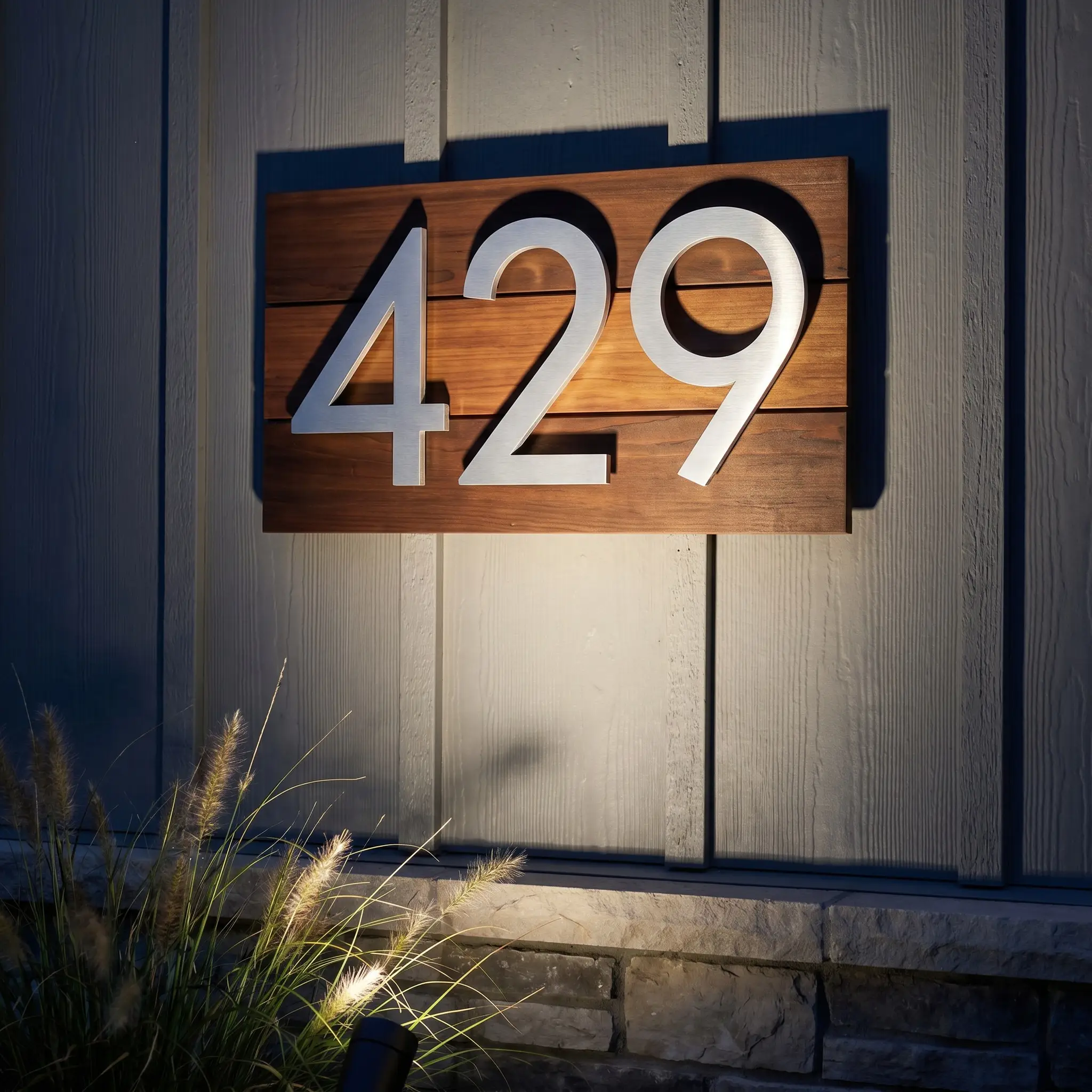
The final touch on a modern facade should be crisp, deliberate, and highly visible from the street. Mounting oversized, sans-serif metal numbers floated half an inch off a custom concrete or warm wood backplate delivers a clean, architectural finish.
- Vibe: Contemporary Precision
- Key Materials: Machined aluminum, cast concrete, cedar
- Styling Pro-Tip: Illuminate the address plaque with a dedicated, low-voltage landscape spotlight for maximum nighttime legibility.
Exterior Cost Breakdown and Material ROI
Balancing the budget on a high-end exterior requires strategic allocation of funds, knowing exactly where to splurge for tactile impact and where to save without compromising scale. The following table outlines the visual ROI for high-end versus cost-effective material pairings in the accessible luxury tier.
| Exterior Element | Cost-Effective Pairing (High ROI) | High-End Bespoke Splurge |
|---|---|---|
| Siding | James Hardie Fiber Cement (Painted) | Clear Vertical-Grain Real Cedar |
| Roofing | Dimensional Architectural Shingles | 24-Gauge Standing Seam Metal |
| Windows | Aluminum-Clad with SDL Grids | Custom Steel-Framed True Divided Light |
Finalizing Your Custom Curb Appeal
The most compelling modern farmhouse exteriors are born from a rigorous balance of clean geometric massing, deeply organic textures, and deliberate, moody contrasts. By rejecting standard builder-grade defaults and investing in authentic proportions—from steep 12/12 roof pitches to tactile, rough-sawn cedar—you ensure your home possesses true architectural longevity. Take these exact material specifications and paint codes to your architect to begin drafting an exterior that commands attention. For a deeper dive into foundational textures, explore our comprehensive breakdown of limewash brick exteriors to start planning your build today.