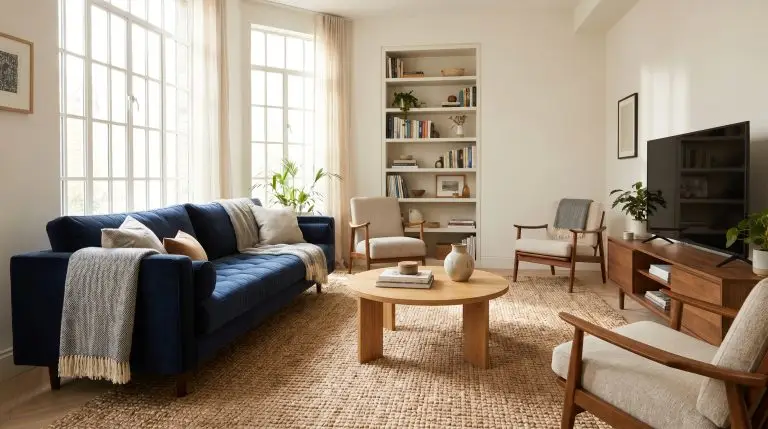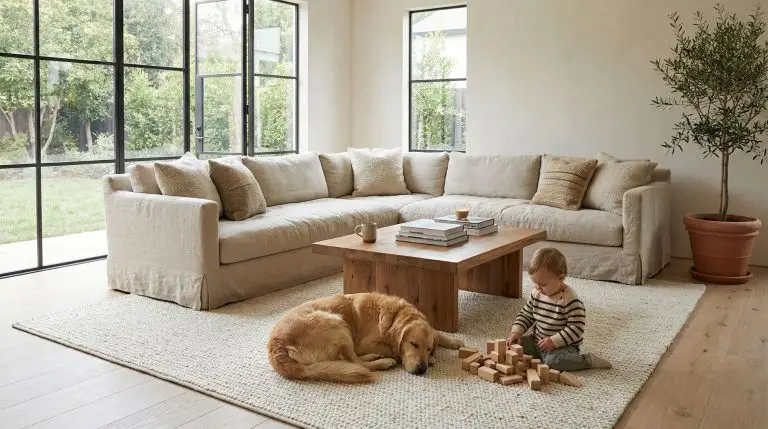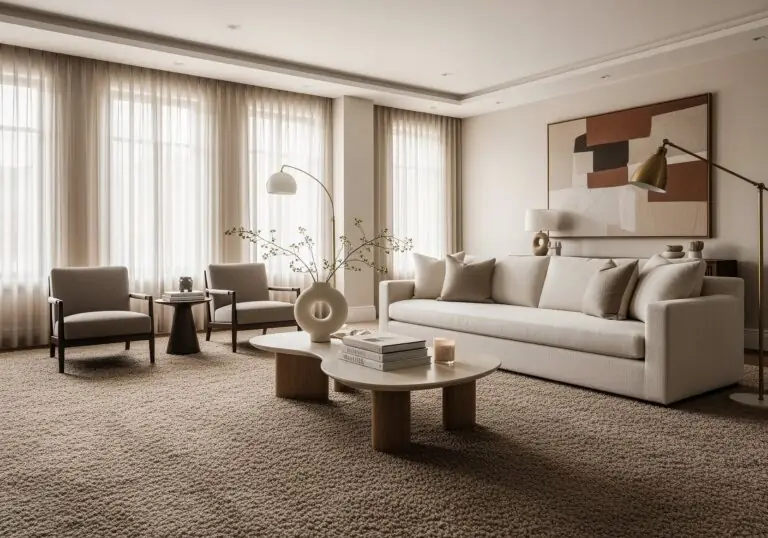
Multi-functional rooms do a lot of work. A living room can be a TV spot at night, a home office by day, and the place where friends land on weekends. Rugs draw boundaries without adding clutter. With a few rug placement tips, each zone can feel intentional.
Start With Zones Before Furniture
Before you think about patterns, figure out what the room needs to do. Sketch a simple map and mark the main activities: lounging, dining, work, and walking paths. In open layouts, that zoning step keeps the room from feeling scattered.
When you’re planning rug placement for living room seating, decide what you want the seating area to feel like. Cozy and contained? Airy and flexible? Your answer affects size, shape, and how far the rug should extend past the sofa.
Rug Placement Tips For Seating Areas
A frequent sizing mistake is choosing a rug that’s too small for the seating group. If only the coffee table fits, the furniture reads as disconnected.
- All Legs On: In a larger seating zone, place the rug so the sofa and chairs sit fully on it. The group looks settled.
- Front Legs On: In tighter rooms, slide the rug under the front legs of the sofa and chairs. That overlap links pieces without swallowing the floor.
- Keep A Border: Leave a visible edge of flooring around the rug when you can, so the zone feels framed.
When learning how to style area rugs with sectional sofas, start with the longest run of seating. A rectangle usually works. A large square can look cleaner when the sectional forms an L.
Seating areas also take the brunt of daily wear. Foot traffic, snacks, pets, and spills all land here first. Regular vacuuming helps, but deeper soil builds up over time. Working with a reputable carpet cleaning company keeps fibers from breaking down and helps maintain the look of larger investment pieces.
Dining And Work Zones Need Different Rules
A dining rug has a job: chairs should stay on the rug when someone scoots back. That gives chair legs room to move without catching.
Work zones face a different stress point: rolling chairs. Low-pile or flatweave rugs handle casters better than plush piles. If your desk shares the room with the sofa, a thinner rug under the desk area keeps chair movement smooth.
Color And Pattern As Quiet Signals
When it comes to rugs for open concept spaces, color is an easy way to separate zones while keeping the room cohesive. You don’t need perfectly matched rugs. You do need a shared thread, like a repeating accent color or similar undertones.
Daylight-heavy rooms often look bigger with lighter rugs. Darker rugs add weight and can make a lounge corner feel grounded. Pattern can guide movement too. Stripes and other linear motifs point the eye along a path, which helps when you want traffic to flow without cutting through the seating group.
Materials That Match Real Life

Pick fibers based on what the zone deals with.
For a high-traffic walkway, a durable low-pile is practical. For a reading corner, you can go softer. Wool tends to feel substantial and holds up well. Synthetics like nylon or polypropylene can be smart where spills happen.
If you want a calm base under busy furniture, neutral rugs blend in and hide wear better than sharp, high-contrast patterns.
Quick Sizing And Placement Guide
| Zone | Common Layout | Starting Size | Placement Notes |
| Seating Group | Sofa + 2 chairs | 8×10 or 9×12 | Front legs on or all legs on, based on room size |
| Dining Area | 4 to 6 chairs | 8×10 | Extend 24–30 inches past the table edge |
| Desk Corner | Rolling chair | 5×7 or flatweave runner | Low-pile so the chair moves cleanly |
| Walkway | Open-plan path | Runner | Align length with the direction of travel |
Sound, Balance, And Comfort
Hard floors look great, but open plans can get loud fast. The Carpet and Rug Institute notes that rugs help absorb sound and reduce reflections from hard surfaces. A thicker rug with a pad can also cut footstep noise, which helps when one person is on a call and someone else is making coffee nearby.
Recent guidance from the American Society of Interior Designers points toward a more holistic view of interiors, where material choices, energy use, and long-term performance all shape a functional space. In a multi-functional room, that perspective extends to rug selection. Fiber type, density, and placement affect comfort underfoot, background noise levels, and how the room feels throughout the day.
When rugs are chosen with those factors in mind, they do more than define a seating area. They contribute to a space that supports concentration, conversation, and downtime without competing demands pulling attention in every direction.
Keeping Multiple Rugs From Fighting Each Other
When one room needs two or three rugs, mix textures and vary scale, then keep undertones compatible. A large, subtle pattern under the sofa can pair with a smaller geometric under the desk. If you go bold in one zone, let the other rugs stay quieter.
Some newer modern rugs use performance weaves and stain-resistant fibers that suit mixed-use rooms, especially where spills and daily traffic are part of the routine.
Cleaning And Care For Busy Zones
A multi-functional room gets wear.
- Vacuum in the direction of the pile to pull out grit that shortens fiber life.
- Rotate the rug every few months so traffic patterns don’t create one worn lane.
- Use a pad to reduce slipping and reduce stress on the backing.
- Blot spills fast. Rubbing pushes the mess deeper.
If pets, kids, or frequent entertaining are normal, plan on periodic area rug cleaning services. For larger pieces or valuable fibers, professional carpet and rug cleaning can lift embedded soil that home vacuuming leaves behind.
Final Thoughts
Good rug placement tips come down to scale, function, and restraint. Let each rug claim a job: seating, dining, work, or the path between them. Keep the palette connected, watch chair clearances, and choose materials that fit your day-to-day. For more ideas, browse stories.