The ‘Rewilded’ Backyard: How to Keep Pool Water Pristine Next to Chaos Gardens and Native Meadows
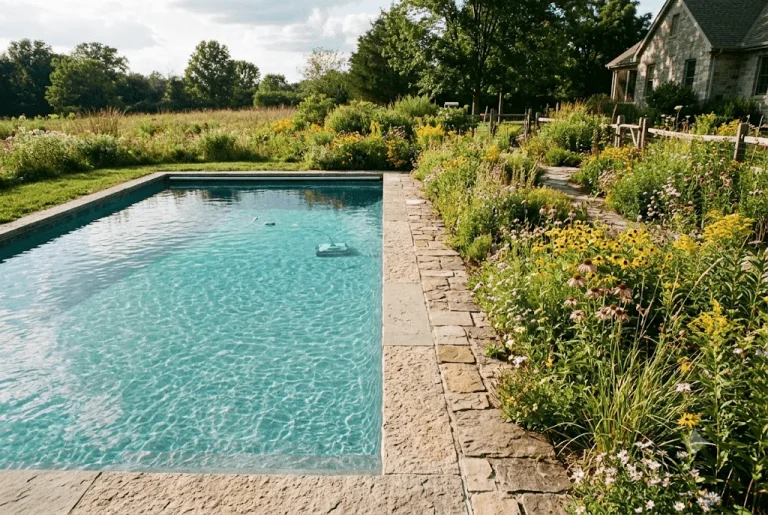
Having a pool right next to a native meadow or a rewilded garden is a total dream for backyard biodiversity, but it definitely creates a unique challenge for pool maintenance. Soil run-off, heavy pollen, extra leaves, and tiny critters moving around can turn clear water cloudy pretty fast if you do not have the right setup.
Here is a straightforward guide to managing a pool next to a wild, natural landscape without spending every weekend skimming leaves or dumping endless chemicals into your water.
1. Create a Buffer Zone Between the Meadow and the Pool Edge
By adding plants such as native wildflowers, tall grasses, and thick groundcover all the way up to the coping stone, wind and rain will help move organic materials straight into your pool. High amounts of organic matter cause high TDS levels and use up all the free chlorine fast. This leaves the water vulnerable to algae blooms.
Instead of running wild vegetation straight to the water’s edge, design a transition zone that acts as a physical filter:
- Pervious Stone or Gravel Paths: The creation of a buffer zone of three to five feet around the perimeter of the pool constructed out of crushed granite, pea gravel, or permeable pavers will help reduce rainwater runoff. It is going to capture the loose soil before it reaches your pool deck.
- Low-Pollen Native Edging: Place low-growing, non-messy plants right along the inner border of your garden bed. Plants like blue fescue, creeping thyme, or non-deciduous ornamental grasses shed far less material than tall flowering perennials or wind-pollinated species.
- Subtle Retaining Edges: A raised stone border or a low landscape edge just 3 to 6 inches high prevents heavy downpours from washing mulch, topsoil, and decaying plant matter directly into the skimmer.
2. Smart Circulation and Filtration Adjustments
Native plants help bring pollinators and wildlife to your yard, but they leave behind fine litter like seed heads and pollen. Regular pool skimmers tend to have difficulty handling the high amount of fine dust during spring and fall seasons.
To keep the water crystal clear, optimize your pool’s filtration schedule:
- Run the Pump During Peak Pollen Hours: Pollen levels usually reach their highest between mid-mornings. By keeping your variable speed pump running at a low RPM throughout the day, you will ensure consistent skimming before the pollen settles on the plaster or the vinyl liner.
- Upgrade to Fine-Mesh Skimmer Socks: Regular skimmer baskets do not catch micro-particles. If you put washable or disposable mesh socks into your skimmer baskets, you will catch small seeds, pollen, and insects that get into the pool before they get into the filter. This will extend the time between filter backwashes or cartridge cleanings.
- Use Automated Floor and Wall Cleaning Systems: Debris that sinks to the bottom will rot and alter pH levels if left sitting. Integrating an efficient floor cleaner, such as a continuous low-effort approach to maintaining water clarity , ensures that organic matter is swept up daily without manual vacuuming or draining pool pump power.
3. Balance Chemistry for High Organic Loads
A natural landscape is where your pool is going to be dealing with more biological activity in comparison to the normal concrete patio backyard. Phosphates, which come into the water through windborne soil, leaves, and fertilizers, form the main diet of algae.
Keeping chemical levels balanced requires a slightly different focus when surrounded by thriving flora:
| Parameter | Ideal Range | Purpose in Rewilded Settings |
| Free Chlorine | 2.0 – 4.0 ppm | Sanitizes elevated organic loads |
| pH | 7.4 – 7.6 | Prevents scaling and eye irritation |
| Total Alkalinity | 80 – 120 ppm | Buffers pH against acidic rain runoff |
| Cyanuric Acid | 30 – 50 ppm | Protects chlorine from UV breakdown |
| Phosphates | Under 100 ppb | Starves potential algae growth |
- Test Phosphates Regularly: Test for phosphates monthly during the growing season. If phosphate levels rise above 200 ppb (parts per billion), use a commercial phosphate remover to keep algae from taking hold.
- Maintain Stable Free Chlorine: Higher organic loading uses up chlorine fast. Maintain a free chlorine concentration consistently between 2.0 and 4.0 ppm. The use of an automated salt-chlorine generating system or a good chlorinator may be helpful in maintaining a constant residual level.
- Shock After Heavy Weather or High Winds: Storms blowing through dense gardens drop high amounts of debris into the pool at once. Performing a preventative shock treatment after major wind or rain events neutralizes contaminants before they turn the water cloudy.
4. Protect Local Wildlife While Keeping Water Clean
The rewilded garden actually encourages the presence of birds, frogs, bees, and small mammals within your garden area. An unprotected pool may actually end up trapping these thirsty creatures. Safeguarding the wildlife ensures that the wildlife is protected from harm and there is no organic contamination of your filtration systems.
- Install Wildlife Escape Ramps: Wildlife escape ramps can be made by floating escape ramps installed in corners or near the skimmer for the easy rescue of smaller animals, such as frogs, lizards, and mammals, who fall into the pool.
- Add Shallow Water Features Nearby: Animals usually come to pools just because they require water to live. To help animals have access to safe water sources, one can install a solar-powered bird bath or a shallow stone basin near the meadow. This gives wildlife a safer place to drink away from chlorinated pool water.
- Use Safety Covers When Not in Use: Use of automatic pool covers or strong mesh covers drastically reduces evaporation and helps keep out leaf debris during seasonal changes and any entry by large animals.
With the intelligent construction of barriers, regular cleaning, and water testing, you will be able to experience the charm of a lush native meadow adjacent to a sparkling pool.
So, ready to rewild your backyard?