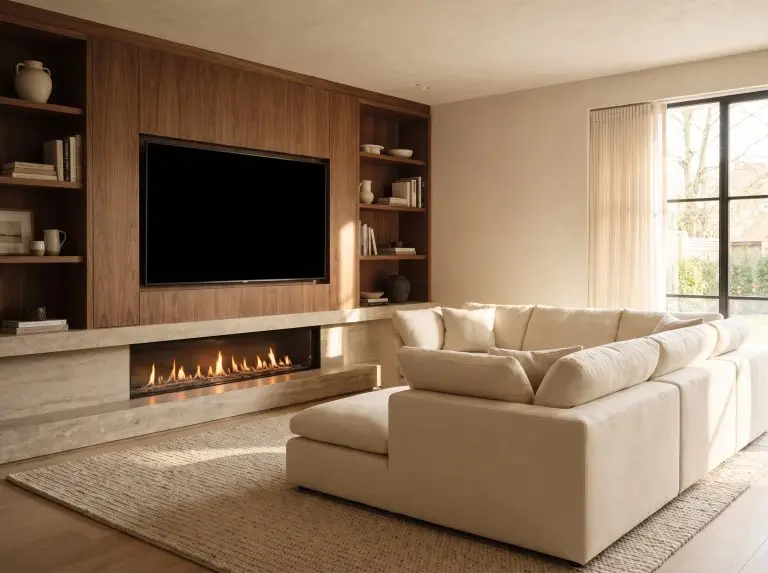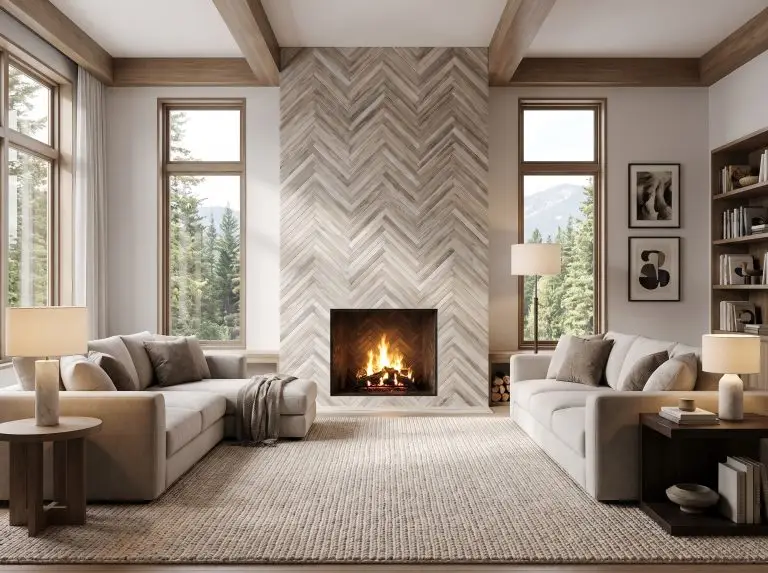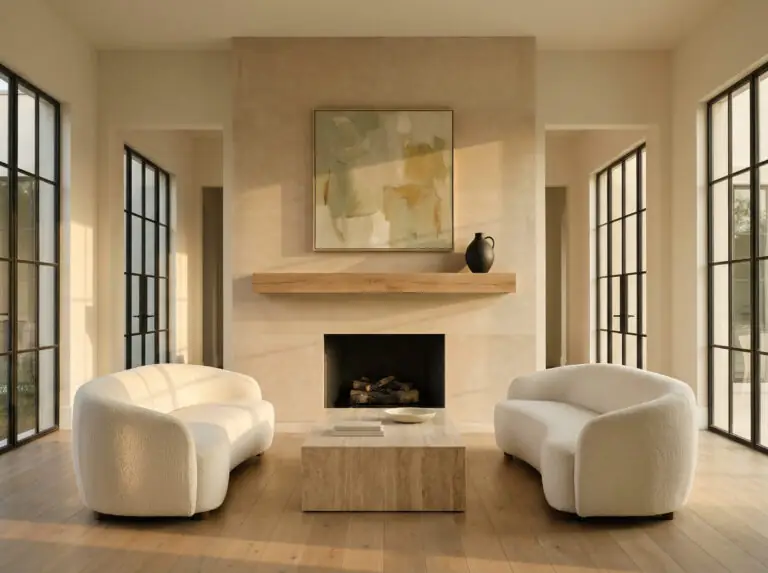
If the fireplace is the heart of the home, the mantel is its eyebrows. It gives the fireplace expression, frames the focal point, and dictates the vibe of the entire room. Place it too high, and your living room feels disjointed and “floaty.” Place it too low, and you risk damaging your decor—or worse, creating a fire hazard.
Whether you are remodeling a vintage hearth or installing a sleek modern gas insert, getting the numbers right is non-negotiable. But in 2026, the “rules” of design have shifted slightly, blending strict safety codes with new aesthetic demands like lower profiles and linear designs.
In this guide, we will break down the exact measurements you need, the National Fire Protection Association (NFPA) codes you must follow, and how to style your mantel to look professionally designed.
The Cheat Sheet: Quick Answers
In a rush? Here is the “too long; didn’t read” summary for the perfect mantel setup.
🔥 2026 Mantel Standards Summary
The “Golden Standard” for Mantel Height
For decades, interior designers and architects have rallied around one magic number: 54 inches.
Why 54 inches? This height places the mantel shelf roughly at eye level for a person seated on a sofa, while remaining comfortable for a standing adult to lean an elbow on (the classic “cocktail party” pose). It also mimics the standard hanging height for artwork. If you hang a piece of art above a 54-inch mantel, the center of the artwork usually lands at the ideal 60-66 inch viewing level.
The Acceptable Range
While 54 inches is the target, it is not a law. Most successful designs fall within the 53-inch to 60-inch range.
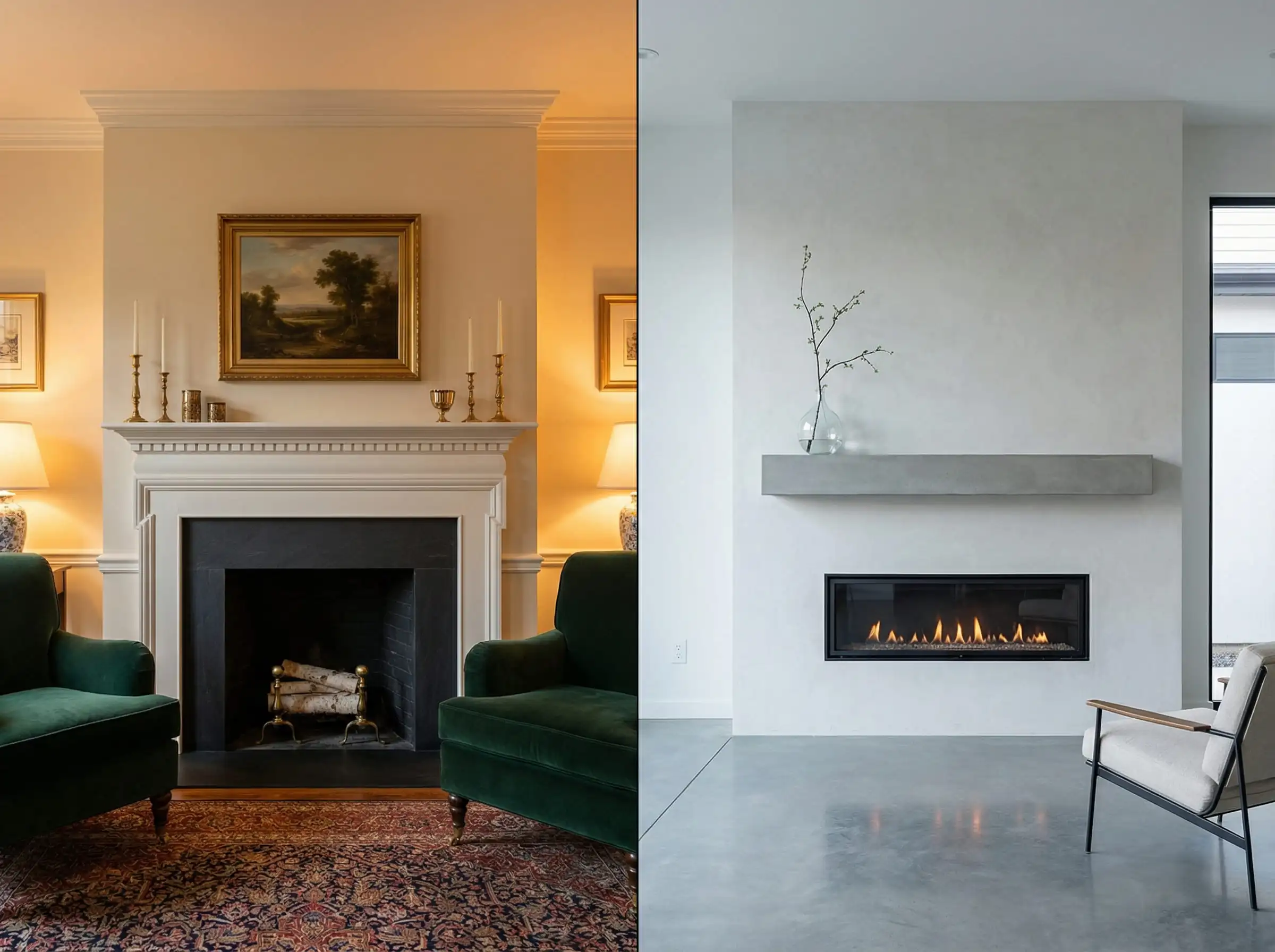
However, we are seeing a shift in living room trends. With the rise of low-profile furniture and “lounge” seating, some designers are dropping mantels slightly lower to 50-52 inches—provided the material is non-combustible (like stone or concrete) to meet safety codes.
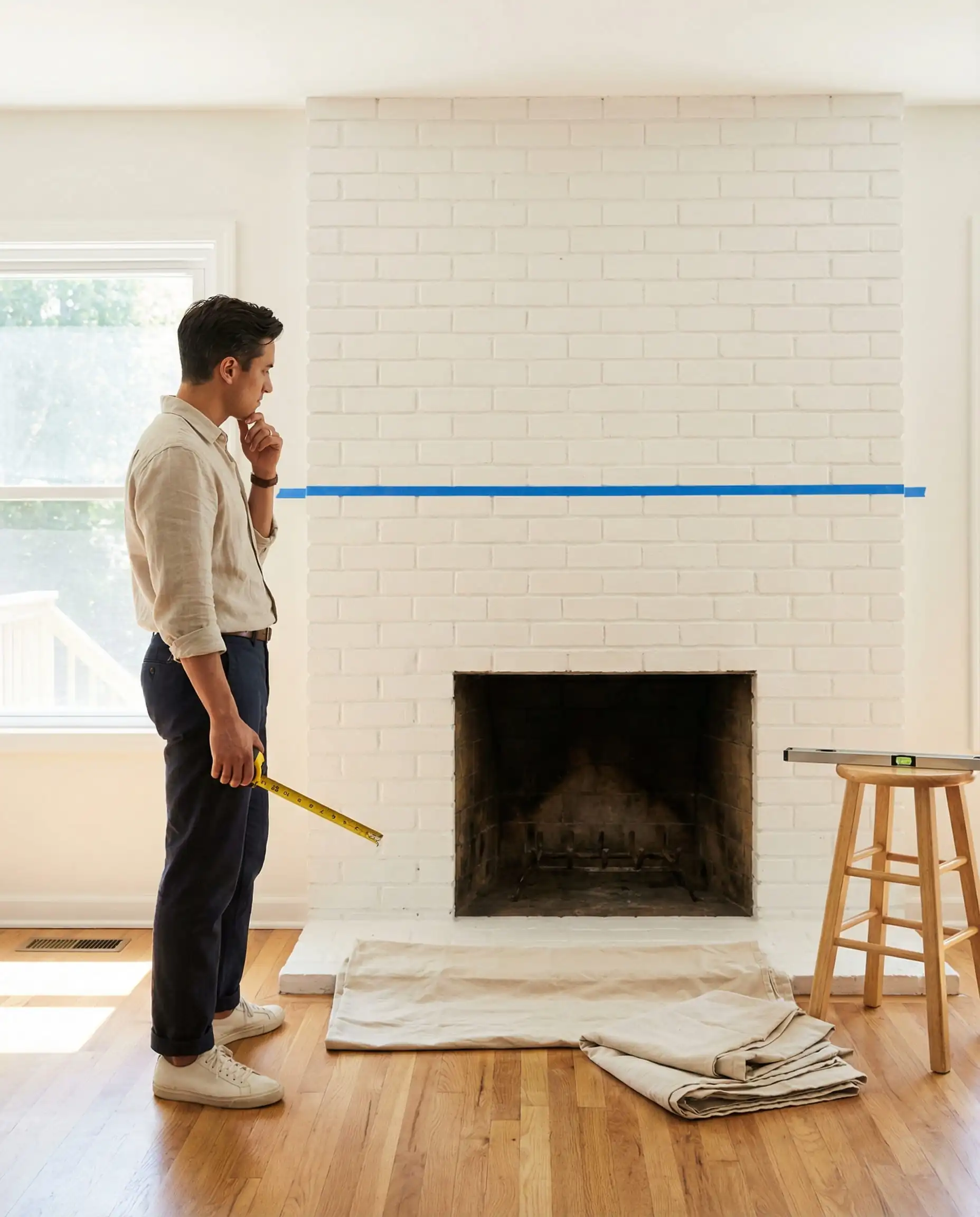
Before you drill a single hole, use painter’s tape to outline the mantel position on your wall. Sit on your sofa, stand up, and walk into the room. If it feels like the mantel is “looming” over you, drop it down an inch. Visual comfort is just as important as the measuring tape! 📏
💡 Hackrea Designer Tip
Safety First: Codes & Clearances (NFPA 211)
Design is subjective; fire safety is not. The most critical factor in determining your mantel height is the National Fire Protection Association (NFPA) 211 Standard. These codes exist to prevent your beautiful reclaimed wood beam from catching fire due to radiant heat.
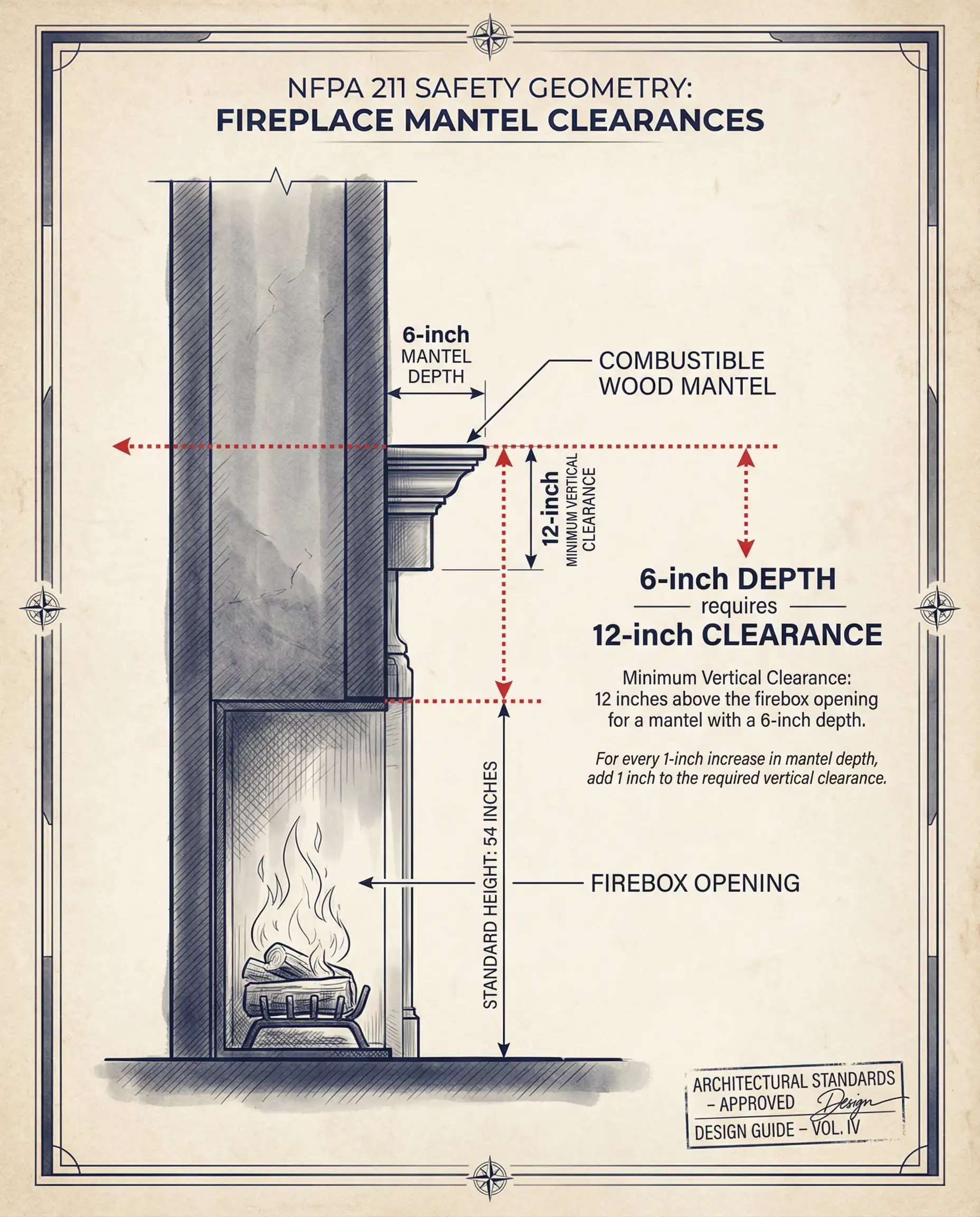
Combustible vs. Non-Combustible
First, identify your material.
If your mantel is Non-Combustible, you have freedom. You can technically place a stone shelf right above the firebox opening (though 6 inches is usually recommended for aesthetics).
If your mantel is Combustible (Wood), you must follow the strict clearance rules below.
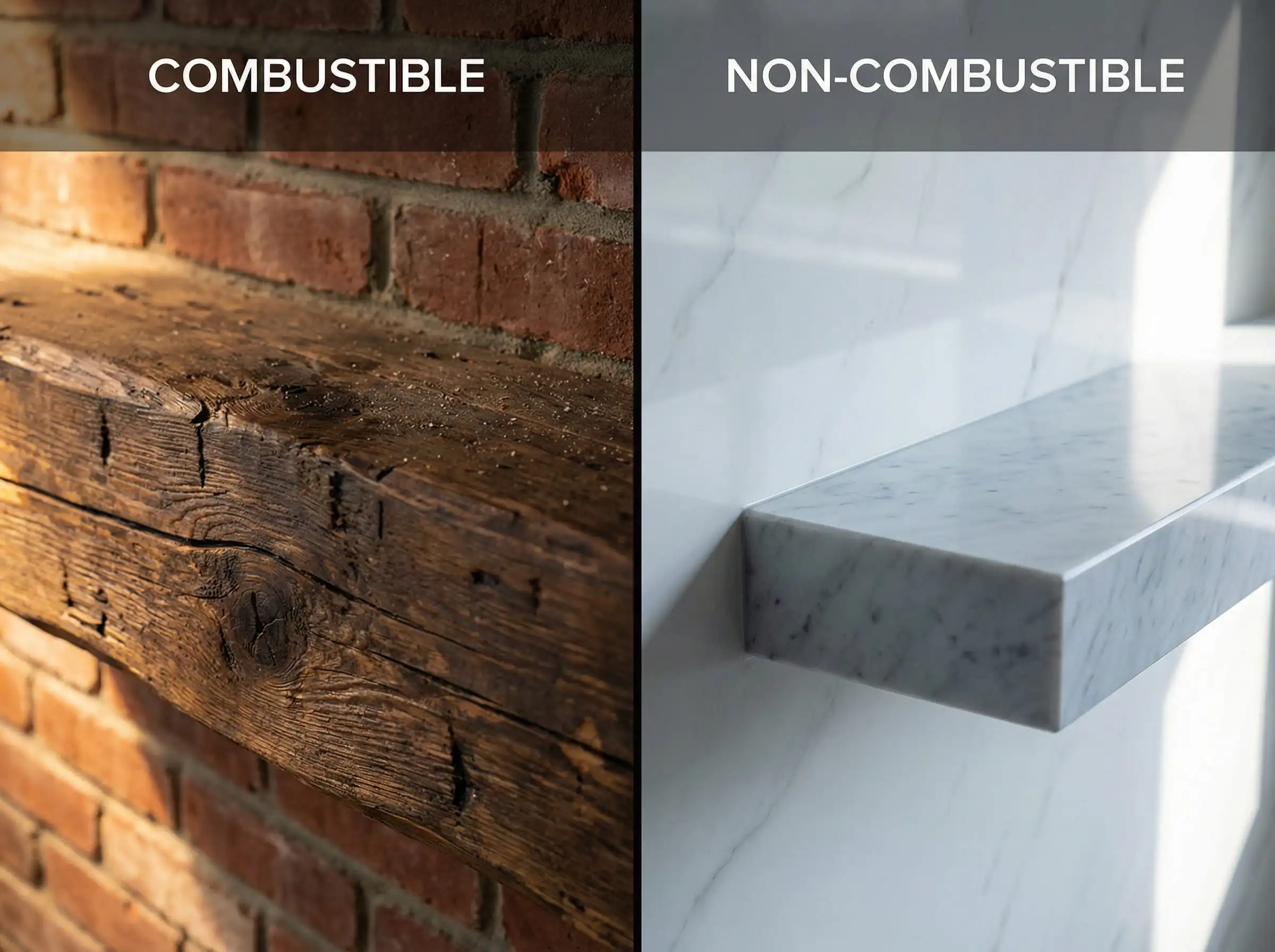
The 6-Inch and 12-Inch Rules
The absolute minimum distance required between the top of the firebox opening and the bottom of a combustible mantel is 6 inches. However, that only applies if the mantel effectively protrudes 0 inches (flush to the wall).
Since mantels stick out, they trap heat. Therefore, as the mantel gets deeper, it must be placed higher.
The Projection Formula
The standard rule of thumb is often simplified to: 1 inch of additional clearance for every 1 inch of depth.
Here is the standard clearance table used by most inspectors and contractors:
| Mantel Depth (Projection) | Required Clearance Above Firebox |
| 1.5 inches | 6 inches (Minimum) |
| 2 inches | 8 inches |
| 4 inches | 10 inches |
| 6 inches (Standard) | 12 inches |
| 8 inches | 14 inches |
| 10 inches | 16 inches |
| 12 inches | 18 inches |
Most standard wood mantels are 6 to 8 inches deep. This is why you will often hear contractors say, “Just give it 12 inches to be safe.” If you are installing a chunky, rustic beam that is 10 inches deep, you need to mount it significantly higher (16 inches above the opening) to be code-compliant.
Adjusting for Ceiling Height
One size does not fit all rooms. A mantel height that looks commanding in a standard apartment might look diminutive in a grand great room. Here is how to adjust based on your architecture.
Standard 8-Foot Ceilings
For the standard 8-foot ceiling found in most mid-century and suburban homes, stick to the 54-inch rule.
9-Foot and Vaulted Ceilings
If you have 9-foot, 10-foot, or cathedral ceilings, you have vertical liberty.
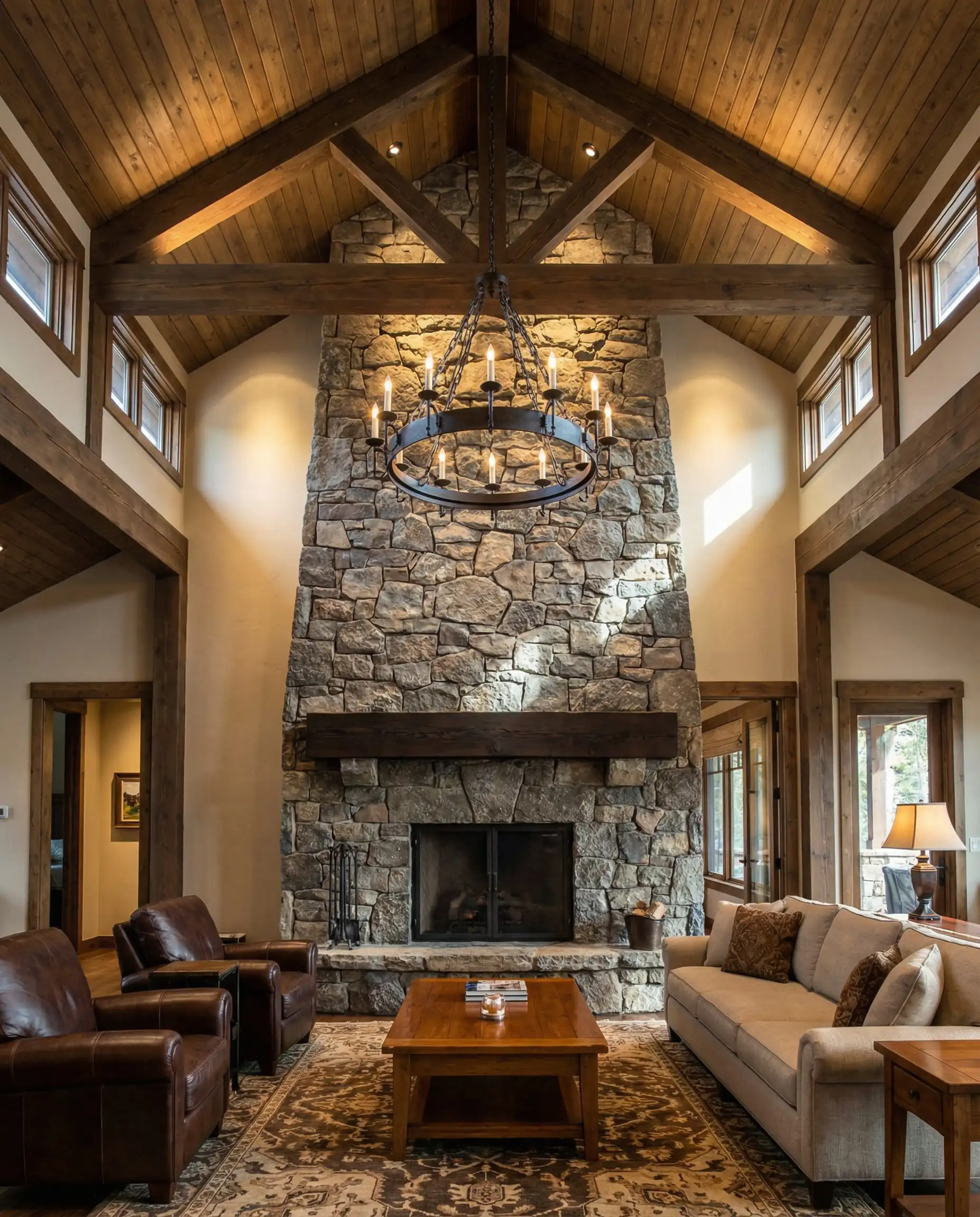
If you are dealing with a massive stone facade in a vaulted room, check out our guide on stone fireplace design ideas to see how to balance the mass of the stone with the height of the shelf.
The “TV Above Fireplace” Dilemma
This is the most controversial topic in interior design. Purists hate it; homeowners love the functionality. In 2026, putting the TV above the fireplace is still the most common layout for open-concept homes.
If you are mounting a TV, the mantel acts as a heat shield. It deflects the rising heat from the firebox away from your delicate electronics.
Clearance for Electronics
Most TV manufacturers (especially for OLED and “The Frame” models) specify a maximum temperature of roughly 104°F (40°C).
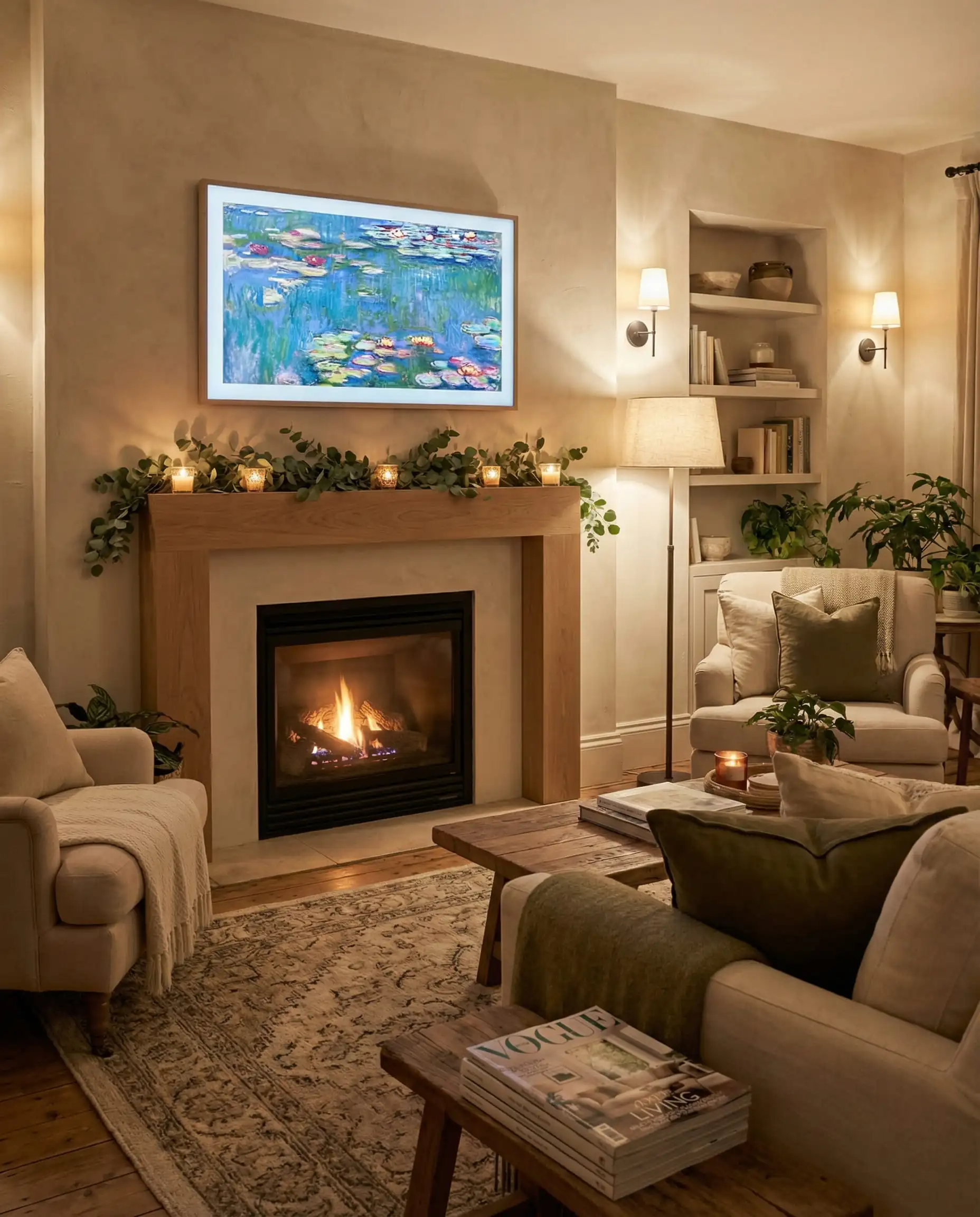
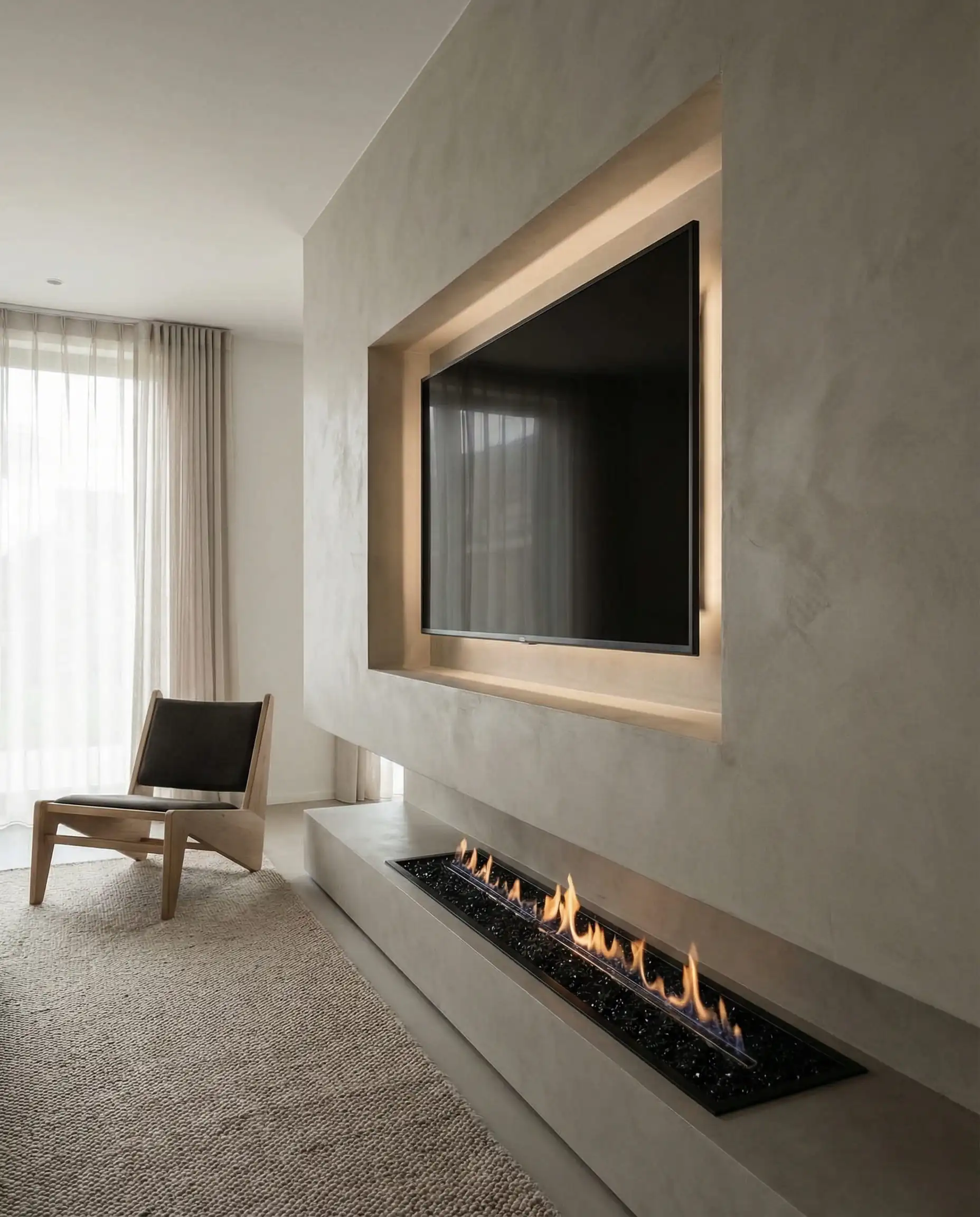
If you are planning a renovation, consider building a recessed niche for the TV. This pushes the screen back into the wall, offering it extra protection from rising heat and making the TV look less bulky. For more on this layout, read our deep dive on living room with TV decorating rules.
💡 Pro Tip
2026 Design Trends: Materials & Aesthetics
Mantels in 2026 are moving away from the ornate, heavy carvings of the past toward “quiet luxury” and structural integrity.
1. The “Frameless” Linear Look
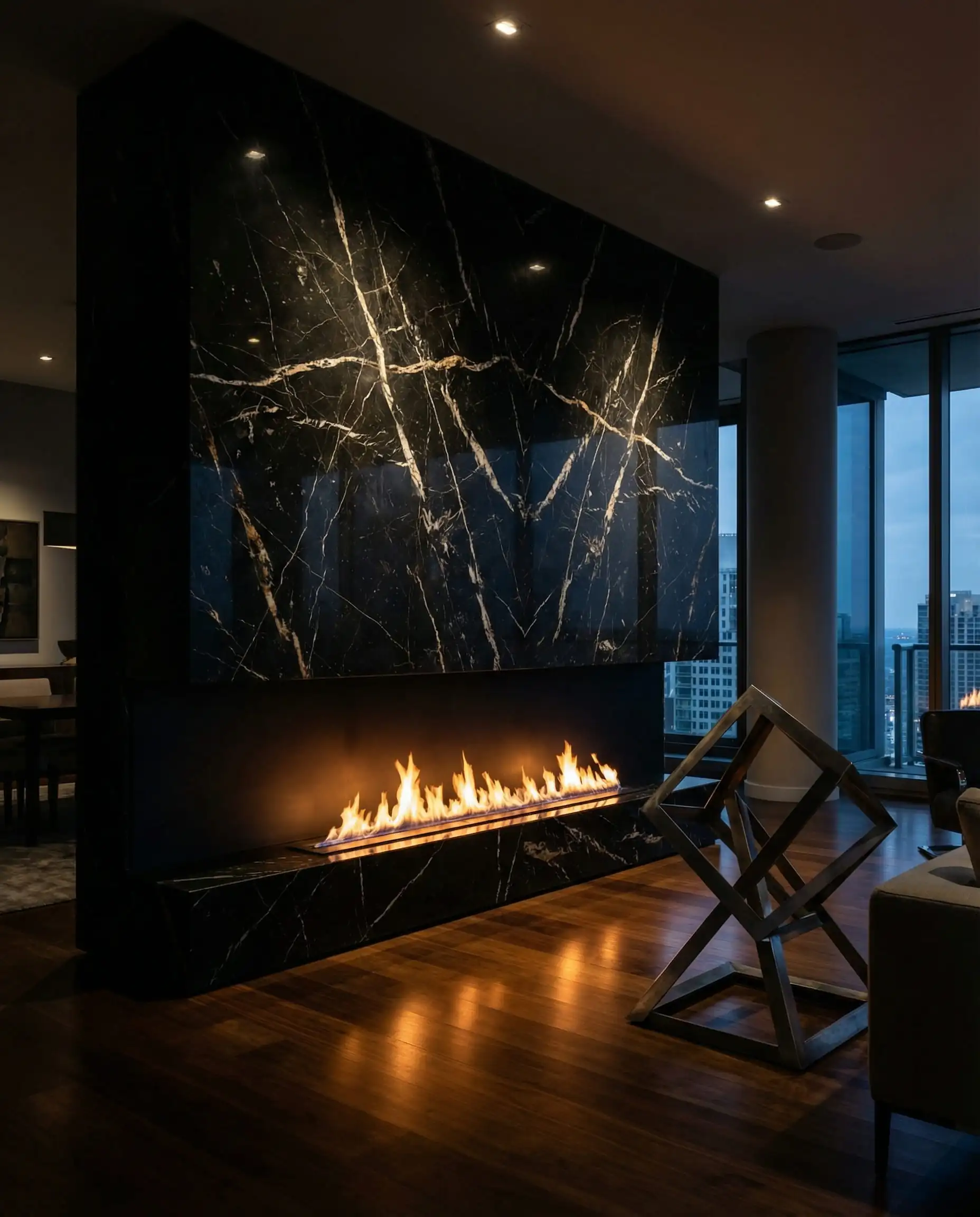
For modern gas and electric fireplaces, the trend is to skip the traditional mantel shelf entirely. Instead, the wall material (often large-format porcelain tile or plaster) continues seamlessly from floor to ceiling. If a mantel is used, it is often a thin, steel blade or a polished concrete ledge placed very low—sometimes just 8 inches above a linear burner—because the materials are non-combustible.
2. The “Structural” Beam
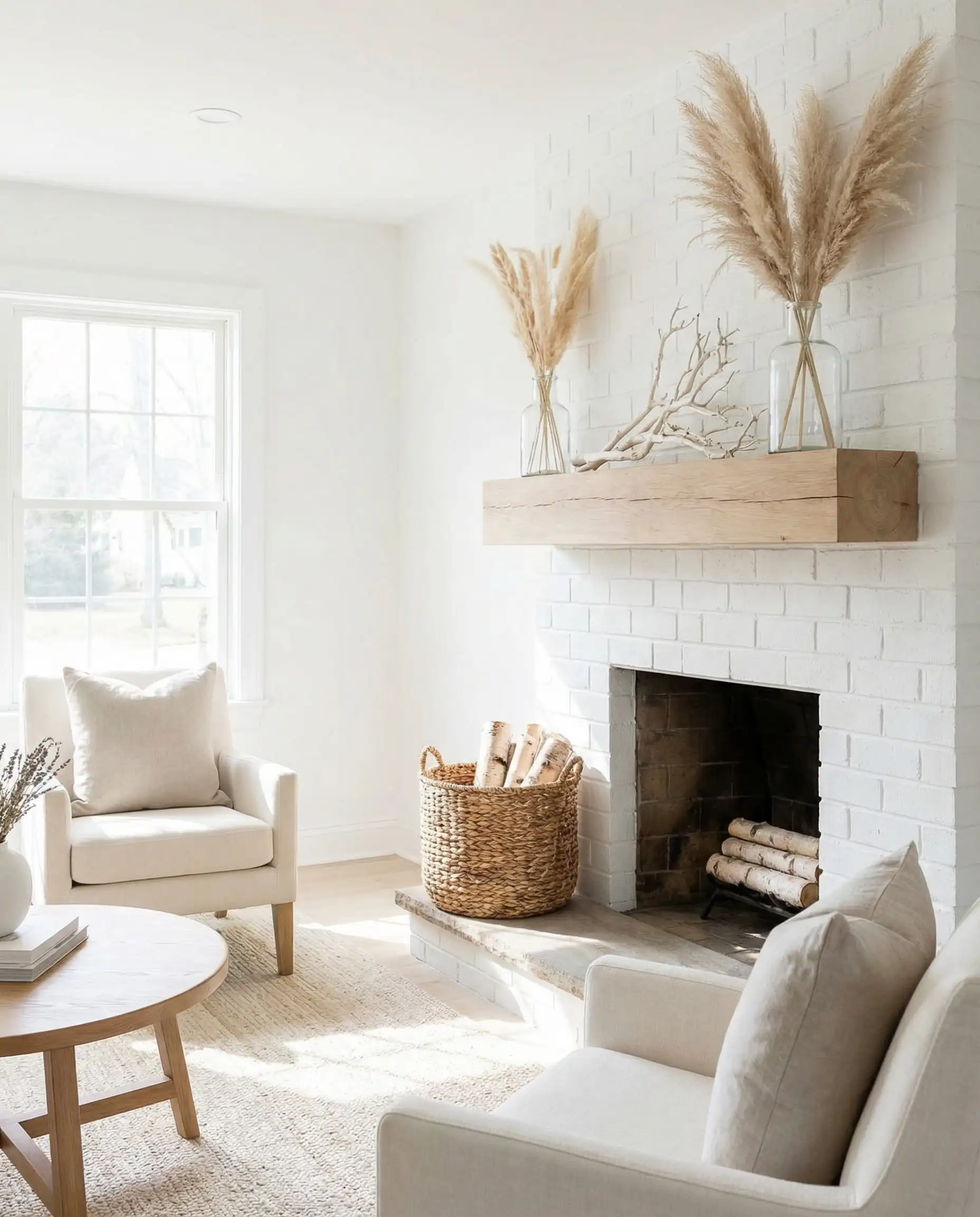
The farmhouse look is evolving. Instead of rough-hewn, splintery barn wood, we are seeing modern farmhouse trends favor smooth, white oak beams or “floating” box beams with mitered edges. These are often installed slightly lower to create a horizontal line that widens the room.
3. Tone-on-Tone
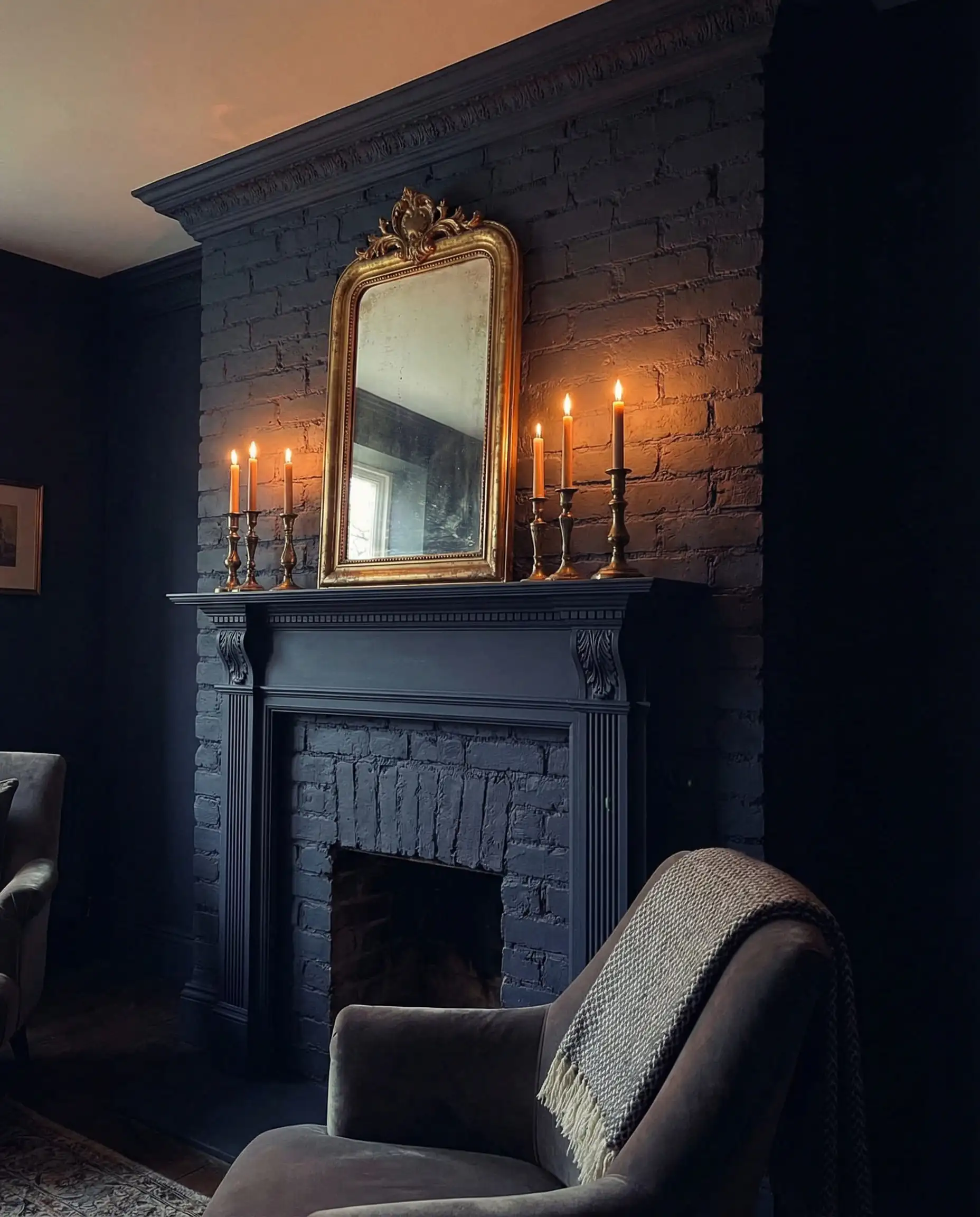
A major trend for 2026 is the painted fireplace. Homeowners are painting the brick, the surround, and the mantel all the same deep, moody color (like charcoal, olive, or aubergine). When the mantel blends in, its height becomes less visually aggressive, allowing you to position it purely based on code requirements rather than visual separation.
Step-by-Step: How to Measure for Your Installation
Ready to install? Don’t guess. Follow this measurement hierarchy to ensure you pass inspection and look good doing it.
- Find the Firebox Top: Measure from the floor to the top edge of the fireplace opening (the metal box or brick opening). Let’s say this is 36 inches.
- Determine Mantel Depth: Measure how deep your mantel is. Let’s say it is a standard 6-inch deep wood beam.
- Calculate Safety Clearance: consult the table above. A 6-inch depth requires a 12-inch clearance.
- Calculation: 36″ (Firebox) + 12″ (Clearance) = 48 inches.
- Mark the Bottom: The bottom of your mantel will sit at 48 inches.
- Determine the Top: If your beam is 6 inches thick, the top of the mantel will be at 54 inches.
Result: You have hit the perfect 54-inch standard height while remaining fully code-compliant!
Other Mantel Parameters
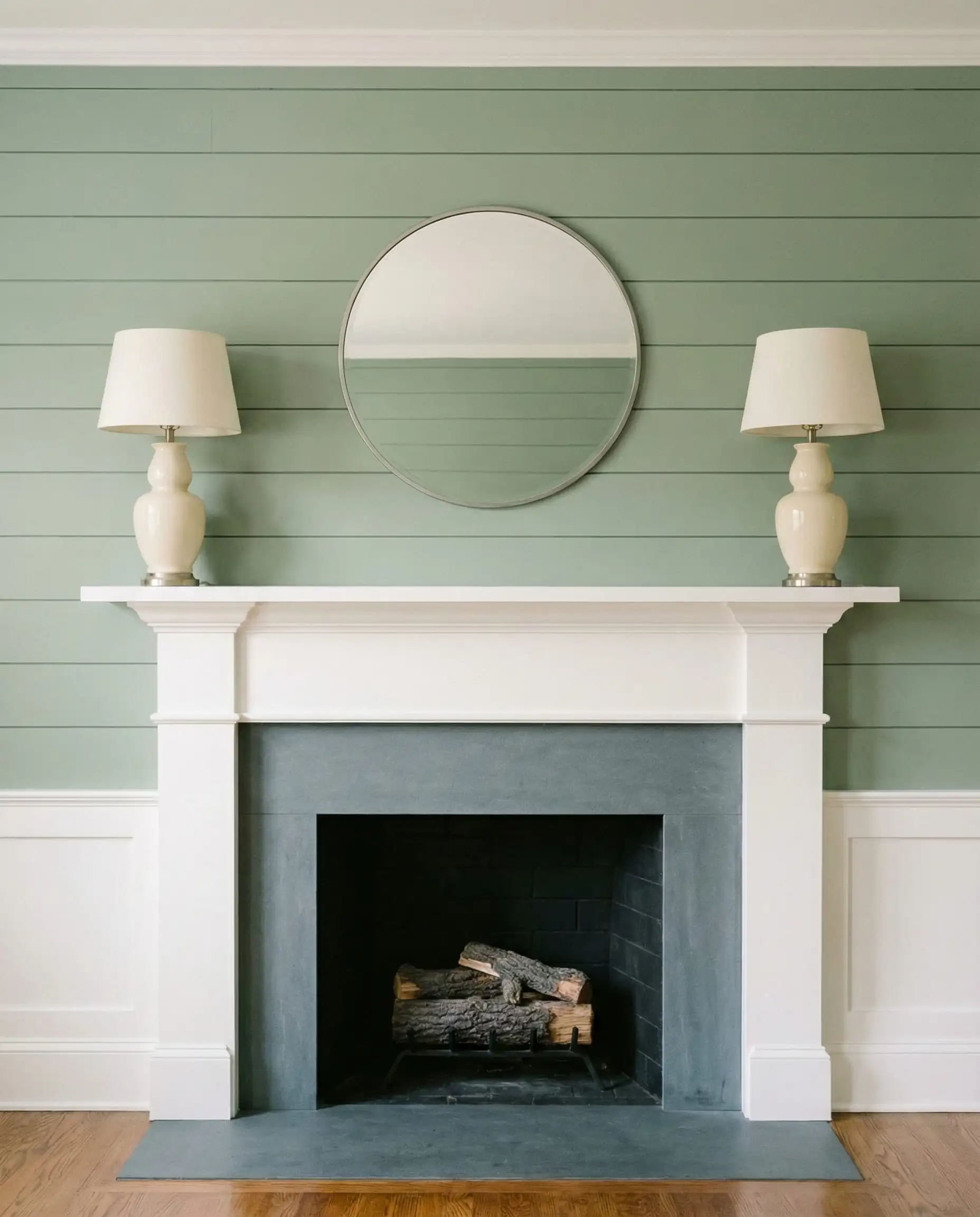
Height isn’t the only dimension that matters. To achieve that magazine-worthy look, you need to consider width and overhang.
Mantel Length (Width)
How wide should the shelf be?
Mantel Ledge (Overhang)
We mentioned depth for safety, but what about utility?
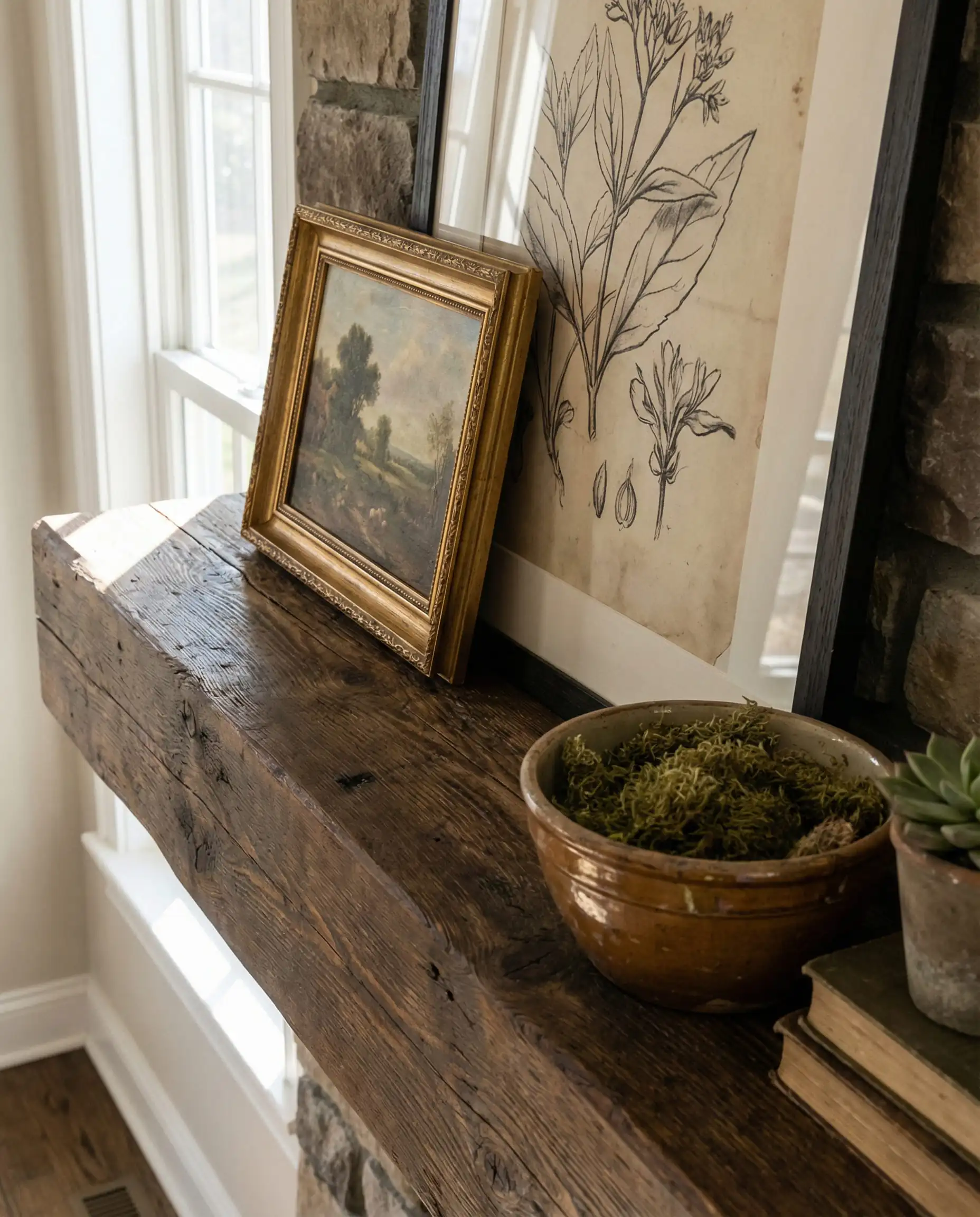
If you are looking for ideas on how to style that ledge once it’s up, check out our guide on mantel decor ideas for seasonal and year-round inspiration.
Frequently Asked Questions (FAQ)
A: Yes, but you usually cannot drill directly into the mantel. You will likely use a “cleat” system or lag bolts drilled into the mortar joints (not the brick itself, if possible) to support the weight.
A: Legally? No. Electric fireplaces do not produce real flame or smoke, and the heat usually vents from the front or bottom. However, aesthetically, a mantel helps ground the unit and makes it look like a “real” architectural feature rather than an appliance. For specific electric fireplace styles, see our article on modern living room with fireplace design.
A: In low-ceiling basements, scale the mantel down. Aim for a height of 48 to 50 inches from the floor. Ensure your firebox is smaller so you can still maintain the 12-inch safety clearance.
A: Corner fireplaces are tricky! The same height rules apply (54 inches), but ensure the mantel ends are mitered cleanly or returned to the wall to avoid sharp edges jutting out into traffic paths.
Conclusion
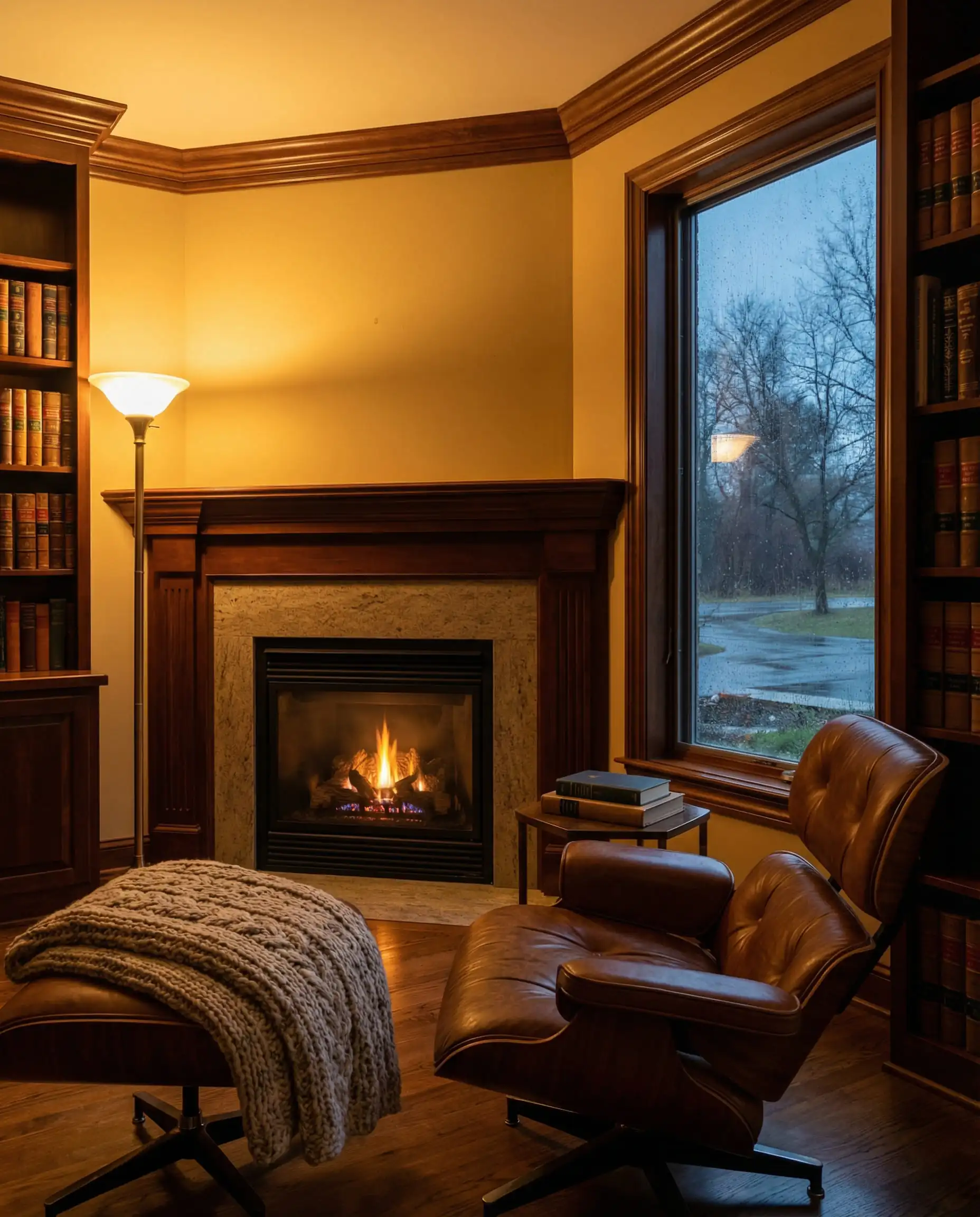
Calculating the fireplace mantel height is a game of inches. It requires balancing the cold hard facts of NFPA 211 safety codes with the warm, cozy aesthetics of your fireplace trends.
Remember the golden formula: Start at 54 inches, ensure you have at least 12 inches of clearance above the firebox, and adjust slightly based on your ceiling height. When in doubt, mock it up with cardboard or tape. It is much easier to move a piece of tape than it is to patch drill holes in a stone wall!
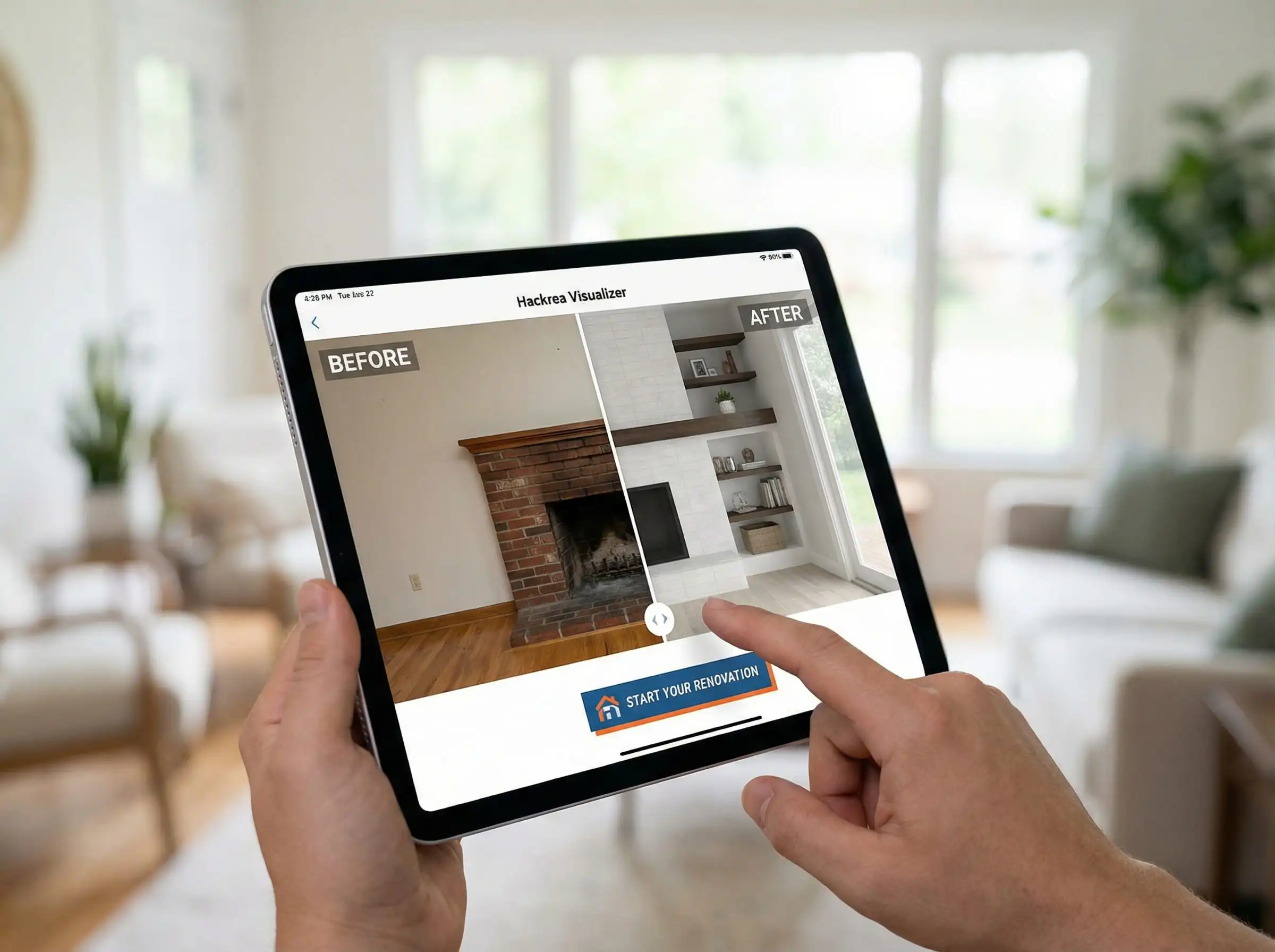
Unsure how a new mantel will look in your space?
Don’t guess. Use the Hackrea Visualizer to upload a photo of your room and test different mantel heights, materials, and colors instantly. It’s the smartest way to renovate risk-free.
Did you find this guide helpful? Share it with your renovation partner or save it to your Pinterest board for later!