Beyond Aesthetics: Home Improvements That Can Add Practical Value
A freshly decorated room can still be the least comfortable room in the house. That gap between appearance and everyday performance makes renovation spending harder to judge than a before-and-after photograph suggests. Homeowners weighing home improvements that can add practical value face a question that attractive finishes alone can’t answer: what will make the property better to own, not just better to photograph?
With renovation budgets competing against ongoing household expenses, the distinction matters. A project’s price is visible immediately, while its usefulness becomes clear through years of daily routines and, eventually, a sale. The challenge is separating personal preference from lasting utility without assuming that every improvement will return its cost. That starts with understanding what a valuation actually measures.
The Improvements That Pay You Back Twice
Upgrades to roofs, mechanical systems, energy efficiency, and usable space offer two possible payoffs: better day-to-day living and a property that presents fewer unresolved problems at sale. Neither guarantees a matching increase in appraised value.
How Appraisers Separate Function From Finish
The condition of major systems and finished gross living area (GLA) carry more weight in a valuation than cosmetic finishes, according to Block Appraisals, although comparable sales and the property’s characteristics still shape the result. Location, lot, layout, construction quality, and system age and working order provide context that a renovation receipt can’t replace.
Finished, heated space also needs to meet the applicable measurement requirements before it counts toward GLA. An attractive room isn’t automatically additional recognized living area.
Why Cosmetic Fixes Rarely Move the Number
Paint, carpet shampooing, replacement mirrors, and window treatments improve presentation. They don’t create additional living space or resolve an aging system, so their cost shouldn’t be treated as an automatic appraisal adjustment.
HomeLight and the National Association of Realtors publish seller-facing guidance, but general advice isn’t evidence of a particular home’s value. For potential home buyers, curb appeal introduces the property; its underlying condition remains a separate question. Cosmetic work belongs in the finishing budget, not in place of repairs.
Systems and Energy Upgrades You Feel Every Month
Systems spending rarely produces the most striking photograph. Its practical value comes from addressing the parts of a home that provide shelter, comfort, and reliable operation, rather than adding another decorative layer.
Start With the Roof and the Envelope
An active roof problem deserves attention before interior upgrades. The decision between repair and roof replacement should follow the roof’s condition and the extent of the problem, not a promised resale return.
The Remodeling magazine Cost vs. Value Report compares project costs with estimated resale value. That makes it a budgeting reference, not a prediction of what an individual property will recover.
For energy efficiency, the sensible sequence runs from the building envelope to equipment. Identifying air leaks and insulation gaps before choosing replacement windows or heating equipment keeps the project focused on the actual problem.
Window replacement deserves its own justification, particularly when existing windows remain serviceable.
Efficiency Upgrades That Lower Monthly Bills
Controls address a different issue: how equipment operates throughout the day. An ENERGY STAR-hosted presentation on smart thermostats discusses occupancy-responsive controls and energy savings.
A smart thermostat’s usefulness depends on compatible equipment and settings that reflect the household’s routine.
Consumer Reports provides product comparisons, but equipment ratings answer a different question from whether a house needs that equipment. Replacing a working system simply to add newer controls requires a stronger justification than adjusting its schedule.
Monthly operating costs give efficiency work a practical yardstick. Comparing bills alongside weather and usage changes is more informative than assuming every new device produces the same savings.
Kitchens, Baths and Added Living Space
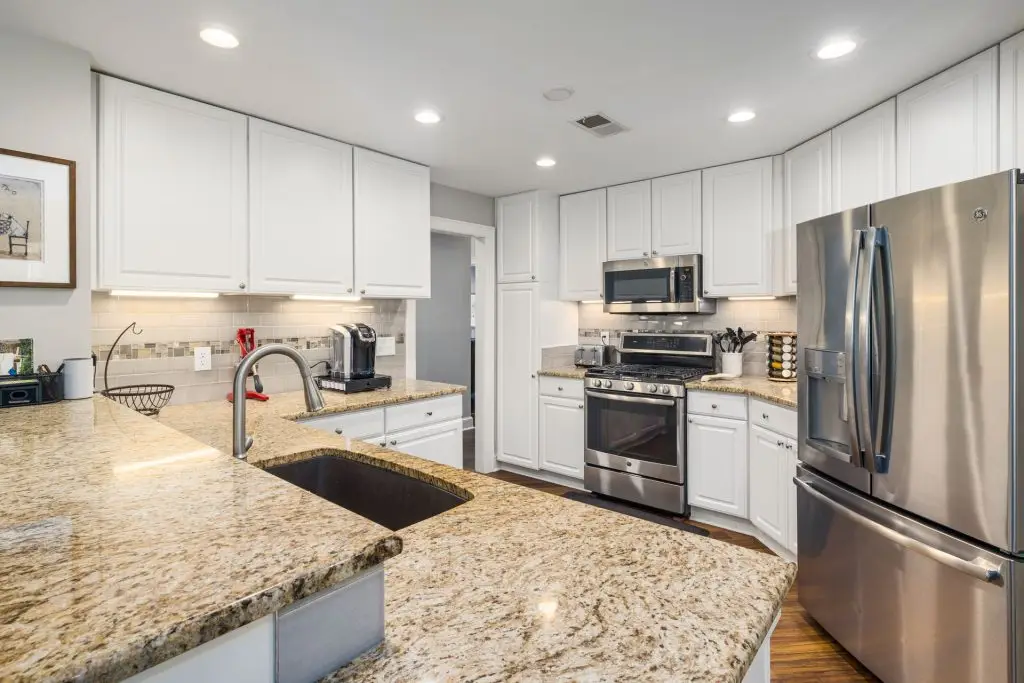
Kitchens and bathrooms combine daily utility with highly personal taste. Budget discipline starts by separating what no longer works from what merely looks dated.
Matching the Budget to the Project
A kitchen remodel that retains serviceable cabinets and the existing layout limits the work to defined problems. A full gut renovation adds demolition, replacement, and coordination costs, so it needs a functional reason beyond changing the room’s style.
For a bathroom remodel, $10,000 is a planning allowance, not a guaranteed scope. Depending on regional labor prices and existing conditions, it might fund a vanity, fixtures, lighting, and surface updates.
Moving plumbing or adding a tub-to-shower conversion requires separate pricing rather than an assumption that everything fits.
The useful comparison is between itemized scopes. Return on investment shouldn’t depend on a contractor’s broad label of “minor” or “midrange.”
What the 30% Rule Protects You From
The 30% rule treats roughly 30% of a home’s current value as a ceiling for total renovation spending. It’s an informal budgeting guideline, not an appraisal standard or a promise of recovery.
Its purpose is to prompt a proportion check: does the proposed finished home still belong within the price range supported by nearby comparable properties?
Zillow estimates aren’t a substitute for that property-specific comparison. Necessary repairs can also justify spending that a resale-only calculation wouldn’t support.
The guideline works best as a warning against unchecked scope, not as permission to spend up to a fixed percentage.
Finished Square Footage and Accessible Design
A finished basement and an above-grade addition shouldn’t be treated as interchangeable square footage. Heating, ceiling height, egress, permits, and applicable measurement rules matter, and below-grade space can receive separate treatment rather than joining above-grade GLA.
Accessibility upgrades answer another practical question: who can comfortably use the space? Wider doorways, zero-threshold showers, properly installed grab bars, and first-floor bedrooms address specific barriers.
The National Association of Home Builders (NAHB) provides aging-in-place education. That focus offers a useful distinction: accessible design concerns everyday use, not simply a room’s appearance or size.
Spend Where the House Works Harder
The strongest renovation plan puts the roof and essential systems first, efficiency next, and right-sized kitchen, bathroom, and usable-space projects after that. Cosmetic touches finish the work rather than stand in for it.
Efforts to increase home value still need proportion. A better-functioning home doesn’t guarantee dollar-for-dollar recovery, and neighborhood comparisons limit what a renovation budget can justify.
The most defensible improvement solves a real problem during ownership and remains meaningful when the property’s condition, space, and comparable sales come under review.