You’ve done the fun part. The design is finalized, the contractor is booked, and you’ve already been pinning backyard inspiration for weeks. Then the excavator shows up, the first bucket of dirt comes up, and you hear a sound nobody wants to hear – a snap, a hiss, or worse.
That’s what happens when homeowners skip utility locating. It’s not a contractor oversight or a freak accident. It’s a predictable problem with a simple fix that most people don’t know to ask for.
Beneath every residential yard runs a hidden web of gas lines, water mains, electrical cables, sewer pipes, and telecom conduits. Some sit just inches below the surface. Whether you’re installing a pool, putting in a patio, planting trees, or running irrigation, understanding what’s down there first is the only way to protect your project, your property, and everyone on site.
What Is Hiding Under Your Backyard?
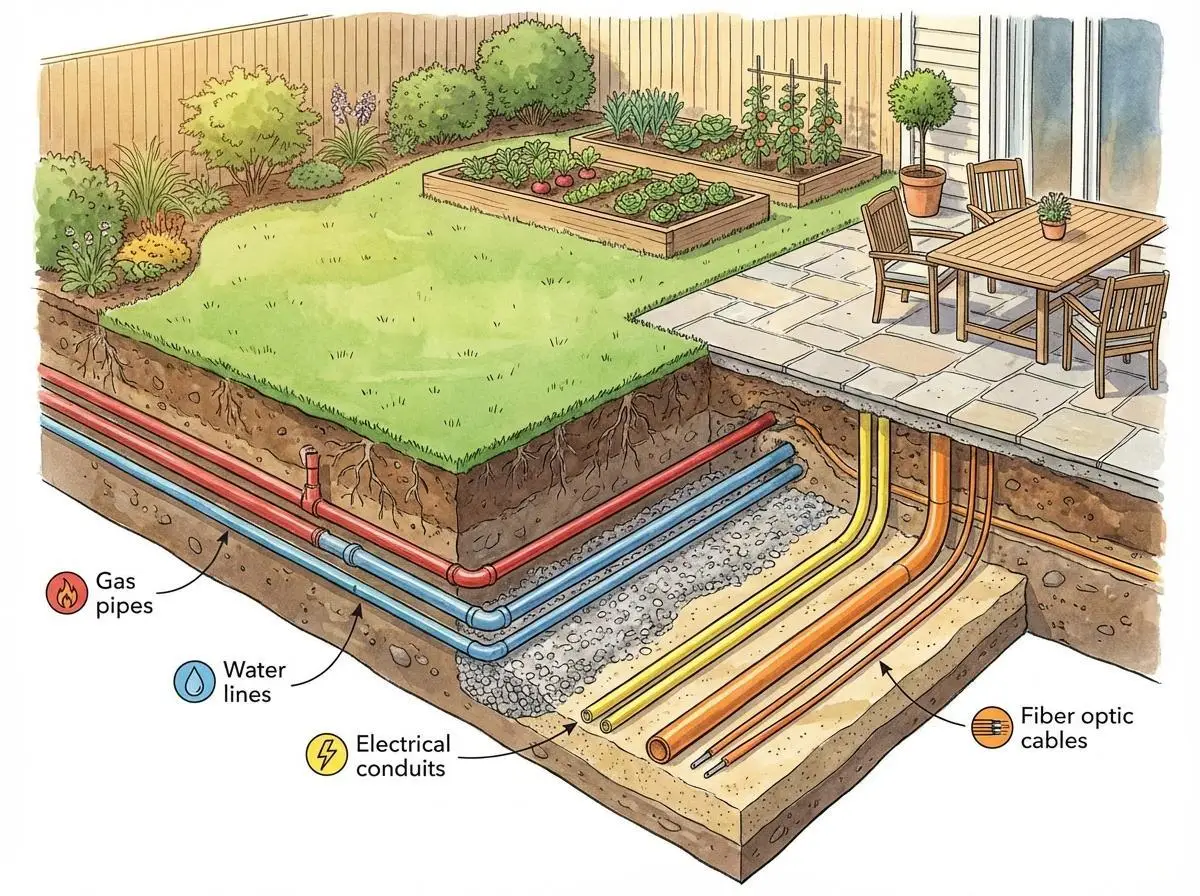
Most homeowners picture utilities as something that runs along the street. In reality, every residential property sits above a dense tangle of buried infrastructure. Public lines run from the main street supply to your meter. From there, private lines branch out to feed your home, your sprinkler system, your outdoor lighting, any detached buildings, and previous additions made by prior owners – sometimes without accurate records of exactly where those lines went.
Texas gives you a sense of the scale: according to the Texas Railroad Commission, the state has more than one million miles of underground utilities and pipelines. And San Antonio, one of the fastest-growing cities in the country, has decades of utility installations layered on top of each other in many neighborhoods.
For homeowners in the San Antonio area, working with utility location services in San Antonio before any outdoor excavation is the only reliable way to know what’s below before a single shovel breaks ground. Whether you’re planning a pool, a pergola, an outdoor kitchen, or an in-ground irrigation run, professional locating tells you what’s in the way.
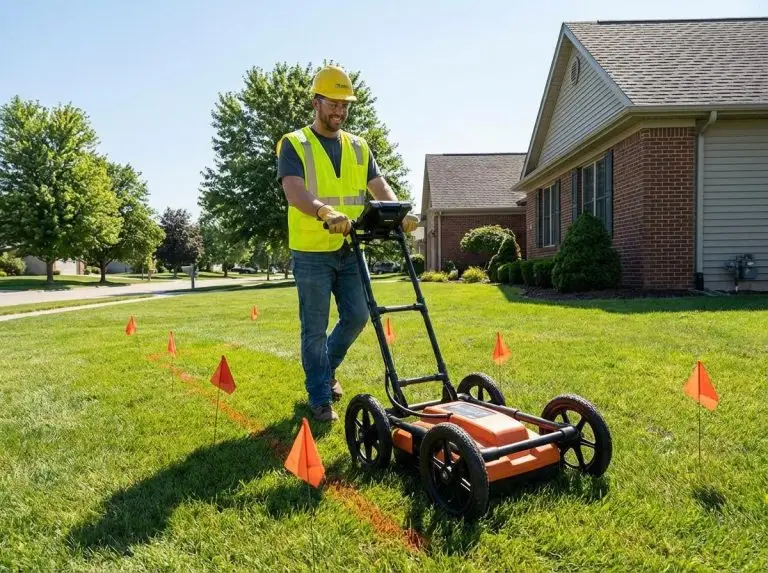
Professional locators don’t just rely on property records and utility maps. They use electromagnetic (EM) detection equipment and ground-penetrating radar (GPR) to physically scan the ground and map buried infrastructure with precision. Records go out of date. GPR doesn’t guess.
If you’re looking for inspiration before the project begins, the latest outdoor living trends cover everything from pergolas to full outdoor kitchens – all projects that require ground work and benefit from a locate first.
The Real Cost of Skipping a Utility Locate
The financial case for a professional locate is hard to argue with. According to Bess Utility Solutions, citing 811 data, a single underground utility strike costs an average of $56,000 or more in repair costs, project delays, and Pipeline Safety penalties – and that figure doesn’t include any injury liability.
Those aren’t isolated incidents, either. The 2024 Common Ground Alliance DIRT Report analyzed 196,977 unique utility damage reports from that year alone. The CGA Damage Index rose from 94.0 in 2023 to 96.7 in 2024 – meaning the problem is getting worse, not better. Poor locating practices contributed to more than one-third of all incidents.
There’s also a human element that the dollar figures don’t fully capture. A cut gas line creates an immediate explosion and fire risk. A severed electrical cable can electrocute workers. A broken water main floods a site in minutes and can damage neighboring properties.
Texas law isn’t forgiving here, either. Anyone excavating deeper than 16 inches must notify 811 at least two business days before breaking ground. Non-compliance carries real fines. And it won’t cover you if workers get hurt.
One of the most common misconceptions is that shallow digging is safe digging. It isn’t. Many cable and telecom lines sit at 12 inches or less. Erosion, root growth, and freeze-thaw cycles push lines even closer to the surface over time. “It’s just a flower bed” has ended more than a few projects early.
Why 811 Alone Isn’t Enough for Residential Projects
Every homeowner in Texas should call 811 before any digging project. That’s the free one-call service that alerts public utilities – power companies, telecoms, gas providers – to come out and mark their lines before you dig. It’s free, it’s required by law, and it covers the infrastructure running from the street to your meter.
What 811 doesn’t cover is everything past that meter. And for most residential renovation projects, that’s the infrastructure that matters most.
Private lines – the electrical feed to your detached garage, the propane line to your outdoor grill station, the wiring for your irrigation controller, the pool equipment lines, the outdoor lighting circuits – none of that is tracked in the 811 system. Prior owners may have added lines without permits, without proper documentation, and without anyone knowing exactly where they ran.
Water features, raised beds, pergola footings, and edged garden paths are among the most popular landscape and garden design ideas right now. All of them involve breaking ground. For any project that goes more than a few inches deep, a private utility locate fills the gap that 811 leaves open.
Think of 811 as the starting point, not the finish line.
How Professional Utility Locating Works
The process is straightforward, and for most residential properties it takes only a few hours to a day.
It starts with a consultation and records review. A locating company checks existing utility maps, permits, and as-built drawings to understand what’s likely in the ground. Then field technicians arrive with equipment, not just paperwork.
Electromagnetic locators detect metallic pipes and conduits by transmitting a signal and reading the response. GPR goes further – it sends radar pulses into the ground and reads return signals from buried objects, including non-metallic lines like PVC pipes or fiber conduits. The two technologies together give a much clearer picture than either alone.
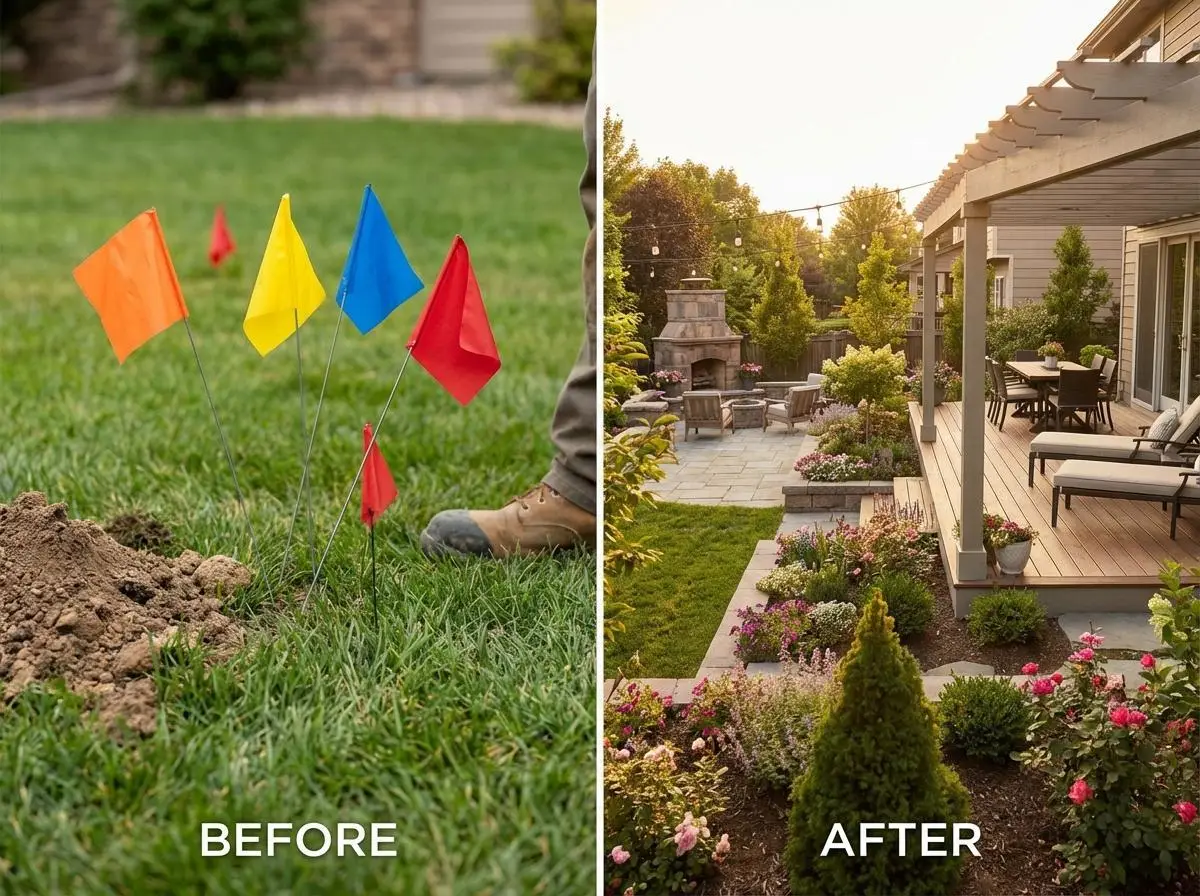
Once utilities are identified, technicians mark their positions using the standard APWA color code: red for electric, yellow for gas, orange for telecom, blue for water, green for sewer. On complex sites near critical lines, potholing – also called soft-dig or vacuum excavation – confirms exact depths without damaging what’s there.
For larger projects, Subsurface Utility Engineering (SUE) takes this a step further. A Federal Highway Administration-commissioned study by Purdue University found that SUE delivers $4.62 in savings for every $1 invested. Pennsylvania DOT saw $11.39 in savings per dollar across 22 projects. Even on a residential scale, the return is significant.Before any of this, homeowners should still initiate the public locate process through 811 Before You Dig – it’s the mandatory first step before any professional private locate begins.
Planning a Backyard Project in San Antonio? Start Here
San Antonio’s construction market is one of the most active in the country. The city projected $11.5 billion in construction starts in 2025, according to Dodge Data and Analytics via Engineering News-Record. The metro had 15,600 construction workers in 2024, up from 12,800 in 2022. That level of activity means underground infrastructure is dense, active, and expanding year by year.
Fast-growing neighborhoods in Bexar County add another layer of complexity. In many areas, old cast-iron water mains run directly beside new PVC installations. Utility records from the 1970s coexist with conduits added in the last two years. What’s on paper doesn’t always match what’s in the ground.
If you’re planning smart home and outdoor systems – connected irrigation, underground lighting runs, or automated outdoor systems that need buried cable – knowing what’s already below is doubly important before you start trenching.
The practical advice is simple: schedule your professional utility locate before you lock in your contractor’s start date. Most locates on residential properties can be completed within a few days of booking. That’s a small delay compared to what a utility strike costs in time, money, and stress.
According to Texas 811, following proper locate procedures reduces the chance of striking a utility line to less than one percent. That’s an easy risk to take off the table.
Beautiful Backyards Start Underground
Every backyard project begins with a vision – a pool that the whole family uses on summer evenings, a garden that actually produces food, an outdoor kitchen that extends your living space. All of it depends on what happens before the first shovel goes in.
Calling 811 is the legal minimum. A professional private locate is what actually protects your project. It covers the lines that 811 doesn’t, confirms depths that records can’t, and gives your contractor a clear picture of the ground before work begins.
A locate typically costs a fraction of what a single utility strike sets you back – in repairs, delays, or worse. If you’ve got a backyard project on the horizon, make utility locating the first item on your checklist. Everything else follows from there.