Bathtub Refinishing: Cost, Process, and When It Beats Replacing the Tub
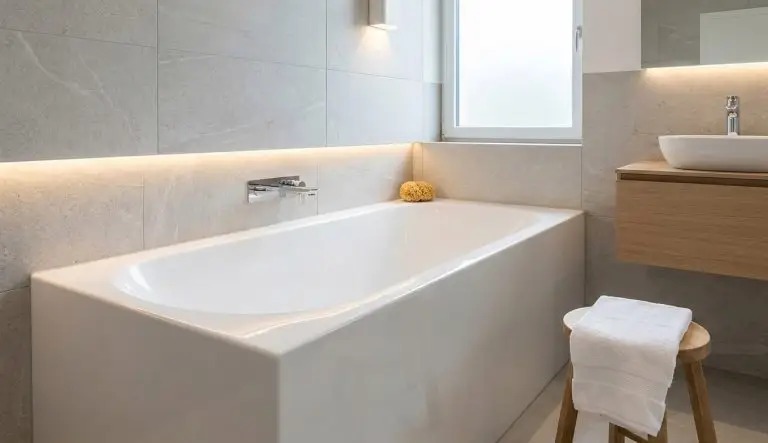
A tired bathtub has a way of dragging the whole bathroom down. You can hang new towels, swap the mirror and repaint the walls, and the eye still lands on the yellowed enamel, the rust ring around the drain or the chip that has been there since the previous owners. The obvious fix seems to be a new tub. The less obvious one, and often the smarter one, is to keep the tub you have and give it a new surface.
This guide walks through what refinishing actually involves, what it costs compared with replacement, how long the result lasts and the situations where tearing the tub out really is the better call.
What Refinishing Is (And What It Is Not)
Refinishing, also called reglazing or resurfacing, means applying a new bonded coating over the existing surface of the tub. The tub stays where it is. Nobody touches the plumbing, the tile surround or the subfloor. Done properly, the result looks like a factory finish: smooth, glossy and in whatever color you choose, from classic white to almond or a custom shade that matches the rest of the room.
It is not the same as a tub liner. A liner is a separate acrylic shell molded to fit over the old tub and glued in place. Liners have their fans, but they add a layer between you and the original tub, and water that gets behind a poorly fitted liner has nowhere to go. Refinishing works directly on the original material, so the tub keeps its exact shape and depth.
It is also not paint. Hardware store tub kits exist, and they can look fine for a few months, but a durable finish depends on surface preparation and application conditions that are hard to reproduce with a roller in a small, unventilated room.
How The Process Works, Step By Step
A professional job usually follows the same sequence, whatever the tub is made of.
- Deep cleaning. Years of soap scum, body oils and mineral deposits have to come off completely, because a coating will not bond to residue. Old caulk is removed at this stage too.
- Repairs. Chips, cracks and rust spots are filled and sanded flush. This is where a refinisher’s skill shows, since any repair that is not perfectly level will telegraph through the new finish.
- Etching and priming. The original surface is etched or abraded so the primer has something to grip, then primed. Porcelain, enamel on cast iron or steel, acrylic and fiberglass each need slightly different preparation.
- Application. The topcoat is sprayed in several thin layers. Spraying gives a far smoother result than brushing or rolling.
- Curing. The tub is left alone while the coating hardens. Most companies tell you when the tub can be used, typically after a day or so, and that full hardness takes a little longer. Treat the first week gently.
The whole visit usually fits into one working day, which is a big part of the appeal. There is no dumpster in the driveway and no week without a working bathroom.
Cost: Refinishing Versus Replacement
The price gap is the main reason people choose refinishing. A replacement tub is rarely just the price of the tub. Taking out the old one often means removing tile, and on older homes it can mean opening walls, updating valves and drain fittings, patching drywall and rebuilding the surround. Cast iron tubs add their own challenge, since many weigh several hundred pounds and are often broken up on site to get them out of the room.
Refinishing skips all of that. Prices vary by region, tub size, material and the amount of repair needed, but a standard tub generally costs a fraction of a replacement project. Before collecting quotes, it helps to see how a professional bathtub refinishing job is scoped, from repairs and surface preparation to cure time and warranty, so you can compare like with like. Whatever the rates where you live, the ratio tends to hold: refinishing usually costs a small part of what a tear-out and reinstall costs.
There is a quieter saving too. Construction and demolition debris is one of the largest waste streams in the country; the US Environmental Protection Agency estimates that around 600 million tons of it were generated in 2018 alone. A tub that stays in place is one less fixture headed to landfill.
How Long A Refinished Tub Lasts
Durability depends on three things: the quality of the preparation, the coating system and how the tub is treated afterwards. A well done professional finish can last many years; reputable companies typically quote a decade or more and back their work with a multi-year warranty. A rushed job on a poorly cleaned surface can start peeling within a year, which is where refinishing gets its mixed reputation.
Aftercare matters more than most people expect. Non-abrasive cleaners, a soft cloth and good ventilation go a long way. Suction cup bath mats are a common culprit, because they trap water against the finish and can lift it over time. Ask the company for its care instructions before the job starts, not after.
A Word On Safety
Ask any refinisher you are considering what stripping and coating products they use, and how they ventilate the room. Historically, some refinishers used methylene chloride based strippers in small bathrooms with tragic results: a 2012 report in the CDC’s Morbidity and Mortality Weekly Report linked 13 deaths among bathtub refinishers between 2000 and 2011 to methylene chloride exposure. The EPA has since banned most uses of the chemical. A professional company should be able to tell you exactly what goes on your tub and how the work area is ventilated while they are there.
When Replacement Is The Better Choice
Refinishing is not the answer for every tub. If the tub is structurally damaged, for example a fiberglass tub with a soft, flexing floor that has not been reinforced, or a steel tub rusted right through, a new coating will not fix the underlying problem. If the tub is leaking at the drain or overflow because of failed plumbing, that needs a plumber first. And if you want a different size, shape or layout, such as converting a tub to a walk-in shower, no finish will get you there.
For everything else, from a dated color to worn enamel, stains, chips and that rust ring by the drain, it is worth getting a refinishing quote before you commit to a remodel.
The Bottom Line
A tub is one of the few fixtures in a bathroom that is built to outlast the finish on top of it. Cast iron tubs in particular are often worth keeping for their weight, heat retention and classic lines. If the shell is sound, refinishing gives you a new surface for a fraction of the cost and disruption of replacement, and frees up budget for the parts of the bathroom that really do need changing.