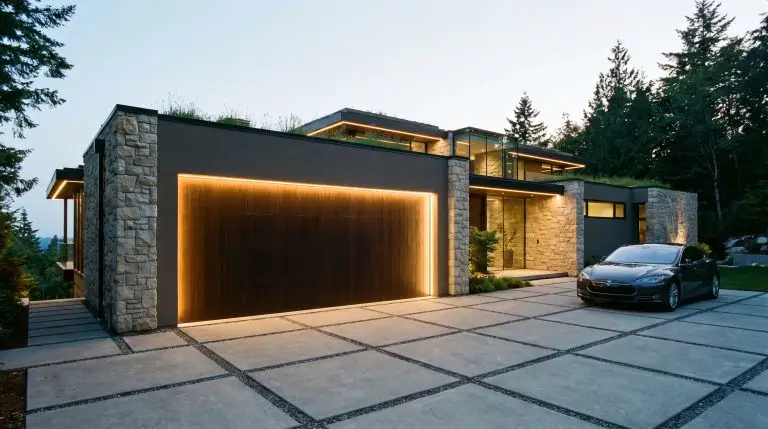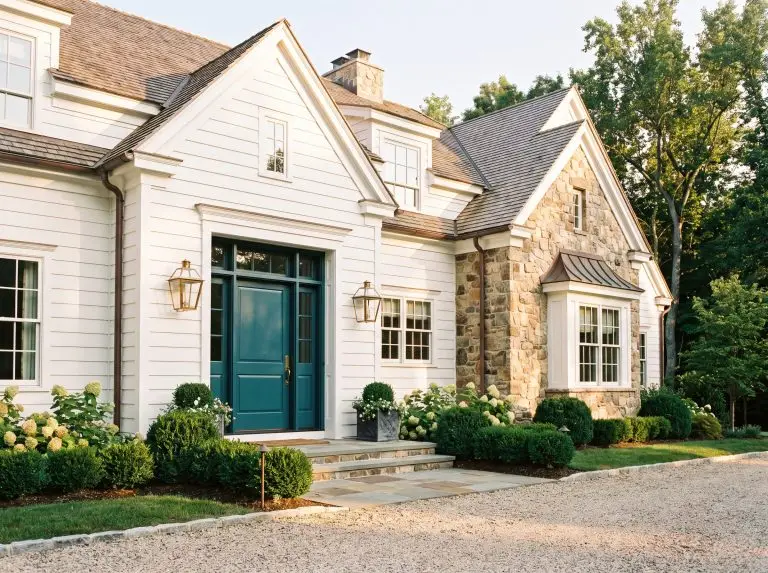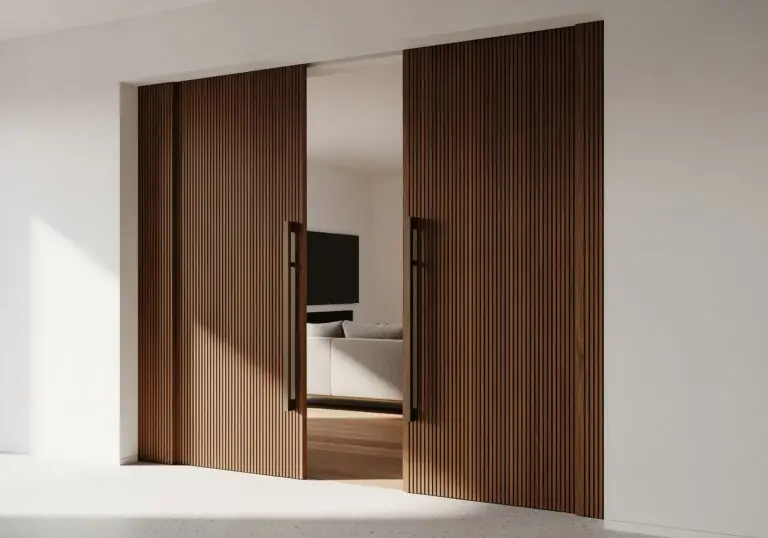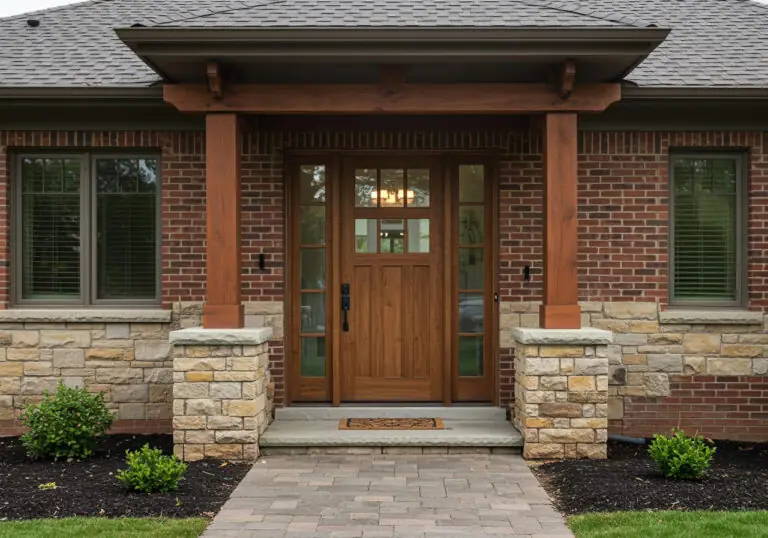
Entry doors get plenty of attention for color and style, but their role in exterior design goes beyond that. The door’s finish, the surrounding frame, and the details’ relationship to the rest of the facade shape how a home looks from the street.
An entry door does not exist in isolation. It sits beside siding, brick, stone, windows, and trim, and those relationships are what make an exterior feel cohesive. When a few details align, the front-of-house experience can feel more intentional without changing the structure itself.
1. Material Finish and Surface Presence
The surface of an entry door does a lot of quiet work. Matte, semi-gloss, and textured finishes catch light differently, so the door can look softer in the morning and more defined in the afternoon. A low sheen surface often feels calm and grounded, while a smoother finish tends to look cleaner and more precise.
Material presence matters, too. A door that complements nearby brick, stone, or siding helps the exterior feel cohesive. When texture and sheen make sense with what surrounds them, the entry looks like it belongs there rather than feeling added on.
2. Framing and Surround Details
What surrounds the door often shapes the overall look as much as the door itself. Trim, casing, and small framing details create the boundary between the entry and the facade, giving the opening a sense of structure. When those pieces are thoughtfully sized and finished, the transition between surfaces looks clean instead of abrupt.
Framing can be subtle or more defined, depending on the home’s style and the nearby windows. Either way, consistency is what makes it work. When the door surround feels in step with the rest of the exterior details, the entry feels anchored and intentional.
3. Door Size and Visual Balance
Door size plays a big part in how balanced the exterior feels, especially next to windows and large wall areas. A door that feels undersized can disappear into the facade. One that feels oversized can pull attention away from the rest of the exterior. The goal is a natural relationship, not perfect math.
When the scale feels right, the entry area looks settled. The door can stand out as a focal point while still feeling like part of the home’s overall exterior composition.
4. Hardware as a Design Detail
Hardware is small but highly visible up close. The shape of a handle, the finish of a pull, and even the presence of hinges add lines and highlights that can either blend with the door or give it definition. When the hardware finish complements nearby fixtures or exterior accents, the entry tends to look more cohesive.
Metal choice matters because different finishes reflect light and age in distinct ways. This overview of stainless steel, bronze, brass, and aluminum handle materials is a helpful reminder that even subtle material shifts can change the character of an entry.
5. Glass Elements and Light
Glass details can change the feel of an exterior without changing the structure at all. Even small glazed sections alter how light moves through the entry area, adding depth and variation as daylight shifts. The result is often understated, but it can soften heavier surfaces and make the front of the home feel more layered.
That kind of refinement often comes from small adjustments. The same theme comes through in this piece on small design tweaks that boost home appeal, where subtle updates add up to a more finished exterior.
6. Craftsmanship and Long-Term Appearance
As entry doors age, workmanship becomes more apparent. Edges, seams, finishes, and moving parts tell a story after years of daily use and exposure to the elements. When those details are handled well, the door stays consistent with the exterior rather than becoming the first element to show wear.
Long-term consistency usually comes down to practical experience with entry door construction and installation. When materials are prepared carefully and components are aligned properly from the start, the design tends to hold its look longer. Familiarity with materials and assembly methods helps ensure design choices hold up visually over time, which is why companies such as Shank Door are commonly associated with entry doors that maintain a steady, cohesive appearance well beyond installation.
Conclusion
Entry door design is rarely about one dramatic feature. It comes down to the combination of finish, framing, scale, hardware, glass, and craftsmanship, and how those pieces work together.
When those details work together, the entry door reads as a natural part of the home instead of a visual interruption. Paying attention to the smaller choices helps an exterior style feel consistent, balanced, and settled over time.