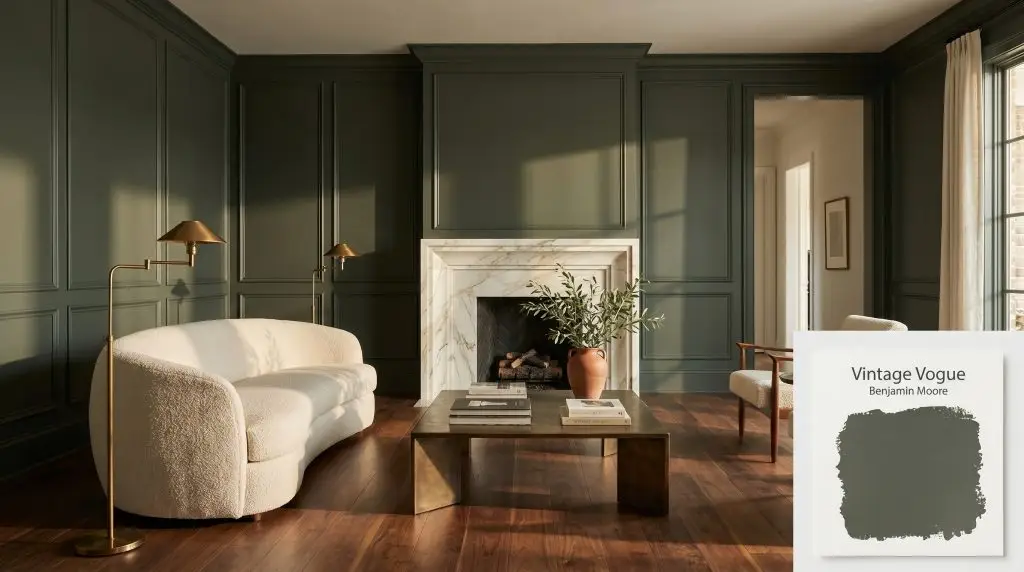
Benjamin Moore Vintage Vogue (462) is an ultra-dark, smoky olive green that acts as a stunning alternative to black or brown. With its deep, moody presence and subtle brown and gray undertones, it brings sophisticated warmth and grounded elegance to cabinets, accent walls, and exteriors.
Will Vintage Vogue clash with your room?
Paint Technical Profile
| Color ID / SKU | 462 |
| HEX Code | #565D4F |
| Light Reflectance (LRV) | 11.85 |
| Temperature | Warm-neutral |
| Primary Undertone | Olive Green |
| Hidden Undertones | Brown, Black, Gray |
| Use | Interior, Exterior |
| Best Exposures | South-facing, West-facing |
| Best For | Kitchen Cabinets, Built-in Bookshelves, Mudrooms, Accent Walls, Exteriors, Dining Rooms |
Vintage Vogue Digital Design Concept Boards
Kitchen Cabinets and Islands
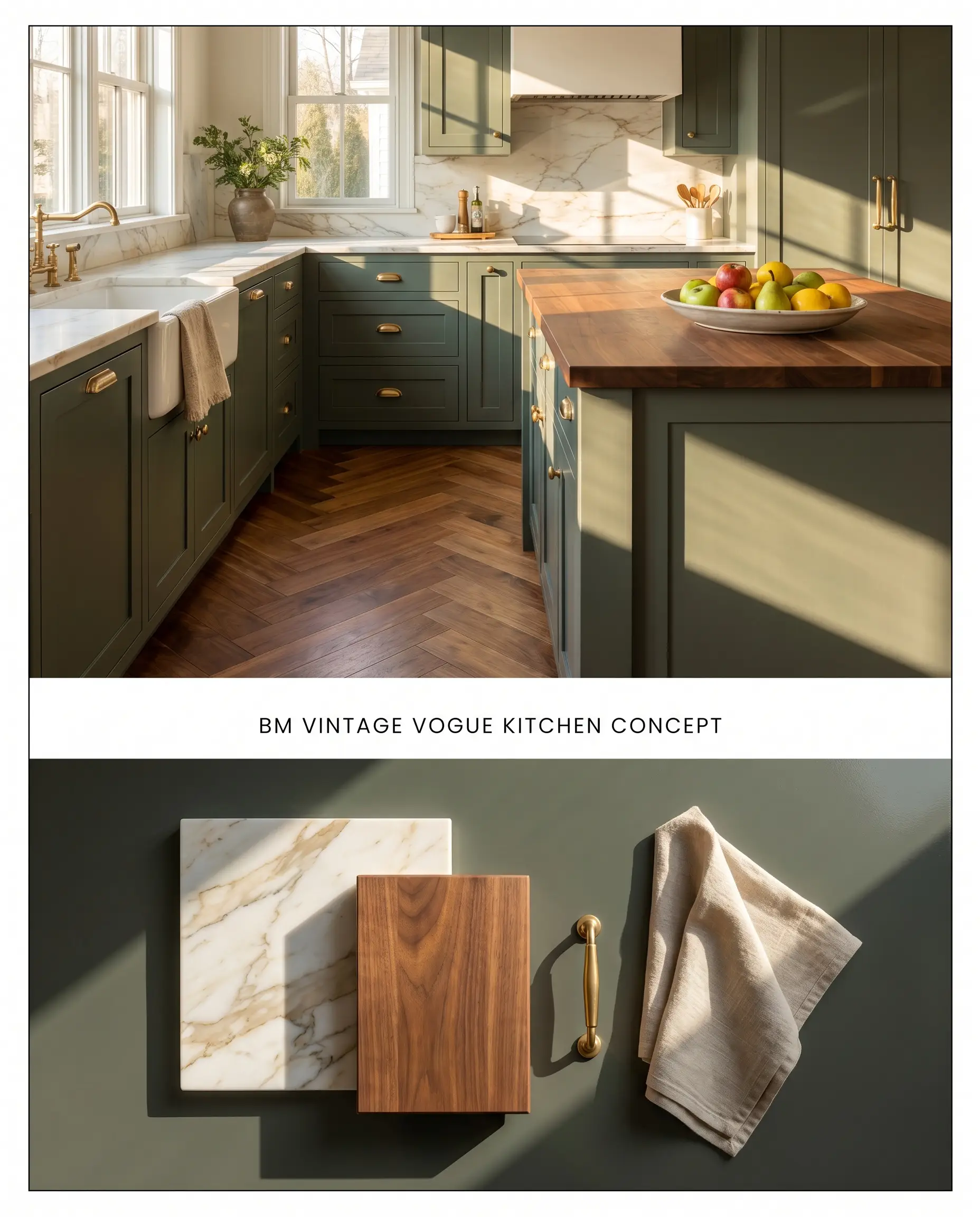
The subtle brown undertones in this smoky olive green anchor the lower visual plane of a kitchen, preventing the cabinetry from floating against lighter walls. By utilizing a saturated hue on the base units, the chromatic profile grounds the room while contrasting physically with porous materials like honed marble or unlacquered brass.
Built-in Bookshelves and Office Cabinetry
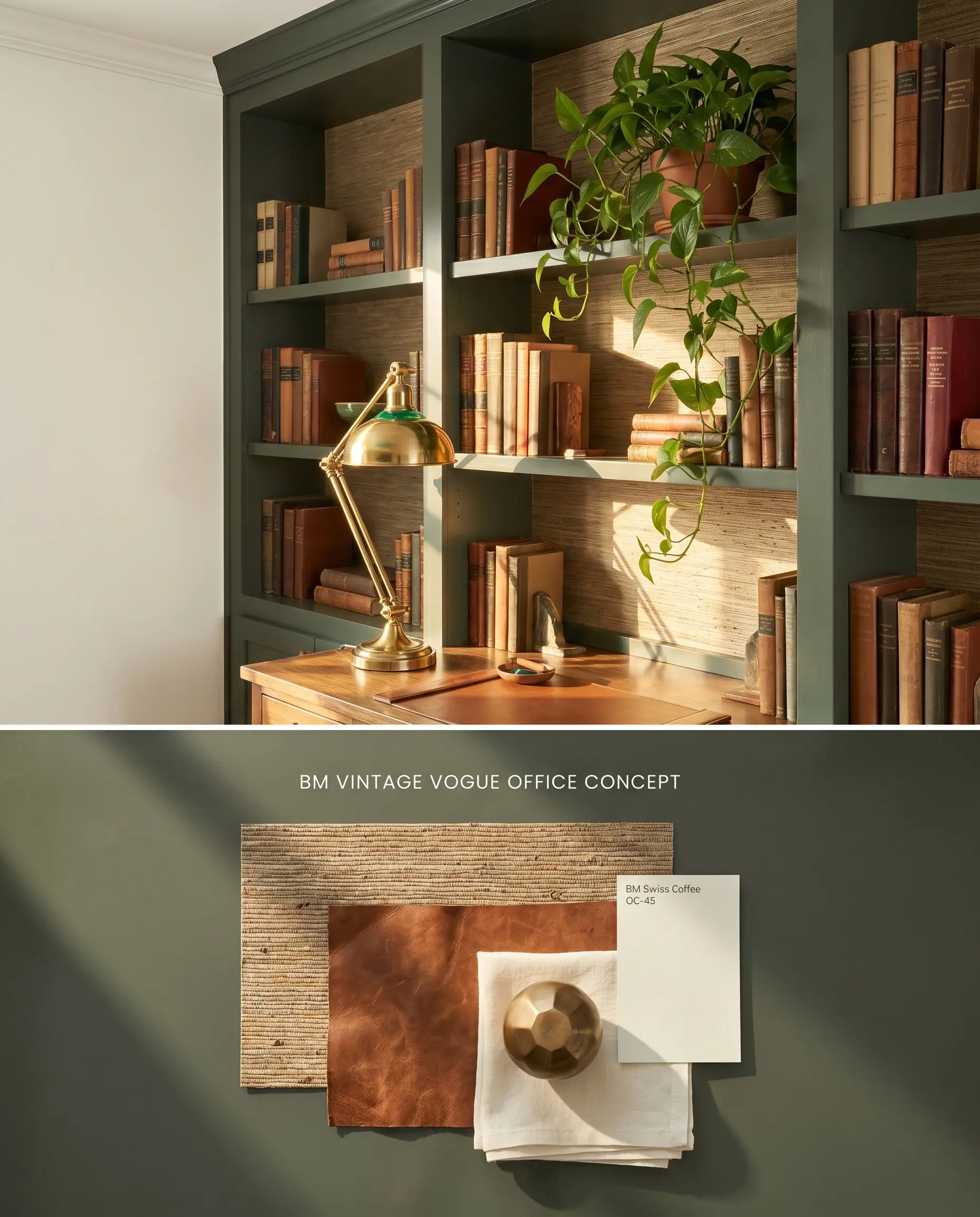
Applying this deep hue to floor-to-ceiling built-ins absorbs ambient light, reducing glare around computer screens while establishing a grounded elegance in workspaces. The dark value recedes visually, pushing the spines of books and curated objects forward into the viewer’s focal range.
Mudroom Lockers and Trim
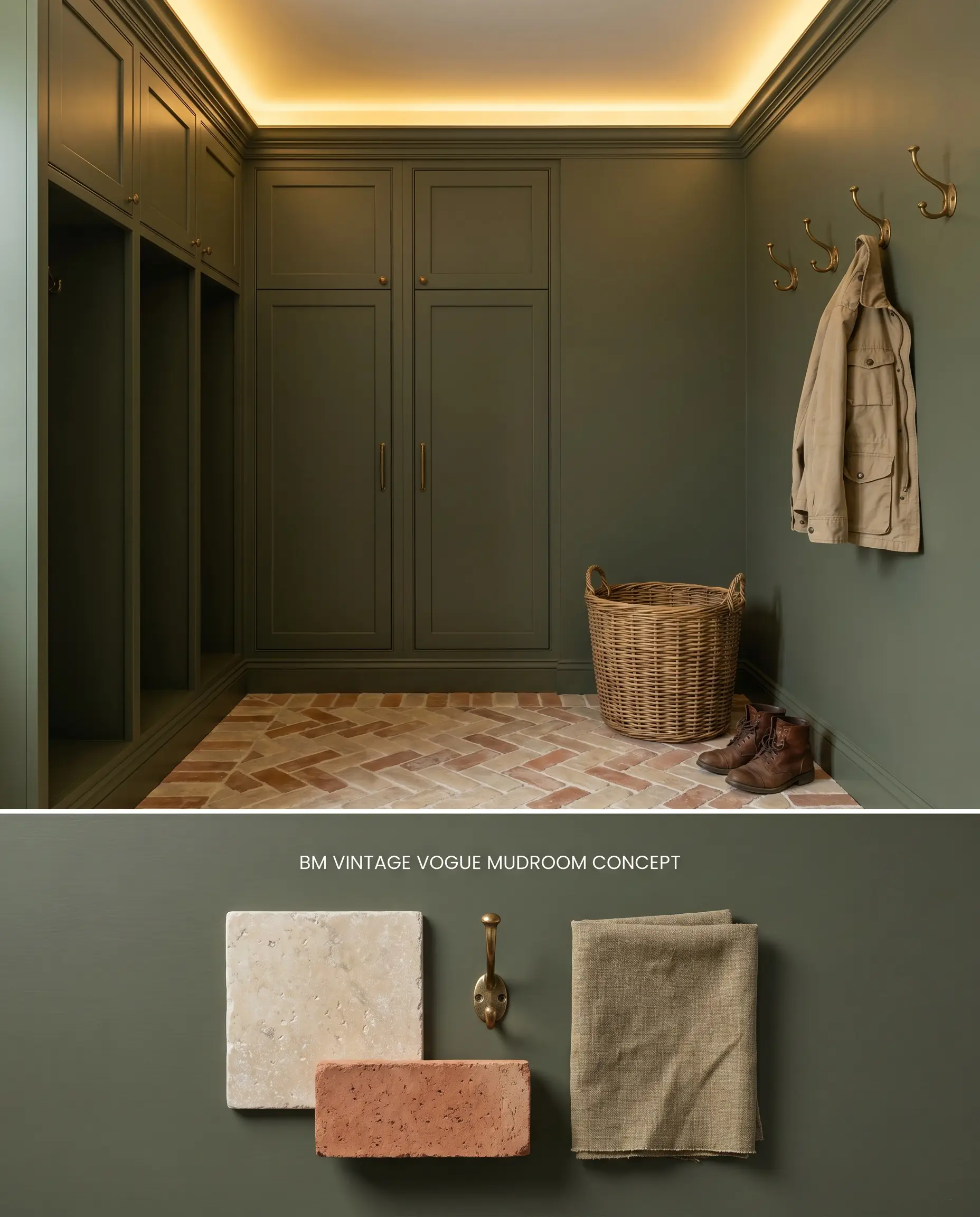
Mudrooms demand visual weight to mask daily dirt accumulation, making this saturated olive an ideal architectural finish for utility millwork. The color structure pairs seamlessly with natural stone flooring, bridging the gap between exterior landscaping and interior living spaces.
Accent Walls in South-Facing Living Rooms
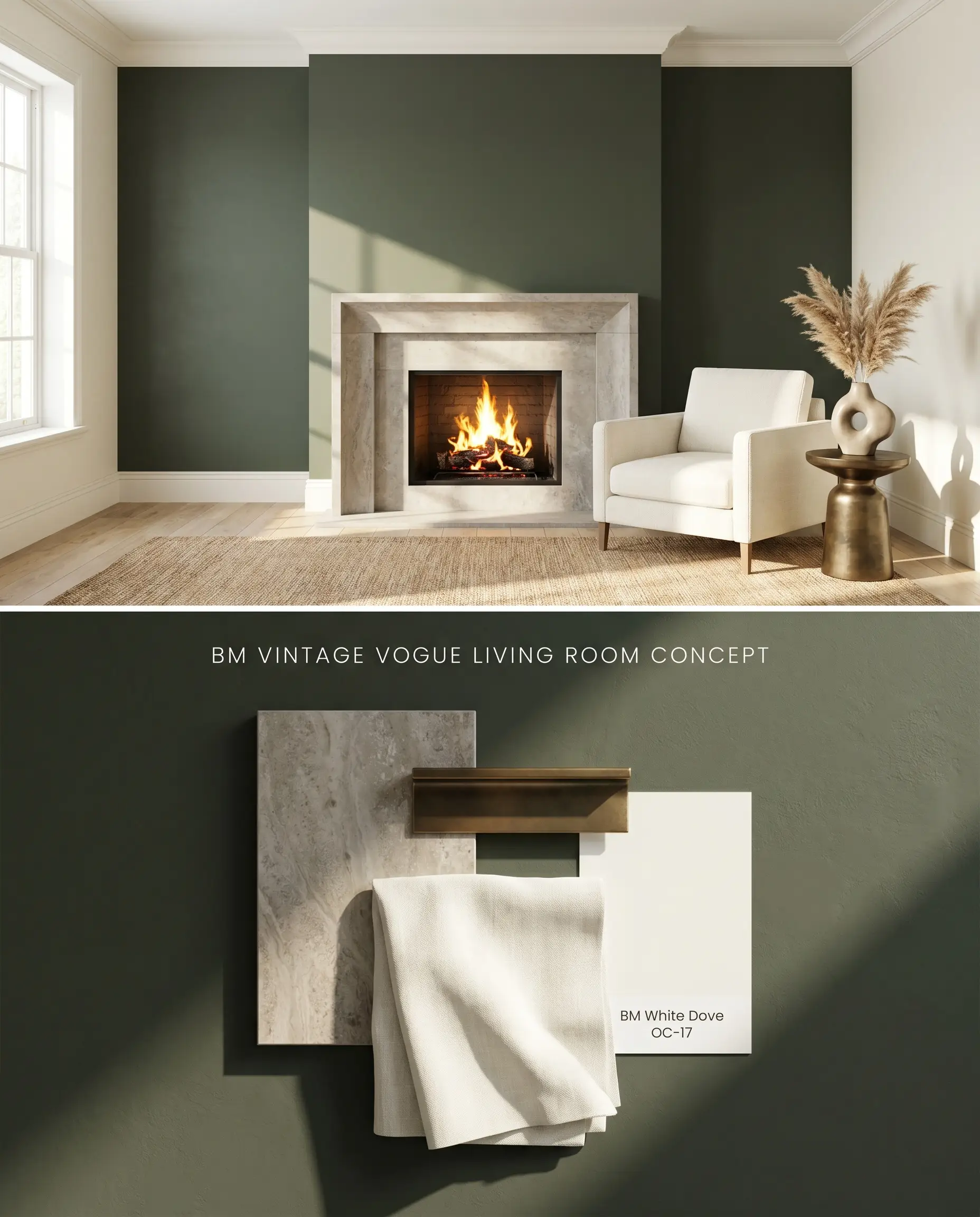
An accent wall in this deep sage cast physically anchors a focal point, such as a fireplace surround, by absorbing light and pulling the wall inward. The low LRV of 11.85 requires the intense, direct light of a southern exposure to activate the green without letting the brown undertones dominate.
Exterior Siding and Shutters
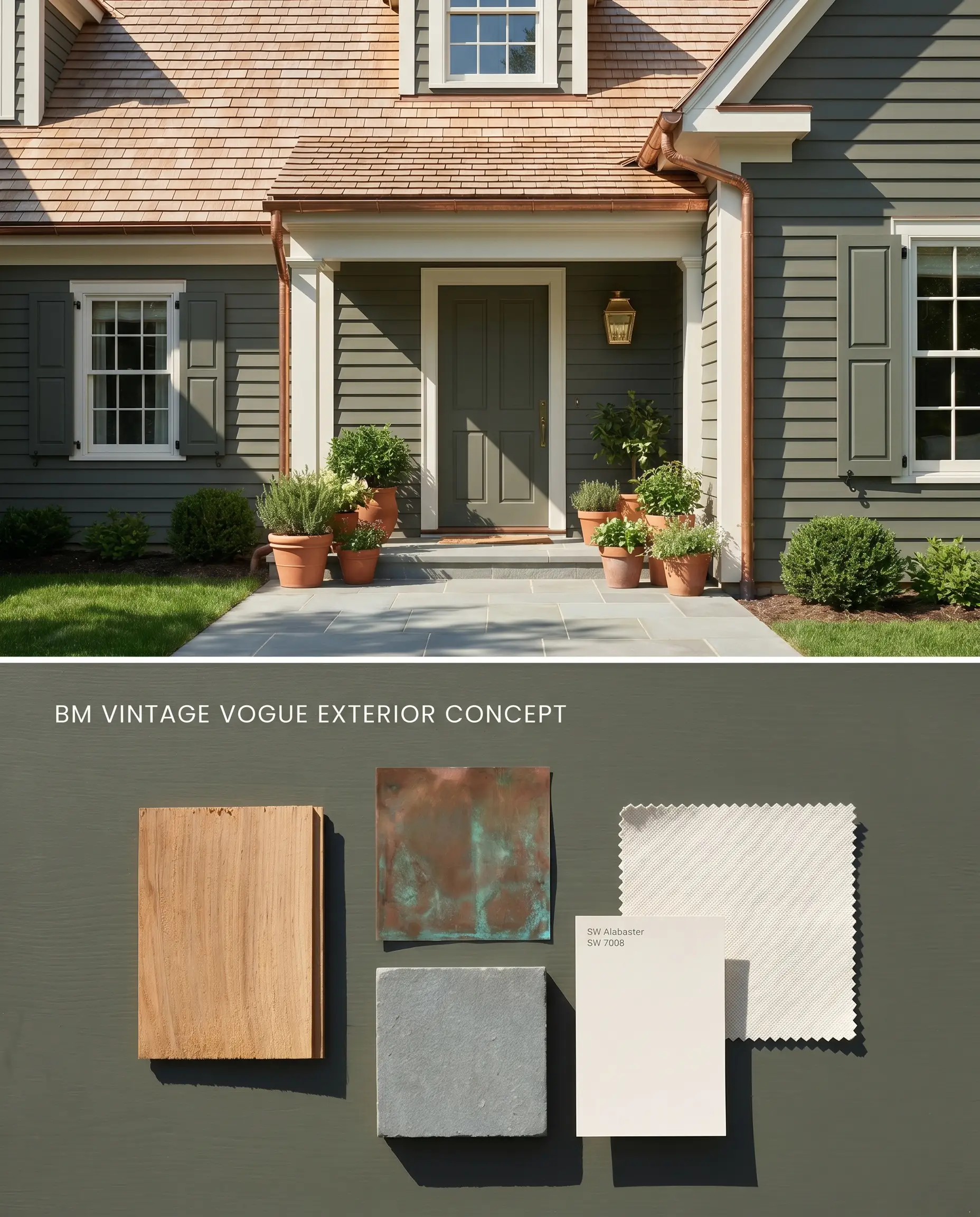
On exterior elevations, intense sunlight washes out paint colors, making this dark olive read as a vibrant, natural green rather than a murky brown. The warm-neutral base harmonizes with the organic tones of surrounding foliage and natural stone foundations.
Formal Dining Rooms
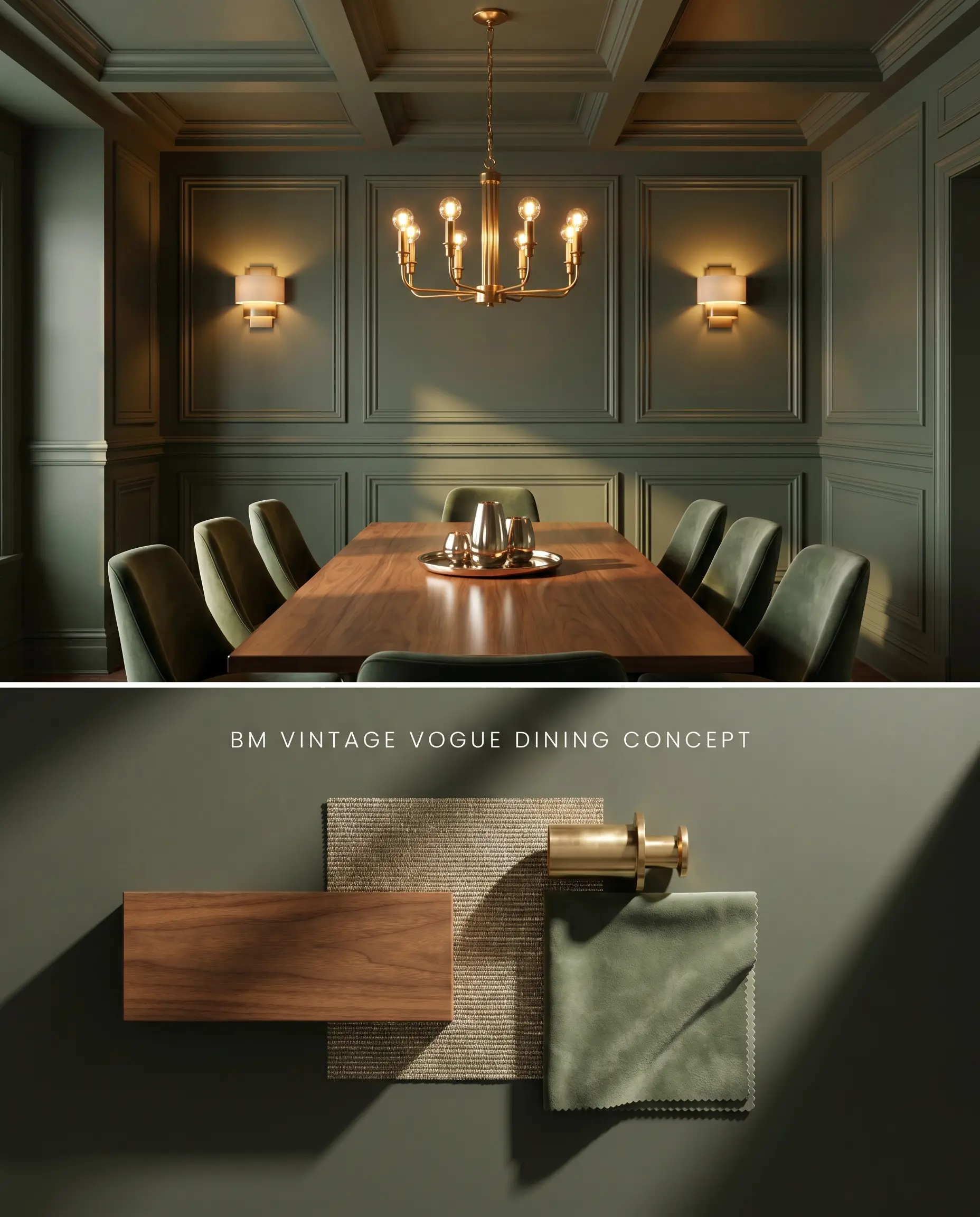
Wrapping an entire dining room in this moody luxe shade blurs the physical boundaries of the walls, pushing them outward under low evening light. The dark, light-absorbing envelope directs visual focus strictly onto the dining table and the reflective metallic surfaces of the light fixtures.
Chromatic Profile & Color Structure: Head-to-Head Comparisons
Benjamin Moore Vintage Vogue 462 vs. Sherwin-Williams Vogue Green SW 0065
Benjamin Moore Vintage Vogue 462 (LRV 11.85) leans firmly into its subtle brown undertones, anchoring it as an earthy, muted olive. Sherwin-Williams Vogue Green SW 0065 (LRV 8) is noticeably darker and projects a purer, more emerald-leaning forest green without the brown muddiness. Use SW Vogue Green in spaces where you need a crisp, jewel-toned green that resists turning brown, but specify BM Vintage Vogue 462 when bridging organic materials like walnut and unsealed terracotta.
Benjamin Moore Vintage Vogue 462 vs. Sherwin-Williams Pewter Green SW 6208
Sherwin-Williams Pewter Green SW 6208 (LRV 12) operates with a distinct cool, silver-gray undertone, contrasting sharply with the warm-neutral base of Benjamin Moore Vintage Vogue 462. Under cool Northern light, Pewter Green amplifies its frosty gray cast, while Vintage Vogue 462 shifts toward charcoal and dark brown. Deploy Pewter Green when coordinating with cool Carrara marble or blue-toned slate, but rely on Vintage Vogue 462 to warm up spaces dominated by aged brass and creamy whites.
Benjamin Moore Vintage Vogue 462 vs. Farrow & Ball Studio Green 93
Farrow & Ball Studio Green 93 (LRV 8) is a notorious chameleon that reads as a true black in low light before revealing a deeply saturated, black-green under direct illumination. Benjamin Moore Vintage Vogue 462 maintains a marginally higher LRV and retains its olive-brown identity much longer before succumbing to shadows. Reserve Studio Green for dramatic, high-contrast trim or cabinetry in sun-drenched rooms, utilizing Vintage Vogue 462 when you require a softer, more legible green across larger expanses.
Architectural Specifications & Technical FAQs
Yes, in windowless rooms, hallways, or North-facing exposures, the lack of warm light strips away the green identity. The color shifts drastically into a dense charcoal, dark brown, or near-black void.
Vintage Vogue clashes directly with stark, cool whites and blue-toned grays, making the olive undertones appear muddy and the whites look harsh. It requires creamy, warm whites like White Dove or Swiss Coffee to maintain architectural harmony.
Intense exterior UV light washes out the dark value, preventing the brown undertones from dominating and allowing it to read as a vibrant, natural olive green. However, on heavily shaded lots, it will recede into a near-black shadow.
Dark matte and eggshell finishes at this depth are highly prone to burnishing and will flash noticeably when touched up. You must use a satin or semi-gloss enamel finish, such as Benjamin Moore Advance, to provide the necessary durability for high-traffic millwork.
Room Compatibility & Clashes Diagnoses
Hackrea's reports evaluating the compatibility of Vintage Vogue in real rooms.No compatibility tests for Vintage Vogue yet.
Be the first to see how this color reacts to your space. Run a free architectural diagnostic now.
Paint Aesthetic & Practical Analysis
| Profile | Analysis | |
|---|---|---|
| Aesthetic | Vintage Vogue is a sophisticated chameleon. We love how it grounds a room without the harshness of pure black. It’s a moody, dramatic choice that shines on cabinetry and wainscoting, offering a luxurious depth that feels both historic and remarkably modern. | |
| The Coverage Catch | Because of its ultra-dark, saturated nature, Vintage Vogue often requires a tinted primer and at least two to three coats to achieve a perfectly even, opaque finish without flashing. | |
| The Lighting Shift | In low-light or North-facing rooms, this color easily loses its green identity, shifting into a heavy charcoal, dark brown, or near-black. | |
| The Clash Warning | It can clash with stark, cool whites, making them look harsh. It pairs much better with creamy, warm whites like White Dove or Swiss Coffee. Also, avoid pairing it with cool, blue-toned grays which can make the olive undertones look muddy. | |
| The Bounce Effect | With an LRV of 11.85, it absorbs a massive amount of light. It will not bounce light around the room, which can make a space feel smaller or 'cave-like' if not balanced with adequate artificial or natural lighting. | |
| The Low Light Trap | In windowless rooms or hallways, the brown and black undertones take over completely, turning the green into a flat, heavy dark brown. | |
| The Touch Up | Dark matte and eggshell finishes in this depth are prone to burnishing (scuffing) and can flash noticeably when touched up. Consider a satin or semi-gloss finish for high-traffic areas like cabinets or mudrooms. |