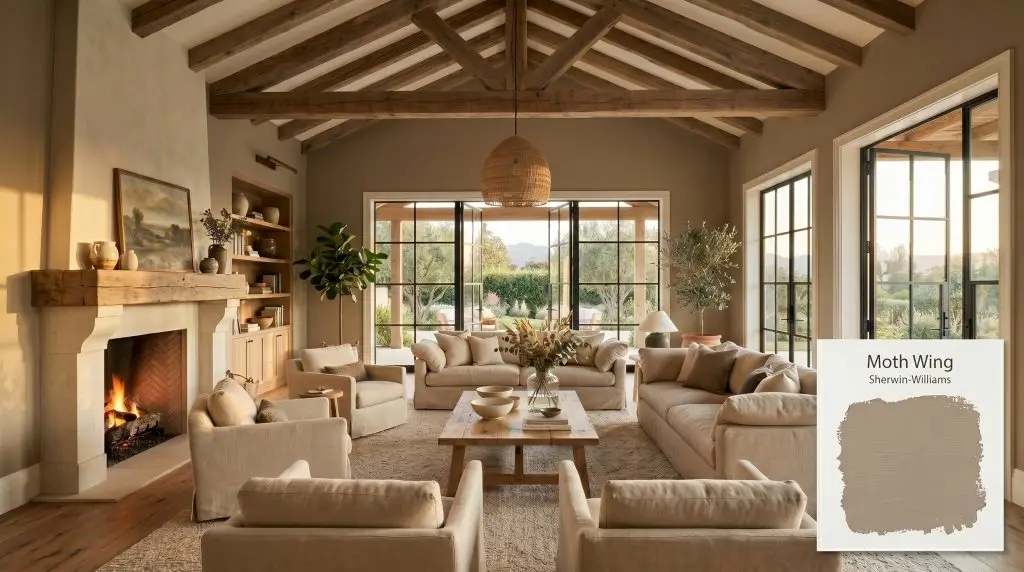
Sherwin-Williams Moth Wing (SW 9174) is a muted, medium-depth taupe-beige with distinct gray-brown undertones. With an LRV of 29.1, it acts as a grounding, earthy neutral that avoids looking overly pink or yellow, making it perfect for organic modern spaces, cabinetry, and exteriors.
Will Moth Wing clash with your room?
Paint Technical Profile
| Color ID / SKU | SW 9174 |
| HEX Code | #A0907F |
| Light Reflectance (LRV) | 29 |
| Use | Interior, Exterior |
| Best Exposures | South-facing, West-facing |
| Best For | Cabinets, Exterior siding, Cozy dens, Accent walls |
Grounding Sophistication: How to Master Sherwin-Williams Moth Wing Without the Mud
You want a space that feels deeply rooted, sophisticated, and unapologetically cozy. You are hunting for that perfect earthy neutral, but you are terrified of making a catastrophic mistake.
The fear is entirely valid. The early 2000s traumatized us with fleshy pinks and overly yellow walls that felt suffocating. You are worried that a medium-depth beige will turn your carefully curated room into a dingy, lifeless mud pit.
We hear you. Sherwin-Williams Moth Wing (SW 9174) is the exact antidote to those dated builder-grade shades, but it is not a beginner’s paint. This is a deliberate, low-chroma shadow taupe. It does not survive on its own in a poorly lit vacuum.
To make this complex pigment makeup look intentional rather than accidental, you must master its interaction with high-contrast architectural pairings and specific lighting conditions. Let us break down exactly how to manipulate this shade like a professional.
The Core DNA: Undertones & Light Reflectance
Understanding this paint requires looking past the initial swatch. Its tonal profile is heavily dictated by what it actively hides.
Before committing to this shade, you must understand how its hidden traits will interact with your existing architecture. If you need a refresher on how these hidden traits dictate your entire room, review our guide on understanding paint undertones.
This shade boasts a light reflectance value of 29.1. For context, this means it absorbs significantly more light than it bounces back into the room.
This is not a light, airy, or passive backdrop. At this depth, the color actively advances visually, pulling your walls inward to create a distinct sense of intimacy. If you are unfamiliar with how this metric dictates spatial perception, consult our ultimate guide to LRV before purchasing your primer.
Environmental Lighting & The Chameleon Factor for SW Moth Wing
The biggest mistake you can make is assuming this color will look the same on every wall. Because of its muted nature, it acts as a mirror for your environmental lighting.
If you put this in the wrong exposure, the “mud” fear will become your reality. You must intentionally match the room’s orientation to the vibe you want to achieve.
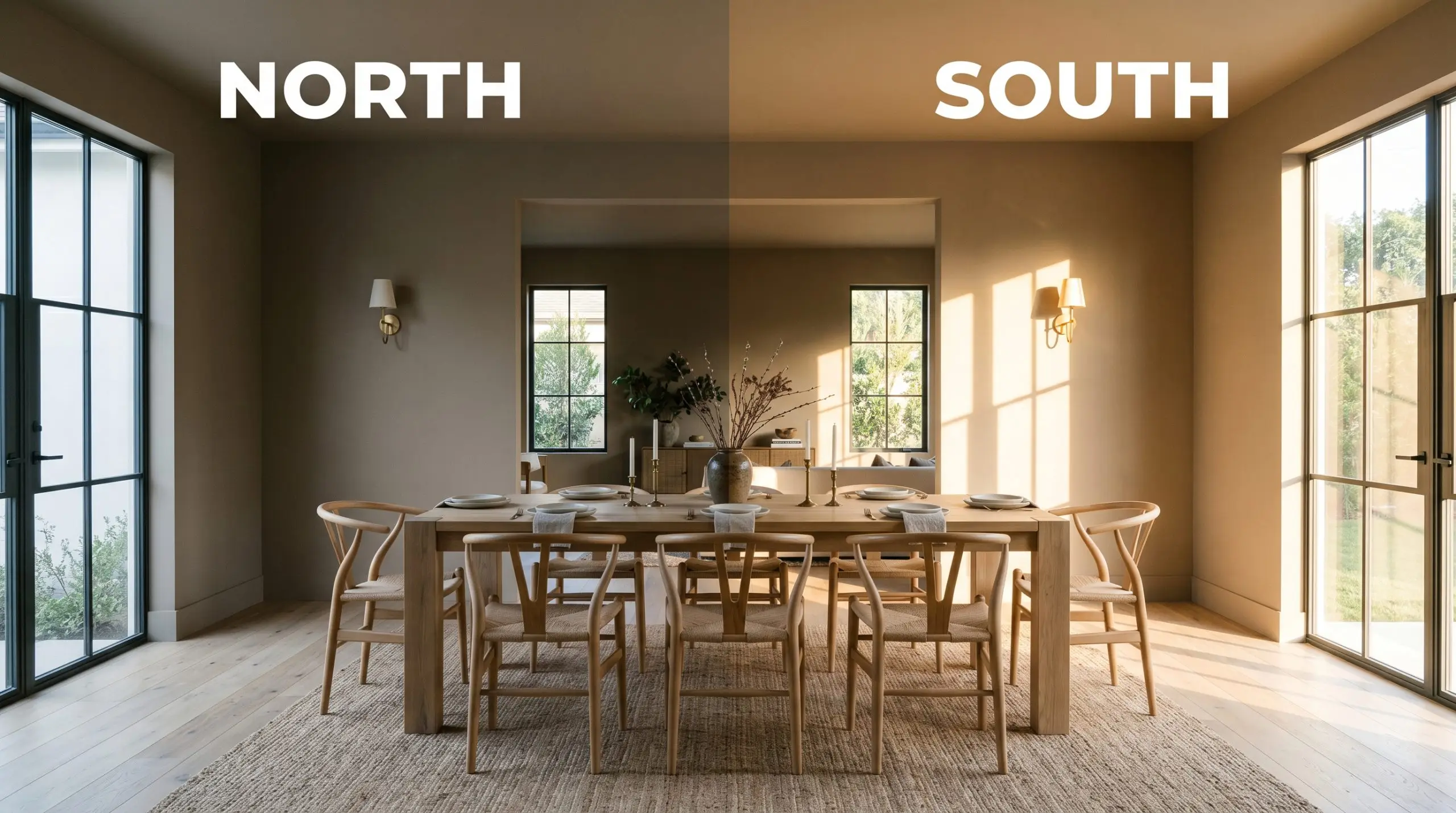
Never test this color by painting a square directly on your current wall. Paint a large poster board and move it from the darkest corner of the room to the window trim throughout the day to witness the tonal shift firsthand.
Hackrea Pro-Tip
Evaluating Macro Spaces for This Earthy Neutral
Let us be fiercely honest: SW 9174 is not a universally versatile crowd-pleaser. It demands specific spatial conditions to thrive.
It excels in large, well-lit spaces where natural sunlight prevents it from feeling oppressive. Conversely, it fails catastrophically in windowless hallways, narrow stairwells, or small north-facing bathrooms. If you are dealing with a challenging layout, you must read our breakdown on how to balance low-lrv paints in dark rooms before proceeding.
Expansive Living Rooms
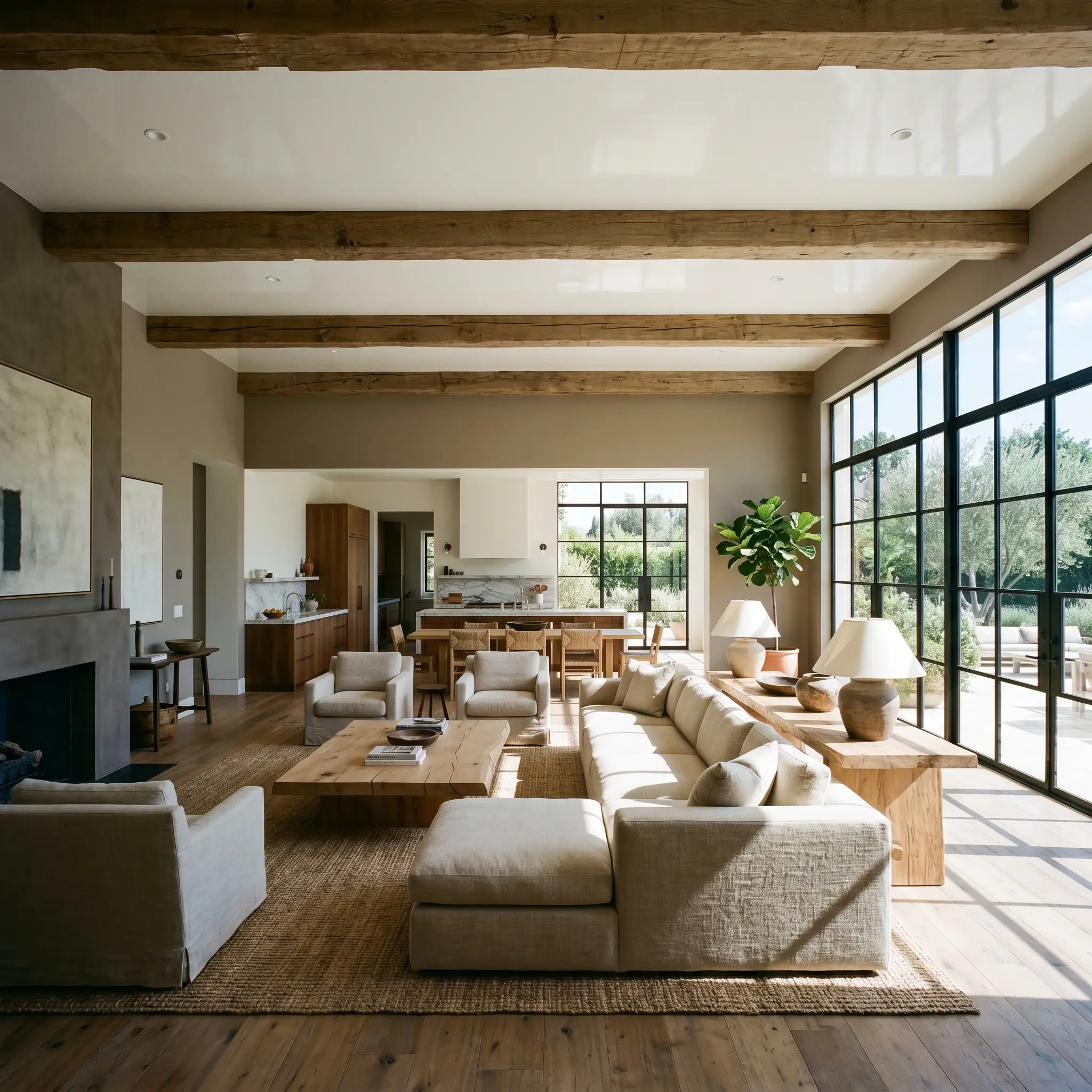
In a large, open-concept gathering space, this shade acts as a visual anchor. Instead of letting your furniture float aimlessly against stark white walls, this depth provides a grounding boundary. You must pair it with highly reflective, crisp ceilings to prevent the room from feeling like a cave. When flooded with southern light, it creates a deeply inviting backdrop that pairs flawlessly with oversized, textural upholstery and raw architectural beams.
Custom Kitchens
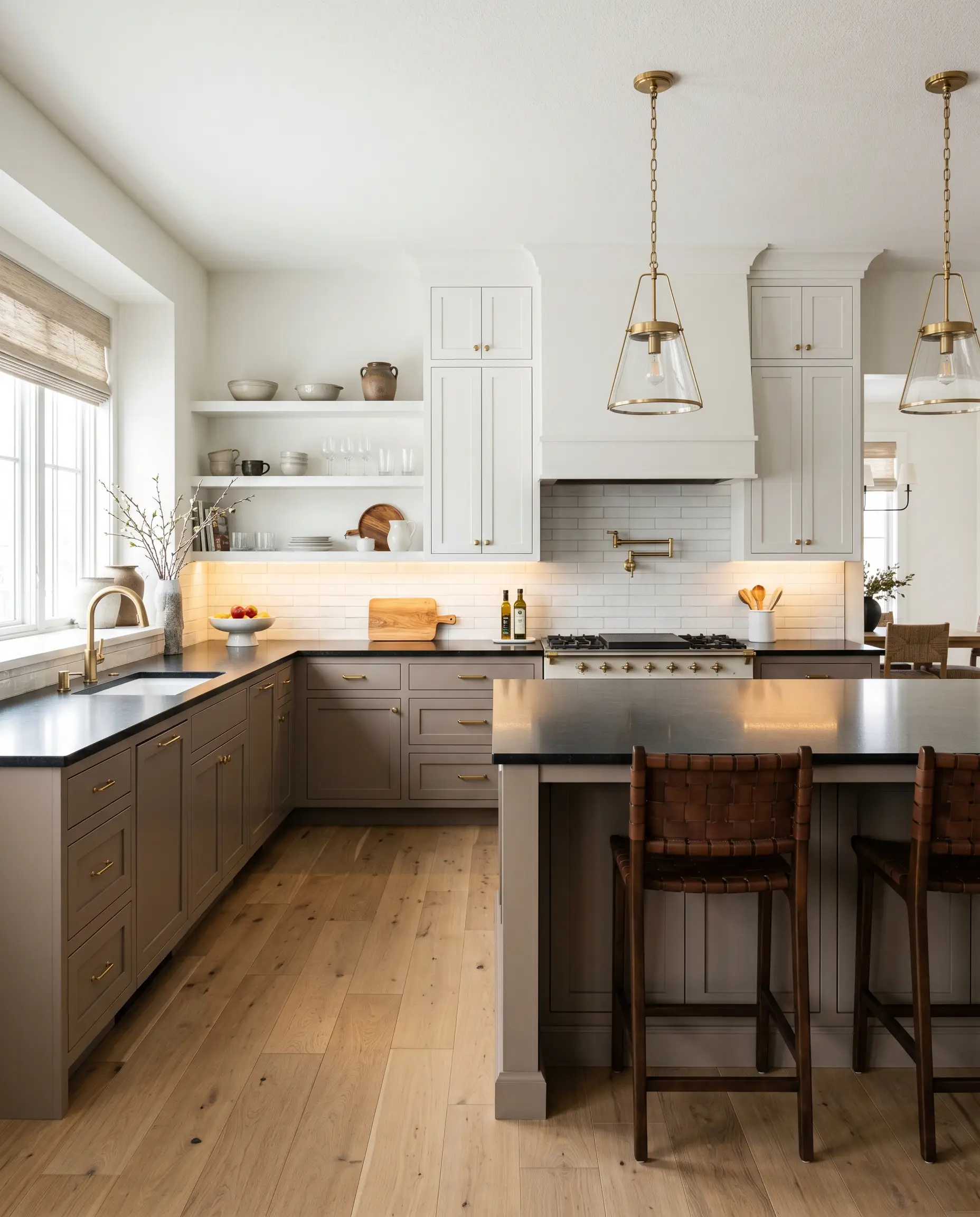
Using this shade on cabinetry completely changes the temperature of a kitchen. It offers a sophisticated departure from sterile white or trendy navy. When applied to lower cabinets or a massive central island, it grounds the room’s visual weight. However, you must utilize intense contrast above the counter line. Pair it with stark white uppers or open shelving, and ensure your under-cabinet lighting leans warm to keep the taupe reading rich rather than dingy.
Home Exteriors
This is an absolute powerhouse for exterior siding. Because natural sunlight washes out paint colors by several degrees, the 29.1 light absorption rate is entirely neutralized outdoors. It loses its heavy indoor shadow and reads as a beautifully tailored, historic beige. It harmonizes effortlessly with natural landscaping, bridging the gap between heavy stone foundations and the surrounding foliage.
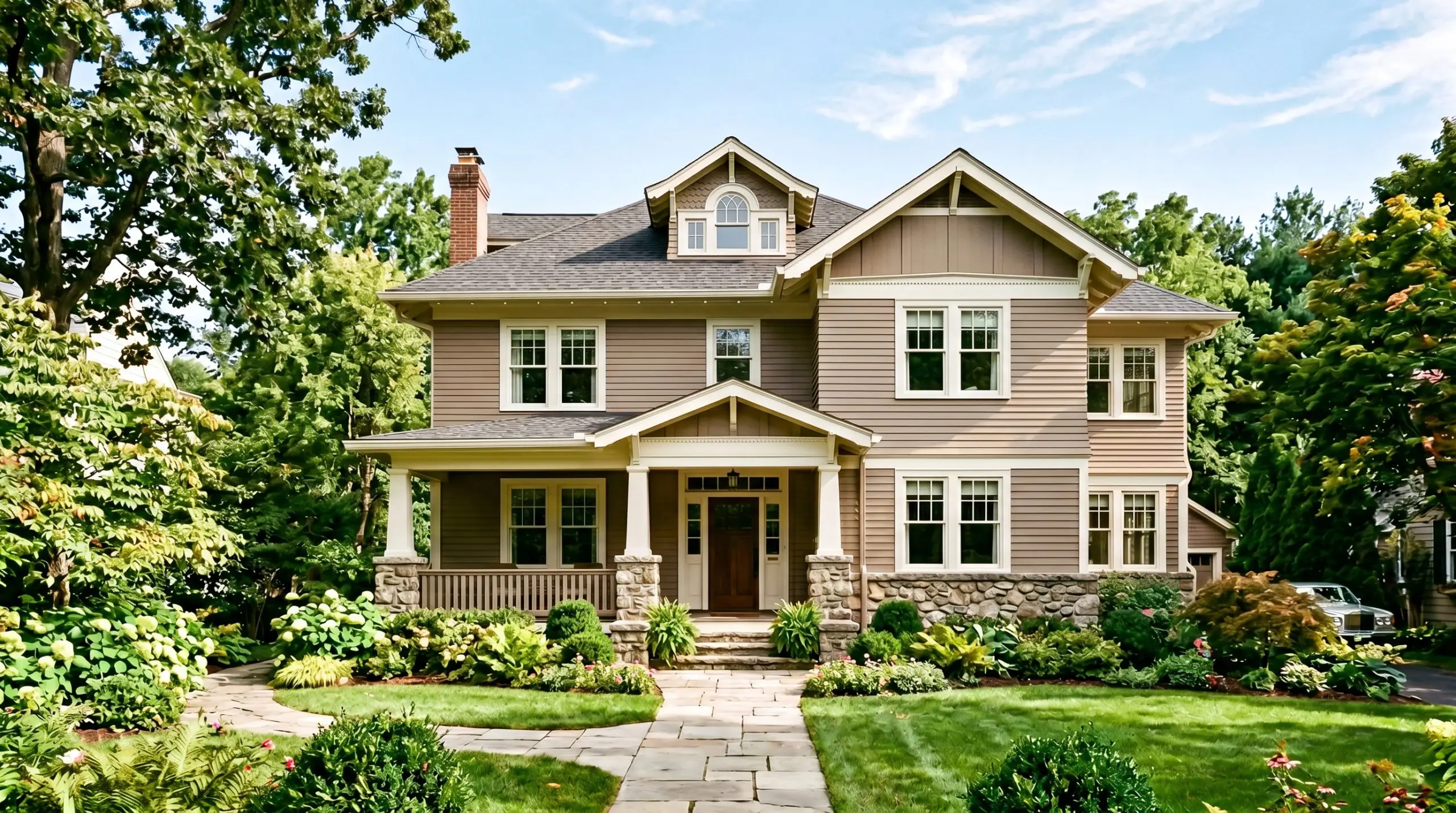
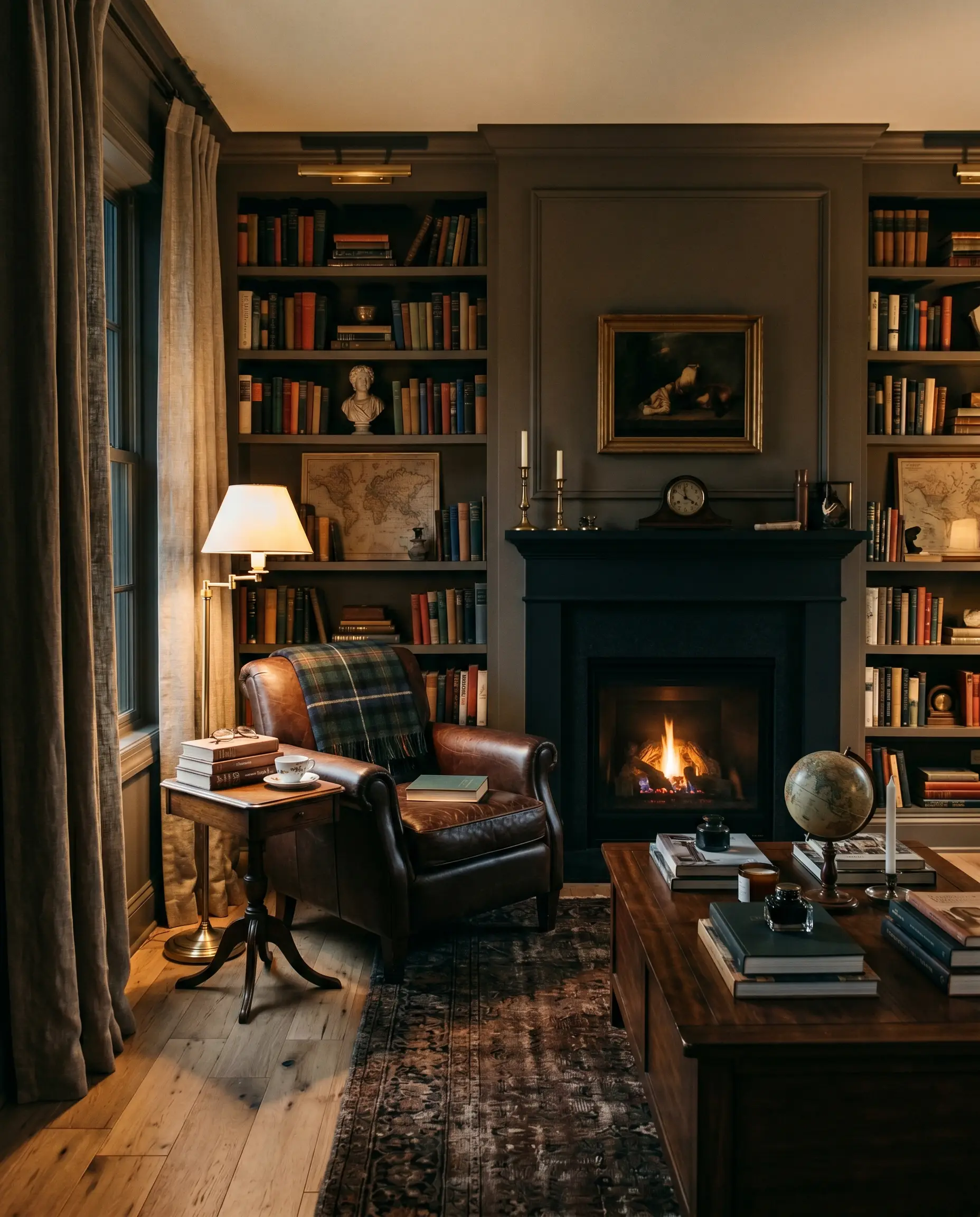
Dens & Libraries
If you want to lean into the moody, somber potential of this color, a dedicated den is the perfect laboratory. By intentionally depriving the color of bright natural light, you allow the gray-brown notes to dominate. This creates an incredibly intimate, cocoon-like atmosphere. Do not fight the darkness here. Lean into it with heavily textured window treatments and ambient, low-wattage floor lamps to create a space meant for evening retreat.
Signature Architectural Applications for SW 9174
Moving beyond broad rooms, the true power of this pigment makeup lies in how you apply it to specific structural features.
This shade thrives when it is used to manipulate spatial geometry. Here are the exact architectural applications where this shadow taupe dominates.
The Wainscoting Anchor
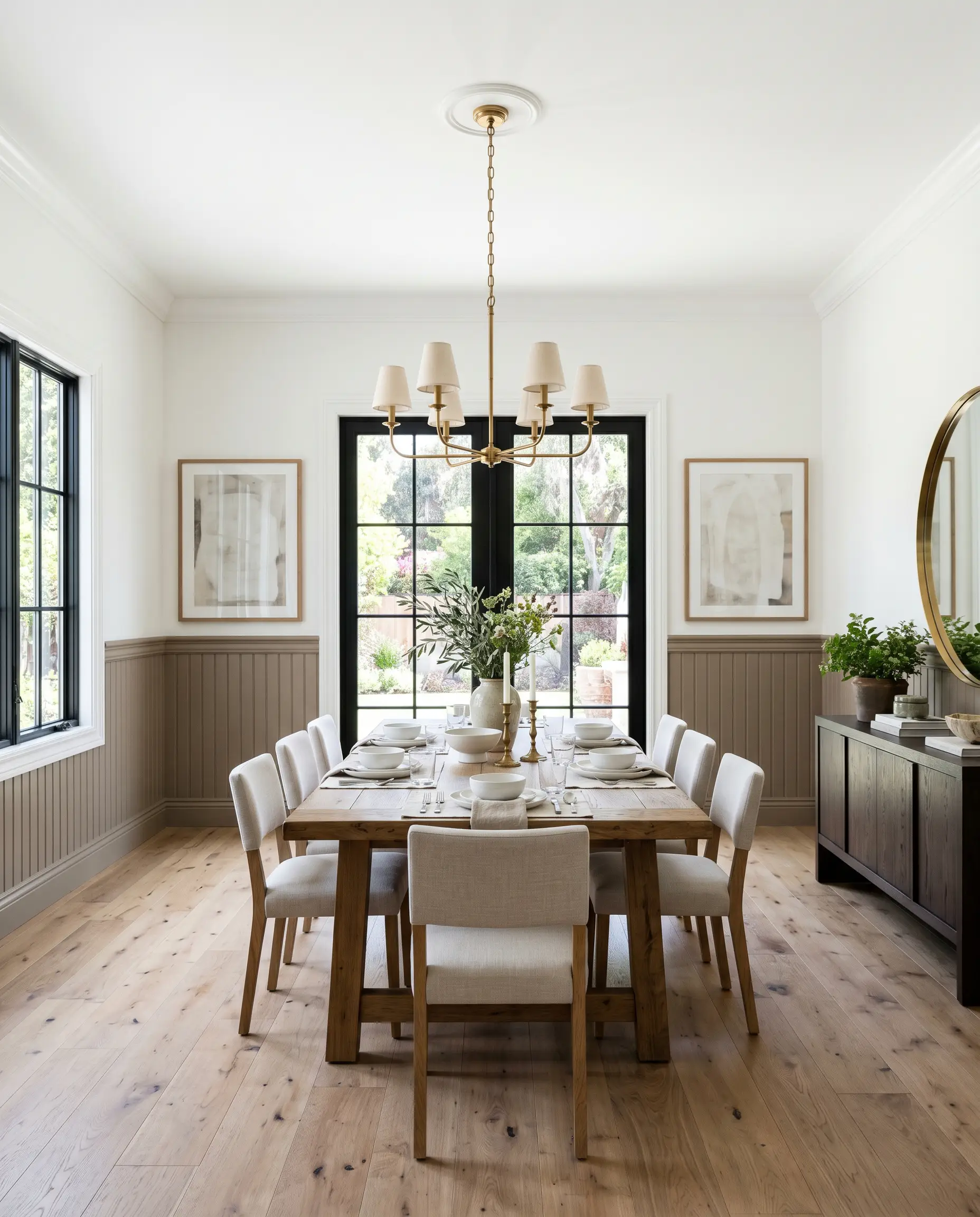
If you are afraid of color-drenching an entire room, use this shade strictly on the lower third of your walls. By painting heavy wainscoting or beadboard in this medium-depth tone, you create a heavy visual foundation. This spatial illusion forces the eye upward. When you pair it with a crisp, high-reflective white on the upper walls, the ceiling instantly feels taller, while the room retains its earthy, grounded atmosphere.
Color-Drenched Ceilings in High-Volume Rooms
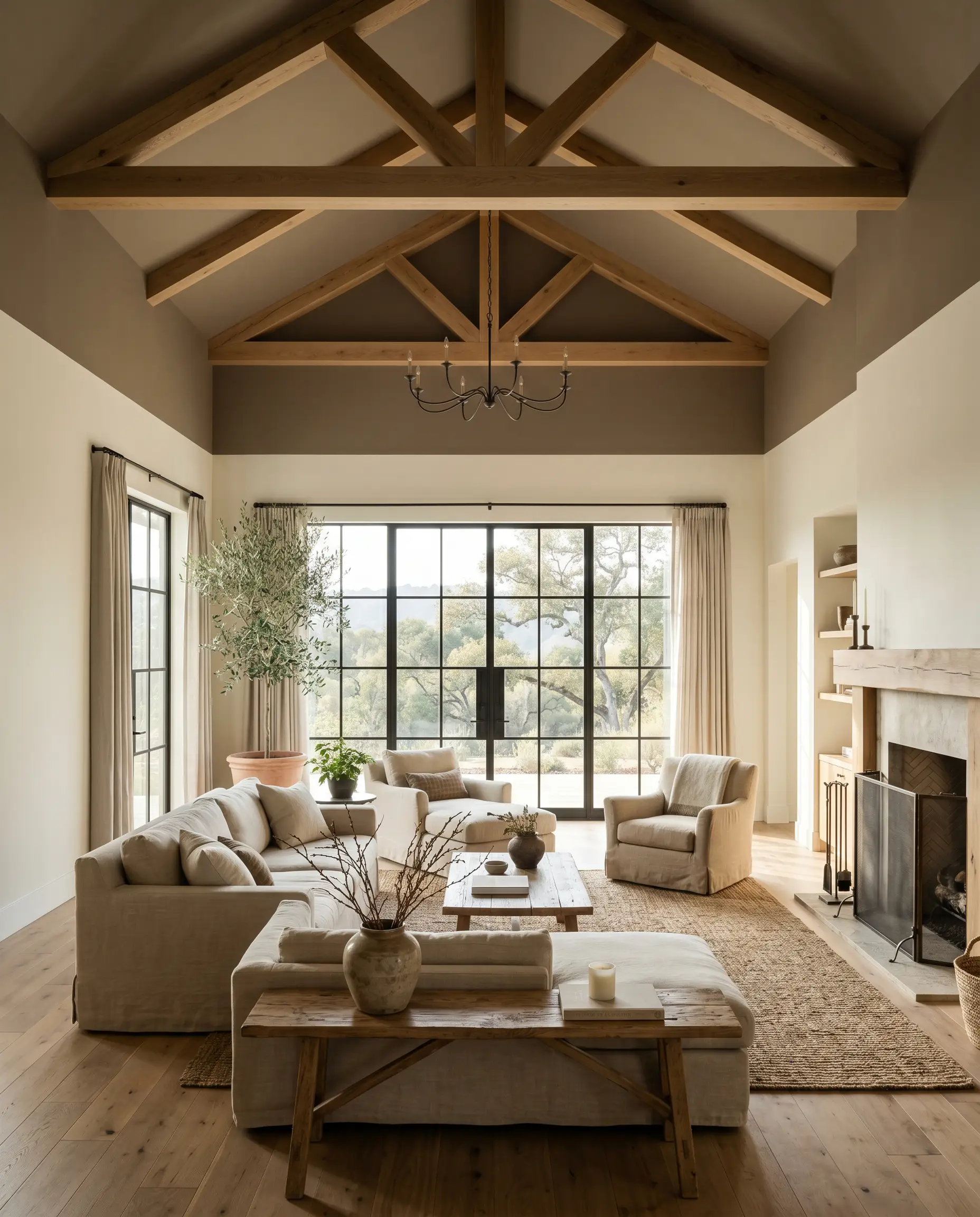
When applied to a soaring, vaulted ceiling, this shade acts as a visual compressor. High ceilings can often make a room feel cold and cavernous. By dragging this muted taupe across the ceiling and down the top quarter of the walls, you artificially lower the perceived height of the room. This technique wraps the space in a warm shadow, turning a sterile, echoing great room into a deeply intimate gathering space.
Exterior Stucco Dynamics
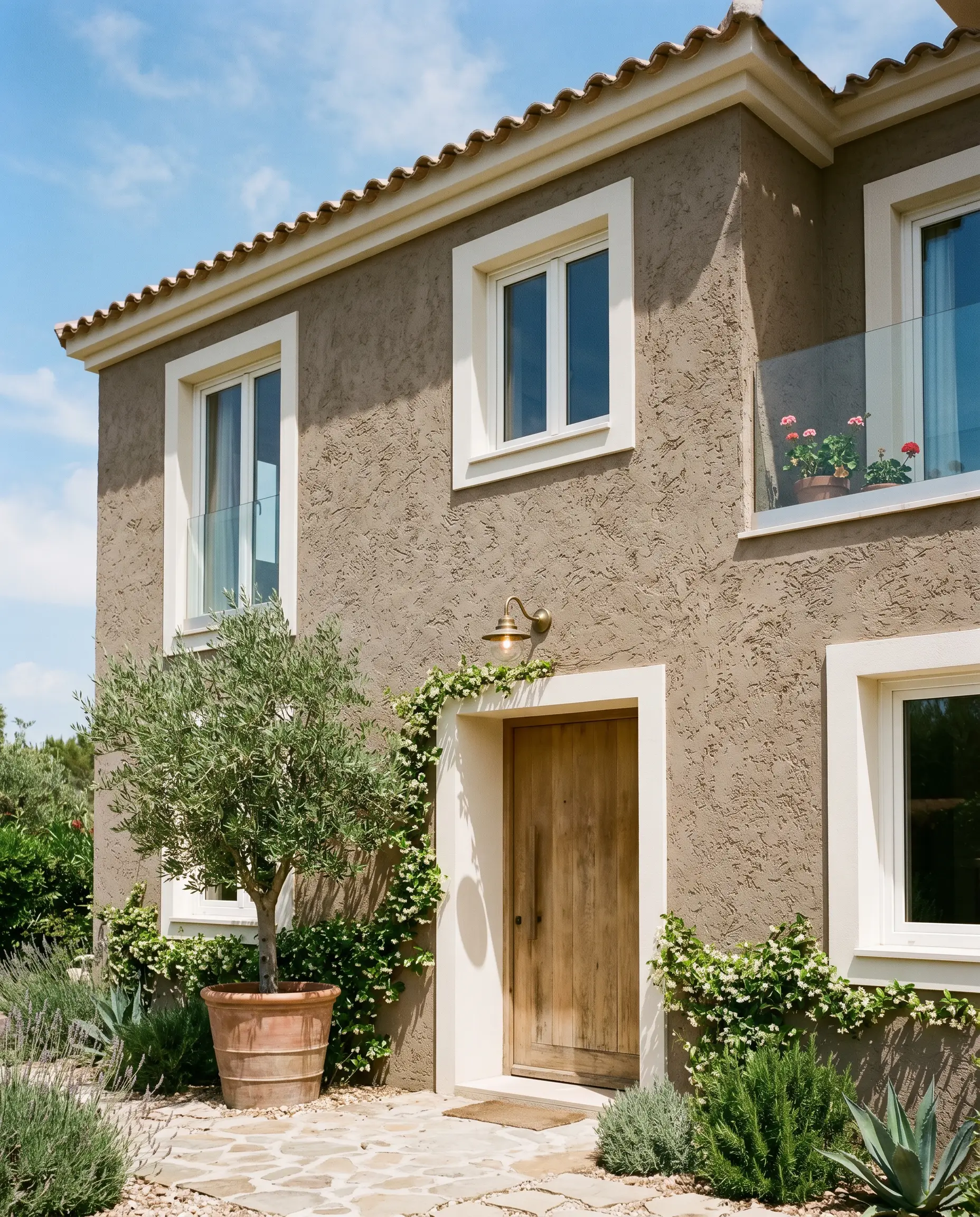
This shade is brilliant for heavily textured exterior stucco, but it comes with a strict failure state. The heavy texture of stucco creates thousands of microscopic shadows, which will naturally darken the paint’s appearance. If you pair it with black exterior trim, the entire house will look like a muddy silhouette. You must frame the stucco with a stark, warm-white trim to force the taupe to read as a deliberate architectural choice rather than a dirty facade.
The Hardware, Trim & Accents Guide
A paint color is only as successful as the ecosystem surrounding it. If you surround this shade with the wrong materials, it will instantly curdle.
High-Contrast Trim Strategy
You cannot use a standard, untinted white trim here. The transition will be too jarring and will make the taupe look dirty.
Tactile Materials & Hardware
To elevate this shade from a basic beige to a high-end architectural finish, you must introduce specific, tactile tension. The materials below are explicitly chosen to either absorb light or reflect it, balancing the room’s visual weight.
Strictly avoid cherry, mahogany, or any red-leaning wood tones. The red pigment will violently pull out a sickly, unintentional green shadow in the paint. Furthermore, keep this shade far away from pink-undertoned travertine or busy Tuscan granites.
Clash Warning
Core Palette & Coordinating Colors
This shade plays exceptionally well with muted, nature-inspired tones.
Curated Design Palettes
By synthesizing these materials and coordinating colors, we can generate distinct, highly intentional aesthetic vibes.
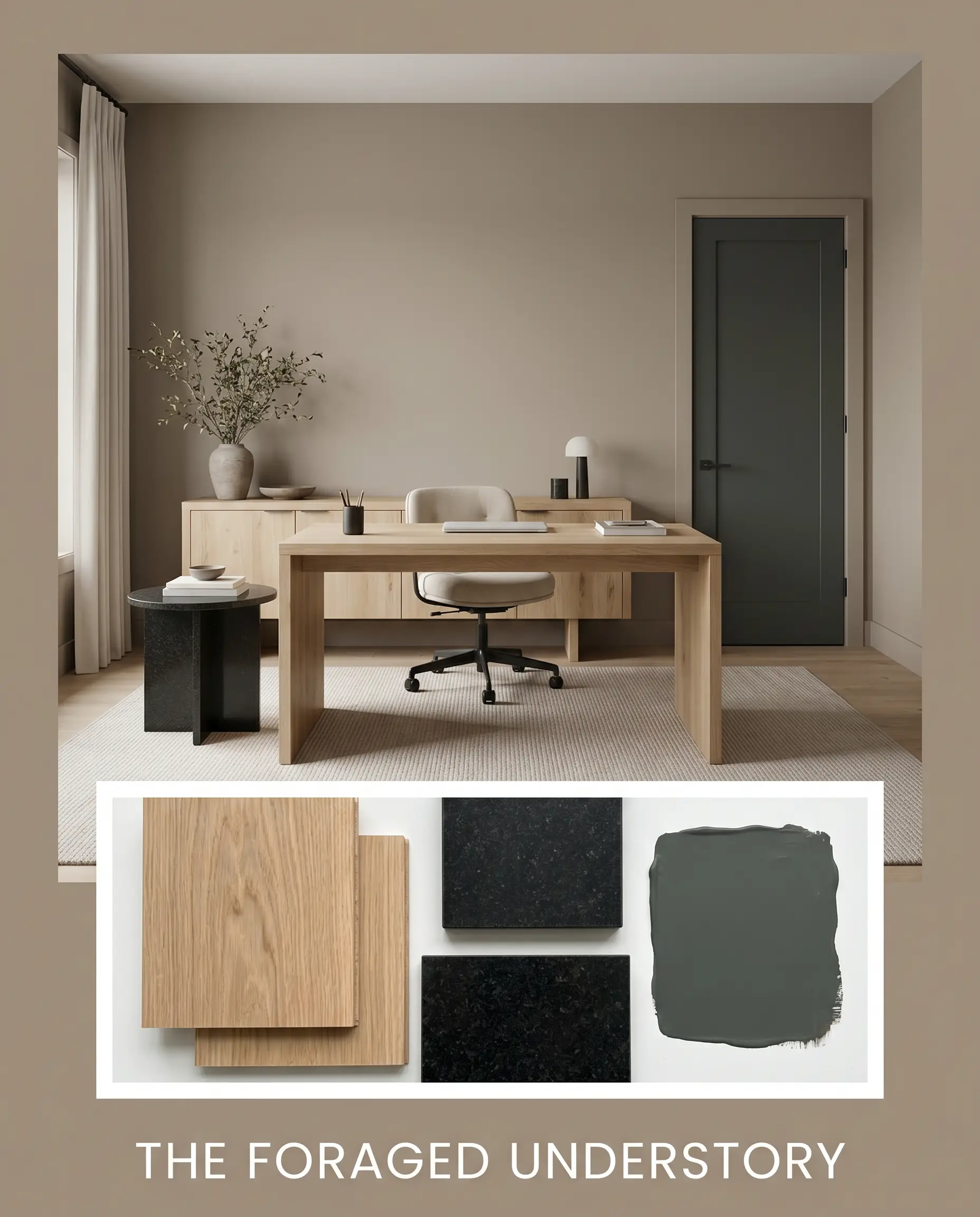
The Foraged Understory: This palette is rooted entirely in biophilic design and earthy textures. By pairing the main taupe with accents of Studio Green, we amplify the hidden gray-green notes. We ground this combination with raw European white oak flooring and honed absolute black granite surfaces. The result is a deeply organic, grounding atmosphere that feels like a seamless extension of the natural world, perfect for spaces meant to foster focus and calm.
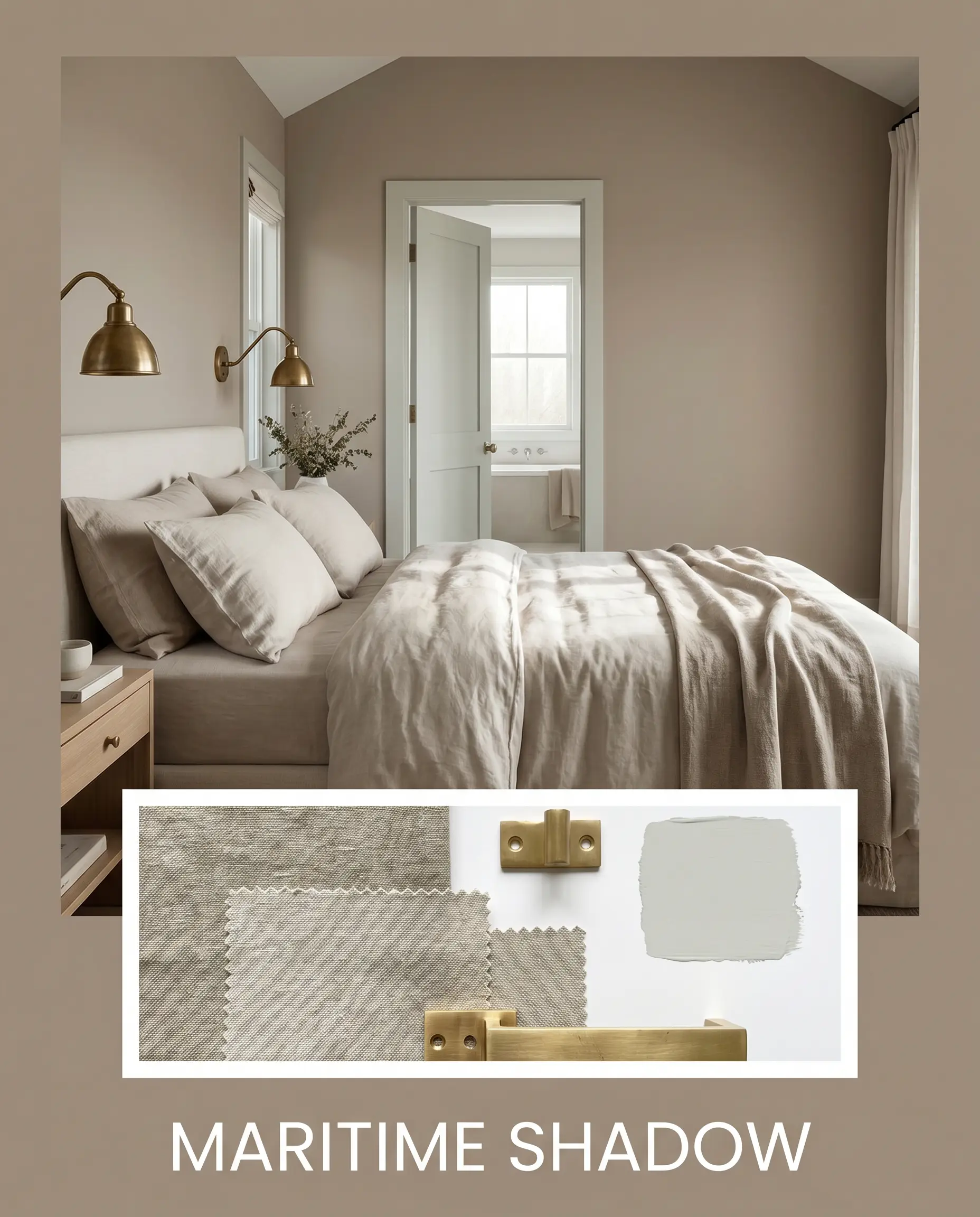
Maritime Shadow: This palette relies on the sharp tension between warm earth and cool coastal tones. We use Sea Salt to inject a crisp, airy breeze into the heavy taupe foundation. To keep the aesthetic sophisticated rather than aggressively nautical, we introduce unlacquered brass hardware and heavy-weight Belgian linen textiles. The brass adds a necessary historic warmth, while the linen softens the transition between the contrasting colors, creating a relaxed, weathered elegance.
Head-to-Head Competitor Matchups
When choosing a medium-depth neutral, the final decision often comes down to microscopic shifts in temperature. Here is how this shade stacks up against its fiercest rivals.
Sherwin-Williams Moth Wing vs. Sherwin-Williams Tony Taupe
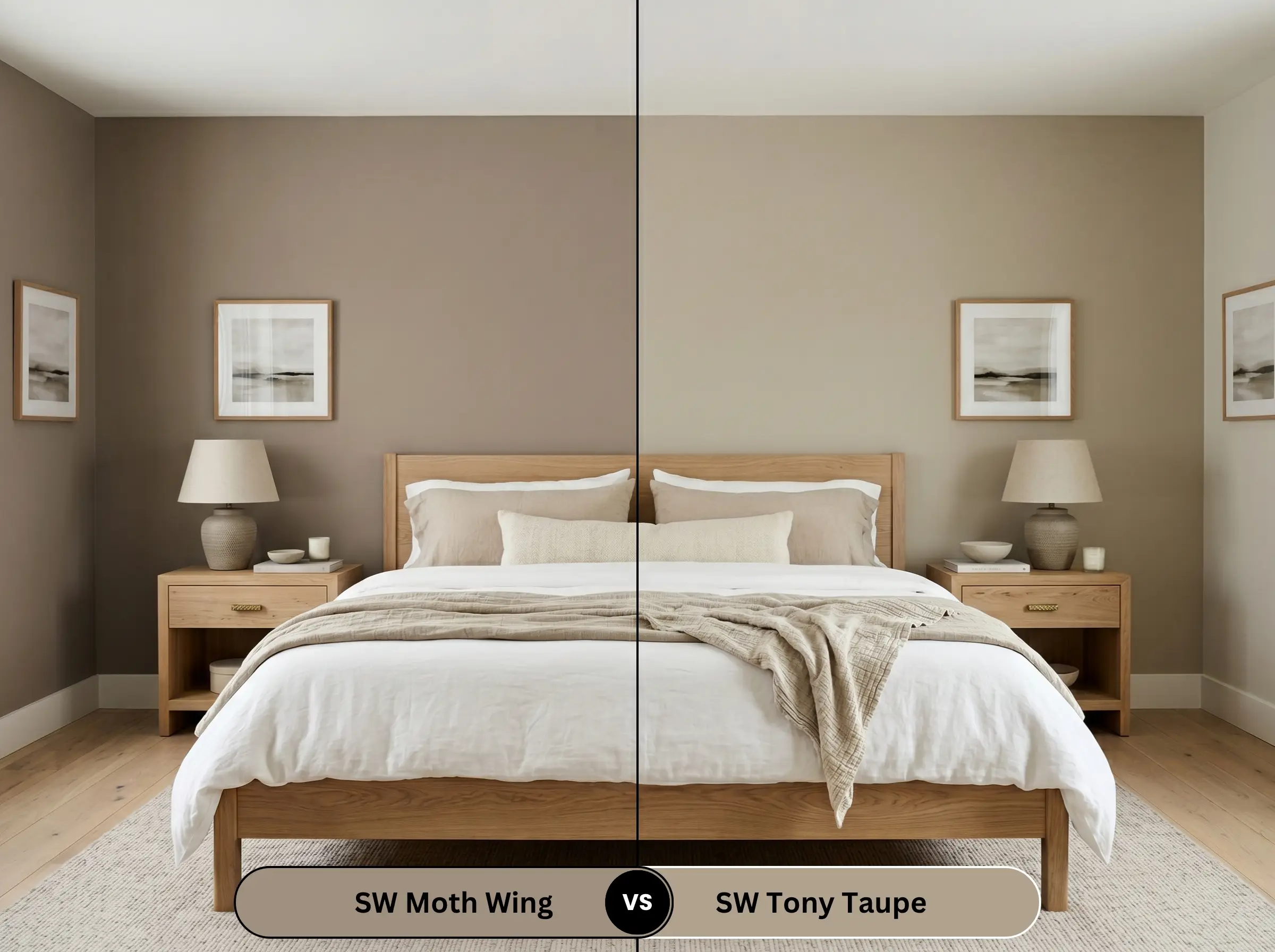
Tony Taupe is noticeably cooler and leans much heavier into its gray undertones. If your room faces south and you want to avoid any hint of yellow, Tony Taupe is the safer bet. However, if you want a color that feels genuinely cozy and rich, Moth Wing’s yellow hue base provides a warmth that Tony Taupe simply cannot replicate.
Sherwin-Williams Moth Wing vs. Sherwin-Williams Mega Greige
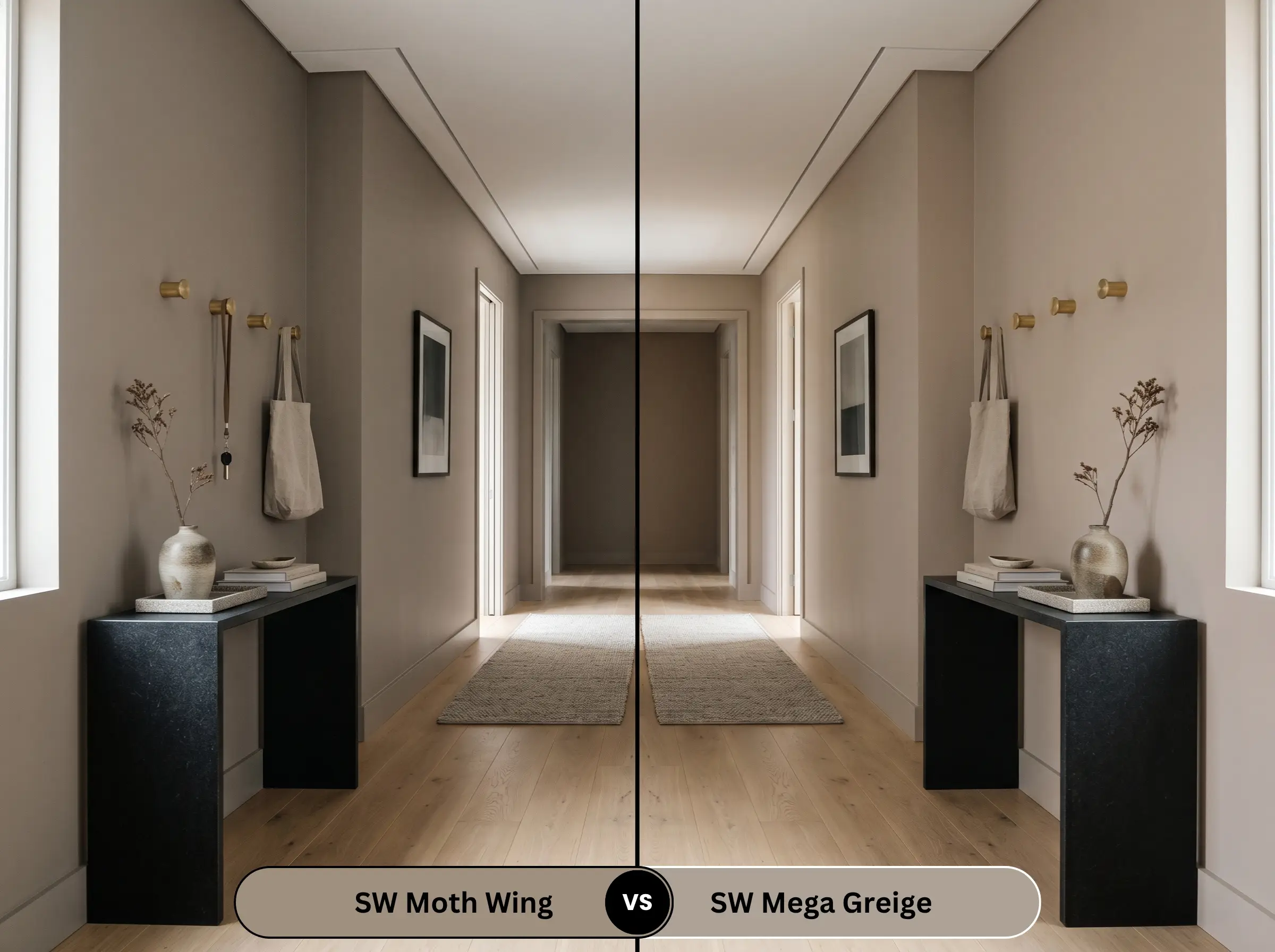
Mega Greige is a true chameleon, straddling the line between gray and beige with a slightly higher light reflectance rate. It feels slightly more modern and safe. Moth Wing, by contrast, is decidedly browner and heavier. Choose Mega Greige if you want a passive backdrop; choose Moth Wing if you want the wall color to be a dominant, grounding feature.
Brand Equivalents & Close Tonal Relatives
If you are locked into a specific paint manufacturer or need a slight tonal pivot, these are your exact alternatives.
Same-Brand Alternatives
Rival Brand Matches
Contractor-Grade DIY & Application Strategy
Theory is useless if the execution is flawed. When dealing with a low-chroma, medium-depth color, your application technique dictates the final result.
Sheen Selection
Primer Protocol
Because this color absorbs so much light, a standard white primer will force you to paint three coats to achieve true depth. You must use a tinted gray primer. This provides a dark foundation that allows the rich brown and gray notes to saturate the wall immediately on the first topcoat.
Coverage & Touch-Up Reality
Expect to apply two full coats over a tinted primer. Be warned: medium-depth taupes are notorious for “flashing.” If you press too hard on the roller or attempt to touch up a scuff mark a month later, the new paint will dry with a slightly different sheen, leaving a visible halo. Always keep a tightly sealed quart for touch-ups, and feather the edges meticulously.
Frequently Asked Questions About SW 9174
Because it is a medium-depth earthy neutral, it performs exceptionally well. It naturally hides environmental dust and dirt far better than stark whites or dark charcoals. However, intense, prolonged UV exposure will eventually fade the yellow base, causing the gray undertones to become more prominent over a decade.
Absolutely. By painting the ceiling this specific depth, you create a visual anchor that stops the eye from floating upward into the void. It compresses the perceived volume of the room, turning a cavernous space into a cozy, intimate environment.
No. Because its core DNA is rooted in a yellow hue base with green-gray shadows, it aggressively resists the purple flash that plagues many standard greiges. Under 3000K lighting, it will simply read as a flat, predictable gray-brown.
The Final Verdict on Sherwin-Williams Moth Wing
Sherwin-Williams Moth Wing is an absolute masterclass in restraint, provided you respect its boundaries. It is not a lazy, slap-it-everywhere neutral. It is a highly specific, architectural shadow taupe that demands natural light and crisp contrast to survive.
It is the perfect choice for homeowners looking to ground a massive, sun-drenched living room or add historic gravity to an exterior facade. It bridges the gap between organic modernism and traditional warmth flawlessly.
However, if your home features heavy cherry wood floors, pink travertine tile, or long windowless corridors, you must avoid this shade at all costs. In those environments, the sophisticated taupe will instantly devolve into a heavy, suffocating mud. Pair it with intention, flood it with light, and it will deliver an unparalleled, sophisticated warmth.
Room Compatibility & Clashes Diagnoses
Hackrea's reports evaluating the compatibility of Moth Wing in real rooms.South-Facing Formal Living Room
"Warm taupe undertones mirror the room's formal materiality, grounding the ceiling height while framing the white marble fireplace with tailored contrast. Under strong southern natural light, the shade maintains an inviting, velvety presence without appearing washed out or muddy."
Primary Ensuite Bathroom with Archway
"The balanced stone-taupe undertones of this paint seamlessly bridge the gap between cool charcoal floor tiles and warm sandy wall finishes while serving as an ideal canvas for warm brass hardware."
Closest Cross-Brand Equivalents
The absolute closest scientific color matches for Moth Wing across top paint brands.