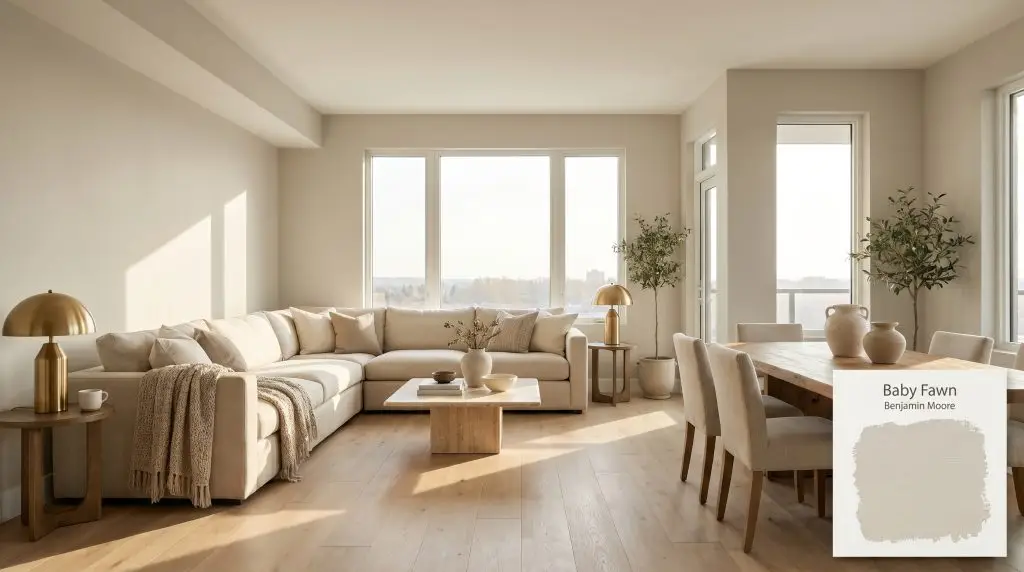
Benjamin Moore Baby Fawn (OC-15) is a highly versatile, warm greige paint color. Sitting perfectly between beige and gray, this soft neutral brings a welcoming warmth to a space without reading overly yellow, making it a favorite for open-concept homes.
Will Baby Fawn clash with your room?
Paint Technical Profile
| Color ID / SKU | OC-15 |
| HEX Code | #D9D3C4 |
| Light Reflectance (LRV) | 63.09 |
| Temperature | Warm |
| Primary Undertone | Beige-Gray |
| Hidden Undertones | Subtle Green, Slight Touch Of Pink |
| Use | Interior, Exterior |
| Best Exposures | South-facing, West-facing |
| Best For | Living rooms, open-concept spaces, bedrooms, kitchen cabinets, brick exteriors |
Baby Fawn Digital Design Concept Boards
Living Rooms
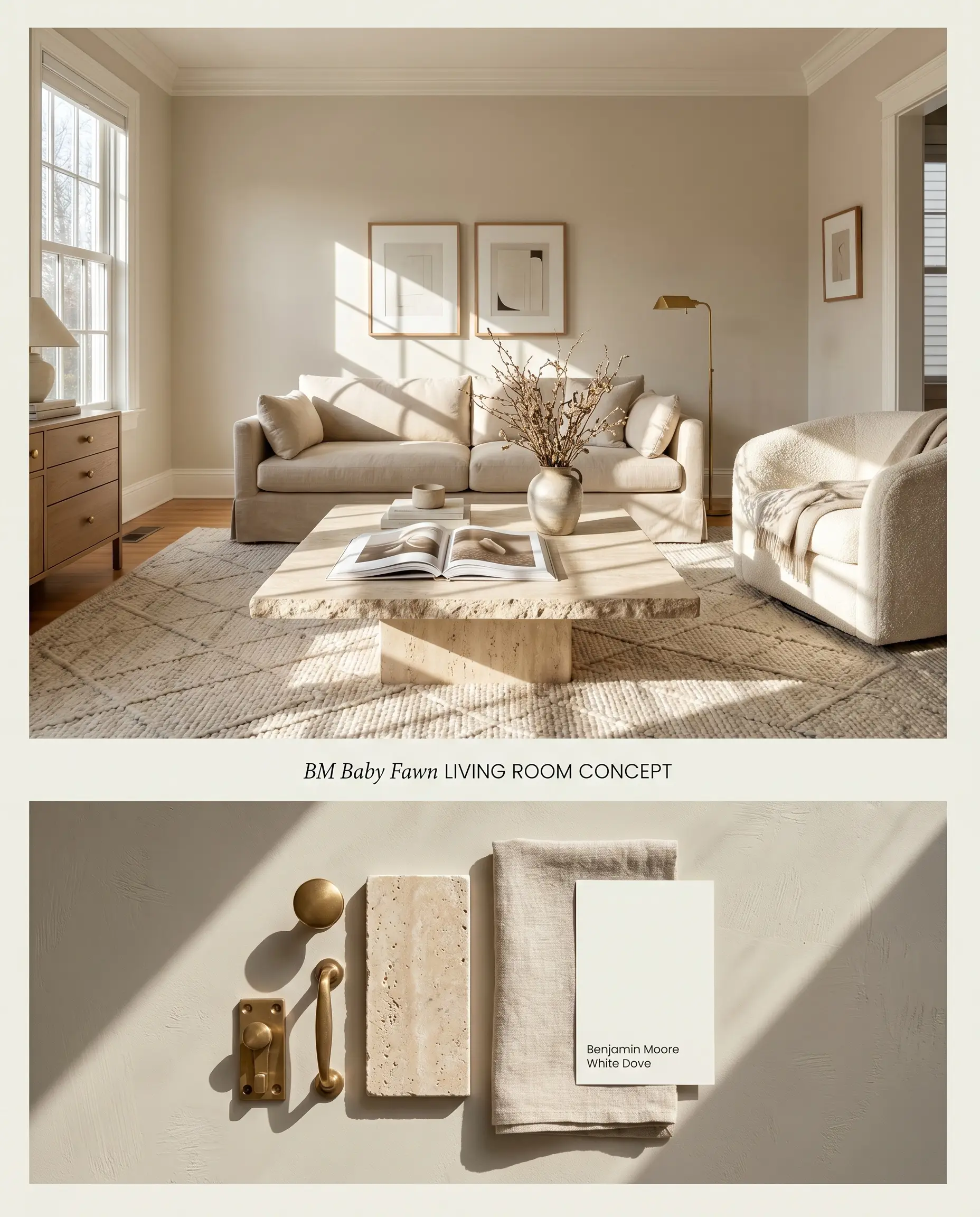
In sun-drenched living rooms, the warm neutral pigments of Benjamin Moore Baby Fawn expand outward, grounding the room without reading as a stark white. The light reflectance value of 63.09 bounces ambient daylight across the walls, creating a soft backdrop that allows highly textured fabrics like bouclé and linen to pull focus.
Open-Concept Spaces
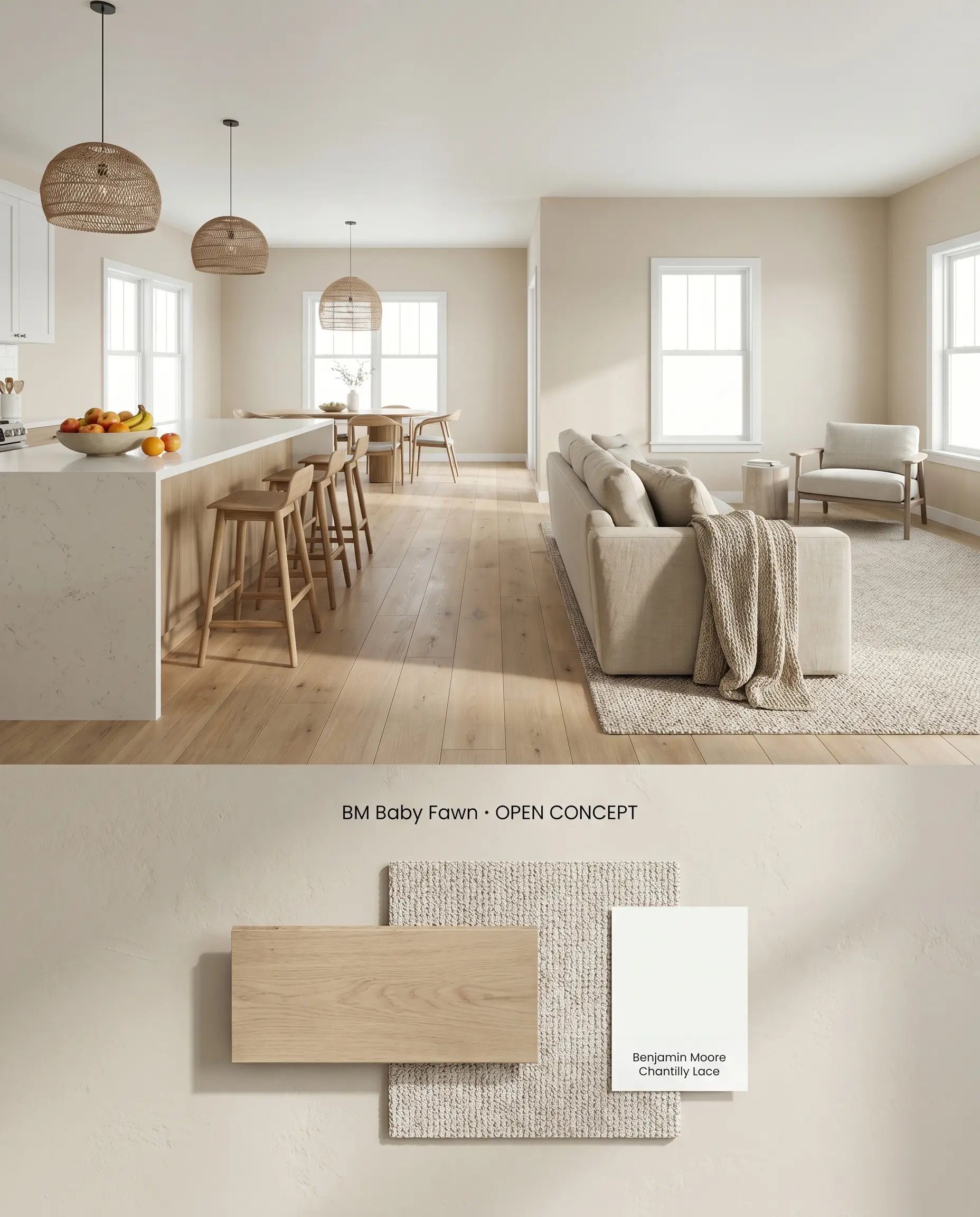
The greige-taupe base of this architectural finish excels in sweeping floor plans by bridging the gap between varied lighting orientations. As natural light exposure shifts throughout the day, the color temperature adapts, maintaining a cohesive envelope that ties kitchen hardscapes to soft living area furnishings.
Bedrooms
Will Baby Fawn work with your specific lighting, floor, or furniture?
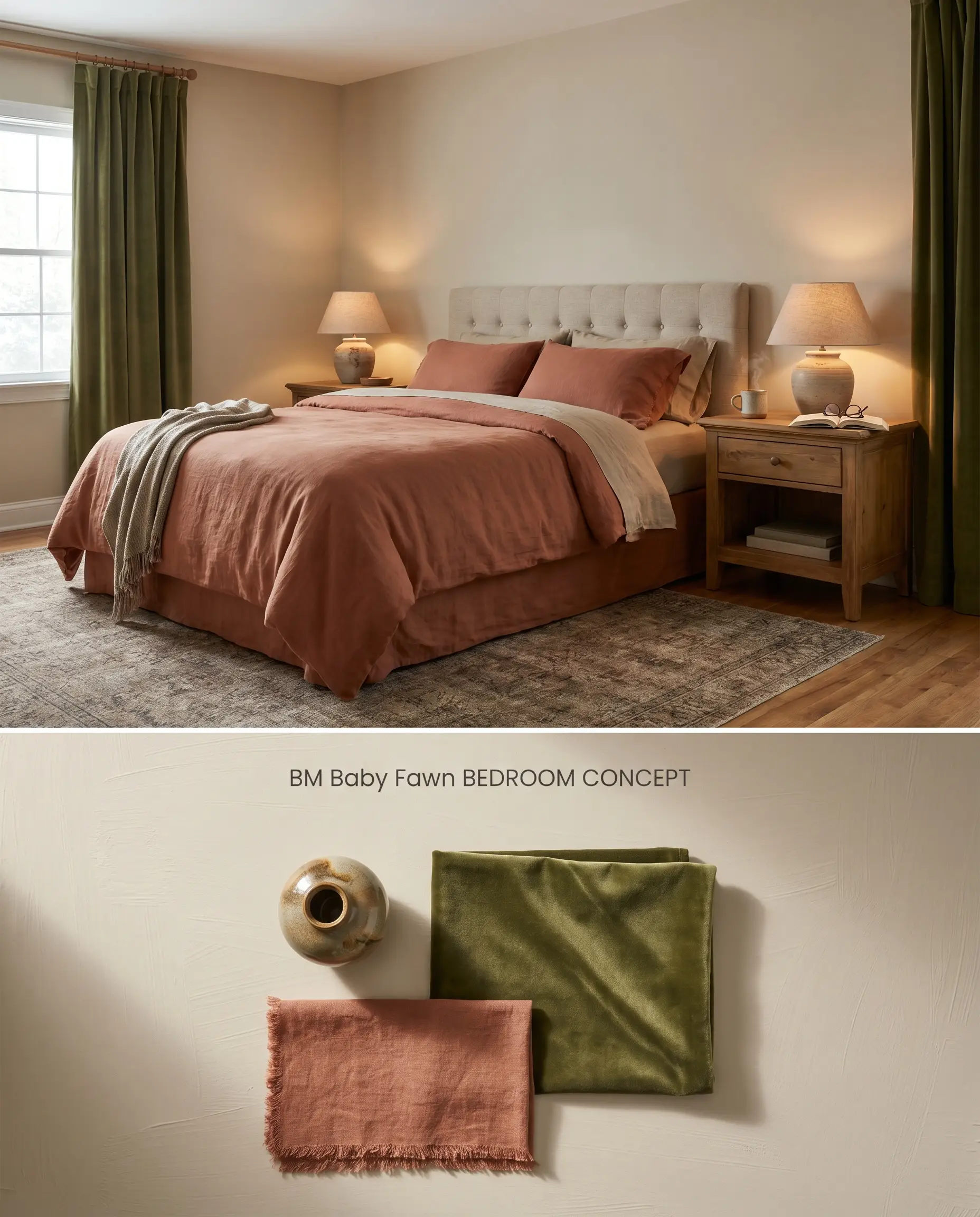
To counteract the cooler, indirect light typical of north-facing bedrooms, Baby Fawn’s gray cast steps forward, establishing a quiet, restful perimeter. Pairing this chromatic profile with layered, earthy textiles absorbs excess light, preventing the walls from feeling institutional.
Kitchen Cabinets
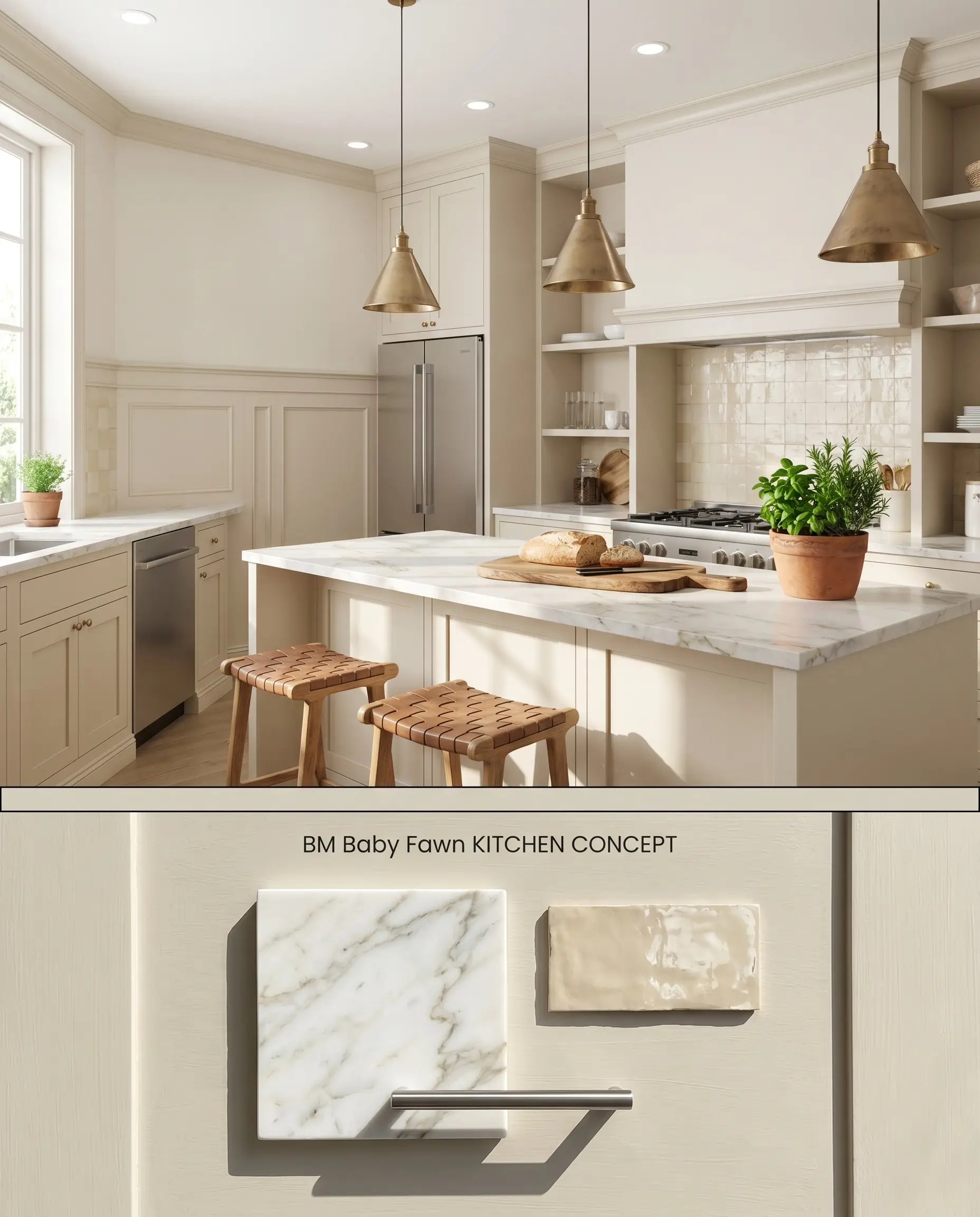
Applying Benjamin Moore Baby Fawn to millwork introduces a putty-like warmth that directly contrasts the harsh, reflective surfaces of quartz countertops and stainless steel appliances. The off-white collection pigment structure hides daily smudges far better than pure white, anchoring the lower visual field of the kitchen.
Brick Exteriors
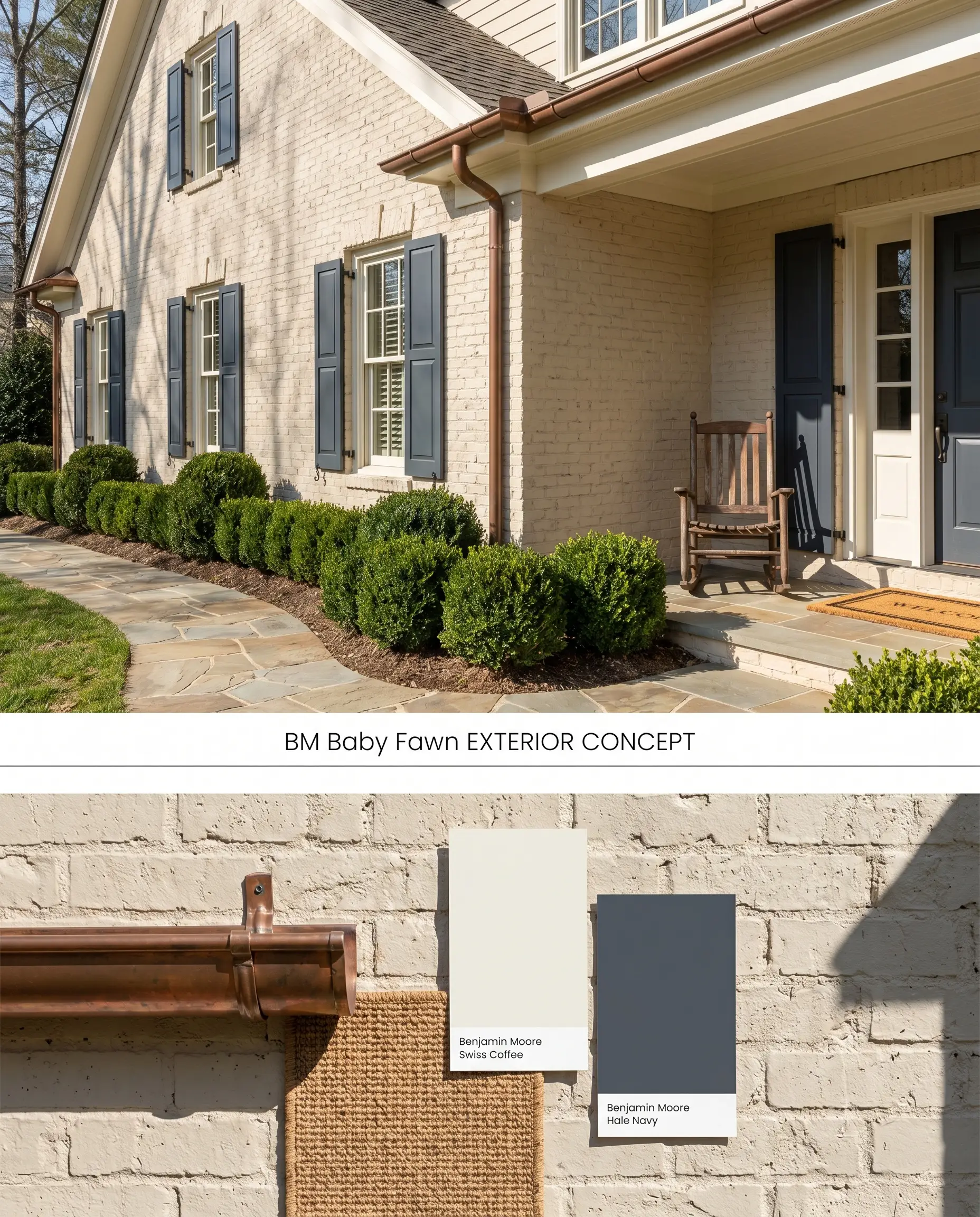
Under intense UV sunlight, the high light reflectance value pushes the color slightly lighter, washing out the subtle gray undertones and leaving a crisp, warm beige facade. The porous nature of exterior brick absorbs the sheen, allowing the natural shadows of the mortar lines to provide structural definition.
Head-to-Head: Baby Fawn vs. Industry Rivals
Benjamin Moore Baby Fawn vs. Benjamin Moore Pale Oak OC-20
Will Baby Fawn work with your specific lighting, floor, or furniture?
Benjamin Moore Pale Oak OC-20 possesses a higher LRV and leans distinctly toward a pink-taupe undertone, making it highly reflective in bright spaces. Benjamin Moore Baby Fawn carries a greener, more grounded greige base. Specify Pale Oak for low-light corridors where Baby Fawn’s chromatic profile would fall flat and read muddy, and reserve Baby Fawn for south-facing rooms that require a sturdier neutral that will not wash out.
Benjamin Moore Baby Fawn vs. Sherwin-Williams Agreeable Gray SW 7029
Sherwin-Williams Agreeable Gray SW 7029 acts as a true, slightly cooler greige with a stronger gray influence. Benjamin Moore Baby Fawn pushes further into beige territory, offering significantly more warmth. Deploy Agreeable Gray when balancing cool-toned stone fireplaces, and utilize Baby Fawn when harmonizing with red-toned hardwood floors or warm cherry cabinetry.
Benjamin Moore Baby Fawn vs. Benjamin Moore Revere Pewter HC-172
Will Baby Fawn work with your specific lighting, floor, or furniture?
Benjamin Moore Revere Pewter HC-172 is significantly darker with a much stronger green-gray cast that commands visual attention. Baby Fawn acts as the lighter, more flexible alternative. Select Revere Pewter for high-contrast dining rooms with brilliant white wainscoting, and use Baby Fawn for wrapping entire open-concept spaces without absorbing too much ambient light.
Technical Performance & Color Theory FAQs
Yes, without adequate natural light exposure, the chromatic profile loses its warmth and appears slightly muddy or flat. Reserve this warm neutral exclusively for well-lit rooms with active sunlight.
No, the subtle green undertones actively neutralize the intense red in cherry wood through complementary color theory. This physical interaction balances the visual weight of the space, preventing the red wood from dominating the room.
Intense UV rays wash out the gray undertones, making the paint read as a significantly lighter, cleaner warm beige than it appears in standard interior lighting.
Yes, they share the exact same formulation and hex code (#D9D3C4), simply existing under different names within the Benjamin Moore off-white collection and historical palettes.
Room Compatibility & Clashes Diagnoses
Hackrea's reports evaluating the compatibility of Baby Fawn in real rooms.No compatibility tests for Baby Fawn yet.
Be the first to see how this color reacts to your space. Run a free architectural diagnostic now.
Paint Aesthetic & Practical Analysis
| Profile | Analysis | |
|---|---|---|
| Aesthetic | Baby Fawn is an incredibly reliable, sophisticated greige that effortlessly bridges the gap between warm and cool tones. It provides a serene, elegant backdrop that adapts beautifully to shifting light, proving why it remains a timeless staple in interior design. | |
| The Lighting Shift | In bright, south-facing rooms, the architectural finish leans into its warm beige side without turning yellow. In cooler, north-facing light, the gray cast becomes more prominent, making it read as a true greige. | |
| The Low Light Trap | In windowless rooms, hallways, or spaces with very low natural light, the chromatic profile can lose its warmth and appear slightly muddy or flat. |
Closest Cross-Brand Equivalents
The absolute closest scientific color matches for Baby Fawn across top paint brands.