Outdoor entertaining is rarely about having the biggest patio or the most expensive furniture. More often, it comes down to how easily people can move, talk, eat and relax within the space. A well-arranged garden can make a small gathering feel effortless, while poorly positioned furniture can leave guests navigating obstacles or sitting in disconnected groups.
Rattan furniture is particularly useful for entertaining because it combines comfort, flexibility and a relatively light visual presence. Whether you are furnishing a compact balcony, a town garden or a generous terrace, the right arrangement can turn an outdoor area into a natural extension of your home.
Start with the way you entertain
Before moving a sofa or ordering a dining set, consider what typically happens when guests arrive. Do you host long lunches, informal drinks, family barbecues or quiet evenings around a fire pit? Each occasion calls for a slightly different layout.
For meals, the table should be the focal point, with enough room for chairs to slide back comfortably. For drinks and conversation, seating arranged in a loose circle or L-shape tends to work better. If your gatherings vary, modular rattan furniture offers the flexibility to change the arrangement without redesigning the whole space.
It is also worth observing how people naturally use your garden. Guests often gravitate towards shade, attractive views and areas close to the house. Positioning seating where people already want to gather usually feels more intuitive than forcing a layout around the available furniture.
Create a clear social zone
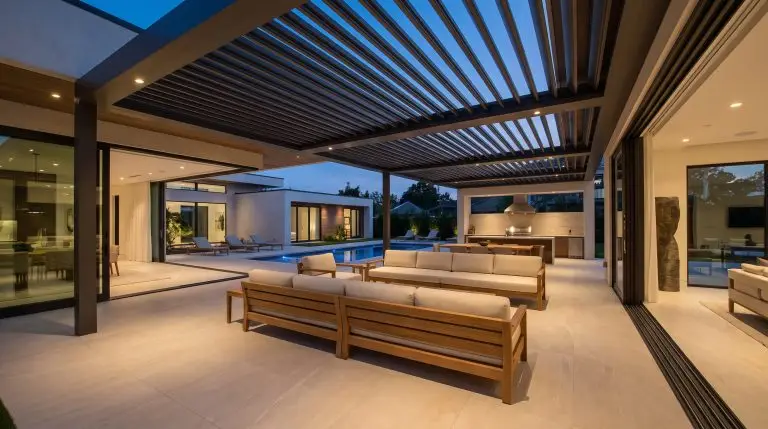
The most successful outdoor arrangements give people a defined place to congregate. This does not mean every piece needs to be pushed together. Instead, aim to create a visual “room” using furniture, planting, outdoor rugs or changes in paving.
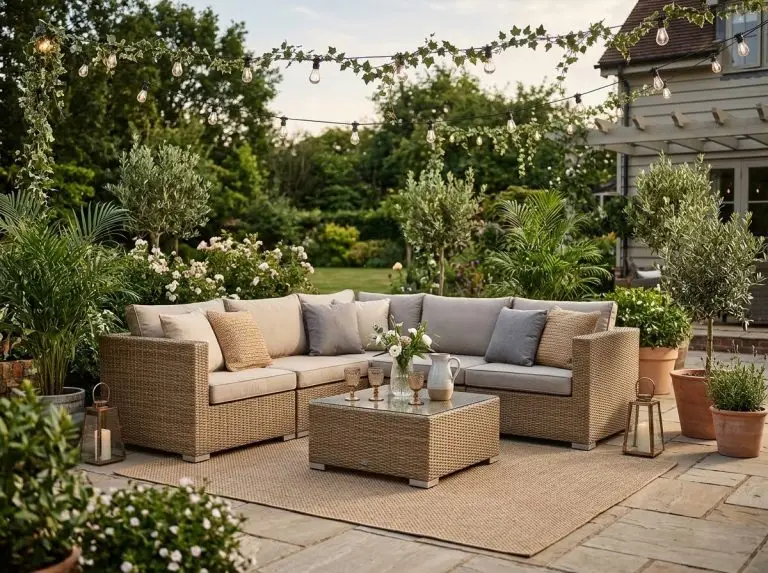
A modular corner sofa can anchor one side of a terrace, while two armchairs opposite it create a conversational arrangement. Leave enough space between the pieces for people to enter and leave without interrupting conversations. A central coffee table helps connect the seating, but it should not dominate the area or make it difficult to stretch out your legs.
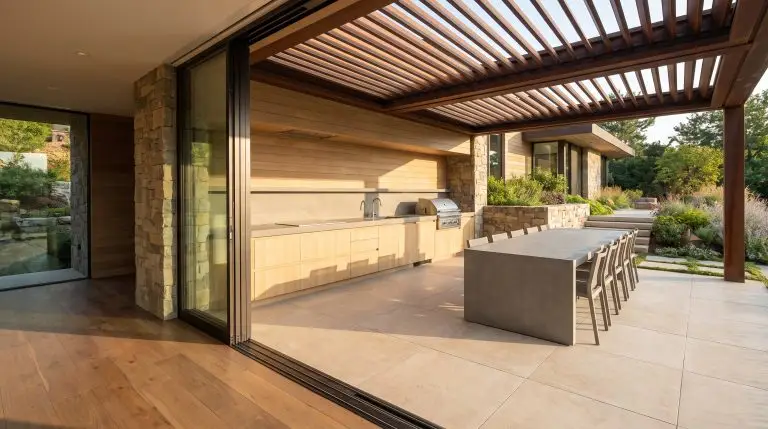
For dining, allow a generous clearance around the table. As a general guide, leave approximately 90 centimetres behind each chair where possible. This gives guests room to sit down and move around without brushing against walls, planters or other diners.
Think in zones, not individual pieces
Outdoor furniture works best when each item has a role. Rather than scattering chairs around the patio, group pieces according to activity:
- A dining zone for meals and food preparation
- A relaxed seating zone for conversation
- A practical area for serving drinks, storing cushions or placing lanterns
These zones can overlap, particularly in a smaller garden, but they should remain easy to understand. A side table beside a chair is more useful than one placed at the far end of the terrace, while a serving trolley near the dining area can reduce trips indoors.
Balance comfort with movement
One common mistake is filling an outdoor space with too much furniture. A large suite may look impressive in a showroom, but it can feel cramped when positioned against real-life walls, doors and planters.
Measure the space before buying, including the width of gates, pathways and access points. Mark out the approximate footprint with masking tape or cardboard. This simple exercise reveals whether there is enough room to open doors, pull out chairs and walk around the arrangement.
Keep the main route from the house to the garden clear. If guests have to weave between a sofa and dining table to reach the lawn, the layout will feel awkward regardless of how attractive the furniture is. A pathway of roughly 90 to 120 centimetres is comfortable for regular traffic, although compact spaces may require compromises.
When comparing options, it can be useful to browse collections described as contemporary furniture for alfresco spaces, particularly if you want modern proportions without losing the relaxed character associated with rattan. Look closely at dimensions rather than relying on photographs alone. The visual scale of a product can be very different once it is placed beside your own walls, doors and planting.
Use the garden’s natural features
Your furniture does not have to sit in the centre of a paved area. Existing features can provide a sense of shelter and structure. Place a dining table beneath a pergola, for example, or position lounge seating near a boundary wall to create a more intimate atmosphere.
Shade should be a major consideration. Guests are unlikely to stay comfortable in direct afternoon sun, especially during summer meals. If there is no mature tree or permanent canopy, consider a parasol, retractable awning or freestanding shade structure. Make sure it does not obstruct sightlines or create a hazard in windy conditions.
Also think about the view from the seating. If your garden has a strong focal point, such as a planted border, water feature or distant landscape, arrange chairs so guests can appreciate it. In a smaller garden, turning seating slightly towards the longest sightline can make the space feel more open.
Make entertaining easier with details
Once the main arrangement is right, smaller additions can improve the experience considerably. Choose tables that are large enough for drinks and serving dishes but not so broad that guests have to lean across them. Nesting tables are especially useful because they can be separated when more surface area is needed and stacked away afterwards.
Keep textiles practical. Outdoor cushions should be easy to remove and store, while rugs should be suitable for exterior use and secured against movement. Rattan furniture can be comfortable in its own right, but cushions add support and introduce colour without requiring a complete change of furniture.
Lighting also influences how a layout works after dark. Combine overhead lighting with lower-level sources, such as lanterns or discreet floor lights. Illuminate steps and pathways first, then add softer light around seating and dining areas. Avoid placing bright lights directly at eye level, where they can make conversation uncomfortable.
Adapt the arrangement throughout the year
Outdoor entertaining changes with the seasons. In spring, furniture may work best near the house for shelter. During warmer months, it can move further into the garden, while autumn gatherings may benefit from a fire pit or covered position.
Rattan furniture is often easier to rearrange than heavier materials, but avoid dragging pieces across rough paving. Lift them where possible, and protect the frames from prolonged exposure to standing water. Store cushions in a dry, ventilated place and follow the manufacturer’s care advice to preserve the finish.
The goal is not to create a rigid showroom display. A good outdoor arrangement should respond to the occasion, the weather and the people using it. Leave enough flexibility to add a few extra chairs, move a table closer to the shade or create space for children to play.
Final thoughts
Arranging rattan furniture well is fundamentally an exercise in hospitality. Prioritise conversation, comfort and clear movement, then use shade, lighting and accessories to support those essentials. When the layout feels natural, guests can concentrate on the food, company and atmosphere rather than navigating the furniture.
Start with one clear social zone, test the spacing in practice and adjust according to how your garden is actually used. The best outdoor entertaining spaces are not necessarily the most elaborate; they are the ones that make everyone feel welcome.