How to Choose Weather-Resistant Outdoor Stairs
Outdoor stairs have to do more than connect two spaces. They are exposed year-round to rain, snow, sunlight, humidity, temperature changes, and regular foot traffic. Choosing the wrong materials or finishes can lead to premature wear, corrosion, slippery surfaces, and ongoing maintenance.
For decks, patios, rooftop spaces, and elevated entrances, the most durable stair solution is one designed around the specific environment in which it will be used.
Before selecting a staircase, homeowners should consider climate, material performance, drainage, tread design, maintenance needs, and the amount of space available.
Start With the Local Climate
A staircase that performs well in a dry inland climate may face very different challenges near the coast or in an area with heavy snow.
Common environmental concerns include:
- Frequent rain and humidity
- Snow and ice
- Salt air
- Intense sunlight
- Freeze-thaw cycles
- Large temperature swings
In wet or coastal environments, corrosion resistance may be the top priority. In colder climates, drainage and ice management can become more important. Homes in sunny regions may need finishes that can withstand prolonged UV exposure without fading or deteriorating.
Understanding the most demanding conditions at the property is a good starting point for comparing materials.
Powder-Coated Aluminum
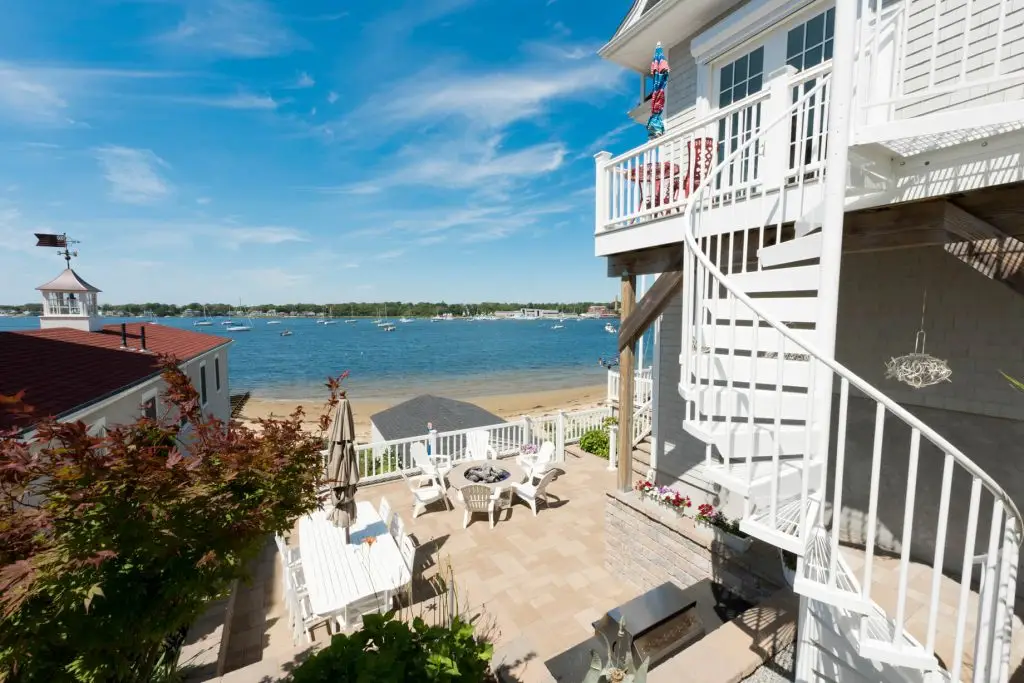
Powder-coated aluminum is a popular outdoor stair material because aluminum naturally resists rust and the powder coating provides an additional protective finish.
It is particularly well suited to humid environments and locations where homeowners want a low-maintenance option.
Advantages
- Naturally corrosion-resistant
- Lightweight compared with steel
- Requires relatively little maintenance
- Available in a variety of finishes
- Works well with contemporary exterior designs
Powder coating also creates a consistent appearance that can coordinate with deck railings, exterior trim, and other architectural elements.
As with any outdoor finish, scratches or damaged areas should be inspected periodically so the surface continues to perform as intended.
Galvanized Steel
Galvanized steel offers a different balance of durability and appearance.
During galvanization, steel receives a protective zinc coating designed to help resist corrosion. That protection makes galvanized steel a common choice for exterior structures exposed to weather.
Advantages
- High structural strength
- Good resistance to outdoor exposure
- Durable for high-use applications
- Often works well with industrial or utilitarian designs
Galvanized steel can be a practical choice for stairs serving elevated decks, secondary entrances, or other heavily used exterior areas.
Its appearance is more industrial than powder-coated aluminum, which may be either an advantage or a drawback depending on the architecture of the home.
Consider the Stair Configuration Too
Material is only part of the decision. The shape of the staircase can influence how much outdoor space it occupies and how easily it fits around an existing deck or patio.
Traditional straight stairs require enough horizontal distance to reach the ground safely. On tall decks, that can consume a substantial portion of the yard.
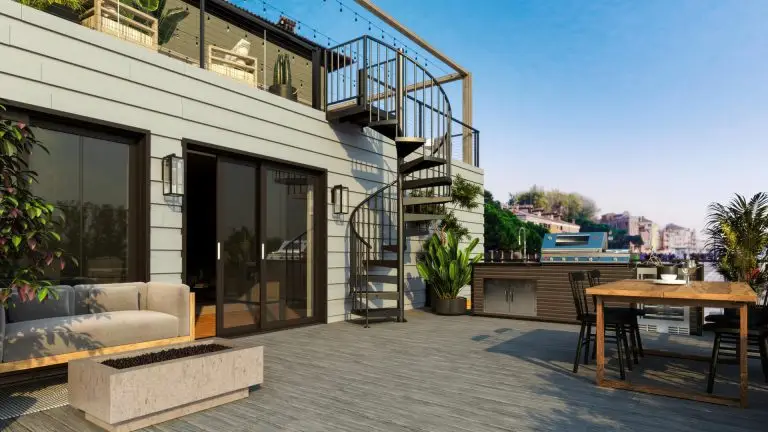
Where outdoor space is limited, homeowners sometimes explore a metal spiral staircase because the circular layout can provide access between levels within a more compact footprint.
Straight, switchback, and spiral stairs can all work outdoors. The best configuration depends on available space, traffic patterns, intended use, and applicable building requirements.
Pay Attention to Tread Materials
The stair frame is not the only component exposed to the elements. Treads need to remain durable while providing secure footing in changing weather.
Outdoor tread materials may include metal, composite products, or other weather-resistant surfaces.
Composite materials are frequently used because they resist many of the problems associated with untreated wood, including splintering, rot, and insect damage. Composite treads can also coordinate visually with composite decking.
Regardless of material, tread surfaces should be evaluated for traction. A finish that looks attractive when dry may perform differently when exposed to rain, frost, or snow.
Textured surfaces and designs that allow water to drain can improve outdoor usability.
Drainage Is Easy to Overlook
Water should be able to move away from both the staircase and its supporting structure.
Poor drainage can allow moisture to collect around treads, fasteners, landings, or the stair base. Over time, standing water can accelerate wear and create slippery conditions.
When planning outdoor stairs, consider:
- Whether water can drain through or away from the treads
- Where runoff will collect at the bottom of the staircase
- Whether surrounding landscaping directs water toward the stairs
- How snow and ice will be removed
- Whether the upper landing sheds water appropriately
Good drainage supports both safety and long-term durability.
Think About the Railing System
Outdoor railings are exposed to the same environmental conditions as the stairs themselves, so railing materials should be selected with similar care.
Powder-coated aluminum, galvanized metal, cable systems, and certain composite components can all be used in exterior settings when properly specified.
Homeowners should also consider how the railing affects views from the deck. Slim posts or low-profile infill can preserve sightlines, while more substantial railing designs may provide a stronger architectural presence.
Safety and building requirements should remain the primary consideration.
Factor in Long-Term Maintenance
An outdoor staircase should be evaluated based on its lifetime maintenance requirements, not only its initial appearance.
A few questions can help:
- Will the finish need to be repainted or resealed?
- How easily can dirt and debris be removed?
- Are replacement components readily accessible?
- How often should fasteners and connections be inspected?
- Does the material perform well in the home’s climate?
Powder-coated aluminum, galvanized steel, and composite materials are often selected specifically because they reduce routine maintenance compared with materials that require frequent staining or sealing.
Low maintenance does not mean no maintenance, however. Periodic inspections can help identify loose hardware, worn finishes, or other problems before they become larger repairs.
Check Codes Before Finalizing the Design
Exterior stairs may be subject to local requirements governing:
- Stair width
- Tread depth
- Riser height
- Handrails
- Guardrails
- Landing dimensions
- Structural loads
Requirements can vary based on the height, location, and intended use of the stairs.
Checking local regulations early can prevent homeowners from choosing a configuration that later needs to be changed.
Balance Durability With Design
Weather resistance does not require sacrificing appearance.
A dark powder-coated stair can complement a modern deck, while galvanized steel can work naturally with industrial or contemporary architecture. Composite treads can introduce warmer tones that coordinate with decking and surrounding outdoor finishes.
The most successful outdoor stairs typically feel like part of the overall exterior design rather than an added utility structure.
Final Thoughts
Choosing weather-resistant stairs starts with understanding the conditions they will face. Climate, material, drainage, tread performance, maintenance, and stair configuration all affect how well an outdoor staircase performs over time.
Powder-coated aluminum, galvanized steel, and composite materials each offer advantages for exterior applications, but no single option is right for every property.
By considering environmental exposure and long-term maintenance alongside appearance and available space, homeowners can choose an outdoor stair system that remains functional and visually appropriate through changing seasons.