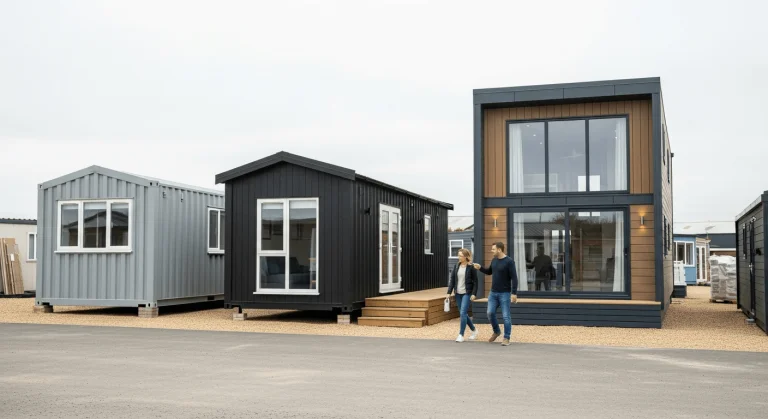
Most people don’t arrive at container living ready to sign a contract. Usually it starts with a photo online, a Grand Designs episode, or a passing thought about how much a normal house extension costs, and then a long stretch of just looking around to see what’s actually out there before anything feels real. This list is for that stage. Eight UK suppliers worth knowing about, not necessarily the eight you’ll end up hiring, but a genuinely useful spread of who does what, at what price point, and for whom.
We picked companies with a verifiable project behind them rather than a marketing page alone, and deliberately mixed price points and business models, since curiosity about container living covers a much wider range of people than a firm, ready-to-commission brief does.
1. Universal Containers
Handles design, fabrication, fit-out and delivery for container homes entirely in-house, and publishes its own guide to container home planning permission for people right at the start of researching.
The natural first stop if you’re still working out what’s even possible, since the range runs from a simple tiny home to a fully adapted accessible-living build.
Best for: People who want to talk to one company and get a realistic sense of scope, cost and process before deciding on anything.
Universal builds from both new and used containers depending on budget, and handles every stage itself rather than farming pieces out to subcontractors, which matters if you’re the kind of curious buyer with a lot of questions rather than a firm brief yet. Its most telling project is the Blackwood Project, an adapted home with a wider access ramp, a sliding door and an adjustable kitchen and bathroom, built so someone with a disability could live independently, proof the company thinks beyond a standard tiny-home template.
Downside: Because everything is bespoke, it’s harder to get a same-day ballpark price than with a company selling a fixed product range. Expect a proper conversation before a number.
2. MAC
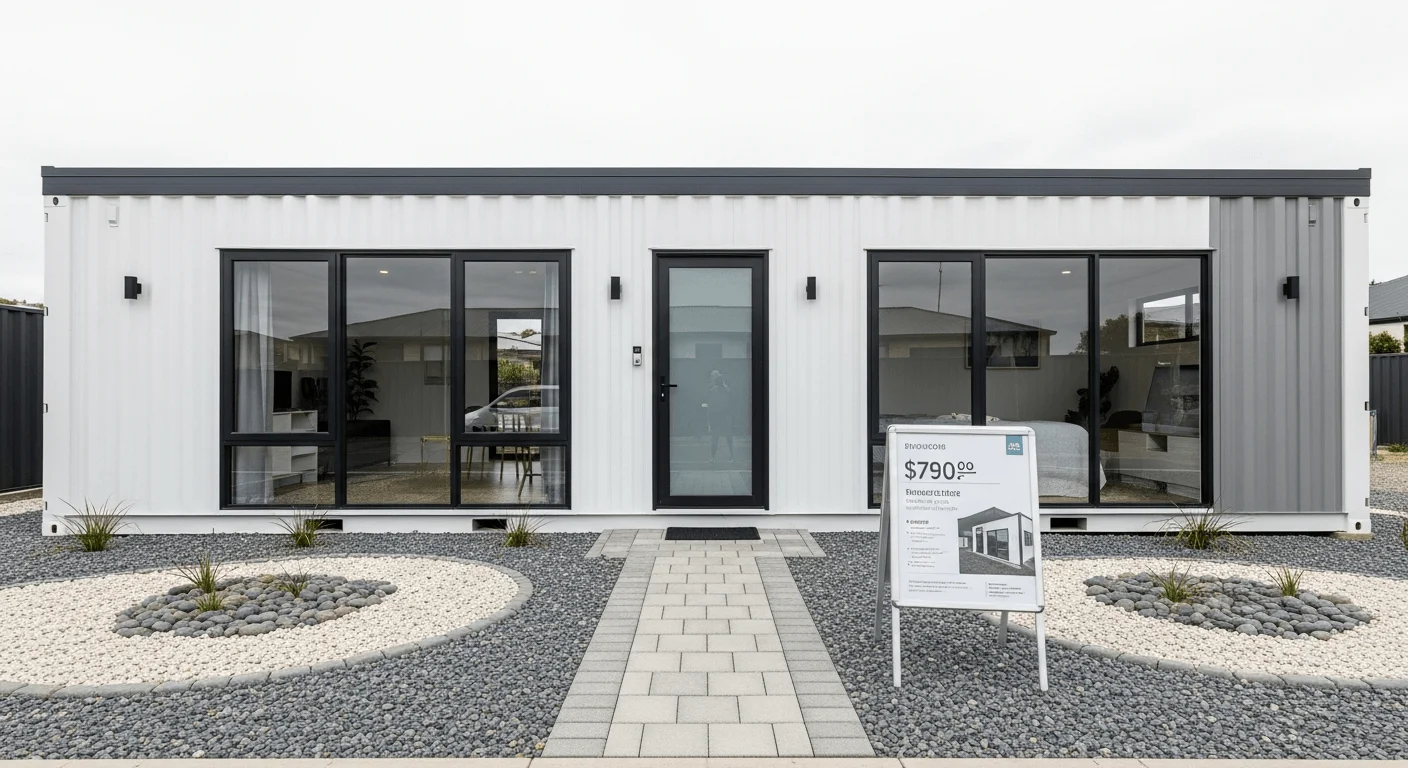
Sells brand-new container homes, not converted units, with published prices starting at £21,050 plus VAT for a 20ft temporary home.
The one to look at first if you want a real number before you’ve committed to anything.
Best for: Cautious researchers who want to know roughly what this costs before going any further.
Because MAC builds from new steel rather than modifying a used container, you’re not asking questions about previous cargo or hidden corrosion, and the pricing is public rather than quote-only. A 40ft permanent dwelling, fully compliant with UK building regulations, runs to £64,950 plus VAT, and the company has sold into the NHS, London boroughs and the US Navy, so the product has been tested well beyond one-off self-builds.
Downside: The trade-off for that predictability is less design flexibility. If your curiosity is really about something architecturally unusual, this is a more standardised starting point than some others here.
3. Cleveland Containers
The UK’s largest container supplier by volume, with depots across the country and a conversions arm capable of large, multi-container residential jobs.
Worth a look once you’re thinking bigger than a single-container studio, a proper multi-bedroom build, say.
Best for: Anyone whose curiosity has already scaled up to “could I build a whole house out of these” rather than a garden studio.
Cleveland’s home turf is volume and logistics: depots UK-wide mean shorter waits for stock, and the same team behind STACK Newcastle, a 60-container leisure development, has the practical experience of joining multiple units together that a single-container home doesn’t call for but a family-sized one does.
Downside: That scale and depot network is more useful the bigger your project gets. For a single small unit, you may not need the extra infrastructure behind the price.
4. Eldapoint Group
Manufacturing steel buildings and converting containers for more than 55 years, one of the oldest names anywhere on this list.
A sensible name to know if structural engineering credentials matter to you as much as the finished look.
Best for: Anyone nervous about the “is this actually safe and properly built” question that comes up early in most people’s research.
Longevity in this sector tends to show up in the less glamorous places: fire ratings, load calculations, how a multi-container stack is actually engineered to stay put. Eldapoint’s decades of commercial and rail conversion work sit behind its residential offering, and it’s worth knowing simply because it’s one of the few UK names old enough to have a genuine track record rather than a few years of Instagram-friendly projects.
Downside: Homes are a smaller part of a much bigger commercial operation, so don’t expect the boutique, design-led conversation you’d get from a specialist home builder.
5. ModCon Cabins
Builds container homes entirely in-house with a quarter century of experience, including smart home technology as an optional upgrade.
Worth knowing if you want a genuinely turnkey experience without piecing together your own trades.
Best for: Buyers who like the idea of a single point of contact managing supply, conversion, fit-out and installation together.
ModCon’s pitch is straightforward: because its own engineers handle the whole build, you can choose to take as little or as much of the finish as you want, from basic insulation up to a fully smart-enabled home, without coordinating separate contractors yourself. Standard and fully custom sizes are both available, useful if you’re still not sure whether you want a compact single unit or something larger.
Downside: As with most bespoke-build companies here, a precise price needs a proper conversation rather than a published list, so early researchers should expect to wait for a quote.
6. REACH Homes CIC
A Sheffield not-for-profit whose founder lived in his own container home for close to two years before scaling up the model.
The one to look at if affordability is the whole reason you’re curious in the first place.
Best for: People priced out of a conventional mortgage who want proof this can genuinely work as a full-time, everyday home, not just a novelty.
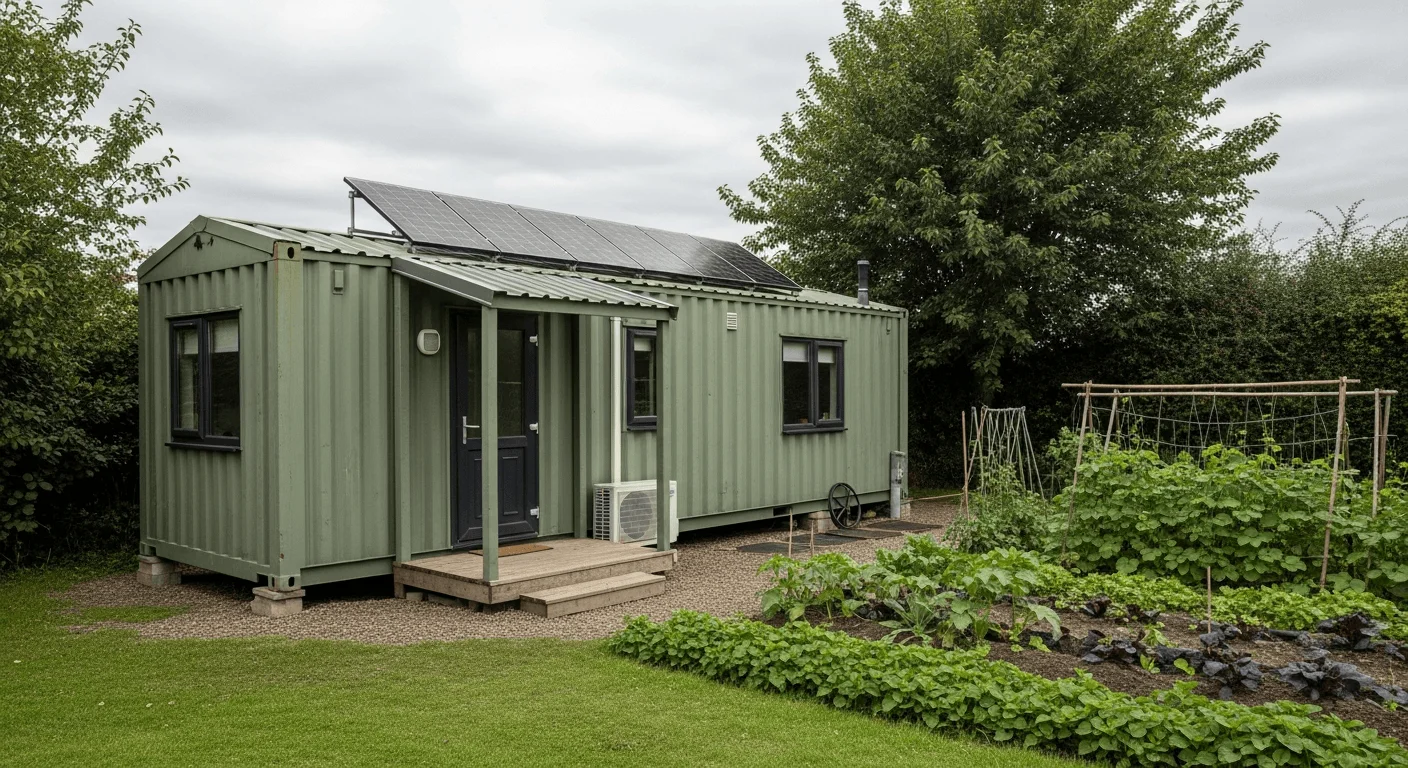
Jon Johnson, a former police officer, built and lived in his own one-bed container home at Heeley City Farm using more than 60 percent recycled materials, running it without a fuel bill thanks to solar panels and heavy insulation. That lived experience is now behind REACH’s ambition to build around 600 low-cost homes a year across Sheffield and neighbouring cities, with homes starting from around £35,000.
Downside: It’s a not-for-profit still scaling up from a working prototype, so it won’t yet have the national reach or delivery speed of an established commercial supplier.
7. InBox Projects
A Cheshire-based container home specialist behind a Brighton project rehousing people transitioning out of homelessness.
Worth knowing if you’re curious about the social housing side of this movement, not just the private self-build side.
Best for: Housing associations, councils and charities, as well as private buyers who specifically want an architect involved in the design.
InBox works with architects experienced in container construction on bespoke projects, and also offers fully-fitted pre-built pods for buyers who don’t need a from-scratch design. The Brighton project is the clearest evidence of what the company can do at the more socially-minded end of the market, converting containers into genuinely long-term homes for a vulnerable population, not just a weekend curiosity piece.
Downside: Part of the group’s manufacturing happens in China as well as the UK, so it’s worth asking directly which route applies if a fully UK-fabricated build matters to you.
8. Iron & Pine
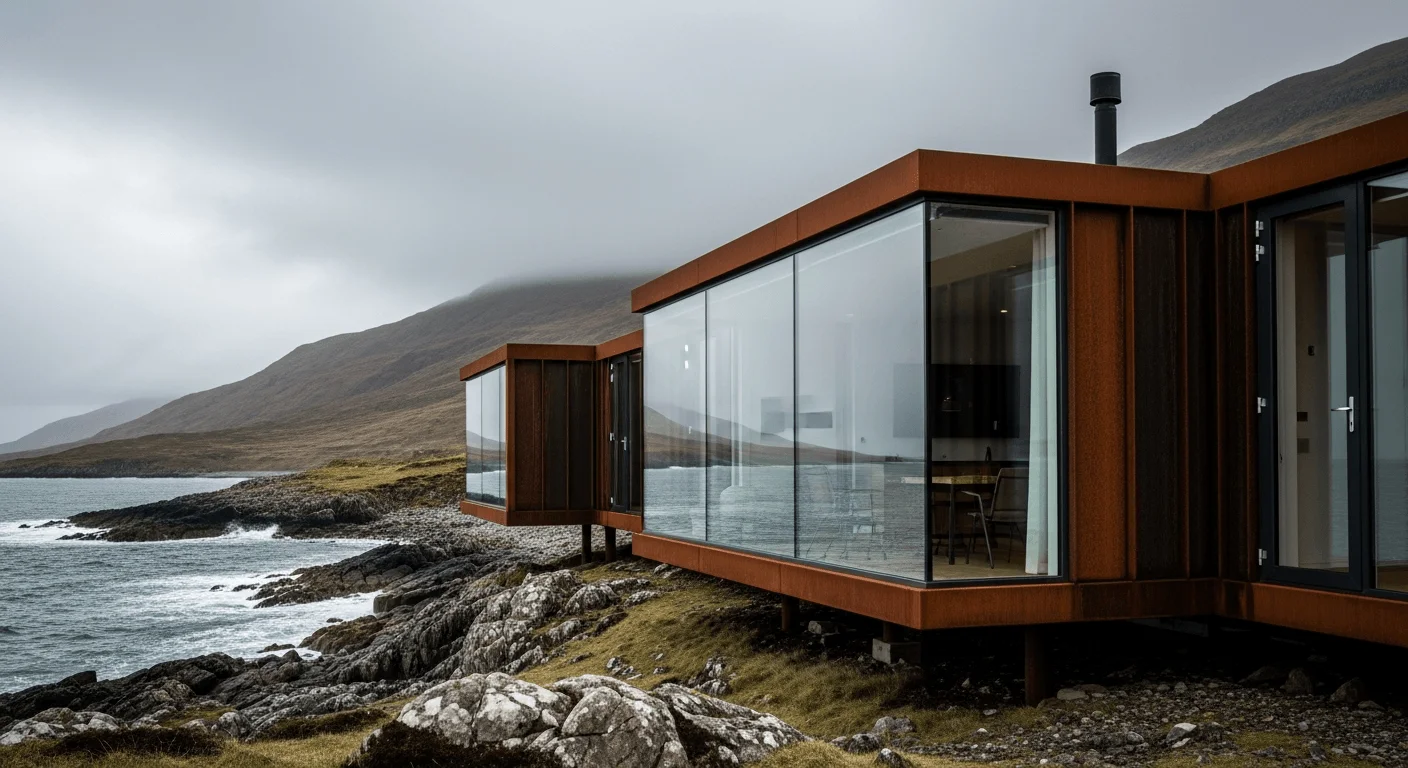
Built a glass-fronted luxury container home on the remote Isle of Coll, finished with Tom Dixon and German-made kitchen fittings.
The one to look at purely to see how far the format can be pushed, aesthetically.
Best for: Anyone whose curiosity is really about whether a container home can look genuinely high-end, not just practical.
The Isle of Coll build is about as far from the grey-box stereotype as this list gets: floor-to-ceiling glazing facing the sea, a designer shower fitting, a kitchen sourced through an Edinburgh showroom, on an off-grid site where a conventional build would have taken far longer. It’s a useful reference simply for recalibrating what’s possible before you start pricing anything more modest.
Downside: This is bespoke, high-end work built around one client’s specific vision and budget, not a template for a low-cost first container home.
Methodology
We looked for UK companies that actually build homes people live in day to day, not general container resellers with a single homes page. Each entry needed a verifiable project behind it, a named client, a founder’s own lived experience, a public building, or similar, rather than just a marketing claim. We deliberately included a spread of price points and business models, from not-for-profit to luxury design studio, since curiosity about container living covers a much wider range of people than a firm, ready-to-commission brief does.
The Bottom Line
Where you start on this list really depends on which kind of curious you are. If you want one company to talk you through the whole process, Universal Containers or ModCon Cabins are sensible first calls. If you want a real number before you’ve committed to anything, MAC’s published pricing does that immediately. REACH Homes and InBox Projects matter if affordability and social impact are the actual reason you’re interested, not just the aesthetics. Eldapoint and Cleveland Containers are worth knowing simply because of how long they’ve been doing this and how big they can go. And Iron & Pine is there to answer the question everyone eventually asks: can this actually look beautiful? It can.